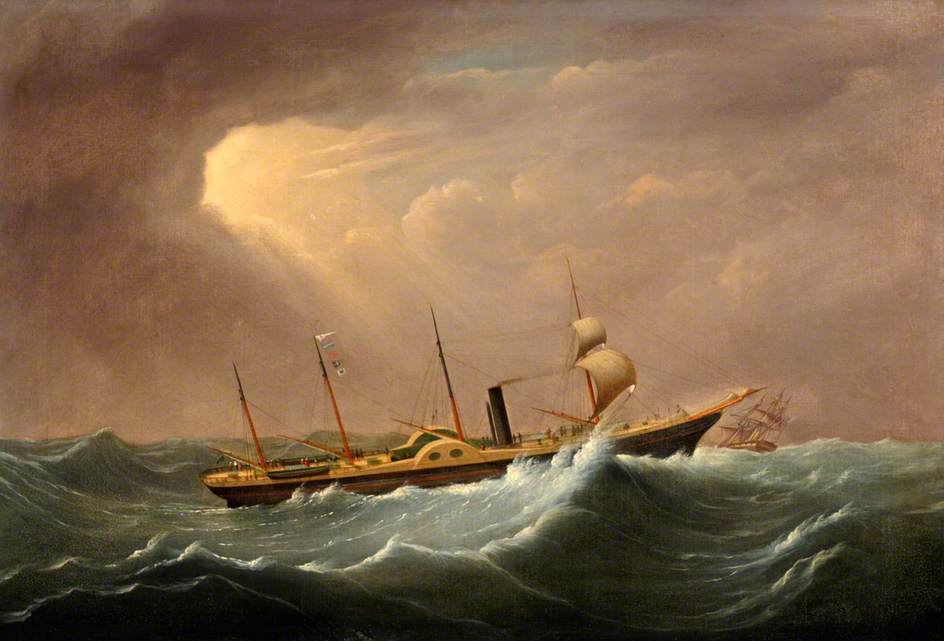
Isambard Kingdom Brunel was fascinated with the idea of building steam driven metal ships that could travel across oceans. He calculated that though the volume a ship could carry was cubically proportional to its dimension, the drag it experienced was only squared. This meant that the larger a ship was, the more fuel efficient it would be proportionately speaking. Brunel put his theories into practice with the construction of the Great Western (1836), the longest steam ship at the time, powered by the common day technology of paddlewheels and sails. Brunel’s ship was in a race with the Sirius to make the first transatlantic trip on steam power alone. Unfortunately, a fire in which Isambard was injured, delayed the ship’s departure. Although the Great Western left port four days after the Sirius, she arrived in New York only one day behind and, unlike the Sirius which had to burn furniture, rope, and spars as fuel, the Great Western still had a third of her coal left over.
The SS Great Western by Joseph Walter
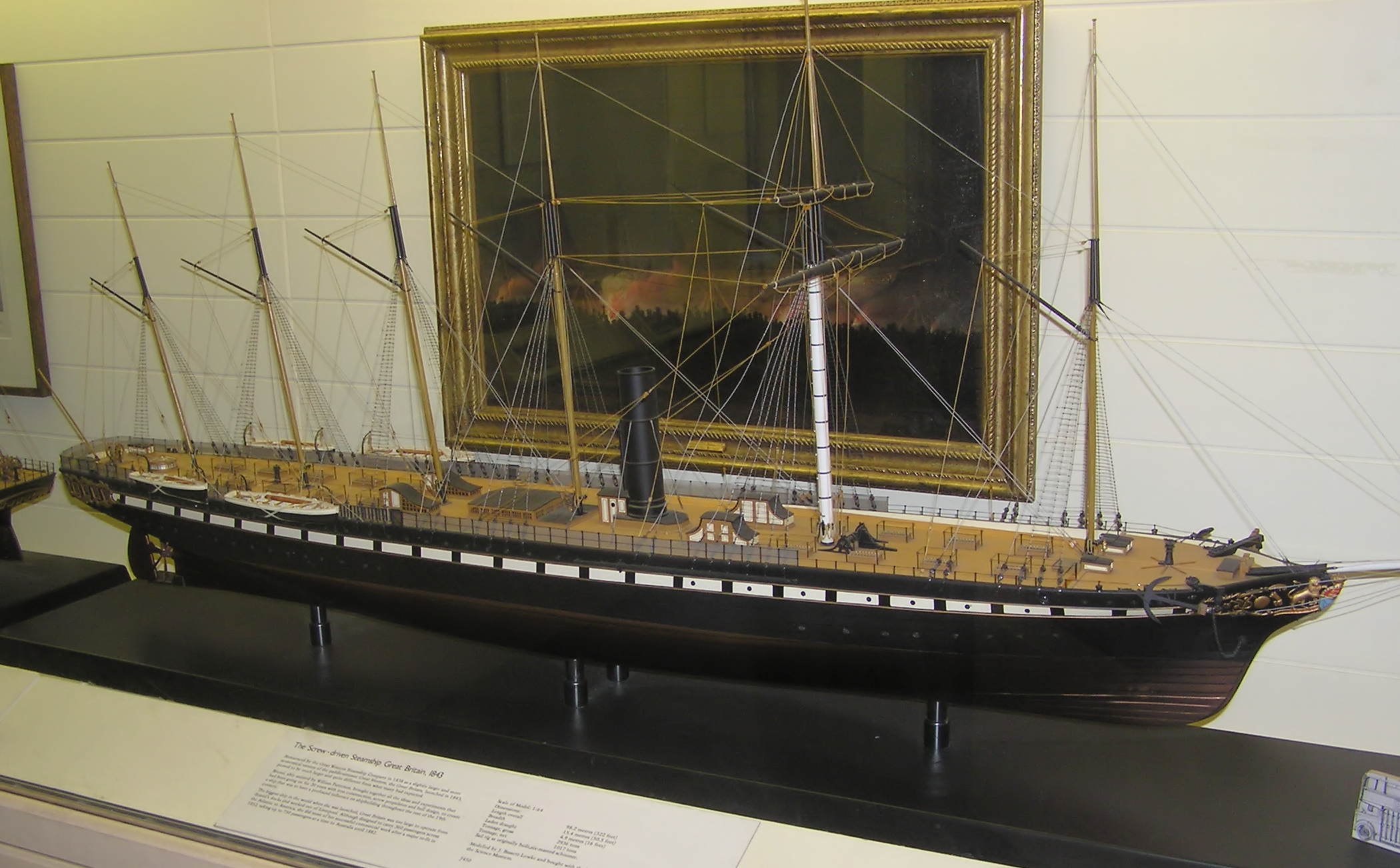
Brunel’s theories on the size of ships had been proven correct, and he proceeded to build the Great Britain (1843), the largest ship in the world, which was also not only one of the first screw propeller driven ships, but also had an iron hull. For combining these two technologies, it was considered the first modern ship.
Model of the SS Great Britain
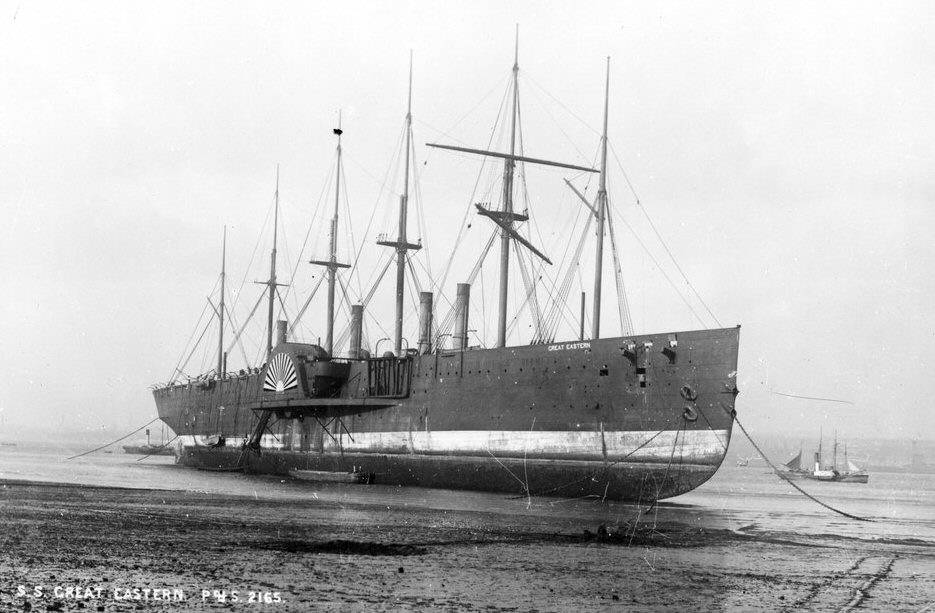
Finally, Brunel built the Great Eastern (1858), nearly three times the length of the Great Western and was propelled by sails, paddle wheels, and a screw propeller. All three of these ships again gave testimony to Brunel’s genius and vision at combining and applying the technology of the day through a variety of means to bring England roaring into the modern era.
The SS Great Eastern by Allan Green
So why have I spent three post giving you a history lesson about a man who you’ve probably never heard of? In the early 2000s the BBC had a competition where they asked their public to vote for who they thought the ten greatest Britons were and they then did a one hour segment on each of them. Many recognizable names such as Newton, Shakespeare, Queen Victoria, and Churchill make the list, but Brunel who actually won second place behind Churchill is an unknown figure in America. This oversight is slightly shameful as Brunel is practically the founder of modern England and therefore by extension, America. His vision, courageously enterprising nature, and inexhaustible energy made him not only the leader, but the epitome, of the industrial revolution. Men like Brunel took on projects and works with the help of machines that had never before been tried. He had the incredible audacity to fly in the face of the limitations that man had contended with for centuries. Men like Brunel, through the industrial revolution, dramatically improved the quality of life for the average citizen. It is no wonder then that with Isambard’s resume of accomplishments and legacy that he is not only considered the greatest British engineer who ever lived but also the second greatest Briton in history.
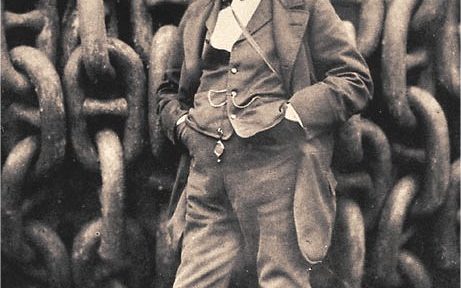
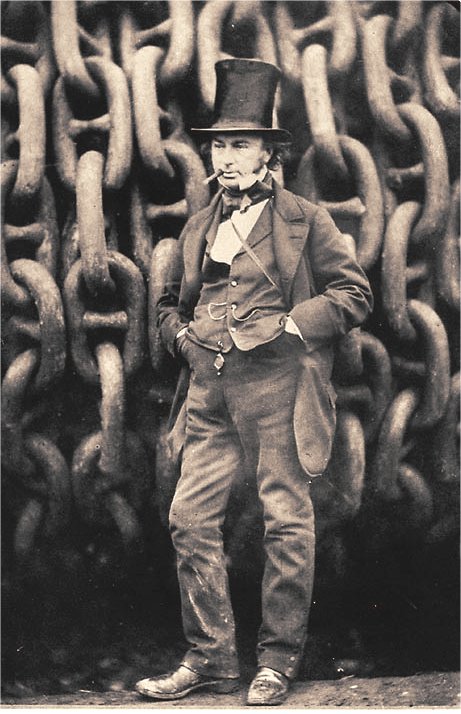
Brunel at the launching of the Great Eastern by Robert Howlett
“A repo man’s job is always intense” movie Repo Man (1984)
Field biologists get themselves into situations that other normal people, including other scientists, just do not encounter, when you are up close and personal with Mother Nature, Gaia, Pachamama, or whatever you wish to call her from your cultural perspective. This is where I live. It is hard to tell my stories at parties, because (before I developed a filter) I would blurt them out, but typically everyone is too horrified by the details to see the funny part. Or, I would come across as a “one-upper” because, nearly always I have a story that is far more extreme, gross, or scary than the average person. I’m guessing they teach you, somewhere in medical school, that surgery or EMT anecdotes are not funny outside your inner circle. I’ve noticed that those people generally don’t tell their work stories at parties. Biology departments—those with field programs, anyway—don’t seem to have that ethos. They are a constant one-up contest for whomever returns from a field trip with the most vile, uncomfortable, or dangerous story. My colleagues love these stories and think they are funny, especially if someone gets really sick, hurt, terrified, humiliated, or just plain grossed-out. In fact, everyone is disappointed if a field crew returns with no outlandish stories. Grizzly bear wakes up early from sedation? The bot fly was where?! How many ticks can fit on a human body? Roadkill—need I say more? So, I decided a few years ago to just stop telling most of my stories. Returning from a fun party one night, my wife said “Where is the bottom of your well of stories?” I was mortified, and asked if I had commandeered the party conversations with my own stories? My wife said “No, not at all, I just can’t figure out how I’ve been with you for 20 years and you continually pull from a seemingly endless list of insanely scary or gross stories from your fieldwork!” Ok. I have too many stories, so here are some of them. Previous entries in the Ballad of Gringo Perdido series here in Charged have centered on human-related and otherwise social or cultural malfunctions that one experiences in the field. Here I will focus on the interface of the biologist and the natural world and, more specifically, where the rubber hits the road……or flesh. It often ain’t pretty.
One of my unofficial duties as a biologist has been to scour any nation’s highways and backroads for road-killed animals that are of biological value, and so deserve a permanent resting place among the preserved research collections in a natural history museum. These specimens can be of significant value to researchers, as they can complement our knowledge of a species’ geographic distribution, habitat use, and seasonality. If they are not too mangled, they also can be dissected to examine stomach contents, reproductive condition or basic anatomy. In any case, the roadside tragedies are valuable and otherwise completely wasted if left to rot. I mean, it’s not like the vultures need more to eat out there, is it? We’ll get back to vultures in a bit.
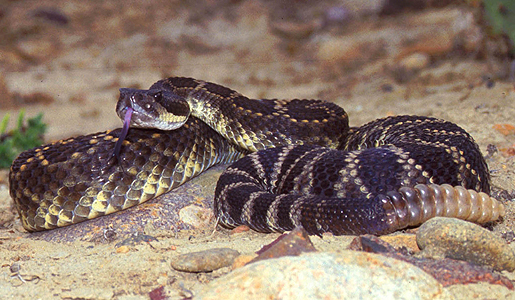
So, somebody has to scrape up all of these mashed nuggets of knowledge—to salvage them for eternal knowledge in the museums of life—and I elected myself to be one of those people. This does not endear one to others. My family still shudders when I arrive to Thanksgiving with whatever goodies I collected en-route to the holiday. My long-suffering mother once defrosted a large Red-diamond Rattlesnake (Crotalus ruber) that I had placed in the freezer next to the rump roast she intended for dinner. My college roommates nearly cut me from our lease when I decided to put a Spotted Skunk (Spilogale gracile) in our apartment freezer, rather than take it directly to the museum late one night. A California Highway Patrol officer once took exception to my duties and when I politely offered to show him my state wildlife salvage permit, that allowed me to possess the dead Badger (Taxidea taxus) in my hand. He informed me that “Permits are not the point here, son. Disgusting is the point, and the problem.” I eventually did get to keep my badger. On the way to a summer barbecue party once in grad school, I saw the car in front of me run over the head—just the head—of a large Common Snapping Turtle (Chelydra serpentina). Of course, I had to collect it, but afterwards realized that my institutional museum at that time was brimming with preserved snapping turtles from the local area and really did not need yet another. So, I brought the poor turtle to the barbecue as my contribution to the meal. Not everyone saw the obvious logic and thriftiness in this decision. It tasted great, marinated in olive oil and garlic and grilled as kabobs with onions and peppers. No wonder so many turtle species are endangered.
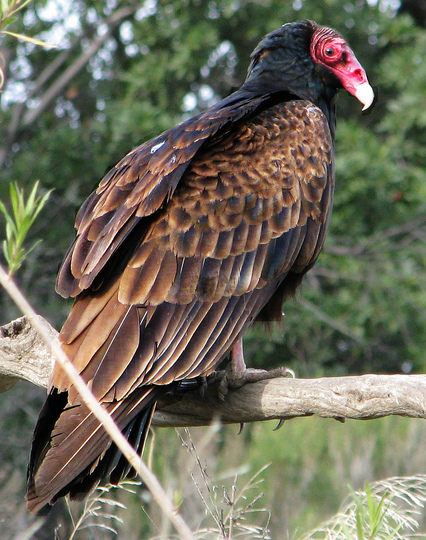
Carthartes aura
In southeastern Arizona, I was on one of those impossibly long, straight and lonesome desert highways Far ahead, I saw a Turkey Vulture (Cathartes aura) alight on the right shoulder of the road. I slowed to see what scientific morsel it had found. It was a freshly hit Gila Monster (Heloderma suspectum)—a gorgeously colored, somewhat uncommon species of venomous lizard. This had to go to a museum, for sure. I pulled over and was walking back to collect my prize and expecting the vulture to fly off. It did not fly off, eyeing my approach and pecking at its find. Now I was in facing a hungry vulture who now had a foot solidly on my lizard, crouching, flaring its wings, and hissing at me. My “shoo” motions and noises were to no avail. This was a stand-off, and I was determined to claim victory. So, I did the unthinkable. Using my sandaled foot I kicked a bird, and I liked it. I got my dead Gila Monster. Don’t worry, all is fair in the world as another vulture, on another day, got the best of me.
Sometimes even Gringo Perdido has his limits of acceptability. I found a road-killed porcupine once, and pulled over to retrieve my prize. The animal looked to be in fairly decent condition. The skull was not crushed; that is a plus in my profession. But it did smell absolutely awful. In the beam of my flashlight, I could not determine neither why, nor how, the dead porcupine could be rotating his signature quills in little wiggly circles. I poked the carcass with a stick. The quills wiggled more vigorously. I tried to roll the carcass over with my stick, purely for scientific inquiry. The carcass apparently was adhered to the asphalt, but the skin and quill matrix flipped over to reveal a football-sized porcupine-shaped ovoid of wriggling maggots. There was no porcupine here to be salvaged for science, just a porcupine-shaped ghost of maggots. Altogether just plain unpleasant. That one stayed on the side of the road.
Mephitis mephitis
A lot of animals are most active at night, so my collecting activities often are nocturnal. Cumulative years of my life have been spent as late nights driving down lonely backroads, scraping up the dead stuff, and then later nights logging the specimens into my field journal and transferring them into freezers or preserving them in formaldehyde. I once spent a summer as an intern at the Southwestern Research Station, near Portal, Arizona. I was out every night conducting a transect study of snake populations, and salvaging hundreds of specimens from US Highway 80. It is staggering how many animals get killed by vehicles every day. About 2am one morning, back at the station, I was preserving a pile of mangled snakes at a table I had set up in an outdoor breezeway by the lab. While carefully filling the body cavity of each snake with preservative and positioning them in my specimen trays, I felt something warm and delightful on my leg. I was wearing my usual uniform: shirtless, cut-off shorts and field boots. I looked down and realized that a very large Striped Skunk (Mephitis mephitis) was rubbing its head and neck against my calf. I recognized that skunk. He lived on the grounds of the station, regularly seen raiding food scraps from the compost station. He was a massive beast of a skunk. The staff had named him “Elvis.” It was nuzzling me like a large, friendly, aposematic cat. It was soft, gentle, beautiful, and terrifying. I recall that it was purring, but I don’t know if I just imagined that part. In any case, I really did not want to be bitten. I did not want rabies and I also I really did not want to get sprayed. An eternal few seconds passed, and it walked away bored with me or realizing that the dead snakes on my workbench were unavailable.
On a diurnal drive through the Chihuahuan Desert of northern Mexico one day, I rounded a corner on a dirt road a bit too quickly,and found a road-killed Mule Deer (Odocoileus hemionus) in the middle of the dirt road. I hit the brakes and veered, to avoid wrapping the carcass around my front axle. The local Black Vultures (Coragyps atratus) had found it before me. I was fine with this, as I did not have the capacity to salvage and preserve an adult deer. Despite my disinterest in the deer, I nevertheless encountered a volatile problem. Vultures are not agile pilots. They cannot dart under the wheels of a moving car to grab a morsel, as a pigeon in any city can do. They do not launch quickly. They do nothing quickly, actually. Even when suddenly spooked, vultures need a long, straight getaway flight path to get their hefty bodies aloft. They also have an enormous crop and stomach, so they can capitalize maximally on any carcass they find, to be digested later on a quiet cliff or tree somewhere. Jet pilots, in dire situations, will jettison fuel or bombs to lighten their load as they handle an emergency situation. Vultures do the same. They jettison the contents of their crop, in order to lighten their load for an emergency lift-off. Rounding that remote corner in Mexico that day, I created an emergency for about six vultures. Following common-sense avionics safety protocols, they jettisoned their excess baggage. About 10 pounds of decomposed deer flesh was barfed upon the hood and windshield of my truck as vultures frantically and clumsily tried to avoid a collision. The windshield wiper and fluid only made the viscous red slurry even more opaque. I drove for many, many miles to the nearest source of water, all the while with my head hanging out the driver’s door window so I could see to drive. I retched. I retched a lot, and I did not like it.
Crotalus helleri
Backroad adventures sometimes are beyond just disgusting, or socially awkward, to include the terrifying. Road-killed snakes are, as I discovered, not always definitively dead. My usual protocol with a dead specimen is to put in a plastic bag with a field number, log it in my journal, and toss it into a cooler full of ice. But, sometimes I drive upon an unexpected treasure. For example, once when I was driving to a cousin’s wedding in California, I happened upon an unlucky Southern Pacific Rattlesnake (Crotalus helleri), dead on the highway. Lacking my usual cooler, ice, etc., and well over-dressed for the role of dead-animal-highway-cleanup, I simply tossed the snake into the jump seat of my Toyota truck, jotted down the coordinates on a scrap of paper, and proceeded to the wedding. Many hours later, driving back and thinking about nothing other than the fun I had with my family, I felt something moving across my ankles. Looking down, I saw a perfectly alive 3-foot long rattlesnake draped across my ankles. A calm head prevailed, and a fortuitously nearby rest stop got me off the 101 Freeway. I waited until the snake crawled off of my feet, I got out, and managed to get it into a KFC bucket from the rest-stop trash, using with a piece of cardboard “for safety.” Unfortunately, the snake did die of its injuries, and remains for perpetuity in a natural history museum collection. As for me, disaster averted, and a lesson learned. I never travel without a cooler anymore.
Dead animals are stinky, messy, and such, but not dangerous or scary per se. Of course, as a field biologist, I know the potential dangers of my chosen field of work. But, the search for dead animals sometimes involves the living, as the wedding rattlesnake taught me. It was actually on the same day as the barfing-vulture episode that I found myself on that same lonely road, in the middle of the night looking for snakes and toads. I, was in my usual shirtless, shorts, boots uniform driving slowly along looking for my prizes. A local bat was my sentinel, having adopted the beam of my headlights as an attractant to moths and such. It was a rather beautiful scene, if artificial, and I was enamored of the bat’s agility while I scanned the road for death. Then, the bat made a mistake. It flew above my high-beams and backwards straight into my windshield. Fortunately, I was driving very slowly so the bat was not evidently hurt. It grabbed onto my windshield wiper with the little claws on its wings and screeched furiously at me through the windshield. Not sure what to do, I decided to bump the windshield wipers to encourage it to just fly away. It worked! And it flew around the corner and directly into the cab of my truck (windows down, hot desert night, no air conditioning) and latched onto my belly with those same little claws. Now completely terrified and infuriated, the bat began a slow crawl up onto my bare chest, still screeching. In my experience, no mammal is scary unless it is within biting range of my body. Like the friendly skunk in Arizona, this bat was within dental range. Pain. Terror. Rabies. I had ideas, but squishing a bat like a gigantic mosquito on my chest just did not seem acceptable. So, I awkwardly tried to position my bat-afflicted chest out of the driver-side window and flick the creature off of me. This would have been easier, perhaps, if I had stopped driving. But I did not, for some reason. I finally managed to wipe the screaming beastie off of me and watched if fly away into the night. I think the bat and I both lost in that particular encounter. But I can tell you of another, where the beastie most definitely won.
Pseustes poecilonotus
There is a large, nasty, unattractive, but non-venomous snake called Pseustes poecilonotus that ranges from Mexico southward, deep into South America. They are rather common in places like Costa Rica, but strangely uncommon in Mexico. I was with a team, driving one day in the State of Oaxaca, Mexico. Our crew had, collectively, spent a lot of time in that area. Of course, as professional biologists, we always have our eyes peeled for animals, dead or alive, on the roadway even if, on this dull afternoon, we were just travelling to a new field site. I think everyone except the driver and myself, in the front passenger seat, was asleep. Then, there is it was. Four feet of drab green-brown serpent right in the middle of the road. “Holy shit……Pseustes!” yelled the driver and, following a century of herpetological tradition, the shotgun seat is the launch pad for the procurement of any and all road-prizes. Brakes slammed, back-seat sleepers mashed forward, and I leapt into action. These are fast snakes and it saw me coming. It shot off the road into some tall roadside grass. I chased it through the grass, staring straight down and catching just one brief glimpse of the snake. Then, it was all over. I remember a tumbling sensation, disorientation, and finally opening my eyes to see my boots pointed straight toward the blue sky. And, I hurt all over. I seemed to be in tree. Upside down, suspended in a tree. As I tried to get oriented and determine what had just happened to me, I saw my colleague’s face appear over the edge of the cliff above the tree in which I was suspended. He said, simply “Dude! Where did you go?! It looked like you just ran right off this f…g cliff!” That helped me realize that this is exactly what had happened. Staring straight downward into the tall roadside grass for this snake, I had run myself right off of the cliff that was the roadcut for the highway switchback below. Fortunately, a tree caught me. And then he said it: “Dude?! Did you get the snake?” No. I did not get the snake. Everything from my skeleton to my ego was badly bruised, and I was reminded of my foible for an entire field season by my colleagues.
Finally, let’s bring it back home, so to speak. I love dogs, more than I love almost anything or anyone. I miss my dogs immensely when I leave on long trips afield. We all know that dogs get killed by cars as well, and it is just devastating for me to see their bodies as I scan for my other treasures. On the Pan-American Highway, in Panama, my colleagues and I stopped at a roadside joint for lunch. We were simply driving to Panama City in order to catch our return flight the next day, so “work” was essentially over at this point of the trip. Walking toward the restaurant, I heard a screech of tires, and a horrible yelping sound. I turned and saw Mama Dog herding three puppies off of the highway, leaving behind a fourth that was now squealing and convulsing in the southbound lane. “No lunch, folks, we have to get this pup to a vet in the city!” I screamed. I dodged traffic, scooped up the little guy and we headed off, at top speed, toward the city. En route, I cradled the broken puppy and he and I shared many things. I had heard that ectoparasites will abandon a sinking ship, and it was true as I watched many dozens of ticks and fleas leave the puppy and move onto my body-ship. And, I did what everyone knows not to do with strangers—I came in contact with body fluids. Out of every orifice of the poor puppy came fluids of all constitutions and colors. The posteriormost semi-fluids also bore hundreds of squiggling parasitic worms. In honor of this adorable, suffering puppy I somehow managed to keep it together, keep cradling the poor guy to deliver him to a proper veterinarian. We were leaving the country, so I simply left the puppy at the vet with a stack of funds hopefully sufficient to get him through recovery. I have no idea what became of my little beige friend, but I did learn a lot about zoonotic diseases, Leptospirosis, in particular. You contract it through contact with body fluids from an infected animal, it is very common in Panama, and it is fiendishly difficult to medically diagnose because it flares up and recedes in random bouts. So, I had random flare-up and recessions of undiagnosed Leptospirosis for two full years. In literal terms, this means mattress-soaking night sweats almost every night, chronic diarrhea, and then the actual flare-ups that are two- or three-day bouts of malaria-like shaking tremors and chills, with abundant hallucinations.
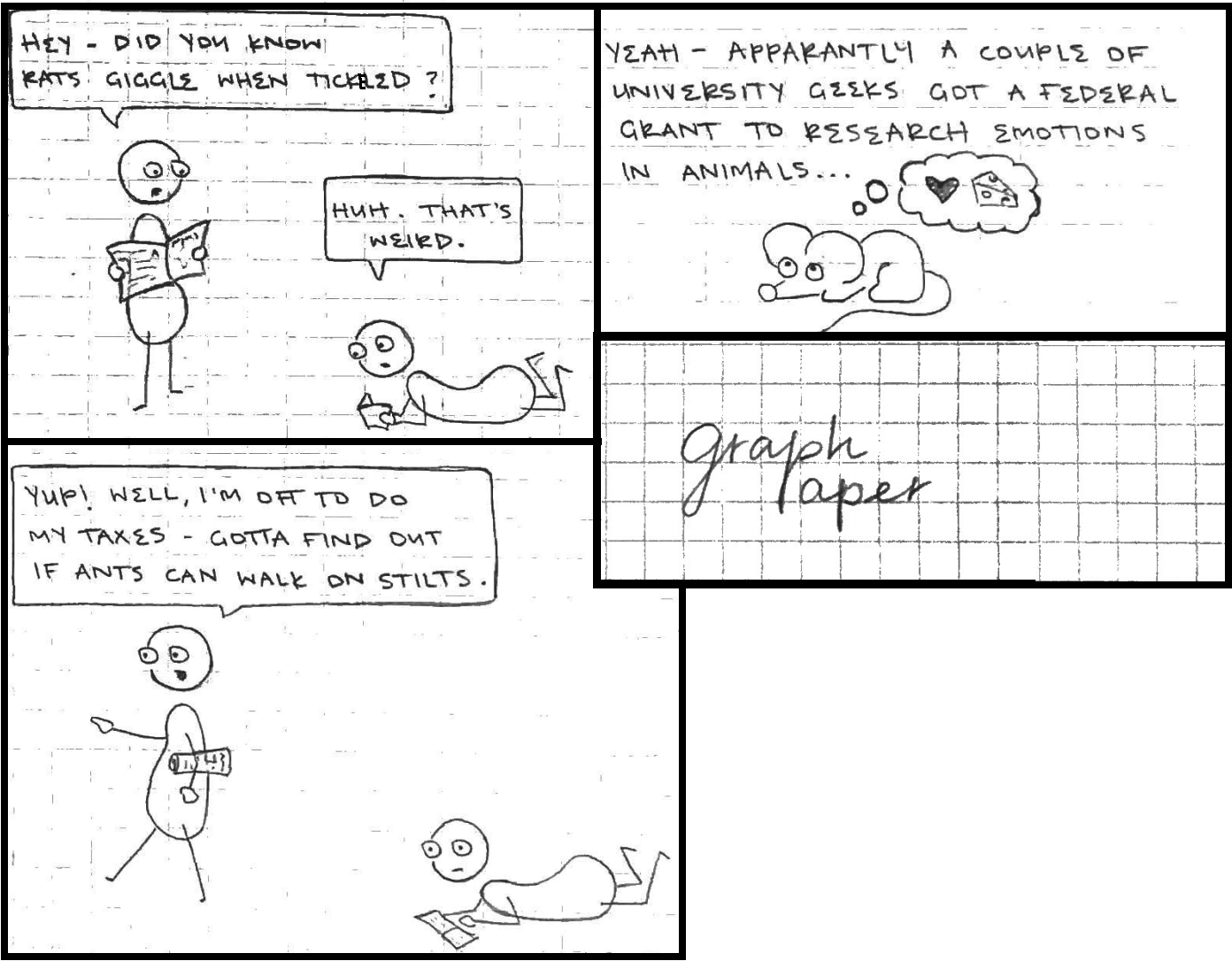
Seriously, though, think about it: finding a quantitative way to understand and measure emotional responses in rats can be applied to better understand emotional disorders that millions of people suffer from every day.
The Chinese government has recently decided that the Chinese people are in need of some form of formalized credit system for the purpose of evaluating individual trustworthiness. This in and of itself is not terribly noteworthy. Many countries already have such a system. The united states has a credit system which keeps track of how reliably individuals pay their bills and loan repayments. The Chinese government intends to take this system a little bit further.
A large percent of the Chinese population has never taken out a loan or used a credit card making a traditional system of credit very difficult to implement. The solution? China has decided that instead of using a traditional fiscal based system of credit it will create “social credit.” The idea is to use large scale data collection methods to analyze a person’s trustworthiness based off of many different aspects of their life. The specifics of the government’s intention at this point are somewhat unclear. How exactly they plan to collect and analyse the data and what factors they intend to consider has not been explicitly stated. What is clear is that the government intends to take a wide range of information from its citizens to “encourage sincerity and punish insincerity.”1
While the government is working on their social credit system, which will be implemented and become mandatory in 2020, it has permitted several companies to develop private versions of a similar system.2 These systems are currently optional and the most popular one is called Sesame credit. This system assigns each user a credit score based off of several factors then rewards users that have higher social credit scores. Employers are using credit scores to assess people for jobs, hotels are renting out rooms to people with higher scores without the need for a deposit, airports are providing expedited check in to people with high credit, people with high scores have access to Visas without certain paperwork, and certain dating sites are even encouraging users to post their score to evaluate the trustworthiness of potential partners.2,3,4
Though it is not certain the exact algorithm the company uses to calculate an individual’s credit score there are five things that are known to impact it. Firstly, the system keeps track of your fiscal credit history, whether you pay your bills and settle your debts.3 It also tracks the extent to which you fulfill your contractual obligations.3 Then it determines the accuracy of your personal online information.3 So far most of these are fairly innocuous but it is the last two that really start to get potentially insidious. The credit system takes into account not just how much you buy online and weather you settle your online debts but it tracks what you and factors that into your credit score.3 People who buy lots of video games are considered idle and probably less responsible while people that buy diapers are characterized as parents and assumed to be more responsible.2 Finally the system keeps track of your friends and monitors your interactions with them.3
Another system, separate from the Sesame credit system, in a neighborhood in Shanghai is already gathering information into a database about citizens behaviors from reports written by “residential committees” which monitor the behavior and a local office provides a weekly “red list of exemplary residents.”5 Meaning that your score is based off of how “good a citizen you are.
As long as this system remains optional and mostly in the hands of private companies the it remains mostly harmless, however, in 2020 when the program becomes mandatory the implications will be quite serious. If left unchecked the Chinese government will in a very real sense have the power to influence their population in a terrifying way. The level the surveillance that the government is capable of now is beyond precedent. What you buy, what you post online, who you associate with, how much you agree with the party line, all these things can be taken into account when determining a citizen’s social credit, and a citizen’s social credit can have real impact on their lives. If having a low score means it’s harder to rent hotels or get a visa or a loan or to even get a date then one is going to work hard to make sure that their score is as high as possible. It also means that if associating with people who have low scores might harm your social standing or make it harder for you to have nice things then you might stop associating with those people.
The social credit score has the potential to be a terrifyingly sinister and subtle means of controlling a population. While it is yet unclear what exactly the Chinese government will include in their social credit score system the potential for abuse is very high. If the means and criteria already being used by the private social credit score providers are any indication then this new program will be something to be feared, and it is certainly not beyond the scope of possibility that the government will chose to implement such criteria if not to go even further. Hopefully this Orwellian nightmare will never come to fruition, however, it seems likely that it may.
References:
[1] “Planning Outline for the Construction of a Social Credit System (2014-2020),” China Copyright and Media, 2015. [Online]. Available: https://chinacopyrightandmedia.wordpress.com/2014/06/14/planning-outline-for-the-construction-of-a-social-credit-system-2014-2020/. [Accessed: 07-Mar-2017].
[2] C. Hatton, “China ‘social credit’: Beijing sets up huge system,” BBC News, Beijing, 2015. [Online]. Available: http://www.bbc.com/news/world-asia-china-34592186. [Accessed: 09-Mar-2017].
[3] B. Christie and T. Li, “Ant Financial Unveils China’s First Credit-Scoring System Using Online Data – ProQuest,” Business Wire, 2015. [Online]. Available: http://search.proquest.com.prx.library.gatech.edu/docview/1648436715?rfr_id=info%3Axri%2Fsid%3Aprimo. [Accessed: 09-Mar-2017].
[4] C. Hua, “Mainland credit-rating network takes shape,” China Daily, 2015. [Online]. Available: http://www.chinadailyasia.com/business/2015-06/09/content_15274221.html. [Accessed: 07-Mar-2017].
[5] “China’s ‘Social Credit’ System: Turning Big Data Into Mass Surveillance,” The Wall Street Journal, 2016. [Online]. Available: http://blogs.wsj.com/chinarealtime/2016/12/21/chinas-social-credit-system-turning-big-data-into-mass-surveillance/. [Accessed: 09-Mar-2017].
I’m a fifth year undergraduate at the Georgia Institute of Technology studying industrial and systems engineering, and I plan to attend graduate school this Fall–but not for anything related to industrial and systems engineering. I plan to pursue a PhD in geoscience, with a focus on paleoclimate. How did I end up here? What even is paleoclimate? I spent five years diligently studying stochastic systems, designing simulations, and developing optimization models. I even spent an entire year training to be an industrial engineer at a manufacturing plant. What made me decide to dedicate the next five years of my life to paleoclimate? Why does paleoclimate even matter? It all began when I was introduced to the endless wonders and wealth of information that corals can provide.
I started studying corals when I took a class by Dr. Kim Cobb, a professor in the school of Earth and Atmospheric Sciences at Georgia Tech. She was teaching a course on sustainability that I happened to be enrolled in to fulfill some breadth requirement for my degree. Although I enrolled in the course thinking it would be an easy-A class, I quickly became more and more enthralled by Dr. Cobb’s inspiring lectures on climate science, one of the most discussed topics concerning the sustainability of our beloved planet. Her passion for the subject was evident and it reminded me of how much I love and care for the Earth. It’s something that has always been a great interest of mine but has gotten lost in the midst of my time-consuming engineering studies. One day after class she announced that she was seeking an undergraduate research assistant for her climate lab. Having never been involved in research at an R1 research university (the highest research activity classification) and also wanting to experience ways to further pursue my long-lost passion for the Earth, I decided to join Dr. Cobb’s paleoclimate lab.
Paleoclimatology is the study of past climate. Why do we need to study past climate? If it is so important, how do we study past climate from times before we had thermometers? Instrumental climate data only extends to the mid 1800s (1), at best, and a century of climate data on a planet that has existed for over 4.5 billion years (2) is simply insufficient when trying to understand long term climate trends. This is particularly critical when trying to distinguish natural climate change from anthropogenic climate change. How do we know what the temperature was on Earth thousands or even millions of years ago? Luckily for us, the Earth is home to an archive of past environmental information. We can use geochemical proxies, which allow us to reconstruct past environmental conditions to understand atmospheric dynamics, oceanic circulation, hydrological properties, and so much more. The potential from these proxies is endless. These proxies, which are found in geological archives such as corals, tree rings, ice cores, and sediments, are covering the Earth. A wealth of knowledge is sitting at our fingertips, waiting to tell the stories of the conditions in which they have survived. My research in the Cobb lab involves geochemical proxies in corals, or more specifically, oxygen isotopes in the corals.
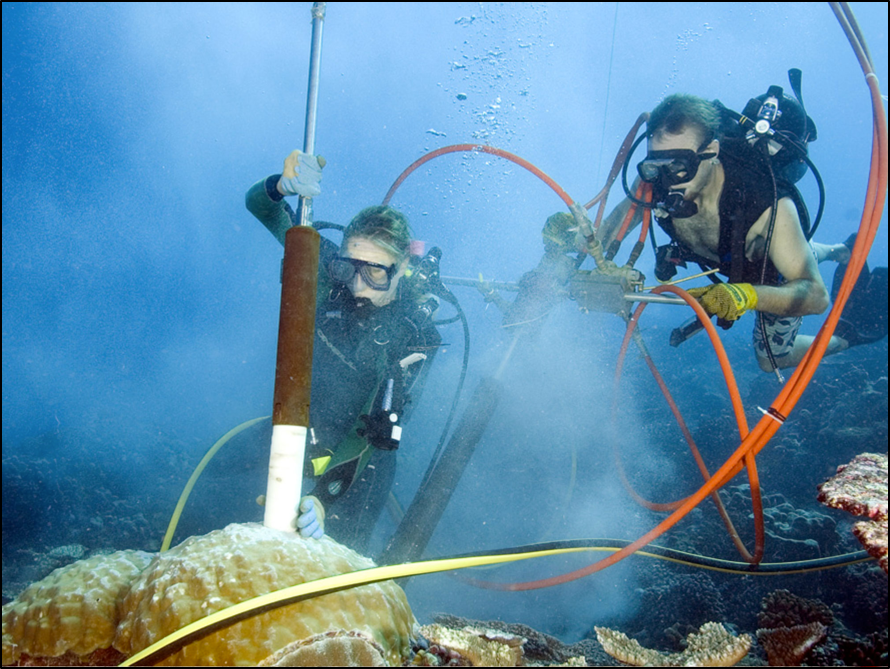
Because corals are so sensitive to changes in the condition of the waters they live in, their carbonate skeletons can be chemically analyzed along their growth axes to understand how the conditions of water have changed over time. These conditions include sea surface temperature (SST), salinity, and pH, which in turn tell us temperature in the area the corals are from, rainfall patterns, and intensity of ocean acidification (3). For instance, the coral oxygen isotopes are particularly sensitive to SST, with some influence from salinity. Thus, when we measure the coral oxygen isotopes of the coral from the surface all the way to the base of the coral, we can reconstruct the temperatures in which the coral grew. This is because warmer conditions cause coral oxygen isotope abundances to become depleted, whereas cooler conditions produce an enrichment of these isotopes in the coral skeleton. The reliability of this proxy has been vastly and rapidly improving through replication and, when available, comparison with instrumental SST records.
Dr. Cobb extracting a coral core from our research site at Kiritimati Island in the central Tropical Pacific
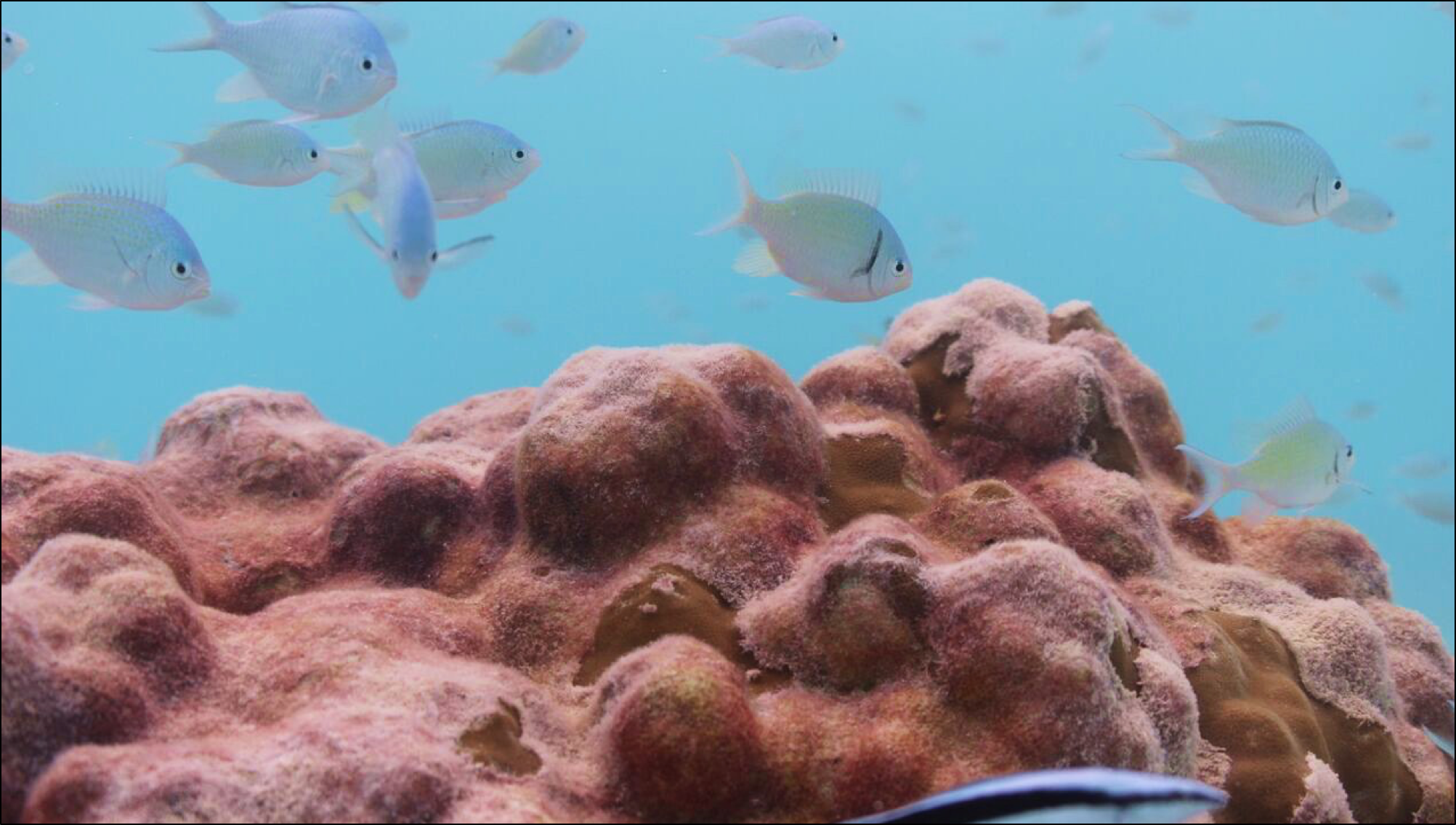
My undergraduate research project involves the paleoclimate reconstruction of corals in the central tropical Pacific during the massive El Niño event of 2015, which is the largest event on record as shown by some instrumental records. El Niño events are natural climate phenomena that occur every 2-7 years and bring climate extremes to various regions of the world, including heavy rainfall and severe droughts. For instance, if you are a resident of Georgia, you have noticed that this past winter has been unseasonably warm and dry. This is because we are currently experiencing a very strong La Niña event, which often brings climate extremes opposite those of an El Niño event (these strong La Niña events often occur for one or two years following a very strong El Niño event). In my research on this 2015 El Niño event, I have reconstructed SST by analyzing the coral oxygen isotopes in several cores from Kiritimati Island in the central tropical Pacific, in the heart of the El Niño region. I have several research goals in my project, but some of the major ones include: understanding the magnitude of the event by analyzing coral oxygen isotopes in an ensemble of corals from the central tropical Pacific, comparing that magnitude to instrumental records to understand how the signals differ, and comparing the magnitude to past coral oxygen isotopic records to understand the variability of El Niño events over time. Some findings suggest that these events are intensifying over time and becoming more variable, so this is an active area of research. Understanding these events in both the natural and anthropogenically-forced sense is critical when trying to understand human impact on the environment and trying to predict the occurrences of these events.
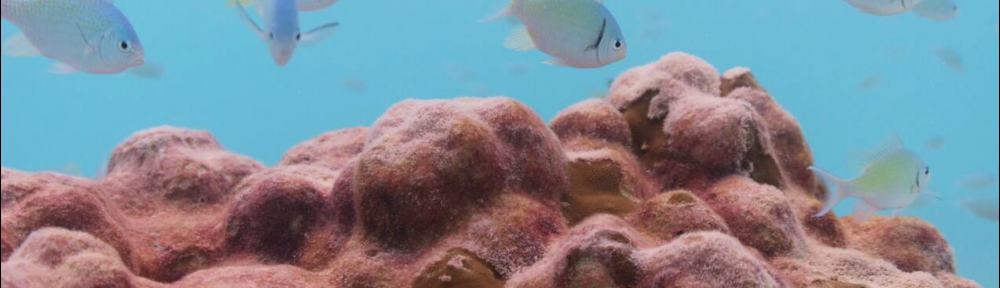
An algae-covered coral I’m studying. It died from the extreme ocean warming during the massive 2015 El Niño event
So how did these corals change my life? My research on corals has exposed me to a whole new world of science that I never knew I would be so passionate about. In about one year of undergraduate research I took on this independent project, learned how to use a mass spectrometer, did field work on Kiritimati Island, gave a talk at the world’s largest Earth Science conference in the world, and have been accepted to four graduate schools to pursue a PhD in paleoclimate. I also just found out today that I was awarded the National Science Foundation’s Graduate Research Fellowship, which provides me with funding to attend any graduate school for the next three years. If I hadn’t taken Dr. Cobb’s class and fallen in love with her coral climate science research, my life trajectory would be worlds different right now. I never imagined I would be in my fifth year of undergraduate studies and be so eager to spend another five years in school. However, I have been exposed to the world of geochemical proxies and I don’t ever want to leave. It took me two majors, one year of co-oping, one year of research, and five years of school to find my passion, but I wouldn’t change a thing about my undergraduate choices because they led me here. As for my next steps, my list of options for graduate research studies include water isotopes in ice cores, clumped isotopes in sediments, cosmogenic nuclides in subglacial bedrock, and maybe even more corals. I never thought this would be my life path but I’m excited to work on science no one has ever done before and answer questions about the universe that have never been answered. Speaking from experience, it doesn’t matter if you’re already going down one path in life. If you’re not sure if you’re making the right choices, try other things and see if you find something that would bring you more happiness.
Sources
Cobb, Kim. “Why Study Paleoclimate?”. http://shadow.eas.gatech.edu/~kcobb/
“How old is the Earth”. https://image.gsfc.nasa.gov/poetry/venus/q1152.html
“Picture Climate: How We Can Learn From Corals”. https://www.ncdc.noaa.gov/news/picture-climate-how-we-can-learn-corals
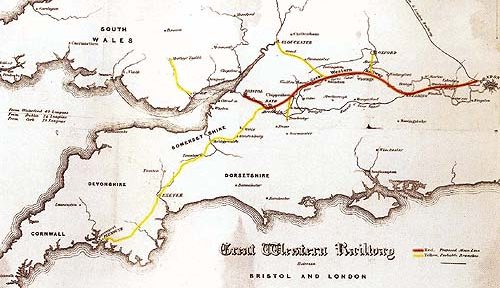
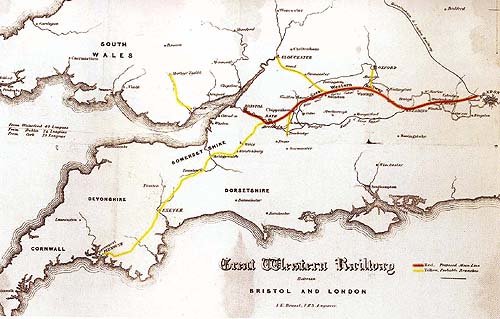
After living in Bristol for a time, Isambard went on to work on constructing The Great Western Railway (GWR) which would connect Bristol and the south west of England with London. At the young age of twenty seven in 1833 he began his work. Isambard was a great visionary who saw potential on a grand scale. He didn’t just want to build a railway. He wanted to build the fastest and smoothest railway in England.
To accomplish this he tackled a couple of controversial issues. He decided to use a broad gauge (the width of the track) of seven feet. This was counter to common practice of using the regular gauge which was thinner. This broad gauge would allow for trains with larger wheels where the carriage sat between them instead of on top, lowering the center of mass. The goal of all of this was to allow much faster travel and at the same time a smoother, more comfortable ride. Secondly he surveyed a route for the railway that would almost never change elevation. By doing this, the train would maintain the same speed for most of its journey. Once finished, This vision of excellence was England’s pride and joy and nicknamed “God’s Wonderful Railway.” Isambard’s genius was not in inventing new technologies, but in his ability to combine the resources and technology available to him and to expand society’s capabilities beyond what was thought possible. This genius was evident in the construction of the GWR.
A Map of the Great Western Railway Connecting Bristol and London
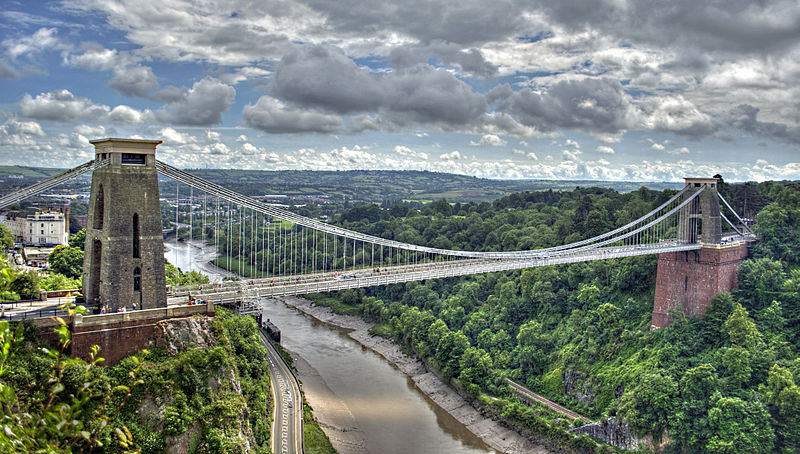
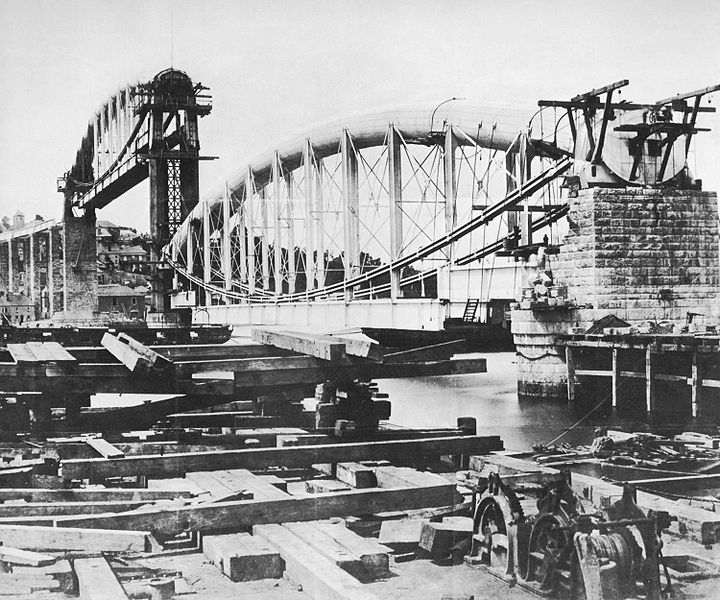
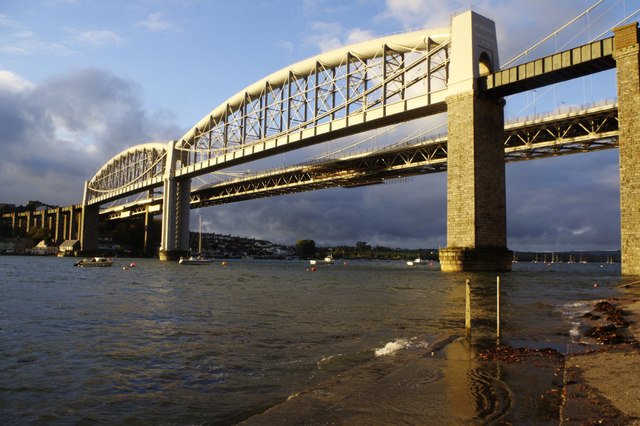
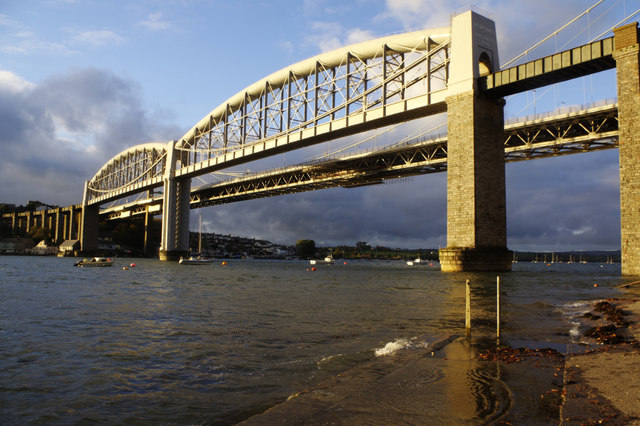
Three of I.K. Brunel’s most memorable civil engineering projects were a part of the GWR. The Royal Albert Bridge, the Maidenhead Railway Bridge and the Box Tunnel. Each of these projects show Isambard’s audacity and vision in their own way. Spanning the river Tamar, the Royal Albert Bridge was the first of Brunel’s tributes to ancient Egyptian architecture and a bold engineering project. What was unique about this wrought iron suspension bridge was that it didn’t anchor its pylons in the bank for support, like most suspension bridges still do today. Consider the Clifton bridge, another one of Brunel’s more traditional suspension bridges. Like the Golden Gate Bridge it has cables anchored on either shore supporting the pylons. The Royal Albert on the other hand, has lens shaped iron trusses (supporting framework) which keep the pylons from collapsing inward from the weight of the bridge. The Royal Albert Bridge’s elegant design still stands today as a testimony to Brunel’s vision of engineering as not just a pragmatic field of work, but an artistic one as well.
Clifton Suspension BridgeThe Royal Albert Bridge TrussThe Royal Albert Bridge
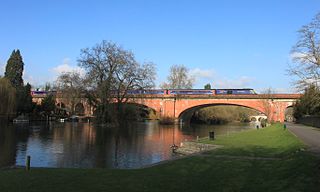
The Maidenhead Railway Bridge further exemplifies Brunel’s audacity and understanding of aesthetics. At the time, this simple but elegant little bridge had the longest spanning brick arches in the world. Many engineers laughed at the project, claiming that the arches were too long and that the bridge would collapse as soon as he took away the scaffolding. Well, it didn’t collapse and the bridge still stands there to this day, nearly two hundred years later. Again, Isambard proved his courage and strength of character in the face of adversity.
Maidenhead Railway Bridge
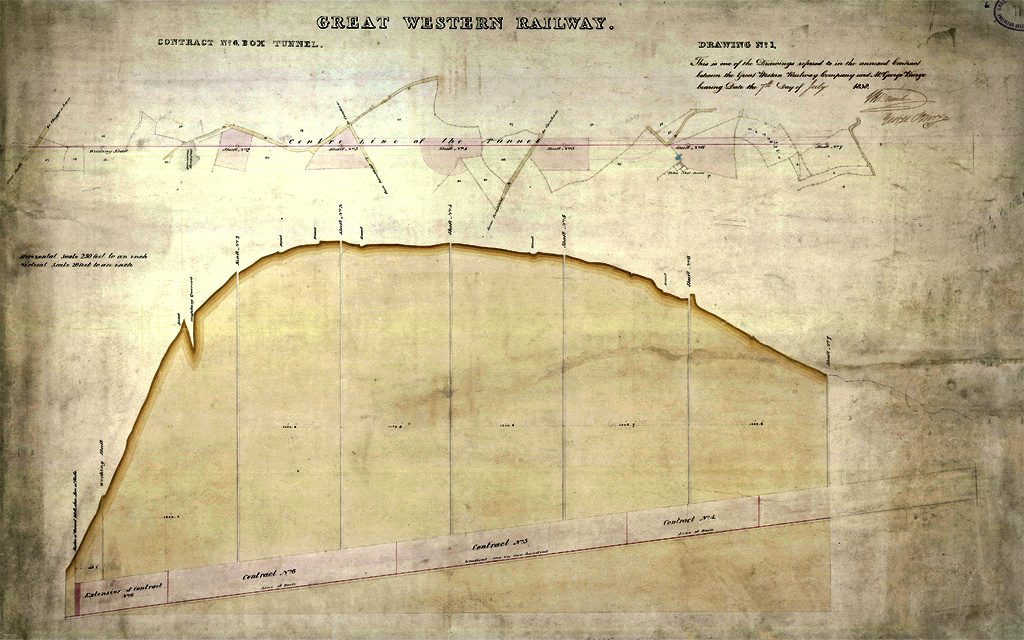
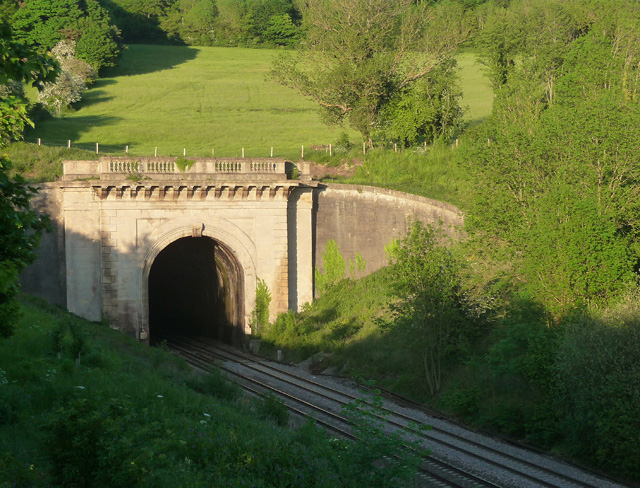
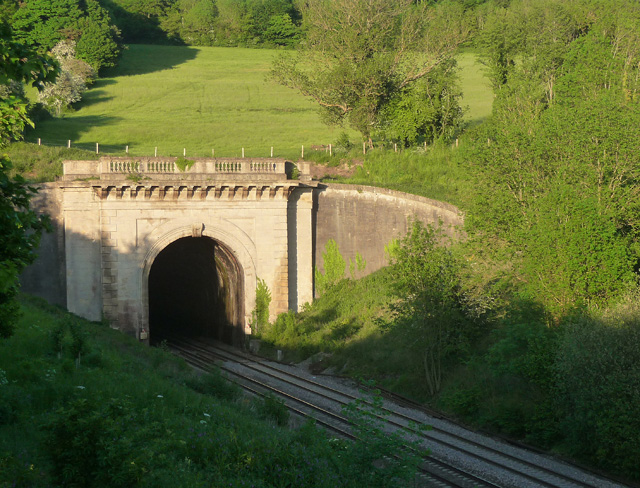
The third historic civil engineering project we will look at is the Box Tunnel. It goes under Box hill and was one of the most challenging segments of the railway. The ground they were tunneling through was composed of oolite limestone, fuller’s earth, and forest marble. The oolite was particularly difficult to tunnel through and required almost exclusively explosives. Showing wisdom far ahead of his time, Brunel contracted the job out to different teams who had previous experience with each specific forms of geology, thereby making his plans suit the ground, which was something his father always advocated. The tunnel needed no inner support against cave-ins as it was through such solid rock. Unfortunately, because of the nature of the tunneling, the loss of life due to accidents was extremely high. Even so, when the Box Tunnel was finished it was the longest tunnel in England. There is much debate as to whether Brunel built it intentionally so, but the tunnel is oriented so as to let the sun through from end to end only on his birthday. The length and difficulty of the tunnel along with the graceful entrances on either side made the Box Tunnel one of the most memorable engineering projects on GWR.
Box Tunnel PlansBox Tunnel Entrance
Any one of these three constructions would have made Brunel a memorable engineer, but that wasn’t the end. In addition to being an incredible civil engineer who worked on such world renowned projects as the Thames Tunnel and the Great Western Railway, Brunel was also interested in building ships. I will go on to discuss this monumental career shift into mechanical engineering in my next post.
Buchanan, Angus.Brunel: The Life and Times of Isambard Kingdom Brunel. London, New York: Hambledon and London, 2002. Print.
Pugsley, Alfred.The Works of Isambard Kingdom Brunel : an engineering appreciation. London ; Bristol: Institution of Civil Engineers ; University of Bristol, 1976. Print.