[WATU 2]
Category: Articles
-
5 Alternative Facts on Climate Change Disproved
Government officials are making several claims about one of today’s hottest topics, climate change, yet are lacking some scientific proof…
1. Global Warming is a hoax.

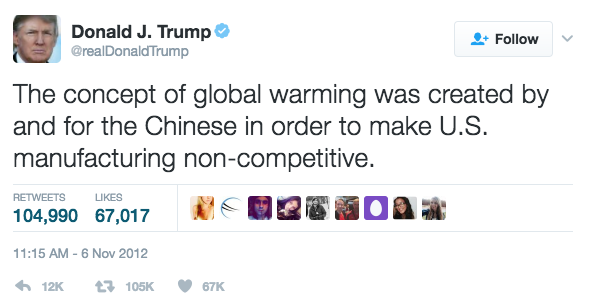
An overwhelming majority of the scientific community agrees that global warming is a real crisis, not a hoax created by the Chinese. According to the Intergovernmental Panel on Climate Change (IPCC), “it is extremely likely (95–100%) that human influence has been the dominant cause of the observed warming since the mid-20th century.”[1] Human actions have been largely attributed to snow and ice melt, changes in the hydrological cycle, and sea level rise. Also stated by the IPCC, “Human influence has been detected in warming of the atmosphere and the ocean, in changes in the global water cycle, in reductions in snow and ice, in global mean sea level rise, and in changes in some climate extremes. It is extremely likely that human influence has been the dominant cause of the observed warming since the mid-20th century.”1 Evidence for climate change due to anthropogenic forcing has been recognized by scientists across the world, with the primary driver being the measured increase in atmospheric carbon dioxide from environmentally harmful processes including fossil fuel combustion.
2. The Keystone XL Pipeline will not harm the environment.
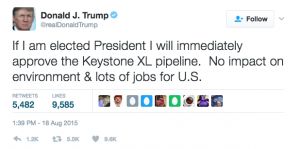
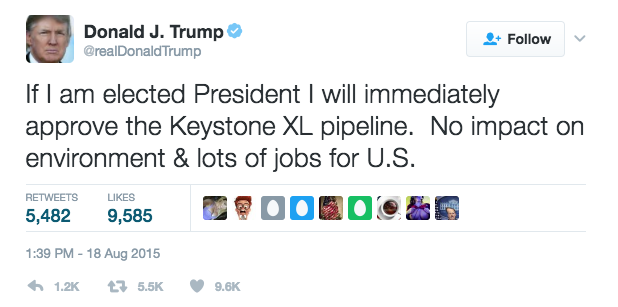
The Keystone Pipeline, an oil pipeline system running between Canada and the United States, has just been approved by President Trump to advance the construction of an extended line called the Keystone XL. Barack Obama rejected the project last November, due to extensive proof that the disadvantages far outweigh the potential benefits. The Keystone XL would have harmful environmental impacts including a projected generation of over 22 billion tons of carbon pollution, which has been proven to exacerbate climate change (2). In addition to the emissions that will be caused by the pipeline extension Canada will be losing 54,000 square miles of untouched wilderness, which will cause significant loss of habitat, increase erosion, and reduce the amount of trees available to absorb atmospheric carbon (3).
3. NASA’s Earth Science division’s environmental monitoring efforts are “politically correct”. –Robert Walker
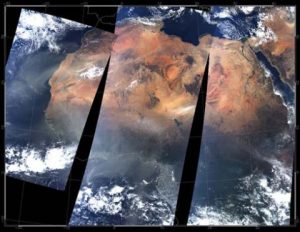
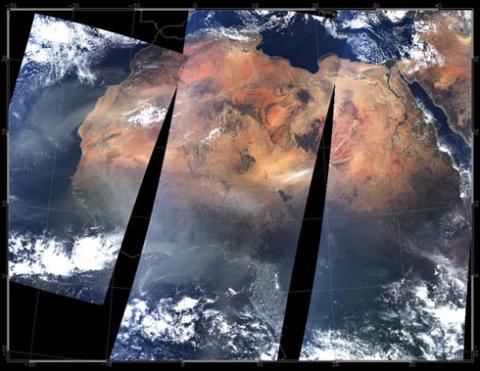
NASA’s Earth monitoring satellites greatly assist with tracking and predicting major climate events, such as this dust storm blowing across Northern Africa. (2) Walker, a senior adviser for President Trump, also stated that “over half the climatologists in the world doubt the influence of human activity on climate change”5. The latter statement has already been proven to be factually incorrect in the first scientifically disproven alternative fact, demonstrating Walker’s lack of credibility on the matter. NASA’s Earth satellites have consistently proven to be an invaluable resource to humankind. They have repeatedly proven the reality of the climate change issue at stake with evidence of rising global temperatures, sea level, and greenhouse gas emissions. Removing the ability to track these environmental trends with human activity would also remove the ability to show the global harm caused by increased greenhouse gas emissions from projects such as the Keystone XL Pipeline. With Trump’s plan to reassign some Earth monitoring efforts to NOAA (National Oceanic and Atmospheric Administration) and NSF (National Science Foundation), who both have significantly smaller budgets, the performance of these critical satellites will diminish extensively. NOAA and NSF would not have the time, money, and resources to take on these extra duties to sufficiently track essential environmental changes that are rapidly occurring daily. By shutting down NASA’s Earth Science division, a wealth of environmental data that is currently being used to generate predictive models and identify long-term climate trends will greatly diminish. Even if Earth satellites launch in the future, under a different administration, the gap in data will be a severe setback for climate science with long-term impacts that can take decades to recover from.
4. Record temperature lows are a sign that climate change isn’t real.
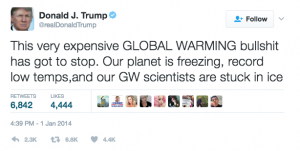
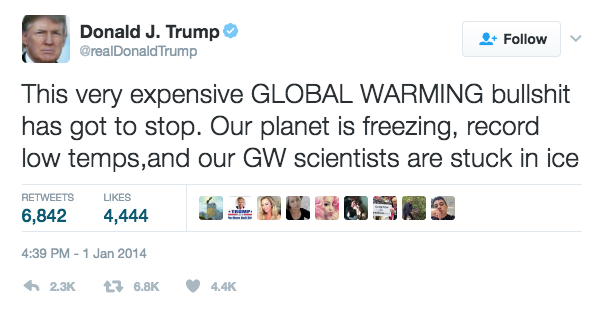
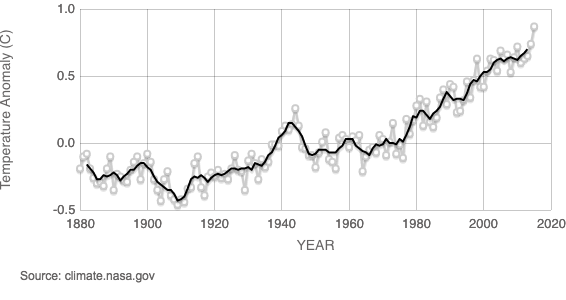
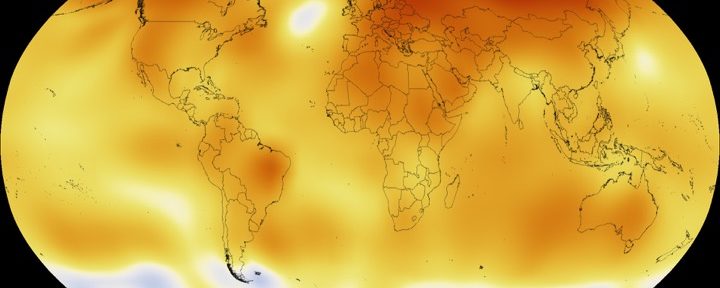
Rising global temperatures cannot be sensed by a human from day to day life. According to NASA, global mean temperatures have increased by 1.4° Fahrenheit since 1880, with most of this warming (2/3 of it) occurring since 19756. Temperatures fluctuate significantly due to natural cycles such as winter and the El Niño Southern Oscillation (ENSO), which drive temperature extremes to various parts of the world. Despite occurrences of cold weather, the global mean temperature is still rising at a nonlinear rate, as shown below. Additionally, the climate change crisis is not solely about warmer temperatures. Human activity has been related to changes in the hydrological cycle, atmospheric composition, frequency and intensity of climate phenomena such as ENSO and monsoons, and other key earth systems that impact global communities and ecosystems (1).
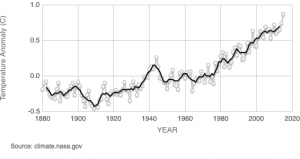
Global Surface Temperature since 1884, with the 10 warmest years occurring since 2000 (3). 5. We cannot conclusively say how much human activity is interfering with the climate.
“The climate is changing and human activity impacts our changing climate in some manner. The ability to measure with precision the degree and extent of that impact, and what to do about it, are subject to continuing debate and dialogue.” –Scott Pruitt (7)
With only 5% of climate scientists denying the existence of sufficient proof to link human activity as the primary cause of climate change, Pruitt’s statement of the debate behind climate change is misleading. The overwhelming majority of climate experts are not debating this issue. However, since Pruitt’s argument is based on the fact that 100% of climate scientists are not in agreement over the extent of human activity on the climate, he is emphasizing the need for further research on the topic to be conducted in order to produce more conclusive findings. If the 95% of climate scientists who agree that climate change is a real global crisis, then conclusive findings are necessary to protect the homes and health of both our generation and the next. Climate change has significant potential to threaten future existence of coastal communities, stability of ecosystems all over the world, and the health of the 7.5 billion people inhabiting the planet.
References
1. “IPCC, 2013: Summary for Policymakers. In: Climate Change 2013: The Physical Science Basis. Contribution of Working Group I to the Fifth Assessment Report of the Intergovernmental Panel on Climate Change”. [Stocker,T.F., D. Qin, G.-K. Plattner, M. Tignor, S.K. Allen, J. Boschung, A. Nauels, Y. Xia, V. Bex and P.M. Midgley (eds.)]. Cambridge University Press, Cambridge, United Kingdom and New York, NY, USA. http://www.ipcc.ch/pdf/assessment-report/ar5/wg1/WG1AR5_SPM_FINAL.pdf>
2. Biello, David. “How much tar sands add to global warming”. Business Insider. Jan 2013. http://www.businessinsider.com/how-much-tar-sands-add-to-global-warming-2013-1
3. “Final Supplemental Environmental Impact Statement for the Keystone XL Project Executive Summary”. Jan 2014. United States Department of State Bureau of Oceans and International Environmental and Scientific Affairs https://keystonepipeline-xl.state.gov/documents/organization/221135.pdf
4. “Trump to scrap NASA climate research in crackdown on politicized science”. The Guardian. 2017. https://www.theguardian.com/environment/2016/nov/22/nasa-earth-donald-trump-eliminate-climate-change-research
5. Norianne, Elli. “Climate denial is the official stance of the Trump administration”. Daily KOS. Nov 2016. http://www.dailykos.com/story/2016/11/28/1605040/-Climate-Denial-is-the-official-stance-of-the-Trump-administration
6. Carlowicz, Eric. “Global Temperatures”. NASA Earth Observatory. http://earthobservatory.nasa.gov/Features/WorldOfChange/decadaltemp.php
7. “Questions for the Record for the Honorable E. Scott Pruitt”. Environment and Public Works Committee. Jan 2017. http://www.epw.senate.gov/public/_cache/files/6d95005c-bd1a-4779-af7e-be831db6866a/scott-pruitt-qfr-responses-01.18.2017.pdf
Photo Sources
1. “Donald J. Trump on Twitter”. Twitter. https://twitter.com/realDonaldTrump/status/265895292191248385
2. “Global Climate Change: Vital Signs of the Planet”.NASA. http://climate.nasa.gov/vital-signs/global-temperature/
-

England’s Greatest Engineer: The Eighth Wonder of the World
To Isambard Kingdom Brunel, January 12th, 1828 seemed like just another Saturday morning. Little did he know, it could have been his last. Brunel had only slept a mere four hours the night before, but this was typical as he had been working twenty hours a day trying to build the most daring engineering project in the world: the first-ever underwater tunnel. This tunnel under the river Thames was to be twelve hundred feet long. Brunel and the six workmen he was with that morning knew that the river had been dredged the day before and that there might have been some damage done to the river bed. As they were walking along the tunnel inspecting the walls, the water suddenly broke through the brickwork and the tunnel flooded with river water. Tragically, the six workmen were swept away to their deaths in the disaster. Unfortunately, workplace deaths such as these were much more common as they were only beginning to develop safety standards. As for Brunel, he was knocked unconscious and flushed back to the entrance of the tunnel where, waterlogged and half drowned, one of his assistants plucked him from the water. This simple act saved Brunel’s life. The twenty two year old would go on to become the greatest British engineer in history.

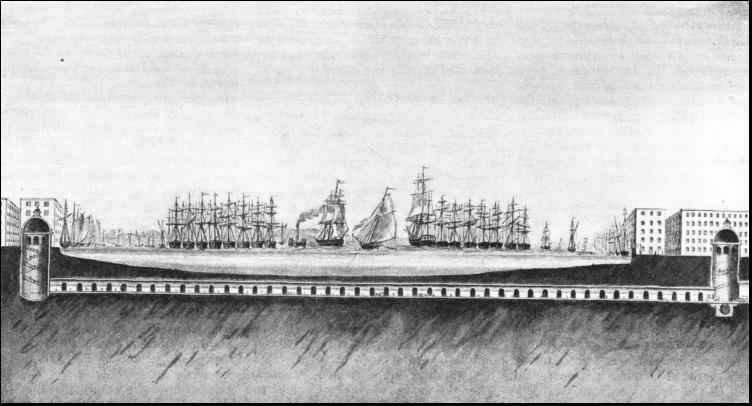
Cross-Section of Thames Tunnel Project Isambard Kingdom Brunel was born to Marc Isambard Brunel, who was a well known civil engineer in his own right and patented the tunneling shield mechanism, which protected workers as they dug out individual sections. This tunneling shield’s principles are still used today. At the age of eighteen, I.K. joined his father’s company, which was building the Thames tunnel. Due to a senior engineer quitting the venture and his father’s ill health, Brunel found himself in charge of the project. The young engineer was working furiously and often at the front of the operations. The tunneling encountered many problems, particularly flooding. During one of these flooding instances, his swimming prowess enabled him to save the lives of a number of other workers.

Tunneling shield invented by Marc Brunel In addition to the engineering difficulties of the project, Brunel had to overcome financial setbacks as the Thames tunnel project suffered from a chronic lack of funding. He adapted and learned the social graces required to court investors. To promote and publicize the project, he turned the tunnel into a venue where he held dinner parties for curious and influential guests. After the accident on the twelfth of January 1828, Brunel spent a number of years looking for other projects and recovering from internal injuries. His time working on the tunnel, bearing such a great responsibility, had given him experience and authority when leading men.

Banquet in Thames Tunnel – George Jones Brunel would go on to make an even greater impact on English civil and mechanical engineering by building railways, tunnels, bridges, and ships which I will continue to tell you about in subsequent posts. His determination and drive in the face of projects that had never been attempted makes Brunel the perfect example of the spirit of England during the industrial revolution. I discovered this historical engineer while I was in high school, and he instantly became one of my role models and a reason why I became interested in mechanical engineering. My hope is that you too can be inspired by this daring young man who was only 22 when he took on the Thames tunnel project, nicknamed “the eighth wonder of the world”.
Sources:
- Petroski, Henry. “Engineering: Isambard Kingdom Brunel.” American Scientist. 80.1 (1992): 15-19. Print.
- Buchanan, Angus. Brunel: The Life and Times of Isambard Kingdom Brunel. London, New York: Hambledon and London, 2002. Print.
- Pugsley, Alfred. The Works of Isambard Kingdom Brunel : an engineering appreciation. London ; Bristol: Institution of Civil Engineers ; University of Bristol, 1976. Print.
-
Deadly Minerals
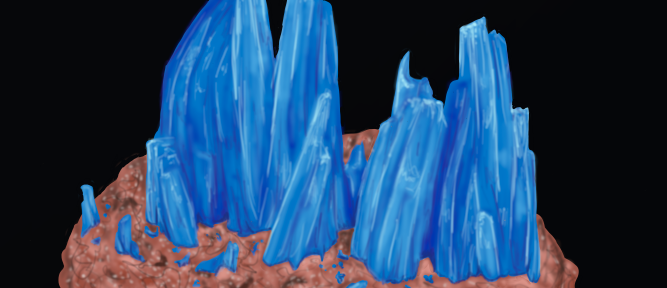
It’s easy to forget that some of the minerals found in the Earth can be extremely dangerous, despite the beautiful forms they can take. These minerals can prove to be toxic and potentially deadly if mishandled. So I present to you seven minerals toxic minerals, so you can identify them if you ever (have the misfortune to) come across them:
Chalcanthite (CuSO4 • 5H2O):
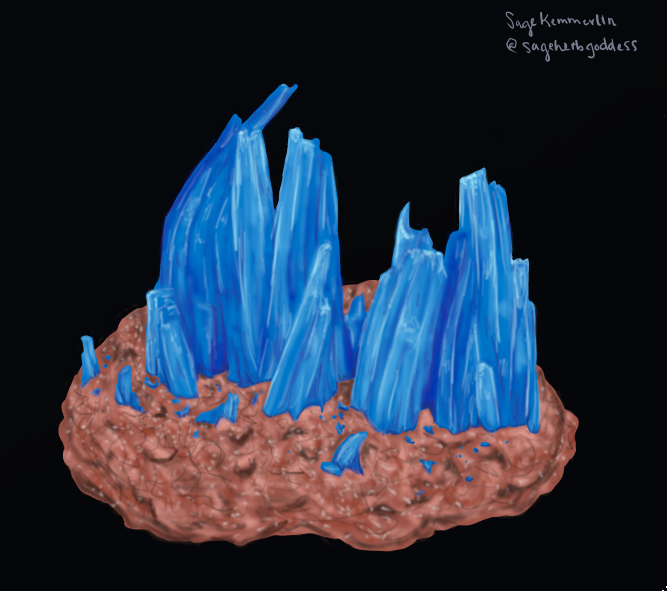
Image Credit: Sage Kemmerlin
The stunningly blue mineral is a natural, water-soluble copper sulfate. It is commonly found in copper deposits in arid regions. If chalcanthite touches water it easily dissolves and become hazardous because of the copper it contains. If copper is ingested, the effects of this poisoning are gastrointestinal distress, destruction of red blood cells and liver damage (sounds fun right?). If the copper poisoning is severe, these symptoms can lead to death. Chalcanthite should never be taste tested or placed in natural waters. [1][2]
Hutchinsonite (TIPbAs5S9):
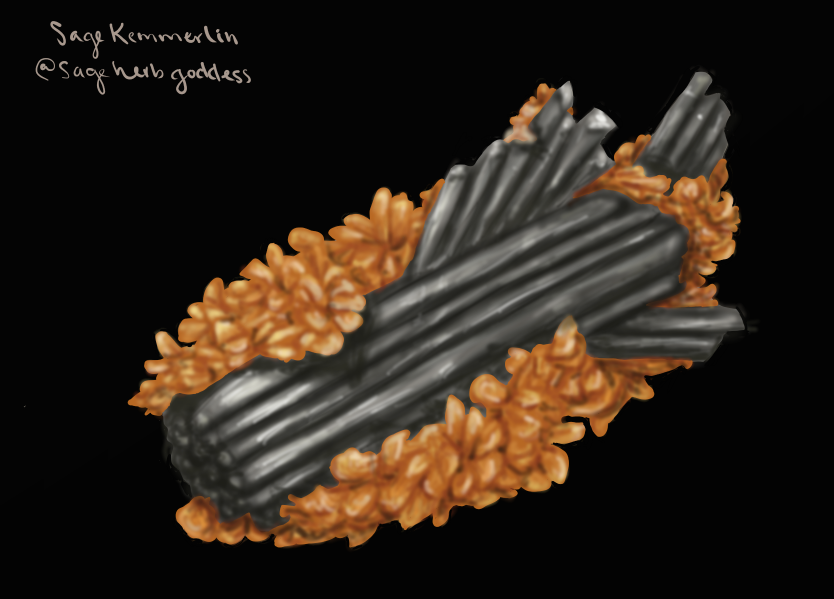
Image Credit: Sage Kemmerlin
Hutchinsonite is commonly found in ore deposits in the mountainous regions of Europe. Hutchinsonite is a mineral formed with a deadly mixture of arsenic, lead, and thallium; all three elements are toxic to humans. Thallium salts have been used in rat poison and insecticides so that alone should tell you not to mess with this mineral. If poisoned with thallium, you only have 72 hours to start treatment to avoid risk of permanent neurological damage. So maybe don’t lick it. [3]
Orpiment (As2S3):

Image Credit: Sage Kemmerlin
This orange-yellow, glistening mineral is made up of arsenic and sulfur and commonly grow near hydrothermal vents, fumaroles, and hot springs. If allowed to oxidize, the arsenic powder can be deadly to humans due to its neurotoxic and carcinogenic properties. Orpiment has a powerful garlic scent due to the arsenic. If you see a pretty orange mineral that smells like garlic, make like a vampire, and get out of there. [4]
Galena (PbS):
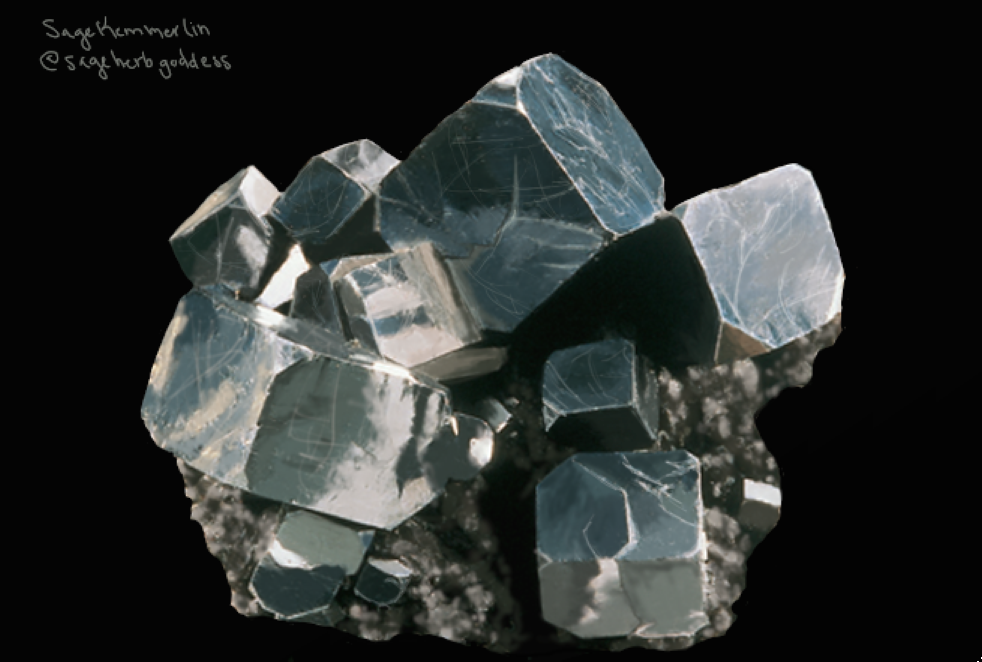
Image Credit: Sage Kemmerlin
Galena is the primary ore mineral of lead with a signature cubic structure. Any inhalation or ingestion of Galena’s dust will likely result in lead poisoning. Lead can effect every organ system in the human body, but the nervous system is most sensitive to lead’s toxicity sometimes causing ataxia, comas, convulsions, even death. So if you want to avoid maladies such as ataxia and death, it’s best to not lick Galena or inhale any of its dust. [5][6]
Tobernite (Cu(UO2)2(PO4)2•12H2O):
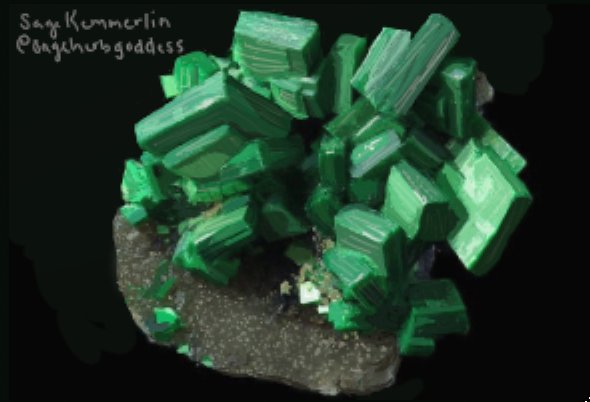
Image Credit: Sage Kemmerlin
Tobernite is a stunningly green prism shaped mineral, found in granitic rocks. Oh and just as a side note, torbernite is radioactive due to the uranium it contains. So if you prefer not to get cancer, avoid prolonged exposure and never ever ingest or inhale it. [7]
Cinnabar (HgS):
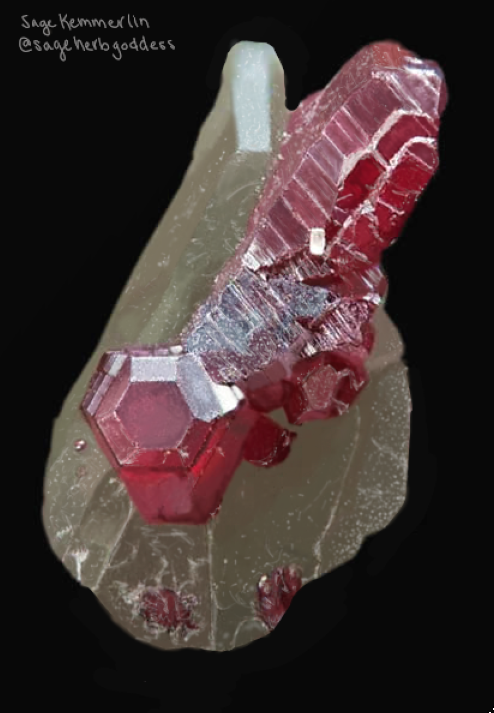
Image Credit: Sage Kemmerlin
This brilliantly red mineral is the main ore of mercury. It forms near volcanoes and sulfur deposits. It has historically been used as a coloring agent. Mercury is toxic to humans and mercury poisoning can cause tremors, muscle atrophy, and in extreme cases, respiratory failure and death. As before, don’t ingest or inhale any cinnabar. Don’t heat it in an unventilated environment, because it will emit toxic fumes. So maybe don’t color your pottery with cinnabar (it’s not a good idea). [8][9]
References:
- http://www.mindat.org/min-959.html
- http://des.nh.gov/organization/commissioner/pip/factsheets/ard/documents/ard-ehp-9.pdf
- http://www.mindat.org/min-1954.html
- http://www.mindat.org/min-3021.html
- http://www.mindat.org/min-1641.html
- https://www.atsdr.cdc.gov/csem/csem.asp?csem=7&po=10
- http://www.mindat.org/min-3997.html
- http://www.mindat.org/min-1052.html
- http://www.medicinenet.com/mercury_poisoning/article.htm