Category: Articles

  • The Science behind ‘Frenemies’

    The Science behind ‘Frenemies’

    High school can be very painful for anyone who is the slightest bit different.  Thankfully, I’m 5 years removed from it but my little sister is a freshman so I get to sit back and observe this social phenomenon as an objective outsider.  When you’re in high school (specifically a teenage girl in high school), it seems that every social situation is a CRUCIAL moment in your life.  Not abiding by the invisible rules of pubescent social etiquette could result in getting shunned from the clique.  This, by the teenage spectrum of standard exaggeration, is death.  Girls strive to fit in and seek reassurance that they are ‘secured’ in their pack.  This essentially creates an army of mini tyrants disguised in pink twill.

    This brings me to introduce the concept of a ‘frenemy.’  A ‘frenemy’ is someone who you’re friends with by all appearances, but is actually someone who you would like to squirt ketchup on.  In the high school scenario, she might be characterized as the bully of the group or perhaps the arrogant leader of it.  Either way, you find yourself supporting her terrible behavior because you’re too afraid to speak out and risk losing your social standing.

    There’s a biological reason for this behavior.  According to Dr. Louann Brizendine, who wrote the fantastic book ‘The Female Brain,’ the main job of a girl brain is to keep social harmony.  The teen girl’s brain circuits are wired so that social rejection actually triggers a neural stress response (Brizendine 35).  When a relationship is threatened, the female’s feel-good brain chemicals drop (such as serotonin, dopamine and oxytocin) and the stress hormone cortisol takes over.  Now this has become a matter of life or death.  She’ll start feeling anxious and fearful of being rejected.  She’ll become cranky to family members.  She soon begins to crave that feeling of closeness again, for that great intimacy drug oxytocin.  She’ll eventually decide to stick to her clan of frenemies to keep that utterly important social harmony.

    This can also explain why girls go to the bathroom together.  Those girls hanging out in the bathroom are reinforcing their most important relationships- with other girls.  Many women find biological comfort in one another’s company and language is the glue that connects them together.  Talking and sharing secrets activates even more oxytocin release.  The oxytocin reinforces the desire to gossip and connecting then brings a sense of pleasure and well-being (Brizendine 37).

    Why exactly are girls built this way?  One plausible reason goes back to primitive basics.  Remember- our modern female brain still has the circuitry of our most successful foremothers.  Studies have shown that female mammals in a bonded social group are more likely to come to another’s aid in a threatening situation, such as if a male is overly aggressive to a female.  Members of a group can alert one another of conflict ahead of time, enabling them to move away from potential danger and to continue safely tending dependent children.  This pattern of behavior is called ‘tend and befriend,’ and it is particularly a female strategy (Brizendine 42).  Since teen girls are biologically reaching optimal fertility, their primitive brain begins to stress the importance of this strategy.  It’s saying, “Lose that bond with your peer, and both you and your offspring are toast.”  No wonder girls find it unbearably hard to cope with feelings of being left out.

    There’s even a biological reason for why some teen girls can become so evil to one another.  Hormonal surges can turn these girls mean but so can sexual competition.  This competition is much different in girls than in boys. When females are competing with other females, they often use subtle tools, such as spreading rumors, to undermine a frenemy.  That way she can cover her tracks.  Instead of using force, which is the male’s standard protocol, the female uses her best set skill-language- to get what she wants.  Such tactics lessen the risk of destroying the bond that the teen girl brain sees as essential to survival.

    The teenage girl brain is drowning in estrogen and other chemicals that make it pretty difficult to survive these years. It’s always drama, drama, drama. That’s not to say that teenage boys aren’t dealing with an insurgence of hormones- they are and they have their own set of embarrassing problems.  But research findings like these can reassure a gal that her feelings of mayhem are only temporary.  So if you are a teenage girl, remind yourself that you will mellow out.  Then remember to tell your frenemy that it is not her fault she’s acting like a jerk but that it is just her cortisol coming out to play.

    Brizendine, Louanne. The Female Brain.  New York: Broadway Books, 2006.


    Image: photostock / FreeDigitalPhotos.net
     

  • Dive Log

    Dive Log

    In this day and age, it is so very common to lose ourself in the monotony of our daily lives, the sound as our heels hit the pavement, rustle of the leaves as we pass by the bus stop on a particularly windy day. We get so accustomed to the way our skin sloughs off the water from our shower in the morning that we don’t take the time to notice that that compound, that deliciously ever-present H2O, covers more than half of the earth, and without it, our bodies would cease to function.

    We also forget the intense beauty that exists in our oceans.

    Most people never get to experience what it is like to simply immerse themselves in an aquatic environment. Yes, aquariums, like the one in my home state of Georgia, are fantastic for getting to observe the wonderful creatures that we would otherwise never have a chance to interact with. But it’s not enough for some people.

    It’s not enough for me.

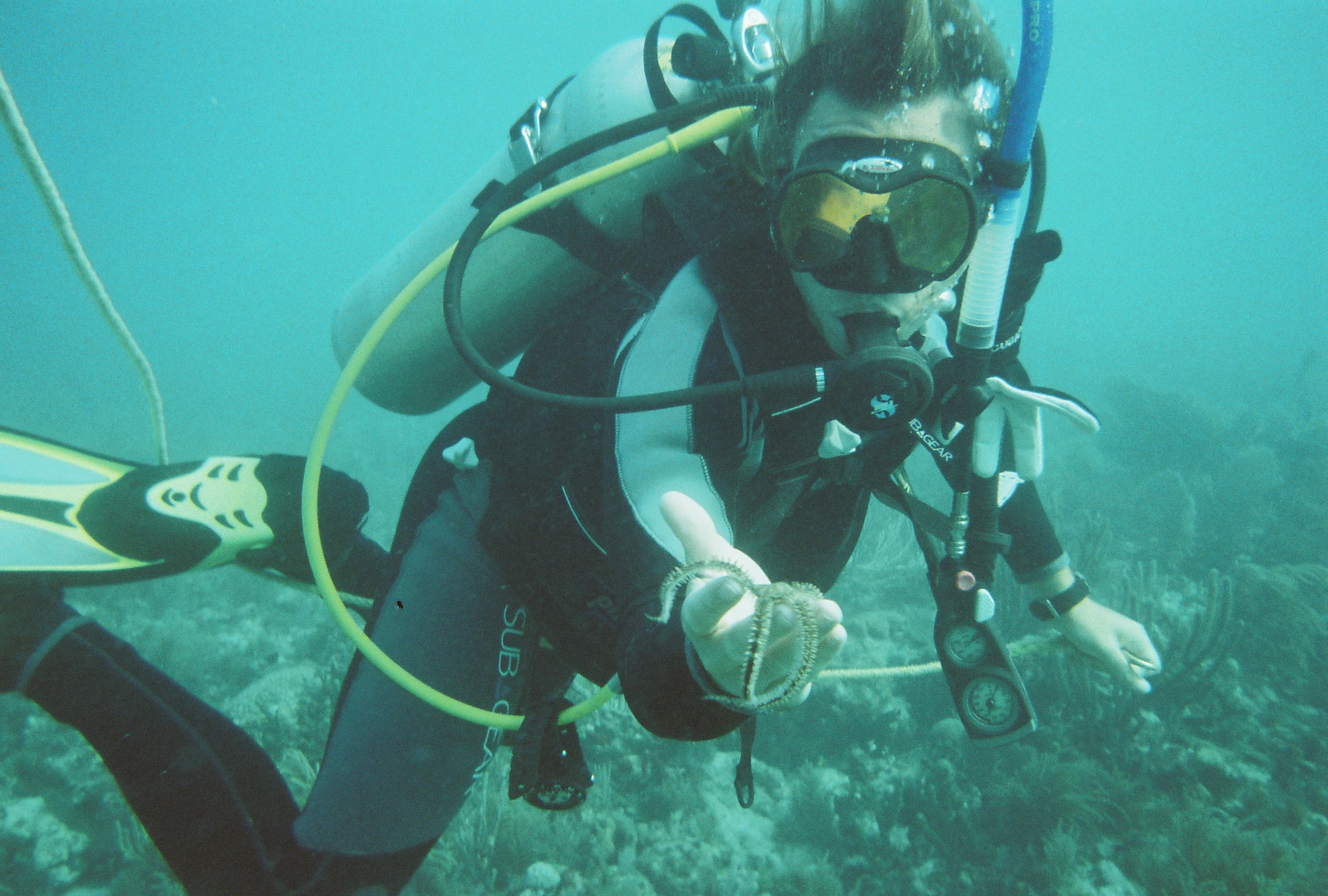
    Over my winter break, on the second to last day of 2011, I went on my first ever real dive. While I am not SCUBA certified, my mother and I were able to find an alternative called SNUBA diving. The concept of a SNUBA dive is the same as SCUBA dives; you go down with a breathing apparatus, deeper than you could while free-diving, but your air supply is a raft at the water’s surface instead of a tank on your back. It was a wonderful experience for someone unable to go on dives otherwise.

    It got me thinking, though. The reefs off of the Florida Keys were once as beautiful and vibrantly alive as those off the coast of Texas or even those in Australia. Now, though, they are sick. While fish were obviously there, they lived in very small patches of the reef. Corals of all kinds were dying, grey and fragile. The occasional nurse shark brushed by as my brother, our instructor, and I visited its home, but the ecosystem was clearly suffering. Our instructor told me later that the reefs were getting more and more sparse for observational divers like myself.

    Those reefs, and many others, are on the verge of dying. That dive made me face the death of every single small polyp in those reefs. But their dying brought to life in me a spark of inspiration. It brought to life my motivation for getting my degree in biology, for getting certified in SCUBA diving and figuring out how to spread the word of our dying reefs.

    Secretly, about to become not-so-secretly, that is my belief in this, Charged Magazine. It is my hope that you, dear reader, are not stuck listening to the ins and outs of chemical reactions, or trying to figure out how the Krebs cycle works, or why the fifth derivative of a function is actually important in the real world. It is my hope that you find something in the real world, something tangible, that makes you passionate. For me, that passion is the ocean, and how I want it to become a place of endless wonder, not endless fear, for the human race.

    On behalf of the entire Charged staff, present and future, I welcome you to a world of inspiration, a world of explaining miracles. I welcome you to the world of science.

    Above are some shots from my dive.

    For more pictures from other dives, I recommend visiting www.abelic.net/

  • Pick a Door, Any Door

    Pick a Door, Any Door

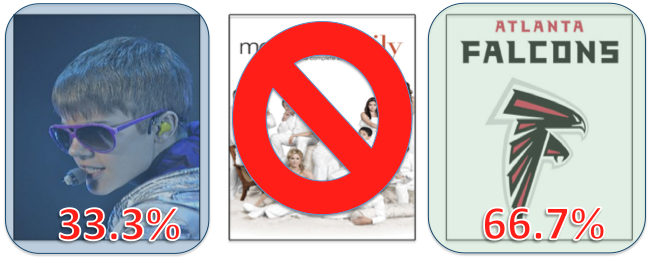
    You’re trapped in a bland room with absolutely nothing but three ordinary, poster-plastered doors. The first door is covered with pictures of the teen pop star sensation, Justin Bieber singing in front of an audience of entirely teenage girls (roughly the composition of his entire fan base). The second door displays a montage of the cast of Modern Family, the TV show, which seems to have grasped the public’s short attention span for the time being. And lastly the third door includes a very sharp arrangement of Atlanta Falcon paraphernalia. You are told that behind one of these doors is a free ticket to any concert of your choosing, but behind the other two doors are free (did I mention enforced?) enrollment courses to…drum roll please…SAT classes! Your parents, who happen to spontaneously appear in your room, instruct you to choose any of the three doors and claim the “prize” behind it. Which door do you pick? Chances are if you value talented musical artistry, you’re at least not going to choose the Bieber door. Alright, alright, enough with the Bieber jokes. So you pick a door, the Bieber door. Now the catch is, your parents don’t open the door you chose. Instead, they open one of the other two doors (let’s just say the Modern Family door) and lo and behold, you get glimpse of the dreaded SAT class. Now, your parents offer you the once in a lifetime opportunity to either change your choice to the Falcons door or stick with Bieber. What do you do?

    This problem is essentially the teenage equivalent of the Monty Hall Problem,which you may recognize from the movie 21 directed by Robert Luketic and starring Kevin Spacey, Jim Sturgess, and Kate Bosworth. In this movie, the professor Micky Rosa, played by Kevin Spacey, poses a perhaps less embellished version of this dilemma to a student Ben, played by Jim Sturgess. Ben, being thoroughly well-versed in the principles of probability and statistics, decides to change his door. Why? The truth is that this entire problem is designed to play into the decision maker’s emotional bias. My version of the problem may attempt to do this more so than other versions given the decals on the faces of the door, but what’s life without a little imagination? While the scope of the movie 21 incorporates more than just this 5-minute scene, I wanted to take the time to investigate the mathematics behind this choice.

    When you first pick a door, there is approximately 33.3% chance (1/3) that your door contains the coveted concert tickets and about 66.7% that the doors you didn’t choose contain the tickets.
    When your parents open one of the other doors to reveal the SAT class, how has the situation changed? Probability dictates that since your door has a 33.3% chance of containing the tickets, the remaining door now has a 66.7% chance of containing the tickets.
    Thus, in reference to our earlier example, the conditional probability that the Falcons door contains the prize given that you originally chose the Bieber door and that the Modern Family door contains the SAT class is approximately 66.7%.

    Still aren’t convinced? Try thinking about the problem in the context of 100 doors. Your original door has 1% chance of containing the prize while the other 99 have an added total of a 99% chance that one of them contains the prize. As 98 of those 99 doors are exposed as “phonies”, the last door standing has a 99% chance of containing the prize as it has managed to outlive a 98-door elimination process. Now if you still don’t believe me, I encourage you to try it out! Take three cups and put a ping-pong ball (or any quiet object) under one of the cups. Then have a friend guess which cup contains the “prize”. Open one of the other cups (one not containing the prize) and ask if he wants to switch. Consistently run this experiment using his original choice regarding switching. If he chose to switch, he should be winning about 2/3 of the time. If he chose to stay, he should be winning about 1/3 of the time. Stay tuned for future posts about Math & Movies!

    Image Sources:

    Justin Bieber: wikipedia.com

    Modern Family: wikipedia.com

    Atlanta Falcons: ticketmaster.com

  • Sequins + Dress + Spotlights = Laserdress

    Sequins + Dress + Spotlights = Laserdress

    I had a chance to catch some of the Golden Globes the other night. By had a chance I mean, I elected to watch the Golden Globes. For a little bit. You know how it is, when you have a choice between watching celebrities clap or watching reruns of M*A*S*H you have to ask yourself, “When is the next time I can watch M*A*S*H?”

    When I did stick around, it wasn’t just because I think Emma Stone is a stone cold fox (I do), or because I thought Ricky Gervais is particularly funny (I didn’t), and it’s not because I really care what the celebrities are wearing (I don’t). It was all the dang sequins.

    Maybe this is just from a fashion uninitiated, but there were a lot of sequins going on at the Golden Globes. But then I thought about it – why not? Sequins do a pretty good job of catching the eye, and that’s kind of the red carpet Modus operandi, right? Sequins’ secret lies in their ability as a reflector of incident light. Much like a signal mirror used to reflect the sun towards a rescue plane, sequins sewn onto a dress (or a pair of hideous shoes at DSW) reflect any light that hits their surface at an angle equal in magnitude to the incident angle reflected through a plane perpendicular to the reflecting surface. This is analogous to bouncing a ball off of a smooth surface. If the ball is dropped straight down the angle of incidence is 0° and so the ball bounces straight back up. Meanwhile, if the ball is bounced at an angle like a basketball being bounce-passed between two players, after striking the ground the ball will travel towards the second player at an angle identical to that thrown by the first player. This is called specular reflection (with light not basketballs). When considering this concept from the viewers perspective of a be-sequined dress, the dress appears to shimmer and flash. If the light-source comes from a single direction (like a spotlight) then the incident angle is fixed and the relative angles of the sequins change with the motion of the wearer. The result is flashes of light as individual sequins pass through an orientation which places the reflection angle directly towards your eyeballs!

    Maybe that’s not that surprising to you, given that you have observed this phenomenon first hand dozens of times in mirrors. However consider this – not all light is made equal. Light can be described as wave traveling through space from the source. These waves have the shape of the trigonometric sine function when visualized in two dimensions, and have an associated wavelength that is related to the energy of different forms of light. To humans and many other species, our eyes detect this difference in wavelength as color, but only in a relatively narrow range of wavelengths. This is referred to as the “visible spectrum” , and the acronym ROYGBIV known by many a grade-schooler as the colors of the rainbow actually orders the visible spectrum correctly from longest to smallest wavelength!


    Thus, while sequins are reflecting the crap of out the visible spectrum, light waves with appreciably longer or shorter wavelengths will have different interactions. For this reason, reflectors designed to reflect these different wavelengths can require drastically different shapes and materials. Some examples include a satellite dish whose curved edges reflect microwaves (these are of similar wavelength to the ones used in microwave ovens!) towards central antenna (the prong in the middle) increasing the signal, and metal coated Mylar (a type of flexible plastic) used in space blankets and on satellites (the ones in space, not the dish on your roof) to reflect infra-red radiation. In the case of space blankets, these reflect infra-red radiation (light waves with wavelengths just above the color red in the visible spectrum responsible radiative heat transfer – this is why heat lamps in restaurants are red!) emitted by the wearer back to their body. On satellites this wavelength is emitted by the sun and reflected away from heat sensitive electronics. In the case of metalized Mylar, the reflection is diffuse rather than specular, meaning the reflection takes place at many angles.


    So we’ve learned that sequins are sparkly because they reflect light at discrete angles. If they operated with diffuse reflection, the entire dress would appear to glow rather than sparkle. Fingers crossed that the fashion community will one-up themselves at next years GGs. A simple experiment you can try at home can be done with a mirror, a yard stick, and a flashlight (or ideally a laser pointer). Measure one yard from a wall and place the mirror on the ground, then place yourself one yard away from the mirror facing the wall. Hold the flashlight at the top of the yardstick pointing towards the mirror. The reflected light should strike the wall at the exact height you are holding the flashlight! This is specular reflection in action!


    Image: m_bartosch / FreeDigitalPhotos.net

  • Facebook Friends: Why We Have So Many

    Facebook Friends: Why We Have So Many

    Me and my friends in a tour group in Amsterdam.

    You meet that hot rocker guy/girl at that concert you really like, and you guys trade names. You say, “Find me on Facebook”, and the next day or so, he/she adds you. You talk about wishing you were closer to the stage, the length of the concession lines, and why on Earth the T-shirt prices are so expensive. Typically, the conversation blossoms into a beautifully uninteresting synopsis of your daily routine: how tired you are despite normal hours of sleep, what YouTube links you think they’ll absolutely enjoy watching (because you do), and figuring out ways to make money without actually having a job.

    The chatter dwindles to a few comments or posts on one’s wall, then a “like”, and finally you’re down to that yearly “Happy Birthday (insert name here)” because you know they know its their birthday, and you don’t want to be that one guy/girl who doesn’t say anything. Why do we do this? Why don’t we talk to our friends anymore, and why have they forgotten us? Weren’t our YouTube links interesting?

    In the social media powerhouse we know as Facebook, I use the term “friend” lightly. Discussed by David McRaney in his blog, You Are Not So Smart, acquiring hundreds of friends on Facebook becomes a zero sum numbers game, with 150 as its approximate cap. You will typically be able to maintain a personal relationship with 150 people at any given time.

    The seemingly magical amount is the Dunbar number, developed by Robin Dunbar, a renowned anthropologist who correlated the size of the brain with the amount of potential social connections within a group. Even at this physiological limit, you’ll actively (on a daily or semi daily basis) talk to about 20. This doesn’t mean you’re a bad friend. You just have a limited neocortex.

    This cranial region takes into account social nuances and personal relationships. As your circle of friends increases, your maintenance of existing friendships increases several fold. Also, friends that have left your circle (be it geographic separation or interpersonal reasons) are harder to keep in contact with, as they require a portion of your processing power to keep the connection.

    The average person has 130 friends on Facebook (close to the Dunbar number), but there are people out there with +2,000. Do they talk to every single person they’ve ever friended? Of course not. It’s nearly impossible to do so with every other aspect of our lives screaming for attention. That’s not to say our social network isn’t a good thing. Facebook, Twitter, LinkedIn, and numerous other platforms for social networking are making communication easier than ever.

    We can have a great many loose connections to people, through our fascination with franchise coffeehouses, the latest Rube Goldberg contraption, or even that band that you like so much. 1 out of every 13 people on Earth is playing this never-ending game to increase their “friend stock”. Take solace in the fact that regardless of the number of Facebook friends we acquire, biologically, we’re basically average.