Category: Articles

  • Carbon Negative Concrete???

    Carbon Negative Concrete???

    As Industrial Design major who’s future career will most likely consist of creating a wide variety of products, something that is a big concern for me is creating environmentally friendly products. I don’t want to just create things that will eventually just create more waste and end up in a landfill polluting our Earth. I also don’t want to help perpetuate environmentally harmful manufacturing processes like those used to make cement that release tons of greenhouse gases into the atmosphere.  So when I heard about the Calera process I was very interested and wanted to look into it more to see if this was actually an effective and sustainable method for capturing and storing carbon.

    The Calera Corporation developed the Calera process to sequester CO2 from our environment in a way that is actually sustainable and effective over time. They then used this process to create a superior form of concrete that mimics the form of calcium carbonate that marine animals use to create their hard shells. The Calera process results in the production of the vaterite polymorph which is stable when stored in the absence of water. When water and other proprietary additives are added to the vaterite polymorph, a cement reaction occurs in which the vaterite transforms via a dissolution and reprecipitation reaction to form another polymorph of calcium carbonate known as aragonite. This conversion of vaterite to aragonite results in a material with high strength, just as natural systems like mother of pearl are also constructed from the aragonite polymorph of calcium carbonate.

    Concrete is the most widely used man-made material in the world. Concrete is made of roughly 80% aggregate (sand and gravel), 10-15% cement, and the remainder air, water, and additives. The Calera process can permanently mineralize carbon into either fine or coarse aggregates or a supplementary cementitious material that can be used to create building materials such as concrete. The standard process for manufacturing Portland cement generates large amounts of CO2 both from the fuel used to heat the raw materials as well as from the conversion of CaCO3 to CaO, which releases CO2. Because of this, concrete made from Portland cement carries a CO2 footprint of approximately 0.8-1.5 ton CO2/ton cement, translating to roughly 537 pounds of CO2/cubic yard of concrete! Calera SCM both captures carbon from one source and avoids carbon emissions from another. Concrete made with 20% cement replacement with Calera SCM, and 20% cement replacement with fly ash would have carbon footprint of negative 1146 pounds of CO2/cubic yard of concrete. This is a carbon savings of 1683 pounds of CO2/cubic yard of concrete compared to standard concrete. “With projected U.S. Portland cement consumption at nearly 200 million metric tons by 2020, a 20% market penetration with a SCM replacement level of 50% would reduce CO2 emissions by 30 million metric tons.” Which is far more than the reduction that would be accomplished by supplementing fly ash as a replacement for some portions of Portland cement used in regular concrete mix.

    The carbon capture method employed by Calera, is also unique because it has many possible inputs including: fly ash, brines, waste water, and flue gas. In capturing CO2 and other emissions from flue gas, Calera’s carbonate mineralization technology uses solid and liquid sources of alkalinity, such as fly ash, wastewaters, and brines. The outputs of the process are clean air, fresher water, and solid materials that can be used as an aggregate or supplementary cementitious material. Another concern that often comes up in the conversation of carbon capture is how efficient is it, especially since you are trying to capture and manipulate a gas in this process. In its pilot landing facility, the Calera process regularly observes Carbon capture rates greater than 50% and has even reached rates of over 90%.


  • One Piece of the Pie

    One Piece of the Pie


    Each year at Thanksgiving, I find myself with a heaping plate of absolutely everything available to me. Time and time again I work my way through the plate and end up full beyond belief. However, when the desserts start coming out, I can’t help but to snag a slice of sweetness. Despite what my stomach is telling me, and regardless of the fact that I could easily save a piece and eat it later, I still help myself to the sugary treat… but why?

    First let’s begin by distinguishing between hunger and appetite. There are several definitions in circulation among scholars, but, generally, hunger has been defined as the conscious sensation urging us to eat and appetite refers to food intake, selection, motivation and preference.

    Researchers traditionally break the neuroendocrinology of appetite into 3 parts: feeding and energy expenditure, glucose control and hedonic value. The first two parts factor in a model that looks at energy intake, energy expenditure and our body’s drive to keep our blood glucose levels in check. When I begin to fill my plate with food at the Thanksgiving table, this is due to the hormone ghrelin being released as a result of low blood glucose levels. Ghrelin is released from the stomach and stimulates hunger. As I’m eating delicious mashed potatoes, stuffing, and green beans, two other prominent hormones, cholecystokinin and peptide YY, detect the food and act on the hypothalamus and vagus nerve to start to suppress hunger. Leptin will then be released, further reducing appetite and even pleasure, causing the thought of more food consumption to be aversive. 

    However, these hormones are intertwined with another path: the reward circuit. Activation in the reward circuit, which has been linked to addictive drug use and compulsive behaviors, is involved when we eat particularly palatable foods, like a slice of pumpkin pie. Studies show that even the sight of foods high in sugars, fats and sodium activate our reward circuit. The main culprit scientists attribute these feelings of pleasure with is the neurotransmitter dopamine. Neurons in the part of the brain called the arcuate will project to orexin neurons, which are located in the lateral hypothalamus of the brain. These neurons project to two major areas of the reward circuit involved in dopamine release: the ventral tegmental area and the nucleus accumbens. So when the cookies and pies are assembled in front of me at the table, you best believe my brain is glowing with dopamine activity.

    It is possible to become addicted to the pleasure derived from eating sugary and fatty foods. Amazing right? You can get a rush from delicious foods! While this can be great in doses, overeating these types of foods can lead to a desensitization of the dopamine release. This is very similar to what occurs with drug addiction. Over-activation of these chemicals, whether it be dopamine or a substance that mimics it, will cause a reduction in the chemical receptors. This is our brain’s attempt at moderation, however, it means we don’t just want but require more of the substance to derive the same pleasure. The reward circuit could be why it is very difficult to stop eating the chips once we’ve dipped our hand into the bag once.

    So how do we combat our body and brain to prevent finishing the the family size bag of chips? The short answer is there is no magical solution. Scientists are looking into the role of gut microbiota and how this interacts with our hormones and appetite. It is possible that the foods we eat influence the microbiomes responsible for digestion, and this can affect the types of food we crave. Researchers have also found that when the body is in a fasting state, ghrelin levels are not only elevated, but we are also more sensitive to reward and impulsive feeding behaviors. This suggests we are more likely to reach for less nutritious foods on an empty stomach. Orexin is the primary player in the connection between reward and appetite. While knocking out receptors that sense this hormone prevent the temptation of eating high fat diets, it could also be the reason why we have five star restaurants and how they can even stay in business. All that to say, I think overdoing it one day of the year to make your brain (if not your stomach) happy can be worth it. 


    References:

    Berridge, K et al.“Food reward: Brain substrates of wanting and liking” Neuroscience and Biobehavioral Reviews vol. 20,1 (1996): 1-25. 

    Blundell, J et al. “Appetite control: methodological aspects of the evaluation of foods” Obesity reviews : an official journal of the International Association for the Study of Obesity vol. 11,3 (2010): 251-70.

    Choi, D.L et al. “Orexin signaling in the paraventricular thalamic nucleus modulates mesolimbic dopamine and hedonic feeding in the rat” Neuroscience vol. 210 (2012): 243-248.

    Hernandez, L et al. “Food reward and cocaine increase extracellular dopamine in the nucleus accumbent as measured by microdialysis” Life Sciences vol. 42,18 (1988): 1705-1712.

    Ralevski, E., et al. “Ghrelin is related to personality differences in reward sensitivity and impulsivity” Alcohol and Alcoholism vol. 53,1 (2017): 1-5

    Volkow, N et al. “Reward, dopamine and the control of food intake” Trends in Cognitive Sciences vol. 15, 1 (2011): 37-46.

    Wise, R. “Role of brain dopamine in food reward and reinforcement” Philosophical Transactions of the Royal Society B vol. 361,1471 (2006).


  • How To Cope With Depression

    How To Cope With Depression

    Depression refers to a swing in mood and a feeling of sadness. It is a common problem in every age group, especially in college students, and consequences of depression can be serious. Generally, when people are depressed their feelings are often accompanied by hopelessness in every aspect of their life.

    There are many causes of depression that are not easy to find. Some people might get depressed because they are unable to understand changes in their life, like death of loved ones or ending of relationships. Depression differs in men and women and between age groups (Hyde 2008) and their effective, biological and cognitive factors contribute to vulnerabilities to depression. Moreover, one research study showed that 53% of people suffering from depression experienced depression beginning in college, with 9% reporting that they had considered committing suicide while in college (Furr 2001). Thus, suggestions for college mental health practitioners related to programming, prevention, and psychoeducation are crucial.

    To cope with depression, it is important to reach out for depression support first. As long as you are aware of getting depressed, you should try to seek out some help from people who make you feel safe and cared for. In college, you can join any support group or reach out your counselor to express your feelings. Being with others who have dealt with depression can go a long way in reducing your sense of isolation and loneliness. The very first step to cope with depression is to reach out and stay connected with social environment so that you can better handle with emotional conflicts promptly.

    There are more specific emotion-focused therapies for depression. Trying to keep yourself in a safe environment is crucial in the first step (Greenberg 2006). Breathing fresh air, reading a book you love, taking a long hot bath and listening to a harmonic music can all be effective for emotional cure.

    This is an example of comfortable environment to release stress.
    This is an example of comfortable environment to release stress.

    Besides cognitive and behavioral therapy, there are pharmaceutical therapies to cure depression.  Studies have shown that with a combination of scheduled office visits and telephone calls, pharmacists working closely with psychiatric liasons were effective in providing medication comanagement for depression (Brent etc. 2008). Above all, eating a healthy  diet, especially boosting Vitamin B has a direct impact on the way you feel.

    In conclusion, instead of worrying, you should stay optimistic about recovering from depression. First you need to find out both emotional and biological causes and prevent them. Then by using emotional, behavioral and pharmaceutical therapy, you can gradually cope with depression effectively.

    References

    Hyde, J. S., Mezulis, A. H., & Abramson, L. Y. (2008). The ABCs of depression: integrating affective, biological, and cognitive models to explain the emergence of the gender difference in depression. Psychological review, 115(2), 291.

    Furr, S. R., Westefeld, J. S., McConnell, G. N., & Jenkins, J. M. (2001). Suicide and depression among college students: A decade later. Professional Psychology: Research and Practice, 32(1), 97.

    Greenberg, L. S., & Watson, J. C. (2006). Emotion-focused therapy for depression. American Psychological Association.

    Brent, D., Emslie, G., Clarke, G., Wagner, K. D., Asarnow, J. R., Keller, M., … & Birmaher, B. (2008). Switching to another SSRI or to venlafaxine with or without cognitive behavioral therapy for adolescents with SSRI-resistant depression: the TORDIA randomized controlled trial. Jama, 299(8), 901-913.

  • From Flaky to Fabulous

    From Flaky to Fabulous

    Alpha hydroxy acids. Beta hydroxy acids. These sound like complicated and possibly dangerous chemical compounds you would learn about in high-level chemistry classes, right? Have no fear; these organic compounds will make you beautiful.

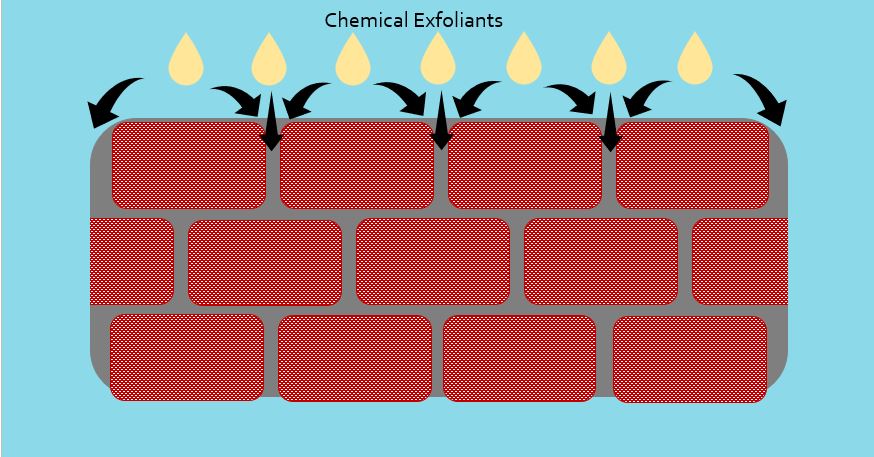
    Both alpha hydroxy acids and beta hydroxy acids are used in many skincare products as chemical exfoliants. Alpha hydroxy acids, or AHAs, when used in low concentrations, can be used to treat dry skin and keratosis pilaris. At higher concentrations, AHAs cause epidermolysis, which causes the top layer of skin to peel away, revealing new and healthy skin underneath. This can improve the appearance of photoaged skin by reducing wrinkles and lightening dark spots. Common AHAs include glycolic acid and lactic acid. Beta hydroxy acids, or BHAs, act as a peeling agent and can be used to treat acne, photoaging, and calluses. Common BHAs include salicylic acid, citric acid, and malic acid.

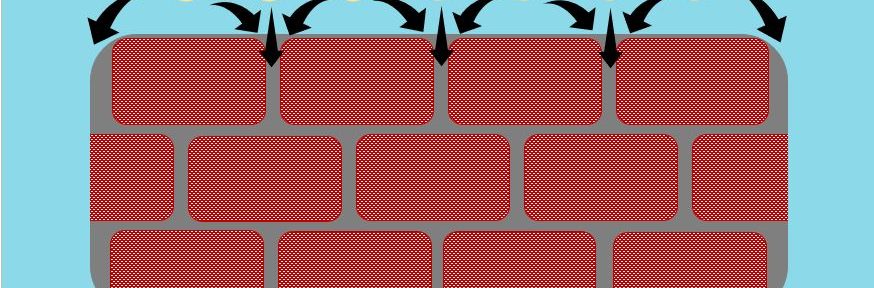
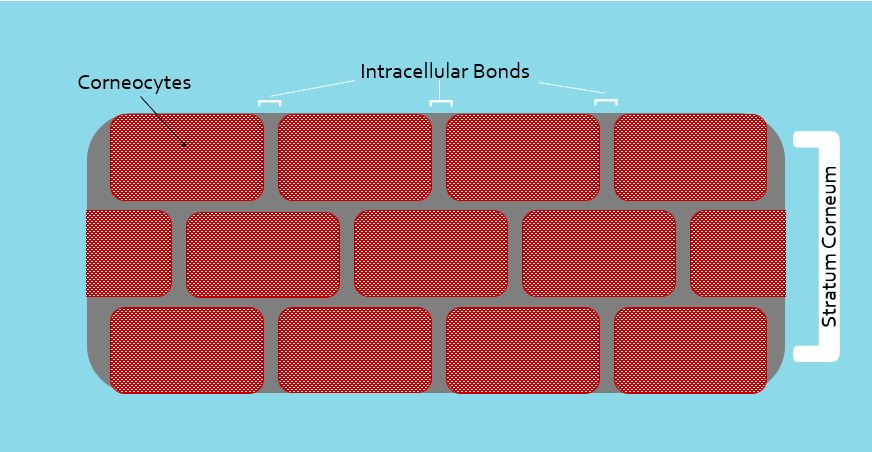
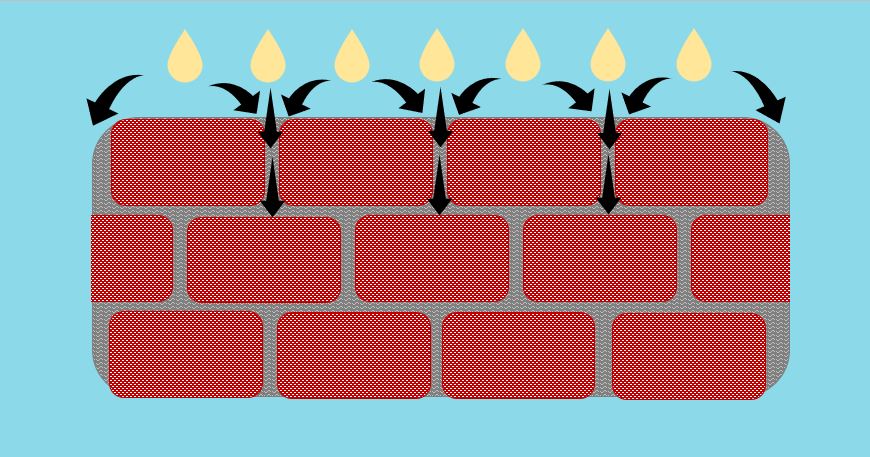
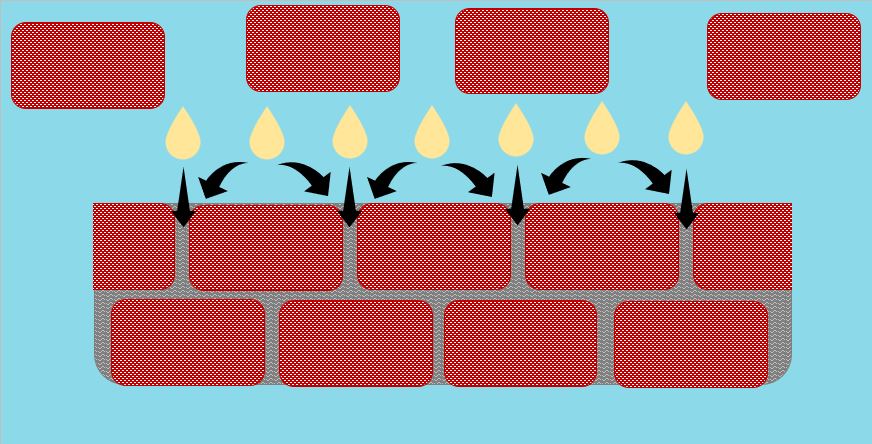
    These chemical exfoliants sound great, but how do these acids work? The top layer of your skin is called the epidermis. The very top layer of the epidermis is the stratum corneum. This layer consists of dead skin cells known as corneocytes that are ready to slough off with exfoliation. These corneocytes are held together by intracellular bonds. Chemical exfoliants such as AHAs and BHAs break these bonds and encourage desquamation, otherwise known as skin peeling. If the stratum corneum consisted of bricks stacked on each other and held together by cement, these acids would dissolve that cement and allow bricks to easily be removed.

    When used correctly, chemical exfoliants such as AHAs and BHAs cause very little irritation and have no lasting negative effects. When used incorrectly, however, chemical exfoliants might leave you worse off than you started. If an acid is too strong for your skin, it might penetrate too deep into lower layers of your skin, breaking too many intracellular bonds and causing healthy, living skin cells to slough off. You could be left with chemical burns and scars once your skin heals. Additionally, AHAs and BHAs can increase photosensitivity, causing sun damage to occur faster than usual. However, this effect can be mitigated by wearing sunscreen daily, and as a bonus, you can prevent the need for chemical exfoliants in the future because photoaging will decrease with the use of sunscreen.

    Scary-sounding chemical exfoliants like alpha hydroxy acids and beta hydroxy acids are nothing to be afraid of when you understand how they work and the effects they have. Do your research and you too can be beautiful!

    Sources:

    Alpha Hydroxy Acids. (n.d.). Retrieved October 2, 2018, from https://cosmeticsinfo.org/alpha-hydroxy-acids

    Chemical peel. (2018, May 24). Retrieved October 2, 2018, from https://www.mayoclinic.org/tests-procedures/chemical-peel/about/pac-20393473

    EJ, V. S., & RJ, Y. (n.d.). Alpha hydroxy acids: Procedures for use in clinical practice. Retrieved October 2, 2018, from https://europepmc.org/abstract/med/2523288

    Heathman, C. (n.d.). Skin Exfoliation. Retrieved October 2, 2018, from https://www.dermascope.com/exfoliation/skin-exfoliation

    Kornhauser, A., Coelho, S. G., & Hearing, V. J. (2010, November 24). Applications of hydroxy acids: Classification, mechanisms, and photoactivity. Retrieved October 2, 2018, from https://www.ncbi.nlm.nih.gov/pmc/articles/PMC3047947/

    Trench, B. L., & Nesvig, K. (2017, October 23). Your Guide to Alpha Hydroxy Acids (AHAs) and How They Work. Retrieved October 2, 2018, from https://www.allure.com/gallery/what-you-didnt-know-about-lactic-salicylic-citric-glycolic-acid-creams

    Van, E. J., & Yu, R. J. (1984, November). Hyperkeratinization, corneocyte cohesion, and alpha hydroxy acids. Retrieved October 2, 2018, from https://www.ncbi.nlm.nih.gov/pubmed/6096420

  • Raindrop Cake, Not a Cake?

    Raindrop Cake, Not a Cake?

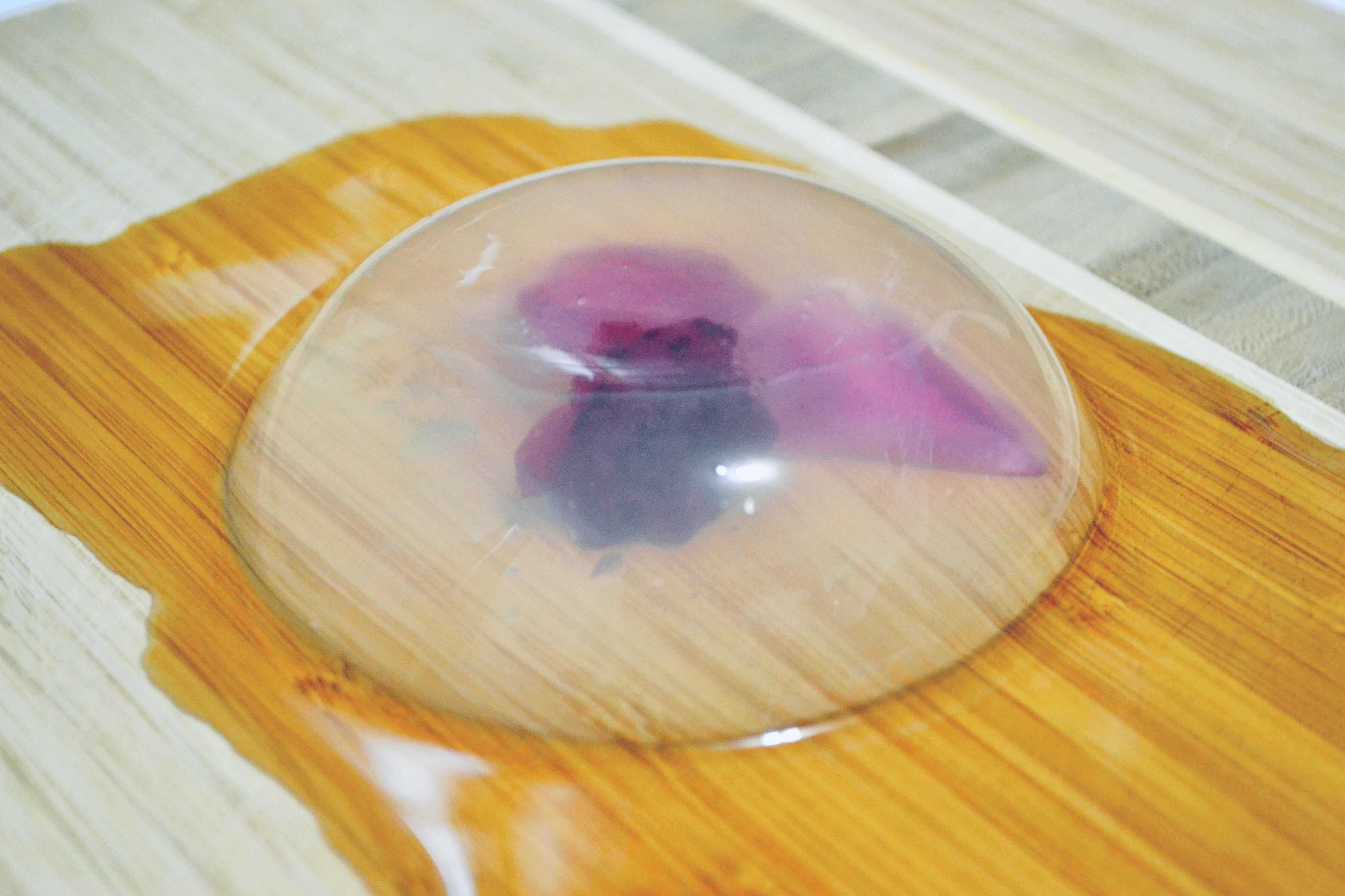
    Have you ever wondered what a raindrop would taste like if it was transformed into cake form? Look no further! Raindrop cake, albeit very different from your typical, traditional cake, will let you have a truly magical experience.

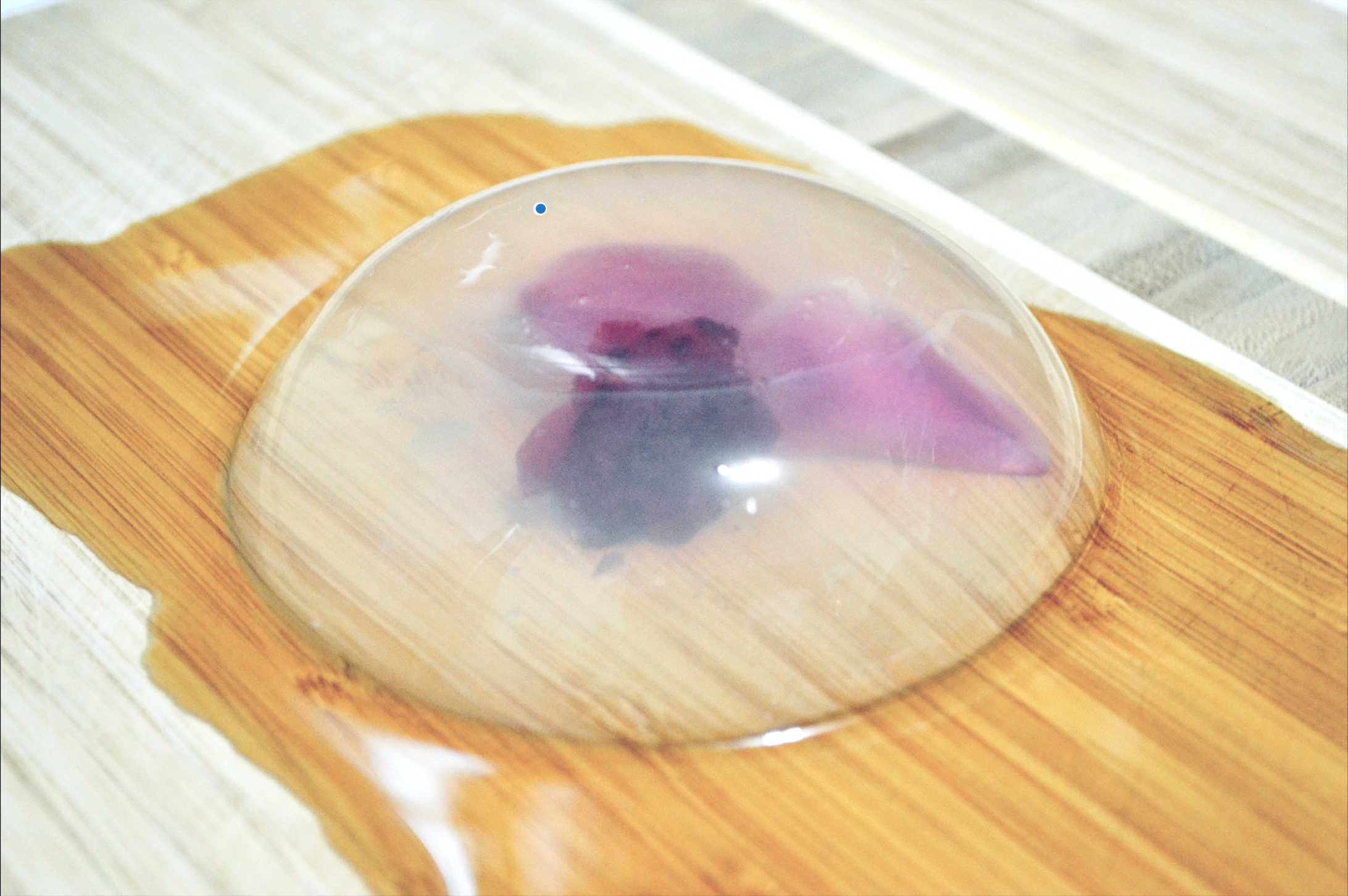
    IMG_1885                                                         My first attempt!

    Screen Shot 2018-11-01 at 8.50.37 PM

    My second attempt!

    I’ve always loved scrolling through food reviews and videos. One trend that emerged in recent years caught my eye. It was a clear, beautiful jelly bubble resembling a raindrop. It seemed so unique that I set out on a journey to try creating it myself, and it was definitely not an easy task. Being able to set the cake while trying to keep it light, soft, and bouncy and to where you’re able to feel like you’re eating a drop of water took many trials and errors. Keep reading to discover more about the secret ingredient and how you can make your own raindrop cake!

    Raindrop cake, also known as Mizu Shingen Mochi, was first created by the Kinseiken Seika Company in Japan, using two main ingredients: fresh, mineral water from the Japanese Alps and agar. This light, refreshing delicacy resembles a jiggly, blob of jello, but will melt in your mouth and fill it with a hint of sweetness and nuttiness when paired with brown syrup and roasted soybean flour. But beware! If not eaten immediately, this dessert will dissolve and vanish within 30 minutes as recipe calls for the minimal amount of agar.

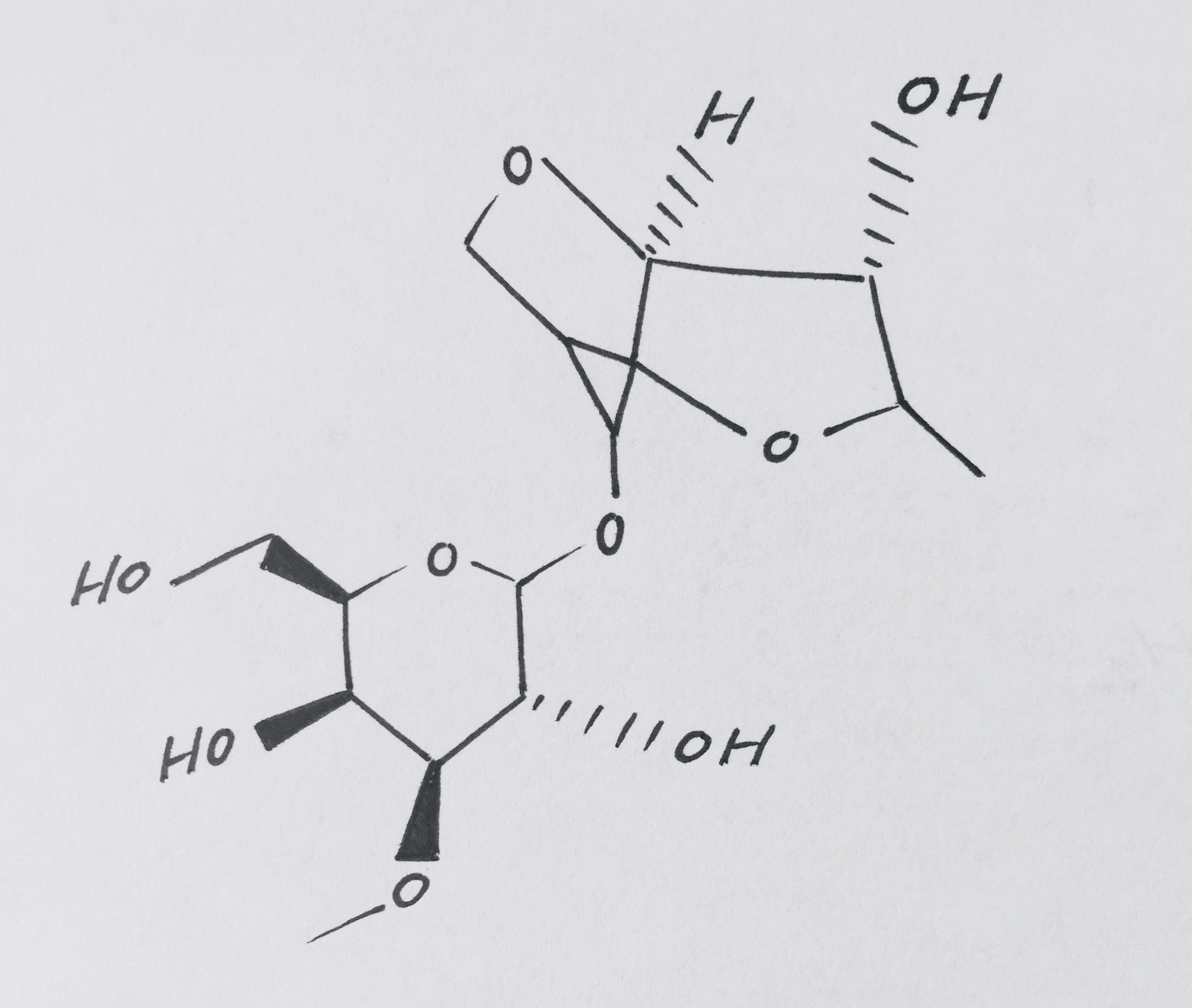
    The key ingredient that solidifies water into a raindrop cake is a polysaccharide known as agar-agar. Agar is made from seaweed or red algae, Gelidium amansii. It was first introduced in Japan over 350 years ago, in 1658, and is still commonly used to this day due to the hydrocolloid properties and agarose composition that allow it to form gel-like substances using hydrogen bonding in the presence of water. Agar is also unique in that its thickening properties are reversible; disintegration occurs when temperatures are varied.

    IMG_1883The structure of agar.

    Due to agar’s gelling ability and the ease at which substances can be gelled, melted, and reformed, agar has numerous uses. One of the most common applications of agar can be found in the food industry. Agar is used in canning foods and is also tasteless, making it a perfect addition to foods and desserts that need thickening such as ice cream, icings, puddings, cookies, jelly, and pie fillings. It can also be found as an agar jelly or as a crystal boba topping in many bubble tea drinks. It has also been used as a laxative and in diets due to its ability to stimulate fullness using low calories.

    bubbleAgar jelly used as a topping for bubble tea.
    This was the first time I’ve ever had agar jelly, and I haven’t looked back since! Yum!

    Application in biology labs as a medium to breed insects like silkworms and fruit flies or to culture bacteria and yeasts is also common.

    IMG_1118     Here an agar plate was used to culture Serratia marcescens, a Gram-negative bacteria. 

    Agar is a valuable ingredient for many reasons such as being extremely low in calories and containing fiber. Agar also does not require sugar to solidify, which is highly beneficial in food preparation for diabetics. It is also known as a vegan and vegetarian gelatin substitute, and best of all, it is an environmentally friendly product.

    Here’s how you can make your own raindrop cake that has swept the internet in recent years!

    Ingredients

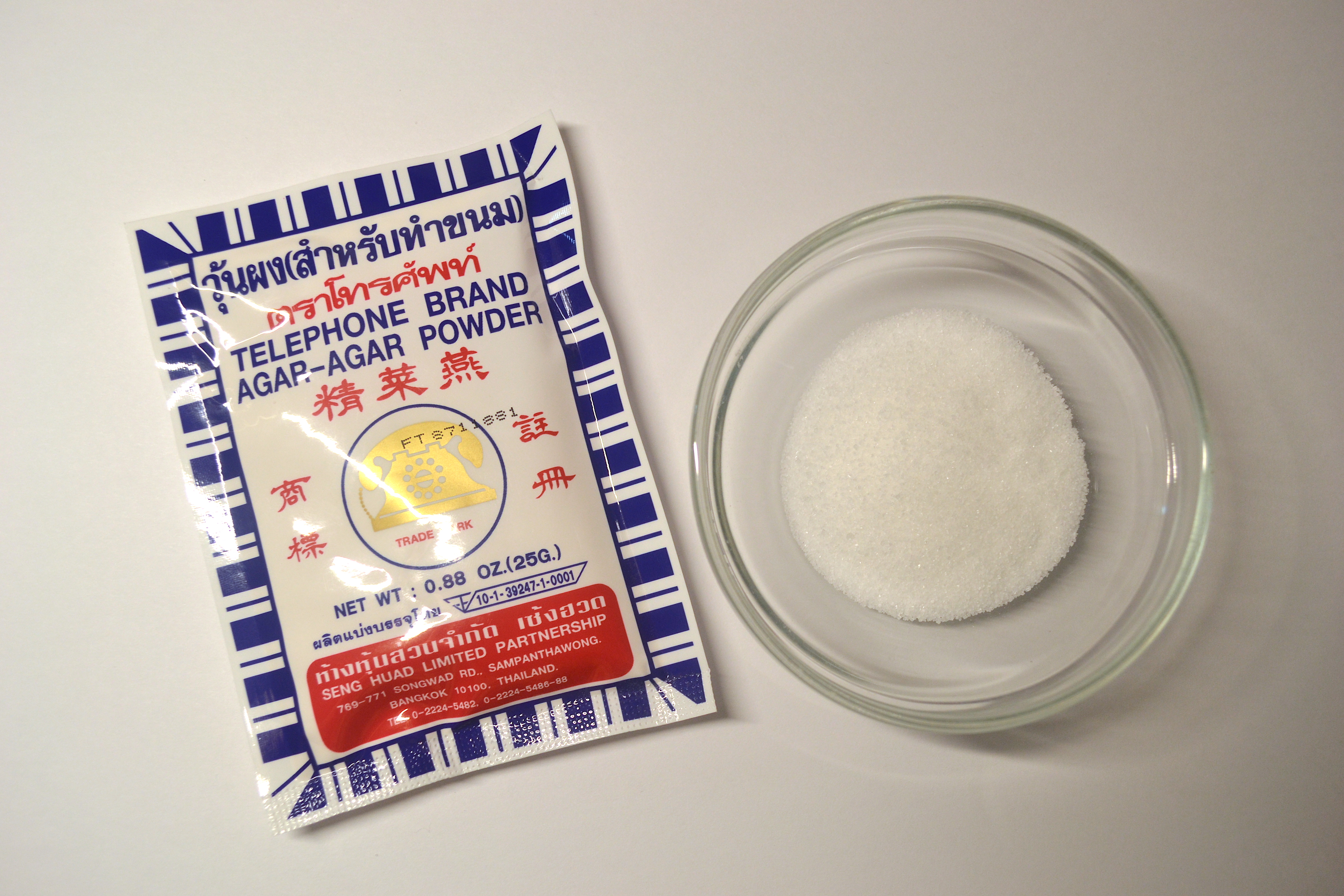
    DSC_0452

    • 1 cup of mineral water
    • 1/4 tsp agar-agar
    • 3 tsp of granulated sugar (optional)

    Optional toppings

    • 1 tbsp roasted soybean flour
    • brown sugar syrup (1 cup of brown sugar + 1/2 cup of water)
    • flowers, petals, fruits

    flowers

    1. Dissolve agar and water in a small pot.
    2. Allow mixture to come to a boil over medium-high heat. Continue boiling over a medium heat for 1-2 minutes.
    3. Pour mixture into any round-bottom mold. (Optional: Add light fruit/flower toppings to the mixture.)
    4. Let mixture cool and place in the fridge overnight or until it sets.
    5. To make syrup, dissolve the brown sugar in water over medium-high heat until mixture boils. Maintain a rolling boil for 1 minute.
    6. Remove mixture and let cool. Serve with raindrop cake along with optional soybean flour. *Consume your raindrop cake upon taking it out the fridge. May melt if left out for over 20-30 minutes.

    References

    Giant Raindrop Cake Recipe by Tasty. (n.d.). Retrieved from https://tasty.co/recipe/giant-raindrop-cake

    K. (2018, September 15). Raindrop Cake. Retrieved from https://kirbiecravings.com/raindrop-cake/

    Maitland, H. (2017, August 02). Everything You Need To Know About Raindrop Cakes. Retrieved from https://www.vogue.co.uk/article/everything-you-need-to-know-about-raindrop-cake

    National Center for Biotechnology Information. PubChem Compound Database; CID=71571511, https://pubchem.ncbi.nlm.nih.gov/compound/71571511 (accessed Sept. 28, 2018).

    Phillips, G.O. Williams, P.A.. (2009). Handbook of Hydrocolloids (2nd Edition).Woodhead Publishing. Retrieved from
    https://app.knovel.com/hotlink/toc/id:kpHHE00002/handbook-hydrocolloids/handbook-hydrocolloids


  • When to Start Panicking about Killer Robots

    When to Start Panicking about Killer Robots

    If you’ve seen one too many sci-fi movies (or five minutes of West World), you might think artificially intelligent humanoid robots can, and likely will, outsmart their creators.

    After all, over the past century, humanoid robotics technology has accelerated from barely-believable Disney animatronics, to emotive, joke-cracking, robotic citizens. It’s not a stretch to envision what’s next. However, although potentially unsettling, modern artificial intelligence technology shouldn’t have you perusing panic room catalogs just yet. Or should it?

    RobotHumanShadows

    High-Tech One-Hit Wonders

    It is true that robotic devices developed in the past few decades can perform some truly remarkable tasks, such as have interactive conversations, dance, or do parkour. But, all of these amazing machines fall into two categories: they can move well, or they can think well. None can do both – yet.

    For example, Boston Dynamics is a robotics company that has built several robots with eerily life-like movement capabilities. Take their creation Big Dog. When pushed, this robot almost looks like a scared deer recovering from a fall. These machines, such as their newer creation called Handle, have both reflexes and complicated controls that allow them to move in uncertain environments with extreme precision, carrying heavy weights and performing multiple tasks. However, they aren’t exactly stimulating conversation partners.

    On the other hand, there are robots that very convincingly interact with humans, such as the now-famous Sophia from Hanson Robotics. Sophia can converse with humans relatively seamlessly. She can learn from conversations over time, tell jokes, and even throw shade. But her movements are clunky and relatively non-existent.

    Robots are designed to specialize in one task – they can either walk or talk but cannot yet do both. As prominent roboticist and Oregon State computer science professor Thomas Diettrich, Ph.D., explained in an interview with Tech Insider, “No [artificial intelligence] system comes anywhere close to having this immense breadth of capabilities, particularly when it comes to combining vision, language, and physical manipulation” (Del Prado, 2016). What happens when there is a robot that excels in all of these tasks? At that point, it might be time to consider investing in some off-grid property.

    Walking the Walk so You Can Talk the Talk

    Why does movement matter when talking about artificial intelligence? As MIT neuroscientist Daniel Wolpert, Ph.D. puts it, mammals have brains so that we can move. Evolutionarily speaking, mammals developed the ability to perform complex movements like walking before we developed higher cognitive abilities, such as speech.

    Moving and interacting with your environment is the best way to learn, even for robots. Peter Norvig, Ph.D and director of research at Google agreed. “Reasoning [in artificial intelligence] will be improved as we develop systems that continuously sense and interact with the world, as opposed to learning systems that passively observe information that others have chosen,” Norvig explains (Del Prado, 2016).

    Take, for example, a baby learning to talk. Although you don’t remember it, you probably learned what a ball was by seeing a ball, grabbing it, maybe even putting it in your mouth a few dozen times, all while someone repeated the word “ball” over and over. You were eventually able to define what the word “ball” meant by recalling your interactions with that object. This is likely why early motor skills are predictive language development (Bedford et al., 2016). Observations like these have led cognitive neuroscientists to develop the theory of embodied cognition. This theory suggests that cognitive functions – understanding the emotions of others, developing likes and dislikes, and communicating with those around you, to name a few – are rooted in our physical experiences with the environment, and the sensations we feel from those experiences. Essentially, you know what awkwardness is because you accidentally called your first-grade teacher ‘mom’ once or accidentally said “Love you!” before hanging up the phone with your boss.

    An entire body of developmental and neural imaging evidence supports this theory, showing that we use our own sensory and motor experiences for complex cognitive processes such as understanding the actions of others (Grafton, 2009) and the meaning of words (Pulvermuller, 2005). Fortunately for us, or unfortunately if you are a roboticist, manmade machines do not yet possess this ability.

    Moving Towards Independent Thought

    For a robot to have true, rich artificial intelligence they have to be able to think and learn without supervision. At the moment, robots have a hard time generating their own opinions about the environment because they can’t fully – or perhaps more importantly, independently –  experience the environment. If you tell a robot to “push” or to “walk,” they typically understand what you mean because someone went into the code and defined what those words meant, not because the machine defined it for themselves by actually pushing or walking. Deb Roy, Ph.D and a professor at MIT working on robots that understand language through physical interaction, describes this as “the machine [getting] caught in circular chains of dictionary-like definitions.” (Roy, 2005). Their group has managed to create Ripley, a robot that can physically interact with objects to form its own opinions about the environment. However, these types of machines still have a long way to go before engaging in rich social interactions as well as complicated physical movements.

    So what’s holding us back from developing robots that can move, sense, and think? It seems that researchers investigating things like movement and sensations in humans and robots are largely separated from roboticists developing cognitive algorithms. Similar to Dr. Roy, Dr. Fancesca Odone and colleagues are working to develop the cognitive and physical skills of iCub, a robot that can independently learn to visually recognize objects and perform physical manipulations. Fanello et al. (2017) explain that  “In spite of the complementary challenges, cognitive robotics and computer vision mainly proceeded on independent tracks.” To enable robots to walk and talk, perhaps researchers across fields must first talk to each other.

    We’re Safe. For now.

    Until robots can form experience-based definitions of the things they interact with through their own movement, we are probably safe from the potential robot apocalypse. When robots develop the ability to learn from their own physical experience – experience they gain themselves by interacting with the environment through coordinated movement – that is when their thinking will become truly independent.

    Who knows, maybe if we show them our good side, robots will like humans and decide to live harmoniously with their creators. However, since Sophia recently learned to walk, and seems to have other plans, you might want to keep those panic room catalogs within arm’s reach.


    Works Cited

    Bedford, R., Pickles, A., & Lord, C. (2016). Early gross motor skills predict the subsequent development of language in children with autism spectrum disorder. Autism Research, 9(9), 993-1001.

    Del Prado, G. M. (2016, March 09). Experts explain the biggest obstacles to creating human-like robots. https://www.businessinsider.com/biggest-challenges-human-artificial-intelligence-2016-2

    Fanello, S. R., Ciliberto, C., Noceti, N., Metta, G., & Odone, F. (2017). Visual recognition for humanoid robots. Robotics and Autonomous Systems, 91, 151-168.

    Grafton, S. T. (2009). Embodied cognition and the simulation of action to understand others. Annals of the New York Academy of Sciences, 1156(1), 97-117.

    Pulvermüller, F. (2005). Brain mechanisms linking language and action. Nature Reviews Neuroscience, 6(7), 576.

    Roy, D. (2005). Semiotic schemas: A framework for grounding language in action and perception. Artificial Intelligence, 167(1-2), 170-205.

  • Knights and Knaves

    Knights and Knaves

    Logic word problems have recently been used to exploit individuals in thinking they help cure certain issues like Dementia, memory loss, and Alzheimer’s disease. This thought of using these logic puzzles as a remedy has been used by developers such as Luminosity. These claims made by Luminosity have proven to be false as “training” your brain to complete certain logic tasks cannot necessarily help an individual cure health problems (Day, 2013). According to George Mason University researchers, many brain puzzle games that essentially help increase an individuals brain power is due to placebo (Vlasits, 2017). Despite this information, this doesn’t change the fact that these logic puzzles cannot benefit an individual in a different aspect. Logic puzzles can be fun, but they can also provide many other benefits that will benefit an individual in many different fields

    Logic puzzles became popularized through the writing of “Alice’s Adventures in Wonderland” by Lewis Carroll (Charles Dodgson). After some time, a Mathematician by the name Raymond Smullyan expanded the realm of logic puzzles and eventually popularized certain puzzles like the “Knights and Knaves” puzzles, where the reader stumbles upon Knights and Knaves and must determine their true identity. Through different problems, many people do not know ways to think of

    One way to solve logic puzzles easily is to think of logic word problems as propositions. Propositions are essentially any statement that can have a true or false value as its output.

    For example:

    Michigan is a country.

    This is a proposition cause it returns a true or false value depending on the situation. In this case, it is false. You can convert these statements to a letter to make problem solving easier, so in the above case, you can use M rather than the entire sentence.

    X + 2 = 4

    This is not a proposition cause it will only return a true or false value based on the value of x which could be anything

    Using said propositions, you have certain symbols that allow an individual to essentially convert the logic to a easier to read statement.

    V = disjunction (or) Example: A V B = A or B

    disjunction is the combination of two statements by “or” which means one must depend on one statement

    ^ = Conjunction (and) Example A ^ B = A and B

    conjunction is the combination of two statements by “and” which means the output must depend on both

    ¬ = Negation (not) Example ¬A = not A

    → = Condition (If Then) Example A→B = if A, then B

    With the symbols used above, one needs to know what the values are when using such. In the tables, T refers to whether the statement is true, and False refers to whether they are false. These are known as truth tables.

    Disjunction

    A B A V B
    T T T                                                (1)
    T F T                                                (2)
     F T T                                                (3)
    F F F                                                (4)

    In order to read this first table, lets think of an example.

    A = Harry is in Arizona

    B = The weather was cold

    In line 1 we see that if A is true and B is true, then A V B must be true because you are seeing if one value is true. In line 4, A V B is false because none of A or B are true.

    Conjunction

    A B A ^ B
    T T T                                                (1)
    T F F                                                (2)
    F T F                                                (3)
    F F F                                                (4)

    For conjunction, we will use the same example as the one provide in disjunction. In line 1, we see that when A is true and B is true then A ^ B is both true. In line 2, we see that when A is true and B is false, then A ^ B is false because only one is true and to fulfill conjunction both have to be the same.

    Negation

    A ¬A
    T F
    F T

    Conditional

    A B A→B
    T T T
    T F F
    F T T
    F F T

    Using the said information, lets walk through an example problem to get a general understanding of what to do.

    EXAMPLE

    As stated previously, Robert Smullyan popularized the puzzle about Knights and Knaves where pretty much you are on an island where you encounter two individuals that are either one is a Knight or a Knave . Knights always tell the truth, whereas a Knave always tells a lie. One of the individuals states that both of them are knights, while the other says that the other is a Knave. It is up to you to solve who the knight and knave is using the information at hand (Smullyan, 2015).

    Step 1: The first step to do is to set a letter or variable to each individual. So the first person is P1 and the second could be P2. It could be anything as long as it sets apart who is who.

    P1 = “Both are Knights”

    P2 = “P1 is a Knave”

    Step 2: Setup the given phrases into a table, where you can assign P1 as Knight or Knave depending on situation and the phrases stated by the individual. Pretty much set up the many possible scenarios. To determine the possible amount of scenarios, you must do 2^(x) where X is the amount of statements , in this case there are only two, where 2 distinguishes the values of True or False.

    P1 P2 Both are Knights P1 is Knave
    Knight Knight
    Knight Knave
    Knave Knight
    Knave Knave

    Step 3: Look at the scenarios, and determine whether the statements said by each individual are true or not and mark them in the truth table

    P1 P2 Both are Knights P1 is Knave
    Knight Knight T F
    Knight Knave F F
    Knave Knight F T
    Knave Knave F F


    Step 4: After filling up the truth table, it is now time to analyze to determine who is who. We always look out for truths and in this case only Lines 1 and 3 have truths, but these two lines have a false value as well. We look further at each line to determine this. We look at the first line and see the statements. If P1 says both are knights, then both should be knights, but P2 actually lied saying that P1 is a Knave which leads to this scenario being thrown out. We look at the third line to determine this and find out that the two statements correlate with the phrases stated by the individuals which leads to P1 being the Knave and P2 being the Knight.


    This method should work on word puzzles similar to the one done in the example, but if it does not, one can still use certain methods like using propositional statements and determining the validity of said statement within problem.


    Now try it yourself.

    Question:

    In a castle far away, we find out the King has been killed by someone and a knight has set out to find the murder of the King. For the investigation, the Knight has interviewed four different witnesses to aid in solving who killed the king. Through such investigating, the Knight has concluded certain things. The Knight has concluded that if the Bishop is telling the truth then the Lord is telling the truth; both the Lord and Prince cannot both be telling the truth; both the Queen and Prince cannot be lying; If the Queen is telling the truth that means the Lord is lying. The Knight must determine who is lying in order to get further in this investigation.


    Answer:


    Make sure to convert said statements as propositions using the symbols discussed.

    -If the Bishop is telling the truth, then Lord is telling truth = B → L

    -Prince and Lord cannot both be telling truth = ¬ (P ^ L)

    – Prince and Queen cannot both be lying = ¬ (¬P ^ ¬Q)

    – If the Queen is telling the truth, then Lord is lying (Q → ¬L)

    You must also assume everyone is telling the truth in order to catch people in the lies. Using such, we must put in all possible scenarios in a truth table. In such problem, there are 16 possible scenarios because there are four different statements which leads to 2^4.

    B L P Q B → L ¬ (P ^ L) ¬ (¬P ^ ¬Q) (Q → ¬L)
    T T T T T F T F
    T T T F T F T T
    T T F T T T T F
    T T F F T T F T
    T F T T F F T T
    T F T F F F T T
    T F F T F F T T
    T F F F F F F T
    F T T T T F T F
    F T T F T F T T
    F T T F T T T F
    F T F F T T F T
    F F T F T T T T
    F F F T T T T T
    F F F T T T T T
    F F F F T T F T

    Based on the truth table, we realize that there are three possible scenarios that could actually be true.

    The Bishop and Lord are guaranteed to be lying, but either the Queen or Prince could be lying or both could be telling the truth.


    Solving problems using logic is applicable to many different situations. It can be used in day to day activities or even specific fields like Computer Science or Mathematics. The problem solving of logic puzzles helps individuals perform tasks by steps and aids in helping an individual make decisions (“Problem Solving and Decision Making”, 2006). In Computer Science, different problems that may use logic include choosing what method to choose or use reasoning on what the said method could be useful for.

    References

    Day, E. (2013, April 20). Online brain-training: Does it really work? Retrieved from https://www.theguardian.com/science/2013/apr/21/brain-training-online-neuroscience-elizabeth-day

    Problem Solving and Decision Making (Solving Problems and Making Decisions). (n.d.). Retrieved from https://managementhelp.org/personalproductivity/problem-solving.htm

    Smullyan, R. M. (2015). What is the name of this book?: The riddle of Dracula and other logical puzzles. Mineola, N.Y: Dover Publications.
     Vlasits, A. (2017, September 14). Could a Videogame Strengthen Your Aging Brain? Retrieved from https://www.wired.com/story/could-a-videogame-strengthen-your-aging-brain/