Category: Articles

  • Save the Ocean Through One Simple Step

    Save the Ocean Through One Simple Step


    Throughout your week, take note of how many plastic straws you use. Do you use one when you go to eat at a restaurant, or when you buy an iced coffee? Is it possible you use plastic straws at home? If you use so much as one plastic straw in the next week, you could make one small change in your life to contribute to a drastic change in the environment.
    Screen Shot 2018-10-10 at 4.55.30 PM

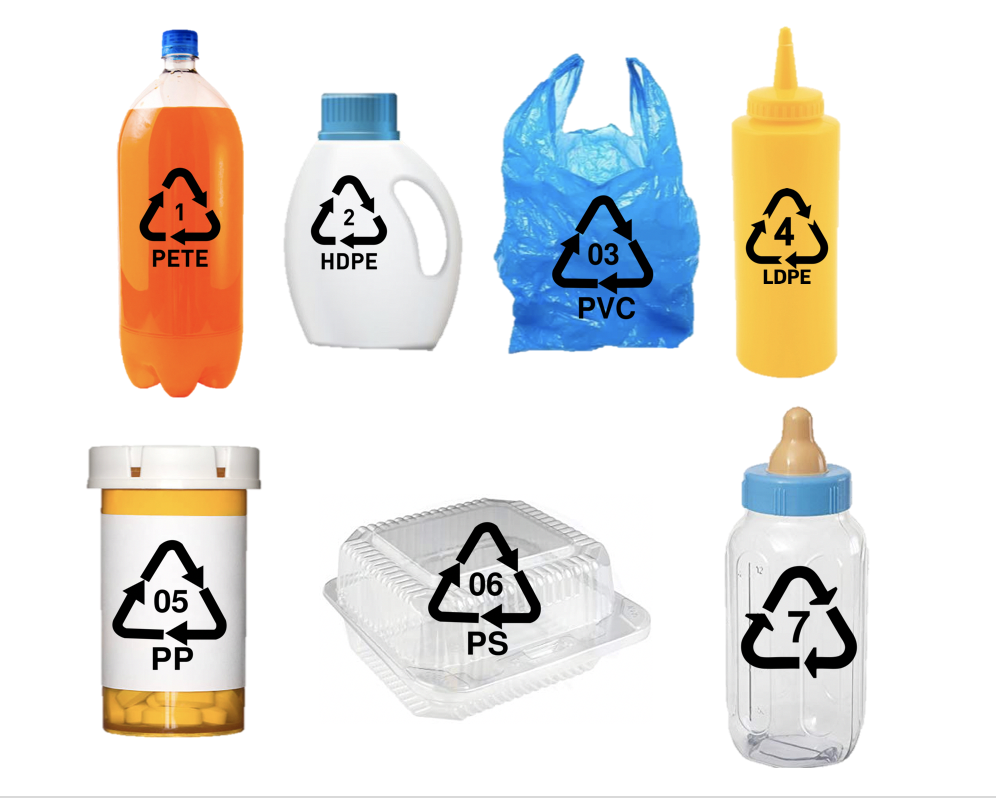
    Made from petroleum, plastics are made into thermoplastics and thermosets (McGehee). Thermoplastics can be recycled and include items such as soft drink and water bottles, shampoo bottles, and shopping bags. These can be identified by locating the recycling symbol with either a “1”, “2”, “3”, or “4” label. These correspond to polyethylene terephthalate (PETE), high-density polyethylene (HDPE), polyvinyl chloride (PVC), and low-density polyethylene (LDPE), respectively. Thermosets include items such as liner in cereal boxes, styrofoam egg cartons, and baby bottles. These are identified with the recycling symbol containing a “5”, “6’”, or “7” which correspond to polypropylene (PP), polystyrene (PS), and other. Thermosets cannot be recycled because they would scorch in attempt to reheat and remold the plastic (Cowan).

    Plastic straws are usually a polypropylene – they can’t be recycled. Additionally, over 500 million plastic straws are used by Americans daily, they are the 11th most found ocean trash, and it can take a plastic straw up to 200 years to fully decompose (Hugh). Because they are on the smaller side of non-recyclable plastics, they can do more harm: “The smaller those pieces get, the more places they can go” (Science News for Students). As these plastics become smaller and smaller, they become what it known as “microplastics”, making them more likely for marine life to ingest. In a recent study, it was found that zooplankton, that had swallowed plastic in algae, laid smaller eggs that were less likely to hatch (Science News for Students). If we do not start cleaning up our act, there will be more plastic than fish in the ocean by 2050. Although that may sound futuristic, it is just over a few decades!

    If the environment isn’t important enough, plastic straws also have a negative effect on you – they cause bloating, cavities, ingesting chemicals, wrinkles, and excess sugar and alcohol consumption (Perspective).

    Now that you’re convinced, how do we fix this problem? There’s an obvious solution: simply stop using straws. Although this may not affect you directly, there are people who have no choice but to use straws due to medical reasons. And, of course, some people simply prefer to use straws. Therefore, the absence of straws is not necessarily the best option for the majority. What about compostable straws? Although there is a good intention behind the creation of these, there is still the issue of whether people correctly compost the straws – unfortunately, this is not the best solution either. So, what is?

    Buy a metal straw (or multiple)! They can be found online for only a few dollars, and typically come with a straw cleaner. They are a great alternative to typical plastic straw – they’re reusable, they protect our environment, and they prevent ingestion of chemicals (although, you may still end up with wrinkles). Go plastic straw-less today to protect our home!

    Resources:

    Cowan, S. (n.d.). Plastics by the Numbers. Retrieved from https://learn.eartheasy.com/articles/plastics-by-the-numbers/

    Hugh. (2018, September 24). Environmental Impact of Plastic Straws (2018 Facts & Statistics). Retrieved from https://get-green-now.com/environmental-impact-plastic-straws/

    McGehee, A. (2006, Nov). There are plastics and there are bioplastics-how much do you know? Countryside and Small Stock Journal, 90, 86-89. Retrieved from http://prx.library.gatech.edu/login?url=https://search-proquest-com.prx.library.gatech.edu/docview/197239104?accountid=11107

    Perspective | Plastic straws aren’t just bad for the environment – they can be bad for your body. (2018, July 03). Retrieved from https://www.washingtonpost.com/lifestyle/wellness/plastic-straws-arent-just-bad-for-the-environment–they-can-be-bad-for-your-body/2018/07/02/d682fdfe-7964-11e8-aeee-4d04c8ac6158_story.html?noredirect=on&utm_term=.354afd959b55

    Tiny plastic, big problem. (2015, Apr 10). Science News for Students, Retrieved from http://prx.library.gatech.edu/login?url=https://search-proquest-com.prx.library.gatech.edu/docview/1672359979?accountid=11107

    Why This Matters. (n.d.). Retrieved from https://www.strawlessocean.org/faq/
  • Learn How to Make Water Disappear

    Learn How to Make Water Disappear

    Learning intricate card tricks and complex hand movements can be overwhelming and hard to execute in front of an eager audience, so here is a how to perform a magic trick that does not require any skill but, instead, just a little bit of science. Here is the premise of the trick: You tell an unassuming bystander to pour a glass of water into your magician’s hat. You wave your hands over the hat and chant a seemingly realistic spell. When you flip the hat over, no water pours out… not even a drop. So how did this happen?

    While the audience believes that the enchanting spell you cast over the hat made the water disappear, the real magic is rooted in the chemistry behind one particular item: the diaper. When we think of diapers, words like “ew” or “baby” or even “ew babies” come to mind. However, after reading this, you might have a new perspective on the amazing properties of diapers.

    We’re now going to do something no ordinary person would do: dissect the diaper. The magical substance that you will line your magician’s hat with can be found underneath the lining of a diaper. This substance is a water-absorbing chemical called sodium polyacrylate. Polyacrylate can absorb more than 200 times its own mass (which is extremely fortunate for those potty training and those who have to change the diapers of potty trainers). Although this superabsorbent polymer is now found in a wide variety of products like medical bandages, female hygiene products and diapers, the substance was originally manufactured for the U.S. Department of Agriculture in the 1970s. The original use for polyacrylate gel was to improve the water retention in soils in an effort to improve germination and plant growth (Liu, 2001).

    sodium polyacrylate
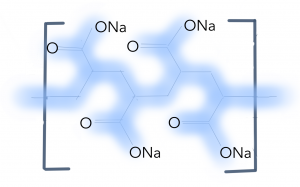
    This is the chemical structure of sodium polyacrylate. The molecule is a polymer, so this structure repeats beyond the bars in the diagram.

    Sodium polyacrylate is a network polymer that contains sodium ions. The key to the absorption process and this magic trick is understanding basic rules of diffusion, osmosis and bonding. Osmosis is the when molecules in a solvent move from a less concentrated solution to a more concentrated solution. In this magic trick, when the water comes into contact with the sodium-containing polymer, the sodium diffuses into the water. This results in the replacement of sodium atoms with water molecules in the complex network (Carnegie Mellon University, n.d.). The polymer is essentially a long chain of negatively charged molecules and bonds to water through hydrogen bonds. The bonds allow the network to swell and hold the water in place, which is why the resulting mixture is crystal-like, fluffy substance that does not spill out of the hat. Now that you know the secret to this trick you will now be able to hone and perfect your water vanishing skills!

    Hopefully now when you think of diapers you think “awesome, absorbent polymer.” That said, there are limitations to how amazing this polymer is. Although bunnies are about 70% water, please know a diaper will not make a bunny disappear.

    Here’s what you need for the trick:

    –       Hat

    –       Source of sodium polyacrylate (>2g)

    –       Glass of water (8 floz.)

    Start with some sodium polyacrylate at the base of the hat. You can tape a diaper to the bottom of the hat to conceal the water-absorbing polymer. Ask someone to pour a regular glass of water in the hat. Swirl the hat around and distract the audience while the water absorbs. The absorption time will depend on how much sodium polyacrylate you use and how much water is added, however, this process should occur within a matter of seconds to minutes. Once you are convinced everything has been absorbed, flip the hat over and watch the audience be amazed!


    References:

    Carnegie Mellon University (n.d.). Super absorbing polymer powder. Retrieved from https://www.cmu.edu/gelfand/education/k12-teachers/polymers/polymer-and-absorption/super-absorb-powder.html

    Foy, J. M., & Schnieden, H. (1960). Estimation of total body water (virtual tritium space) in the rat, cat, rabbit, guinea‐pig and man, and of the biological half‐life of tritium in man. The Journal of physiology, 154(1), 169-176.

    Liu, M., & Guo, T. (2001). Preparation and swelling properties of crosslinked sodium polyacrylate. Journal of Applied Polymer Science, 82(6), 1515-1520.

    Parks, L. R. (1981). Cross-linked sodium polyacrylate absorbent. U.S. Patent No. 4,295,987. Washington, DC: U.S. Patent and Trademark Office.


  • Life and Laterality

    Life and Laterality

    I have spent my life struggling to open jars, use scissors, play video games, and shake people’s hands because the world is built for the 90% of it who are right handed, the 90% that isn’t me. Like most lefties, I have learned how to use my right hand to do almost everything except write or throw things, because that is how technology is set up. I got so used to some of it that something like a left handed computer mouse is anathema to me; However, I remember having to struggle with both the piano and my teacher, because the whole concept was built opposite to me, or rather, I was built opposite to the concept. For one of my birthdays, I received scissors designed for left handed use and it’s still one of my favorite gifts.

    I am the only lefty in my family. Both of my parents are right handed, and so is my sister. If we look at side preference from a genetic point of view it’s clear that right preference is a dominant gene. Starting with a Mendelian approach to genetics, to get both a right handed and a left handed child, both of my parents would need to have a recessive gene for left preference. Parents who are both left handed are more likely to produce left handed kids, but the ratio is only about 40% at its highest. (McManus, 1991) Families where the mother is left handed are more likely to produce left handed kids, which could be due to genetics or to socialization as the mother is often the primary caretaker, and there have been few adoption studies on the subject of laterality which could have helped clear up the nature vs. nurture debate. Men are more likely to be left handed than women. The ratios are still around 10% of the total population, but there is a small difference between sexes.

    There have been a variety of tests to determine laterality in humans, split up into two main groups: hand preference and hand performance. The first type involves sending out a questionnaire to people, asking them to identify if they use their left, right, or either hand to perform a task and then measure the frequency of answers one way or the other. The second type involve asking participants to perform various tasks, such as placing pegs into holes, and measuring the time taken for the right hand and the left hand and measuring that way. (Porac, 2015)

    By looking at the tools used by paleolithic people– the construction, wear, and reconstructing some of the hand grips– anthropologists have discovered that the ratio of human laterality (10% left to 90% right) has remained about constant since the beginning of human society. (Llaurens, 2009) The question is why this minority of left handed people has persisted almost unchanged. Scientist look both at genetics and social upbringing. It is unlikely though, that laterality is anything other than a mixture of the two.

    One theory for the persistence of lefties is that there is a combat advantage. When most of the population uses their right hand to fight with a sword or spear, people who are left handed often learn how to fight against people who are right handed when they are young, while people who are right handed only know how to fight against right handed people. So, when a righty comes upon a lefty in a battle, the righty is tripped up by their opponent being opposite to what they expect, allowing the lefty an easier victory as they are already used to fighting right handed people. In fact, one study (Raymond, 1996) seems to support this theory; the researchers compiled data of the frequency of handedness in sports participants. Sports with a clear adversary like fencing or soccer had a larger ratio of left handed people than the normal population, while sports without opposition like bowling remained consistent with the normal population.

    There is something to be said for the biological component as well. Plenty of lefties die of accidents caused by living in a society that is built for right preference (Coren, 1989), and many societies historically have killed, ostracized, abused, and retrained their left handed individuals to conform with the right handed majority, however, the ratio of lefties to righties in these societies is still close to the global average. The persistence of this polymorphism suggests a biological component that is nigh impossible to weed out completely. For example, fetuses have been shown to have lateral preference, which leads some people to believe that the cause of human laterality could stem from the uterine environment and/or hormonal composition, specifically how much testosterone is present.

    The persistence could also be due to the aforementioned retraining. When people lose the use of their right hand– either because they lost their right hand entirely or had some other loss of dexterity– they are more than capable of retraining themselves to be left handed. Some humans probably learn to use their left hand because they were bored, think it was a useful skill, or just because human beings are contrary. People who have weaker natural side preferences are more likely to bow to the way they were taught, which could also be a cause for persistent left handedness.

    Human beings are not the only creatures to display side preference. Most apes also show a preference for using one had over another when completing tasks on the individual level. (King, 1993; Lehman, 1993; McGrew, 1997) However, primates ratio of handedness is about 1:1 for left handed and right handed individuals in the total tested population. Lateral asymmetry in primates is a difficult thing to prove.

    Why does laterality in humans present so asymmetrically? Some researchers have tried to connect this to language learning ability which is the basic trait used to separate humans from other primates. (McManus, 1991) The theory goes that the dominance of right preference has somehow lead to language development in homo sapiens. Researchers over the years have connected left handedness to shorter life spans and learning disabilities, but I think that this should be taken with a grain of salt and a reminder that correlation does not equal causation especially since a person’s laterality can change over their lifetime.

    I am left with three questions at the end of my own research: Why do bilateral animals have a preference at all? Why isn’t everyone ambidextrous? Why are humans so asymmetrical as a species where laterality is involved? I don’t know, and an answer is unlikely to be found within my lifetime, but it’s fascinating nonetheless.


    day1poisonous


    References:
    Coren, S. (1989). Left-handedness and accident-related injury risk. American Journal of Public Health, 79(8), 1040-1041.

    King, J. E., & Landau, V. I. (1993). Manual preference in varieties of reaching in squirrel monkeys. In Primate laterality(pp. 107-124). Springer, New York, NY.

    Lehman, R. A. (1993). Manual preference in prosimians, monkeys and apes. In Primate Laterality (pp. 149-181). Springer, New York, NY.

    Llaurens, V., Raymond, M., & Faurie, C. (2009). Why are some people left-handed? An evolutionary perspective. Philosophical Transactions of the Royal Society of London B: Biological Sciences, 364(1519), 881-894.

    McGrew, W. C., & Marchant, L. F. (1997). On the other hand: current issues in and meta‐analysis of the behavioral laterality of hand function in nonhuman primates. American Journal of Physical Anthropology: The Official Publication of the American Association of Physical Anthropologists, 104(S25), 201-232.

    McManus, I. C. (1991, February). The inheritance of left-handedness. In Ciba Found Symp (Vol. 162, No. 251281.8).

    Porac, C. (2015). Laterality: Exploring the enigma of left-handedness. Academic Press.

    Raymond, M., Pontier, D., Dufour, A. B., & Møller, A. P. (1996). Frequency-dependent maintenance of left handedness in humans. Proc. R. Soc. Lond. B, 263(1377), 1627-1633.

  • Meal Planning

    Meal Planning

    Like many other college students, eating a healthy meal is difficult to do when we are so consumed with our studies. In fact, results of the 1993 Survey of American Dietary Habits show that 82% of respondents evaluated nutrition as being modestly imperative, and only 27% of respondents considered themselves knowledgeable about dietary rules. To improve dietary consumption, consumers need to be informed on how developing good nutrition habits can be practical and simple. The Plate Model offers a simple approach to meal planning, and using the model decreases cholesterol and protein consumption.

    MyPlate-Opening-Image

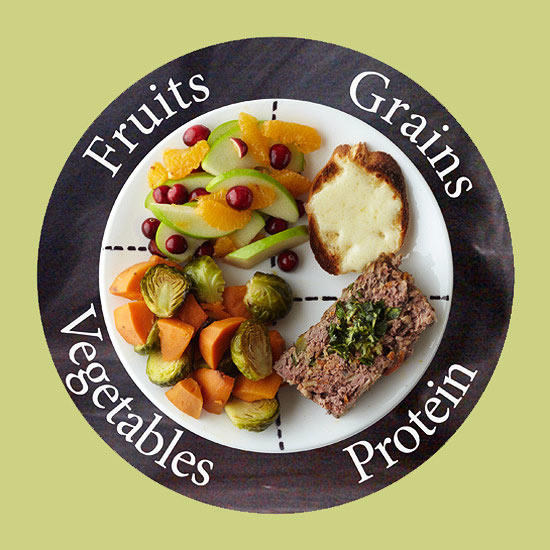
    The Plate Model fills is a visual technique for filling a dinner plate. Portions of foods and appropriate food choices can be depicted for meals and snacks in assorted forms. The Plate Model offers a meal planning approach that is straightforward and flexible. The Swedish Diabetic Association has depicted the model as a plate that is isolated into 3 segments with 25% of the plate secured by meat and fruits, and the rest of between grain items (egg, bread, rice, pasta, and potatoes) and vegetables.

    The underlying methodology is to show the divisions of the plate to be secured by specific nourishment. Many consumers need to decrease meat, fish, and poultry segments and increase vegetable intake. Although exact control of portion sizes may not be reflected in the model, improvements in proportions of foods relative to each other on the plate can correct major nutrient imbalances. People who retain the 3 segments of the dinner plate can apply this learning at home or at restaurants. For IMG_3034customers who aren’t knowledgeable about food portioning, visual portrayals compel them to consider portioning without fundamentally knowing about proper measurements.

    The United States is sensitive to a shared objective of building more beneficial American eating methodologies; individuals still need to figure out how to execute proper nutrition. The Plate Model can be used to aid in this improved execution. The model fills in as an as a plan for showing nutrition with straightforward approaches that result in healthy practices for diet. Many individuals believe that great nutrition takes excessive time. Such misguided judgments can keep them from accomplishing better diets. Even college students can improve their nutrition using the plate model in their on-campus cafeterias. Eating suggestions should be sure, handy, and noteworthy, and the plate model can help achieve this goal.


    Morreale, S. J., & Schwartz, N. E. (1995). Helping Americans eat right: developing practical and actionable public nutrition education messages based on the ADA Survey of American Dietary Habits. Journal of the Academy of Nutrition and Dietetics, 95(3), 305-308.

    Camelon, K. M., Hådell, K., T JÄMSÉN, P. Ä. I. V. I., Ketonen, K. J., Kohtamäki, H. M., MÄKIMATILLA, S., … & DAIS PROJECT GROUP. (1998). The Plate Model: a visual method of teaching meal planning. Journal of the American Dietetic Association, 98(10), 1155-1158.


  • Legend of Sumeria: A Scientific and Artistic Read

    Legend of Sumeria: A Scientific and Artistic Read

    Are you looking for a book to read that’s fun, and action packed with science? Check out Legend of Sumeria! It’s a new graphic novel by co-creators Biju Parekkadan and Jay Webb, with amazing illustrations from lead illustrator Anthony Lagaipa,

    In comparison to other graphic novels that I have read, this one definitely has a lot more text in it. While it is a lengthy read, the plot continues throughout the novel at an appropriate pace and is very engaging.

    In terms of audience, I would say this is for a more advanced reader. Those starting high school and older are the most appropriate audience for this book.

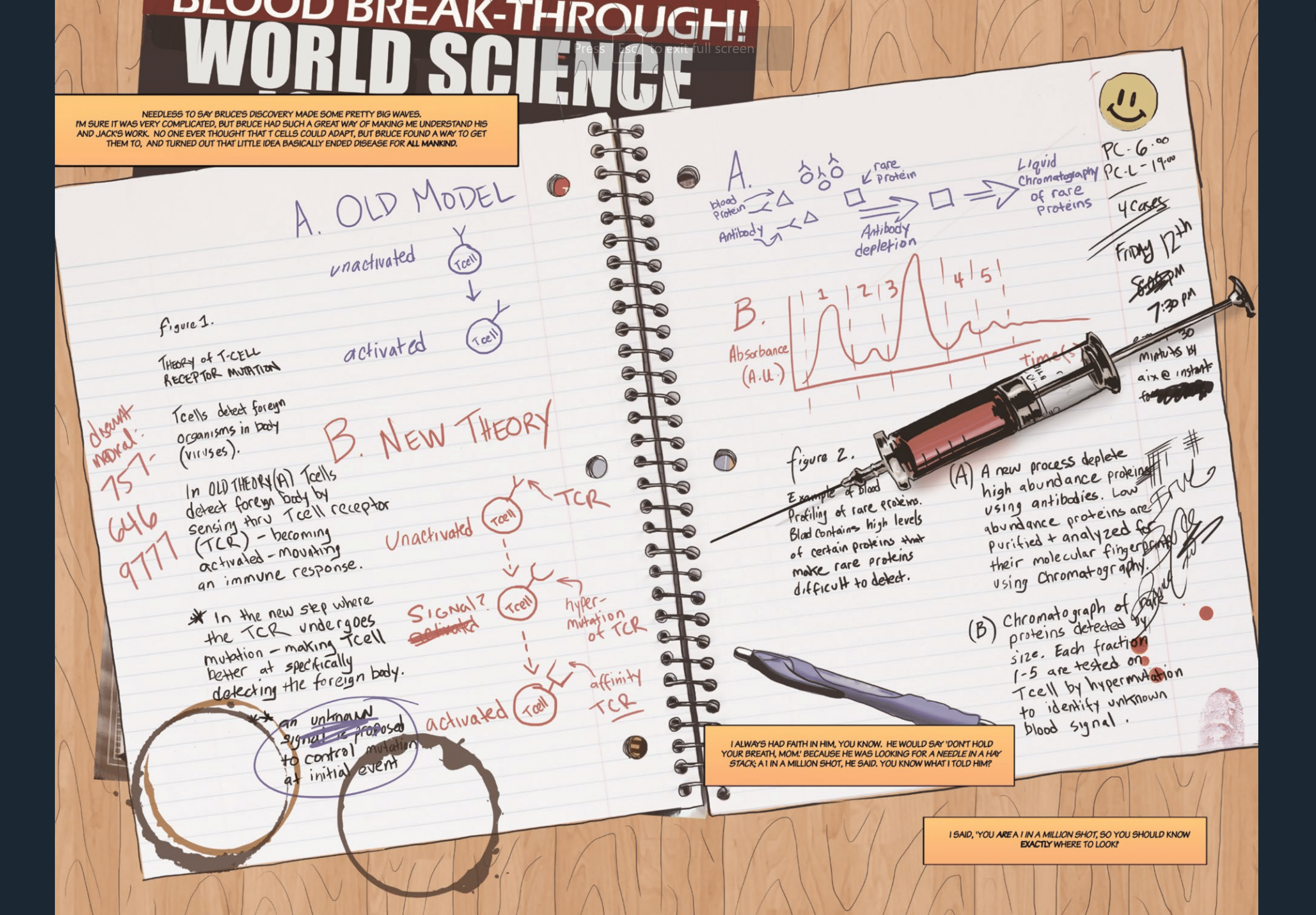
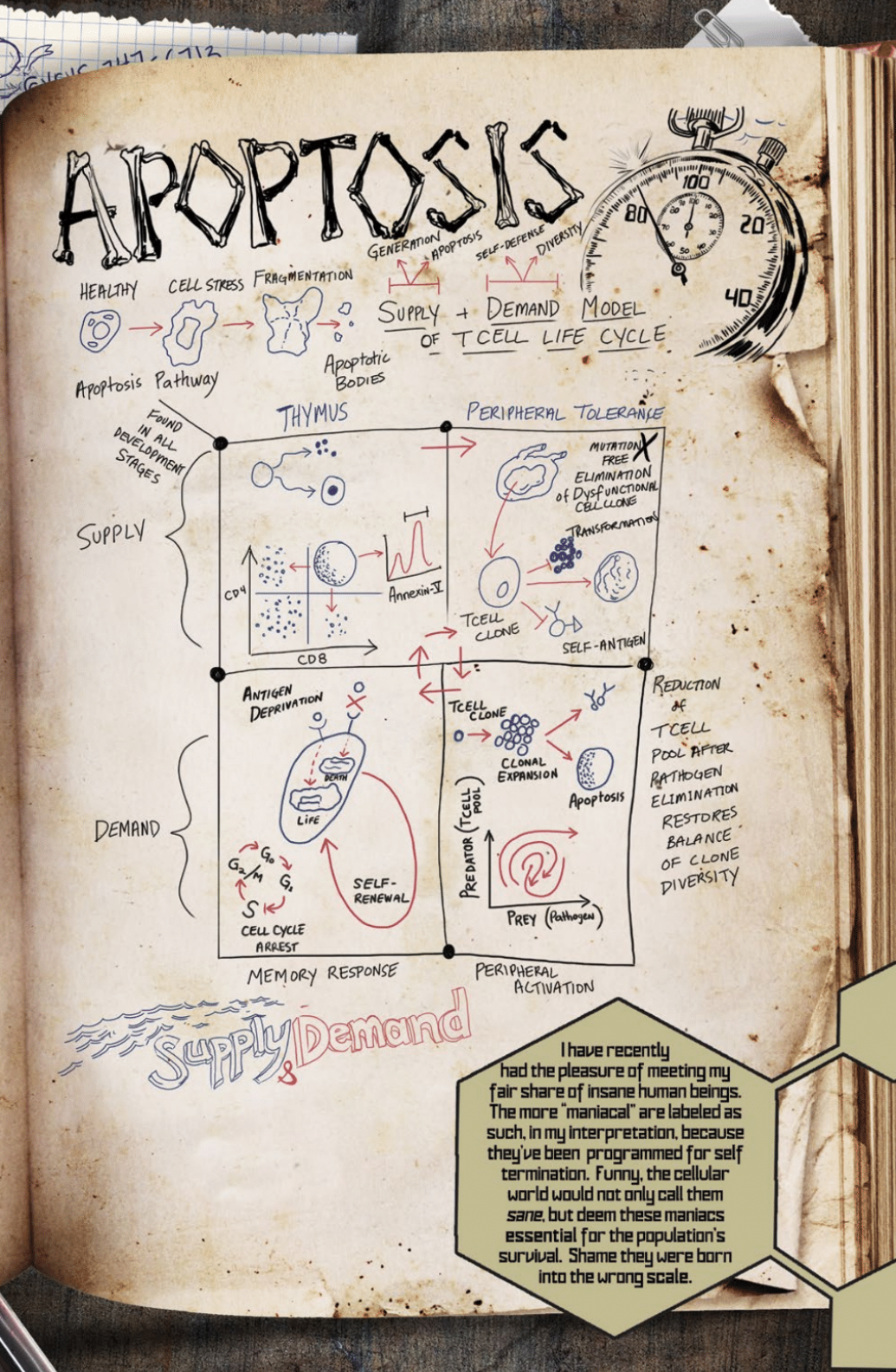
    Regardless that the novel is full of great illustrations, all the facts are indeed scientific. Within the first chapter, I saw diagrams for blood cells, viruses, and chemical reactions. Most of these diagrams are represented through a handwritten diary from the novel’s protagonist, Dr. Bruce Abbot. And don’t worry, no spoilers here! If you want a more thorough background of the main components that the book contains, or how you can get the book, check out the official website here!

    Legend of Sumeria Sample
    Screenshot (41)
    Sample image of some scientific principles in the book!

    If you’re someone interested in STEM with artistic hobbies, this book is definitely one that you might want to read. (Check out Joshua Suber’s Charged post and his interview with one of the co-creators on communicating science through art here!)

    In just the first chapter, the novel has already mixed sci-fi, action, and art all into paper while keeping a real focus on life sciences and biotechnologies!  Legend of Sumeria is definitely a novel I look forward to finishing this summer!

    References:

    Parekkadan, B., Webb, J., Lagaipa, A. (2017). Legend of Sumeria. http://legendofsumeria.com/.

    *Featured Image:

    Parekkadan, B., Webb, J., Lagaipa, A. (2017). Sumeria-book-cover [Digital painting]. http://legendofsumeria.com/.

    *Please note that some of the images above were given special permission to use by the owners of the content for the purposes of this blog.*

  • Historical Haikus

    Historical Haikus

    Famous Scientists

    Nicolaus Copernicus (1473-1543)
    He proposed madness
    We revolve around the sun
    Woke before others


    Nikola Tesla (1856-1943)
    Brilliance in design
    The Alternating Current
    Still lives on today


    Stephen Hawking (1942-2018)
    Having ALS
    Did not stop his legacy
    Understanding time


    Nikola Tesla's Alternating Current

  • Glow in the Dark Nail Polish in Five Easy Steps

    Glow in the Dark Nail Polish in Five Easy Steps

    In the early 1920’s glow in the dark watches were the newest fad out there. The United States was in a radium craze. Doctors preached its health benefits when consumed in small amounts and food products laced with it were even sold in grocery stores. Its “benefits” were even targeted towards women through beauty products claiming to give you a radiant glow. But those female factory works now forever in history known as the “ Radium Girls” truly got the worst end of the radium craze.

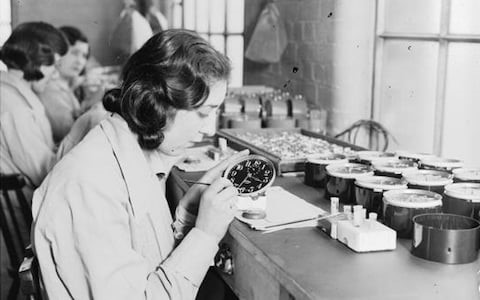
    The women working in factory painting clock faces.
    The women working in factory painting clock faces.

    The Radium Girls were women hired to work in the glow in the dark watch factories painting the numbers onto watch faces. In order to get the numbers as precise as possible they were told to put the tips of the brushes into their mouth in between strokes to make it extra pointy. As a result they were ingesting radium constantly throughout their workday. Because management emphasized how safe it was to handle some of the women even began painting their nails with it so they would glow in the dark. Their teeth began to fall out, their bones would break suddenly just from standing up; one woman went to have her tooth pulled by the dentist and her entire jaw ended up coming out with the tooth! Radium poisoning happens because radium is very similar to calcium chemically, so the body mistakenly incorporates it your bones, leading to bone necrosis, which is death of bone tissue and leads to tiny breaks in the bone and eventually the complete collapse of the bone, and bone cancers. But glow in the dark nail polish is still a cool idea!  Here’s how to make your own (not jaw breaking) glow in the dark nail polish in five easy steps!


    Materials:

    1 glow stick

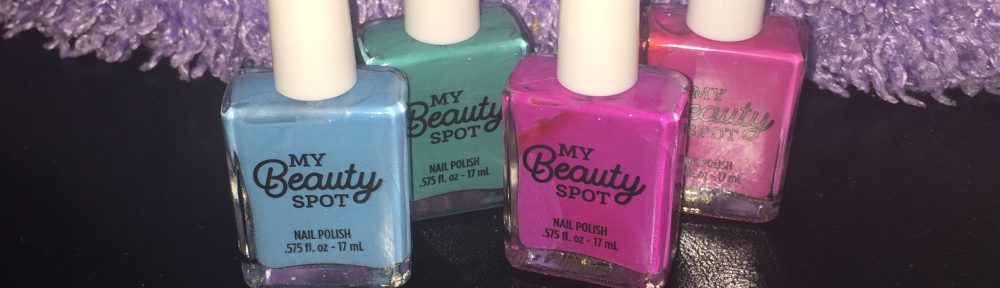
    Nail polish in clear or a color matching your glow stick

    Scissors


    Directions:

    Step 1

    • Start by activating your glow stick by giving it a snap and a few shakes. Once your glow stick is glowing, it’s ready to use!

    Step 2

    • Carefully cut your glow stick in half with sharp scissors. Be careful not to spill any of the liquid out.

    Step 3

    • Squeeze the glowing contents of the glow stick into your nail polish. If you’re having trouble getting it all out, you can also cut the top end of the glow stick to allow the liquid to flow down more easily.

    Step 4

    • Thoroughly mix your nail polish with the glowing solution by giving your nail polish bottle a quick shake. Make sure the glow is evenly distributed through the polish.

    Step 5

    • Apply your newly mixed glow nail polish to your nails.

    Disclaimer: Nail polish will only glow as long as the glow stick itself would last.