Category: Articles

  • Battle of the Hands: Mittens vs. Gloves

    Battle of the Hands: Mittens vs. Gloves

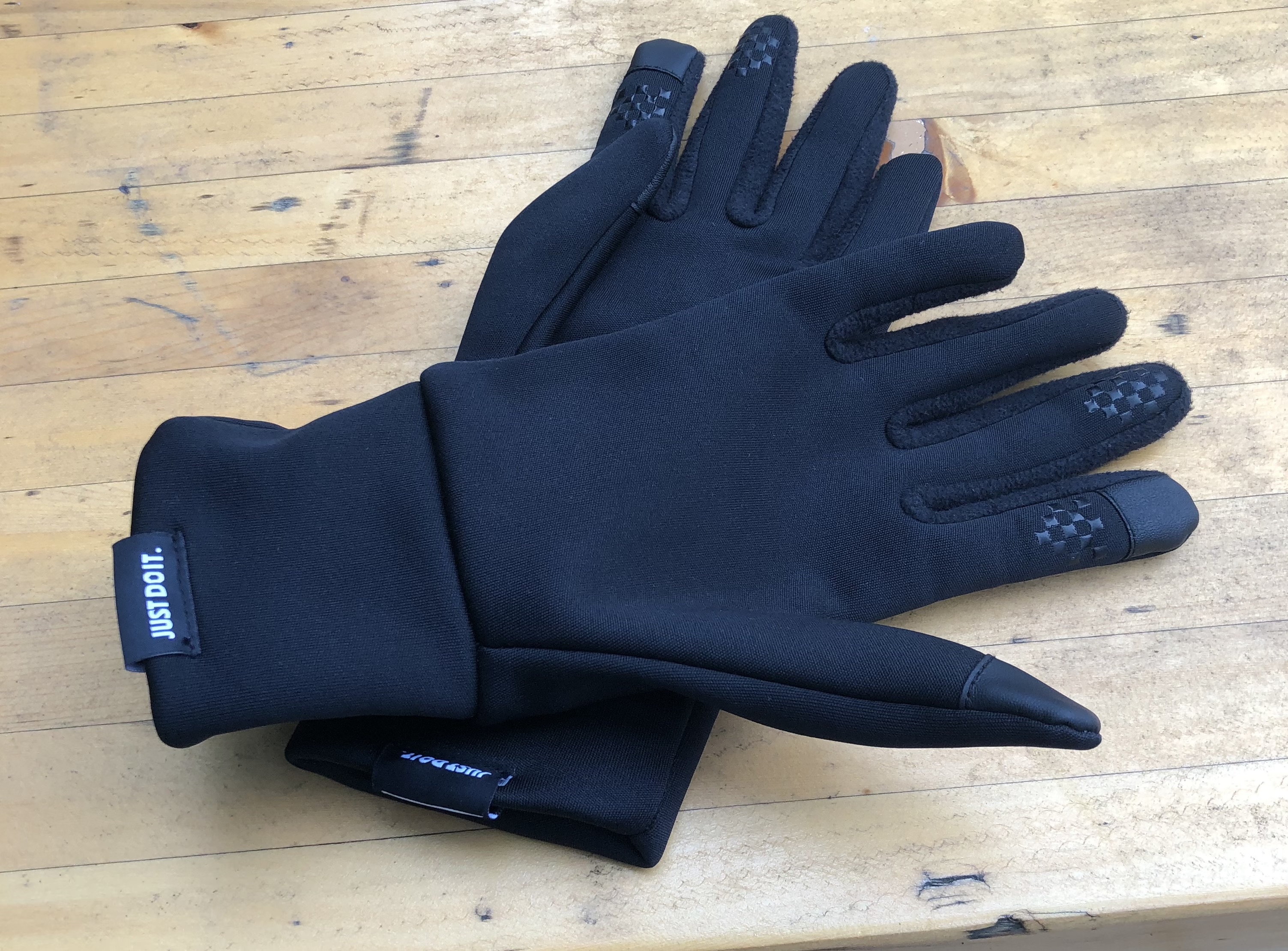
    Tis the season for frozen fingers and numb thumbs trying to type on a small phone keyboard. If you’re like me, you like We can wear puffy coats but our hands are unprotected from the wintry winds. So how should we keep our hands warm? Are gloves better at keeping our fingers warm or should we shift our attention to mittens? In order to answer these questions, we need to understand a few things about how the body and the world work.

    If you were to lose a part of your body, which part would you want to go first? Probably a toe, a finger… but probably not your head or heart. Our bodies have evolved to preserve the important parts (vital organs), so our appendages get cold first. This is great and all, you know, living, but it does mean we are faced with popsicles for fingers.

    And the winner is…

    Gloves provide individual protection for each finger, while mittens encase most of your fingers in one compartment. What are the advantages and disadvantages of these differences? Heat is continuously generated in the body through various metabolic processes (a topic for another time) and is exchanged within our body as well with our external surroundings. Generally, heat is transferred in four ways: conduction, convection, evaporation and radiation. In a system, heat cannot be created or destroyed: this is the First Law of Thermodynamics. So if our fingers are individually separated, like in the case of gloves, heat from our fingers is being transferred to the surface of the gloves themselves. Heat is moving to the gloves because heat will move from a hotter object to a cooler one. On the other hand (Ha!), mittens allow the fingers to come into contact with each other. This means that heat that is lost from one finger can be transferred to another finger. It’s a win-win-win-win, thank you physics! This heat can be “trapped” and provides insulation.

    So if you find yourself at a store asking yourself “Should I get mittens or gloves?” Here is your answer: Mittens if your goal is warmth, gloves if you want to be able to carry out complex tasks at hand and glittens (fingerless gloves with a mitten flap) if you are fancy! If going to a store is too much trouble, keeping your hands in your coat pocket will do the trick and your thumb can get in on the heat transfer party. 

    A Look Backstage (Sources)

    Fox, R.H., Wyatt, H.T. (1962). Cold-induced vasodilation in various areas of the body surface of  man. Journal of Physiology, 162, 289-297.

    Holmer, I. (1985).Heat exchange and thermal insulation compared in woolen and nylon    garments during wear trials. Textile Research Journal, 55(9), 511-518.

    Huizenga, C. (2004). Skin and core temperature response to partial and whole body heating and  cooling. Journal of Thermal Biology, 29(7), 549-558. 

    Iserson, K. (2016). Glove and mitten protection in extreme cold weather: an Antarctic study.   International Journal of Circumpolar Health, 75, 33564. 

    Thermopedia. Body (human) heat transfer. Retrieved from http://www.thermopedia.com/content/ 587/

  • Venomous Viperidae

    Venomous Viperidae

    I think it’s important to clear the air before we dive in: I am terrified of snakes. Despite never being harmed or attacked by a snake, I have a shaking fear of these slithering reptiles (even a picture can raise my heart rate). In a somewhat unconventional twist, I am also fascinated by their diversity and ability to incapacitate much larger organisms with only a single bite. Why there is so much variation in venom, and what makes it so toxic?

    What is snake venom?

    As a form of reptilian saliva, snake venom is highly concentrated with a poisonous cocktail of active proteins and is produced and stored in a snake’s venom gland ready to be injected into unlucky predators or prey. (Lu, et al, 2005). Venom has evolved to affect the central elements of nearly every physiological pathway. According to Lu, “for almost every factor involved in coagulation or fibrinolysis there is a venom protein that can activate or inactivate it.” These processes of coagulation and fibrinolysis are critically important to the formation and regulation of blood clots. While neurotoxins are common components of the Hydrophidae and Elapidae species venom, we will focus on Viperidae venom which is generally comprised of hemostatically active components.

    Blood Jelly?
    IMG_4335
    The coagulation abilities of some Viperidae species like the pit viper are enough to turn free flowing blood into a gooey solid similar to the strawberry jam pictured. How? The venom targets the blood’s ability to form clots through acting on specific blood coagulant factors, platelets, or tissues. The proteins in venom that affect coagulation factors are often classified as FV activators, FX activators, and thrombin-like enzymes (TLEs), which interfere at key steps in the body’s fibrinolytic pathway.

    Venom Variety

    The high degree of variation in venom has interested researchers for decades. Understanding what causes this variation is critical to effectively treating snake bites, as the healthcare team should have the most accurate analysis of the venom. An article titled “Diet and snake venom evolution” seeks to account for this variation by examining three main hypotheses: variation is a function of geographical proximity, variation is associated with phylogenetic relationships, and variation is associated with geographical variation in diet.

    An experiment was conducted by use of 67 snakes of the same species collected cross 36 localities in Vietnam, Thailand, and Malaysia. After collecting and analyzing samples of venom and feces, the data revealed the strongest correlation with venom and diet (0.5957). This demonstrates that the diet of a snake is an indicative variable in the evolution of its snake venom with its function relating closely to the size or characteristics of usual prey.

    Resources:

    Daltry, J. C.; Wüster, W.; Thorpe, R. S. Letters to Nature 1996, 379 (6565), 537–540.

    Lu Q, Clemetson JM, Clemetson KJ. Snake venoms and hemostasis. J Thromb Haemost 2005; 3: 1791–9.

  • Eight Gifts under $40 for STEM Nerds

    Eight Gifts under $40 for STEM Nerds

    As the holidays approach, you’re probably panicking about finding the perfect gift to get your nerdy friends in STEM while sticking to a college budget. Look no further; I have compiled a list of the best science gifts under $35 available on Amazon Prime.

    1. Storm Glass $19.99
      • For who? Atmospheric Scientists and Weather Enthusiasts
      • What is it? This water droplet-shaped storm glass will captivate any weather enthusiast. While it may not be nearly as accurate as a real barometer, this gift will be a perfect addition to any room. As the temperature and pressure changes, the liquid inside the glass will change, sometimes forming intricate crystal shapes.
      • How does it work? Storm glasses typically contain water, ethanol, ammonium chloride, potassium nitrate, and camphor. The formations created inside the storm glass change based mostly on temperature and to some extent, pressure. Vice-Admiral Robert FitzRoy, a 19th century meteorologist, created a chart that predicted the weather based on the state of the liquid inside the glass. Clear liquid meant clear skies, cloudy liquid with small stars meant thunderstorms, and crystals at the bottom of the glass meant frost. This device was and still is not accurate in predicting the weather, but it is an interesting piece of the history of meteorology.
    2. USB Digital Microscope $21.99
      • For who? Biologists and Chemists
      • What is it? This digital microscope can be connected to your computer or Android phone and magnify small objects with incredible detail. It is perfect for any aspiring biologist or chemist who wants to view anything from the structure of salt crystals to ­­­­individual plant fibers for less than $20.
      • How does it work? A digital microscope is essentially an optical microscope with an attached digital camera. These commercially available USB microscopes magnify using a macro lens. Macro photography refers to when the size of the object being photographed is life size (or bigger) on the image sensor of the camera. The image from the camera is transmitted to your computer or phone through a USB cable and is able to be viewed in real time.
    3. Low Temperature Stirling Engine $33.99
      • For who? Engineers
      • What is it? Place this Stirling engine on top of a cup of hot water or even ice and watch the wheel turn. It is a great trinket to keep on your desk for when you make your daily cup of coffee, tea, or hot chocolate.
      • How does it work? Stirling engines are driven by a temperature difference. When placed on top of a very hot or very cold substance, the temperature difference between the substance and the surrounding air allows the engine to run. A Stirling engine has two cylinders that are connected to each other containing gases; one is heated and one is cooled. When heat is added to the cylinder, the pressure of the gas increases and forces the piston to move down; this forces the other piston to move up. Gas from the heated cylinder moves to the cooled cylinder, which cools the gas and decreases its pressure. The pistons alternate moving up and down and the Stirling cycle repeats.
    4. Crystal Growing Experiment $17.98
      • For who? Chemists and Geologists
      • What is it? This kit contains everything you need to grow and display seven beautiful crystals that will reach full size in under two weeks.
      • How does it work? Crystals have structures known as lattices that give them their unique shape. Most crystal growing kits come with a solution that contains seed crystal, which makes it easy for crystal to continue to grow until it reaches full size. Molecules in the solution are able to easily interact with the seed crystal and other molecules and form crystal lattices. This is also known as nucleation.
    5. 5 in 1 Engineer Ballpoint Pen $15.95
      • For who? Engineers
      • What is it? This ballpoint pen includes five functions every engineer needs: a ruler, a level, a flat head screwdriver, a touchscreen stylus, and of course, a pen. This all-in-one gift is a useful tool your friends will use on a daily basis.
      • How does it work? The touchscreen stylus is attached at the top of the pen and can be unscrewed to reveal the flat head screwdriver. The ruler is engraved on the side of the pen, and the level is visible on the side of the pen as well. The ink can easily be replaced, so this gift will be long-lasting.
    6. Analog Weather Station with Galileo Thermometer $39.95
      • For who? Atmospheric Scientists and Weather Enthusiasts
      • What is it? This all-in-one weather station has a Galileo thermometer, an analog clock, a hygrometer, and a storm glass. This is a great gift for those who like to keep up with the weather and maybe even practice their own forecasting.
      • How does it work? The Galileo thermometer is a very interesting way to determine temperature and was named after Galileo because he discovered that the density of a liquid changes proportionally with temperature. It consists of multiple glass orbs with different densities inside a cylinder filled with clear liquid. As the temperature changes, the orbs move to their respective positions based on their density. This specific thermometer is not very accurate, however, as the orbs correspond only to 4 degree increments from 64-80 degrees Fahrenheit.
    7. Floating Globe $25.99
      • For who? Physicists
      • What is it? This seemingly gravity-defying device is perfect for the physicists in your life. A black globe levitates while lit by colorful LEDs and will even rotate with just the push of your finger.
      • How does it work? This globe floats with the help of electromagnetism. The C-shaped device surrounding the globe contains an electromagnet at the top, and the globe contains a magnet inside. The force that the electromagnet exerts on the globe equals the force of gravity when the globe is floating.
    8. Math Cutting Board $26.99
      • For who? Mathematicians
      • What is it? This 9×12 inch bamboo cutting board is the ideal gift for anyone who wants to slice fruits and vegetables with the precision of 1/8 of an inch. The lines are burnished into the wood and include guides for the different types of culinary knife cuts.
      • How does it work? Simply follow the guide lines for your desired cut, use the grid, or follow the angles on the cutting board.

    Sources

    DeRose, James, & Georg. (2015, May 27). What You Always Wanted to Know About Digital Microscopy, but Never Got Around to Asking. Retrieved December 2, 2018, from https://www.leica-microsystems.com/science-lab/what-you-always-wanted-to-know-about-digital-microscopy-but-never-got-around-to-asking/

    Floating Globe. (n.d.). Retrieved December 2, 2018, from https://wonders.physics.wisc.edu/floating-globe/

    Galileo thermometer. (2018, July 05). Retrieved December 2, 2018, from https://en.wikipedia.org/wiki/Galileo_thermometer

    Macro photography. (2018, October 13). Retrieved December 5, 2018, from https://en.wikipedia.org/wiki/Macro_photography

    Nice, K. (2001, May 04). How Stirling Engines Work. Retrieved December 2, 2018, from https://auto.howstuffworks.com/stirling-engine.htm

    Optical microscope. (2018, November 25). Retrieved December 2, 2018, from https://en.wikipedia.org/wiki/Optical_microscope#Digital_microscope

    Seed crystal. (2018, September 06). Retrieved December 2, 2018, from https://en.wikipedia.org/wiki/Seed_crystal

    Storm glass. (2018, June 02). Retrieved December 2, 2018, from https://en.wikipedia.org/wiki/Storm_glass

    What is a Storm Glass?  Do Storm Glasses Really Work to Predict the Weather? . (n.d.). Retrieved December 2, 2018, from https://wxobservation.com/do-storm-glasses-really-work/

  • Watch what you touch at airports

    Watch what you touch at airports

    The temperature is cold as you wait in the security line at the airport. The line is going slowly and the TSA is constantly notifying the travelers about what to do when it is their turn to put their items in the bin and wait to be checked on. Finally, you get to the bins and grab one and put all items into their respective bins and wait for the agents to command you to walk through the detectors. As soon as you walk in, you go to the bins and grab your items and quickly get to your gate where you get on your plane and sit down and travel to your destination. Throughout this entire experience, you fail to realize how many people are traveling to and from the airport and how many people are touching everything and how many bacteria and viruses are spreading among these travelers.

    Bacteria and viruses can easily spread to one person by different means, such as through the air, contact, exchange of bodily fluids, and improper hygiene (“Fast Facts About How Bacteria Spreads”, 2018). Airborne exchange is through the discharge of microbes by a person who is infected as they cough, sneeze, and laugh (Maine Center for Disease Control & Prevention, 2018).

    In the airport, different things are being handled by numerous individuals constantly. In 2014, a Today correspondent went to an airport and tested different surfaces for bacteria or viruses. In the test, the correspondent had positive results for the security bins to have traces of fecal matter (Rossen & Davis, 2016). The bins tend to be significantly revolting mainly due to the bins being handled constantly by individuals. In order to clean these bins immediately, it would be inefficient and possibly hold up passengers and slow the security clearance process.

    During the travel process, other areas that may contain huge amounts of viruses or bacteria are within the airplane itself. When sitting in an airplane, an individual is accustomed are not only sitting next to many individuals where illnesses could spread easily, but the equipment or seating contains lots of the bacteria or viruses. In a study by TravelMath, there was a test of different places around an airplane and a sample from the tray table had way more bacteria on the table than the flush buttons in the airplane bathrooms (“Airline Hygiene Exposed”, 2015). When also in an airplane, the airport seat pocket is another dirty location for many reasons. On the seat-back pocket MRSA and bacteria E coli was found which lasted for long periods of time (Fottrell, 2018). MRSA is a type of staph bacteria which can cause many skin infections pneumonia or other health issues (“General Info about MRSA”, 2016). These surfaces are constantly being touch by hundreds of people with the bacteria being spread easily, but with certain safe measures, it will be easy to cope and prevent being ill from such. Typically, in airplanes, the seats are immediately cleaned after all passengers have left, but the cleaning completed is not proper. The cleaning is quick in order to seat the next batch of passengers. In the pockets, passengers usually store used napkins, diapers or other trash into these pockets during their flight and cleaning these locations are usually left alone. Based on a study from Auburn university, germs survive up to 7 days on the seat pocket cloth (Clardy, 2014). With these different sites for bacteria, they help the spread of many different diseases.

    Different diseases are spread among different individuals with ease at airports due to the huge influx of people. In the airport, various items are constantly being touched by people, and the different viruses and/or bacteria are spread. In a 2018 study, researchers from Helsinki collected surface and air samples during peak season travel dates from Helsinki Airport and the samples tested positive for respiratory viruses such as Rhinovirus, Adenovirus, Influenza A, and many others (Ikonen ,2018). In airplanes and airports, people are always within close proximity with each other, and these various illnesses are easily spread through a simple cough or sneeze.

    Different measures could be implemented by a traveler to prevent them from getting ill. A possible solution to such is to take disinfectant wipes along with you in a carry on or personal item that allows you to clean the surface of different places you could potentially touch such as the airport tray table or airport seat or whatever. Another solution would be to keep travel sized hand sanitizer to use once you have touched things such as the airport bins or other things. Lastly, try to be cautious on what you touch as it could be the cause of whether or not you could be getting sick.

    References:

    Airline Hygiene Exposed. (2015). Retrieved from https://www.travelmath.com/feature/airline-hygiene-exposed/

    Clardy, M. (2014). Auburn researchers say harmful bacteria can survive for a week inside airliner cabins. Retrieved from http://ocm.auburn.edu/newsroom/featured_story/airliner.html#.XAA1GmhKiUk

    Fast Facts About How Bacteria Spreads | Nova Biologicals. (2018, May 29). Retrieved from https://www.novatx.com/antimicrobial-testing/fast-facts-about-how-bacteria-spreads/

    Fottrell, Q. (2018, April 15). Take this seat on an airplane to reduce your chances of getting sick. Retrieved from https://www.marketwatch.com/story/this-is-how-germs-and-infectious-diseases-spread-on-airplanes-2018-03-20

    Rossen, J., & Davis, J. (2016, October 14). Oh no! Filthy secrets about germ exposure during airline travel. Retrieved from https://www.today.com/news/oh-no-filthy-secrets-about-germ-exposure-during-airline-travel-1D79826980

    Maine Center for Disease Control & Prevention. (2018). Division of Disease Surveillance. Retrieved from https://www.maine.gov/dhhs/mecdc/infectious-disease/epi/airborne/index.shtml

    Niina Ikonen, Carita Savolainen-Kopra, Joanne E. Enstone, Ilpo Kulmala, Pertti Pasanen, Anniina Salmela, . . . Petri Ruutu. (2018, August 29). Deposition of respiratory virus pathogens on frequently touched surfaces at airports. Retrieved from https://bmcinfectdis.biomedcentral.com/articles/10.1186/s12879-018-3150-5

  • Strange Cat Things

    Strange Cat Things

    Cats are one of the most popular choices as human friends, and I absolutely adore them! I hope to have a feline friend in the future and hopefully, you will too if you don’t have one already. Among all the cute actions that these creatures engage in daily, there are some anomalies that make their human friends ponder. These fun facts may answer a question or two you’ve had and enlighten you with the uniqueness and awesomeness of cats.

    The cats we have in our homes are really similar to wild cats!
    Compared to dogs, cats have been domesticated for only half as long and still engage in behaviors similar to wild, big cats such as lions and tigers. Their genes have not changed much from that of wildcats, except for one distinguishing factor: the coat patterns seen on the tabby cat (“Cats Domesticated Themselves, Ancient DNA Shows,” 2018).

    Cats cannot taste sweetness. 
    Like humans, cats are able to taste saltiness, bitterness, sourness, and umami! The genes Tas1r2 and Tas1r3 allow sweet tasting in mammals by encoding sweet sensing receptors. Cats have both of these genes, but their Tas1r2 gene, however, is a pseudogene, or nonfunctional copies of a functional gene (Li, Li, Wang, Bayley, Cao, Reed, Bachmanov, Huang, Legrand-Defretin, Beauchamp, and Brand, 2006).

    Why do cats kill unbelievable amounts of mice and birds?
    As natural-hunters, cats still carry unstoppable instincts that they’ve had thousands of years ago. Female cats are also found to engage in hunting more often to teach their young how to acquire food and feed (Palermo, 2013).

    Cats will bite in response to being overstimulated, not because they hate you!
    Overstimulation typically occurs in attention-seeking, friendly cats. When these felines are continuously being pet, it appears that there can be a buildup of stress for these animals leading to aggressive behaviors. Cats may give some warning signs before their impending aggression such as a continuous, whipping tail, flattened ears, and a tense body (“Overstimulation in Cats,” n.d.).

    Cats meow only to communicate with humans!
    Meows are usually found in kittens that need to communicate with their mother. However, communication between older cats consists of growling and hissing. Meowing is exclusively used by felines to tell their humans if they may be hungry, stressed, or needing attention (“Cats and Excessive Meowing,” n.d.).

    Cats sleep a lot, but why?
    Cats sleep up to 16 hours a day – that’s 67% of the day! This is because they need energy for hunting-like behaviors such as pouncing and chasing (Cespedes, n.d.).

    Cats are crepuscular, so their schedules are completely different from humans.
    They are most active at dawn and dusk, and often nap during the day while basking in the sun (Cespedes, n.d.). Though this is their natural schedule, cats may adjust their sleeping to fit their owner’s schedule.

    Why do cats bury their excretions?
    Burying waste is an instinct that cats have in order to mark their territory and avoid attention from predators (Melina, 2011). Their excretions have unique pheromones, making it possible for other cats to differentiate it from their own waste.

    _____________________________________________________________________________

    References

    Cats and Excessive Meowing. (n.d.). Retrieved from https://pets.webmd.com/cats/guide/cats-excessive-meowing#1

    Cats Domesticated Themselves, Ancient DNA Shows. (2018, April 24). Retrieved from https://news.nationalgeographic.com/2017/06/domesticated-cats-dna-genetics-pets-science/

    Cespedes, Y. (n.d.). Retrieved from https://www.petmd.com/cat/behavior/evr_ct_why_do_cats_sleep_so_much

    Li, X., Li, W., Wang, H., Bayley, D. L., Cao, J., Reed, D. R., Bachmanov, A. A., Huang, L., Legrand-Defretin, V., Beauchamp, G. K., … Brand, J. G. (2006). Cats lack a sweet taste receptor. The Journal of nutrition, 136(7 Suppl), 1932S-1934S.

    Melina, R. Why Do Cats Bury Their Poop? (2011, March 23). Retrieved from https://www.livescience.com/33147-why-do-cats-bury-their-poop.html

    Overstimulation in Cats. (n.d.). Retrieved from http://www.treehouseanimals.org/site/PageServer?pagename=caring_ccg_overstimulation

    Palermo, E. Why Do Cats Bring Home Dead Animals? (2013, March 29). Retrieved from https://www.livescience.com/34471-cats-dead-animals.html

    Surprising Things You Never Knew About Your Cat. (2015, December 03). Retrieved from https://news.nationalgeographic.com/2015/12/151203-cats-animals-science-communication-pets/


  • It’s a ghost… it’s a UFO… It’s… Ball Lightning?

    It’s a ghost… it’s a UFO… It’s… Ball Lightning?

    Lightning is a phenomenon that we are all familiar with. Everyone has seen it, and some people have been hit by it. What you may be less familiar with is it’s spherical sibling. Ball lightning has fascinated people for centuries. There are plenty of eyewitness reports of ball lightning, and many give conflicting reports. People have claimed that ball lightning has flown through their homes or other buildings. One specific eyewitness report was an unusual case in which the ball lightning floated down the aisle of a plane in flight, from front to back, before dissipating. (Jennison, 1969)


    The reason most people have never heard of, or seen ball lightning, is that it is a phenomenon that is easily mistaken for an optical illusion, an extraterrestrial encounter, or someone messing around in the woods. Ball lightning is usually low to the ground, and while it can last for a long time relative to streak lightning, it still only lasts around 10 seconds. (Abrahamson, 2000) Ball lightning has been proven to be a true phenomenon and not an optical illusion, due to the quantifiable physical aspects such as heat and voltage, and the fact that the lightning after image effect cannot hold for the length of time that ball lightning exists.  An illusion doesn’t make noise, nor does it explode and have a chance of hurting surrounding people or damaging planes. (Doe, 2013)


    Ball lightning has an incredibly variable reported physical characteristics. Most ball lightning is spherical, however some can have a fractured appearance. Ball lightning dies by explosion, slow decay, or fractal decay. (Smirnov, 1993)  The diameter of natural ball lightning can extend from 1mm to 150 cms in extreme cases. (Smirnov, 1993) Ball lightning has been seen ranging from red to yellow and blue to white. Different reports claim different spectrums of light for ball lightning. (Cen, 2014) Some reports say that ball lightning spans the entire visible spectrum; the most stereotypical image of ball lightning is that of a blue-white sphere. According to one study, the color of the ball might result from it being created by streak lightning hitting soil with different chemical compositions. The chemicals in the soil burn different colors when hit, producing a spectrum of ball lightning colors. (Abrahamson, 2000)


    Ball lightning generally forms around thunderstorms, tornadoes (St, 2006), and other natural phenomena, and there have been correlations between increased ball lightning appearances and increased solar activity. (Arabadji, 1976) Some people have reported heat coming from ball lightning, some people said no heat comes from ball lightning. All of these differences have led people to theorize that there may be more than one kind of ball lightning. (Cen, 2014)


    Lab trials have been conducted to approximate ball lightning, but none have been able to fully recreate all of the characteristics. One of the main difficulties is that we do not know whether or not the energy to sustain ball lightning comes from an internal source or external source. There have been multiple experiments of both types, but nothing that has been able to replicate every nuance of natural ball lightning. And even among people who agree whether the source is internal or external, the actual composition of ball lightning has multiple models such as: electromagnetic waves inside of a plasma ball, combustion, and cosmic rays of antimatter to name a few. (Doe, 2013)


    One experiment explored ball lightning as a hydrated plasma. Hydrated plasma is formed when positive and negative ions enters water vapor or humid air. The ions move closer to each other and their movements slow down and produce light. What physicists did to emulate ball lightning is they filled a cup with water and put a copper ring at the bottom and had an electrode with quartz in it over the cup and sent a current through it. The resulting plasma ball lasted for a fraction of a second on average. (Egorov, 2004)


    Personally, I think that ball lightning is one of those phenomena that humans will never fully understand. The occurrences are fairly random and don’t last long which is bad for data collection, and different instances of ball lightning have different characteristics. It would be interesting to see how well heat, atmospheric, and luminosity measuring instruments as well as video recording is enhanced in the pursuit of finding the truth of ball lightning. I look forward to seeing what theories develop in the future surrounding the phenomenon, and if the scientific community will be able to come to a consensus about what ball lightning really is and how it forms.


    Abrahamson, J., & Dinniss, J. (2000). Ball lightning caused by oxidation of nanoparticle networks from normal lightning strikes on soil. Nature, 403(6769), 519.

    Arabadji, W. I. (1976). On the problem of ball lightning. Journal of Geophysical Research, 81(36), 6455-6456.

    Cen, J., Yuan, P., & Xue, S. (2014). Observation of the optical and spectral characteristics of ball lightning. Physical review letters, 112(3), 035001.

    Doe, R. K. (2013). Ball lightning: an elusive force of nature. In Forces of Nature and Cultural Responses (pp. 7-26). Springer, Dordrecht.

    Egorov, A. I., Stepanov, S. I., & Shabanov, G. D. (2004). Laboratory demonstration of ball lightning. Physics-Uspekhi, 47(1), 99.

    Jennison, R. C. (1969). Ball lightning. Nature, 224(5222), 895.

    Smirnov, B. M. (1993). Physics of ball lightning. Physics Reports, 224(4), 151-236.

    St, W. (2006). A unified theory of ball lightning and unexplained atmospheric lights. Journal of Scientific Exploration, 20(2), 215-238.

  • Cicada STDs, Suicidal Crickets, and the Truth About Flamingos

    Cicada STDs, Suicidal Crickets, and the Truth About Flamingos

    IMG_0345

    In the summer of 2016, billions of periodical cicadas of the Magicicada genus appeared in the northeastern United States, erupting from the land after nearly two decades of maturing underground. As usual, they would proceed to spend the subsequent five to six weeks of their remaining lives foraging for food and having sex, calling out to mates by flicking their wings, generating distinct mating songs. Nature was taking its course—including the butt-eating, sexually-transmissible fungal pathogen, Massospora cicadina.

    Periodical cicadas are first infected by Massospora as nymphs—the “adolescent” stage of insects that undergo metamorphosis—where the spores germinate and remain dormant until their cicada hosts emerge from the soil in the summer (Duke, Steinkraus, English, & Smith, 2002). Once above ground, the spores undergo massive growth within their hosts’ abdomens, consuming their organs in the process. As the fungus grows to capacity and its host is drawing closer to its unfortunate end, the hard exoskeletal panels encasing the abdomen is shed, revealing a white plug-like structure underneath—a giant mass of Massospora spores (Kasson et al., 2018). This “plug” allows the infected host to rain down Massospora over the soil as it flies through the air, sowing the seeds of death (well, spores of death) for the next generation of cicadas that will emerge after 13-17 years underground.

    And if this phenomenon wasn’t strange enough by itself, these “flying saltshakers of death” are also hopped up on quite a variety of drugs, specifically amphetamines and psychoactive hallucinogenics produced by the fungus to control the host’s behavior (Kasson et al., 2018). While the drugs potentially explain why the cicadas seem to be totally fine despite having an entire third of their bodies consumed by a pathogenic fungus, they seem to also have another unexpected side effect: hypersexuality in males (Kasson et al., 2018). Horny and pumped with behavior-altering drugs, infected males go out into the world trying to mate with anything they can find, even other males, attracting them by mimicking female mating signals. These cicadas cannot truly mate—their genitals have either been consumed by Massospora or sloughed off with the rest of their bodies—but the physical contact during the act allow the spores to potentially find new hosts.

    Pretty terrible end of the stick for the cicada, but c’est la vie.

    Now, in case you’re sitting there wondering why I’m rambling about cicada STDs, here’s the point: “mind-controlling”—or, more accurately, behavior-altering—parasites are a fascinating, terrifying, and often morbidly entertaining existence in nature that is unapologetically absurd and brutal in how it sustains itself. Massospora cicadina is only one of the countless number of obligate parasites—parasites that depend on a host to complete its lifecycle—that upon infection can chemically manipulate a host organism to do its bidding. Unable to reach maturity or reproduce on its own, they evolved the ability to transmit themselves into host organisms, a crucial development for the survival and reproductive success of the humble parasite. As a result, they have developed intricate and shockingly complex evolutionary strategies in order to end up in the perfect host.

    At the most fundamental level, the goal of a parasite is to get from Point A to Point B. Some species—such as our dear friend, Massospora cicadina, or the infamous zombie ant fungus, Ophiocordyceps unilateralis—are perfectly happy spending the rest of their days feeding off and reproducing within a single organism, releasing their spores out into the world once they’re done with it.

    Other parasites are not so easily satisfied; rather than simply moving from A to B, their journey involves jumping from A to B to C, to perhaps even a D, going from host to host until they reach their desired environment or “final host”.

    A fascinating example of this is a class of parasitic tapeworms known as Cestoda that frequently infect Artemia parthenogenetica, or brine shrimp (you might recognize them as thoses painfully underwhelming sea monkeys that were all the rage in the 50s). Brine shrimp contain a specific type of organic pigment called a carotenoid, which they get from consuming a type of algae that naturally produce carotenoids. Carotenoids are responsible for the orange and red coloration of fruits and vegetables such as carrots, pumpkins, strawberries, etc. When infected with cestodes, the brine shrimp begin to swim closer to the surface and to each other, increasing their exposure to ultraviolet light; this activates the “photoreceptive functions” of the carotenoids within the brine shrimp, causing them to exhibit red pigmentation (Sánchez, Georgiev, & Greene, 2007).

    So why go through all this trouble to expose their hosts to predators? The answer is flamingos. Cestodes alter the pigmentation and behavior of their brine shrimp hosts to make them more vulnerable to predation by flamingos, opening up a direct pipeline to their desired destination: their guts. For these cestodes, the flamingo gut is the ideal environment for sexual reproduction, and the eventual final host.

    But what if there is no final host? What if the parasite is only fixing to get from one place to another? Paragordius tricuspidatus, or the horsehair worm is one such parasite. Rather than using its host organism as a baby-making factory or an all-you-can-eat buffet, it uses its host as a means of transportation, “controlling” its mind to seek out water. When Paragoridius infects its insect host, the cricket Nemobius sylvestris—dubbed the “kamikaze cricket” for reasons you will see in a bit—it sets off a series of biochemical changes in the cricket’s brain to alter its behavior, leading it to commit “suicide” by jumping into bodies of water such as swimming pools or streams (Thomas et al., 2003). Once in the water, the worms—who have been steadily growing within the cricket’s body up until this point—exit the insect’s carcass and immediately begin mating. From then on, the worms are free-living in the water and no longer require a throwaway host to meet an untimely end.

    From mind-altering cicada STDs to suicidal cricket worms, parasitism is a vicious cycle of consumption, behavioral manipulation, and truly miserable deaths. On the surface it seems like such an ugly thing—inherently predatory, macabre, and completely unforgiving—but the truth is, they only take as much as they give. Do you recall the suicidal crickets from before? The discarded cricket carcasses eventually end up as food for fish and other aquatic animals living in the bodies of water they drowned in (Sato et al., 2011). Parasites do give back—perhaps not to their hosts, but certainly back to their ecosystems.

    Parasites are a living, breathing testament to the tenacity and adaptivity of nature. These organisms cannot think; their cognitive capabilities are primitive at best, and some don’t even possess brains or nervous systems. There is no “master plan,” no strategical meeting; it’s all the result of over millions of  years of evolution, millions of years of living and mating and dying, all of this culminating in the hope that perhaps, perhaps this species might carry on. The sheer complexity of a process that too many perceive as random trial and error (it’s not; evolution is directional and by no means random or left to chance) can regulate an entire sector of life that we as humans fail to even notice until it’s gone. It’s frightening and awe-inspiring, oft overlooked and completely humbling; this is the magic—or, the science—behind crazy, stranger-than-fiction behavior of parasites.


    Resources:

    Boyce, G., Gluck-Thaler, E., Slot, J. C., Stajich, J. E., Davis, W. J., James, T. Y., . . . Kasson, M. T. (2018). Discovery of psychoactive plant and mushroom alkaloids in ancient fungal cicada pathogens. bioRxiv. doi:10.1101/375105

    Duke, L., Steinkraus, D. C., English, J. E., & Smith, K. G. (2002). Infectivity of resting spores of Massospora cicadina (Entomophthorales: Entomophthoraceae), an entomopathogenic fungus of periodical cicadas (Magicicada spp.) (Homoptera: Cicadidae). Journal of Invertebrate Pathology, 80(1), 1-6. doi:https://doi.org/10.1016/S0022-2011(02)00040-X

    Libersat, F., Kaiser, M., & Emanuel, S. (2018). Mind Control: How Parasites Manipulate Cognitive Functions in Their Insect Hosts. Frontiers in Psychology, 9(572). doi:10.3389/fpsyg.2018.00572

    Sánchez, M. I., Georgiev, B. B., & Green, A. J. (2007). Avian cestodes affect the behaviour of their intermediate host Artemia parthenogenetica: An experimental study. Behavioural Processes, 74(3), 293-299. doi:https://doi.org/10.1016/j.beproc.2006.11.002

    Sato, T., Watanabe, K., Kanaiwa, M., Niizuma, Y., Harada, Y., & Lafferty, K. D. (2011). Nematomorph parasites drive energy flow through a riparian ecosystem. Ecology, 92(1), 201-207.

    Thomas, F., Ulitsky, P., Augier, R., Dusticier, N., Samuel, D., Strambi, C., . . . Cayre, M. (2003). Biochemical and histological changes in the brain of the cricket Nemobius sylvestris infected by the manipulative parasite Paragordius tricuspidatus (Nematomorpha). International Journal for Parasitology, 33(4), 435-443. doi:https://doi.org/10.1016/S0020-7519(03)00014-6