I’m compressed. One spark,
And I explode. So I work;
Then leave exhausted
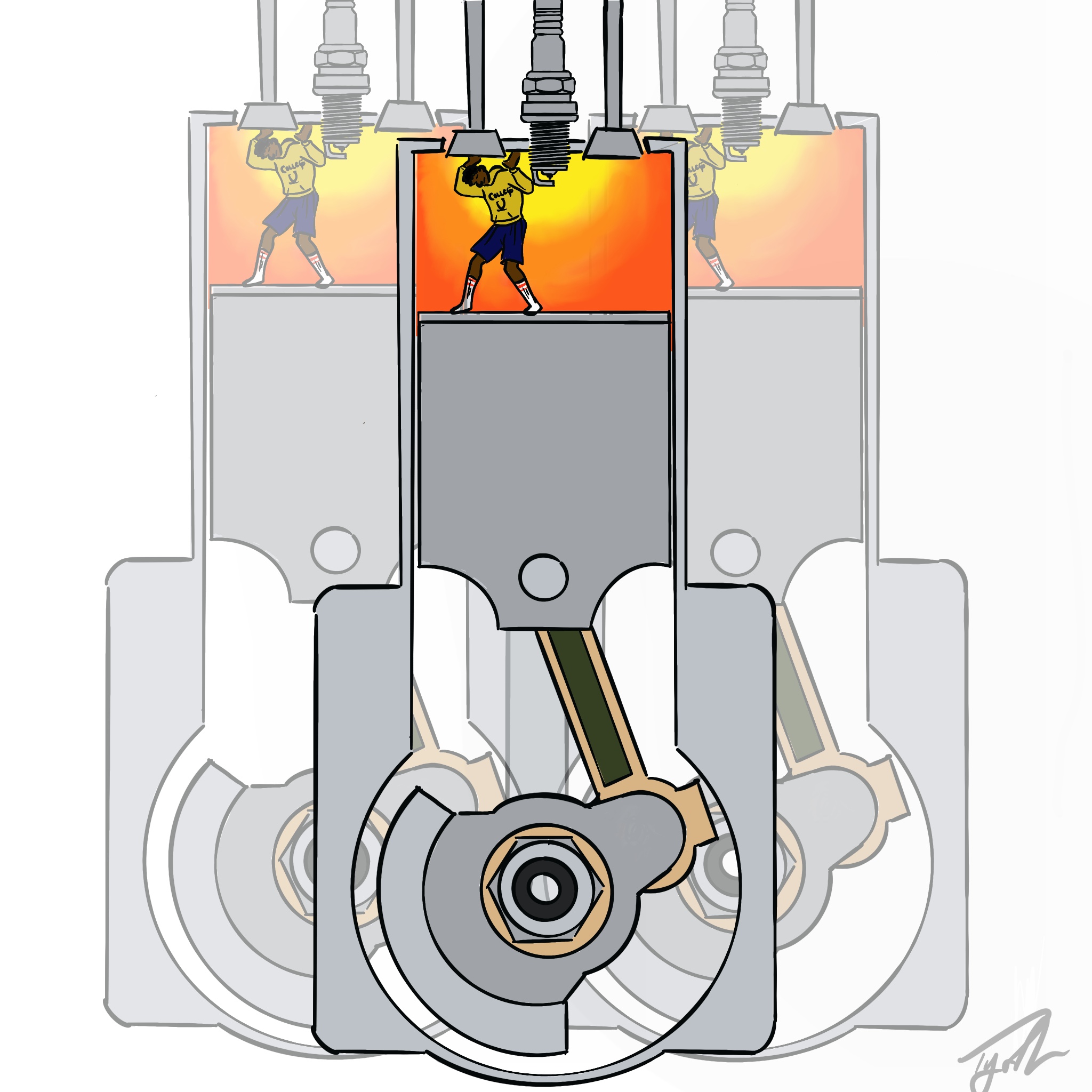
I’m compressed. One spark,
And I explode. So I work;
Then leave exhausted

You know that round spinning thingy that plays music that your grandparents and/or parents used growing up? Well, good news – it’s not extinct! When it comes to enjoying music, one of the best ways that I have discovered is by using vinyl (aka: the record player).
Compressed MP3 files and digital streaming services such as Spotify, Apple Music, Pandora, and YouTube have been the social norm for listening to music; however, vinyl sales have tremendously increased from under a million in 2007, to more than 8 million today in the U.S alone. According the British Phonographic Industry, vinyl sales hit a peak in the UK and the US in recent decades. Why? Because vinyl just is better!!
Let’s delve into the reasons why vinyl records are superior to digital MP3.
Vinyl is the only playback format readily available to consumers that is fully analog and fully lossless. That means that with a quality record player, you get to enjoy a high-fidelity listening experience. High-fidelity equates to high-quality reproduction of sound, that has inaudible background noise and distortion – giving a sound extremely similar to the original. Who wouldn’t want to listen to music that sounds as authentic as the source intended it to be?
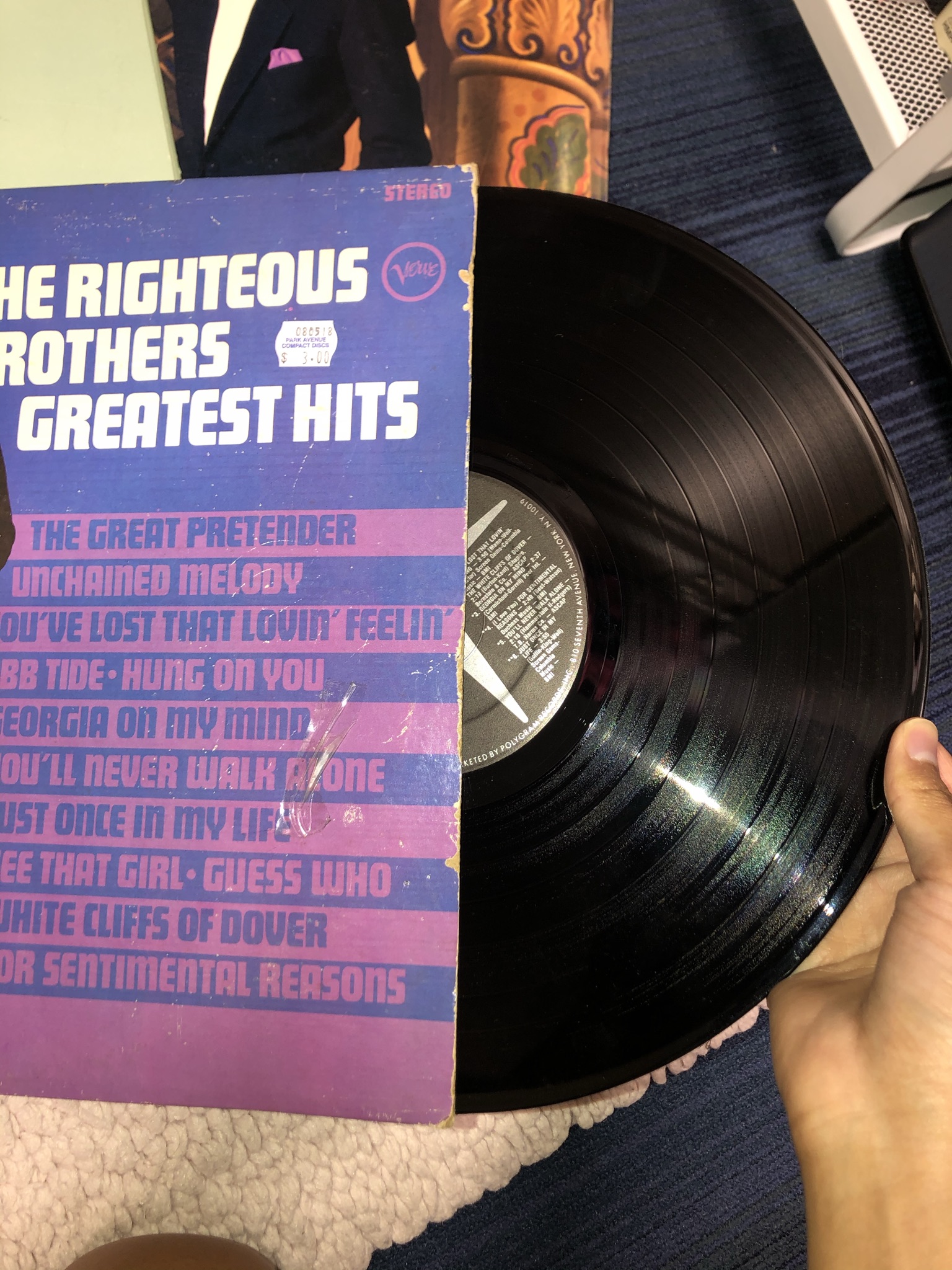
The quality is immaculate. The song you hear playing in this article is featured above. It is a vinyl by the Righteous Brothers, with a song clip entitled “The White Cliffs of Dover” (1965).

You know when you can feel the music when listening to your favorite songs? Well, with vinyl, you not only figuratively feel the music coursing through your mind and soul, but you can physically feel the music through the tangible form of the vinyl. There’s nothing like unraveling a vinyl wrapped in its cover. There’s nothing like being able to smell the music, just like the comforting smell of books in the library. With vinyl, you get to fully experience music with literally all of your senses.
There’s nothing like the nostalgic and magical experience of entering a record store, whether it’s your first time, third time, or hundredth time! You can easily spend hours in the record store browsing, searching, and discovering music! You can mingle with other vintage audiophiles, and you can usually always get a special discount when buying vinyl in bulk! Furthermore, there is no monthly subscription to enjoy the music you want (Haha, take that Spotify and Apple Music)!
Vinyl is an unbeatable classic that has remained relatively unchanged for the past 40 years! Since it’s creation in 1948, numerous developments and refinements within the vinyl industry have been made to perfect its technical and practical excellence. As George Plasketes, a professor of media studies and popular culture in the School of Communication and Journalism at Auburn University in Alabama, put it:
“Vinyl is not simply a recording format, but the artefact of an age; it is an experience that embraces emotion, passion and romance”.
Keep calm and vinyl on!
Oregonian/OregonLive, David Greenwald. “Does Vinyl Really Sound Better? An Engineer Explains.” Oregonlive, 19 Nov. 2014, www.oregonlive.com/music/2014/11/does_vinyl_really_sound_better.html.
Plasketes, George. “Romancing the Record: The Vinyl De‐Evolution and Subcultural Evolution.” Wiley Online Library, John Wiley & Sons, Ltd, 5 Mar. 2004, onlinelibrary.wiley.com/doi/abs/10.1111/j.0022-3840.1992.00109.x.
Sarpong, David, et al. “’Vinyl Never Say Die’: The Re-Incarnation, Adoption and Diffusion of Retro-Technologies.” Technological Forecasting and Social Change, North-Holland, 29 Nov. 2015, www.sciencedirect.com/science/article/pii/S0040162515003078#bb0310.
Zabowski, Jason. “4 Reasons Why Vinyl Is Better Than MP3.” VOX Player, 21 Nov. 2017, https://vox.rocks/blog/vinyl-is-better
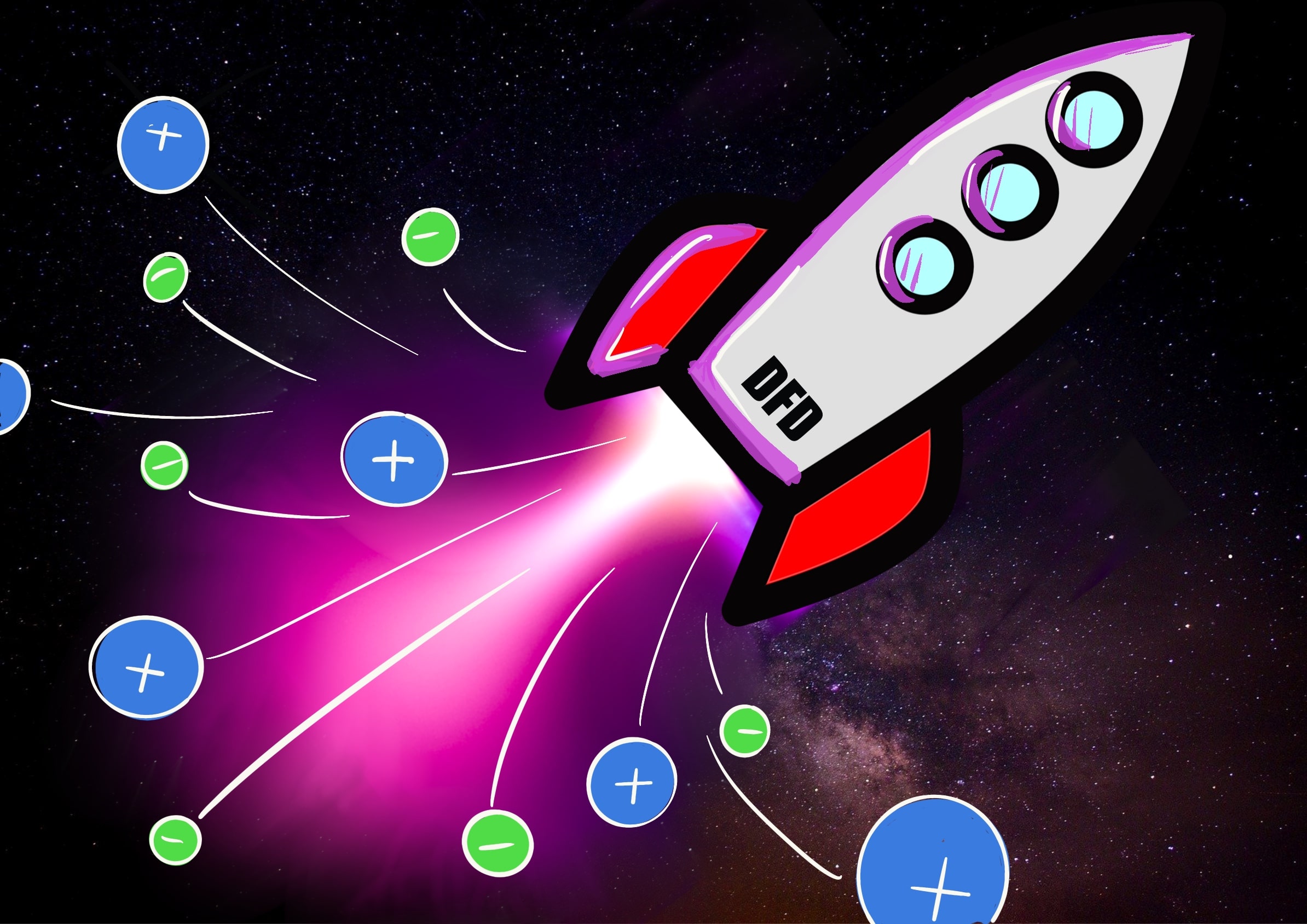
Rockets had their humble start in 13th century China: bamboo tubes filled with gunpowder, attached to arrows, to be shot at Mongol invaders. Seven hundred years later, similar, albeit slightly bigger, tubes were filled with liquid hydrogen and oxygen, attached to a lunar module, and shot at the moon. Now, in the 21st century, we’re seeing another evolution, this time with Direct Fusion Drive (DFD). But the more things change, the more they stay the same, and the fundamental concepts behind rocketry that repelled the Mongols at the Battle of Kai Keng are the same fundamentals that are going to propel us to Pluto and beyond in record time.
Rocket Science
Well, how do rockets work anyway? On a theoretical level, they work thanks to Newton’s Third Law of Motion, which holds that every action has an equal and opposite reaction. Propellant is mixed and burned in a combustion chamber. The gas produced goes through a nozzle and accelerates to supersonic speeds (think about how partially covering the outlet of a hose with your thumb sends the water shooting out). The gas shooting out the other end necessitates an equal reactive force in the opposite direction on the engine, a force called thrust. This thrust is what makes the rocket fly, and since the rocket carries its own fuel and oxidizer (the chemical that fuel needs to burn), it doesn’t need oxygen from the environment to conduct combustion like a car engine does, making it ideal for traveling through the vacuum of space.
Chemical Rockets
Since their creation, conventional rockets have depended on exothermic chemical reactions to create the necessary hot, propelling gas. An exothermic reaction is a chemical reaction that produces heat. These rockets come in 2 major forms: solid-fuel rockets and liquid fuel. The fuel and oxidizer grains are mixed from the beginning, and to cause combustion, the surface of the mixture is ignited. Liquid fuel rocket fuel and oxidizer are originally separate and then injected into the combustion chamber, where they mix and burn.
How DFD Works
These two methods have sent countless astronauts into space, but in the coming decades, DFD may supplant them. DFD aims to use the power of its fusion reactions to not only propel the module but to generate its electricity.
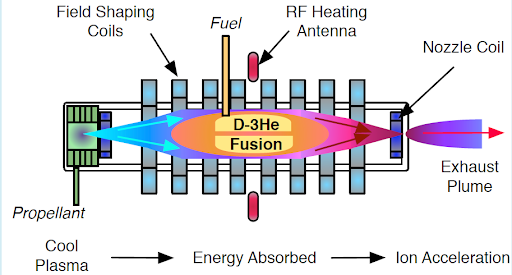
At its core, DFD is a fusion reaction powering a plasma rocket. Powerful rings of magnets are lined up to form something resembling a cylinder. Smaller but stronger magnets are situated at both ends. In the center of this configuration, helium-3, a stable helium isotope with only 1 neutron, is put in a fusion reaction with deuterium, a hydrogen isotope with roughly double the mass of ordinary hydrogen (isotopes are atoms of the same element that have the same number of protons but a different number of neutrons). These reactions and some side reactions create a fusion region the length of a surfboard. Cool plasma flows around it to extract energy (plasma is gas-like matter made up of ions and electrons; the presence of these electrons makes plasma really good at conducting electricity and easily influenced by electromagnetic fields). Antennae surrounding the engine create a rotating magnetic field that induces a current in the plasma. The plasma ions get more and more energized until they fuse, and the fusion products get shot out the back of the engine like hot gases in a conventional rocket, creating thrust.
This process produces tons of excess heat, which is used in a Brayton Engine to create more than 200 kW of electrical power. All remaining heat gets rejected to space, the ultimate thermal reservoir.
How DFD Measures Up to Conventional Propulsion
Conventional rockets have many advantages: high thrust and (relatively) low cost. They’re a reliable mechanism that has been used for centuries. What makes DFD so attractive is its compact design and efficiency. An important quantity in rocketry is specific impulse—impulse per unit of propellant or how efficiently a rocket creates thrust. The higher the specific impulse (often measured in seconds), the less propellant required for the desired impulse. Solid and liquid fuel rockets top out with a specific impulse of around 500 seconds, but a DFD engine boasts a specific impulse of 10,000 to 20,000 seconds, all while being no more than 2 meters in diameter.
With these numbers, NASA predicts that a 10,000 kg mission with DFD could get to Pluto in 4 years, which is much shorter than the 9.5 years it took 478 kg New Horizons on hydrazine propulsion, with more capabilities to do scientific work thanks to its increased power supply.
The Future
All in all, NASA is very excited about the DFD concept, as it can easily fit into NASA’s current launch infrastructure and would be an ultra-low radiation fusion option; however, there’s still a lot of work to be done. For example, while the Brayton Engine has been developed and the ion-energizing process is being developed, the crux of the concept, nuclear fusion, still has to be demonstrated. DFD design is going into its second phase, which seeks to improve its plasma heating system and shielding capabilities. According to the current timeline, actual flights are planned for after 2030 and, in the future, could power orbital platforms, interplanetary travel, and even bases on the Moon and Mars.
Hablas español? Haz clic aquí para leer una traducción al español!
—–
Sources:
Paluszek, M., Pajer, G., Razin, Y., Slonaker, J., Cohen, S., Feder, R., … Walsh, M. (2014). (rep.). Direct Fusion Drive for a Human Mars Orbital Mission (pp. 1–9). Princeton, New Jersey: Princeton Plasma Physics Laboratory Office of Reports and Publications.
Princeton Satellite Systems. (2018). Technical Video of Dfd Engine. YouTube. https://www.youtube.com/watch?v=hggqvB5I95I.
Thomas, S. (n.d.). Direct Fusion Drive: Enabling Rapid Deep Space Propulsion. Lecture.
Benson, T. (2014, June 12). Brief History of Rockets. NASA. https://www.grc.nasa.gov/www/k-12/TRC/Rockets/history_of_rockets.html.

Monstrous, one-eyed giants have prowled around our imaginations for at least 4,000 years – the oldest known description of such a creature was written on Babylonian tablets found near the Tigris river. The first stories about Cyclops emerged in Greece in the 8th–7th century BC: Homer’s epic poem Odyssey, followed by Hesiodus’ epic poem Theogonia, and later Euripides’ play Cyclops in the 5th century BC. What inspired these tales of a “horrid creature, not like a human being at all”? In 1914, the paleontologist Othenio Abel suggested that Ancient Greeks found local fossils of pygmy elephant skulls which contained a large, central nasal cavity resembling a single eye socket. You can read more about this idea in a previous Charged article!
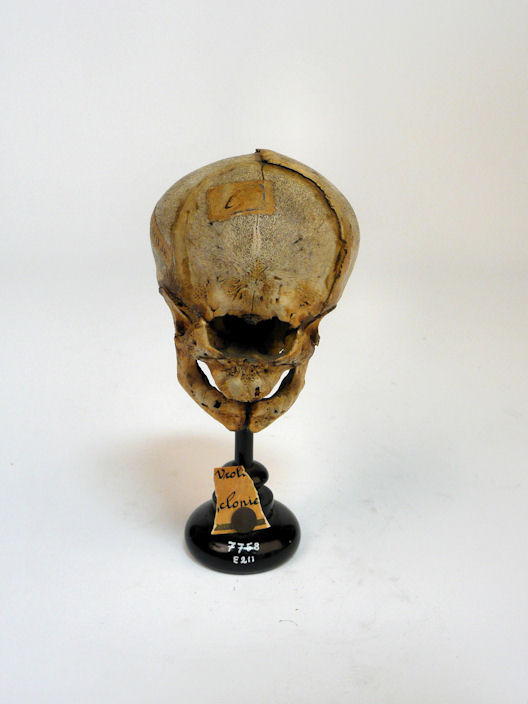
Descriptions of Cyclops also appear in scientific literature and records throughout history. In 1619, the Italian physician and philosopher Fortunio Liceti wrote a letter about cyclopia, a rare congenital malformation that gives the appearance of a single median eye. Cyclopia gained attention in the 18th–19th century with the rise of teratology, the study of congenital malformations. During this time, Willem Vrolik, a Dutch anatomist and pathologist, developed a collection of human and animal cyclops specimens, and the French naturalist Geoffroy Saint-Hilaire created the “cyclocephaly” classification for facial anomalies affecting the eyes. It was not until the 20th century that scientists developed a better understanding of this rare condition.
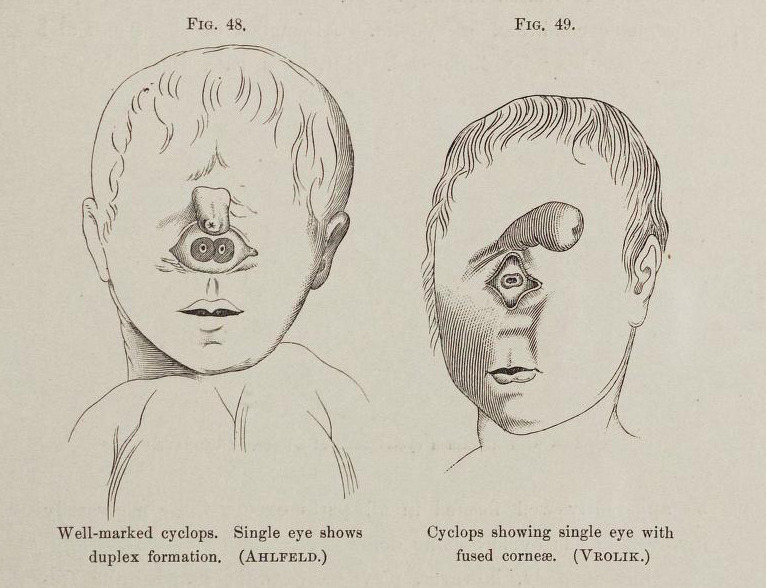
Cyclopia occurs in about 0.001% of births with an excess of females and twins. Half of these infants are stillborn due to brain development being impacted—cyclopia is a type of holoprosencephaly, a birth defect that causes the ventral brain to form incorrectly. The lack of separation between the cerebral hemispheres causes an ependymal (neural) cyst around the center of the forehead, and in some cases the two eyes fuse together. The appearance of a single median eye is exaggerated by deformed orbital bones that cause protrusions above the eye(s) and the appearance of a single nasal cavity.
The exact cause of cyclopia remains unknown. It is likely that exposure to teratogenic environmental factors or chromosomal abnormalities contribute to this unusual and deadly congenital development. A study with mice investigated the relevance of Hedgehog (Hh) proteins which are responsible for inducing cells in the ventral brain region of the embryo. Specifically, mutations in Sonic hedgehog (Shh) proteins produced cyclopia in some infant mice. Another study found that transforming growth-factor-B (TGF-B) genes could play a role—in zebrafish, the cyclops (cyc) gene is believed to signal the TGF-B genes to develop the ventral brain and identify the midline where the hemispheres will split, so mutations in the cyc gene can produce cyclopia. However, it will take a lot of research to untangle our brains and truly understand the medical factors behind the mythical Cyclops.
– – – – –
Sources
Blader, P., & Strahle, U. (1998). Casting an eye over cyclopia. Nature, 395(6698), 112-3. doi:http://dx.doi.org/10.1038/25836
Homer. (1999). The Odyssey (S. Butler, Trans.). Urbana, Illinois: Project Gutenberg. Retrieved from https://www.gutenberg.org/ebooks/1727
Kalantzis, G. C., Tsiamis, C. B., & Poulakou-Rebelakou, E. (2013). Cyclopia: From greek antiquity to medical genetics. Italian Journal of Anatomy and Embryology, 118(3), 256-62. Retrieved from https://go.openathens.net/redirector/gatech.edu?url=https://search.proquest.com/scholarly-journals/cyclopia-greek-antiquity-medical-genetics/docview/1497034944/se-2?accountid=11107
Källén, B., Castilla, E. E., Lancaster, P. A., Mutchinick, O., Knudsen, L. B., Martinez-Frias, M., …Robert, E. (1992). The cyclops and the mermaid: An epidemiological study of two types of rare malformation. Journal of Medical Genetics, 29(1), 30. doi:http://dx.doi.org/10.1136/jmg.29.1.30

Cilantro (also known as coriander) is a plant that has been cultivated for thousands of years. Cilantro, unlike your more run-of-the-mill herbs, has a very polarizing smell and taste. Eventually, research was done into the sharp divide over cilantro, and something fascinating emerged. Scientists found that members of certain ancestries are far more likely to despise cilantro than others. Twin studies were also consulted to see if there could possibly be a heritable element to being a cilantro hater. The link found was stronger for disliking the smell (.52) than the taste (.38). Respondents who didn’t like cilantro often referred to the herb as smelling soapy, which isn’t particularly appetizing.
Your brain has a specialized region dedicated to identifying smells, known as the olfactory epithelium. The olfactory epithelium sits right up your nose. The epithelium contains special proteins, which are chemicals in cells that do work, called receptors. These proteins are able to “match” up with one or a select few chemicals found in the air. You can think of them like poor quality locks that fit a few keys, rather than just one. Each receptor’s shape matches up to one or several molecules that you breathe in.
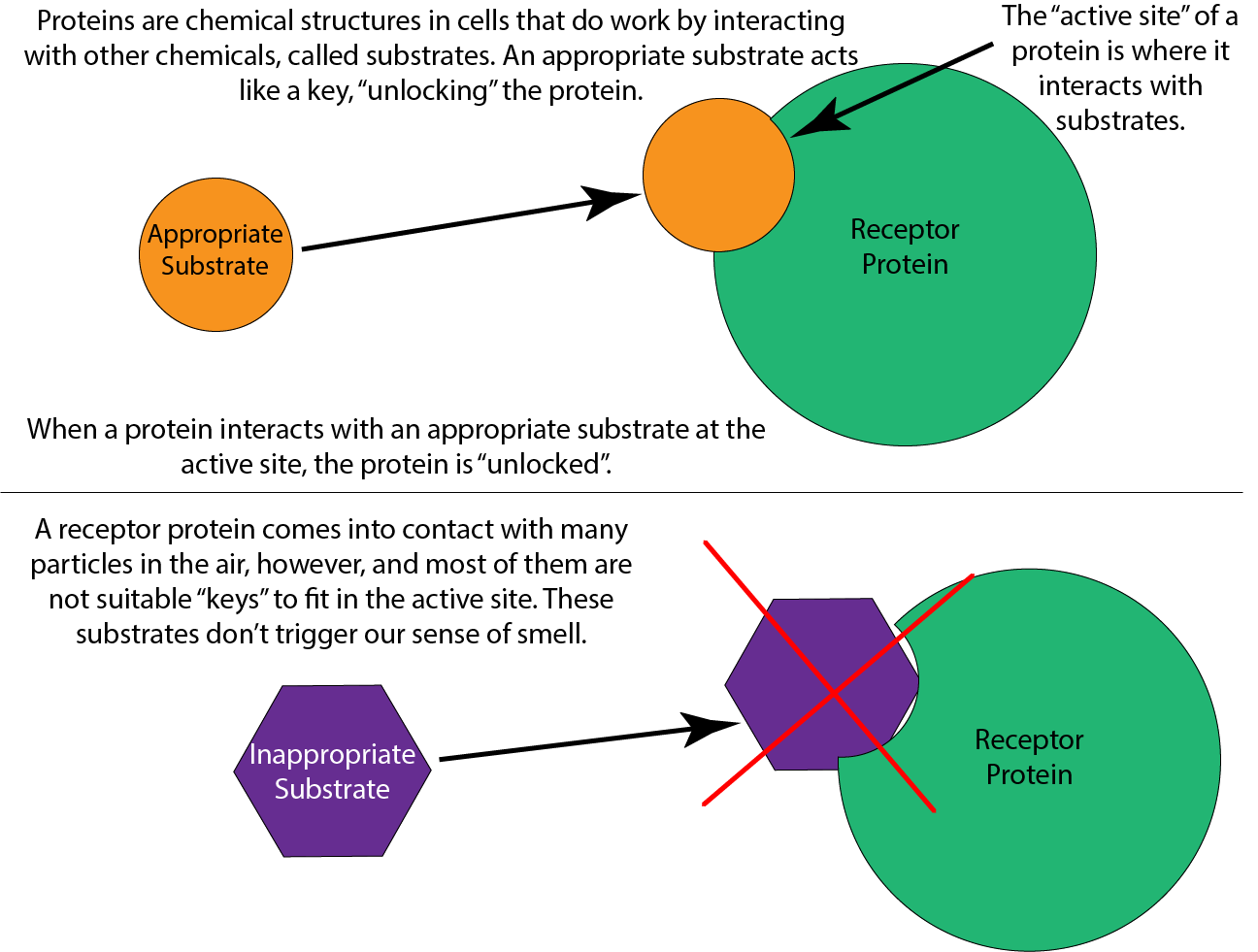
If a receptor is activated by something in the air, it sends a signal to another part of your brain, the olfactory cortex. The olfactory cortex uses this signal to interpret what you’re smelling. The olfactory cortex also coordinates the smell with the rest of your brain’s activities – if you smell your favorite food, the olfactory cortex lets you know to start feeling hungry.
The chemicals that enter your nose when you take a whiff of cilantro are called aldehydes, in particular the (E)-2-alkenals (mostly (E)-2-decenal and (E)-2-dodecenal). Aldehydes are a class of organic molecules found all around in nature. They’re grouped together as a result of the chemical structures they have in common. All aldehydes have an oxygen double bonded to a carbon. This carbon is bonded to a hydrogen and atom/group of atoms.
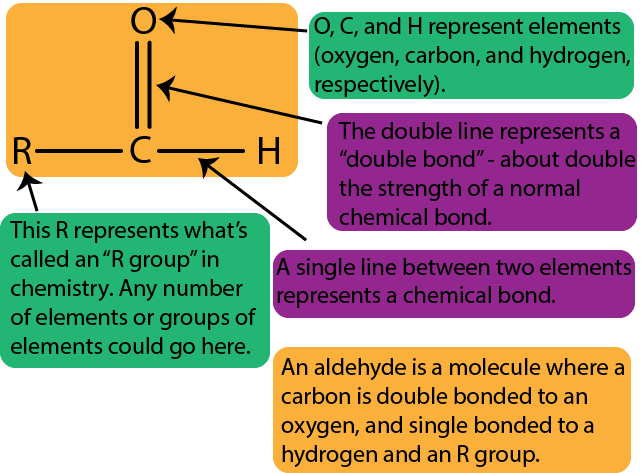
As cilantro sits out on your counter, some of its aldehydes evaporate in the air. When you smell the cilantro, those aldehydes bind to the aldehyde receptors in your olfactory epithelium. Then, the receptors tell the rest of your brain that you’re smelling cilantro.
Before we investigate the findings into the cilantro soap gene, let’s take a quick look at some of the genetics involved. Inside each and every one of your cells, there is a copy of your DNA. DNA (deoxyribonucleic acid) is made up of two long strands of repeating units called nucleotides. Each nucleotide has a nitrogenous “base” which the rest of the nucleotide’s structure hangs on to. The four variants of this base are identified by four letters: G, C, A, and T. How the sequences of these letters vary determines the genetic code. A gene is a section of nucleotides that corresponds to a protein. Proteins are molecules that do all sorts of important functions in the body. Remember the olfactory receptors we talked about earlier? Those are proteins. Variations in the olfactory receptor genes, for example, might change the shape of those receptors. Depending on where the shape of the receptor is changed, this could alter the sense of smell of someone with a changed receptor. There are different kinds of ways a gene can be mutated, or changed to be different from the “normal” version of the gene. One of these mutation types is known as an SNP (single nucleotide polymorphism), which means just one letter is different from normal.
This report conducted a genome-wide association study on 14,604 unrelated participants of primarily European ancestry. Two SNPs were found to be associated with finding cilantro to taste like soap. Let’s take a look at each of them. The first SNP was found on chromosome 11, located near the olfactory receptor genes. Researchers suspect that the SNP alters either the OR6A2 receptor or OR10A2 receptor. In particular, the OR6A2 receptor is known to be directly involved in smelling aldehydes, which is what we primarily smell from cilantro.
The other SNP that was found to be linked to smelling cilantro as soap was inside the gene SNX9. Researchers were baffled by this finding, as this gene encodes the instructions to create a chemical that helps cells communicate within themselves and re-construct their cell membranes when they duplicate. Now, this apparently has absolutely nothing to do with cilantro, and it’s very possible that it could be a false positive. However, the equivalent to this gene in mice was found to be associated with non-syndromic hearing loss in mice, so it’s not impossible to think that it could be related to human senses as well.
There were several significant differences between populations when it came to cilantro tasting like soap in this study. Women were significantly more likely to find cilantro soapy than men. Out of ancestries, Europeans were more likely than South Asians, East Asians, Latin Americans, and those of African descent to find cilantro soapy. No difference was found between Northern and Southern Europeans, or between Ashkenazi Jews and other Europeans. Although the South Asian group studied in this report was small, a significant association was found. This suggestion that there is a significant association between the genome and a person’s response to cilantro even outside of the European group. However, the heritability estimate made in this study was very low. This could be evidence that environmental effects and/or epigenetic effects have an impact on how someone tastes cilantro.
Browning, Peggy. (2018). Smell. In Gale Encyclopedia of Nursing and Allied Health (pp. 3266–3268).
Eriksson, Nicholas, Wu, Shirley, Do, Chuong B, Kiefer, Amy K, Tung, Joyce Y, Mountain, Joanna L, . . . Francke, Uta. (2012). A genetic variant near olfactory receptor genes influences cilantro preference. Flavour (London), 1(1), 22.
Solomons, G., Fryhle, C. B., & Snyder, S. A. (2014). Organic chemistry (11th ed.). Hoboken, NJ: Wiley.

Adaptation of Tokyo Japan during daytime photo – Free Person Image on Unsplash
Well, I can’t tell and neither can the children growing up in the covid-19 pandemic struggling to develop their social and emotional intelligence.
At the beginning of 2020, The Year of the Pandemic, the novel coronavirus was announced. A series of lockdowns and safety protocols were put in place. Schools were closed down, businesses went under, and the eerie shadow of death dawned over the entire globe.
Just as a brief overview, the covid-19 disease is caused by a new coronavirus that had yet to be seen in humans until the beginning of 2020. Typically, those afflicted with the disease experience dry coughs, fevers, etc. and in older individuals or those with underlying conditions may have more severe reactions. There are also many individuals considered to be asymptomatic, meaning they do not exhibit any symptoms and most of the time do not even realize they were ever infected. With that being said, roughly 1 in 6 people who do get infected become seriously ill and may have difficulty breathing which could potentially result in death (WHO Team, 2020).
In addition to the explicit and devastating outcomes that have affected everyone, covid-19 is also causing implicit effects that may be going unnoticed. Some of these effects may not even be seen until later on, once this pandemic has passed. One example of this is the negative psychological impacts that it may be having on children. Kids growing up in this age of isolation and death could be experiencing serious psychological tolls. They are at the prime age of development as they are learning languages, gaining a sense of self, and being introduced to independence (Pelz, n.d.)
It is possible that children’s emotional-facial recognition could not be developing properly, they are experiencing great amounts of stress, and they are missing out on key milestones in their lives. This could all lead to great psychological disparities in the future that many may not be anticipating.
Break in Routine
With the break in routine that many children experienced at the beginning of covid comes many unknown consequences. Activities like waking up, getting ready, going to school, lunchtime, playtime, cleanup, group circles, etc. are all part of a child’s routine and losing this structure could have psychological side effects (The Importance of Schedules and Routines, 2020).
For one, suddenly being ripped away from this routine (or having never even been introduced to a routine) leads children feeling they have no control of their environment. This also comes with inevitable confusion as many were not able to grasp the entirety of the situation the world was facing (CDC, 2020).
These children have lost a sense of security and safety. For many families, household incomes were lost along with many jobs. This leads to an inconsistency for children in their access to healthy food, safe transportation, or even shelter (CDC, 2020). In addition, this had a great toll on the parents themselves as they experienced great economic and social stresses. This can be confusing and have adverse impacts on the children as those are the individuals that they look up to and rely on for guidance.
For many children, there was also a great break in their continuity of care and learning. Whether they were taken out of preschool or daycare, or were taken out of an elementary level education system, they were suddenly taken away from their daily routines and friends and became socially isolated. This led to increased stress for both parents and children once again (Araújo et al., 2020). This social isolation also leads to lack of communication with other children which can be a key factor in the psychological development of children. Building positive interactions with peers play a role in facilitating feelings of belonging and confidence as well as the ability to exercise control over the outside environment as previously mentioned (Kington et al., 2013).
FACE-ing Many Problems
Although most children have not lost complete interaction with the outside world due to this pandemic, those that do get the chance to go out are met with emotionless faces covered in cloth. Due to the mandates requiring face masks, it is possible that children are not properly developing their facial-emotional recognition.
This psychology term refers to how people generally “infer the emotional states of other people, such as joy, sadness, and anger, using facial expressions,” (Ko, 2018). The reason the development of such a key psychological component could be obstructed within children specifically is because this is a process that develops early in life. It emerges around 7 months of life but its improvement and maturation continues developing until around the age of 14 in line with the frontal cortical maturation (Malsert et al., 2020).
More specifically, the recognition of these emotions can vary and do not all develop at once. Happiness seems to be the first to develop with children at ages of 5 and 6 are able to accurately evaluate it at the same level as adults. Then comes fear with adult levels emerging at age 7, anger 2 years after, and disgust 4 year after. Additionally, children below the age of 9 were not able to accurately identify neutral facial expressions as they would typically label them as happy or sad (Durand et al., 2007).
Furthermore, the ability for an infant to develop facial processing or focusing on another’s face is being obstructed by face masks. Newborns have been proven to prefer looking at faces and have a natural ability to recognize faces. They are able to recognize familiar faces and depend on their parents for survival and must be able to recognize them. In order for this process to develop properly, they must be able to visualize facial expressions accurately. This allows them to feel safe since they have a great dependence on visual cues and facial expressions to regulate their responses (Green et al., 2020).
Missing Life Events
With all of this also comes the inevitability of missing major milestones in their young childhood. Important events such as birthday parties, family gatherings, holidays, vacations, etc. are all crucial parts of one’s life that this pandemic has halted for many. Spending quality time with family and having celebrations as some of the few positive breaks in routine that children can benefit from.
In addition, for many children it may also have been the moment of intimate exposure to death. With the virus, individuals around the world lost those close to them and children were shocked into the reality of life and death. For some, this could have even been to the extreme of losing both of their parents or losing siblings which can take a great toll.
Even as the end of this pandemic draws near, we will still be feeling its effects down the line and potentially be reminded of it for several years afterwards.
References
Araújo, L. A., Veloso, C. F., Souza, M. D., Azevedo, J. M., & Tarro, G. (2020). The potential impact of the COVID-19 pandemic on child growth and development: A systematic review. Jornal De Pediatria. doi:10.1016/j.jped.2020.08.008
CRC. (2020, August 20). Young children’s WELLBEING during COVID-19: Parental Resources |CDC. Retrieved from https://www.cdc.gov/coronavirus/2019-ncov/daily-life-coping/parental-resource-kit/early-childhood.html
Durand, K., Gallay, M., Seigneuric, A., Robichon, F., & Baudouin, J. (2007). The development of facial emotion recognition: The role of configural information. Journal of Experimental Child Psychology, 97(1), 14-27. doi:10.1016/j.jecp.2006.12.001
Green, J., Staff, L., Bromley, P., Jones, L., & Petty, J. (2021). The implications of face masks for babies and families during the Covid-19 pandemic: A discussion paper. Journal of Neonatal Nursing, 27(1), 21-25. doi:10.1016/j.jnn.2020.10.005
The importance of schedules and routines. (2020, July 13). Retrieved from https://eclkc.ohs.acf.hhs.gov/about-us/article/importance-schedules-routines
Kington, A., Gates, P., & Sammons, P. (2013). Development of social relationships, interactions and behaviours in early education settings. Journal of Early Childhood Research, 11(3), 292-311. doi:10.1177/1476718×13492936
Ko, B. (2018). A brief review of facial emotion recognition based on visual information. Sensors, 18(2), 401. doi:10.3390/s18020401
Malsert, J., Palama, A., & Gentaz, E. (2020). Emotional facial PERCEPTION development in 7, 9 and 11 YEAR-OLD children: The emergence of a silent eye-tracked emotional other-race effect. PLOS ONE, 15(5). doi:10.1371/journal.pone.0233008
Pelz, B. (n.d.). Periods of Development. Retrieved from https://courses.lumenlearning.com/suny-hccc-ss-152-1/chapter/periods-of-development/
WHO Team. (2020, May 8). Coronavirus disease (COVID-19): Risks and safety for older people. Retrieved from https://www.who.int/news-room/q-a-detail/coronavirus-disease-covid-19-risks-and-safety-for-older-people

Are you currently laying in bed in the wee-hours of the morning and are wondering… what even is life?? Why on EARTH am I here? If aliens exist, then why haven’t we made contact with them yet?….. Or maybe extraterrestrial life has already attempted to make contact with humans, but our technology is not advanced enough to detect them…
Well, look no further in your search for some interesting and deep, philosophical questions. If you are scrolling through your phone in bed, these questions might help you fall asleep — but not because they are boring, rather, they will have your mind thinking deeply, to the point where your brain will be thinking so deeply that it will get tired, and thus, you might fall asleep from mental and intellectual exhaustion.
These four questions are all about the universe, and will surely make your head spin like a spiral galaxy. Some of the questions have been supported by research, others are too complicated or abstract to conduct studies on. Hopefully some day in the future, scientists will be able to answer some of these questions with complete assurance.

Depending on your belief of how the universe became, there are two most popular beliefs: the Big Bang, or that simply God created all of the universe and life. The Big Bang hypothesis states that about 13.8 billion years ago, all of the current and past matter in the universe came into existence at the same time. But, have you ever thought of what happened before the Big Bang? If nothing existed before the Big Bang, then how can something can just come from nothing? And how did that nothing become something?? According to Stephen Hawking,
“Asking what came before the Big Bang is meaningless, according to the no-boundary proposal, because there is no notion of time available to refer to. It would be like asking what lies south of the South Pole.”
Take a second and try to grasp that idea… Can’t grasp it? Me neither.
In relation to Hawking’s “no-boundary” principle, it is like looking at the tip of a pencil. Take the example picture of my pencil below:
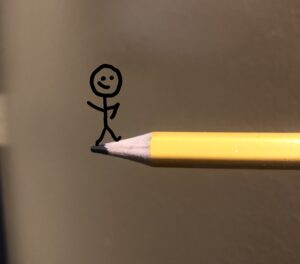
Just as the tip of the pencil has a diameter of zero at its top-most point and gradually widens as you move to the right — the universe smoothly expanded from a point of zero size. Very peculiar and mind-blowing, isn’t it?!?
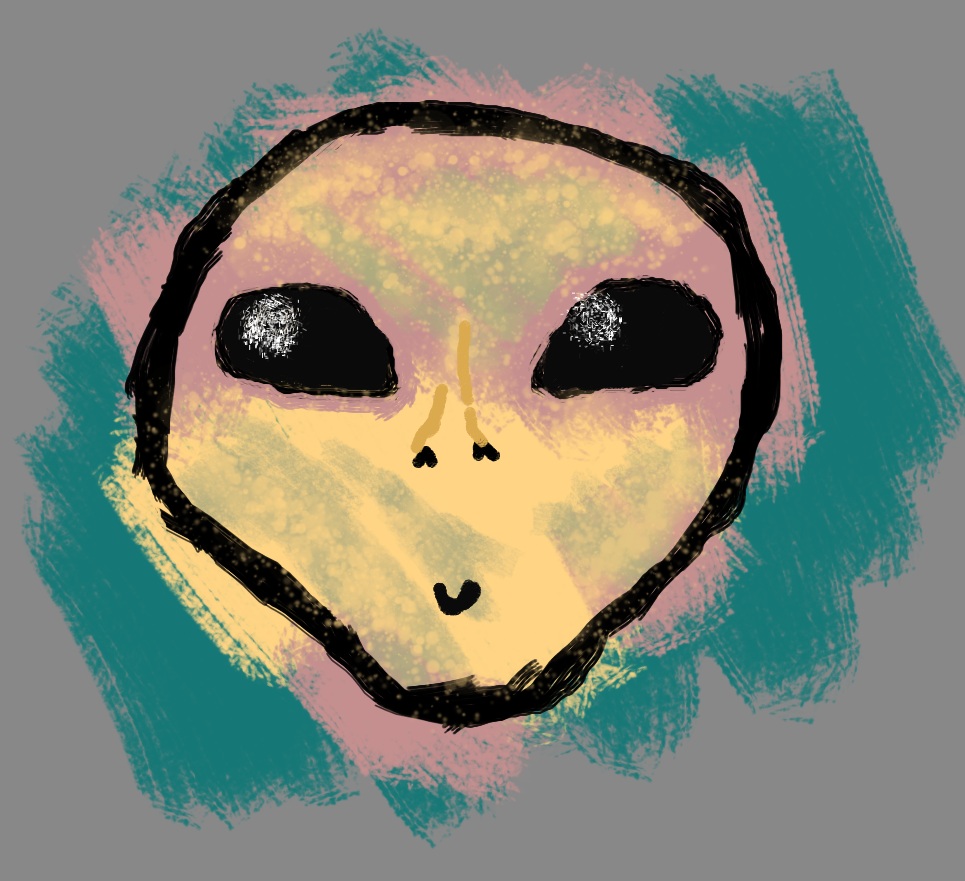
To many people, there is no way that extraterrestrial beings cannot exist, even if they cannot see them. To others, aliens are a fantasy that has never, currently does not, and will never exist (except for E.T.). Dr. Zank and his colleagues from the University of Alabama in Huntsville within the Department of Space Science are among some of the scientists looking for the factors that make conditions optimal for exoplanets to fall into the “Goldilocks Zone”. The Goldilocks zone is where the planets are not too cold, nor too hot — but juuust right to possibly foster life.
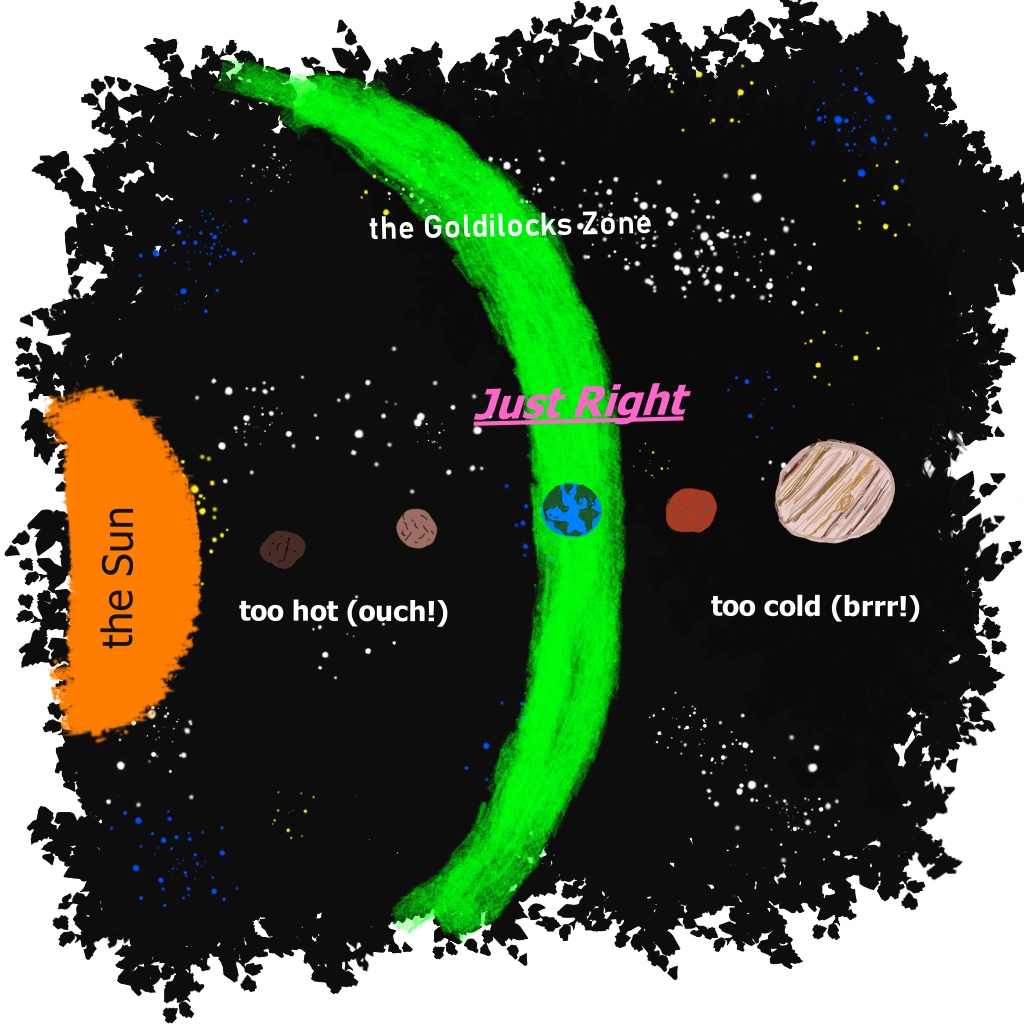
There are lots of stars, called G-type or G-class stars, that are similar to our Sun. They radiate more light toward the infrared spectrum and they look promising for hosting exoplanetary life. Our nearest neighbors, Alpha Centauri A and Alpha Centauri B, look promising.
The Fermi paradox offers an interesting perspective about the absence of evidence for extraterrestrial beings. Italian-American physicist Enrico Fermi created the Fermi paradox, which is the apparent contradiction between high estimates for the probability of extraterrestrial civilizations and the lack of evidence, thereof. However, various solutions to the Fermi paradox belong to different categories, such as the ones included below, regarding aliens:
Pick and choose your fighter as you will. I am not going to tell you which one to believe, but I will say that they can all be true — because we have not found evidence (or a lack thereof) of each possible solution.
The recognition of randomness and apparent chance can be outwardly shown through things like galactic evolution (ie: the formation of the Universe), biological evolution (ie: development of early life), and geologic phenomena (ie: volcanos, mountains, rivers, etc). However, these phenomena can also be described via the perspective that there is inherent order in nature. For example, some Darwinistic-like theories suggest that through natural selection, life and everything that exists on the planet now is the result of deterministic principles.
However, both are important to describe nature. Nature is neither chaotic nor orderly; and neither random nor deterministic. In classical physics, things are observed as the same result every time given the same initial conditions. However, also in physics, the Big Bang theory suggests that the universe was created suddenly, by chance of the right conditions.
So what gives? → A paradox.
A paradox such that chaos is deterministic, created by precise rules that do not involve any elements of chance. With this paradox, the future is completely determined by the past, but through time, small uncertainties accumulate upon each other — thus, even if a particular behavior is predictable in the short term, it remains unpredictable in the long run.
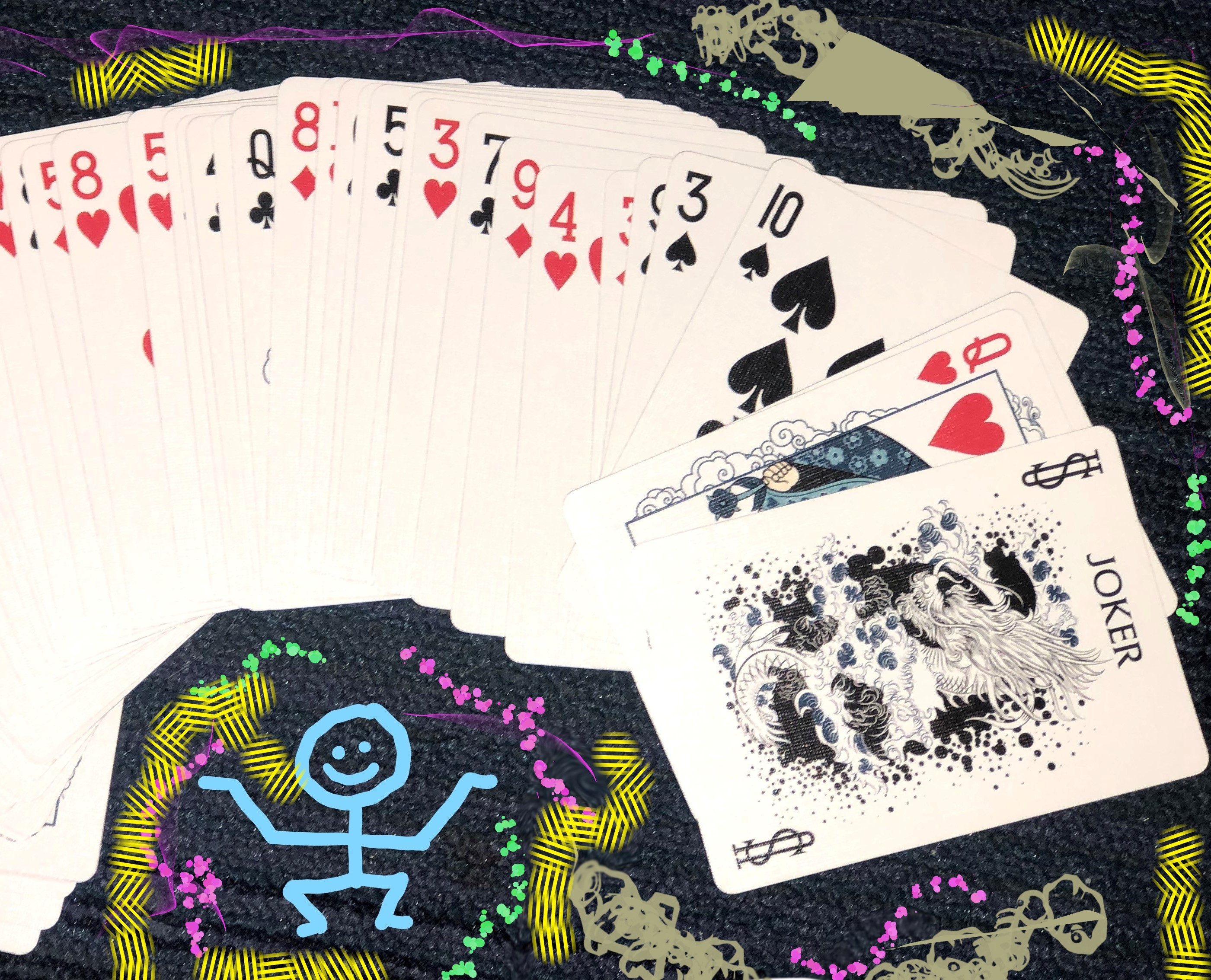
“Essentially, there is order in chaos: underlying chaotic behavior there are elegant geometric forms that create randomness in the same way as a card dealer shuffles a deck of cards or a blender mixes cake batter.” — Chaos, Scientific American Journal
Opposites truly do attract, in this case. I would have never thought of how order and chaos could mesh together so … naturally.

The idea that we could be virtual beings living in a computer simulation means that our simulated environment would create perceptions of reality on demand, rather than simulate all of reality all the time. This is similar to a video game where only parts of a scene are rendered to be visible to a player.
According to Neil deGrasse Tyson, “Maybe that’s why we can’t travel faster than the speed of light, because if we could, we’d be able to get to another galaxy… So the programmer put in that limit”. A new analysis by Nick Bostrom of the University of Oxford shows that ‘the odds that we are living in base reality—meaning an existence that is not simulated—are pretty much even’.
Bostrom’s simulation argument showed that at least one of the following scenarios must be true:
1. Humans almost always go extinct before reaching the simulation-savvy stage.
2. Even if humans make it to that stage, they are unlikely to be interested in simulating their own ancestral past.
3. The probability that we are living in a simulation is close to one.
If you think that perspective is interesting, take a look further. On November 12, 2019, professors at the Georgia Institute of Technology debated on the question: “Do we live in a simulation?”. There were lots of interesting answers, including the one below by professor Hans Klein in the School of Public Policy:
“It’s a simulated world that we live in to the extent that we live in this world that arrives to us through media the nature of the simulation is that institutions have interests and the interests of the media corporations and the interests of the entities that are being reported on by the media corporations. They’re all actively shaping the information flows that come to the public, it’s quite significant […] A lot of effort is made to influence how our knowledge of the world is mediated and it’s done in such a way so that we will so we end up living in if we live on critically we live in a world that’s a bit of a bit of a fantasy world and it’s a fantasy world that reflects off in the interests of media institutions and powerful societal interests.”
In a sense, Klein is saying that we, as humans, are creating our own simulating reality through the media and information we consume and the powerful interests of society that media corporations help perpetuate. With this perspective, maybe we are living in base reality after all…
As mysterious as the universe can be, hopefully one day humans will be able to answer these questions with impeccable certainty. Maybe the universe or some higher power does not want us to know the truth about our universe… Or maybe simply, humans just are not advanced enough yet to grasp the true notions of our reality, origin, or purpose. Hopefully you are asleep by now (if you wanted to be), but if not, may the Universe always be with you!
Ananthaswamy, Anil. “Do We Live in a Simulation? Chances Are about 50–50 – Scientific American.” Scientific American, Scientific American, 13 Oct. 2020, https://scientificamerican.com/article/do-we-live-in-a-simulation-chances-are-about-50-50/.
“Before the Big Bang: The Prehistory of Our Universe – Brian Clegg – Google Books.” Google Books, Brian Clegg, Aug. 2009, https://books.google.com/books?hl=en&lr=&id=3fZ0SM78LFsC&oi=fnd&pg=PP2&dq=what+happened+before+the+big+bang&ots=6aaH7pfy8I&sig=Gw6XKD59ZborhgRoidXqEaSqb88#v=onepage&q=what%20happened%20before%20the%20big%20bang&f=false. Accessed 10 Feb. 2021.
C. JOHN MANN; Randomness in Nature. ‘GSA Bulletin’ 1970;; 81 (1): 95–104. https://pubs.geoscienceworld.org/gsabulletin/article-lookup/81/1/95 Accessed 2 Mar. 2021.
Chaos. Scientific American, 1986, https://www.jstor.org/stable/pdf/24976102.pdf?refreqid=excelsior%3A9e5867f32c36ce9d2401f9b76c3af1cc. Accessed 26 Feb. 2021.
Cvitanović, Predrag, et al., editors. Professor Debate on the Topic – Do We Live In a Simulation? Georgia Tech Library, 12 Nov. 2019, https://smartech.gatech.edu/handle/1853/62045. Accessed 3 Feb. 2021.
Fermi’s Paradox.http://abyss.uoregon.edu/~js/cosmo/lectures/lec28.html. Accessed 18 Feb. 2021.
“If the Universe Is Teeming with Aliens … WHERE IS EVERYBODY?: Fifty … – Stephen Webb – Google Books.” Google Books, https://books.google.com/books?hl=en&lr=&id=Kp6g79LuKWEC&oi=fnd&pg=PA2&dq=do+aliens+exist&ots=aAMZyI0X6s&sig=0DONvBxxF8VTV6N37huhr3X5M5c#v=onepage&q=do aliens exist&f=false. Accessed 6 Mar. 2021.
“Physicists Debate Hawking’s Idea That the Universe Had No Beginning.” Quanta Magazine, Natalie Wolchover, 6 June 2019, https://www.quantamagazine.org/physicists-debate-hawkings-idea-that-the-universe-had-no-beginning-20190606/. Accessed 2 Mar. 2021.