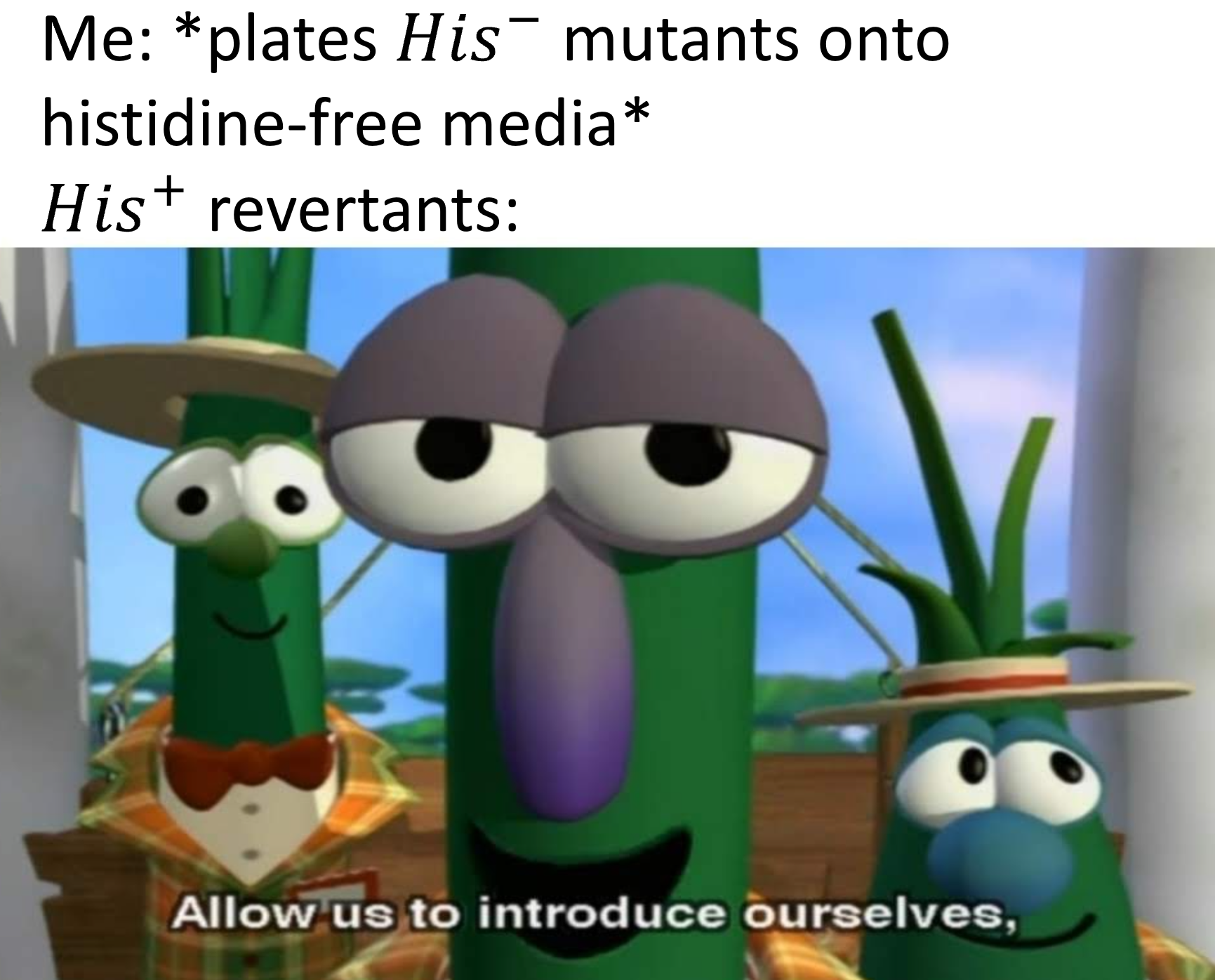
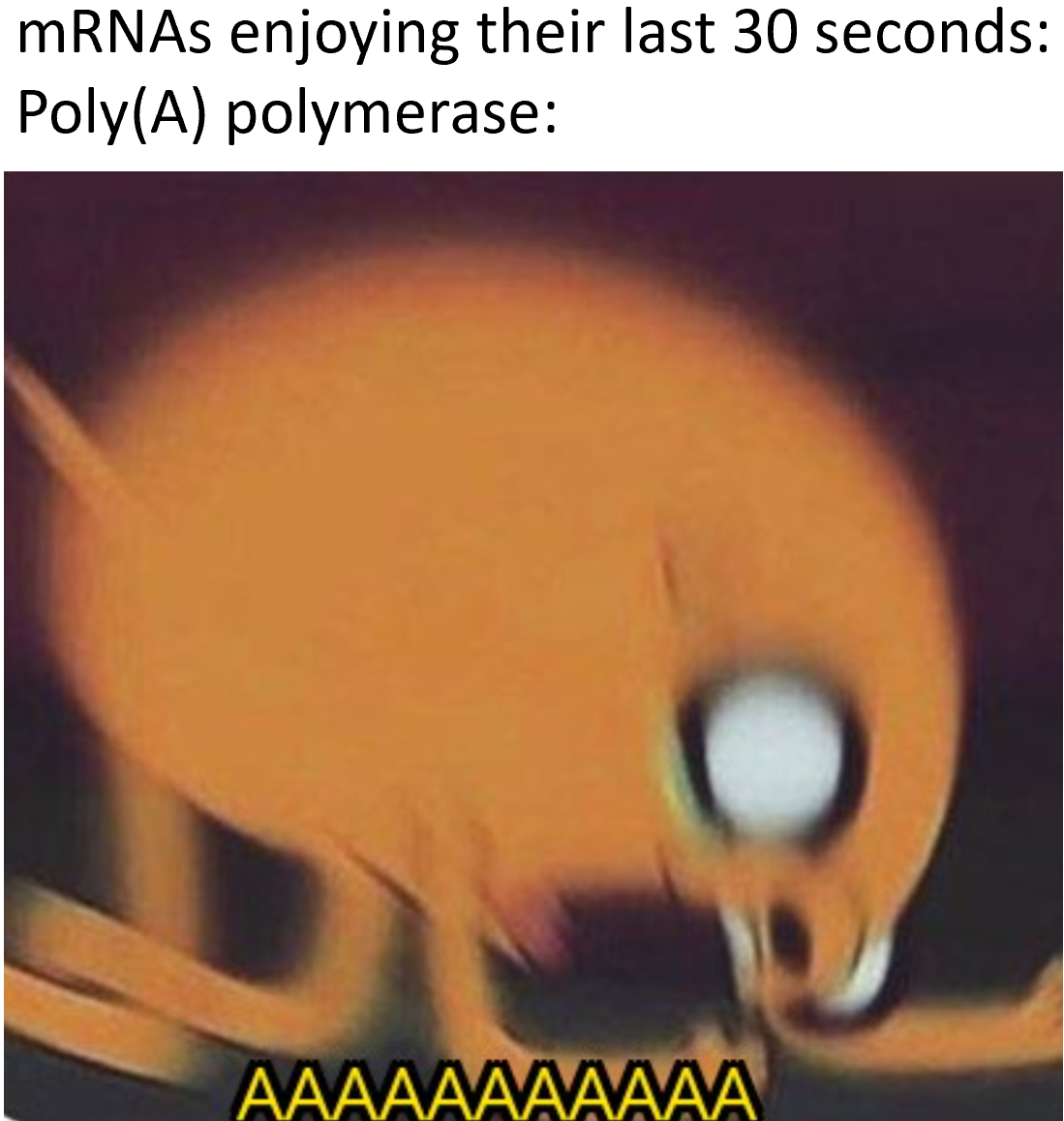
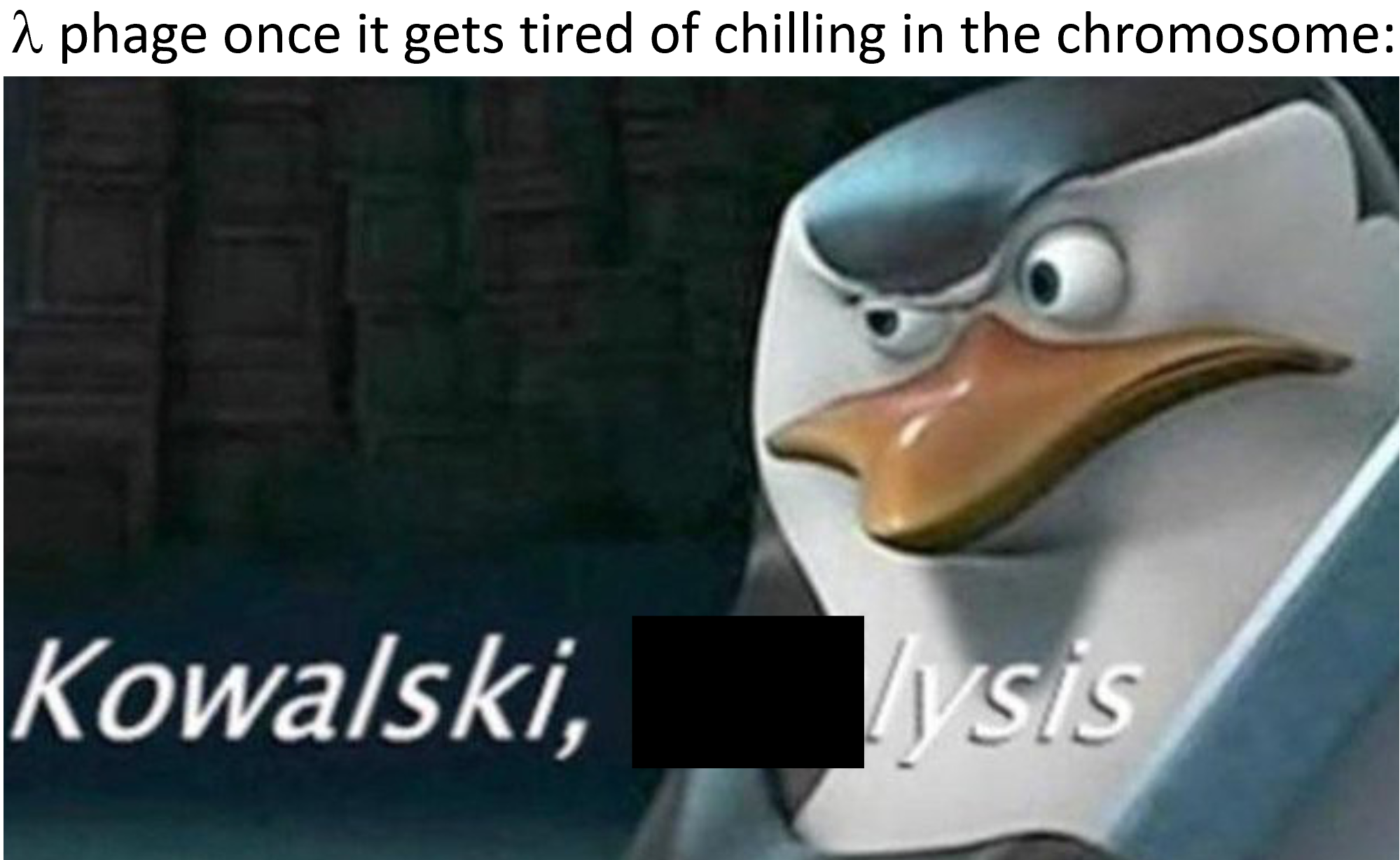
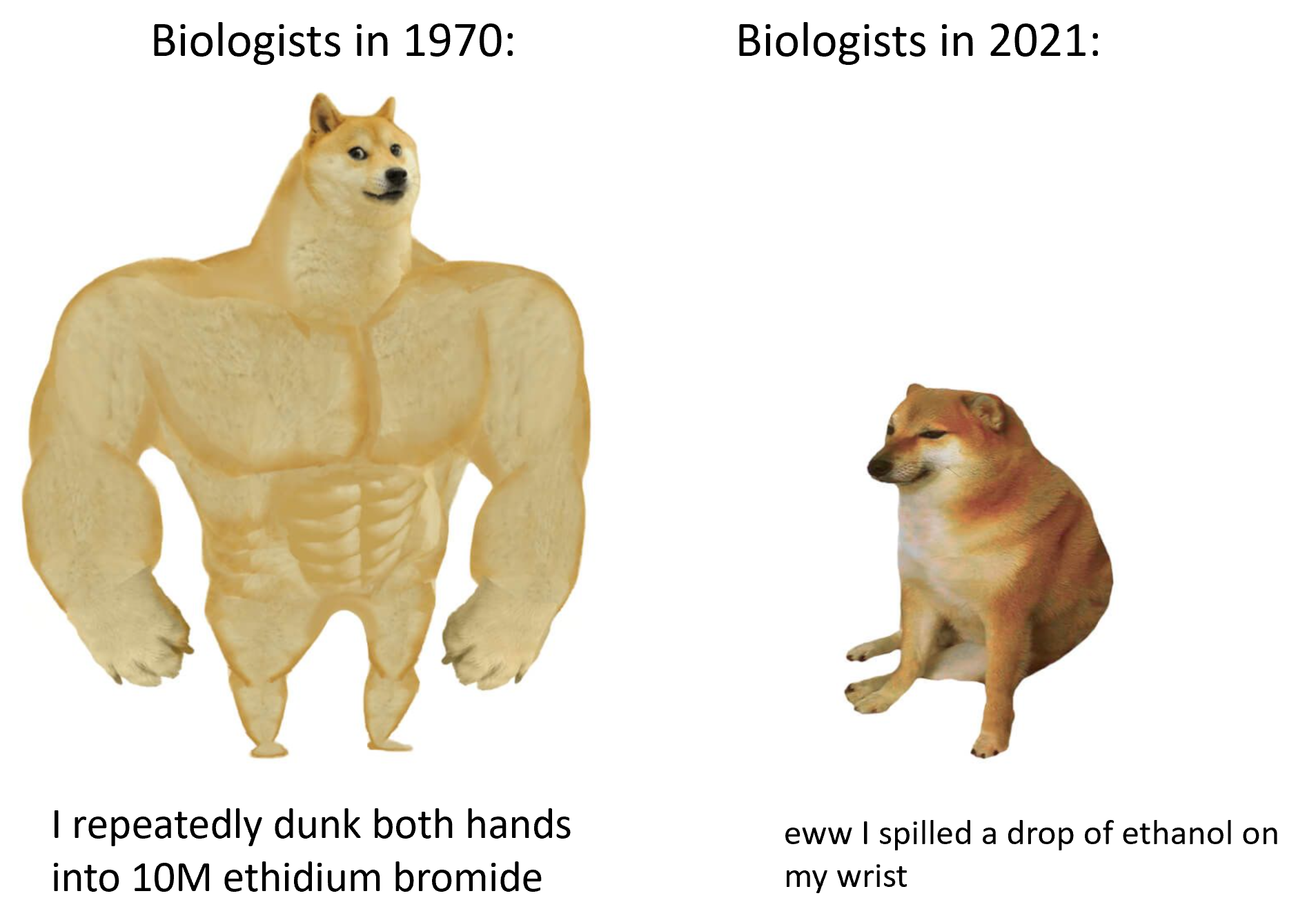
Here are a few of the memes I made throughout the semester for BIOS 4607, Molecular Biology of Microbes, taught by Dr. Brian Hammer. At the risk of making these worse, I have provided a brief explanation under each meme.
An auxotrophic mutant is one which has a mutation in a gene that produces an essential product for the organism. If the organism is plated onto media with the required substance, auxotrophs will be able to grow. A common example of this phenomenon are histidine mutants, denoted His-, which are unable to synthesize the amino acid histidine. Because histidine is essential for growth, this means that the His- mutants will only grow on media with histidine. However, by streaking auxotrophic colonies onto limiting media—in this case, media lacking histidine—the only mutants that will grow are those which somehow reverted back to a histidine-producing state. For example, if the auxotrophs were unable to produce a histidine due to a nonsense mutation—one which causes ribosomes to halt translation prematurely and is often the result of a single nucleotide change—reversal in one of the descendants of the mutant will be quite likely. However, these revertants will only be apparent once their His- friends are dead as a result of selecting against them.
Messenger RNA, or mRNA, is transcribed from DNA by RNA polymerase. The strand of mRNA is then used by ribosomes, which move along the mRNA from its 5′ end to its 3′ end as they build proteins. RNA often has secondary structures, which form when the RNA loops around and binds to itself. These patterns can be quite intricate and sometimes result in complex molecules such as enzymes, which are called ribozymes when made out of RNA. With regards to ribosomes (which are themselves partially made out of ribozymes and other types of RNA), loops which form at the 3′ end of the mRNA help knock the ribosome off the strand, at which point it will be degraded by enzymes called exoribonucleases. One enzyme which assists in this process is polyadenylate polymerase, which adds lots of adenine (A) to the end of the mRNA to allow exoribonucleases to digest the strand properly.
This is a play on the famous “Kowalski, analysis” meme. Lambda phage is a well-studied bacterial pathogen which, instead of replicating upon arrival in its microbial host, integrates itself into the chromosome, where it may stay indefinitely. Naturally, the virus does not decide to leave its host once it gets tired of “chilling;” rather, it is typically induced to exit its host by stressful conditions such as exposure to ultraviolet light.
This meme was the result of a comment my professor made about how when he was a student in the 70s, he knew academics who would use their bare hands to pull electrophoresis gels out of solutions with ethidium bromide, a highly toxic mutagen. In general, safety protocols have improved significantly over the last century, to the point where certain practices seem like jokes today; for example, chemists using their mouths and a hose to pipette dangerous chemicals. Another famous example is the discovery of phenylthiocarbamide, a chemical which only certain humans can taste. This discovery was made when the chemist studying it accidentally spilled some powder into the air and tasted nothing, whereas his nearby colleague told him that whatever he was working with tasted disgusting. Because it was common to taste chemicals at the time, the chemist brought the powder to various people to see who could taste it and who could not. Fortunately, the compound isn’t terribly toxic at usual doses, though nowadays I doubt the scientific community would be so nonchalant about a scientist casually testing a chemical on civilians.
This is an experiment that you can do yourself to learn a bit about how scientists think the universe became as large as it is. All you will need is a balloon and a marker. Alternatively, you can treat it as a thought experiment!
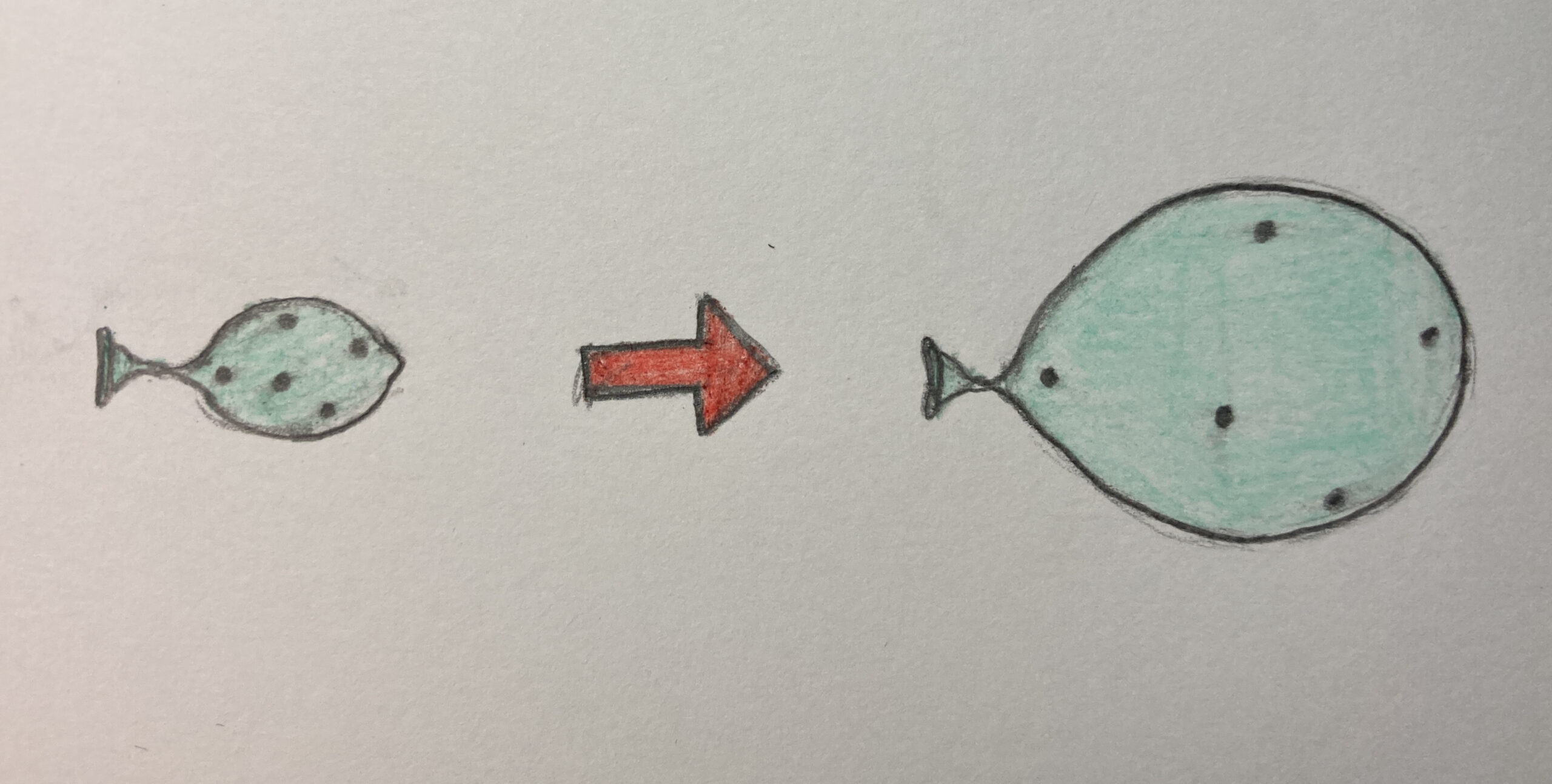
The first step is to take your balloon and blow it up just so it holds a circular shape and then block the air off. This balloon is going to represent spacetime. Spacetime is what matter resides on. Using a marker, draw some dots on your balloon. This is our matter.
All together, this balloon and the dots are going to represent the very early universe. When the universe was very young, it was still condensed very close together. Matter was moving away from each other, but it could not travel faster than the speed of light. What this would imply to our universe today is that the amount of the universe we can see, is all there is to see. But scientists don’t believe that this is true. Instead, they think spacetime shows us a different way of getting a large universe.
Partially blown up balloon vs fully blown up balloon.
Take note of the distance between the dots on your balloon. Maybe pick out two favorites to measure specifically, then blow up your balloon as much as you can. Observe the distances between your dots now. They are much farther away than they were before, right? Take a close look at the dots though, they have not moved from their original position on the balloon. The balloon itself has expanded, but the dots stayed in one place. This shows your matter’s position on spacetime has not moved, but rather spacetime itself has expanded.
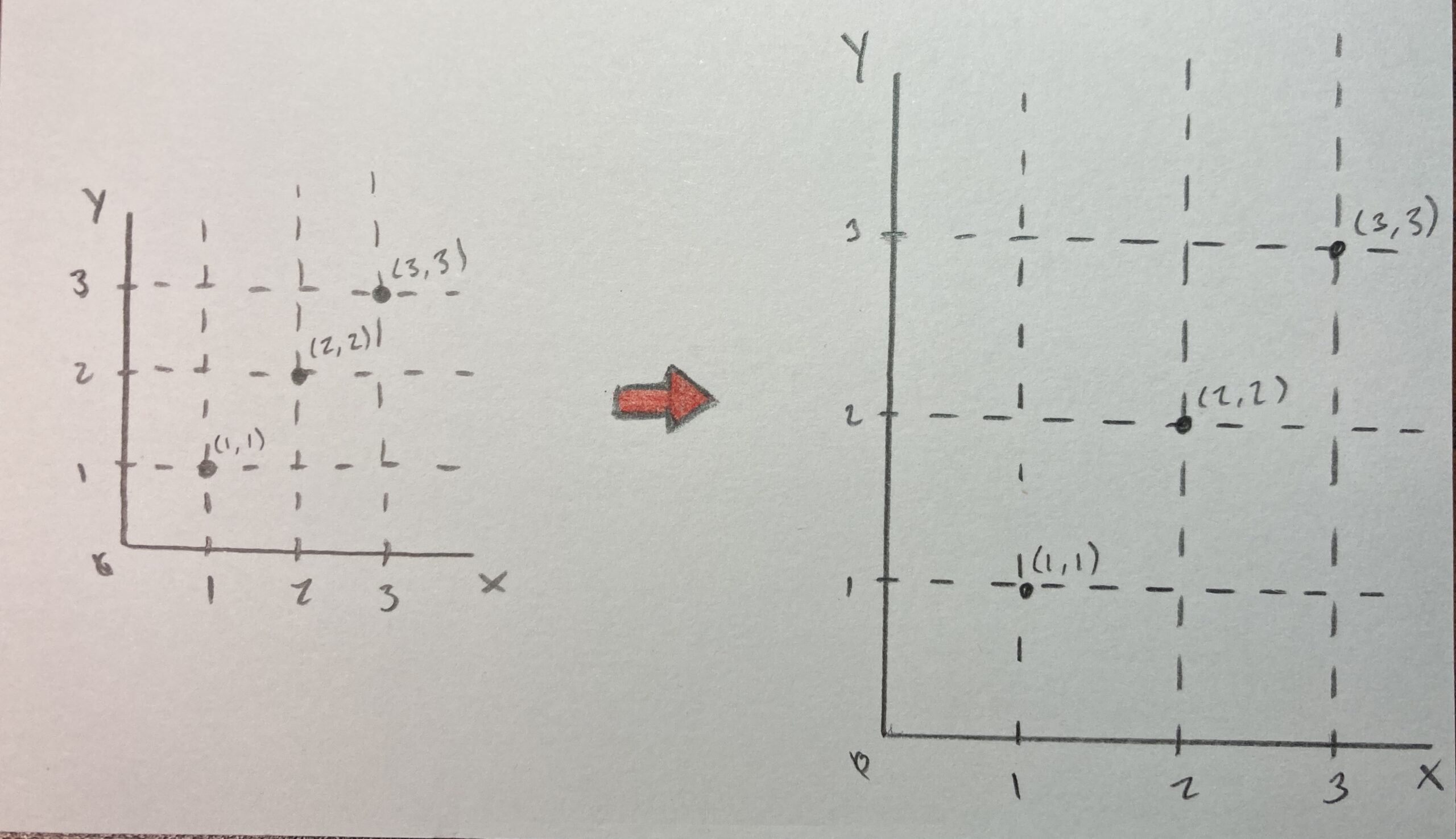
This stretching of the balloon that leaves the dots in the same position is a simple way to visualize what cosmologists call the “Inflationary Theory”. This is a theory for how the universe was formed. It says that after the initial Big Bang at the beginning of time, there was a very short amount of time in which spacetime inflated to be much much larger than it was to start. Since spacetime is not matter, it can move faster than light without breaking any laws of physics. This made the matter end up far from other matter, but still technically in the same position on spacetime. Think of spacetime as a coordinate grid and matter is on it. This inflation caused the space between the grid lines to get larger, but the matter didn’t move from its position on the grid.
The expansion of spacetime modeled as a coordinate grid.
What this means for us now ultimately is that the universe is much larger than what we can see on Earth. This is why we differentiate between the observable universe and the entire universe. The observable universe has a radius that correlates with the age of the universe. This is because light has been traveling constantly since the beginning of time so the farthest light we can see took the entire universe’s lifetime to reach us. Outside of the observable universe though, there is more of the universe that we can’t see, caused by this early inflation of spacetime when the universe was created.
Sowell, James. (2021). Early Universe [Powerpoint Slides]. Retrieved from Georgia Institute of Technology PHYS 2022 Canvas site.
Tsujikawa, S. (2003). Introductory review of cosmic inflation. arXiv preprint hep-ph/0304257.
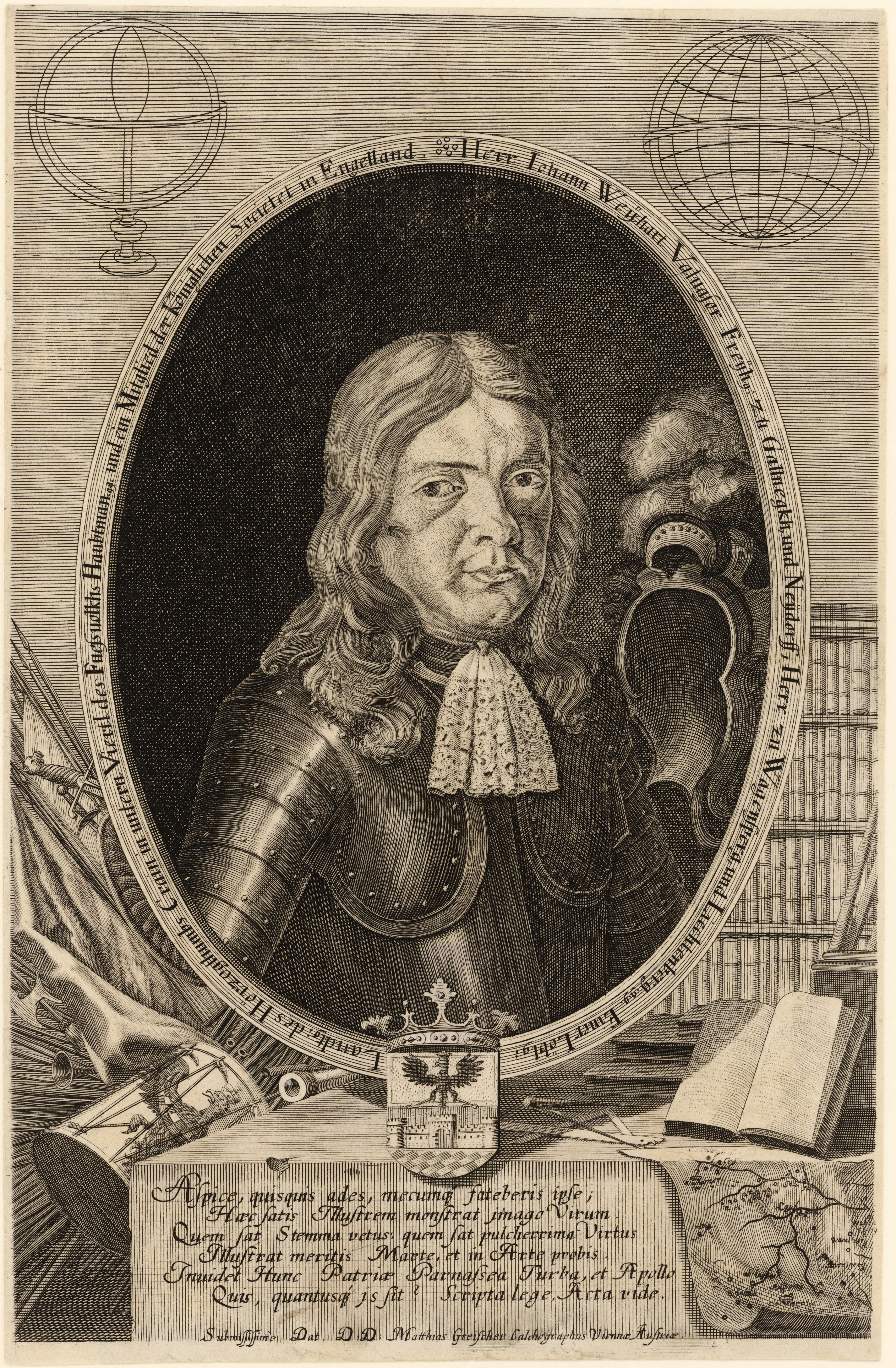
As William and Mary were crowned King and Queen of England, marking the end of the Glorious Revolution and economic dominance of the Dutch Republic, a much less momentous event was taking place. About six hundred miles from the Palace of Westminster, an encyclopedia was published by Johann Weikhard von Valvasor, a historian, scientist, and traveler from southeastern Europe. Spanning over three-thousand pages, the text contains the first known mention of both vampires and cave salamanders, the latter thought to be the offspring of dragons by locals. These legends arose after the pale, writhing creatures were washed out into the surface world by heavy storms; at the time, the existence of European cave fauna was largely unknown.
Carniolan polymath Johann Weikhard von Valvasor. As our friend lived over a century before the invention of the photograph, I will blame his appearance on the draughtsman. It is worth noting that the first person to attempt to capture a permanent image was Charles Darwin’s uncle, Thomas Wedgwood (also his wife’s uncle, but we won’t get into that).
The species swept from its caverns was not described scientifically until eight decades later, when a specimen was brought to an Austrian naturalist who named the animal Proteus anguinus. The name refers to the shapeshifting, prophetic sea god Proteus of the Greeks and the Latin word for snake, anguis, though it is commonly referred to as an olm. Although Proteus could function quite well as either the name for an English Mastiff or the generic form of a blood-thinning medication, it is not the most descriptive name for Europe’s dragons. Indeed, the name’s shapeshifting implications would be better suited for a salamander species which does not exhibit neoteny—a state where the sexually mature form of a species retains characteristics from its juvenile stages of life.
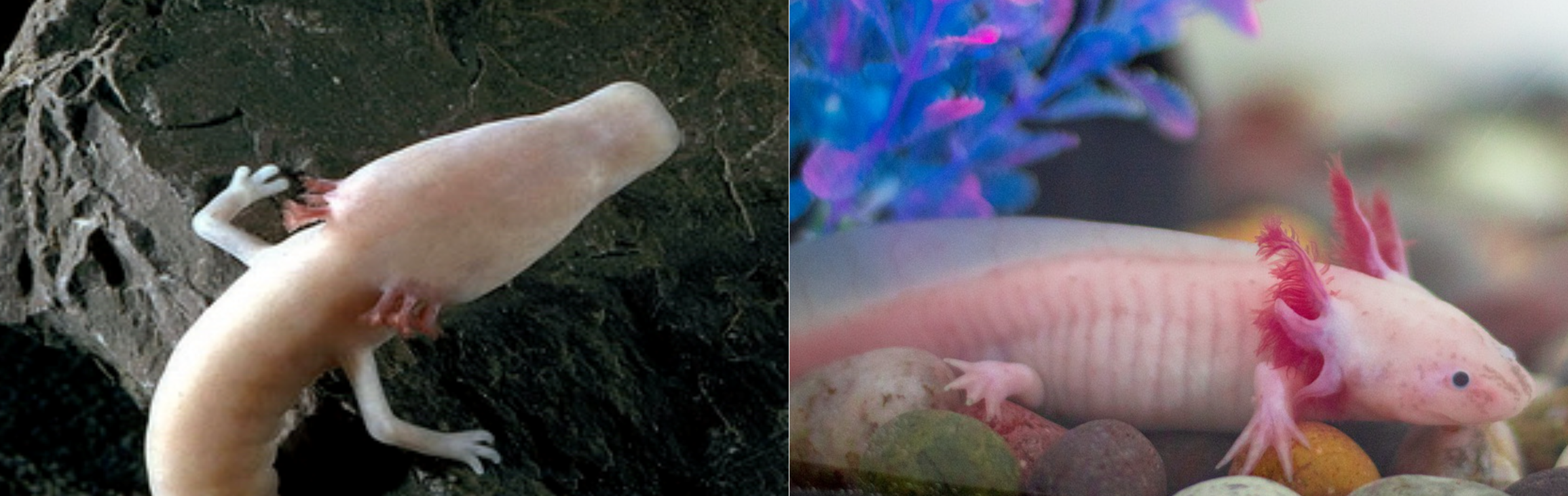
If you think back far enough, you might recall the charts your kindergarten teacher showed you describing the stages of a frog’s life cycle, beginning with an egg which becomes a tadpole, continues to a froglet phase, and ultimately achieves the mature form of the animal. A salamander’s life cycle is similar, but instead of tadpoles and froglets there exists a larval stage, an anatomical phase along a continuum from the newly hatched salamander to the terrestrial adult without a tail fin or gills. However, given that P. anguinus spends its entire life underwater, inhibition of the final stages of transformation allows the organism to remain fully aquatic. This can also be observed in its more well-known relative, the axolotl, which spends its entire life in the waters of Lake Xochimilco in central Mexico. In fact, the cute tufts on the sides of both the olm and the axolotl are their neotenic gills, which are otherwise absorbed into the body for nutrients in species that undergo metamorphosis into standard, terrestrial salamanders. However, unlike their Mexican relatives(1), the olm’s post-larval form cannot be induced by placing it in shallow water, though the reasons for this are unknown.
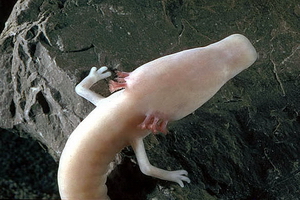
The eyeless olm (left) and its beloved cousin, the axolotl (pronounced ah-sho-lot). Note the pink, neotenic gills protruding from behind the heads of both organisms. Although most olms are white due to a lack of pigmentation, this axolotl is a mutant that has become popular in the pet trade; most wild axolotl are dark gray.
Given the early discovery and peculiarity of the little dragon, it has attracted a great deal of scientific attention. In the early years of olm experimentation, a cistern at the University of Vienna was used to house a small population of the slender creatures. The man in charge of the procedures, Dr. Paul Kammerer, claimed that olms were capable of giving birth in colder waters, whereas eggs would be laid in warmer ones. These assertions were backed by reports from the 19th century, including this detailed statement from a county judge:
“On June 17, 1852 I, as well as members of my family and members of my neighbor’s families, witnessed the birth of a young olm.”
-Geck von Verch
Unfortunately, Kammerer was later accused of having forged results to support an unproven hypothesis, which shed doubt on much of his previous work. Despite some reasons to believe that Kammerer was innocent, the accusations proved too much to handle; it was not long before his body was found, gun in hand, in the Austrian mountains. Thus, considering that reports for live birth are either old, dubious, or both, it is unclear whether olms are capable of doing so.
Nevertheless, the studies performed on this organism are fascinating, and one of the most recent projects hopes to sequence the entire genome of the cave salamanders. The salamander family is renowned for its immense genomes, and the olm seems to surpass all of its genomically well-endowed cousins in the surface world. Researchers claim that the olm’s cells have about fifteen times more DNA than a human’s, resulting in the largest known genomes in the animal kingdom. To highlight just how enormous this is, consider this article, around 10,000 characters long. If you can imagine what four and a half million copies would look like, you’ll have a good idea of how much genetic information is encoded in each of this subterranean creature’s cells.
Due to the high activity of retrotransposons, salamander genomes have become far larger than those of most animals. Think of retrotransposons as a genetic copy-and-paste mechanism—assuming the copy is not inserted into a functional part of DNA, the genome may continue to expand, notwithstanding the cellular costs associated with an increase in DNA. Most organisms have introns in their DNA, or regions that do not encode for proteins. The proliferation of retrotransposons can result in huge introns, which means that cells will take longer to divide. Studies of our aforementioned Mexican friends have suggested that these large genome sizes might be what allow salamanders to regrow body parts(2), as slower cellular development results in less of a distinction between different kinds of salamander tissue. Once cells are damaged, they are able to return to an embryonic state until the lost body part is regenerated. Thus, continued studies of the olm may provide valuable insight into how genomes evolve and how humans might use regeneration to grow tissue.
At present, humans are reliant on mechanical devices to improve the lives of amputees, though studies of the olm might result in novel biomedical techniques to regrow human tissue. These problems disproportionately affect communities of color, with black Americans over three times as likely as white Americans to receive an amputation.
The olm is even mentioned in one of the most famous (or infamous, depending on your worldview) texts in human history:
“Far from feeling any surprise that some of the cave-animals should be very anomalous, … as is the case with the blind Proteus, … I am only surprised that more wrecks of ancient life have not been preserved, owing to the less severe competition to which the inhabitants of these dark abodes will probably have been exposed.”
-Charles Darwin, On the Origin of Species, 1859
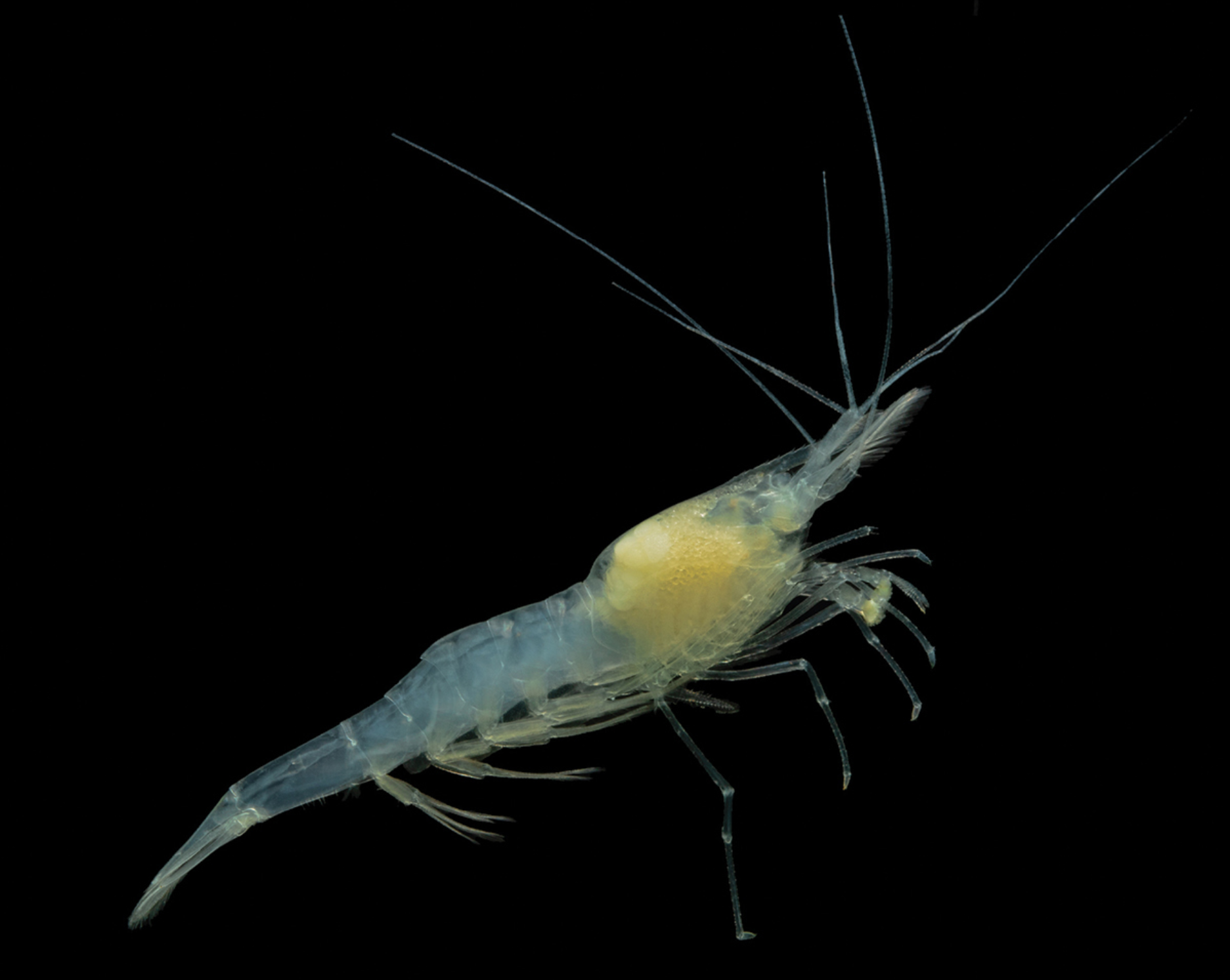
Barring Charlie’s insinuation that this adorable creature is, in truth, a wreck, it is interesting that few caves boast an abundance of organisms. You’ll hear no complaints from the olm, however. Despite its small stature, it is the apex predator of its watery underworld, which consists of a variety of locations throughout Slovenia, Croatia, and Bosnia-Herzegovina, as well as a small corner of northeastern Italy. This is a considerable range for a troglobite, or cave-dwelling organism. For comparison, consider the Alabama cave shrimp, a troglobite found only a few hours from my university. The animal’s known range was confined to a few caves in the same county until a 2019 report introduced a seventh cave in the adjacent county with a whopping six shrimp. I should also mention that the discovery of this colossal population was the result of two separate surveys a year apart, each yielding two and four organisms, respectively.
The endangered Alabama cave shrimp, Palaemonias alabamae. Note the lack of eyes and pigmentation, common traits amongst troglobites.
Because troglobites are highly adapted to their subterranean environments, they are unable to survive on the surface, which means that travelling to other caves is impossible unless the caves are connected underground. Thus, organisms are often confined to a single cave either until the species goes extinct or until a passage to another cave opens. Due to high adaptation to their subterranean environments, troglobites are extremely susceptible to environmental change, especially from pollutants like heavy metals or pesticides. An accident in, or poor management of, an industrial facility may release enough toxins to devastate a cave’s fauna beyond repair, and given that most troglobites inhabit narrow ranges, there are few places to turn to once a cave is contaminated. Moreover, even if a connection to another cave is present, pollutants may be able to travel throughout these systems just as well as the native troglobites. As such, many cave-dwelling organisms are at risk of extinction, including our beloved olm.
Sadly, olms are far from the only amphibians in such a predicament. The International Union for Conservation of Nature, known for its Red List of Threatened Species, lists two out of every five amphibian species at risk for extinction. Despite their potential for developing medicines, many amphibians are past the point of no return, with the only hope of surviving in the hands of the species driving their extinctions. The olm is itself listed as vulnerable, the least worrisome category for a threatened species, though its specific physiological requirements could easily knock it down to the endangered or critically endangered categories should any significant changes occur to their environment. These problems are exacerbated by the fact that female olms only produce eggs every dozen years or so, and any offspring resulting from these rare clutches must survive for fifteen years to reach sexual maturity. Fortunately, conservation efforts are underway in Slovenia(3) and a large population of olms is held in a French cave for research, thus ensuring that the species can be reintroduced to its natural habitat if necessary.
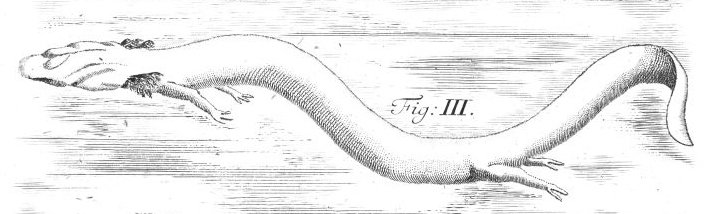
The first drawing of the olm in a scientific text, published around 250 years ago. At around ten inches, it is hardly a threat to Smaug’s gold, though its serpentine figure leaves little question as to how this myth arose.
An amphibian’s lifespan typically correlates with its body mass, with heavier amphibians outliving lighter ones. Ever enigmatic, the olm defies this pattern with an average life expectancy of seven decades and an estimated maximum age of over a hundred years even though it rarely exceeds twenty grams. For comparison, the iPhone 12 weighs about 164 grams, or eight large olms. The baby dragon’s closest competitor in the Amphibian Longevity Olympics, the Japanese giant salamander, fails to surpass these ages despite often weighing as much as a thousand olms. I like to imagine that as Louis Armstrong perfected his trumpeting, fascist sentiments boiled in Europe, and F. Scott Fitzgerald penned the book that would highlight the decadence of the 1920s, a little olm patiently laid her clutch of eggs in the Stygian depths of an unmarked cave. Throughout the past century, one of her offspring feasted on shrimp, explored its domain, and had a few olms of its own; now, weary from its long life, it will soon rest, all the while oblivious to the chaos of man.
Notes: (1) Although olms have not been documented morphing into a terrestrial form, axolotls occasionally undergo this transformation. Here is an especially informative video which, other than the expected butchering of a Nahuatl word, presents an exceptionally accurate and carefully detailed overview of this process: https://www.youtube.com/watch?v=MxA0QVGVEJw&ab_channel=Rathergood (2) The regeneration process is depicted in the following video, released by the Postojna Cave YouTube channel: https://www.youtube.com/watch?v=YLO8DJJgJQ0&list=LL&index=7&ab_channel=PostojnskajamaCaveGrotteH%C3%B6hle (3) A cave system in Slovenia where many olms live, containing a tank of specimens for public viewing: https://www.youtube.com/watch?v=HnkZFn4j4tM&ab_channel=PostojnskajamaCaveGrotteH%C3%B6hle
Image Credits: Axolotl, photo from KinEnriquez and used under Pixabay License. Arne Hodalič, CC BY-SA 3.0 , via Wikimedia Commons Joseph Nicolaus Laurenti, Public domain, via Wikimedia Commons Niemiller ML, Inebnit T, Hinkle A, Jones BD, Jones M, Lamb J, Mann N, Miller B, Pinkley J, Pitts S, Sapkota KN, Slay ME (2019) Discovery of a new population of the federally endangered Alabama Cave Shrimp, Palaemonias alabamae Smalley, 1961, in northern Alabama, Subterranean Biology 32: 43-59. https://doi.org/10.3897/subtbiol.32.38280, CC0, via Wikimedia Commons The U.S. Army, Public domain, via Wikimedia Commons Johann Weikhard von Valvasor, Public domain, via Wikimedia Commons
Citations: Arntzen et al. 2009. Proteus anguinus. The IUCN Red List of Threatened Species. https://dx.doi.org/10.2305/IUCN.UK.2009.RLTS.T18377A8173419.en Girijala, R. L., & Bush, R. L. 2018. Review of Socioeconomic Disparities in Lower Extremity Amputations: A Continuing Healthcare Problem in the United States. Cureus, 10(10). https://dx.doi.org/10.7759%2Fcureus.3418 Ley, Willy. 1967. Epitaph for a lonely olm. Galaxy Science Fiction, 95-104. Mendelson et al. 2006. Confronting Amphibian Declines and Extinctions. Science, 373(5783), 48. https://doi.org/10.1126/science.1128396 More than 37,400 species are threatened with extinction. 2021. The IUCN Red List of Threatened Species. Retrieved from https://www.iucnredlist.org/ Niemiller et al. 2019. Discovery of a new population of the federally endangered Alabama cave shrimp, Palaemonias alabamae Smalley, 1961, in northern Alabama. Subterranean Biology, 32, 43-59. https://doi.org/10.3897/subtbiol.32.38280 Proteus Genome Project. 2021. Retrieved from https://www.proteusgenome.com/ Romero, Aldemaro. 2009. Cave Biology: Life in Darkness. Cambridge University Press. Sessions, S. K., & Wade, D. B. 2020. Forever young: Linking regeneration and genome size in salamanders. Developmental Dynamics. https://doi.org/10.1002/dvdy.279 Sket, Boris. 1997. Distribution of Proteus (Amphibia: Urodela: Proteidae) and its possible explanation. Journal of Biogeography, 24(3), 263-280. https://doi.org/10.1046/j.1365-2699.1997.00103.x Swingle, W. W. 1922. Experiments on the metamorphosis of neotenous amphibians. Journal of Experimental Zoology, 36(4), 397-421. http://doi.org/10.1002/jez.1400360402 The great feat of translation Valvasor is over. 2012. Radio-Television Slovenia. Retrieved from https://www.rtvslo.si/kultura/knjige/veliki-podvig-prevajanja-valvasorja-je-koncan/284697 Voituron et al. 2011. Extreme lifespan of the human fish (Proteus anguinus): a challenge for ageing mechanisms. Biology Letters, 7(1), 105-107. https://doi.org/10.1098/rsbl.2010.0539
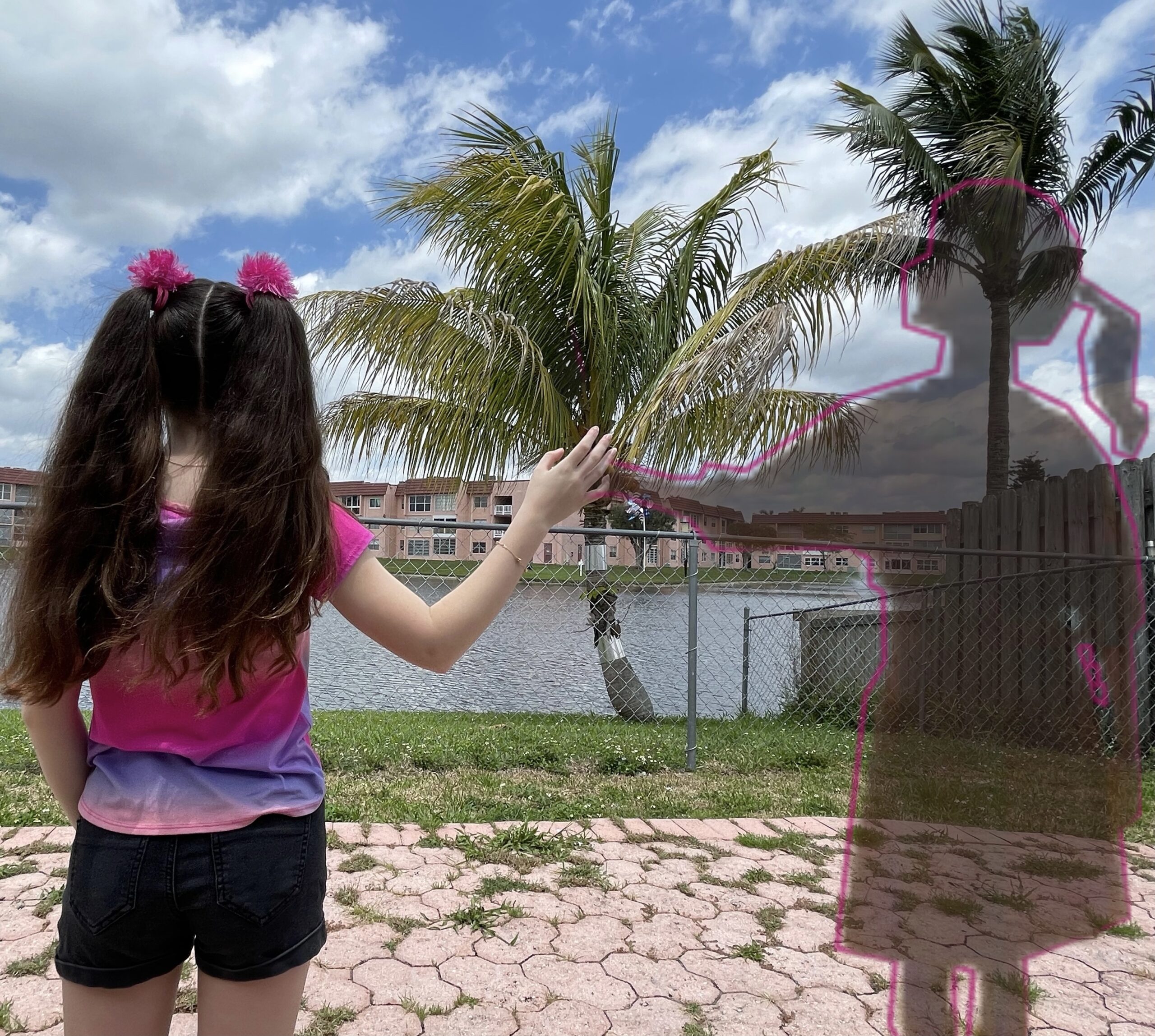
Working as a camp counselor, I was once yelled at by one of the children. As I went to sit down, a blood-curdling scream erupted from one of the students named Katie. My face went pale white and I stopped mid-squat. I mustered up the will to ask her what was wrong and she frantically said “You were about to sit on Mr. Snuffles!” After realizing that Mr. Snuffles was actually her imaginary friend, I calmed down, apologized to the chair I was about to sit on, and moved to a different seat.
Just like little Katie, many children create imaginary comrades to play with. These so-called imaginary friends are exactly what they sound like – an interpersonal relationship or camaraderie created by the mind that exists only in the imagination. Now although this may sound odd, it is an incredibly common psychological and social phenomenon that occurs in about 37% of children by the time they reach age 7 (Kennedy-Moore, 2013). Additionally, many may believe that talking to a fictitious creation as if they were real sounds like behavior that would be exhibited by someone that is troubled, however, this is not at all the case for these children and there is no cause for concern should a child have this type of relationship.
Now you may be asking yourself, why do only some children have imaginary friends while others never do? What makes those children different? Or even, why are these friends even created in the first place? Well, based on the existing research in this area (and there’s a lot of it!), there are some patterns observed to answer these questions which will be further expressed in this article, some of which are very surprising!
So, What Types of Children Have Imaginary Friends?
In terms of the answer to what type of children create imaginary friends, there are several different components that have been researched from which certain conclusions have been drawn. First, we look at gender: it has been said that females are more likely to have imaginary friends (Hoff, 2011). In addition, there have actually been differences between the types of friends created by females as opposed to males. For example, females are more likely to have imaginary comrades that are inferior to them and that need to be cared for and nurtured, whereas males were more likely to have imaginary friends that they idealize, such as superheroes (Hoff, 2011). One potential explanation for this could be that females have a natural tendency for being ‘motherly,’ unlike males.
Another pattern detected among those that have imaginary friends compared to those that don’t was seen in the number of siblings or the order in which they were born. One study found that those that are either the firstborn in their line of siblings, or are an only child are more likely to create imaginary relationships (Gleason et al., 2003).
There are also other factors, such as personality or emotional state, that could affect whether a child forms an imaginary relationship or not. Several studies looked into creativity levels of a child to see if this could be a potential factor. It was wondered whether ‘gifted’ children that displayed higher levels of creativity were more likely to form such friendships and it was found that that was in fact the case (Seiffge-Krenke, 1997). Another study gave a group of children two different creativity assessments and found, once again, that those that did have imaginary companions scored much higher on both of the measures of creativity (Hoff, 2011).
Moreover, whether the self-image that a child holds could affect their likelihood to have imaginary friends can be focused on. One study looked at this in-depth and concluded that although some of the data indicated a lower self-image for those children that did have imaginary friends, the data was not significant enough to make any concrete decisions (Hoff, 2011). This means that it is not necessarily true that lower self-image would be related to imaginary companions in childhood.
With all of this being said, it can be concluded that those that are more likely to form imaginary relationships are females, those that are firstborns or only children, and those that are more creative.
But Why?
Now, here there are many components that can be analyzed, such as social development, friendship, and even other theories of psychology that come into play.
The reason for these friendships that most people will come up with is that these children lack social development and need imaginary friends to cope and fill in that gap. However, the complete opposite has actually been found! It has been said that being able to develop another being within their imagination is actually a symptom of developing social intelligence (Volpe, 2019). With this comes the idea of ‘ Theory of Mind,’ which involves understanding another individual’s beliefs, knowledge, emotions, intentions, and being able to use this to navigate social situations (Thompson, 2017). With this in mind, for a child to create an imaginary friend, they must be able to conceptualize beliefs and actions that are independent and different from their own which would indicate social intelligence based on the idea of Theory of Mind.
Another concept that could explain this phenomenon is the self-determination theory which can be defined as a theory of personality and motivation based on how an individual interacts with their social environment (Legault, 2017). This theory consists of three fundamental psychological needs – competence, relatedness, and autonomy – which an imaginary friend can fulfill (Volpe, 2019). More specifically, competence can be seen when children assume dominance or leadership over their companion. Then, we can see relatedness in the same way that it is displayed in ordinary friendships with real children as they find levels to relate to each other on. Lastly, autonomy is displayed when these children incorporate their imaginary friend into a situation in order to exert a sense of control and manipulation; for example, insisting that their friend be served a plate at dinner (Volpe, 2019).
The next and most basic idea is that these companionships are simply fulfilling a child’s need for friendship. An interesting take on this idea was observed in one study that looked at the relationships between personified inanimate objects among children compared to their imaginary friends. This study found that personified objects occurred when a new toy was acquired and was typically a nurturing relationship, whereas the bond formed with imaginary friends were more so sociable and friendly and were viewed as fulfilling a need for friendship (Gleason et al., 2003).
All in all, the “why” of such relationships cannot be fully answered as the points discussed are not universal to all children with these friendships and are not an indicator of greater intelligence either. In general, however, development of social intelligence, a need for friendship, and the fulfillment of social needs based on the theory of self-determination are all plausible explanations for this phenomenon.
So… Are They Bad?
The short answer is no. Should you encounter an imaginary friend, there is no reason to discourage this behavior as it is a sign of proper social development. It can be healthy to play along and not usurp control of this friend as it is important that the child has control. It is of course okay to lay down the law should behaviors become too disruptive, however, there’s no reason to try to get rid of that child’s ‘special friend’ as it could be a sign of healthy social development.
References
Gleason, T. R. (2002). Social provisions of real and imaginary relationships in early childhood. Developmental Psychology,38(6), 979-992. doi:10.1037/0012-1649.38.6.979
Gleason, T. R., Sebanc, A. M., & Hartup, W. W. (2000). Imaginary companions of preschool children. Developmental Psychology,36(4), 419-428. doi:10.1037/0012-1649.36.4.419
Hoff, E. V. (2005). Imaginary companions, creativity, and self-image in middle childhood. Creativity Research Journal,17(2-3), 167-180. doi:10.1080/10400419.2005.9651477
Kennedy-Moore, E. (2013, January 31). Imaginary friends. Retrieved from https://www.psychologytoday.com/us/blog/growing-friendships/201301/imaginary-friends
Legault, L. (2017). Self-Determination theory. Encyclopedia of Personality and Individual Differences, 1-9. doi:10.1007/978-3-319-28099-8_1162-1
Seiffge-Krenke, I. (1997). Imaginary companions in adolescence: Sign of a deficient or positive development? Journal of Adolescence,20(2), 137-154. doi:10.1006/jado.1996.0072
Thompson, B. (2017, July 03). Theory of Mind: Understanding others in a social world. Retrieved from https://www.psychologytoday.com/us/blog/socioemotional-success/201707/theory-mind-understanding-others-in-social-world
Volpe, A. (2019, July 30). Why kids invent imaginary friends. Retrieved from https://www.theatlantic.com/family/archive/2019/07/why-do-kids-have-imaginary-friends/594919/
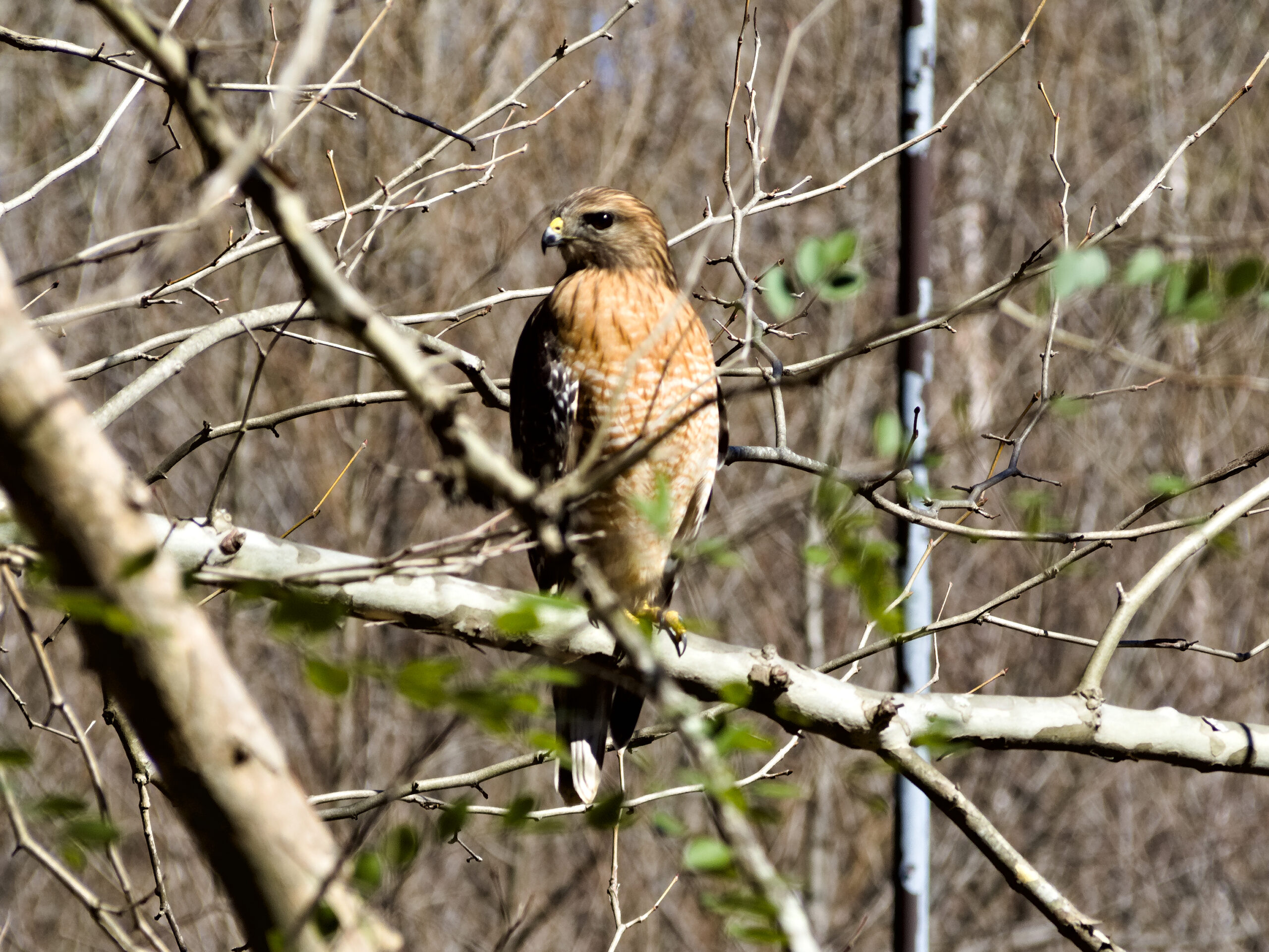
The red-shouldered hawk (Buteo lineatus) is a raptor that is found in forests throughout North America. Year round, the red-shouldered hawk is found throughout much of the Eastern and Midwestern United states. During their breeding season, they can be found in both the northeastern and western United States as well as part of Atlantic Canada. They also have a non-breeding range in Mexico, where they are found for some parts of the year. Red-shouldered hawks can be identified by their medium size and reddish-brown feathers on their chests and shoulders. Hawks from the western part of their range tend to be a deeper red than those found in the eastern part. As for their wings, the feathers are banded black and brown from the underside, with black and red being predominant on the outside. Their tails are also banded, which is another identifying trait of the species.
Sexual Dimorphism in Red-shouldered Hawks
Red-shouldered hawks do show some sexual dimorphism in their appearance. Sexual dimorphism occurs when males and females of the same species show different traits on average, such as average size and weight. Mass is one of the traits that is sexually dimorphic for red-shouldered hawks. Females are larger than males, with the average male being only 85% of the mass of the average female. Researchers recently have tried to establish other ways of determining the sex of red-shouldered hawks morphologically. Determining sex by morphology is used by biologists to guess at the sex of an animal without needing to check for sure with DNA testing. Sex determination based on morphology is more convenient than determining sex based on molecular testing, and can be done by biologists in the field without access to DNA testing equipment. Other features of red-shouldered hawks that are sexually dimorphic are toepad length, length of secondary feathers, bill length, mass, and wing chord length. However, mass remains the most reliable way to morphologically determine the sex of a red-shouldered hawk.
Diet and Habitat of the Red-shouldered Hawk
The diet of the red-shouldered hawk is mostly made up of small mammals, lizards, snakes, and amphibians, and these hawks typically live in riparian forests. Riparian forests are forests that are on or near the bank of a river or stream. There is evidence that the composition of the red-shouldered hawk’s diet varies depending on where in their range they are living. One study split red shouldered-hawks into two groups. The first group was the northern hawks, which live above 38o N latitude. This is the latitude line passing just south of Charlottesville, VA, and through Lexington, KY. Interestingly, northern hawks preferred more mammalian prey and less amphibian prey. The opposite was true for southern hawks. Researchers noticed that diets were more mammalian in drier conditions, whereas hawks that lived in wetter conditions relied more on invertebrate and amphibian prey. It’s possible that hawks that live in drier areas will be less affected by wetland degradation than hawks in wetter areas.
Nesting Preferences of the Red-shouldered Hawk
Where red-shouldered hawks choose to nest is another area of interest for researchers. Typically, red-shouldered hawks prefer to nest in large tracts of mature forest, although they can also be found in more fragmented forested areas, such as those found in suburban areas. One study found that nests were more likely to be located near a lake or treeless wetland than not. Nests were also more likely to be near a trail or stream than not for both cases. Researchers believe that open trails might make good hunting grounds for the hawks, without trees and underbrush to hide prey. We can guess similarly about hawks’ proximity to lakes and treeless wetlands. The lack of trees gives hawks easier access to their prey, which they detect primarily via eyesight. Red-shouldered hawks’ positive association with wet areas is a well known feature – amphibians make an important component of the diet of the red-shouldered hawk, especially while nesting.
References
Cheryl R. Dykstra, Herman L. Mays Jr, Jeffrey L. Hays, Melinda M. Simon, & Ann R. Wegman. (2012). Sexing Adult and Nestling Red-Shouldered Hawks Using Morphometrics and Molecular Techniques1. Journal of Raptor Research, 46(4), 357–364. https://doi.org/10.3356/JRR-11-84.1
Brad N. Strobel, & Clint W. Boal. (2010). Regional Variation in Diets of Breeding Red-Shouldered Hawks. The Wilson Journal of Ornithology, 122(1), 68–74. https://doi.org/10.1676/09-071.1
Landenberger, James F, Roosa, Dean M, Stravers, Jon W, Ehresman, Bruce, & Patterson, Rich. (2013). The Raptors of Iowa. University of Iowa Press.
James E. Woodford, Carol A. Eloranta, & Anthony Rinaldi. (2008). Nest Density, Productivity, and Habitat Selection of Red-Shouldered Hawks in a Contiguous Forest. Journal of Raptor Research, 42(2), 79–86. https://doi.org/10.3356/JRR-07-44.1
Red-shouldered Hawk Overview, All About Birds, Cornell Lab of Ornithology. (2019). allaboutbirds.org. https://www.allaboutbirds.org/guide/Red-shouldered_Hawk/
Se usaron los cohetes por primera vez en China en siglo XIII. Fueron tubos de bambú que se llenaron de pólvora y se fijaron a las flechas para lanzarse a sus enemigos mongoles. Setecientos años después, tubos más grandes se llenaron de hidrógeno y oxígeno líquidos, se fijaron a unas astronaves, y se lanzaron a la luna. Ahora, en el siglo XXI, vemos otra evolución, “Direct Fusion Drive,” (DFD), pero los conceptos fundamentales de cohetería que derrotaron a los mongoles en la Batalla de Kai Keng son los mismos fundamentales que nos van a lanzar a Plutón más rápidamente.
Los Básicos de la Cohetería
Pues, ¿cómo funcionan los cohetes? Teoréticamente, funcionan debido a la tercera ley de Newton que dice que las fuerzas ocurren en forma de pares, una acción y una reacción con magnitudes iguales, pero direcciones opuestas. Se mezclan y se queman los propelentes en una cámara de combustión. Los gases producidos van por una tobera y aceleran hacia velocidad supersónica (piensa en cómo cubrir parcialmente la boca de la manguera con el pulgar acelera la velocidad del agua). Al salir del cohete, los gases de escape de la combustión hacen una fuerza de reacción igual pero en la dirección contraria, una fuerza llamada empuje. El empuje hace volar el cohete. Ya que el cohete lleva su propio oxidante (el químico que causa combustión), no necesita oxígeno de la atmósfera para hacer combustión como un motor del coche. Por eso, es ideal para la exploración espacial.
Cohetes Convencionales
Desde el comienzo, los cohetes convencionales han sido propulsados por las reacciones químicas exotérmicas. Una reacción exotérmica es una reacción química que produce calor.
Hay 2 tipos principales de estos cohetes: cohetes de combustible sólido y cohetes de combustible líquido. En el primero, se mezclan los combustibles desde el principio y entonces se enciende la superficie de la mezcla para causar la combustión. No obstante, en el segundo, originalmente, los propelentes son separados y entonces son inyectados en la cámara donde se mezclan y se queman.
Cómo Funciona “Direct Fusion Drive”
Los dos métodos han enviado a incontables astronautas al espacio, pero dentro de las siguientes décadas, DFD los podría reemplazar. DFD pretende usar la potencia de sus reacciones de fusión para propulsar la astronave y generar electricidad. Imanes potentísimos están alineados para crear una forma cilíndrica. Se ubican imanes más pequeños, pero aún más potentes, en ambos cabos. En el centro de esta configuración, helio-3, un isótopo del helio que tiene 1 neutrón, reacciona con deuterio, un isótopo de hidrógeno que pesa el doble que hidrógeno común (isótopos son átomos del mismo elemento pero que tienen cantidades diferentes de neutrones). Estas reacciones y algunas reacciones extras crean una región de fusión. Plasma fresco fluye sobre la región, extrayendo energía. (Plasma es un estado de materia similar a gas, pero que contiene iones y electrones. Porque plasma contiene electrones, es un buen conductor eléctrico e influenciado fácilmente por campos electromagnéticos).
Antenas alrededor del motor crean un campo magnético giratorio que induce una corriente eléctrica en el plasma. Los iones del plasma se calientan hasta se fusionan. Los productos de fusión salen del motor como los gases calientes de un cohete convencional, generando empuje.
Este proceso produce un montón de calor que es usado en un ciclo Brayton para producir más de 200 kW de potencia eléctrica. Se expulsa al espacio el calor que queda.
Una Comparación
Cohetes convencionales tienen muchas ventajas: gran empuje y bajo costo (relativamente). Son fiables y se han usado hace siglos. Pero el tamaño compacto y la eficiencia de DFD son los que atraen el interés de los científicos. Una variable muy importante de cohetería es el impulso específico– impulso por unidad de masa de propelente o con cuánta eficiencia el cohete crea empuje. Si el impulso específico sube, el combustible necesario para el impulso deseado baja. El máximo del impulso específico de cohetes convencionales es aproximadamente 500 segundos, pero un motor de DFD cuenta con un impulso específico de 10.000 a 20.000 segundos y es tan pequeño como una camioneta.
NASA predice que una misión de 10.000 kg con DFD podría llegar a Plutón en 4 años, un tiempo más corto que los 9,5 años que tardó New Horizons propulsado por propulsión de hidracina. Además, tendría una enorme capacidad de hacer trabajo científico debido a su potencia eléctrica aumentada.
El Futuro
Para concluir, NASA está muy emocionada del concepto de DFD porque puede encajar en la infraestructura actual de NASA y sería una opción de fusión de radiación poca; sin embargo, todavía hay muchas mejoras que hacer. Por ejemplo, aún no se ha mostrado fusión nuclear, el concepto central. El diseño de DFD va a su segunda etapa que pretende mejorar su capacidad de protección radiológica y su proceso de caldear el plasma. Según la cronología actual, se planean vuelos para después de 2030, y en el futuro, DFD podría propulsar plataformas orbitales, viajes interplanetarios, y bases lunares y marcianas aún.
Do you speak English? See the English translation here!
—
Bibliografia
Paluszek, M., Pajer, G., Razin, Y., Slonaker, J., Cohen, S., Feder, R., … Walsh, M. (2014). (rep.). Direct Fusion Drive for a Human Mars Orbital Mission (pp. 1–9). Princeton, New Jersey: Princeton Plasma Physics Laboratory Office of Reports and Publications.
Princeton Satellite Systems. (2018). Technical Video of Dfd Engine. YouTube. https://www.youtube.com/watch?v=hggqvB5I95I.
Thomas, S. (n.d.). Direct Fusion Drive: Enabling Rapid Deep Space Propulsion. Lecture.
Benson, T. (2014, June 12). Brief History of Rockets. NASA. https://www.grc.nasa.gov/www/k-12/TRC/Rockets/history_of_rockets.html.
NEWSREPORTER: AUTHORITIES REPORT YET ANOTHER HOME INVASION PERPETRATED BY A MAN WE NOW KNOW AS COVID NINETEEN FROM THE CORONAVIRUS CRIME FAMILY. HIS REIGN OF TERROR HAS GRIPPED THIS SLEEPY NEIGHBORHOOD SINCE LAST YEAR. IT SEEMS HIS M. O. IS INVADING THE HOME AND MAIMING OR KILLING EVERYONE INSIDE. HE CAN BE EASILY IDENTIFIED BY HIS UNIQUE LEATHER JACKET AND BOOTS.
–
MEANWHILE IN THE JANE JOHNSON HOME…
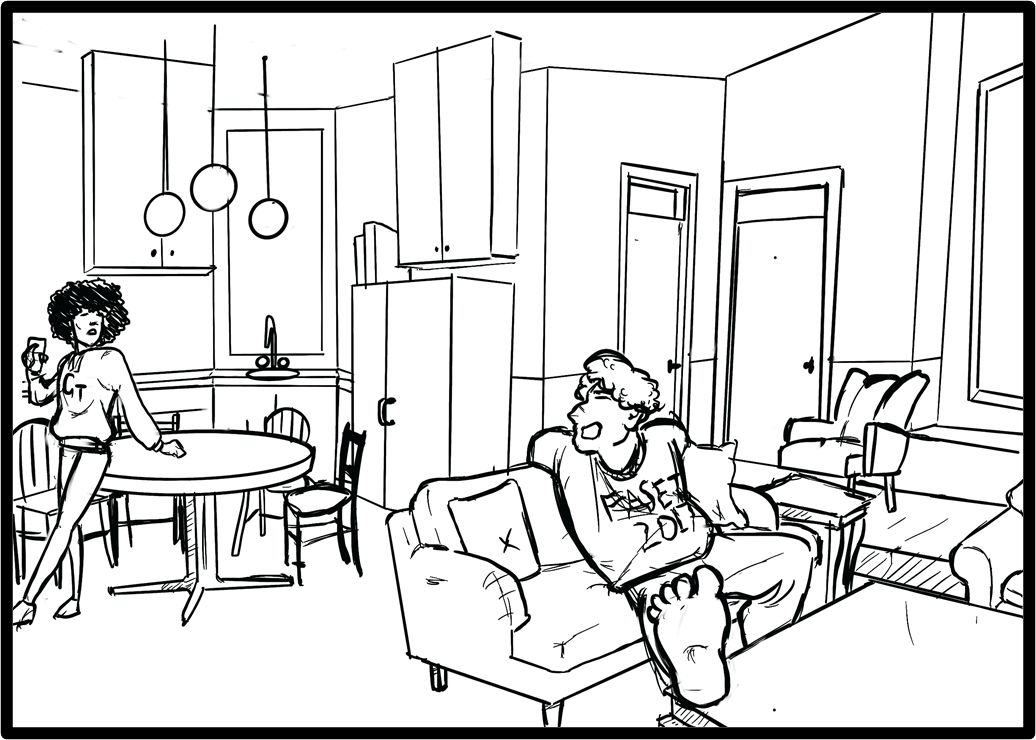
GARY: THIS COVID GUY IS OUT OF CONTROL!
STEPH: YEAH. DID BRAIN EVER ORDER THAT mRNA?
GARY: SHE DID! VIA VACCINE SAME-DAY EXPRESS DELIVERY. IT SHOULD BE HERE ANY SECOND NOW.
—
OUTSIDE…
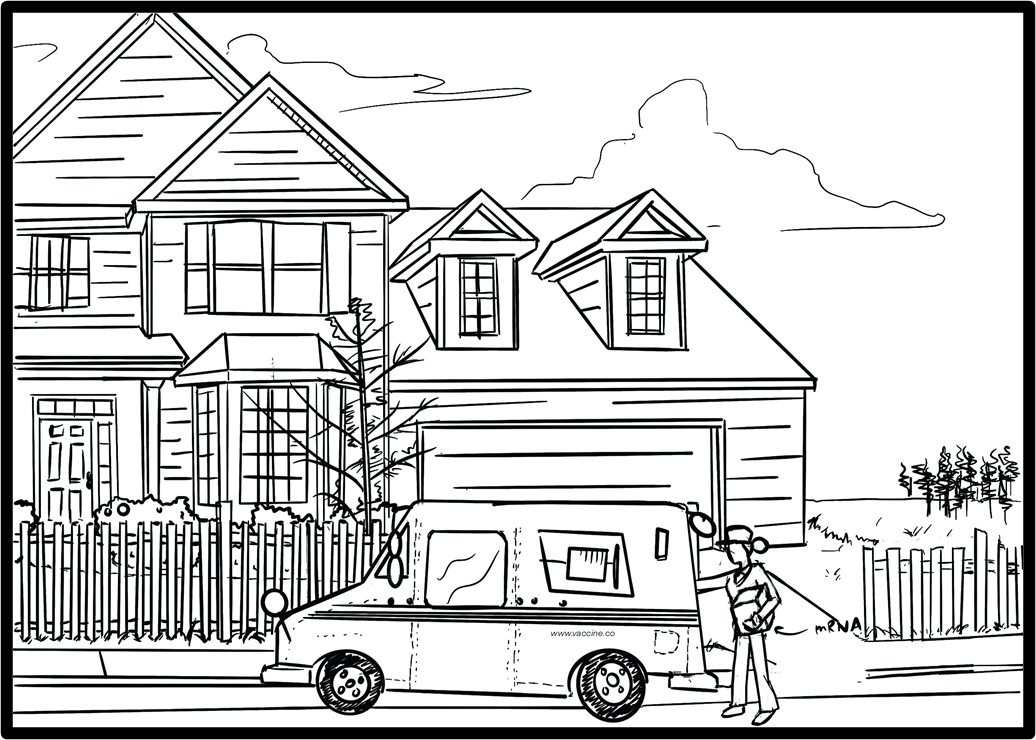
THE VACCINE DELIVERY WORKER, MS. LIPID NANOPARTICLE, CARRIES THE BOX TO THE DOOR AND RINGS THE DOORBELL.
—
LIPID NANOPARTICLE: HERE’S THE mRNA MANUAL YOU ORDERED!
GARY: THANK YOU MS…. LIPID NANOPARTICLE.
LIPID: PLEASE, CALL ME LIPPY. LIPID NANOPARTICLE IS MY MOTHER’S NAME.
—
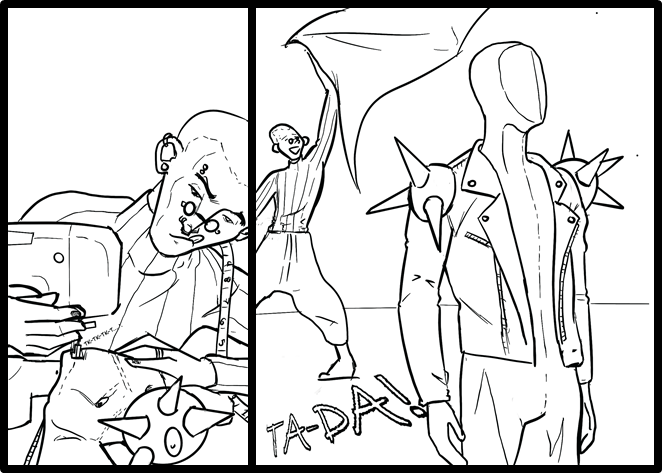
GARY & STEPH CARRY THE mRNA MANUAL, WHICH DETAILS HOW TO MAKE COVID’S LEATHER JACKET AND BOOTS, TO THE ROOM WHERE THEIR HOUSEMATE, AXL THE RIBOSOME, DOES THEIR SEWING. A THOUGHT COMES TO GARY.
GARY: WAIT! WON’T THAT MANUAL GET MIXED UP WITH THE DNA MANUAL, PERMANENTLY CHANGING THINGS AROUND HERE?
STEPH: THE DNA MANUAL IS IN A SAFE IN THE STUDY. THIS MANUAL WILL GET NOWHERE NEAR IT. BESIDES, THIS IS WRITTEN IN ENGLISH, AND THE DNA MANUAL IS IN JAPANESE, SO THIS WOULD HAVE TO BE TRANSLATED FIRST, MAKING A MIX UP LIKE THAT IMPOSSIBLE
—
THEY GIVE THE MANUAL TO AXL THE WHO GETS TO WORK MAKING THE CLOTHES.
—
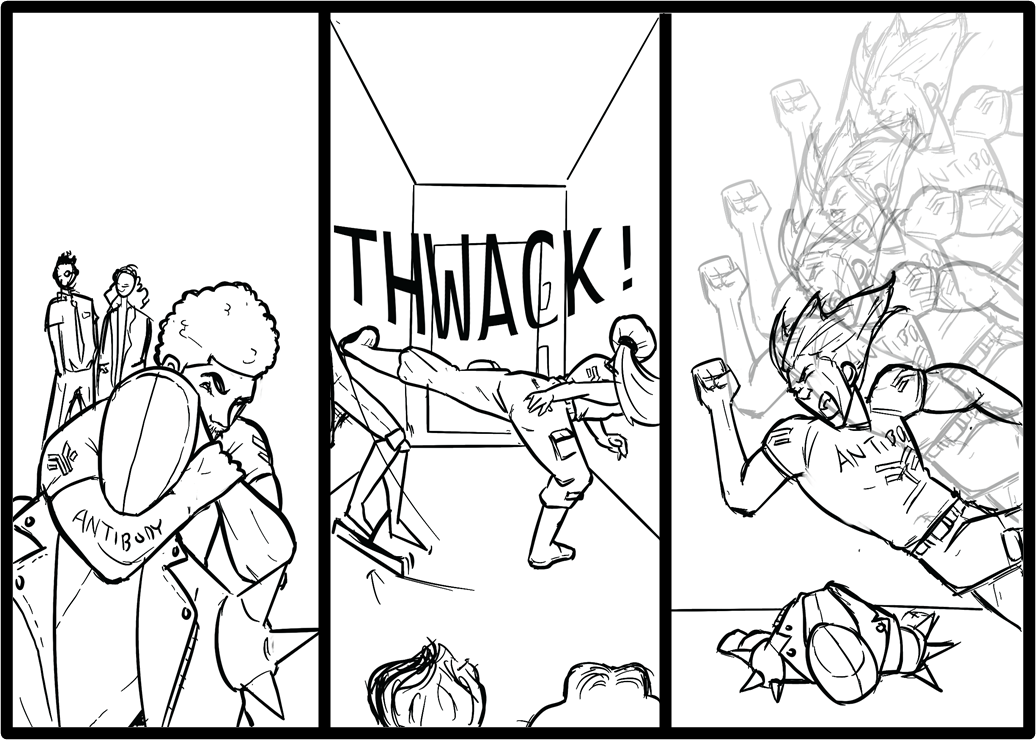
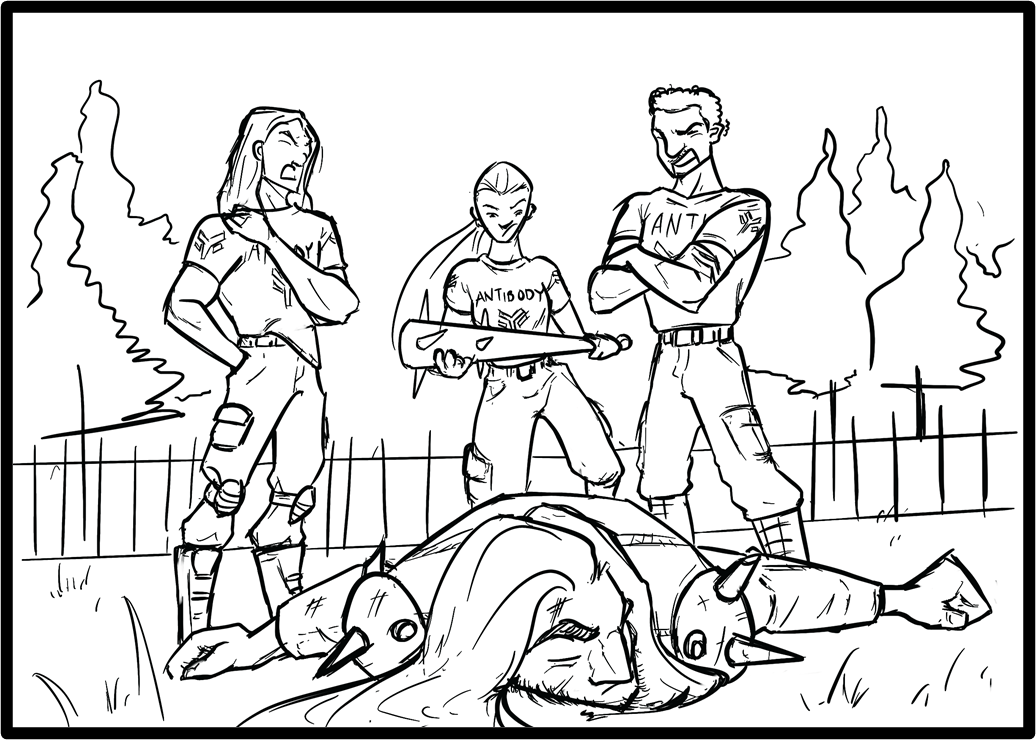
HOME SECURITY SPOTS THE MANNEQUIN WEARING COVID’S CLOTHES AND DEPLOYS THE ANTIBODY SQUAD TO SUBDUE THE THREAT.
—
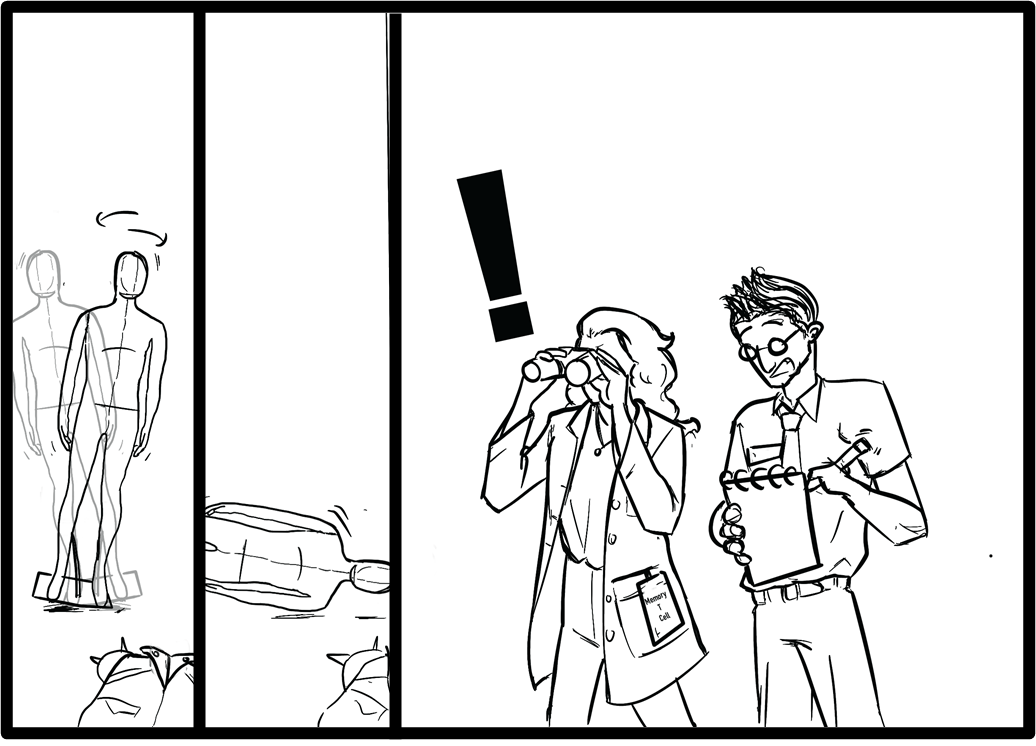
OTHER MEMBERS OF THE SECURITY TEAM RECORD THEIR FINDINGS
MEMORY T CELL [LEFT]: WRITE THAT DOWN! WRITE THAT DOWN!
—
THEN ONE DAY…
COVID NINETEEN DECIDES TO PAY THE JANE JOHNSON HOME A VISIT
—
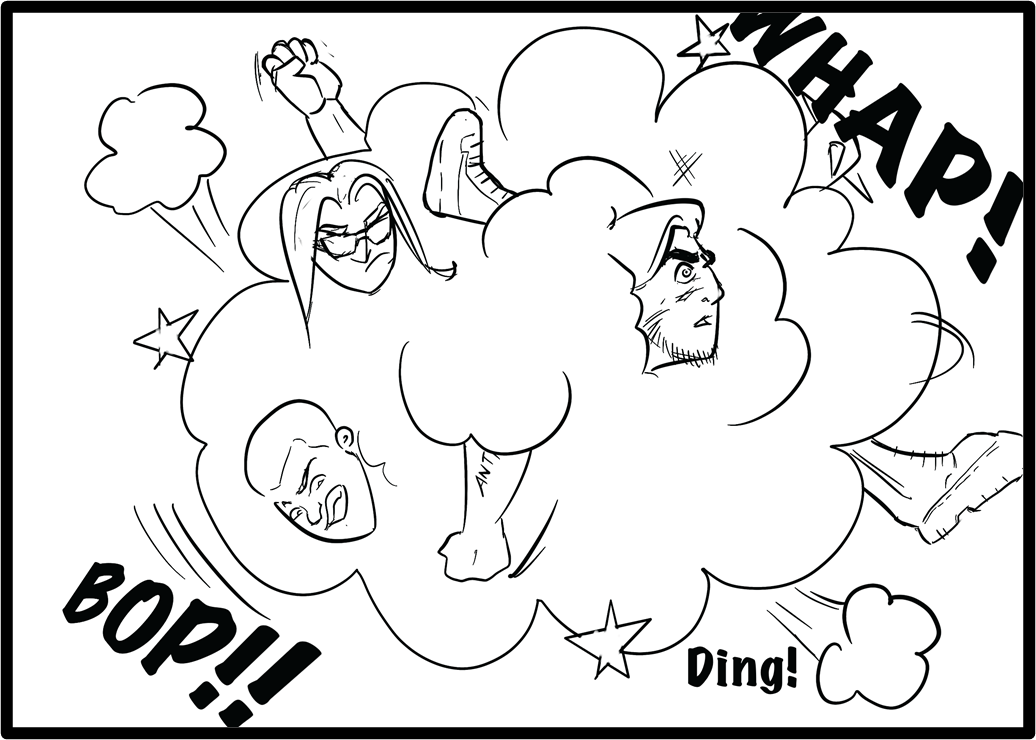
BUT THE HOUSE IS BATTLE-TESTED AND READY FOR HIM. THEY ATTACK HIM IMMEDIATELY.
—
COVID ANTIBODY SQUAD [ALL]: AND STAY OUT!
COVID JOINS A LONG LIST OF CRIMINALS WHO ARE NO MATCH FOR HOME SECURITY AND ITS ELITE ANTIBODY SQUAD!