Category: today i learned (til)

health, fitness, medicine, environment, ecology, how to learn tricky topics in science and math, new discoveries, news, current events

  • The 2019 Novel Coronavirus Disease (2019-nCoV) Outbreak that Everybody is Talking About

    The 2019 Novel Coronavirus Disease (2019-nCoV) Outbreak that Everybody is Talking About

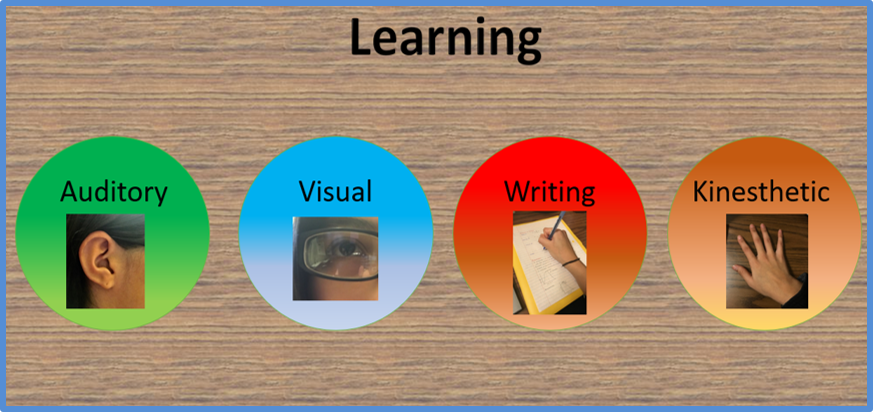
    People have different preferences for how they want to follow what is going on around the scientific world without having to spend too much time seeking for information. However, seldom scientific information is presented in all possible formats that could satisfy diverse people’s preferences. Specifically, some information comes only in either auditory, writing, kinesthetic or visual. Although people may want to keep up with scientific events, particularly in topics that are of general concern, most of the time, that information comes in formats not always preferred by some groups. 

    Personally, I have noticed that visual formats help me to understand the information faster and a more complete way. Using visual aids, I am going to be discussing what brought my attention more than anything else these past weeks. 

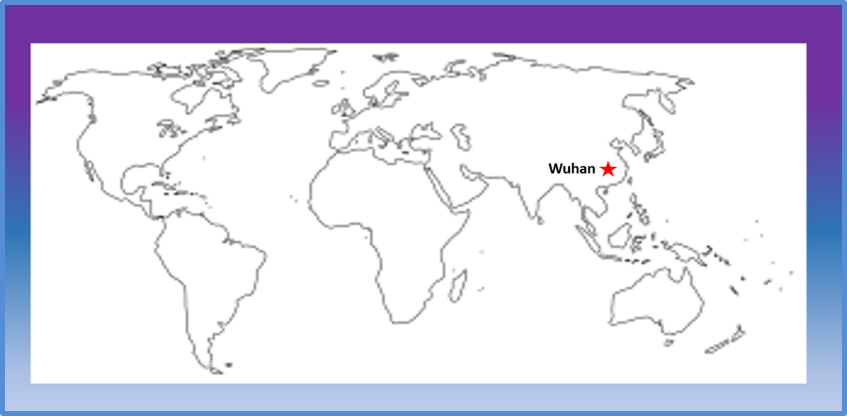
    News about an outbreak caused by Coronavirus has been the top story during the last weeks. It started in China in December 2019 with a few hospitalized cases with respiratory infections. It originally spread throughout the city of Wuhan, but currently we are seeing cases in 26 countries around the world. As of today (February 7, 2020), there are more than 31,503 confirmed cases and it has already taken the lives of 638 people (5). The virus causes a severe illness – most confirmed cases were hospitalized– and could lead to permanent sequelae.  The rate of premature death among confirmed cases is about 2%. Very little is still known about how the virus circulates and there is no vaccine to prevent infection nor known medications to treat its symptoms. 

    Sources have explained that this virus had some relation to seafood or live animal markets, which meant that the virus could spread from animals to people (1). Eventually they realized that some affected people have not been in contact with animal markets indicating that the virus could be transmitted by person-person contact. (1)

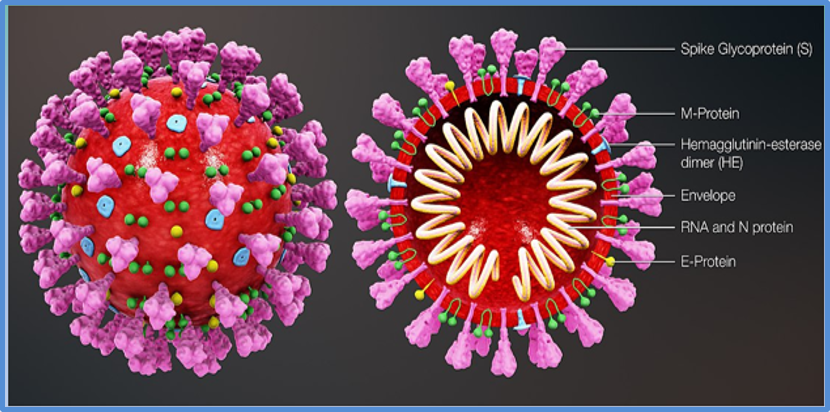
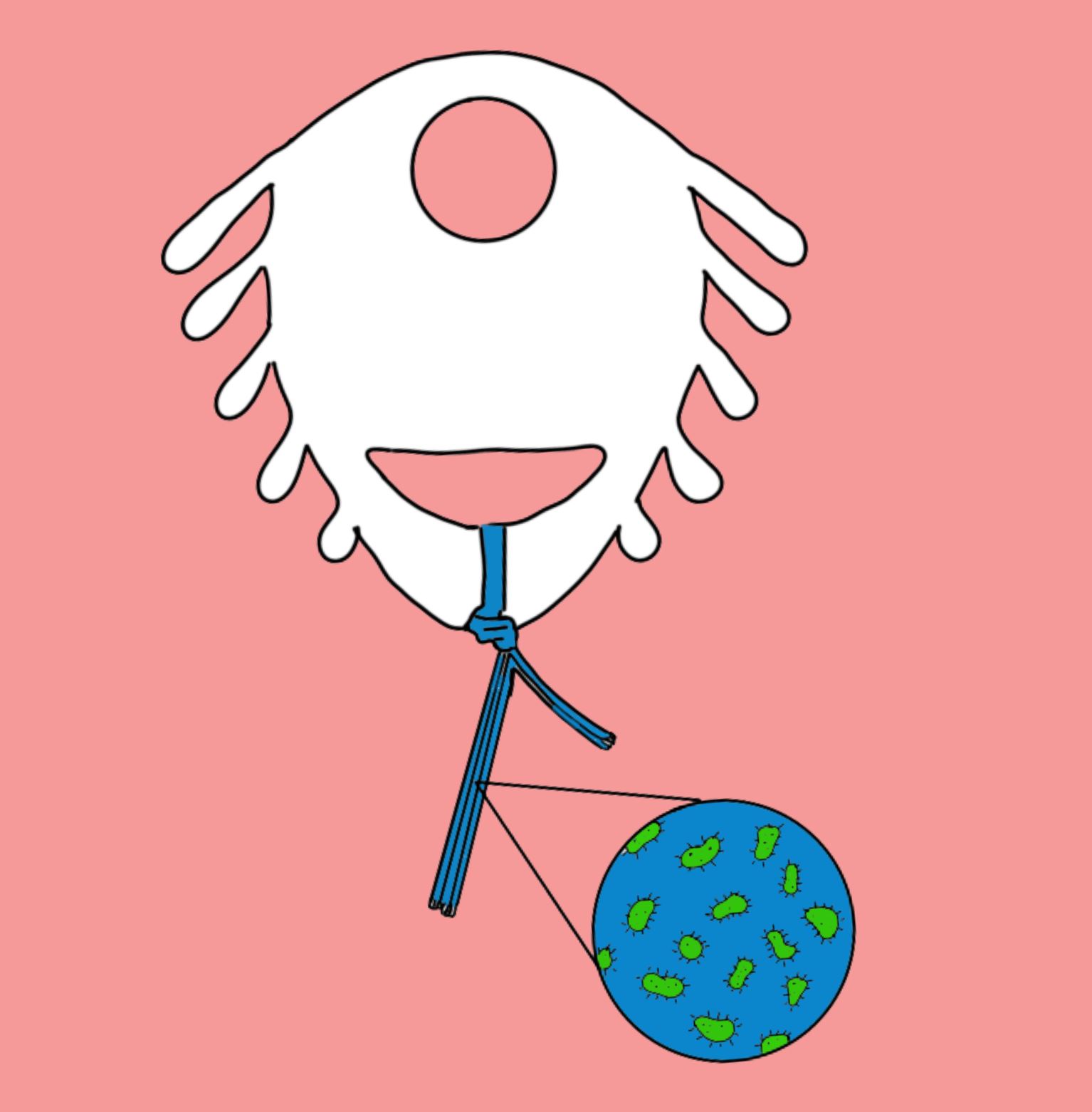
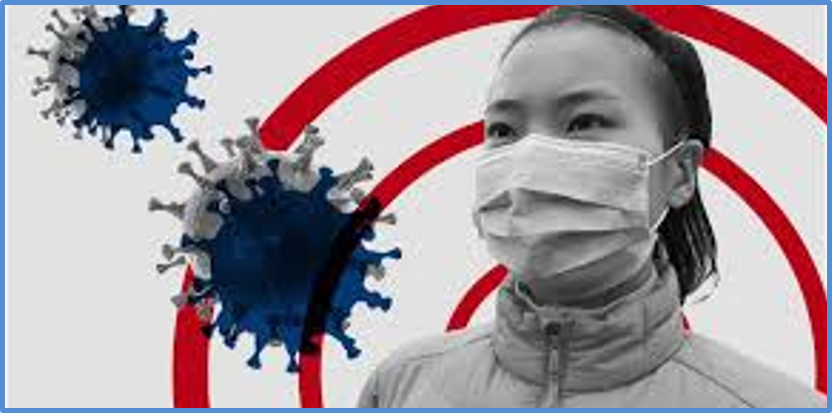
    Genetically, the coronavirus, as seen in the picture above, is known to have spikes on their circular surfaces. Fehr and Perlman have concluded and identified that Coronavirinae has the largest identified RNA genome (2).Coronaviruses are generally a single strand of RNA and as the American Society of Microbiology mentions that since this family of viruses have a high frequency of recombination, this leads to problems when trying to detect the infection (3)  Known as CoVs, these viruses can cause severe respiratory disease in animals and even humans. As in this outbreak, coronaviruses are known to be transmitted among people and animals, otherwise known as zoonotic

    .

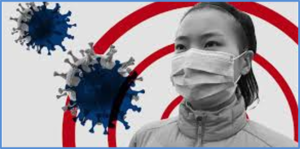
    Symptoms are very similar to common respiratory infections. That can include runny nose, fever, cough and other similar symptoms (4). Since the symptoms are quite like common respiratory infections, it is harder to identify the Coronavirus or 2019-nCoV without a full-work laboratory test.  In the presence of these symptoms both patients and doctors could believe it is just a regular respiratory infection. Moreover, since these months are considered high on influenza activity, these cases may well be confused for flu cases which could also lead to a severe illness. 

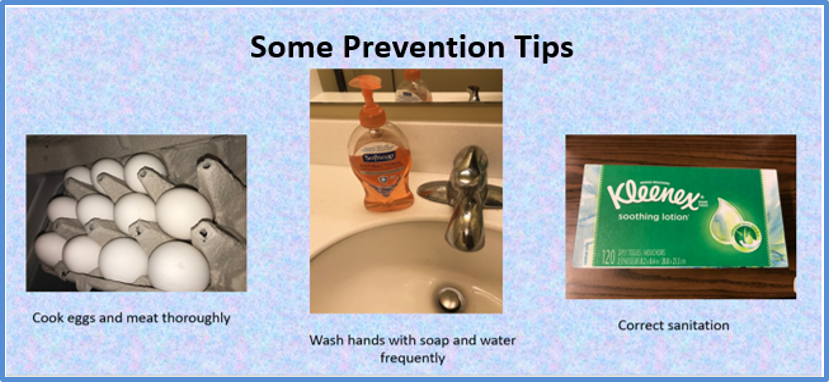
    While the immediate risk of this new virus to the US public is believed to be low at this time, in order to prevent a Coronavirus infection, the World Health organization (WHO) and the US Centers for Disease Control and Prevention (CDC) advise to stay away from unprotected animals and possibly other infected people or with cold or flu-like symptoms. Additionally, frequently cleaning hands with soap and water or alcohol-based sanitizers and not to travel to places with active outbreak are important measures to prevent respiratory infections.   

    Now, the main concern from the public health organization nationally and internationally is to reduce the spread of the Coronavirus. More cases are likely to be identified and probably in more countries around the world.  Since this epidemic is rapidly evolving and changing, there are still various uncertainties that will take time to figure out and much longer to put in place effective measures to monitor the disease, identify cases, isolate infected people, treat sick people and prevent new infections.

    References

    1. 2019 Novel Coronavirus (2019-nCoV) Situation Summary. (2020, February 7). Retrieved from https://www.cdc.gov/coronavirus/2019-nCoV/summary.html
    2. Fehr, A. R., & Perlman, S. (2015). Coronaviruses: an overview of their replication and pathogenesis. Methods in molecular biology (Clifton, N.J.), 1282, 1–23. doi:10.1007/978-1-4939-2438-7_1 
    3. Rohde, R. (2020, January 31). 2019 Novel Coronavirus (2019-nCoV) Update: Uncoating the Virus. Retrieved February 3, 2020, from https://asm.org/Articles/2020/January/2019-Novel-Coronavirus-2019-nCoV-Update-Uncoating 
    4. Yadav, N. (2020, January 26). What are Coronavirus’ symptoms and why is it dangerous? Retrieved February 3, 2020, from https://www.indiatvnews.com/lifestyle/health-what-is-coronavirus-symptoms-explained-china-new-virus-latest-health-news-581546 
    5. Novel coronavirus. (2020, February 6). Retrieved February 7, 2020, from https://www.ecdc.europa.eu/en/novel-coronavirus-china 


  • Do You Live in a Kind Area?

    Do You Live in a Kind Area?

    When I went home to Kansas over Christmas break, we had a particularly nasty snowstorm, and my family and I happened to be out driving while it hit. Our car got stuck while trying to make a turn. This caused traffic to be held up and while in the car, I found myself getting worried, as in Atlanta, when someone holds up traffic, they are usually met with honks and curse words. So, when several people got out of their cars to help push our car out of the snow, to say I was surprised was an understatement. This caused me to wonder if there was a difference in helping behavior between a small town and a big city.

    It turns out there indeed is. A study done in Queensland and New South Wales collected a list of local areas with different population sizes, which were all split into categories of rural area or urban area. They had an investigator stationed in each area who randomly chose every 3rd pedestrian on the street to ask for help on posing as a college student and then recorded the pedestrians’ responses. The results of this study showed that people in rural areas were more willing to stop and help than those in urban areas. There have been many studies done on altruism in urban vs. rural areas and most of their conclusions are similar to that of the study discussed above and show that there is a difference in altruism levels, with levels being higher in rural areas.

    What might cause this difference in helping behavior? There are a few possibilities that may explain it. One is the bystander effect: the more the number of bystanders, the less likely it is for any of them to provide help, as they think there are other people can do it. In big cities, there are more people, whereas in small towns, there are less people, so people in small towns experience less bystander effect. Similarly, it has been shown that people are more willing to help if the situation catches their attention; in big cities, there is constant noise and activity and people’s senses are constantly being overwhelmed, so the chances that they notice a particular individual in need are smaller than in a small town. Finally, another reason may be that people are more willing to help people who are similar to them (e.g. race); in big cities, there is more diversity than in rural areas, which may also impact people’s levels of altruism.

    Ultimately, it seems like there is certainly a difference in helping behavior in urban versus rural areas. This difference does not mean people in urban areas are less helpful or compassionate people, as the reasons for the difference are not intentional and more situational. But it may be good knowledge to know if you are traveling to a new area or if you want to live in an area that has higher levels of altruism.


    References

    Amato, P. R. (1983, January 1). [PDF] Helping behavior in urban and rural environments: Field studies based on a taxonomic organization of helping episodes.: Semantic Scholar. Retrieved February 3, 2020, from https://www.semanticscholar.org/paper/Helping-behavior-in-urban-and-rural-environments:-a-Amato/fdefe7e1b6bec82d5fa99617566dbeb4b410cecf

    Bridges, F. S., & Coady, N. P. (n.d.). Urban Size Differences in Incidence of Altruistic Behavior – F. Stephen Bridges, Neil P. Coady, 1996. Retrieved February 3, 2020, from https://journals.sagepub.com/doi/abs/10.2466/pr0.1996.78.1.307

    Kolm, S.-C., & Ythier, J. M. (2006). Handbook of the Economics of Giving, Altruism and Reciprocity. Retrieved February 3, 2020, from https://books.google.com/books?hl=en&lr=&id=AoT1Lt6uJ7IC&oi=fnd&pg=PR3&dq=reasons+for+altruism&ots=GCTqJC56wb&sig=uaAr1kPDM6yXHPeoec8K0C2JOn8#v=onepage&q=reasons for altruism&f=false

  • Gauging the Tides of Climate Change

    Gauging the Tides of Climate Change

    When scientists or politicians begin to talk about climate change, most people become scared by the severity of the issue at hand, thinking there’s not a lot left for us to do. This fear-mongering tactic typically discourages individual actions like recycling or moving away from meat-focused diets. Scientists surely don’t want to scare the public with the truth, but the fact of the matter is that if we don’t do something now, our generation and all generations to follow will not have a safe or even comfortable planet to live on. This leads us to the question: what exactly can we do to prepare for and mitigate the coming decades of destruction and chaos? 

    The first step to approaching the threat of climate change is to understand the impact we’re facing. To do so, we consider contributing factors in their current capacity that are predicted to change; by observing these patterns early on, it will be easier to assess the risk to infrastructure and communities. Variables that have the capability to become dangerous in the future include global sea level, atmospheric temperatures, ocean acidification, and glacial stability [4, 6]. The severity of predicted impact depends on the response of all of these variables to atmospheric carbon dioxide and other pollutant levels that have already increased global temperature. Scientists anticipate a 68% likelihood of 1-4 feet of sea level rise as a result, with 10 feet being the worst case scenario [1, 4]. With these predictions come the growing probability of worse hurricane seasons due to increased storm surge and extreme precipitation [4]. Even now we see worsening severity of weather events compared to 20 years prior and flooding during high tides in areas below sea level [1].

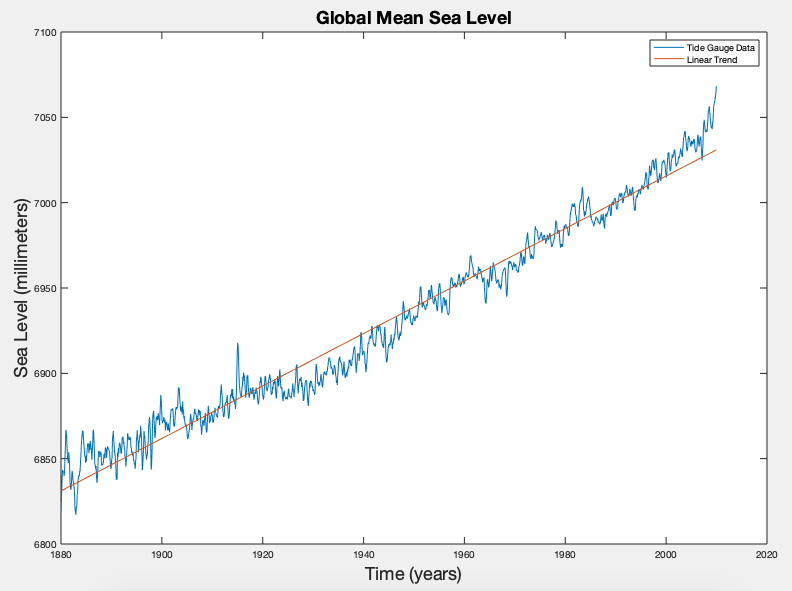
    GMSL vs time
    Global mean sea level since 1880 using tide gauge data from global PSMSL data base.

    Conveniently, scientists have been monitoring sea level globally for nearly 200 years. However, gauging sea level is a bit more difficult than sticking a ruler somewhere on the coast and guessing the relative position over time. In 1807, Thomas Jefferson ordered a systematic survey utilizing “tide staffs”, or long poles that researchers used to compare sea level with a fixed point on nearby land [2]. It wasn’t until 1851 that the US coast guard implemented self recording tide gauges, but the device was still difficult to maintain and expensive to install [2]. Today’s advanced technology records the sea surface height via radar, or microwaves, with respect to the position of the gauge above the water. These gauges are a step up from acoustic gauges that must be protected from inclement weather, and cost upwards of $1300 [1, 2]. Although we have about 200 years of global sea level data, moving onto more reliable and cost efficient methods of measuring current and future sea level change is necessary for any chance of adaptation.


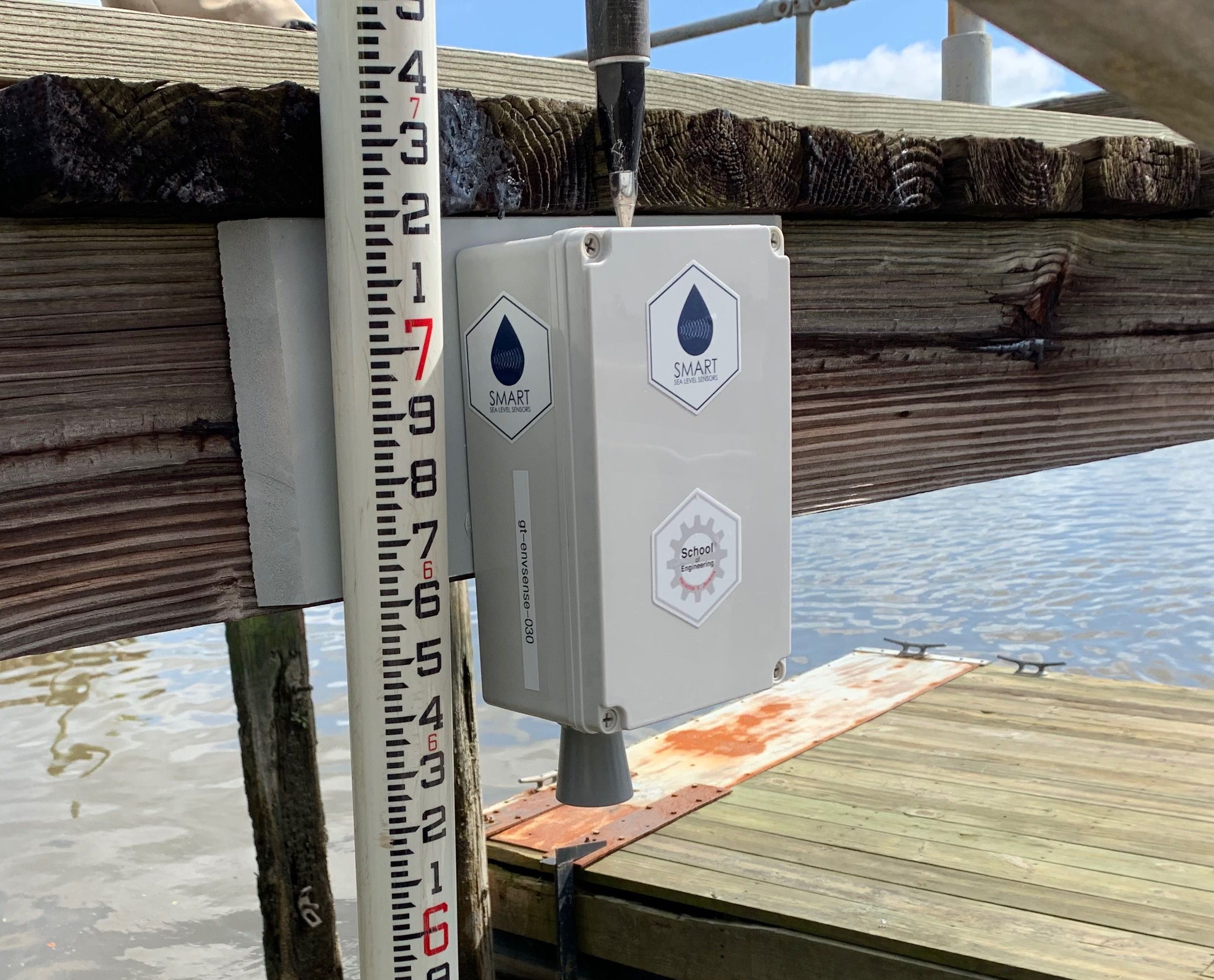
    Dr. Kim Cobb and Dr. Russ Clark of Georgia Tech have spearheaded a project as a key initiative of the Global Change Program to provide low-cost tide gauges for Georgia coastlines. The Smart Sea Level venture is focused on particularly high risk regions, such as Chatham county. These $300 devices currently measure the relative sea level, air temperature, and barometric pressure, with planned capabilities to observe ocean properties, air quality, and inland flooding [5]. The smart sea level sensors use the roundtrip travel time of ultrasonic waves to measure the distance from the sensor to the water level. They log measurements every ten minutes, enabling their batteries to last one year or longer [5]. Already Georgia Tech scientists and collaborators can simulate tides, hurricanes, and extreme weather events via 43 strategically placed sensors [1, 5]. With this data, we’re moving towards predicting the flood patterns linked to severe weather events as atmospheric temperatures and sea levels continue to rise.  

    tide gauge kim cobb
    Smart Sea Level tide gauge adapted from Russ Clark of Georgia Tech.

    As storm surge severity increases, so does the compounded risk of damaging communities beyond repair, which is the true threat of forthcoming extreme weather events. Many low income areas don’t have the resources to assist with evacuation or the infrastructure resilient enough to survive mass flooding. The smart sea level sensor project has led to close collaboration with these communities to provide information on the regions they’re most concerned with: air quality, temperature changes, and the future safety of family neighborhoods and K-12 school grounds [1]. Already the team has joined up with H. V. Jenkins School and Oglethorpe Charter Middle School [7] to recruit volunteers for engineering and installation, and test a climate literacy curriculum, respectively.

    Now the question is to ask, what’s left to do? My personal answer would be to riot and do all we can to support this initiative, but that seems a little drastic. Increasing educational partnerships with high schools and elementary programs would improve awareness amongst the younger generations who are bound to be affected more by climate related concerns. Furthermore, getting into contact with legislators, particularly within the Georgia General Assembly would provide useful in terms of allocating funds towards this cause. With legislators on board, it’s possible legal action could be taken to prevent further damage towards vulnerable communities in areas like Chatham County. Programs such as incentivizing corporate relocation or the mitigation of current industrial hazards, could go a long way in establishing baselines for future climate change strategy. While most legislation to be passed will need to be from within the county, or even at the state level , it wouldn’t hurt to reach national recognition. By promoting climate literacy across the United States, we can increase the number of volunteers assisting with future adaptation, and motivate Congress to aid in the process of protecting these at risk communities [8].  

    If you’re interested in supporting this cause, check out the following volunteer and educational opportunities:

    References:

    1. Cobb, K. (2019, January 24). Smart Sea Level Sensors – Chatham County. Retrieved from http://smartcities.gatech.edu/sites/default/files/GA-Smart-Webinar_Smart-Sea-Level-Sensors_1-24-2019.pdf
    2. Dusto, A. (2014, August 4). Reading between the tides: 200 years of measuring global sea level: NOAA Climate.gov. Retrieved from https://www.climate.gov/news-features/climate-tech/reading-between-tides-200-years-measuring-global-sea-level
    3. Georgia, S. (n.d.). Office of Sustainability. Retrieved from https://www.savannahga.gov/507/Office-of-Sustainability
    4. Lindsey, R. (2019, November 19). Climate Change: Global Sea Level: NOAA Climate.gov. Retrieved from https://www.climate.gov/news-features/understanding-climate/climate-change-global-sea-level
    5. Matthews, R., Cobb, K., & Clark, R. (2019). FAQ. Retrieved from https://www.sealevelsensors.org/faq/
    6. Ocean Acidification. (n.d.). Retrieved from https://www.noaa.gov/education/resource-collections/ocean-coasts-education-resources/ocean-acidification
    7. Jarvis, K. (2019, May 16). Smart Sea Sensors Expo Highlights Accomplishments and Shares Future Plans. Retrieved from https://www.news.gatech.edu/2019/05/16/smart-sea-sensors-expo-highlights-accomplishments-and-shares-future-plans
    8. US Department of Commerce, & National Oceanic and Atmospheric Administration. (2005, December 19). NOS Education Offering. Retrieved from https://oceanservice.noaa.gov/education/literacy.html
  • Engineers Exposed: My Favorite Ethics Scandals

    Engineers Exposed: My Favorite Ethics Scandals

    Imagine training your whole life to become an astronaut. Excelling in aerospace engineering degrees, going through years of training and exams, only for some cold weather to ruin your first mission and cost you your life. Even worse, it could have been prevented.

    Every day we put our lives in the hands of engineers, doctors, and other professionals, trusting that our cars won’t explode, the buildings we walk through won’t fall down, the foods we eat won’t poison us. But, what about when these things do go wrong? Who is to blame? Decide for yourself as I take you through my favorite engineering ethics scandals, they might surprise you!


    The Challenger

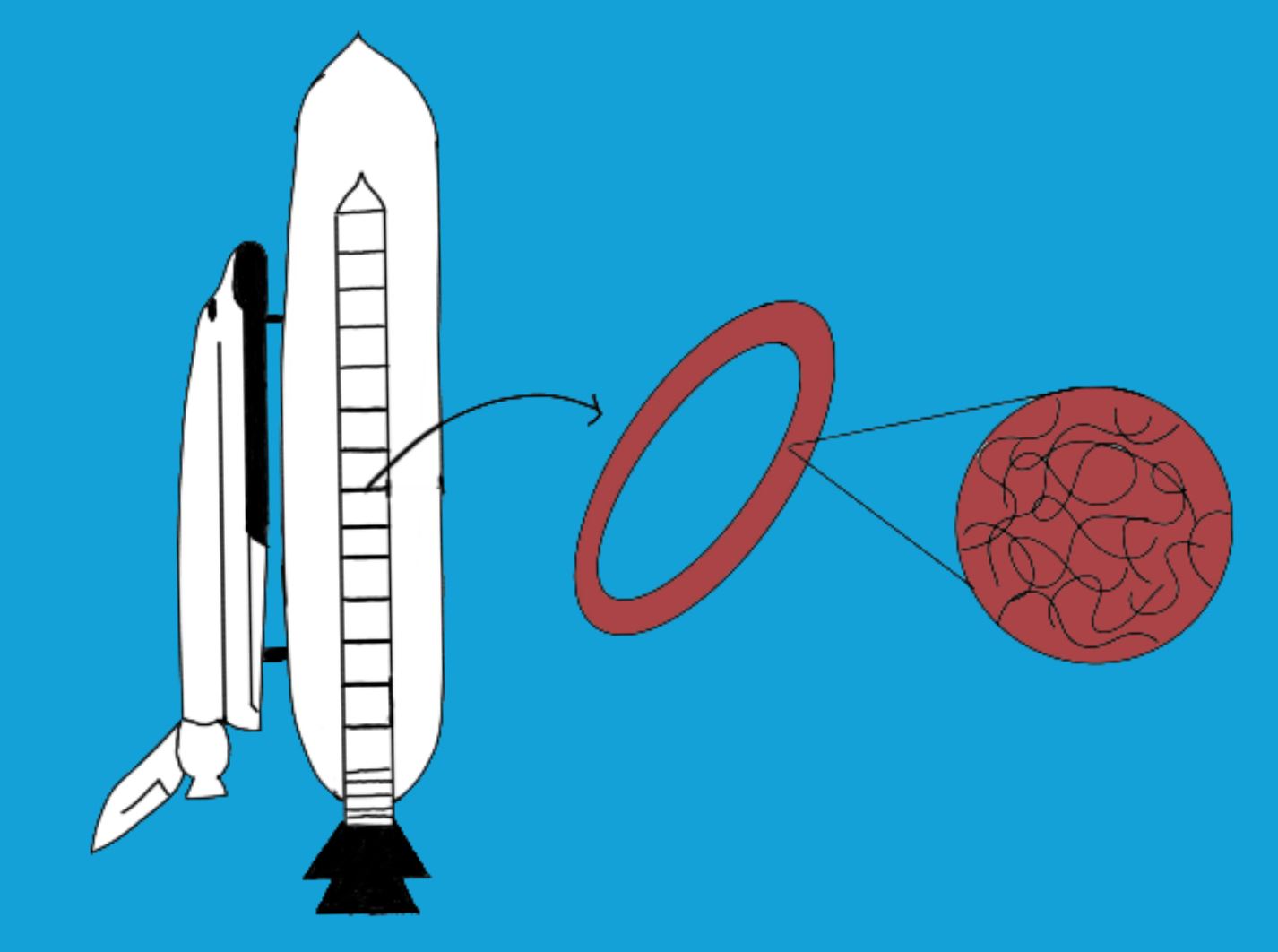
    On January 28th, 1986, the Challenger spaceship exploded, killing all the astronauts on board, including a schoolteacher. What happened? When the ship took off, the rocket booster was supposed to be sealed off by rubber O-rings that would expand to seal when heated up by the gases from the fuel. However, on the day of the launch, the weather was unusually cold, and below the glass transition temperature of the O-rings. This meant that the rubber polymer chains were “frozen” in place, and could not expand quickly enough to seal off the hot gases. This caused the gases to escape and heat up the external fuel tank, resulting in the infamous explosion. Engineers on the project knew it was too cold and presented their data to NASA, but due to poor communication and lack of good data visualization, the launch went on as scheduled .


    The Dalkon Shield

    The Dalkon Shield was an intrauterine device (IUD) sold to women as a birth control alternative in the 1970s and 80s. It was a plastic shield that resembled a crab attached to a string. The plastic shield was embedded with copper, which acts as a natural spermicide. Women were attracted to this non-hormonal device, because there would be no side effects in comparison to the pills that were previously the only available option. It was better than remembering to take a pill at the same time every day. Because it was non-hormonal, it wasn’t considered a drug, so it didn’t need to be FDA approved.

    However, the string attached to the shield was made of a thick filament (cotton/rayon). This would wick up bacteria in the vaginal canal, through the cervix, and into the uterus, causing infections. The company, A.H. Robins, was aware of this problem six months before it was placed on the market.. Pressed to keep costs low, they sold it anyway, with their customers totally unaware. Eventually, the shield resulted in 18 women dead, thousands of women with infections and complications, including infertility.


    The Creep(y) Ceiling Collapse

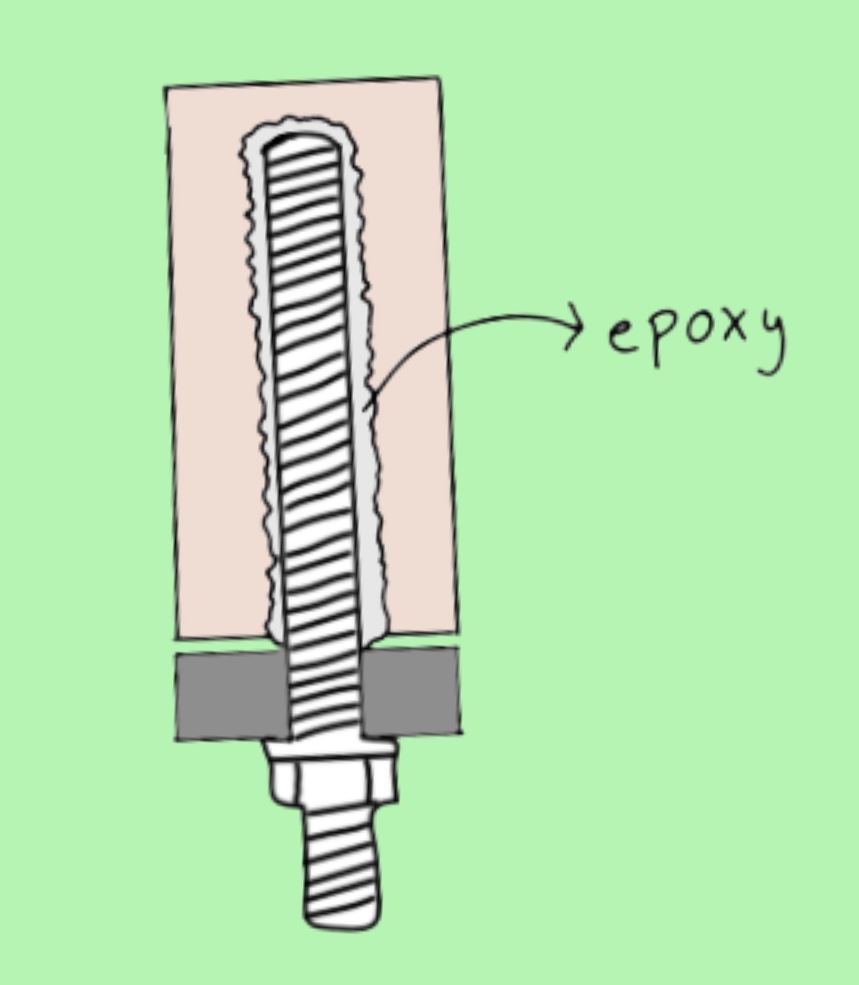
    On July 10th, 2006, concrete ceiling panels in Boston’sTed Williams Tunnel on Interstate 90 suddenly collapsed and killed a woman in her car. The panels were attached to the ceiling with cables to allow air circulation in the tunnel. The problem was that the cables were attached with a material that was susceptible to creep. “Creep” is a term used to describe the phenomenon when a material deforms (or “sags”) after a constant stress is applied over a long time. The accident happened due to miscommunication at multiple levels. The companies responsible for choosing the epoxy, Gannett Fleming, Inc., and Bechtel/Parsons Brinckerhoff, were not well-educated on creep effects, and chose a Fast-Set epoxy supplied by Powers Fasteners, Inc. Powers neglected to inform them of the durability and longevity of the epoxy.  Not only that, but the Massachusetts Turnpike Authority failed to do timely inspections of the ceiling panels and the deteriorating cables holding them up. 


    Do you see the common thread in these cases? I sure do. In each case, important scientific concepts became design flaws that were known by people in the company, but not addressed. Why? It is probably a combination of attitudes of complacency and incompetency in communication skills. It’s also hard for individuals to feel accountable for their actions when there are failures at so many levels of a company, and they too are confused on who to blame

    A cultural shift needs to happen to give engineers and business managers a greater sense of urgency and accountability in their work. This starts from education in ethics and communication. I think universities could be doing much more to train students into becoming better professionals by integrating ethics and communications more heavily into engineering curriculum. Even at Georgia Tech, I’ve seen a lack of education within ethics courses to address topics such as implicit bias and effective communications skills. All of these components impact performance in industry. We can do better. So, why not start now?


    Sources:

    Dalkon Shield:

    1. Horwitz, Rainey, “The Dalkon Shield”. Embryo Project Encyclopedia (2018-01-10). ISSN: 1940-5030 http://embryo.asu.edu/handle/10776/13043.
    2. Dosani, Sanya (Producer). (2020) Sex, Explained.[Video file]. Retrieved from https://www.netflix.com/title/81160763.

    The Challenger:

    1. Wall, Mike. (2016, January 28). Challenger Disaster 30 Years Ago Shocked the World, Changed NASA. Retrieved from https://www.space.com/31760-space-shuttle-challenger-disaster-30-years.html.
    2. Tufte, E.H. (1997) Visual Explanations: Images and Quantities, Evidence and Narrative. Graphics Press.

    Ted Williams Tunnel:

    1. National Transportation Safety Board. (2007) Ceiling Collapse in the Interstate 90 Connector Tunnel Boston, Massachusetts July 10, 2006. (Report ID: NTSB/HAR-07/02 PB2007-916203 Notation 7901A). Retrieved from https://www.ntsb.gov/investigations/AccidentReports/Reports/HAR0702.pdf.
  • That sounds fishy…

    That sounds fishy…

    While scrolling somewhere in the interwebs, I saw a post someone had made about trying to hold their breath during action movies whenever the characters went under water, to see how realistic/unrealistic the scenes really are. Someone responded with a comment in the spirit of, “Yeah! It’s sooooooo unrealistic. I almost died during Finding Nemo!”. As dumb as that joke was, it made me smile and got me thinking about how fun it would be to apply realism standards to an animated movie like Finding Nemo. Acting on the impulse (and if we are being completely honest, needing an excuse to rewatch a children’s movie), my friends and I attempted to view the movie from a scientific perspective, asking questions and pulling out scenes about marine life to research their factual basis.

    Here is some of what we discovered:


    400 Eggs

    Q: What is a typical clutch size for clownfish? Is their statement that there are “over 400 eggs”, accurate?

    A: Yes, a clownfish can actually have anywhere from 100 to 1,000 eggs in a single clutch! They actually have a very interesting and unusual life history, as all clownfish are protandrous hermaphrodites, meaning that they are born with dominant male reproductive organs and inactive/recessive female reproductive organs as well. Within a single anemone, there is a single, monogamous mating pair, consisting of the only female of the group and the largest male, and the rest of the clownfish are developmentally “undeveloped”, sexual juveniles. Eggs are first released by the female into the nesting site, and then fertilized by the male and attached to a substrate surface, normally rock or coral. The male is in charge of caring for the eggs, fanning them to regulate oxygen levels and temperature. In addition, they will eat any damaged or unfertilized eggs to clear the nest…Marlin would have been feasting after that first, gory scene…Ew!


    Barracuda Feast

    Q: Will/do barracudas eat clownfish eggs?

    A: Nope, that’s very unlikely. The typical diet of a barracuda is smaller fishes such as jacks, grunts, groupers, snappers, small tunas, mullets, killifishes, herrings, and anchovies, but they aren’t known to eat fish eggs. Marlin has got that covered.


    Clownfish and Sea Anemones
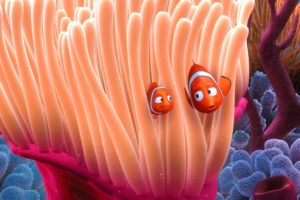
    Q: What is the relationship between clownfish and sea anemones? Do they actually have to brush themselves to avoid getting shocked?

    A: Sea anemones and clownfish have one of the most well-known symbiotic relationships, and it’s actually a bit more complex than one might expect. Sea anemones have nematocysts, stinging cells with toxins, on their tentacles, that they use for protection. The clownfish, however, has a unique mucus coating that prevents them from being affected by it, and they can therefore live in safety in and amongst the anemone. The sea anemone isn’t just protecting the fish for free though- the clownfish provides protection by chasing off potential predators, and also provides nutrients in its waste products, such as ammonia, sulfur and phosphorus. Recent research has also found evidence that the relationship between this organisms may be even more intimate, with evidence that microbiomes of the partners changes with their interactions and contact over time, possibly cycling carbon between them. However the physical touch modifies them though, the depiction of brushing to achieve recognition seems to be a bit of an exaggeration on the film’s part. Oh well, creative liberties I guess.


    Lifespan of a Sea Turtle


    Q: Marlin and Nemo talk a decent bit about how long sea turtles live. What is the average lifespan really?

    A: Assuming the turtles shown are representations of green sea turtles (Chelonia Mydas), we don’t have an exact answer. The estimated lifespan is around 60-70 years, though, which is pretty darn long!


    Mouthbrooding Mother
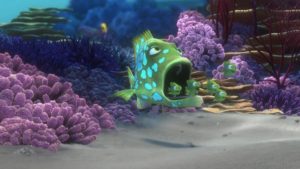
    Q: What’s up with that fish that carried it’s kids to school in its mouth? Is that real?

    A: Yes! There actually are types of fish, called “mouth-brooders”, that use their mouths to shelter their eggs and/or young offspring. There are many different types, including cichlids, sea catfish, cardinalfish, Bagrid catfish, pikeheads, jawfishes, gouramis and arowanas, and either the male or female may keep the offspring in their mouth. The most famous example is probably the female african cichlids, which carry their eggs for between 21 and 36 days, from fertilization to hatching, without eating. They also carry the juveniles in times of perceived danger, using specialized behavioural signals to call her young back into her mouth. That is what I can dedicated parenting!


    4800 Teeth

    Q: Bloat, the pufferfish, claims there are “4,800 teeth” between the 3 sharks Marlin had encountered- is that accurate?

    A: Based on their animated appearance, there is a great white, a mako, and a great hammerhead. Assuming that is the case and they are all full-developed adults, we can make the following estimate:
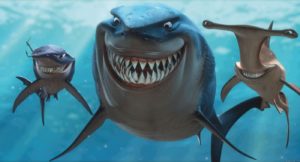
    • For the great white- the average is 300 total in up to seven rows (but only 50 are “working” at any given time)
    • For an adult hammerhead, you can expect 24 to 37 teeth per row and several rows (3-4) per jaw

    Data on the odontology of mako sharks was harder to find, but I think it is safe to safe that it will not fair  make up the >4,000 teeth difference needed to match the statement.

    Bloat was just exaggerating a bit, and who can blame him? There are certainly enough teeth to be afraid.


    Riding the EAC

    Q: Is the East Australian Current real?

    A: Yes, the EAC actually is a really thing, even if it isn’t used for thrill-seeking by surfer sea turtles. It’s actually a really influential current as well, moving warm water down the eastern coastline of Australia. It is the largest ocean current near Australia, and according to data from NASA and CSIRO Marine Research, moves as much as “30 million cubic meters of water per second in a path that is as large as 100 kilometers in width and 500 meters deep”. Pretty gnarly surfing!


    Flo and Deb
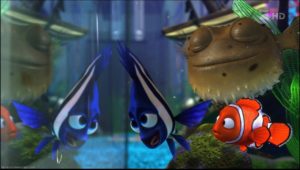
    Q: Are Flo and Deb an accurate representation of self-awareness in fish? Can fish pass the mirror test?

    A: The mirror test is the ability for an organism to recognize itself in a mirror. It is a way to get an organism’s self-awareness and consciousness. In Finding Nemo, the character Flo acknowledges her reflection as a separate being, Deb. This raises the question; are fish are able to pass the mirror test? While there are no sources on the specific type of fish Deb is, a PLOS report records that ¾ fish tested on were able to pass the mirror test after being accustomed to it. Sorry Deb…


    Fishy Formations

    Q: In the movie, a school of fish makes impressions and formations to comfort Dory. How do fish really coordinate school movement?

    A: Fish coordination is actually a super fascinating area of research, and while, they might not be making improv impressions underwater, many fish can make some impressively complex movements. There are two distinct types of movement, shoaling, and schooling; shoaling is less structured, more, temporary, and can be a loose aggregation of fish of differing species, while schooling is highly structured, with common directionality and coordinated movements. While we don’t understand the exact mechanisms of how some of the really complicated movements work, we do know that fish have a unique sensory system to allow for this behavior. In addition to using their vision, they have a lateral line, an extremely sensitive mechanosensory organ along the sides of the body that helps detect any changes in water pressure around them, helping them keep track of the movements of their neighbors precisely.


    Overall Accuracy Score: 6.5/10

    Despite the whale speaking, seagull-mocking silliness that is Finding Nemo, we think it does a good job overall presenting some of the fascinating science that happens under the sea. Golf claps all around!


    References and Further Reading:

    Berends, Betsy. “Reproduction and Life History.” Amphiprion Ocellaris, Apr. 2007, bioweb.uwlax.edu/bio203/s2007/berends_bets/reproduction.htm.

    Bester, Cathleen. “Sphyraena Barracuda.” Florida Museum, 12 May 2017, www.floridamuseum.ufl.edu/discover-fish/species-profiles/sphyraena-barracuda/.

    East Australian Current. (n.d.). Retrieved from https://earthobservatory.nasa.gov/images/15366/east-australian-current

    Herbert-Read, J. E. (2016). Understanding how animal groups achieve coordinated movement. The Journal of Experimental Biology, 219(19), 2971–2983. doi: 10.1242/jeb.129411

    “How Many Teeth Does a Hammerhead Shark Have?” Reference, IAC Publishing, www.reference.com/pets-animals/many-teeth-hammerhead-shark-6cb321753fe81324.

    Kohda, M., Hotta, T., Takeyama, T., Awata, S., Tanaka, H., Asai, J.-Y., & Jordan, A. L. (2019). If a fish can pass the mark test, what are the implications for consciousness and self-awareness testing in animals? PLOS Biology, 17(2). doi: 10.1371/journal.pbio.3000021\

    LiveScience. (2013, September 18). New Study Sheds Light On THIS Fishy Behavior. Retrieved from https://www.huffpost.com/entry/fish-schools-genes_n_3947303

    MacDonald, J. (2017, June 21). How Do Fish Schools Work? Retrieved from https://daily.jstor.org/how-do-fish-schools-work/

    Noaa. “Green Turtle.” NOAA, www.fisheries.noaa.gov/species/green-turtle.

    Ocean Portal Team. “Great White Shark.” Smithsonian Ocean, 18 Dec. 2018, ocean.si.edu/ocean-life/sharks-rays/great-white-shark.

    Pratte, Z.A., Patin, N.V., McWhirt, M.E. et al. Association with a sea anemone alters the skin microbiome of clownfish. Coral Reefs 37, 1119–1125 (2018). https://doi.org/10.1007/s00338-018-01750-z

    “The Protective Mouthbrooding Fish.” PADI Blog – Scuba Diving and Freediving Tips, Dive Travel Insights & More, 8 Feb. 2016, blog.padi.com/2014/07/30/creature-feature-the-protective-mouth-brooding-fish/.


    Fair Use Statement: On the Utilization of Pixar Clips and Images in the Article

    This site may contain copyrighted material the use of which has not always been specifically authorized by the copyright owner. We are making such material available in an effort to advance understanding of environmental, political, human rights, economic, democracy, scientific, and social justice issues, etc. we believe this constitutes a ‘fair use’ of any such copyrighted material as provided for in section 107 of the US Copyright Law.

    In accordance with Title 17 U.S.C. Section 107, the material on this site is distributed without profit to those who have expressed a prior interest in receiving the included information for research and educational purposes. For more information go to: http://www.law.cornell.edu/uscode/17/107.shtml
  • Understanding Static Electricity

    Understanding Static Electricity

    A Normal Winter Night

    It’s a cold winter night, you’re snuggled up in your favorite blanket sitting on a couch and watching TV, the heater doing its best to prevent the winter winds from disturbing your moment of Zen. You’re thirsty, craving the delicious nature of nice, hot chocolate. So, you get up, placing your fluffy socks on the carpeted floor, blanket wrapped, and head towards the kitchen; however, on your way, you have to go through a closed door, and brace yourself against the icy, wooden floors that is your kitchen. As you take the courage to confront the chilly adversary and reach your hand to the metal knob, you feel a jolt of energy against you, a loud SNAP, and a flash of lighting going from your hand startles you, bringing about a moment of pain. Feeling betrayed, worried, you try again. What you felt was the power of static electricity, something that we’ve all experienced in one form or another.

    What is Static Electricity?

    Static electricity is a common occurrence in life. From rubbing an inflated balloon on your furry pet to rubbing socks on a carpeted floor, the friction between two objects (normally insulators such as fur, plastic, or clothing) causes electrons to move from one object to another. This creates a difference of charge, or electrostatic potential. When there is enough energy to match this electrostatic potential, the electrons will move. Think of it like this: every molecule wants to wants to be in balance, and whenever there is an imbalance, those molecules will do what is necessary to return to said balance, but need the energy to do so. In the example above, your covered feet rub against the carpet and collect electrons that spread throughout your body – this makes you negatively charged, or “electron rich”. Metal – the door knob – is typically positively charged, or “electron deficient”, and therefore wants to take any electrons it can get. When the two objects get close enough, there is less energy required for the electrons to move (imagine trying to move a ball far away from you compared to right next to you… much easier, right?) and so they do. This causes for that “flash” to be seen from your fingertip to the door knob, and the pain you feel is caused by the sudden movement of electrons (look at E-Stim, my other article, it talks a bit about the human body and electricity… this isn’t advertisement, I swear!)) that then trigger nerve receptors, the more electrons that move, the stronger the feeling.

    So, how does all of this tie in with exploding gas? The answer, my dear friend, is one word: combustion. Combustion is the reaction of oxygen, a fuel source, and energy, as seen in the formula for the combustion of rubbing alcohol below:

    Equation

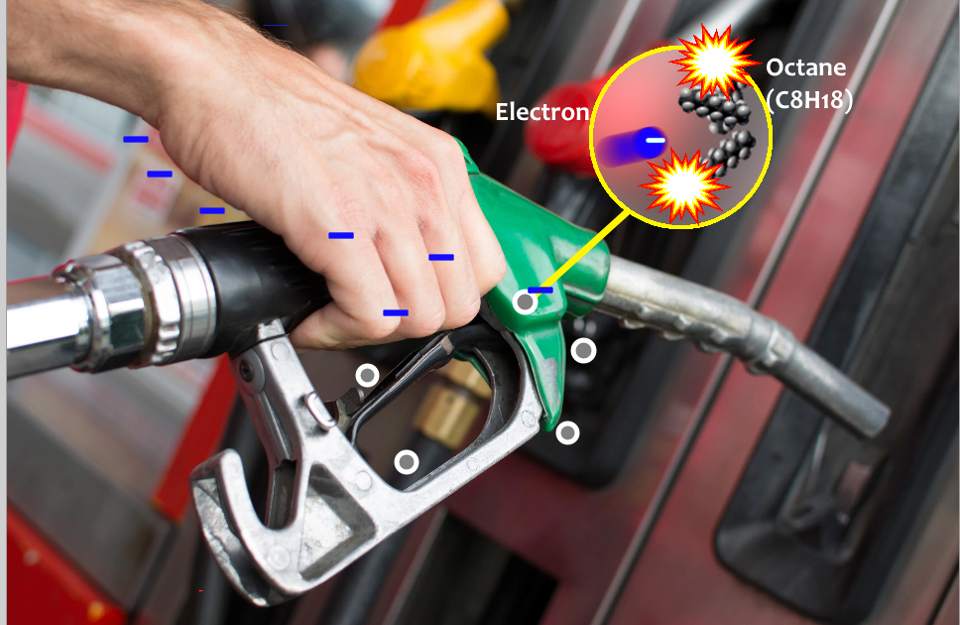
    But wait, what’s a reaction? Remember what I said before about molecules doing whatever it takes to return to balance? Well, that’s a reaction! When atoms combine to form molecules, they use energy to form bonds to stick together and reach a form of balance. In order to break these bonds, more energy is required, and atoms separate and join with other atoms nearby to form new molecules. This causes for energy to be, in this case, released. This is used in your cars to move pistons and make your car move, but that’s another lesson. Now, imagine your clothes rubbing against your seat when you’re getting out of the car to fuel up or after getting something. Considering that the fuel nozzle is metal, that gasoline has a tendency to become a gas, and you have a charge build up… since energy is made from the movement of electrons (they literally crash into other atoms when they move) it causes for this reaction to occur, and now the expansion of heat and air spread out and cause those explosions that many people see in horror movies.

    As electrons move from the hand to the metal, they can collide with gas vapors.
    As electrons move from the hand to the metal, they can collide with gas vapors.


    But how do we counter this?!

    It’s actually pretty simple: touch your car before you touch the nozzle. The extra electrons on your clothes and body will go to the car, and then to the ground instead of to the gasoline vapors near the nozzle. Make sure to do this a ways away from your gas tank – ideally by the doorframe by the driving wheel, and you should be fine!

    Either way, there are other ways for energy to be transferred, so you need to always be careful when going near a fuel source. Just don’t smoke, use flint, or summon the power of the force while you’re gassing up. Be smart, and don’t do anything that might cause for combustion to occur!


    Electric Potential Energy. (n.d.). Retrieved April 14, 2018, from http://hyperphysics.phy-astr.gsu.edu/hbase/electric/elepe.html

    E., E., E., E., E., & E. (n.d.). Electricity – Electrical Charge, Electric Fields, Coulomb’s Law And The Forces Between Electrical Charges, Resistance – Current, Voltage, Ohm’s law. Retrieved April 14, 2018, from http://science.jrank.org/pages/2342/Electricity.html

    Combustion. (n.d.). Retrieved April 14, 2018, from https://www.grc.nasa.gov/www/k-12/airplane/combst1.html

    Combustion Reactions. (n.d.). Retrieved April 14, 2018, from http://www.iun.edu/~cpanhd/C101webnotes/chemical reactions/combustion.html