Category: today i learned (til)

health, fitness, medicine, environment, ecology, how to learn tricky topics in science and math, new discoveries, news, current events

  • A Revolution in Heart Transplants

    A Revolution in Heart Transplants

    A ‘Cool’ Way to Transport or Not? 

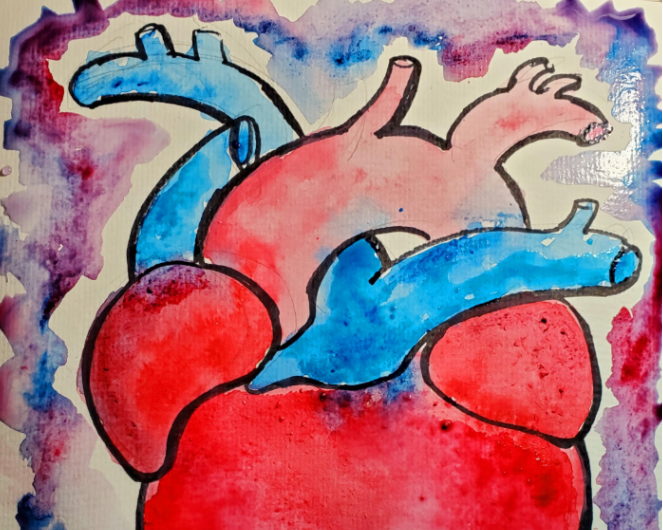
    Since their successful conception in 1967 by Dr. Christiaan Barnard, heart transplants have been a staple in the transplant world. They have provided many individuals with end stage cardiomyopathy (weakening of the heart muscles), heart valve disease, coronary artery disease, or other cardiovascular diseases a second chance at life. However, even as medical technology rapidly progressed over the years, one part of the heart transplant procedure remained relatively the same: the process of transporting a donor heart.
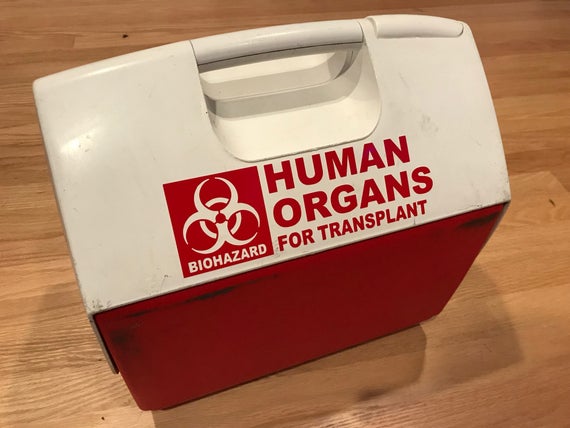
    Traditionally, once a donor heart becomes available, it is removed from the donor’s body, sealed in a plastic bag, and then placed in an ice cooler. The cooler is then transported to the hospital where the heart transplant surgery will occur. While this might be the most common method for transportation, it is definitely not the most effective. On average, 8 out of 10 donor hearts don’t make it to transplant surgery. This can be due to the limited amount of time a heart can remain outside of the body, formally known as ischemic time. A heart can ideally last outside of the body for 4-6 hours. If the time goes longer than that, then the ice surrounding the heart can begin to cause irreversible damage to the heart cells, leaving it unable to be restarted. Because of this short transport time period and possibility of cellular damage, it’s very difficult to transport a heart successfully, even if the donor is a perfect match. In 2017 alone, only 3,244 hearts were transplanted when an estimated 100,000 patients needed a new heart.  

    However, a new solution to this problem is currently in the works thanks to a company called Transmedics.

    Transmedics: Heart in a Box

    In the early 2010s, Transmedics brought a new method of donor heart transportation to the table, and it came in the form of a mechanical box. Heart in a Box or the Organ Care System (OSC) Heart served a radical idea: what if we could keep a heart beating during transport? 

    And they accomplished just that! Once a donor’s heart becomes available for transport, it is placed inside the (OSC) Heart, where doctors will hook tubes into the aorta (the main artery that pumps oxygenated blood to the rest of the body) and the pulmonary vein (which transfers oxygenated blood from the lungs to the heart). These tubes are used to pump oxygenated blood sourced from the donor through the heart by mimicking the changes in pressures inside the left ventricle and left atria. From this process, the heart receives the necessary nutrients and oxygen needed to function properly, meaning that it can basically be kept alive outside of the body thus eliminating ischemic time. The OSC even comes with a portable tablet that monitors the vitals of the heart (such as rhythm and heartbeat) and allows for direct changes to be made to pump flow rate or nutrient levels to keep the heart functioning properly throughout the transport process.
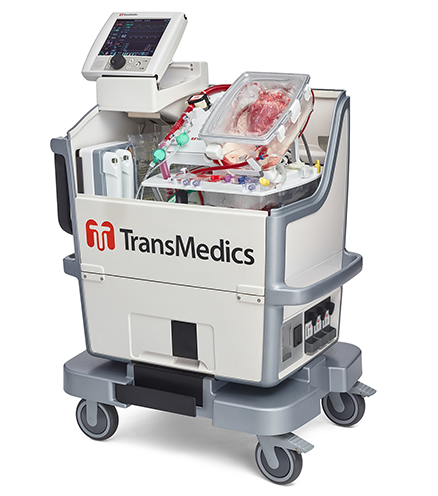
    With the heart kept alive and beating, the time limit for transport is vastly increased. Current trials have shown that with OSC, donor hearts can remain viable for up to 12 hours, double what could be achieved with the cooler! With the heart being constantly monitored to maintain proper function instead of being iced and not beating, it also eases the process of restarting the heart in the recipient’s body. These changes could mean huge advancements in the number of patients that successfully receive a donor heart for transplant. The OSC Heart is still undergoing FDA clinical trials to prove its safety and benefit to heart transplant recipients before it becomes a wide scale method of transport, but so far many transplants that have occurred with the device have been successful. Transmedics is even branching out to using similar OSC for other organ transplants, such as lungs and kidneys. As of now, we’re on track for a brighter future for transportation of donor organs.  

    The Heart Beats On

    The story of Transmedics reminds us of a valuable lesson: just because a medical procedure or device is widespread doesn’t mean that it is most effective. Current methodology needs to be questioned to look for ways of improvement. Nothing is perfect. Sometimes creativity and innovation are needed to cause a paradigm shift that can completely change how the world handles a medical issue. Never stop looking for scientific improvement! You never know if your idea might end up saving someone’s life.
     

    Citations

    Breining, Greg. “Heart in a Box.” Medical School – University of Minnesota, 28 Mar. 2017, med.umn.edu/news-events/medical-bulletin/heart-box.

    Breining, Greg. “Transplant Transport.” Legacy, 11 Sept. 2018, discoverymag.umn.edu/stories/transplant-transport.

    “Heart Transplant.” Mayo Clinic, Mayo Foundation for Medical Education and Research, 16 Nov. 2019, www.mayoclinic.org/tests-procedures/heart-transplant/about/pac-20384750.

    “OCS Heart for Patients and Families.” Transmedics, www.transmedics.com/ocs-heart/.
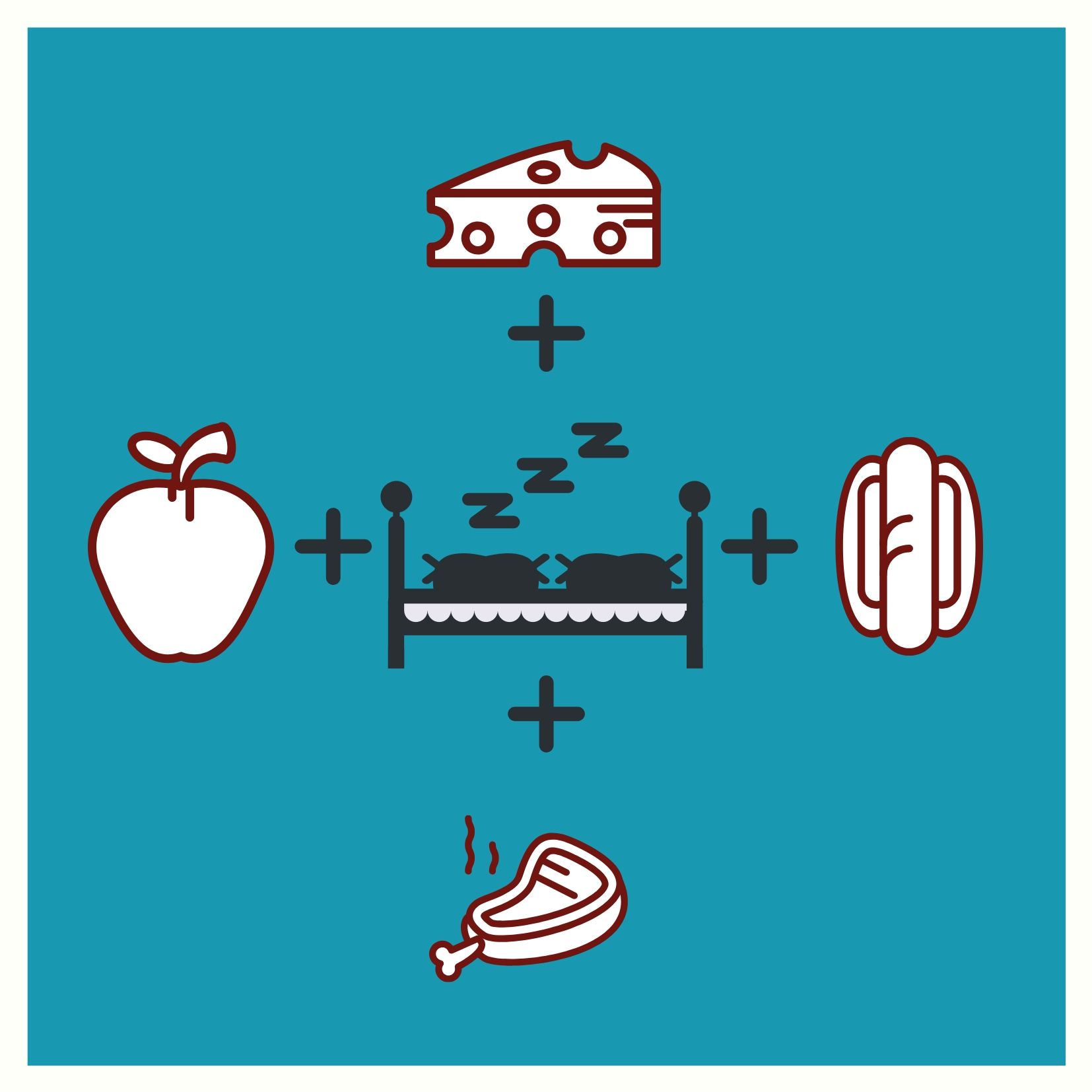
  • Is eating late at night really bad for you?!?!

    Is eating late at night really bad for you?!?!

    Food and Sleep a good combination?

    Imagine this, its been a long day of exams and work and you really want to just hang out with your friends for the night to simply relax. You and your friends are hanging out and time passes fast and next thing you know, it is 2 AM. Out of thin air, one of your friends says “I’m hungry, you guys want to go eat some Waffle House?”. You give in after a few minutes and decide to go get some food. After your Waffle House escapade, you return and are getting tired and go to bed when you enter your apartment door.  After you wake up the next morning, you realize that you shouldn’t have eaten before sleeping and regret your decision. After regretting such decision, you decide to not eat late at night due to the occurrence and instead sleep on an empty stomach. If you have been in a similar situation, it is time to evaluate possible decisions on what to do because certain decisions could lead to potential risks.

    If you decide to sleep on an empty stomach, the decision might not be the best decision to make. Sleeping on empty stomach could lead to certain effects such as weight gain, loss of muscle mass, less energy, changes in mood, low insulin, and lack of sleep (The Sleep Advisor, 2020). However, you probably have been told that eating late at night could lead to weight gains. This idea has been an idea in many peoples’ heads for numerous of times and is a common misconception among many people. This idea of weight gains due to eating at night is based off studies that were conducted on animals rather than humans. This notion is supported by animals, but it doesn’t reflect how humans react to such thing. In fact, in 2016, a study was conducted on children in the UK that checked the association of the time of evening meals as well as the weight status of children. The results of the study indicated that there was no evidence that late eating habits led to excess weight in children (Meixner, 2018). With the study in mind, it is essentially better to watch what you eat before sleeping rather than when you eat. If you decide to eat a huge meal though before sleeping, examine the risks.

    One of the major risks of eating large meals at night is the potential risk of Acid reflux (“This Is what Happens…”, 2018). In general terms, “Acid reflux occurs when contents from your stomach move up into your esophagus” (Healthline Editorial Team & Cruikshank, 2019). Acid reflux can essentially provide discomfort in an individual in their chest area and if commonly occurred, it will lead to other issues. In a study conducted in 2005, different scientists researched the association between gastro-esophageal reflux disease (GERD) and the intervals between bedtime and a huge meal. In this case study, about 147 GERD patients and 294 Non-GERD patients were examined. With different comparisons made, the study concluded that if there is a small-time interval between your last huge meal and bedtime, then there is a significant change you could potentially develop GERD (Fujiwara et al., 2005, p. 2634). This study reflects the idea of eating a huge meal before sleeping. In no way it is saying that you cannot eat at all before sleeping. In fact, eating small healthy snacks before sleeping can be beneficial to one’s sleep as it may help one sleep better, may stabilize blood sugar in the morning, as well as aiding in weight loss (Jones, 2016). Before you sleep, think of the potential things you can do to get a good night’s rest.

    If it is almost bedtime and you are feeling a bit hungry, think about what you can do to make sure you go to bed in a healthy manner. If you are very hungry at night, do not grab your bag of chips and chow down on that, instead eat a healthier snack. If you do not have any healthy snacks, don’t even bother going to your nearest fast food and eating that, instead cook something small and healthy and eat that instead. Again, it isn’t about when you eat, it is about what you eat!

    Citations:

    Fujiwara, Y., Machida, A., Watanabe, Y., Shiba, M., Tominaga, K., Watanabe, T., … Arakawa, T. (2005). Association Between Dinner-to-Bed Time and Gastro-Esophageal Reflux Disease. The American Journal of Gastroenterology, 100(12), 2633–2636. https://doi.org/10.1111/j.1572-0241.2005.00354.x

    Healthline Editorial Team, & Cruikshank, H. (2019, March 22). Everything You Need to Know About Acid Reflux and GERD. Retrieved from https://www.healthline.com/health/gerd

    Jones, R. T. D. (2016, October 28). Is It Bad to Eat Before Bed? Retrieved from https://www.healthline.com/nutrition/eating-before-bed#section4

    Meixner, M. (2018, October 2). Does Eating Late at Night Cause Weight Gain? Retrieved from https://www.healthline.com/nutrition/eating-at-night#circadian-rhythm

    The Sleep Advisor. (2020, January 8). Going To Bed Hungry – Is It A Good Or Bad Thing? | Sleep Advisor. Retrieved from https://www.sleepadvisor.org/going-to-bed-hungry/

    This Is what Happens to Your Body if You Eat Right Before Bed. (2018, December 6). Retrieved from https://www.vice.com/en_us/article/kzvnjz/just-how-bad-is-it-to-eat-before-bed

  • Science, Jazz, and Boba, OH MY!!

    Science, Jazz, and Boba, OH MY!!

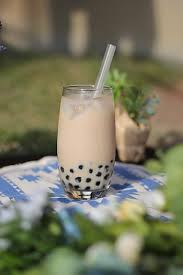
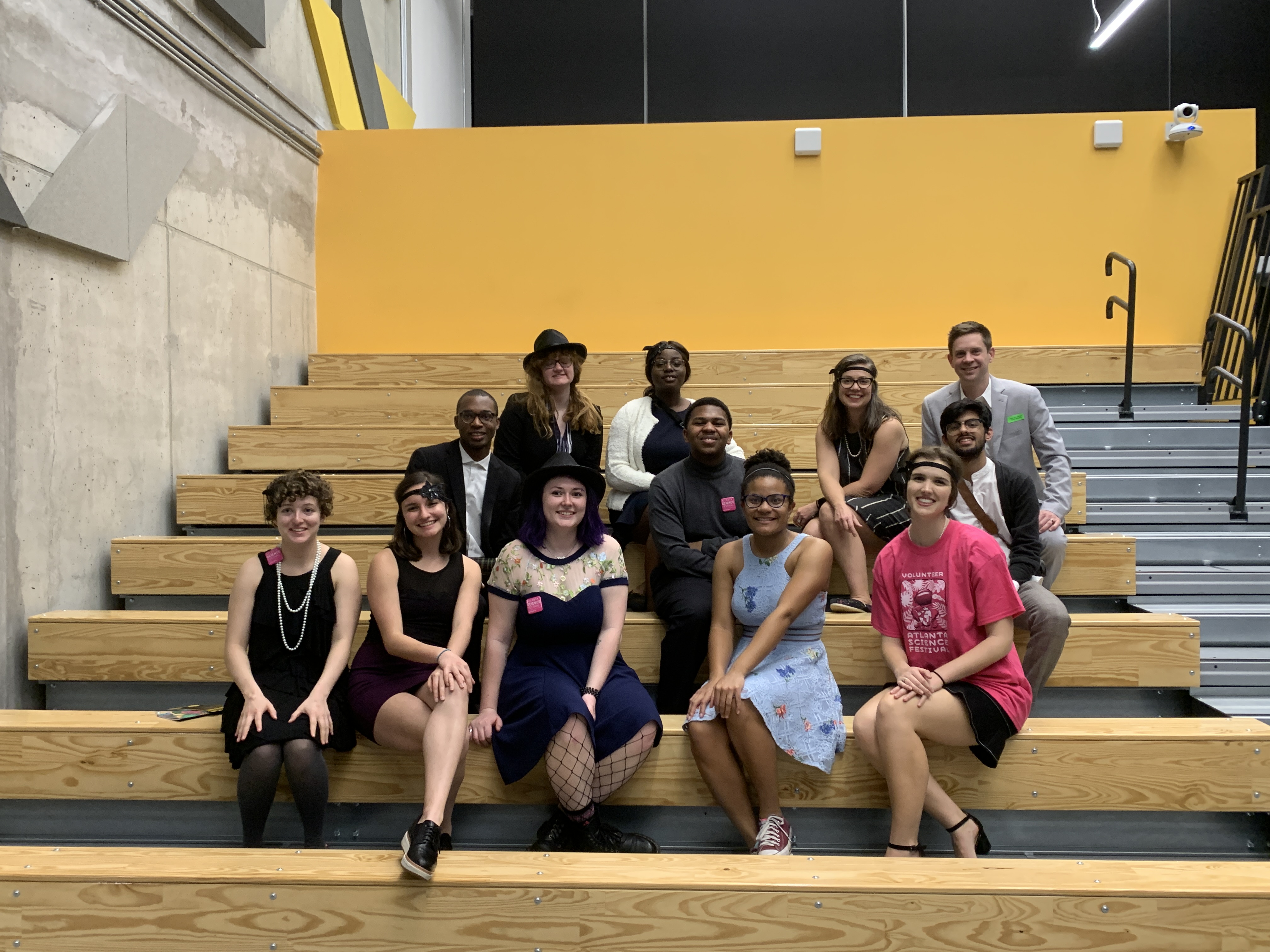
    Last month on March 12th, the STEMComm VIP team had the pleasure of hosting the Sober Science Speakeasy, where we had several booths serve delicious mocktails and a jazz band playing some active music during the night, all while the drink makers each had unique demonstrations to show the science behind the drink. We had a variety of drinks from a drink carbonator, butterfly pea flower tea, a mixed density drink, and many more. It was an amazing experience to be a part of, and it was a great event to hold for the Atlanta Science Festival and for Georgia Tech before we had to transition to online classes. Me and my teammate Nadia (who is a very passionate lover of puns and polymers!) helped to make bubble tea, and I’d like to share that recipe for anyone interested in making their own.

    Note: This recipe makes about 10-14 servings.

    Cinnamon Honey Boba Tea

    10-12 bags of Black Tea (Preferably Twinnings)

    1-3 tablespoons of cinnamon

    ⅓ cup of honey (or more depending on your preferred level of sweetness

    1 package of black tapioca pearls (Brand we used)

    12 cups of water (for tea) & 8 cups of water (for tapioca pearls)


    Here’s the Tea:

    1. Put water over high heat until it reaches a rolling boil.
    2. Place the tea bags in the pot, and follow the instructions given on the packet (normally about 3-5 minutes)
    3. When the tea is finished cooking, turn off the heat and mix in the cinnamon and honey
    4. Set aside to let cool while you cook the tapioca pearls


    Putting the Boba in Boba:

    1. Put the water over high heat until it reaches a rolling boil.
    2. Pour the tapioca pearls into the pot, lightly stirring until they float to the top.
    3. Cover the pot and let the pearls cook for about 10-15 minutes, stirring every 5 minutes.
    4. Turn off the heat and scoop the pearls into the bowl of cold water for about 1 minute.
    5. Drain the water, put the pearls in a container, and pour the cup of water and brown sugar over the tapioca pearls to create a brown sugar syrup.


    Bringing it All together:

    After finishing making the tea and the boba, it’s time to put as much boba as you like into your cup of tea! How you want it after that is all up to you! You can add your favorite type of milk, colorful jellies, puddings, fresh fruit, and even some red beans (it’s sweet and lovely). It’s a very easy recipe to make that gets even better and better as time goes on, so I highly encourage practicing this recipe over and over again, and who knows? You might be the next Sweet Hut or Kung Fu Tea. Good luck!

    To close off for the Spring semester, I’d love to thank everyone involved with the creation of the Sober Science Speakeasy, from our faculty advisors Dr. Leavey, Dr. Evans, Dr. Greco, and Dr. Mendelson, all of our teammates, my boba buddy Nadia, all the clubs, sponsors, and musicians that made this night great! Bye for now, good luck to all the students taking finals, wash your hands, and stay at home!

    Best. Team. Ever!
  • Clarified Purple Cow Punch

    Clarified Purple Cow Punch

    This year, continuing the theme from the Taste of Science, the Georgia Tech STEMcomm team decided to host a Sober Science Speakeasy, a party all about the science of drinks. While looking around for something to prepare, the concept of “clear milk” was brought up, and I was intrigued. Clear milk? That’s practically oxymoronic. And yet, these drinks, called “clarified cocktails” or “milk punches”,  added milk to end up with clear, colorless products. Naturally, we had to investigate and try for ourselves. This is what we learned:

    The Science:

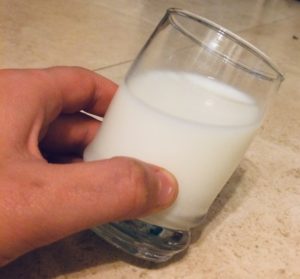
    Milk, looking decidedly not clear, due to the Tyndall effect.

    Milk is a colloid, with fat and proteins suspended in the aqueous solution. Since these are fairly evenly distributed, they usually scatter the light beam around in all directions in the Tyndall effect, making the liquid appear white and opaque.    Proteins in the milk, particularly caseins, repel each other at the normal pH of milk, which is what maintains that even distribution throughout. This is because the isoelectric point of casein, or the point at which it it is electrically neutral (uncharged) is around 4.6, but milk’s normal pH is closer to 6.6. The casein proteins therefore have a negative charge that makes them repel one another and spread out as far apart as possible.

    When pH of milk is lowered however, by adding acid, the casein proteins will lose their negative charge, and stop repelling one another. This, along with the protein degradation, or unfolding of their shape, at the lower pH, causes many of them to clump together in solid blobs we call “curds”. They will separate out to the bottom, and the liquid left behind is called the “whey”. But these proteins don’t just separate from the rest of the drink- they take compounds with them, including much of the color! The proteins bind to molecules from the drink, especially polyphenols, which are associated with bitter/astringent tastes, like tannins in black tea or red wine.

    Therefore, when you strain out the curds, you also remove compounds bound to the caseins. This “clarifies” the drink, stripping away most of its original color, and giving it a less harsh flavor. Some also claim that the addition of the remaining milk whey also gives the drinks a sliker texture, making them even more desirable.

    The Drinks

    This property of milk has been used to make clarified cocktails for many years, with the first written recipe dating all the way back to 1711. Even our favorite kite-flying founding father, Benjamin Franklin, was a fan, recording his own recipe for brandy-filled milk punch in 1763. You can still see the original document online in the Massachusetts Historical Society archives: https://www.masshist.org/database/263.

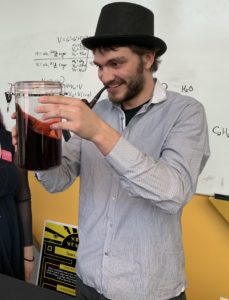
    A resident “mad scientist” with the original base, sans milk.

    In our case, we went for a non-alcoholic version, with a base of black tea, grape juice, lemon juice, and of course, milk.

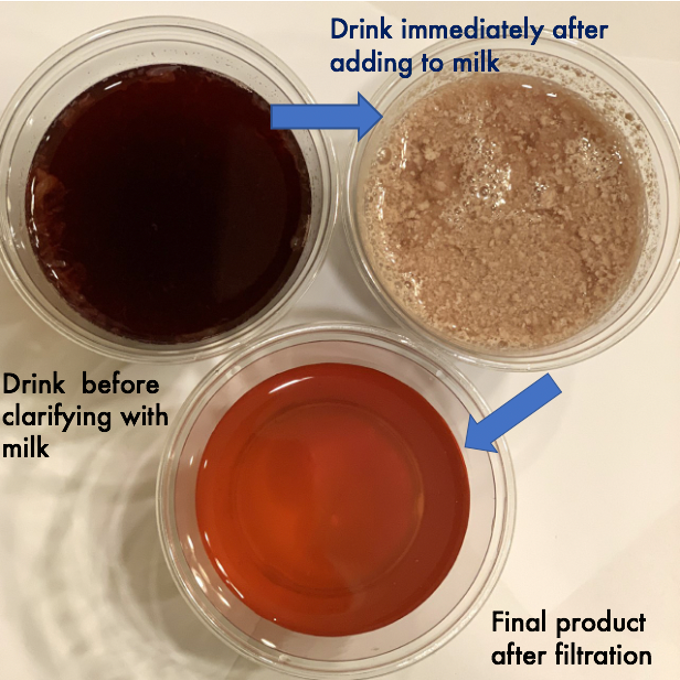
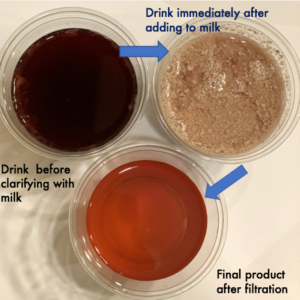
    This concoction, lovely nicknamed “clarified purple cow punch” or CPCP, was initially dark reddish-purple, and while sweet, was also tad bitter from the black tea flavoring. The addition of the juice to milk resulted in a (rather unappetizing) mixture of curdled milk and juice in a clumpy, brown…milkshake? Ick.

    At that stage, I was pretty doubtful that this was going to work. With a bit of patience, however, and several rounds of straining through cheese clothes and coffee filters, we ultimately ended up with a pale pink, ultra-sweet drink that proved pretty popular. There was no hint of milk flavoring or bitter taste, and all together, CPCP was a surprising success.

    If you want to try making clear drinks yourself, all you need is some juice mix, an acid, and milk- and a lot of time to sit and watch the straining process. Make sure to add the acid slowly to the milk, and not the other way around, to ensure the proteins have time to bind to the polyphenols before curdling, and you’ll be all set to impress with your friends with this magically clear milk.

  • Going Crazy in Quarantine? You’re Not Alone!

    Going Crazy in Quarantine? You’re Not Alone!

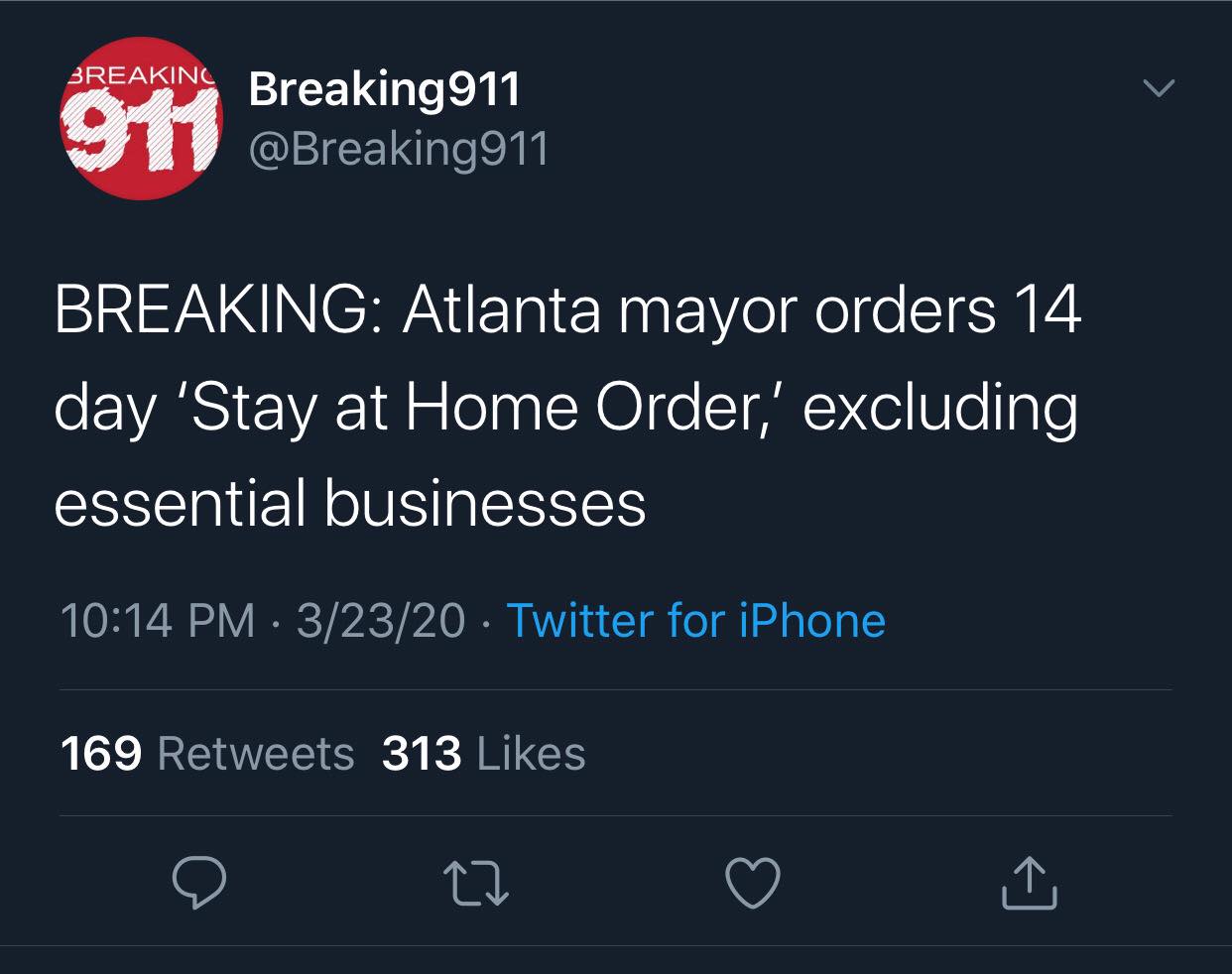
    Due to the increasing numbers of people being infected with COVID-19 in the United States, many states have ordered a mandatory shelter-in-place. Most of these orders state that people cannot leave their homes except for essential reasons, such as grocery shopping and medical trips. All non-essential businesses, such as restaurants, gyms, and shopping centers, have also been temporarily closed. It is now week 3/4 of quarantine for many people and I have noticed, both in myself and others, that we’re going a little stir-crazy. Due to the common effects I’ve noticed, such as increased anxiety and depression and decreased motivation. I decided to look into the research behind isolation on the human brain.

    In a study done in hospitals, researchers examined the impact of isolation on patient psychological well-being. It was found that isolation caused a negative impact on patient behavior and psychology; after isolation, patients scored higher for depression, anxiety, anger, fear, and loneliness. Specifically, patients scored higher for depression and anxiety on day 7 of isolation, compared to controls. This is in-line with what I’ve seen from family and friends, as the first week of quarantine seemed to have little effect, but afterwards, around week 2, did the negative effects I stated earlier appear. The researchers also found that loneliness, anger, and boredom were the most prominent emotional effects.

    Another study looked at the effects of isolation on prisoners in long-term solitary confinement and found similar results; their findings revealed that those in forced isolation for extended periods of time exhibited appetite and sleep disturbances, anxiety, panic, anger, paranoia, and loss of control. In some cases, the effects of isolation lasted even after the isolation period ended, and resulted in prisoners engaging in more violent and harmful acts.

    These negative consequences seem to make logical sense, as humans are naturally social creatures and our survival depends on social interactions every day. Out of curiosity, I also looked into the effects of isolation on other animals, such as rats, to see if there is a similarity. There indeed was: a study done on isolation of Fawn Hooded and Wistar rats found that Basal loco-motor activity and related anxiety was higher in isolated subjects of both types of rats in low light conditions. However, the study also found that Wistar rats were less anxious under low light conditions, which may imply that certain genetic predispositions may cause an animal to be more or less tolerant of isolation and its negative effects.

    Ultimately, the literature supports the idea that humans and many animals alike are not meant to be kept in isolation for an extended period of time. If you find yourself becoming restless, agitated, and feeling down as this quarantine continues, know that your response is completely normal and valid, given the circumstances. When you are experiencing a bad day, don’t be afraid to reach out to family and friends about how you’re feeling. We can and will get through this together.


    References

    Abad, C., Fearday, A., & Safdar, N. (2010). Adverse effects of isolation in hospitalised patients: a systematic review. Journal of Hospital Infection, 76(2), 97–102. doi: 10.1016/j.jhin.2010.04.027
    Hall, F. S., Huang, S., Fong, G. W., Pert, A., & Linnoila, M. (1998). Effects of isolation-rearing on locomotion, anxiety and responses to ethanol in Fawn Hooded and Wistar rats. Psychopharmacology, 139(3), 203–209. doi: 10.1007/s002130050705
    Haney, C. (2003). Mental Health Issues in Long-Term Solitary and “Supermax” Confinement. Crime & Delinquency, 49(1), 124–156. doi: 10.1177/0011128702239239
  • The mystery of the missing seed

    The mystery of the missing seed

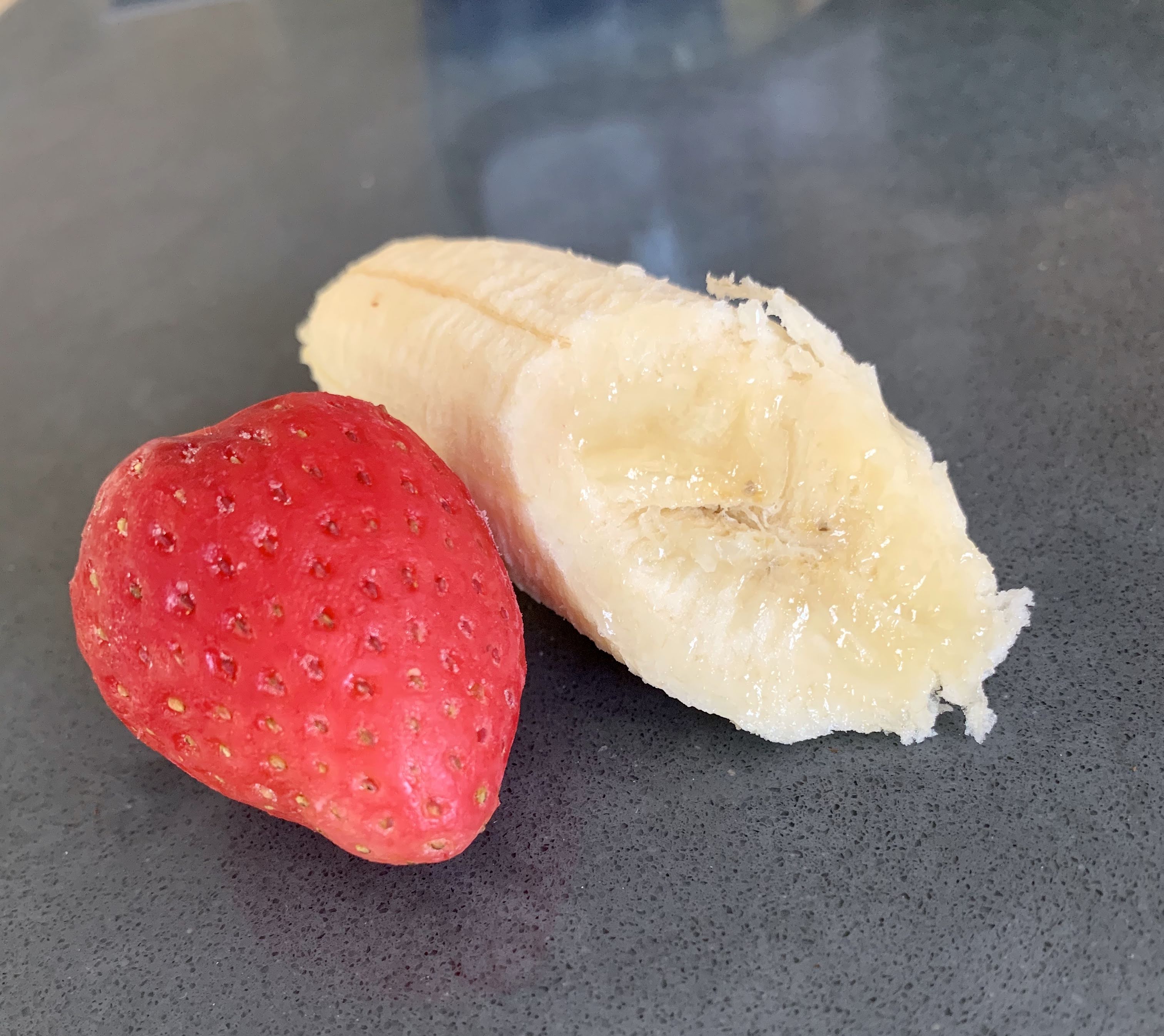
        One morning as I was chopping up the different fruit for my smoothie.  I wondered why the bananas did not have seeds but the blueberries and strawberries did.  I was wondering about that and this is what I found out that bananas originally did not look like the bananas that we see and eat today because they contained huge seeds throughout.  Bananas were originally cultivated from Southeast Asia and the western pacific. There were two wild species, Musa acuminata(AA) and Musa balbisiana(BB), native to that area that derived the bananas we know and love today. 

         The Musa acuminate(AA) and Musa balbisiana(BB) are considered diploids.  These bananas were not preferred because the large stony seeds made eating them unpleasant.  Diploid bananas had two copies of each gene-bearing chromosome. Since the diploid banana was unpleasant to eat, farmers started to breed bananas with fewer seeds to evolve them.  They used parthenocarpy and seed-sterility. Parthenocarpy is the capacity of fruits to grow and become full edible fruits without pollination. This means that the fruits would not require to have seeds inside to reproduce.  They slowly got rid of the seeds in the plant by doing a combination of inefficient fertilization, early abortion of the seed after fertilization, and sterile gametes. These processes allowed for future crops to have fewer and fewer seeds in them.  Because bananas don’t have seeds they have lost the ability to reproduce by seeds.      

         Another way humans evolved the banana fruit was by cross-breeding different types.  They would crossbreed Musa accuminata with Musa balbisiana. When the farmer selected the bananas to crossbreed they picked distant relatives so that when crossed they would have mismatched chromones which make it difficult to produce fertile ovule to pollinate.  With the crossbreeding the triploid banana was created. Triploid bananas were productive, larger, hardier, and drought-tolerant plants. This is why they were chosen over their diploid counterparts. Farmers still need diploid bananas for breeding since they are the sources of resistance genes to biotic factors.  Because of all the cross-breeding, most of the bananas grown today has very little gene variety. This means that if there was a worldwide pest outbreak, it would wipe out a majority of the bananas because of how common their genes are to one another. Because of this, the banana industry has adopted chemical treatments to control and prevent pest outbreaks.  Therefore the banana industry has adopted chemical treatments to control it. The new breed extended the range of the plant’s character and quality features. This led to the new breed of bananas being able to grow and breed in seasonally drier climate zones. This lead to the banana expanding into West Africa. Because of this migration when Europeans visitors came to West Africa they took the banana plant with them to the New World.  


    References

    Perrier, X., Bakry, F., Carreel, F., Jenny, C., Horry, J. P., Lebot, V., & Hippolyte, I. (2009). Combining biological approaches to shed light on the evolution of edible bananas. Ethnobotany Research and Applications, 7, 199-216. https://agritrop.cirad.fr/550538/1/document_550538.pdf 

    Simmonds, N. W. (1987). Classification and breeding of bananas. Banana and plantain breeding strategies, 69-73. file:///C:/Users/lelae/Downloads/PR021.pdf 

    Baker, H. G. (1972). Human influences on plant evolution. Economic Botany, 26(1), 32-43. https://www.jstor.org/stable/pdf/4253307.pdf 

    All About Bananas: Producers, Where They’re Grown & Why They Matter. (n.d.). Retrieved February 7, 2020, from https://www.bananalink.org.uk/all-about-bananas

    Creste, S., Neto, A. T., Vencovsky, R., Silva, S. D. O., & Figueira, A. (2004). Genetic diversity of Musa diploid and triploid accessions from the Brazilian banana breeding program estimated by microsatellite markers. Genetic Resources and Crop Evolution, 51(7), 723–733. Doi: 10.1023/b:gres.0000034578.37951.c4

    Castillo, C., & Fuller, D. Q. (2016). Bananas. The Oxford Handbook of the Archaeology of Diet. doi: 10.1093/oxfordhb/9780199694013.013.7

  • Hidden Figures Beyond: The First Black PhD in Chemistry, Marie Maynard Daly

    Hidden Figures Beyond: The First Black PhD in Chemistry, Marie Maynard Daly

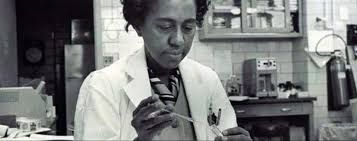
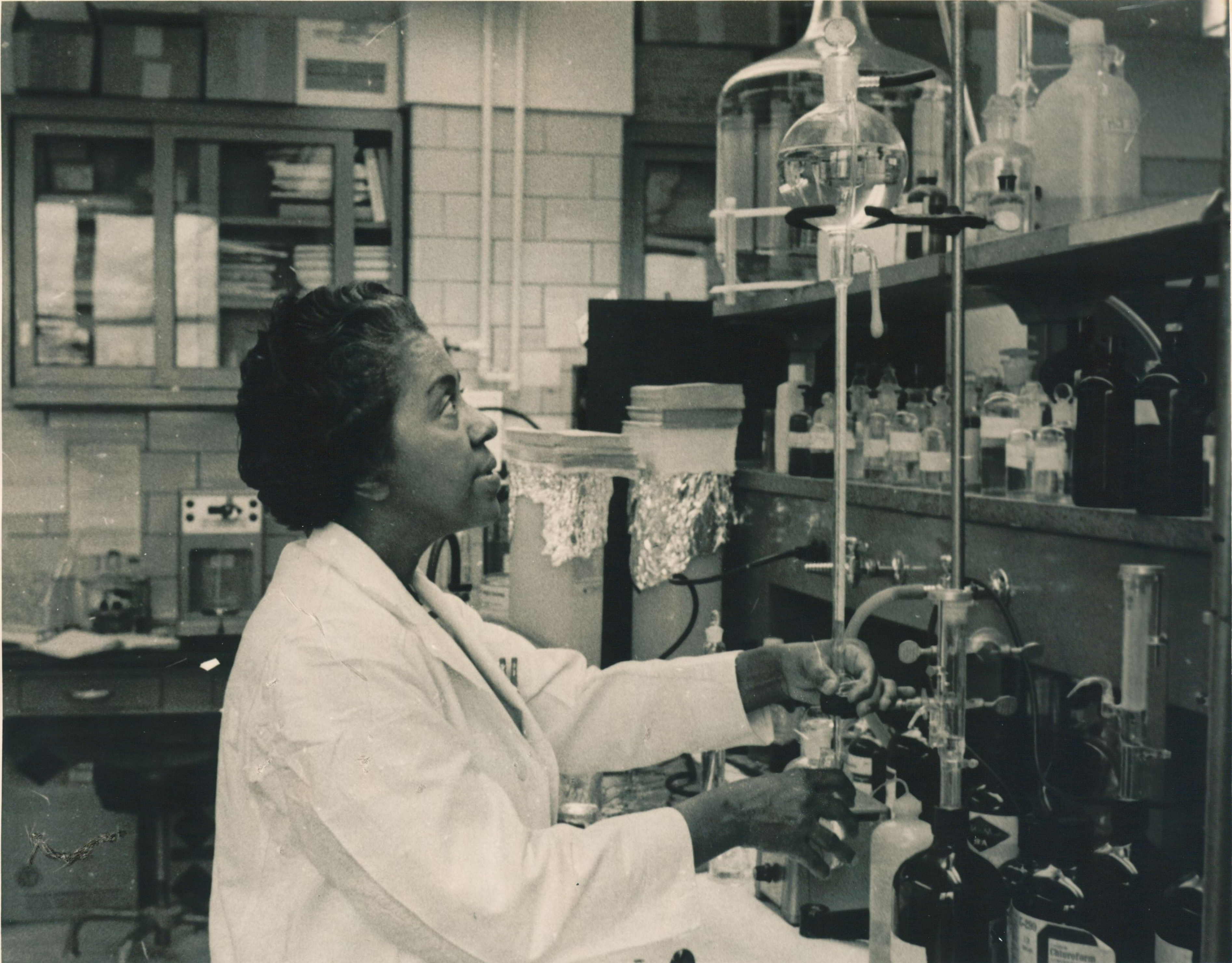
    How would you feel if you knew your work inspired hundreds, maybe even thousands of rising scientists to pursue the career that was meant for them. If you knew that some young kid would look at your research, your pictures of you working in a lab, and says “ I want to be just like them one day!”, wouldn’t you feel overjoyed, proud, or even grateful that you were able to get this far in your career? Even though there is little recorded history to how Marie Maynard Daly felt, I think these would be her feeling for being one of the most impactful African-American scientists that paved the way for many scientists from behind the scenes. Welcome to the second installment of my series, Hidden Figures Beyond, where I talk about scientists in underrepresented groups that made an important impact on the world of science. Today’s article is one I’ve been excited to write about since I joined this group. Today I’ll be talking about Marie Maynard Daly, the first African-American woman to earn a Ph.D. in chemistry. I will admit I’m biased writing this as I am an African-American chemist, but I believe that writing to spread more information about Daly because many do not know about her impact and how far it reached, from her time during her undergraduate career, to her careers after earning her doctorate, she helped pave the road for many scientists, especially underrepresented minorities.

    Marie Daly was born to Ivan C. Daly, an immigrant from the British West Indies, and Helen Page in New York City. Her family always encouraged her to pursue higher education, her biggest influences being her father and her grandparents. Her father had attended Cornell University to become a chemist, but due to financial issues, he couldn’t complete his education. Her grandparents had a large library where Daly read books about science, her favorite book being Paul de Kruif’s The Microbe Hunters, a dramatization of scientists who helped discover the microbes necessary to create vaccines for many different illnesses (“Marie M. Daly”, 2020). This book was an important influence because it celebrated the achievements of scientists for their work and how it helped people. She attended Queens College, where she graduated in 1942 in the top 2.5% of students in the school (Brown, 2012). While working on her master’s and Ph.D. in chemistry at New York University and Columbia University, respectively, she worked as a lab assistant and a chemistry tutor at Queens College. Daly’s mentor was Mary Caldwell, who helped her learn what chemicals are produced in food digestion. Her thesis was titled, A Study of the Products Formed by the Action of Pancreatic Amylase on Corn Starch, earning her Ph.D. in 1947.

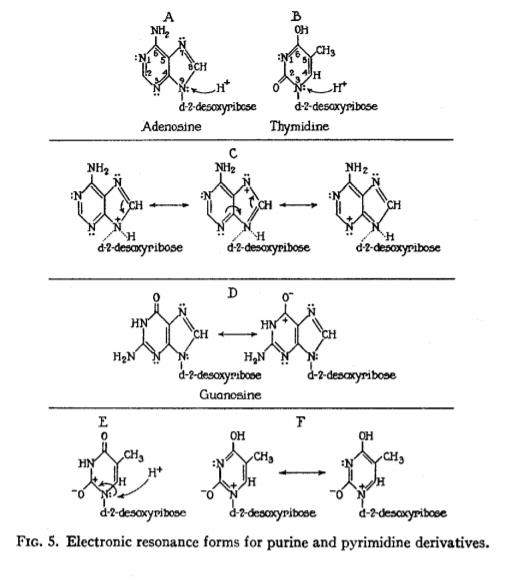
    Resonance Structures of Purine and Pyrimidine Used in Daly’s Research.

    After receiving her doctorate, she did postgraduate research in four areas, in multiple locations, including the Rockefeller Institute, Columbia University, and Albert Einstein College of Medicine. At Rockefeller Institute from 1948 to 1955, Daly worked with A.E. Miskey, studying the cell nucleus and its contents, back when its structure and function weren’t understood yet (Daly, Allfrey, & Mirsky, 1950). They analyzed the contents of nucleic acid and compared it to purine and pyrimidine molecules. In 1955, she studied arterial metabolism while being a biochemistry professor at the Albert Einstien College of Medicine. She also studied protein synthesis, the uptake of creatine in muscles (Daly & Seifter, 2004), and the impact of hypertension on the circulatory system. Some other impressive pursuits to mention include being funded by the American Cancer Association to study the cell nucleus, researching and creating an animal development model to evaluate the effects of cigarette smoking on lung structure to identify what parts of the lungs and neck are impacted, especially in chronic smoking (Park, Kikkawa, Goldring, Daly, et. al, 1977). For six years (1958 to 1963), she served as an investigator for the American Heart Association, working specifically on stroke research. She attended a conference where she and 30 other minority women discussed the challenges that they face in STEM (Science, Technology, Engineering, and Math) fields, leading to a report titled The Double Bind: The Price of Being a Minority Woman in Science (Malcom, Hall, & Brown, 1976).
    Most importantly, she loved meeting minority medical students, being a mentor to them or encouraging them to pursue the careers of their dreams. She was inspired by her father’s journey to pursue an education she started a scholarship to Queen’s College for African-American chemists and physicists in honor of her father. I hope after reading this, you understand why writing this felt so important to me. As an African-American chemist, reading and learning about scientists like Marie Maynard Daly have inspired me to not just be the best chemist I can be, but they have inspired me to be a successful scientist that can inspire others. The idea of being the catalyst that makes a kid think, “Hey, maybe I can do what he or she’s doing when I grow up”, honestly makes me more happy and excited than anything else in this world. Thank for reading this, and let me know what you think.

    References:

    Allfrey, V et al. “Synthesis of protein in the pancreas. II. The role of ribonucleoprotein in protein synthesis.” The Journal of general physiology vol. 37,2 (1953): 157-75. DOI:10.1085/jgp.37.2.157

    Biography.com Editors. (2020, January 15). Marie M. Daly. Retrieved February 6, 2020, from https://www.biography.com/scientist/marie-m-daly

    Brown, J. E. (2012). African American women chemists. New York: Oxford University Press.

    Daly, M. M., Allfrey, V. G., & Mirsky, A. E. (1950). Purine And Pyrimidine Contents Of Some Desoxypentose Nucleic Acids. The Journal of General Physiology, 33(5), 497–510. DOI: 10.1085/jgp.33.5.497

    Daly, M. M., & Seifter, S. (2004, October 24). Uptake of creatine by cultured cells. Retrieved from https://doi.org/10.1016/0003-9861(80)90182-4

    Malcom, S. M., Hall, P. Q., & Brown, J. W. (1976). The Double Bind: The Price of Being a Minority Woman in Science. Washington, DC: American Association for the Advancement of Science.

    Park, S. S., Kikkawa, Y., Goldring, I. P., Daly, M. M., Zelefsky, M., Shim, C., . . . Morita, T. (1977). An Animal Model of Cigarette Smoking in Beagle Dogs. American Review of Respiratory Disease, 115(6), 971-979. DOI:10.1164/arrd.1977.115.6.971