Category: today i learned (til)

health, fitness, medicine, environment, ecology, how to learn tricky topics in science and math, new discoveries, news, current events

  • Electric Vehicles: Will EVs make our climate better?

    Electric Vehicles: Will EVs make our climate better?

    Electric vehicles have gained momentum in the recent years due to a considerable percentage of personal vehicle users as well as freight companies that converted from using internal combustion engine vehicles to some type of electric vehicles. Electric vehicles by definition, have at least some electric powerplant that powers the engine particularly or completely by one or more electric motors. This article forces on the environmental impacts of electric vehicles that entirely depend on batteries for storage and delivering  electric power for the motors.

    Plug-in hybrid electric vehicles (PHEVs) are being developed for a decade or so for mass production by the automotive industry by some major automakers. However, the rise of Tesla, the most valued automaker at the moment during the time of writing this article,  have pushed the limit of how an average car user can adopt completely to an all electric car and thereby save the environment from massive carbon footprint resulting from fossil fuels. PHEVs do not use any type of fuel other than battery packs that store and deliver energy. PHEVs have been touted for their potential to reduce the transportation system’s petroleum dependence and greenhouse gas emissions by using off-peak excess electric generation capacity and increasing the vehicle’s energy efficiency. As such, PHEVs are in a massive boom as several other companies have emerged with large financial backings that have pledged to produce EVs to save the environment and to ensure a zero emission transportation system in the future. The burning question is of course: do EVs actually have a significant impact in the improvement of environment?

    The U.S. Department of Energy’s has a Vehicle Technology Program that examines the precompetitive, high-risk research needed to develop the component and infrastructure technologies necessary to enable a full range of affordable cars and light trucks that are expected to reduce the U.S. dependence on imported oil and minimize harmful vehicle emissions, without sacrificing freedom of mobility and freedom of vehicle choice [1]. Although PHEVs are similar to the regular hybrid electric vehicles (HEVs), the battery can be charged using electricity from the grid by being recharged through a wall outlet. In terms of the overall environmental impact, PHEVs not only have direct impact as a result of not burning traditional fuels, but also the battery chemistry, the amount of grid electricity that can be stored in the battery, recycling ability of the raw materials, and the ability to give unused “power back to the grid” could significantly impact the environment. 

    Below is a schematic showing the life-cycle for a typical EV from production to termination of usage. An EV, by its nature of production type as well as type of usage, typically have less carbon footprint in each lifecycle phase compared to that of a fossil fuel burning vehicle.
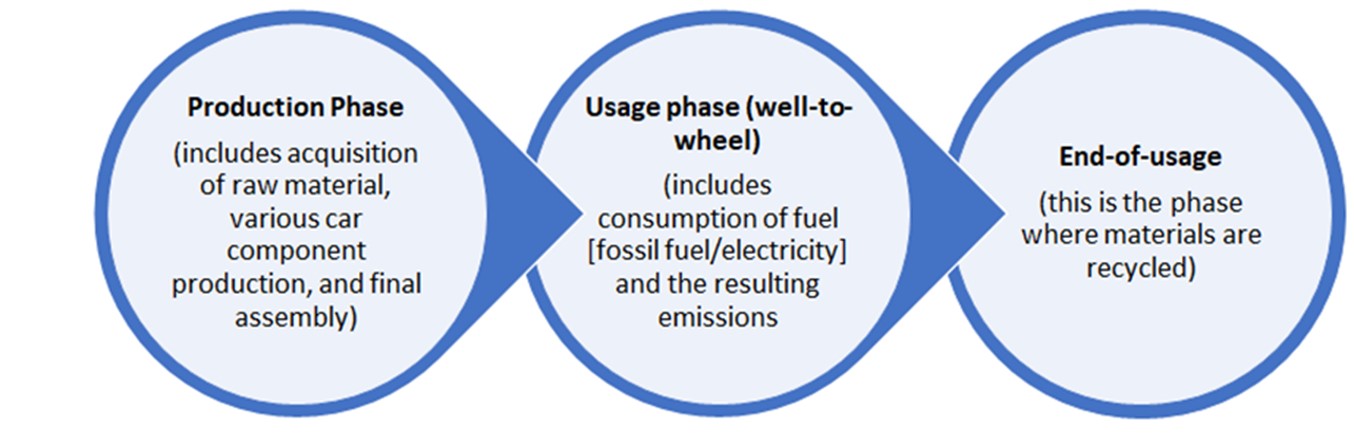
    It is important to note that while PHEVs offer the potential for significant reduction in the usage of fossil fuel and resulting emissions of greenhouse gases, the actual benefit calculations need to take into account the upstream energy and emissions penalties that are associated with the electricity generation needed to power the charging systems and the load on the grid. Few studies have indeed taken all of these factors into account for certain vehicles that offer a choice of electric or internal combustion engine options for the same model. A study on the well known Volkswagen Golf model showed that, using the latest EU electricity mix, the current Golf TDI (Diesel) emits 140g CO2/km on average over its entire life cycle, while the e-Golf1 reaches 119g CO2/km. Based on the report, most of the emissions occur during the use phase of the internal combustion engine vehicle. Here the diesel reaches 111g CO2/km while a corresponding vehicle with electric drive emits only 62g CO2/km during the same phase [2].

    Key findings about EV and carbon emission

    1. Several european countries where EVs are prevalent have significantly more carbon-intensive power generation – due to reliance on coal plants – EVs still perform better there on a lifecycle basis, which includes the emissions in manufacturing the battery and vehicle. Based on the Polish average, an EV emits 25% less CO2 over its lifetime. In Sweden, which has one of the cleanest energy mixes in the EU, an EV emits 85% less than a diesel car [3]. The figure below shows a summary of the study [3,4].
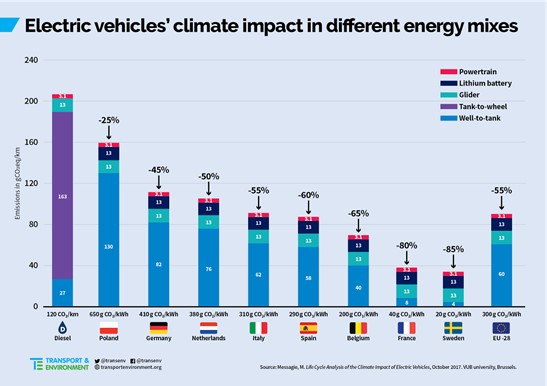
          EV Climate impact for different Energy Mixes (reproduced from Transport and Environment) 
    2. Replacing a traditional ride-hailing car with an electric vehicle would deliver three times the environmental benefits and emission reductions, according to a new study. The finding comes as a new cost analysis shows that e-vehicles are cheaper to run for Uber drivers in many European cities, and Uber in Portugal says it will only take on new drivers if they have an EV.
    3. Both Uber and Lyft have made recent statements expressing their intention to move towards a totally electric fleet. But now, for the first time, a study has looked at what the environmental impact might be. The study by University of California’s transportation institute, looked at 400,000 journeys made in a battery EV by 1,000 ride-hailing drivers, and compared the impact with 118,668 journeys made in a petrol or diesel car, as well as over 15,000 in a plug-in hybrid EV [5].
    4. The biggest finding is that the potential environmental and emission reduction benefits of replacing a ride-hailing traditional car with an EV are ‘approximately three times higher compared with those of regular vehicle usage in California’, and on emissions alone this was ‘the most pessimistic scenario’. This is because vehicles owned by Uber, Lyft and other ride-hailing drivers are driven more than if they were only used for private use (about 305km on average per day compared to 48km) [5].
    5. Below is a chart based on data from EPA in the US for greenhouse gas emissions by different sectors [9] . Based on the data, it can be seen that transportation sector contributes to a large amount of green house emission. It will be interesting to see the insights about how EVs and PHEVs come into play.

    Share of Greenhouse Gas Emission by Sector

    How to calculate carbon footprint:

    Carbon offsetting funds solutions to reducing carbon emissions now. Frequently carbon offsetting reduces emissions much faster than you can as an individual/single company. Carbon offsetting projects help to combat global climate change as well as caring for local communities. In many instances providing much needed employment, health improvement, biodiversity,  reforestation and broad social benefits to impoverished communities.

    Calculator:

    This free to use online carbon calculator tool is independently audited on an annual basis as part of the Quality Assurance Standard (QAS) for Carbon Offsetting. 

    https://www.carbonfootprint.com/calculator.aspx

    Reference:

      1. Elgowainy, A., Burnham, A., Wang, M., Molburg, J., & Rousseau, A. (2009). Well-to-wheels energy use and greenhouse gas emissions of plug-in hybrid electric vehicles. SAE International Journal of Fuels and Lubricants, 2(1), 627-644.
      2. https://www.lowcvp.org.uk/news,vw-study-shows-co2-benefits-of-evs-over-whole-lifecycle_3946.htm (accessed October 2020)
      3. https://www.transportenvironment.org/press/electric-cars-emit-less-co2-over-their-lifetime-diesels-even-when-powered-dirtiest-electricity (Accessed September 2020)
      4. Messagie, M. (2014). Life cycle analysis of the climate impact of electric vehicles. Journal of Life Cycle Assessment, 2014, 14.
      5. Jenn, A. (2020). Emissions benefits of electric vehicles in Uber and Lyft ride-hailing services. Nature Energy, 5(7), 520-525.
      6. Noori, M., Gardner, S., & Tatari, O. (2015). Electric vehicle cost, emissions, and water footprint in the United States: development of a regional optimization model. Energy, 89, 610-625.
      7. Data from US Dept of energy: https://afdc.energy.gov/data/10347  (annual energy usage impact) (Accessed September 2020)
      8. https://afdc.energy.gov/data/10301  (US HEV sales by model) (Accessed September 2020)
      9. https://afdc.energy.gov/data/10802  (Green house gas emission by economic sector) (Accessed September 2020)
  • How much do you know about RSA Cryptography?

    How much do you know about RSA Cryptography?

    Whether you’re browsing TikTok, Instagram, or scrolling through random Wikipedia articles, do you ever wonder if your internet browsing is secure? Probably not – but that’s okay! The world can peacefully rely on the wonders of mathematics to keep their data and internet browsing safe from peeking eyes. In fact, the entire safety of the internet primarily relies on a single mathematical algorithm to secure it all, ranging from state secrets in secret government databases – which are probably all about UFOs – to your grandmother’s email account. This algorithm was first developed in 1977; it’s so powerful that it still remains the primary public cryptographic algorithm today! It’s called the Rivest-Shamir-Adleman (RSA) cryptosystem.

    Background

    Developed in 1977 from a paper released by Ron Rivest, Adi Shamir, and Leonard Adleman, while they were at the Massachusetts Institute of Technology, RSA quickly became adapted to securing digital communication because of its robust mathematical properties that makes it virtually impossible to break.

    Interestingly, the actual mathematics behind the RSA cryptosystem is rather simple. It’s based on the idea of prime factorization – it’s really easy to find the prime factors for a small number but becomes much harder as the numbers grow. For example, if I ask you to give me the two prime factors that multiply together to give the number 15, you would probably answer really quickly with “3 and 5”. Easy, right? Now, without a calculator, what if I asked you to give me the prime factorization for the number 414,863? You would answer with “577 and 719” right away, right? Unless you’re a super math genius or a human calculator, probably not.

    Implementation Idea

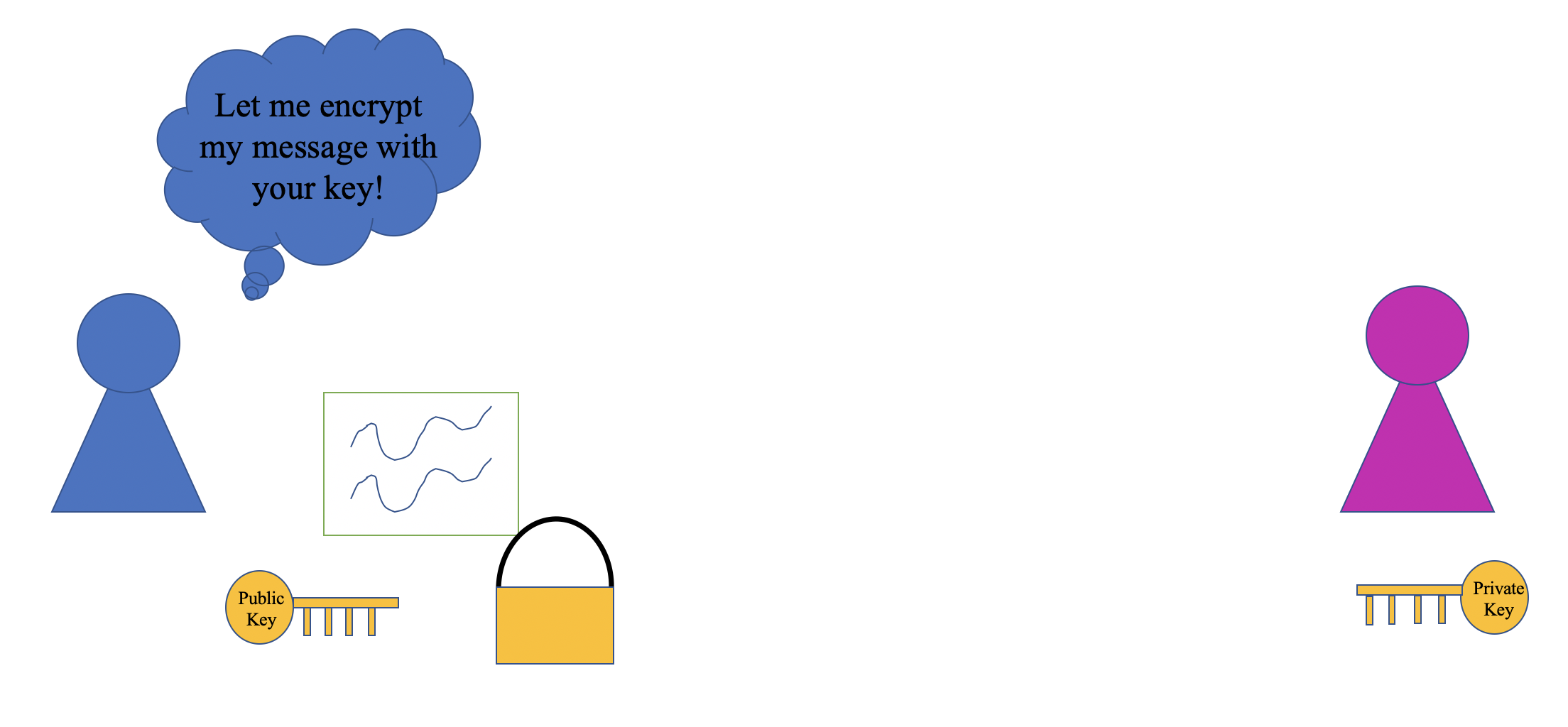
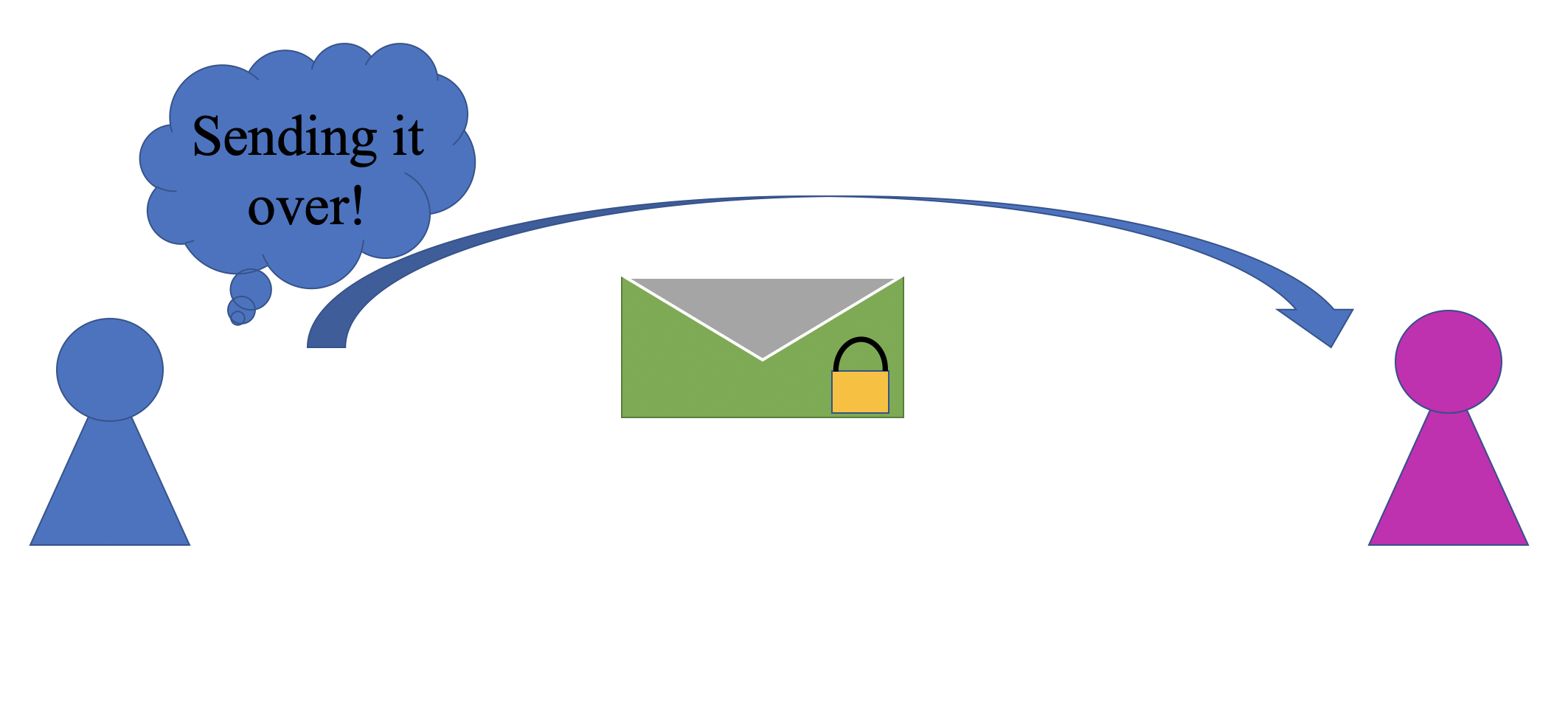
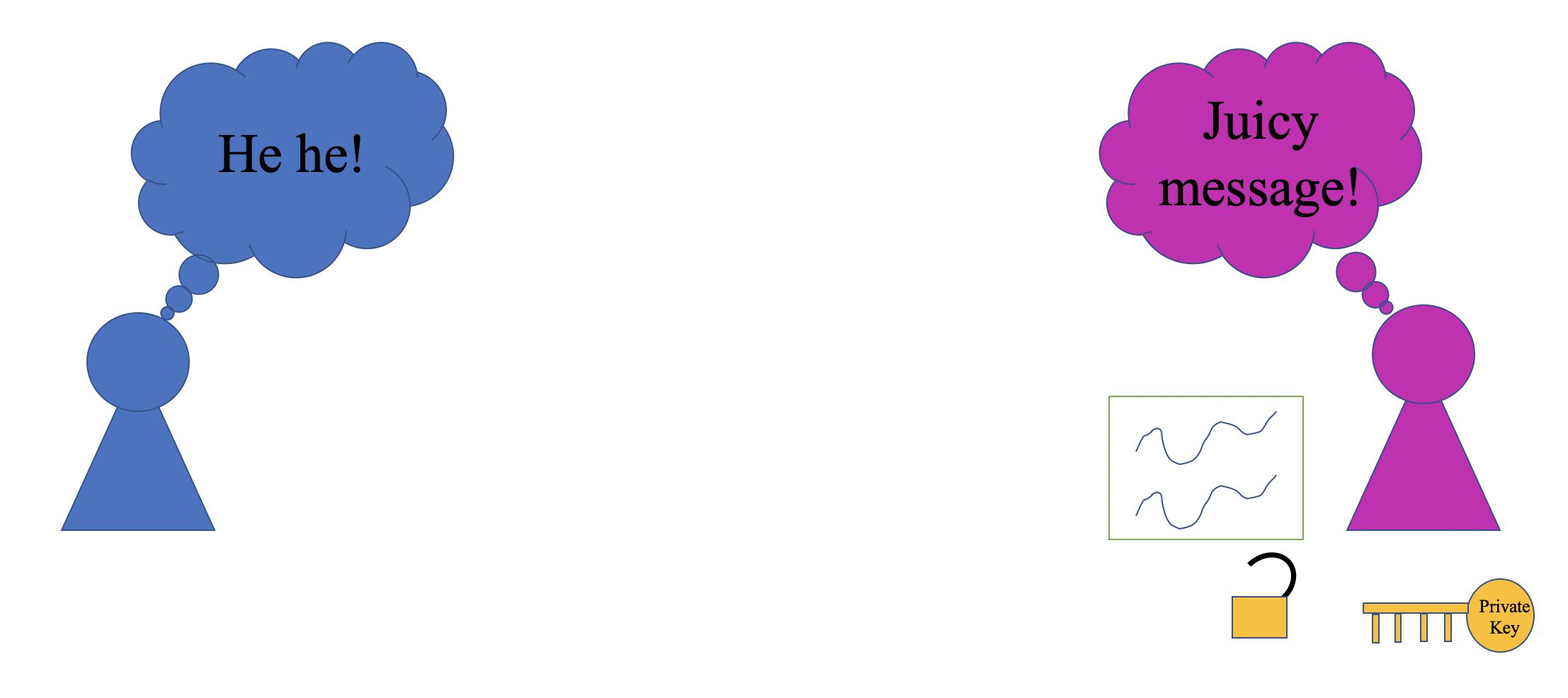
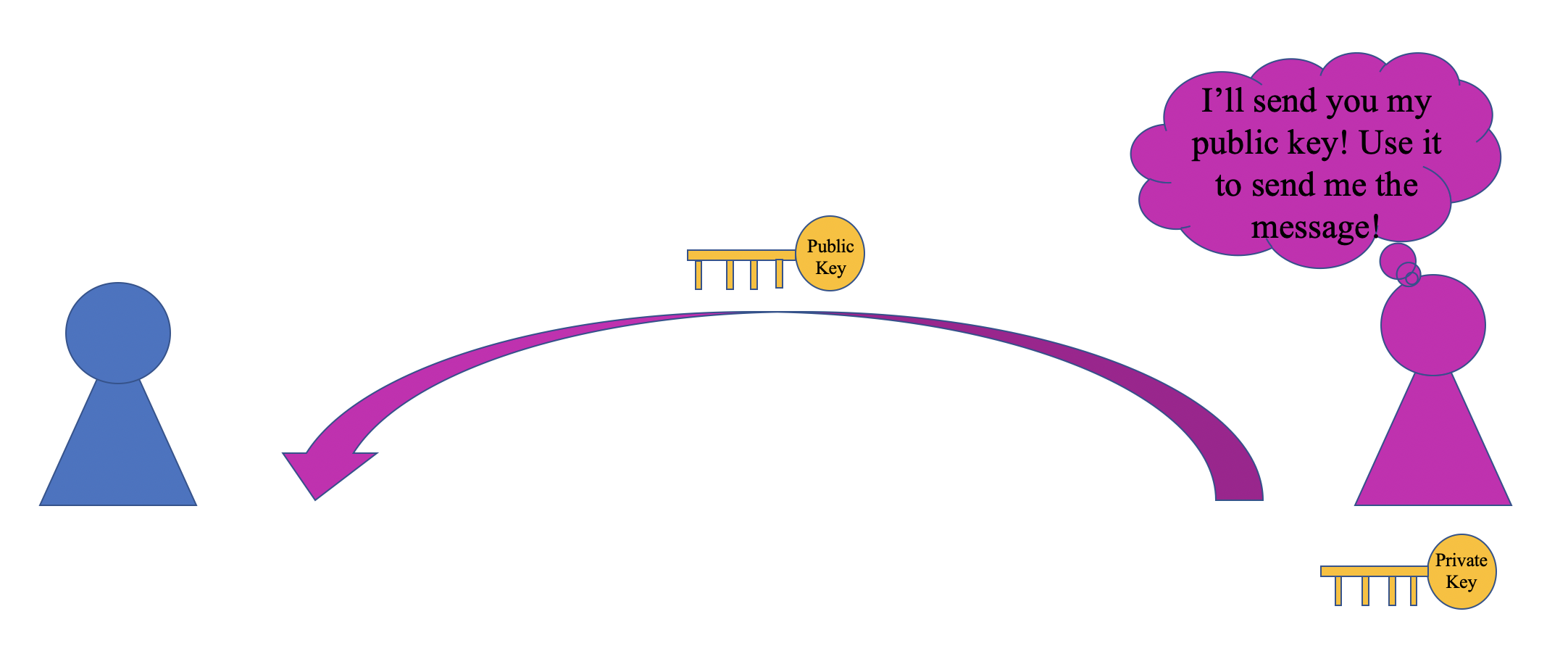
    The actual RSA algorithm is used in public-key cryptography, which is the process that secures data over the internet. It’s a complicated process but the basic idea is this: if Alice wants to send Bob a secret gift, Bob can send her a padlock that only he has the key to. Then, Alice can put her gift in a box and lock it with Bob’s padlock. Then, when Alice sends her package, if anyone tries to steal the gift, they can’t because only Bob has the key. Once Bob receives his gift, all he has to do is unlock the padlock that he gave to Alice. The padlock that Bob gave to Alice is called Bob’s public key, while the key that only Bob has is his private key.

    In the real world, if my friend wants to send me a message, I will give them my public key (which is basically just a really large number). They can then use my public key to encrypt, or hide, the message. Then, in transit, the message is completely safe because I’m the only person that holds the key that decrypts, or unlocks, the message. The only tricky part about the process is making keys that are not able to be broken.

    The Magic Behind It All

    The RSA algorithm is responsible for creating the public and private keys. To create the actual keys, RSA relies on some basic math: modular arithmetic, Euler’s Theorem, and prime numbers.

    To create my public key that I can give to anyone who wants to send me secrets, I do two things:

    • First, I will choose two very large prime numbers, p and q. The multiplication of these two numbers, x = pq, is the first half of the key. The key take-away in this first portion is that the longer that x is, the more secure your key will be. As of 2020 practices, a length of 4096 bits (or characters) is recommended!
    • Then, I calculate another number y by multiplying from the following: y = (p-1)(q-1). From here, I choose a number that is relatively prime to y and call it e. If you don’t recall what it means for two numbers to be relatively prime, it just means that two numbers have a greatest common divisor of 1. In practice, e is typically chosen to be 65,537 – e then becomes the other half of my public key.

    Now, to create my private key that no one else knows about, I use modular arithmetic. If you’re not familiar with modular arithmetic, think of it as the remainder produced after dividing a small number into a big number – for example, 10 modulo 3 = 1 because 3*3 is 9, which leaves us with 1 left over. To create my private key, I calculate the modular inverse of the second half of my public key with the first half of my public key, e modulo x. That’s it! I have my private key! Now I can share my public key with friends, and they can share juicy, secret memes with me without the fear of someone else seeing!

    Convinced?

    What makes RSA so robust and secure is that, even as computers gain more processing power and become faster, all we have to do is increase the length of the key! Think about how fast and powerful our current computers are: our computers are solving problems in astrophysics, mathematics, and are beginning to become ubiquitous in controlling cars. Even with how advanced technology currently is, if someone uses a 4096-bit RSA key, it would take tens of thousands of years for computer to break the code! And even when that’s broken, all we have to do is increase the number of bits in the RSA key and it’s secure for another few thousand years or so!

    If you’re not convinced by how amazing (and even basic) cryptography is, then I don’t think you’re someone who can be easily impressed!

    The Process in Pictures

    If you prefer pictures, here is a simple illustration of the process above:

    Step 1:

    Step 2:

    Step 3:

    Step 4:

    Step 5:

    Step 6:

  • Carbonation and Coca-Cola

    Carbonation and Coca-Cola

    “What is the difference?” I asked the person across from me after they tasted the flat Coca Cola and the carbonated Coca-Cola. While it took them a while to get to their answers, they all followed the lines of “The flat one tastes duller and sweeter, and the bubbly one hits all around your mouth.”
    At our Science Speakeasy Event, I presented a classic name brand: Coca-Cola alongside Robert Kriegel. With my knowledge of carbonation, I believed I had it all thought out, however during this event, I learned as much as I was taught. I do wish I could provide the recipe to Coca-Cola’s iconic taste for more insight, however, most are aware that the recipe is one of the biggest secrets known to man. On their website, it lists their ingredients as carbonated water, high fructose corn syrup, caramel color, phosphoric acid, natural flavors, and caffeine. While the corn syrup, caramel color, flavors, and caffeine make up a large part of what makes coca-cola iconic. I would like to focus on the process of carbonation and why phosphoric acid is involved.

    The process of Carbonation seemed quite simple on the surface, but there was so much more to explain it. I learned from Robert that carbonation was made possible due to the high rates of solubility in carbon and that to carbonate a beverage you had to get specifics correct on the matters or temperature, pressure, and particle size. While you can dissolve other gasses in water, Carbon Dioxide is the best.
    Carbon Dioxide also adds a bit of acidity, lowering the Ph Levels of the soda which gives it that tangy taste when carbonated. Also, it is part of the reason flat Coke tastes so sweet. But the main contributor to the acidity was through phosphoric acidity in the soda. The all-around your throat feeling was due to the sensation of the carbonated bubbles popping and exploding the flavored liquid all over your mouth.
    However, with all of this fun science, Kriegel informed me that the CO2 concentration increases in the environment due to fossil fuel burning is increasing the carbon levels in the ocean causing it to have a small amount of carbonation. He warned me that if the carbon levels continue to increase it would cause harm to animals living in the water.

    Chandrashekar, J., Yarmolinsky, D., Buchholtz, L. von, Oka, Y., Sly, W., Ryba, N. J. P., & Zuker, C. S. (2009, October 16). The Taste of Carbonation. Retrieved from https://science.sciencemag.org/content/326/5951/443?casa_token=0YT4_NgRi7EAAAAA:x7JI6SBLoDbQSOaxFCHj4O5BamvhcFft5U38kTaFDTgOkmj4t9i_Gp4n4uhZN89eiG-C5BIF2dPqUg
    The Editors of Encyclopaedia Britannica. (2020, February 20). Carbon dioxide. Retrieved from https://www.britannica.com/science/carbon-dioxide

  • Origami: Art or Science

    Origami: Art or Science

    “OrIgami Engineering is a thing?

    – JOshua Suber (ME)

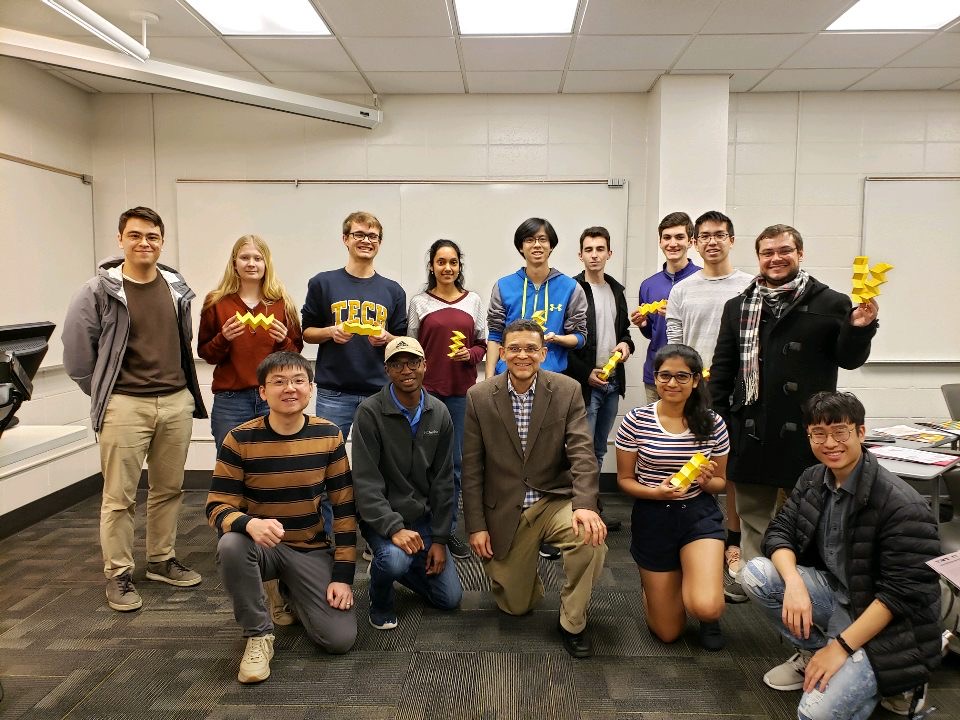
    This semester I had the opportunity to join and participating in the Origami Club at the Georgia Institute of Technology. Each Friday, students from all majors, come together and attempt a variety of origami challenges. Our faculty advisor, Glaucio H. Paulino, teaches CEE 4803 Origami Engineering, and would often give insight on various real-world applications of origami. The Origami Engineering course introduces students to the history, art, and applications of origami, and attracts students from every major, much like the club.

    What is origami?

    “Origami has shown To be one of the most natural and effective techniques to teach math?

    – Professor Paulino

    Modern origami is characterized by “open access patterns and sequences” created by a diverse background of individuals. Many origami techniques are even copyrighted and considered intellectual property.

    Although many view Origami as an artful past time, our modern understanding of the craft as evolved past mere paper folding. Our knowledge of origami basis in geometry and mathematics has allowed many researchers to find new and unique applications within complex mechanical and programmable materials. Origami has become the solution to many technological problems. It is truly amazing, when a craft can serve as both a calming afternoon activity, and the foundation to an evolving technological approach.

    Origami Rose


    Origami Engineering?

    Much of the recent development in origami research is supported by Professor Pualino. While serving as a program director for the National Science Foundation he introduced the idea of origami engineering as a topic for the NSF’s Emerging Frontiers in Research and Innovation. Professor Paulino’s research focuses on the advancements of material science with the goal to create a positive influence in the world.

    A great example of origami in practice is the Miura-Ori structure. The Miura-Ori is one of the most famous patterns in origami engineering, and is one of the technique Professor Paulino introduced to Origami Club members. It is a compact tube structure that is easily able to transported, combined, and layered. It helps demonstrate many of the key components of origami, while also being easy to fold.

    Professor Paulino, along with Tomohiro Tachi and Evgueni Filipov, have even developed a unique new origami tube structure based on the Miura-Ori pattern.

    Miura-Ori

    I’ve learned so much during my short time at orgami club, and I wanted to share it with you! Hopefully you see the art of origami is a extremely versatile medium. I’m passionate about the intersections of art andtechnology, and the innovations this combination can bring to the world. This also proves there there is always something in STEM that you can find that could interest you!

    Origami Club group picture.


    Sources

    (n.d.). Retrieved from https://engineering.nd.edu/spotlights/1BusEng1st20004000TurnerApplicationPackageComplete.pdf

    BETWEEN THE FOLDS | History of Origami | Independent Lens. (n.d.). Retrieved from https://www.pbs.org/independentlens/between-the-folds/history.html

    Purby , T. (n.d.). The Class, The Art, The Future .


  • That’s The Tea

    That’s The Tea


    Recently, our STEMComm class put on a Sober Science Speakeasy event for Atlanta Science Festival, where our classmates explored the science of drinks. One of our drinks was the science behind the tastes and textures of milk tea boba, which I have depicted in a series of illustrations.



    Milk tea is typically made with green tea or black tea. 

    Teas contain polyphenols, which is the chemical responsible for the bitterness of tea.
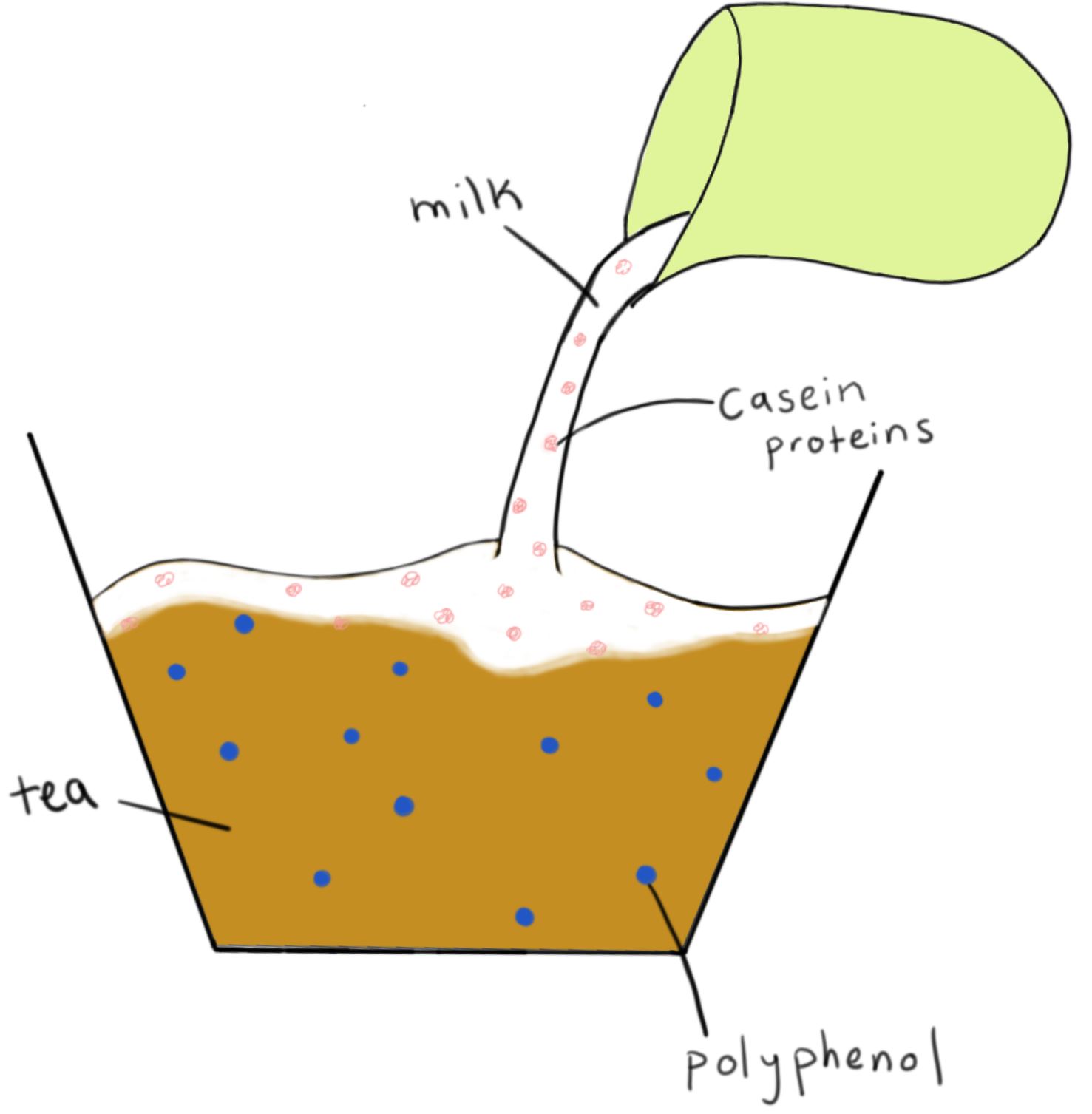
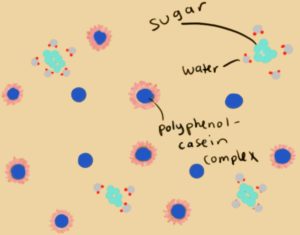


    Milk contains casein proteins. When milk is mixed with tea, these proteins form a complex in which the polyphenol is encapsulated in the protein, decreasing the bitter taste.


    Added sugars contribute further to the sweetness of the tea as they are easily absorbed in the mouth. These sugars also bond with water molecules to leave room for the casein proteins to form complexes with the polyphenols.

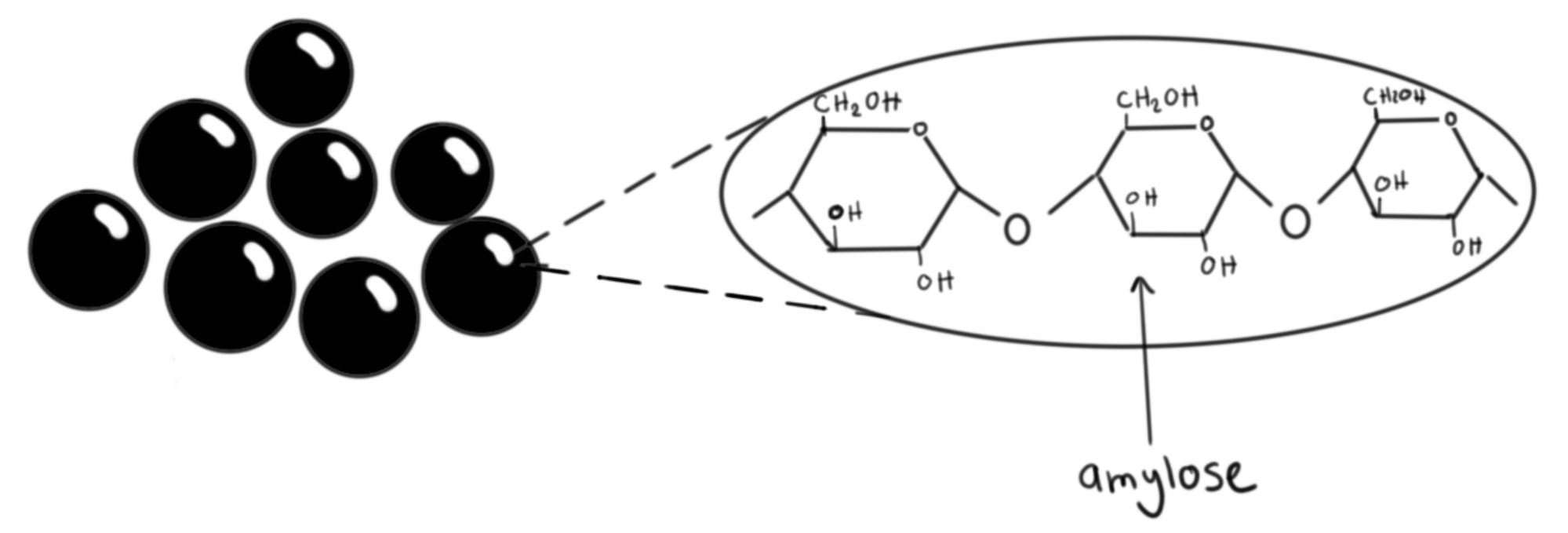
    The tapioca pearls are made of amylose and amylopectin (linear and branched starch molecules). When the boba is boiled, they expand, and the glycosidic linkages (the bonds that join these molecules) create a network that is responsible for the chewy texture of the boba.

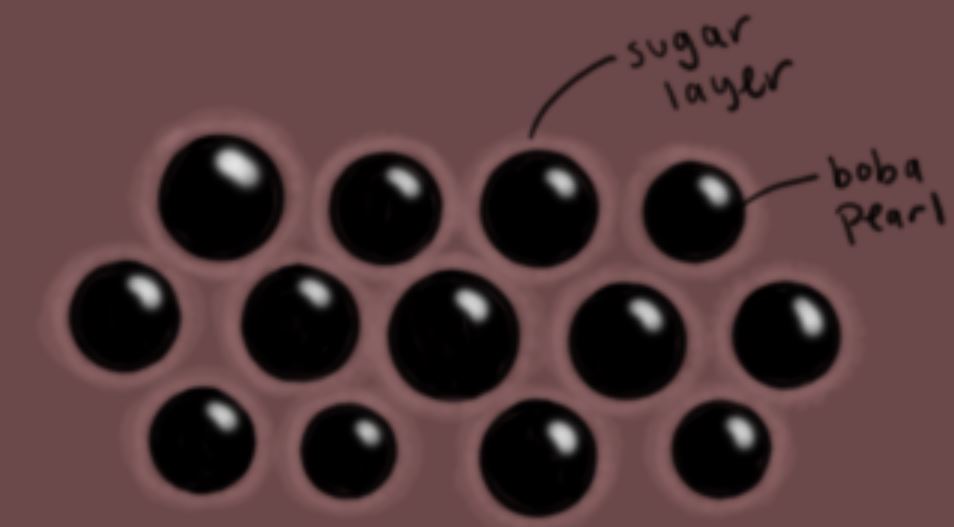
    After the boba is cooked, it must be served within a few hours, or else it will harden up again. We place the boba into a solution of 1 part brown sugar, 1 part water. The sugar creates a protective layer around the boba that prolongs the hardening.

    If you want to make your own boba at home, you can easily buy your own bags of dehydrated tapioca pearls on amazon or at a local asian market. Stir them into some black tea and milk with added sugar or other flavors, and voila, you have your own bubble tea!

    Sources:

    Dutfield, S. (2019). The science behind bubble tea. Retrieved 20 April 2020, from https://www.howitworksdaily.com/the-science-behind-bubble-tea/

    Bubble Tea Infographic. Retrieved 20 April 2020, from https://www.clayton.edu/chemistry-physics/News/Infographic-bubble_tea/

  • Drinks and Science: Science Speakeasy

    Drinks and Science: Science Speakeasy

    Design credit: Nadia

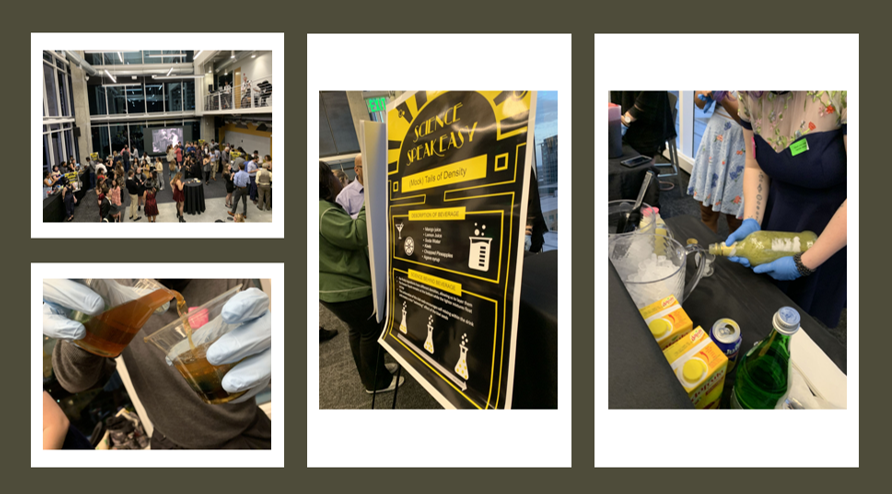
    It was the evening of March 12 and the STEMcomm VIP team were in preparation mode for the Science Speakeasy. The Science Speakeasy was an event that was focused on eight different beverages where the science behind each beverage was explained to our fellow guests. Our event took place in the newly built Coda building of the Georgia Tech community. We were all eager to hold this event and have been waiting since 2019. It was an amazing experience to host before Spring break and eventually before we had to move to online courses. My group members consisted of Dr. Greco and Dr. Mendelson and they helped me make Xocolatl. I would like to share the recipe to those interested and hope you like it. 

    Xocolatl

    • Ingredients
      • ⅛ cup Cocoa powder
      • 1 Green chile pepper
      • 2 ¾ cups Water
      • 1 tsp Vanilla extract
      • honey/sugar (for sweetness)
      • cinnamon /cayenne pepper (extra spice)
    • Recipe (summary)
      • ¾ cup of water and sliced green chile pepper (including the seeds) should be brought to a boil → 5-10 minutes
      • After boiled, strain the water to remove the chile pepper and the seeds and put water back in pot
      • Add the rest of the water and bring it to a boil.
      • While it is heating up, whisk the vanilla extract in.
      • Once boiling, add the cocoa powder and keep whisking → about 5 minutes 
      • Froth should be appearing (might be small amount)

    *All done: if bitter add necessary amount of honey or sugar 

    *want more spice, add necessary amount of cinnamon and/or cayenne pepper


    This event was an amazing way to close out the shortened spring semester. Being involved in hosting the Sober Science Speakeasy for the Atlanta Science Festival and the Georgia Tech community, was a night to remember. With the help of our faculty advisors: Dr. Leavey, Dr. Evans. Dr. Greco and Dr. Mendelson and our classmates, this event was a success. Shout-out to Nadia and the band, you guys sounded great. Feel free to try out the recipe and hope to see everyone soon. Stay safe.

    • Some pictures from the event

  • The Physics Behind Sonic the Hedgehog

    The Physics Behind Sonic the Hedgehog

    I remember the first time I played a Sonic the Hedgehog game. I was 8 years-old and had just bought Sonic Unleashed with my Toys R Us gift card (what a throwback). Coming home, I slapped on the Wii and was thrusted alongside the blue blur himself. As he dashed through levels, I was amazed at his speed and agility, but what really drew my attention was when he ran through one of his signature loops. By all accounts of my 8 year-old logic, that should not have been possible. Sonic should have plummeted straight to the ground at the top of the loop, yet there he was coasting through it.

    So what gives? We all know of gravity, the force of attraction, and how Earth’s gravitational pull keeps us on the surface and gives us weight. Why does it seem like Sonic is ignoring gravity through his loops? 

    The answer to that lies in another force Sonic experiences as he travels through loops, a force called the centripetal force.


    How Does Sonic Not Fall Out of a Loop?

    Even if you haven’t taken a physics class in a very long time, I’m sure you’ve at least heard of Newton and his iconic three laws of motion, especially the first one about how an object’s direction changes due to forces acting on it. In other words, by Newton’s first law, objects stay moving in one direction until another force acts on them to change their direction, which in technical terms is called inertia. This is what’s happening to Sonic. Sonic enters the loop in a straight path, and as he goes farther into it, his direction begins to change (i.e. he’s moving along the track of the loop now). A force had to have been applied to Sonic to change his direction, this altering force being the normal force. Let’s take a closer look. 

    Before Sonic dashes into the loop he builds up momentum, which is basically the energy that he’s been accumulating that keeps him moving in the same direction. Thus, as Sonic enters the loop, this momentum stays with him and the inertia causes him to continue forward. However, because the loop is curved, Sonic experiences a change in the direction of the normal force being applied to his feet causing him to also change direction. This normal force is the perpendicular component of the contact force that any object experiences when placed against the surface of another object. No matter where Sonic is in the loop, the normal force will face perpendicular from the track and point towards the center of the loop which leads to the circular path that he follows. This force is the centripetal force, and it allows our blue friend to stay on the track because of the enormous momentum that he built up before entering the loop. From Sonic’s frame of reference, he’s being pushed outwards into the track because it is rising in front of him as he is running causing him to experience what is known as the centrifugal force. But since we are not focusing on Sonic’s frame of reference, rather an outside one viewing him running in the circle, we’ll be referring to this net force causing Sonic to stray from his original path to this circular one as just the previously mentioned centripetal force (Fc).

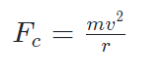
    Centripetal force is generally defined as the force that allows objects to follow curved paths, and it depends on a few things as you can see from the equation above. The mass of the moving object (m), the velocity at which the object moves at the top of the loop (v), and the size of the radius of the circular path that the object is making (r) all play a role in determining how large the centripetal force is. In our case, the moving object of interest is Sonic and the radius of the circular path is the radius of the loop he’s travelling through. Let’s do a simple calculation to see if we can get an idea of the magnitude of centripetal force that might be acting on Sonic during a loop.

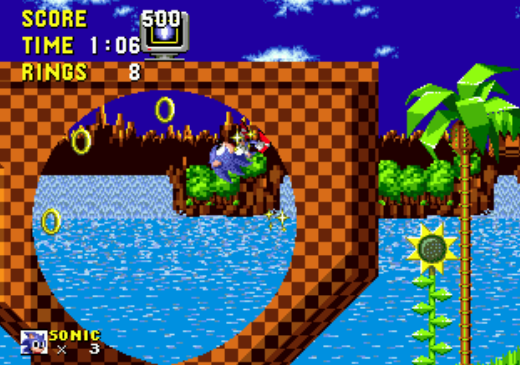
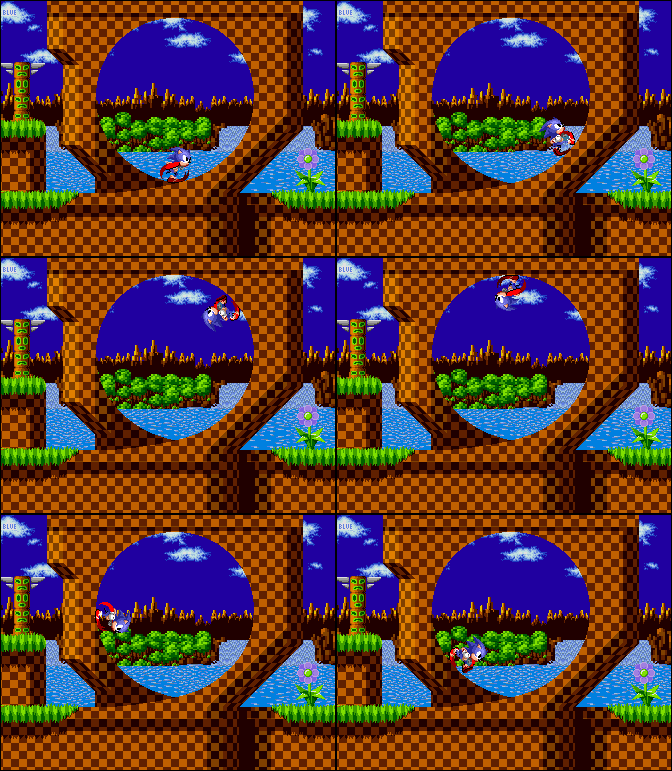
    Let’s start off with defining the various variables we talked about above. Sonic’s trade calling card is his ability to travel the speed of sound and cause sonic booms, so for velocity (v), we’ll assume Sonic is running at the speed of sound or 343 m/s. For mass (m), this information was a little bit more tricky to find, but after scavenging through a few various video game guides, I found Sonic’s mass to be approximately 35 kg (or 77.1618 pounds). Now onto the radius of the circular path (r).  We’ll take a few liberties with deciding the radius of the loops he travels through since they vary heavily from game to game. If we take a look at the original Sonic the Hedgehog game (the image at the very top if you want to follow along!), Sonic’s height is said to be around 100 cm (3’3”ft). If you superpose him multiple times over the loop, the loop appears to be 5 Sonics or 500 cm tall. That means that the radius for this loop would be 250 cm or 2.5 m. If we wanted to get really technical, the radius (r) is from the center of the circular path to the center of mass of the object. Since Sonic isn’t a point mass, we would need to calculate where his center of mass is if we want to be completely accurate. However, since the distance between Sonic’s center of mass and his feet is relatively much smaller than the entire radius of the loop, we will be assuming that Sonic is sufficiently small enough to just be a point mass to make our estimation simpler.

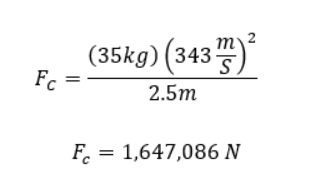
    If we take these numbers and plug them into the equation for centripetal force, we get:

    Woah! Looks like it’ll take a lot of force for the speedy blue hedgehog to clear this small loop at the speed of sound. 


    Now, we did the calculations and found a force, but is there a way for us to find the maximum radius of a loop Sonic can travel even if we don’t know the centripetal force? In fact, there is! We’ll just need a little extra help from another concept from our friend Newton.

    Gotta Go Fast

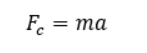
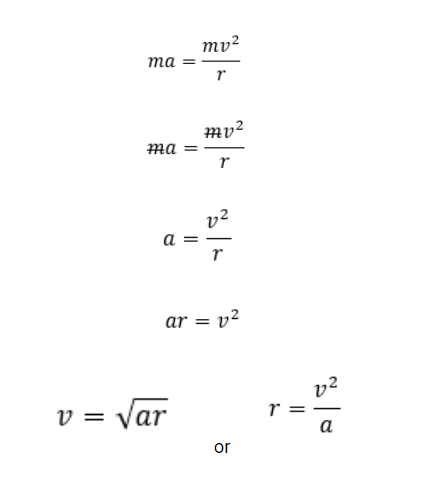
    We mentioned Newton’s First Law earlier, but now we’re going to need his second one and the very famous equation attached to it: F=ma. This equation simply means that when an object with a mass (m) experiences a net external force acting on it (F), the object will accelerate proportionally to the force applied, where acceleration (a) is just the change in velocity (the direction and speed of the object) over a set time. Let’s look at our case with Sonic. If we say the force applied to him in the loop is the centripetal force, we’ll see a proportional change in Sonic’s acceleration to match. The change in acceleration comes from the change in Sonic’s direction and speed as he’s going around the loop. Therefore, we’ll get this:

    So now we have two equations that can describe centripetal force: the one we originally mentioned and now this one from Newton’s Second Law. Since they both describe the same force, we can set them equal to one another and simplify:

    As you can see the mass of the object does not matter, as it is cancelled out since it’s on both sides of the equation. We can then rearrange to solve for the radius of the loop in terms of the acceleration on the object and the velocity of the object at the top of the loop. Now, let’s find some values!

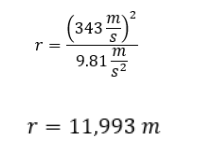
    Since we (and assuming Sonic) are on Earth, acceleration acting on Sonic  is going to be equal to the force of gravity (9.81 m/s2). If we once again say Sonic’s max speed clocks out at the speed of sound (343 m/s), we then have everything we need to solve for the maximum radius of a loop Sonic can travel through! 

    That means that Sonic can clear a loop that has a radius of 11,993 meters aka one that is 23,986 meters (or 78,694 feet) tall! Insane that this tiny blue hedgehog could do that, right? Remember that the next time you see Sonic clearing a loop in one of his games.


    Blue Blur Speeds On

    Sonic has always been one of my favorite video game characters and getting to calculate how parts of his game would work in real life is a great way to honor both him and my love for physics. You can do this with anything topic though! I implore you to pick your favorite video game, comic book, or TV character and see if you can use physics or another scientific discipline to better understand how it might be possible for that character to do what they do. Bridge the gap between your interests, and you’ll see just how fun science can be.  


    Citations

    “Sonic the Hedgehog.” Sonic News Network, sonic.fandom.com/wiki/Sonic_the_Hedgehog#Heroes.

    “What Is a Centripetal Force? (Article).” Khan Academy, Khan Academy, 2016, www.khanacademy.org/science/physics/centripetal-force-and-gravitation/centripetal-forces/a/what-is-centripetal-force.

    “What Is Centripetal Acceleration? (Article).” Khan Academy, Khan Academy, 2016, www.khanacademy.org/science/physics/centripetal-force-and-gravitation/centripetal-acceleration-tutoria/a/what-is-centripetal-acceleration.