Category: Story Time

  • My Experience (so far) as a Woman in CS

    My Experience (so far) as a Woman in CS

    Women in STEM! Women in STEM! Women in STEM!

    It seems as though every conversation I have had with a woman I just met in my major of CS never fails to include the line “women in STEM! That’s us! :p” The term “women in STEM” is actually multi-faceted; the term generally refers to the organization called “Women in STEM” that is concerned with empowering and supporting, well, WOMEN IN STEM! Sorry for the repetition, but it is catchy, isn’t it? To be completely honest, I wasn’t even aware that the phrase referred to an actual organization, I always just thought it was the name for the literal group of women that work or study in STEM subjects. Now, you’re probably thinking, why do the women in STEM always say this phrase to each other? Frankly, it serves as a bit of a joke because of the stereotypical perception of women in CS- surrounded by men all the time with few female counterparts present in professional settings. Is this just a stereotype, or does it hold some merit?

    One example out of many: LMC 3403

    I wanted to reflect on this subject with regards to my experience in one of my classes this semester, that being LMC 3403: Technical Communication. Although this class is from the school of LMC, it is required for some CS students depending on their threads. Because of that, all of the computer science students in the course were put into one section. My class was super small compared to the norm for CS; there were only about 25 students compared to the usual 350 in a CS class. Even with this dramatic decrease in size, the same pattern still emerged, but somehow even more prominent. It has never been odd that most of the giant CS classes I have been in are probably 75% men, but it was heightened in this class for a couple of reasons. The actual number of women in my class was five out of twenty-five, so 20% women. This is already smaller than the usual, but further, a lot of people would skip lecture so it was basically three women with about ten or more men in the class at any given time. I didn’t notice that glaring difference in demographic until about halfway through the semester when I realized that every group I had been put in during the class had been all guys. The thing about LMC 3403 is that almost every single lecture, the professor would break the class up into four or five small groups so it was much easier to see the breakdown of people. For some reason I never did end up with another woman in my group, which saddened me a little bit.

    So, what was it like?

    When I was a freshman, a lot of the guys in my classes were a little immature in a sense. They would ignore the women in the class and only speak to their guy friends. As time went on though, I started noticing this less with the guys in my upper-level classes. By the time I was a senior, I was used to working with men as my major was stock full of them. I found that working with men could be really difficult at times as the only women- sometimes, I couldn’t get a single word in over their talking, or they would do all the work before I could contribute anything. I know that every group, regardless of gender, has these problems, but I couldn’t help but feel like this behavior was stemming from the gender divide. Let’s just say they weren’t dying to hear my opinions on any part of the work.

    A different experience

    After working in these groups full of men talking over me enough times, I had gotten used to this behavior and was prepared for it. To my surprise, LMC 3403 was completely different. When I would be put into small groups with the men in this class, it was the complete opposite of what I had encountered before. The guys would hardly talk at all, only speaking to discuss the requirements of the assignments. This time, no one was fighting for attention or talking room- it was wide open. I felt like I could actually talk freely and share my opinions without being judged. This class was one of the few where I contributed all my thoughts without fear of being wrong or being ignored by the other group members. Not only was I able to speak, but my group members would actively listen! I know, the bar is on the ground, but this was really shocking to me, a woman in STEM who had learned how to tiptoe around the men in STEM. LMC 3403 was one of my favorite courses because of this, and it helped me produce some of my best writing and group work of college.

    Conclusion

    The stereotype of women being heavily outnumbered in the computer science field is true, but I know that the percentage of WOMEN IN STEM! is going up every single day, thank goodness! Thanks to the contributions and hard work from organizations like Women in STEM, little girls everywhere are learning about computer science and picturing themselves as future coders. This article is just my experience, and I hope to see more women in CS at Georgia Tech every year.

     

  • A Letter to Fellow Struggling Students

    A Letter to Fellow Struggling Students

    Hi.

    I’m a 4th year student, and sometimes I almost can’t believe it. For those like me who have also struggled in their studies here at Tech, I’m sure you might be able to understand where I’m coming from. Tech is tough, and for us with mental health issues or any sort of disability, it sometimes feels like it will never end. That’s not to say that there haven’t been many enjoyable and unforgettable moments, since I’ve certainly experienced quite a few of those, but the constant lingering stress of keeping up with classes has never left my side. For me in these last couple semester’s, there’s the added weight of feeling so close to being finished with my degree while also fearing that I’ll fail a class and prolong my time here. It’s quite scary to think about simply because it’s scary to feel uncertain about when I will finally get to graduate. In the time I’ve had to think about this, I’ve formulated some tips and personal realizations for things that have been helpful to me. So to all the students who have also been struggling, and especially for those still early in their time here at Tech, I hope I can provide some help and comfort as an unknown elder.

    1. Please read your emails, especially the ones from your advisor.

    This one sticks out as pretty big to me, since I recently had a registration scare that felt more intense than the ones we all often experience during the dreaded process of registration. If you’re trying to graduate, make sure you look out for emails from your advisor if they’re so kind as to send out information for classes, when to apply to graduate, or even what permits you’d need for specific classes. While I was lucky enough to have realized I missed many of the suggested guidelines for when to apply for these things, going back through the emails I neglected to read was a lifesaver that made the process of making sure I got done what I needed to so much easier.

    2. Go to therapy, or at least try to meet with a psychiatrist if you suspect something

    As someone who grew up with parents who didn’t believe in the importance of mental health, I didn’t get myself the help that I needed until I was deep into depression early in my sophomore year. I struggled my freshman year, but had attributed it to the increased rigor of classes compared to high school and lack of the highly structured environment of my school and home during that time. With depression weighing me down, the other issues that I had once been able to live with started to creep in more and more and was affecting my academics as well. I consider myself lucky to have had friends who were so mental health positive and encouraged me to make an appointment with a psychiatrist and therapist. Although therapy has been something of an on/off situation, I’m glad to know that I can turn back to it if I need.

    3. In a similar vein – go get yourself ODS accommodations if you can!

    Trust me, this has been an extreme help to me. Once I was finally diagnosed with ADHD, I set up a meeting with ODS as soon as I could. And if you’re wondering at all, the process was super easy, and I had accommodations within a few weeks time. Though I’ve been lucky enough to have professors before these accommodations that I already talked to about my mental health and were extremely accommodating in working with me and granting extensions, it is really scary to wonder each time before I first reach out to a professor how they would respond to me. With my accommodations for extra testing time and a suggestion to grant me extra time on assignments, it’s become so much easier to reach out since I knew I wouldn’t ever have to risk coming across to my professors as just a student who was making things up.

    4. Even if it’s not academic, join a club that calls to you

    If you told me before I came to Tech that I’d now be the host of a Folk show (Mountain Breeze, Mondays 5-6PM on 91.1FM!!!), I would have been very surprised. But here I am, having joined college radio my first semester at Tech and still very much loving the time I commit to it. Of course I’m biased and would encourage everyone who loves music to join WREK radio, but the core of what I’m trying to convey is that it’s simply really nice to find a niche to commit to during college. When academics get’s too stressful, I know that there’s another community on campus that I don’t have to worry about my performance in, and that thought can be very comforting.

    5. Reach out to your friends. They love you, and they want to help if you’d let them.

    This is a given, I hope. It’s hard to see the network of people who love and support us during times we feel like we are stuck so deeply in our own problems and minds, but it’s important to remind yourself that there are others around you who are very willing to help and be there for you too. Some things are too big for us to handle on our own, and it’s okay to let people in who care about you.

    College is a stressful time, especially when you’re at an institution as rigorous as Tech. But it’s possible, and you’ll get through it, one day at a time. You might even enjoy your time here, learn more about yourself and your dreams, find what makes you happen, and meet some wonderful wonderful people.

    (Cover illustration by Reggie Slater)

  • Why Design?

    Why Design?

    One of the most challenging questions I am asked as a designer is why I chose the study path I chose. I am often asked Isn’t that just the same as being an art major? or Why not choose something more useful like Computer Science or Engineering? Sometimes, I ask myself those same questions. What exactly is it that I am doing?

    In my mind, the word “design” brings up many different images. Often I will picture a fashion designer with measuring tape and a model in front of her, or a car manufacturer sitting in a dark room with only a lamp as a source of light sketching the future of the automotive industry. I even picture a mad painter brushing frantically across a canvas creating a new masterpiece. The word “designer” meant so many different things that it was nearly impossible for me to know the true definition. All I knew was that all designers shared a common trait: their creativity. And, as luck would have it, I would spend my first several years of life developing my creative side, leading me to where I am today.

     For as long as I can remember, I have loved making things. It sounds cliche, but it’s true. I used to collect scraps of paper, out-of-shape paper clips, and many other things considered “trash” and assembled them into tiny sculptures as gifts for my friends and family. I was especially guilty of trash collection in school. My 2nd-grade teacher constantly criticized my never-ending mess, until the end of the year came. She chose to look beyond the mess inhabiting my tiny desk and focused on the small figures. From there, she deemed me the “Class Creator”. It was one of the first memories I had where my art was recognized by someone who wasn’t a relative or a  friend of my parents. Of course, the support of my parents played a significant role in my decision. They were the ones to shine the light for me, guiding me to where I needed to go.

    Fast forward several years and it’s finally time to apply to colleges. As a Junior in High School, I was expected to have already a list of schools I wanted to visit and, possibly, apply to. Like many others before me, I was completely lost on where I wanted to go, let alone study. I couldn’t decide if I wanted to go to a big or smaller school, out of state or in the state, and traditional or technical. This indecisiveness led me to begin my college search more locally because “it makes the most sense” as my mom put it. And she was right. I was enchanted by the schools neighboring my home: UGA, Emory, and Georgia Tech.

    While filling out my applications, I was unsure what I wanted to study. In the end, I decided to apply for mechanical engineering programs. At the time, it seemed like a sensible choice, given that it involved the creation of things. However, engineering focused on the more technical aspects of design, the “mechanics” if you will. As cool as that sounded, the thought of performing primarily calculus as a career for the rest of my life terrified me. My life would become mathematics. My creativity would be confined to the laws of physics and thermodynamics. As much as I tried to convince myself that that was what I wanted, it wasn’t. 

    Stumbling across the School of Industrial Design’s webpage was a godsend. It looked like what I imagined I would be doing as a mechanical engineer, only more eye-catching. I saw the beautiful designs that other students had developed and the effort they put into the aesthetics of the designs. It was everything I had been searching for. It was exactly what I wanted to do.


    Industrial Design. The second I decided to scroll through the Launchpad Portfolio on this secret website I had just discovered, I fell in love. Hard. Seeing students take their artistic abilities and create new things for people not just to enjoy, but use? Everything changed for me there. No longer was I doubting the decision to transfer to Georgia Tech, I simply changed the way I went about it.  I finally understood what being a designer meant. My choice to become a designer has been one of my best.

    Works Cited

    https://www.degreequery.com/wp-content/uploads/2019/01/industrial-vs-eng-smart-660×445.png

    https://th.bing.com/th/id/OIP.zXqHiS3fKQLuQQCC5Q9-IQHaCl?w=293&h=122&c=7&r=0&o=5&dpr=2&pid=1.


  • Dressing Up as Dora for Science

    Dressing Up as Dora for Science

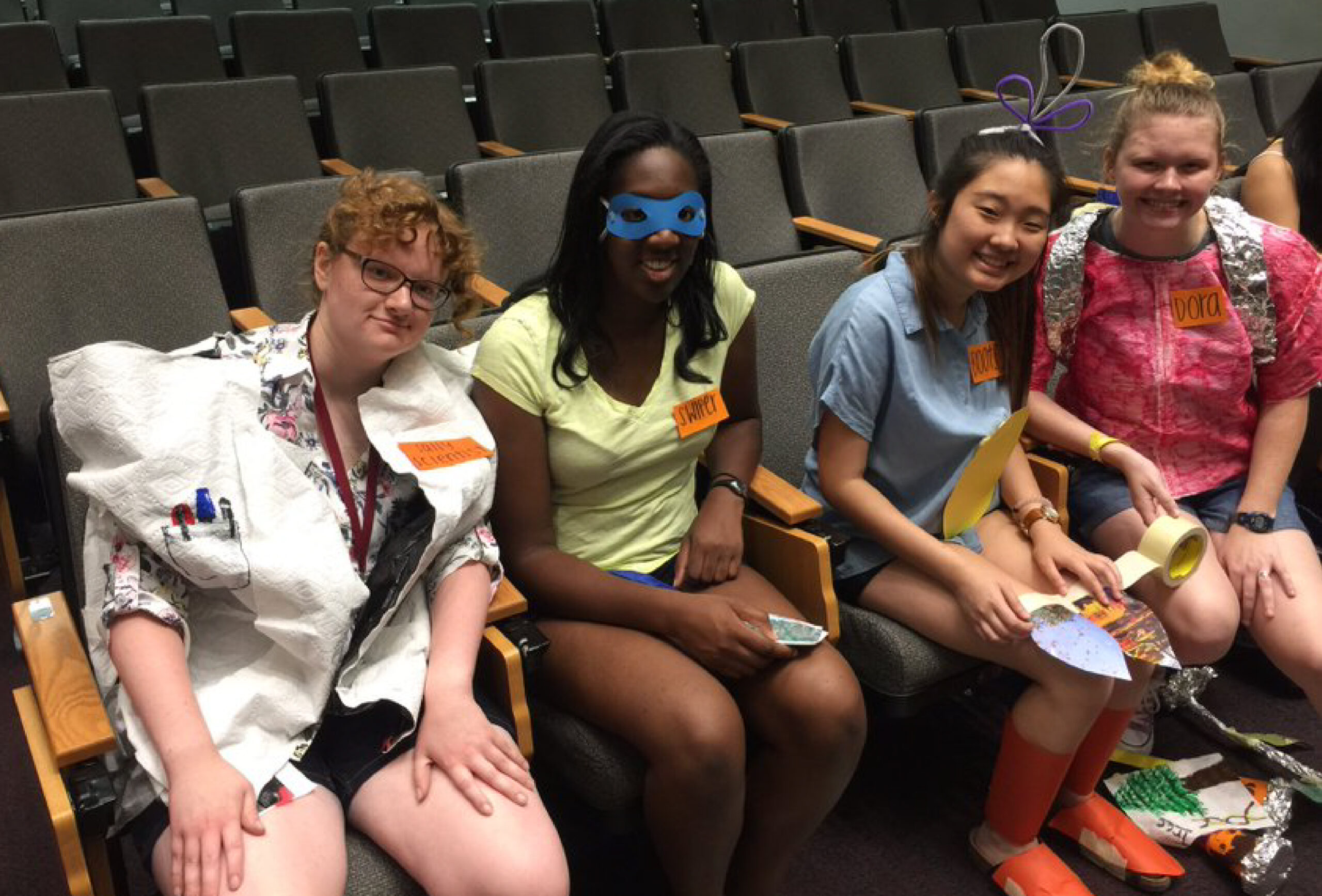
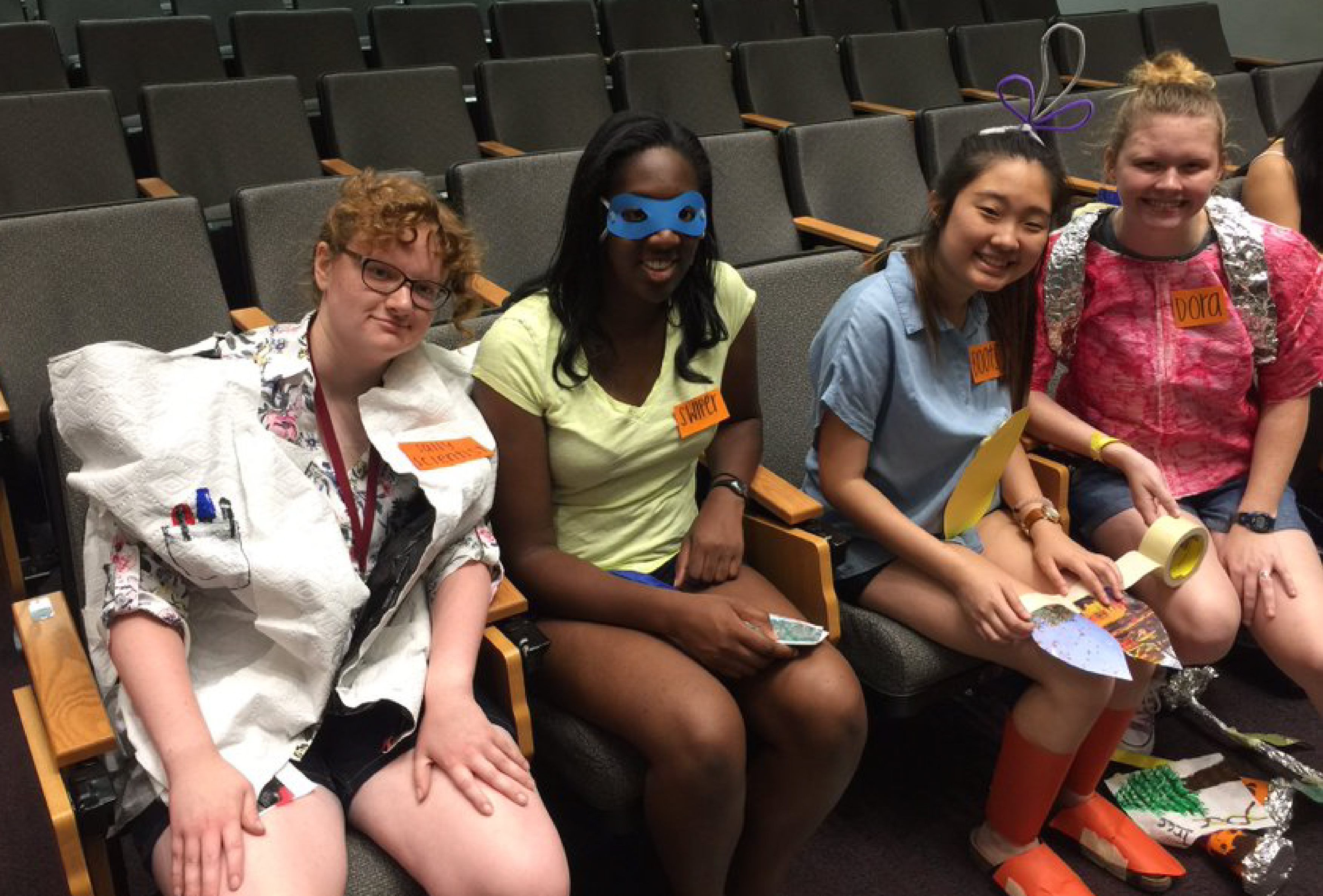
    What’s the first thing you notice about this photo? Maybe it’s the girl in the paper towel shirt with a tin foil backpack posing as Dora? Or maybe the girl with the construction paper boots or the girl with the Swiper paper mask? Or maybe you see me in the paper towel lab coat pretending to be a scientist character in the Dora cinematic universe.

    Why are we dressed as 5-minute craft Dora characters, you might ask? Well, in the name of science, of course! Specifically, as part of our team’s Presentation of Action on our solution to a Biosecurity problem scenario set 20 years in the future. Ok woah, a lot of exposition. So let’s throw it back and break down one of the most useful organizations for youth interested in STEM, Future Problem Solving! 


    Alright, what’s Future Problem Solving?

    Sounds like a bunch of buzzwords slapped together, but there is a reason for this I promise!

    Future Problem Solving (FPS) is an international program for K-12 that teaches students critical and creative problem-solving by training them in a six-step problem-solving model. A quick run-down of the steps:

    1. Identify Challenges – Given a complex, real-world scenario, what are some problems you can identify? Usually students will use a category list to try to identify problems of a diverse nature.
    2. Select an Underlying Problem – Out of all the problems identified, which problem is the most impactful on the scenario? Think – if we solved this, other problems might also be solved and the users would be the most benefited. What action verb would possible solutions need to accomplish to solve this main problem?
    3. Produce Solution Ideas – The fun part! Brainstorm creative yet realistic solutions to the underlying problem.
    4. Generate and Select Criteria – Create criteria that help you decide which solution is the best at solving the underlying problem and addressing the needs of the original scenario.
    5. Apply Criteria – Run each solution through the criteria you created and rank which one best meets all criteria overall.
    6. Develop an Action Plan – Whichever solution ranked first in step 5 will be your final solution to the problem. You need to elaborate on the who, how, what, where, why of the solution to explain how it could be implemented in the scenario and why it solves your underlying problem. (At the state and international level, teams will create a skit that describes their action plan. The limit is that for skit props, teams can only build them out of household items – hence, our makeshift Dora fits above! We created a cute Dora the Explora skit for our Presentation of Action Plan where I was a scientist explaining the research behind our action plan.)

    What makes this model unique though, is what problems are being solved (and here’s where the ‘Future’ of FPS comes in). 

    Each problem scenario is centered around a STEM-related topic, and the sky’s the limit with what areas of STEM these topics can derive from. Some of my favorites during my time included: Enhancing Human Potential, Biosecurity, Energy of the Future, Cloud Storage, Endangered Animals, and 3D Printing. Doing pre-competition research on the topic is highly encouraged, as students are given bonus points if they can describe current technology or solutions from corresponding STEM fields.

    The program throws you for another loop though by setting all these topics in a scenario that takes place 10-20 years in the future, making students not only think about the current state of the topic, but how it and its corresponding technology might possibly evolve. 

    While the program expects you to be creative with solution ideas in this field, it also expects you to understand the feasibility of current tech and how it might realistically look in the future. There are no ‘magic pill’ solutions that solve the problem with the flick of a switch allowed. You can be creative, but it’s got to be something that has a basis in our modern day to get ya points.

    So you got the basics of FPS down now. Just like with the Action Plan, let me hit ya with the WHY Future Problem Solving is an integral skill-builder for any primary school kids interested in a STEM career.


    Why You Should Force Yourself (or Force Your Child) To Join FPS

    I did FPS for 9 years before joining Georgia Tech as a Biomedical Engineering and then Computational Media major, so I speak from experience here that this six-step method of problem-solving is very similar to how both Engineers and Computer Scientists solve real-world problems in their respective fields.

    Let’s pretend we’re Biomedical/Software Engineers for a moment, and we’ve been given a specific user base that we want to design a device for that solves an issue they’ve been struggling with:

    1. To design a medical device or a computer program that’s meant to help a user base, first you need to identify what problem your users have. 
    2. Oftentimes, you’ll do user interviews and find users have MANY problems. One device can solve a few, but often due to restricted budgets and timelines, it’s not feasible to solve all the user’s problems, so you need to identify which ones are the highest priority (your underlying problem). 
    3. From then, research & design happens. You collaborate with your team on seeing what technology/systems currently exist and what are new methods/designs you can try to create that modify the current tech or are completely new from them (and you make simple prototypes of them). 
    4. Then you need to narrow down which design you want to move forward in with prototyping because there’s not enough time and money in the real-world to try to make every idea all the way from scratch to completion. 
    5. This is where you need to set up criteria to assist in deciding which device prototype you’ll choose as your action plan.
    6. Finally, once you’ve built and tested your device, you need to explain to your stakeholders and users how the device works and solves the identified problems from before. Otherwise, what was this all for besides wasting money?

    Did you see all the FPS steps in this engineering/computer science scenario? Granted, while this is a very simplified explanation, at the core, this scenario is what you do while working on projects in these fields. Even though I had no engineering or computer science experience before coming to Tech, it never felt unnatural to me when I was working on design projects because the process had already been ingrained into my being from FPS. I already knew how to critically think, so I could instead really dive into the technology I was working on and focus on coming up with solutions. Imagine starting with a leg-up at GT, and you never knew it!


    FPS, My Old Friend

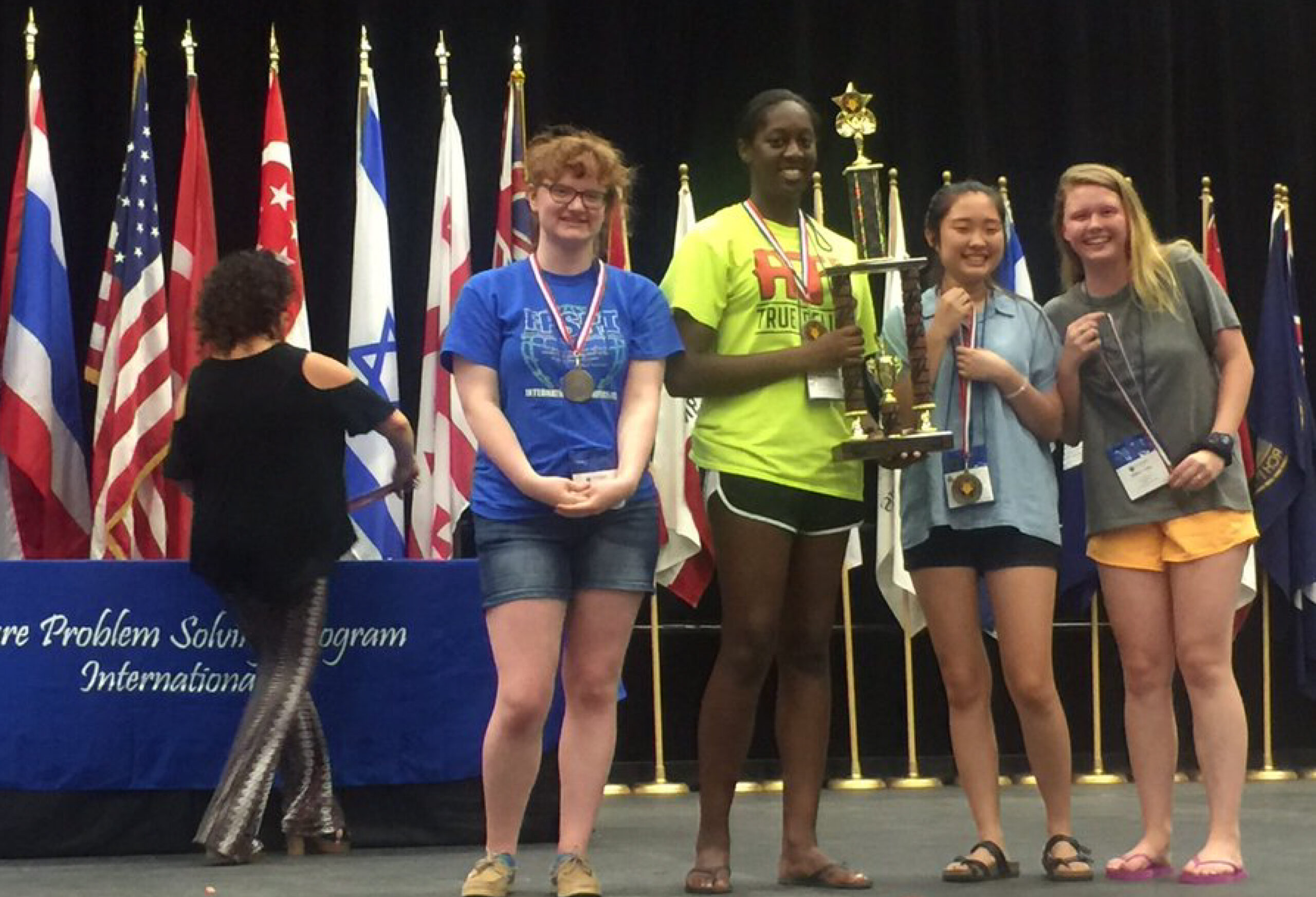
    Beyond preparing me just for critical problem-solving in STEM, FPS also fostered my love for collaborating in teams. I loved the moments I shared with my teammates: Our countless recitations of topic-related vocabulary cards on the bus to the state competition in Athens, our nervous hands hovered above the face-down scenarios in a sea of international teams, the late nights of coloring absurd amounts of paper towels red, our screams when we won First Place at Internationals for our Dora skit. I wouldn’t change those moments for the world. Who thought something as educational as solving STEM problems for 2 hours could shape the best parts of my mind and life?

    To make it part of your life, check out the FPSPI website to see if you can find an active division near you. And if there are no current divisions, Future Problem Solving always welcomes the start of new ones! Get out there and solve some problems my fellow STEM kids!

  • A Reflection On Divisive Foods: Coconut Water

    A Reflection On Divisive Foods: Coconut Water

    Everyone’s relationship with food is a unique one and often changes and fluctuates over time. For some, it’s simply a means of survival, and for others, it can be what they most look forward to during the day. I personally fall into the latter category and enjoy indulging in a large variety of foods whenever possible. But even with my open and adventurous nature towards different foods, I’ve always wondered why there are some foods that I strongly dislike but are otherwise loved by my friends and family. What is it about our relationship with food that causes us to love or hate certain dishes or ingredients? These “divisive foods”, as I’m choosing to call them, can be very polarizing in society, and over the past few months, I’ve found myself thinking about why these foods evoke this black-and-white response.


    Food is multidimensional

    Foods possess a variety of traits (besides the taste) that define them. Some have different chemicals that can react with compounds in our body, others have unique textures that can satisfy or disgruntle us, and others still can hold special memories associated with them through experiences. I believe these additional traits are the key to understanding why foods can be so polarizing. I hope to create a series out of several different popularly divisive foods, but for now, I’d like to discuss in particular the properties of coconut and coconut water.

    Coconut. You either like it or you don’t. While coconut itself has a laundry list of traits that might cause polarization over it, I’m particularly interested in what’s inside them– coconut water.


    My First Impressions of Coconut Water

    To start off with a little anecdote, I recently tried coconut water for the first time ever. I’m personally not a huge fan of coconut to begin with, (the texture of desiccated coconut shavings is especially not my favorite), but my significant other enjoys it so much that I decided I would give it a try to see what all the fuss was about. Long story short, I absolutely hated it and was completely disgusted by the taste immediately after it hit my tongue. I spent the next 20 minutes scrambling to eat or drink anything that would get the taste of it out of my mouth and was baffled at how anyone could stand to drink a whole glass of it. As you can imagine my s/o was quite offended and shocked by my violent reaction and quickly began an interrogation as to why I disliked the coconut water so much. 

    My first impression was that it somehow tasted spoiled. We knew for sure that the coconut water was not expired, but to me, it somehow tasted like how watered-down sour milk might taste. This came as a surprise to my s/o as he interprets the taste as pleasantly sweet and refreshing– the very opposite of what I tasted. Were we really drinking the same beverage? How is it that two people can have such different experiences tasting the same thing? These thoughts lingered in my mind for weeks following my taste test.


    The Truth Behind the Taste

    After some research, I found out that pasteurization may be to blame. Pasteurization is the partial sterilization of a product, typically milk or wine, that makes it safe for consumption and gives it longer shelf life. This is done by heating up the product and subsequently denaturing all enzymes in the product that may cause future spoilage. While this sounds like a great mechanism for sterilizing coconut water, it also greatly alters the flavor. In particular, this type of pasteurization can introduce a burnt-like flavor to the drink, which may explain why it tasted so funny to me. Fresh coconut water apparently tastes very different from packaged and pasteurized coconut water and is widely enjoyed in many South Asian cultures. This difference can also be compared to the contrast in taste between store-bought orange juice and freshly squeezed orange juice. While the ingredients used are practically the same, they taste different due to one being pasteurized with most claiming that the freshly squeezed juice tastes better.

    Why is it that this flavor detraction is so strong in coconut water, but is less noticeable in products like milk? This is likely due to the long history of milk pasteurization that has allowed cultivators to perfect the level of pasteurization that both sterilizes the product to make it safe for consumption and preserves the flavors that we know and love. Coconut water pasteurization is a bit more difficult to strike a balance with, mostly because so much of its flavor profile is because of the enzymes that get removed during the process. It certainly makes sense then for people to swear by fresh coconut water and enjoy its natural properties for the tradeoff of shorter shelf life.


    The Verdict

    After exploring the properties of pasteurized coconut water, it can be easier to see why it’s so divisive among people. While some enjoy the flavor of coconut, others strongly dislike it, and whether that be due to pasteurization or simply an aversion to the flavor profile and aftertaste can vary from person to person. Reflecting on my experience with coconut water has inspired me to try fresh coconut water to see if I might enjoy the raw, unaltered flavor of the tropical fruit, but until then, I think I’ll elect to keep coconut out of my fried shrimp and away from my pastries.

  • Never Heard of Biomedical Engineering? Let me tell you what it’s all about!

    Never Heard of Biomedical Engineering? Let me tell you what it’s all about!

    For anyone interested in going into Engineering, there are no shortage of disciplines that you can go into at Georgia Tech. You could major in Computer Engineering, Civil Engineering, Mechanical Engineering, Industrial Engineering, Environmental Engineering, Chemical Engineering, Biomedical Engineering, and any other type of engineering that comes to your mind, you can bet that we have it. Plus, we are a top-ranked school for any major that you have heard of! I, however, am not here to run a promotion commercial for Georgia Tech. I am sure that you have already seen and heard plenty about this school! Rather, I am here to tell you about why I chose Biomedical Engineering, and why I love what I do and the major that I am in! I am sure that many of you are either at the exciting point in your life, where you are getting ready to apply to college and wondering what you want to do, or are parents of kids and wondering what is an efficient way to spend your money! Whoever you are, I hope that you leave this post, gaining some more insight and with more information to be better prepared for your first day as an engineer at Georgia Tech, and, hopefully, a Biomedical Engineer!

    First of all, you are probably wondering, what the heck is Biomedical Engineering, and why should you consider it? If you read the name of the major, you are probably thinking, “Well, it has something to do with Biology and Medicine, and how the two interact!” If this is you, then I am here to tell you that you are on the right track! In fact, broadly speaking, what we do is try to find better solutions for common medical problems facing tons of individuals in the United States, and globally, using principles that we learn in math classes, biology, chemistry, etc. But, there is so much more to it than that! With BME, there is never a wrong answer to a problem! You are probably thinking, “Is he crazy?” No, you read that right, there is never a wrong answer to a problem! Unlike Civil Engineering or Mechanical Engineering, where you may have to perform calculations, many of the problems that you are faced with in Biomedical Engineering are more personal and the choices that you make and the perspectives that you bring can profoundly change their lives for the better, or for the worse! In Biomedical Engineering, you truly get the opportunity to think outside of the box, which is something that I really think you don’t have in other majors. Are you intrigued yet? Wait till you read more!

    So you may still be wondering, is this the right major for me? Specifically, you might be wondering, what type of person is a good fit for this major? My answer to those questions is that there is no such person as an ideal or a perfect fit for this major. Rather, you have to ask yourself, do you have a vested interest in having a personal impact on people’s’ lives?. This is not like Computer Science, or Mathematics where the work that you do is all theoretical, and involves sitting in a cubicle all day. This major is truly different from all the other majors because it is extremely practical in nature. If you go into this major, keep in mind that the majority of the time you spend is going to be thinking through scenario – based problems that do not have perfect answers. This may seem scary! However, I can assure you that that will make you better prepared for the real world. You grow the most when you are pushed outside of your comfort zone, and that is what will happen in this major.

    Okay, so you’ve read this far, and thought to yourself, “Yes, this major is for me!”, then you are probably wondering, “I don’t really understand how and where science comes into Biomedical Engineering! All he has talked about is working in teams, on real – world and practical problems. However, I promise you that all the concepts that you learn in Biology, Chemistry, and Physics come to use here. Just this past school year, I had to work on making a Pulse Oximeter, using Arduino to better measure Oxygen Saturation Levels in users with Dementia who had Long Covid. I remember that, at first, I was so confused where to even start. However, then, by using the knowledge that I learned about the Respiratory system from my systems physiology, and biology classes, I was able to dramatically simplify the problem, and start at a much more basic level. This also was true for a project I did about creating a mathematical model to predict the likelihood that a woman would develop Endometriosis. At first, it seemed way too complex for me with my skill level to make such a sophisticated model. However, when I thought about the role of Bayes’ Rule, which I had learned in my Biology class, and its uses, I realized how excellently I could apply it to my project at hand, even if it was not necessarily a mathematics – related project. You will also be at the forefront of research, and projects where you apply science directly. For example, many of my friends are research assistants in the Laboratory for Synthetic Immunity, led by Dr. Gabe Kwong. They use some of the information that they learned in Introductory Biology, such as how T-cells work to fight off an infection to utilize the body’s own immune powers to fight off cancer cells! In Dr. Krishnendu Roy’s lab, another lab run by a prominent BME professor who teaches Biomaterials, you perform research on how to speed up the process of delivering important therapeutics to those who need them, using principles you learned in Biology, Chemistry, Biomaterials, etc! In the BME Design Shop, you can apply the principles of torque and rotational motion that you have learned in Physics to create some extremely sophisticated physical prototypes! No, I’m not talking those stick figure drawings or those simple foam prototypes! You can create real, elegant prototypes that show the mechanics of how your design would work in practice. You can use programs, such as Fusion 360 to create 3D models of your design ideas using principles that you literally learned in Geometry and Differential Calculus! My point is that, the science aspect may not always be so obvious! You may have to really do some soul searching to find where the science aspect comes into your work. However, I can assure you that it is there. Sometimes, you really just have to think outside of the box. 

    However, with choosing any major comes tradeoffs. The tradeoff with BME is that the classes are extremely challenging, and they require you to truly apply different principles from different disciplines, rather than just regurgitate information. In classes like BMED 2110, or Conservation Principles in Biomedical Engineering, you have to learn how to take a poorly defined system, or a poorly defined problem, and uses the principles you know, such as the Conservation of Mass, the Conservation of Energy, the Conservation of Moles etc., and the equations you learned in Physics or Chemistry to deduce and obtain information that you do not easily have access to. Similarly, in BMED 2250, Problems in Biomedical Engineering, you are going to have to take the skills that you have learned in classes, such as Intro to Matlab, General Chemistry, and Statistics to figure out how you can solve an otherwise time consuming problem, much more rapidly. In BMED 2310, Introduction to Biomedical Engineering Design, you take that to the next level. You have to ask yourself, how can the principles that I have learned be used to create a better solution to a problem, as compared to the existing present solution? Put another way, how can my use of Matlab, or linear regression, or circuits be used to create a more efficient solution that better solves the problem for the user, or the various stakeholders that are affected by a problem? This may all seem daunting, but I promise you that you will be extremely thankful at the end! These skills prepare you for a career in Research, Manufacturing, Product Development, and whatever else you may dream of!

    I sincerely hope that by reading this article, you have developed the same passion for Biomedical Engineering that I have! Just kidding, I don’t expect you to have gotten that invested! However, I do encourage you to truly consider the field. One of the nice things about Biomedical Engineering is, you do not need to know immediately if you enjoy it or if it is what you want to do! There is no timeline for when you have to decide! One of the nice things about Biomedical Engineering is that it is becoming so well sought after because healthcare, and better solutions for common healthcare problems are at the forefront of many peoples’ values, and what many stakeholders want. I truly believe that there is a place for anyone who is interested as a Biomedical Engineer, so if you choose to go into this major, I guarantee that you will find what you are passionate about!

  • My Experience as a STEM Program Planning Assistant

    My Experience as a STEM Program Planning Assistant

    For people who are interested in STEM, there are a variety of jobs and experiences you can have. For me, an undergraduate student at Georgia Tech, I think I have an interesting job that goes along with my coursework and other activities. Since it’s a pretty unique position, I thought I’d share my experiences and reflections.

    First, I mentioned in the title that I work as a STEM program’s planning assistant. Specifically, I work for the Explore Living Learning Community (LLC) at Georgia Tech, a program for first years where students live together, take similar classes, and get involved in activities hosted by the LLC. These activities include educational events and social opportunities, which are planned and hosted by student assistants who are Tech students too! This LLC focuses on pre-health and research, and most of our students are STEM majors.

    I’ve had this position for two semesters now, and I’ve found it a great opportunity to combine my love of STEM with science communication. Paying close attention to what students are interested in then creating engaging and useful events requires STEM knowledge, familiarity with STEM students, and plenty of soft skills that aren’t typically trained as part of a science education. But, they have wide applicability. For instance, you can imagine any of these skills coming in handy whether you’re a scientist applying for a grant or an engineer trying to sell your new invention:

    • Event planning
    • Communication skills with clients, coworkers, and superiors
    • Marketing knowhow

    In addition to these soft skills, I’ve been able to take a peek into what the next generation of scientists, engineers, and programmers tick. They want to try new things that may not be directly related to their program of study. They aspire to make professional connections in their field to gain an edge. And, they’re eager to participate in events that will foster their curiosity and intellectual growth. To help them achieve this, our program has done a plethora of activities from paint nights, research networking events, and even a popular Halloween trivia night that I put on.

    What touched me most about my work so far is the possibility for students to feel inspired by STEM again. Coming on the third year of the pandemic, a lot of my fellow students feel quite burnt out from school, work, coronavirus, etc. In these circumstances, it’s hard for someone to stay motivated to the demanding area of study that they decided to pursue. But by connecting their areas of study with community, career, and fun, we can bring back in small part that little spark that made us interested in all this in the first place.

    One of my first major activities this fall was leading a trip to the Atlanta Zoo. After getting there, most of the students split up into groups to explore the park. I was left with a handful of guys who didn’t seem to have a group to go with. As expected, things were very quiet and shy, and I was a little scared at first that they might not enjoy the experience. After all, how can you stay stony faced when you’re looking straight at an elephant giving itself a dust bath?

    But after about an hour, my fears were quelled. They started smiling, laughing, and telling jokes. By lunch, we were thick as thieves. It’s hard to tell what caused this shift. The nice long walk? The cute cool looking animals? The real-world not video call social interaction?

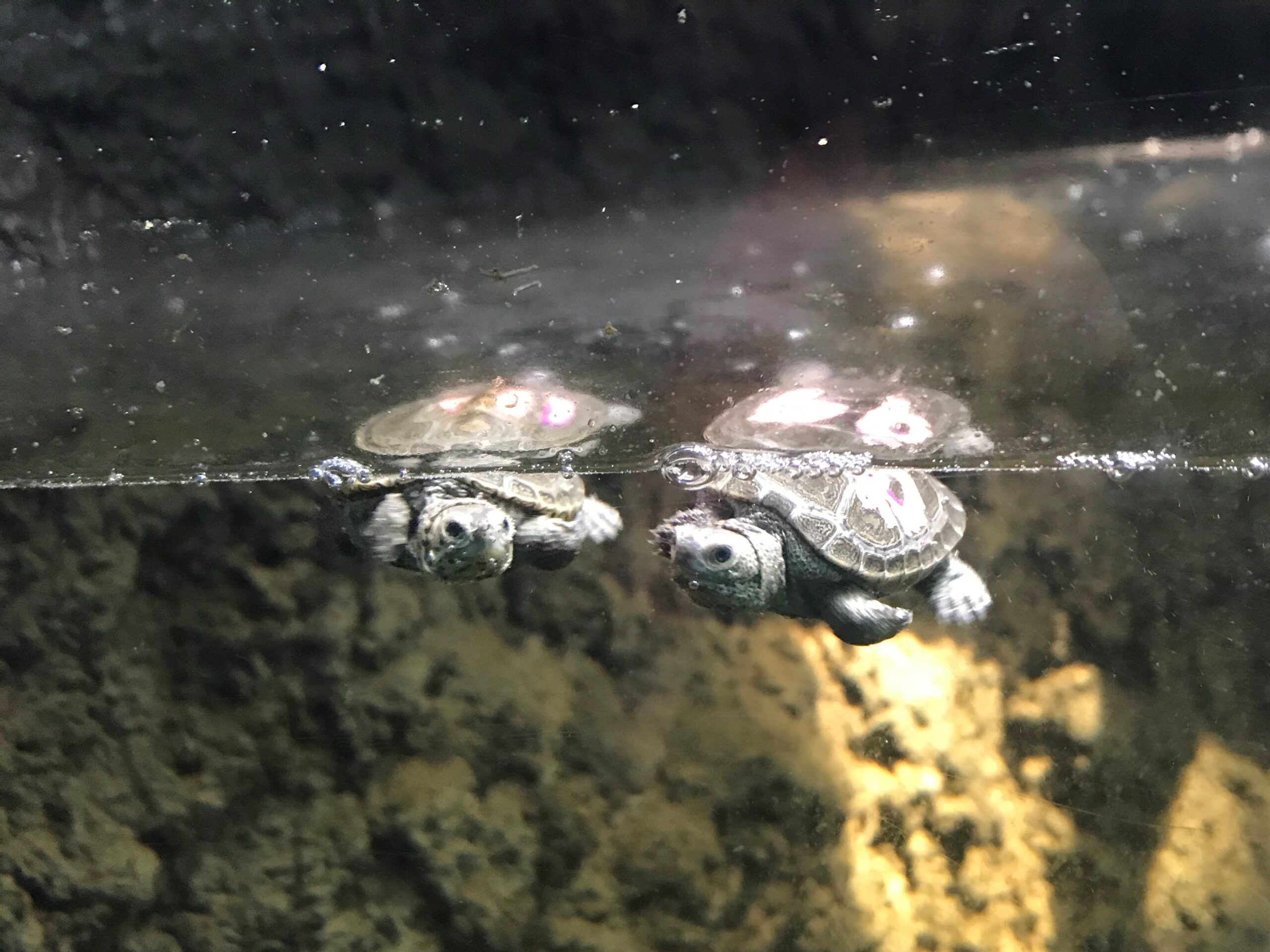
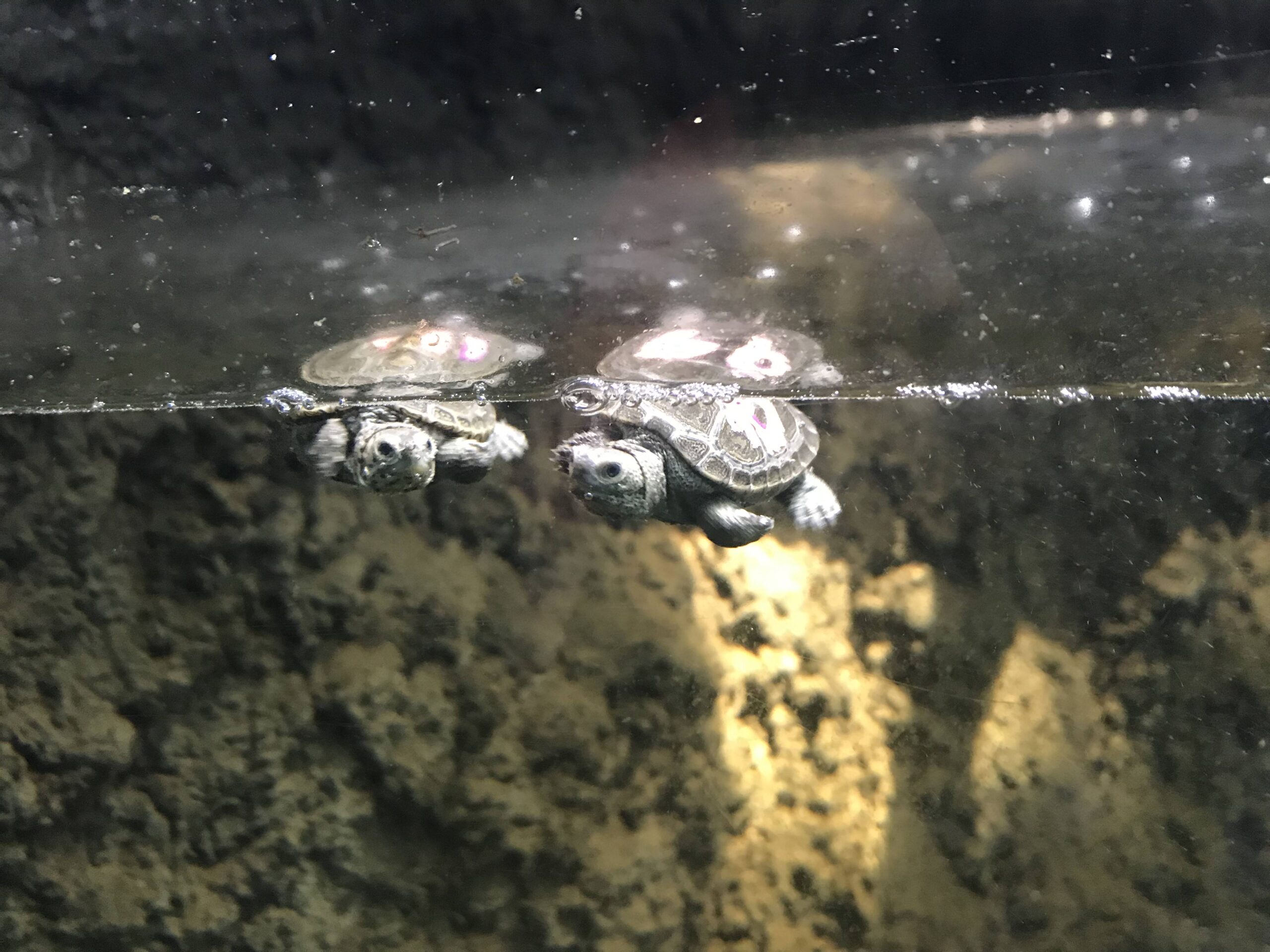
    In the reptile exhibit, seeing these previously deadpan students coo and aww over baby turtles, I mused to myself that we’d rediscovered something. One student remarked that after all those exams, seeing them made him feel like everything was okay again. You could see that spark in their eyes, the one that we all had when we were kids and we found something wonderful. After all, it was first our curiosity and sense of wonder that led us to STEM to seek out answers. And can’t we all use a reminder once in a while?