Category: Story Time

  • A science communicator takes a communications class?!

    A science communicator takes a communications class?!

    Even though I have been involved with the STEMComm VIP team for almost four full years now, I have never taken the time to learn about science communication properly and ways to go about it. Taking a communication class has been long overdue for me because it’s something that I’ve always been interested in improving about myself and my skill set as a graduate student and as a budding scientist. So, I finally leaped into MSE 8200: Advanced Presentation Skills.


    The Warm Up

    MSE 8200 had six students in a classroom meant for 40, so I needed to connect with my classmates to go through the class. We started with some surprisingly deep icebreaker questions about where we came from and what drove us to become engineers. From there, we began our warm-up exercises, where we went over problems of writing in science and how we can improve our communication. We all related to the feeling when we finally found an article with a title that might help us with our projects, but then we came to find out that the paper was impossible to understand. Since writing is the most significant thing that non-scientists see, it’s one of the things that should be practiced to be understandable and intriguing!

    After discussing the basics of science writing, we reviewed different science stories, what they did well in communicating their science, and what could have been done better. We finished the warm-up also talking about how to communicate with younger audiences, reading some different stories from well-known scientists, and how we can improve on explaining technical issues to a non-technical audience (with some pretty cool Ted Talks). After writing our versions of how to explain some of the foundations of our research, it was time to make our presentations!


    Speaking Up

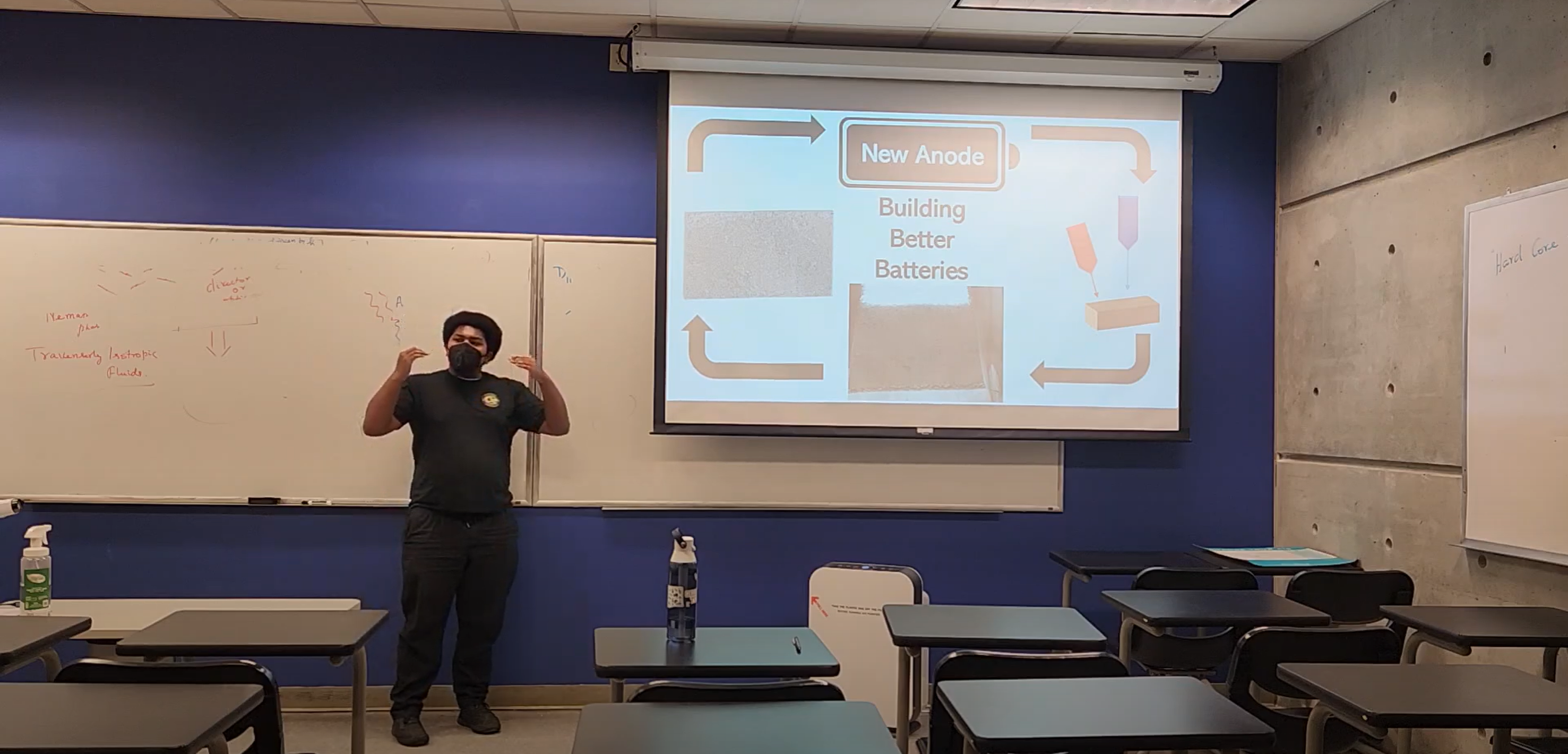
    After the warm-up, we switched between learning about different methods of presentations and creating presentations for the class with peer and instructor feedback. Our first style (and probably the easiest for me) was the elevator pitch, where we gave a short 90-second pitch on the research we do, why it matters, and what we learned from our work. It was an easy assignment since I love telling people what I do, whether they’re other materials scientists or a friend who wants to listen. The 3 Minute Thesis presentations were also fun to practice, summarizing my work and learning more about what my classmates do. It also gave me a fun challenge to take my research from my summer internship and condense seven research slides into one slide that explains three months of work!

    My most challenging communication style was long-form oral presentations for a technical audience. Essentially, they were presentations a researcher would give to other scientists at an academic conference. I realized that I’ve never attended an academic conference, so I wasn’t sure what would be the best information from my internship to explain further or delete. I also realized that since my Master’s research experience is from my internship, it was difficult to talk about my work for 15 minutes when I’ve been used to presenting it for 3-5 minutes. We closed out the course with a poster presentation, where we gave a brief pitch of our work once more, with some final comments on our experience in the class.


    Did Jalen learn to communicate better?

    Yes. 1000%. Absolutely (and any other words you can think of). Even though I have a good amount of experience creating science-related content, what I learned in this class will make me a better communicator. With the help of my instructor and my peers, I got a lot of feedback on what I could improve on in my presentation style and what I could do better. I learned that even though my long-form presentations were shorter than I would have liked, I did a great job presenting my work’s complicated terms and concepts in a way for both technical and non-technical audiences to understand and engage. With the use of animations and analogies in my work, I could put a clear image in the audience’s mind of what I was doing and put a lot more emphasis on the why; if a scientist cannot explain why their work matters, then it becomes even more challenging to engage with a non-technical audience, especially in fields like renewable energy, electric vehicles, and artificial intelligence.

    What I want to work on and improve is including more conciseness in my presentations. Though my explanations were clear, I spent more time elaborating on small details than I probably needed to, especially for a non-technical audience. I think if I improve on this, then I will be able to create more accessible presentations. I also hope to practice with more resources like “Academics Suck at Writing” to learn more ways that I can improve my STEM communication skills.

    MSE 8200 has been one of the most enjoyable and engaging experiences of my Master’s. Not only did I learn skills to make me a better science communicator, but I also realized that my communication style is more robust when it includes visuals or oral presentations. It also gave me a path to move forward with my STEM communication journey as I prepare to graduate and move on to the next career step. I plan to attend a science communication conference in the spring and use the lessons from this class to grow even further. If you can take a science writing or presentation class in your program or work, I highly recommend it!


    Note: If you want to see my research (and my communication skills in action ), I posted my 3 Minute Thesis presentation from my class below.
  • HackMITea: A Hackathon From the Eyes of a Physics Major

    HackMITea: A Hackathon From the Eyes of a Physics Major

    Recently, I’ve had the opportunity to visit a friend up north and experience my first ever hackathon, hosted by none other than MIT. Every year, undergraduate students from all over the world gather to Cambridge to attend this student-run event. The goal of a hackathon is to get as far as possible in realizing an innovative project that aligns with an overall theme. For HackMIT, we had 24 hours to design a tech-based project focused one of four areas: sustainability, education, health and accessibility, and interactive media. In working on my project, I developed my coding skills a bit while getting to witness firsthand what life is like for both a CS major and an MIT student.

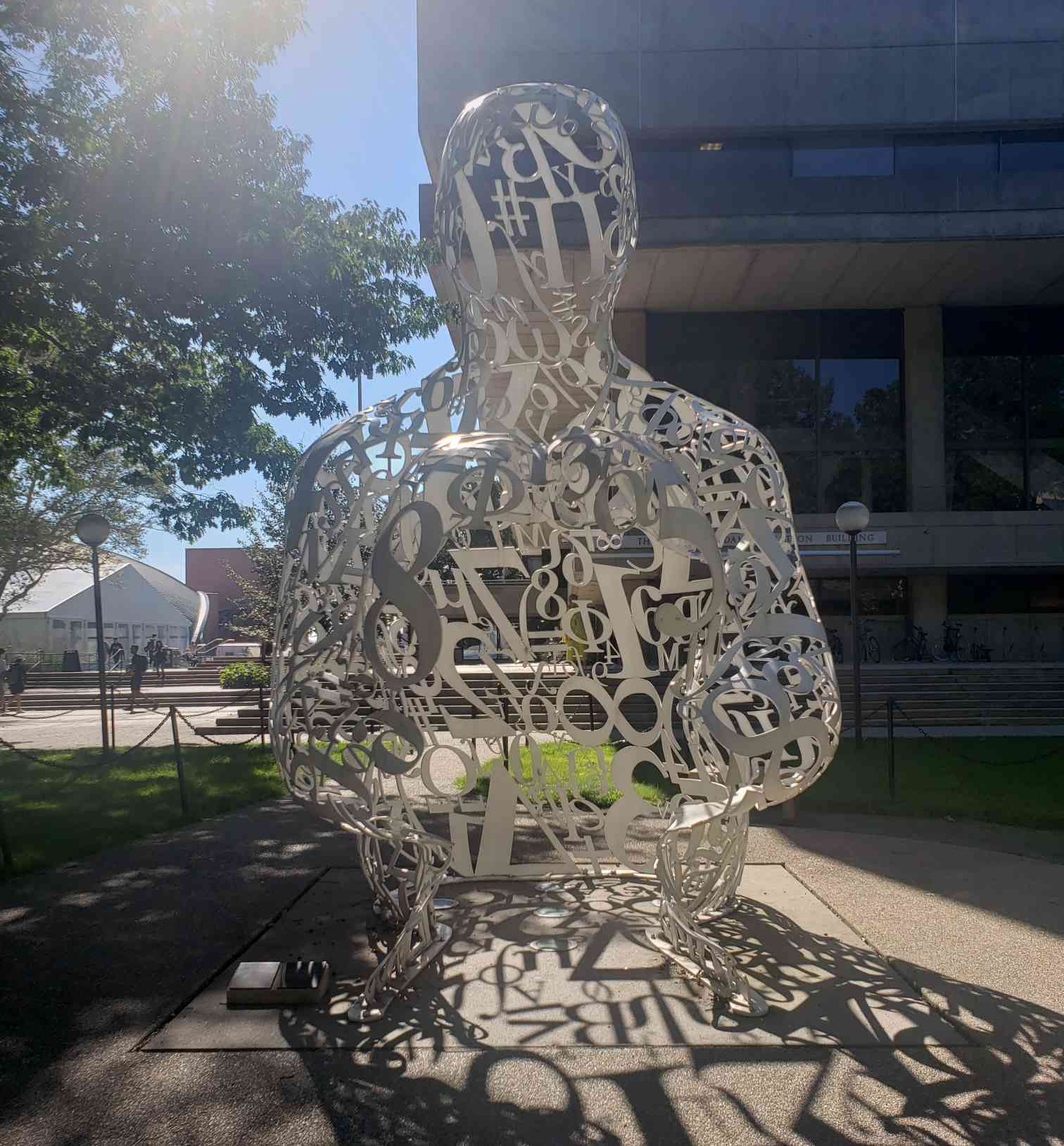
    This piece is called Alchemy, and it was my favorite statue at MIT

    The Opening Ceremony

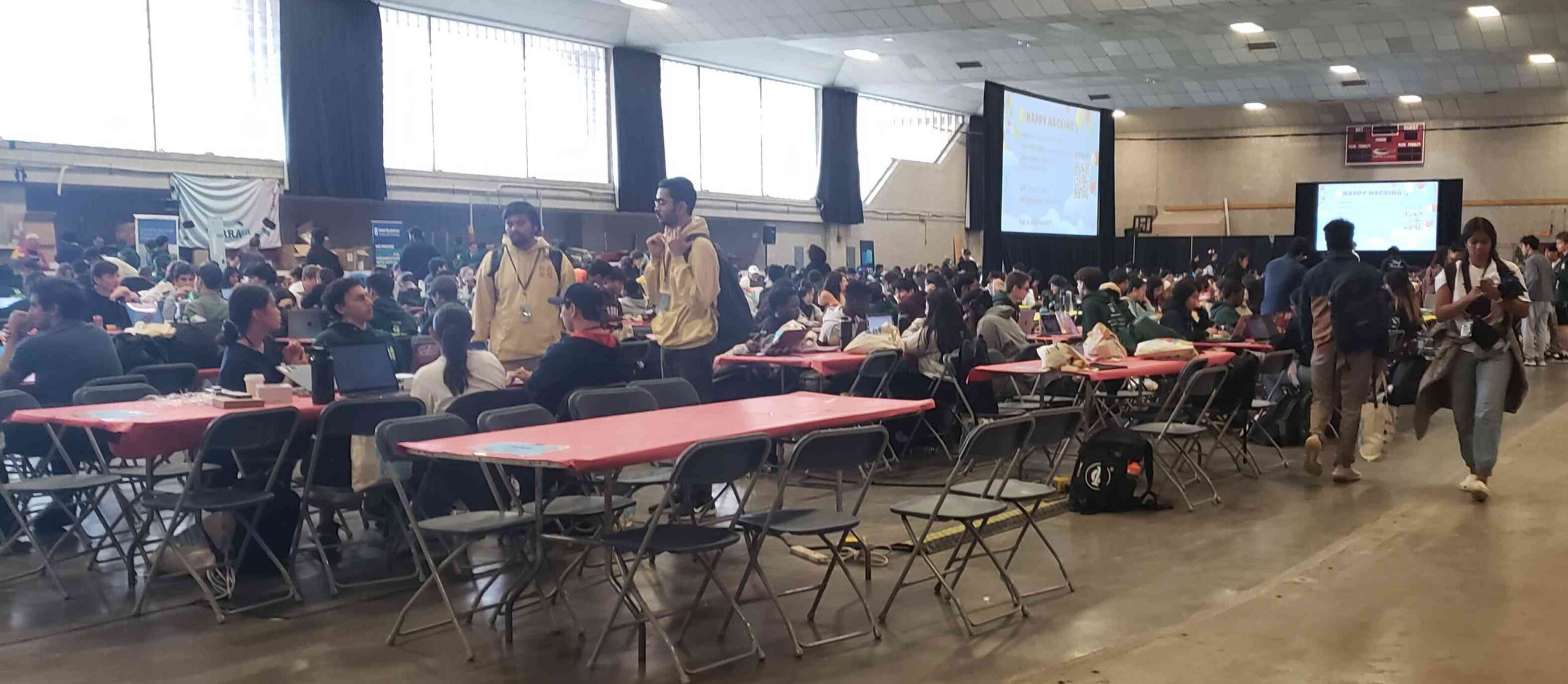
    On the day of the competition, we all gathered in a huge gymnasium for the opening ceremony. I was immediately blown away by the sheer number of competitors lining the bleachers in preparation for the our guest speaker, Ali Partovi, to kickoff the hackathon.

    Endless tables of competitors planning out their course of action for the next 24 hours.

    When the ceremony finally began, we were introduced to all the sponsors, and at this point, I gained my first piece of insight into the computer science community. All of the sponsors at the event appeared to be tech-based companies, with some of them, including Partovi, being representatives of mentorship programs designed to facilitate the innovation process for aspiring computer scientists. This along with sponsors ranging from cryptocurrency to health technology painted a picture for me of a community that fostered ambition in achieving goals teetering between wealth and altruism.

    After the sponsors were introduced, Partovi began his speech, which was, interestingly enough, one of the highlights of my time in Cambridge. Apparently an avid Matrix fan, Partovi attempted to kick off his talk by sharing several scenes and quotes from The Matrix, but he was met with technical difficulties, resulting in a few awkward yet entertaining minutes of Partovi adamantly trying to resolve the issues and share with us the masterpiece that is the 1999 original version of The Matrix. Eventually, he succeeded and we were rewarded with a geeky adoration of the classic film, with Partovi confessing that he even named his mentorship company Neo after the movie’s main character. Partovi highlights a conversation between two characters in the film that discusses the idea of not having to “dodge bullets.” And from this, he segues into his main discussion.

    The rest of the speech was centered around Partovi’s experience in the tech industry and about not being afraid of failure, which he calls “bullets.” Though outside of that primary purpose, there were some questionable decisions in his talk. He began by discussing a time when he failed to close a deal with Steve Jobs because he acted dishonestly, which appeared to be a valuable lesson on its own, but he then followed this discussion with a time he lost out on a deal for being too honest. I will leave it to the reader to decide the moral of this story. Afterwards, Partovi took the opportunity to promote his mentorship program Neo and in the process make a comment that later sparked a feud with another mentorship program sponsoring the event.

    The Project

    After the ceremony, my team took a moment to explore the MIT grounds before beginning our project. Within the gymnasium itself, there were sponsors hosting independent coding challenges and offering freebies. I recognized this as a so-called “networking opportunity” that I always hear CS majors talking about. There were also various workshops, including one on how to work with Hugging Face AI models, which was interesting, and one on how to mint NFT’s, which was less interesting.

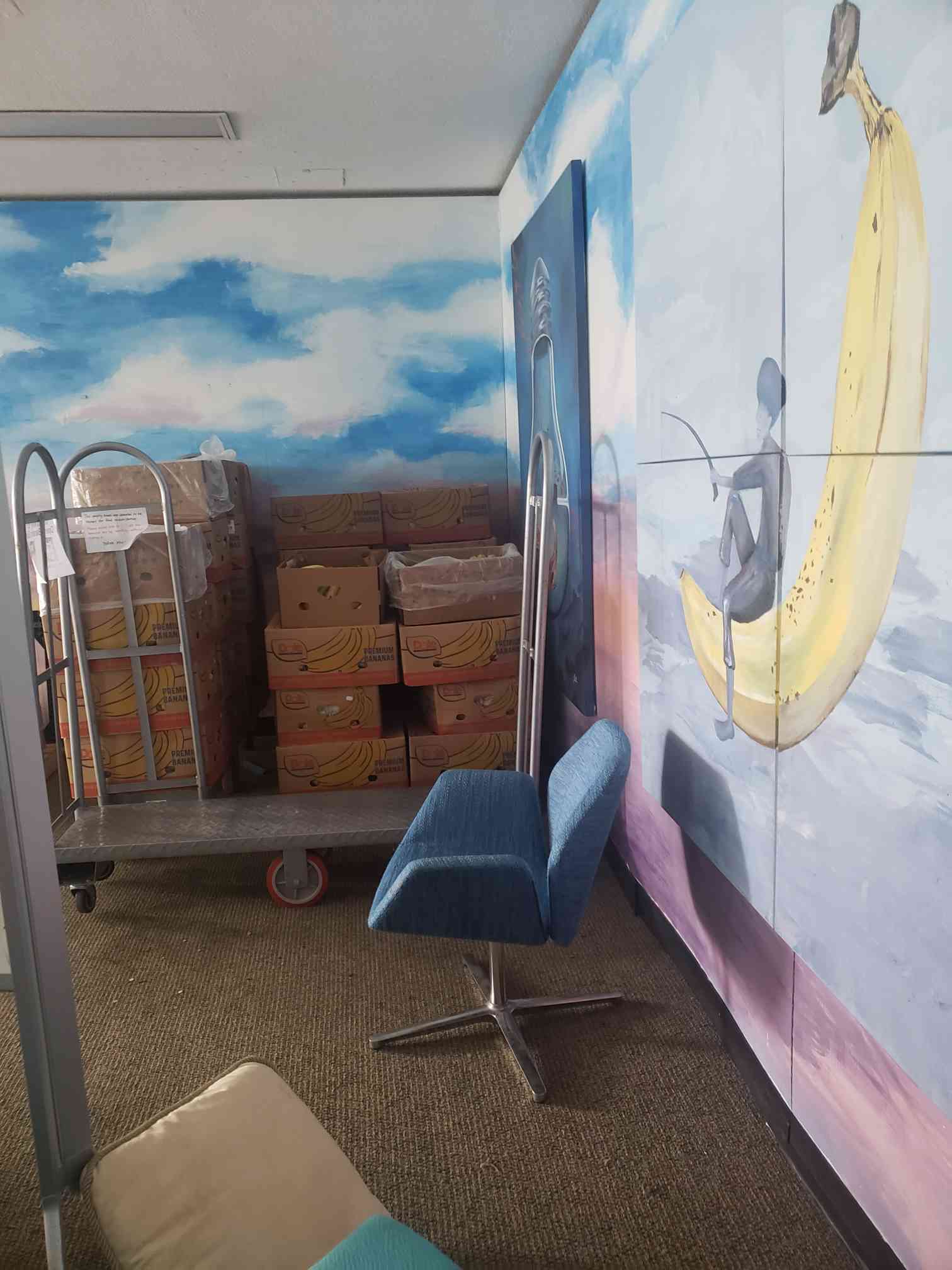
    Although many groups stayed in the gym, we decided to leave and find a more quiet place on campus to work instead. Our journey led us all throughout MIT, which had a very interesting layout. The entire campus was a vast network of buildings and hallways with an interconnected basement system. One hallway in Building 17 can lead you to Building 22. It was as if the entire school were its own small indoor city. This was not what I expected when I heard the rumor that MIT students don’t go outside. Eventually, our journey led us to the MIT banana room, a room that provides students with an endless supply of bananas as they slave away on their homework assignments or prepare for their next exam. We sat down on some brightly colored bean bags amidst a wall of banana paintings and got to work.

    The banana crates in MIT’s banana room, providing much needed potassium to the students of MIT.

    We chose to work in the interactive media category. Our initial goal was to design a game using a large language model. The premise of the game involves two parties, guessers and pretenders. The guessers would have to choose a prompt for the pretenders to answer, but among the pretenders is an AI that will also respond to the prompt. The goal of the guessers is deduce which response was AI generated, while the pretenders’ goal is to fool the guessers into choosing incorrectly. In challenging the guessers to distinguish an AI from real people, the game highlights how far AI has come in mimicking human speech and thought. On the other hand, pretenders are challenged to “act like an AI” in the sense of thinking on their feet and producing a seeming clear and cogent response according to various prompts.

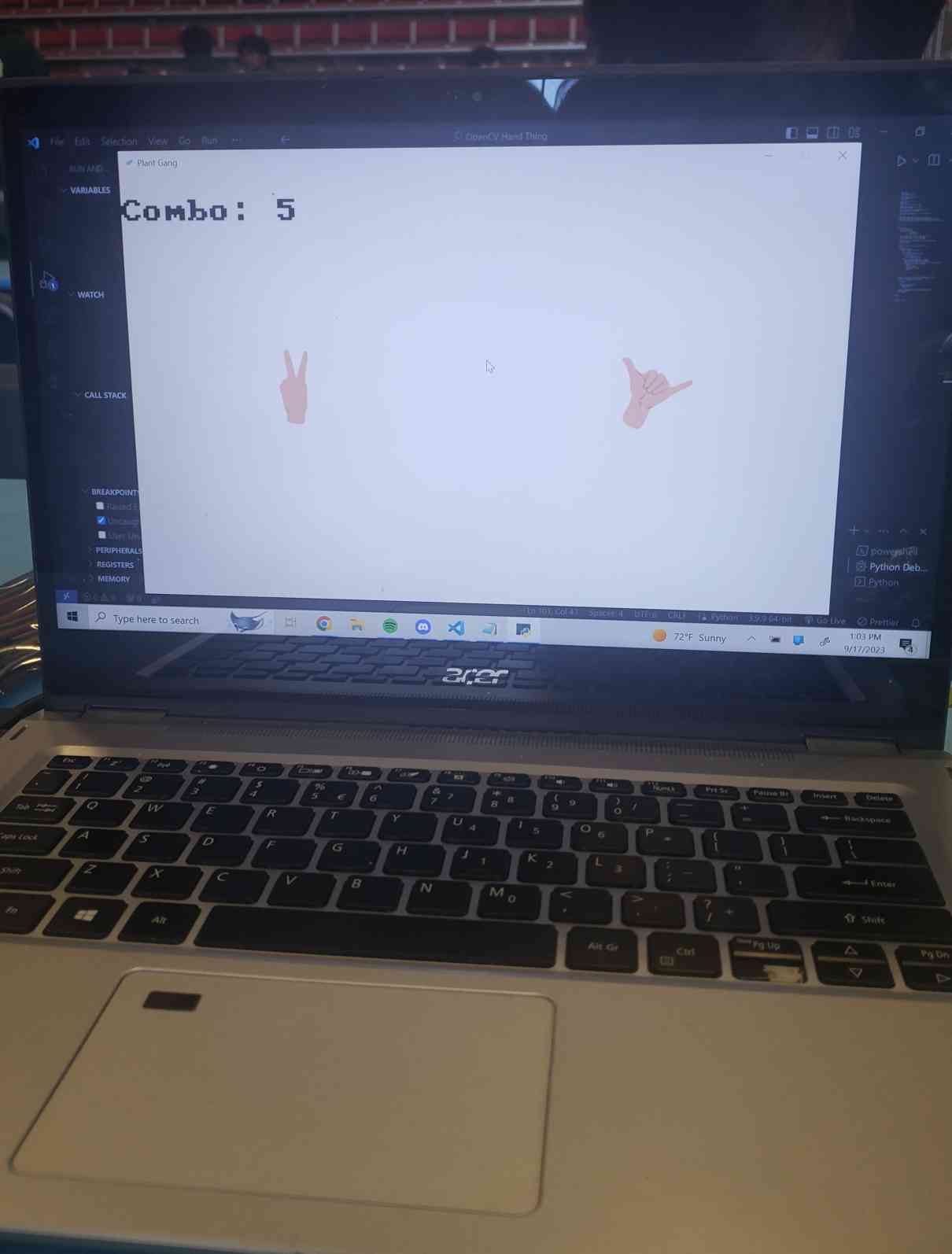
    Unfortunately, late into our project, we realized that we were too ambitious and would not be able to create a presentable program in time, so we decided to scrap the project in favor of a rhythm game involving hand gestures, aptly titled Hands Dance Revolution. By feeding data of different hand poses to a convolutional neural network, we were able to train the network to identify when those poses were being made on camera. We then used the Pygames library to create a basic game that kept a count of how many times the hand gestures were correctly matched in a given time limit. This game was a basic proof of concept of our actual idea, which would have been a game similar to a hybrid if Just Dance and Dance Dance Revolution in which hands would be positioned and posed to the beat of a song to score points.

    The Conclusion

    The creation of this project required several new skills. Although I had experience in Python with data science, using Python to make games was entirely new to me. My friend spent hours watching countless tutorials on convolutional neural networks. It was not until 6 in the morning that I went to bed for an hour, shortly before it was time to turn in our project. When the moment of truth came, we did not make as much progress as we had wanted, but we at least had a presentable project for the judges.

    The fruits of our labor, the interface of our project. It’s not much, but it’s honest work.

    After the window for projects closed, we had about an hour to prepare for our presentation on our project. During that time, we spoke with other teams, one of which had a project that I particularly liked. They designed an web extension that used an large language model trained on lecture transcripts in order to answer questions for students watching the lecture and redirect them to the appropriate timestamp in which relevant information is discussed.

    When it was time to present our project, I spoke enthusiastically about our game idea and the next steps for our program. However, the judges did not seem too interested in the video game angle. It was not until one of my group members improvised and discussed the potential that our project had in helping people learn sign language or recover motor functions that the judges began to get excited. What I had not realized was that it was not just the project that the judges were assessing but us and our ability to sell our project. Throughout the presenting period, we were given advice by the judges on how we could better market our project and make it seem more appealing to potential investors. Once again, I was reminded that CS majors were very externally motivated and ambitious people.

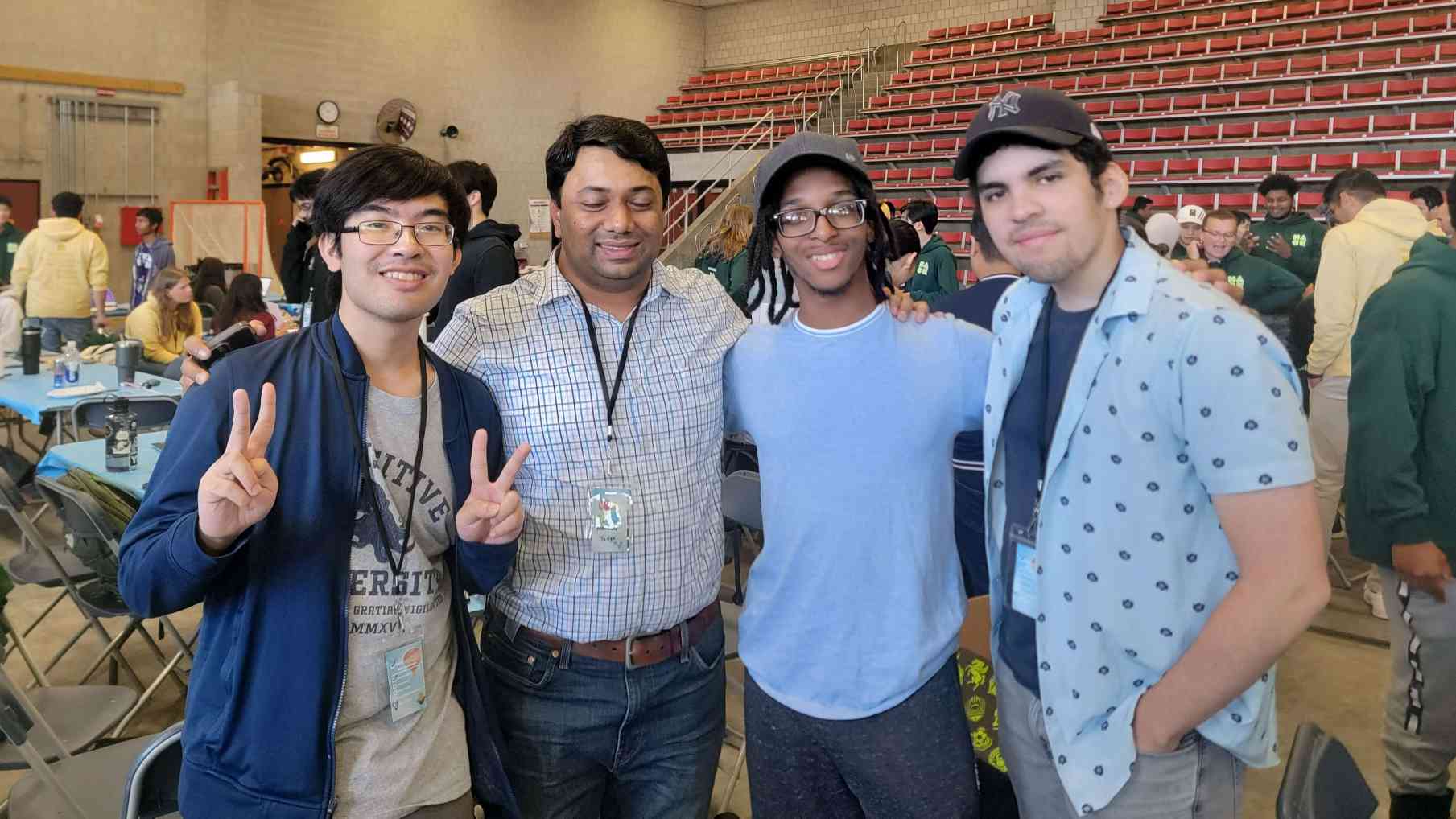
    A picture of my team with one of the judges. We turned something in, and that is all that matters.

    Unfortunately, we did not make it to the second round of presentations, but this experience is something that I will never forget. Overall, I had fun seeing the sights in Cambridge and immersing myself in something new, but as a physics major interested in becoming a researching professor, I could not match the energy of most of the other competitors, who were more interested in working for big companies and creating startups. However, because of my different interests, the stress of the project was not as bad for me as it seemed for many other people. As an avid seeker of new experiences, I would definitely recommend doing most things at least once. But in particular, attending HackMIT or another hackathon appears to be an excellent way of deciding if the atmosphere of the computer science world is right for you.

  • Diary of an Undergraduate Thesis

    Diary of an Undergraduate Thesis

    The Georgia Tech Research Option is available to all undergraduate students in the College of Sciences. It includes the completion of an undergraduate thesis. Students who choose to take on all this additional work are generally considered a bit sick in the head. Through these diary entries, I hope I can provide some insight into the joys and trials of completing this process. Particularly, for those who (for some reason) want to take on the same path.

    August 24, 2023

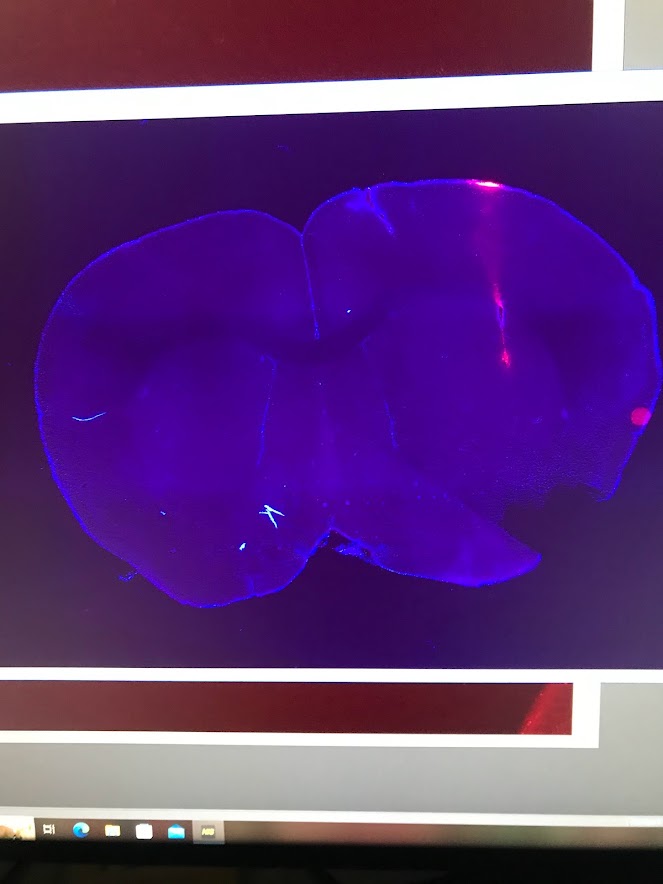
    Finally figured out the direction that I want my thesis to go in! This has been stressing me out quite a bit, so I’m glad I’m able to figure things out. I talked with my PI and we sort of figured out that I can do a project that combines the calcium sensors our lab has been developing and the dopamine recordings in freely moving mice that we’ve been doing. There’s still a lot of directions this project can go, but this sounds like a good place for me to start thinking (and just as importantly, looking at sources for the background section of my thesis). What I found super helpful is that my PI gave me a set of next steps if I want to pursue this project, which alleviated a lot of my uncertainty. Here they are:

    1. Get trained on stereotactic surgery (mouse brain surgery)
    2. Learning how to run and handle mice in our behavior rig
    3. Injecting mice with whichever thing we want to test (probably dopamine and the sensor at first)
    4. Running in vivo experiments

    As you can see, running experiments is step 4, after having to learn a lot of other stuff. Hopefully, I’ll be able to start that step in October/November, but if not I should be able to do it in spring. 

    We also discussed how there’s a huge gap in the literature that I honestly hadn’t really considered: we don’t really know how dopamine impacts the excitability of neuron populations. This seems like something really basic to the field, but we haven’t really had the tools to measure it until very recently. I don’t want to get too deep into the particulars of the field, but basically I’m glad that we’ve found something that I can reasonably say fills a need in this field of research. In addition to that being a required part of my thesis’ introduction, it makes me feel a lot more passionate about the work. I think a big challenge of this thesis will be staying motivated as the going gets tough, so this is good.

    My next steps will be to get trained on the techniques I’m planning to use and look at some papers for background.

    ——————————————

    October 6, 2023

    I have been super busy this past month and change. I have been practicing stereotactic surgery, which has proven to be really hard. While I’ve been working on experimental techniques, I’ve also been reading a ton of articles.

    Right now, I have around 25 articles in my Zotero (research sorting app), and I’ve read about 7. Although I’m improving in my ability to read research articles, it’s still taking such a long time. 

    Now, my literature review is due in two days, and I haven’t read all the papers yet. However, since it’s just a draft, I’ll try to use the background section of my PURA proposal as a base for it. I’m going on a trip tomorrow, so I really don’t want to work on it during my trip.

    I’m going to work on it now and just submit the draft. This thesis process has taught me to just turn something in, even if it isn’t perfect.

    ————————————–

    November 4, 2023

    Well–I think I’m at the point of the semester where it all feels like I’m fighting an uphill battle. Looking at my 4 step plan from August, I’m still working through step 1. My plan of conducting actual experiments in October was a little too rosy. One thing that’s slowed my progress is that although I’ve been practicing mouse surgery, I can only pretty much do one mouse per week. I share the surgery room with other people in the lab, and with scheduling around classes and other lab tasks, that’s all the time I have for practice. 

    Still, I feel like I’m making progress, slow as it is. This week, I’m going to be doing my first survival surgery, which is one step closer to being able to put in implants and biosensors into mice.

    On the writing side, it’s time for me to revise my lit review, introduction, and work plan and put them together. It’s also necessary for me to get all three (all together they’re called the proposal) signed off by my research advisor and second reader. Honestly, this part kind of scares me because I feel like I haven’t gone in depth enough for my lit review in particular. I’m meeting with my advisor later this week to show him my proposal, so I’ve got to get working on this today and tomorrow (the weekend). Currently feeling stressed out. But I keep telling myself that it’ll pass.

    The thing is–I really like doing research, and I find reading articles and learning more information about the topic interesting. But deadlines and expectations always scare me. Even so, I’m trying to tell myself that I have all the tools I need to succeed. I just need to be patient with myself.

    ———————————–

    December 1st, 2023

    Well, I’ve basically done all my revisions. My readers gave me some really helpful feedback, and it turned out that my proposal was in better shape than I originally thought. I just need to check some of the formatting, and then I’ll wait for the approval form to come out so I can submit it. 

    One thing I noticed–that I also talked to my advisor about–is the fact that when I’ve been working on my thesis, it’s made me think about why I am doing what I’m doing. Like it’s simple enough to say I’m working on a project that uses a biosensor, but when I started writing, I started thinking more about the details in a way that I never really did while just doing bench work. Why do we choose this type of biosensor? What gives our approach the advantage over another? In what way does our experimental setup even work?

    I think as undergrads, a lot of stuff is technically really complex and hard to grasp. So the researchers who are mentoring us simplify things so we can get a general gist of what’s going on. But when you’re writing your own thesis, or even making a presentation on your research, you’re encouraged to delve deeper into the reasoning behind what you do. And in that way, I think I finally kind of understand why a thesis was put into the curriculum of the research option. 

    As the semester is nearing its end, I’ve been thinking a lot about what I’ve done so far. And I feel like while I’m behind on my work plan, I still feel proud about what I’ve accomplished. It’s just an undergraduate thesis–I’m not really expected to produce groundbreaking. Still, I feel like the skills I’m learning (reading journal papers, scientific writing, study design, coordinating with my research advisor) are going to be really helpful in the future.

    Or, maybe I just feel like this because the pressure is off, for now. I’m going to put the final touches on my proposal now–see you next semester!


    Here is my followup to this article–the finale of my undergrad thesis journey!

  • Stem-Tober 2023 | Cereal or a Rock?

    Stem-Tober 2023 | Cereal or a Rock?

    StemComm’s Fall 2023 event was Stem-tober Block Party! We invited everyone to join us for a fun evening with science-based activities, prizes, and more! We had our event near where the physics students have their annual pumpkin drop. 

    Ideation & Brainstorming: 

    In the ideation process, we split into groups to come up with some ideas for what we wanted our fall event to be. We came up with over 10 ideas. To narrow them, I made a google form that had everyone rank their top 3 choices. After looking at the results, we decided on these activities:

    Group 1: Liquid Nitrogen Ice Cream and dragons Breath Candy

    Group 2: Gene-Tic-Tax

    Group 3: Dragon’s Beard Candy

    Preparation:

    I was part of Group 1, so we got together and discussed what some of the materials were required. We originally wanted to do ice cream, so we made this list:

    • Materials Needed for Ice Cream
      • Liquid Nitrogen from Chem Department
      • Gloves
      • Ice Cream Base
        • Milk (4 cups)
          • Oat milk
        • Sugar (1 cup)
        • Vanilla extract (1 teaspoon)
        • Corn Starch (3 tablespoons plus 2 teaspoons)
      • Metal Bowl (large)
      • Hand mixer

    We quickly decided not to do the liquid nitrogen ice cream and to just focus on the dragons breath candy because it would be easier to make as people came up to our table.

    We had some options as to what we wanted to dip into the liquid nitrogen that would give participants “dragon breath.” We were thinking of dipping cereal, so we requested to order large spherical cereal, but it wasn’t going to come on time, so we ordered regular Fruit Loops and marshmallows instead. We also ordered bamboo skewers and contacted a professor to get access to liquid nitrogen canisters. 

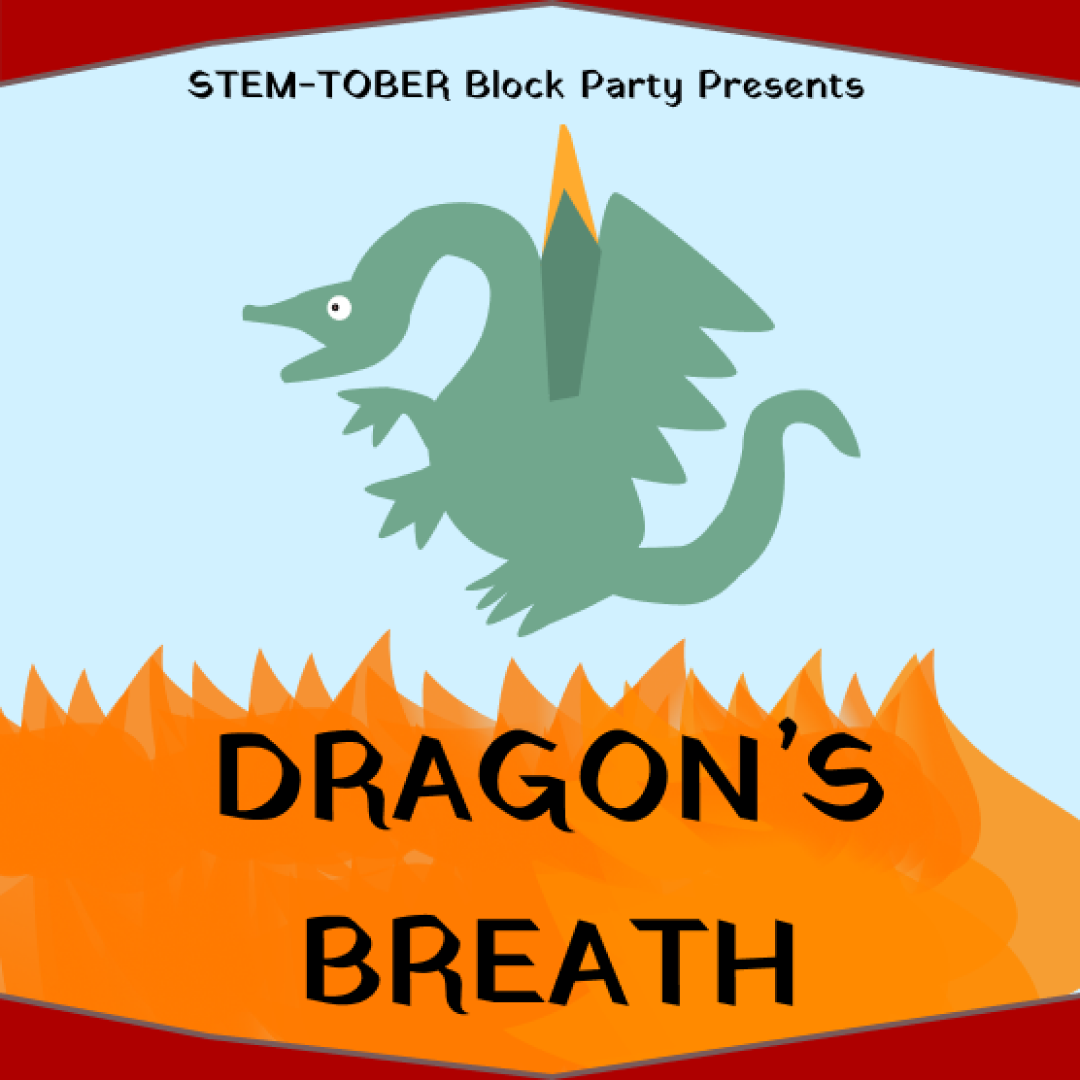
    The last thing we had to get ready was our poster. We had a poster designed on Figma with a fun dragon and fire visual. We also had some more informational posters that would describe what liquid nitrogen was and how we were using it in our experiment demonstration. 

    Day of the Event:

    Before the event, I went to the library to print out the poster. After, I met up with all the StemComm people near the Howey building where our event was taking place and helped set up the table, liquid nitrogen setup, and posters. It was a little slow in the beginning, some people who came up to our table were just students passing by, or people who were trickling in for the Pumpkin Drop event. Soon, more people pulled up to our event and we were dipping cereal in liquid nitrogen to give to as many people as we could. 

    It was really fun to see people’s reactions to the texture, taste, and density of the liquid nitrogen-dipped cereal. After trying it myself, I found the cereal to be almost the same density as a rock. It was tougher to bite on and made a really big crunch sound. 

    If I could change one thing about what we did for the event, it would be make it more apparent that the usage of liquid nitrogen can be hazardous and to partake in our activity at your own risk.

  • The Mask Against COVID-19

    The Mask Against COVID-19

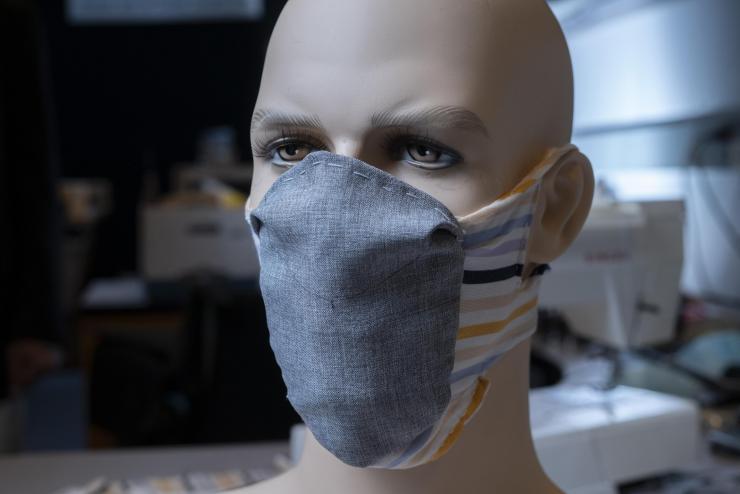
    Dr. Sundaresan Jayaraman, a professor in the School of Materials Science and Engineering, here at Georgia Tech worked on finding a form-fitting mask that provided superior protection against respiratory viruses like COVID-19. These masks, which have been in development even before the COVID-19 pandemic, aim to provide a comfortable way to wear masks and still provide the most protection against foreign particles. The masks use a combination of barrier filtration material and stretchable fabric in order to hold their shapes and be form-fitting for their users. The barrier filtration is made from a moisture-wicking material that allows for the material to fit the user’s face without causing any restriction to the nasal airways and speech. The stretchable material provides holds for the ears and positions the mask on the face correctly. The mask also uses electrospun nanofibers to filter out the smallest particles, which makes it more effective than the N95 respirators. The main flaw that N95 respirators have is that it leaks air around the edges allowing for virus particles to be breathed in by the users. The leakage problem also causes discomfort to the user, where users eyeglasses would fog up and constant adjustment of the mask can dissuade users from wearing a mask in public. 

    The Form-Fitting Mask created by Dr.Jayaraman and his team Photo Credit: Christopher Moore, Georgia Tech

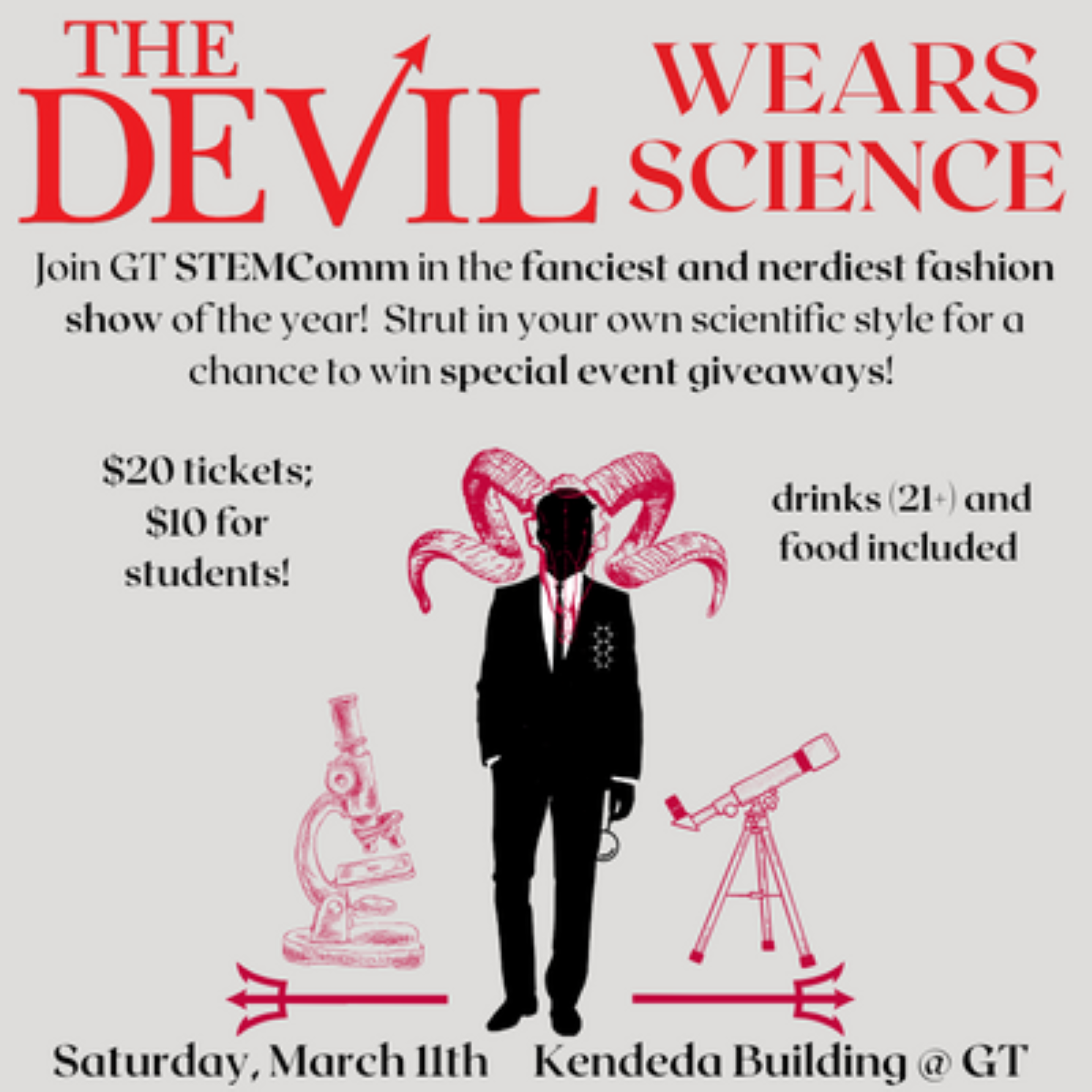
    I got the pleasure to work with Dr.Jayaraman and his colleague Dr.Sungmee Park when creating presentations for The Devil Wear Science event. As the event was a part of the Atlanta Science Festival, we got to showcase the true effectiveness and design of the mask to the viewers. During the event, the models for the event which included my partner, Carrera Ortiz, wore masks that were connected to a device that showcased the effectiveness of the air filtration system that the mask had. The device showcases how little to no particle was able to get through. It was exciting for me to get to be so up close and personal with what the mask can do and its effectiveness of it. 

    During the show, Dr.Jayaraman shared the way, design, and thought process of creating the mask and his reason for doing so. Though the importance of a highly effective mask might not seem like a big thing today, as more and more countries are getting rid of mask-wearing policies, it was not the same that could be said about two years ago. When COVID-19 was at its peak around April and May of 2020, many countries started to notice the importance of the mask and funded a project that could lead to a more effective mask. Dr.Jayaraman and his past research placed him in a perfect position to fight against COVID-19. Overall, the work of Dr. Jayaraman and his team serves as a testament to the power of science in solving real-world problems. By creating a mask that is effective, comfortable, and sustainable, they have made a significant contribution to the ongoing fight against the COVID-19 pandemic and beyond.

    Sources: 

    Premium vector: People wearing medical mask: Vector illustration design, medical masks, nurse art. Pinterest. (2020, March 25). Retrieved May 3, 2023, from https://www.pinterest.com/pin/premium-vector–757378862321960976/

    Researchers redesign the face mask to improve comfort and protection. News Center. (n.d.). Retrieved May 3, 2023, from https://news.gatech.edu/news/2020/09/03/researchers-redesign-face-mask-improve-comfort-and-protection

    Tech researchers recruit for CDC Mask Study. News Center. (n.d.). Retrieved May 3, 2023, from https://news.gatech.edu/news/2021/08/27/tech-researchers-recruit-cdc-mask-study

  • Collaboration is Key!

    Collaboration is Key!

    As a senior in college, about to graduate with an engineering degree, I’ve come to actually appreciate the dreaded “group project” – and trust me, working with others can be very challenging. But on reflection, I can really see how they also build key skills in collaboration and communication, that are especially important in STEM fields believe it or not.

    In classes: working with different people, even if you all have the same major, can offer different perspectives, ideas, ways of thinking that you wouldn’t have thought up alone. The benefits of working in a group are not just division of labor – although that’s also important, as you quickly learn that one person can’t do everything without burning out – Group projects also teach the art of compromise (and it is a tough one to learn).

    One of my biggest projects in my undergrad has been my senior Capstone project: a more practical application of the things we’ve learned in our undergraduate classes. For me in particular, working in an interdisciplinary group and coming up with our own idea for a product, even with all my experience working in groups, it was a bit mind-opening to see what could be done with everyone offering different skills.

    It let me see how other majors approach the same sort of problem from different angles, with different concerns. It also opened my eyes to how you never really know where which skills will come into play, going into a project. Despite being an engineer myself, I learned to lean a lot more on my colleages who had deeper expertise or were more comfortable with actual manufacturing – instead, I found myself unexpectedly using a lot of my intersocial and organizational skills; understanding that this was an area that I excelled in, that my teammates in turn had less experience with.

    For our group in particular, our chosen project of making a new device and app that would potentially be brought to market required a large range of skills: some people were devoted to marketing and aesthetic design, some were focused on the coding of the app and device itself, some were focused on customer outreach and feedback, while others focused more on making the device itself.

    Everyone did their part, but communication was absolutely key to make sure the rest of the team was kept up to date on your own progress, as well as making sure your aspect’s concerns were known. For example, if someone on the coding team knows that it’d be practically impossible to code for some function, then it’s key that they communicate that to the marketing team before they claim that function is an important feature. Or if someone conducting interviews with customers learns that they absolutely won’t want a product that’s too heavy, it’s important that that gets passed along to the group members handling manufacturing so they know not to use heavy materials.

    Outside of normal class projects, like for this group, STEMComm and Charged Magazine, I’ve seen how through collaboration you can learn and be exposed to so much more than you would normally – from reading the articles on new topics from my teammates, to learning about the varied projects research labs completely removed from my field are making, and presenting that to the public.

    And even outside of a school environment, out in the real world, you can find some pretty nifty examples of science happening from collaboration.

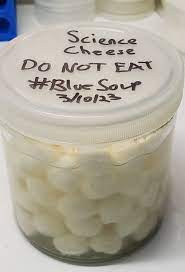
    Take the ongoing “#BlueSoup” saga over on microbiology-Twitter, where a microbiologist shared her amazement at how some old soup she had in the back of the fridge had turned blue – then, through encouragement of her fellow scientists, decided to take a sample of the soup to take back to the lab, to find out just what bacteria or microbe caused the color change. And from there, other labs requested samples, different experiments were conducted, DNA is being sequenced, and now several researchers are involved and collaborating on this interesting little question – potentially even working towards publishing their findings in the future!

    Collaboration is so very important for many things in life, and especially in STEM fields – so for any aspiring scientists, try not to shy away from learning it!

  • The Devil Wears Science Journey

    The Devil Wears Science Journey

    Working behind the scenes of an event can be an eye-opening experience, especially when it’s a science show with a unique twist. That’s exactly what happened when I had the opportunity to be a part of the Atlanta Science Festival’s The Devil Wears Science fashion science show in March. Since it was my first time working as part of both a science show and fashion show, I was especially eager to be part of such a unique and innovative event. This immersive experience allowed me to gain valuable insights into the inner workings of a successful show, and I was amazed at the amount of hard work, creativity, and attention to detail that goes into putting on such an event.


    My group, Too Hot To Handle, focused on discussing and demonstrating the importance of heat stroke prevention through the use of protective clothing, specifically a beekeeping suit, during the event. My teammates were Claudia Ortega and Sachit Swaminathan and in the weeks leading up the show, we worked on reaching out to individuals in the beekeeping community to model and experts in the field of heat stroke prevention to present at the event, and also gathered information about the science behind our topic. 


    Prior to the event, I had very minimal knowledge about beekeeping suits, particularly as it relates to heat stroke prevention, so it was quite fascinating to do research and learn more about it. While there aren’t a large amount of scholarly resources on the topic, I tried to understand the different parts and materials of beekeeping suits and then did research on each fabric in relation to heat resistance. Moreover, ​​as I delved into the topic, I realized how much thought and consideration goes into selecting the right materials and design elements for gear such as beekeeping suits, especially since the consequences of inadequate protection could be severe. 


    There were some challenges my team and I faced during the planning of the event, particularly in regards to contacting people to discuss the science behind heat resistant gear. Initially, we planned for experts to discuss wearable heat sensor devices and then relate that to the design of heat resistant fabric in beekeeping suits, but we faced some difficulties in finding available experts to participate. After further attempts to contact other experts in the field, we decided to present the science portion of the presentation ourselves and focused on gathering research on the topic. 


    In addition to my work behind the scenes, I also had the opportunity to challenge myself and grow in my presentation skills. As the day of the festival approached, I decided to join Sachit in presenting the science portion of the event, which was a significant step out of my comfort zone. I conducted more research to develop a scientifically accurate script, and we kept making edits between the slideshow and script to allow the content to align. I was slightly behind at times due to preparing for a conference I had to attend later that week, but I was determined to gather all the necessary information and be confident in my speaking parts.


    On the day of the science fashion show, I was nervous as I arrived at the Kendeda building in my blazer clutching my freshly printed script.  Since there was some time to spare before the show began, I decided to use the opportunity to practice rehearsing for the presentation with my other teammates. This not only helped me to feel more confident and prepared, but it also allowed us to fine-tune the script and the visuals of our presentation, ensuring that everything was in sync and aligned with the overall vision of the show. As the presentation drew near, we gathered with our new models and went over the directions for modeling the beekeeping suits. Despite the initial setback of our previous model not being able to attend, we worked together and found a solution, and as we worked out other technical issues that arose, my confidence grew, and I became more and more assured in my part of the event.


    As our team took the stage and our presentation began, I couldn’t help but feel a sense of excitement mixed with a hint of nervousness. However, the more I spoke, the more my confidence grew and before I knew it, our part was over. The feeling of accomplishment and satisfaction was truly indescribable, and it was amazing to see all our hard work finally come to fruition. 


    But the night didn’t end there. As the other teams took the stage, the energy in the room continued to grow. I was captivated by the creativity and passion that each team brought to their presentations and it was incredible to see the range of scientific topics and the level of detail that went into each one. 


    Overall, I came away from this experience with a greater appreciation for the intersection of science and fashion, and the power of collaboration to bring together different perspectives and talents. It was an amazing opportunity to learn and grow and I look forward to participating in future events that combine my love of STEM and creativity.