Category: Story Time

  • Don’t call me bird-brained!

    Don’t call me bird-brained!

    The island of New Caledonia

    What’s wrong with you humans, using us as insults? Just the other day, I heard one of you call your boss a vulture! Now, I’m not here to deny that man’s covetous proclivities, but I happen to have a friend who’s met a vulture, and I hear they’re quite lovely chaps. At any rate, they’re probably going to go extinct because of you idiots; some respect on the way out would be nice. Perhaps I’m being uncharitable. I know a lot of you are rather well-meaning, and that you study other animals to understand us better. But you have to realize, my dear apes, it’s not always the case that we can’t figure out some of these tasks you present us with, but that we don’t feel like doing them in the first place!

    Anyway, let’s move on to the main subject of my little essay–a paper I found in one of your journals. Here, von Bayern and his buddies studied compound tool construction in my species–New Caledonian crows. Compound tools are made from two or more separate objects, each of which might function individually as a tool. Until recently, compound tool construction has only been observed in your family—the hominids. The most famous example of compound tool construction outside of humans occurred over a century ago when a man named Wolfgang Köhler was studying apes on an island much like mine and discovered that one of his chimpanzees, Sultan, was able to combine two bamboo sticks to reach a banana. With the increasing evidence that members of my family, the corvids, seem to possess rather impressive cognitive abilities (if I do say so myself), von Bayern and his crew decided to conduct a study in which they presented a few of my friends with a variety of tools, some of which could be combined with others to create more complex tools. They were first provided with a food reward that could be extracted with a single tool, after which the researchers introduced pieces of food that were much too far to reach without creating a compound tool. Half of the crows in the experiment (yes, yes, go ahead and laugh–I’m sure all of your friends are geniuses, aren’t they?) were able to combine the tools with no prompting from humans. Even your study concedes that my friends seemed to have created the tools for a very specific purpose and that they seemed to understand when to use the tools because the further the reward was, the more likely they were to combine the provided tools before their first attempt at reaching their treat.

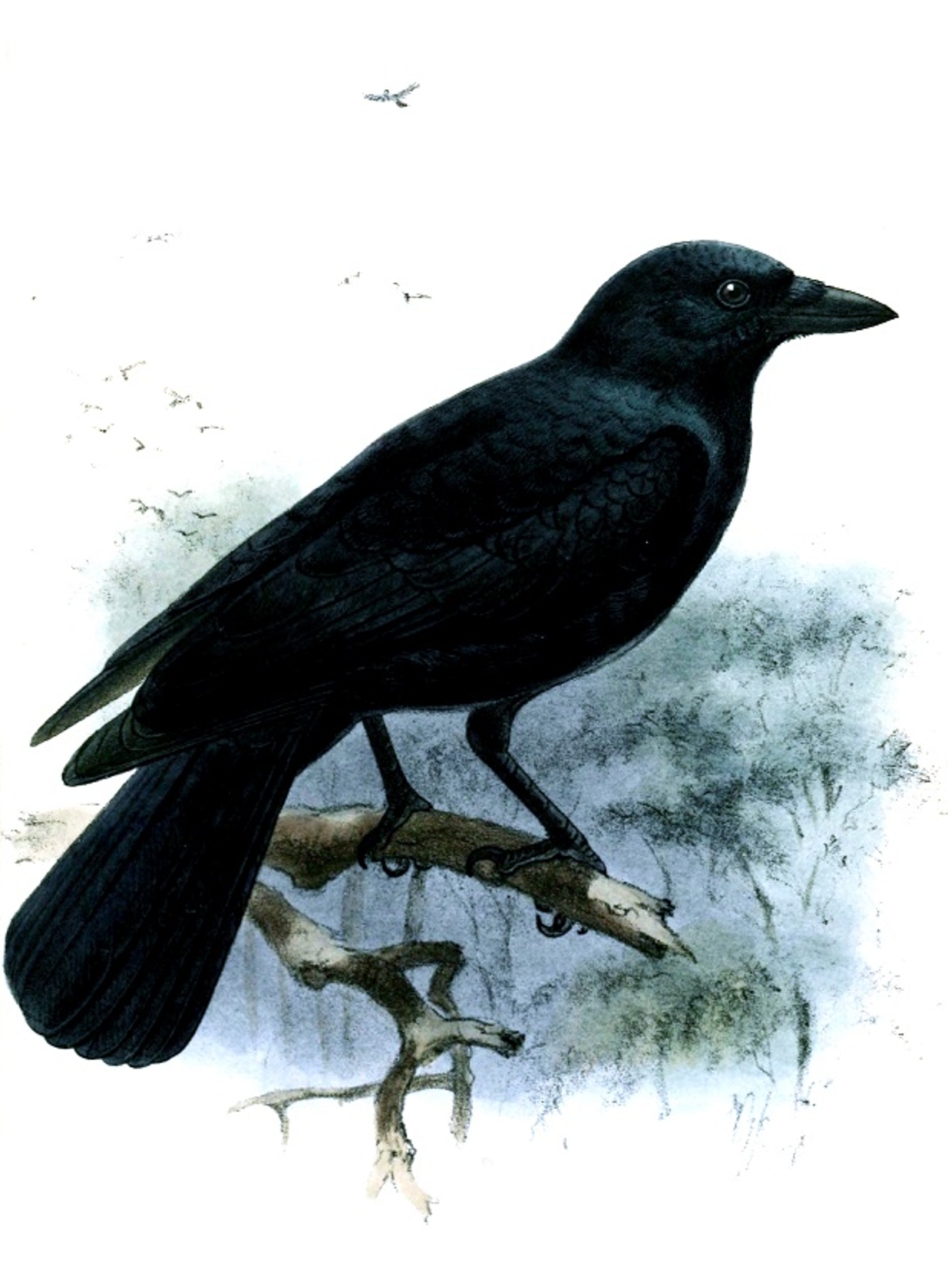
    My great-great-great-great…I don’t really know, honestly. My ancestor. Damn handsome fellow. In your year 1877, if you must know. You creatures have such a strange obsession with tracking the sun.

    I was more or less happy with the paper so far, but it was the next part that made me squawk with delight! One of my buddies, Wak-wak (I think he was called Mango in the paper–what is it with you people naming us after food? Would you like it if I called you Burger?), happened to break several tools in an effort to fit them into each other. Nevertheless, once he was able to overcome these difficulties, he repeatedly constructed 3- and 4-component tools. You see, as my forefathers took to the heavens, it made it more difficult for their progeny to engage in tool use. To put it more simply, we don’t have hands, damn it! Not one thumb! How the hell am I supposed to build a civilization when all I’ve got is this damn beak?

    I will now let you in on a secret. Remember that chimp I told you about earlier? Köhler helped him make the tool. In fact, Sultan was unable to use the bamboo sticks until Köhler showed him how he could hit his finger into one, and even still, it took him over an hour to figure out the task. Moreover, he had some difficulty replicating the task the following day. Compare that to my comrades, who were able to figure the task out in at most six minutes and continued to construct new tools in successive trials. Look, I know that it’s difficult for my species to communicate with yours; hell, I’ve been scrawling this letter out for the past three months on a piece of driftwood. Ultimately, we’re quite different, and you really can’t know for sure why we do the things that we do. All that I ask is a little compassion. A little understanding. A little respect. Sure, we can’t do long division, but why would we want to? Just remember that we all share this planet, and that you can never really know what’s going on in our heads.

    Citations:
    Ogada et al. (2015). Another Continental Vulture Crisis: Africa’s Vultures Collapsing toward
    Extinction. Conservation Letters, 9. https://doi.org/10.1111/conl.12182
    von Bayern et al. (2018). Compound tool construction by New Caledonian crows. Scientific
    Reports, 8. https://doi.org/10.1038/s41598-018-33458-z

    Image Credit:
    Araucaria columnaris New Caledonia via Creative Commons license.
    New Caledonian Crow via Wikimedia Commons.

    Note: The anthropomorphism is merely a vehicle to draw light to a couple of issues. Also, please continue naming animals after food.

  • CS4641 Project 3: Neural Networks Reflection

    CS4641 Project 3: Neural Networks Reflection

    Introduction

    If you have read my last article, you know that we have been here before. Although I talked about the process of completing and submitting Project 2, I wanted to write about Project 3 but focus on more of the content I learned from it.

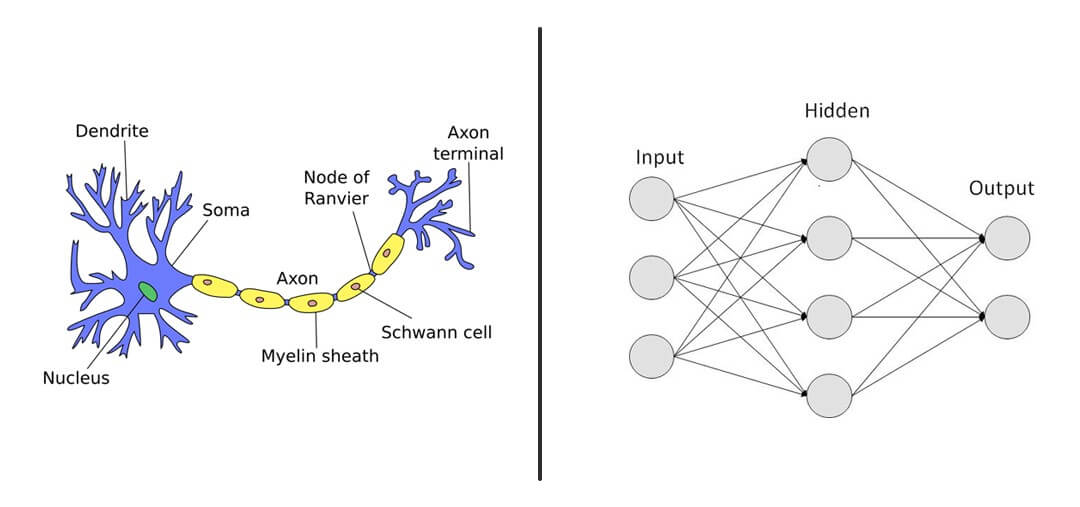
    Project 3 was completely different to Project 2- not only in terms of difficulty, but also what it meant it to me. In high school, I remember binging YouTube videos on neural networks for hours upon hours. I thought they were extremely interesting and powerful- but still had no idea how they really worked. Another reason that the algorithm caught my attention firstly was due to the relation the name has to the human brain, which has always fascinated me. Below is a picture that shows the relation between a brain’s neurons and a computer neural network.

    Neural networks and their allure were part of the reason that I wanted to study the Intelligence thread as CS major- so this particular project in Machine Learning was going to be important for unveiling the black box of how they work.

    What is a Neural Network?

    Neural networks seem extremely complicated, and they definitely can be. However, there are simple ways to think about them that makes the understanding much easier. Simply put, a neural network is a set of algorithms working together to show relationships in a dataset and try its best to mimic the behavior of human brains. They represent one of the most popular algorithms and can be programmed to do almost anything.

    This particular project was focused on one of the algorithms potential uses- text classification. Text classification is when a computer model is able to categorize words based on a certain trait they possess. For example, for this assignment, we were given the iMDB dataset of movie reviews that the computer model would take in and break down to analyze. The model is also fed training data and testing data- the training data is what the computer uses to learn how things are classified and the testing data is used to test the model’s accuracy. The computer model must be accurate on classifying movie reviews as either positive or negative on both sets of data. The coolest part of implementing a neural network like this is when it can accurately predict whether it is reading a nice review or bad review just like a human.

    Neural Bag of Words

    For the sake of length, I will only discuss one of the algorithms we implemented for Project 3, Neural Bag of Words. NBOW represents the situation in which a bag contains a bunch of words; think of someone reaching into a bag and fetching a word, but only paying attention to the amount of times a word appears and disregards grammar and word ordering from the word’s original sentence. This means that every single word in the bag is treated the same, it doesn’t matter what the word’s meaning or significance is.

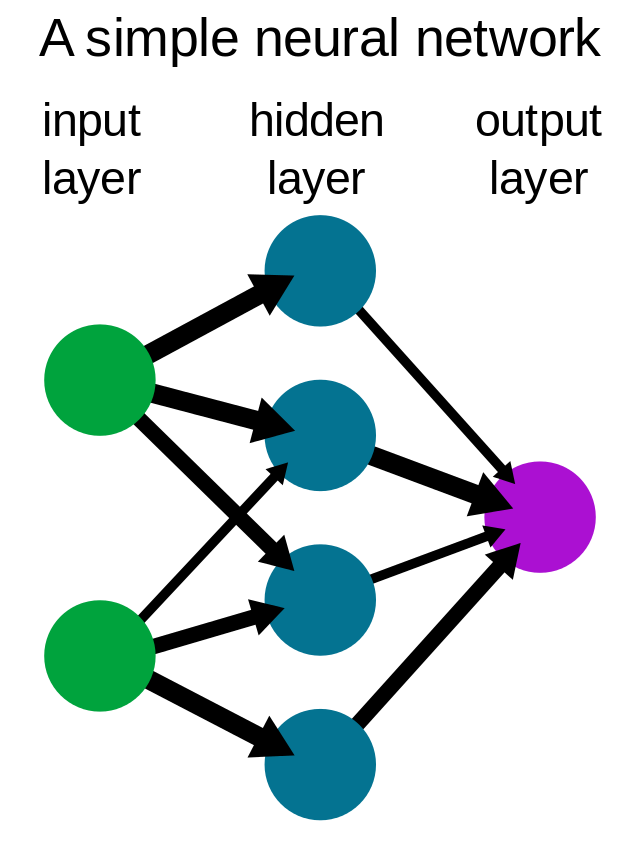
    The Neural Bag of Words model works like any other neural network- with an input and output layer, and a hidden layer in between.

    This algorithm works its magic by using an embedding layer, which helps convert words to vectors that can be used in the neural network. In our situation the input layer consists of the IMDB review dataset and the output we get is an accuracy of the computer’s prediction on the nature of the reviews.

    Conclusion

    Although I have only scratched the surface of what a neural network is made up of and does, the message of how strong it can be should be clear. Using neural networks, computer scientists can train any computer to predict anything at all using just an established dataset and training time! The possibilities of functions are endless!

  • Reflection on CS4641 Project

    Reflection on CS4641 Project

    Introduction

    When my professor assigned a new project in my CS 4641 class, Machine Learning, I felt panic begin to set in. All I could think of was my unpleasant experience from a couple weeks back. I had never coded for any machine learning project, so when I attempted the first coding project two days before it was due, it did not go smoothly. I had a meltdown because it was all so new and foreign to me and even the coding environment we had to use (Google Colab) was extremely confusing to me. In hindsight, I definitely should not have waited until the last minute to begin the massive project; I had let procrastination win. I had to find a way to turn the situation around, and quickly! 

    Now what?

    With less than two days left before the project deadline, there was no way I could finish the entire thing. Luckily for me, our class is allowed to utilize up to three late days on any assignment throughout the semester. I could finally take a breath and concentrate on the task at hand. Seeing that I had no clue whatsoever how to begin the project or even wrap my head around the concepts meant that I obviously needed to seek outside help. I went over to my professor’s website for the class and located the TA office hours guide on Piazza and signed up for every single office hour possible. In total, I was planning on going to seven different TA’s office hours during the rest of the week. 

    Struggling through the Process

    From there, I put my head down and worked until I could not stand the sight of my computer screen. I woke up early and went to bed late working continuously on the project. Thanks to the late days, I had time to go through the project step by step and write down every question I had. With these questions, I went to a bunch of office hours and learned from every single session with all the different TA’s. Through the non-stop work and meetings, I ultimately got my code to perform the desired outcome. That moment could have very well been the happiest I have felt this entire semester. The utter relief I had when it was all over was insurmountable. I had finally finished the monstrous project that I had put off for so long. 

    Conclusion

    Clearly, the biggest lessons learned here were that when a professor tells you not to start the homework late, listen to them and never be afraid to seek out help. I should never be embarrassed to ask any question I have because there are so many resources out there from GT to help.  Plus, once I eventually understood the machine learning project, it was super cool to see it work in action! 

  • The Unbeatable Antibody Squad #1: Covid-19

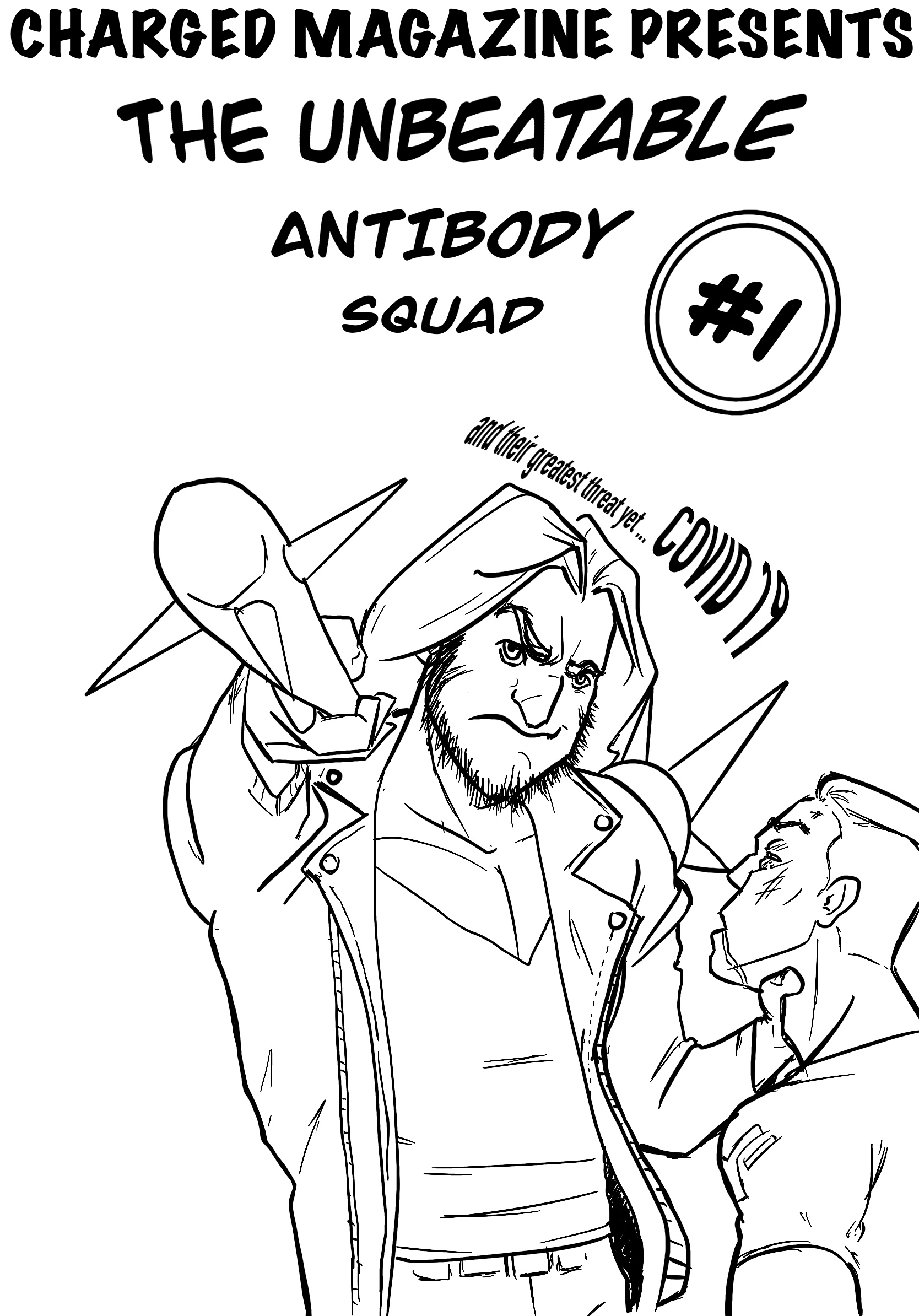
    The Unbeatable Antibody Squad #1: Covid-19

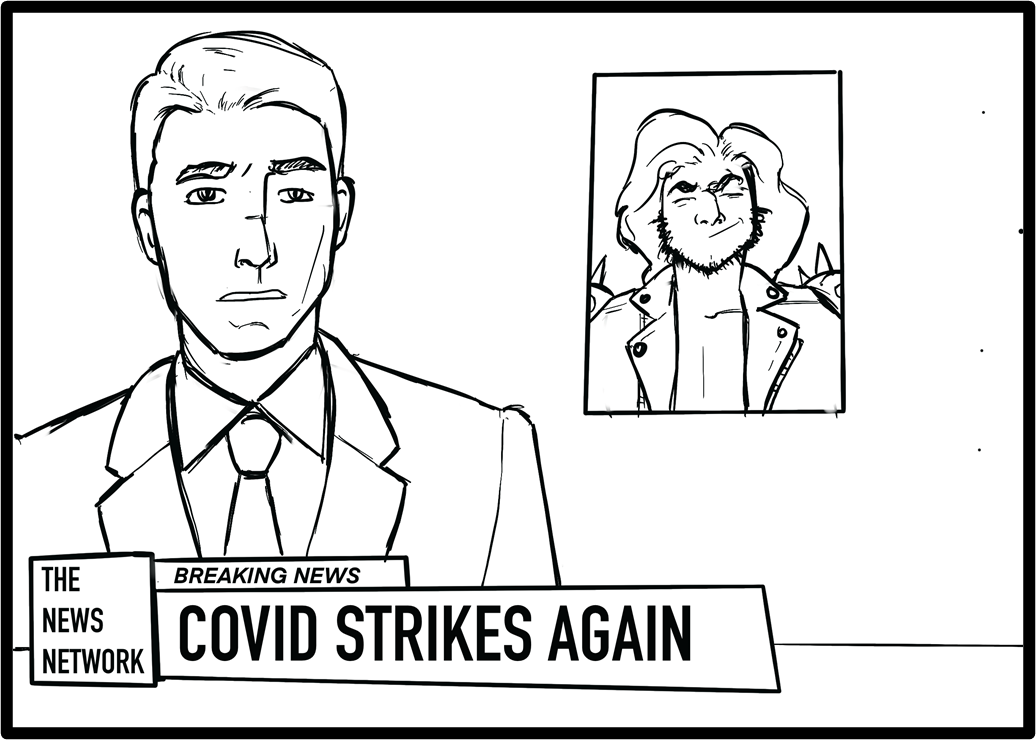
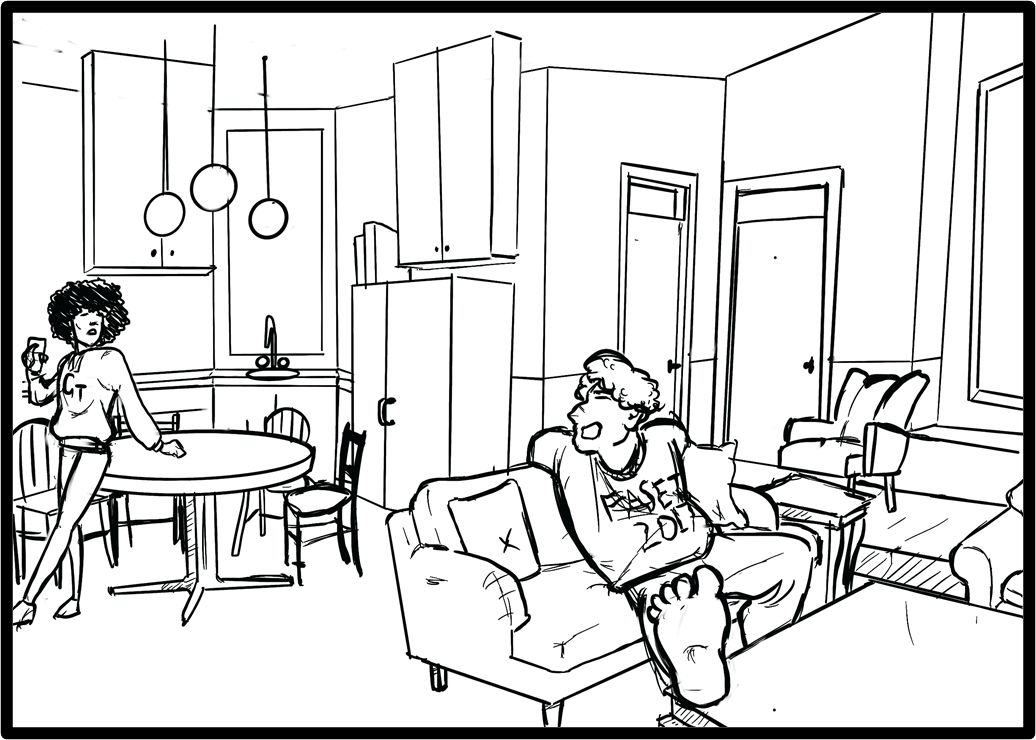
    NEWSREPORTER: AUTHORITIES REPORT YET ANOTHER HOME INVASION PERPETRATED BY A MAN WE NOW KNOW AS COVID NINETEEN FROM THE CORONAVIRUS CRIME FAMILY. HIS REIGN OF TERROR HAS GRIPPED THIS SLEEPY NEIGHBORHOOD SINCE LAST YEAR. IT SEEMS HIS M. O. IS INVADING THE HOME AND MAIMING OR KILLING EVERYONE INSIDE. HE CAN BE EASILY IDENTIFIED BY HIS UNIQUE LEATHER JACKET AND BOOTS.

    –

    MEANWHILE IN THE JANE JOHNSON HOME…

    GARY: THIS COVID GUY IS OUT OF CONTROL!

    STEPH: YEAH. DID BRAIN EVER ORDER THAT mRNA?

    GARY: SHE DID! VIA VACCINE SAME-DAY EXPRESS DELIVERY. IT SHOULD BE HERE ANY SECOND NOW.

    —

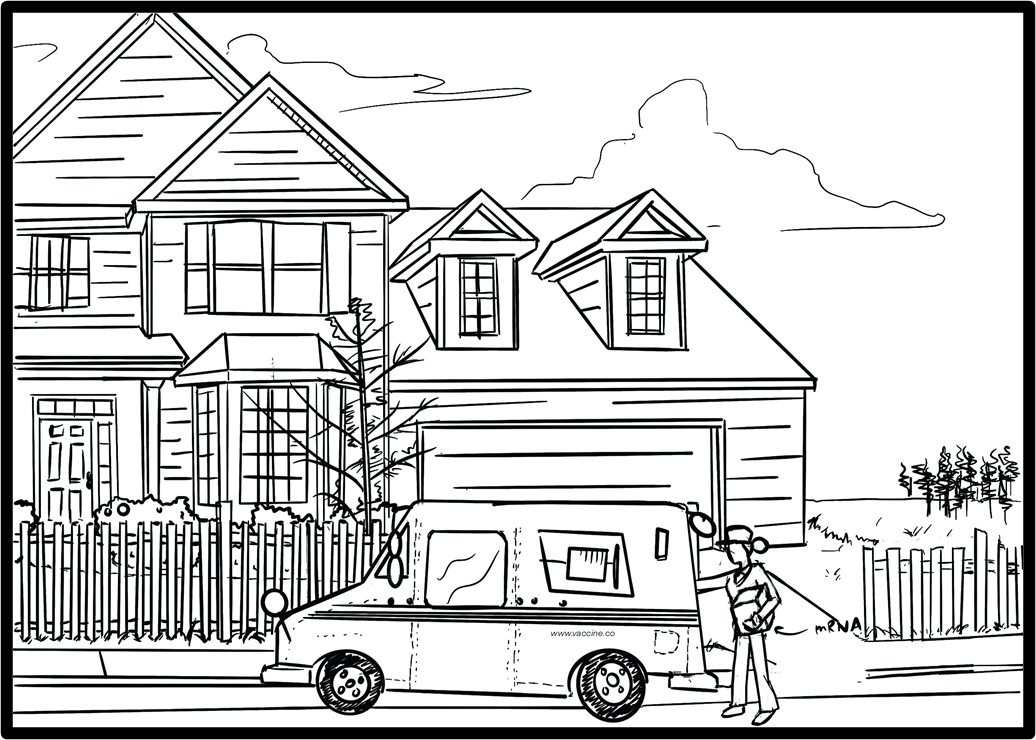
    OUTSIDE…

    THE VACCINE DELIVERY WORKER, MS. LIPID NANOPARTICLE, CARRIES THE BOX TO THE DOOR AND RINGS THE DOORBELL.

    —

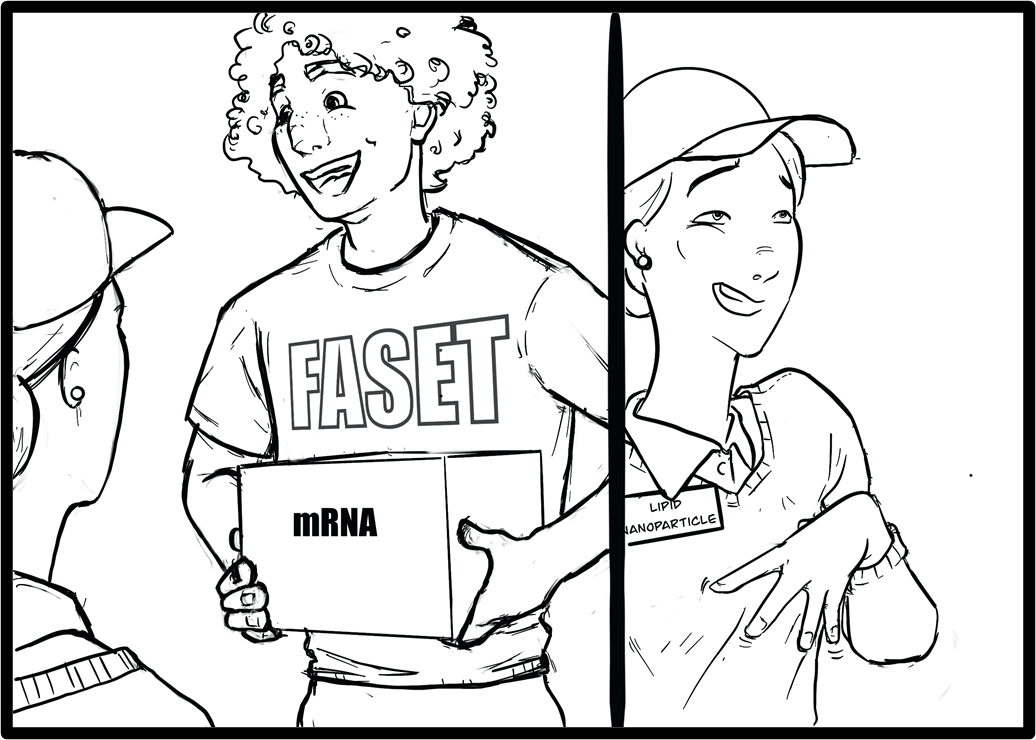
    LIPID NANOPARTICLE: HERE’S THE mRNA MANUAL YOU ORDERED!

    GARY: THANK YOU MS…. LIPID NANOPARTICLE.

    LIPID: PLEASE, CALL ME LIPPY. LIPID NANOPARTICLE IS MY MOTHER’S NAME.

    —

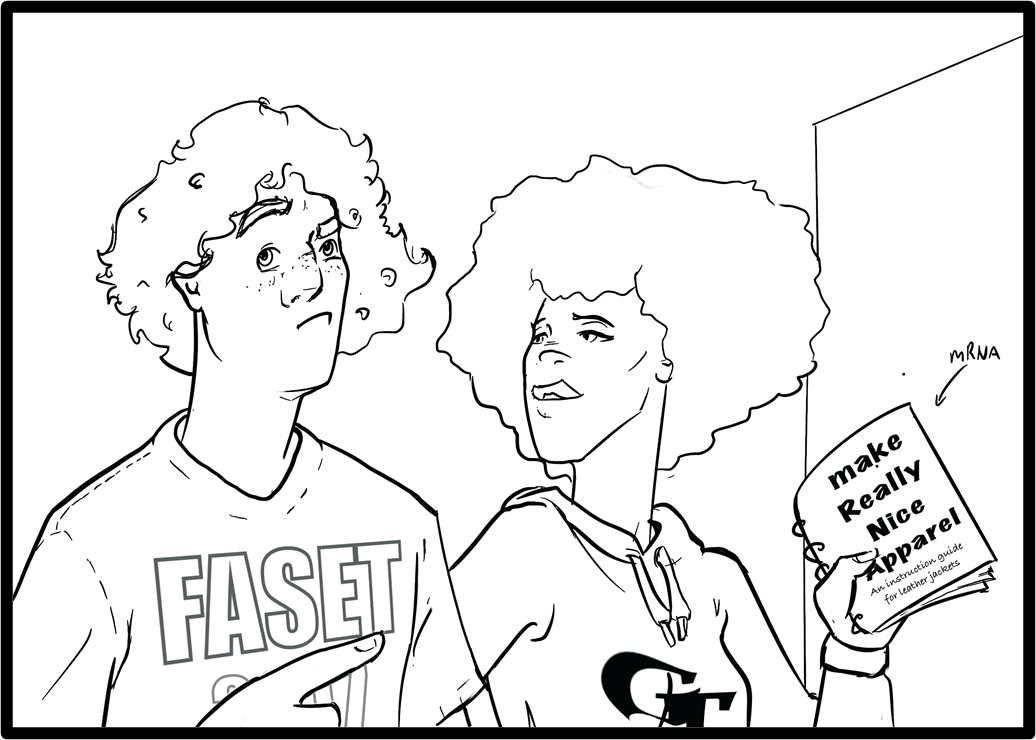
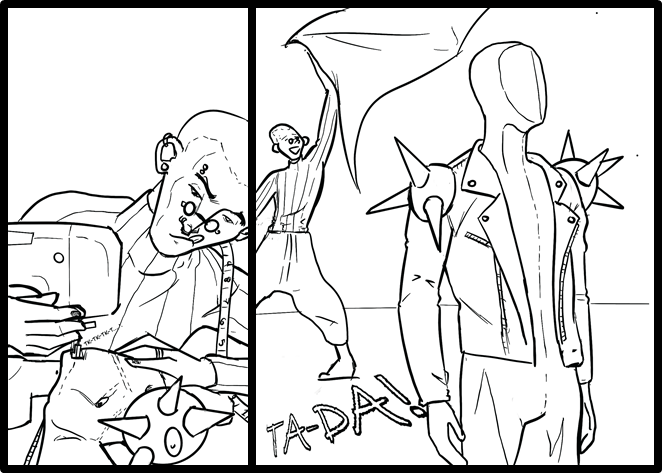
    GARY & STEPH CARRY THE mRNA MANUAL, WHICH DETAILS HOW TO MAKE COVID’S LEATHER JACKET AND BOOTS, TO THE ROOM WHERE THEIR HOUSEMATE, AXL THE RIBOSOME, DOES THEIR SEWING. A THOUGHT COMES TO GARY.

    GARY: WAIT! WON’T THAT MANUAL GET MIXED UP WITH THE DNA MANUAL, PERMANENTLY CHANGING THINGS AROUND HERE?

    STEPH: THE DNA MANUAL IS IN A SAFE IN THE STUDY. THIS MANUAL WILL GET NOWHERE NEAR IT. BESIDES, THIS IS WRITTEN IN ENGLISH, AND THE DNA MANUAL IS IN JAPANESE, SO THIS WOULD HAVE TO BE TRANSLATED FIRST, MAKING A MIX UP LIKE THAT IMPOSSIBLE

    —

    THEY GIVE THE MANUAL TO AXL THE WHO GETS TO WORK MAKING THE CLOTHES.

    —

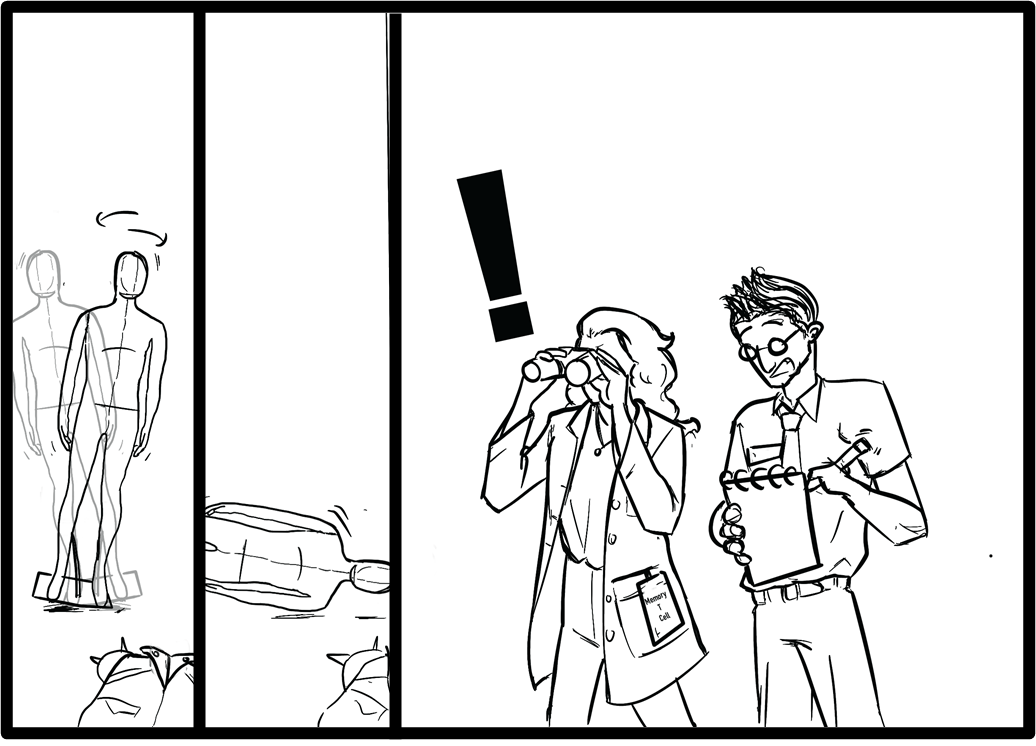
    HOME SECURITY SPOTS THE MANNEQUIN WEARING COVID’S CLOTHES AND DEPLOYS THE ANTIBODY SQUAD TO SUBDUE THE THREAT.

    —

    OTHER MEMBERS OF THE SECURITY TEAM RECORD THEIR FINDINGS

    MEMORY T CELL [LEFT]: WRITE THAT DOWN! WRITE THAT DOWN!

    —

    THEN ONE DAY…

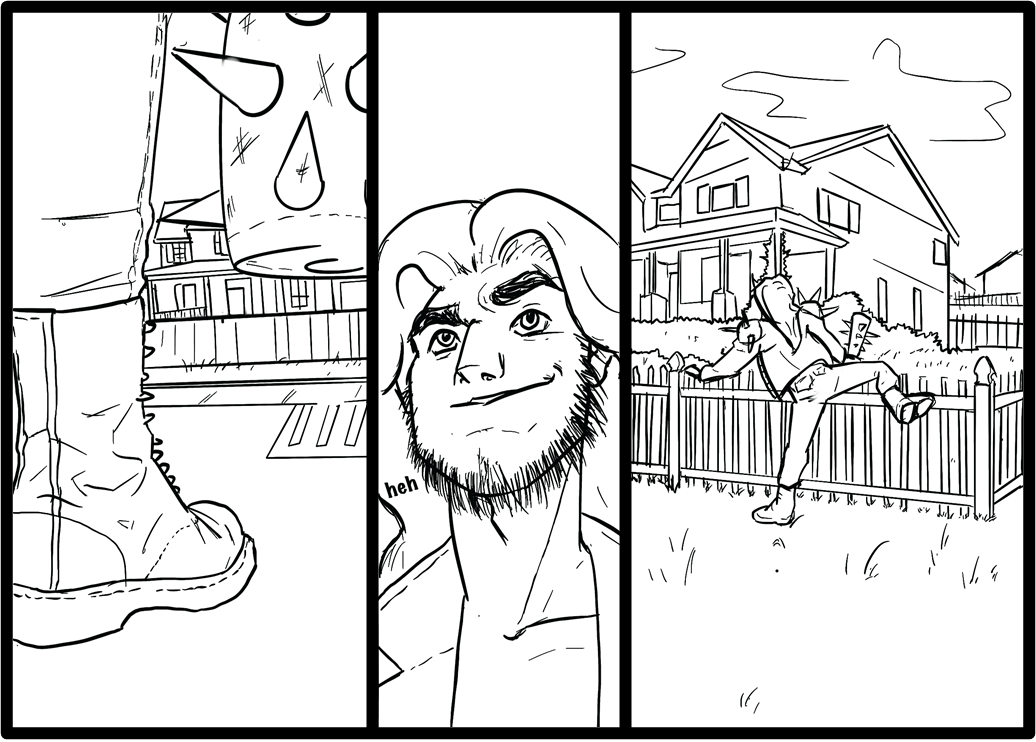
    COVID NINETEEN DECIDES TO PAY THE JANE JOHNSON HOME A VISIT

    —

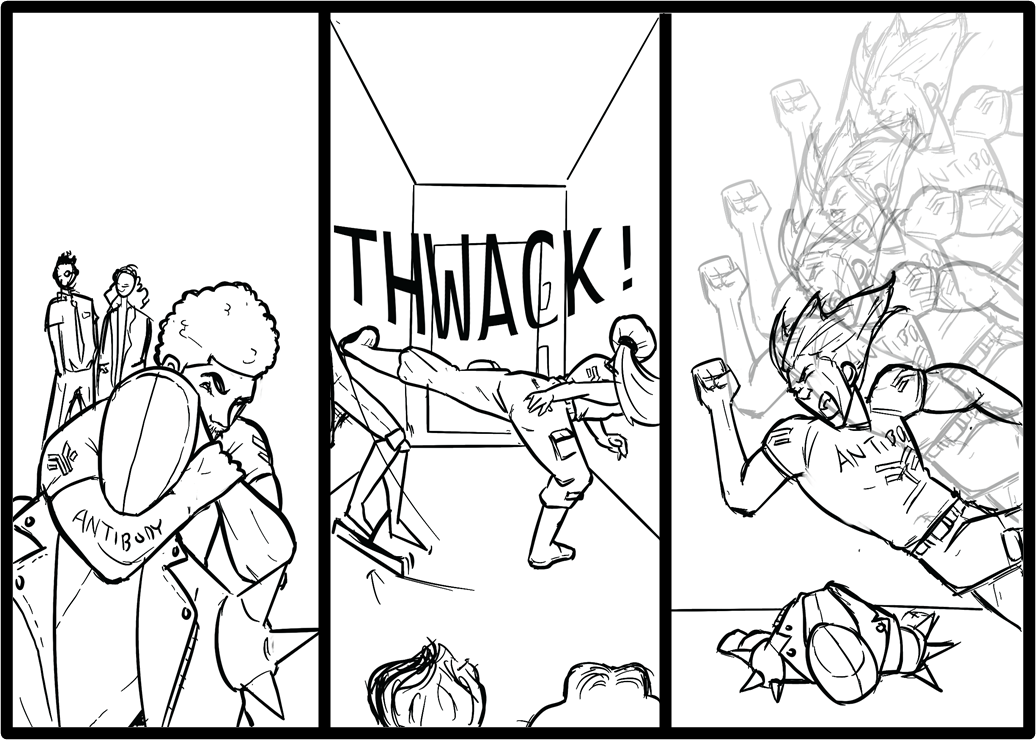
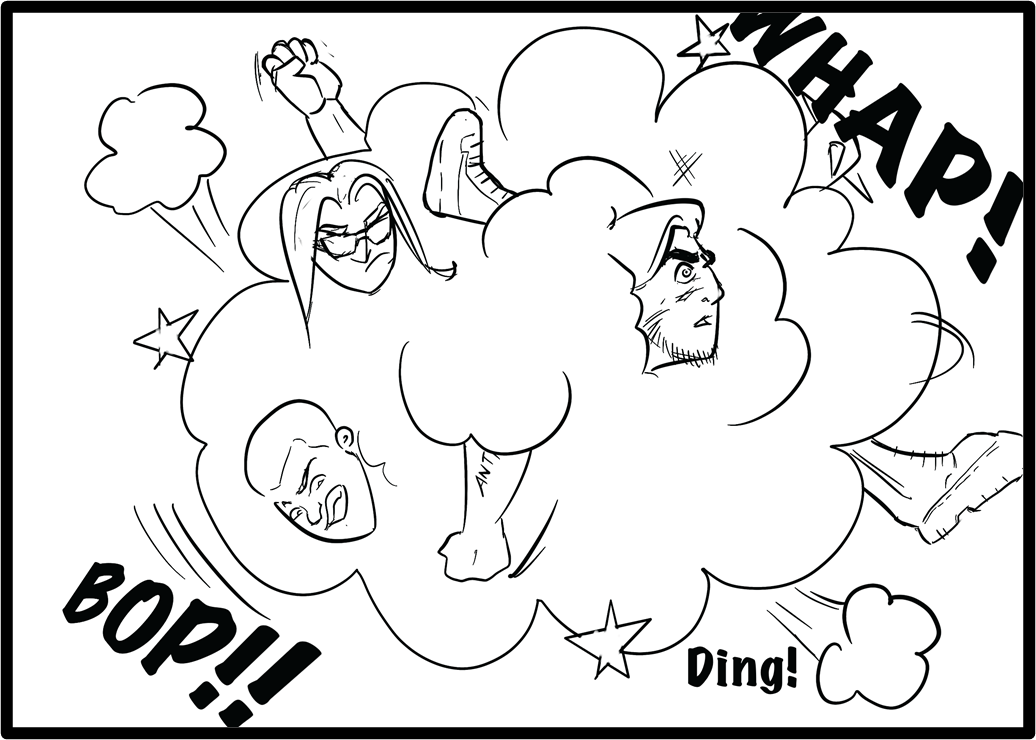
    BUT THE HOUSE IS BATTLE-TESTED AND READY FOR HIM. THEY ATTACK HIM IMMEDIATELY.

    —

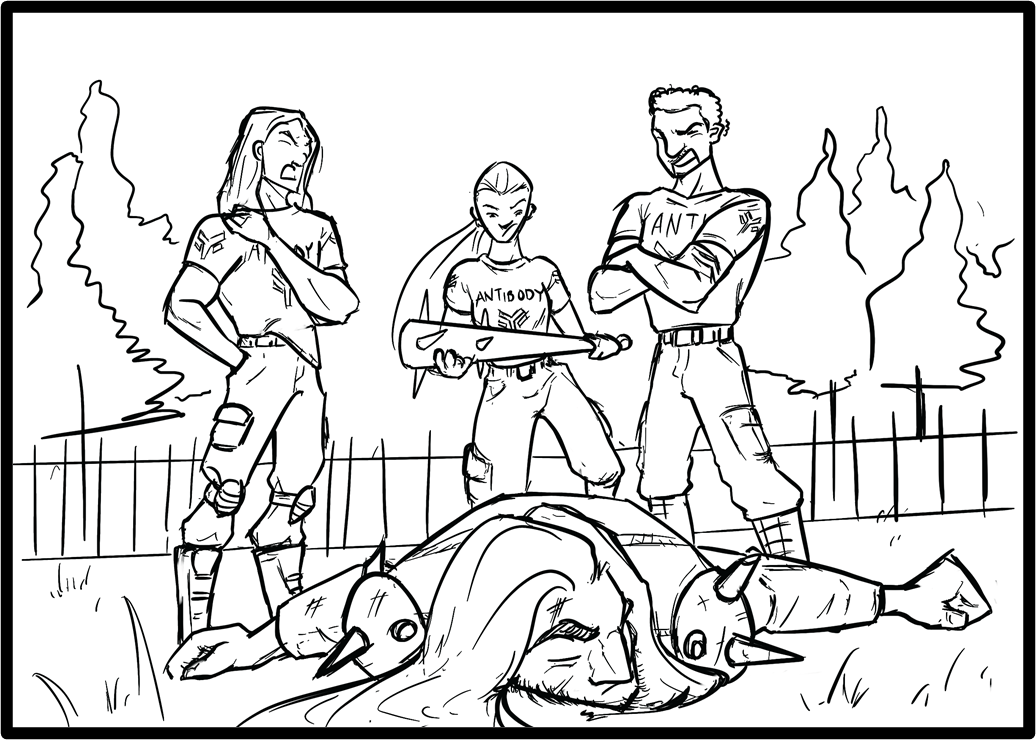
    COVID ANTIBODY SQUAD [ALL]: AND STAY OUT!

    COVID JOINS A LONG LIST OF CRIMINALS WHO ARE NO MATCH FOR HOME SECURITY AND ITS ELITE ANTIBODY SQUAD!


    FIN

  • Vinyl is Better than Digital Music

    Vinyl is Better than Digital Music

    Hear that music??? That, my friend, is the sound of classic vinyl…

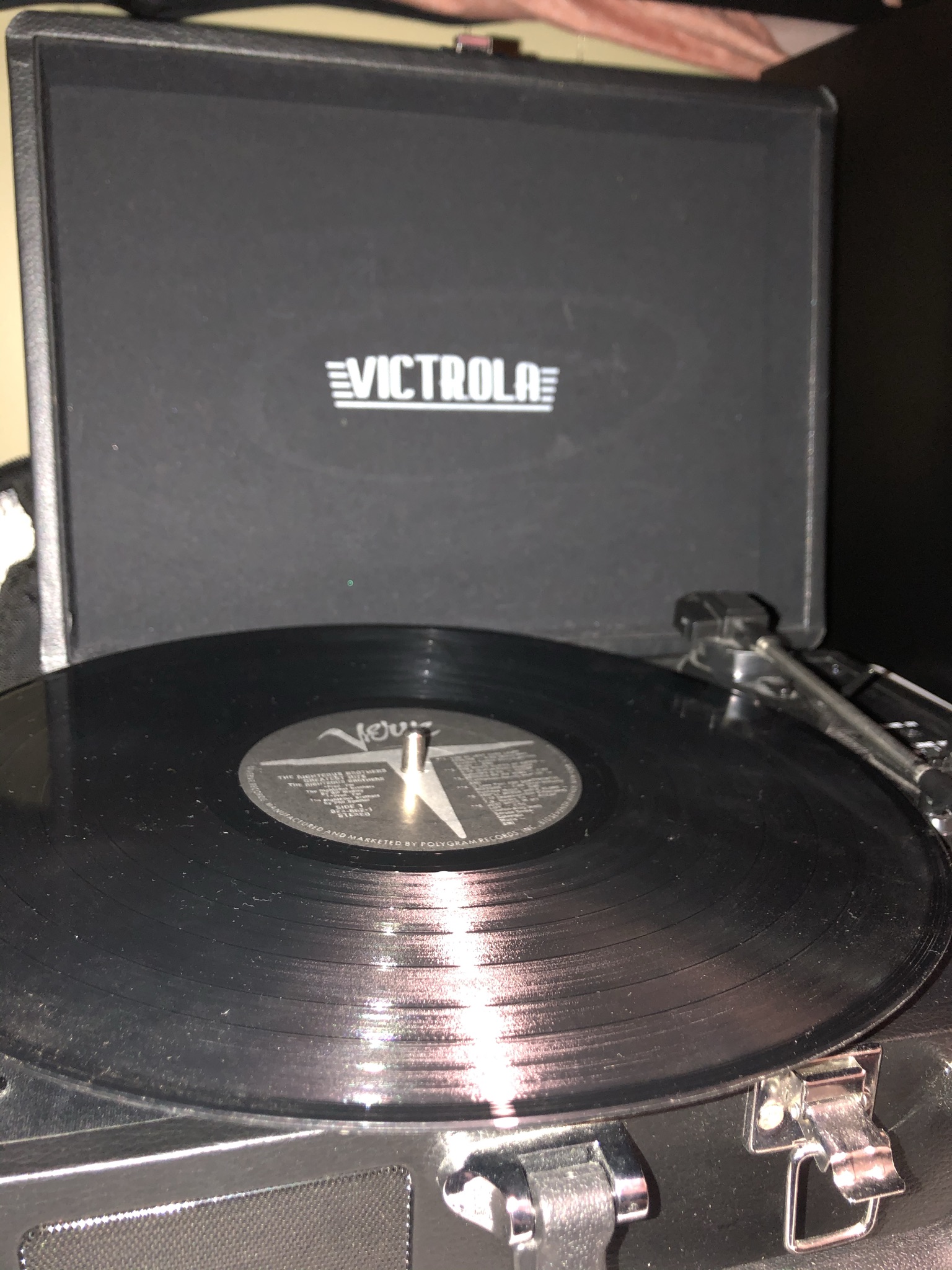
    Meet Ernie. My vinyl player 🙂

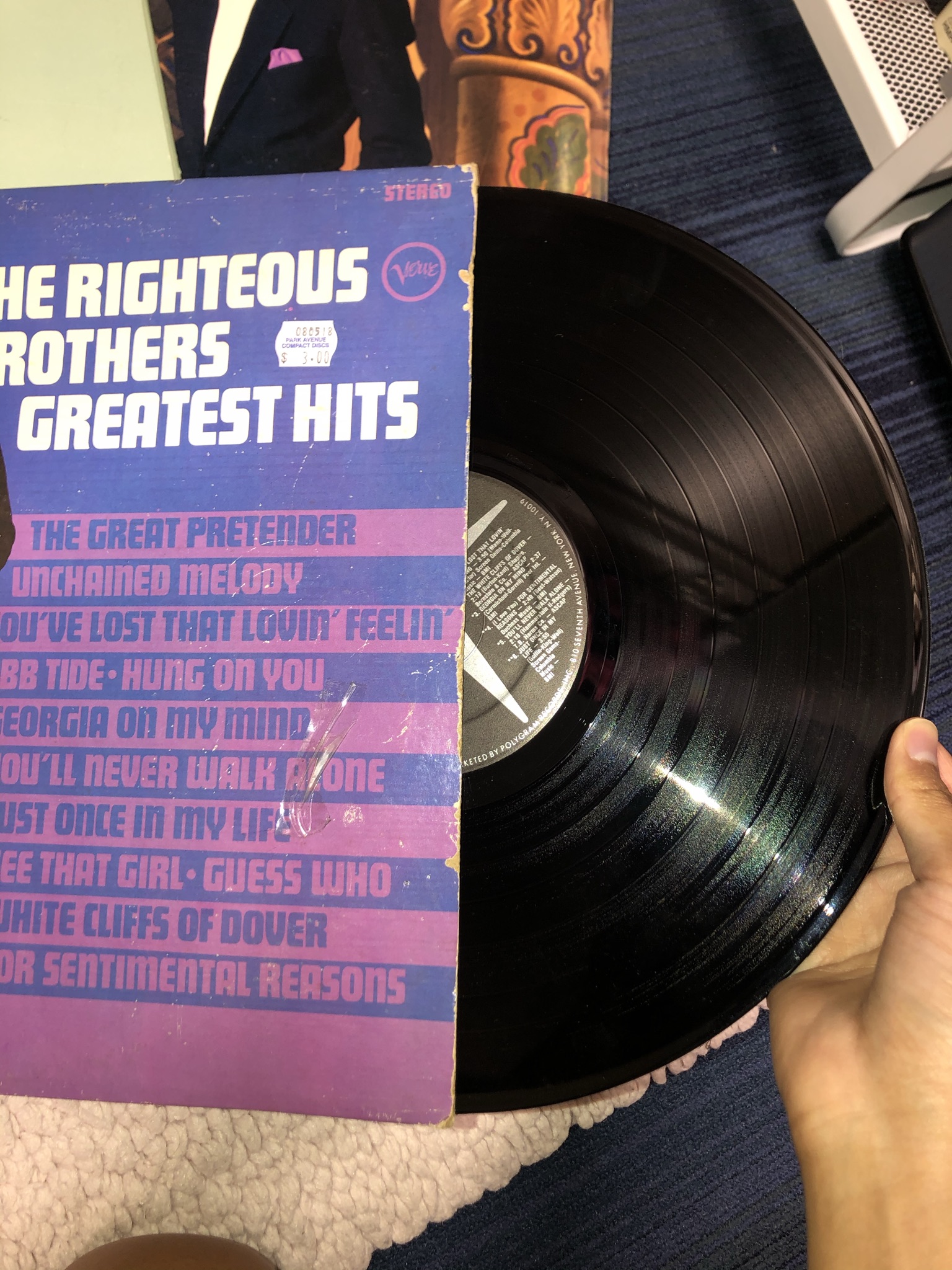
    You know that round spinning thingy that plays music that your grandparents and/or parents used growing up? Well, good news – it’s not extinct! When it comes to enjoying music, one of the best ways that I have discovered is by using vinyl (aka: the record player).

    Compressed MP3 files and digital streaming services such as Spotify, Apple Music, Pandora, and YouTube have been the social norm for listening to music; however, vinyl sales have tremendously increased from under a million in 2007, to more than 8 million today in the U.S alone. According the British Phonographic Industry, vinyl sales hit a peak in the UK and the US in recent decades. Why? Because vinyl just is better!!

    Let’s delve into the reasons why vinyl records are superior to digital MP3.

    1) Simply put, vinyl sounds better than MP3:

    Vinyl is the only playback format readily available to consumers that is fully analog and fully lossless. That means that with a quality record player, you get to enjoy a high-fidelity listening experience. High-fidelity equates to high-quality reproduction of sound, that has inaudible background noise and distortion – giving a sound extremely similar to the original. Who wouldn’t want to listen to music that sounds as authentic as the source intended it to be?

    The quality is immaculate. The song you hear playing in this article is featured above. It is a vinyl by the Righteous Brothers, with a song clip entitled “The White Cliffs of Dover” (1965).

    2) Listening to vinyl is a complete experience:

    An expanding collection of my vinyls!

    You know when you can feel the music when listening to your favorite songs? Well, with vinyl, you not only figuratively feel the music coursing through your mind and soul, but you can physically feel the music through the tangible form of the vinyl. There’s nothing like unraveling a vinyl wrapped in its cover. There’s nothing like being able to smell the music, just like the comforting smell of books in the library. With vinyl, you get to fully experience music with literally all of your senses.

    3) Going to record stores is so fun!!

    There’s nothing like the nostalgic and magical experience of entering a record store, whether it’s your first time, third time, or hundredth time! You can easily spend hours in the record store browsing, searching, and discovering music! You can mingle with other vintage audiophiles, and you can usually always get a special discount when buying vinyl in bulk! Furthermore, there is no monthly subscription to enjoy the music you want (Haha, take that Spotify and Apple Music)!

    Unraveling a shiny vinyl!

    Vinyl is an unbeatable classic that has remained relatively unchanged for the past 40 years! Since it’s creation in 1948, numerous developments and refinements within the vinyl industry have been made to perfect its technical and practical excellence. As George Plasketes, a professor of media studies and popular culture in the School of Communication and Journalism at Auburn University in Alabama, put it:

    “Vinyl is not simply a recording format, but the artefact of an age; it is an experience that embraces emotion, passion and romance”.

    Keep calm and vinyl on!

    Sources:

    Oregonian/OregonLive, David Greenwald. “Does Vinyl Really Sound Better? An Engineer Explains.” Oregonlive, 19 Nov. 2014, www.oregonlive.com/music/2014/11/does_vinyl_really_sound_better.html.

    Plasketes, George. “Romancing the Record: The Vinyl De‐Evolution and Subcultural Evolution.” Wiley Online Library, John Wiley & Sons, Ltd, 5 Mar. 2004, onlinelibrary.wiley.com/doi/abs/10.1111/j.0022-3840.1992.00109.x.

    Sarpong, David, et al. “’Vinyl Never Say Die’: The Re-Incarnation, Adoption and Diffusion of Retro-Technologies.” Technological Forecasting and Social Change, North-Holland, 29 Nov. 2015, www.sciencedirect.com/science/article/pii/S0040162515003078#bb0310.

    Zabowski, Jason. “4 Reasons Why Vinyl Is Better Than MP3.” VOX Player, 21 Nov. 2017, https://vox.rocks/blog/vinyl-is-better

  • Astrophysics, Loving Science, and Inspiring: An Interview with Dr. Storchi Bergmann

    Astrophysics, Loving Science, and Inspiring: An Interview with Dr. Storchi Bergmann

    Dr. Thaisa Storchi Bergmann is a Brazilian female astrophysicist whose work on LINER-type galaxies is shaping the way we currently look at space. My team, Hidden Figures, decided to do a youtube video about her life and her accomplishments as a scientist, to spread awareness on prominent women scientists in their field.

    When the Hidden Figures team sent Dr. Storchi Bergmann sent an email disclosing the video we made for her, we were not expecting to receive such a response back. We were actually able to set up a time and date to interview her to pick this Astrophycisist’s mind over a video call. We had three interviewers: Maria Del Rosario Garcia-Chilla, Kyungsoo “Kevin” Kim, and myself: Isabella Beeco.


    Beeco: “In past interviews, you mentioned liking science since you were a kid, but what made you interested in science while growing up? Did it come from a family or role model, or was it a love you discovered on your own?”


    Storchi Bergmann: “I think I discovered more on my own and maybe I also was lucky to have good teachers. My science teachers were always good, and then I think this had an influence on why I like to do science. I think you guys mentioned in the video already that I had a small lab that I assembled with the help of my father. My father was an accountant and saw that I liked science, so he helped me build a small lab. He would buy my microscopes and solutions for chemical reactions. He would support me and buy materials for me. He was very supportive, but it was more my own desire and my good science teachers.” 


    Garcia-Chinchilla: “Your article on Galaxy NGC 1097 in 1993 marks an important discovery of a black hole in a LINER-type galaxy. Can you take us back to that day and tell us about what you saw and your work life?”


    Storchi Bergmann: “By the time that I began to work on active galaxies, actually I did my thesis on active galaxies, and at that time it was the late 80s. I finished my Ph.D. in 1987. At that time, we had the idea that these active galaxies that had bright emission lights from the nucleus were the ones that had the black hole. So I was interested in those galaxies, partially because I wanted to understand and observe the black holes. And over the years, with the launch of the space telescope it became more clear that not only the active galaxies have black holes, but most galaxies that had a center concentration of mass, because there are a few galaxies that are very diffused and don’t have a central bulge. For example, the milky way has a bulge so it has a black hole because it has a dense structure of stars. But for example, the Magellanic clouds that are neighbors to our galaxy, are diffused or irregular galaxies, and these ones, we don’t see evidence of black holes, so far. So it looks like most of these big galaxies, like the Milky Way and M87 Galaxy, that we looked at had a black hole in the center. I used a different method in my research paper than the Hubble uses. Hubble looks at the gas and the monument of stars. The Hubble would be able to see more because the view of the Hubble is much better at spatial resolution. So one point over the surface of the earth, because you are above the atmosphere, instead of seeing one point you see many many points, so you can see a structure inside the points that you see in a round base telescope. The resolution points .05 while the telescope without the new optics we have now is 1. So, it is 20 times better now. Inside this one second, the Hubble had 400 points (400 times more). They could see the velocity of the stars when you observe inside these regions increases much more than you would expect if there wasn’t anything there. If it was only stars, then you would expect a small increase in the velocity. But with a black hole, there is a high increase in the velocity in the stars due to the gravitational pull of the black hole. In order to see the pull of this black hole, you have to be very very close to the black hole. When the Hubble was launched, it could observe nearby galaxies that were not active and saw blackholes in those inactive galaxies.


    By 1990, this idea was getting more clear that not only the active galaxies had black holes, but also other inactive galaxies. So, when I published my paper, Galaxy NGC 1097 had a LINER nucleus that was something that people were not sure if it was a black hole or an inactive nucleus. SO when I showed the broad emission lines from the doppler effect, it showed that there was gas rotating at velocities at 1000 rotations per second, the only option was that it could be a black hole pulling this gas down. So I saw gas emission, I could calculate the velocity, and the only explanation was that it was a black hole. Still, there was this idea that only active galaxies had black holes, so I showed that they didn’t need to be active. It was interesting because it was a transient event, because people had observed it before, but didn’t see this. So I observed it at the moment where the nucleus captured a star and disrupted it.”


    Beeco: “What has been the focus of your research recently?” 


    Storchi Bergmann: “Now we have this idea, that most systems have black holes, and models of galaxy evolutions show that if you only use gravity, dark matter, and bionic matter that you see, you would build an even expansion of the mini-verse, you would have galaxies that would be too big. The conclusion is, how do we avoid making galaxies bigger than what we see. When we look at the galaxies we see that there is a limit to the size of a galaxy, but this limit is not well explained. So we had to put some feedback, and this feedback then attributed to a black hole in the center would capture matter, then become an active nucleus, then the black hole when the matter is captured it produces Slite when the disk gets hot and out force, which is a forceful ejection of matter. So you see some energy coming from the surrounding region of the black hole, and this energy pushes mass away and a galaxy grows by adding more mass. If you have some feedback effect that pushes some matter away, you can avoid making the galaxy too big. The idea is that in the evolution of a galaxy the black holes form together at the beginning of the universe, and eventually there are some phases when the galaxies are active when the gas is captured by the black hole, making an accretion disk and shines and pushes gas. The evolution of the galaxies at the beginning of the universe 13.7 billion years ago, the galaxies were born 13.4 billion years ago, and apparently, the black holes were formed with the universe. There is a feedback effect for when the black hole captures matter, and then the galaxies become so big. This feedback is predicted by the models but is also seen in nature. A few years ago, I was more worried about how the gas arrives at the center, which\ is an important physical problem because it has to lose some momentum to go into the black hole. So I worked a bit on this, and now I am working on the feedback processes. Can we see this feedback? Because the models see some feedback is coming to visualize the galaxies as they are. I am calculating this feedback. But right now, I am seeing a little less feedback than we need. On the other hand, I am doing only optical studies and maybe I need to do other methods, like other wavelengths. Optical studies only show you ionized gas, but we should also look at neutral and molecular gas. We are interested in looking at molecular gas because lots of galaxies have an abundance of this in the center of their galaxy. This molecular gas is best observed by radio wavelengths like with the Alma Telescope. I am trying to map these feedbacks because we need the feedback to reproduce the galaxies as it is. Does nature support these recipes? I am looking to see if the observations replicate what these models need. On the other hand, we need to look at other gas phases and look at the changes of the accretion disks. 

    I am also doing the same things with other objects as well. The other project is what is the effect of the black hole when it is active in the evolution of the galaxy: the feedback effect.”


    Beeco: “Was there a moment in your career where you realized that this was the perfect job for you?”


    Storchi Bergmann: “It was when I was a teenager preparing to go to college, I was not sure what I was going to be in my profession. So I chose architecture, actually, and took the exams. I was lucky that the physics institute was near the architecture institute, and we had a physics course for architects, and we would go to the physics institute for classes. Every Time I went there I would look at the labs, and then my love for science from my childhood and teenage years came back to my mind, and I was like ‘What am I doing in architecture? I want to be a scientist.’ I think that was an enlightening moment. I never had much of a role model in science; I just did it because I liked it. My role model was actually a cousin, two years older, who loved architecture so I chased after hers. But then I realized that that was her dream and not mine. I thankfully realized it soon enough and changed majors after 6 months at the architecture institute. I think that was the moment.”


    Garcia-Chinchilla: “Are there any women you worked with that you think deserve more recognition? If so, who?”


    Storchi Bergmann: “Well I would say that my advisor is one of them, Miriani Pastoriza. She is an Argentinian woman who came to Brazil and founded the Extragalactic Astronomy group. She began the group. When I arrived at my institute for my Ph.D., she was the only one who could advise me on astronomy, which was interesting and she arrived one year before me. She had some political issues; she was almost arrested in Argentina, and she came to Brazil and found this job before she did her Ph.D., using her largest telescope at the time in Argentina, the big 2.5m telescopes in Argentina Cordoba Observatory (before Chile). So she would go even with her baby girl, and she would take her to the telescope because they couldn’t afford any care. She receives some recognition in Argentina and South America, but she deserves worldwide recognition.


    Beeco: “How has changing technology impacted your research?”


    Storchi Bergmann: “I think that the main impact in my research was the beginning of the integral fumes spectrographs. When I began you could either do imaging or spectroscopy, which would isolate a part of the galaxy, but then around 2000 the integral fumes spectrographs came along which combined the ability of imaging and spectrographs. Each pixel of the image had a spectrum graph, it is like 3d. You have a data cube instead of a 2d image. We use it to study the image and take spectrographs of the image, and get it all together. This technology is revolutionizing the study I do, especially for studying the gas flows in space. This is one example that is important. Programming and big databases are now more accessible to look at other observatories’ public data. Your research in the database and see a large enough sample of the data you would use. Of course, technology is always improving, and it is revolutionizing our discoveries. Also, adaptive optics, which the Nobel prize winners used, which shoots lasers that make an image which distorts in the atmosphere they can tell how the deformation should be.”


    Garcia-Chinchilla: “As a teacher and a mother, do you have suggestions that we should implement in schools and universities to increase or maintain interest in science?”


    Storchi Bergmann:  “I think that the kids are already interested in science. We shouldn’t make them lose interest, because it is amazing that when I have given talks at schools, mainly my kid’s schools, I realize that kids from 10 -12 years old are the most interested in science. In terms of interaction and questions, they want to know everything. They ask and ask and ask and ask, and I would get exhausted. For example, I would go to school and give classes to kids in that age range, but 13-14 was a totally different story. Many are looking at themselves and doing other things, and only a couple of them are interested, but when they were ten years old, all of them were interested. So I don’t know what makes them lose this. I don’t have the statistics, but I think that 80% of the kids are interested in science and when they are older it is like 20%. I don’t know if the schools are not interesting enough or they aren’t showing science as if it is not joyful. So I think we have to maybe work better during this age to keep them interested.


    I have a colleague here named Daniela Povoni who is the director of our planetarium, and she has special programs for high school girls. And she is very successful, she makes astronomy activities for everyone to do together. I think there are some interesting activities that are out there that we could work better on.”


    Beeco:  “As someone who is an inspiration to many students in astrophysics, what is some advice you have for them moving forward in their careers?”


    Storchi Bergmann: “If they like and are ready for the subject, well I think it is wonderful. I still love it and there are so many topics that we don’t know about, and those new students could expand the knowledge of astrophysics. The most interesting thing about science to me is that every day you make a new discovery. You are discovering new things and adding knowledge into the world. For me, this is very appealing. So if you want a life of discovery, do research. Astrophysics is very exciting because we leave our little planet earth and look at the universe and the big picture. There are so many things to be discovered out there.


    Another thing is that if you want to be a successful astrophysicist, you have to be good at computing and math. It’s important for you to try to develop this ability even if you don’t have a natural talent. Don’t give up too soon before persevering. Practice practice practice, and you will become good at those things.


    Sometimes, in the past, parents have talked to me because they were worried that their kids were going into fields without many opportunities. They were worried their kids would have to become professors at some universities. And nowadays, some researchers that left the Ph.D. went to work in different fields, a friend of mine went to work at an oil company. Because the major teaches you useful computing skills and mathematics, you can apply yourself to many different fields. Another girl that I know now works in a computing company that works with databases. So I think that in science, you develop so many skills that are desirable in other areas, like big data and computing, and critical thinking. If you want to be a researcher, which I love, you can. But if you change your mind, you can use the things you learned for different careers. This is what I say to calm the parents. Their kids aren’t losing time; they are developing practical skills. Some of my students went to work in the university, to research, or to different industries. I didn’t have a student of mine who didn’t have a good job to go into.”

    Garcia-Chinchilla: “Since you were just talking about your field going into other fields, do you get to collaborate with other professionals, like engineers or chemists? If so, do both fields benefit from working together?”


    Storchi Bergmann: “I, myself, didn’t do this much, but a colleague of mine wanted to do some research and she needed equipment to do this research. She hired some engineers and project scientists to create a group to build things. So, I am more into observing and interpreting data and models, but some people like my colleague enjoy building things and collaborating. And actually, when I visited her and her institute, I got to know a lot of astronomers and a few engineers socially. When I learned about their life and how much they earned, I discovered that engineers earned more than the astronomers at the institute who were in charge, because they had to make all of the equipment the astronomers used. There are some interactions that interact a lot, especially when building instruments and testing them. I think it is common, mainly in institutes. Since I work at a university, I do less of it because the university is more teaching and researching and advising students whereas institutes here don’t teach and they develop infrastructure.”


    Kim: “Since you are now in the leading position in your field of study, and have a lot of students and colleagues. Who was the most unique connection you have made in your profession?”


    Storchi Bergmann: “That is a difficult question. Earlier I mentioned my advisor who I admire very much, but I also admire a lot of my other colleagues. I did, however, have two outstanding students. One was a guy who had a very very large capacity of work. He was the database guy, and he would analyze everything in such a short time. He would finish a problem I gave him within one night and come the next day with it solved. He was my first Ph.D. student, actually. He did so much work, that when he finished the work I gave him, he would work with other professors. Another one was a student I advised in observations. He also wanted to do some modeling. He was really clever in a sense, and he wanted to do some modeling, so he learned by himself how to model. He is now a professor in San Paulo and is still doing his models. These two students really impressed me with their efforts and dedication. I say that I had two outstanding students and my advisor, who faced a lot of adversities. My advisors wouldn’t take excuses from students and were really tough because of what she went through and she is a model to follow. The close collaborators I have worked with are also very admirable. I do not have any idols however, I just recognize clever people.”


     Kim: “Last question: when you switched to astrophysics did you have any moments of doubt? If so, how did you overcome this hesitation.”


    Storchi Bergmann: “I switched from architecture to astrophysics, because I didn’t really think too much into what I wanted to do and ended up picking architecture because my cousin also did. I didn’t research in advance. In our university, we have an astrophysics major and a physics major. The astrophysics major is very similar to the physics one except you take one astrophysics course per semester. So, by the end of 8 semesters, you have 8 disciplines of astrophysics. Some students arrive in astrophysics thinking they will just romanticize astronomy and telescopes but then realize it’s physics and lots of work. Like I would go to the observatory once a semester because I was working so much. Some students think they will just look at the sky every night. You have to read a lot and be informed about the major you want to join and decide if this is what you want. If you don’t read, you will be disappointed. Now we have google, this information is at your fingertips.”

  • The Evolution from Fossil to Monster

    The Evolution from Fossil to Monster

    Humankind as a species is over 200,000 years old. We are travelers, storytellers, and connoisseurs of legends and tales. For thousands of years, mankind has entertained our children and fellow tribesmen with fables and stories of the unknown, the cryptic and the mythological. It is a unifying factor in our world. Every story needs a strong villain to maintain equilibrium and for many, the villain was the monster. From Greek and Roman to Japanese and Native American, fantasy and folklore have been influenced from the history of this planet. All cultures have created monsters to fuel their fears. Either to rationalize the unknown or to provide comfort for themselves, men and women of the past have created these stories for purposes that have been lost to time. Yet, monsters are alive and real today, be it in between a page or in a culture. These beasts came from our imaginations. However, many of these terror-bringers were imagined based on fossils, skeletons, or unknown sightings that frightened the inhabitants of their lands. 

    From tales of creation, to the flood, and even tales of doom, every culture has unifying legends. Some cultures produced monsters so terrifying that they were hidden and lost to time, while some have been immortalized in books, movies, and videogames. The primal fear of the unexplainable had to be justified through something tangible by mankind. Two monsters that have fueled the nightmares of children and men; two giants of terror that were produced from the unknown, can now be explained.  

    THE CYCLOPS:

    Cyclops are a cannibalistic giant race bearing a distinct feature: a singular eye in the center of their forehead. Notable cannibals and warriors in Greek mythology, the cyclops were born from the Greek God Poseidon but were cast away because of their grotesque ugliness. In Greek stories and in pop-culture, cyclopes have been used as a formidable opponent to heroes and heroines. The most well known depiction of the cyclops race comes from Homer’s The Odyssey. Other notable depictions have been seen in The Cyclops (1957), Wrath of the Titans (2012), and Tron: The Odyssey (2017). 

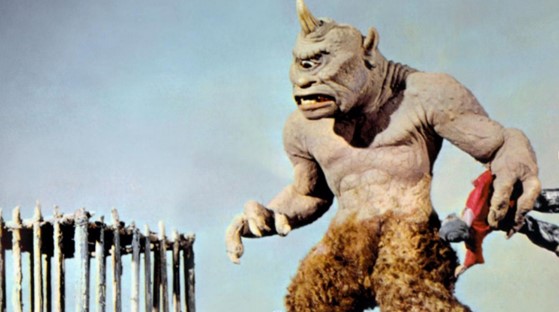
    According to Homer, Polyphemus was the cyclops leader on the isle in which Odysseus was stranded on his return home. Polyphemus was a sheep herder and a brutal warrior. During Odysseus’ time on the island, Polyphemus severed a man in half with a single bite and crushed a man in his grasp. A nightmarish scene that captures our fears of these cannibal giants; the infamous cyclops look, from Greek vases to modern day, has endured the test of time.Cyclops from “Seventh Voyage of Sinbad”. Director Nathan Juran

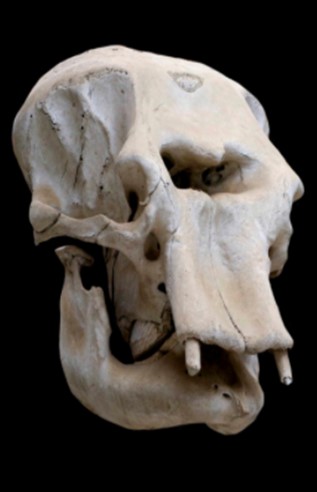
    Their faces look eerily similar to elephant skulls:Elephant Skull. Photo courtesy of Felipe Romao


    These skulls can easily be viewed as a horrific mono-visual monster. Ancient Greece had two different species of elephants roaming the area: The Cyprus Dwarf Elephant and the Cretan Dwarf Mammoth. Such large skulls would have to be supported by tremendous bodies. These skulls sported massive tusks and teeth which were perfect for crunching the bones of men.  

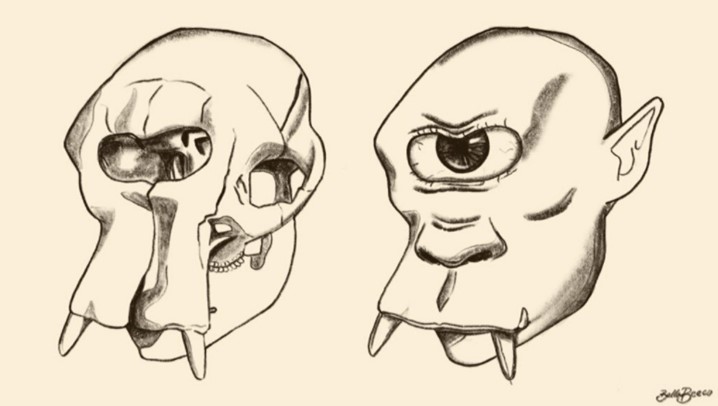
    In the early 20th century, Paleontologist Othenio Abel suggested that the inspiration of cyclops comes from the fossilized skulls of pygmy elephants found in the ancient Greek region. Found on Cyprus, Crete and many other surrounding Grecian islands, these ancient dwarf elephants died around 11,000 BCE. These elephants had a shoulder height of five feet, with an averaged- size femur of over two feet. Anatomically, elephant and human femurs look similar, which is a proposed explanation to the human element of the cyclops. From these basic anatomical parallels, the cyclops could have been born. When the image of the cyclops was mixed with human fear and superstition, the cyclops became the monster we know today: a giant cannibal terror. 


    Courtesy of Bella Beeco
    Elephant Skull transforming into a Cyclops Skull, Courtesy of Bella Beeco

    THE YACUMAMA:

    The Yacumama is a South American tale that derives its nature from the Amazon river. Meaning “The Water Mother” in Peruvian, the tale dates back to that of the Incan civilization in the 13th century. A massive 30 meter serpent monster, the Yacumama had jaws that could swallow a man whole. In her legends, any animal or man that disturbed her waters became her prey. The local indigenous people would blow on conch horns to protect themselves before entering the water, believing the Yacumama would reveal herself if present. 

    South America has many depictions and lore of snakes. The Aztec and Incan civilizations both had powerful gods depicted as these slithering creatures. The Aztecs had Quetzalcoatl who created mankind. The Incas had Amaru who was the water God and protector of the rivers. The legend of the Yacumama can be traced back to the 15th century when it was told to the Spanish Conquistadors. 

    A modern depiction of the Yacumama: 

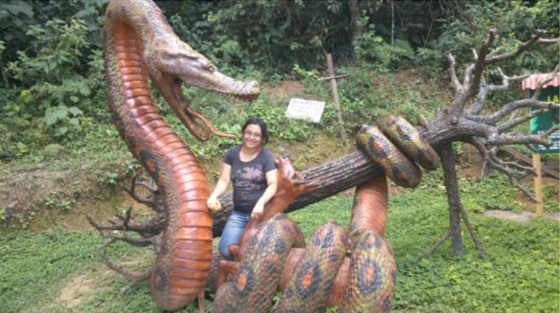
    Photo of a Yacumama Statue in Parque Tematico Peru. Courtesy of Mike Dreckschmidt

    As anacondas and rivers in South America are mutually inclusive, the pairing of Yacumama and her watery home was natural. South America is home to thousands of rivers including the Amazon, and is home to 169 species of snakes, including the world’s heaviest species: the Green Anaconda. The largest Green Anaconda recorded weighed over 500lbs and was nearly 20 feet long. The longest snake species, the Reticulated Python, which measured over 25 feet long, is not native to South America but is a related species to the Anaconda. While these are the largest snakes ever measured in current day, the largest snake ever found hails from South America: The Titanoboa.

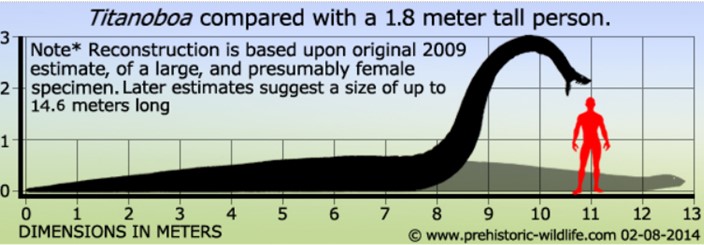
    Titanoboa fossil size model. Courtesy of Darren Pepper

    The Titanoboa fossil found in Colombia created a fear of all ancient snakes. Weighing in at over 2,500 lbs. and reaching up to nearly 50 feet in length, this behemoth snake truly could have swallowed a man whole. This dinosaur-sized serpent could strangle and crush every living organism that came within striking distance until its extinction 56 million years ago. If these snake fossils had been found by natives in South America prior to the official paleontological discovery, a giant water serpent named Yacumama could have certainly been created to explain the phenomena. The Yacumama is possibly an exaggeration of a sighting of a large wild anaconda, or it could have been a fossil based explanation from an earlier find of a titanoboa fossil. A massive serpent, a man eater, and a terrifying hunter from the depths, the Yacumama was definitely a monster that inspired fear, but it is also a monster that can be flushed into explanation. 


    References:

    • Aym, Terrence. “History Mysteries: The Legendary Yacumama, Mysterious Monster of the Amazon.” Salem-News.com, Salem-News.com, 16 Aug. 2010, www.salem-news.com/articles/august162010/monster-amazon-ta.php.
    • Combing, Beach. “Cyclops Origins.” Beachcombing’s Bizarre History Blog, Beachcombing’s Bizarre History Blog, 8 July 2011, www.strangehistory.net/2011/06/07/cyclops-origins/.
    • Dreckschmidt, Mike. “Terrifying Legends of Peru #3: Yacumama and Sachamama.” Traveling and Living in Peru, Peru Exprience S.A.C, 6 Aug. 2020, www.livinginperu.com/terrifying-legends-peru-3-yacumama-sachamama/.
    • “Green Anaconda: National Geographic.” Animals, National Georgraphic, 10 Oct. 2018, www.nationalgeographic.com/animals/reptiles/g/green-anaconda/.
    • Hennings, Julie, and Harry Lynch. “Birth of a Monster.” EarthDate, Burea of Economic Geology, www.earthdate.org/birth-of-a-monster.
    • Juran, Nathan, director. Seventh Voyage of Sinbad. Columbia Pictures, 1958.
    • Pepper, Darren. Titanoboa, Www.prehistoric-Wildlife.com., 2011, www.prehistoric-wildlife.com/species/t/titanoboa.html.