Category: Story Time

  • Atlanta Science Festival – The Amazing Race

    Atlanta Science Festival – The Amazing Race

    It’s interesting that my journey with STEMComm began with a reflection on the Atlanta Science Festival, and now, as I wrap up my final semester, I find myself doing the same. This time, I’m writing from the perspective of a two-time coordinator of this event. It’s been a full-circle moment: challenging, rewarding, and meaningful.

    This semester, our VIP team decided to theme the event around The Amazing Race, a reality show where teams compete in various challenges across the globe. We adapted the concept to create a science-themed race, where participants completed interactive challenges that taught them about various scientific topics such as light, conductors, and encryption. The idea was to make learning fun through friendly competition.

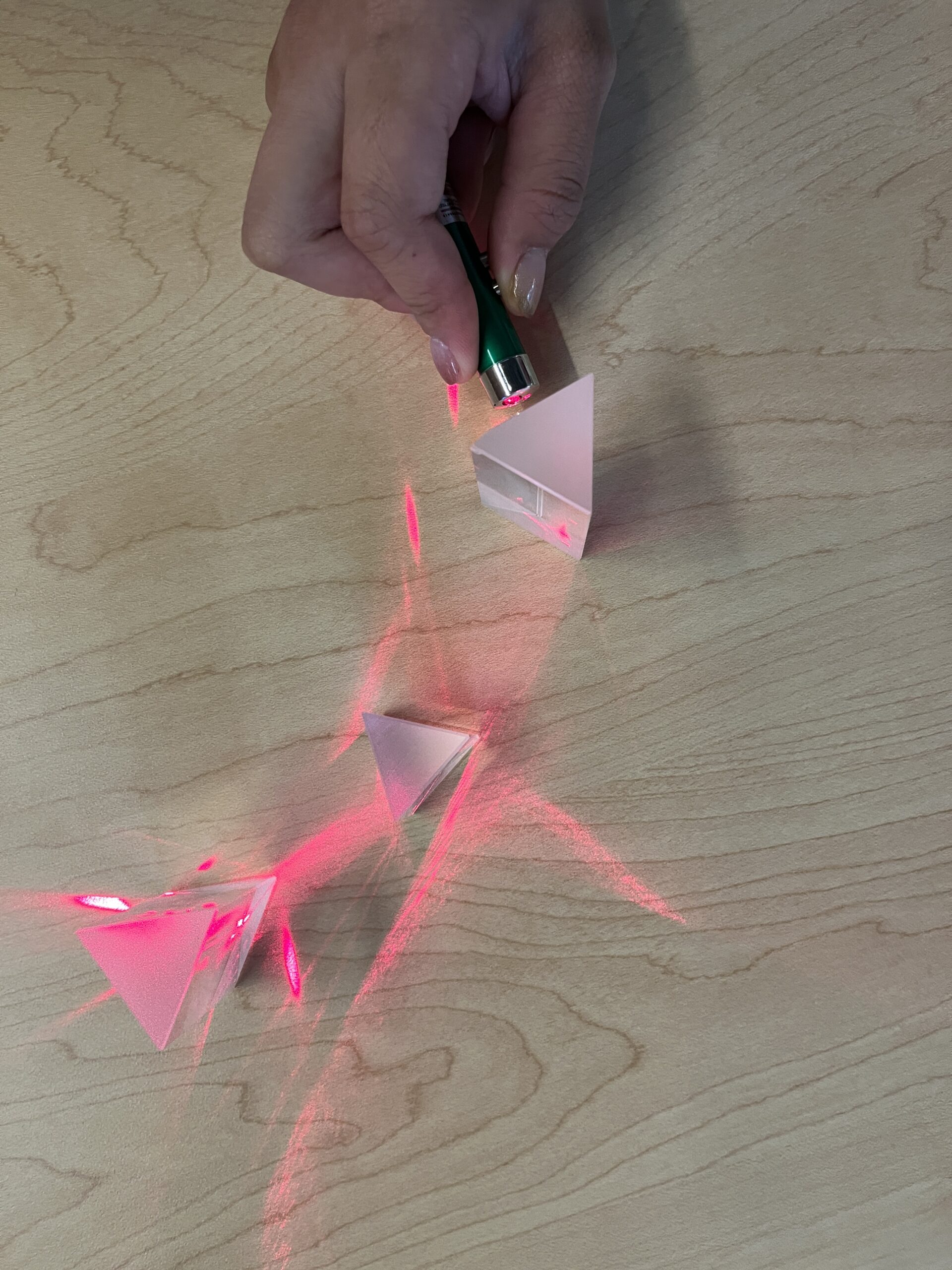
    I worked with Christie and Qiaoni on our subteam, Speed of Light, to design a physical and mental activity based on light and color. Our physical challenge, Prism Effect, introduced participants to concepts in optics, specifically refraction and dispersion. Refraction is the bending of light as it moves from one medium to another and dispersion is where different wavelengths bend differently (Biggs, 2024). Using laser pointers and glass prisms, participants had to manipulate the light to create a path hitting a certain number of prisms. Along the way, they learned how white light splits into a spectrum of colors as it bends through different media, and how laser beams, being monochromatic, behave differently.

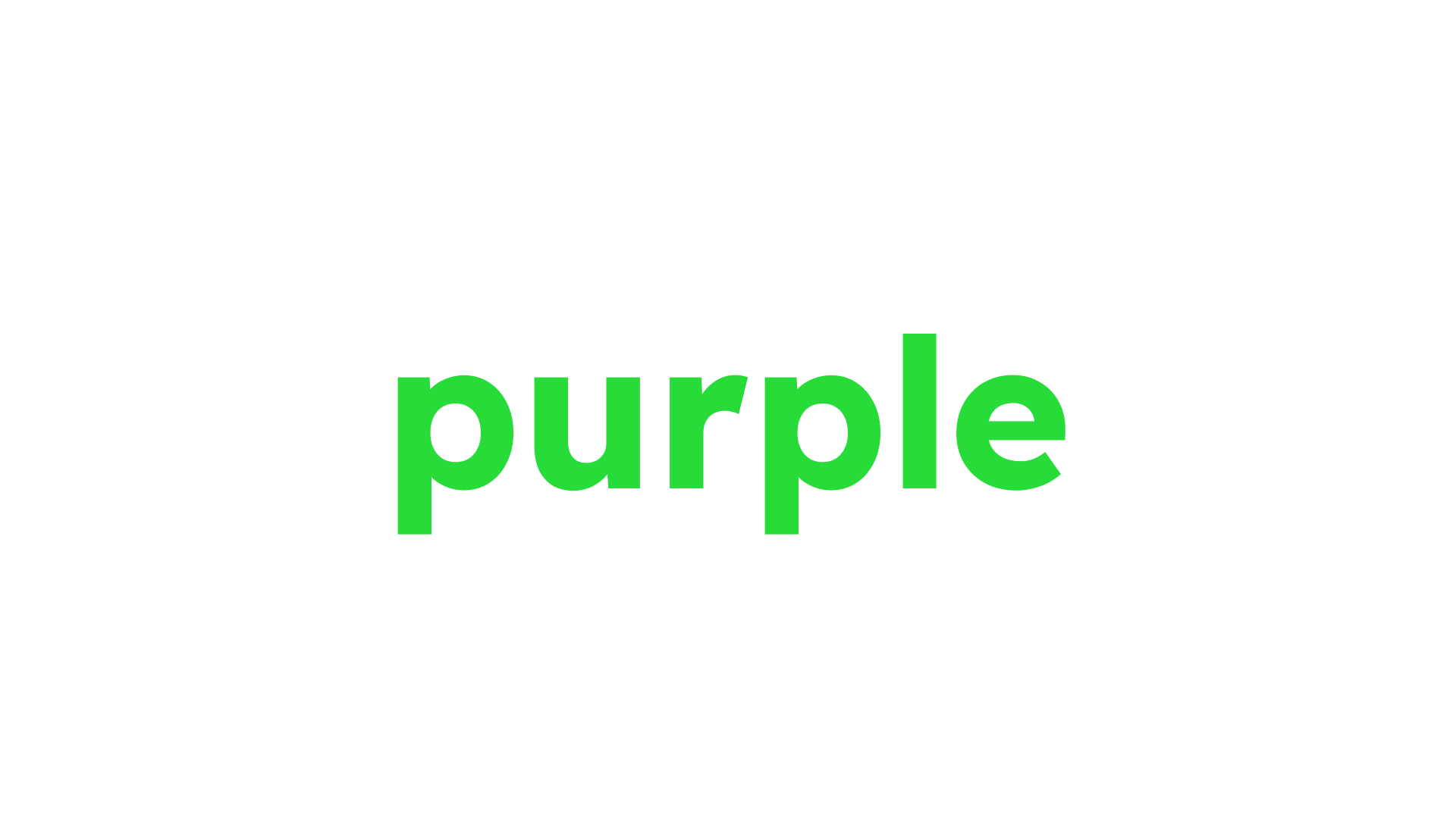
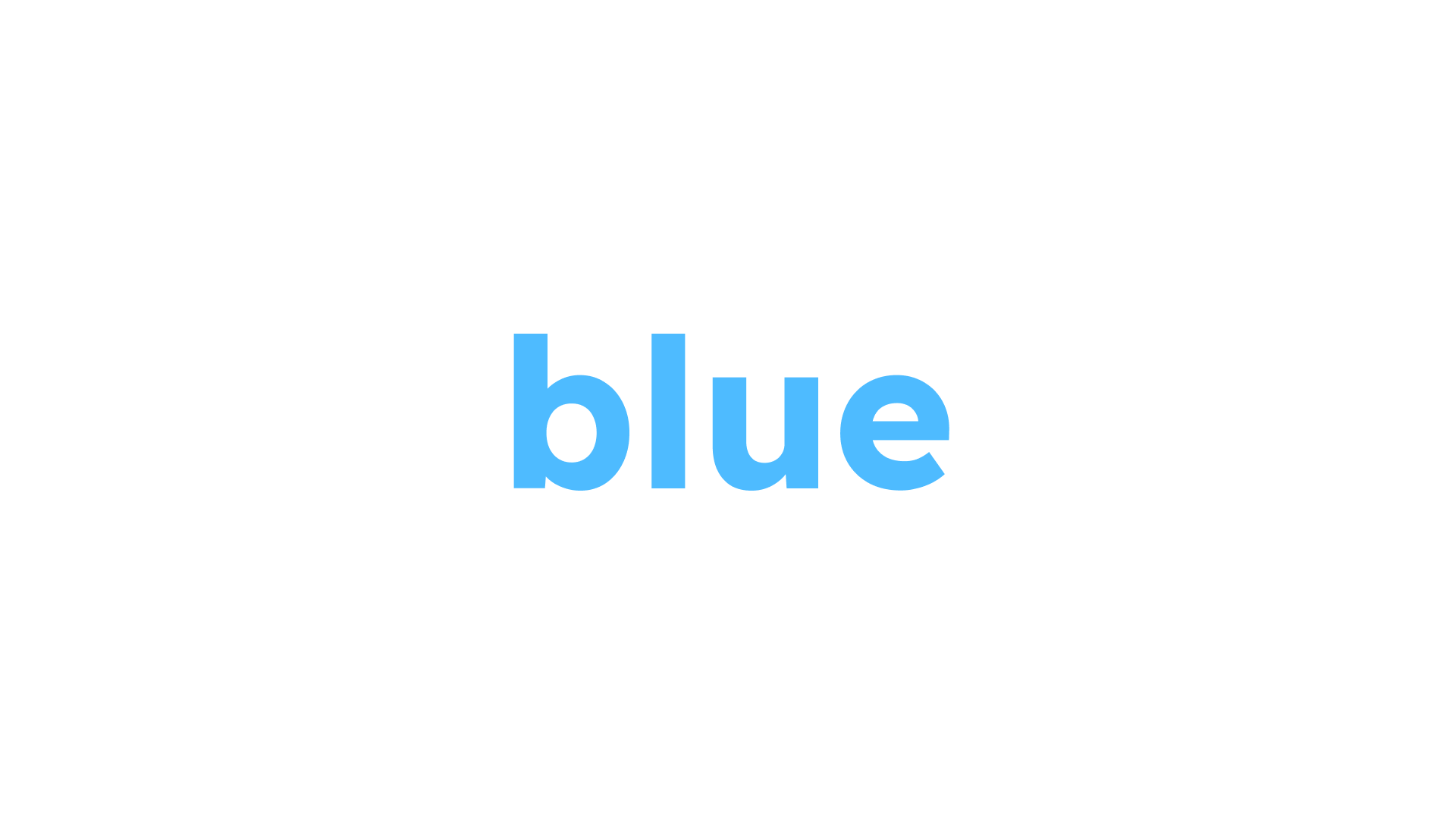
    Our mental challenge focused on the Stroop Effect, a psychological phenomenon that reveals how our brains process conflicting information, referring to a delay in reaction times between congruent and incongruent stimuli (MacLeod, 1991). Participants had to name the color of a word, not the word itself, which became surprisingly difficult when the two didn’t match. For instance, the word “purple” written in green ink, showing an example of incongruent stimuli. On the other hand, congruent stimuli is when the two aspects align, like seeing the word “blue” written in blue ink (Ruhl, 2023). This task demonstrated how cognitive interference affects reaction time, and it opened up conversations about how the brain, like the anterior cingulate cortex, manages conflict.

    Example of congruent stimuli
    Example of incongruent stimuli

    Like any large event, it came with challenges such as managing multiple teams, and directing participant flow. However, our team adapted quickly and it was cool to see how enthusiastic participants were, especially with the hands-on activity involving prisms. I also learned how to tailor communication styles when interacting with younger children, making the experience both educational and fun for a wide range of ages. Through this event I felt fulfilled watching people engage with our activities. Seeing kids light up as they bent laser beams or raced against the Stroop challenge timer reminded me why we coordinate events. It’s about sparking curiosity, making science engaging, and creating meaningful experiences.


    Sources Cited

    Davidson, Douglas J., et al. “Stroop Interference, Practice, and Aging.” Neuropsychology, Development, and Cognition. Section B, Aging, Neuropsychology and Cognition, vol. 10, no. 2, June 2003, pp. 85–98. PubMed Central, https://doi.org/10.1076/anec.10.2.85.14463.

    Biggs, Kelvin. “Understanding Optical Prism Types, Functions & Uses – UQG.” UQG Optics, 11 Nov. 2024, https://www.uqgoptics.com/understanding-optical-prism-types-functions-and-uses/.

    MacLeod, Colin M., and Penny A. MacDonald. “Interdimensional Interference in the Stroop Effect: Uncovering the Cognitive and Neural Anatomy of Attention.” Trends in Cognitive Sciences, vol. 4, no. 10, Oct. 2000, pp. 383–91. ScienceDirect, https://doi.org/10.1016/S1364-6613(00)01530-8.

    Okayasu, Moe, et al. “The Stroop Effect Involves an Excitatory–Inhibitory Fronto-Cerebellar Loop.” Nature Communications, vol. 14, no. 1, Jan. 2023, p. 27. www.nature.com, https://doi.org/10.1038/s41467-022-35397-w.

    Prism | Definition, Refraction, Types, & Facts | Britannica. 6 Feb. 2025, https://www.britannica.com/technology/prism-optics.

    Stroop Effect Experiment in Psychology. 2 Oct. 2023, https://www.simplypsychology.org/stroop-effect.html.

  • Electrophysiological  …  Age? – The Implications of an Observed Age-Induced Decline of Electrophysiological Readability

    Electrophysiological … Age? – The Implications of an Observed Age-Induced Decline of Electrophysiological Readability


    Every year, Georgia Tech’s STEMcomm Vertically Integrated Project (VIP), a project group centered around enhancing public understanding and enthusiasm for science through writing, exhibits, and events, partners with organizations like Science ATL and hosts an event at the Atlanta Science Festival, with the 2025 event being the Amazing Race; STEM Edition. With different legs of the race centered around 4 main focus areas in STEM, involving Physics in the Speed of Light, Chemistry in Shocking Conductors, Computer Science in the Cyber Quest, and Neuroscience in the Reflex Relay, groups of participants raced through Georgia Tech’s campus to complete interactive hands-on STEM-related tasks and objectives as quickly as possible.

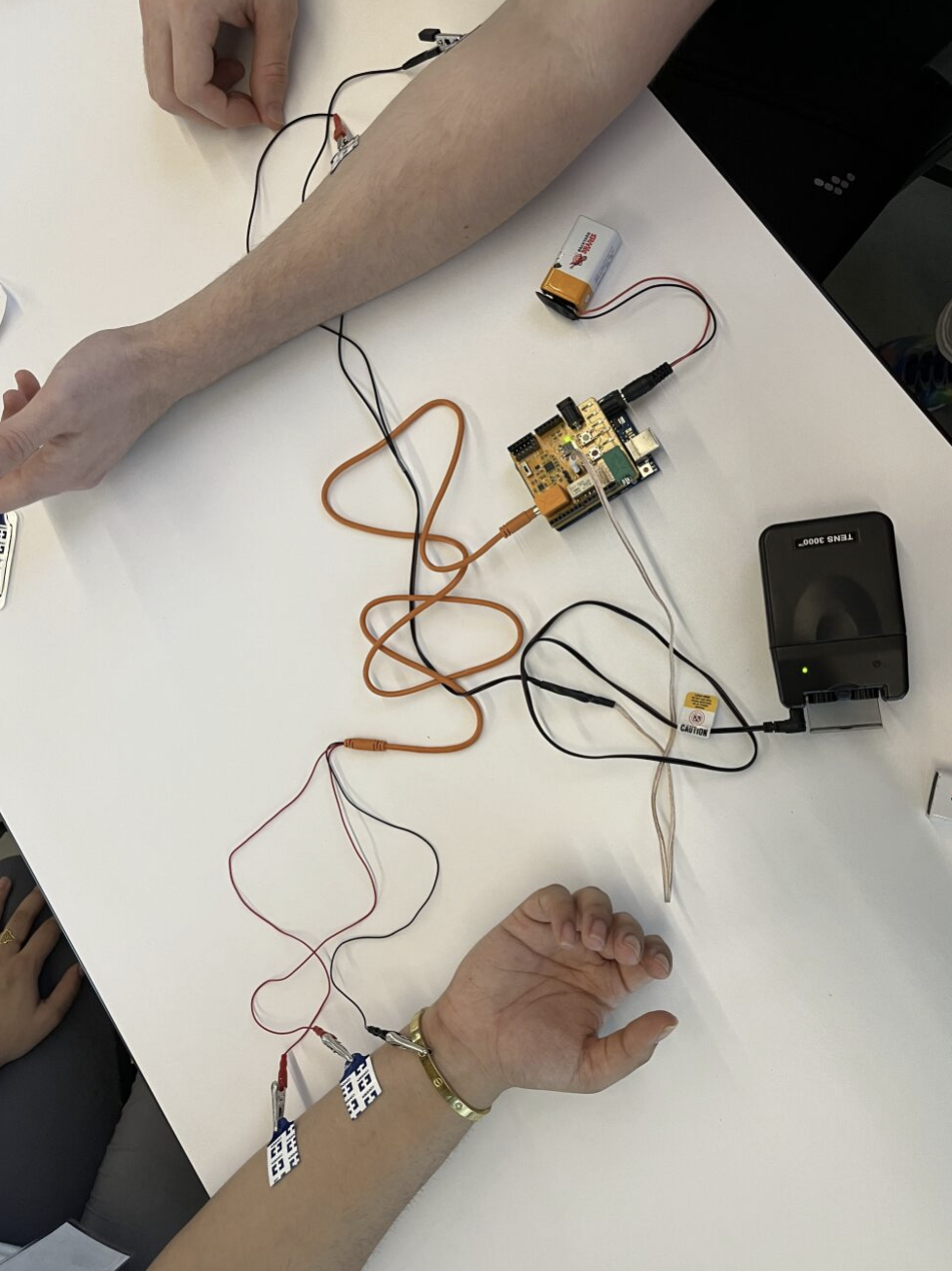
    Focusing in on the Reflex Relay, which involved 2 stations where participants had to successfully perform a ruler drop experiment centered around reaction time and then move into an experiment centered around the electrophysiological activity associated with motor command. At this 2nd station, participants took turns exploring the electrophysiology of the nervous system through the usage of a Backyard Brains Human-Human Interface to “control” each other’s arms. A common neuroscience experiment performed in many intro neuroscience courses and labs, as described by Greg Gage’s Ted Talk, How to Control Someone Else’s Arm with Your Brain, the human-human interface arm control experiment is a fun and interactive way for people to explore neuroscience in a more hands-on fashion through directly participating in the transmittance of information from one person’s arm into another person’s arm using the Human-Human Interface to do so (Backyard Brains, n.d.).

    Throughout the race, however, to everyone’s surprise, a major issue arose regarding the Human-Human Interface’s ability to read certain older individuals. This observed age-related decline in electrophysiological readability was especially shocking for many of the neuroscience group members as well as VIP team leads because much of the group in general had prior experience with the kits as well as a neuroscience background and had never experienced or even heard of this issue before. However, this unexpected linkage between electrophysiological readability and age can be described as electrophysical age and is ultimately something that, while not typically even thought of in neuroscience, is a studied topic of interest and is an interesting byproduct of neuronal noise.

    Aging in general is typically associated with some form of mental decline and/or detriment on a more cognitive level, and this generally understood age-related decline in cognitive functioning isn’t typically observed until far later in life. However, some niche research related to changes in electrophysiological noise, specifically what is considered 1/f noise, has proven that, similar to many of the neurobiological precursors linked to typical cognitive decline, there are similar electrophysiological precursors associated with age-related cognitive decline. Electrophysiology is the study of electrical properties associated with biological systems, and since the nervous system is bioelectric, electrophysiology is often very heavily intertwined with the discipline. Through data collected by using intracranial electroencephalography (EEG), a technique neuroscientists use to read the electrophysiological activity in the brain, Voytek et al.’s study titled Age-Related Changes in 1/f Neural Electrophysiological Noise done in 2015 ultimately defines characteristics of 1/f neural noise. Neural noise is interesting in that it is a byproduct of the brain’s constant processing of stimuli; however, in being a ‘noisy’ system, the nervous system can sometimes be challenging to record through devices such as EEG. In defining that the frequency of 1/f neural noise can fall rapidly to what can be considered “white noise” due to the reciprocal nature of the function (f), Voytek et al.’s study is really interesting in that it connects and applies mathematical concepts to neurobiological principles. It was also found that even at rest, the 1/f noise mediated many aspects of cortical functioning like memory, which is especially interesting considering that it directly supports the electrophysiologically based neural noise hypothesisc of aging “that the signal-to-noise ratio of the central nervous system degrades during aging, leading to deficits in processing speed”  first proposed by Robert Kail in 1997 (McCormick et al., 2023). Furthermore, neuroelectrophysiological studies have shown that electrophysiological changes that occur due to age happen as a result of decreases in cellular excitability or the rate in wich neurons can communicate with eachother, which in turn constraints intraneuronal communication by limiting the rate at which neurons can commintate with eachother through the alteration of parameters that are integral to neural functioning (Cepeda et al., 1992). Ultimately, these observed electrophysiological changes can contribute to many of the cognitive and behavioral effects that are commonly associated with aging.

    Overall, understanding the key neurobiological functions that degrade over time and lead to cognitive decline is a topic that has been continually researched over the past decade, and more often than not, due to complexity, the electrophysiological components associated with these processes are not thoroughly explored within neuroscience. Even though many computational neuroscientists can contextualize these long-standing problems through different models, such as computational models, much of neuroscience in general looks at noise as troublesome, especially regarding the long-standing issues in computational cognitive modeling where noise is typically thought to indicate a deficit within intraneural communication and is therefore filtered out extensively. Ultimately, however, this phenomenon, known as stochastic resonance, may not always be a bad thing as it is a signaling process that naturally occurs with age in non-linear systems (McDonnell & Abbott, 2009). In a dynamic system, such as the nervous system, extra noise can end up playing a somewhat counterintuitive role as systematically, the noise generated can cause deterministic and predictable changes that end up leading to an overall improved quality of neuronal signaling on a microscopic level while making the signals themselves harder to read on a macroscopic level.

    Overall, what the Reflex Relay group found, while unexpected, is a great example of the many neural processes that go unrecognized due to the overall complexity of a continuing, evolving, and relatively newer field. Ultimately, this unexpected realization linking age to a decline of electrophysiological readability is just another example of where we may initially perceive something as abnormal or inefficient, but it may, in turn, actually be an unknowing observation of an eloquently nuanced solution not typically considered.


    References

    Backyard Brains. (n.d.). Human-human interface. Human-Human Interface. https://backyardbrains.com/products/human-human-interface?srsltid=AfmBOopmTALs9blNPlYVv8nNty1nJUDUmp5rtV5m2wH9T8Tc8lcWJJhC

    Cepeda, C., Lee, N., Buchwald, N. A., Radisavljevic, Z., & Levine, M. S. (1992). Age-induced changes in electrophysiological responses of neostriatal neurons recorded in vitro. Neuroscience, 51(2), 411–423. https://doi.org/10.1016/0306-4522(92)90325-v

    McCormick, E. M., Cambridge Centre for Ageing and Neuroscience, & Kievit, R. A. (2023). Poorer White Matter Microstructure Predicts Slower and More Variable Reaction Time Performance: Evidence for a Neural Noise Hypothesis in a Large Lifespan Cohort. The Journal of neuroscience: the official journal of the Society for Neuroscience, 43(19), 3557–3566. https://doi.org/10.1523/JNEUROSCI.1042-22.2023

    McDonnell, M. D., & Abbott, D. (2009). What is stochastic resonance? Definitions, misconceptions, debates, and its relevance to biology. PLoS computational biology, 5(5), e1000348. https://doi.org/10.1371/journal.pcbi.1000348

    TED. (2015, April 28). How to control someone else’s arm with your brain | Greg Gage. YouTube. https://www.youtube.com/watch?v=rSQNi5sAwuc

    Voytek, B., Kramer, M. A., Case, J., Lepage, K. Q., Tempesta, Z. R., Knight, R. T., & Gazzaley, A. (2015). Age-Related Changes in 1/f Neural Electrophysiological Noise. The Journal of neuroscience: the official journal of the Society for Neuroscience, 35(38), 13257–13265. https://doi.org/10.1523/JNEUROSCI.2332-14.2015
  • What is Computational Media? – Retrospective from a Graduating Senior

    What is Computational Media? – Retrospective from a Graduating Senior

    What is Computational Media? This is a question I have been asking myself for practically every year I’ve been at Georgia Tech. The truth I have come to realize, however, is that Computational Media is truly whatever you make of it. Let me explain.

    I came to Georgia Tech with the goal of becoming an animator, someone who works at an animation studio like Disney or Pixar. I chose Georgia Tech rather than an art school because I wanted to know the technical background of animation software so that one day I may even be able to make my own. Since I wanted to combine both a technical aspect and an artistic aspect, I believed Computational Media would be the perfect fit for me, and luckily, I still do!

    To go into more detail about what this degree is, Computational Media is a combination of Georgia Tech’s Computer Science degree and Literature, Media, and Communications (LMC)  degree. This allowed me to learn the technical know-how of a Computer Science degree while also still learning the film principles and background for the more artistic side of animation.

    In my opinion, there are two ways to approach this degree. One, you know exactly what you want and because of that you are easily able to tailor your schedule and the types of classes you want to take to those goals. For example, since I know I want to do animation, I took classes like LMC 2730, Construction of the Moving Image, to further my skills in that area. The second way, I would say, is that you don’t know what you want. Believe it or not, I would say that Computational Media is a fantastic degree to have if you know you want to be involved in some sort of media or artistic field but are not sure which angle to approach it at. In my case, even though I knew I wanted to pursue animation, I took many classes in live action film production, video editing, general media studies, video game creation, etc. All of these studies were adjacent to the goal of animation and honestly helped me consider other fields in which I could use this skill. Because of this, I would say I’m a jack of all trades when it comes to different forms of media production.

    Now the hardest part of Computational Media is the smallness of the degree. As someone who is currently searching for jobs / applying for internships / applying for grad school, I find myself constantly having to sell myself with my degree and my skills simply because no one knows what Computational Media is or means. I really had to research different fields that my degree applied to and made sure my resume backs my computing skills. Building up both personal projects and class projects so that they look fantastic on a resume is crucial if you want a Computer Science job as a Computational Media major. The same goes for if you want a job in the film industry. You will have a lot of very different types of projects to put on a resume but a lot of times they don’t overlap, meaning you will absolutely need to tailor your resume to the job / internship you are applying for because that’s where recruiters can get confused about what your degree means.

    Despite that previous paragraph, I must say that I love my degree. It truly allowed me to experiment in different careers and fields that I have even the slightest bit of interest in and even opened me up to new possibilities that I might not have considered before. We may not have many active alumni, in fact the most famous Computational Media major that I know of is a YouTuber, Danny Gonzalez, but the alumni who do remain connected have a strong passion for helping other Computational Media students find their way in this strange but exciting major. You can truly make this degree anything you want. Whether you want to pursue video game design or animation or UI/UX or even film production, you will find what you need here at Georgia Tech. Heck, if you feel as though you were lacking in any expertise in what you’re pursuing, there are numerous clubs on campus that are here to back you up, such as VGDev and Animation Club.

    If you are someone who is applying to Tech and is considering a degree in Computational Media, I hope this gives you some more context. I will be graduating very soon, and I hope to be a very active alumni once I get my feet on the ground. I wish you the best of luck in your Computational Media endeavors, and I hope that you encounter the same joys of exploration and the same kindness of the people around you in this major as I have.


    References

    Computational Media @ Georgia Tech. (2019). CM Promo Video 2019. Georgia Tech. https://youtu.be/412sCbbiPf8?feature=shared

  • So You Hate Your Major… Now What?

    Imposter syndrome is a phrase that many people in academia are uniquely familiar with. The feeling that maybe you aren’t smart enough for your major or that you were accepted into your college by mistake is fairly common in these spaces. For me personally, I had always had an interest in engineering and knew that I wanted to pursue it, but I was confronted with a rude awakening during my freshman year as a mechanical engineer. What if engineering just wasn’t for me?

    Rose Clance and Suzanne Imes coined the term imposter phenomenon in their 1978 study regarding how high-achieving women often “maintain a strong belief that they are not intelligent; in fact, they are convinced that they have fooled anyone who thinks otherwise.” They describe reasons why this phenomenon is highly present in women, usually involving societal stereotypes and familial pressure, and in the STEM field, this pressure is often intensified. I know that in my case, it was always apparent that I was one of the few girls interested in engineering, making me question my belonging, and this feeling was not aided once I was accepted to Georgia Tech, where conversations around affirmative action amplified my doubts.

    Besides the societal pressures around being a woman of color in the STEM field, I also found myself doing worse in my math and science classes while succeeding in social sciences and literature. Not only was I not enjoying the coursework that was foundational to my major, but I was bad at it.

    I started to feel out of place around my peers and began to doubt that I was qualified to be an engineer after I graduated. I felt that if I couldn’t “overcome” a physics class or personal doubts, I would be better off switching majors to cater to my academic strengths. This idea is not uncommon, as highlighted by Rosaling Gill and Ngaire Donaghue and defined by them as the “hidden injuries of academia.” The stress was discouraging me, and the only advice I was offered was individualistic self-help.

    However, many of my feelings changed when I took the course on engineering ethics. It was a social science class that combined all of the things I enjoyed and had a passion for. I was able to write, identify problems in the engineering process, and review case studies that involved analyses only an engineering professional could perform. From here, I knew the direction I intended to go with my degree. I was not the hands-on woodworking girl boss that I had convinced myself I needed to be as a woman in engineering. Instead, I was better at design, programming, and risk analysis. This process of discovery was not easy, but it was very worth every minute.

    The psychological and societal aspects associated with imposter syndrome are hard to identify, defy, and sometimes understand. However, one solution on a larger scale may be to retract from individualism. Imposter syndrome is often and most notably associated with isolation, which can fester irrational feelings of self-doubt. Building community and exploring different avenues related to your passions are valuable tools for finding your place and contributing to the constantly adapting world. It is okay to feel like an imposter, and you are not alone, but your individualism is how you present new perspectives to your field, not your isolation from it.

    Sources

  • Diary of an Undergraduate Thesis: The Finale

    Diary of an Undergraduate Thesis: The Finale

    This is a continuation of my first article from last semester where I started my undergraduate thesis writing process. You can find that here.

    ———————————

    January 24nd, 2024

    Just submitted my methods and materials section. Honestly, at this point I’m a bit more stressed about actually finishing data collection than the actual writing. I’ve kind of reached a “well it’s just an undergraduate thesis and not the end of the world” mentality, which is helping a little. To be honest, I did have a couple stress dreams last week (one was where I was scrolling through an endless Excel sheet of data that I had to analyze), so just accepting that it’s not that deep is good to me. But we keep working. 

    I also had to peer review one of my classmates’ methods section. We had this set up last semester too, where we had to peer review other people’s proposals. This semester, I’m paired with a group of other neuro students, so I feel like there’s a lot more back and forth I can actually have with them and their research. For this student, since we had similar experimental setups, I was able to see what she did well, and it also reminded me of things that I need to add to my section.

    One thing I’m trying to do this semester is to work on my thesis stuff more consistently, rather than pushing it all to the few days before the deadline. For that reason, I’ve blocked off an hour every workday on my calendar as a reminder to work on my thesis, even if it’s just for 15-30 minutes. I’ll let you all know whether this is helpful or if it stresses me out more to have my thesis on my mind all the time.

    ———————————

    February 27, 2024

    As always, problems come up right when you don’t want them to. The stereotaxic frame got broken, so we had to send it in for servicing. This means no surgery practice this month, which sets me back on my deadlines. Luckily, I’ve figured things out with my PI and my thesis class professor, but it’s still disappointing.

    Still, the time will pass anyway, and I did practice with perfusions and drop fixing in the meantime. It turns out that I had gotten rusty with these basic skills, so the time spent on that still felt worthwhile.

    While I’ve been waiting on unforeseen circumstances to clear up, I’ve continued working on my thesis results and discussion section. You might ask how I could write those parts without having data, but I did a method my professor calls “Mad Libs” writing, where you leave blanks where you don’t have the information yet. This has been helpful, since I have been able to get an outline of what my results and discussion sections will look like.

    So, I’ll see you in a month, when I hopefully have some data I can cut my teeth on.

    ———————————

    March 30, 2024

    Well, I’ve gotten pretty comfortable with surgeries, and next week I’m planning on doing my first optical implant. If all goes well, I can hopefully collect some data in two weeks. I’ve definitely been stressed about completing this thesis, and part of the process for me this semester is learning to deal with/live with the stress. This isn’t something I can finish in a weekend, after all, so I need to learn to work with this “unfinished task” bell dinging in my head until I turn this thing in. I really really want to have data collection done by the second week of April so we can do data analysis and I can submit the drafts to my readers. It feels like this semester has flown by faster than I thought, and I am worried about the deadline.

    In terms of what else I can do on the writing side, I am working on the schematics that will take up part of my figures in my results section. This is something you never really think about when you think of writing a thesis, but working on making good figures is difficult and time intensive. However, it feels good to be able to make those to have in my paper for now.

    There’s a lot going on outside of this thesis too–I’m getting ready for graduation, writing term papers, studying for tests, and looking at housing after graduation. It’s a lot to juggle, and I hope I’m doing okay. I’ve been reminding myself that I’m basically in the final lap of this process, and that I can do it.

    ———————————

    April 23, 2024

    Finally got some data this month, and I was able to write it all up and make a complete thesis of it all. It was stressful surrounding the data collection, but actually doing it went pretty smoothly. I typed everything up today and sent it off to my first and second readers.

    Really, I don’t know what to say here. After actually sending it off, I felt a little relief, but it wasn’t a super big change. That being said, I think I’m still focused on my work because I plan to continue it after graduation, and so my work doesn’t really feel finished. Still, I’m really happy that I was able to turn everything in with time to spare. By having it done about two weeks before I have to submit, this gives my readers enough time to give me feedback and turn in everything to UROP (undergraduate research office that approves undergrad theses).

    Now, it’s time to focus on everything else I need to complete before the end of the semester: term papers, exams, and graduation. But tonight, instead of working on it all, I gave myself the evening off. It’s something I deserve after all this, I think.

    Am I happy I did all this? Was it all worth it? I think it might be too early to tell, but I think it was well worth my time. I learned so much about research, working on a long term project, and scientific writing. But if I could go back in time and do one thing better, I would try not to stress as much about it. I think during this past year I’ve given myself so much unneeded pressure that never helped make my thesis better in the end. But I doubt that August 2023 me would have taken that advice to heart anyway. In any case, this is my last entry, because I consider this chapter of my life complete. I hope you enjoyed this mad little journal. I’m out.

  • Is Love Truly Blind? An Analysis of the Popular Dating Show

    \

    From its initial debut on Netflix in 2020, Love is Blind has captured audiences and secured itself as one of the most popular dating reality shows of the 21st century. What makes Love Is Blind different from other popular dating shows is that the contestants date and propose to their prospective partner from behind a wall, without every seeing each other. It isn’t until they solidify their engagement that the contestants are able to see what their partners look like. Another difference between Love Is Blind other reality shows? Love Is Blind takes itself extremely seriously. The hosts, Nick and Vanessa Lachey, are notorious for referring to their show as “an experiment”. Instead of a hypothesis for this “experiment” the hosts simply repeat the leading question: “Is love truly blind?”.

    In this article, I attempt to analyze Love Is Blind as an experiment from a scientific perspective, in an effort to answer the question, “does the inability to see your partner during a dating stage increase the viability of a long term relationship compared to a typical dating scene where both parties can see one another?”. To do this, I will compare Love Is Blind another popular reality dating show, Love Island. In Love Island, contestants are not only able to see each other, but they are encouraged to judge their fellow contestants by their physical appearances. We can compare the outcomes of each of these shows to conclude which dating strategy is more effective in forming successful, lasting relationships.

    Because this is an experiment, we will need to analyze our variables. It is imperative to account for the major differences between these shows, and note that our comparison will be far from perfect. For one, Love Is Blind is a marriage-focused show. Contestants (allegedly) sign up for the show in hopes of finding a husband or wife. Most of the contestants on Love Is Blind are in positions in their life where they are ready to commit to long-term relationships. This is much different than Love Island, which engages in a culture of flirtatiousness, changing partners, and employs a cast of younger contestants, who are less likely to want to pursue a long-term relationship. Love Is Blind is unique in that it involves such a large cast of singles from both sexes, and follows multiple couples’ pursuit of marriage. There are no shows quite like Love Is Blind, which makes it difficult to assess it as a true experiment. An ideal scenario would involve recreating the show perfectly, but with face-to-face dating instead of blind dating. Of course this is impossible, so our comparison to Love Island, is the next best option. To eliminate cross-cultural variables, we will be analyzing the slightly less popular US version of Love Island.

    I will now present the data that I collected from each reality show. To start, Love Is Blind has been running for 6 seasons, each with 30 contestants. Out of these 180 contestants, 61 contestants have become engaged on

    the show, or 31 couples (One contestant was engaged twice to two different partners). Out of these 31 couples, 20 couples broke up on the show, 9 couples are still together, and 2 couples married each other on the show, but eventually broke up. This adds up to a 29% long-term success rate out of all the couples engaged on the show, and an overall 10% success rate out of all the contestants over all 6 seasons.

    In comparison, Love Island, US has taken place over 5 seasons, each with 25 contestants, for a total of 125 contestants over the whole show. Out of these contestants, 15 couples have continued to date after the show. Out of these 15 couples, only three are currently together. This adds up to 20% chance that a couple formed on the show will stay together, and an overall success rate of 4.8%. This number is also likely generous, as Love Island typically introduces new contestants in the middle of seasons, some seasons almost doubling in cast size before the end.

    Based on these numbers, it is clear that Love Is Blind is more successful than Love Island at forming lasting relationships. In fact, Love Is Blind’s statistics of forming 9 married couples after only a 6 season runtime is unprecedented in dating shows. No other show comes close to Love is Blind in the sheer number of successful relationships formed. Even marriage-focused shows like The Bachelor pale in comparison to the success rate of Love is Blind. After 28 seasons of the Bachelor, and 20 seasons of The Bachelorette, only 9 couples from the shows are still together to this day. This means that if you are the “Bachelor” or the “Bachelorette” you have an approximate 18.75% chance of forming a lasting relationship during your time on the show. While this is better than the 10% success rate of Love Is Blind, it isn’t much better. Considering the fact that the bachelors and bachelorettes are dating 25-30 potential partners, and have no competition, it makes sense that there would be a decently high success rate. Additionally, most seasons of The Bachelor and The Bachelorette end in an engagement, so it would be reasonable to expect more than 9 lasting couples after 48 seasons.

    Given the data and considering the variables, it seems evident that Love Is Blind has an impressively high success rate compared to similar reality dating shows. Love is Blind has an overall success rate of more than 2x that of Love Island, US. While it does have an 8.75% lower success rate than The Bachelor/Bachelorette franchise, the average contestant on Love Is Blind has an unprecedentedly high chance of finding love than the average contestant on these shows. It seems very probable that the factor contributing to this high likelihood of success is the blind-dating style. There is evidence in support of blind dating that suggests that deeper, and more lasting bonds are formed when physical appearance is taken out of the equation. It is also possible that age, sociodemographic factors, time frame, and casting decisions could also be contributing to the show’s success. Whatever the reason, there is absolutely evidence that blind dating can lead to a comparatively high relationship success rate in a reality TV format. In other words, there is evidence that love is, (or certainly can be) blind.


    Sources


    Delbyck, Cole. “Which Couples Are Still Together from Every Season of Love Is Blind?” Netflix Tudum, Netflix Tudum, 28 Mar. 2024, www.netflix.com/tudum/articles/love-is-blind-who-is-still-together-every-season.

    “Love Is Blind (TV Series).” Wikipedia, Wikimedia Foundation, 2 Apr. 2024, en.wikipedia.org/wiki/Love_Is_Blind_(TV_series).

    “Love Island (American TV Series).” Wikipedia, Wikimedia Foundation, 7 Apr. 2024, en.wikipedia.org/wiki/Love_Island_(American_TV_series).

    Siwak, Miranda. “Love Island USA Couples: Who Are Still Together and Who Broke Up?” Us Weekly, 29 Mar. 2024, www.usmagazine.com/entertainment/pictures/love-island-usa-couples-who-are-still-together-and-who-broke-up/.

    “Stop Swiping, Start Talking: The Rise and Rise of the Blind Dating App.” The Guardian, Guardian News and Media, 8 Nov. 2022, www.theguardian.com/lifeandstyle/2022/nov/08/stop-swiping-start-talking-the-rise-and-rise-of-the-blind-dating-app.


  • Science Fiction – A Blessing or Curse to Emerging Discoveries?

    Science Fiction – A Blessing or Curse to Emerging Discoveries?

    When you think of robots, does your mind jump first to ABB Robotics and Mitsubishi Electric, or to R2-D2, HAL 9000, and WALL-E? If someone asked your opinion on the advancements in robotics and AI, do you think of OpenAI’s Figure or the dangers posed by the Terminator?

    Public perception of new technology shapes and is shaped by mass media – especially science fiction. From Isaac Asimov’s I, Robot to Gene Roddenberry’s Star Trek, science fiction has played a major role in how the public builds mental frameworks to understand emerging technologies. In a 2008 Working Paper for the Social Contexts and Responses to Risk Network (SCARR) journal, researchers at Cardiff University discovered that participants frequently referenced Frankenstein, Gattaca, and Brave New World, among other science fiction sources, to explain and form perspectives on emerging technology (Hughes, Kitzinger, 2008). Phrases like “Frankenstein foods” and “nano Robocop threat” were cited as examples of science fiction influencing public perception of GMO crops and nanobots (Hughes, Kitzinger, 2008).

    So how exactly does science fiction impact the public’s perspective?


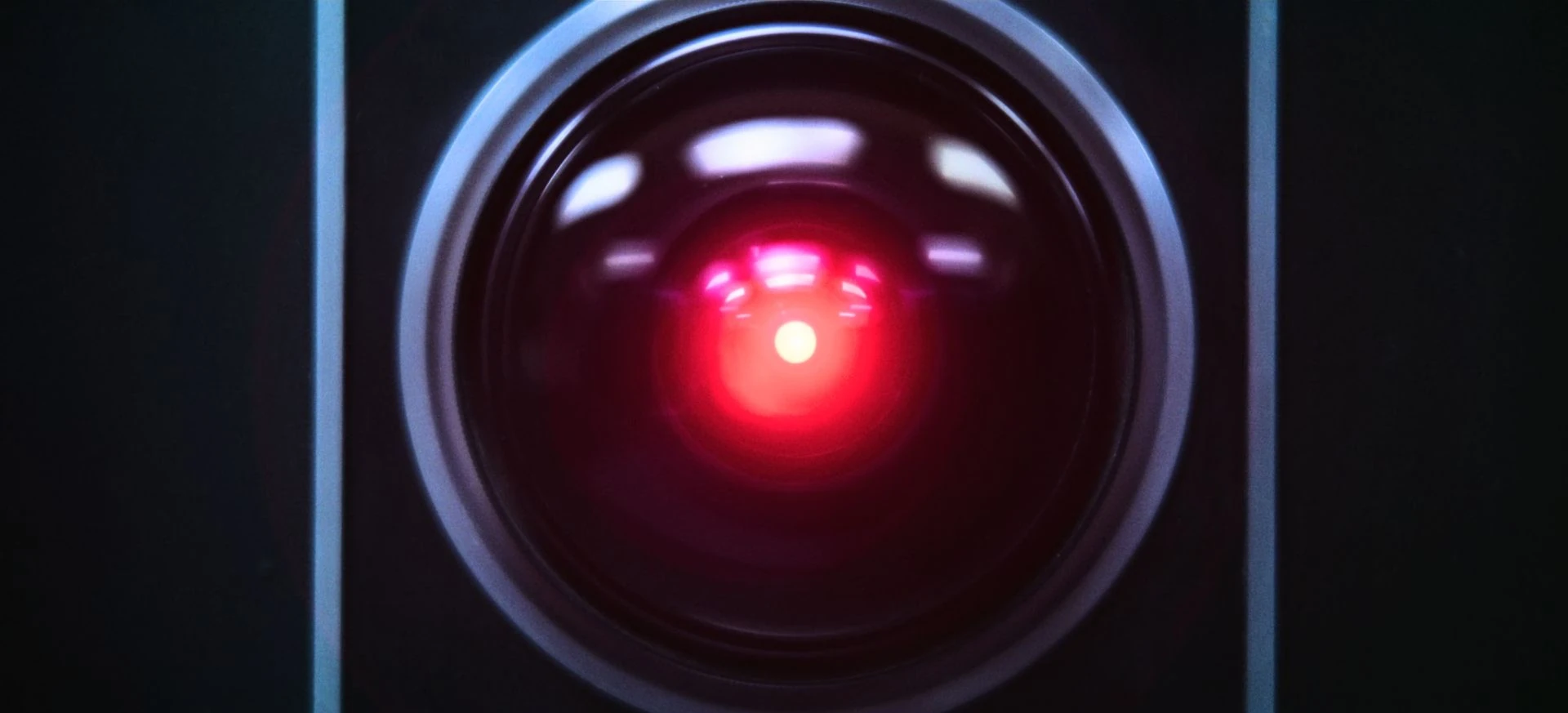
    HAL 9000, a “rogue” AI from Stanley Kubrick’s 2001: A Space Odyssey


    Science Fiction as Cautionary Tale

    One perspective, touted by scientists and policy makers alike, is that science fiction narratives serve as cautionary tales that teach audiences to mistrust science through imagery of unchecked curiosity, mad scientists, and unethical experimentation. In a 2003 study, researchers discovered that “individuals who frequently watch television are more likely than infrequent viewers to lack confidence in the scientific community” (Kirby, 2003). Clearly, fictional representations of science have eroded trust between the public and science.

    In this perspective, science fiction serves the role of a cautionary tale. Stories like 2001: A Space Odyssey caution the audience at the dangers of artificial intelligence, amplifying existing fears of antagonistic AI software. Coupled with films like The Terminator and even pulp fiction like Avengers: Age of Ultron narratives of human-robot conflict and betrayal from artificial intelligence emerge. Through such fictional representations, scientific advancement is demonized and mistrusted.


    Science Fiction as Inspiration

    While the narrative of science fiction as a cautionary tale is held by many in both the scientific and policy communities, including even the National Science Foundation, it is not the only perspective (Hughes, Kitzinger, 2008 and Kirby, 2003). In fact, in the aforementioned working paper, only one research group “clearly confused fact and fiction in the way so often highlighted by scientists and policy makers” (Hughes, Kitzinger, 2008). Science fiction then, was not entirely negative – instead, science fiction served as entertainment, a reference point, and a source of inspiration when discussing scientific advancements.

    This more positive perspective of science fiction is clearly visible in the researchers’ discussions with participants about nanotechnology. Participants “routinely identified” science fiction as a reference point when discussing nanotechnology, and for many, it was the only reference point they could find (Hughes, Kitzinger, 2008). Images of nanotechnology in science fiction were largely positive, “with a strong association with useful inventions and radical medical treatments”, leading to a positive image among the participants (Hughes, Kitzinger, 2008). Unexpectedly, of the topics the researchers discussed with participants, the one with the most science fiction references (nanotechnology) had the best image, while the one with the least references (GMO crops) had the most fears. For some, science fiction was even “treated with amusement” when discussing nanotechnology, rather than fearmongering (Hughes, Kitzinger, 2008).

    As another scientist concluded, concerns about misuses of technology “are often combined with an extremely optimistic view of technical possibilities… grounded in an underlying positive discourse about progress” (Kirby, 2003). Science fiction, while introducing fears of misuse and unethical practice, ultimately proved to be an inspiration of scientific progress.


    In Conclusion

    As we now know, science fiction can hold both positive and negative implications for the public’s perception of technology. For some, science fiction is cautionary and mistrustful, playing on the public’s fears to sow distrust between the audience and the scientific community. For others, science fiction is an inspiration, providing the audience with a vision into the many possibilities at their fingertips.

    Taken as a whole, science fiction is neither strictly positive nor strictly negative. Some technologies (like GMO crops) are feared regardless of science fiction representations, while other technologies (like nanobots) are viewed more positively due to the reference points posed by science fiction. Other technologies still (such as artificial intelligence) are feared in part due to science fiction, in which case science fiction plays a more negative role on public perception.

    Science fiction is ultimately neither a blessing nor a curse. It is, like other forms of science media, to be examined individually, rather than generalized as a whole. So the next time you flip to the newest episode of Star Trek or The Expanse, consider the show’s perspective on science and form your own opinions.


    Citations

    Hughes, E., Kitzinger, J. (2008). Science Fiction Fears? Social Contexts and Responses to Risk Network (28). https://orca.cardiff.ac.uk/id/eprint/17529/1/HughesKitzingerWkPpr28.pdf

    Kirby, David. (2003). Scientists on the Set: Science Consultants and the Communication of Science in Visual Fiction. Public Understanding of Science – PUBLIC UNDERST SCI. 12.261-278. 10.1177/0963662503123005.

    Kubrick, Stanley. 1968. 2001: A Space Odyssey. Warner Bros.