A few days ago I stumbled upon this webpage and couldn’t stop laughing. I don’t think I have ever laughed so hard in my entire life. I was crying, a stitch in my side. Any time I would regain my composure, I would lose it again within 0.237 seconds of reading another line. So of course, after struggling through the page, I decided to consult my trusty friend YouTube for some poop-themed videos. Here’s one of my favorites: 3 Types of Girlfriends Based on Pooping Habits (it’s a little vulgar). Now, I’m not entirely sure why I find these types of things so entertaining, but I think I find them funny because they are usually true. Some people don’t like to admit they poop, and they definitely don’t want to talk about it, but why is that so? Everyone poops!
Have you ever wondered how poop is formed, or why it comes in different shapes and sizes? Well, let me enlighten you. After food passes through the mouth, esophagus, and stomach, being digested by various amylases and gastric juices, it makes its way into the small intestine where the majority of the fluid and nutrients from the digestive process and from the food you eat are reabsorbed by the body. An additional amount of fluid is reabsorbed in the large intestine, also known as the colon.
This is where the magic happens.
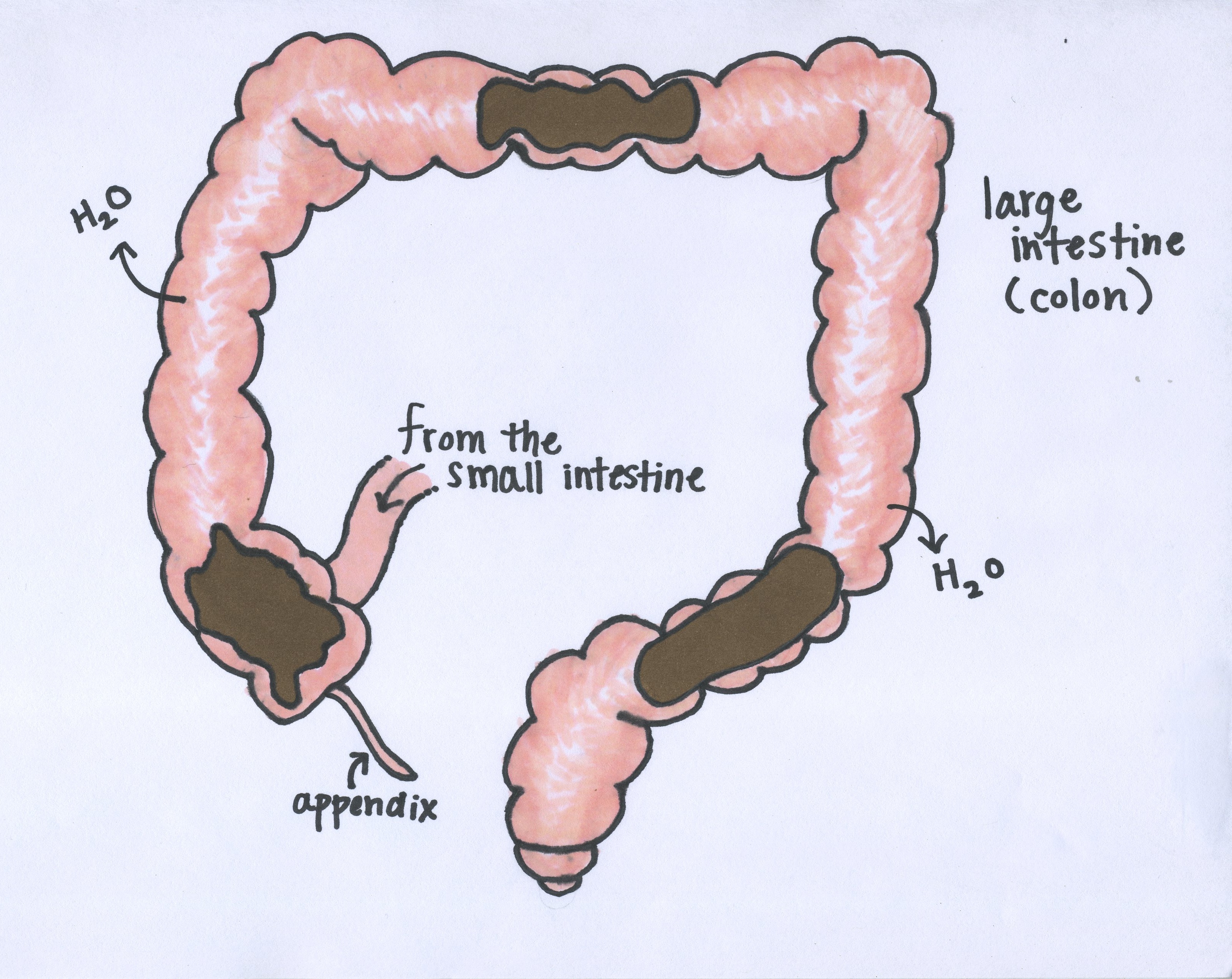
Digested food moves through the colon via a type of smooth muscle contraction called peristalsis. As it moves along, the poop starts to take shape as the fluid (referred to as H2O in the diagram below) is drawn out. As more fluid leaves, the poop becomes more solid. During times of viral or bacterial infections, fluid may not be properly reabsorbed, causing the common side effect of diarrhea. Have you ever been constipated? This is a result of poop moving too slowly through the colon, causing too much fluid to be reabsorbed. Depending on what you eat, your poop may vary in appearance. If you eat some corn, you may see it again since our bodies can’t digest the cellulose outer layer. Ever drink a brightly colored slushy saturated with food coloring? Your poop likely changed color.
The digestive tracts of carnivores differ from those of herbivores due to the different digestive requirements each type of animal has. Take a koala for example, whose cecum (the section of colon below the attachment point of the small intestine) is about 2 meters long! This longer cecum enables the koalas to digest leaves and provides a greater amount of surface area for nutrients to be absorbed. Check out this koala who, instead of eating leaves, is chomping on an apple. I wonder how long it took for that apple to become poop…
Sources:
Campbell, Neil A., and Jane B. Reece. Biology. San Francisco: Benjamin Cummings, 2002. Print.
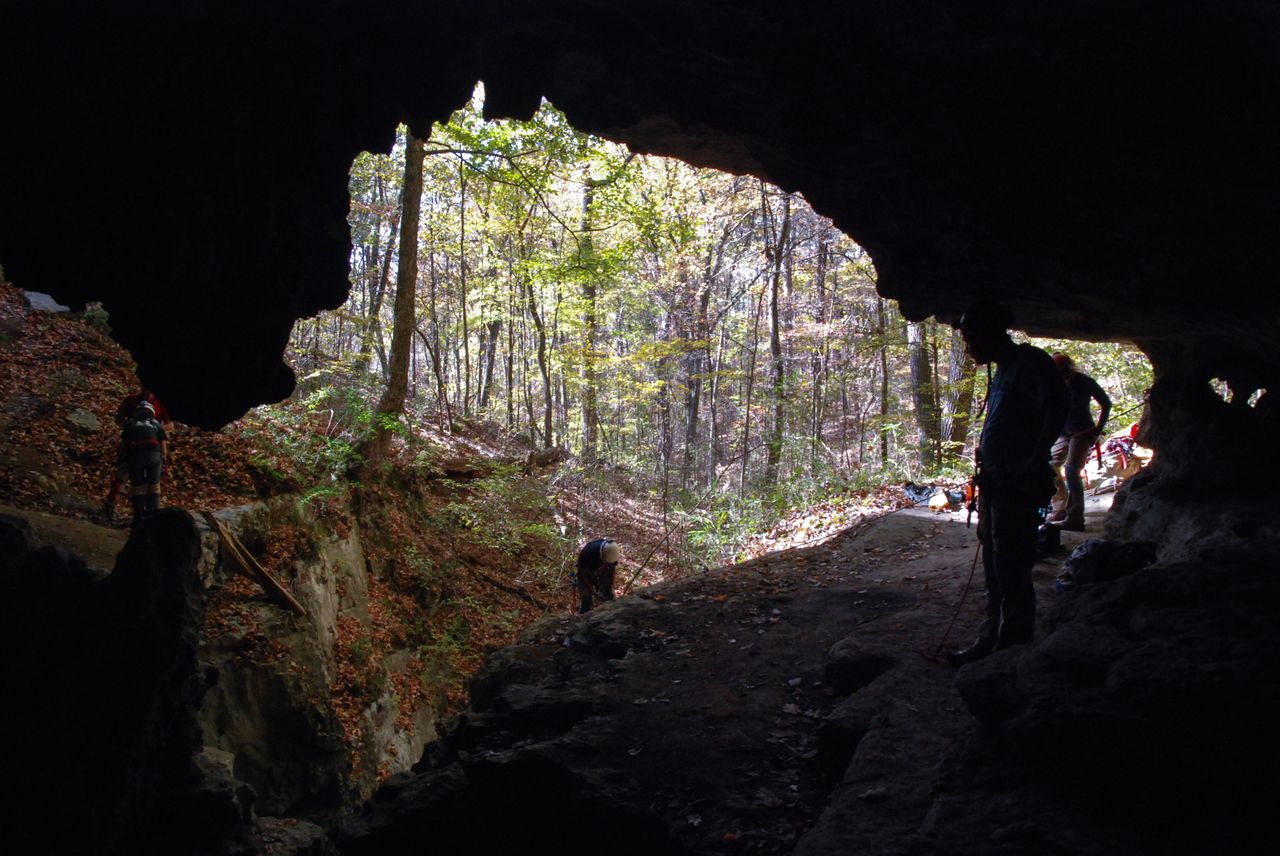
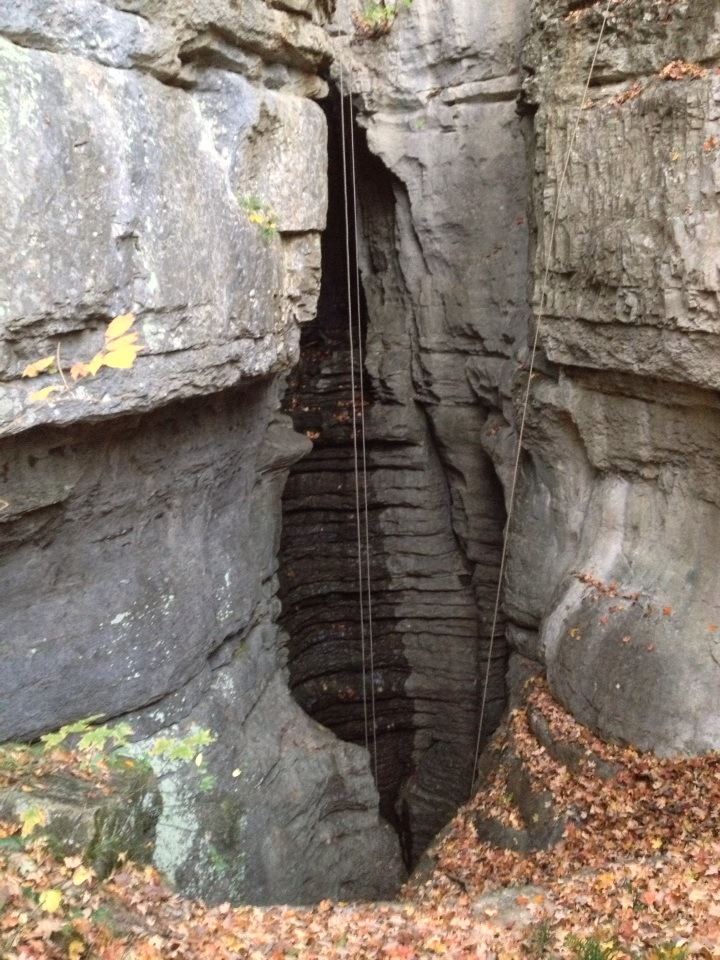
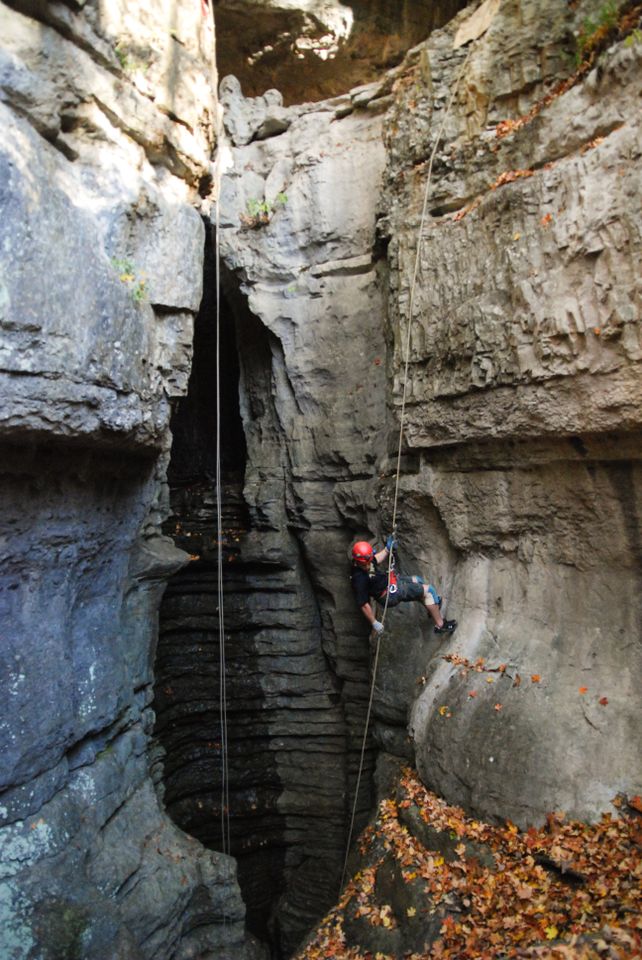
I’ve always enjoyed having fun outdoors, and recently I’ve started to branch out of my usual “going for a walk in the park” comfort zone. My latest adventure took place in the wonderful state of Alabama at a location I wouldn’t have pictured myself being had you asked me a few months ago– a cave. Not just any old, regular cave that people wander into to make-out and spray-paint the walls, but a vertical cave with a super cool 100 ft drop called Sheldon’s Cave.
Photo by Nima Yazdanpanah
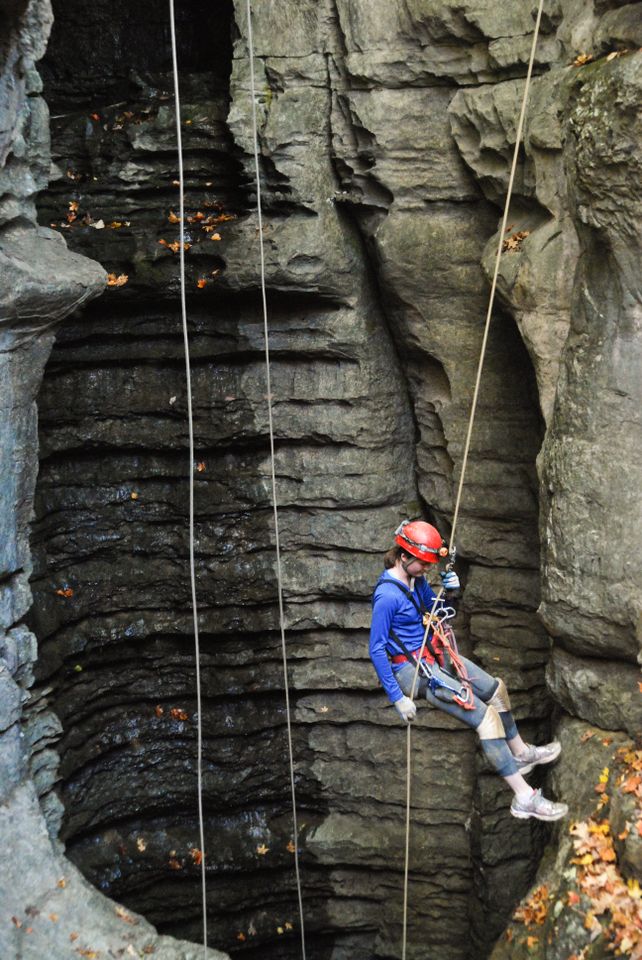
For the avid caver, or spelunker if you prefer, 100 ft may not be very exciting, but to me, I was stoked… and nervous. I had gone exploring in horizontal caves before, but had never done any descending (except for my days of rock climbing several years ago). We had some practice at a rock climbing wall, but I was still nervous for the real descent. It is a very uneasy feeling having to rely on a skinny rope to hold your weight as you ease over the edge of cliff. “Oh, just lean back and trust the rope.” Trust the rope?! But we just met! So, with my left hand in a death grip on the rappel rack and my right hand in a death grip on the loose end of the rope, I (very slowly) made my way over the edge of the cave and down the side. By the time I got about half way or so, I eased up and realized how awesome it was that I was descending below ground level, about to go exploring another cave.
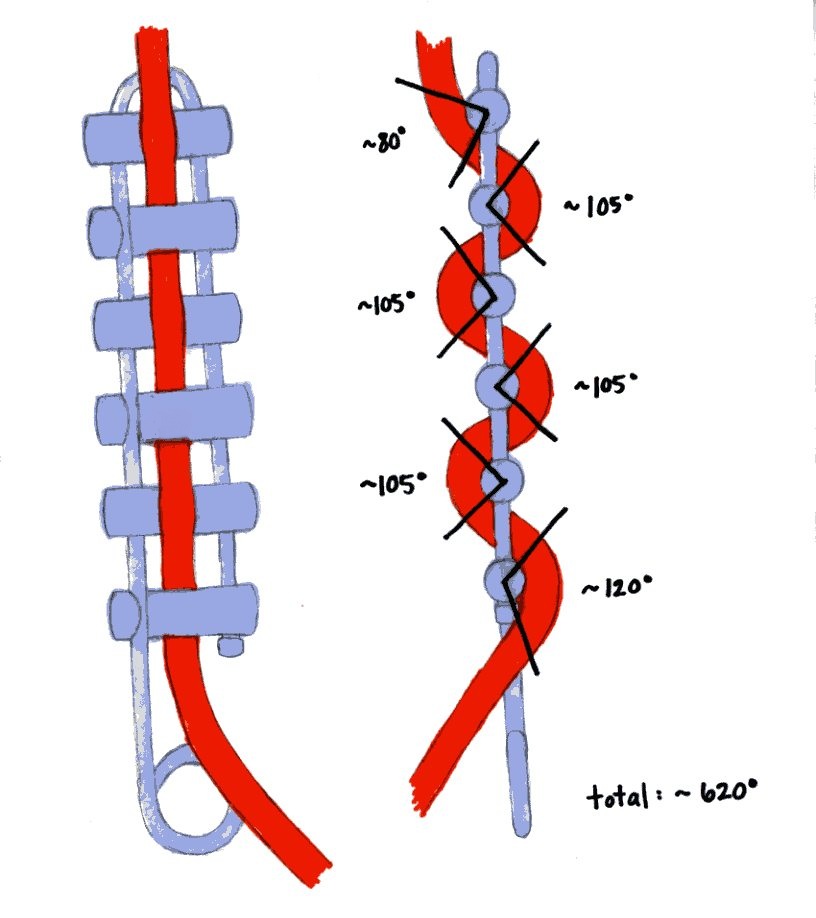
You may be thinking, “What the heck is this rappel rack she is talking about?” A rappel rack (see one in action here) is a J-shaped device made out of aluminum and/or steel with bars running between the two sides of the device. The rope gets woven between each bar to create a friction force which counteracts the force of gravity and slows the descent. The speed of the descent can be adjusted by either adding or removing bars or by sliding the bars up or down. Adding bars increases the surface area in contact with the rope, increasing the amount of friction between the rope and the rappel rack, decreasing speed. Sliding the bars up increases the angle of contact between the rope and bars, once again increasing the amount of friction and decreasing speed. This idea of angle of contact is best exemplified in pulleys, where the tension (pull) of one side of the rope can be calculated using the tension of the other side of the rope and the degree of contact the rope has with the edge of the pulley (Capstan equation).
The diagram above shows the amount of contact the rope has with the rappel rack for the given configuration; areas of rope within the angles shown are places where the rope is in contact with the bars and normal (contact) force is being applied. This is how I had my rappel rack set up for the descent, and being a scaredy cat, I was definitely not about to take off any bars in order go faster. I was perfectly content with my snails pace. I could have gone even slower had I slid up the bars, but I didn’t want to look TOO much like a newb.
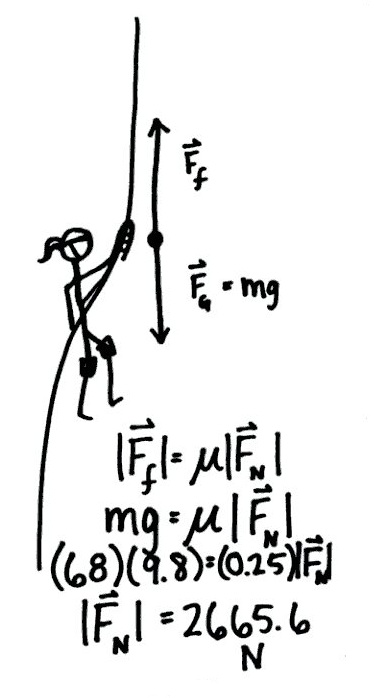
At a stand still, the net force on the system (me and the rope) is zero, so the amount of friction supplied by the rappel rack would be equal in magnitude to the amount of gravitational force on my body (assuming an ideal situation without any deformation of the rope). Assuming the static friction coefficient for the rope against the steel rappel rack is 0.25, the minimum amount of normal force required to counteract gravity and keep the rope from sliding can be calculated. Since I weigh about 150 pounds (68 kilograms), the amount of gravitational force on my body equals about 666 Newtons. What a lucky number! Setting this equal to the amount of friction required, the amount of normal force the rappel rack must supply against the rope is 2665.6 Newtons. Dang! That’s a lot of Newtons, seeing as one Newton is about equal to the amount of weight of one apple. That’s enough apples to make a whole lot of pie!
The rappel rack doesn’t actually supply this much normal force alone, which is why I still moved down the rope even with all of the bars on the rack. This is where my hand holding on to the rope came into play. If I ever got to going too fast, I would squeeze the rope with my right hand and would stop moving (or slow down, depending on how hard I squeezed). Just like the rappel rack, my hand supplied a normal force against the rope which created friction and counter-acted the force of gravity.
Now that I have blown your minds with my awesome tale of caving and physics, enjoy these great pictures taken by cave master (joking), Colin Lehman:
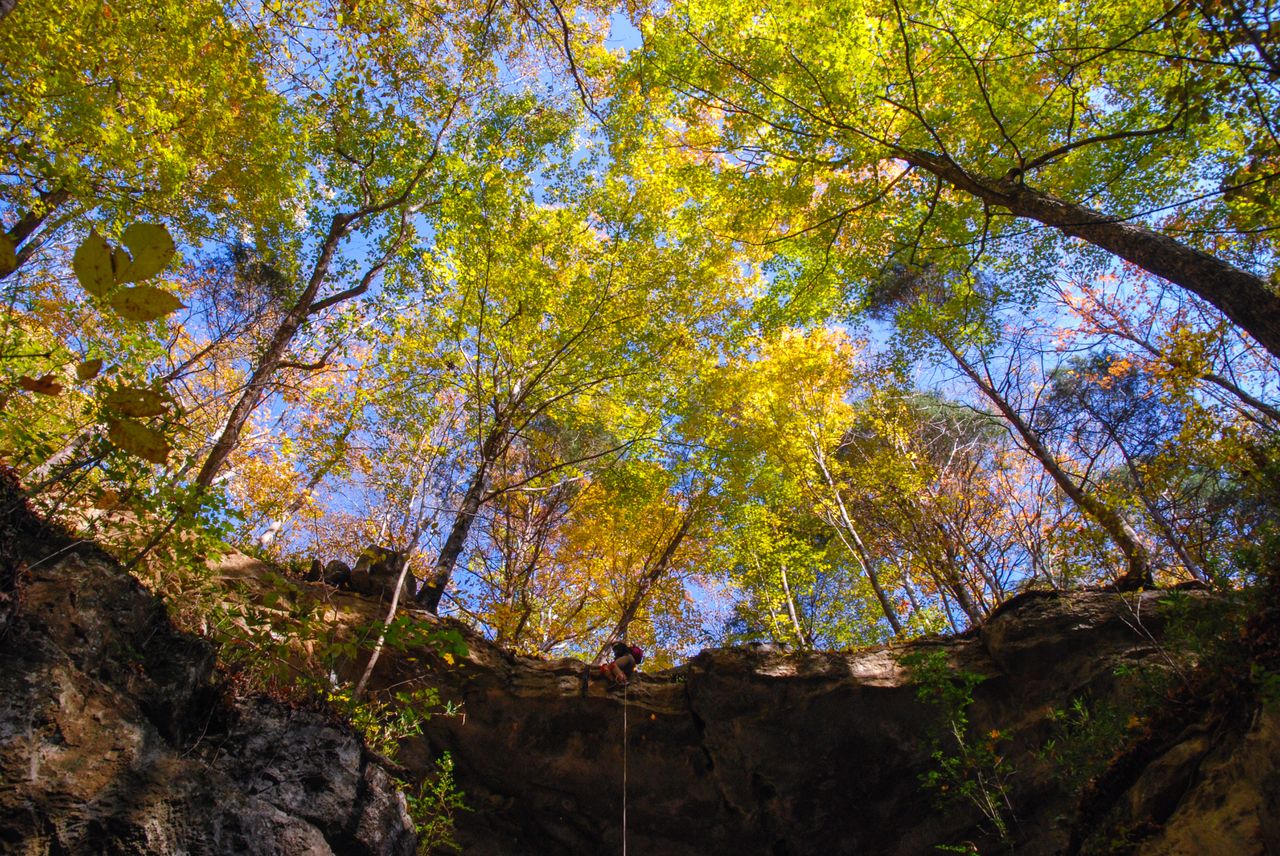
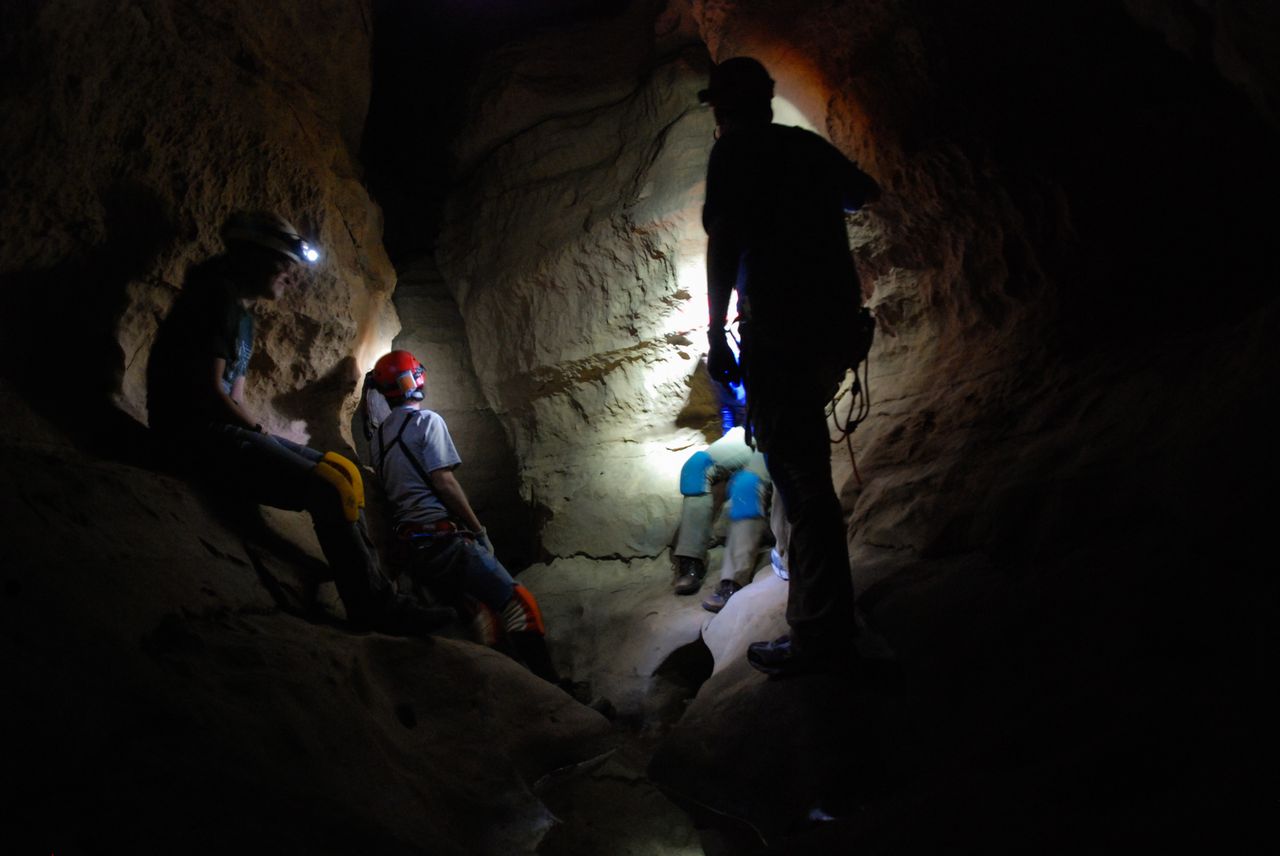
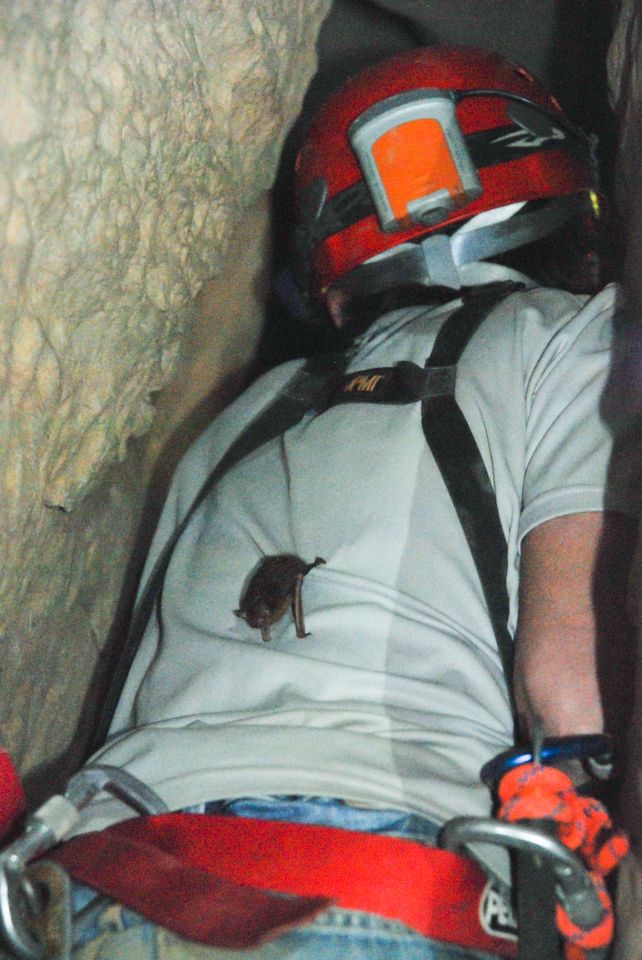
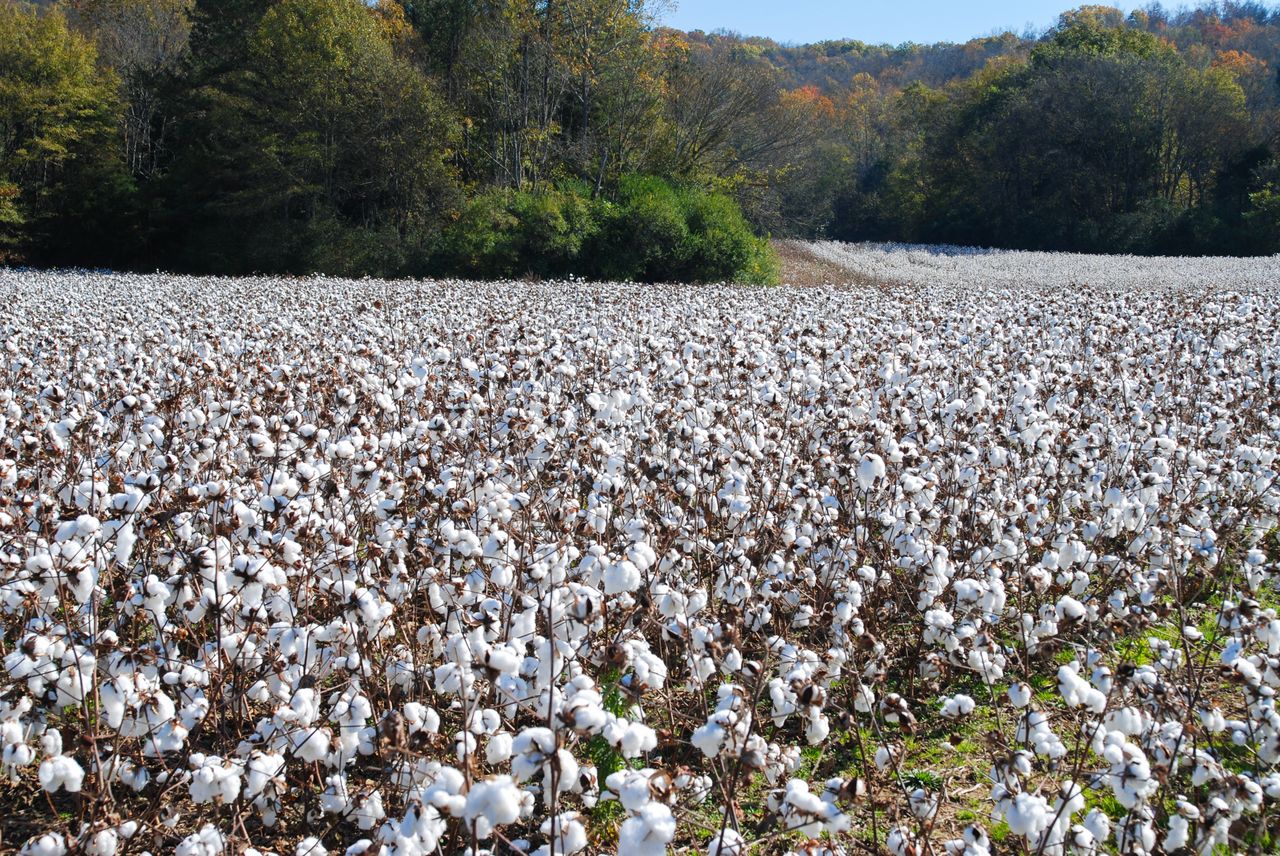
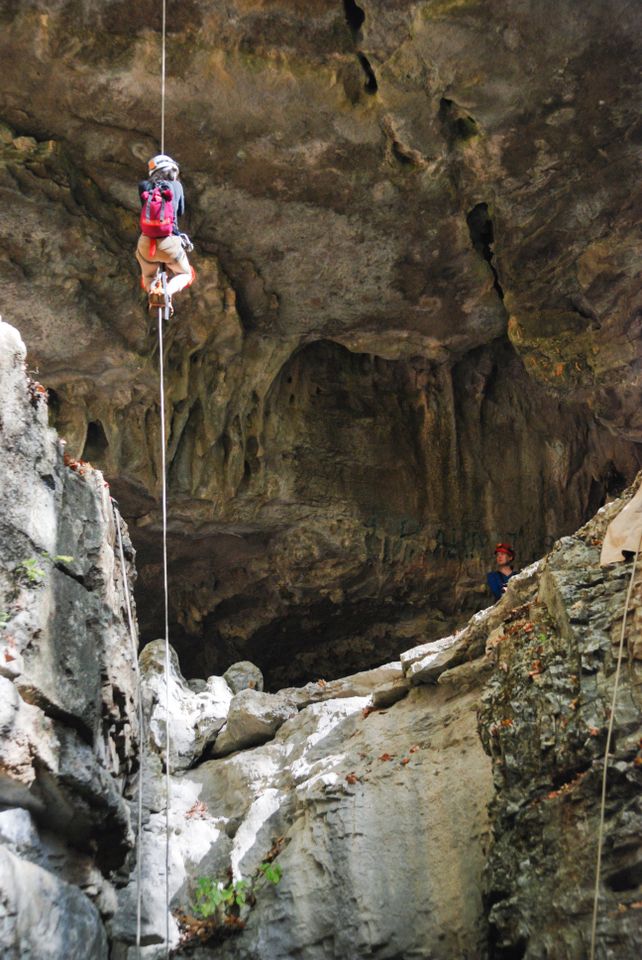
Pretty foliage!Oh, don’t mind me! I’m just going down into this deep, dark hole!The inside of the majestic cave.One caver made a new friend… with a bat!The path to the cave was covered with cotton. It had all been harvested by the time we got back.The cave master making his way down.Sweet view!A fellow caver moving up!
Source:
The Mechanics of Friction in Rope Rescue by Stephen Attaway, Ph.D. (Find it here)
It is an indisputable fact that I am deeply, irreversibly, head-over-heels in love with pie. Apple. Pumpkin. Blueberry. Banana Cream. You name it, I’ll eat it.
As Thanksgiving approaches, I find myself longing for a slice of warm apple pie with a big scoop of vanilla ice cream. I also find myself contemplating the scientific majesty that is an apple pie.
What majesty, you say? Well, friend, allow me to take you on a journey — from orchard to oven, from farm to table. Prepare yourself. Cozy up. Grab your snuggie. A tall glass of hot chocolate wouldn’t hurt either. Of course you’ll need some marshmallows. Got the marshmallows? Good! Let’s begin.
There are few evolutionary success stories as impressive as the apple’s. Think about it. This fruit was able to evolve a trait so desirable (its deliciousness) that we humans have taken it from its ancestral home in the mountains of Kazakhstan to every populated continent on Earth. We have immortalized the apple in art; we have juiced them, fermented them, sliced them, bobbed for them, dipped them in caramel, engineered machines for the sole purpose of coring them and, yes, made them into delicious pies.
You might think with all its uses that the apple must be a simple, easy fruit to grow. Humans are lazy, right? Surely we wouldn’t grow a fruit like the apple so much if it weren’t an easy thing to do. Wrong. False. Incorrect. Lies!
Apples are incredibly complex. Apples are extreme heterozygotes, meaning that the genes they inherit from their parents can be radically different between one apple and another apple on the same tree. If you were to grow a tree from a seed taken from a Granny Smith apple, you would most certainly, not obtain a tree filled with Granny Smith apples. Your apple tree would likely produce “spitters” — nasty, sour apples meant only to be spit out. Every so often a sweet apple would be grown by chance, but not with consistency.
So how do we manage consistency today? How do we grow a Granny Smith apple tree? Well, in order to produce a Granny Smith apple tree, you would need to graft one. Grafting is a horticultural surgical procedure whereby the tissues from one plant are transplanted into another, allowing for asexual reproduction of the primary tissue. As a result of this process, the tissues from the donor plant fuse with the tissues of the host plant and the resulting fruits are born from the genes of the donor tissue.
Without this process, apples would never have been domesticated; planting an apple tree would be like opening a box of chocolates — you’d just never know what you’d get. It would be an adventure, yes, but 99 times out of 100, it’d be an unhappy one. Through grafting we have become slaves to the apple, spending billions of dollars per year on pesticides aimed at keeping the sweet apples we love away from the dark precipice of extinction. And for what? For pies. And to be perfectly honest, that’s all the reason we need.
The next thing you’ll need for your pie is a crust. There are many recipes that one can use to make a pie crust. But so far as it is an indisputable fact that I am deeply, irreversibly head-over-heels in love with pie, it is also a fact that the best pie crust recipe is indisputably my great-grandmother’s recipe. But I will not be supplying you with this recipe. This is not a “how-to” guide. Get over it. I will however, confide in you, my dear reader, the identity of one crucial ingredient. It’s flour. I know. Revolutionary! But don’t tell anyone. It’s a secret. Now that you know this deep, dark secret, you probably have some burning questions. If you’re like me, the first question you are probably asking yourself is “What are the explosive properties of flour?” Lucky for you, I have the answer!
As it turns out, flour is, indeed, an explosive substance. Flour is composed primarily of starch, which is, in turn, composed primarily of glucose. Glucose is highly combustible — it reacts with oxygen to produce carbon dioxide and water. When ignited by a flame, the sugars explode! Boom! Normally, this process is highly controlled — cells convert glucose into pyruvate through glycolysis and that pyruvate is then converted to carbon dioxide and water through the citric acid cycle and oxidative phosphorylation.
Through these processes animal cells produce the energy needed for carrying on with their day-to-day metabolic processes and that’s all good and well, but it’s probably not the type of combustion you were thinking of. Where are the explosions? Where’s the excitement? Well … this is the excitement. Your cells have the ability to carry out explosive reactions in a manner so intricate and organized that they cause no harm to you whatsoever — in fact, they help you. On a second-to-second basis, your body is “exploding” sugars and harnessing their energy. So put that energy to good use. Invest it in digesting more pie.
Of course there are many other ingredients that go into making the perfect apple pie (cinnamon, nutmeg, sugar, butter), but we will not address those here. We will, instead, end our journey with a discussion on ice cream — apple pie’s obligatory sidekick. Ice cream is a dairy product, meaning it is derived from mammalian milk. Humans have been consuming milk since the Neolithic revolution, but it wasn’t until Louis Pasteur invented pasteurization that dairy products such as ice cream could be made and stored for extended periods of time. Pasteurization is the process by which milk is heated and cooled in order to reduce the amount of pathogenic microorganisms in the product. Once pasteurized the milk is free to be used as an ingredient for whatever ice cream your heart desires! But as for me and my heart, we will desire vanilla.
If you’ve stuck with me this far, congratulations, your dedication is about to pay off! How, you ask?! Why with a discussion on the colligative properties of rock salt, of course! If you wanted to make your own ice cream, you could do it by filling a bag with milk (1/2 cup), sugar (1 Tbs), and vanilla (1/2 tsp), sealing that bag, and placing it in a larger bag filled with ice (4 cups) and rock salt (4 Tbs). Gently massage your bag for 5 minutes, or so, and voila, you’ve made yourself ice cream!
Witchcraft! You exclaim. No, silly! It wasn’t witchcraft. It was science. You see, salt has the ability to lower the freezing point of water (meaning that it enables water to remain liquid beneath its freezing point). For your ice cream, this means your ice/salt mixture will keep your milk/sugar mixture sufficiently cool for it to freeze into ice cream despite the fact that it’s sitting in your warm, cozy hands in your warm, cozy room. It also means you have a quick, easy way to make yourself a side dish for your apple pie!
By now you’ve probably finished your tall glass of hot chocolate and are wondering what to do next. This article is almost over; you’ll soon be left on your own. What will you do? Well, if I may make a suggestion; go make an apple pie and some vanilla ice cream. Bake it. Eat it. Respect it. Admire it. After all, it came a long way to get where it is today. Also, pie is yummy and delicious.
Special TINGLING Sensations Spider-Man tingles when he senses danger… People with ASMR tingle when they sense…pure bliss?
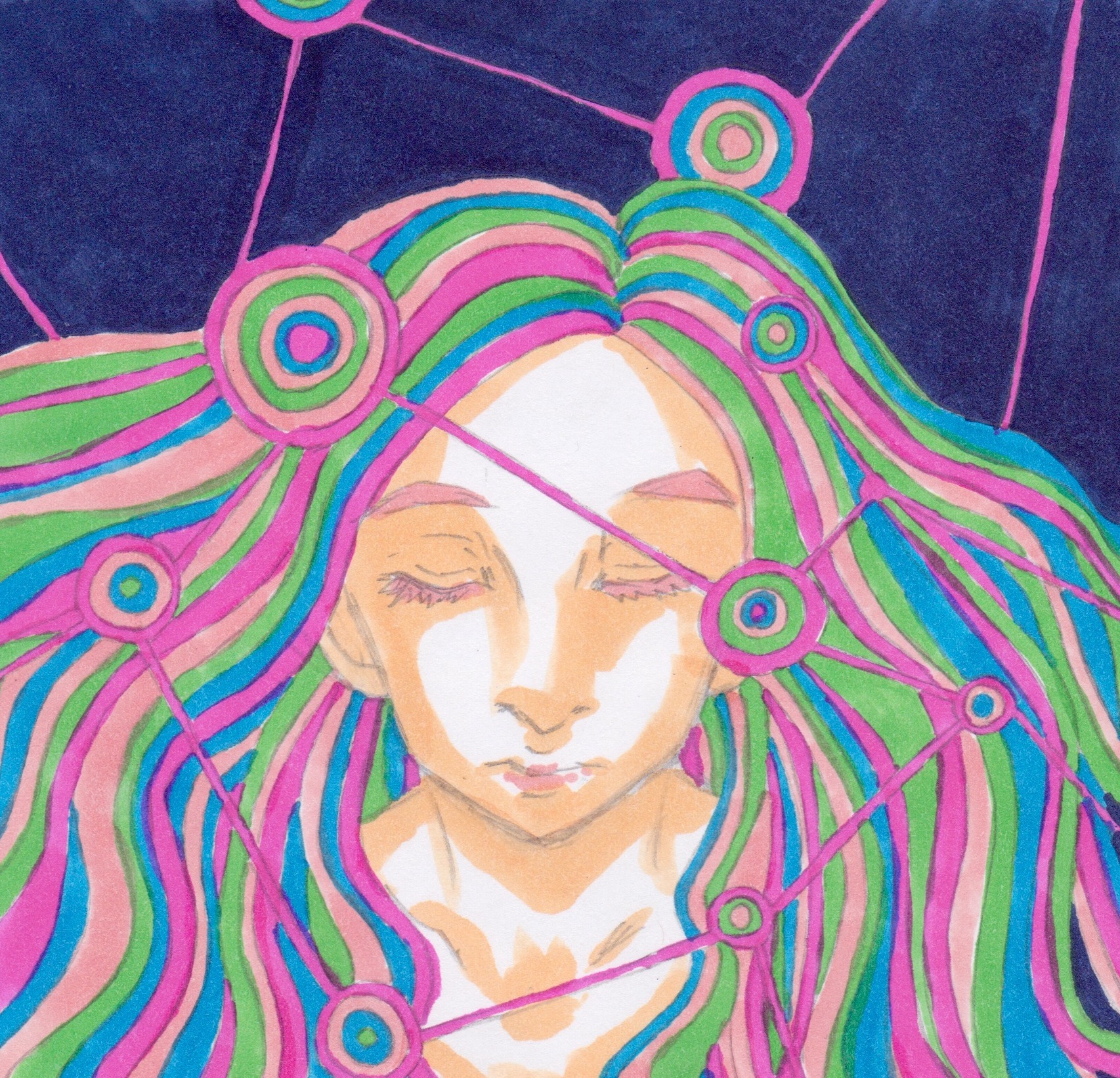
You know how Spider-Man had a special spider-sense that would tingle whenever danger was lurking? (Or if you don’t know anything about Spider-Man, he was this superhero who had this special superpower called a spider-sense that would tingle whenever danger was lurking.) Well, this is going to sound weird but think I have my own type of “spider-sense” because I also feel a tingling sensation at the base of my skull at specific times. However, this feeling does not arise in response to the threat of danger. In fact, it is quite the contrary—I get this tingling feeling when most at-ease.
My personal ASMR journey: It all started when…
Since I was a kid, I would get this tingling sensation in my head and question what it was: do others feel it too, or am I the only one? Did I have a superpower or sixth-sense, or did I have a mental disease? Honestly, I never found out because explaining such a sensation to another person usually just evokes confusion and head scratching.
Today however, if I had to describe my “ASMR” it would probably sound something like this:
Basically, my brain tends to generate these intensely pleasurable sensations that flow throughout my nervous system like a wave of energy, putting me into a calm, tranquil, relaxed, euphoric, feel-good, trance-like state of mind. These sensations last for only several seconds and feel like a fuzzy, tingling, prickly, tickling, caressing physical sensory eruption spontaneously traveling like a current of electricity from my head, making its way down my spine, and fading away into the other areas of my body. It kind of feels like an army ants who march from inside my head into my hair, crawl down my spine and then jump off my skin; throughout this journey they bite me, but it does not hurt. Rather, it feels as if they are injecting small bursts of relaxing pleasure into my body.
Seeing, Hearing, Feeling in Harmony
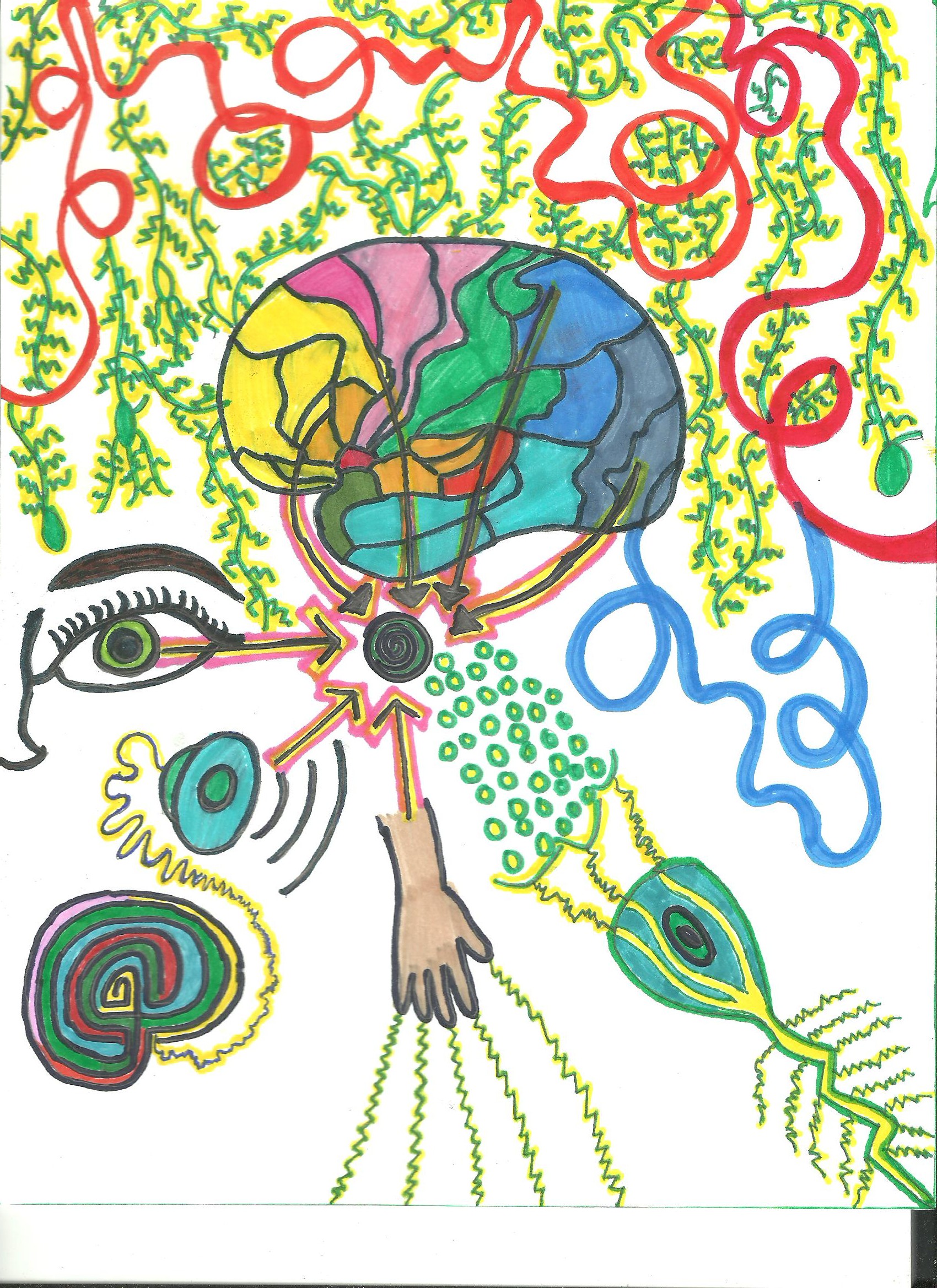
If I had to make a crude mapping of this process I would say action potentials most likely initiate and fire from the lower back regions of the brain and then conduct distally along the spinal cord and ultimately propagate into the peripheral nervous regions of the body.The physical feeling I perceive is the complete opposite of pain and can generate goose bumps (i.e. piloerection) on the skin of my neck, arms and scalp. Initiated by cognitive or psychological processing, there seems to be a blending of central and autonomic nervous system activation. The autonomic or “involuntary/automatic” part of the nervous system controls the necessary bodily functions essential to survival, such as breathing, heart rate, body temperature, blood pressure, micturition, etc. and also responds to many types of emotional stimuli. [1]
Categorizing the Senses: A multitude of receivers (cells) within the body are programmed to respond to specific environmental stimuli.
For me, one key ingredient always produces the ASMR sensation: specific behavior or mannerisms of other people while they are engaged in rather ordinary tasks, such as giving directions on how to do something, handling objects, or just speaking. These tasks are known as triggers to people in the ASMR community. Here are some examples of triggers that stimulate the ASMR response for me:
Watching someone draw or paint (especially if they are narrating the drawing/painting process)
Listening to the narration or reading of a story
Watching someone gently scratch something or other movements of the hands and feet
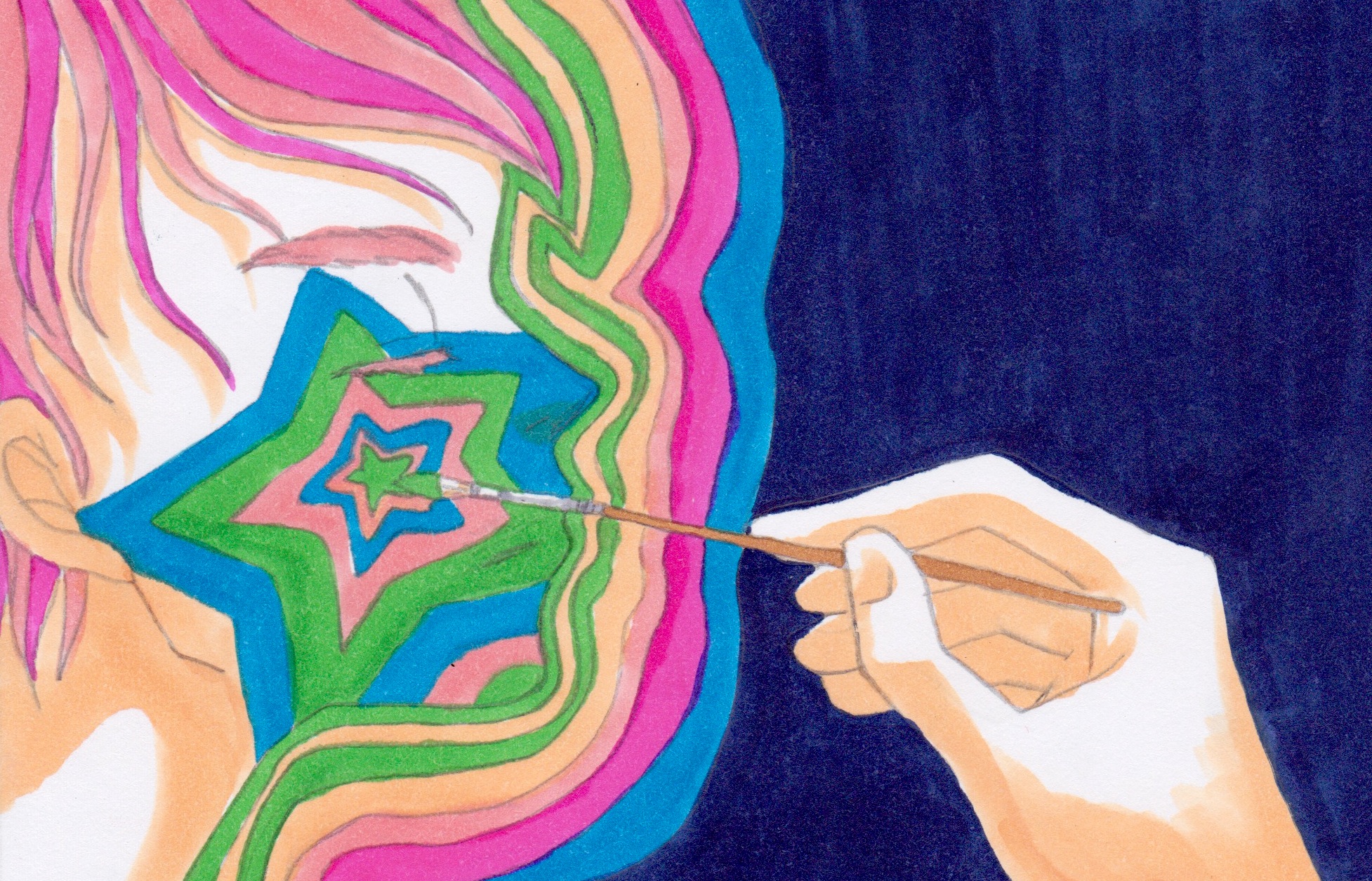
Having my face painted
Being asked questions by a doctor
Having my ears checked
Having my breathing monitored with a stethoscope (like when the doctor says “take a deep breath”)
Being instructed on how to do a task such as homework problems or how to do something on a computer.
To give you an example of how ASMR feels, imagine a time when you’ve had your face painted, perhaps at a carnival or art festival. You sit comfortably in a chair and remain still while the painter slowly caresses your cheek. You begin to feel a tickling, tingling sensation as the cool paint and hairs of the paint brush gently glide across your skin. This, my friends, is what ASMR feels like.
Face painting stimulates cutaneous (skin) sensory receptors who respond to gentle, relaxing touch.
Worthy of mention is that the person who initiates the trigger exhibits a relaxed mood or speaks with a slow, mellow voice. But because I don’t really have any sentimental value attached to the event or the person involved in the trigger, it is most peculiar to why they can somehow activate my body’s pleasure circuit. Perhaps certain people just give off good “vibes.”
Back in the old days of the 1990s, my curiosity of this sensation could not be satisfied, and my dissatisfaction was intensified because no one understood it and my current go-to problem solver, the internet, wasn’t really a common option then. Today, however, the power of Google and other search engines can transport us through cyber space into virtually any destination of information, concepts or ideas. Since the few people I have talked to over the years (a few friends, a college professor, my mom…) about ASMR had never heard of the sensation and thought me a little strange, I was beginning to have a slight paranoia of having some rare neurological disease and decided to browse online for possible answers.
Luckily, the internet is full of weird people (and cats) and wacky things. This is how I found other people who experience the same mysteriously pleasant sensation as me.
Lo and behold, I can now present the name of this vague feeling. It is called “Autonomous Sensory Meridian Response,” and it is pretty awesome. You should go ahead and Google it, YouTube it, Facebook it, Reddit it, or Twitter it as you will see that I am not alone. It is wonderful to see so many forums, interest groups, blogs and other cyber-terrestrial lands scattered throughout the internet, inhabited by people who possess the exact same “spider-sense” type feeling I once believed to be my own personal superpower. There even exists an online research group who seeks to find an answer to this bizarre social phenomenon.
But….WHAT causes ASMR?
No definitive explanation for this psychophysiological phenomenon seems to exist, and though the rate of incidence is unknown as well, ASMR is probably not experienced by everyone. However, those who do notice its occurrence naturally might wonder what the tingling sensation actually is and why it happens. One could argue that most if not all sensations are encompassed by the vast, enigmatic notion of consciousness.
Consciousness, almost too abstract to define, yet it allows us to perceive and experience the universe. Just go with it….
Many concepts involved with conscious sensory perception were once thought to be some sort of myth but are now accepted as evident processing of the mind and body. For example, synesthesia, a phenomenon many skeptics dismissed because nobody could prove it, now thrives as a hot topic in neuroscience. Synesthesia is defined as “a neurological condition in which stimulation of one sensory or cognitive pathway leads to automatic, involuntary experiences in a second sensory or cognitive pathway.”
People may report perceiving a sound as purple or perhaps smelling a particular scent and claiming it smells green. This type of sensory blending demonstrates an important feature of perception: everyone thinks and feels stimuli differently because we are all wired slightly differently in the brain and our cellular architectures all have a slightly different schematic (thanks, DNA). Further investigation of the sensory evoking entities underneath our skin will likely provide insight into why many people experience tingly waves of pleasure that surge throughout the head and peripheries, aka ASMR.
Unfortunately, ASMR has not been accepted in the scientific community. In the past, some have attempted to create a Wikipedia article for this topic but have been denied by the highly scrutinizing Wiki editors due to lack of scientific evidence. If you attempt to search “autonomous sensory meridian response” or “ASMR” in a scholarly search engine such as PubMed or Web of Science you would probably find zero exact results and would be searching for a cyber-needle in a cyber-haystack. (Trust me I’ve spent hours to days attempting to find something with no such luck.)
I have found similar topics that all seem to dance around this enigma. However, I take offense and feel discriminated against that Wikipedia would kick ASMR to the curb just because the editors have no proof. How unfair that another unexplainable sensory phenomenon called “The Hum” (The Hum, seriously?) gets to stay on Wikipedia! That’s sense-ist! I will not stand for this. I have a dream….that ASMR will become accepted on Wikipedia and scientific search databases!
Searching for the answer
Oddly enough, if you go to Wikipedia to get a quick crash-course for Autonomous Sensory Meridian Response, the closest you will probably get to an answer lies at a dead end stub page termed “cold chill.” The description provided on this page does not accurately reflect ASMR and the resources at the bottom consist of two articles about the “chills” or “thrills” response one may get when listening to music perceived as “awe-inspiring” or “moving”. While this is very similar to ASMR, it is not the same, so don’t get the two mixed up. Nor is it the goose bumps you get when cold or that “shivers down the spine” feeling you may get when scared or when hearing the scratching of nails on a chalkboard.
Wikipedia took down the page about Autonomous Sensory Meridian Response due to lack of scientific evidence, so it is scientific evidence we must provide by using credible resources.
Here’s an idea of what I’ve been researching so far just to look at many possible angles on the topic.
Key words/topics: differential perception, cold chill, piloerection, goose bumps, synesthesia, psychodynamics, brain tingling, brain goose bumps, ecstatic seizures (I wouldn’t spend too much time looking into this topic I don’t think this is it), positive affect, emotions, autonomic nervous system, endogenous opiates, serotonin, oxytocin, dopamine, empathy, meditation, hypnosis, hypnoanalgesia, relaxation, (probably more that I can’t remember at the moment)
In less vague terms, search for a physical sensation that….
Invokes a (non-sexual) type of pleasure by watching other people do seemingly ordinary tasks
Acts like mirror-touch synesthesia (why some people may perceive pain when seeing somebody else getting hurt)
Or…
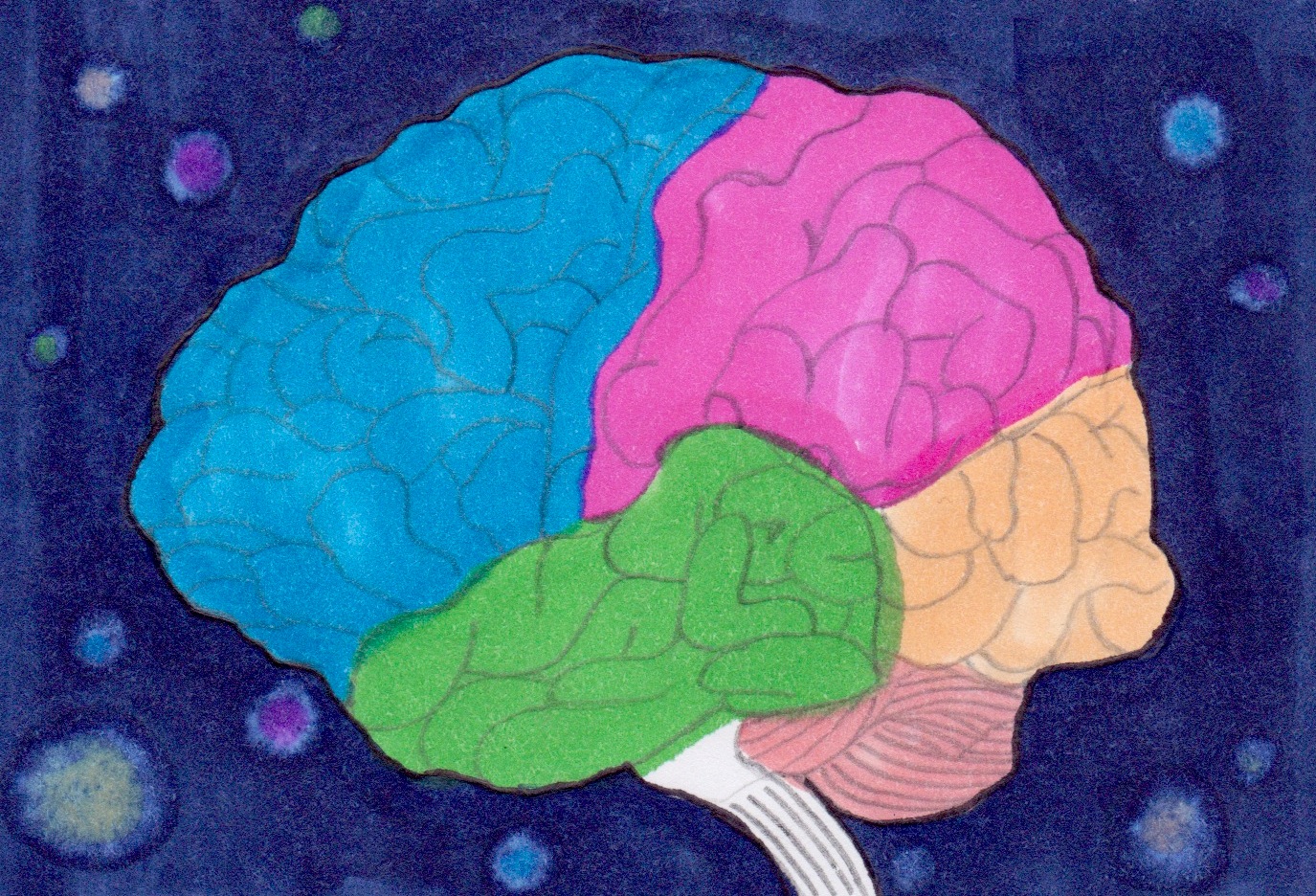
Explore the brain regions! (limbic system, prefrontal cortex, hippocampus, amygdala, thalamus, nucleus accumbens, reticular formation, basal ganglia, temporal lobes and auditory system would be good bets)
If you happen to know a professional such as a doctor, researcher, neurosurgeon, anesthesiologist or anyone with an advanced scientific degree, ask them!
Just describe it as a non-arousing type of tingling sensation (not associated with pain) that invokes a pleasurable, relaxing, euphoric state of mind and literally feels like a wave of electricity often resulting in goose bumps on the head, neck, arms and legs.
I’m sure it lies somewhere within the verbal menagerie listed above but I can’t seem to pinpoint it. Instead I get kind-of-like-it-but-not-really type of results. So if you are of the scientific subset of the human population or if you experience ASMR as well and know what I’m talking about, or even if you are just interested in investigating something new, then please, I need your help! Anyone interested in collaborating by finding scientific evidence to support ASMR please email devon@chargedmagazine.org. I will provide a more structured outline of relevant research topics and we could discuss our findings.
So…
Why is it that certain behaviors of others is able to induce an opiate-like affect in the body? This feeling is as good as a drug and can alleviate headaches, relax someone who is stressed out or even put them to sleep if they have insomnia. However, people who experience ASMR need not put a substance into their body; it is more like a telepathic narcotic.
Hopefully the answer can be found with diligent research into the realms of psychology, physiology, biology and neuroscience. The answer might be out there, and if not, could this be the next big scientific breakthrough?
In the meantime, I’m going to go take a 23:33 minutes per megabytes dose of ASMR by watching this video.
Artwork, Courtesy of Ai Taniguchi: Cover image (Brain), Spidey-Sense, Face Painting, Consciousness
Image, Sensational Hierarchy. Inspired by: Seeley, Rod R. “Integration of Nervous System Functions.” Seeley’s Anatomy & Physiology. 9th ed. New York, NY: McGraw-Hill, 2011. 473. Print.
[1] Kreibig, Sylvia D. 2010, Autonomic nervous system activity in emotion: A review. Biological Psychology, 84, 394-421.
White penetrating light blasted into Anna’s eyes. Her entire body felt numb from the cold and she could just barely move her toes. She lay in a glass casket, her body suspended in the air. The pressure in the casket started to change as she drifted to its bottom. The smell of rust and sweat swept into the casket as the lid popped open to release her back into civilization.
The smooth face of a man came into her field of vision. “Don’t try to move Anna,” the man’s soft voice purred in her ears. She tried to nod, but none of her muscles responded.
Anna closed her eyes and tried to remember why she was here. It felt like just moments ago that she had been hugging her mom and dad and telling them goodnight. They had promised her that they would wake her once a cure was found for her cancer, but that they would wait no more than 3 years before bringing her out of cryostasis. How much time had passed? Days, weeks, months or years?
“Try to wiggle your toes Anna,” the man instructed and she obeyed. “Very good. Now flex your foot.”
Slowly and painfully, feeling returned to her body. Her bones ached as she tried to sit up in the casket that stood in the center of the return room. Rusty cables hung from the ceiling and were connected like a spider’s web to her casket. Behind the dirty glass wall stood a bank of computers, with one red-haired smooth faced woman operating the controls.
The man that had woken her stood next to the casket holding out a tattered wool robe. He helped her out of the casket and hung the robe on her scrawny frame. The robe enveloped her into its warmth but she nearly collapsed under its weight. She would have fallen but the man placed his arm around her shoulder and held her upright. “Come, you must try to walk. Your legs and body will remember what they’re supposed to do better if you move around.”
Anna hesitantly took one step and then another. Soon she was able to stand on her own, albeit with shaky legs. Finally she mustered up the courage to try and speak, but it came out as a horse croak. The man brought her a glass of water, which she drank thirstily. “Where are my parents?”
“They’re not here,” the man replied.
Anna fought back the tears that were pushing their way to the surface. “You’re lying. They promised that they’d be here.”
“I’m sorry but they’re not,” the man repeated more gently.
“Where are they?”
“I don’t know.”
Anna took a deep quivering breath. It felt good to breathe on her own again, even though the air smelled of rust and grease. Her bones complained at the abuse she was doling out on them. A stool stood at a decrepit workbench. She slowly sagged onto it, not knowing what to make of it all. “What’s your name?”
“My name is Nick. Would you like something to eat?”
Anna nodded and Nick produced a banana, a tomato and another glass of water. Slowly Anna reached for the banana and peeled it. Breaking off small pieces at a time she ate it, stopping now and then for a sip of water. Nick had disappeared to talk with the woman in the control room, leaving her to work on her snack in solitude.
When she finished, Anna left the banana peel on the table feeling guilty. Her mom would have a fit if she just left her rubbish lying around, but she could not see a trashcan anywhere. When Nick returned, he told her not to worry, that he would take care of it.
Nick came to her side and helped her to get moving once more. “How do you feel?”
“Sore,” Anna murmured. “My bones ache and my body feels numb.”
Nick led her into an elevator and pressed a button labeled Medical Ward. “Some of that is due to being in cryostasis for so long. The rest is due to your lymphoma cancer. But then you should be used to that.”
“How long have I been in cryo?”
“Some time.”
“How long Nick?”
“Look, there is a lot that I must tell you, but I’m not going to yet.”
Anna stopped and stared at him incredulously.
“I still have to treat your cancer. In order for the treatment to work swiftly you need to be in a calm state, like you are now, or we won’t have enough time with you. Do you understand?”
Anna shook her head. “I gather that whatever you have to tell me is not going to make me feel better, so why not just tell me?”
Nick sighed as the doors to the elevator opened. He led her over to a bed where he helped her to remove the robe and slip into a night dress and then under the covers.
Anna gripped Nick’s wrist. “Just tell me, please.”
Nick bent over and kissed her on her forehead. “Later, child.”
Anna bristled at being called a child by an adult. She was nearly 14, and knew more than they thought she did. They always spoke in whispers around her about her cancer, thinking she was not smart enough to understand them. But she understood every word, which was why she also knew that her only choice to live had been to go into cryo until a cure was found. Now there was a cure, but where were her parents? Were they watching her from an observation room while they administered her cure? She hoped that they were, and that all of this was normal. But then, why would Nick not tell her anything?
Nick came over and placed a calm hand on her shoulder. “Take a deep breath Anna. Everything is going to be all right. I promise.” Nick raised a needle and injected some medicine into her arm.
No matter how many times the doctors poked her with needles, she always flinched whether it hurt or not.
Anna felt herself drifting to sleep. She reached out and Nick took her hand. “Nick, please, just tell me how long was I in cryo?”
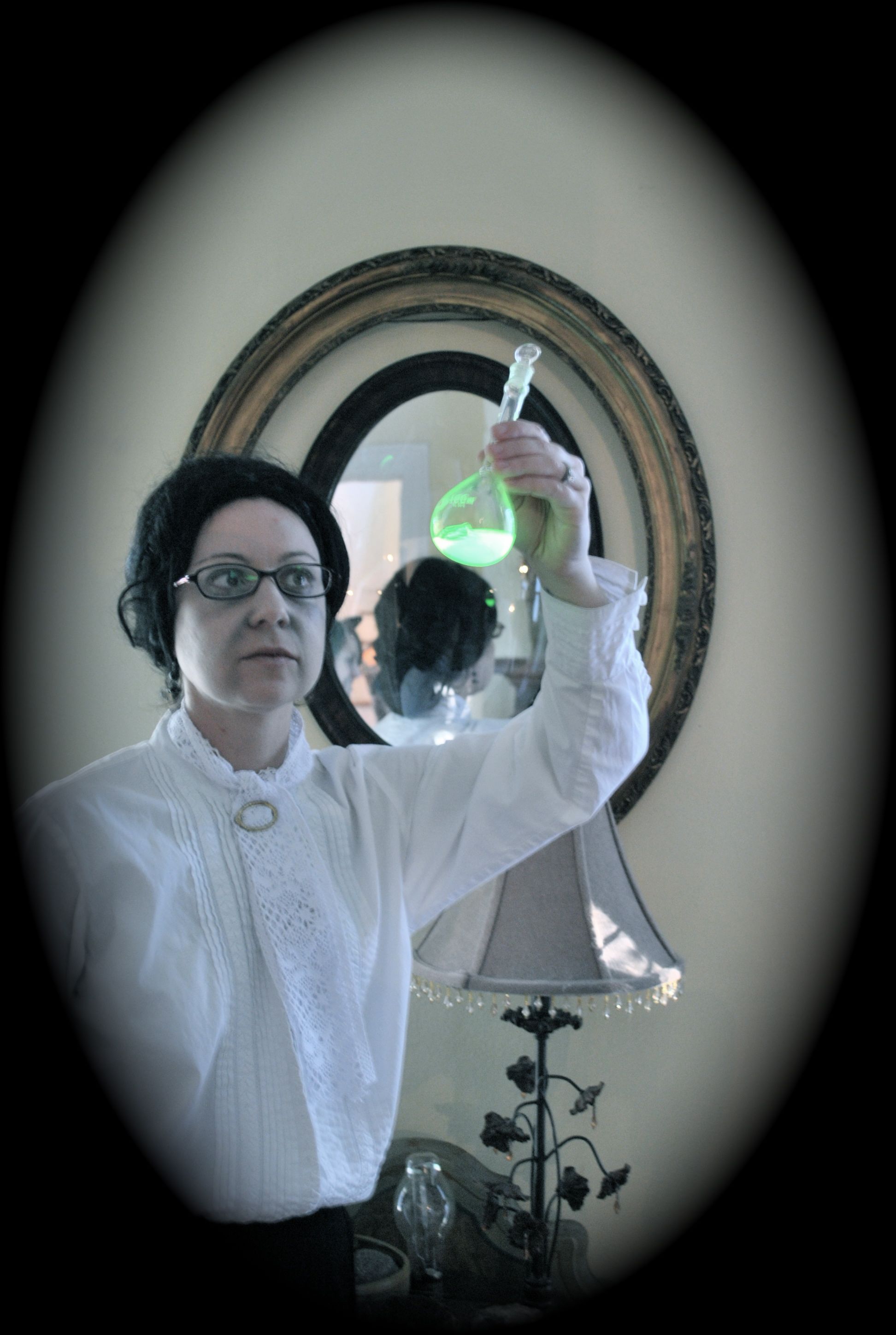
This year for Halloween, why not celebrate Marie Curie, the first woman to win the Nobel Prize? The good news (for you, not for her) is that she died a gruesome death as a result of exposure to the radioactive chemicals she studied so she makes for a spooky costume. Even now, her lab notebooks are so radioactive that researchers that want to look at them have to wear lead aprons! Madame Curie’s official cause of death was anemia, so a little yellow or gray makeup would be appropriate. You can mimic radium by cutting open an activated glow stick and pouring it in a test tube or flask (she used to like to carry her chemicals around in her pocket). I found a Victorian-era skirt at a vintage clothing store, but any dowdy dress will do….creepy AND geeky! Happy Halloween!!!
NOTE: This post is not related in any way to the 1956 sci-fi film that depicts an extraterrestrial invasion where the invaders “steal” human bodies. This is NOT a review of the Invasion of the Body Snatchers (though I do highly recommend the film).
Rather, this is brief overview of a period when robbing bodies, often from graves, was used as a means to provide physicians with subjects for dissections.
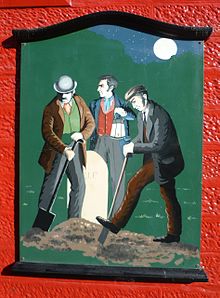
Body snatchers at work. A painting on the wall of a public house in Penicuik, Scotland.
When?
Body snatching was most prevalent during the seventeenth to nineteenth century, though there have been reports of this activity occurring as early as the fourteenth century.
Why body snatching?
– Surgical practice (High Demand): Most fifteenth century physicians scorned and considered it degrading to work with their hands; They often stood by patients they treated and ordered servants to perform what they thought should be done by hand. This disconnect between the physician and surgery created a void in anatomical and surgical knowledge. During the sixteenth century, Andreas Vesalius, a Flemish physician, led a movement to fill that gap. His efforts culminated in the publication of De humani corporis fabrica, one of the greatest anatomical textbooks. During that time, Vesalius traveled around Europe performing dissections himself, generating interest in surgery and leading physicians to embrace the values of a hands-on approach to medicine. This surge in interest in surgical practice created a great demand for bodies to be used for dissection.
– Shortage of bodies (low supply): Two centuries ago most states did not permit the use of unclaimed bodies for dissections and most of the states that did limited them to executed criminals. However, this was not enough as executions were few in the states. For example, Massachusetts executed less than 40 persons from 1800-1830. In addition, as the number of medical schools increased, so did the demand for bodies. This legal blockade created a shortage of bodies available for medical schools forcing them to turn elsewhere.
–Body decay (high turnover): Lack of refrigeration was a common problem back then; not only did it spoil food, but it spoiled bodies. This meant that there was a high turnover rate; physicians had a limited time frame to dissect and study bodies after death. This created a situation where there was a constant demand for bodies.
SOLUTION: Where can you find a large supply of bodies? Graveyards.
Who stole bodies?
-At first, grave robbers were medical professionals, students, and hospital porters who stole bodies for their own purposes. However, as time passed, medical schools advised students, faculty, and personnel to avoid engaging directly in stealing bodies. From there grew a class of individuals known as resurrectionists or body snatchers, men who made a living exhuming corpses and selling them to schools. Eventually, body snatching organizations/gangs started to appear. As laws were put in place, robbing became more profitable; their task became increasingly difficult and dangerous, and the price of their commodity increased.
-Since body snatching was an arduous task, it was often men who participated in this activity, though women were sometimes involved in non-physical tasks or snatching bodies not yet buried (falsely claiming a body to be buried).
Whose body was stolen?
-Race, sex, and social status did not matter. Nobody was safe from disinterment.
Note: Though records show that people of all race, gender, and social status were victims, the golden era of body snatching coincided with the period of racial and social inequality in the states. This meant that immigrants, blacks, and the poor were most often targeted.
The Art of Body Snatching:
Many considered body snatching an art. Some texts describe the act in lengthy detail spanning several pages, detailing tactics on how to procure bodies as efficiently as possible. I will spare you from the lengthy details without skipping over the essential techniques.
Step 1: Secure knowledge of a prospective burial: Information of a burial was usually supplied by mail or messenger. Such a message was often sent in code and not directly to the resurrectionists, but through some intermediary, such as a druggist.
Step 2: Scope the location: The grave should be accurately located during daylight hours so that a search in the dark would be unnecessary. A common method was to reconnoiter as a hunter. A stranger would appear in the neighborhood on the day of burial with a shotgun over his shoulder, apparently hunting small game.
Step 3: Wait until nighttime
Step 4: Begin the disinterment
Plan: At least two men and a watcher/driver were needed in a disinterment. One man remained with the transport; that person would drop off the other three at the location and return at a specified time. The other two removed the body.
Execute: The process of disinterment was fairly straightforward: a hole would be dug directly above the coffin, the coffin would be opened, and finally, the body would be pulled out. Since graves were dug to be about 5 ft deep (from the top of the coffin), extracting a body could be quite laborious. To make the extraction easier, resurrectionists used a modified pole to drag bodies out of graves. This pole was hooked at one end and had grips at the other (similar to the letter ‘J’). The hook would be placed under the chin of the deceased and the men would push or pull the body out using the other end of the pole. As you can imagine, this ‘hooking’ technique often caused damage to the corpse.
Step 5: Clean Up: The grave should look as it did before the disinterment to avoid suspicion and capture.
Ethics
The seventeenth to nineteenth century was a great era for medicine. Discoveries in anatomy led to improved surgical treatments and healthcare. However, people often forget that many of these advancements came at the expense of bodies being robbed. Families would go to cemeteries to pay respects for loved ones only to find the grave(s) in disarray, or would pay respects without knowing the remains of their loved were gone. Until the adoption of more coherent and stricter laws regarding body donation, many physicians considered body snatching a necessary evil.