I had chicken pox when I was 8 years old. This was before there was a vaccine for varicella zoster, the virus that causes chicken pox. When I was growing up everyone got the virus and it made you feel like crap and gave you sores all over (most people wound up with at least a few scars) and then you got better. In fact, when the vaccine was introduced in 1995 many people thought it wasn’t necessary because the disease was relatively mild. The 10,000 people hospitalized each year in the US because of complications and 100 people who died every year probably didn’t agree.
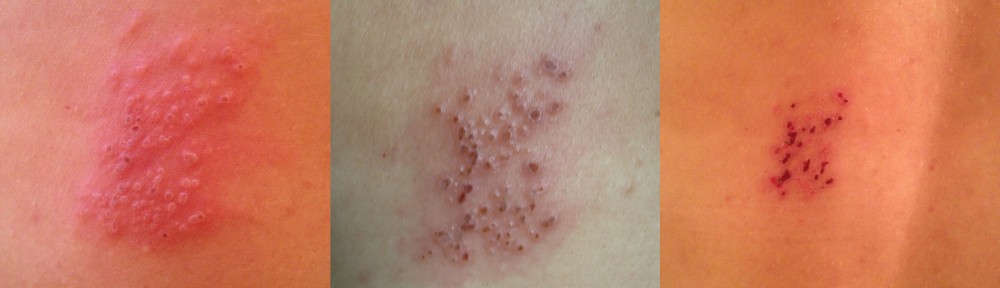
And you know what? I don’t agree either. Varicella or Herpes zoster is a tricky virus that goes latent in nerve cells, much like its cousin Herpes simplex virus. Basically this means that when you recover from your infection, some virus hides out, waiting for your immune system to get weak from stress, old age, other infections, or whatever and then it attacks again! I don’t know what triggered it in my case, but a few days ago I got shingles. Shingles is a yucky, sometimes terribly painful, outbreak of the same virus that causes chicken pox. This time I didn’t get a fever and sores all over, just a cluster of sores along one of the nerves on my back. The scary thing about this, though, is that I am infectious. I could actually give chicken pox to someone who hasn’t had a chance to be vaccinated (a newborn baby for example), a pregnant woman, or anyone who is immunocompromised for some other reason like HIV disease or because they’ve had a transplant.
I could also give chicken pox to people whose parents chose not to vaccinate them. These could be children or adults. Unfortunately, they didn’t get a chance to decide whether they wanted to get a life threatening illness because their parents thought it would be “healthier” than getting a vaccine. They also won’t get to choose when they get shingles, and will put other completely helpless populations at risk when they get infected.
Some anti-vaccine people perpetuate the myth that being infected and recovering from a natural infection provides better immunity than getting a vaccine. This is simply not true. Viruses have evolved sly ways of manipulating our immune system, and often the immunity you develop from natural infections will not protect you very well from being reinfected or from the reactivation of latent viruses.
You know, if I had been born a decade later, I would have been able to get the chicken pox vaccine and I wouldn’t have this icky rash on my back. If I were older, my doctor would have recommended the shingles vaccine for me. Unfortunately I am stuck in the middle and got sick, but you don’t have to. Go get the varicella vaccine, and get your children vaccinated.
PROFESSOR: Hello class! Welcome to “Advanced Application of Math and Logic in Natural Philosophy” class. Look to your left and look to your right. One out of five in this room will not pass the class.
STUDENT A: Sir, but there are only four of us.
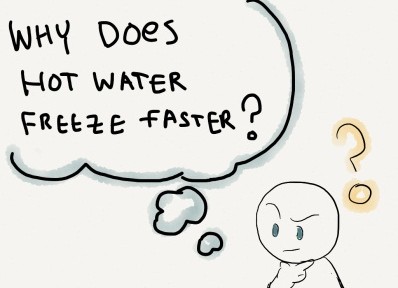
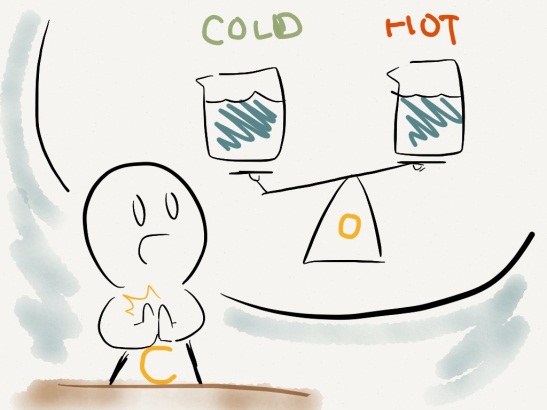
PROFESSOR:(ignoring the student) Ahem. During our first lecture, we will exercise the use of logic and thought experiments to unveil one of the greatest mysteries in the history of science. Even Aristitotle struggled solving this mystery. For centuries many scientists attempted to solve but failed. (drum roll) Why does hot water freeze faster than cold water?
STUDENTS B & C: (smile nervously not knowing whether he is joking or not)
STUDENT A: But sir, hot water needs to be cooled down before it can freeze. So shouldn’t cold water freeze faster?
PROFESSOR: Good point. However, that is not always true. It’s called the (writing on the board) Mpemba effect. Can anyone guess why? It’s okay even if you are wrong. Don’t be shy – that is why I am here.
STUDENTS A, B, C, & D:(silence)
(Satisfied with his authority and the full attention of his students, the professor continues)
PROFESSOR: Actually, experiments showed that hot water will cool faster than water at 60°C. But this is not the case with water below 60°C. Mpemba effect is a combination of multiple factors. Now let’s figure out each of them together. First, tell me what are the characteristics of hot water?
STUDENT B: It has higher average kinetic energy.
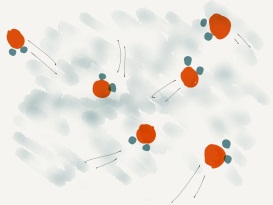
The water molecules move faster, which means that they occupy greater volume, similar to how an air balloon expands at higher temperature.
STUDENT C: Wait, that means that if cold water and hot water have the same volume, the mass of hot water will be less. This is because the evaporation is taking place and dissolved gases in hot water escape at a higher rate.
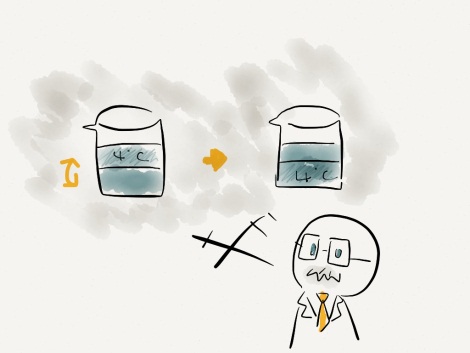
PROFESSOR: Great answers. Water is most dense at 4 degrees Celsius and its density changes according to its temperature. Yes, so 1L of water does not always hold the same amount of mass. 1L of hot water will weigh less compared 1L of water near 4°C. However, the mass difference is slim even when we considering the evaporation of water molecule. So there has to be another factor that contributes to Mpemba effect.
STUDENT: But sir? What about supercooling of water and nucleation? Doesn’t lack of impurities and gases in water lead to supercooling, in which water forms crystal ice at temperatures below 0°C? It has been observed that water can remain liquid at -40°C. If hot water doesn’t have dissolved gas, shouldn’t it be hard to make it freeze?
PROFESSOR: (as if expected) Good point. Except Mpemba effect has been observed in both hot water and cold water removed of dissolved gases. Dissolved gas does not seem to contribute to the process of freezing. You could, however, make beautiful and clear crystal ice by removing dissolved gas before freezing. So what else? What else does hot water do?
STUDENT C: It evaporates faster than cold water..?
PROFESSOR: Yes, the water evaporates faster. But why? And so what?
STUDENT B: Well umm… the temperature of water is the average kinetic energy. At any time, liquid water has molecules with a range of energies. Although most of them have the average kinetic energy of the system, very few have enough energy to escape intermolecular forces such as hydrogen bonds and dipole-dipole attractions. If we were to look at a graph of number of molecules versus energy, it would look similar to a current IQ graph, in which the majority of the population has an IQ of 100 and few have over 140 and under 40.
STUDENT A:(towards student B) Hydrogen bond and dipole-dipole forces are too weak to contain water molecules in liquid form. It’s actually the atmospheric pressure doing all the work.
PROFESSOR: Please let him continue.
STUDENT B: So molecules with higher energy escape, lowering the average energy within the system, and this is evaporative cooling.
STUDENT C: Oh! So the hot water is not only being cooled through evaporative cooling but also from heat conduction and convection inside the freezer.
PROFESSOR: Good answers class. But that is not enough. According to Dr. Takamasa Tkahashi at St. Norbert College, it takes 540 calories to vaporize one gram of water. At above 80°C, the rate of cooling by evaporization is high as vapor draws massive energy from water left behind. To give you an idea how much 540 calories worth, it takes 100 calories to heat up 1 gram of water to 100°C from 0°C.
STUDENT A: (excited) 1 Calorie is the energy required to raise 1 gram of water 1°C! In fact, scientists measured food calories by burning them and heating up water back in old days.
STUDENT D: Wow…is that why greasy foods have high calories?
PROFESSOR: If we neglect heat transfer through radiation or conduction, water will freeze on a desert purely from evaporation. Interesting, isn’t it? We can use zeolites which facilitate evaporation through adsorption to make ice as well. A team of engineers at Rice University built a prototype of ice machine that uses nothing but zeolites and vacuum pump.
STUDENT D:(perplexed) But professor, when hot water reaches the temperature of the cold water, don’t both of them have the same evaporation rate?
PROFESSOR:(impressed and amused) Very good point. I might actually consider allowing one A+ in this class. To answer your question, let’s first consider extreme cases to facilitate our thought experiments. Imagine placing an ice cube onto a very hot plate. What happens?
STUDENT A: (desperate to not embarrass himself) Uh…The ice melts immediately? And while some water molecules evaporate, others boil around the remaining ice cube, making noise from gases and vapor escaping. Noise is also another form of energy transfer.
PROFESSOR: Yes but melting the process does not happen instantly. While the ice is melting, what is the average kinetic energy? It is somewhere in between that of boiling water and ice.
Now, we learned that the energy of liquid water is not perfectly uniform. The faster the change of temperature is applied the greater inconsistency of the energy. Hence, hot water being cooled down to cold temperature has a higher evaporation rate than cold water that remained cold for a prolonged period of time. I think you’ll need to elaborate on this one…
STUDENT A: Also, Newton’s law of cooling dictates that hot water will cool down faster regardless of the evaporation.
PROFESSOR: Yes, of course, faster moving molecules will bounce off of each other more frequently, giving and losing energy through these interactions.
STUDENT D: So that means… initially, cold water has a more uniform temperature. But when hot water is cooled, although the average temperature is cold, there are greater discrepancies of temperature among molecules?
STUDENT A:(being impatient) Yes, and that is why the hot water will be more likely to have molecules with higher energy, which escapes and cools the liquid faster.
PROFESSOR: Like washing a car with hot water during winter, evaporative cooling is more evident with larger surface area. So what else? Does anyone else have any more idea?
STUDENT C: Well… this may seem stupid, but what if Mpemba effect is caused by other effects such as the environment?
PROFESSOR:(intrigued) What do you mean?
STUDENT C: The freezer keeps the temperature below zero all the time. But when the temperature increases, cold air is introduced in order to keep the temperature constant. So if we place hot water inside the freezer, and due to heat conduction, radiation, and evaporation, the internal temperature increases, it will trigger the freezer to blow cold air. You need to elaborate on this… And thus, hot water will freeze faster.
PROFESSOR: Hmm…I like your creative way of thinking.
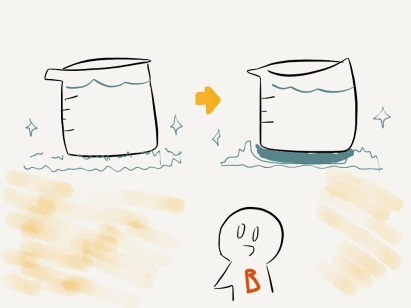
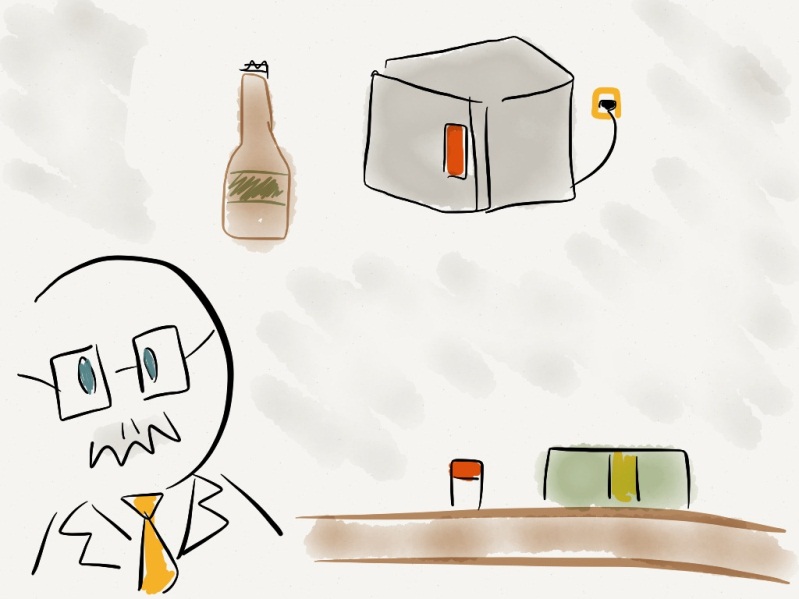
STUDENT B: Also, freezers have ice dusts inside. And hot water may melt these ice particles within the compartment at contact points of the bowl and the surface. Since water is dense and thus conducts heat faster, hot water will cool down at higher rate. The effect is similar to how ice water cools beer bottles faster than ice cubes.
PROFESSOR: Excellent point! Water is 829 times denser and transfers heat 25 times faster than air. Hot bowl of water sitting on slightly melted ice will definitely cool faster than cold bowl of water sitting on ice dust. Water covers more surface area as well. But aren’t you slightly underage to know how to cool beer bottles?
STUDENT A:(hungry for attention) Sir, what about infrared radiation? We know hot objects emit electromagnetic radiation and thus release energy at a faster pace. A combination of this and everything we discussed today will make hot water cool faster.
PROFESSOR: Now, do you guys remember how water changes its density? Due to heat conduction at contact points, a bowl of water will be colder at the bottom. Let’s consider a cold bowl of water. Cold water near freezing point at the bottom of the bowl will have lower density than water at near 4°C on top. Low density water will rise up switching position with water near 4°C. Neither upper nor lower part of water will freeze until that 4°C temperature is brought to 0°C.
Now what about hot bowl of water? Hot water at the top has lower density than cold water at the bottom. Thus, cold water near freezing point won’t rise up. This means the water at the bottom can freeze before hot water is cooled to 4°C. This effect will freeze hot water faster.
STUDENT C: Whoa… there seem to be a lot of factors that play in Mpemba effect. We discussed mass difference, evaporation rate, freezer compartment effects such as more frequent cold air and melting ice at contact points, and how density can slow or speed up the freezing rate. I don’t think we can come up with anymore explanations.
PROFESSOR: Aha but we are not done! There are more. What are we forgetting class?
STUDENT D: (as if he had more than enough to learn) Not a clue sir…
PROFESSOR: (excited) The internal air pressure of the freezer compartment~!
STUDENT D: But how..?
PROFESSOR:(showing a video clip on a TV) Do you guys watch a BBC TV series called “Bang Goes the Theory”?
STUDENT C: Oh my gosh! I absolutely love that show!!
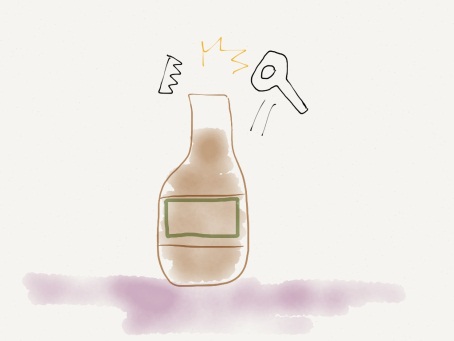
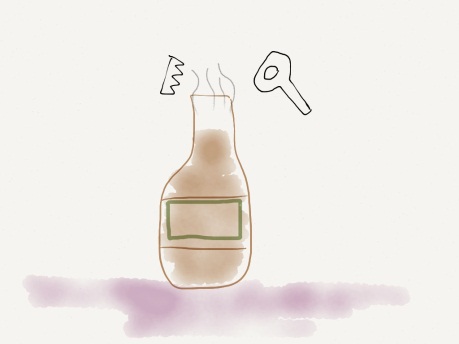
PROFESSOR: Let’s look at season 2 episode 4. In this episode Dr. Yan shows that when you quickly open a bottle there’s a cloud of white air at the opening. This effect is the opposite of how diesel engine ignites a spark by compressing air. (Professor demonstrates by opening a beer bottle). The air between the liquid and the cap is quickly expanded and loses energy. At this very instant, the temperature drops to around -30°C and this white gas you see is the condensed water molecules in the air.
STUDENT A, B, C&D:(intrigued) wow…
PROFESSOR: As the ideal gas law states, hot air has lower density than cold air under equal pressure and volume. If hot water and cold water were placed in a separate freezer compartments, the one with hot water will have less air molecules inside.
STUDENT D: But professor, why?
PROFESSOR: Because hot water will heat up the air inside the compartment. Of course, the longer you wait before closing the door, the more evident the effect would be. You all saw how quickly air cooled down when I opened the beer bottle. (Takes couple of sips of beer). You can create the same effect by opening the freezer compartment. Now when you open both hot and cold water compartments, the one with hot water will experience greater decrease in temperature; air with lower density will lose more energy when expanded at the same volume as air with higher density. This gives the last minute boost of freezing air to hot water compartment.
But even if you don’t open the freezer, lower pressure will facilitate freezing. Can anyone guess why?
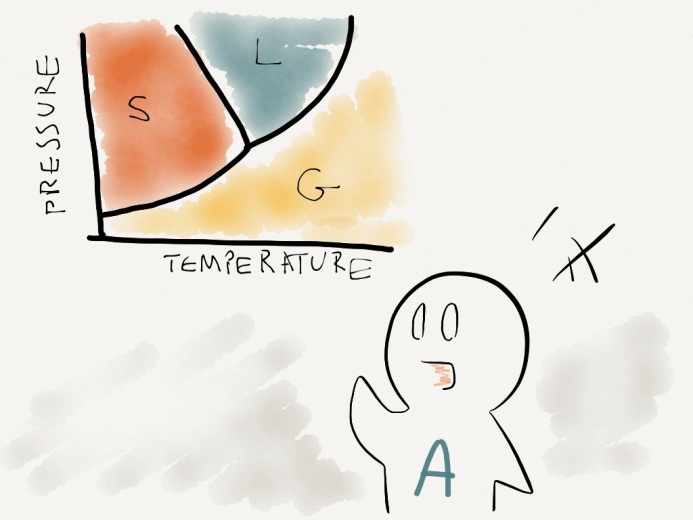
STUDENT A: As we can see on the phase diagram, the freezing point of water is higher at lower pressure. Hence, by lowering the pressure, hot water will freeze at higher temperature than cold water.
PROFESSOR: Excellent! Although the boiling point is lower at low pressure, freezing point is higher. Since ice occupies greater volume than liquid water, applying pressure to ice cubes will turn solid into liquid. Not only does lowering pressure increase evaporation rate, it helps to crystalize ice!
STUDENT C: I see… Mpemba effect isn’t magic. It’s science.!
STUDENT D:(frustrated) But professor, none of these answers answer any questions at all! Why must water evaporate? How come its temperature is not uniform? How come its density changes with the temperature? Why all this?
PROFESSOR: This class is a natural philosophy class for a reason. Science is a study and observation of the universe, finding pattern in its chaotic behavior and thereby hypothesizing the answer with logic. And we test our hypotheses to come up with a prediction. We, scientists, ask the question ‘why?’ and dwell on solving the mystery. But the answer we find is the answer to the question ‘how?’ We observe the mechanism and apply it, but we still don’t know why the universe behaves in the way it does. For example, why does Earth create gravitational attraction? Einstein explained that it is because mass curves the space. But why does mass create a distortion of space and why does the distortion cause attractive forces? We don’t know. All we know is how mass creates gravity
Class, I encourage all of you to pursue knowledge with an inquisitive mind. Scientific knowledge is what shapes our future.
Class dismissed. Write me 50 pages on Mpemba effect by tomorrow. It should be easy now that we discussed it in class.
Look, we humans are awesome. We own this planet. If we really wanted to, we could spill every barrel of oil we have into the ocean, light it all into one gigantic fiery blaze, get on fire-proof boats in robot suits, somehow put on war paint inside the robot suits, build obnoxiously large metallic middle fingers, and shout to the heavens “TRY TO IGNORE THIS, MOTHER EARTH!!” Then, if we try really really really hard, we could clean it all up again, because some of us are actually sorry and some of us like to keep our marine food webs and all.
Why orchestrate such a display of power? Because we are the all-powerful movers of earth, the masters of fire and brimstone, and the makers of Haribo Gold Bears because holy freaking balls those things are really freaking delicious. We also have days of the year set aside where we butcher and devour different animals in front of children, purely because that’s what we’ve done for centuries. That right there is true power.
Point is, we are masters of everything we see. Remember in the Lion King where Simba is sitting with Darth Vader, who I guess came back to life to inhabit the form of a lion, and Vader is all “everything the light touches is our kingdom”? Yeah, we humans are exactly that. The only difference between humanity and Darth Vader is this: while the lions behave at the whim of the team of animators and writers that brought them to movie stardom, we are being toyed with by a tiny microscopic parasite that enter our guts, hitchhike a one-way ticket to our brains, and deliberately try to kill us by making us do really stupid and risky things.
I bet if you were eating a sandwich right before that last sentence, you probably aren’t anymore. It’s hard to eat something that’s been catapulted by your own shocked reaction, sending sandwich chunks to the opposite wall mid-chew. Even then, the walls may be really dirty, and that’s just not sanitary. I have no idea when I washed my walls last, and I keep my room relatively clean.
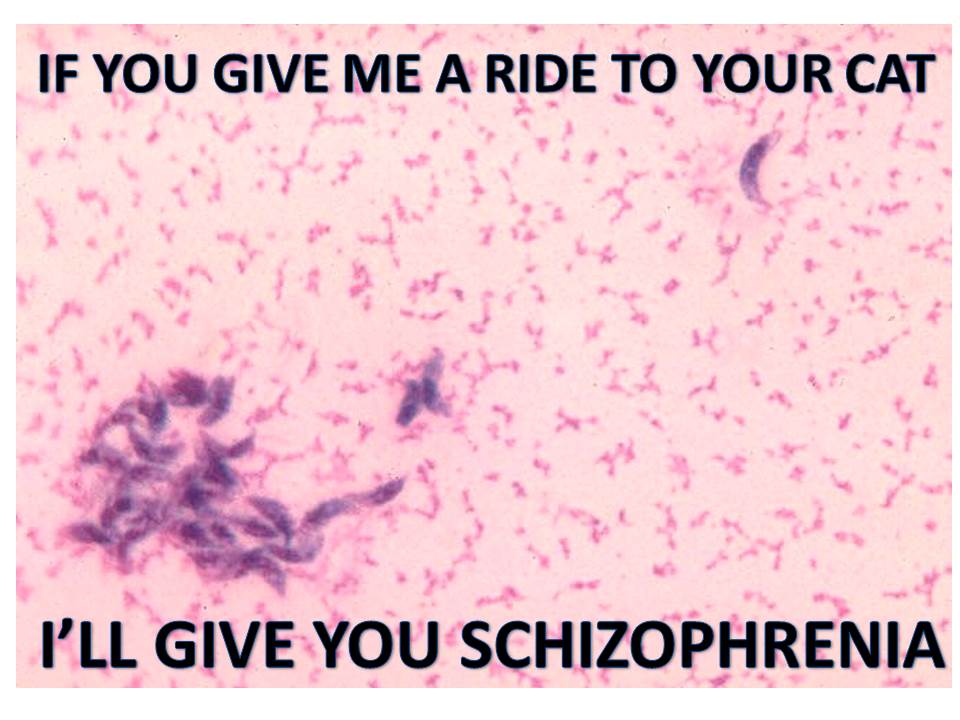
Why is this parasite trying to kill us? Simple. They want to get to our cats.
DAMMIT, MR. SCRUFFLES!!!
One of the reasons I wanted to write this article was to make myself look amazing. This isn’t hard, considering my creative wit and depth of scientific knowledge is nearly endless. The main reason I wanted to write this, though, was to talk about some badass ways that parasites can take over the minds of their hosts. It’s actually not uncommon to find mind-controlling parasites in nature. In fact, there is an entire field, called neuroparasitology, focusing on the effects a parasite can exert on host biochemistry, neurophysiology, and ultimately behavior and ecology.
Science jargon aside, there are some pretty badass parasites out there that tend to turn hosts into zombies. For instance, a genus of fungus called Chordyceps invades the mind of its insect host, forces it to climb to a high place, orders its newly-induced slave to latch on with a deathly grip, and busts out of the host all Alien-styled to shower its lethal spores onto unsuspecting insect hosts below.
Huuuugggghshhh, gross. I’m sorry I did that to you. I even feel a little dirty describing that. So, in an effort to make you and me feel less creeped-out and anxious, I’m going to comfort you by giving you increasingly creepy and troubling examples.
So there’s this non-sarcastically beautiful creature called the jewel wasp that wrestles cockroaches into submission and bites them in the neck to inject a mild dose of venom. This venom paralyzes the roach, and after a short time, causes the roach to move with absolutely no will of its own. The wasp then literally starts a one-float cockroach parade, leading the roach to the wasp’s burrow like a Siren leads a ship’s crew to the abyss to be eaten by mermaids or something. Gotta admit, I don’t fully understand the Sirens’ intentions. The wasp seals the roach inside the burrow with a single egg and a comically large timer counting down the exact moment until the egg hatches. When the timer goes off, the cockroach is devoured to death by the larvae and pupae of the wasp, giving rise to another generation of the most beautiful thing in the universe made entirely of cockroaches. Technically, these kinds of parasites are called parasitoids because they live on or within the organism for a long while, but they ultimately lead to the sterilization or death of their hosts.
The jewel wasp: made from 100% real cockroaches!! Holy balls, I just shuddered. Like, that seriously just happened.
Another badass parasitoid wasp, called Glyptapanteles, lays its eggs in a caterpillar to develop and consume the host. This time, however, the host does not die. IT DOES NOT DIE. No, these tenacious caterpillar hosts, half-devoured and all, cling to life like that chip I just dropped into my bowl of homemade salsa.
However, the wasp is not yet finished with its host. The caterpillar, after having live wasp pupae burst from its insides, spins a web of silk over the developing cocoons, stands upright on its back legs, puts on a lucky Japanese headband, and guards the cocoons with its life. Seriously, I wouldn’t dare screw with a half-eaten caterpillar sentinel, not even if I got a tummy full of wasp bodies as a treat afterwards. Eventually, the caterpillar starves to death, and that sucks, but at least– OK seriously curtains, what the hell are you doing?! Get it together!!!
OK, so I just bought one curtain yesterday, and not only is the color subtly different than the other curtains in my room, but they’re about a foot shorter, too. It keeps moving and I keep staring at it thinking “I can’t wait to give you back to the store”. I have never hated a curtain so much in my entire life. Please, curtain, quit moving and let me write.
Anyway, the point is that there are some pretty bitchin’ parasites and parasitoids that turn their hosts into zombies. You’ll notice though that all of the host examples I’ve used so far are from insects. Insects are little and dumb, and their tiny dumb stupid heads are really easy to invade. I mean, we’ve got huge brains! HUUUGGEEE!!! And they’re so complex, too! I mean damn, your visual cortex is so complicated that if you took every grain of sand on a 50-meter stretch of beach beach and lined them end to end, I’d be really disappointed because you decided to do that instead of listen to me talk about the visual cortex.
No, we are not immune. You read the first couple of paragraphs, so I assume you knew that already. So let’s just jump right into things and talk about Toxoplasma. This little protozoan is microscopic, but somehow it’s able to hijack the most complex brain on the planet like it ain’t no thang.
Braaaaainnnssss. Rat Amygdalaaaaaaaasssss.
Much like a forgotten old woman with nothing to live for, Toxoplasma loves cats. I’m not sure why Toxo loves cats so much, but in reality this is not very strange. See, parasites often have to infect several hosts in order to reach the one it’s really out to infect, called a primary host. All the hosts it infects in order to reach the primary hosts are called secondary hosts, or intermediate hosts. Secondary hosts often don’t feel the full effects of infection because the parasite isn’t reproducing inside of them, but occasionally a secondary host can have its behavior manipulated in order to reach the primary host. This is what Toxoplasma does. In fact, Toxo does this very very well.
The most clear-cut example of Toxo behavioral hijacking comes from the changes it can make to the brains of rats. Since Toxo is out to infect cats, it often causes the prey of cats to become more apparent in hopes that its current host will end up in the cat’s belly, the perfect place to make little Toxo babies. How does it cause rats to become more apparent? It forms cysts in the rat’s brain. In particular, Toxo cysts form near a region called the amygdala, a tiny region that controls fear and aggression. These inhibit the function of the amygdala, and basically cause rats to get sexually turned on by cat odors and actively seek cats by tracking their urine. Seriously not kidding.
Toxo gets really really interesting when we start talking about humans. The tiny protozoan can cause the formation of brain cysts just as it does in rats, though the damage is very subtle at first. These cysts aren’t as selective in their real estate options, so they just kinda form wherever. They release enzymes that convert a dopamine precursor into dopamine itself, triggering the action of receptors of a group of neurotransmitters called catecholamines (which include dopamine, epinephrine, and norepinephrine). Ultimately, this causes people to do some wonky things.
What kind of wonky things? Well, for one, do you remember the Beatles? Well, John Lennon once saw a newspaper article about a car crash and wrote a song about it, which isn’t really relevant but does serve as a good segue into talking about how Toxo can make you crash your car. Just as in rats, Toxo can induce reckless behavior. So basically…man, I gave it away. Gimme a second to recover.
What else can Toxo do, you ask?? Well, it’ll deform your babies, of course!! Apparently Toxo can cause some pretty terrible damage to babies while they’re in the womb, causing deformities that I cannot describe to you. Let’s just say that I googled “Toxoplamodium babies” and it’s not likely that I’ll sleep tonight because of that decision. You’re going to google it anyway, aren’t you?? You heartless bastard.
See? It’s a real problem because this floating baby head appears on a banner with the name of the disease. That means it’s dangerous.
These things all seem pretty obvious. Sure, Toxo can cause people to be reckless, and babies are easy to injure as it (Anderson and May, 1967) is so the damage from Toxo seems a bit expected. What else can Toxo do that’s more unexpected? To find out, let’s take a quiz.
Question: Which of the following facts about Toxo is true?
A) Toxo can cause adult humans to become incredibly attached to their cats
B) Toxo can spread through dog semen, and can help upregulate testosterone to increase the odds of infecting a female
C) You’ll have no symptoms of Toxo in the later stages of infection
D) Toxo is associated with causing schizophrenia.
Answer: all of the above.
I find it absolutely mind-blowing that a tiny protozoan can increase a human host’s risk of schizophrenia. This isn’t some brain augmentation to an ancient area like the amygdala. Inducing hallucinations is not simple to do. On top of that, Toxo can cause humans to acquire ADD, OCD, and can even increase suicide risk. Just read this link. Your mind will be blown too.
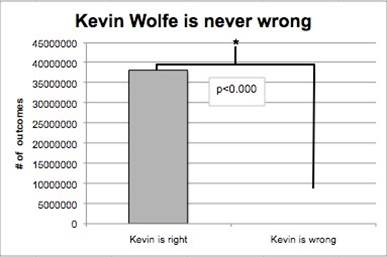
Nature is truly out to kill us. How do I know? I am never wrong.
Dat p-value.
How else do I know? Toxo exists. We think we’re so high and mighty, immune from crazy zombie-inducing parasites.We are clearly not. Here’s where I make a point that we are not so different from components of the greater aggregate of beings we call “nature”, and that we ourselves are indeed a part of that. Then, here’s where I get really preachy, talking about how things we do affect the natural world, and here I mention the circle of life and make a funny quip about the Lion King and the irony therein that my argument of the circle of life has referenced an earlier part of this article.
Want to hear me talk about an animal, plant, bacterium, or whatever the hell else that you think is awesome? Leave me a message in the comments! I’ll probably ignore it, unless it’s actually really good. It’s worth a shot to try though.
Come on. Comment. Go for it.
To view the really interesting article most of this information came from, click this link!
Before I moved away from Florida I never realized how much I depended on good weather to motivate me. I’d always believed that optimism and happiness came from within, but now I know this is only half true. Moving to an area that gets less sunshine than from where you came from is a real downer. Atlanta gets a relatively median amount of sunshine per year (compare Atlanta GA at ~217 days; Tampa FL at ~244 days; Seattle WA at ~164 days) but the pitiful winter here harbors few sunny days. Gray skies can last for 3 days straight, the harsh cold wind is relentless, and February seems like the longest month of the year despite having the least amount of days.
What bugs me most is that threatening clouds hover over the city for days but never DO ANYTHING. At least in Florida when clouds come, they produce rain, thunder and lightning for an hour, then get the hell out and the ordeal is over. But here, when the weather wants to be gloomy, it’s taking you down too. It doesn’t help when my family, still in Florida, tells me they’ve taken the boat out every weekend since the beginning of February.
It’s amazing how the weather can be a source of depression. I’m sure you’ve heard of seasonal depression, which is technically called Seasonal Affective Disorder. If you haven’t, it is a type of depression that occurs when bright light and sunshine is limited, most often during the winter months. Sunshine is the obvious treatment for the disorder but just how effective is sunshine? Especially when every dermatologist and health magazine advises you to block the sun?
Studies have shown that the brain produces more of the natural antidepressant serotoninon sunny days than on darker days. This is regardless of the season. Not only are serotonin levels higher on bright days than on overcast ones, but the rate of serotonin production is directly related to the duration of bright sunlight. No other atmospheric conditions are related to serotonin levels (article from WebMD Health News).
When sunlight interacts with our skin, Vitamin D is produced through photochemical reactions. Of course, prolonged UV exposure can be harmful for your skin, but some exposure is extremely beneficial. (DO: Be active in sunlight when possible, with at least 25 SPF on. DO NOT: Lay by the beach all day without lotion). Vitamin D works together with calcium to build strong bones and maintain bone strength. It also has a preventative effect for some cancers including colon, breast, ovarian and prostate. A deficiency in Vitamin D is linked to these types of cancer as well as to depression, lowered immunity, osteoporosis, and arthritis.
You might have been aware that sunshine was positive for you, but here are some fun facts that maybe you didn’t know:
According to Healthkicker, people tend to buy more lottery tickets on cloudy days because weather-induced bad moods deplete self control, making us vulnerable to temptation. (Ladies, think Ben & Jerry’s ice cream pint intakes – were those ever on bright sunny days?)
People use more alcohol, coffee, tobacco and chocolate when there’s less sunshine because they feel the need to compensate artificially as means to elevating their mood.
Getting a daily dose of sunshine increases your number of white blood cells, which in turn enhances your immune system, stated by Natural Health Restored.
Sunshine encourages healthy circulation by also stimulating the production of red blood cells, which increases the amount of oxygen in your blood.
A study performed at the University of Michigan proved that sunshine is strongly correlated with daily stock returns. Stocks traded on sunny days yielded nearly 25% more money than those traded during cloudy periods. Psychologists attribute this to people’s tendency to view situations more optimistically when it’s sunny, and less likely to scrutinize an investment they might cast aside when feeling grumpy.
March is only a few weeks away, which means warmer weather is coming. Besides the fact that spring is my favorite season, I am SO excited to shed my layers of fuzzy clothes and to enjoy Atlanta’s parks again. When the time comes, do yourself a favor and GET OUT of the library, frolic in the daylight like a fool high on Vitamin D and always wear some sunscreen!
In the spirit of things: [soundcloud url=”http://api.soundcloud.com/tracks/44617965″ params=”” width=” 100%” height=”166″ iframe=”true” /]
Imagine you are in your last semester at college. You’ve done well academically, studied business, and you have a job offer lined up. Your parents are letting up on the constant brow beating about expectations and preparing for the future. The light at the end of the tunnel that opens up to the real world is as close as you have ever seen it. Just a few more classes to get through and you are home free. But, say, during one of those classes the professor says something that catches your attention.
“And believe it or not boys and girls, you could potentially grow gourmet mushrooms from recycled coffee grounds.”
You sit up, stop your doodle and look around. Did everybody just hear that? The professor just told us how we could make money on waste! Free money! Mushrooms! You approach the professor after class as all but one other student in the lecture file out of the auditorium. Though you probably wouldn’t know it at the time you are looking your future business partner in the face. Another light blinks on in the tunnel, and this one is green.
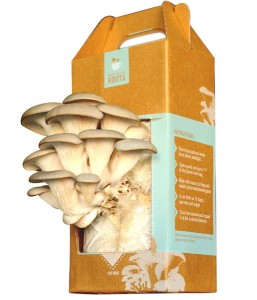
Sound far-fetched? It’s not. That is exactly how “Back to the Roots”, a startup enterprise centered on bringing consumers in touch with their food in a sustainable way – all while turning a profit and benefiting their community of Oakland, California – began. Nikhil Arora and Alejandro “Alex” Velez met for the first time after a lecture at UC Berkeley during their last semester in college in which the professor made the same proclamation I wrote above. Just as the professor had said, you can grow gourmet mushrooms off of waste like used coffee grounds, which is exactly what the pair did. First by experimenting in a frat-house kitchen after watching videos on YouTube on how the process should go, then to selling their mushrooms at a farmers market in Berkeley, California and eventually to their debut product the Back to the Roots at-home mushroom kit which features coffee grounds collected and re-purposed from Peet’s Coffee & Tea, a Berkeley based café, into do it yourself mushroom kits. Just add water at home to grow over a pound of gourmet mushrooms ready to eat!
The Back to the Roots grow-at-home mushroom kit
Within three years of their founding in 2009 Nikhil and Alex who are self-described “urban mushroom farmers” have secured distribution deals with massive retailers including Whole Foods, Bed Bath & Beyond and the Home Depot. They went from collecting coffee grounds headed for the landfill to being paid to haul it away by Peet’s Coffee & Tea, an early supporter of the young startups. As of 2012 they had diverted millions of pounds of coffee grounds destined for landfills. At roughly 3.6 million pounds in 2012 alone, that’s the equivalent of 175 dump trucks of material.
I first became aware of Back to the Roots through their recent Kicstarter campaign to launch a new product – the Aquaponics Garden – which like the mushroom kit is a “grow-at-home” concept herb garden using hydroponics. Growing herbs at home using this method is an old trick, but the mushroom wielding duo (Mario and Luigi?) added an interesting twist of a live fish in the nutrient bath. In this way, feeding the fish encourages it to… “feed” the plants which in turn clean the water for the fishy. The Aquaponics Garden has the same closed loop low waste ethos as the mushroom kit and is thus very much in line with the mushroom kit using recycled coffee grounds.
But I couldn’t avoid the nagging feeling that there was more afoot than delicious herbs and modern architecture inspired fish tanks. Around the same time that the Berkley grads were gearing up to take the DIY culinary world by storm, I began my PhD studies in Atlanta, GA. My new apartment with sweeping views of the side of a building and a dumpster covered in puke didn’t produce the kind of urban living I had expected when moving from rural Virginia where I went to college. Determined to spruce the place up, I wanted some potted plants. After all, there was a spacious balcony from which to enjoy to aforementioned scenery with a cool glass of sweet-tea (Atlanta, remember?). But lo – no direct sunlight. My first batch of plants withered soon after sprouting and becoming spindly, yellowed baby plants.
I turned to the internet – the font of all knowledge – to seek a remedy. Hydroponics was the logical solution. With hydroponics I didn’t need sun or warm weather. Hell, I didn’t even need soil. I settled on one branch of hydroponics – pardon the pun – called “aquaponics” in which the roots of the plant are interwoven into a passive binder, usually clay pebbles, and dangle into a nutrient rich solution. Through my research I found an easy design using a spray-painted plastic storage bin with holes drilled in the top and a fish tank aerator hot-glued to the bottom, a few feet of aluminum flashing to make a reflective enclosure, and a couple of 20 watt CFL bulbs plugged into the sockets of a “make a lamp kit”. Make a lamp indeed. A grow lamp.
Unfortunately, some of the critical supplies I needed couldn’t be found anywhere. I remember inquiring in the garden section of a home improvement store for things like “netpots” and “hydroton” and “rock wool” and “grow max powdered plant nutrients”. After a few minutes of listing name brands to a dumbfounded employee in an orange apron, I told him my intended application.
“I am trying to make an herb garden in my living room. Like basil and stuff.”
I felt it was a reasonable claim. After all, I had just put a few packets of seeds for exactly that – basil and stuff – in my basket.
A knowing look came over the clerk’s face.
“Oh. We don’t have that here.” he said with a little grin.
Back to the internet. It had to be done. A specialty store. I searched everywhere I thought was reasonable – head shops with fluorescent posters and glass “tobacco” pipes, local hardware stores serving as fronts for the mob, Jerry who lived behind the dumpster. Nobody had even heard of the stuff. When I finally found what I was looking for it was on the edge of the city in a run down industrial park. I called the store.
“Do you guys have…” I paused, remembering the clerk at the home improvement store, “Net pots?”
The clerk, “What size?”
This was the place.
When I arrived I found a brightly lit sign over the top of a small warehouse. Inside was every manner of tubing, pots, nutrient and testing apparatus that I had never heard of. They also had camouflaged “grow room tents”. It was an odd mix of completely legitimate looking industrial equipment – hydroponics is a great choice for farming organic produce in otherwise unsuitable locations – and everything I imagine I would need if I was looking for a great way to get kicked out of school.
I bought my supplies and a small booklet on hydroponic gardening. I paid in cash.
Is this aquaponics garden thing legit? I interviewed Nikhil, one of the co-founders of Back to the Roots to learn more. Nikhil and I discussed their recent success with a Kickstarter campaign to raise capital for production of the Aquaponics Garden, lessons learned from development of their grow-at-home mushroom kit, and the business philosophy that has helped them gain recognition.
—
Charged Magazine (CM): So, How’s it going?
Nikhil (N): Doing good. Just wrapping up the year so it’s been crazy. Comes to an end all of a sudden, Ya’ know?
CM: First, I wanted to congratulate you on the Kickstarter thing. You guys were asking for $100K and I think it closed a little less than week ago and you guys cleared almost two-hundred and fifty thousand dollars?
N: Yeah. Two-forty-eight. Almost 250 but it was crazy. It was really cool seeing the response from the community. It was the first time I’d really done something like that, the whole crowd sourcing thing, it just works! People we’ve never met before and don’t know who they were just coming out with their support. It was really cool.
CM: I think you’ve hit on something important – you’re talking about, I guess, the community involvement in your project. Is that the reason you guys decided to go with something like Kickstarter?
N: Yeah. I think we knew had a lot of support for the mushroom kit from our community and we felt that the aquaponics kit could be something similar. And I think to do really well on Kickstarter, and we were like studying it for a while before, you have to try to hit people on a different level. It wasn’t just a transactional thing. People felt more like they were supporting a movement, and they were supporting something bigger than themselves, and that’s why when we launched this product we felt it was something like that. It was something that inspired people and hit the right chord on Kickstarter so it kind of took on a life of its own. It was really cool to see and we got our product improved so much man, the 30 days from where it started off we got thousands of messages from people just out of good will giving us awesome ideas and suggestions. We just signed off on our final design yesterday to send off to the manufacturers and we made so many changes based on feedback we got from people.
CM: Right. And uh, speaking of that feedback, I read in a little bit on your Facebook page regarding this particular product and I definitely see what you mean as far as people who are very interested and passionate about the idea – but of course there was a little bit of negative feedback as well – specifically regarding the fact that you guys would have a live fish in the Aquaponics Garden. But you guys handled it surprisingly gracefully. You know, you said “yeah, we are definitely aware that this is something we need to build into our design” and it seemed you owned it right off the bat and the product is not even on the shelves yet, so I have to commend you on that.
N: Thank you man. It was a big design constraint for us. According to PETA and the most common standards, 1” of fish needs 1 gallon of water. That was our reasoning that for our 3 gallon tank you could have one beta fish in there or two smaller fish so we kept to that. One cool thing about aquaponics and why it’s totally different is that most of the time the health of fish is determined not by the size but more the toxicity of the water. You’re supposed to change the water in regular tanks really frequently, like once a week, to make sure it’s clean and ammonia is not building up but the cool thing with aquaponics is the plants are constantly cleaning the water out so it’s more about the constant quality of water for the fish.
CM: And definitely having the opportunity to grow yourself some fresh herbs at home is a driver.
N: Yeah. I think when you put something like that out into the world, on that kind of platform, we knew were going to get a lot of feedback, and we got some negative feedback and we got a lot of positive feedback that we were able to apply and make changes from. Overall it was a really cool experience and it would have taken us so long to get this data back if we had just launched into retail, because here you have such a direct communication with people I thought it was an awesome way to launch a new product.
CM: So, I think you guys mentioned this during an interview or something, but the connotation with two kids from Berkeley trying to grow mushrooms has a certain connotation – so I thought it was somewhat ironic that the second choice you guys pick is something with an equally, somewhat seedy I guess connotation, that is hydroponics and the whole growing plants in your closet kind of thing. I wonder if that thought occurred to you or what you think of that?
N: Yeah, you know it’s funny we never even thought about it that way. We had been kicking the idea around for a month or two before somebody said to us, “First you guys were growing mushrooms and now you’re selling hydroponics systems?” We just started cracking up and it hit us that we hadn’t even considered that both products have that same stereotype.
CM: Regardless of the stereotype though, I think the market you are attracting is a mix of DIY enthusiasts and people interested in knowing their food and on top of that doing something good for the environment and education. That’s the next thing I wanted to talk about, I think it’s pretty impressive what you guys are doing in the schoolrooms. You guys are doing product demos and have a program where you donate the mushroom kit to classrooms. Do you have similar plans to do that with the hydroponics kit?
N: We are. Actually, for the mushroom kit, every kit that you post a picture of on our Facebook page we donate one to a classroom of your choice. With the Aquaponics Garden we are trying to think how we can make that work. Now we’re thinking because we saw such a cool response to the whole Kickstarter idea, we thought, “Why don’t we implement that on our website?” We are thinking of having people who want to get a kit to a school of their choice can post that school on our website and they can get friends and family to pledge a dollar or two dollars and they can crowd source their own kits for schools or something like that. We are trying to think right now how to incorporate that because we are not launching them until late February or early March. We know this stuff would be amazing for schools because with the mushroom kit, it lasts for maybe a couple crops so maybe you get a month out of it, but with the Aquaponics Garden you buy it once and it lasts you for a lifetime, so teachers can have it for like 10 years you know? We want to see it in every classroom so we are trying to figure out what is the best way to make that happen right now.
CM: It’s way cooler than the class hamster.
N: Yeah!
CM: You and Alex are quite young, and I thought what is particularly interesting is that you guys are kind of wrapped up in the era of the startup culture. I would say some of your contemporaries in the tech fields go a completely different direction. It’s basically they have a handful of guys who work until they spin out an idea and they are seeking venture capital for like a million bucks. You guys every step of the way it seems said “How can we not only build our business and build a community involvement in our business? How can we build these connections where things that are good for our business are also good for getting jobs to the Oakland area?” For example in an interview you guys were talking about trying to find a domestic producer for your fish tanks.
N: Which we did. They are like 20 minutes away from us right here in northern California.
CM: Yeah, which I think is fantastic. I guess do you have a comment regarding your own education or maybe people who would be in your age group as far as the typical way of approaching a startup company?
N: Yeah, I just think for us it’s just been the right thing to do based on our values and I think it goes back to the environment we were in, how we were raised, things like that all played a part into that. But it’s hard to just pitch it to everyone saying “it’s the best thing to do based on our values, based on the environment” but at the end of the day it’s the right thing you do for your business too I think. There has been this transformation towards transparency and community in helping companies grow, and if you are not engaged in community from the start and giving back and being a positive part of that community then you are stunting your own growth. There has been a shift in the kind of companies people want to support and people are really looking for companies that are doing good. That’s the one message we really try to tell people. If you are not going do it because you love the environment or something like that then do it because it’s good for your bottom line. Being open to your community is the next wave of marketing and transparency. There is a really cool movie actually called “The Naked Brand” that talks about how it’s not about clever marketing anymore, it’s about transparent marketing and how transparency is the new clever in how to grow a business. It’s something we’ve become really passionate about and I think us being open about our flaws and what we were doing right and what we were doing wrong has actually helped us grow faster. Admitting mistakes has helped us grow faster. We’ve all graduated in the middle of this whole financial crisis, I think with a sense of “there has got to be a better way to do this.” I think people, consumers, are thinking the same thing that there has got to be a better way to do business and are looking to support companies that they feel are doing it the right way. I just think it makes sense all the way around.
CM: Another thing I thought was interesting is that when you guys were talking about originally doing product research for the mushroom kits you turned to YouTube, and when you were trying to find buyers for your leftover coffee grounds you turned to Craigs List. I am kind of going back to what I was talking about before with the tech startups where of course their business wouldn’t exist without the internet but it’s because their business is on the internet. How has the internet shaped your company?
N: Yeah. That’s dead on. We graduated having no clue about anything to do with mushrooms so we just watched every single YouTube video and found all these articles and books on different websites. It’s just cool how you can teach yourself anything now. There is no longer an excuse of “I didn’t know that, or I didn’t know how to do that.” You can just log on and teach yourself anything. We taught ourselves mushroom farming on coffee grounds from YouTube. It democratizes business and startups and education because you can go to a library and long online and just figure it out.
CM: What are your goals for the launch of the Aquaponics Garden?
N: For us, so much about the Aquaponics Garden has to do with inspiration and education. Our big vision is to see how many classrooms we can get this into. We’ve taken it to some classrooms right now, this one prototype we have, and honestly it is incredible the response you get from kids. I think it’s maybe the combination of the fish, the bubbles going up from the pump or the sound of water coming back down, but it’s so stimulating for them that they just rush to it and ask all these questions. It’s crazy how fast they understand what’s going on with the whole ecosystem. That’s our biggest goal. We want to build this thing out so we can literally get this into every classroom. We feel like for every classroom you can get this in, you are changing 30 kids perspective on food and the environment. You are teaching them that things work together and there is no such thing as “waste” because the fish waste is making the plants grow. That’s our big vision. We really want to get this into schools.
CM: Sure. So my background is in engineering, and actually I have attempted to do my own hydroponics before. I moved into an apartment that had no sunlight, so I really couldn’t do any window planters so I made the whole enclosure with some CFL lightbulbs. When I was building my own design I spent a lot of time online to see what other people had done but I ran into a lot of kind of technical hiccups that I had to work through. So out of curiosity, I’m wondering what are some of the biggest technical issues you guys have run into trying to bring something like this to market?
N: The biggest thing for us has been bring this whole system down to a smaller scale – aquaponics is normally done on a larger scale – we took months of experimentation into how to get the ratios down, looking at flow rates to make sure the system was still functional at such a small scale, how many fish do you need, how many plants can you grow, things like that. It was constant learning, and we finally got to the point where we had produced a ton of these and put them in different households and it we had functional prototypes. Once we saw the basil popping up we got so pumped because we had figured it out. We were always tweaking along the way and we wanted to encourage communal learning around this where people are sharing tips on what worked. We want this to be a platform for people to get really creative with it – people want to try and grow flowers, different foods. One guy emailed us saying he wanted to put shrimp in there. It’s like people hacking into their own creativity.
CM: I’m interested in some of the manufacturing aspects. You mentioned you were able to find a local provider. Was that difficult given the way that everything – at least when you are trying to do it cheaply and in huge quantities – goes overseas? What did you learn from that experience?
N: It was a big learning curve all around. We talked to dozens of manufacturers. It’s funny, because you design something, and then you realize the first go-round when you take it to engineers who tell you “you can’t do this, you can’t do that” or it’ll cost you thousands of dollars so there was a lot of back and forth between design and engineering.
CM: Did you find a lot of pressure from existing industry to abandon your business philosophies as far as sustainability and local design are concerned?
N: We had a really good design partnership and at the end of the day I think Alex and I knew what we wanted to do and we wanted to keep it domestic – we wanted to keep it local – and there is kind of a statement about that so we shopped around until we found a partner who believed in that same vision. It’s tough. It is cutthroat, because every dollar of cost (in manufacturing) ends up being like 4 more dollars of retail because of markups and stuff like that, but we really wanted to keep it at a $50 price point. That was our big goal and we are working our butts off to do that. With that we had to compromise a lot, because we could have added a lot more features, but for us it was more important to get something out of $50 and leave room for people who really want to get into it with add-ons, but we wanted it to be available and accessible to everyone, at least to a lot wider market than having like a $100 price point.
CM: When you project into the future, how do you guys imagine you are going to maintain the regional impact you have in the Oakland area. Eventually you are going to need more space. What’s the plan?
N: Yeah, we are looking at a new space now but we want to stay in Oakland. We see a massive opportunity to connect people to their food and we want to work our butts off to take that on and be the brand that people think about when trying to connect to their food. We want people to feel good that our company is doing stuff in the right way. For us, were not afraid of scale, were not afraid of size so we are working to grow and meet really ambitious goals along the way. The more we grow the more good we can do in the world is how we see it. The more we can develop a platform for our products the more capacity we have to do good and I think the community is going to help us get there. We’re maintaining an open door policy. I’m really pumped. I’m excited for this new year.
—
For more information on Back to the Roots products, and a look at their growing list of accolades, you can visit their website: http://www.backtotheroots.com/
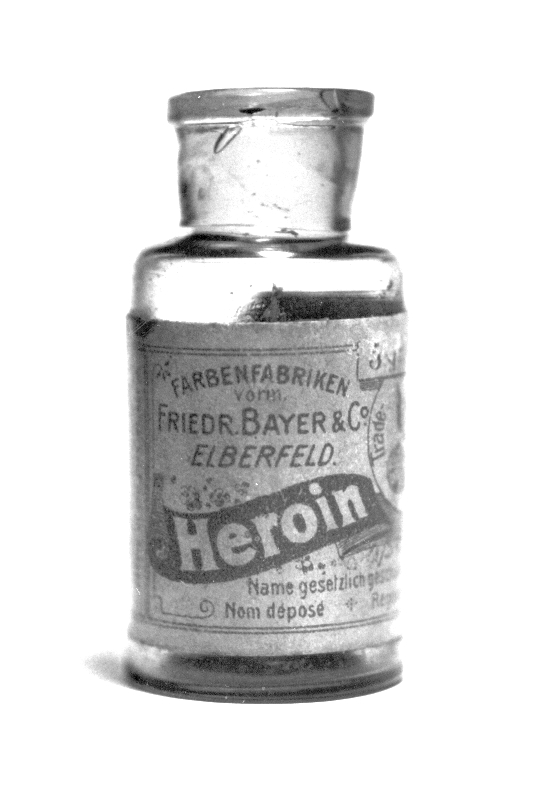
Bayer AG, a multibillion dollar, German pharmaceutical company is regarded as one of the leaders in its sector, producing mild painkillers such as Bayer Aspirin and Aleve, the vitamin C supplements Redoxon and Berocca, and many other well known drugs. This reputation combined with the angelic sounding tagline on their website, “Bayer: Science For A Better Life” makes it hard to believe that in 1895, the company marketed heroin as a cough suppressant.
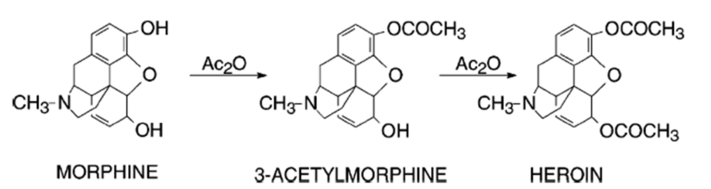
Acetylation of morphine, by way of acetic anhydride (Ac2O), to synthesize heroin.
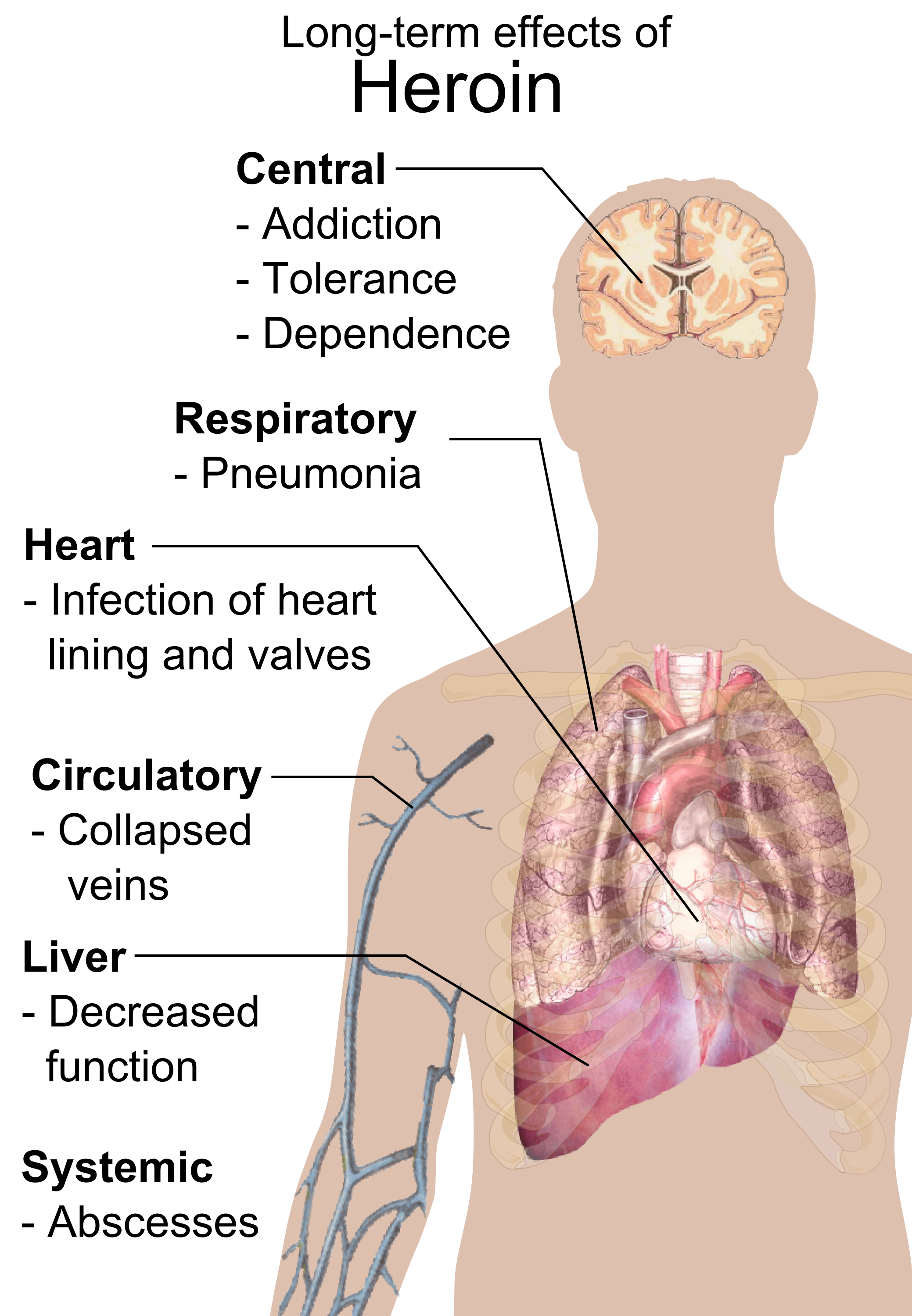
Heroin is an opiate synthesized by adding two acetyl groups to morphine, found in the opium poppy. When Bayer introduced this new drug, it was actually meant to be a non-addictive substitute for morphine, a common cough suppressant back then. Little did they know that their well intentioned discovery would eventually become one of the most abused drugs, known for its destructive effects on the human body. It turns out that heroin crosses through the blood brain barrier 100 times faster than morphine because the acetyl groups makes it highly soluble in lipids; once it crosses the barrier, it actually turns back into morphine. Essentially, heroin is a prodrug, a class of inactive drugs that are converted into active form in the body by normal metabolic processes. To the Bayer scientists, heroin may have looked less potent from morphine on the lab bench, but in the body, it ended up being a faster acting form of morphine, making it extremely dangerous and addictive. Needless to say, even though heroin actually does help stifle coughs, Bayer eventually pulled this product off of their catalog.
Though today, the possession or selling of heroin is illegal in most parts of the world, it can actually be used in the United Kingdom legally, under careful control, as an analgesic and a maintenance drug.
Herpetology and getting lost. These are the two driving themes of my life. They have shaped my career and enabled me to discover species new to science, but they have also cost me relationships, frustrated everyone close to me, and nearly cost me my life. Without them I would be a different person, so this is a ballad to the lost art of getting lost.
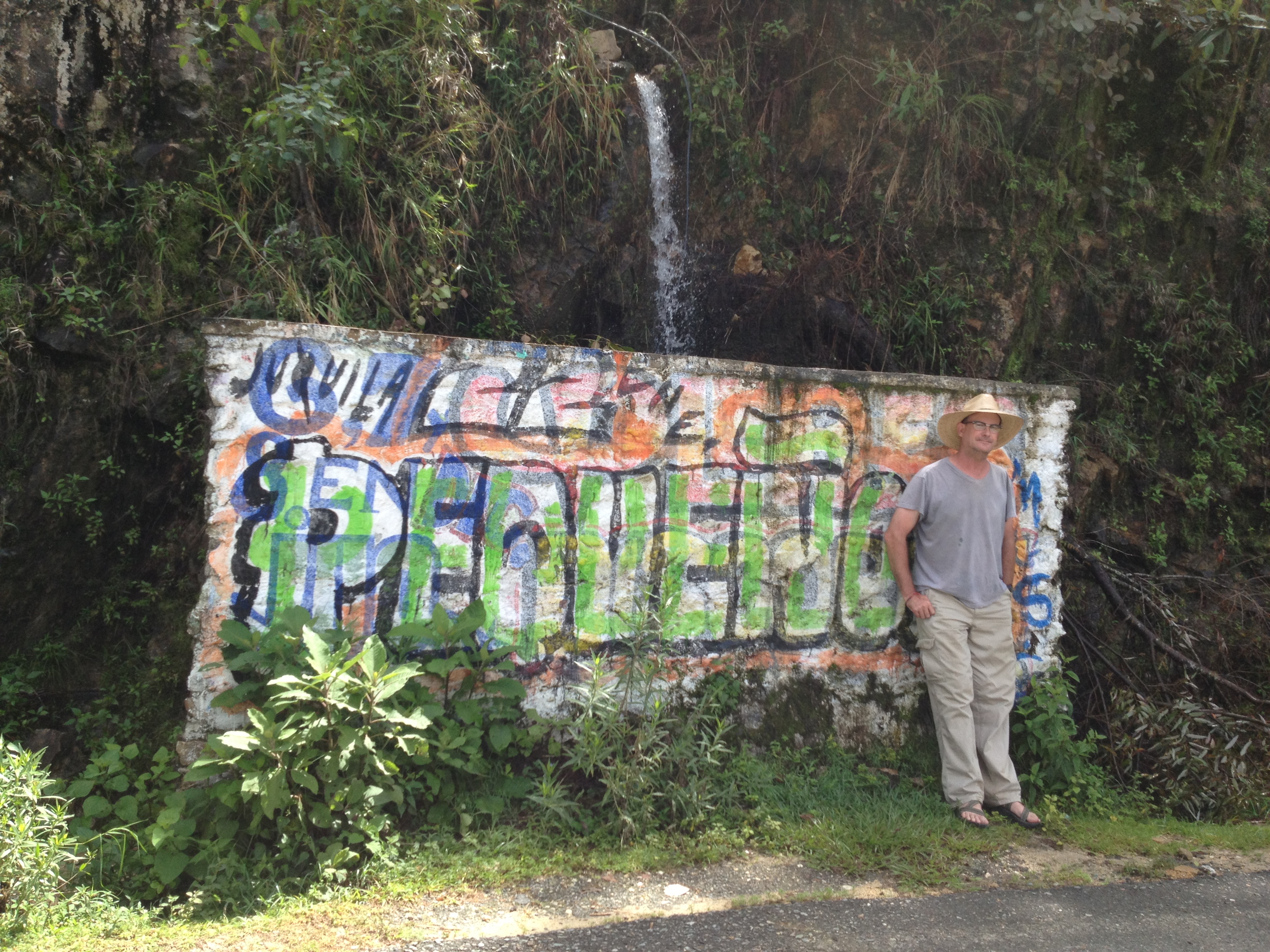
After college, I left Santa Barbara, California to go to graduate school in Texas and study under a mid-career hotshot who specializes in Central American herpetology. He is a gringo North American but was raised in Guatemala and moving in-and-out of that culture is the norm for him. In the first year of my grad program I got the assignment of my dreams. I was to be delivered to a coffee plantation in a remote region Guatemala to conduct a survey of amphibians and reptiles. I was to do an ecological transect of herpetological diversity up the face of a very steep mountain in the Sierra de las Minas, in the state of Alta Verapaz. Although the area had certainly been populated since at least the Classic Maya Era, no biologist had ever worked anywhere near the region. If you look at a map of Guatemala, you’ll see a huge lake (Lago de Izabal) in the eastern part of the country. I was about 20 miles west of the lake, in the Polochic Valley, at the base of the north slope of a mountain called Cerro Raxon. The village/plantation is called Pueblo Veijo (Old Village) in reference to the fact that the site had been inhabited by native Maya for millenia. The problems turned out to be: 1) I spoke not a word of Spanish; 2) although I grew up in Europe (army brat) and was accustomed to being immersed in foreign cultures, I’d never been to Latin America beyond a couple family fishing trips to Baja California; and 3) Guatemala was embroiled in a horrific genocidal civil war (that was purposefully instigated by the US-CIA in the 50’s, by the way).
The day before I went to the airport my mentor gave me some topographic maps of my study site and said “If you get pulled over by anyone that looks like police or army, don’t let them see these maps because they will assume you are there to inform the indigenous insurgency and you will be arrested. Oh, and don’t bring those Vietnam-era military field boots you wear. They are US-Military issue. Get some boots that look more like a tourist would wear.” So I borrowed money from my parents and bought some brightly colored boots from the local REI. I put the maps in the bottom of my bag of gear.
I swear never again to travel so ignorant of my situation. It turned out that speaking Spanish would have been only of partial utility, as I was sufficiently remote that most people there spoke Q’eqchi’, one of the many dozens of very distinct Maya languages in the region, and only a bit of Spanish. Every time I ventured beyond the main part of the coffee plantation (as was my task as a herpetological surveyor), I encountered Mayan villagers who would drop everything and run away from me. I was terrified. If they were scared of me, then there must be something that I should be scared of as well. Since my return, I have built a small library on the recent history of Guatemala, and I now know what I did not know then. It turns out that the chinks I saw in the concrete-block walls in the nearby town of Telemán were from a massacre only a couple of years prior to my trip. Genocidal civil wars are real, and they are incredibly ugly.
I had an ecological transect to conduct, and I finally got myself up to the highest village on that slope of the sierra, a tiny Mayan village they called Peña Blanca (“White Stone” because there was a big one there) in Spanish, or some other name I never managed in Q’eqchi’ (Mayan dialects include glottal-stops in mid-syllable, so they are essentially impossible for the non-native speaker). The people seemed nice in Peña Blanca, and they did not run away from me. I set up a camp outside their village, with their implied permission. The first two nights I had a small crowd of people around me watching as I made a crappy camp dinner and prepared my specimens, samples, and notes. None of us could really talk to one another, but I managed to get across that I hoped to camp there, wished them no trouble, and planned to wander around outside the village looking for snakes and frogs and such. They were cool with that, and even brought me all the snakes they killed in their cornfields every day (very useful specimens for me).
After a few days I hiked back down to my main camp on the plantation and got read the riot act by the fascist, racist Guatemalan manager for having “anything to do with those rebels on the mountain” (recall there was a civil war going on, essentially between aristocrats like this guy and the Mayans in the mountains). About a week later I went back up the mountain to my camp, but this time not a single person would come anywhere near me. I was there for about three days when it dawned on me that I was doing a bad thing—my self-serving data collection for my degree was severely compromising their daily life. No kids were playing outside, and the men were sneaking off before sunrise to tend the corn. I assumed they returned from the fields, but I never saw them. Evidently, someone had spread word that I was not what I seemed. I felt terrible, but packing up camp and leaving was not such a simple affair because I was so far up on the mountain. So I had to spend that night there, and planned to leave the next morning—carrying what I could on one trip (it took about three trips to get all my stuff up there), and leaving everything else for them; things I naively hoped could be useful (e.g., sleeping bag, not a bottle of formaldehyde).
Evening set, it began to rain, and I realized that this was my best and last chance to sample the highest part of the mountain because I never intended to return. Nocturnal amphibians and reptiles move in the rain, and it started to rain to rain really, really, really hard so I did get some good samples. Around 1:00 am I was exhausted and turned to go back to my camp. On the way back I took a wrong fork in the trail (it was still really raining and, if you wear glasses like I do, one cannot look around during a rainstorm; you look straight down, at your feet) and I wound up not in my little encampment, but smack in the middle of this village. I was disoriented, wet, cold, and scared. As I looked around, my mega-flashlight (standard issue in my line of work) was beaming through the twig huts and wakeing everybody. I could hear commotion coming out of the huts. My first thought was of regret—oh, darn, now I’m waking everybody up! Then I started to hear machetes tinging, guns being loaded and cocked, and saw barrels sticking through the slats. I’ve since learned that it was standard practice for Guatemalan Army squads to wipe out “rogue” villages by sending in troops in the middle of the night—with mega flashlights—to massacre and set fire to entire villages. I was mortified, and terrified. So, I just started yelling “Gringo perdido, no hay problema” and “Culebra! Rana! Sapo!” at the top of my lungs. That all translates essentially into “Lost white-boy, there is no problem. Snake! Frog! Toad!” Meanwhile I dashed in the nearest direction that did not have a hut. I clawed my way up through a steep muddy corn field and finally found my camp. At the first glimmer of daylight I left and never went back up there. I regret that I caused them so much distress, I really do. I’m glad they did not shoot me. But given what I’ve learned since then, I’m amazed that they did not. I’m convinced that those few words in Spanish, “Gringo perdido, no hay problema” and “Culebra! Rana! Sapo!” saved my life.
I’ve returned to Guatemala many times since then, but things have changed. The war mellowed out, even if the original tensions remain. I never travel alone. I’ve learned Spanish (but no Mayan dialects, beyond a couple of animal names). And I am not so naïve. To be sure, there were many more adventures and misadventures over the years, including a murder right in front of my face, but nothing since, anywhere, has been so personally transformative as that particular night. I have a one-man punk band called Gringo Perdido and some friends use the phrase as a nickname for me. No one wants to be known for being an uninformed, unintentionally inconsiderate, disoriented boob, but a colleague of mine returned from Guatemala recently and said, “Joe, do you realize that every young biologist in that country knows that story?” Gringo perdido, no hay problema.






















.jpg)