Save the Ocean Through One Simple Step


Throughout your week, take note of how many plastic straws you use. Do you use one when you go to eat at a restaurant, or when you buy an iced coffee? Is it possible you use plastic straws at home? If you use so much as one plastic straw in the next week, you could make one small change in your life to contribute to a drastic change in the environment.
Screen Shot 2018-10-10 at 4.55.30 PM

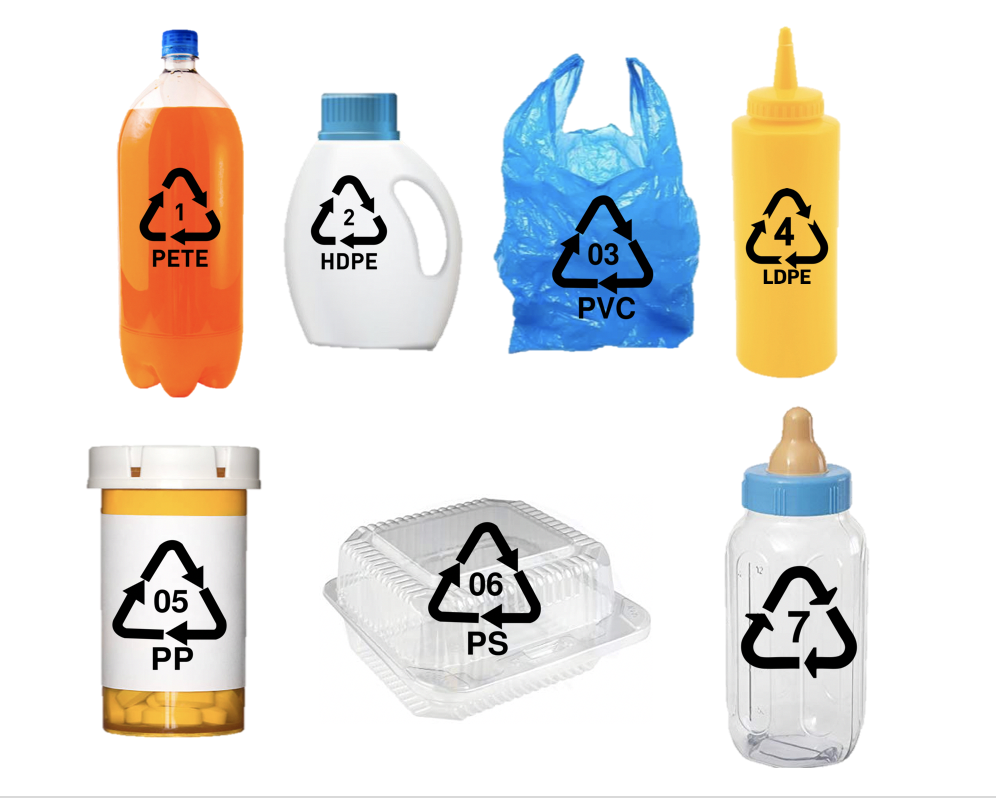
Made from petroleum, plastics are made into thermoplastics and thermosets (McGehee). Thermoplastics can be recycled and include items such as soft drink and water bottles, shampoo bottles, and shopping bags. These can be identified by locating the recycling symbol with either a “1”, “2”, “3”, or “4” label. These correspond to polyethylene terephthalate (PETE), high-density polyethylene (HDPE), polyvinyl chloride (PVC), and low-density polyethylene (LDPE), respectively. Thermosets include items such as liner in cereal boxes, styrofoam egg cartons, and baby bottles. These are identified with the recycling symbol containing a “5”, “6’”, or “7” which correspond to polypropylene (PP), polystyrene (PS), and other. Thermosets cannot be recycled because they would scorch in attempt to reheat and remold the plastic (Cowan).

Plastic straws are usually a polypropylene – they can’t be recycled. Additionally, over 500 million plastic straws are used by Americans daily, they are the 11th most found ocean trash, and it can take a plastic straw up to 200 years to fully decompose (Hugh). Because they are on the smaller side of non-recyclable plastics, they can do more harm: “The smaller those pieces get, the more places they can go” (Science News for Students). As these plastics become smaller and smaller, they become what it known as “microplastics”, making them more likely for marine life to ingest. In a recent study, it was found that zooplankton, that had swallowed plastic in algae, laid smaller eggs that were less likely to hatch (Science News for Students). If we do not start cleaning up our act, there will be more plastic than fish in the ocean by 2050. Although that may sound futuristic, it is just over a few decades!

If the environment isn’t important enough, plastic straws also have a negative effect on you – they cause bloating, cavities, ingesting chemicals, wrinkles, and excess sugar and alcohol consumption (Perspective).

Now that you’re convinced, how do we fix this problem? There’s an obvious solution: simply stop using straws. Although this may not affect you directly, there are people who have no choice but to use straws due to medical reasons. And, of course, some people simply prefer to use straws. Therefore, the absence of straws is not necessarily the best option for the majority. What about compostable straws? Although there is a good intention behind the creation of these, there is still the issue of whether people correctly compost the straws – unfortunately, this is not the best solution either. So, what is?

Buy a metal straw (or multiple)! They can be found online for only a few dollars, and typically come with a straw cleaner. They are a great alternative to typical plastic straw – they’re reusable, they protect our environment, and they prevent ingestion of chemicals (although, you may still end up with wrinkles). Go plastic straw-less today to protect our home!

Resources:

Cowan, S. (n.d.). Plastics by the Numbers. Retrieved from https://learn.eartheasy.com/articles/plastics-by-the-numbers/

Hugh. (2018, September 24). Environmental Impact of Plastic Straws (2018 Facts & Statistics). Retrieved from https://get-green-now.com/environmental-impact-plastic-straws/

McGehee, A. (2006, Nov). There are plastics and there are bioplastics-how much do you know? Countryside and Small Stock Journal, 90, 86-89. Retrieved from http://prx.library.gatech.edu/login?url=https://search-proquest-com.prx.library.gatech.edu/docview/197239104?accountid=11107

Perspective | Plastic straws aren’t just bad for the environment – they can be bad for your body. (2018, July 03). Retrieved from https://www.washingtonpost.com/lifestyle/wellness/plastic-straws-arent-just-bad-for-the-environment–they-can-be-bad-for-your-body/2018/07/02/d682fdfe-7964-11e8-aeee-4d04c8ac6158_story.html?noredirect=on&utm_term=.354afd959b55

Tiny plastic, big problem. (2015, Apr 10). Science News for Students, Retrieved from http://prx.library.gatech.edu/login?url=https://search-proquest-com.prx.library.gatech.edu/docview/1672359979?accountid=11107

Why This Matters. (n.d.). Retrieved from https://www.strawlessocean.org/faq/

Your journey starts here! Let’s talk!

ThemeRex © 2026. All rights reserved.
  Timothy Durham was convicted of rape when a test showed his DNA genotype matched the DNA recovered from the crime scene. Eye witnesses testified that Durham was in a different state at the time of the incident, but he wasn’t exonerated from his 3000 year sentence until follow up DNA analysis showed that the preliminary forensic analysis used in the trial was misinterpreted (Thomas et al.). DNA testing serves an invaluable part in our criminal justice system, but it comes with complications and bias that can lead to wrongful convictions and misinformed juries.  

Background:

Forensic genetics aims to identify the origin of a biological sample. It can be traced back to Karl Landsteiner who discovered human ABO blood groups. With blood groups, suspects could be eliminated based on their blood type. For example, if a suspect had type A blood and there was type B blood left at the scene by the perpetrator, the investigators could rule out the suspect. Unfortunately, the reverse didn’t work. If the suspect and perpetrator both had the same blood type, it can’t be concluded that the suspect was guilty. Blood identifiers evolved into 8 distinct categories which improved the ability to eliminate suspects, but could only conclude that (if the system matched) it might be the perpetrator or this person might be related to the perpetrator (Jobling and Gill). The field evolved in the 1980s with the discovery of Minisatellites, lines of repetitive DNA that don’t encode proteins. Minisatellite patterns in DNA create what we know today as the DNA fingerprint, and it has a much higher accuracy rate than previous methods (Augustyn et al.). Around the same time, a breakthrough for victims of sexual assault was discovered. In the case of assault, bodily fluids of both the victim and the assaulter can get mixed. A process called differential lysis was created which could selectively increase the concentration of sperm in a fluid sample thereby allowing for accurate DNA testing (Jobling and Gill). Forensics evolved to use single-locus probe testing after several years because of its ease of interpretation. It looked at specific minisatellites that had high variability between subjects. This was the first DNA-based method to be used in a criminal investigation. Two murder homicides from several years apart were connected using DNA evidence. The evidence was then used to exonerate an innocent man, and the guilty party was found when he tried to evade mandatory DNA testing for all men in the small town. His guilt was then reinforced when the DNA profiles matched, and he gave a confession (Jobling and Gill). Finding DNA at a crime scene doesn’t guarantee that you’ll find a murderer. There are issues with non-pure samples and limited samples that make DNA work difficult, and accreditation of facilities and new techniques and take time (Jobling and Gill).  

Subjectivity of DNA Interpretation:

In a 2009 publication, the National Academy of Science discusses the possibility for subjective influence in lab based forensics. The interpretation bias happens in complex cases where, for example, there could be a mixture of DNA. A study published in 2011 looked specifically at this issue. A gang rape happened in Georgia, and the mixture in DNA from the case was used to prosecute one suspect after another suspect took a plea bargain to testify against him. With DNA mixtures, there are three possible conclusions: suspect excluded, suspect cannot be excluded, and inconclusive. If the suspect is excluded, it means that there’s little to no possibility that his DNA is part of the sample. If the suspect cannot be excluded, it means that there’s a possibility that his DNA is part of the sample. In the trial, the DNA examiners who knew the context of the case concluded that the suspect being prosecuted could not be excluded. The 2011 study gave the DNA evidence from this case and the DNA profiles of the suspects to 17 forensic examiners. These examiners had no context of the case, and they all worked independently. Of the 17, only 1 came to the same conclusion (suspect cannot be excluded) as the examiners who knew the context of the case. Twelve of the 17 concluded that the suspect who was prosecuted and convicted had no relation to the DNA found in the sample. Not only does this show that subjectivity occurs due to the context of the case, but the 17 examiners came up with different findings based on their past experiences meaning that not all DNA analysis is objective. Some organizations like the Scientific Working Group on DNA Analysis Methods say that quantitative statistical evidence should be presented with every categorical conclusion, but the US doesn’t require this (Dror and Hampikian).

False Positives:

There are two categories that cause wrongful identification in a DNA report: coincidental matches and false positives. Coincidental matches are DNA matches between two unrelated people. The probability of these matches is about 1 to 500,000 for white individuals and about 1 to 350,000 for black individuals. This small probability of coincidental matches makes people feel confident in DNA evidence. False positives, on the other hand, are matches between DNA and test DNA that result from issues in the forensics lab. There have been multiple cases of forensics labs accidentally switching victim and suspected rapist DNA which lead to convictions that were later overturned when the lab realized the error. There are also cases of misreading or misunderstanding a sample. In a case from 1993, a man was convicted of rape because someone interpreted a mixed sample of victim and perpetrator DNA as an individual sample. The conviction was again overturned. To prevent false convictions, retesting DNA is allowed, but it’s not an efficient solution. Many people are pushing for statistical information on the probability of false positives, so that the jurors can make accurate judgements based on DNA evidence (Thomas et al.).  

Conclusion:

DNA analysis is a useful tool for the criminal justice system, but subjectivity can be an issue in forensic testing. To combat wrongful convictions, there are organizations like The Innocence Project who use DNA testing to free the innocent, but reformed forensic testing standards should be put in place to prevent subjectivity and to ensure juries are correctly informed during trials. https://www.innocenceproject.org/    

Citation:

Augustyn , Adam, et al. “DNA Finerprinting.” Encyclopedia Britannica , 26 Apr. 2018, www.britannica.com/science/DNA-fingerprinting#ref153186. Dror, Itiel E., and Greg Hampikian. “Subjectivity and Bias in Forensic DNA Mixture Interpretation.” Science & Justice, vol. 51, no. 4, 2011, pp. 204–208., doi:10.1016/j.scijus.2011.08.004. Jobling, Mark A., and Peter Gill. “Encoded Evidence: DNA in Forensic Analysis.” Nature Reviews: Genetics, vol. 5, no. 10, Oct. 2004, pp. 739–751., doi:10.1038/nrg1455. Thompson, William C, et al. “How the Probability of a False Positive Affects the Value of DNA Evidence.” Journal of Forensic Sciences, vol. 48, no. 1, Jan. 2003, pp. 1–8., doi:10.1520/jfs2001171.