Category: Articles

  • Plant-Based Savoriness: Easy as 1-2-3, MSG

    Plant-Based Savoriness: Easy as 1-2-3, MSG


    As a fourth year college student, I’ve spent a good amount of time cooking for myself and experimented with a lot of different cuisines ranging from Italian to Southeast Asian-inspired dishes. Within all of that, I’ve also tried to transition towards a more plant-based diet. Along with getting some more veggies in my meals, eating less meat can also help reduce your carbon footprint since a lot of poultry and beef farming can consume a lot of water as well as contributing to deforestation and the emission of greenhouse gasses. There’s a lot of other benefits to eating less meat, but as we all know, it definitely is hard to make that transition. The hardest part? The taste. Many of the plant-based options for meals involve replacing meat in a dish with some other protein like tofu. Although this is a great idea, tofu itself has no taste since it’s literally just processed soybeans. The solution to this issue may come from looking at our taste buds themselves. 

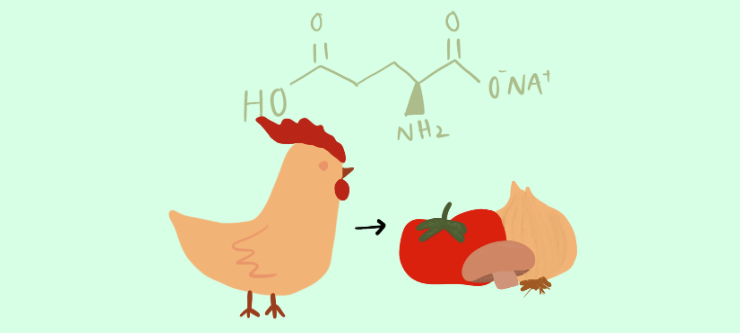
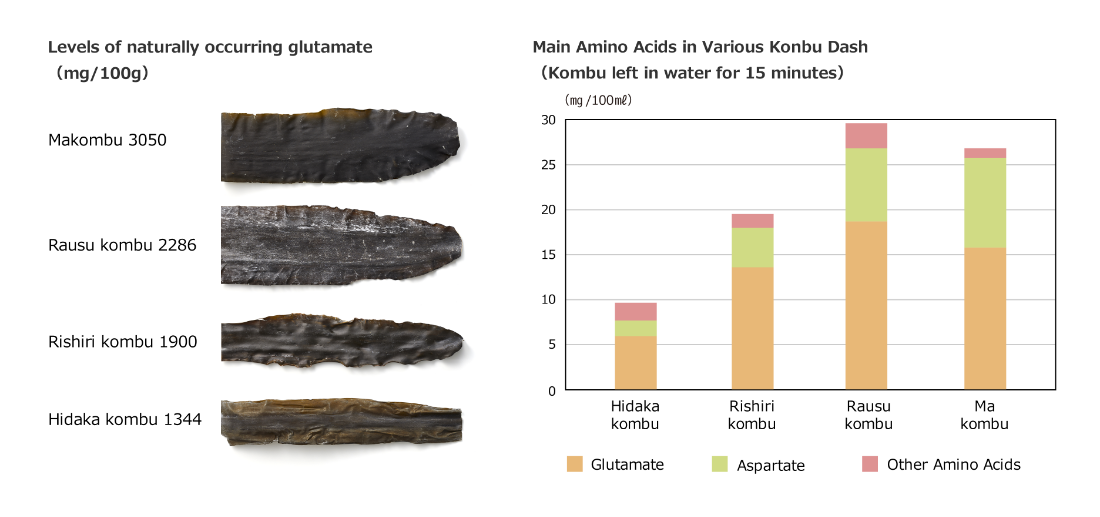
    Although the number of ‘tastes’ our tongues can perceive has been contested over the years, the most important one for our problem is umami. Umami is a flavor that Japanese researcher Kikunae Ikeda found in a type of seaweed called ‘kombu.’ He concluded that this taste was a result of the salts of glutamic acid, which is also found in meats. Glutamic acid also includes monosodium glutamate or MSG (which has no conclusive evidence proving that it’s toxic btw). Glutamates (which are the proteins made up of glutamic acid) act very similar to table salt, but instead, it enhances how our tongues perceive salt while salt brings out the flavor in our food.

    https://www.umamiinfo.com/

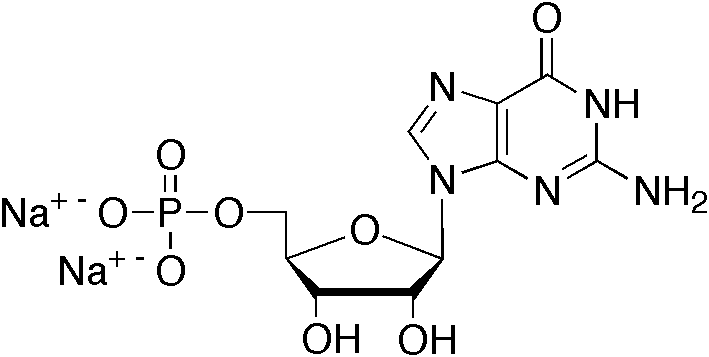
    Other chemical compounds that contribute to savoriness include the proteins inosinate (which are exclusively in meats and fish) and guanylate (which can be found in plants). This savoriness is very subtle, but its presence is still crucial to the flavor of food, just as salt makes food seem more flavorful. What foods have these compounds and are also plant-based?

    Disodium guanylate (wikepedia.com)

    As a person of a South Indian background, I was raised with a mostly vegan diet. Of course, I enjoy a good beef roast and chicken curry, but my favorites are the veggie dishes that my mom made since they were just as savory as the meat ones. One thing I noticed was the presence of tomatoes and onions in most of these dishes. Tomatoes (as well as mushrooms) have a high concentration of glutamate, and as we previously discussed, this contributes to the umami flavor we perceive. Onions, however, derive their flavor from sulphuric compounds– which also make us cry. When we chop onions, we break up those compounds, which are further broken down while cooking and releases more of the onion flavor and brings out its sweetness. If you’re in a pinch and can’t find a space to add these vegetables into your dish, you can also try adding MSG.

    https://www.vegrecipesofindia.com/

    Of course, switching over to a fully plant-based diet is difficult and you should take it step-by-step. Just remember that achieving savoriness from your veggies doesn’t have to be complicated and can be as easy as 1-2-3…

    Resources:

    Berry, Donna. “The Science of Savory.” Food Business News RSS, Food Business News, 11 Apr. 2016, https://www.foodbusinessnews.net/articles/6480-the-science-of-savory.

    Lang, Ariane. “Is MSG Truly Unhealthy? All You Need to Know.” Healthline, Healthline Media, 15 Nov. 2021, https://www.healthline.com/nutrition/msg-good-or-bad#what-the-research-says.

    Lisa. “Savory vs. Sweet Onions & What Makes a Great Salad.” The Cultured Cook RSS, https://theculturedcook.com/2015/09/savory-vs-sweet-onions-an-easy-crispy-salad/.

    Loria, Joe. “How Eating Less Meat Can Save the Planet.” World Animal Protection, 15 Apr. 2021, https://www.worldanimalprotection.us/blogs/how-eating-less-meat-can-save-planet.

    Nunez, Kirsten. “Types of Taste: What to Know about Taste and Flavor.” Healthline, Healthline Media, 15 May 2020, https://www.healthline.com/health/types-of-taste#umami-taste. 

  • Math is Friend, Not Foe

    Math is Friend, Not Foe

    Today I’d like to talk about everyone’s favorite, least-favorite subject in school: Math

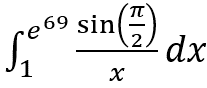
    Math can seem very scary and complicated. And this feeling is very valid to have – math does get more complicated the more you learn. When faced with a problem like:one can really long for the days of “If Sally has 5 apples and gives away 3 how many apples remain?”.

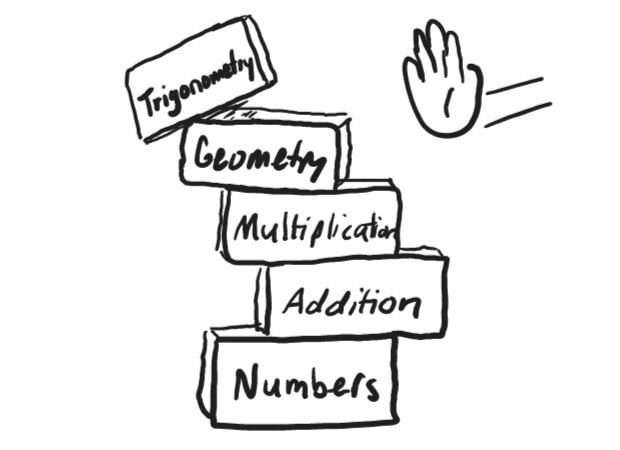
    But the beautiful thing about it, is that all math can be simplified. It builds up into complicated equations and problems, but it can always be broken back down to simple things!

     For example, if you know that sin(π/2) = 1, and how integrals work, you can solve this problem pretty easily – BUT therein lies the rub. Math is all just building blocks, but the key is knowing and sometimes memorizing what blocks to use (which is never fun). Just like it’s hard to understand 5 – 3 if you’re not familiar with counting, it’s almost impossible to answer that question if you’ve never been taught an integral or what sine is. 

    People place so much fear, stigma, and weight on doing math that it becomes so intimidating. So when faced with something strange and hard seeming, they panic and assume “I can never understand this”. BUT THEY CAN!

    We often don’t think about it, but back in elementary when everything about numbers and addition was new, it seemed so confusing then too.

    When I was in high school, I once tutored a fifth grader who needed help with long division, and I found myself having to relearn some key concepts that I’d forgotten and hadn’t thought about in years! I noticed the student was adding the large numbers incorrectly as they worked, so I said, “Oh you have to carry the one here.” To which they responded: “Why?”

    And I had to pause, and then think about because, why DO we do that? I knew it was something to do with numbers no longer being the same category but how did I explain that to someone unfamiliar? Which led me down a bit of a rabbit hole of looking up elementary school textbooks and lesson plans. Because without understanding something like “place values” (ones, tens, hundreds) it’s really hard to understand why you need to “carry a one” in long multiplication and division!

    Even something as retroactively simple as division was once completely baffling – but once you learn it, it becomes instinct. The same can be said for the most complex of mathematics: once you understand its rules, nothing can stop you! 

    If you can remember the rules of a triangle, you can remember sine. If you can understand a grid, you can build up to calculus and beyond.

    Now the hard part is learning all of this for the first time – especially when many people have been burnt out from math, or set at a disadvantage in the past by bad explanations and inattentive teachers who never helped them understand. That is the true tragedy of math, and admittedly makes the subject a lot harder for most. 

    But I’m here to say, never doubt yourself! Even old dogs can learn new tricks, and you can always learn the blocks and break it down when facing “complex” math!

    Think like a gamer: there are challenges, but with enough effort, grinding, and practice you can overcome it (and there’s nothing wrong with coming back later)!

    Math is all just building blocks at the end of the day: simple individual concepts on their own, but you can assemble them into complex structures – amazing but confusing, equations that can describe the way our world and universe work – that can be very intimidating. However, I think it’s very comforting to remember from time to time that even the most intricate towers are still made of individual bricks; and with enough time and effort, you CAN break it back down! 

  • Adventuring on Mi Teleférico

    Adventuring on Mi Teleférico

    Traveling through the aerial space is how I moved across the city during my visit to La Paz, Bolivia, last summer. No, I do not have wings or flying powers. I did not rent a helicopter or any kind or aircraft either. What I did was along with what hundreds of thousands of local citizens do every day: take rides in aerial lifts, also known as gondola lifts or cable cars. Every ride in the cabins of Mi Teleferico has been an amazing experience. Have you ever been to a ski/snowboarding resort and taken a lift or have riden a cable car at Six Flags Over Georgia? I confess that at Six Flags Over Georgia was my first time ever riding the Skyride or so-called gondola lift. This might have not crossed your mind, but that experience magnified what happened to me this past summer in La Paz.

    Since the early twenty century, modern cities have adopted different types of massive public transportations such as on the ground trains or underground subway trains. In general, these transportation systems are optimal for cities on relatively flat surfaces. Sometimes, lines of ferry boats are implemented when navigable bodies of water such as rivers or lakes could be used around cities. However, La Paz’s geography is quite different. La Paz is a hilly city built in a valley like a bowl with streets and avenues climbing steep hills and without navigable bodies of water. Therefore, in La Paz, a network of cable car lines has been considered the best option. MiTeleferico, the transportation authority, manages the network of cable cars which has been implemented as a system of mass transportation since about a decade ago.

    All relate back to Mi Teleférico in La Paz, Bolivia, which is also a home city deep into the heritage of my parents and family and by extension deep into mine as well. This past summer I had the opportunity once again to travel to Bolivia and visit my extended family. Bolivia is located in South America and is one of the two countries, along with Paraguay, that is landlocked. Bolivia has many interesting attractions both for native people and tourists.
    Some include:

    • Salar de Uyuni: the largest salt deposit in the world (Pic.1)

    Pic 1: Salar de Uyuni excursion in 2016

    • Lake Titicaca: highest navigable body of water in the world (Pic. 2)

    Pic 2: Lago Titicaca in Copacabana

    • A country with the highest capital: La Paz’s altitude  is ~3,600 meters (~12,000 feet) above sea level 
    • Mi Teleferico: longest and highest urban cable car network (Pics 3-10)

    Pic 3: On the Orange line feat. Illimani       Pic 4: View of the city from the Orange line 

    Among the many interesting attractions, we are going to focus on crossing the air space of La Paz city on Mi Teleférico while enjoying a magnificent view of the city. Mi Teleférico is a public system of transportation used by local people to overcome both the often jammed traffic and the steep streets of the city. It consists of 26 stations and includes 10 lines: Red, Yellow, Green, Blue, Orange, White, Light Blue, Purple,  Brown and Silver. As shown in my pictures, you get to see a big portion of the city on any color line. Which really caught my eye when I got on my first ride back in 2016. Not only do you get to your destination faster, you get to enjoy the view of the city. 

    Pic 5: In city on the White line     Pic 6: Ground view of the Silver line 


    If you are like me, you might be wondering how this type of machine works? How can it hold a car full with passengers up in the air without falling? Gondola lift is a type of transport that is mainly supported by cables in a continuous system. What is a continuous system you ask? Great question, to my understanding it is a system that runs smoothly with no delay, a continuous relay of cable cars from station to station. The cable cars rely on the cable rope because the cable car itself has no sort of power, like an engine. The system is passed through a drive bullwheel and returning bullwheel which the car’s cable is attached to. What I didn’t know is that there are different grip installations on the cable, the fixed grip and the detachable grip. As they are named, the fixed grip is permanently attached to the cable as both the wheels turn. On the other hand, the detachable grip detaches the cable from the car letting passengers enter and exit at a reasonable time 

    Pic 7: Red Central Station feat. Illimani  Pic 8: Close up of a cable car feat. Illimani 


    Pic 9: On the Purple line heading to the Pic 10. Purple Line going up to its station


    References:

    1. Altitude Sickness Bolivia & Peru: How to prevent it – bolivia hop. Bolivia Hop. (2021). Retrieved September 20, 2022, from https://www.boliviahop.com/altitude-sickness-peru-bolivia/ 
    2. 3D Living Studio. (2022, January 7). How Cable Cars Work and Detach From The Cable [Video]. YouTube. https://www.youtube.com/watch?v=i2gxfB1aW48&ab_channel=3DLivingStudio 
    3. Hinson, T. (2015, February 10). 10 of the world’s Best Cable Car Rides. CNN. Retrieved September 20, 2022, from https://www.cnn.com/travel/article/worlds-most-amazing-cable-cars/index.html 
    4. Lewis, R. (2021, July 13). 13 tantalizing Lake Titicaca facts to know. Rainforest Cruises. Retrieved September 26, 2022, from https://www.rainforestcruises.com/guides/lake-titicaca-facts#:~:text=It%20is%20world%2Drecord%20breaking,and%20Bolivia%20to%20the%20east 
    5. Unger, E. (2021, May 3). These salt flats are one of the most remarkable vistas on Earth. Travel. Retrieved September 20, 2022, from https://www.nationalgeographic.com/travel/article/how-to-see-salar-de-uyuni-salt-flats-bolivia#:~:text=Plan%20your%20trip%20with%20these%20tips.&text=Bolivia%27s%20Salar%20de%20Uyuni,prehistoric%20lakes%20evaporated%20long%20ago 
  • A Reflection On Divisive Foods: Coconut Water

    A Reflection On Divisive Foods: Coconut Water

    Everyone’s relationship with food is a unique one and often changes and fluctuates over time. For some, it’s simply a means of survival, and for others, it can be what they most look forward to during the day. I personally fall into the latter category and enjoy indulging in a large variety of foods whenever possible. But even with my open and adventurous nature towards different foods, I’ve always wondered why there are some foods that I strongly dislike but are otherwise loved by my friends and family. What is it about our relationship with food that causes us to love or hate certain dishes or ingredients? These “divisive foods”, as I’m choosing to call them, can be very polarizing in society, and over the past few months, I’ve found myself thinking about why these foods evoke this black-and-white response.


    Food is multidimensional

    Foods possess a variety of traits (besides the taste) that define them. Some have different chemicals that can react with compounds in our body, others have unique textures that can satisfy or disgruntle us, and others still can hold special memories associated with them through experiences. I believe these additional traits are the key to understanding why foods can be so polarizing. I hope to create a series out of several different popularly divisive foods, but for now, I’d like to discuss in particular the properties of coconut and coconut water.

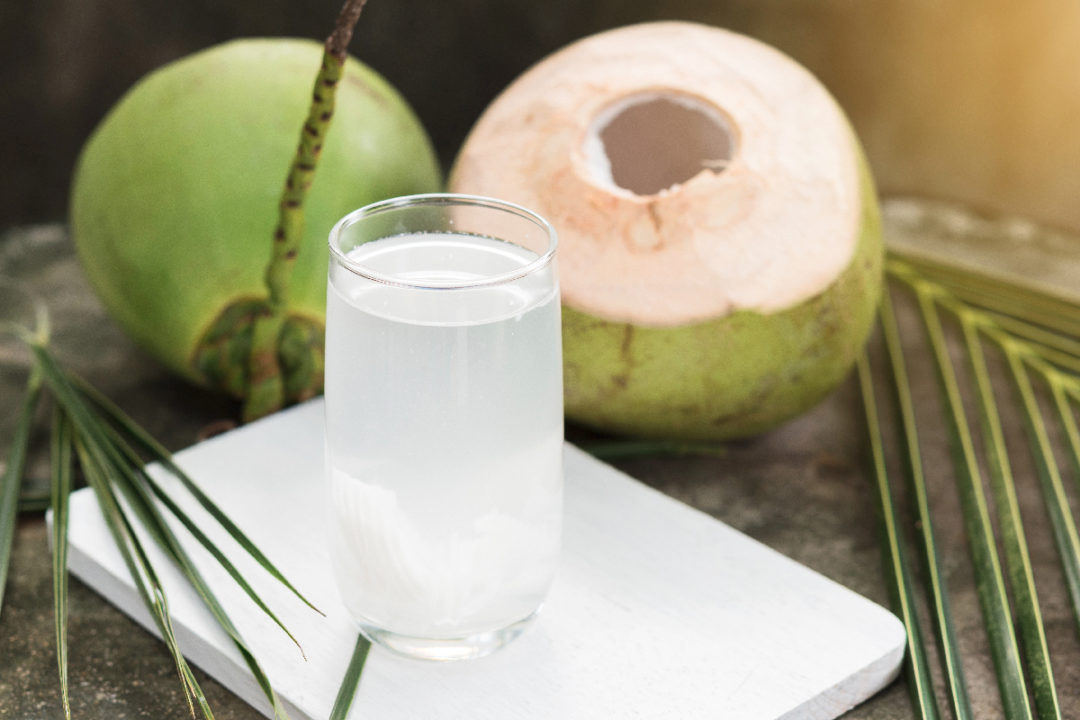
    Coconut. You either like it or you don’t. While coconut itself has a laundry list of traits that might cause polarization over it, I’m particularly interested in what’s inside them– coconut water.


    My First Impressions of Coconut Water

    To start off with a little anecdote, I recently tried coconut water for the first time ever. I’m personally not a huge fan of coconut to begin with, (the texture of desiccated coconut shavings is especially not my favorite), but my significant other enjoys it so much that I decided I would give it a try to see what all the fuss was about. Long story short, I absolutely hated it and was completely disgusted by the taste immediately after it hit my tongue. I spent the next 20 minutes scrambling to eat or drink anything that would get the taste of it out of my mouth and was baffled at how anyone could stand to drink a whole glass of it. As you can imagine my s/o was quite offended and shocked by my violent reaction and quickly began an interrogation as to why I disliked the coconut water so much. 

    My first impression was that it somehow tasted spoiled. We knew for sure that the coconut water was not expired, but to me, it somehow tasted like how watered-down sour milk might taste. This came as a surprise to my s/o as he interprets the taste as pleasantly sweet and refreshing– the very opposite of what I tasted. Were we really drinking the same beverage? How is it that two people can have such different experiences tasting the same thing? These thoughts lingered in my mind for weeks following my taste test.


    The Truth Behind the Taste

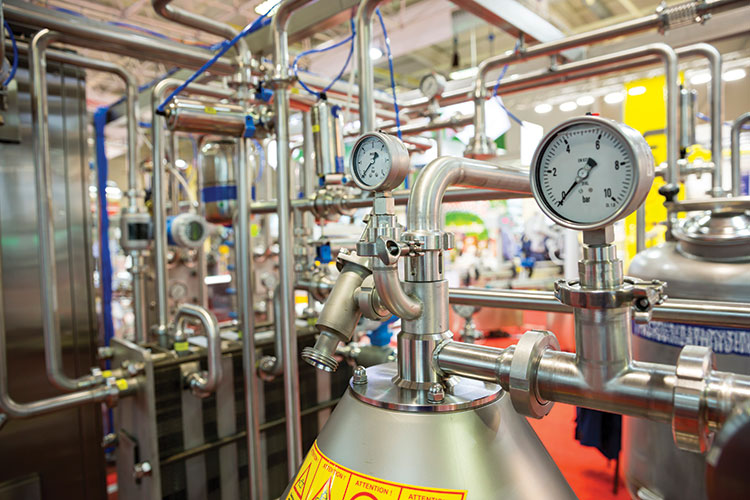
    After some research, I found out that pasteurization may be to blame. Pasteurization is the partial sterilization of a product, typically milk or wine, that makes it safe for consumption and gives it longer shelf life. This is done by heating up the product and subsequently denaturing all enzymes in the product that may cause future spoilage. While this sounds like a great mechanism for sterilizing coconut water, it also greatly alters the flavor. In particular, this type of pasteurization can introduce a burnt-like flavor to the drink, which may explain why it tasted so funny to me. Fresh coconut water apparently tastes very different from packaged and pasteurized coconut water and is widely enjoyed in many South Asian cultures. This difference can also be compared to the contrast in taste between store-bought orange juice and freshly squeezed orange juice. While the ingredients used are practically the same, they taste different due to one being pasteurized with most claiming that the freshly squeezed juice tastes better.

    Why is it that this flavor detraction is so strong in coconut water, but is less noticeable in products like milk? This is likely due to the long history of milk pasteurization that has allowed cultivators to perfect the level of pasteurization that both sterilizes the product to make it safe for consumption and preserves the flavors that we know and love. Coconut water pasteurization is a bit more difficult to strike a balance with, mostly because so much of its flavor profile is because of the enzymes that get removed during the process. It certainly makes sense then for people to swear by fresh coconut water and enjoy its natural properties for the tradeoff of shorter shelf life.


    The Verdict

    After exploring the properties of pasteurized coconut water, it can be easier to see why it’s so divisive among people. While some enjoy the flavor of coconut, others strongly dislike it, and whether that be due to pasteurization or simply an aversion to the flavor profile and aftertaste can vary from person to person. Reflecting on my experience with coconut water has inspired me to try fresh coconut water to see if I might enjoy the raw, unaltered flavor of the tropical fruit, but until then, I think I’ll elect to keep coconut out of my fried shrimp and away from my pastries.

  • Never Heard of Biomedical Engineering? Let me tell you what it’s all about!

    Never Heard of Biomedical Engineering? Let me tell you what it’s all about!

    For anyone interested in going into Engineering, there are no shortage of disciplines that you can go into at Georgia Tech. You could major in Computer Engineering, Civil Engineering, Mechanical Engineering, Industrial Engineering, Environmental Engineering, Chemical Engineering, Biomedical Engineering, and any other type of engineering that comes to your mind, you can bet that we have it. Plus, we are a top-ranked school for any major that you have heard of! I, however, am not here to run a promotion commercial for Georgia Tech. I am sure that you have already seen and heard plenty about this school! Rather, I am here to tell you about why I chose Biomedical Engineering, and why I love what I do and the major that I am in! I am sure that many of you are either at the exciting point in your life, where you are getting ready to apply to college and wondering what you want to do, or are parents of kids and wondering what is an efficient way to spend your money! Whoever you are, I hope that you leave this post, gaining some more insight and with more information to be better prepared for your first day as an engineer at Georgia Tech, and, hopefully, a Biomedical Engineer!

    First of all, you are probably wondering, what the heck is Biomedical Engineering, and why should you consider it? If you read the name of the major, you are probably thinking, “Well, it has something to do with Biology and Medicine, and how the two interact!” If this is you, then I am here to tell you that you are on the right track! In fact, broadly speaking, what we do is try to find better solutions for common medical problems facing tons of individuals in the United States, and globally, using principles that we learn in math classes, biology, chemistry, etc. But, there is so much more to it than that! With BME, there is never a wrong answer to a problem! You are probably thinking, “Is he crazy?” No, you read that right, there is never a wrong answer to a problem! Unlike Civil Engineering or Mechanical Engineering, where you may have to perform calculations, many of the problems that you are faced with in Biomedical Engineering are more personal and the choices that you make and the perspectives that you bring can profoundly change their lives for the better, or for the worse! In Biomedical Engineering, you truly get the opportunity to think outside of the box, which is something that I really think you don’t have in other majors. Are you intrigued yet? Wait till you read more!

    So you may still be wondering, is this the right major for me? Specifically, you might be wondering, what type of person is a good fit for this major? My answer to those questions is that there is no such person as an ideal or a perfect fit for this major. Rather, you have to ask yourself, do you have a vested interest in having a personal impact on people’s’ lives?. This is not like Computer Science, or Mathematics where the work that you do is all theoretical, and involves sitting in a cubicle all day. This major is truly different from all the other majors because it is extremely practical in nature. If you go into this major, keep in mind that the majority of the time you spend is going to be thinking through scenario – based problems that do not have perfect answers. This may seem scary! However, I can assure you that that will make you better prepared for the real world. You grow the most when you are pushed outside of your comfort zone, and that is what will happen in this major.

    Okay, so you’ve read this far, and thought to yourself, “Yes, this major is for me!”, then you are probably wondering, “I don’t really understand how and where science comes into Biomedical Engineering! All he has talked about is working in teams, on real – world and practical problems. However, I promise you that all the concepts that you learn in Biology, Chemistry, and Physics come to use here. Just this past school year, I had to work on making a Pulse Oximeter, using Arduino to better measure Oxygen Saturation Levels in users with Dementia who had Long Covid. I remember that, at first, I was so confused where to even start. However, then, by using the knowledge that I learned about the Respiratory system from my systems physiology, and biology classes, I was able to dramatically simplify the problem, and start at a much more basic level. This also was true for a project I did about creating a mathematical model to predict the likelihood that a woman would develop Endometriosis. At first, it seemed way too complex for me with my skill level to make such a sophisticated model. However, when I thought about the role of Bayes’ Rule, which I had learned in my Biology class, and its uses, I realized how excellently I could apply it to my project at hand, even if it was not necessarily a mathematics – related project. You will also be at the forefront of research, and projects where you apply science directly. For example, many of my friends are research assistants in the Laboratory for Synthetic Immunity, led by Dr. Gabe Kwong. They use some of the information that they learned in Introductory Biology, such as how T-cells work to fight off an infection to utilize the body’s own immune powers to fight off cancer cells! In Dr. Krishnendu Roy’s lab, another lab run by a prominent BME professor who teaches Biomaterials, you perform research on how to speed up the process of delivering important therapeutics to those who need them, using principles you learned in Biology, Chemistry, Biomaterials, etc! In the BME Design Shop, you can apply the principles of torque and rotational motion that you have learned in Physics to create some extremely sophisticated physical prototypes! No, I’m not talking those stick figure drawings or those simple foam prototypes! You can create real, elegant prototypes that show the mechanics of how your design would work in practice. You can use programs, such as Fusion 360 to create 3D models of your design ideas using principles that you literally learned in Geometry and Differential Calculus! My point is that, the science aspect may not always be so obvious! You may have to really do some soul searching to find where the science aspect comes into your work. However, I can assure you that it is there. Sometimes, you really just have to think outside of the box. 

    However, with choosing any major comes tradeoffs. The tradeoff with BME is that the classes are extremely challenging, and they require you to truly apply different principles from different disciplines, rather than just regurgitate information. In classes like BMED 2110, or Conservation Principles in Biomedical Engineering, you have to learn how to take a poorly defined system, or a poorly defined problem, and uses the principles you know, such as the Conservation of Mass, the Conservation of Energy, the Conservation of Moles etc., and the equations you learned in Physics or Chemistry to deduce and obtain information that you do not easily have access to. Similarly, in BMED 2250, Problems in Biomedical Engineering, you are going to have to take the skills that you have learned in classes, such as Intro to Matlab, General Chemistry, and Statistics to figure out how you can solve an otherwise time consuming problem, much more rapidly. In BMED 2310, Introduction to Biomedical Engineering Design, you take that to the next level. You have to ask yourself, how can the principles that I have learned be used to create a better solution to a problem, as compared to the existing present solution? Put another way, how can my use of Matlab, or linear regression, or circuits be used to create a more efficient solution that better solves the problem for the user, or the various stakeholders that are affected by a problem? This may all seem daunting, but I promise you that you will be extremely thankful at the end! These skills prepare you for a career in Research, Manufacturing, Product Development, and whatever else you may dream of!

    I sincerely hope that by reading this article, you have developed the same passion for Biomedical Engineering that I have! Just kidding, I don’t expect you to have gotten that invested! However, I do encourage you to truly consider the field. One of the nice things about Biomedical Engineering is, you do not need to know immediately if you enjoy it or if it is what you want to do! There is no timeline for when you have to decide! One of the nice things about Biomedical Engineering is that it is becoming so well sought after because healthcare, and better solutions for common healthcare problems are at the forefront of many peoples’ values, and what many stakeholders want. I truly believe that there is a place for anyone who is interested as a Biomedical Engineer, so if you choose to go into this major, I guarantee that you will find what you are passionate about!
  • Why the tiny arms?

    Why the tiny arms?

    Why are small arms better?

    A question bugging palentologists for years: Why did T. Rex evolve to have short arms? Why was it beneficial for them to have shorter arms? Intuitively, one might think that longer forelimbs would be much more advantageous. However, out of all the hypotheses, one by Kevin Padian struck me as quite interesting!

    Introducing Kevin Padian:

    Kevin Padian is a professor of integrative biology at UC Berkeley. He recently authored an article that gives one of his hypotheses for why Tyrannosaurus Rex evolved to have such short forelimbs.

    Learn more about Professor Padian here:

    https://ib.berkeley.edu/people/faculty/padiank

    Read more about his hypothesis at:  https://www.app.pan.pl/article/item/app009212021.html

    The following is a fun animation I made inspired by his hypothesis:


  • Frankenscience – The future of medicine?

    Frankenscience – The future of medicine?

    If you think of science fiction, you might think of Victor Frankenstein. Originally from Mary Shelley’s book Frankenstein, the creature and its lore has been modified over the centuries, but the general idea has remained quite the same. The story follows an ambitious student of natural sciences, Victor Frankenstein, who creates artificial life from pieces of corpses. Now, most people assume the creature is named Frankenstein, although that is the name of the scientist who created it and the monster itself is just known as Frankenstein’s monster. When you think of the monster, you probably imagine some stitched up humanoid creature, with nuts and bolts and different colored body parts, pale gray or even a light blue/green shade. But you get the idea: it’s a creature composed of body parts from several different corpses. What if I told you that there is an actual science relating to what Frankenstein did? It’s not exactly creating artificial life from human body parts, but it’s transplanting living cells, tissue, or even organs from one species to another. While it sounds like a concept straight out of a science fiction novel, it is in fact a real scientific concept that has been used in the past and present, and it is known as xenotransplantation. 

    Why is this even a concept? Frankly, it sounds impossible. But it is an important subject, and it is a very heavily debated one. In the USA currently, there is a long list of patients waiting to receive an organ transplant. There aren’t enough organ donors to meet the demand, and as a result, 17 people die daily waiting for a transplant. When there’s such a shortage of donors, we need to turn to science to help us find a solution. One proposed solution has been xenotransplantation, which is not a new concept in medicine, but very heavily debated, and hasn’t had much success proving itself as a viable option. The biggest concern with xenotransplantation right now is success. Every trial of it has ended in the death of the patient, largely due to infections and complications with the body accepting a foreign organ. The first recorded case of heart xenotransplantation was in 1964, when Dr. James Hardy transplanted a chimpanzee heart into a semi-comatose patient experiencing a vascular disease. The transplant was only successful for a couple of hours, before the patient passed away due to the chimpanzee heart not being large enough to support the blood circulation. 

    Potential animal donors include pigs, chimpanzees, and baboons; primates being the most common due to their compatibility with humans. Currently, there is a lot of research going into genetically modifying these organs to be compatible with the human body. A more recent case of xenotransplantation was a kidney transplant in September of 2021. While the donor recipient was technically deceased and placed on a ventilator, the point of the transplant was to study the function of the kidney and watch for signs of rejection. In this case, the kidney was a genetically modified pig kidney. Throughout the period of study, which lasted 54 hours, no signs of rejection were detected and key indicators of a properly functioning kidney were present. This is a huge step towards the implementation of xenotransplantation in the future, but much more research remains to be done. 

    Ethical concerns are also brought up in discussion of xenotransplantation. There is a public health risk associated with cross-species transplantation; we do not know how interactions with the donor recipient and the general public will go and if there is risk of disease transmission. Therefore, the question is brought up: can we allow xenotransplantation if it will affect people outside the recipient and how do we gauge that level of consent? Aside from public health, animal rights are also brought into question. Animals cannot speak for themselves and therefore do not have a say in what happens to them. Is it ethical to use animals like chimpanzees and pigs solely for their organs, and if not, what makes it different from raising animals to kill them for their meat? Is killing a primate more serious than killing a pig due to its proximity to humans? What actually lets us determine if it is or isn’t ethical to raise and kill animals for the purpose of using their organs? What are our limits, as human beings? These are only a couple of questions raised when debating the ethics of xenotransplantation. 

    Until the risk of transmission of animal pathogens is eradicated, and researchers actually find a way for cross-species transplants to be successful, xenotransplantation remains out of the question as a solution to the organ donor shortage. We cannot think of xenotransplantation until we make a medical breakthrough that would allow it to be a success, and have recorded success. The ethical debates surrounding it also can only be considered when progress is made. Regardless of the chance of success, it is still an interesting topic to think about. The implications of xenotransplantation affect subjects just beyond organ donors; cross-species medicine could be the future. While it isn’t the same science as Frankenstein, the intersection of science and science fiction is truly amazing to see. 


    Sources: 

    https://www.fda.gov/vaccines-blood-biologics/xenotransplantation 

    https://www.organdonor.gov/learn/organ-donation-statistics 

    https://www.ncbi.nlm.nih.gov/pmc/articles/PMC3246856/ 

    https://nyulangone.org/news/progress-xenotransplantation-opens-door-new-supply-critically-needed-organs 

    https://www.pbs.org/wgbh/pages/frontline/shows/organfarm/regulators/clark.html#:~:text=Ethical%20issues%20concerning%20xenotransplantation%20include,given%20the%20public%20health%20risks