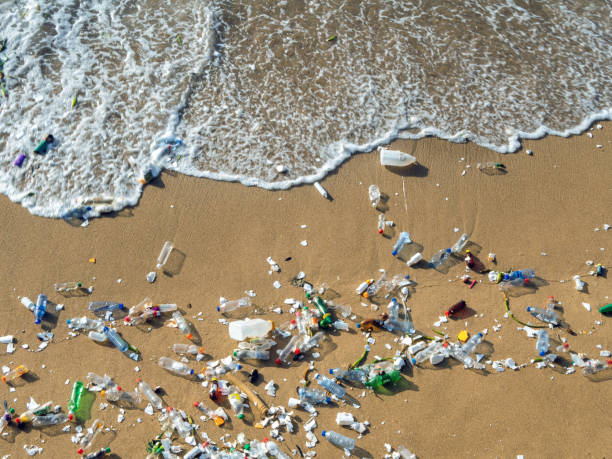
A pressing issue our world is facing is “The Plastic Problem.” Humans have been creating harmful, non-biodegradable plastics and other materials for hundreds of years and polluting the planet with them. Scientists have been working to come up with reasonable solutions to waste management. While creating environmentally friendly alternatives is instrumental in preserving our planet, something must be done about the waste produced in years past.
A natural solution?
Who could have guessed that the Earth has been working to solve this itself? Some microorganisms have evolved and adapted to consume different types of plastic and convert their components into something good for the environment.
Plastic-Eating Bacteria
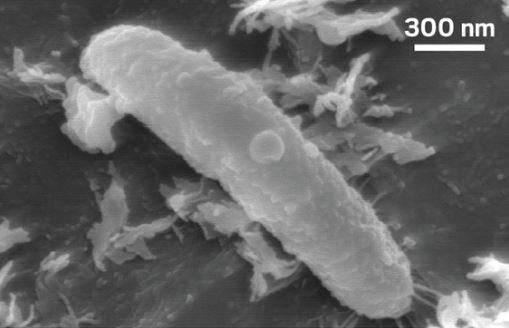
Ideonella Sakaiensis is a bacteria discovered in Osaka, Japan. It secretes enzymes that break down harmful PET plastics into biodegradable PHB plastics. This bacteria could break down plastics in around 6 weeks when studied in a lab setting.
Plastic-Eating Fungi
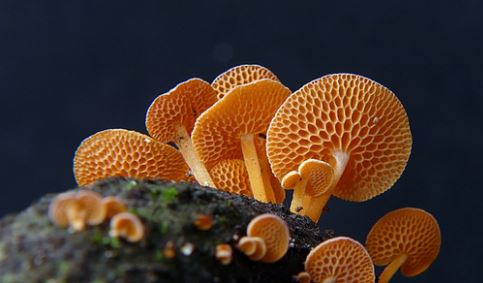
Aspergillus Tubigensis, a naturally occurring fungus, was discovered by scientists at a waste disposal site in Islamabad, Pakistan. This fungus is also capable of breaking down plastic by secreting special enzymes. These enzymes destroy the bonds between molecules in the plastic.
Plastic-Eating Larvae
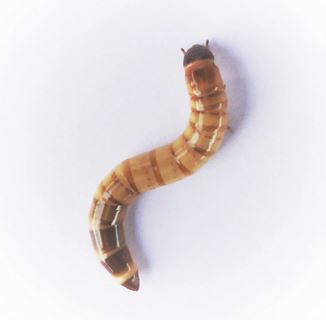
Zophobas Morio, or “super worms”, are larvae of the darkling beetle. This creature can decompose polystyrene (AKA Styrofoam) through its digestion. The larvae’s gut microbiome is being studied to learn how to replicate the process of breaking down plastics and learn how to produce more efficient larvae.
Is This Sustainable?
For something to be sustainable, it must account for three things: ecology, equity, and economy. In other words, something must be good for people, nature, and the economy.
While these organisms are all naturally-occurring, they are not the most efficient. In order for these organisms to become viable solutions to our plastic problem, they must be bio-engineered to be hundreds of times more efficient. Large-scale commercial use would be very expensive. The “willingness to pay” philosophy addresses how people will only choose sustainable products if they are willing to pay for them. More expensive endeavors are backed less by the average person. These organisms are only sustainable as long as researchers are given proper funding.
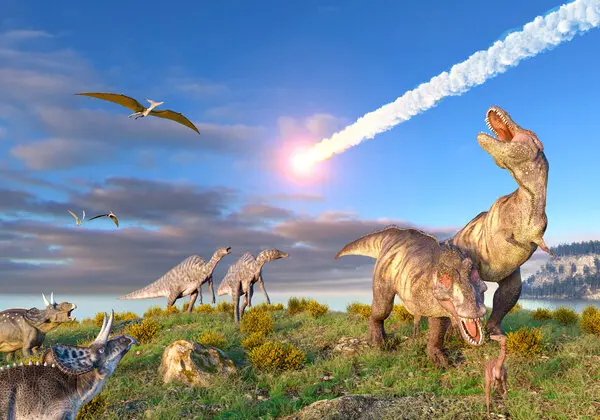
What was the true cause of the infamous mass extinction at the end of the Cretaceous period? In this article, we will be evaluating two rival theories.
Impact Theory VS. ______?
The most currently accepted asteroid impact theory basically says: “A giant asteroid wiped out the dinosaurs”. In 1980, Nobel Prize-winning physicist Luis Walter Alvarez and his geologist son Walter published a theory that a historic layer of iridium-rich clay was caused by a large asteroid colliding with Earth. There is another notable theory by Gerta Keller, a professor of paleontology and geology at Princeton. Despite numbers of other theories proposed by other scientists, Alvarez’s theory has triumphed all others in the field since its inception.
Deccan Traps Theory
However, a crucial part of Alvarez’s theory actually supports Gerta Keller’s opposing “Deccan Traps Theory”. Alvarez’s main evidence for his impact theory, the layer of iridium-rich clay, wasn’t just one layer, but multiple separate layers. Alvarez defended his theory against the opposition who highlighted this hole in his theory and explained the extra layers at different depths by saying that it wasn’t just one asteroid, but multiple. While this is possible, I think Keller’s theory is much more plausible.
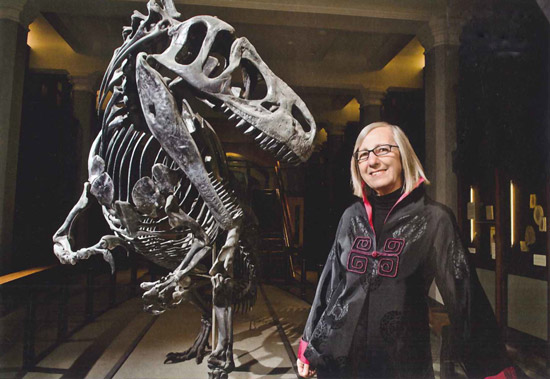
Image of Gerta Keller
We must recognize that Gerta Keller is a woman in science. Intellectual women have been undermined and had their ideas stolen by men for years. I believe that the lack of popularity of Keller’s theory can be attributed to the fact that she was a woman.
What are the Deccan Traps?
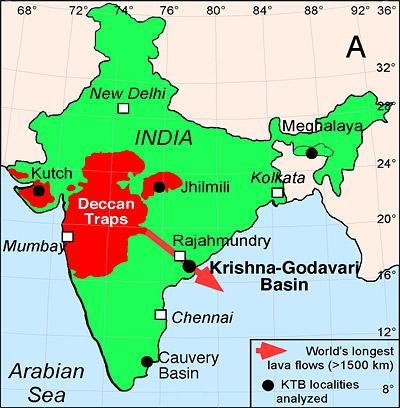
Here we can see the plateau formed by the volcanic eruptions in western India.
The Deccan Traps are a plateau that was formed by molten lava around 66 million years ago. The Deccan Traps cover around 500,000 square kilometers of western India.
Deccan Volcanism
Keller’s theory involves the concept of “Deccan Volcanism”. Deccan Volcanism refers to 4 or 5 volcanic eruptions in the Deccan Traps that occurred before the KTB(Cretaceous–Tertiary) mass extinction. Each of these eruptions created massive flows of lava that can be seen in the fossil record.
In this image you can see layers of iridium-rich earth formed from these eruptions.
These eruptions also likely caused intense climate change, along with releasing tons upon tons of toxic gases into the atmosphere. The destruction of the global environment led to the eventual extinction of countless species.
Combo Theory?
Many believe that this environmental destruction contributed to the decline of many species in this period but didn’t “wipe them out”. Some scientists believe after all of the destruction, some sort of impact was the final nail in the proverbial coffin. This combined Deccan traps-impact theory has grown in popularity in recent years as more evidence surfaces to support it.
A couple of weeks ago, I had the privilege of being a part of a very special presentation: The Devil Wears Science! (I am still obsessed with the name) This was my first time being a part of STEMComm during the Spring semester, which meant that I could finally attend the much-anticipated Atlanta Science Festival that our VIP participates in every year! I was ecstatic to finally see the show with my own eyes and even be an important part of it. I couldn’t be more thankful for the group of people that made this possible, it was truly incredible to watch it unfold. I am also super proud of the models that Dr. Mendelson found in his Ecuadorian friend and her daughters, they truly truly stole the entire show!! They displayed traditional Ecuadorian clothes while also showing off their very-own tagua nut jewelry. Everyone at the show loved their performance from start to end!
My Team!
I had the honor of being a part of the Nutty for Tagua team made up of myself, Julia Raver, and Dr. Joe Mendelson. With the whole theme of our science show being centered around sustainable fashion, Dr. Mendelson conjured up the idea of focusing on what is being coined “vegan ivory”. The presentation was on tagua nuts, a fascinating type of nut indigenous to South America that has the ability to mimic elephant ivory. We brought this idea to life by creating a presentation about the tagua nut’s background history, its sacred meaning and physical makeup, and its uses.
The tagua nut itself is grown in places like Colombia, Ecuador, Panama, and Peru and has been a significant part of the culture and economy of South America. The nut represents sacred, feminine energy and harmony among the indigenous people in these areas and has different uses depending on the nut’s maturity. At the very beginning of the nut’s life, it falls from the trees onto the floor and is collected to be carved, polished, and dyed. Right after sprouting, the nuts are soft enough to eat, with a sweet and pulpy taste. After hardening though, the texture turns so hard that it requires a saw to cut through! What makes the nut so special is that they closely resemble the ivory that elephants have in their tusks. They have a similar chemical makeup as wood as they are made up of dead-walled cells. The nuts can be turned into beautiful jewelry like necklaces, earrings, bracelets, and more. Not only used for adornment but they can also be fashioned into things like buttons and guitar picks. In fact, tagua nuts were utilized during the Civil War for the buttons of US soldiers’ uniforms since the material was cheaper than metal and ceramic.
Elephant Ivory Dupe?
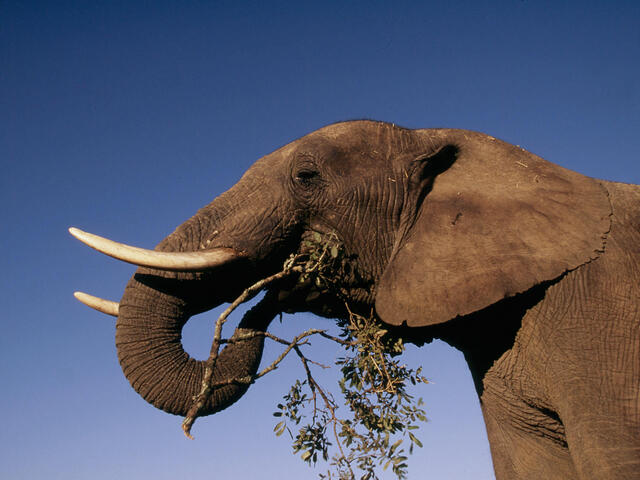
With the poaching of elephant tusks and the illegal trade that has been going on since the 1980s, it has become more important now than ever that an alternative is presented. Although there are bans on poaching, they are not stopping the slaughter of the world’s biggest land mammal, the African elephant. Tagua nuts have created a glimmer of hope for the elephants’ survival since there would be no reason to continue killing the animals with a viable ivory option available. The tagua nut has been called a friend of elephants, and it truly has been serving as a helping hand to the species. The nuts can be shipped anywhere on Earth to act as a substitute for ivory, thus humans must stop looking to elephants for ivory, and welcome into the mix tagua nuts!
Loxodonta africana
My Overall Contributions
The Nutty for Tagua team chose me to be the speaker during the actual fashion show, and I knew I had to take the opportunity to shine as a senior STEMComm student. It would be my last time being a part of the VIP team before graduating, so it was extremely special to me to be able to speak. I was definitely nervous about presenting to a crowd since I am not huge on public speaking but knew that I had to stand strong for the rest of the team and represent us well. As a matter of fact, I am especially proud to be a member of STEMComm, so I had to show that in my presentation! After working with Julia on the script and editing it, I got started practicing the five minute speaking bit. I stumbled at first, but finally got comfortable projecting the information confidently. I was ready to present! When the day finally came, Julia got recruited as a last minute model for the beekeeping suit, which meant I was controlling the slideshow and presenting live- it’s harder than it looks! It surely wasn’t perfect, but I am happy with what our team gave to the show, and I could tell the audience enjoyed it too. I had so much fun participating in this event and I can’t wait to come back to attend STEMComm’s future ASF productions. From the backstage production to the music set-up, it was super cool to be a part of.
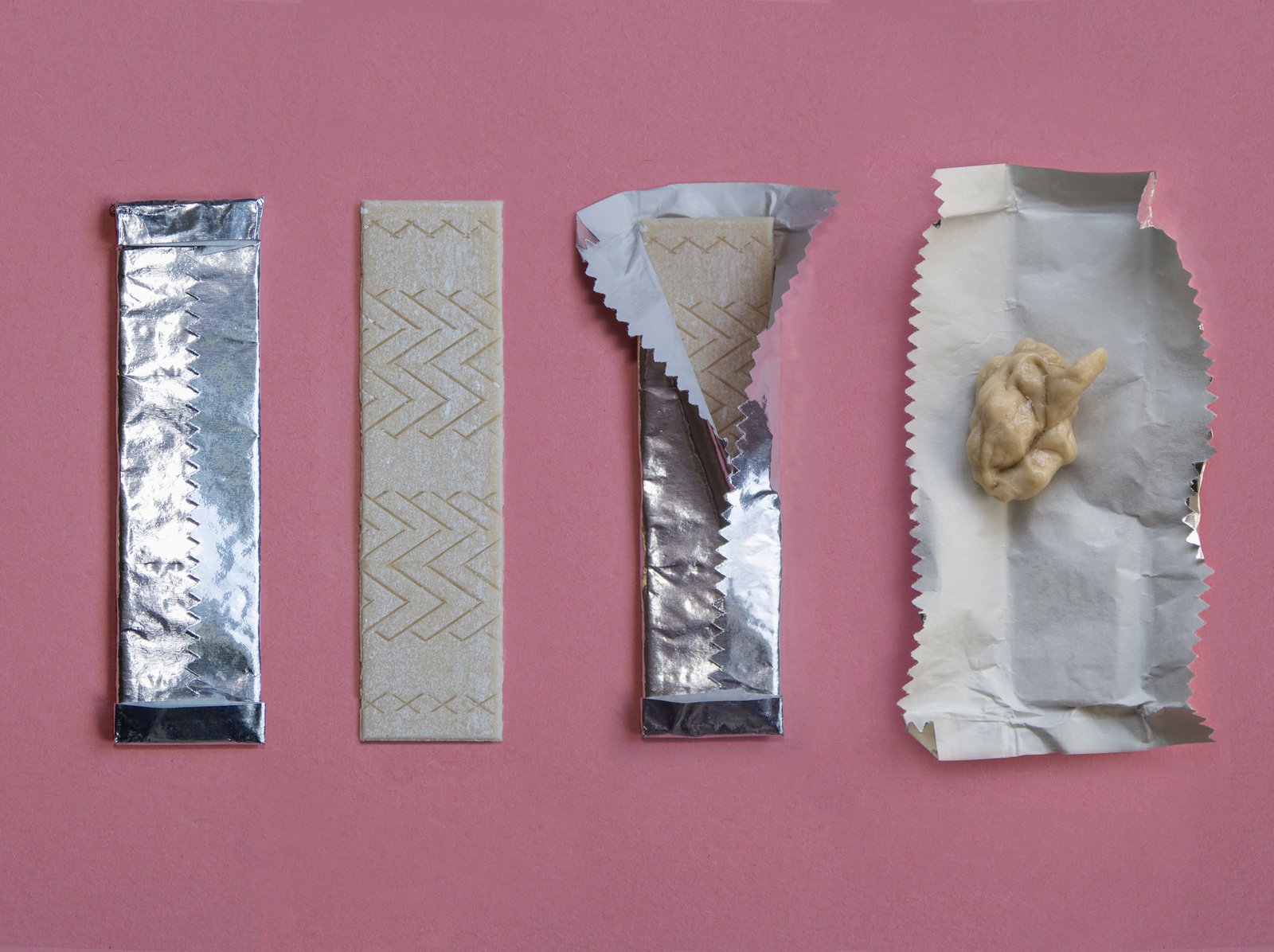
In 24 days, or a little over 3 weeks, I chewed 171 pieces of gum. That’s between 10 and 12 packs of gum (depending on whether it was a 14 or 16 count). Sure, that doesn’t seem like much, but during these three weeks, I was trying to cut down. On a bad day, I could tear through an entire pack in an afternoon. I wish I could say that with age, I learned how to control my gum-chewing as a result of witnessing the dent my wallet takes after every trip to the grocery store, but to be completely honest, it shows no sign of stopping.
You hear a lot about the benefits of chewing gum to relax your mind or help you remember what you’ve studied (Sasaki-Otomaru et al., 2011), but I’ve always wondered — can an excessive amount of something that’s supposedly good for your health be harmful?
The NHS describes addiction as “not having control over doing, taking or using something to the point where it could be harmful to you… it’s possible to be addicted to just about anything” (“Addiction: what is it?,” n.d.). By that definition, “too much of a good thing” applies to every activity you could dream up.
Investigating Ingredients
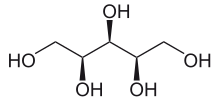
Several artificial sweeteners are added to gum — xylitol being at the top of the ingredient list. Xylitol is a sugar alcohol, used to replace sugar, that naturally occurs in vegetables and fruits (Hester, 2022).
Xylitol is behind why gum chewing is recommended 30 minutes after a meal — it can’t be broken down into the acids that wear away teeth.
Although xylitol is easily absorbed by bacteria like sugar, once absolved, the bacteria will use their energy to expel the xylitol instead of reproducing, making it less able to stick to your teeth and causing them to die off. (Hester, 2022)
By neutralizing acids in the mouth, acid reflux and erosion of enamel, the hard mineralized substance that protects the surface of the teeth, are minimized.
Chewing gum also boosts saliva production, helping to wash away food particles from the teeth as well as digestive acids. (“Sugar-free gum – is it bad for me?,” 2012)
The saliva produced when you chew gum is stimulated saliva, which has a higher concentration of the proteins your teeth need to defend against the erosive acids in food and drinks (Hester, 2022).
To summarize, xylitol doesn’t spike blood sugar or insulin, starves the plaque-producing bacteria, and feeds microbes in the digestive system (Gunnars, 2018).
But how do the rest of the ingredients line up?
Next on the list is sorbitol.
Similar to xylitol, sorbitol is a naturally occurring sweetener extracted from glucose. Consuming sorbitol is what gives you that cooling sensation in the mouth.
Sorbitol has been declared safe by a number of studies. However, the suggests that if daily intake exceeded 30g, it may result in nausea, vomiting, or abdominal pain.
In larger quantities, sorbitol actually acts as a laxative. It does not get completely digested — the small intestine absorbs sorbitol in small amounts, which are then converted to fructose. The presence of excess remaining sorbitol may result in diarrhea, gas, bloating, and cramping (“Sorbitol research and safety,” 2022).
As it moves through the GI tract, it acts as a sponge by pulling water out of the intestinal walls, creating an excess of fluid in the bowels and these unpleasant symptoms (Johnson, 2010).
As you can probably guess, the other main ingredients like mannitol & maltitol, have almost identical descriptions — a sugar alcohol recognized as safe by the FDA that may cause bloating, gas, or diarrhea when overconsumed.
Finally, I’ll discuss a bit about maltodextrin, a highly processed artificial sweetener made from corn, rice, potato starch, or wheat.
Maltodextrin’s high glycemic index means it can cause spikes in blood sugar.
Studies have suggested that it can change your gut bacteria composition in a way that makes you more susceptible to disease.
Maltodextrin can suppress the growth of probiotics in your digestive system, increasing the growth of bacteria such as E.coli, which is associated with autoimmune disease.
It may also impair intestinal mucus release, raising the risk of colitis (inflammation of the large intestine).
However, there’s also evidence that maltodextrin is effective for preventing colorectal cancer and had positive effects on overall digestion (Shaefer, 2022).
A Conclusion That’s Hard to Swallow
Well, it seems the health effects of chewing gum are pretty insignificant. After all, a piece of gum is usually no more than a couple of grams.
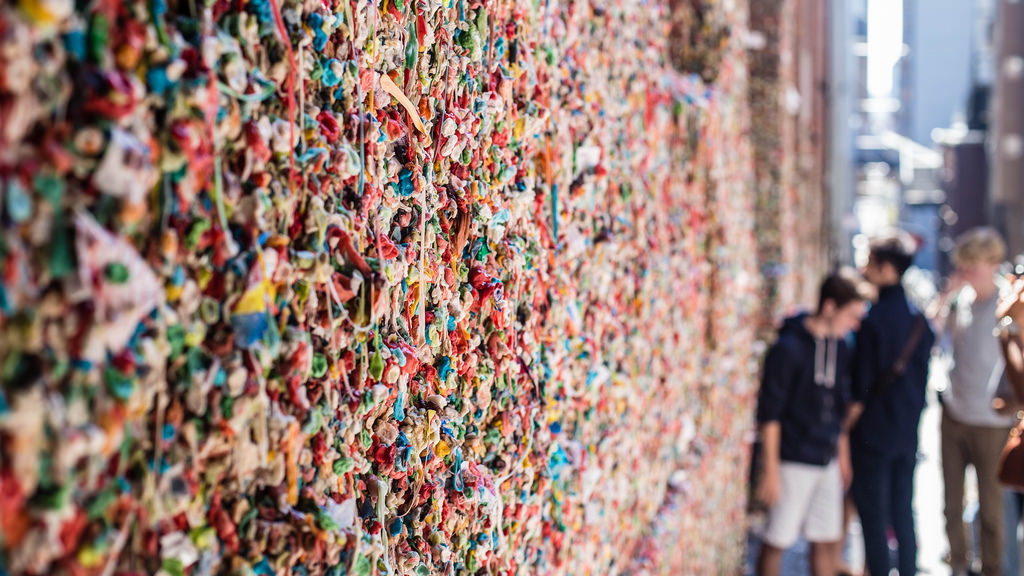
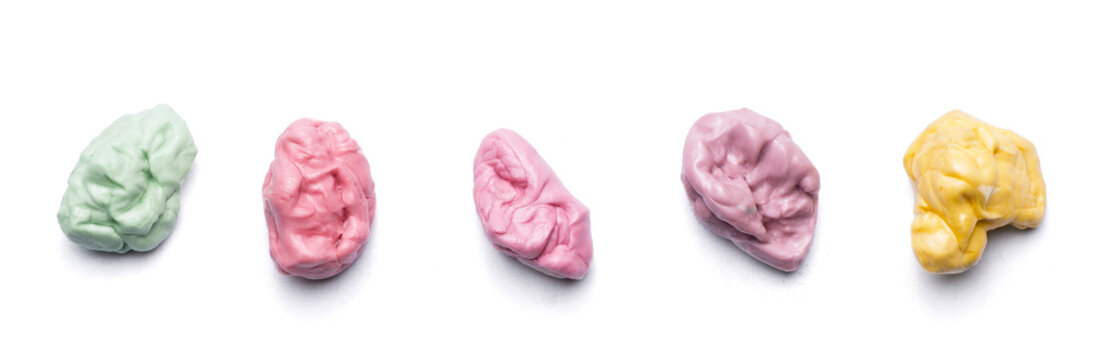
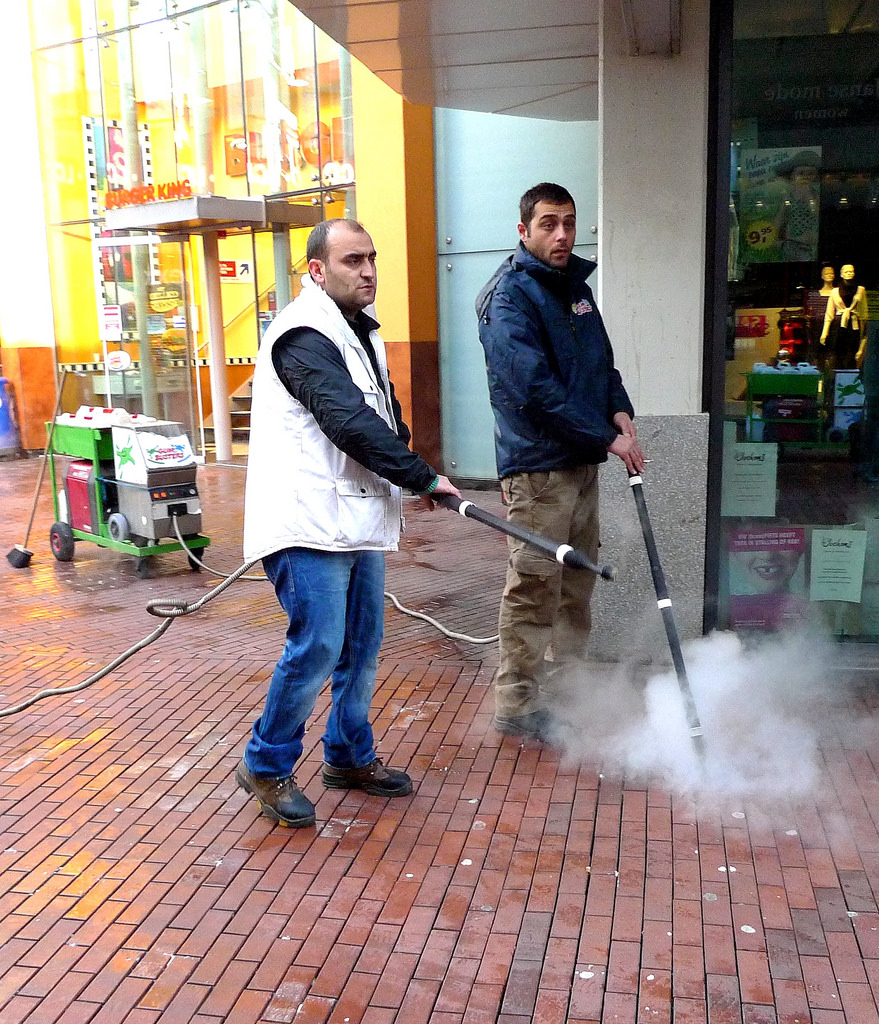
But you know what isn’t? The residue it leaves behind. Chewing gum is made of “non-biodegradable hydrophobic polymers together with artificial sweeteners” (Roy, 2011). Since gum is an oil base synthetic polymer, it’s remnants are just like plastic. Gum products, then, are not broken down by natural processes, which produces pollution destined to exist for much, much longer than the amount of time it took to chew (Jones, 2019). Unsurprisingly, valuable time and money must be spent to clean up unsightly and bacteria-saturated chewed gum from the streets.
As gross as it sounds, all the gum we’ve chewed probably still exists somewhere. It’ll be near excruciating to curb my chewing, but I’d like to think that the environment (and my wallet) will thank me.
Resources
Gunnars, K. (2018, October 4). Xylitol: Everything you need to know. Healthline. Retrieved April 1, 2023, from https://www.healthline.com/nutrition/xylitol-101#bottom-line
Hester, J. (2022, June 17). Surprising dental health benefits of sugar-free gum. Dental Depot. Retrieved April 1, 2023, from https://dentaldepot.net/surprising-benefits-of-sugar-free-gum/
Johnson, C. (2010, July 26). Too much sugarless gum can hurt you. UF Health Podcasts. Retrieved April 1, 2023, from https://podcasts.ufhealth.org/too-much-sugarless-gum-can-hurt-you/
Jones, D. (2019, November 16). Chewing gum – 100,000 tonnes of plastic pollution every year. Just One Ocean. Retrieved April 1, 2023, from https://justoneocean.org/chewing-gum
NHS. (n.d.). Addiction: what is it? NHS choices. Retrieved April 1, 2023, from https://www.nhs.uk/live-well/addiction-support/addiction-what-is-it/
Roy, A. S. (2011, November 30). Improper disposal of non-biodegradable chewing gum is one of the biggest threats to our ecology: A Review. Current World Environment. Retrieved April 1, 2023, from https://www.cwejournal.org/vol16no3/improper-disposal-of-non-biodegradable-chewing-gum-is-one-of-the-biggest-threats-to-our-ecology–a-review
Sasaki-Otomaru, A., Sakuma, Y., Mochizuki, Y., Ishida, S., Kanoya, Y., & Sato, C. (2011). Effect of regular gum chewing on levels of anxiety, mood, and fatigue in healthy young adults. Clinical practice and epidemiology in mental health : CP & EMH. Retrieved April 1, 2023, from https://www.ncbi.nlm.nih.gov/pmc/articles/PMC3158435/
Shaefer, A. (2022, September 23). Is maltodextrin bad for me? Healthline. Retrieved April 1, 2023, from https://www.healthline.com/health/food-nutrition/is-maltodextrin-bad-for-me#alternatives
Sorbitol research and safety. News. (2022, December 29). Retrieved April 1, 2023, from https://www.news-medical.net/health/Sorbitol-Research-and-Safety.aspx
Sugar-free gum – is it bad for me? Go Ask Alice! (2012, December 7). Retrieved April 1, 2023, from https://goaskalice.columbia.edu/answered-questions/sugar-free-gum-it-bad-me/
The creation of language models like ChatGPT is rooted in the field of artificial intelligence and its subfield of machine learning. Specifically, ChatGPT belongs to the family of models known as transformers, which were introduced in a seminal 2017 paper by Vaswani et al. titled “Attention Is All You Need” [1].
Before we delve into transformers and attention, let’s talk about the more basic types of machine learning models: supervised and unsupervised learning.
Supervised learning involves training a model to make predictions based on labeled data. For example, you might train a model to recognize handwritten digits by giving it many examples of handwritten digits along with their correct labels (e.g., “this is a 7,” “this is a 9,” etc.). The model then learns to recognize patterns in the data that correspond to the correct labels, and can make predictions on new, unlabeled data.
Unsupervised learning, on the other hand, involves training a model to find patterns in data without explicit labels. For example, you might train a model to group similar news articles together based on their content, without telling the model which articles belong in which groups. The model would learn to identify common themes or topics across the articles and group them accordingly.
Now, let’s talk about transformers. Transformers are a type of neural network that were introduced in the aforementioned 2017 paper [1]. They’re used for a variety of natural language processing (NLP) tasks, such as language translation, text classification, and text generation.
The basic idea behind transformers is that they use “self-attention” to process input sequences. Self-attention means that the model can pay different amounts of attention to different parts of the input sequence, depending on which parts are most relevant to the task at hand [2].
To illustrate this, let’s consider an example sentence: “The cat sat on the mat.” If we wanted to use a traditional neural network to process this sentence, we might represent each word as a vector with a 1 in the position corresponding to the word, and 0s elsewhere and feed those vectors into the network one at a time.
But with a transformer, we represent each word as a vector that includes information about all the other words in the sentence. Specifically, for each word in the sentence, we compute a “query,” a “key,” and a “value” vector. The query vector is used to determine how much attention to pay to each of the key vectors, and the value vectors are combined based on those attention weights to produce a final output vector.
In the case of our example sentence, the transformer might pay a lot of attention to the word “cat,” since it’s the subject of the sentence, and less attention to the word “the,” since it’s just an article. By using self-attention in this way, the transformer can process input sequences much more efficiently than traditional neural networks, since it can focus on the most important parts of the sequence at each step.
Now, let’s talk about how ChatGPT was specifically trained. ChatGPT is based on the GPT-3 architecture, which is a highly advanced transformer model with 175 billion parameters (i.e., weights that the model has learned during training). That’s a lot of parameters – for context, the previous state-of-the-art model, GPT-2, had “only” 1.5 billion parameters.
To train a model as large and complex as GPT-3, you need a lot of data. In fact, GPT-3 was trained on a dataset of over 45 terabytes of text, which included everything from web pages to books to Wikipedia articles. This huge amount of data allowed the model to learn a vast amount of knowledge about the structure and nuances of language.
The training process for GPT-3 involves a technique called gradient descent. Essentially, the model starts with randomly initialized weights, and then makes predictions on the training data. The difference between the model’s predictions and the correct answers (known as the “loss”) is then used to adjust the weights slightly in the direction that would reduce the loss. This process is repeated many times, gradually fine-tuning the model’s weights to better fit the data.
One challenge with training models as large as GPT-3 is that it requires a lot of computational power. GPT-3 was trained using a combination of both CPU and GPU computing, and the training process took several months to complete.
So, what makes ChatGPT different from GPT-3? As I mentioned earlier, ChatGPT is a variant of the GPT-3 model that has been fine-tuned for conversational applications. This fine-tuning process involved training the model on a specific task – in this case, generating responses to user inputs in a natural-sounding way.
To fine-tune the model, the researchers behind ChatGPT used a technique called transfer learning. Transfer learning involves taking a pre-trained model (like GPT-3) and re-training it on a new, related task (like generating conversational responses). The idea is that the model has already learned a lot of useful knowledge from its pre-training, and can apply that knowledge to the new task with less additional training.
During the fine-tuning process, the researchers fed the model pairs of user inputs and responses from a large corpus of conversational data. The model then learned to generate responses that were both grammatically correct and semantically relevant to the user input.
One interesting aspect of ChatGPT is the potential ethical implications of their use. As AI becomes more advanced and capable of generating human-like language, it raises questions about the role of AI in society, and how we should regulate its use. For example, should AI-generated text be subject to the same standards of truthfulness and accuracy as human-generated text? Should we be concerned about the potential for AI to spread misinformation or propaganda? These are complex and important questions that will require careful consideration and debate in the years to come.
In conclusion, the science behind ChatGPT is rooted in the fields of artificial intelligence and machine learning, and specifically in the use of transformers and self-attention mechanisms for natural language processing. ChatGPT was trained on a vast amount of data using gradient descent, and was fine-tuned for conversational applications using transfer learning. As AI continues to advance, it’s likely that models like ChatGPT will become even more sophisticated and capable, raising important ethical and societal questions along the way.
Works Cited
Vaswani, Ashish, et al. “Attention Is All You Need.” ArXiv.org, 6 Dec. 2017, https://arxiv.org/abs/1706.03762.
Cristina, Stefania. “The Transformer Attention Mechanism.” MachineLearningMastery.com, University of Malta, 5 Jan. 2023, https://machinelearningmastery.com/the-transformer-attention-mechanism/
Howdy! In planning for our event, The Devil Wears Science, in the Atlanta Science Festival, I took some initiative in a few spaces. I have helped to look into the best areas, in and around campus to host our event (and what fits a small budget), with the ultimate answer landing to an on-campus event at our Living Science Building of Kendeda! I’ve also looked into potential partners, and felt impressed with Dr. Jayaraman, a professor here at Georgia Tech in our Material Science/Engineering department and brought him on board. He has been incredible, and invited an impressive colleague, Dr. Sungmee Park to join the effort. Yet, one creative aspect I’ve worked on for this event was very creatively fun and encouraged me to do some thinking on marketing/interactions between our audience! For this, I have been working on some interesting designs and flyers! Starting in fall, I made a general logo that I thought would be fun to put on basically everything. It could be used for flyers, social media, buttons, and more — maybe even given out on some items to commemorate the event! Here, I wanted to discuss the evolution of my design work! Though it’s a small turn from the usual science content, I hope you enjoy.
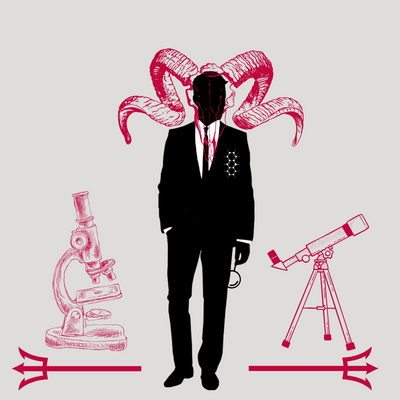
Logo for ASF Event The Devil Wears Science made by Carrera Ortiz
The picture above shows the general design I made during fall of 2022 – a centerpiece for future event illustrations. First, I wanted to focus on the general color palette that matches the theme. Wanting to stick to the hellish theme, I initially knew black and reds would be crucial, but it took some time to figure it all out. In trying to find how best to represent the devil here, I came to the conclusion that a men’s silhouette would be best, and finding a suave man in a suit was very fitting. Because of this, even though black is dark and brooding, it would not work for the background as it would remove some of the suit details. Instead, I chose a grey to be the background color as its one of my favorite colors and goes well with black and dark reds. Initially, I was actually working with some red dresses and devillish faces, but I enjoyed the pivot of the formal ‘Man In The Suit’ better. Moreover, I found a cool satanic-looking goat head pattern and wanted to include this in the design. Overlaying this on the head leaned into ‘The Devil Within’ vibe that sparked a lot of intrigue. With that solidified, I went on to include more science aspects into the design. I think my favorite inclusions are the subtle aspects such as having the devilish man have a chemical structure handkerchief and holding a small magnifying glass. I feel like it shows that he is interested in science, and is also slightly ‘wearing’ it as well! At the event, I enjoyed that one of the STEMComm faculty members and professor here in the Chemistry Department at Georgia Tech, Dr. Evans, came to the show with some chemical structures clipped onto his blazer! It’s a fun little parallel to this, and even though I don’t think he intended to be similar to the devil man here, it was hard not to think of it!
Onto the background details, I wanted to balance the image with more elements of science on the sides. When I found these detailed images of a microscope and telescope, I knew I wanted to include them somehow. They matched well with the sudden increase in artistic complexity of the goat skull, and added some focus on the STEM interests of the club. In order to tie it in to the design, I used these tridents for the instruments to ‘rest’ on, rather than as a devil tail or something similar. From a physics perspective, I liked the symmetry and the tridents hold a resemblance to the psi symbol (ψ) as it usually represents wave functions used in modern physics and quantum mechanics. The symmetry also reminds me of bra-ket notation also used in these fields, especially when wave functions are involved. Though most people likely won’t think of that, it was something that made me happy. With many scientific representations on and around the Devil, I felt like I was really satisfied with the general design, and it was extremely fulfilling to see it being shared on social media and on the program that was handed out to everyone at the show.
With the general design finalized, it was time to apply this to marketing the event. Since I created the design, I took initiative to also create the flyers for the event, which took many iterations to perfect.
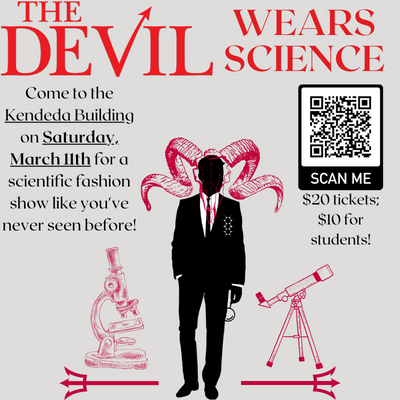
First Flyer Edit for The Devil Wears Science made by Carrera Ortiz
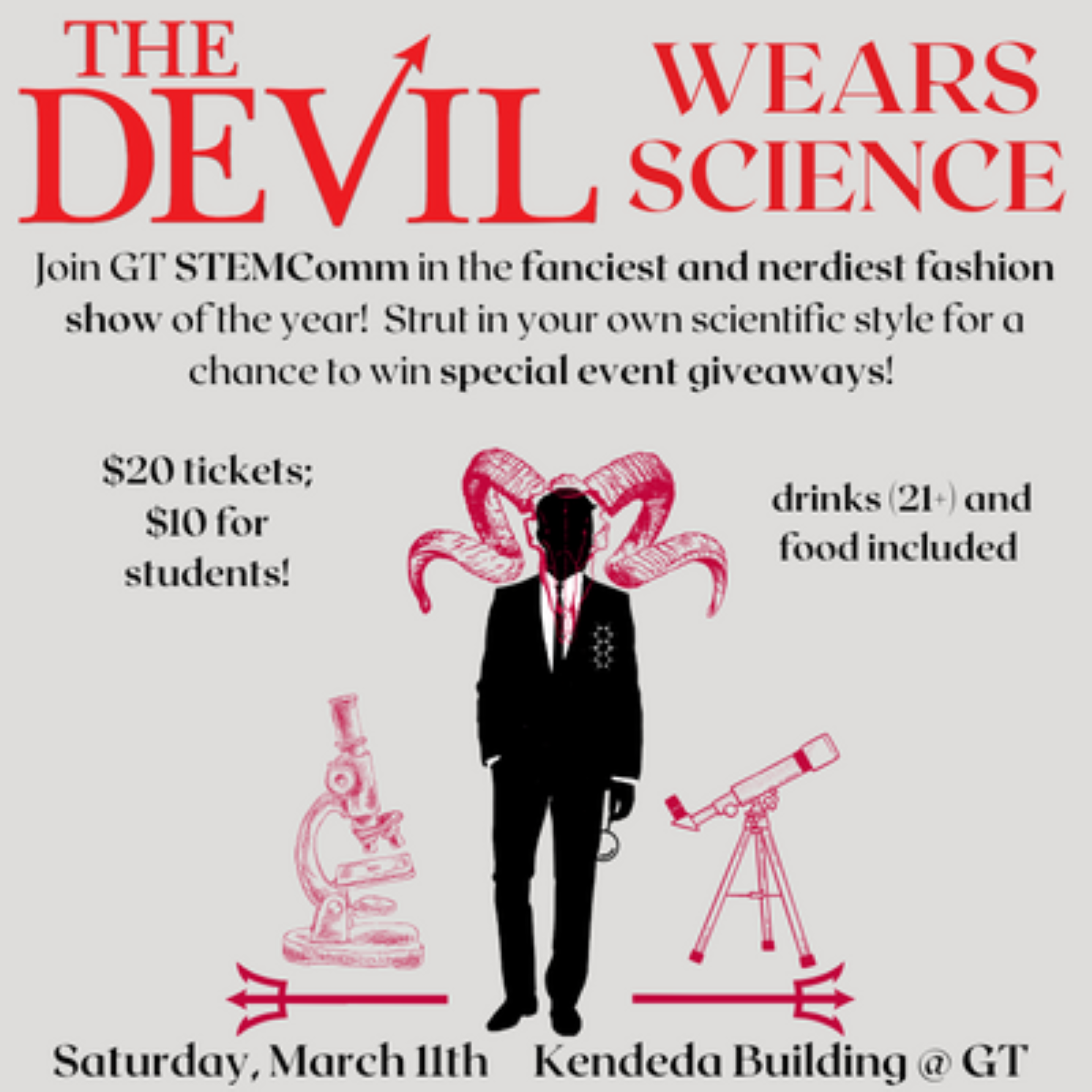
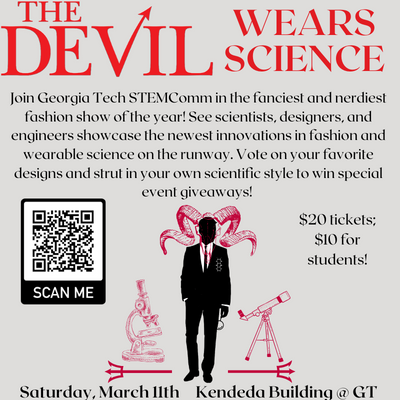
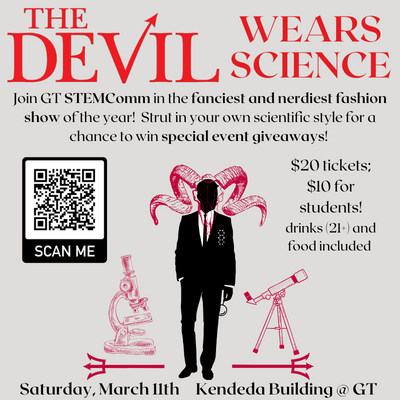
After reviewing many other flyers I wanted to keep it simple and ensure it included the basic details: event name, short description, location, date, price of tickets + how to buy them, and of course, the design. For the event name, I wanted it to look extremely similar to the flyers for “The Devil Wears Prada” since we’re doing a word play on that, so I found a similar font called RoxboroughCF on Canva. I also created a QR code so that people could easily access the ticketing website, and emphasized the date and location so that people could easily schedule to come to the event! I wanted to have a relatively balanced look, offsetting the teaser + info and ticketing information on either side.
Second Evolution of the flyer for The Devil Wears Science event, made by Carrera Ortiz
Here, I felt like the information didn’t say everything we wanted to say, so the main change I made was taking the information from the ticketing website and copying it onto the flyer. I also offset the ticketing information to balance around the character. Due to the large amount of text, I minimized the size of the devil design, which made some details a little difficult to see. I also really liked having the location and time bolded on the bottom, mirror the symmetry of the tridents on the bottom. I felt like it is still in focus enough that it can’t be forgotten, but not so awkwardly on the flyer. Plus, it allowed for more information about the event.
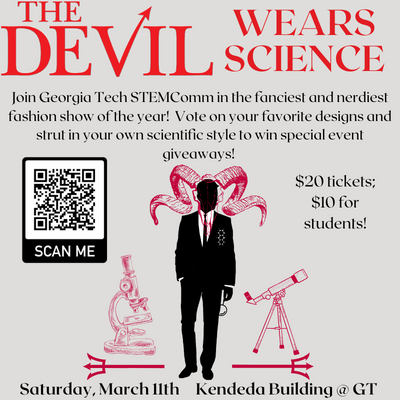
Third Evolution of the flyer for The Devil Wears Science event, made by Carrera Ortiz
From here, I wanted to cut down on the large wall of text and emphasize the design, but it didn’t feel quite right yet. At the least, there’s more room to show the design!
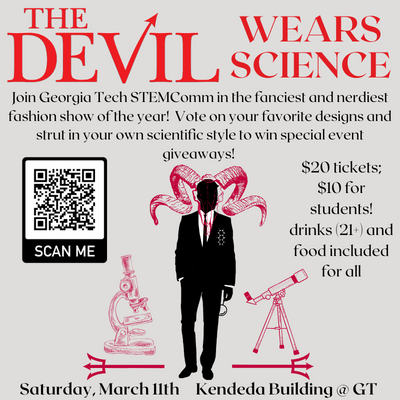
Fourth Evolution of the flyer for The Devil Wears Science event, made by Carrera Ortiz
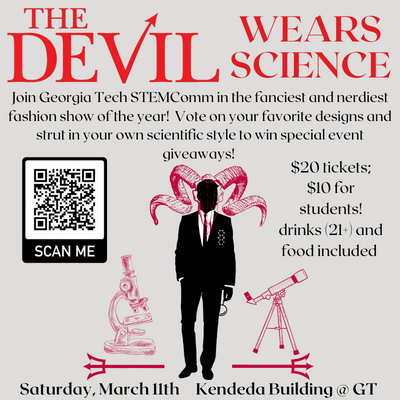
I realized that the ‘text logo’ (vs. the design which I will now refer to as the logo) was too attached to the top and needed margins to look better. I think this is one of the best improvements I had made. Additionally, to help justify the price to others upon first seeing the flyer, I mentioned that we will be serving alcohol and food. The next iteration is the same except I took out ‘for all’ because it seemed redundant and not entirely true due to the legal aspects of alcohol, even if I did declare that it is for those aged 21 and over.
Fifth Evolution of the Flyer for The Devil Wears Science event, made by Carrera Ortiz
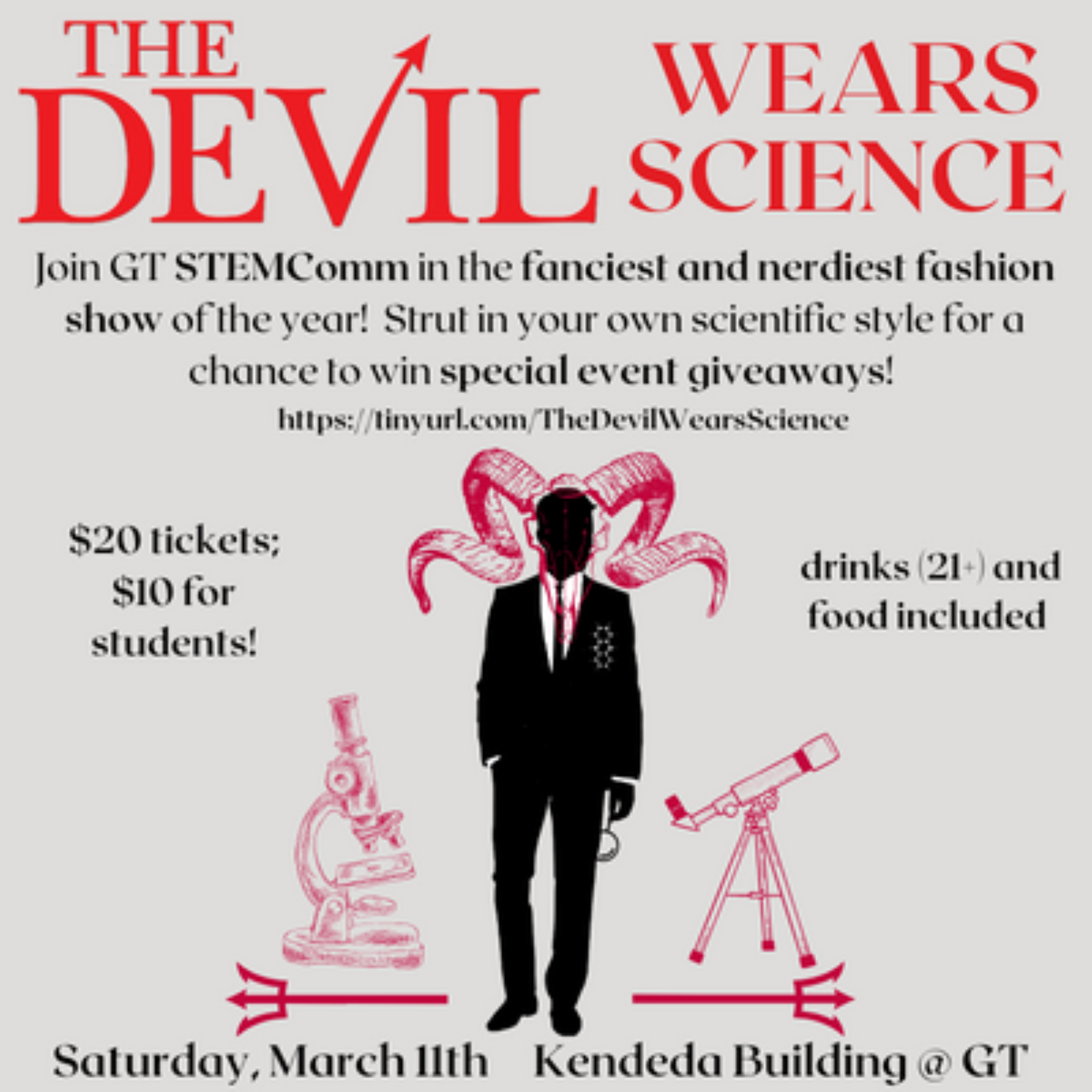
The update is shown above, with considerations in mind! Yet, it still felt word-y, and some of my peers and designer friends agreed. Thus, the final result comes along:
Sixth and Final Evolution of the Flyer for The Devil Wears Science event, made by Carrera Ortiz
So, I really cut down and emphasized the most important aspects of the event information. Additionally, we wanted to convert the ‘voting’ to focus less on the presentations and instead on audience engagement and hopefully see a lot of fun science themed outfits (which we did)! This way, there was no inequality between presenters that we were extremely grateful to for their help with the event.
With more balance between design and text, this became the final edit with important information bolded for easier reading. Throughout the process, I looked for input from other members of STEMComm as well as from a few friends/co-workers that work on making social media graphics, and we all found consensus on this edit.
Then, for marketing purposes, we realized the importance of having a version of this flyer for social media. We knew that it would be redundant to have the QR code (those holding their phone aren’t going to need to scan with the phone their holding), but we can include links instead! For now, I have two versions that are almost identical, where one includes a tinyurl link just in case social media links get a little busy. We planned to include a linktree in the bios to access where the QR code went to, but I know sometimes on instagram, you have to go through different unnecessary steps that make people less likely to go to the link. Given that this is for social media, I also looked into the ideal aspect ratio/pixel widths so that it looks best on instagram stories or other postings.
Here is first social media flyer iteration:
First iteration of the social media version of The Devil Wears Science event, made by Carrera Ortiz
Then, its evolution:
Second Evolution of the social media version of the flyer for The Devil Wears Science event, made by Carrera Ortiz
So, which one is your favorite? Do you think the final versions are the best, or is something not quite right to you? Hopefully, you’ll have already seen the final versions before and it encouraged you to come to the event.
With these finalized, the members of STEMComm all went to social media to share these online and post about the event. We also looked into sharing flyers around campus to encourage more people to come.
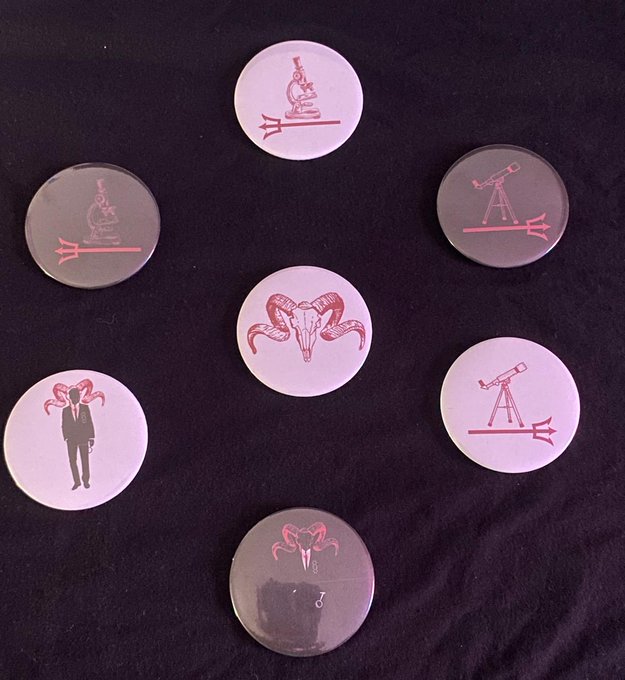
Afterward, I thought it would be nice to have small giveaways for everyone that attended. Thanks to the Invention Studio on campus (follow them @gtinventionstudio on instagram!), I knew I could make pins/buttons and more. I didn’t want the full design to be a sticker/button because its large, so I thought to emphasize the details. So, I made separate images including just the smaller elements and had two versions with white and black backgrounds for more options. I ended up with 7 main designs that I created into pins, and I think they turned out amazing and I am so glad we were able to give them all away to the attendees! Thanks to Jalen, we were able to make some stickers as well. Additionally, Dr. Leavey gave us acrylic to work with, so Isabelle and I went to the Invention Studio together and she worked with the laser cutter for some cool devil charms. One of the other STEMComm members, Michelle Stanek, was also able to make earrings from the charms as well, which turned out amazing!
Image showing the 7 completed pin designs made by Carrera Ortiz at the Invention Studio.
And this was the evolution of the design created for The Devil Wears Science event. I was extremely grateful to use some creative abilities to help the show, along with my conversations with the MSE department leading to the presentations from Dr. Jayaraman and Dr. Park’s contribution. I cannot wait to see what STEMComm ends up doing next year. Thank you to everyone that showed up for this event!