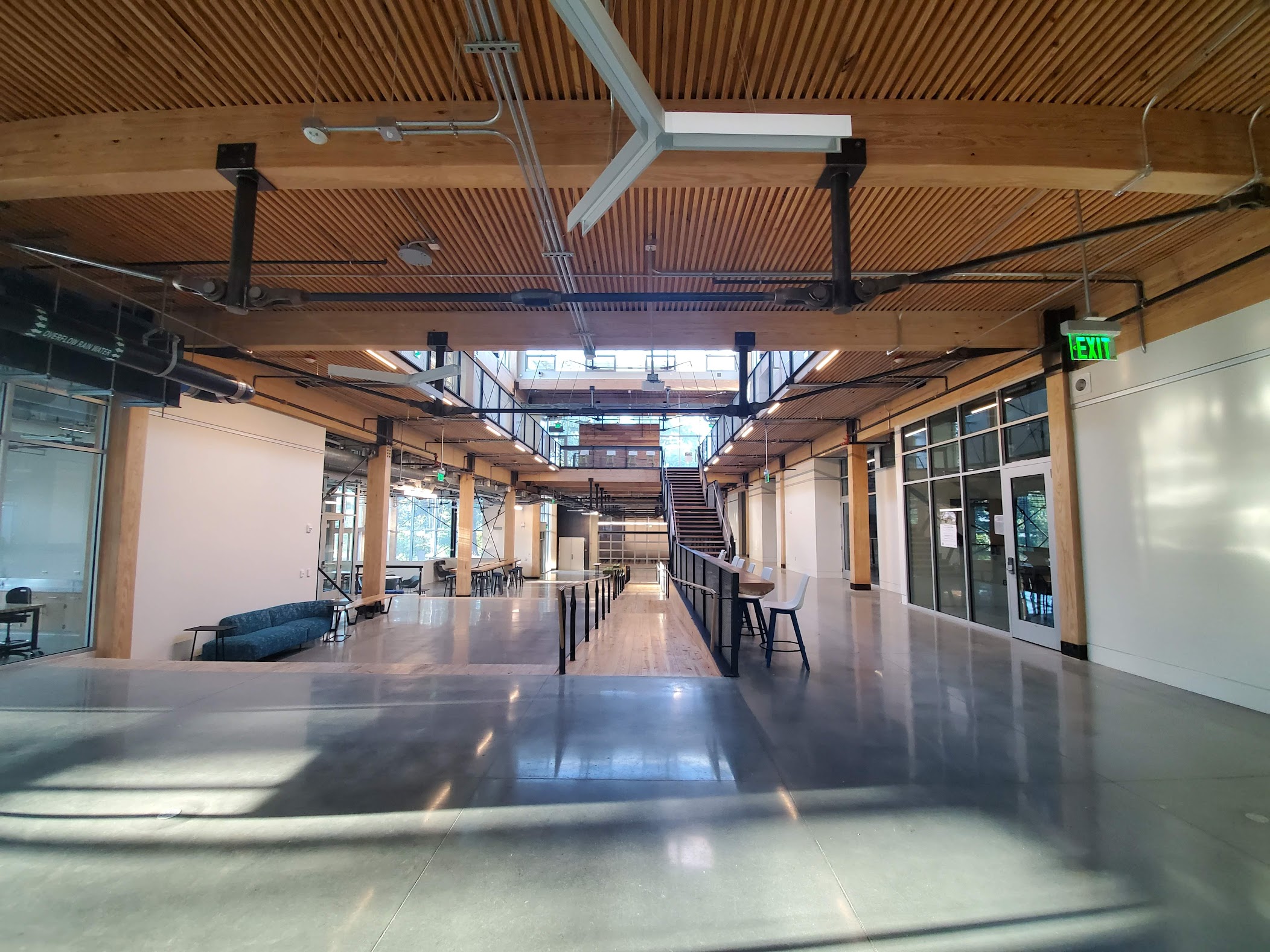
Since my first year at Georgia Tech, I’ve loved the campus’s architecture. There’s a perfect blend of old highlights that are the landmarks you think of when you think of GT, like Tech Tower and the Einstein statue, to newer buildings that represent the modern and futuristic side of campus, like the Kendeda Building for Innovative Sustainable Design and the renovated Price Gilbert Library and Crossland Tower.
Inside the Kendeda Building for Innovative Sustainable Design.
When I lived in 8th Street Apartments last year, I noticed some exciting designs on each building’s entrance. Outside of 8th Street East, where I lived, there is a model of our solar system with the word “EXPLORATION” under it. I felt that the image was a beautiful tribute to the discovery of how the concept of our solar system developed since 1543. When I was walking near my old apartment a few weeks ago, I rediscovered that etching, and I wanted to take a deep dive into how many similar etchings were on campus. So with my friend, fellow Charged Magazine writer, and uber-talented photographer Steven Yang, we took a fun walk around West Campus, documenting everything we could find.
The Charged Dream Team, Steven Yang (back) and Jalen Borne (front) ready to explore GT’s campus.
During our journey, we found six different etchings at the entrances and the backs of student apartments on West Campus. Included were the solar system model mentioned earlier, the Georgia Tech seal, Leonardo da Vinci’s Vitruvian Man (with the word “HUMANITY”), the Earth representing “CIVILIZATION,” the Milky Way for “DISCOVERY,” and a beautiful but simple model of the atom, with “EXISTENCE.” At the Nelson-Shell apartment, there weren’t drawings, but the words “KNOWLEDGE” and “TECHNOLOGY” were marked. Finally, we found a plaque showing when Nelson-Shell was constructed for the 1996 Olympic Games.
What I loved about this adventure was discovering all of the etchings and gaining a deeper appreciation for what the pieces all together mean to me as a growing scientist. The etchings represent all the discoveries that have become the foundations of almost every STEM field and what they mean to society. Including knowledge and technology in the apartments perfectly complements the other buildings by considering the Georgia Tech motto: Progress and Service. We take the knowledge of the past, build new technology that improves the world, and further the values shown in the other campus etchings.
Campus etchings that Steven and I found throughout West Campus. Top row (left to right): Eighth Street East (back), Eighth Street South (front), Eighth Street South (back) Middle row: Nelson, Eighth Street West (back), Shell (back) Bottom row: Eighth Street East (back), Shell (front), Eighth Street West (front)
If you ever walk around campus and see a weird or cool sculpture or marking on the building, don’t just think about why it was added there, but what it means to you as a student. The etchings have become my favorite place to reflect on just how much campus has changed to become a place where its students work to bring the next generation of computer science, medical devices, and energy technology, all pushed by the motto of Progress and Service.
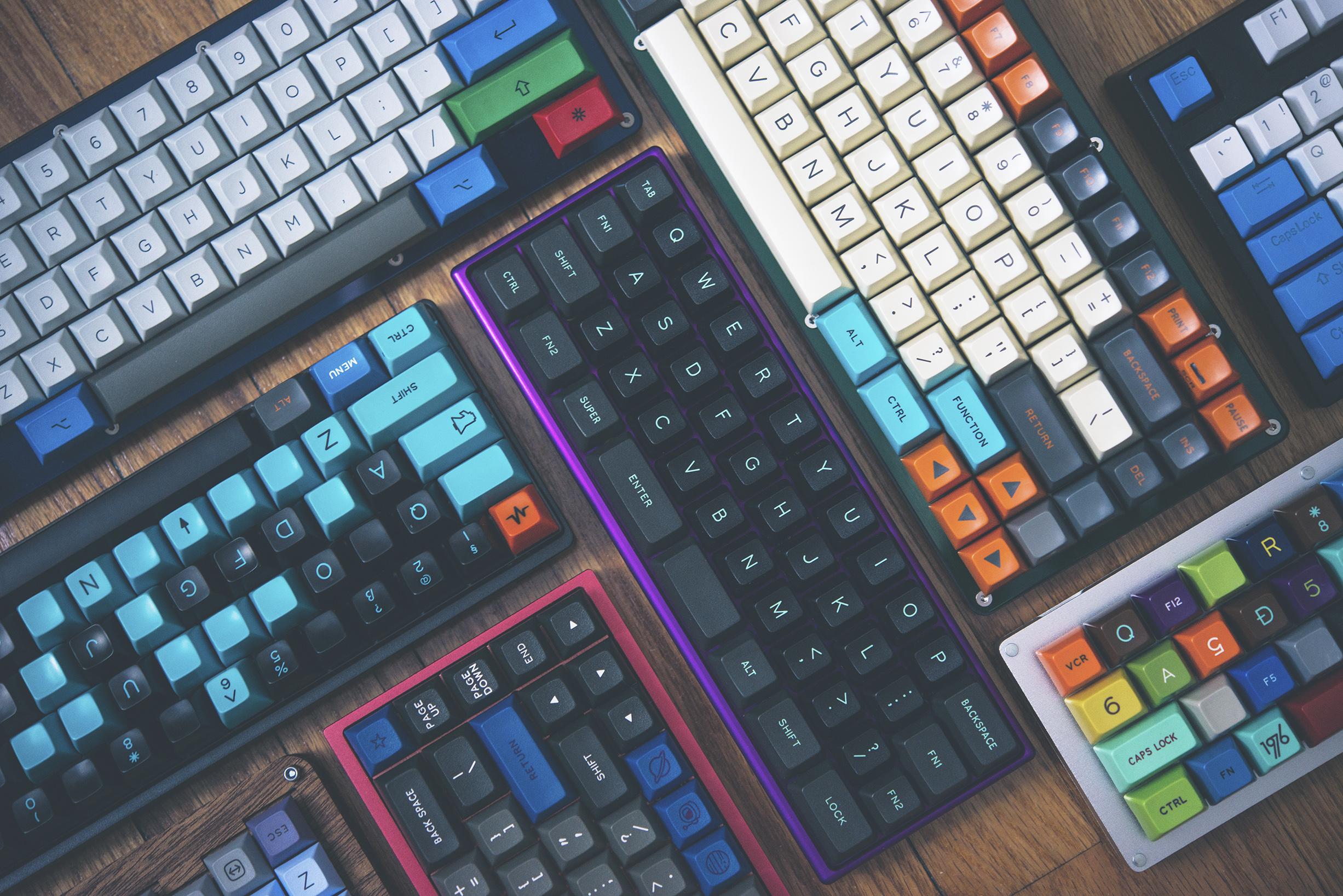
What are your hobbies? Do you participate in a sport, or do yoga, or grab a paintbrush and make some art? How about something that literally sounds amazing – mechanical keyboards, anyone?
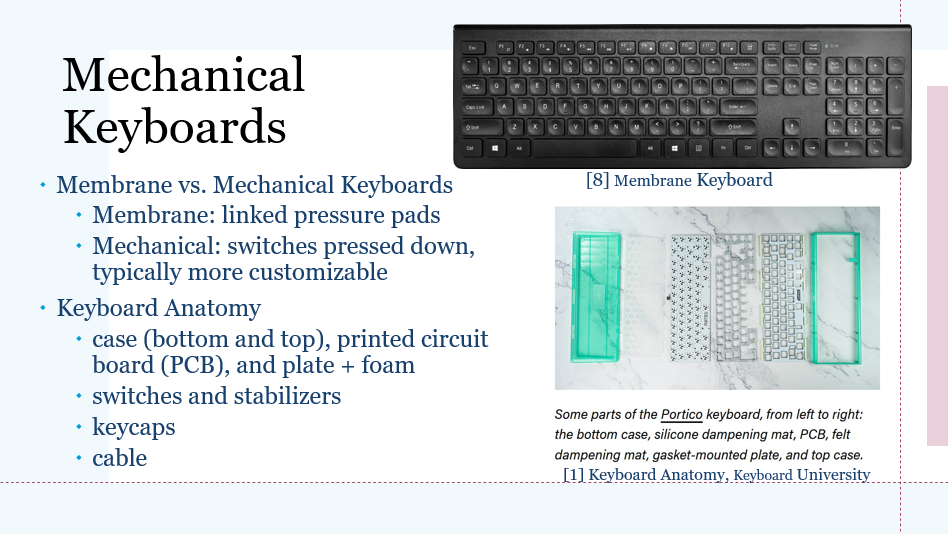
You’ll have to trust me, psychology will be incorporated soon, but first – for those unaware of the magic of mechanical keyboards – let me explain my newest hobby, pictured above, adapted from one of my presentations. Throughout the slides, you’ll see slides I used for the presentation to allow you to experience it as well!
To start, you are likely using what is known as a “membrane” keyboard. A membrane keyboard, such as those on laptops or the keyboards you’ll see waiting at the computers in a library, use linked pressure pads that result in the key press to allow you to type. A mechanical keyboard utilizes switches, which are connected to a printed circuit board (PCB) that allow the key press to be registered and result in the typed character. There are thousands of switches, each that provide unique sensory responses, sound characterizations, and aesthetic options. Soon, we’ll delve into the intricate engineering of this important aspect of the mechanical keyboard.
Focusing on the mechanical keyboard, though there are many modifications and options to add, there are a few basics to create the mechanical keyboard. The keyboard encases a printed circuit board, a plate to mount the switches upon, and typically some foam to help dampen the sounds of the keyboard. With these layers, the switches and stabilizers (used for longer keys, such as the space-bar and shift keys) connect to the PCB, and then are topped with key caps. The top case is put on, plug in the cable, and if all goes well, you have a working mechanical keyboard!
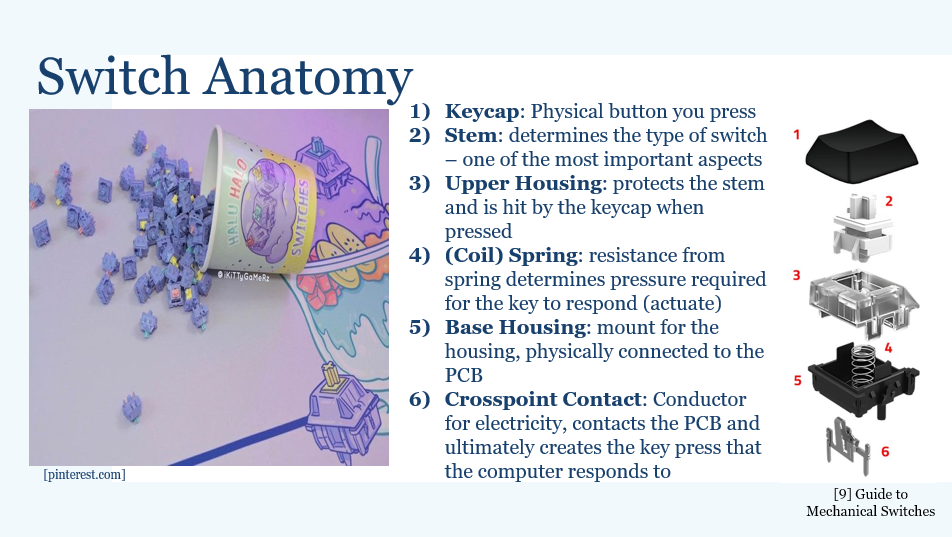
Given how defining the switches are, it is important to discuss their general anatomy as well. The keyboard switches are made of 6 main parts, with small changes that can be made to create a customizable experience.
Most commonly, you’ll see switches in three main categories: linear, tactile, and clicky. The differences between these three are mostly noise levels and the smoothness of the switch. The stem of the switch largely affects this as the switches stem can be made to a certain actuation and travel distance, affecting how much force is needed to complete a key press and how quickly the key press can happen. This not only affects the feeling of smoothness or lack thereof, but is often an important aspect for those in eSports or the gaming community due to the need for lightning fast responses. For this group, linear switches tend to be the most ideal to use.
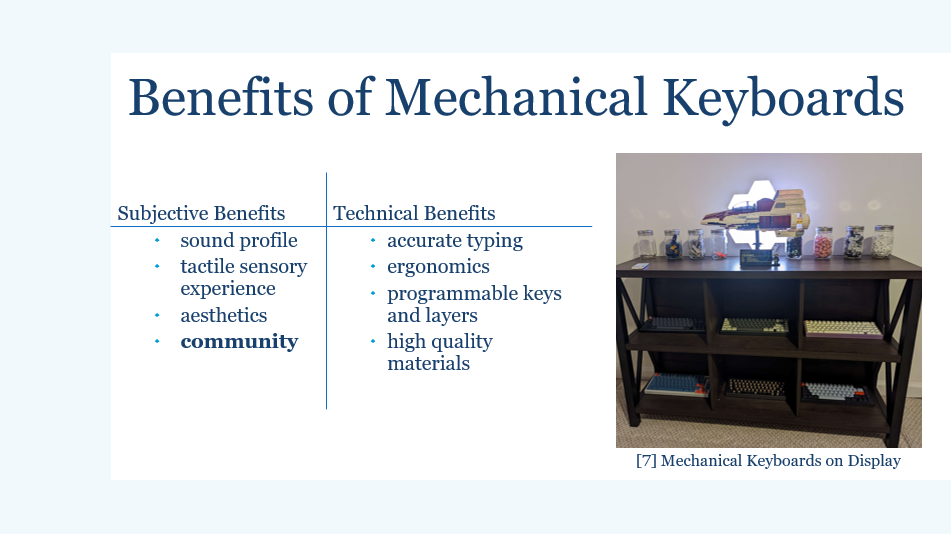
So, why do people want to make or buy these mechanical keyboards? The customization may be nice, but this can be quite the expensive hobby. According to Switch and Click, a popular website and YouTube channel centered on mechanical keyboards), “the average cost comes out to be around $200 – 600 per board,” [5]. And yet, despite how expensive this can be and how silly it may sound to have multiple keyboards, it is quite common for people in this hobby to build multiple anyway. With this in mind, I generally split the reasoning of why into two main categories: subjective and technical.
Slide on the Benefits of Mechanical Keyboards
The community aspect in the mechanical keyboard sphere is unbelievable. With the amount of trial and error that may come with building a personalized keyboard, there are plenty of people that want to help others and share what they have created. In fact, even here at Georgia Tech we have a student-run Mechanical Keyboard Club for people to share their builds and enjoy the hobby together! I have no doubt that the expensive aspect actually brings about more community, as people search for such a wide variety of builds to get an idea of what they enjoy the most in terms of sound and looks before shelling out some Benjamins for their ideal keyboard. The previously mentioned Switch and Click YouTube, as of late April 2023, supports 701K subscribers, which has increased about 15K subscribers since I last checked almost two months ago. The community is huge, and only continues to grow as it reaches more people.
So, how do people typically first find the mechanical keyboard community? The ‘First Contact’ is not necessarily through someone you know showing off their keyboard. In fact, I think one of the most common ways to venture into the hobby is first by seeing Keyboard ASMR. For those that enjoy or who have never heard of it, I encourage you to watch at least a minute of this 1 hour ASMR video from “The Way ASMR” channel – who may be referred to as an ‘ASMRtist’.
Now, as I have promised, we delve into the realm of psychology.
What is ASMR? ASMR stands for Autonomous Sensory Meridian Response. According to Psychology Today, ASMR is “[the] name given to a tingling sensation, typically on the scalp, neck, or back, that some people report feeling in response to certain visual or auditory stimuli,” [3].
For the reader, I have a question. Have you experienced ASMR? I encourage you to submit your answer in the poll below, and see what others have said!
ASMR is a relatively new psychological phenomena, with few peer-reviewed articles on the subject, and even fewer that employ empirical data to analyze. Not to worry, I have dug through all the academic tunnels to find a few for this article. From a psychological perspective, many psychologists and researchers may be curious to answer questions on ASMR, such as: ‘is this a common experience?’, ‘how do we define ASMR?’, ‘who is helped by ASMR content the most?’.
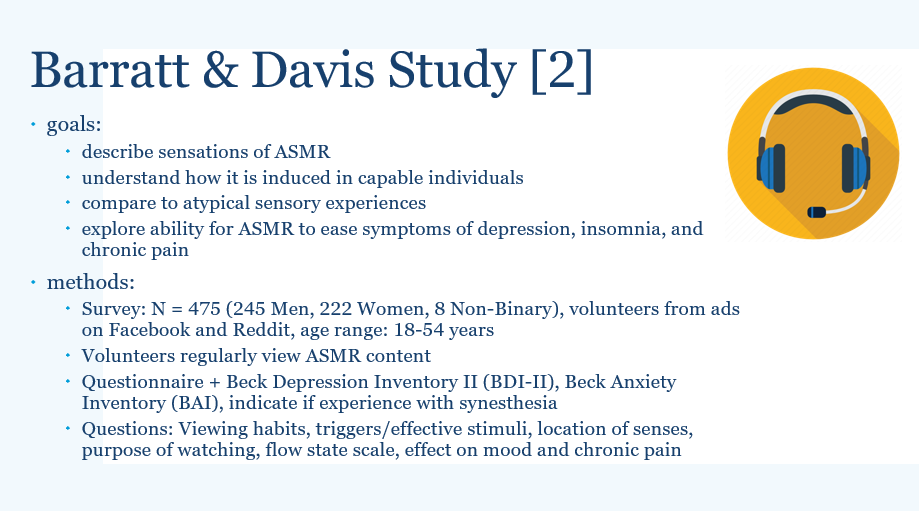
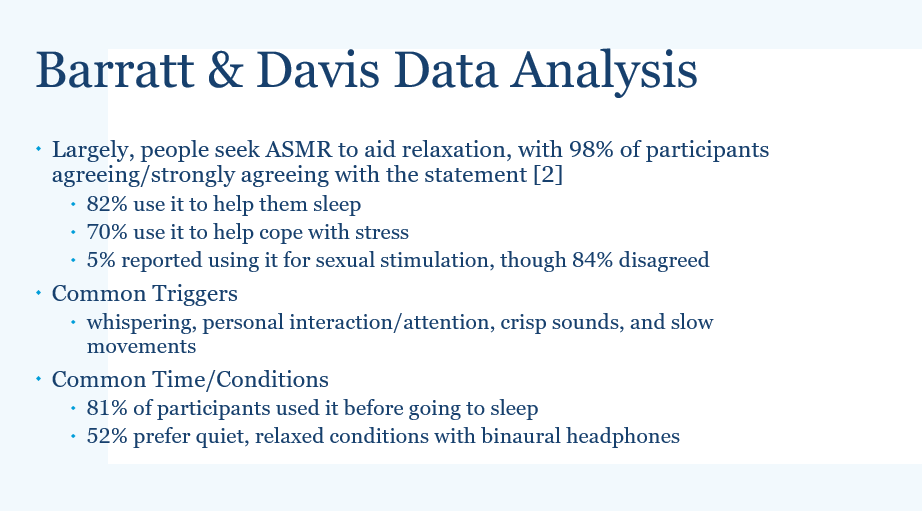
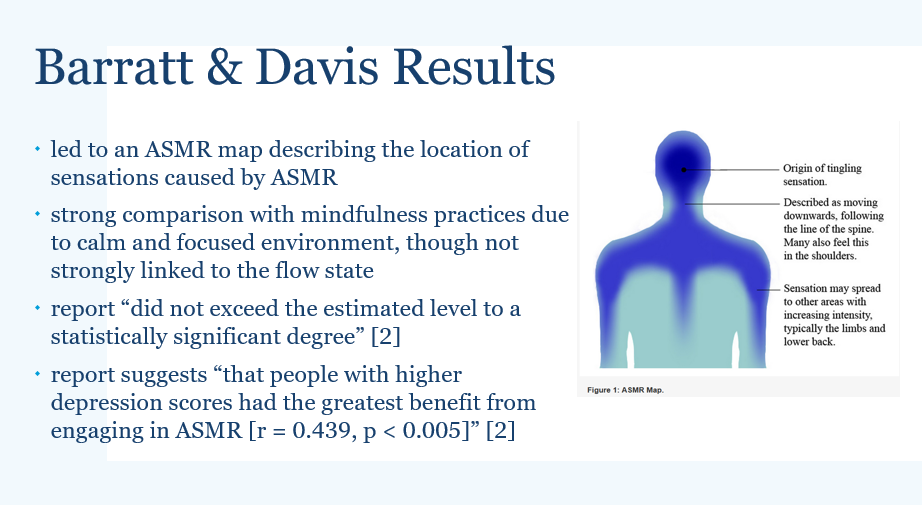
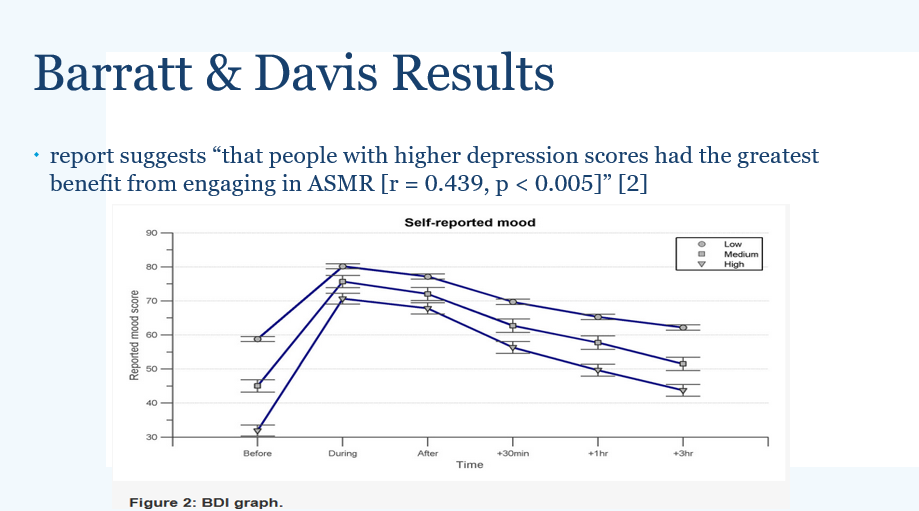
In one article, from authors Dr. Barratt and Dr. Davis, I have outlined their goals and methods on their research of the ASMR experience.
IMPORTANT NOTE: This study discusses ASMR, occasionally in the context of mental health issues such as depression, and chronic illness. The analysis or results of this study is not meant to provide any diagnosis, cure, or medical advice, and is only meant to identify any patterns or gather data on perceived helpfulness from study participants. If you or anyone else you know is struggling with chronic pain or mental health issues, please reach out to licensed professionals for help in coping and health management.
The methods employed in this study aim to yield a mix of both qualitative and quantitative results. Additionally, the study wanted to draw comparisons with other sensory disorders and states such as synesthesia and a ‘flow’ state – which you may have experienced while studying. Small spoiler alert, there wasn’t a strong connection of ASMR with either synesthesia experiences nor the flow state, indicating that ASMR is its own psycho-neurological experience.
Ultimately, ASMR is something comforting and relaxing to watch and listen to for those that experience the sensations associated with ASMR. People enjoying the customization of their keyboard may find satisfaction in their work and the ability to almost create their own ASMR by utilizing the keyboard they have made. Though we understand that ASMR can be as a temporary way to boost mood and relaxation, especially those experiencing depression, more research is needed to fully understand how ASMR works in individuals. Without a significant connection to other known sensory disorders, other than effects of mindfulness, the neural underpinnings of ASMR and the extent of the selection of people that can experience ASMR are still a mystery.
[4] Stephen D. Smith, Beverly Katherine Fredbord & Jennifer Kornelsen (2017). An examination of the default mode network in individuals with autonomous sensory meridian response (ASMR), Social Neuroscience, 12:4, 361-365, DOI: 10.1080/17470919.2016.1188851
[6] The Way ASMR. “Cozy ASMR Typing for 1 HOUR / No Talking / Mechanical Keyboard Sounds / Gateron Red Switches”. Online Video (YouTube). Url: https://www.youtube.com/watch?v=xAVoQx2hUpk
[7] kane#6661. Image from Discord. ‘mechanical keyboard display station example’.
Ten years ago, if you told me that I was going to dye my hair red when I was 21 years old, I would have told you that you were absolutely lying! I would never (according to 11-year-old me). But according to 22 year old me, yes — I absolutely did dye my hair red, and it’s here to stay for the next few years because I absolutely love it!
The first time I dyed my hair, it was in the Fall of 2022. I wanted a big change (for personal reasons I will not delve into), but I wanted to do something I never did before. Something that will make me feel new. It did not come for cheap, however. It was worth it nonetheless. This lovely thing I’m talking about is hair dyeing!!
So, what exactly goes behind hair dyeing? It all boils down to chemistry! The process is different depending on the type of hair dye you get: temporary/semi-permanent, demi-permanent, and permanent. Since I decided to get permanent red hair dye, I will discuss about the permanent hair dye process. Permanent color is what is needed for a more significant hair color change (i.e. from black to red or blond).
Your natural hair color depends on the quantities and ratios of 2 main proteins: phaeomelanin and eumelanin. Eumelanin causes hair to be brown or black while phaeomelanin causes hair to be blond and red shades. My hair is jet black, so that means my hair is mostly composed of eumelanin.
My natural hair color –> jet black.
Both ammonia and hydrogen peroxide are used. Ammonia and peroxide act to lighten the hair’s natural color to form a new base color that will allow the permanent hair dye to stay.
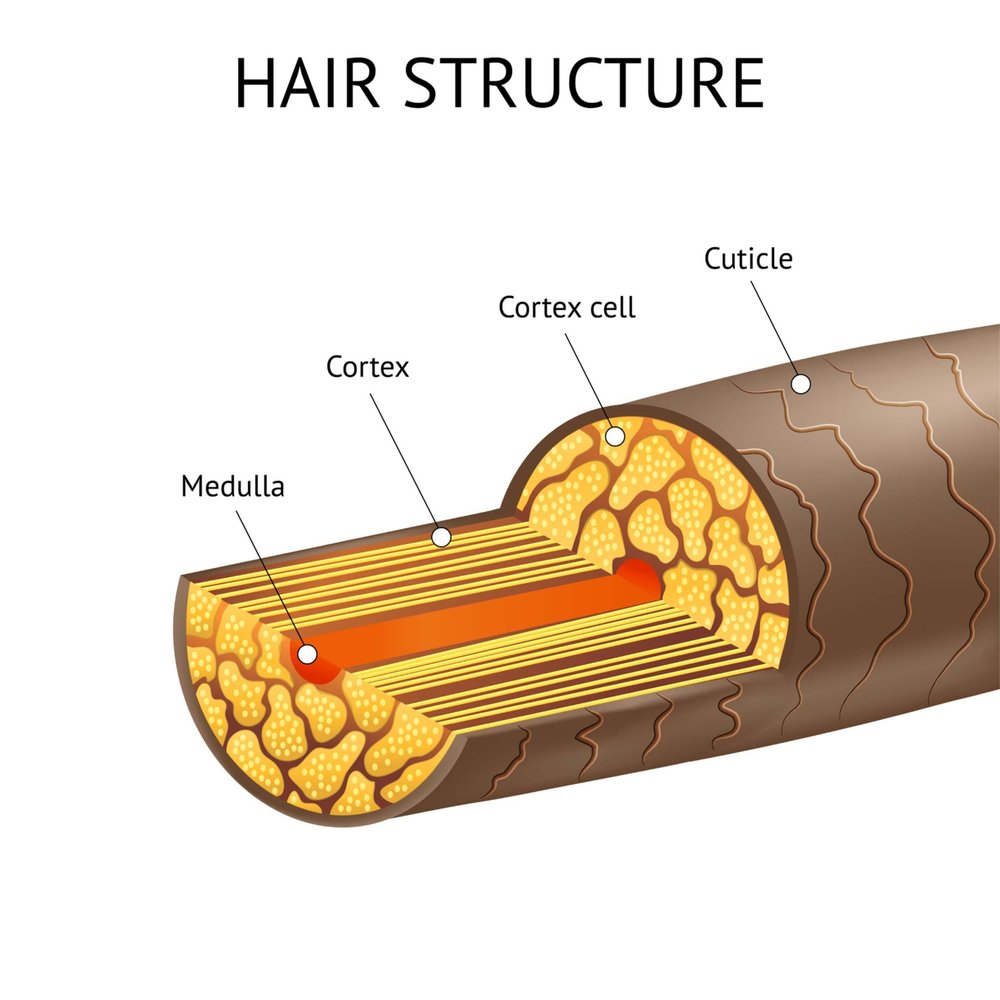
The cuticle, or outer layer, or the hair strand must be opened before permanent hair color can be applied into the hair. Once the cuticle is open, the dye reacts with the cortex of the hair to deposit or remove color. The cortex is the part of the hair that is the middle layer of the hair shaft which provides the strength, color and texture of a hair strand. There is usually a two-step process for permanent hair coloring: first to remove the original color of the hair, and then the second to apply a new color.
The anatomy of a hair strand.
The alkaline chemical of ammonia is used to open the cuticle to allow the hair color to enter the cortex of the hair. Additionally, it is a catalyst when the permanent hair color combines with the peroxide. Hydrogen peroxide is used as an oxidizing agent, or a developer to remove pre-existing color (it removes the melanin in the hair). Peroxide breaks chemical bonds in the hair, which releases sulfur. This is why there is such a strong odor when dying hair. As the melanin is removed from the hair, the new permanent color is bonded to the cortex of the hair.
The result of hydrogen peroxide on my hair (to lighten it)!
And voila! The hair dresser then washes your hair and styles it. I opted for a haircut and a blowout hairstyle. Shoutout to my talented hairdresser Christi at Cherry Blossom Salon!
Finished product!! I’m still so in love
Have you ever wondered what dyed hair vs non-dyed hair looks like under a microscope?
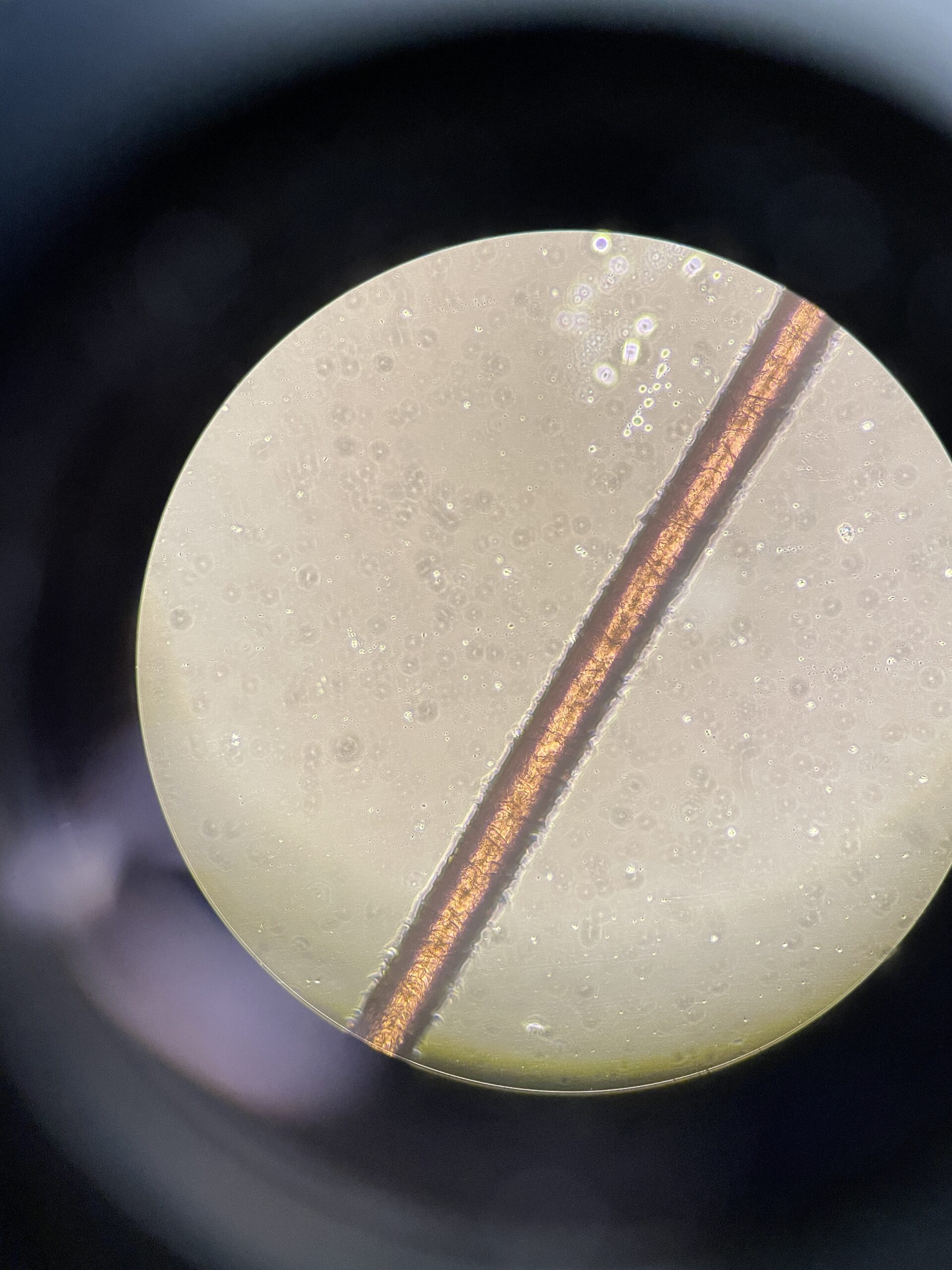
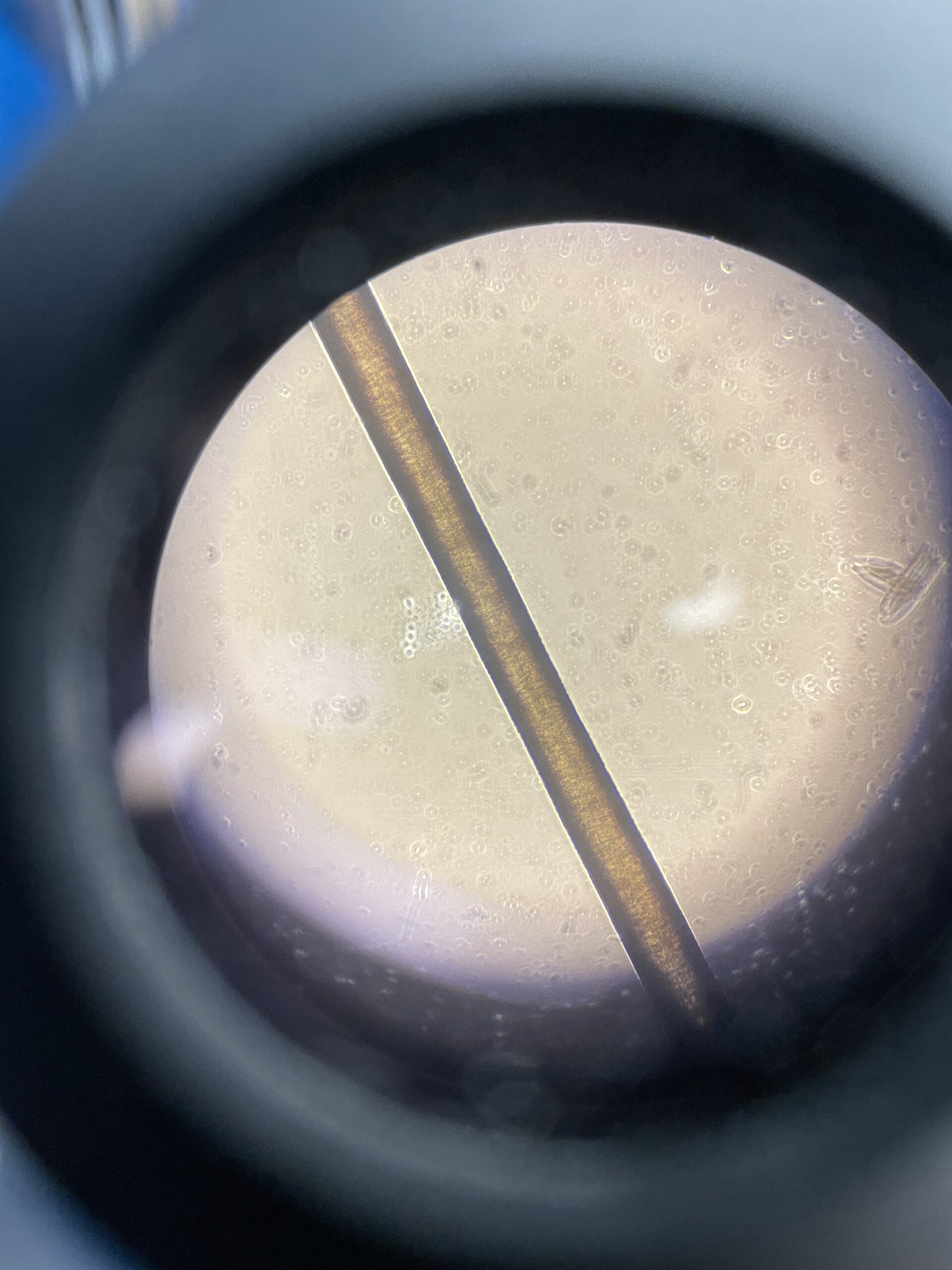
Well look no further! With the help of Dr. Leavey, a classmate and I were able to look under the microscope of the molecules of our hair. The picture on the left is mine (red dyed hair) and the one on the right is my peer Claire’s hair (undyed black hair). As you can see, my hair cuticle and cortex are much more jagged and rough, compared to Claire’s smooth strand. This is a result of the chemical reactions that occurred to my hair – the ammonia and peroxide chemically and physically damaged my hair to allow the red color to deposit into my strands.
My red dyed hair.Claire’s undyed black hair.
What is wild is that my dyed hair is essentially permanently damaged. I will have to grow out my original black hair if I want to revert back to my undamaged hair. For now, I think I will stick with damaged dyed hair! 🙂
Sources:
Anne Marie Helmenstine, P. D. (2019, July 14). The science behind how hair coloring works. ThoughtCo. Retrieved April 26, 2023, from https://www.thoughtco.com/salon-hair-color-chemistry-602183
Brain, M. (2023, March 8). How hair coloring works. HowStuffWorks Science. Retrieved April 26, 2023, from https://science.howstuffworks.com/innovation/everyday-innovations/hair-coloring3.htm
Okay, okay, let me be clear: I’m not talking about the delicious, versatile, edible, literal potato. I’m talking about the metaphorical potato – which is a term sometimes used to describe low-end computer hardware.
Now why, you may ask, should you learn computer science on dingy, old, slow, and underpowered hardware? Shouldn’t you strive for the most powerful piece of silicon you can get your grubby little fingers on? See, I beg to differ – I personally think that being limited by your hardware can make you a better programmer.
So what’s led me to this observation? The answer is CS 2261 at Georgia Tech. CS 2261, officially titled “Media Device Architecture”, is a course essentially dedicated to learning about the intricacies and programming games for the Game Boy Advance (GBA). The GBA is, affectionately speaking, a potato. It wasn’t particularly powerful when it released in 2001, and over two decades of technological advancements since then have not done it any favors. That’s not to say the GBA is bad hardware by any means – it was remarkable when it was released, balancing good performancem, low cost, and excellent battery life. However, the single-core ARM7TDMI clocked at 16.78 MHz is ancient by today’s standards.
Programming games for the GBA, however, has made me an immensely better programmer. Working around the limitations of the old clunky machine (via an emulator) has taught me a lot about making code more optimized and efficient. When you’re working with hardware that stutters and chugs when you draw one extra rectangle, you really start to pay attention to just how inefficient code can be.
I feel that as hardware gets faster and faster, software developers tend to care less and less about making code refined. Especially in the age of iterative development and Agile, it seems that more and more emphasis is being placed on just getting working code out into production and implementing as many features as a team can cobble together. It’s not such a big deal, as the hardware is powerful enough to make inefficiencies unnoticeable.
I think this way of thinking is born from an unfortunate combination of human laziness (I certainly am) and industry expectations. The innate human desire to seek out the shortest path to completion and the industry’s insatiable thirst for more and more features combines and compounds to create absolute monstrosities. However, I fear that this way of doing things is unsustainable.
At the end of the day, computers are magical little boxes that uses electricity to turn inputs into outputs. However, we live in an age where humanity heavily relies on computation, and in an age where energy usage is becoming an increasing concern. One line of poorly optimized code might be insignificant, but an overall bloated software base probably contributes to a whole lot of energy waste.
Not to mention, making games for an iconic console is pretty cool too.
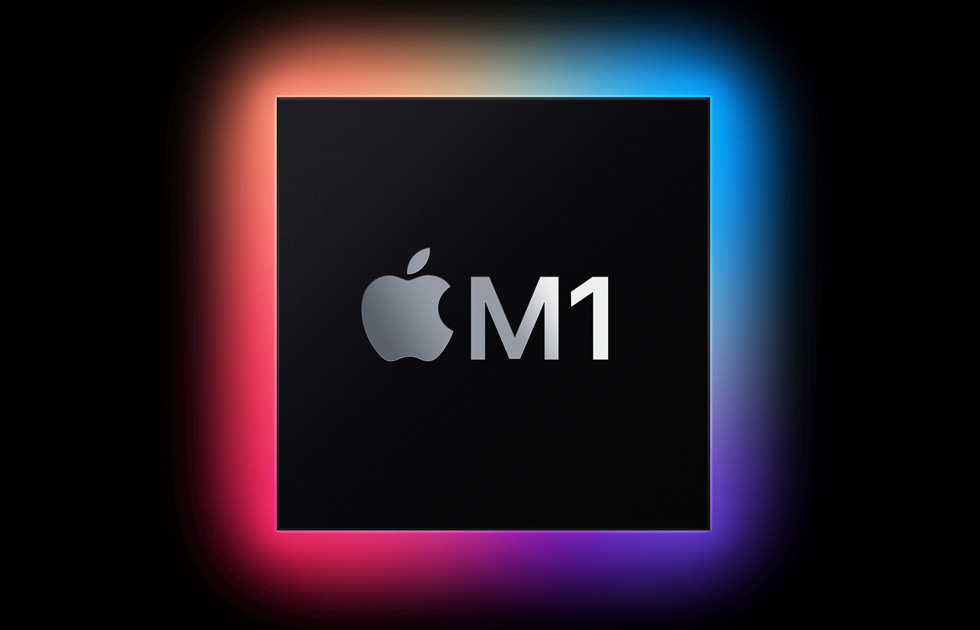
The M1 chip, a custom-designed system-on-a-chip (SoC) for Mac computers, was introduced by Apple in late 2020. This chip is based on Arm architecture and uses a 5-nanometer (very small) manufacturing process, which enables a high density of transistors on the chip, resulting in high performance and low power consumption. ARM architecture is a type of instruction set architecture (ISA) that is designed for energy efficiency. It is used in a wide variety of devices, including smartphones, tablets, and laptops. The M1 chip uses ARM architecture, which is one of the reasons why it is so energy efficient. ARM architecture is a reduced instruction set computing (RISC) architecture. This means that it uses a smaller number of instructions than other types of ISAs, such as x86. This makes ARM architecture more efficient, because it takes less time to decode and execute instructions.
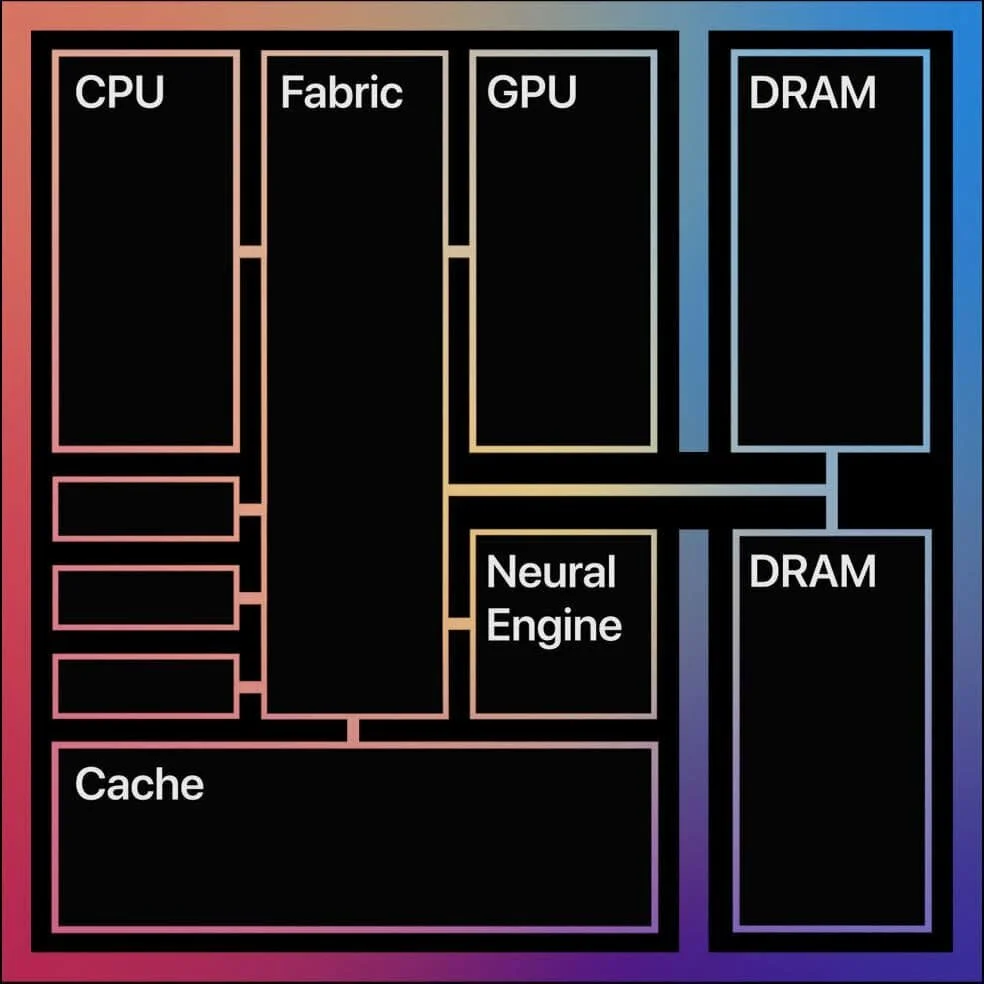
One of the most notable features of the M1 chip is its eight-core CPU, which comprises four high-performance cores and four high-efficiency cores. The high-performance cores operate at a higher clock speed and deliver significant computing power for demanding tasks such as video rendering and gaming. The high-efficiency cores consume less power and handle lighter workloads, such as browsing the web and checking emails. This architecture results in a balanced approach to power and performance.
The M1 chip also provides powerful graphics processing capabilities for demanding applications such as 3D rendering and video editing. The GPU enables a seamless experience for users to render high-quality content and play graphically intensive games. Additionally, the M1 chip integrates a Neural Engine that is capable of delivering up to 11 trillion operations per second, enabling the chip to perform machine learning tasks with ease.
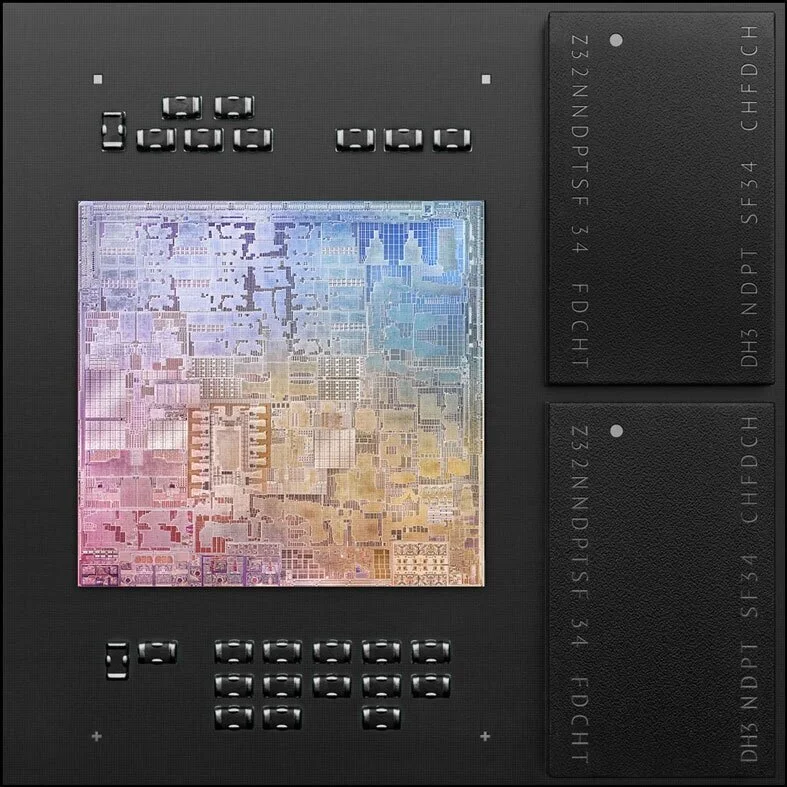
Another feature of the M1 chip is its unified memory architecture. This design allows the CPU, GPU, and other components to share a single pool of memory, enabling faster data transfer and improved performance. This architecture also allows for a more efficient allocation of memory resources and a better utilization of system memory.
Overall, the M1 chip is up to 3.5 times faster than the previous generation of Intel CPUs and is incredibly energy efficient, which allows Macs with the M1 chip to have up to 20 hours of battery life. The M1 chip’s design and implementation have been lauded for its energy efficiency, performance, and integration of key components onto a single chip. The M1 chip has reinvigorated the Mac line, delivering higher performance, longer battery life, and more efficient use of system resources.
Ada Lovelace is widely recognized as the world’s first computer programmer. Her life and work paved the way for the development of modern computing, and her legacy is still celebrated today. Ada Lovelace was a brilliant mathematician and writer born in London, England in 1815, and was the only legitimate child of the poet Lord Byron and his wife Anne Isabella Milbanke.
Lovelace’s mother was determined to raise her daughter to be a well-educated woman, and she hired some of the best tutors in London to teach her mathematics, science, and languages. Ada’s mother, who was concerned about her daughter’s potential to inherit her father’s poetic temperament, emphasized mathematics and science in her education. Despite the fact Ada’s early education in math and science was unusual for a young woman in the early 19th century, Lovelace was incredibly intelligent and she soon surpassed her teachers in her knowledge of mathematics. by age 17, she had become fascinated with Charles Babbage’s work on his Analytical Engine, a machine designed to perform complex calculations.
In 1833, Ada Lovelace met Charles Babbage, a mathematician and inventor, at a party. Babbage had designed the Difference Engine, a machine capable of computing mathematical tables, and was working on his Analytical Engine, a more complex machine capable of performing various calculations.
Ada’s helped him with the design of the Analytical Engine. She wrote an article on the machine in English, adding extensive notes on how the machine could be programmed to perform complex calculations beyond mathematical tables. These notes, which came to be known as “Sketch of the Analytical Engine,” contained what is now considered the first algorithm intended to be processed by a machine. Ada recognized that the machine’s potential was not just limited to mathematical calculations but could be used for any process that could be represented by symbols and numbers.
Lovelace died in 1852 at the young age of 36 from uterine cancer. However, her work on the Analytical Engine had a profound impact on the development of computer science. She is considered to be one of the most important figures in the history of computing, and her legacy continues to inspire women and girls around the world.
Ada Lovelace was a visionary woman who left a lasting mark on the field of computing. Her work on the Analytical Engine and her ideas on computing and programming were far ahead of their time, and she is now recognized as the world’s first computer programmer. Ada Lovelace’s life and legacy continue to inspire people to pursue their passions and push the boundaries of knowledge and innovation.
Works Cited
“Ada Lovelace.” Ada Lovelace and the Babbage Engine, Computer History Museum, 2023, https://www.computerhistory.org/babbage/adalovelace/.
I admit it. I am SUPER ticklish. The slightest touch from both man and machine alike will have me squirming and giggling like a child. However, I am immune to the touch of one particular entity – myself. See, I’ve never been able to tickle myself. Trust me, I’ve tried (I had way too much free time as a kid.)
Tickling is often described as an uncontrollable reflex response that occurs when a sensitive area of the body is stimulated in a certain way. This response is thought to be related to the fact that tickling is often associated with social interaction, and is therefore more likely to occur when someone else is tickling us.
It is important to distinguish that there are two types of tickling:
Gargalesis, which is tickling that causes laughter when areas of the body are touched, and
Knismesis, which is tickling caused by light motion on the skin, which usually just feels like an itch.
The kind of tickling I’m talking about today is Gargalesis, which is what we usually think of when we think of tickling. Knismesis can actually be self-induced! To experience it, try to touch your skin suuuper lightly. (I also did this as a kid. I had WAYYY too much free time.)
When we try to tickle ourselves, we are essentially anticipating the sensation that we are about to feel. This anticipation of the sensation reduces the tickling response, making it less intense or completely absent. The brain is able to predict the sensation and to some extent, suppresses the ticklish feeling that we would normally experience when someone else tickles us.
Additionally, when we try to tickle ourselves, we are able to predict the timing and location of the tickling stimulus. This makes the sensation less unpredictable, and thus, less ticklish. On the other hand, when someone else tickles us, we are unable to predict the timing or location of the tickling, making it more unpredictable and therefore, more ticklish.
So, in summary, we can’t tickle ourselves as effectively because our brain is able to anticipate the tickling sensation and suppress the tickling response, making it less intense or completely absent.






![Here’s why you should learn to code on a potato [Rant]](https://2026fat.chargedmag.org/wp-content/uploads/2023/04/Screenshot-2023-04-25-at-12.06.48-AM.png)