Category: Articles

  • CAPTCHA: Are You A Robot?

    CAPTCHA: Are You A Robot?

    When you interact with a website—whether you are creating an account, posting a comment, or making a purchase—you might be prompted to confirm that you are not a robot. This seemingly simple request, often in the form of a CAPTCHA challenge, plays a vital role in safeguarding online systems from malicious activity. While it may seem like a minor inconvenience, CAPTCHA serves as an essential gatekeeper, ensuring that human users can engage with digital platforms while keeping automated bots at bay.

    What is CAPTCHA?

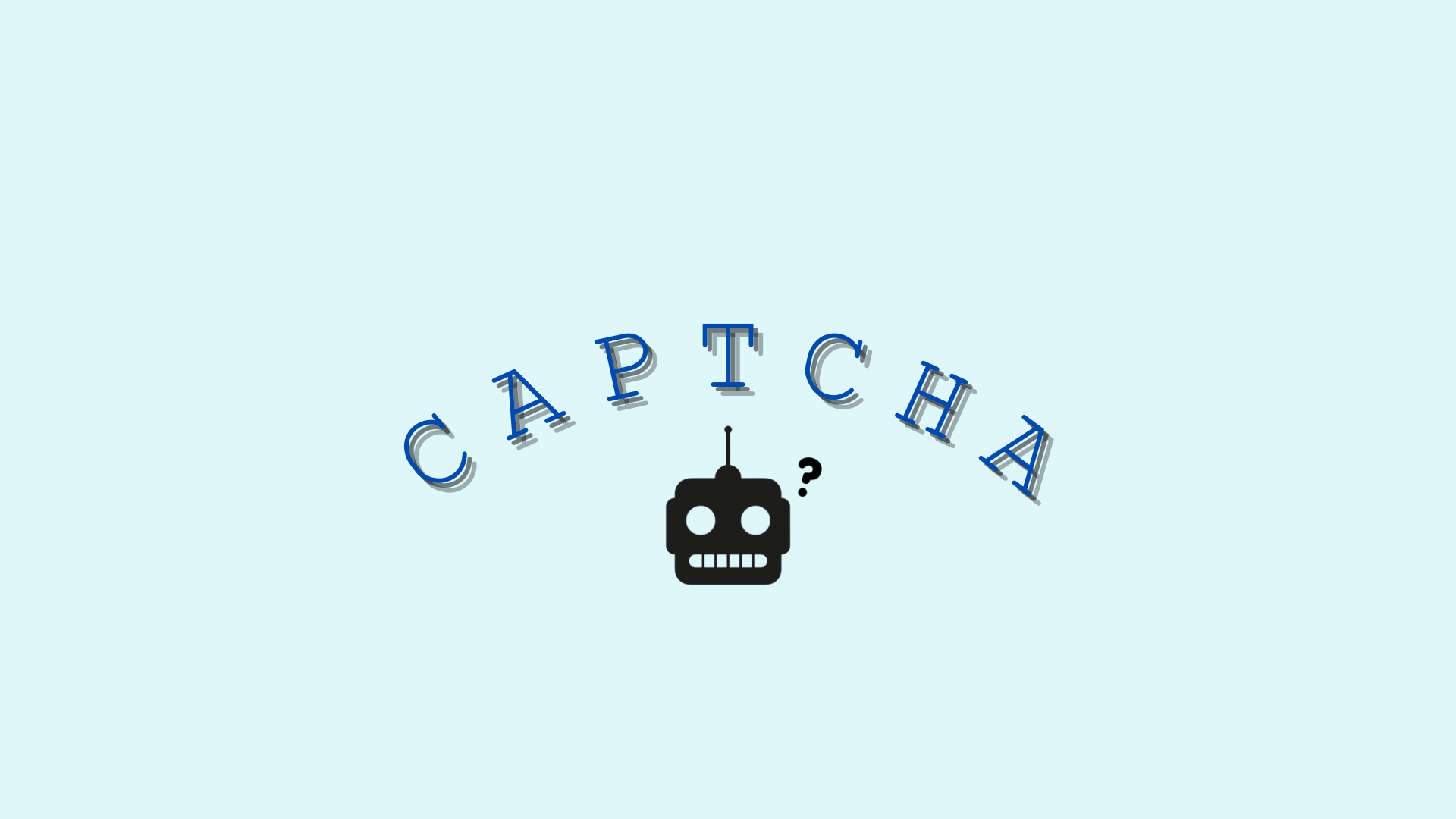
    CAPTCHA, which stands for “Completely Automated Public Turing test to tell Computers and Humans Apart,” is a challenge-response test designed to distinguish human users from automated bots. It has become a ubiquitous feature of the online experience, particularly in areas where data protection or restricted access is necessary. These tests are crafted to be simple for humans to solve but challenging for bots or automated software.

    The most common form of CAPTCHA involves recognizing distorted text, identifying images, or selecting specific objects in a grid—such as traffic lights or street signs. However, CAPTCHA has evolved significantly over the years. For instance, Google’s reCAPTCHA has become more sophisticated, often requiring users to simply click a box that confirms “I am not a robot.” In some cases, this can be the only interaction needed, or the process might be completely invisible to the user.

    Why CAPTCHA is Crucial for Cybersecurity

    CAPTCHA plays an essential role in cybersecurity by preventing bots from exploiting online systems. Automated bots, often deployed by malicious actors, can be used to conduct harmful activities like credential stuffing attacks, where bots use stolen sets of login information to try and gain unauthorized access to user accounts. Bots are also used in web scraping to gather and steal data from websites in bulk, violating privacy and security protocols. Furthermore, bots can flood platforms with spam—whether on forums, email inboxes, or social media—leading to an overwhelming and often harmful volume of unwanted content. In more severe instances, bots may even participate in Distributed Denial of Service (DDoS) attacks, flooding websites with traffic and causing service disruptions.

    By blocking automated access, CAPTCHA helps to protect not just user privacy but the integrity of digital platforms. It ensures that interactions are carried out by humans, not bots, reducing the risk of fraud, data theft, and system failure. By serving as a gatekeeper, CAPTCHA minimizes the chances of automated threats causing harm to critical digital infrastructure, thus safeguarding both users and organizations from malicious activity.

    How CAPTCHA Works

    CAPTCHA systems are built around tasks that are simple for humans to perform but difficult for bots to replicate. One common method is text recognition, where users are asked to identify distorted or skewed letters and numbers. These distortions make it challenging for computer algorithms to interpret, making it an effective tool to differentiate between human and bot activity. Another popular approach is image identification, in which users select images containing specific objects like traffic lights or street signs. This leverages humans’ superior ability to recognize objects in images, especially when they are blurry or unclear—a task that bots often struggle to perform.

    In addition to text and image-based challenges, modern CAPTCHA systems also employ behavioral analysis to assess whether a user is human. For example, Google’s reCAPTCHA tracks a user’s mouse movements and click patterns to detect subtle differences between human and automated behavior. Another growing trend is invisible CAPTCHA, which requires no direct interaction. Instead, it analyzes behavioral patterns—such as the user’s browsing history or IP address—to determine whether the request originates from a human or a bot. These increasingly sophisticated methods help CAPTCHA remain effective in preventing automated attacks while minimizing user inconvenience.

    The Challenge of AI and the Future of CAPTCHA

    As artificial intelligence (AI) and machine learning (ML) technologies advance, they pose significant challenges to traditional CAPTCHA systems. AI-powered bots, utilizing technologies like Optical Character Recognition (OCR) and deep learning, are now capable of bypassing conventional CAPTCHA tests, such as distorted text and image recognition. These bots can learn from previous CAPTCHA attempts, adapting to overcome newer challenges, making them harder to block.

    To stay ahead, CAPTCHA systems will need to evolve. One potential solution is adaptive CAPTCHA, where the difficulty of challenges increases based on user behavior or the sophistication of the bot attempting to bypass it. Behavioral biometrics, such as typing speed or voice recognition, could also be incorporated to enhance security. Moreover, AI-powered CAPTCHA systems might evolve in real time, dynamically adjusting challenges to keep pace with increasingly advanced bots. Another potential solution is combining CAPTCHA with multi-factor authentication (MFA), which would create a layered defense against bots. Additionally, new AI-driven alternatives—such as natural language processing or gesture-based inputs—could offer a more secure and user-friendly experience in an AI-dominated world.


    The next time you encounter a CAPTCHA challenge, remember that it is more than just a small hurdle—it is there to help protect your data and your online experience. As AI continues to evolve, CAPTCHA systems will need to adapt in order to maintain security. So, when you are asked to prove you are not a robot, you are helping safeguard the broader digital ecosystem and ensuring that online spaces remain secure for all users.

    Sources: 

    • https://www.cloudflare.com/learning/bots/how-captchas-work/
    • https://www.ibm.com/topics/captcha
    • https://www.fastcompany.com/91167056/ai-changing-future-captcha
    • https://www.techradar.com/pro/this-ai-tool-can-solve-googles-popular-anti-spam-defense-every-time-captcha-system-could-soon-become-obsolete
    • https://www.technologyreview.com/2023/10/24/1081139/captchas-ai-websites-computing/
    • https://www.google.com/recaptcha/about/

  • Malware Monikers: Cyber Threats with Intriguing Names

    Malware Monikers: Cyber Threats with Intriguing Names

    The names of malware frequently resemble whimsical nicknames or the titles of obscure indie bands rather than serious threats to global cybersecurity. However, beneath these seemingly playful monikers lie intriguing stories, unexpected coincidences, and, at times, a subtle sense of humor. In the following exploration, we will examine the histories behind some of the most unusual and memorable malware names. The histories behind some of the most unusual and memorable malware names reveal intriguing stories and unexpected connections.

    ILOVEYOU

    Meaning: Named after the subject line of the phishing emails it used to spread.

    In 2000, the ILOVEYOU worm swept across the globe, targeting millions of computers with a deceptively innocent email subject: “I LOVE YOU.” Victims, tempted by curiosity or affection, opened the attached “love letter” file, unknowingly unleashing a worm that overwrote files and spread itself through the victim’s contact list. The irony was stark—there was no love, only destruction.

    Zeus

    Meaning: A nod to the malware’s godlike capabilities, akin to the king of the gods.

    Zeus is a banking Trojan designed to steal sensitive information, such as banking credentials. First detected in 2007, its formidable power lay in its ability to execute man-in-the-browser attacks while remaining stealthy. Over time, Zeus evolved into a prolific malware family, spawning numerous variants and maintaining its reign as a dominant force in the cybercriminal underworld.

    Oompa-Loompa

    Meaning: A reference to the helpers in Willy Wonka & the Chocolate Factory.

    This Trojan targeted Apple’s iChat in 2006, exploiting the victim’s trust to spread itself. It sent fake messages to contacts, urging them to open an image file. The name likely drew inspiration from the Oompa-Loompas—mischievous workers who spread through the factory in a somewhat chaotic, factory-worker fashion, much like how this malware spread through iChat.

    Snow White

    Meaning: Inspired by the fairy tale, but with a sinister twist.

    The Snow White malware, active in the late 1990s, is believed to have been part of a spam campaign promoting illegal activities. It disguised itself as harmless files with attractive names, luring victims into opening them. The name seems to be a sly reference to the poisoned apple from the fairy tale, tempting users into danger.

    Koobface

    Meaning: An anagram of Facebook.

    The Koobface worm, which emerged around 2008, targeted social media platforms like Facebook and MySpace. It tricked users into clicking malicious links, spreading primarily through social connections. The name, an anagram of “Facebook,” reflected its targeted platform while giving the malware an air of playful menace.

    Michaelangelo

    Meaning: Named after the famous Renaissance artist, due to its activation date.

    Michaelangelo was a DOS-based virus that activated on March 6, the birthday of the famous artist Michelangelo Buonarroti. Discovered in 1991, the virus was feared to have catastrophic potential, though the actual damage it caused was relatively minimal. The virus’s artistic name, paired with its destructive nature, gave it a peculiar charm, blending creativity with chaos.

    Sadmind

    Meaning: Likely a reference to the melancholy nature of its payload.

    The Sadmind worm exploited vulnerabilities in Sun Microsystems’ Solaris and Microsoft IIS servers in the early 2000s. Its rapid spread and politically motivated cyberattacks made it notorious. The name, evoking a sense of sadness and melancholy, mirrored the worm’s somber impact on its victims.

    Father Christmas

    Meaning: A holiday-themed malware with a deceptive name.

    Father Christmas emerged during the holiday season, spreading disguised as festive greeting messages. Its cheerful name masked a malicious payload, highlighting the contrast between the holiday spirit of giving and the malicious nature of cybercrime. This malware was a stark reminder of the unexpected threats that can emerge during the season of goodwill.

    BugBear

    Meaning: Named after a folkloric creature, symbolizing the malware’s disruptive nature.

    BugBear, first detected in 2002, was a worm that targeted businesses by infecting networks and keylogging sensitive information. Its name, drawn from the mythical “bugbear” creature, underscored its nuisance-like nature. Much like a mischievous creature lurking in the shadows, BugBear sneaked into systems to cause disruption.

    WannaCry

    Meaning: Capturing the emotional reaction of its victims.

    The WannaCry ransomware attack of 2017 lived up to its name by spreading chaos and locking users out of their data. By encrypting files and demanding Bitcoin ransom, it took advantage of a leaked NSA exploit. The name encapsulated the despair of its victims, as millions of people and organizations “cried” over lost files and the demands for payment, making WannaCry one of the most infamous malware incidents in history.

    Why the Weird Names?

    Malware names often reflect their creators’ creativity, dark humor, or attempts to mislead. These names can also serve as a way for cybersecurity researchers to identify and discuss threats using memorable, distinct terms. 

    The next time you encounter a malware attack, take a moment to appreciate the strange, often ironic stories behind its name. But remember—while the names may amuse, the threats are very real, so do not let your guard down!


    Sources: 

    • https://usa.kaspersky.com/blog/cybersecurity-history-iloveyou/26869/?srsltid=AfmBOoq28y26yBC4Sdjq81ZmdhbpCbC882C1Z_RfLh_K74J0rZcV5AWj
    • https://www.crowdstrike.com/en-us/cybersecurity-101/malware/zeus-malware/?srsltid=AfmBOorNsDbmnj3X1AYoaNl-RNsSGdXNKgBIwGjliskfEI9SSaQsR0ja
    • https://www.macworld.com/article/178862/leapafaq-2.html
    • https://computer.howstuffworks.com/worst-computer-viruses.htm
    • https://www.theregister.com/2001/01/10/vandals_behind_spread_of_hybris/
    • https://www.f-secure.com/v-descs/hybris.shtml
    • https://www.netsurion.com/articles/malwares-crazy-names-where-do-they-come-from#:~:text=There’s%20Heartbleed%2C%20Melissa%2C%20and%20GooLoad,(more%20on%20this%20later).
    • https://ntrs.nasa.gov/citations/19920019024
    • https://www.kaspersky.com/resource-center/definitions/what-is-the-koobface-virus
    • https://cybernews.com/editorial/the-first-malware-scare-turns-30-the-michelangelo-virus/
    • https://www.f-secure.com/v-descs/sadmind.shtml
    • https://usa.kaspersky.com/resource-center/threats/ransomware-wannacry?srsltid=AfmBOooUn0q3Y2o65HqeVIvCmK65UAQlBbuPrDadpa903DBdMs62nizT
  • Lesser-Known Cybersecurity Threats: SEO Poisoning, Spamdexing, and AI Keystroke Capture

    Lesser-Known Cybersecurity Threats: SEO Poisoning, Spamdexing, and AI Keystroke Capture

    In an era where technology evolves at an unprecedented pace, the digital landscape has become a battleground for both innovation and malicious activities. Cybercriminals are increasingly exploiting sophisticated techniques, such as SEO poisoning and spamdexing, to manipulate online information. Meanwhile, the rise of artificial intelligence has introduced novel threats, including the alarming possibility of AI-driven eavesdropping through keyboard sounds. As these developments unfold, it becomes crucial to examine their implications for both cybersecurity and society at large.

    SEO Poisoning: Manipulating Search Results for Malicious Gain

    Search Engine Optimization (SEO) is a legitimate practice that businesses use to improve their online visibility. However, cybercriminals have turned SEO into a tool for exploitation through a technique known as SEO poisoning. By manipulating search algorithms, attackers can ensure that malicious websites rank highly for popular queries. Unsuspecting users who click on these links are often redirected to phishing sites, exposed to malware, or tricked into revealing sensitive information.

    To achieve this, attackers employ a variety of deceptive techniques. One such method is keyword stuffing, where webpages are overloaded with excessive, often irrelevant keywords in an effort to manipulate search rankings. These keywords may be hidden within the website’s code or placed in locations that are invisible to users but detectable by search engine crawlers. This misrepresentation leads search engines to falsely prioritize the malicious site. 

    Another common tactic is the use of link farms—networks of websites that artificially inflate a page’s number of backlinks. Since search engines consider the number of backlinks as an indicator of credibility, attackers exploit this by creating multiple low-quality websites that link back to the malicious page, boosting its rank.

    Cloaking, a third technique, involves serving different content to search engine crawlers and human visitors. Attackers display benign content to search engines to gain a high ranking, while delivering malicious material to unsuspecting users. This discrepancy allows attackers to bypass algorithms designed to detect harmful content.

    In some cases, cybercriminals also compromise legitimate websites to host malicious content or create fake sites that mimic trusted sources. The ultimate goal is to exploit the trust users place in high-ranking search results, luring them into dangerous traps.

    To mitigate these risks, it is essential to educate users about the dangers of clicking on unfamiliar links. Additionally, search engines like Google and Bing continually update their algorithms to identify and demote malicious sites. Installing reputable antivirus and anti-malware programs can also provide an added layer of protection.

    Spamdexing: The Art of Deceptive Indexing

    Closely related to SEO poisoning, spamdexing refers to the manipulation of search engine indexes through unethical means. Like SEO poisoning, the goal is to artificially inflate a website’s ranking, often directing users to irrelevant or harmful content.

    Techniques commonly used in spamdexing include keyword stuffing, as well as the insertion of hidden text and links that are invisible to users but readable by search engines. Another tactic is the creation of doorway pages, which are optimized for specific keywords but ultimately redirect users to a different website entirely.

    Combating spamdexing requires search engines to deploy sophisticated algorithms capable of detecting and penalizing such deceptive practices. Webmasters—the individuals responsible for maintaining websites—are encouraged to adhere to ethical SEO guidelines to preserve the integrity of search results. By following best practices, webmasters contribute to a healthier, more reliable internet ecosystem, ensuring users can find trustworthy and relevant information.

    AI Eavesdropping Through Keyboard Sounds: A New Espionage Frontier

    Recent advancements in artificial intelligence have led to the development of algorithms capable of deciphering keystrokes based solely on the sounds produced while typing. By analyzing the acoustic patterns created when a person types on a keyboard, AI systems can potentially reconstruct the exact text being entered. This poses significant privacy and security risks, as sensitive information could be intercepted without the user’s knowledge.

    Researchers have trained machine learning models to recognize the unique sound profiles of individual keys on a keyboard. Using microphones embedded in smartphones, laptops, or even through VoIP calls, attackers can capture these sounds and translate them into readable text with remarkable accuracy.

    The implications of this technology are profound. Passwords, personal messages, and other sensitive information could be compromised, making it a serious threat to user privacy. To counter this, users can take precautionary measures, such as using software to generate ambient noise, typing on virtual keyboards, or adopting biometric authentication methods to reduce the risk of eavesdropping.

    Sources: 

  • Cybersecurity Firsts: A Timeline

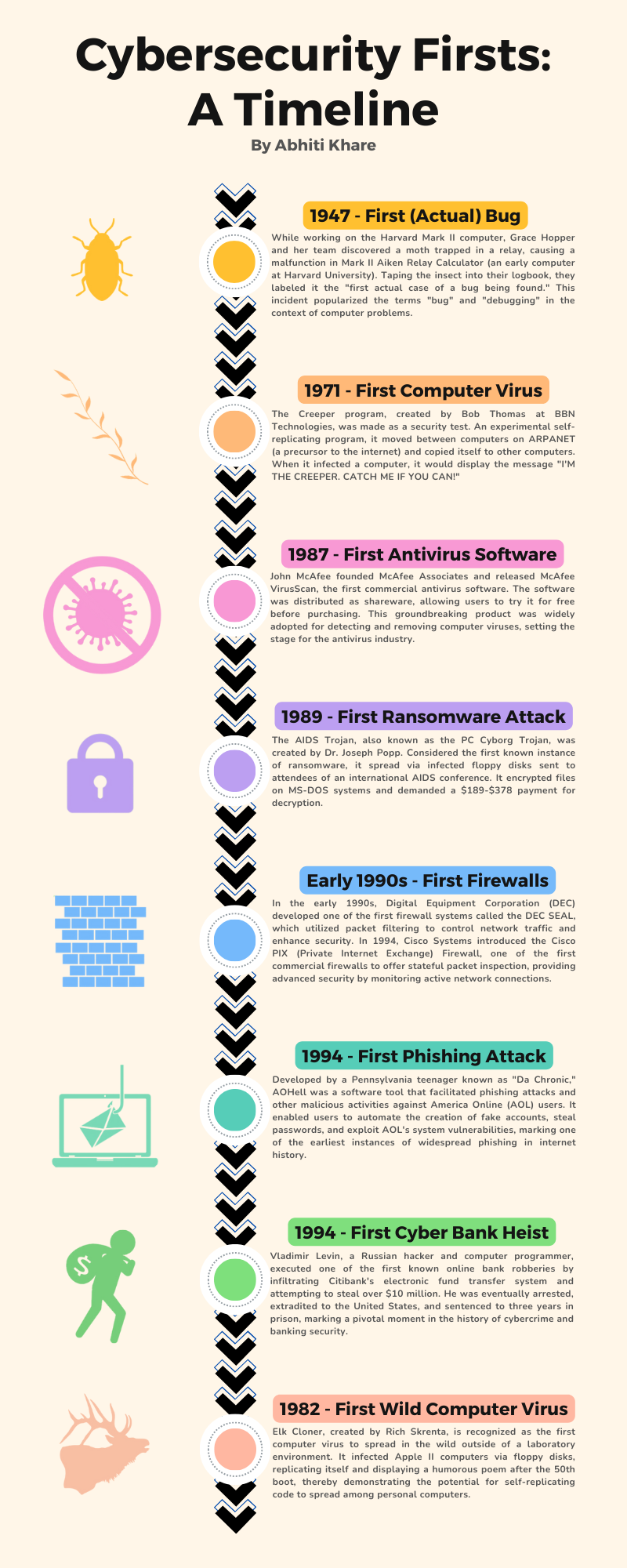
    Cybersecurity Firsts: A Timeline

    Sources:

    • https://education.nationalgeographic.org/resource/worlds-first-computer-bug/
    • https://ui.adsabs.harvard.edu/abs/2020arXiv200715759L/abstract
    • https://www.cybersecurityeducationguides.org/john-mcafee-godfather-of-antivirus-software/
    • https://online.utulsa.edu/blog/famous-ransomware-attacks-in-history/
    • https://www.verizon.com/business/resources/articles/s/the-history-of-phishing/
    • https://usa.kaspersky.com/resource-center/threats/a-brief-history-of-computer-viruses-and-what-the-future-holds
    • https://www.fbi.gov/news/stories/a-byte-out-of-history-10-million-hack
    • https://www.britannica.com/technology/firewall
  • Are Joro Spiders Going to Kill Us All?


    If you live in Atlanta, there’s a large chance you’ve come into contact with the now common Joro Spider. Measuring in at 3 inches long, Joro spiders have neon-yellow abdomens and long legs with bright yellow stripes. They build incredibly large and intricate webs and have seemingly positioned themselves as a super predator of arachnid world, catching basically any insect foolish enough to get caught in their web.

    Joro spiders are native to East Asia and were first introduced to Georgia in 2013. Since then, their populations have been increasing, but still remain mostly confined to North Georgia and Southern Tennessee. These spiders have begun to dominate northern Georgia, setting up shop in forests and urban areas. There is growing concern about their growing populations. Joro spiders are venomous, and families are concerned about the safety of these spiders around their pets and children. In addition, invasive species often pose threats to local ecosystems, and there is growing concern for how the Joro invasion is going to affect native flora and fauna. Lastly, it appears that the Joro population is slowly starting to spread northward, and many are beginning to worry that the Joro troops are planning to dominate the entire east coast, and maybe even… the world.


    To address these concerns, I would like to begin with the assertion that Joro spiders look a lot scarier than they really are. While these spiders are venomous, their venom is only potent enough to kill small insects. If a human is bit by a Joro spider, which is unlikely, it will hurt less than a bee sting and will not require medical attention. Despite their threatening stature, Joro spiders are, for lack of a better word, babies. They are a very docile and non-aggressive species of spider. A study conducted in 2023 by blah, was evaluating how different species of spiders reacted to a environmental stressor. When blown with a light puff of air, most spiders in the study responded by freezing for less than a minute. The Joro spider, however, reacted to the stressor by freezing for over an hour. It is safe to say that these spiders are not going to attack humans or animals they see as a threat.


    Concerns about how Joro Spiders may impact local ecosystems are much more valid. As of right now, scientists are unsure of exactly how these new Joro spiders will impact the environment. It is clear that they have cemented their spot as top predators of the arachnid world, and it is likely that they will out-compete native spider populations for food. This could threaten local spider and insect populations, which could lead to eventual destabilization of ecosystems, but the extent to which ecosystems will be affected is still up for debate.


    The good news is that many scientists are optimistic about the effects that Joro Spiders will have on the environment, some going as far as to say that they may be beneficial. In general, spiders are key pillars of healthy ecosystems, as they control insect populations and act as a key source of protein for birds. Additionally, there is no evidence that Joro Spiders pose any threat to the environment apart from potentially destabilizing insect and spider populations. Take the invasive Spotted Lanternfly, which was introduced to the US from China in 2014 These insects have had disastrous consequences on agriculture due to their intensive feeding of various trees and crops. Americans are advised to kill these lanternflies on sight due to their environmental impact. Luckily for it, the Joro Spider has yet to exhibit any behaviors that could pose a similar threat and could warrant similar measures. In fact, Scientists are optimistic that Joro Spiders could help the environment by preying on another invasive species, the Brown Mamorated Stink Bug. This bug was introduced to the US from East Asia in 1998 and caused significant agricultural damage through their feeding habits. There are very few natural predators of this stink bug, which has allowed their populations to boom. The Joro Spider, however, will happily feast on this stink bug, which could potentially keep their population in check.


    So, where are Joro Spiders headed now? As of right now, Joro Spiders are confined to the southeast, concentrated in Northern Georgia, Tennessee, and the Carolinas. There have been a few sightings of these spiders in Oklahoma, Maryland, and West Virginia, likely from being transported by car; however there is not evidence of any permanent or expanding Joro populations this far north. Joro Spiders prefer the warm climate of the southeast, and they are unlikely to move farther north. However, with climate change continuing to progress, it is possible Joro Spiders may increase their reign as a larger portion of America becomes habitable for them. At this point, it is difficult to predict.


    So, to answer the question, “Are Joro Spiders Going to Kill Us All?” is a definite no. While their large webs and bright colors might seem intimidating, Joro spiders are quite harmless to humans and pets. Although their presence does raise ecological concerns, particularly for native spider populations, scientists remain cautiously optimistic. For now, residents of the Southeast can coexist peacefully with these giant newcomers and perhaps even appreciate the role they play in keeping insect populations in check.


    Works Cited


    Bugwood. (2024, November 5). Home. Joro Watch. https://jorowatch.org/


    Joro Spider is a unique exception to a major threat. Big Think. (2022, May 20). https://bigthink.com/life/joro-spider-invasive/


    Meadows, K. / S. (2021, September 6). Joro spider update: Controlling this invasive species. Joro Spider Update: controlling this invasive species.

    https://gardeningsoul.blogspot.com/2021/09/joro-spider-update-controlling-this.html


    Pappas, S. (2024, June 11). No need to panic about the joro spiders. Scientific American. https://www.scientificamerican.com/article/millions-of-joro-spiders-are-moving-up-the-east-coast-heres-what-to-expect/


    Spotted lanternfly. Spotted Lanternfly | National Invasive Species Information Center. (n.d.). https://www.invasivespeciesinfo.gov/terrestrial/invertebrates/spotted-lanternfly


    Walling, M. (2024, June 7). Everything you need to know about the invasive joro spider. PBS. https://www.pbs.org/newshour/science/everything-you-need-to-know-about-the-invasive-joro-spider

  • How Can Science be Distinguished From Pseudoscience?

    How Can Science be Distinguished From Pseudoscience?

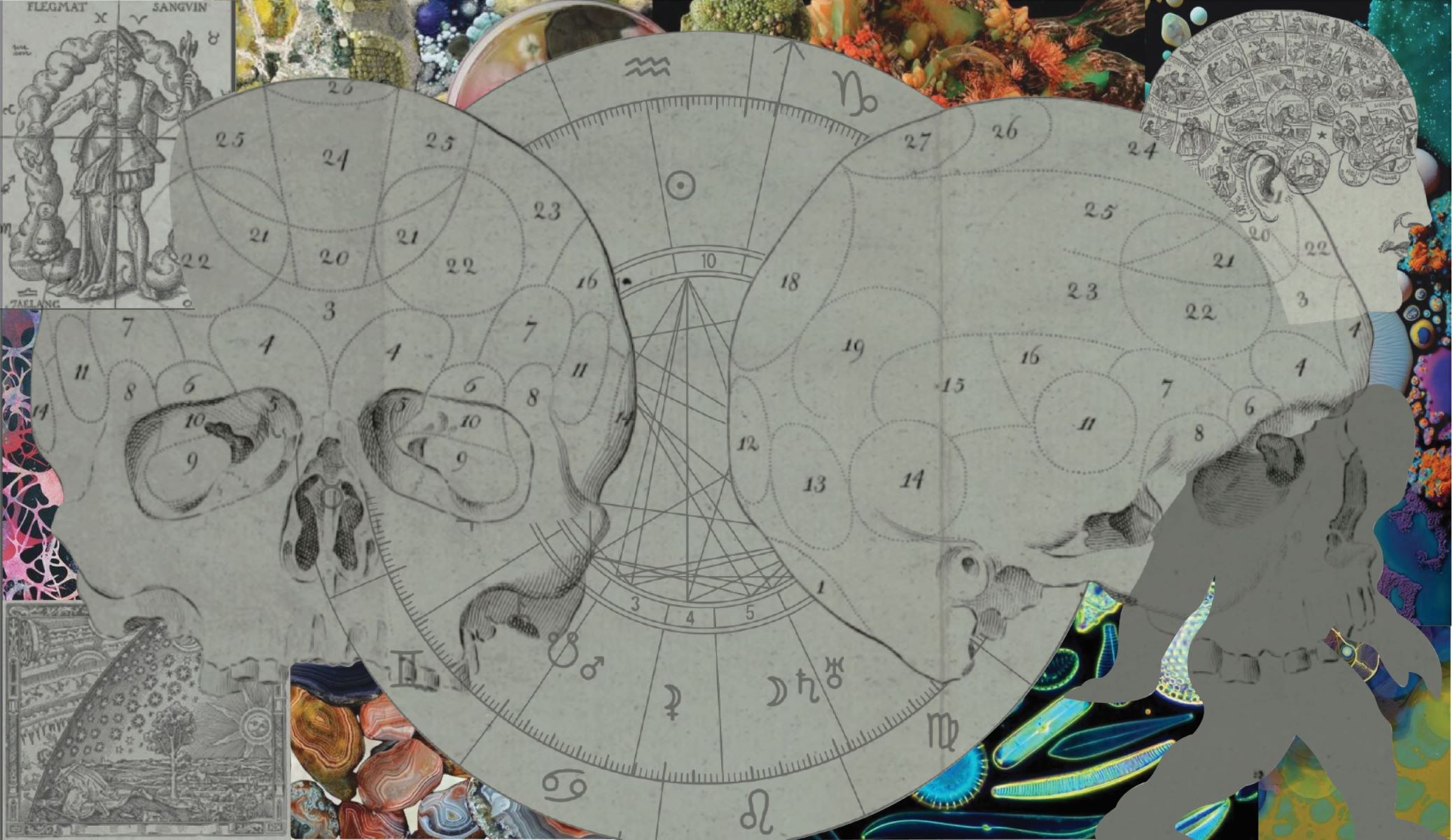
    For decades, science and pseudoscience have been compared to each other using a wide variety of criteria. The question of what distinguishes the two is especially relevant today, but scientists and philosophers have historically struggled with this division and how to use it to defend the public from bogus discoveries and scams based on scientific-sounding gibberish. In general, pseudoscience is defined as a non-scientific doctrine whose supporters claim that it is scientific, but there are many other definitions, including those below.

    Science . . .

    • . . . is based on sound research and and changes over time as new research causes the revision or discarding of older ideas. This feature is apparent across all fields, since every scientific discipline, from physics to psychology, has undergone dramatic changes throughout its existence.
    • . . . fulfills or endorses all or most of the following philosophical criteria:
      • Logic
      • Semantical (a realist view of meaning)
      • Ontological (all real things are material and follow scientific laws)
      • Epistemological (theories reflect facts about the real world)
      • Reasonable ethics, including an aim to serve the greater good
      • Sociological (created and regulated by a community of experts)
    • . . . must be falsifiable. That is, it must be able to be proven wrong under some circumstances. Basically, this means that ideas must hold up against fair efforts to test them.
      • Some researchers include the criteria that an idea must actually be tested in addition to being falsifiable, and that supporters of the idea accept any negative results.
    • . . . investigates questions, including its own failures. If a researcher performs an experiment and their hypothesis not supported by the results, they must investigate why this would be and revise their ideas.
    • . . . tests new ideas and leads to progressively greater knowledge of the world

    Pseudoscience . . .

    • . . . is not based on reliable research and does not change in response to new research or at all. Homeopathy demonstrates this feature well. The practice originated in the 1800s and is based on the idea that extremely tiny quantities of certain substances have medicinal purposes. The original experiments on homeopathy were poorly designed, and the field remained the same even as new discoveries in chemistry contradicted its claims. Homeopathy now defies most of the principles of chemistry.
    • . . . fails to satisfy most or all scientific philosophical criteria, and may include idealism, such as:
      • Idealist epistemology (there are things that do not have to conform to scientific laws). For instance, the belief that some people have special powers, such as telekinesis, that defy the laws of physics uses idealist epistemology.
      • Dubious or flexible ethics, especially regarding experimentation. A psychic may say that their powers “do not appear on command” to avoid participation in a lab experiment, while at the same time offering frequent readings on the street that they claim are 100% accurate.
      • In addition, supporters of an ideology-based pseudoscience may claim that “science is just one more opinion.” This tactic can be a part of any pseudoscience, but it is most notably used by groups who use pseudoscience for religious purposes, such as proponents of creationism or intelligent design.
    • . . . includes ideas that are impossible or unreasonably difficult to disprove, and may be attached to “ad hoc” hypotheses that function as excuses in the event that evidence is produced against the idea. A great example is the statement “Bigfoot exists.” It is unlikely that Bigfoot is actually real, but no evidence against the existence of Bigfoot would ever convince believers. A skeptical question such as, “If Bigfoot exists, why have no Bigfoot corpses or skeletons been found?” will prompt the production of even more unfalsifiable (and often ridiculous) assertions, including: “Bigfeet decay unusually quickly.” “When a Bigfoot dies, it is always buried by another Bigfoot.” “No animal bodies are ever found unless they were killed by humans, and no Bigfoot has ever been killed by a human.” When a pseudoscientific idea is found to be inaccurate, supporters usually refuse to admit that they were wrong, rather than rejecting or revising the idea and moving on to further investigation.
    • . . . does not investigate much and doesn’t question its failures. Astrology is one pseudoscience that ignores many potential investigations. For instance, astrologers claim that an individual’s personality is determined by the position of the sun, moon, planets, and stars at the moment of their birth. This idea prompts a number of questions, including how stars and planets would affect a person’s brain or why birth is the determining event as opposed to conception. However, astrology contains no answers to these questions, and most astrologers seem uninterested in looking into the glaring issues they pose for the field.
    • . . . is unwelcoming to new ideas, and theories mostly conform to what is already believed. There are a number of reasons why Sigmund Freud’s ideas of psychoanalysis are pseudoscientific, but one of the most immediate is that the field rejects ideas that Freud himself did not invent. In one case, Karen Horney, a fellow psychoanalyst, tried to introduce the concept of “womb envy” to the field as a response to Freud’s theory of “penis envy.” Freud had declared that penis envy was a woman’s desire for male anatomy that led to a sense of inferiority and that all women experienced these feelings their entire lives. Horney, taking the idea further, theorized that men were also jealous of women and wished for the ability to give birth and participate in motherhood. However, Horney believed that both penis envy and womb envy were rare and that they involved desires for certain social and cultural roles held by the opposite gender, rather than a literal wish for different reproductive organs. Freud rejected the idea of womb envy and essentially told Horney that she’d only come up with the concept due to her own problems with penis envy!

    The differences between science and pseudoscience is a topic that many have studied and worked on for a long time, and will without a doubt continue to be debated far into the future. Is it more important to define pseudoscience as a lack of investigation or as idealism? Is science more reliable than pseudoscience because it is based on better research or because it is more testable? As we encounter scientific-sounding claims in advertising and health care, and on social media, it’s important to keep these questions in mind. They may save us from the consequences of falling for a pseudoscientific claim.

    References:

    “Astrology – the Skeptic’s Dictionary – Skepdic.com.” Skepdic.com, skepdic.com/astrology.html.

    Bunge, Mario. The Philosophy behind Pseudoscience. Skeptical Inquirer, 2006.

    Hansson, Sven Ove. “Science and Pseudo-Science.” Plato.stanford.edu, 3 Sept. 2008,          plato.stanford.edu/entries/pseudo-science/ utm_campaign=OImrt19&utm_medium=organic&utm_source=instantmagazine

    “Homeopathy – the Skeptic’s Dictionary – Skepdic.com.” Skepdic.com, 2015,    skepdic.com/homeo.html.

    Hu, Zhe, and Haofeng Sun. A Contrast Analysis of Sigmund Freud and Karen Horney’s Theory of Psychology. 2017.

    Loxton, Daniel, and Donald R Prothero. Abominable Science! : Origins of the Yeti, Nessie, and Other Famous Cryptids. New York, Columbia University Press, 2015.

    Yadav, Riya. “Sigmund Freud and Penis Envy – a Failure of Courage?” BPS, 8 May 2018,    www.bps.org.uk/psychologist/sigmund-freud-and-penis-envy-failure-courage.

  • My Experience with Biomechanics(BMED 3410) As a Biomedical Engineer

    My Experience with Biomechanics(BMED 3410) As a Biomedical Engineer


    If you have ever entered into a STEM major at Georgia Tech, or at any other school, you know that it is not easy business. Sleepless nights, tears, wanting to rip your hair out (It’s an expression don’t worry!) are all parts of the package. You end up learning a lot of useful information for your future career, and for your personal life that you will definitely utilize to achieve your goals. Nevertheless, along the way, there are plenty of times that you will doubt yourself and your capability to survive your major. Being a Biomedical Engineering major, a major that combines elements of pre-med, and Engineering, I know first hand how this feels. I have had more challenging classes throughout this major than I can count from Conservation Principles of BME, to Intro to MATLAB, to Organic Chemistry I, to Organic Chemistry II, to Statics, to Biotransport, to Systems Modeling this semester. It is constant stress, and hardwork! It is rewarding hardwork, but it is hardwork nonetheless. One of the things that helped me every semester when I felt overwhelmed through this workload was to know that other people were also going through what I was going through, and were as stressed out as I was. So, being a fifth year BME and STEM student at Georgia Tech, I wanted to write this article to provide solace to people who felt overwhelmed, so they feel like there are people who have gone through what they have gone through and that they are not alone in the challenges that they face. So sit back and relax, as I take you through my journey as a STEM student taking Biomechanics and the hurdles and misery I felt as I went through the class.

    To start off, throughout high school and most of my life, I was good at math and science. Others looked at subjects like AP Chemistry with dread, while those subjects gave me joy. After all, there was nothing more fun than working on Stoichiometry problems on a Friday night, right? Others would walk into Chemistry class, with a look of dread on their face, while I would walk in with a feeling of excitement. Making solutions in the lab was my jam. We would have quizzes every Friday, and I could see the feeling of dread on my peers’ faces afterward as they turned in their papers with half-empty work, not confident that they had solved the problem correctly, while I had solved the problem confidently from start to finish. I was riding a sugar high, and it felt great to be at the top. There was a great feeling that came with feeling so confident about science and I really enjoyed what I was learning as well. Unfortunately, little did I know that this was just a positive moment, and that, in the grand scheme of things, I was in for a tough reality.

    Fast forward to my senior year of college. I had registered to take Biomechanics. It was a course that was required for my major. I had heard awful things from some of my friends who had taken it before me, but I went in with an open mind. The first few lectures went by, and I already felt slightly confused, but I had been able to clarify concepts that I was struggling with. I was able to do the practice problems. Nothing seemed too concerning.  Then came the day of the quiz on Wednesday. Most people had not done the practice problems, and I was feeling ready. It was approaching the last 25 minutes of the lecture, and the professor and TA’s began handing out the papers. I knew it was not going to be easy, but I felt prepared, or so I thought.

    I flipped the paper over, only to see a diagram with a lot of text that I could not comprehend. I tried to calm myself down and reread, but I just could not understand. It was then that I saw the time on the screen going down, 20 minutes, 19:59, 19:58, 19:57. With each passing second that went by, I was losing time, and I was still not able to understand the question prompt or the way my Free Body Diagram should look. With each second that went, I could feel a ticking time bomb going off in my head. My stomach began to burn like lava. My chest began to feel constricted, and I felt like I could not breathe. To make matters worse, I heard the sounds of chairs moving in and out beside me, as people began to turn in their quizzes and leave. People were writing so loudly that it almost made the desks shake, and it just made me feel even more nervous than I already was. In the last 10 minutes, I wrote down some work and formulas, hoping to get some credit. However, I did not get a good feeling about how this was going to go, and my gut feeling was usually correct. Seeing as my approach to studying for this quiz had probably failed, I decided to modify my studying approach for the next quiz, next Friday.

    Unfortunately, modifying my approach did not change the outcome of the next quiz. The next quiz also felt just as impossible, and now that it had been two quizzes like this, I began to think I was just screwed in this class, no matter what I did. I then went home, tired, and not aware of what to do. I took a break from Biomechanics because, after all, I was going to suck no matter what, right? The grade for the first quiz came that Sunday, and it was even worse than I could have ever expected. I had gotten a 0. It seems I had managed to not even get any partial credit. As dramatic as this sounds, I then began to contemplate all my life decisions, including coming out of state to Georgia Tech to study BME. Maybe I was just not cut out for it? I had already spent many semesters before this, feeling dumb about struggling in classes at Tech, having a lower GPA than some others, and not getting a single internship until the summer after my junior year. In truth, I was doing fine, but I still doubted myself because BME was a hard major. Any Engineering was a hard major, and there were plenty of people that had quit before me and that had not even made it nearly as far as I had made it. It is extremely common, unfortunately, for people in STEM majors to drop out and some classes make many people more tempted to drop out than to stick it through.

    In the second half of the class, I began to make up ground. I began to get 80’s and 90’s on the quizzes, and I even got a 98 on the second test. I had not changed much at all about the way I studied, except I had become calmer, as I had decided that the worst thing that would happen was that I would fail. I was not prepared to drop the class, in the rare chance that I passed. I finally finished the class, and it was still not my best grade, but I ended up with a way better outcome than I thought I was going to end up with in the beginning. I persevered, and that is when I realized that I was good at self-learning, even if I did not think so initially. I was proud of myself, and I felt a sense of joy as to what I was able to accomplish. So, I just want to say, for anyone coming from a STEM background who feels intimidated and hopeless about being successful in your major, you will encounter difficult times and difficult situations. However, if you are motivated to push through and persevere, you can not only find success, but you can enjoy your major while going through the challenge.