Category: Articles

  • Evolution of Programming

    Evolution of Programming


    The Origins (1840s-1940s)

    1843: Ada Lovelace’s Algorithm

    The history of programming begins with Ada Lovelace, a British aristocrat that was educated in mathematics and science. In 1843, Lovelace created the very first machine algorithm for Charles Babbage’s Difference Machine. This conceptual leap is what gave birth to the idea of programming languages.

    1936: Alan Turing’s Theoretical Foundation

    Alan Turing published a paper in 1936 that is now regarded as the founding work of computer science. Turing introduced the concept of a universal machine that could follow instructions. This revolutionary idea eventually evolved into plans for an electricity-powered computer that could run programs, mathematically defining what computation meant.

    1940s: First Programming Languages and Electronic Computers

    • Konrad Zuse’s Plankalkül: Considered the first programming language for computers, created in the early 1940s to store codes for routine, repetitive tasks
    • Assembly Language (1949): A programming language that simplified computer instructions
    • Shortcode (1949): Developed by William Schmitt for the BINAC and UNIVAC computers
    • ENIAC: The first programmable, electronic, general-purpose digital computer, which required physical rewiring to program

    The First Programming Languages (1950s-1960s)

    Early 1950s: First Compiler Languages

    • Autocode (1952): Developed for the Mark 1 computer at the University of Manchester, it was the first language that could be translated into machine code
    • Assembly Language: Further evolved as the first step away from machine code, using symbolic representations of machine instructions

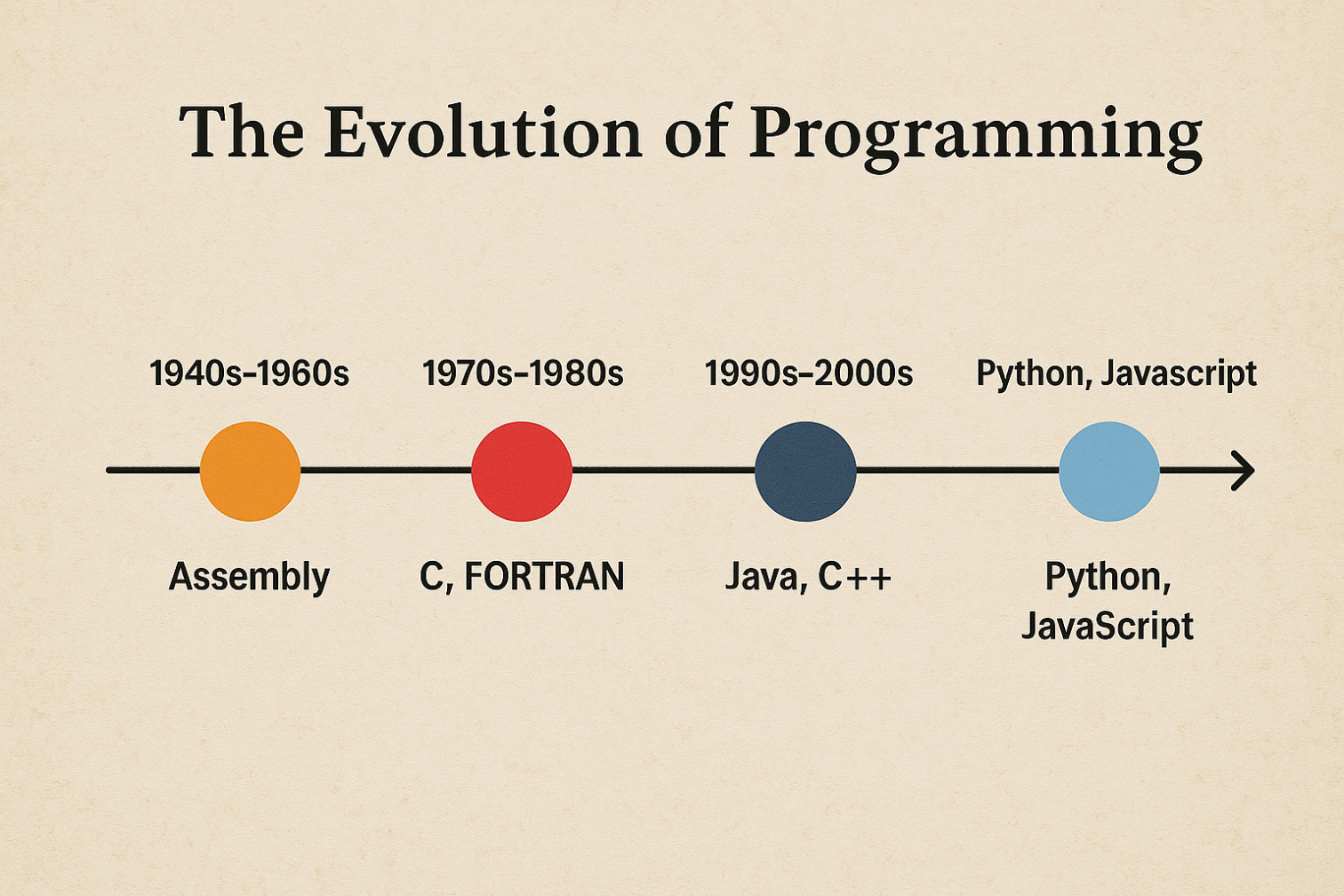
    Generated image

    Mid to Late 1950s: Foundation of Modern Programming

    • FORTRAN (1957): Developed by John Backus at IBM, FORTRAN (FORmula TRANslation) was the first widely used high-level programming language, designed for scientific and engineering calculations. Remarkably, this language from the 1950s is still used today in supercomputers and scientific computations.
    • ALGOL (1958): Created by American and European scientists, ALGOL became the foundation for many renowned languages including Pascal, Java, C, and C++
    • LISP (1958): Created by John McCarthy, introducing many ideas still central to programming today, including recursion and tree data structures. Originally intended for AI, companies like Boeing and Genworks still use it.
    • COBOL (1959): Developed by a team led by Dr. Grace Murray Hopper, COBOL (Common Business Oriented Language) was designed for business applications like credit card transaction processors, traffic signals, and phone calls. It’s still used in banking and gaming today.

    1960s: Programming Becomes More Accessible

    • BASIC (1964): Developed by students at Dartmouth College (Beginners All-Purpose Symbolic Instruction Code), it was designed to make programming accessible. Later further developed and marketed by Bill Gates.
    • PL/I (1964): IBM’s attempt to create a language combining the best features of FORTRAN and COBOL
    • APL (1966): A highly symbolic language focused on array processing
    • SIMULA (1967): The first object-oriented programming language, introducing concepts like classes and inheritance

    The Structured Programming Era (1970s)

    • Pascal (1970): Designed by Niklaus Wirth and named after French mathematician Blaise Pascal, it was created explicitly to encourage structured programming. So easy to learn, it was used by Apple early in its history.
    • C (1972): Developed at Bell Labs by Dennis Ritchie for the Unix operating system, combining low-level access with high-level abstractions. Many modern languages like C#, Java, JavaScript, Perl, PHP, and Python are derived from C.
    • Smalltalk (1972): Developed by Alan Kay, Adele Goldberg, and Dan Ingalls at Xerox PARC. It pioneered the graphical user interface and pure object-oriented programming. Its principles are present in Java, Python, and Ruby, used by companies like CrowdStrike and Logitech.
    • SQL (1972): Originally called SEQUEL, it was developed by Raymond Boyce and Donald Chamberlain for viewing and altering information in databases.
    • Ada (late 1970s-early 1980s): Named after Ada Lovelace, it was designed by Jean Ichbiah’s team at CUU Honeywell Bull. A high-level programming language extended from Pascal, Ada is used for air-traffic control in various European countries and space programs.

    The Rise of Personal Computing (1980s)

    • C++ (1983): Bjarne Stroustrup modified the C language at Bell Labs to create C++, adding object-oriented features, classes, templates, and virtual functions. It’s now used in MS Office, Adobe Photoshop, and various types of high-performance software.
    • Objective-C (1983): Developed by Brad Cox and Tom Love as another object-oriented extension of C, later becoming the foundation for Apple’s operating systems.
    • Perl (1987): Created by Larry Wall, initially for text editing. Today its primary uses include database applications, data processing, graphic programming, and system administration.
    • Haskell (1990): Named after mathematician Haskell Brooks Curry, this primarily mathematical programming language is used in industries that need complex calculations and record-keeping.
    • Visual Basic (1991, but conceptualized in the late 1980s): Microsoft’s attempt to make Windows programming accessible. It allows users to drag and drop sections of code via a graphical user interface (GUI). Parts of Visual Basic are used in applications like Word and Excel.

    The Internet Age (1990s)

    • Python (1991): Created by Guido Van Rossum and named after the British comedy Monty Python, it emphasizes code readability. Today Python is one of the most popular programming languages worldwide, used by giants like Google and Spotify.
    • Ruby (1993): Created by Yukihiro Matsumoto as a high-level programming language primarily for web applications development. Today it’s used by companies like Groupon.
    • HTML (1993): Not strictly a programming language, but fundamental to web development
    • Java (1995): Developed by James Gosling at Sun Microsystems with the promise of “write once, run anywhere.” It’s one of the world’s most popular programming languages, used in everything from cell phones to parking machines.
    • JavaScript (1995): Created by Brendan Eich, now ubiquitous in web development. Used for web development, PDF documents, and desktop widgets, it’s on almost every major website, including Adobe, Gmail, and Mozilla Firefox.
    • PHP (1995): Originally known as “Personal Home Page” but now stands for “Hypertext Preprocessor,” it was developed by Rasmus Lerdorf. Used for building and maintaining web pages and server-side development, PHP powers huge platforms like Facebook, Wikipedia, and WordPress.

    The Modern Era (2000s-2010s)

    • C# (2000): Microsoft developed C# in an attempt to combine elements of Visual Basic and C. It’s now used in all the company’s products.
    • Scala (2003): Created by Martin Odersky, it can work with Java, giving it an advantage in Android development. Scala is used by social media and entertainment giants like Twitter, LinkedIn, and Netflix.
    • Groovy (2003): An easy-to-learn language developed by James Strachan and Bob McWhirter, used by companies like Starbucks, Craftbase, and Transferwise.
    • Go (2009): Developed by Google to resolve challenges faced by large software systems. Go is popular with big tech companies like Uber, Dropbox, and of course, Google.
    • Rust (2010): Mozilla’s language designed for memory safety without garbage collection
    • TypeScript (2012): Microsoft’s statically-typed superset of JavaScript
    • Swift (2014): Developed by Apple to replace C, C++, and Objective-C, intended to be easier and more versatile. Swift can be used for cloud applications, mobile, and desktop. Language platform Duolingo used it to launch a new app.

    The AI and Cloud Native Era (2010s-Present)

    • Julia (2012): Designed for high-performance numerical analysis and computational science
    • Kotlin (2011, widely adopted late 2010s): Modern alternative to Java, particularly for Android development
    • WebAssembly (2017): Not a traditional language, but a binary instruction format for a stack-based virtual machine
    • Dart (2011, popularized with Flutter 2017): Google’s language for multi-platform development
    • Python’s resurgence: Becoming the dominant language for data science, AI, and machine learning

    The Future of Programming

    As we look ahead, programming continues to evolve in exciting new directions. Low-code and no-code platforms are democratizing software development, making it accessible to those without traditional programming skills. Meanwhile, AI-assisted coding tools like GitHub Copilot are revolutionizing how developers work by generating code from natural language prompts. The emergence of quantum computing is driving the development of specialized quantum programming languages to harness this powerful new paradigm. Simultaneously, domain-specific languages are becoming increasingly sophisticated, offering tailored solutions for specific industries and problems. These trends collectively point to a future where programming becomes both more specialized and more accessible, continuing the remarkable journey that began with Ada Lovelace’s algorithm nearly two centuries ago.


    Citations

    Aron, Jacob. “Alan Turing.” New Scientist, www.newscientist.com/people/alan-turing/.

    Hamilton, Tim. “History of Programming Languages.” Praxent, 4 Oct. 2022, praxent.com/blog/history-of-programming-languages.

    The Editors of Encyclopedia Britannica. “Ada Lovelace | Biography & Facts.” Encyclopædia Britannica, 23 Nov. 2018, www.britannica.com/biography/Ada-Lovelace.

  • If Vibranium Were Real: The Chemistry Behind Wakanda’s Supermetal

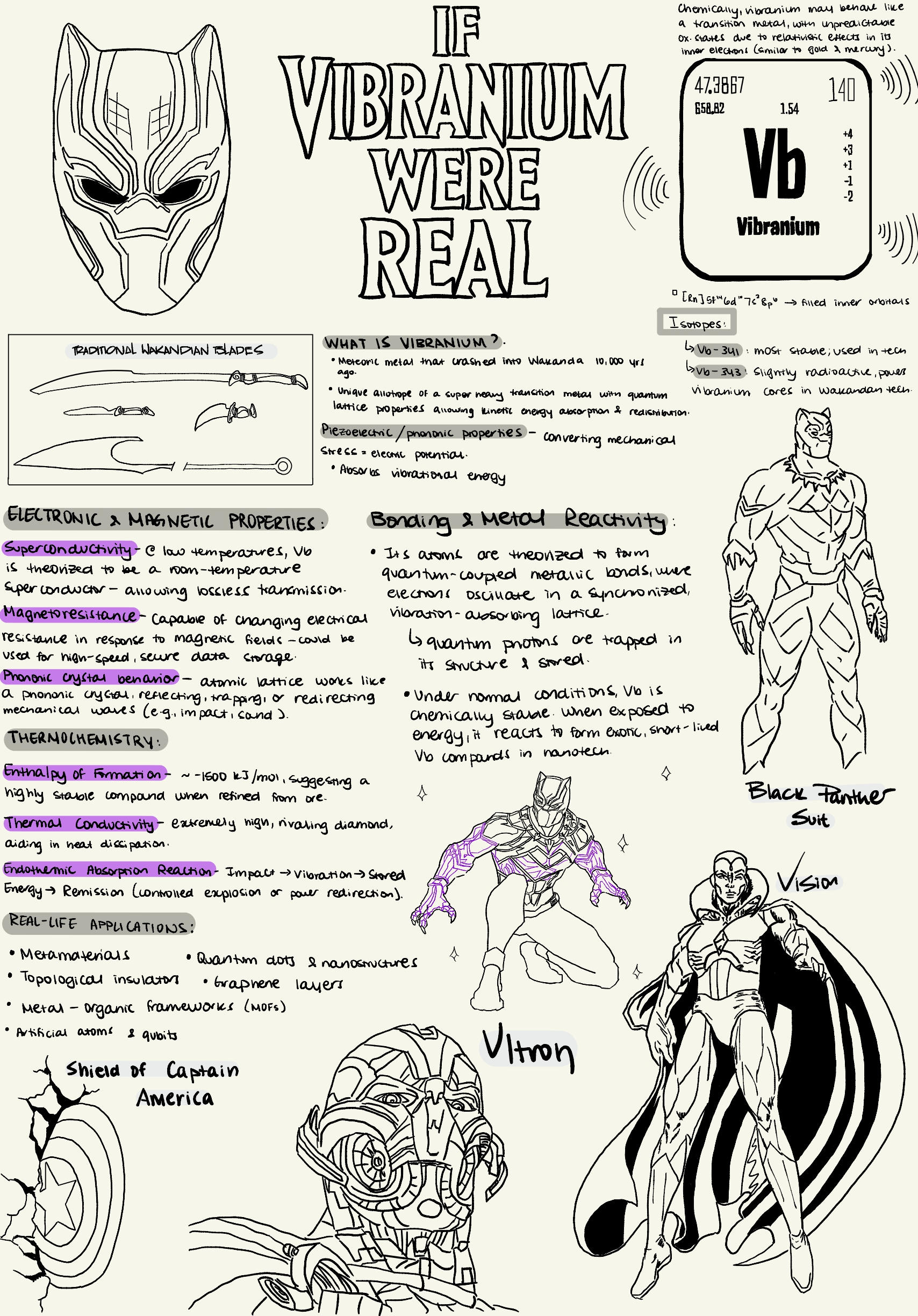
    If Vibranium Were Real: The Chemistry Behind Wakanda’s Supermetal

    Sources: 

    “What Exactly Is Vibranium Metal?” – ever-roll.com
    “The Science of Wakanda Forever” – blogs.iu.edu/sciu
    “What Would It Take to Make Real Vibranium?” – snexplores.org

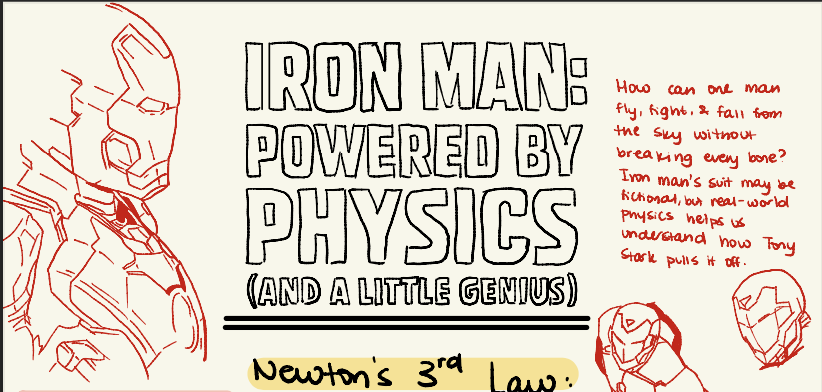
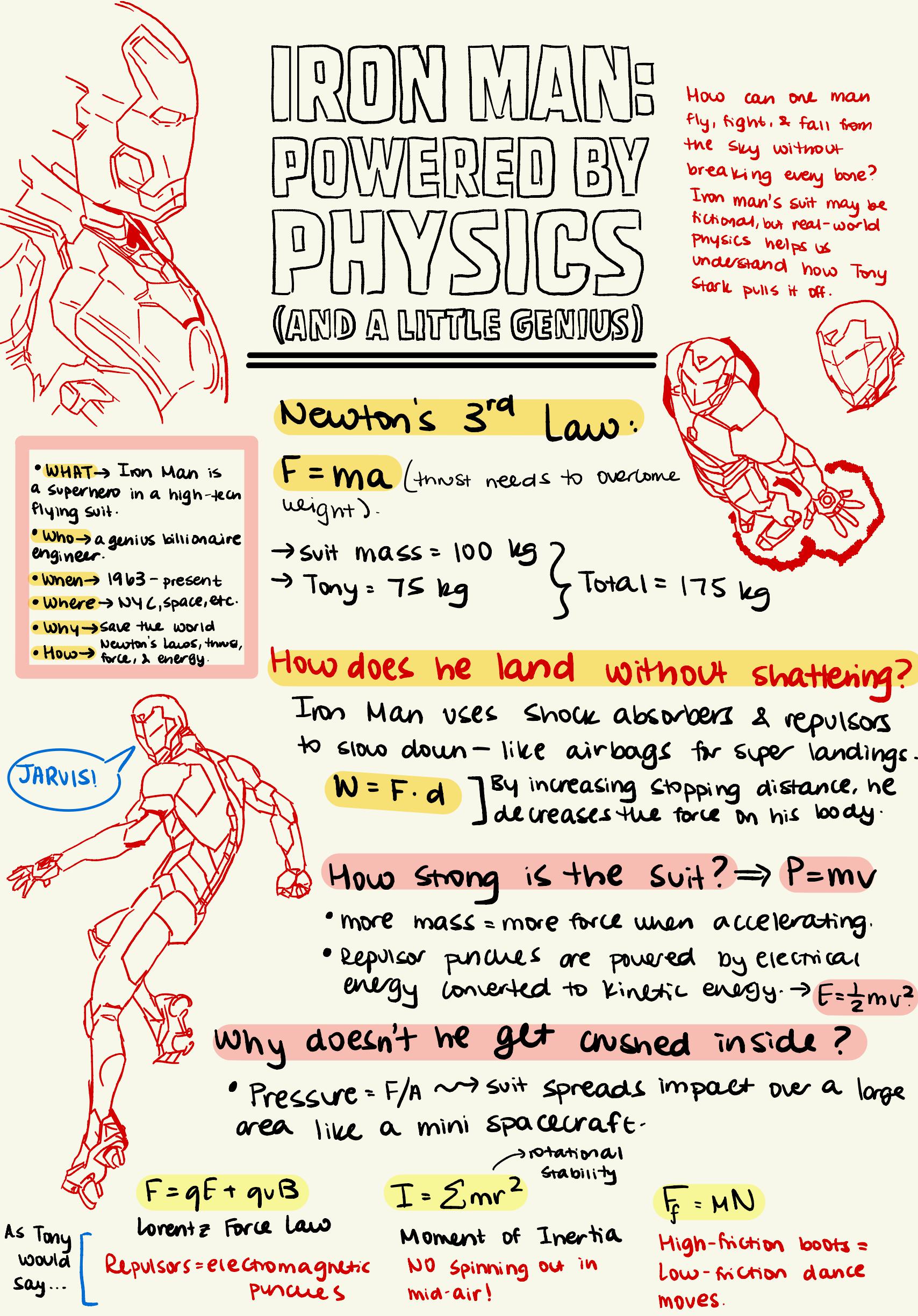
  • IRON MAN: Powered by PHYSICS (And a Little Genius)

    IRON MAN: Powered by PHYSICS (And a Little Genius)

    Sources

    “Engineering in Iron Man’s Suit” – physicsinmarvel.wordpress.com
    “The Physics of Iron Man” – science-abuse.net
    “Iron Man’s Suit Defies Physics — Mostly” – WIRED.com


    IRON MAN: Powered by PHYSICS (and a little genius)

  • The Cat-astrophic Health of Persian Cats

    The Cat-astrophic Health of Persian Cats


    These adorable flat-faced cats have existed since the 1600s from Mesopotamia which was later called Persia, giving these cats the name Persian. Today, they are an expensive and highly sought-after breed with prices going from $1,000+ for a single kitten. But the subject at hand that I would like to focus on is the health issues that Persian cats face, and why they are more susceptible to diseases. This topic is very near and dear to my heart, since I happened upon owning a Persian cat at the beginning of the school year. 

    Meet Sammy, my cat that my sister got me from craigslist (long story). Cute, right? In a Garfield/ grumpy cat sort of way. The biggest problem I faced was how often he tears up. It sounds like a simple issue, but it was occurring constantly. Every night when I would pet him, he would build up a brown layer of crust around his eyes. It didn’t matter if I cleaned his face a few hours ago, it was inevitable that the tears would stain his fur again. This led me to do some research.

    Persian cats have a very distinctive feature- their flat face. Scientifically, it is called a brachycephalic structure, which leads to tear ducts that are not fully developed. Typically, cats have ducts to drain excess liquid in their eyes to their nose. In this case, flat-faced cats have tears that cannot drain properly, leading to the fur around their eyes to be stained. The staining comes from the tears oxidizing to turn into a reddish brown color. The official diagnosis for this is called epiphora- which is a cause for concern for most cats but is a common occurrence for Persian and Himalayan cats.

    Having watery eyes is not the only consequence of the brachycephalic facial structure. Some of the others include: brachycephalic airway obstruction syndrome (BAOS) which can cause respiratory problems; maxillary dorsal rotation (rotation of the upper jaw upwards) and brachygnathism (the top jaw is abnormally short). This can cause dental problems, and make it harder for the cat to groom himself. Exophthalmos, when the eyeball protrudes, can lead to an increased risk of corneal ulcers. Cats with the more severe forms of brachycephaly are highly likely to develop these conditions. 

    This leads us to the age-old question- is it unethical to breed these kinds of cats? There are even more loveable breeds of dogs with this condition: pugs, bulldogs, shih tzus, boxers, etc. Would the solution be to stop the breeding of these animals? I love Sammy, but I still believe we should end the breeding and continuation of brachycephalic animals. Choosing a pet for aesthetic reasons, especially when it compromises their quality of life, just feels fundamentally wrong to me. At the end of the day, our love for animals should include decisions that prioritize their health over our preferences.

    ____________________________________________________________________

    Künzel W, Breit S and Oppel M (2003) Morphometric investigations of breed-specific features in feline skulls and considerations on their functional implications. Anatomia, Histologia, Embryologia 32: 223

    Monnet E (2004) Brachycephalic Airway Syndrome. World Small Animal Veterinary Association conference 2004, 6-9th Oct, Rhodes, Greece. Available from VIN Associate, accessed 8.2.11

    O’NEILL, D. G., ROMANS, C., BRODBELT, D. C., CHURCH, D. B., ČERNÁ, P. & GUNN-MOORE, D. A. 2019. Persian cats under first opinion veterinary care in the UK: demography, mortality and disorders. Scientific Reports – Nature doi.org/10.1038/s41598-019-49317-4

  • Hidden Vegetables & Essential Vitamins

    Hidden Vegetables & Essential Vitamins

    We all know vitamins are important, but what do they actually do? Well, each vitamin has different benefits, with some playing multiple roles in important bodily functions. The oxygen transfer from our lungs to our cells, for example, depends on many vitamins and minerals, such as vitamin B6, C, and iron.

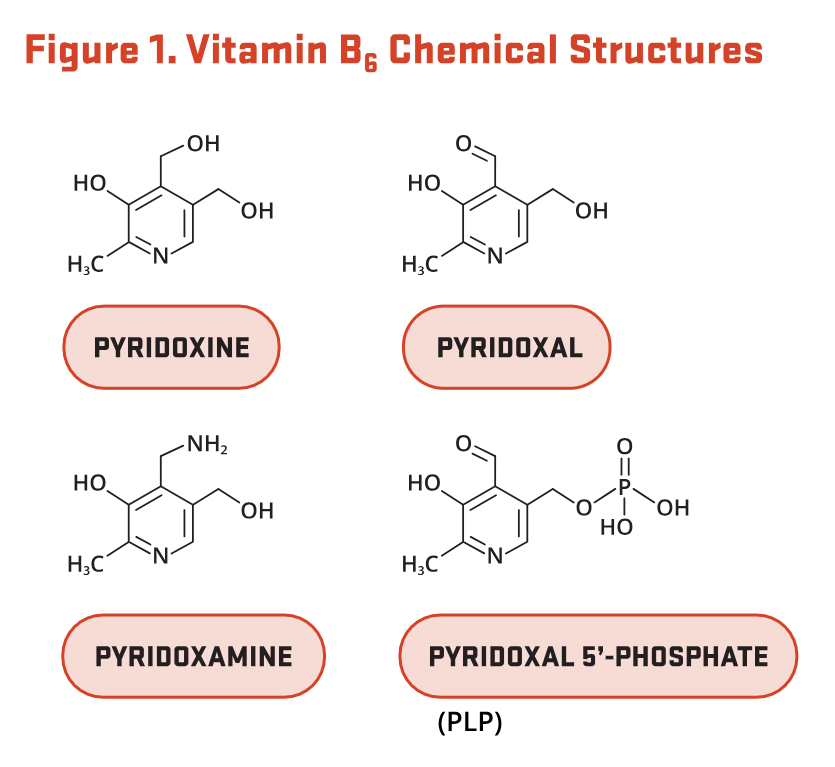
    Vitamin B6 comes in many different forms, but our bodies convert it to its most useful one: pyridoxal-5′-phosphate, conveniently referred to as PLP. PLP is a coenzyme that helps catalyze the production of hemoglobin.

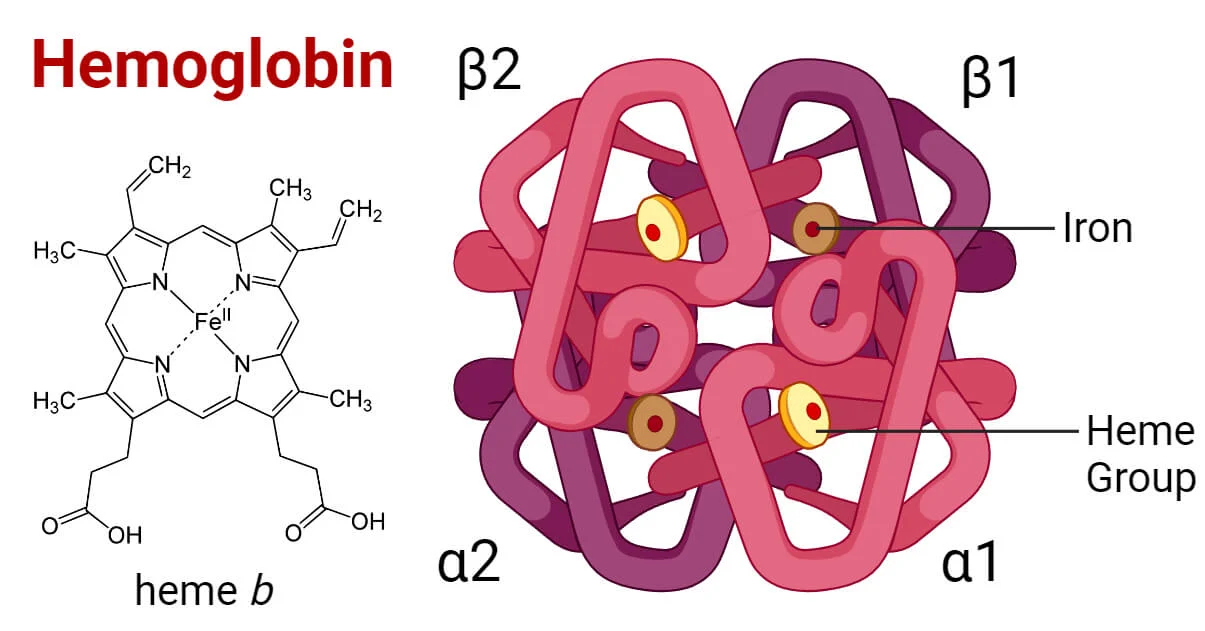
    Found in our red blood cells, hemoglobin is arguably one of the most important molecules in our body. Each hemoglobin molecule contains four heme groups, which are responsible for carrying the oxygen our body needs. Heme groups are also coordination complexes, meaning they have one or more molecules bound to a metal center, which in this case is iron.

    As you might have guessed, this is why iron is so important in our diet. Without it, our body can’t make as much hemoglobin, and our cells wouldn’t get the oxygen they need. This makes sense if you have ever experienced low iron; your cells aren’t getting the oxygen they need to produce energy, which causes fatigue.

    Iron, like vitamin B6, comes in many forms, but there is only one form useful to our body. Iron must have a 2+ charge to form a heme group. The iron we get from meat already has this 2+ charge, but the iron from vegetarian sources often doesn’t. Our body must convert the iron into its usable form, which is where vitamin C comes in.

    Vitamin C, also known as ascorbic acid, has numerous jobs to keep our body functional, one of which is helping give iron its 2+ charge so it can form a heme group. It is hypothesized that vitamin C increases the acidity of our digestive tract, making it easier for our body to convert iron into the form we need. This is why patients with iron deficiency are often told to take their iron supplements with a glass of orange juice.

    All together, vitamin B6, C, and iron ensure our cells get the oxygen they need by playing a part in different stages of hemoglobin production. Getting all of the vitamins your body needs can be tricky, but there are many ways to make it happen, especially if you like to bake. Including “hidden” vegetables in meals or desserts is a fun way to do this and can increase your vitamin intake without drastic changes to your diet.

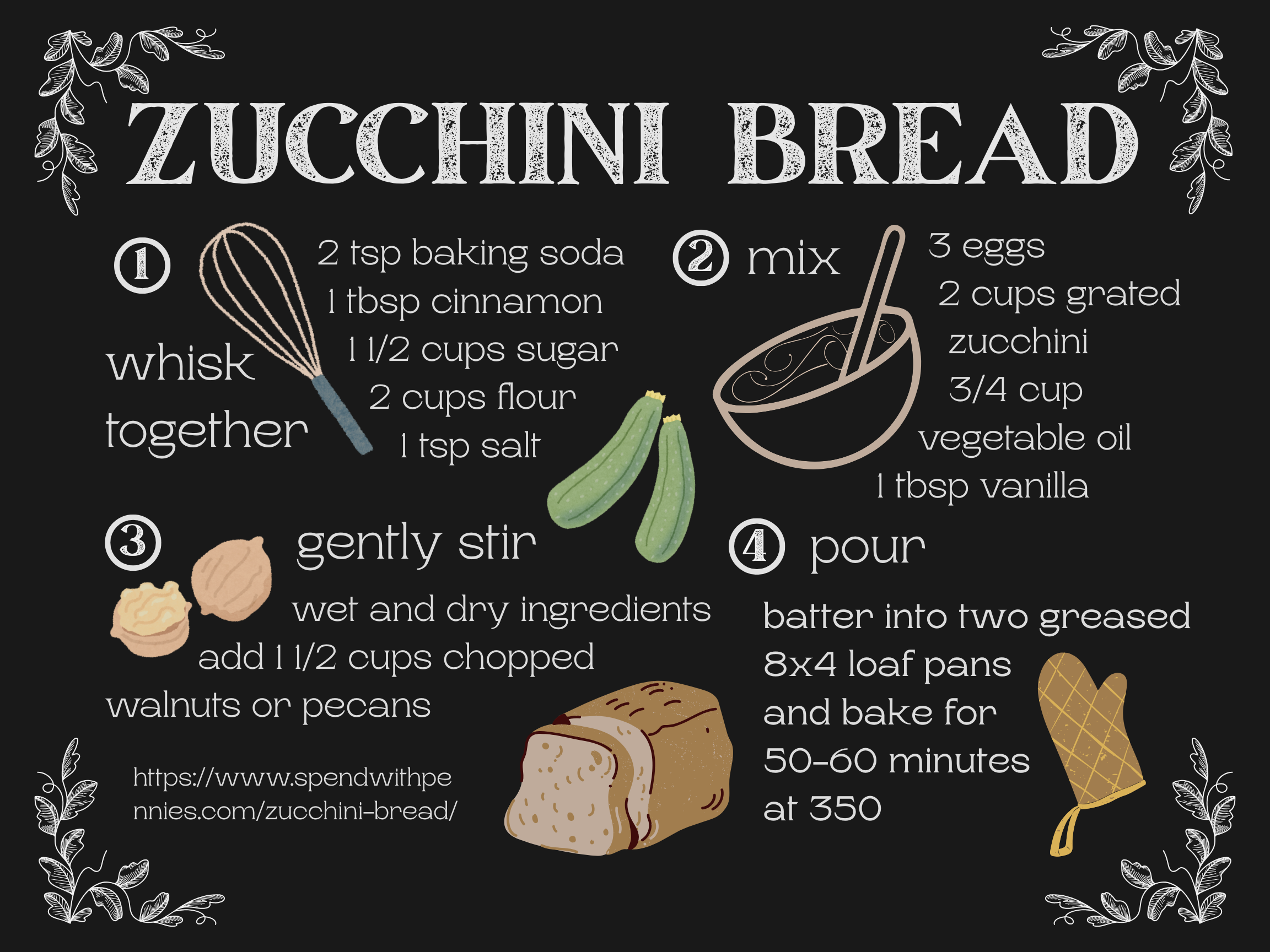
    Since zucchinis contain vitamins B6 and C and nuts are a vegetarian source of iron, this recipe for zucchini bread provides you with three essential vitamins for hemoglobin production along with a delicious breakfast or snack. The zucchini keeps the bread moist without taking away from the warm cinnamon flavor, and the slices taste especially good toasted with butter. Enjoy!

    Dahal, P. (2025, March 6). Hemoglobin decoded: Key types, functions & disorders. Microbe Notes. https://microbenotes.com/hemoglobin/
    Deng, J., & Ramelli, L., & Li, P. Y., & Eshaghpour, A., & Muti Scheunemann, G., & Crowther, M. (2023, November 2). Efficacy of Vitamin C with Iron Supplementation in Iron Deficiency Anemia Patients: A Systematic Review and Meta-Analysis. Ash Publications. https://ashpublications.org/blood/article/142/Supplement%201/1091/504755/Efficacy-of-Vitamin-C-with-Iron-Supplementation-in

    Higdon, J., & Drake, V., & Delage, B. (2024, May). Vitamin B6. Oregon State University. https://lpi.oregonstate.edu/mic/vitamins/vitamin-B6#:~:text=PLP%20functions%20as%20a%20coenzyme,to%20microcytic%20anemia%20(3).

    Wikipedia contributors. (2025, March 22). Heme. Wikipedia, The Free Encyclopedia. https://en.wikipedia.org/wiki/Heme

    Wikipedia contributors. (2025, March 31). Chemistry of ascorbic acid. Wikipedia, The Free Encyclopedia. https://en.wikipedia.org/wiki/Chemistry_of_ascorbic_acid

  • The Amazing Race: Speed of Light Reflection

    The Amazing Race: Speed of Light Reflection

    This semester marks my last contribution to planning and participating in events as a member of STEMComm. The last two semesters were eventful, and I always enjoyed helping plan out the logistics by being a team player. However, this semester’s challenge was to lead a group activity planning for a topic that I was not quite familiar with.

    For the Atlanta Science Festival, we organized an Amazing Race event. Each group planned both a mental and physical activities for our participants to choose from. My group choose an interesting topic, optics, focusing specifically on light and color. Being a computational media major who works on designing user experiences, I had never quite dealt with any so physics related, so it was kind of difficult to brainstorm actual activities that would be engaging. In previous events that I helped planned, my group always considered how accessible resources were before finalizing any details. This was the same case for my group this semester.

    Our physical proposal idea was to plan an event related to light, which lead to having the participants bend light with prisms. We knew that prisms made out of glass can analyze and reflect light, and paired with a laser beam, light would become refractured. As one of our learning objectives, we had a hands on activity with refraction by having the participant use a laser, a single wavelength, and prisms to create a path where the light had to bounce off of all the prisms. Additionally, although we didn’t have a natural white light, our other learning objective was dispersion, when different wavelengths bend differently, splitting white light into colors.

    For the mental activity, I wanted it to be correlated with colors. After some researching, I found the stroop effect, with learning objectives aligning with how our brain processes color and text simultaneously when presented with both visually. The Stroop effect occurs because reading is automatic, but naming colors requires more effort, causing delays with conflicting words. When presented with incongruent stimuli, which is a situation where two aspects of a stimulus contradict each other, like seeing the word “red” written in blue ink, the idea is that you take longer to process. Your anterior cingulate cortex (ACC), located in the medial wall of the frontal lobe, helps resolve this conflict, showing more activity with incongruent color-word pairs versus the congruent color-word pairs such as the word “red” written in red ink. To recreate this, I used Figma, a design tool that I used often, to create this activity. Being able to combine design and science was very fun and it made me become more motivated.

    stroop effect twisted
    click on this gif image!

    On the day we had to execute our plan, it went way better than I had expected. I could see the reminiscing of younger days on older participants as they watched their kids engage with the prisms and light. We presented our learning objectives and then had them complete short quiz. Although the stroop effect didn’t get as much attention as the prisms, we had a psychologist who administers this mental activity for their patients explain more in depth the processing with incongruent and congruent stimuli and other test variations. We also got swamped with many groups arriving at the same time, but we adjusted by splitting our group into two and running either the mental or physical activity. This event was truly an insightful experience and I learned many valuables skills that went beyond science.

    Sources Cited

  • Uses of Medical Marijuana

    Uses of Medical Marijuana

    Medical marijuana is an issue that has drawn significant debate. As of 2025, it has been legalized for medical use in 39 states (and also for recreational use in 24). Cannabis is becoming more present in the medical landscape and corporations have begun developing and selling a wide variety of products incorporating it. A few cannabinoids have received FDA approval. This relaxation of previous bans has benefitted many, but it has also opened up cannabis to for-profit industries and unethical marketing.

    Marijuana is routinely marketed to the public for a wide variety of purposes. It is sold as medicine, but also food, drinks, soap, makeup, and a huge number of other products. Companies that sell medical and recreational marijuana often make sensational claims about how much it can improve one’s health, downplay or ignore any risks that come with their products, then slip in a fine-print statement that they “cannot guarantee the accuracy” of any of the information that they themselves promote.

    So what conditions does cannabis actually treat, and what are its risks and benefits?

    Chronic Pain

    A number of studies have supported the theory that cannabis is effective at treating chronic pain in adults. An important limitation to this statement is that most studies on the topic were conducted with nabiximol, a marijuana extract that is only available as a medication outside the United States. The studies that came from the US investigated marijuana that was instead vaporized or smoked. Nonetheless, the NIH recommended in 2017 that more research be done to investigate the effects of medical marijuana on chronic pain, especially with regard to different forms of cannabis and methods of administration.

    Nausea and Vomiting Caused by Chemotherapy

    When cancer patients go through chemotherapy, they often experience the unpleasant side effects of nausea and vomiting. To counteract this, they are often prescribed antiemetic drugs, which prevent those symptoms. So far, two THC-based medications have been approved by the FDA: nabilone and dronabinol. They were both found in clinical trials to have greater effects than placebos, and are considered to be as effective as medications that do not include cannabis products. Nabilone and dronabinol are sometimes given to patients who do not experience improvement after trying other antiemetics.

    Spasticity?

    There have been many studies that have examined the possibility that medical marijuana can alleviate spasticity, a symptom of some neurological conditions. Spasticity involves muscle stiffness and a loss of control over one’s movements. Cannabis extracts, nabiximols, and THC have all been tested as potential treatments. However, the results of these studies are often divided in a curious way. When people with Multiple Sclerosis (MS) are treated with cannabis, they report moderate but significant improvements in their symptoms. At the same time, when spasticity is measured by a doctor, there is no consistent effect reported. As with chronic pain, more research is needed on the link between medical marijuana and spasticity symptoms.

    Sleep Disorders?

    Cannabis has also been studied for a potential effect on a number of sleep issues with a wide variety of causes. The NIH stated in 2017 that there was “moderate evidence” that nabiximols could reduce sleep disturbances that were symptoms of sleep apnea, fibromyalgia, chronic pain, and Multiple Sclerosis. However, these effects were only observed in the short term. Again, more research is necessary before we can fully conclude that medical marijuana can treat sleep problems.

    Risks

    • Side effects: As with most medications, medical marijuana can have side effects, which most often are minor, such as drowsiness. Use of marijuana as medicine can also occasionally cause symptoms similar to those of recreational use (the “high”) when taken at higher doses.
    • Addiction: It is possible to develop an addiction to marijuana. Among people who use marijuana, the proportion who become dependent on it is roughly 9-10%; this figure is considerably lower than addiction rates for many other drugs, both legal (15% for alcohol, 23% for opioids, and 32% for nicotine) and illegal (17% for cocaine and 23% for heroin). In addition, marijuana addiction tends to develop gradually, and the risk decreases as the user ages. After age 25, a person’s risk of becoming dependent on marijuana is roughly 0%.
    • Effects on physical, cognitive, and mental health: A number of other concerns have been raised about marijuana/cannabis use. Some users of medical marijuana consume it via smoking, which may increase their risk for lung cancer. It is known that recreational consumption of marijuana can cause detrimental cognitive effects such as learning loss, and it is unclear whether medical use has the same effects or not. Finally, some studies have found associations between marijuana use and the development of mental illnesses, especially schizophrenia and psychotic symptoms. However, an association is different from a causal effect, and the most dramatic links tend to be in people who already displayed symptoms or who were considered to have a higher risk of mental illness than the average person. All of these effects require more research to determine the likelihood of these risks to medical marijuana users, who generally use smaller doses and different methods of consumption than recreational marijuana users.

    A Marijuana Myth – The “Gateway Drug”

    One idea that historically has been brought up frequently in discussions of the risks of marijuana is the statement that marijuana is a “gateway drug.” The Marijuana Gateway Hypothesis holds that marijuana use increases a person’s risk for using more dangerous drugs later on. If true, this would be a significant risk for recreational users and likely for medical users as well. However, research on this topic is often performed without control groups and does not always find statistically significant results. Even studies that do produce significant results have found support only for correlations and temporal connections (one event happening after another) between marijuana use and later hard drug use. This leaves open the possibility that there are other variables, called third variables, that influence both a person’s marijuana use and hard drug use. Third variables can be characteristics of the people themselves, or aspects of the environment they live in. A list of possible third variables includes: peer groups and social encouragement/pressure to use particular substances, level of engagement with school, deviant behaviors, thrill seeking, problems with behavioral and emotional regulation, level of self-control, genetics, and age at first use. Given that there are so many alternate explanations for hard drug use other than marijuana use, it is unlikely that the Marijuana Gateway Hypothesis is accurate.

    Conclusions

    The subject of medical marijuana has been heavily distorted and clouded by misinformation and marketing. To clear the confusion, accurate information needs to be provided to consumers regarding what conditions can be treated with cannabis and the potential risks and benefits of using cannabis-related products. In addition, people should be aware of the limits of our current knowledge. Many aspects of medical marijuana have not been studied closely, and we are acting on limited information that may change as marijuana is researched more widely in a clinical setting. There may come a day when we will know everything there is to know about cannabis treatments and understand exactly how useful they are for every imaginable human condition, and these facts will be common knowledge available to all. Until then, it’s best to do some fact-checking when faced with exaggerated claims or a decision about your health.


    Resources:

    Ayers, John W., et al. “The Need for Federal Regulation of Marijuana Marketing.” JAMA, vol.         321, no. 22, 11 June 2019, pp. 2163–2164, jamanetwork.com/journals/jama/article-         abstract/2734209, https://doi.org/10.1001/jama.2019.4432. Accessed 26 June 2020.

    Bostwick, J. Michael. “Blurred Boundaries: The Therapeutics and Politics of Medical      Marijuana.” Mayo Clinic Proceedings, vol. 87, no. 2, Feb. 2012, pp. 172–186,             www.mayoclinicproceedings.org/article/S0025-6196(11)00021-8/fulltext,             https://doi.org/10.1016/j.mayocp.2011.10.003.

    Cohen, Peter J. “Medical Marijuana: The Conflict between Scientific Evidence and Political            Ideology. Part One of Two.” Journal of Pain & Palliative Care Pharmacotherapy, vol.         23, no. 1, Jan. 2009, pp. 4–25, https://doi.org/10.1080/15360280902727973.

    Jorgensen, Cody, and Jessica Wells. “Is Marijuana Really a Gateway Drug? A Nationally     Representative Test of the Marijuana Gateway Hypothesis Using a Propensity Score             Matching Design.” Journal of Experimental Criminology, vol. 18, 6 Apr. 2021,             https://doi.org/10.1007/s11292-021-09464-z.

    National Library of Medicine. “Therapeutic Effects of Cannabis and Cannabinoids.” Nih.gov,         National Academies Press (US), 12 Jan. 2017,   www.ncbi.nlm.nih.gov/books/NBK425767/.

    Pratt, Misty, et al. “Benefits and Harms of Medical Cannabis: A Scoping Review of Systematic           Reviews.” Systematic Reviews, vol. 8, no. 1, Dec. 2019, pp. 1–35,      https://doi.org/10.1186/s13643-019-1243-x.

    Wikipedia Contributors. “Legality of Cannabis by U.S. Jurisdiction.” Wikipedia, Wikimedia Foundation, 19 March 2025,      en.wikipedia.org/wiki/Legality_of_cannabis_by_U.S._jurisdiction.