Category: today i learned (til)

health, fitness, medicine, environment, ecology, how to learn tricky topics in science and math, new discoveries, news, current events

  • Science of Spider Silk

    Science of Spider Silk

    Every year I move into a new room on campus at Georgia Tech, I buy a package of sticky putty, hoping that it will be strong enough to hold my large posters of the periodic table and Chance the Rapper, because command strips are just way too expensive. They usually fall down in the middle of the night, waking me up in terror. Recently in my polymers class, I learned about the beauty of spider silks and how they secrete different silks to accomplish different tasks. When I googled “spider silk,” I found articles and youtube videos claiming that spider silk is stronger than steel. I wondered how spiderwebs are able to stick to walls better than my command strips, but when I accidentally run into one, it breaks easily.

    After doing some research, I learned that strands of spider silk are actually made of thousands of close-packed, parallel nanostrands, and depending on the gland they are secreted from, their tensile strength is 100-400 kpsi, compared to steel, which is 40 kpsi [1]. The secret is in how the tensile strength is measured. Tensile tests consist of putting a material in tension, essentially stretching it until it breaks. Spider silk is made of semi-crystalline polymer nano strands that can stretch a lot before breaking, and having many strands stacked together makes it even stronger, while steel thread of the same diameter or density has a crystalline structure that doesn’t stretch. This scenario is analogous to breaking a single stick of strong wood versus breaking a bundle of many weaker but stretchier sticks of wood: the bundle wins.

    Spiders have different glands that secrete silks with different properties as protein structures to accomplish different tasks [2]. The tubuliform gland creates the silk to make the hard outer shell for an egg sac, and the aciniform gland makes the inner lining of the egg sac. The aggregate and flagelliform glands produce the sticky droplets and capture spiral threads, respectively, to catch prey.  The major ampullate gland makes the frame of the web as well as the dragline silk that allows the spider to move around. Lastly, the pyriform silk gland is responsible for the silk that attaches the web to the walls, trees, your bedroom window, etc. Pyriform silk is described as a “protein glue” or a “glue-like cement” that holds small amino acid fibroins, which then connect larger dragline silks, and are sometimes reinforced by aciniform silk [3]. Together, all of these components create a very strong network of silks that makes the overall product very adhesive. 
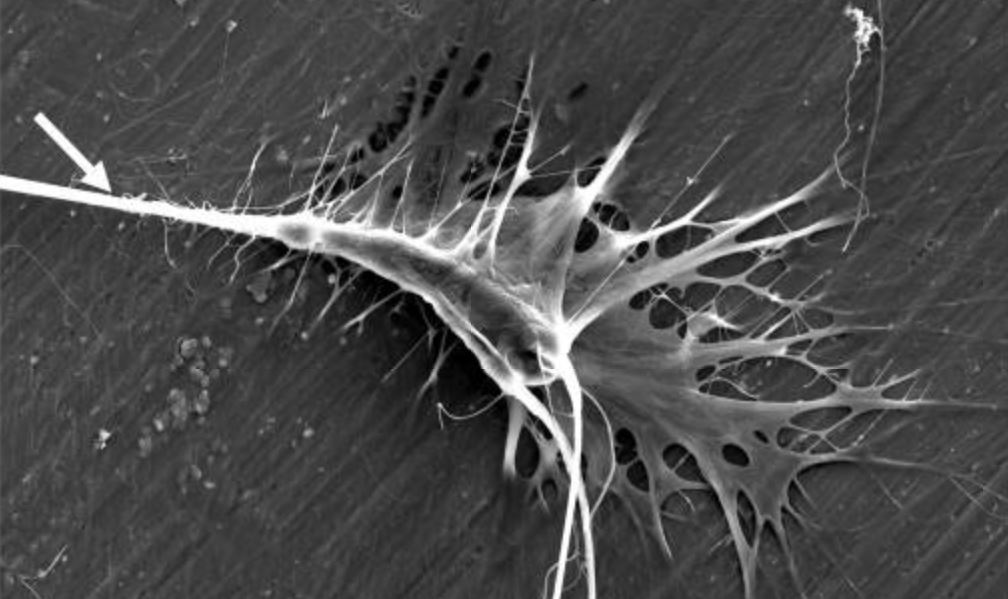
    In this picture from a study that took Scanning Electron Microscope (SEM) images of a single attachment point of a web, it looks like the pyriform silk is a splat of glue with the dragline silk (white arrow) stuck in it [4]. Looking closer, the “glue” looks like a network with many, smaller attachments to the surface of the wall. 

    Meanwhile, the sticky putty that I use to try to hang up my posters isn’t as robust as the spider silk glue. The formula for sticky putty is a trade secret, but it is known that it works as a pressure-sensitive adhesive, so the extent of adhesion depends on the amount of pressure you apply to it, as well as the shape and geometry. So even though I add a lot of pressure to the poster when I first apply it, depending on the weight of the poster and the amount of putty I used, the poster will slowly pull the putty off the wall, depending on how much I used and the temperature of my room [5]. 

    If spider silks are so strong and perform so many tasks well, why don’t we make adhesives or other high performance materials out of it? There have been many ideas for potential uses of spider silk in body armor due to its mechanical properties. It is also antimicrobial, so there are many ideas for biomedical applications, such as scaffolding for tissue generation [2]. However, spider silk is extremely difficult to harvest. This is because spiders are inherently cannibalistic and produce a small amount of silk in comparison to silk worms, which are typically used to harvest silk for textiles. Scientists have attempted to put spider genes in silkworms, but the silk they produce still isn’t of the same quality [6]. So unfortunately, I probably can’t get a spider as a pet and harvest the silk for my dorm posters. But doing all this research made me curious: How is Spiderman’s silk compared to actual spider’s silk? And where are the silk glands?


    References:

    [1]Hayashi, C. Y., Shipley, N. H., & Lewis, R. V. (1999). Hypotheses that correlate the sequence, structure, and mechanical properties of spider silk proteins. International journal of biological macromolecules, 24(2-3), 271-275.

    [2] TED. (Dec 7, 2011). Hayashi, Cheryl: The Magnificence of Spider Silk [Video file]. Retrieved from https://www.youtube.com/watch?v=xossR6eHv3I&t=248s

    [3]Hardy, John & Römer, Lin & Scheibel, Thomas. (2008). Polymeric materials based on silk proteins. Polymer. 49. 4309-4327. 10.1016/j.polymer.2008.08.006.

    [4]Blasingame, Eric et al. “Pyriform spidroin 1, a novel member of the silk gene family that anchors dragline silk fibers in attachment discs of the black widow spider, Latrodectus hesperus.” The Journal of biological chemistry vol. 284,42 (2009): 29097-108. doi:10.1074/jbc.M109.021378

    [5] “Blu Tack FAQs.” Blu Tack, Wayback Machine Internet Archive, 2010, web.archive.org/web/20100418062649/http://www.blutack.com/faq.htm.

    [6] SciShow (Feb 4, 2019). Green, Hank: Why Can’t We Make Spider Silk? [Video file]. Retrieved from https://www.youtube.com/watch?v=UX2LHcLxjio

  • Making Bad Decisions: The Science of Decision-Making

    Making Bad Decisions: The Science of Decision-Making

    MAKING BAD DECISIONS

    Ever wonder why you make such bad decisions. We make around 35,000 decisions every day, and they can’t all be good. There are many perspectives and exercises that we can explore as to why we make certain decisions, and, more importantly, why we think they are right!

    NEUROLOGY AND ECONOMICS?

    Our decision-making process has some innate problems. One of the major goals of neuroscientists is to better understand how information is represented in the brain, and how that information is interpreted and used for decision making. The brain is a powerful organ and requires the most amount of energy within the body. Because the brain performs so many mechanisms simultaneously. The efficient coding hypothesis is the process of the brain making predictions that allow neurons to better interpret and transmit information. Economists have spent many years studying the mechanisms behind irrational choices. With the emergence of books like Freakonomics, economic theory has been applied to a wide array of subjects.

    Exercise #1: Picking a candy bar

    Try this experiment with one of your friends.

    1. Go to the store, and get a variety of different candy bars. Make sure to get your friend’s favorite
    2. Place your friend’s favorite candy bar, and three other candy bars.
    3. Ask your friend to choose one of them. And record their choice.
    4. Now place all of the candy bars you have on the table.
    5. Ask your friend to choose the one they want. And record their choice.
    6. Now place your friend’s first choice and second choice on the table. See if they are the same or different.

    This is an actual experiment that was done to see how people make decisions. When presented with a few options, participants would most often pick their favorite candy bar. However, when presented with over 20, they would often pick a candy bar that was not their favorite. When presented with their two choices, they would wonder why their decision variety between the two scenarios. This variability in decision making is what neuroscientists and economists seek to explore more of.

    IRRATIONAL PSYCHOLOGY AND PHILOSOPHY

    Exercise #2: Sellers and Choosers

    Here is a game you can play with your friend.

    1. There are two mugs, one for you, and one for your friend.
    2. The mug is really nice, but you also have the option to sell it. Write down the price at which you are willing to sell your beautiful mug. You are the seller.
    3. Your friend can have the option of having a mug or the money for the mug. They write down a price they think the mug is worth. They are the chooser. If their price is higher than your price, then they get your mug.

    This exercise is probably pretty confusing, but it shows something pretty cool

    You may be wondering going with this and what it has to do with irrational decision-making.    Here’s the thing,  if we played this a thousands of times and put people in different roles – sometimes the role of Seller and sometimes in the role of a Chooser, we would find people who are in the role fo the seller who place the prices significantly higher than the chooser. This means that if the mug is already yours, thank you think it is worth a lot more than a similar mug that isn’t yours. This showcases the irrational logic that plagues our every decision.

    STUPID TECHNOLOGY

    Technology is currently taking a greater and greater role in our lives. Due to its presence, actions that were previously done analog or by hand, have now been replaced with technical substitutes. This has impacted much of how we make decisions. One of the key components of technology is its ability to collect large amounts of data, which outmatches the brain. But, just like we have difficulties making decisions based on the information gathered by our brain, this problem increases substantially with the data collection done by technology. While on the surface it appears more data available leads to better decisions, research has shown that this is not the case.

    Exercise #3:

    This exercise is simple. You probable are dependent on navigation tools to get you to point A and B. Pick a destination, and without look at provided directions list out the route someone would need to take. The destination very short! Now give this to your friend, and wait for them at the destination. See if the decisions that you made helped them get to the destination!

    IT’S OK, WE AREN’T PERFECT

    Making bad decisions is a part of our life experiences. I find it fascinating that within all our efforts to portray ourselves as rational beings, we are forever consumed by irrational decisions. Hopefully these exercises allow you to explore your decision making mechanisms, and gain new insight on how you think…and all the bad decisions you make!!

    Sources:

    https://dzone.com/articles/technology-and-decision-making-a-complex-relations

    https://www.philosophytalk.org/blog/irrationality-human-decision-making

    https://www.quantamagazine.org/the-neuroscience-behind-bad-decisions-20160823/

  • Pride and [ERROR: FUNCTION TERMINATED]

    Pride and [ERROR: FUNCTION TERMINATED]

    It is a truth universally acknowledged that any homework of significant difficulty is in want of long hours to completion. In this case, twenty hours, give or take some breaks to re-hydrate from where the tears slipped away unnoticed among the frustration and eye strain. Even then, the outcome isn’t what you wanted and you may not make the deadline at all.

    May whatever powers-that-be bless professors that give their students who fail part one of a multi-part homework a working version to complete the next section.

    All dramatics and literary reference aside, animation is hard. I know this for a fact, I’ve been doing frame-by-frame animation since middle school and, while that can get tedious, it is much, much more straightforward than the computer graphics assignment I was referencing above. However, I’m getting ahead of myself; this is a story about learning, frustration, trial, error, failure, success, and at the end of it all, the final product.

    The first thing to note is that Computer Graphics is a known grade killing class, and has been that way for at least five years, if not since it’s conceit. You talk to any Georgia Tech student who has taken the course and they’ll tremble in horror, either fake or very real, the reaction is the same at its core. I, unfortunately, didn’t know this until after I had begun.

    The second thing to note is that the professor that I had for the class was infinitely preferable to previous holders of the position, as referenced by the second paragraph.

    The third thing to note is that I’m still not entirely sure what a scene graph is. Of course, I understand what it is in concept — a data structure designed to keep graphic elements organised in a certain configuration for ease of use. Say you had a character with the parts: body, head, left arm, right arm, left leg, right leg, left hand, right hand, left foot, and right foot. The graph would be organized something like this:

    Body
    /           |            |            |             \
    Head    left arm   right arm      left leg     right leg
    |               |              |            |
    Left hand    right hand    left foot    right foot

    The character would then be connected to the world of the scene through the Body node. Using this construction, all of the pieces of the scene graph of the character are moved relative to its parent nodes– the nodes above it and connected to it within the scene graph. It’s fairly simple for anyone with a basic knowledge of coding languages, but understanding a scene graph and implementing one are two entirely separate things. It’s the implementation where I stumbled and was left in the dust on the side of the road.

    However, homework waits for no one, especially not a homework with multiple parts. Part two of the homework was to create a character using the scene graph implementation from part one, and to connect the pieces appropriately to make a recognizable image of at least ten parts and three levels like the scene graph above. This was accomplished mostly by trial, error, and begging my fellow students to take pity and help me. If there is one thing I can say about college, it really does destroy any pride you may have once had when it comes to school work.

    The third and final part of the homework was to take the character from part two and create an animation in the scene graph. Camera movements, movement of at least one part of the character, and one part of the surrounding scene were required. This part came the easiest to me, but it was still an exercise in frustrated guess-and-check. Moving the camera a few degrees only to find you turned it the wrong direction, making sure that the piece of your character that you decided to move doesn’t visually disconnect itself and become a floating arm spinning into the distance.

    I’ll admit, I laughed aloud at some of the things my errors caused, but it felt more hysterical than anything at the time. When your entire animation starts spinning into the endless void, you have to start laughing, or you’ll cry. Still, I lived in the TA office hours until I finally managed to create a working product. It isn’t what I wanted, not nearly as good as it could have been, but remember what I said earlier about pride. If it completes all of the requirements and doesn’t look like hot garbage, it is a success.

    You can view the finished version that took 20 hours out of my life by clicking the link below.

    https://dj-baker.github.io/charged-animation/

  • How Binge-Watching Ruins Your Memory

    How Binge-Watching Ruins Your Memory

    A Tale of Binge-Watching and You

    After years of saying ‘I don’t need it’ or ‘it will waste my time,’ I finally caved last year and started using Netflix. My friend decided to celebrate the occasion by trying to hook me on the show, You. We huddled on her couch and watched the first two episodes together. Afterwards, she left it up to me to finish the season. However, like I tend to do with many things, I put it off. Over a month passed before I finally decided to finish the show. I sat down the following Saturday afternoon to begin episode three and came to my senses hours later when I realized I had finished the entire series. I had been so eager to feel the rush of the story and not be left on cliffhangers that I gave up my entire afternoon to gain some closure. While part of me felt a little empty inside due to forking over so much continuous time to the show, I did actually enjoy its contents and was eager to discuss it with my friend. However, I was not able to see her until 2 weeks later. When this chance finally arose for me to devour every detail of the show and its story, I suddenly started drawing up blanks. I could remember those first two episodes fairly well, but when it came to the nine episodes I watched in the same day, I could really only remember the ending and a few select events in detail. Everything else blurred together. He did what in which episode? Wait, did she actually do that? My memory was foggy and nothing stood out clearly but those first two episodes. Why did I remember those so well even though it had been well over a month since I had seen them and yet all the more recent episodes I watched were already well-faded in my memories? Besides just wasting my time, did binge-watching have some unforeseen consequences on me?

    The answer is yes. A recent study has linked binge-watching to the reduction of long-term memories of basic details related to watched shows (Hattie, Horto, Horvath & Lodge, 2017). When compared to normal television viewers who tend to watch one new episode per week, binge-watchers scored lower on basic assessments regarding common details of specific episodes and characters of the shows they’ve seen. Why though does binge-watching have this effect on individuals? The science behind this is connected with memory consolidation and a little phenomenon called the temporal distinctiveness theory.

    Memory Consolidation and Your Brain

    Memory consolidation refers to the process of converting a temporary memory into a long-lasting one. For a memory to become permanent, the memory must be transported from the hippocampus (the part of the brain related to short-term gains and instinct) to the neocortex (part of the brain connected to rational thought/deeper thinking)(Squire, Genzel, Wixted & Morris, 2015).During this transfer, the long-term memory is established by increasing the complexity, distribution, and connectivity of the neocortex with respect to the other parts of the brain. Without this transfer and shifts in the neocortex, the initial memory becomes lost to the person within a short period of time. 

    A couple of different factors can influence how well someone can consolidate a memory. For example, the amount of prior knowledge one has on a topic can influence the strength of one’s ability to make these long-term memories. Another factor that affects this process of consolidation is time, and this time factor can be explained by the temporal distinctness theory.

    Temporal Distinctiveness Theory: The Gap Between Memories

    Temporal distinctiveness theory essentially states that by increasing the time gap between solidifying new long-term memories, you can better recall them more distinctly at a later time (Cowan, 2008). When a single item/event has been given time to be isolated by itself, then that memory can be transferred into the neocortex as a much more distinct and identifiable memory versus if multiple consecutive memories are trying to be stored in the neocortex at once. This “downtime” for memories to be installed into the neocortex is called neutral memory consolidation (Brown, Ecker & Lewandowsky, 2014). During neutral consolidation, the brain is either doing low mental activities or sleep, giving it a chance to successfully transfer the memories from the hippocampus to the neocortex. When I watched the first two episodes of You and then gave myself time to absorb what occurred in those episodes, I was able to better create distinct long-term memories from those experiences and recall more specific details from the show. However, when I binged-watched the other nine episodes, I did not give myself time between each episode to consolidate my memories, which is why all of my memories regarding those episodes (barring the very end) were foggy and jumbled together. Binge-watching my show, while enjoyable at the time, stripped me away from my ability to better remember what happened in it in the future. 

    So Netflix or TV?

    We all hate that feeling of watching a captivating show on TV and then being forced to wait a week or month for its conclusion. It feels so rewarding to just get that immediate answer to a question without being forced to suffer and mull over all the possibilities of what’s going to happen to your favorite character. However, for this quick satisfaction, we relinquish part of our ability to better remember the content that we witness. Binge-watching does not give you brain the chance to transfer that event into long-term memory. Though, at the end of the day, it is still up to you to decide your viewing experience. Which part of the trade-off will you accept: binge-watching’s instantaneous enjoyment but long-term haziness, or TV’s long-lasting remembrance but painful wait time? I’ve already decided my choice for the next series on my Netflix list: Bojack Horseman season 6. I’ll be taking it one episode at a time, so I can make distinct memories to stay with me well after I finish the show. What about you?  


    Citations

    • Brown, G. D. A., Ecker, U. K. H. & Lewandowsky, S. (2014). Memory Without Consolidation: Temporal Distinctiveness Explains Retroactive Interference. Cognitive Science. Volume 39. Issue 7. https://doi.org/10.1111/cogs.12214 
    • Cowan N. (2008). What are the differences between long-term, short-term, and working memory?. Progress in brain research, 169, 323–338. doi:10.1016/S0079-6123(07)00020-9
    • Hattie, J.A.C., Horto, A. J., Horvath, J.C., & Lodge, J. M. (2017). The impact of binge-watching on memory and perceived comprehension. First Monday. Volume 22. Number 9. https://firstmonday.org/ojs/index.php/fm/article/view/7729/6532 
    • Squire, L. R., Genzel, L., Wixted, J. T., & Morris, R. G. (2015). Memory consolidation. Cold Spring Harbor perspectives in biology, 7(8), a021766. doi:10.1101/cshperspect.a021766
  • Toxic Birds

    Toxic Birds

    Introduction:

    To consider something toxic, it must produce “an adverse biological effect” to humans or other animals (“Basic Terminology”). For birds, several species have adverse effects on humans through touch or ingestion. The remainder of this article explores several of these species including quail, pitohui birds, and spur-winged geese.


    Quail:

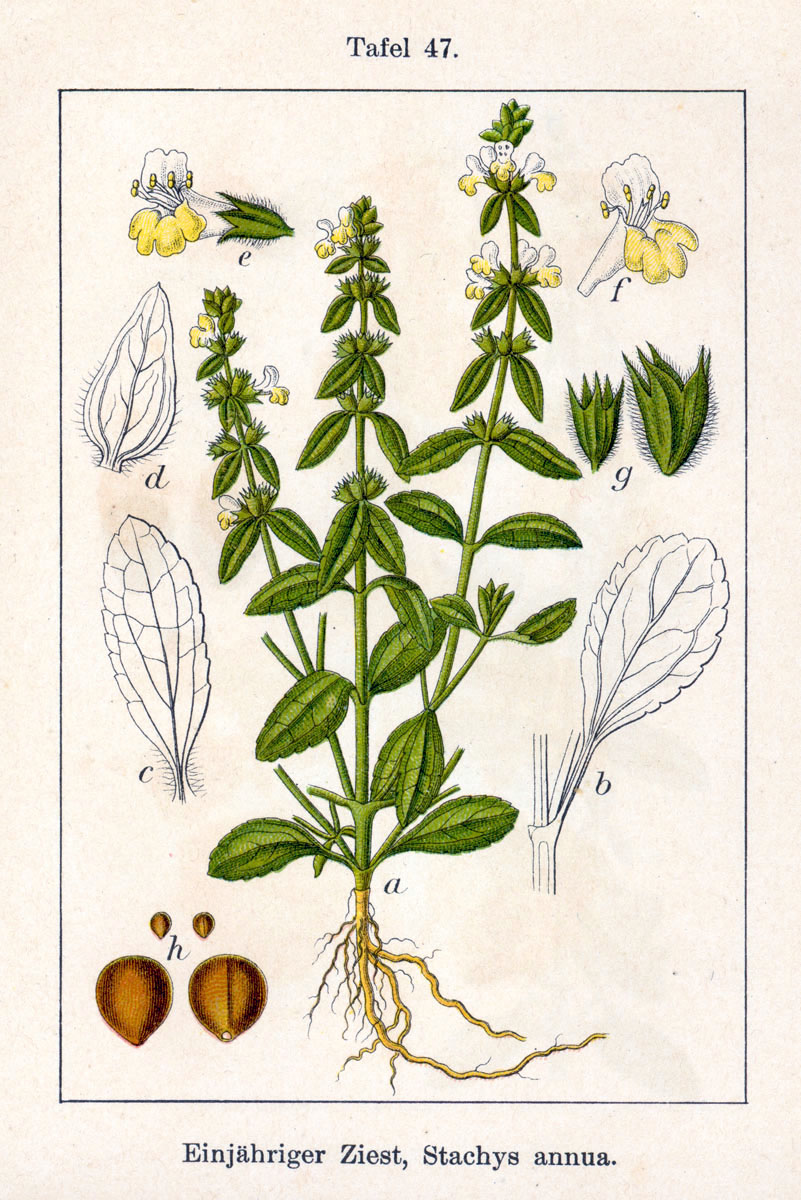
    Sources from the Roman Empire and the Bible document epidemics caused by the consumption of quail. The disease, referred to today as coturnism, only affected humans during certain migration periods. As the birds travel west to Europe, their flesh becomes deadly, but when they returned east, the birds are no longer toxic. Scientists believe the toxicity in quails comes from their own diet. Early speculation of quail toxicity thought the birds ingested plants like hemlock or henbane, but recent researchers believe that the culprit is Stachys annua, a plant that exhibits toxicity at consistent intervals with the quail migration (Bartram & Boland).

    Stachys annua

    Pitohui Birds:

    The pitohui birds, native to New Guinea, have a neurotoxin originally only thought present in poison-dart frogs (found in Columbia and Central America). The toxin, present on the bird’s feathers and bodily tissue, if touched, can cause nausea, numbness, burning, and sneezing. With more exposure, the neurotoxin can lead to severe symptoms such as convulsions and contractions. (Bartram & Boland). The concentration of poison in the pitohui birds is 3-times less than that of the poison-dart frog. Contact with a frog can lead to cardiac arrest and death, but these extreme issues are much less common after contact with the pitohui birds (Ligabue-Braun & Carlini). The neurotoxins found in both pitohui birds and poison-dart frogs can only develop with appropriate diet. Poison dart frogs, when raised in captivity, no longer have the neurotoxin, and scientists assume the same is true for the birds. The specific ingredient that causes the poisonous neurotoxin remains unknown (Bartram & Boland). The low concentration of neurotoxins in pitohui birds causes some scientists to believe that the toxin developed evolutionarily to deter against parasites. Research shows that these birds have one of the lowest rates of tick infestations compared to other species in the area (Ligabue-Braun & Carlini).

    Pitohui Birds

    Other:

    There are 13 other documented bird species that can harm or kill a human because of their own diet. Spur-winged geese, for example, eat a type of beetle that contains toxic material which causes severe skin blisters and death in humans (Bartram & Boland). More research is needed in the field of toxic birds to document reactions and determine causes of toxicity.

    Spur-Winged Goose

    Citations:

    Bartram, S. and Boland, W. (2001), Chemistry and Ecology of Toxic Birds. ChemBioChem, 2: 809-811. doi:10.1002/1439-7633(20011105)2:11<809::AID-CBIC809>3.0.CO;2-C

    “Basic Terminology.” U.S. National Library of Medicine, National Institutes of Health, toxtutor.nlm.nih.gov/01-002.html.

    Ligabue-Braun, Rodrigo, and Célia Regina Carlini. “Poisonous Birds: A Timely Review.” Toxicon, vol. 99, 2015, pp. 102–108., doi:10.1016/j.toxicon.2015.03.020.


    Picture Sources:

    https://commons.wikimedia.org/wiki/File:Spur-winged_Goose_RWD4.jpg

    https://en.m.wikipedia.org/wiki/File:Rectes_uropygialis_-_The_Birds_of_New_Guinea.jpg

    https://commons.wikimedia.org/wiki/File:Stachys_annua_Sturm47.jpg


  • Are All-Nighters in College Actually Beneficial?

    Are All-Nighters in College Actually Beneficial?

    In college, it’s hard to balance sleep and studying. Many students sacrifice sleep in the hopes that that time spent studying instead will positively impact their grades. However, lack of sleep has many negative consequences, such as negatively impacting learning, memory, and performance.

    Some students (yourself included) may “pull an all-nighter” (24 hours or more without sleep) before examinations in the hopes of better grades. However, many studies suggest otherwise. For instance, in one study, subjects were given the task to identify the presence of a “T” or “L” and the orientation of 3 diagonal bars. Participants that went 30 hours without sleep showed no improvement in performance, even after 2 days of post-recovery sleep. In another study, subjects were taught a motor task and then tested either after 12 hours of no sleep or 12 hours that included sleep; subjects tested with 12 hours of no sleep showed no significant change in performance. However, their performance improved by 18% after a night of sleep. Those tested within the 12 hours that included a sleep period also showed improvement in performance Another study found the average amount of sleep per night was found to be significantly correlated with GPA—students who slept for more hours each night tended to have better grades. Also, the average number of days per week that students got less than 5 hours of sleep was found to be negatively correlated, although weakly, with GPA. This supports the concept that sleep is required for learning and memory consolidation.

    In conclusion, sleep is vital in aiding learning and memory consolidation. So next time you’re considering pulling an all-nighter to study for a test, reconsider doing so. Those few extra hours you’d spend studying would be better spent sleeping so you can consolidate the information you’ve learned and perform better on the next day’s test!


    References

    Lowry, M., Dean, K., & Manders , K. (2010). The Link Between Sleep Quantity and Academic Performance for the College Student.
    Hershner, S. D., & Chervin, R. D. (2014, June 23). Causes and consequences of sleepiness among college students. Retrieved October 16, 2019, from https://www.ncbi.nlm.nih.gov/pmc/articles/PMC4075951/.
    Thacher, P. V. (2008, January 10). University Students and the “All Nighter”: Correlates and Patterns of Students’ Engagement in a Single Night of Total Sleep Deprivation. Retrieved October 16, 2019, from https://www.tandfonline.com/doi/abs/10.1080/15402000701796114.


  • Painting With all the Colors of the Wind Part Two

    Painting With all the Colors of the Wind Part Two

    PART TWO: WHY DOES SYNESTHESIA HAPPEN?

    So, we know a bit about what synesthesia is. But what actually causes these remarkable perceptions?

    Well the truth is, as usual, that no one really knows for sure. There is strong evidence for a genetic component to synesthesia, as it tends to run in families. Despite this, however, it isn’t inherited directly- that is,  the type of synesthesia, in terms of what stimuli will produce what sensory responses, doesn’t seem to be inherited at all. If your mother had lexical-gustatory synesthesia, for example, you are statistically more likely to have some form of synesthesia, but there is no  preference towards synesthesia involving vision or taste. This, along with the fact that many people have more than one type of synesthesia, suggests that all forms of developmental synesthesia share some common cause and genetic predisposition (Ward). What this genetic component actually does is still contentiously debated though.

    Investigations into synesthesia have been going on for many years. In 1690, John Locke wrote about a blind man who described the color scarlet as “the sound of a trumpet”, and the first well-documented case of synesthesia dates all the way back to 1812, when an Austrian doctor named Georg Sachs included descriptions of his own synesthesia in his medical dissertation (Ward). When the scientist Cornaz reviewed Sach’s paper again in 1848, it generated a lot of interest in the phenomena, and many more cases of synesthesia were discovered and investigated. Cornaz, however, thought that the color-grapheme synesthesia Sachs experienced was related simply to his eyes. He suggested that it was a result of having more color receptors in the eye, and therefore being able to detect additional colors that others couldn’t see (Ward). This explanation has been widely rejected, but it did spark the first significant interest in synesthesia, and people began to suggest other possibilities, such as Lusanna’s 1873 proposal that the “cerebral organs” for music, language and color might be close to each other and might overlap or connect in people with synesthesia (Ward).

    Interest in synesthesia seems to have waned during the early 1900s, but it was definitely revitalized in the 1980s, after the neurologist Richard Cytowic published several case studies and a popular book, “The Man Who Tasted Shapes”, about synesthesia. Although his suggestion that synesthesia might be related to the limbic system has also been discredited, he played a huge role in bringing attention back to synesthesia and starting a new era of neuroscientific and psychological research into it.

    In terms of the current research into the neural mechanism for what is happening in the sensory systems of synesthetes, there seem to be two major competing schools of thought. One views synesthesia as a result of structural differences in the brain and nervous system, and the other claims that it is due to functional differences in use of the neural circuits we all have. To break down each of these hypotheses, we can look a bit more closely into the arguments of each:

    Team Structural Differences
    As the researcher Baron-Cohen sees it, synesthesia is best explained by a difference in the number of connections in the brain- more and unusually strong neural pathways could allow for a physical connection between areas of the brain that typically respond to different senses/stimuli. It has also been suggested, by Dr. Daphne Maurer, that everyone is born with these additional connections, but that they are typically lost are we grow. Under this proposal, synesthesia is therefore a result of changes in development that neglect to “prune” these connections (Carpenter).

    There is data to support the idea that the brains of people with synesthesia are physically different than those without it. Among the many imaging studies that have been done,  a study by Weiss and Fink 2009 found that the intraparietal sulcus had more gray matter in people with color-grapheme synesthesia, and that it is also activated when those participants were viewing graphemes. In addition, imaging data from Rouw and Scholte 2007 found that people with color-grapheme synesthesia had significantly increased white matter connectivity in brain regions they believe to be implicated with synesthesia.


    Team Functional Changes
    Some scientists think that synesthesia is better explained as the result of using the same brain architecture and connections, but in a different way. Proponents of this hypothesis focus on neural pathways common to everyone, but generally inhibited, or blocked, in one direction. Having that pathway be disinhibited would then allow people with synesthesia to distribute information between these neurons differently (Carpenter, Grossenbacher and Lovelace 2001).

    For synesthesia, the major pathways considered are those that function with our sensory systems. A simplified version of these networks goes something like this: Information is carried from receptor cells across the body to different regions of the brain, where it is processed, put into context with the activity of other neurons, and used to form a comprehensive picture of the situation. Then, once the input has been consolidated, and a conscious perception or decision about the course of action has been made, the brain can send feedback and further instructions to the appropriate areas in what are called feed-backward connections.

    The idea, then, is that in synesthesia, the inhibitory nature of some feed-backward connections of the sensory systems is deactivated or “disinhibited”, which means that information may be flowing down paths and/or in directions it normally couldn’t.  This would allow a stimulus to interact with the system differently, and potentially “mix” information from multiple sensory inputs or areas, causing synesthesia (Carpenter).

    Grossenbacher, a lead advocate for this approach to looking a synesthesia, claims that this explanation is supported by the fact that certain drugs, such as LSD, can produce temporary synesthetic experiences. “I don’t think that new connections are forming in the brains of those individuals for a few hours and then disappearing,” he says. “What’s much more sensible is that existing connections become used in a way that’s neurochemically altered for a few hours.” (Carpenter). What may actually be causing the disinhibition of these pathways, on a molecular level, isn’t known yet.


    As with all complex scientific concepts, there are no easy answers when it comes to synesthesia, and as always, there are many suggested explanations. The “Teams” above are definitely not divided into black-and-white, entirely separate categories, and many have suggested ideas that combine different aspects of each theory we’ve discussed, along with novel insights.

    The most interesting proposals I’ve found are briefly summarized below:

    According to scientists, synesthesia could be due to…

    • greater communication in the feed-backward paths (due to either disinhibition or unusual neural connections, both of which could be genetically regulated (Ramachandran).
    • Abnormal connections in the brain (possibly genetic) from resulting from:
      • the way that excess connections are pruned during development (Carpenter, Ramachandran, Ward).
      • the growth of more neural connections than is normal (Ramachandran, Ward).
      • Changed axon-guidance, or pathway formation, that the connections will follow (Ward).
      • Disruption of the formation of border regions in the brain (Ward).
        • Border regions are essentially blockers between adjacent regions, made by inhibition or simply a lack of connections between the areas.

    Whatever the true cause of synesthesia is, there is no debating the fact that it is absolutely remarkable. Synesthesia  has also had tremendous impact on culture over time as well, with many influential artists, musicians, and writers purported to have a form of synesthesia. If you want to read about the way that synesthesia has affected a few people who have it, as well as society at large, check out Part Three here: https://2026fat.chargedmag.org/2019/10/painting-with-all-the-colors-of-the-wind-part-three/

    References

    Carpenter, S. (2001, March). Everyday fantasia: The world of synesthesia. American    Psychological Association, 32(3).

    Grossenbacher, P. G., & Lovelace, C. T. (2001). Mechanisms of synesthesia: Cognitive and physiological constraints. Trends in Cognitive Sciences,5(1), 36-41. doi:10.1016/s1364-6613(00)01571-0

    Hubbard, E. M., & Ramachandran, V. (2005). Neurocognitive Mechanisms of Synesthesia. Neuron,48(3), 509-520. doi:10.1016/j.neuron.2005.10.012

    Ramachandran, V.S., Hubbard, E.M. and Butcher, P.A. (2004). Synesthesia, CrossActivation, and the Foundations of Neuroepistemology. In G. Calvert, C. Spence and B. E. Stein (eds), The Handbook of Multisensory Processes (pp. 867-83). Cambridge, Mass.: The MIT Press.

    Rouw, R., & Scholte, S. (2010). Increased structural connectivity in Grapheme-Color Synesthesia. Journal of Vision,7(9), 108-108. doi:10.1167/7.9.108

    Ward, J. (2013). Synesthesia. Annual Review of Psychology,64(1), 49-75. doi:10.1146/annurev-psych-113011-143840