Psychology is one of the most relevant and interesting science fields that pertain to humans. Psychology is the science of mind and behavior, and it includes the study of conscious and unconscious phenomena, as well as our individual feelings and thoughts. Enjoy these entertaining comics that consist of a definition of the specific psychology concept being portrayed!
Self-serving Attributional Bias– The tendency to attribute failure and other unfortunate events to external circumstances (i.e.: bad weather) and to attribute success and fortunate events to oneself (i.e: “I’m so smart!”).
When it comes to self-serving attributional bias, the locus of control (LOC) comes into play. The concept of locus of control refers to a person’s belief system about the causes of events, and their attributions. The two categories of LOC are: internal and external.
If a person has an internal LOC, they’ll assign their success to their own hard work, talent, effort, or persistence. However, if they have an external LOC, they’ll credit any success to luck, their zodiac sign, or something external of themselves. Those who are more likely to display self-serving bias, especially when it comes to achievements, are people with an internal LOC.
Illusory Correlation– The belief that two variables are correlated when in fact they are not
When it comes to illusory correlation, this is our tendency to use information that comes to mind quickly and easily when making decisions about the future. The availability heuristic is the pairings of two variables that come to mind easily and are seen as correlated. For example, gluten intolerance and ice cream are mentioned together often, so this might cause us to think they are correlated when they aren’t. The comic above makes light of how horoscopes can sometimes be attributed to the reasons or events that occur to people.
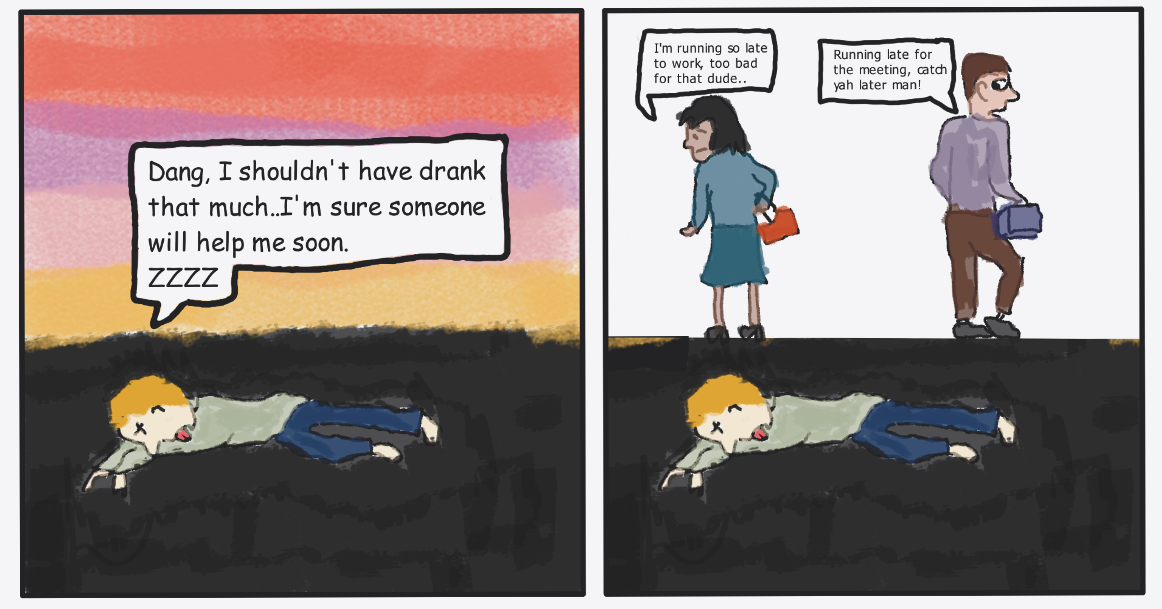
Good Samaritan Effect– Time (especially under pressure) is one external factor that prevents people from helping another person.
The Good Samaritan Effect in psychology shows us that time is an example of one external factor that prevents people from stepping in and helping another person. If you are under pressure to be somewhere or do something, you are less likely to help someone.
Source(s)
Gilovich, T., Keltner, D., Chen, S., & Nisbett, R. E. (2015). Social Psychology (5th ed.). WW Norton & Co.
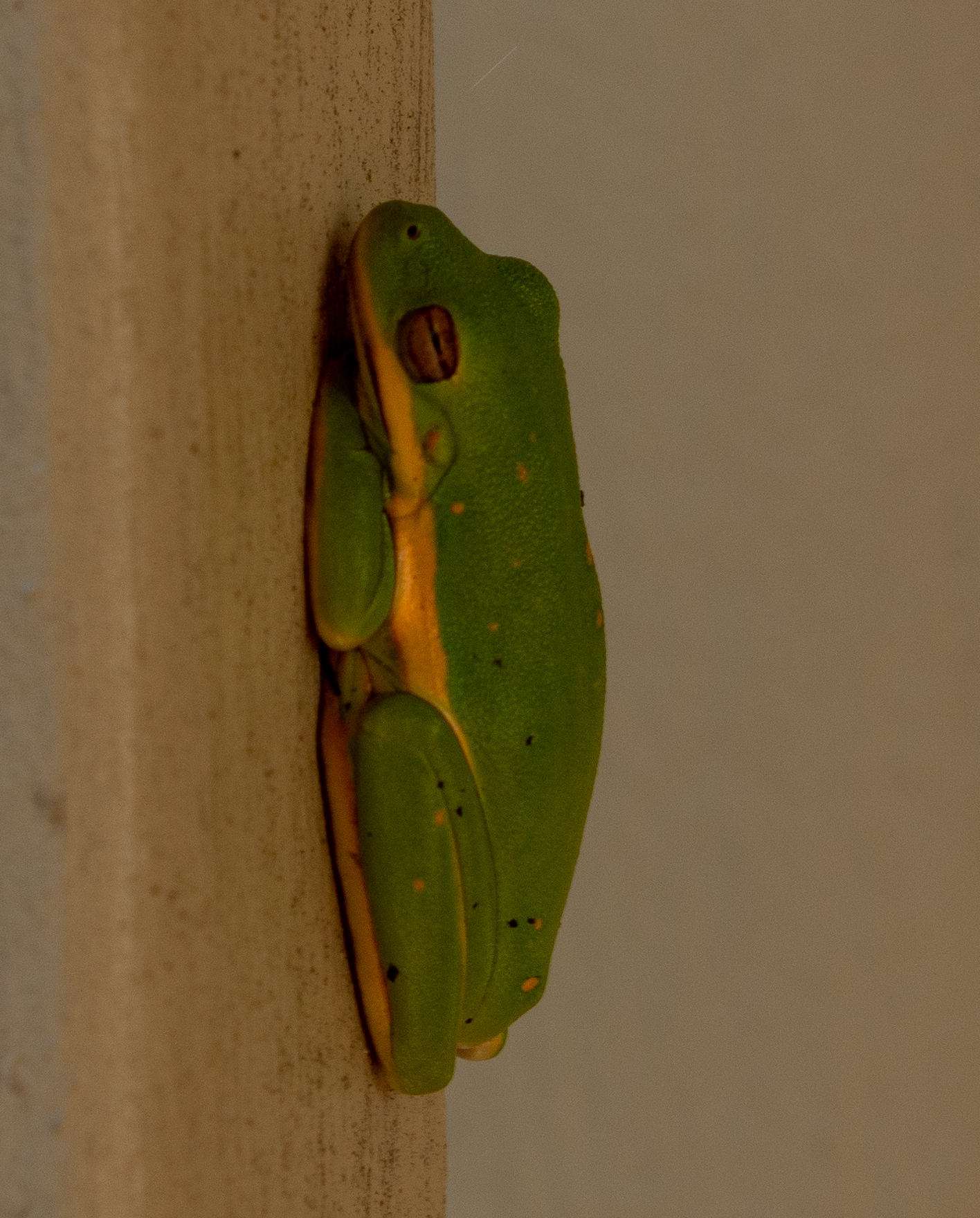
The green tree frog (Hyla cinerea) is a bright green, average sized frog. Adults are about an inch or two long, with females typically being slightly larger than the males. Most green tree frogs have a white stripe down the middle of their bodies, like the frog shown above. However, a minority of frogs don’t have this stripe. Some individuals, like the one shown above, have yellowish dots on their bodies as well. A green tree frog’s coloration can vary based on their environment – some individuals are more yellow, gray, olive, or brownish. An individual’s coloration is affected by lighting, stress levels, and temperature. The photo above was taken in warmer lighting, which explains why the frog is more of a yellow green.
Green tree frogs are found throughout the southeastern United States, with ranges in Texas, Louisiana, Arkansas, Mississippi, Alabama, Georgia, Florida, South Carolina, North Carolina, stretching all the way up into Virginia and Maryland.
Habitat & Behavior
Adult green tree frogs live in forested areas, which are located near freshwater access where they breed. These frogs become active in late spring each year, and go dormant in October. Frogs in the southern part of this range stay active all year, with frogs in the middle spending more time active than frogs in northern regions. You’re most likely to see these frogs active at night or at dusk, and you’re more likely to see an active green tree frog on a rainy day than a sunny one. While active, green tree frogs are most likely to be feeding, or moving to and from calling perches (used to signal nearby green tree frogs that they’re available for mating).
Breeding
Green tree frogs most often breed around permanent wetlands. Ponds, lakes, streams, and swamps are all common breeding grounds for green tree frogs. Human-built water structures are not off the table for breeding sites as well – you can often find breeding sites in all sorts of constructed water reserves. Breeding starts by one or a few males calling, with more males joining in the chorus. The chorus will swell as many males join, before going quiet. This cycle will continue for hours, from dusk into the early morning hours. There’s evidence that social signals between male green tree frogs have an impact on their testosterone and steroid levels, independent of calling behavior.
References
Burmeister, S., & Wilczynski, W. (2000). Social signals influence hormones independently of calling behavior in the treefrog (Hyla cinerea). Hormones and Behavior, 38(4), 201–209. https://doi.org/10.1006/hbeh.2000.1605
Dodd, C. K. (2013). Frogs of the United States and Canada. In Frogs of the United States and Canada. John Hopkins University Press. https://doi.org/10.17161/randa.v20i3.13960
Jennison, C. (n.d.). Species Profile: Green Treefrog (Hyla cinerea) | SREL Herpetology. Savannah River Ecology Laboratory University of Georgia. Retrieved September 29, 2021, from http://srelherp.uga.edu/anurans/hylcin.htm
Color vision deficiency, also known as colorblindness, is more common than one might think. 0.6 percent of women and 8 percent of men are born with colorblindness. The causes can be widespread, but the most common types of color vision deficiency are inherited.
How do we see color, and what is the reason for color vision deficiency?
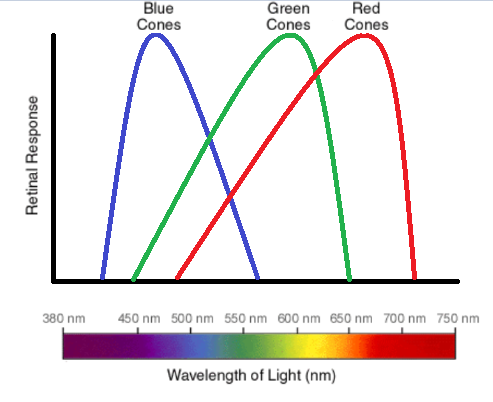
Light, as a wave, enters the eye through the pupil, and lands on the retina, the collection of cells on the back of your eye. The retina has cells called cone cells and rod cells. Rod cells can be stimulated by a very small amount of light, however they have a molecule called rhodopsin in them, which cannot differentiate between different wavelengths. Cone cells require more light to be stimulated, but they have photopsin in them which can help our brains differentiate between the different wavelengths of light. This is why cone cells allow us to perceive color. All cone cells do not have the ability to differentiate all colors of light though. There are 3 types of cone cells, and each is stimulated by a different range of wavelengths due to the type of photopsin it possesses.
Because the ranges overlap for some wavelengths, sometimes cones can work together to differentiate certain colors. For example, the wavelength 625 nm, which corresponds to the color yellow, stimulates both red cones and green cone cells. Both of these cell types accept the 625 nm wave and send the signal to your brain that allows you to perceive yellow.
There are several different kinds of color blindness, and the different kinds can be brought about by different causes. Sometimes colorblindness is caused because there is an absence of one or more types of photopsin in the cone cells on the retina. Other times it is caused because the photopsin in the cone cells is absorbing a range of wavelengths that is abnormal.
Dichromacy is a type of color blindness where the subjects only possess 2 of the 3 normal photopsin types. Protanopia is a condition where the subject has normal green and blue photopsin molecules, and defective or absent red photopsin molecules. Deuteranopia is a condition in which the subject has normal blue and red photopsin molecules, and defective or absent green photopsin molecules.
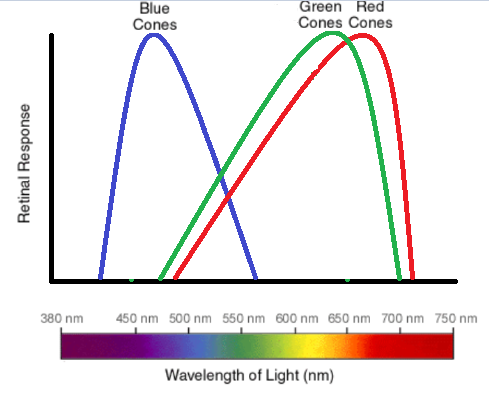
Trichromacy is a condition in which subjects possess all three photopsin types, but one of more of the photopsin types on their retinas absorbs an abnormal wavelength range. One of the most common forms of colorblindness is red-green color vision deficiency. This is caused either when the wavelength absorption peak for the red photopsin molecules is shifted toward the lower wavelengths (i.e. closer to the green wavelength absorption peak), or when the green wavelength absorption peak gets shifted toward the higher wavelengths (i.e. closer to the red wavelength absorption peak). These abnormalities are called protanomaly and deuteranomaly, respectively, and both of them cause an individual to have a lower ability to distinguish the difference between red and green.
The approximate retinal response of individuals with deuteranomaly. The retinal response of individuals with protanomaly looks similar, with the green and red cone peaks close together. This is what gives those individuals trouble with distinguishing differences between red and green colors.
If you’ve been on Facebook recently, you may have seen videos of the reactions of colorblind people putting on colorblind glasses. En-chroma is a brand that has popularized what they call “color blind lens technology”. The technology works by selectively excluding wavelengths of light where the red and green peaks overlap. These wavelengths stimulate both the green and red cones at high levels in individuals with protanomaly and deuteranomaly. Because the glasses filter out these wavelengths, it helps the individual to see more differences between red and green!
Throughout history, humanity’s view of the universe has changed drastically. For a long time, people believed that the Earth was all there was, with a dome high above it that had pinpricks they called stars. Later, they believed the solar system was the extent of the universe. Then that view expanded to the galaxy as we realized the pinpricks were actually other suns. Now, we believe there is a universe beyond even what we can observe, with other galaxies than our own populating space. When our understanding of the universe allowed us to understand that other stars exist, there began to be questions of extraterrestrial life around other stars and whether we on earth could somehow communicate with it. In the 1960’s, a man named Frank Drake wrote a book exploring the chances of life on other planets that was intelligent and capable of communicating with Earth in our galaxy. The book lead to an equation that expresses this chance numerically:
N = R * f(g) * f(p) * n(e) * f(l) * f(i) * f(c) * L
This equation has many terms that are not able to be calculated exactly, but they do lay extremely good groundwork for an estimate of intelligent, communicative life. This equation got experts talking about what they thought the odds for life in the universe could be and helped encourage the search for extraterrestrial life. This equation is also really easy to use to develop your own guess on the chances of extraterrestrial life. Breaking down this equation, there are three categories the values can be put into based on what factors they relate to.
Astronomically Based Values
The first three values in the equation are values that are gained from observing the galaxy. They are astrophysical values that, with our current scientific capabilities, are reasonable to calculate somewhat accurately. The first value, R, is the rate of star formation in the galaxy. It can alternatively be the number of stars estimated to be in the galaxy. It is the starting point of the equation, as most of the other terms are fractions that whittle this value smaller and smaller as the criteria gets more specific. The current estimate of stars in the galaxy is between 100 and 400 billion stars. The second value, f(g), is an estimate of how many stars in the galaxy are suitable for hosting planets with life. Stars that can host planets with life must be long living and steady stars and they cannot have large fluctuations in temperatures and intensity. This value is currently estimated to be between 5 and 10 percent, meaning .05 to .1 for use in the equation The third value, f(p), is a measure of how many of those suitable stars actually have planetary systems. For example, stars that are in binary systems are thought to very rarely host planetary systems. This value is often estimated at about .5, as about 50% of star systems are binaries or multistar systems and the other 50% are single stars.
Biologically Based Values
The next three values of the Drake equation are based on biological factors with life. The first one, n(e), is how many planets per star system are suitable for life. This mainly means how many planets are in the habitable zone of a star. The habitable zone is the distance from a star where planets can have water in all three phases, solid, liquid, and gas. The value to plug into the question can be found by taking your estimate of the number of planets in the habitable zone and dividing it by the estimated total number of planets in the system. For a system like our solar system, this would be .125. The next value, f(l), is the fraction of planets in the habitable zone that will actually have life form. This is where the values in the equation begin to vary greatly from person to person. Some people argue that if life can form it will and put this value at 1. Others argue that life is extremely rare to happen, putting the value closer to .001, or even smaller. Since we have so little understanding of how life started on Earth, it is hard to estimate its rarity in other places. The final value, f(i), is the fraction of cases in which life develops intelligence. Once again, this is a controversial value to choose. Currently, we don’t know if life always evolves to intelligence. It can be argued that we did, so why wouldn’t other planets? However there have also been millions of species on our planet, and only one has evolved to our level of intelligence: humans. With those odds, intelligence seems rare.
Sociological Based Values
The last two values of the Drake equation are sociological factors. The first one, f(c), is the number of intelligent races that have the technological capability and desire to try and communicate with other species. An example of this coming into play may be with an intelligent species that lives underwater. It would be difficult, if not impossible, for them to invent electronic devices like ours, and things like radio telescopes to communicate with might never be designed by them. Experts tend to estimate this as a fairly large value because it is thought by many that upon developing intelligence, a species will continually improve their technology. This is believed to always lead to communication technology in the process. The exception to this are species that face rare environmental factors that dissuade the invention of specific types of technologies, such as the underwater species example. The last value, L, is the lifetime of a civilization. This is as simple as it sounds. This value is necessary because we live so far from other planets that it would take a very long time to communicate with them. The very long time it takes to send a message means there needs to be long standing civilizations to continue any conversations, otherwise they would not be able to truly communicate with us. This value is often estimated to be between 1,000 and 100,000,000 years.
Concluding Thoughts
Current estimates of the value calculated from the Drake equation range from as low as .00000000000091 to 15,600,000 planets that host intelligent, communicative life. The value can be much larger or lower than this as well, but there is no “correct” answer. You can find your own solution by plugging in values that you think are true. All you have to do is start with the number of stars in the galaxy and fill in what fractions you believe fit for the other values, and choose a lifetime to use. If your answer is greater than 1, your chosen parameters suggest that life exists elsewhere in our galaxy. However, if your answer is less than 1, your parameters suggest that we are likely alone in the galaxy. As long as you can give a reason for the values you chose, you have created your own theory for life in the universe.
Burchell, M. (2006). W(h)ither the Drake equation? International Journal of Astrobiology, 5(3), 243-250. doi:10.1017/S1473550406003107
Drake, F.; Sobel, D. (1992). Is Anyone Out There? The Scientific Search for Extraterrestrial Intelligence. Delta. pp. 55–62. ISBN0-385-31122-2.
In 1896, the French scientist Henri Becquerel observed spontaneous emissions from uranium and called this phenomenon radiation. The first recorded radiation treatment occurred the same year. Early successful uses of radiation to treat various illnesses and ailments captured the public imagination—everyone hoped their bodily problems could be cured with these seemingly limitless materials.
Marie Curie’s discovery of radium in 1898 also fascinated the public. Its radioluminescence gave it a magical quality, and companies were quick to churn out radium-infused health and wellness products including toothpastes, soaps, beauty creams, and radium pads that could be placed on afflicted body parts. Liquid sunshine cocktails, or radium-infused beverages, became a health fad in the early 1900s. Upper-class consumers in cities around the world were eager to get their hands on these energizing elixirs which were advertised as all-purpose cures.
The public’s love affair with radium fizzled out as reports rolled in of painful diseases and deaths associated with radiation poisoning. One of the most famous examples was the 1920s Radium Girls case. Many women working at clock factories developed osteonecrosis (bone tissue death) and osteosarcomas (bone tumors) around their jaws along with other painful conditions. Over a dozen of the women died. Investigators discovered that the women were interacting with toxic levels of radium by constantly pointing brushes on their lips—the brushes being covered in glow-in-the-dark radium paint, of course.
Eventually, the FDA and FTC (and health officials in other countries) cracked down on the use of radium in consumer products as awareness of radiation poisoning grew. The dangers of radioactive materials overtook the public consciousness in 1945 when the devastation of America’s atomic bombs was revealed. Subsequent studies on radiation and nuclear accidents Three Mile Island (1979) and Chernobyl (1986) further solidified fears of radiation and hindered the development of nuclear medicine.
This is because we are operating under the linear no-threshold (LNT) radiation paradigm, which is based on the ideas that all radiation exposure levels are harmful and each increment of exposure adds to the overall risk of negative health effects. However, a different paradigm emerged in the 1990s. Radiation hormesis, which is still very controversial, is based on the ideas that low levels of radiation exposure produce different effects than high-level exposure. In fact, small doses of radiation may improve health!
Some scientists believe in this paradigm because the body has already evolved to protect DNA against low-level radiation that occurs naturally. Free radical scavengers are a type of radioprotector molecule that can repair the loss of electrons or hydrogen atoms. This naturally occurs in cellular molecules due to metabolic processes but is also caused by radiation exposure. Free radical scavengers can repair this low-level radiation damage. Another concern with radiation is DNA mutation. It is estimated that 10,000 genetic modifications already happen every hour in your body! Whether the cause is a natural error or low-level radiation exposure, enzymes are constantly checking and repairing DNA. Low-level radiation exposure can also cause cell death during reproduction and interphase. Instead of viewing this as a harmful effect, radiation hormesis interprets this as a positive strategy for the body to prevent damaged cells from reproducing.
This controversial framework is supported by several studies. Among atomic bomb survivors, those exposed to low levels of radiation experience a lower rate of leukemia than average people. This is contrasted by the higher rate of leukemia among survivors exposed to high levels of radiation. Under the LNT paradigm, we expect the leukemia rate to be higher than average even among survivors exposed to low levels of radiation, which is not the case.
Other experimental studies demonstrate health benefits from low doses of radiation including reducing the likelihood of neoplastic transformation (when cells begin to grow abnormally or excessively, which can be benign or cancerous), activating enzymes and mechanisms that protect and repair DNA, and stimulating the immune system. Again, the LNT paradigm leads us to expect the opposite results, that even low-level radiation would negatively impact these areas of health.
So what does radiation hormesis really tell us? Is it okay to guzzle liquid sunshine cocktails again if the radium dose is small enough? Let’s hold off on that…in the meantime, we can take inspiration from the radiation hormesis framework and curb our knee-jerk negative reaction to anything involving radiation. Who knows what will be discovered if we open our minds to the possibilities of nuclear medicine and nuclear energy!
(Reminder: refrain from immediately ingesting any new discoveries…)
Here are a few of the memes I made throughout the semester for BIOS 4607, Molecular Biology of Microbes, taught by Dr. Brian Hammer. At the risk of making these worse, I have provided a brief explanation under each meme.
An auxotrophic mutant is one which has a mutation in a gene that produces an essential product for the organism. If the organism is plated onto media with the required substance, auxotrophs will be able to grow. A common example of this phenomenon are histidine mutants, denoted His-, which are unable to synthesize the amino acid histidine. Because histidine is essential for growth, this means that the His- mutants will only grow on media with histidine. However, by streaking auxotrophic colonies onto limiting media—in this case, media lacking histidine—the only mutants that will grow are those which somehow reverted back to a histidine-producing state. For example, if the auxotrophs were unable to produce a histidine due to a nonsense mutation—one which causes ribosomes to halt translation prematurely and is often the result of a single nucleotide change—reversal in one of the descendants of the mutant will be quite likely. However, these revertants will only be apparent once their His- friends are dead as a result of selecting against them.
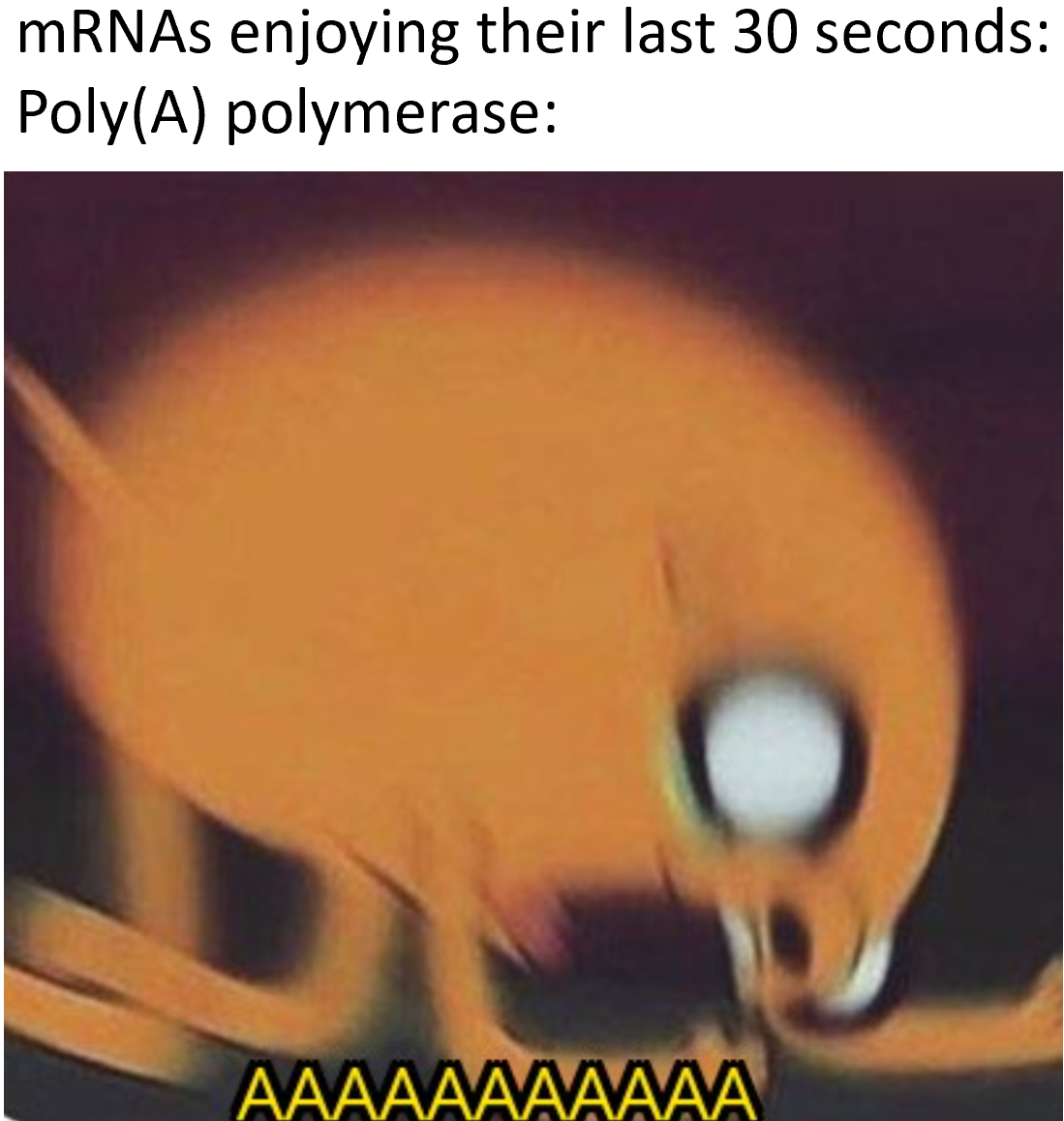
Messenger RNA, or mRNA, is transcribed from DNA by RNA polymerase. The strand of mRNA is then used by ribosomes, which move along the mRNA from its 5′ end to its 3′ end as they build proteins. RNA often has secondary structures, which form when the RNA loops around and binds to itself. These patterns can be quite intricate and sometimes result in complex molecules such as enzymes, which are called ribozymes when made out of RNA. With regards to ribosomes (which are themselves partially made out of ribozymes and other types of RNA), loops which form at the 3′ end of the mRNA help knock the ribosome off the strand, at which point it will be degraded by enzymes called exoribonucleases. One enzyme which assists in this process is polyadenylate polymerase, which adds lots of adenine (A) to the end of the mRNA to allow exoribonucleases to digest the strand properly.
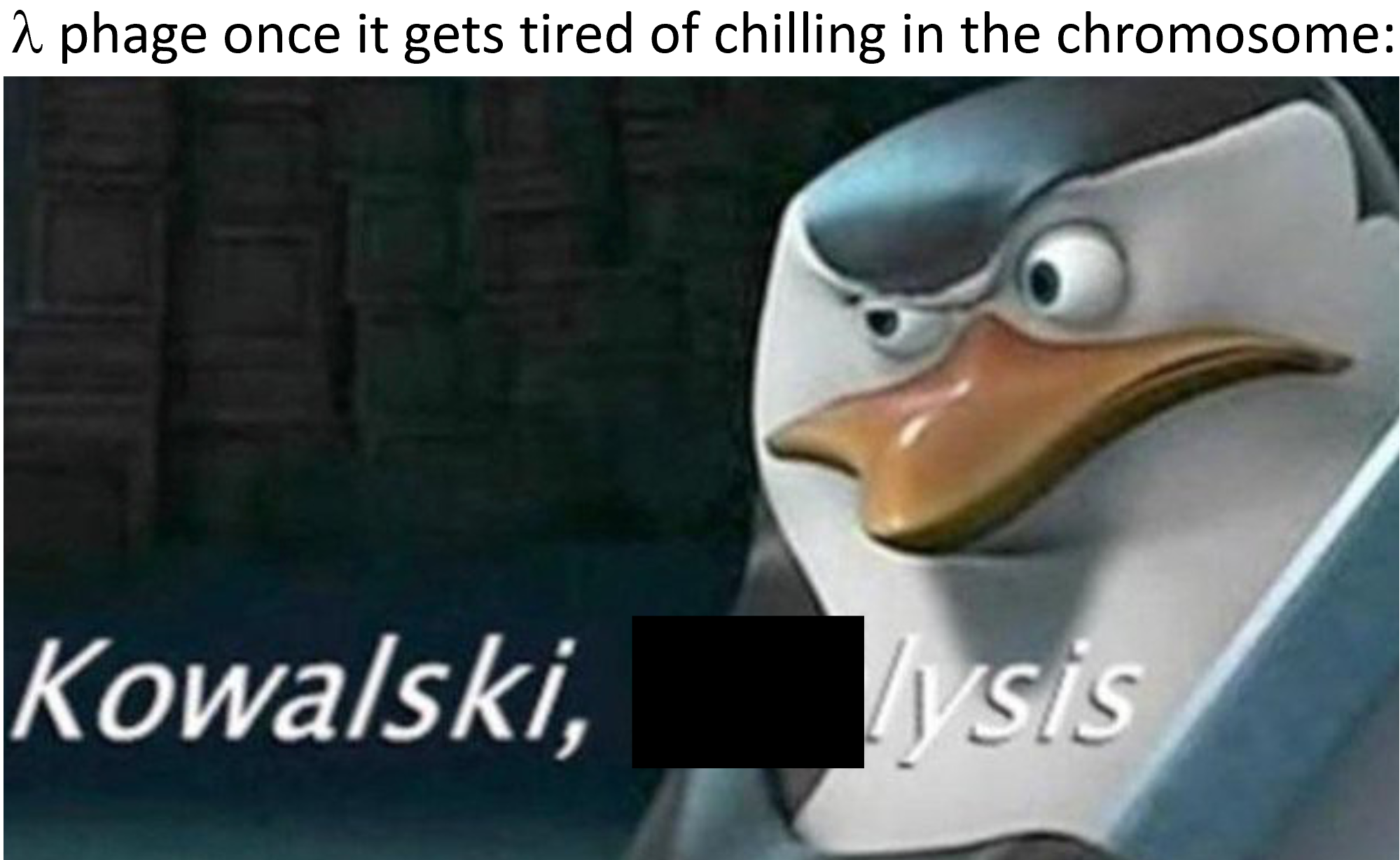
This is a play on the famous “Kowalski, analysis” meme. Lambda phage is a well-studied bacterial pathogen which, instead of replicating upon arrival in its microbial host, integrates itself into the chromosome, where it may stay indefinitely. Naturally, the virus does not decide to leave its host once it gets tired of “chilling;” rather, it is typically induced to exit its host by stressful conditions such as exposure to ultraviolet light.
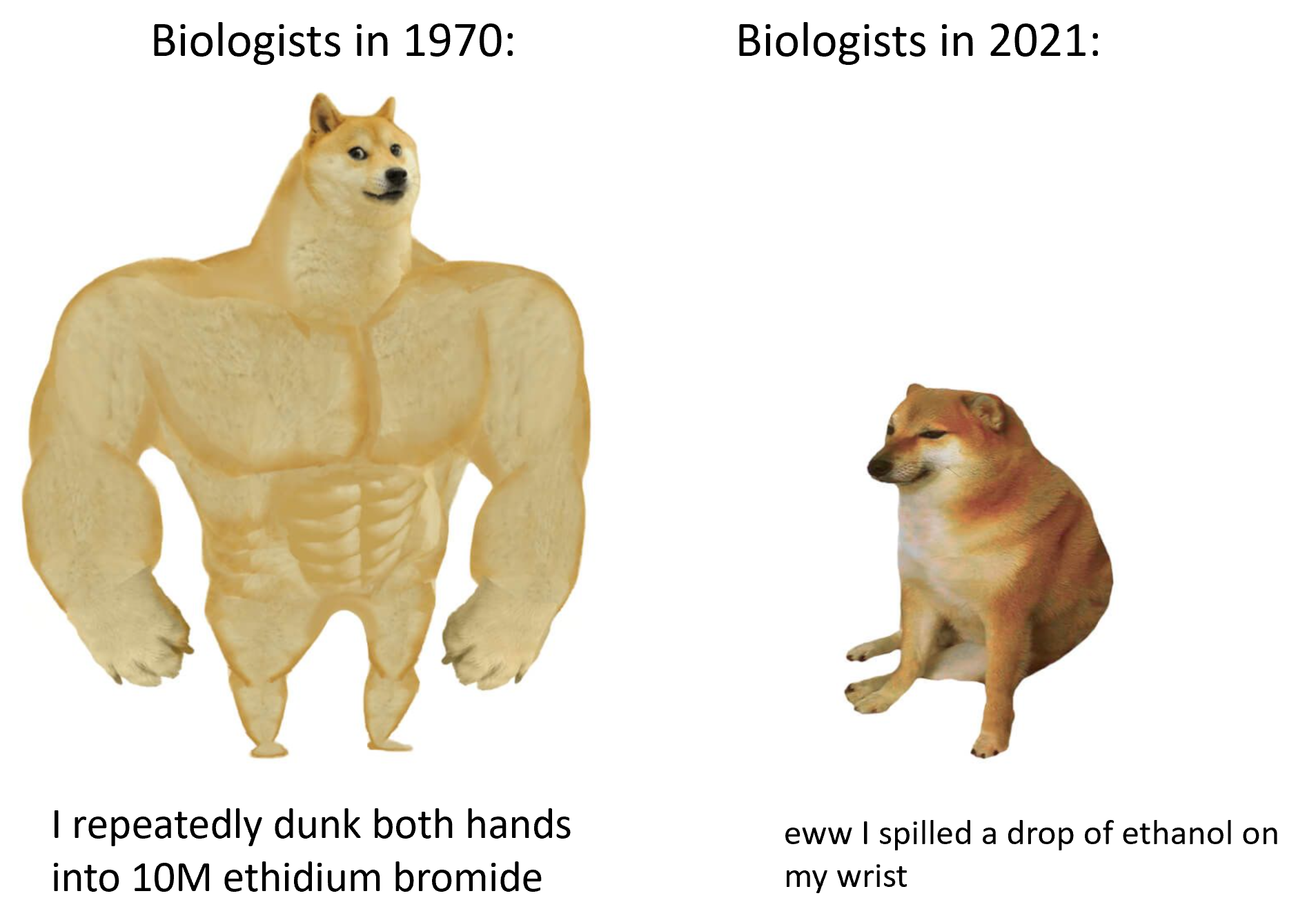
This meme was the result of a comment my professor made about how when he was a student in the 70s, he knew academics who would use their bare hands to pull electrophoresis gels out of solutions with ethidium bromide, a highly toxic mutagen. In general, safety protocols have improved significantly over the last century, to the point where certain practices seem like jokes today; for example, chemists using their mouths and a hose to pipette dangerous chemicals. Another famous example is the discovery of phenylthiocarbamide, a chemical which only certain humans can taste. This discovery was made when the chemist studying it accidentally spilled some powder into the air and tasted nothing, whereas his nearby colleague told him that whatever he was working with tasted disgusting. Because it was common to taste chemicals at the time, the chemist brought the powder to various people to see who could taste it and who could not. Fortunately, the compound isn’t terribly toxic at usual doses, though nowadays I doubt the scientific community would be so nonchalant about a scientist casually testing a chemical on civilians.
As William and Mary were crowned King and Queen of England, marking the end of the Glorious Revolution and economic dominance of the Dutch Republic, a much less momentous event was taking place. About six hundred miles from the Palace of Westminster, an encyclopedia was published by Johann Weikhard von Valvasor, a historian, scientist, and traveler from southeastern Europe. Spanning over three-thousand pages, the text contains the first known mention of both vampires and cave salamanders, the latter thought to be the offspring of dragons by locals. These legends arose after the pale, writhing creatures were washed out into the surface world by heavy storms; at the time, the existence of European cave fauna was largely unknown.
Carniolan polymath Johann Weikhard von Valvasor. As our friend lived over a century before the invention of the photograph, I will blame his appearance on the draughtsman. It is worth noting that the first person to attempt to capture a permanent image was Charles Darwin’s uncle, Thomas Wedgwood (also his wife’s uncle, but we won’t get into that).
The species swept from its caverns was not described scientifically until eight decades later, when a specimen was brought to an Austrian naturalist who named the animal Proteus anguinus. The name refers to the shapeshifting, prophetic sea god Proteus of the Greeks and the Latin word for snake, anguis, though it is commonly referred to as an olm. Although Proteus could function quite well as either the name for an English Mastiff or the generic form of a blood-thinning medication, it is not the most descriptive name for Europe’s dragons. Indeed, the name’s shapeshifting implications would be better suited for a salamander species which does not exhibit neoteny—a state where the sexually mature form of a species retains characteristics from its juvenile stages of life.
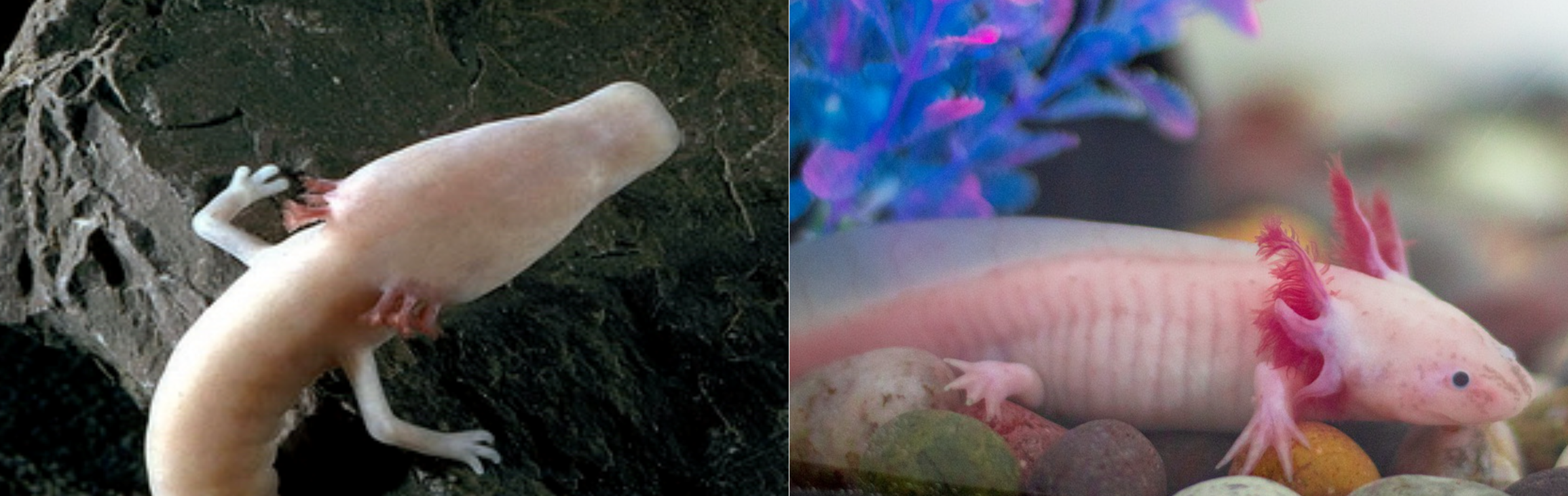
If you think back far enough, you might recall the charts your kindergarten teacher showed you describing the stages of a frog’s life cycle, beginning with an egg which becomes a tadpole, continues to a froglet phase, and ultimately achieves the mature form of the animal. A salamander’s life cycle is similar, but instead of tadpoles and froglets there exists a larval stage, an anatomical phase along a continuum from the newly hatched salamander to the terrestrial adult without a tail fin or gills. However, given that P. anguinus spends its entire life underwater, inhibition of the final stages of transformation allows the organism to remain fully aquatic. This can also be observed in its more well-known relative, the axolotl, which spends its entire life in the waters of Lake Xochimilco in central Mexico. In fact, the cute tufts on the sides of both the olm and the axolotl are their neotenic gills, which are otherwise absorbed into the body for nutrients in species that undergo metamorphosis into standard, terrestrial salamanders. However, unlike their Mexican relatives(1), the olm’s post-larval form cannot be induced by placing it in shallow water, though the reasons for this are unknown.
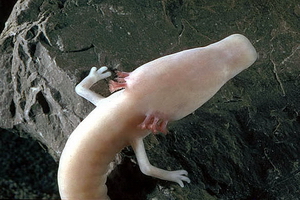
The eyeless olm (left) and its beloved cousin, the axolotl (pronounced ah-sho-lot). Note the pink, neotenic gills protruding from behind the heads of both organisms. Although most olms are white due to a lack of pigmentation, this axolotl is a mutant that has become popular in the pet trade; most wild axolotl are dark gray.
Given the early discovery and peculiarity of the little dragon, it has attracted a great deal of scientific attention. In the early years of olm experimentation, a cistern at the University of Vienna was used to house a small population of the slender creatures. The man in charge of the procedures, Dr. Paul Kammerer, claimed that olms were capable of giving birth in colder waters, whereas eggs would be laid in warmer ones. These assertions were backed by reports from the 19th century, including this detailed statement from a county judge:
“On June 17, 1852 I, as well as members of my family and members of my neighbor’s families, witnessed the birth of a young olm.”
-Geck von Verch
Unfortunately, Kammerer was later accused of having forged results to support an unproven hypothesis, which shed doubt on much of his previous work. Despite some reasons to believe that Kammerer was innocent, the accusations proved too much to handle; it was not long before his body was found, gun in hand, in the Austrian mountains. Thus, considering that reports for live birth are either old, dubious, or both, it is unclear whether olms are capable of doing so.
Nevertheless, the studies performed on this organism are fascinating, and one of the most recent projects hopes to sequence the entire genome of the cave salamanders. The salamander family is renowned for its immense genomes, and the olm seems to surpass all of its genomically well-endowed cousins in the surface world. Researchers claim that the olm’s cells have about fifteen times more DNA than a human’s, resulting in the largest known genomes in the animal kingdom. To highlight just how enormous this is, consider this article, around 10,000 characters long. If you can imagine what four and a half million copies would look like, you’ll have a good idea of how much genetic information is encoded in each of this subterranean creature’s cells.
Due to the high activity of retrotransposons, salamander genomes have become far larger than those of most animals. Think of retrotransposons as a genetic copy-and-paste mechanism—assuming the copy is not inserted into a functional part of DNA, the genome may continue to expand, notwithstanding the cellular costs associated with an increase in DNA. Most organisms have introns in their DNA, or regions that do not encode for proteins. The proliferation of retrotransposons can result in huge introns, which means that cells will take longer to divide. Studies of our aforementioned Mexican friends have suggested that these large genome sizes might be what allow salamanders to regrow body parts(2), as slower cellular development results in less of a distinction between different kinds of salamander tissue. Once cells are damaged, they are able to return to an embryonic state until the lost body part is regenerated. Thus, continued studies of the olm may provide valuable insight into how genomes evolve and how humans might use regeneration to grow tissue.
At present, humans are reliant on mechanical devices to improve the lives of amputees, though studies of the olm might result in novel biomedical techniques to regrow human tissue. These problems disproportionately affect communities of color, with black Americans over three times as likely as white Americans to receive an amputation.
The olm is even mentioned in one of the most famous (or infamous, depending on your worldview) texts in human history:
“Far from feeling any surprise that some of the cave-animals should be very anomalous, … as is the case with the blind Proteus, … I am only surprised that more wrecks of ancient life have not been preserved, owing to the less severe competition to which the inhabitants of these dark abodes will probably have been exposed.”
-Charles Darwin, On the Origin of Species, 1859
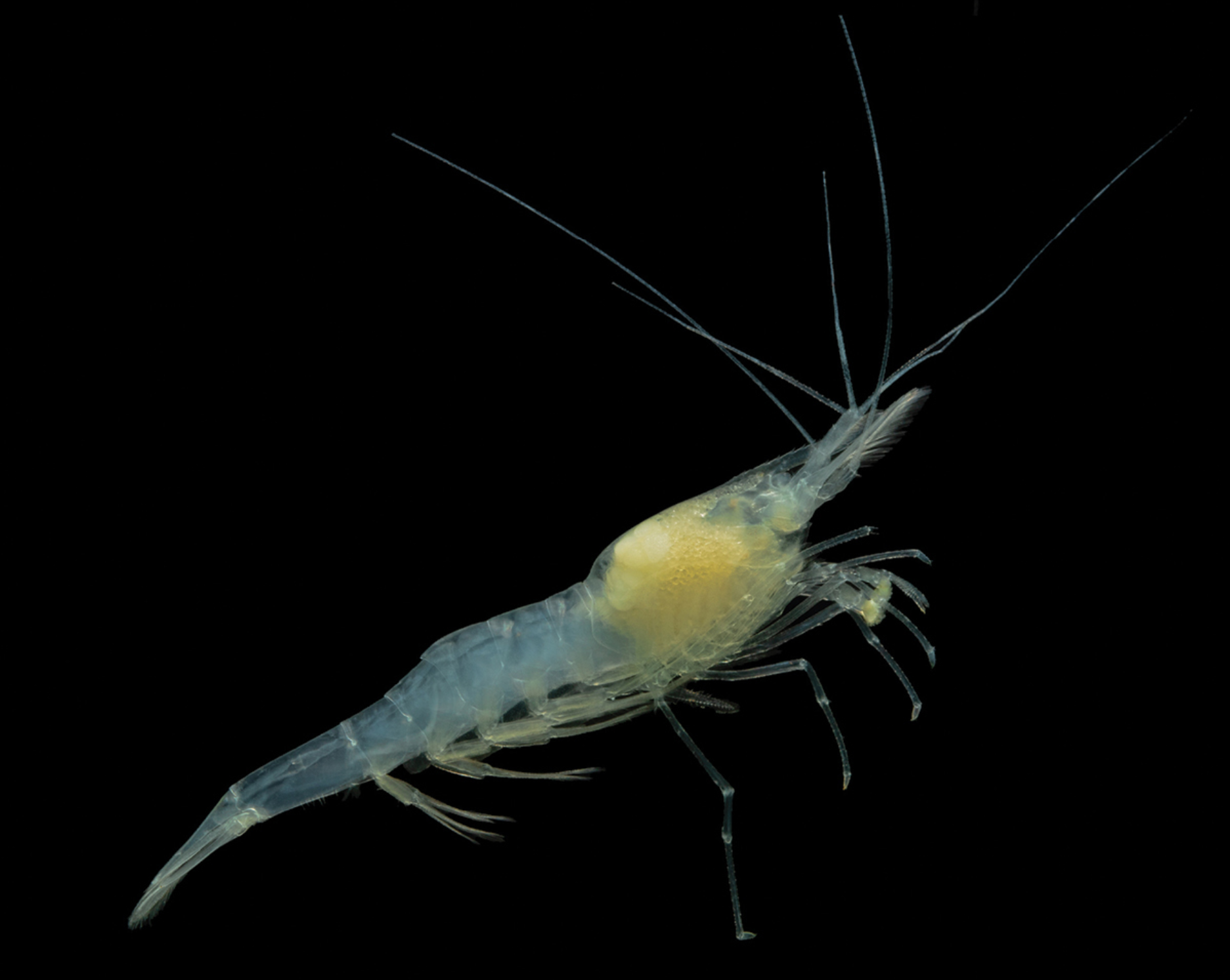
Barring Charlie’s insinuation that this adorable creature is, in truth, a wreck, it is interesting that few caves boast an abundance of organisms. You’ll hear no complaints from the olm, however. Despite its small stature, it is the apex predator of its watery underworld, which consists of a variety of locations throughout Slovenia, Croatia, and Bosnia-Herzegovina, as well as a small corner of northeastern Italy. This is a considerable range for a troglobite, or cave-dwelling organism. For comparison, consider the Alabama cave shrimp, a troglobite found only a few hours from my university. The animal’s known range was confined to a few caves in the same county until a 2019 report introduced a seventh cave in the adjacent county with a whopping six shrimp. I should also mention that the discovery of this colossal population was the result of two separate surveys a year apart, each yielding two and four organisms, respectively.
The endangered Alabama cave shrimp, Palaemonias alabamae. Note the lack of eyes and pigmentation, common traits amongst troglobites.
Because troglobites are highly adapted to their subterranean environments, they are unable to survive on the surface, which means that travelling to other caves is impossible unless the caves are connected underground. Thus, organisms are often confined to a single cave either until the species goes extinct or until a passage to another cave opens. Due to high adaptation to their subterranean environments, troglobites are extremely susceptible to environmental change, especially from pollutants like heavy metals or pesticides. An accident in, or poor management of, an industrial facility may release enough toxins to devastate a cave’s fauna beyond repair, and given that most troglobites inhabit narrow ranges, there are few places to turn to once a cave is contaminated. Moreover, even if a connection to another cave is present, pollutants may be able to travel throughout these systems just as well as the native troglobites. As such, many cave-dwelling organisms are at risk of extinction, including our beloved olm.
Sadly, olms are far from the only amphibians in such a predicament. The International Union for Conservation of Nature, known for its Red List of Threatened Species, lists two out of every five amphibian species at risk for extinction. Despite their potential for developing medicines, many amphibians are past the point of no return, with the only hope of surviving in the hands of the species driving their extinctions. The olm is itself listed as vulnerable, the least worrisome category for a threatened species, though its specific physiological requirements could easily knock it down to the endangered or critically endangered categories should any significant changes occur to their environment. These problems are exacerbated by the fact that female olms only produce eggs every dozen years or so, and any offspring resulting from these rare clutches must survive for fifteen years to reach sexual maturity. Fortunately, conservation efforts are underway in Slovenia(3) and a large population of olms is held in a French cave for research, thus ensuring that the species can be reintroduced to its natural habitat if necessary.
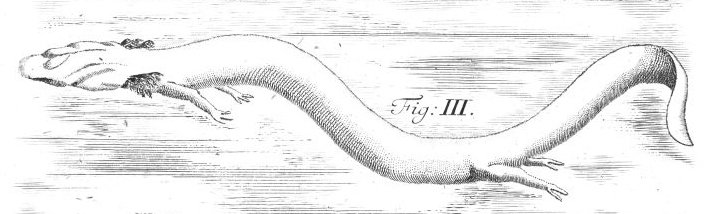
The first drawing of the olm in a scientific text, published around 250 years ago. At around ten inches, it is hardly a threat to Smaug’s gold, though its serpentine figure leaves little question as to how this myth arose.
An amphibian’s lifespan typically correlates with its body mass, with heavier amphibians outliving lighter ones. Ever enigmatic, the olm defies this pattern with an average life expectancy of seven decades and an estimated maximum age of over a hundred years even though it rarely exceeds twenty grams. For comparison, the iPhone 12 weighs about 164 grams, or eight large olms. The baby dragon’s closest competitor in the Amphibian Longevity Olympics, the Japanese giant salamander, fails to surpass these ages despite often weighing as much as a thousand olms. I like to imagine that as Louis Armstrong perfected his trumpeting, fascist sentiments boiled in Europe, and F. Scott Fitzgerald penned the book that would highlight the decadence of the 1920s, a little olm patiently laid her clutch of eggs in the Stygian depths of an unmarked cave. Throughout the past century, one of her offspring feasted on shrimp, explored its domain, and had a few olms of its own; now, weary from its long life, it will soon rest, all the while oblivious to the chaos of man.
Notes: (1) Although olms have not been documented morphing into a terrestrial form, axolotls occasionally undergo this transformation. Here is an especially informative video which, other than the expected butchering of a Nahuatl word, presents an exceptionally accurate and carefully detailed overview of this process: https://www.youtube.com/watch?v=MxA0QVGVEJw&ab_channel=Rathergood (2) The regeneration process is depicted in the following video, released by the Postojna Cave YouTube channel: https://www.youtube.com/watch?v=YLO8DJJgJQ0&list=LL&index=7&ab_channel=PostojnskajamaCaveGrotteH%C3%B6hle (3) A cave system in Slovenia where many olms live, containing a tank of specimens for public viewing: https://www.youtube.com/watch?v=HnkZFn4j4tM&ab_channel=PostojnskajamaCaveGrotteH%C3%B6hle
Image Credits: Axolotl, photo from KinEnriquez and used under Pixabay License. Arne Hodalič, CC BY-SA 3.0 , via Wikimedia Commons Joseph Nicolaus Laurenti, Public domain, via Wikimedia Commons Niemiller ML, Inebnit T, Hinkle A, Jones BD, Jones M, Lamb J, Mann N, Miller B, Pinkley J, Pitts S, Sapkota KN, Slay ME (2019) Discovery of a new population of the federally endangered Alabama Cave Shrimp, Palaemonias alabamae Smalley, 1961, in northern Alabama, Subterranean Biology 32: 43-59. https://doi.org/10.3897/subtbiol.32.38280, CC0, via Wikimedia Commons The U.S. Army, Public domain, via Wikimedia Commons Johann Weikhard von Valvasor, Public domain, via Wikimedia Commons
Citations: Arntzen et al. 2009. Proteus anguinus. The IUCN Red List of Threatened Species. https://dx.doi.org/10.2305/IUCN.UK.2009.RLTS.T18377A8173419.en Girijala, R. L., & Bush, R. L. 2018. Review of Socioeconomic Disparities in Lower Extremity Amputations: A Continuing Healthcare Problem in the United States. Cureus, 10(10). https://dx.doi.org/10.7759%2Fcureus.3418 Ley, Willy. 1967. Epitaph for a lonely olm. Galaxy Science Fiction, 95-104. Mendelson et al. 2006. Confronting Amphibian Declines and Extinctions. Science, 373(5783), 48. https://doi.org/10.1126/science.1128396 More than 37,400 species are threatened with extinction. 2021. The IUCN Red List of Threatened Species. Retrieved from https://www.iucnredlist.org/ Niemiller et al. 2019. Discovery of a new population of the federally endangered Alabama cave shrimp, Palaemonias alabamae Smalley, 1961, in northern Alabama. Subterranean Biology, 32, 43-59. https://doi.org/10.3897/subtbiol.32.38280 Proteus Genome Project. 2021. Retrieved from https://www.proteusgenome.com/ Romero, Aldemaro. 2009. Cave Biology: Life in Darkness. Cambridge University Press. Sessions, S. K., & Wade, D. B. 2020. Forever young: Linking regeneration and genome size in salamanders. Developmental Dynamics. https://doi.org/10.1002/dvdy.279 Sket, Boris. 1997. Distribution of Proteus (Amphibia: Urodela: Proteidae) and its possible explanation. Journal of Biogeography, 24(3), 263-280. https://doi.org/10.1046/j.1365-2699.1997.00103.x Swingle, W. W. 1922. Experiments on the metamorphosis of neotenous amphibians. Journal of Experimental Zoology, 36(4), 397-421. http://doi.org/10.1002/jez.1400360402 The great feat of translation Valvasor is over. 2012. Radio-Television Slovenia. Retrieved from https://www.rtvslo.si/kultura/knjige/veliki-podvig-prevajanja-valvasorja-je-koncan/284697 Voituron et al. 2011. Extreme lifespan of the human fish (Proteus anguinus): a challenge for ageing mechanisms. Biology Letters, 7(1), 105-107. https://doi.org/10.1098/rsbl.2010.0539