Category: today i learned (til)

health, fitness, medicine, environment, ecology, how to learn tricky topics in science and math, new discoveries, news, current events

  • The Psychology of Marketing: A Series (Part 1 – Introduction)

    The Psychology of Marketing: A Series (Part 1 – Introduction)

    We are bombarded by advertising and marketing techniques every day, everywhere we go. Knowing how these methods work can help people sort out what they actually want to buy or support and what they are simply being persuaded and convinced to buy through subliminal means such as a color, celebrity endorsements, voices, music, etc. All of this ties into a topic known as marketing psychology which will be examined in parts within this series. We begin with some background information to express how information is taken in and how this should be considered for different advertising strategies. Additionally, we will evaluate two advertisements to see what aspects are considered “good” or “bad” in terms of marketing persuasion.

    Such strategies can be separated into source characteristics and message characteristics. Source characteristics refer to facets of the person/thing presenting the information (i.e., attractiveness, credibility of individual, brand name, etc.), whereas message characteristics look into the information itself (Gilovich et al., 2018). Subsequently, these topics go hand-in-hand with the Elaboration Likelihood Model (ELM) which is a model that, when applied to persuasion, states that there are two routes – central and peripheral – that people can take when presented with persuasive pieces. Essentially, some “persuasive appeals will be more effective when the target audience is largely on “autopilot” [peripheral route], and other types will be more effective when the target audience is alert and attentive [central route]” (Petty & Cacioppo, 1896). In order to evaluate and apply these concepts, I hunted down two advertisements (both pictured below) that highlight different components of these source/message characteristics. I will also evaluate which type of route would be more effective when looking at these forms of persuasion.


    The first advertisement for Pop Chips features celebrity Katy Perry. This ties into source characteristics. To begin, attractiveness comes into play. This form of persuasion is particularly effective in terms of the peripheral route but also for the central route as it increases one’s favorability of effortful thinking. In addition, there is certainty in her quote as she states that there is “nothing phony or fake” about this product. Then, we can look at the characteristics of the message itself. It is of high quality since it is clear, the product is visible, the message is in bold letters, etc. It is also vivid as expressed by the bright blue background and Katy Perry’s facial expression. In addition, since she is looking towards the message at the top, the audience is drawn to look at it. They also strategically place the bags of chips over her breasts to once again entice the audience to look at the product. This advertisement, since it is stagnant, would be more effective when presented via the peripheral route such as on a billboard or poster.

    For the second advertisement, the product of Sensodyne toothpaste is being marketed as good for one’s teeth. We begin with the source characteristics as it clearly says “9 out of 10 Dentists Recommended” which indicates credibility and certainty for this product. In addition, the message itself showcases once again good quality and vividness in much the same way the first advertisement did. This can be seen in the use of colors once again, even though it is not as bright and vivid as the first one. In addition, the product is visible, and the message is in big bold font. All of these components go into making a good or bad advertisement.

    Now you too can look at advertisements and point out their marketing tactics to help differentiate between the important information and the subliminal persuasion techniques being employed!

    References:

    Gilovich, T., Keltner, D., Chen, S., Nisbett, R. (2018). Social Psychology (5th ed.). New York, NY: W. W. Norton & Company

    Petty, R. E., & Cacioppo, J. T. (1986). The elaboration likelihood model of persuasion. Advances in Experimental Social Psychology, 123–205. https://doi.org/10.1016/s0065-2601(08)60214-2

  • “College Radio : It’s Not Dead”

    “College Radio : It’s Not Dead”

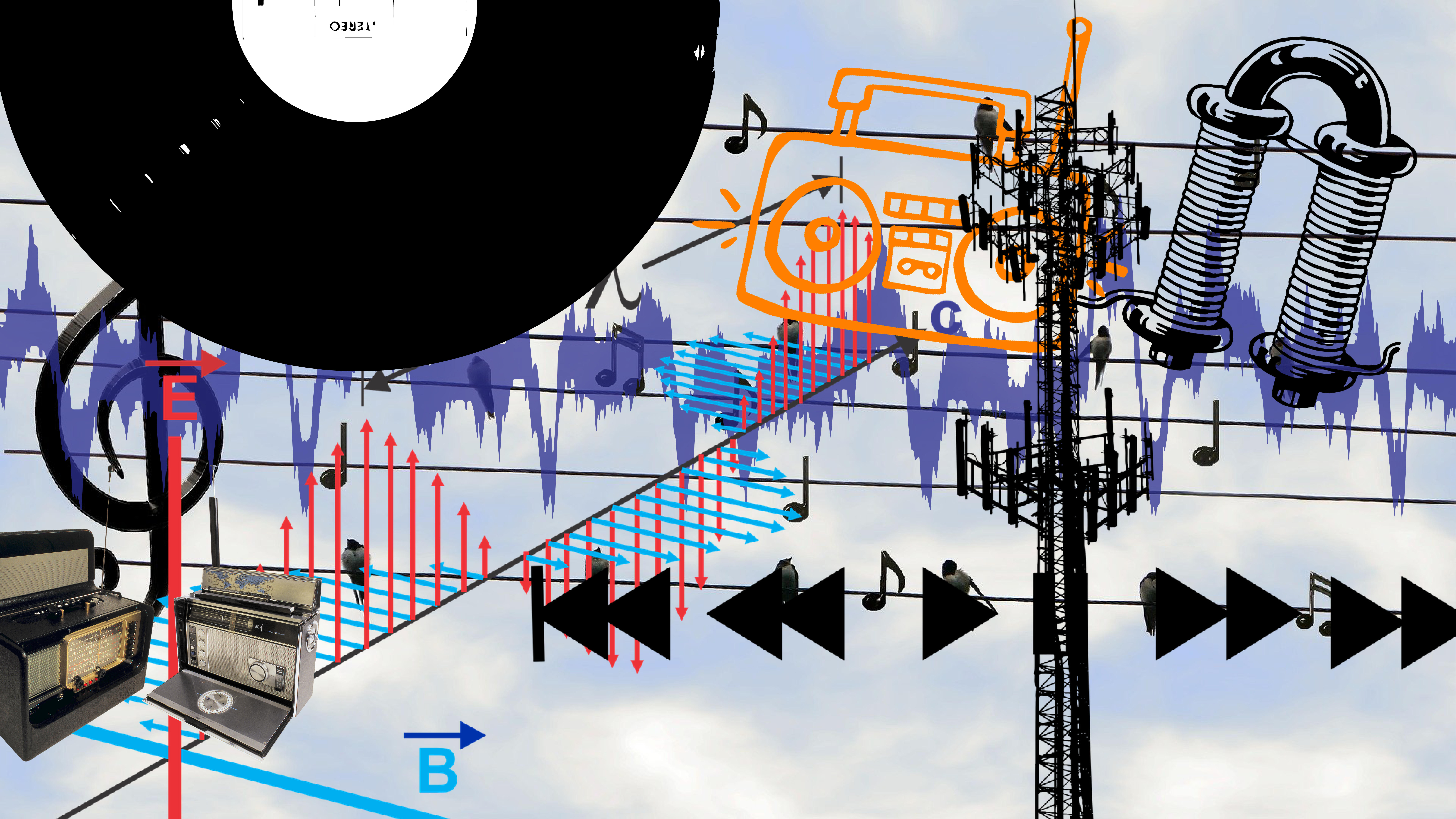
    collage of radio elements, birds on telephone line, vinyl in top left, play buttons, sound wave vectors

    Ruijie Slater (they/them)

    “College Radio : It’s Not Dead” (Dec. 2021)


  • “A Minority In STEM”

    “A Minority In STEM”

    A Minority in STEM

    You tell me that
    “it must be so nice to be gifted in math”
    Yet you don’t know how many nights
    I spent crying at the kitchen table with my mother

    You tell me that
    “it must be so nice to a strong woman in stem”
    Yet you don’t know how hard I fought for this seat
    And now I’m not even a Woman

    You tell me that
    “you’re bringing in the diversity”
    Yet you don’t know how tired I am
    Feeling like you still see me as outside

    I am so tired

    I am so so tired

    I know that I’m a part of the change.
    I know that I’m fighting
    For a future without any blueprints

    I don’t need your praise
    That comes off as self-survival

    Just let me claim my space

  • Three Dog Star Night (Part 4)

    Three Dog Star Night (Part 4)

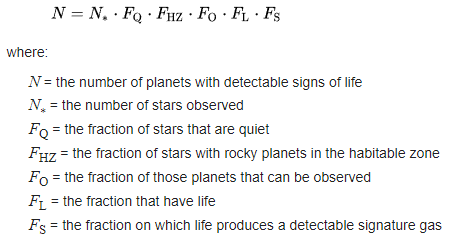
    Welcome back to our discussion on the Drake Equation and the Fermi Paradox! If you haven’t read part 1, part 2, and part 3 already, then it goes without saying that you should start there! This time we’ll be discussing the last factor in the Drake Equation, run some calculations, and conclude by discussing just what sort of an equation it actually is.

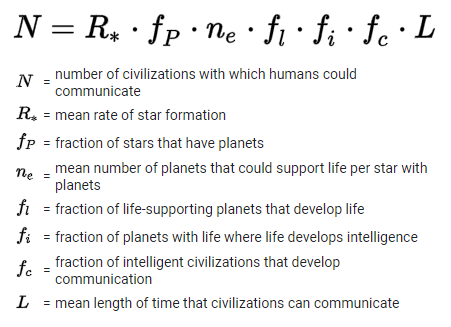
    Before we dive in, we need to do some brief dimensional analysis. Looking at the factors we’ve discussed thus far, we have four which are purely unitless fractions between zero and one (fp, fl, fi, and fc), one with units of stars per year (R*), and one with units of planets per star (ne). What we’re trying to find (N) has units of planets. If we ignore the values for a moment and look only at the units on each side, we have:
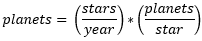
    The unit of ‘stars’ cancel out in the usual way fractions do and we are left with:
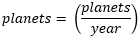
    The unitless numbers simply define what type of planet we are talking about. In this case, those are planets which harbor intelligent (fi), communicating (fc) life (fl). We need the units on each side to match for the equal sign to hold true, meaning we need to introduce a final factor with units of years. Since the Drake Equation is all about detecting alien communications, we should only consider how long they actually spend communicating. We could visualize our own radio signals as a ‘bubble’, expanding out from Earth at the speed of light; any civilizations living inside that bubble could theoretically detect us, but for those outside it would be physically impossible as our signals haven’t reached them yet. The longer we broadcast, the bigger the bubble grows, and the number of civilizations that could detect us increases. If instead they are the broadcasters and we are the detectors, the same logic still applies. The longer an alien civilization broadcasts, the better chance we have of detecting them.
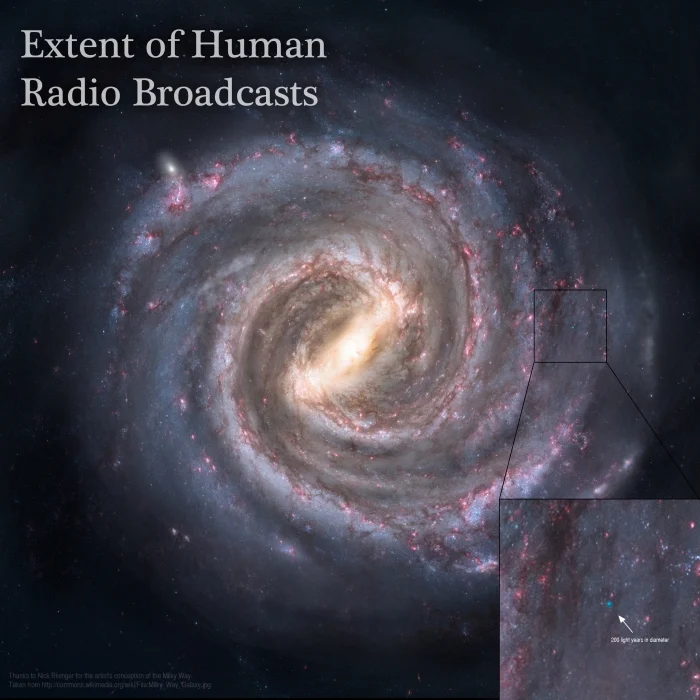
    ~100 years of radio visualized on a galactic scale…

    Average Length of Time that a Civilization Broadcasts, L

    Like so many of the other factors, this one also has a high degree of uncertainty. It could very well range anywhere between one and one billion centuries. In order to decide which one to use, we need to first examine the reasons why a civilization might stop broadcasting.

    The first and most obvious reason is extinction. When the Drake Equation was penned at the height of the Cold War, this was the most widely-assumed reason for the apparent silence of the heavens. With the specter of nuclear war constantly looming overhead, most people simply took it for granted that we would eventually bomb ourselves into oblivion before the end of the 20th century. Carl Sagan himself assumed this parameter of the Drake Equation was the Great Filter. As a result, he dedicated the rest of his life to warning against the dangers of existential threats like climate change and nuclear war. Then, in 1991, the USSR collapsed, effectively ending the Cold War and drastically reducing the threat of atomic annihilation. There may be a lot we don’t know about the universe, but perhaps the fact that I’m even alive right now to write this article speaks to how little we know about ourselves.

    The second reason a civilization may stop broadcasting is that they develop new and better communications technologies. While light is great for the sheer speed at which it travels, it’s also prone to getting scattered, refracted, reflected, diffracted, and absorbed by matter. These reductions in the intensity of a signal are collectively known as ‘attenuation’. Our own atmosphere interferes with numerous wavelengths of light in various ways. Scattering makes the sun and sky appear yellow and blue (the sun looks purely white from space!); absorption of infrared light by CO2 molecules drives the Earth’s greenhouse effect, and refraction causes the sun to appear to melt into the ocean at sunset. While most of space is indeed pretty empty, giant molecular clouds of gas and dust are common in the arms of spiral galaxies like our own. These structures effectively form walls that are opaque to large swaths of the electromagnetic spectrum. One possible alternative that avoids many of these problems would be communicating through gravitational waves. These ripples in the fabric of spacetime also travel at the speed of light but do not suffer from attenuation the way light waves do. However, we detected the first gravitational wave a mere 6 years ago, so the field of gravitational wave astronomy is still in its infancy. We currently require several kilometers of equipment per detector, with three detectors spread widely across Earth’s surface. It’s going to take a while to refine our detection methods, let alone commercialize it. Although, for a potential alien civilization that reached our technological level 1000 years ago, it may well be within the realm of possibility.

    The speed of light is blazingly fast by our standards, but it’s painfully slow when it comes to traversing the enormous distances of interstellar space. Even a message broadcast to the closest star system would take more than four years to arrive. Any reply would then take another four years to get back to us, which makes for a whopping eight year response time for every single message. Unfortunately, nothing can travel through space faster than light, but who says it must be sent through our space? The concept of ‘subspace’ messages is popular in science fiction for a variety of reasons, not the least of which is its convenience as a plot device. The tense disagreements between Picard and the Starfleet high command would lose virtually all of their dramatic effect if it took a millennium to send out a formal reprimand. If we instead had a smaller ‘sub’ space (variously referred to in sci-fi as ‘hyper space’, ‘slip space’, etc.) connecting two distant points in our own universe, we could send and receive messages at the rate we’ve grown accustomed to on Earth. Another similar idea is that of a wormhole. An alien civilization using a network of traversable wormholes for space travel could just as easily use it for two-way communication. Alternatively, if quantum entanglement is found to transmit information, it could also allow for faster-than-light communication. Indeed, wormholes and entanglement may even be the same thing. There are a myriad of reasons to doubt whether using any of these for communication are even physically possible, but the upshot is that if any alien civilizations were using such technology for their interstellar communications, then we would have no chance of detecting them. In principle, we could still detect any transmissions intended to be sent and received on the same planet since radio works perfectly well over short distances. However, such transmissions are generally weaker. Our own TV broadcasts only carry around 100 kilowatts of power, and this dilutes exponentially as distance from the transmitter increases. Despite routine talk about aliens watching our TV reruns, a civilization around Proxima Centauri would need a 2000 foot diameter satellite dish just to receive one photon per frame of The Big Bang Theory. Hardly a worthwhile investment.

    The REAL reason the aliens will one day destroy Earth

    Another assumption in the construction of the Drake Equation was that communication signals would only become more and more noticeable to aliens as technology progressed. Yet rather than making them more and more powerful, we have instead opted to transmit more information per joule. Compression, which removes patterns from signals, is largely responsible for this, but it also makes otherwise easily-recognizable signs of intelligence difficult to differentiate from random background noise. As a simplified example, let’s say we want to broadcast the phrase “hello alien” ten times. We could either broadcast each individual message ten times, or we could broadcast it one time, followed by a number indicating how many times that phrase is repeated. Our message then becomes “hello alien 10”, and we have removed all semblance of repeating patterns from the message. If the intended recipient of our message already knows that a number following a phrase indicates repetition, then no information has been lost, but if they don’t know, then the lack of repeating patterns and the brevity of the transmitted message would make it hard to distinguish from the random noise of the cosmic background. Ultimately, we might not even notice an alien civilization’s broadcasts unless they want us to.
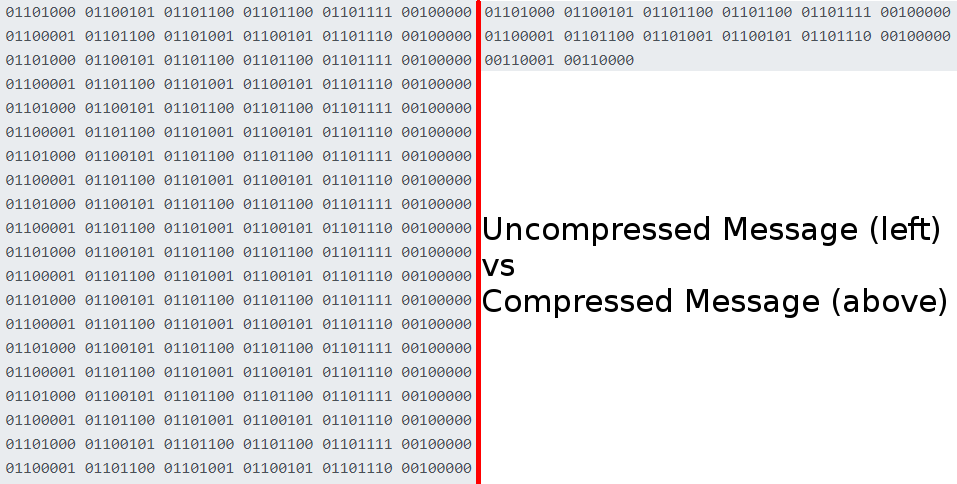
    If YOU had to pay the bill, the choice here is obvious

    If you’ve ever seen TV static, then you’ve seen some of this cosmic background noise with your own eyes. An estimated 1% of all TV static comes from the Cosmic Microwave Background (CMB), a leftover from when our universe was only 300,000 years old! Other sources of background noise include high energy cosmic rays, which can do some pretty wacky things to our electronics.

    Speaking of electronics, another assumption in the Drake Equation is that alien life will be found on habitable planets around stars. This is perfectly reasonable for biological organisms whose chemical processes don’t function well in the cold vacuum of space, but how certain are we that the aliens will be organic? A super-advanced species that goes around wiping others out, so-called cosmic reapers, is a frequently proposed, yet incorrect solution to the Fermi Paradox. Simply replacing one species with another doesn’t solve the problem. After all, the replacements would still be around for us to find, so long as their survival needs, behaviors, and goals are even remotely similar to ours. But what if they aren’t? If we combine these two concepts and consider scenarios in which the replacements are AI, then such machines would have entirely different survival needs and, as a result, entirely different motivations for their behavior. Rather than creating/breaking chemical bonds, they would survive by flipping bits, and the most energy efficient way to flip bits at a given temperature is to do it at the Landauer Limit:

    Boltzmann’s Constant (kB) is a fundamental constant of nature which relates temperature to energy, and ln(2) is equal to approximately 0.693. The only variable that can change in the Landauer Limit is the temperature, and we can easily see from the equation that a lower temperature equates to a lower energy required to flip a single bit. Any AI civilization concerned with maximizing their own survival might logically decide to move their entire civilization into the intergalactic void to increase their longevity through greater computational efficiency. They also might not appreciate organic species using up the universe’s energy for their inefficient biochemical reactions. In short, it’s conceivable that a cybernetic form of the cosmic reapers might exist while simultaneously being exceedingly difficult to detect for anyone not looking in the right place, offering a potential solution to the Fermi Paradox.

    Coming soon to a planet near you!

    All this is to say that, unfortunately, we can pretty well choose whatever length of time we like for this value of the equation. Those with little faith in humanity, like science writer Michael Shermer, might prefer to set this number to 400 years. I personally tend to be a bit of an optimist about our future and wouldn’t set this number any lower than 10,000. Whichever team you bat for, we can take all of our numbers, multiply them together, and calculate an estimate for the number of intelligent civilizations currently in our galaxy.

    For those in the rare Earth, rare intelligence, destined-for-Armageddon camp, we’re probably the only intelligent civilization in the entire Virgo Supercluster:

    For the more optimistic among us, the closest E.T.s might only be a few dozen light years away:

    Ultimately, our calculation is only as good as our estimates, so should we even spend time discussing an equation like this given how little we know? Have I hoodwinked you all into reading my long diatribes about science by dressing them up with references to pop culture and science fiction?

    Well, yes… but actually no.

    What IS the Drake Equation?

    You see, the Drake Equation isn’t derived from first principles like Newton’s Laws of motion or the Einstein Field Equations, nor was it designed to describe a fundamental aspect of nature. Instead, the Drake Equation is a solution to what’s known as a Fermi Problem. Named after Enrico Fermi, creator of the first nuclear reactor, a Fermi Problem is a type of back-of-the-envelope estimation method designed to approximate answers to extreme scientific calculations. The core idea is surprisingly simple: rather than do the mathematically rigorous calculation to get the precise answer, we can break the problem up into more manageable pieces, throw out some known numbers to place upper/lower bounds on the answer, and finally perform a sanity check at the end. It’s okay to be a bit imprecise with our estimation because any overestimates we make will tend to cancel out with our underestimates. This means that there are actually multiple ways for us to go about making an estimate for the number of other intelligent civilizations in the universe.
    Aww #$&%, here we go again…

    For example: if every human on Earth formed towers by standing on each other’s heads, how many towers could we make that reach from Earth to the moon? Let’s begin by throwing out some numbers:

    • For starters, I know the moon isn’t closer than 100,000 kilometers away, but it also isn’t further than 1,000,000 kilometers away. We’ll split the difference and say the Earth-Moon distance is 500,000 kilometers, and we want one tower per each of these heights.
    • I don’t know the average human height. However, I know 5 feet sounds too low, and that 6 ft is too high, so we’ll say instead that it’s 5’ 6”. Converting to metric, that’s about 1.68 meters.
    • But wait… adults tend to be taller than children, and most people don’t reach their full height until they’re around 20. I know the average life span is somewhere in the neighborhood of 80, so let’s say that people under the age of 20 represent about 25% of the population and that they have an average height of around 3’. Converted to metric, that’s 0.915 meters.
    • I don’t know precisely how many people are on Earth, but I know the number is getting pretty close to 8 billion, so we’ll just say it’s 8 billion.

    We’re almost ready to calculate, but first we need to check that our units make sense if we multiply all these numbers together. We know we want our answer to be the number of towers, so:

    And indeed, the repeated units on the right side cancel out and leave us with a number of towers! Now, let’s convert our Earth-Moon distance into meters so that it matches the height of each person, i.e. 500,000,000 meters, and we can finally calculate our estimate:

    So by this estimate, we could make almost 24 people-tower-of-Babel’s that reached from the Earth to the Moon! Following more rigorous calculations based on physiological data, population estimates, and the Earth-Moon distance that we’ve measured to better than 1 part in 10 billion, we find that we could make a little over 30 such towers. Despite our seemingly terrible estimates, we arrived at a number within 20% of the true value! This general method can be applied to all sorts of seemingly unanswerable questions. Try coming up with and answering some for yourself!

    Call me, NASA 😉

    In this series of articles about aliens, we’ve discussed topics from astronomy, psychology, chemistry, sociology, history, computer science, mathematics, and theoretical physics, all from a distinctly human perspective. At the end of the day, I guess the Drake Equation is less about analyzing what aliens are like and more about who we are as a species. Wherever, whenever, and whomever the aliens turn out to be, I’m glad that I get to share our little corner of the cosmos with all of you.


  • To be human or something else?

    To be human or something else?

    In 1982, forty-four percent of Americans did not accept evolution as fact. Nearly four decades later, that percentage has dropped to forty. I do not wish to list the myriad reasons for which my countrymen reject evolution. Instead, I will note that a common theme in my encounters with those who dismiss the science is that they tend to have a limited understanding of what the science says. A common argument I hear against evolution is the absence of “missing links” between species, most notoriously the supposed absence of some human-beast hybrid. The notion of a “missing link” is rather absurd, but I think it stems largely from humanity’s obsession with categorization. It makes sense. It’s a lot easier to talk about a wolf instead of “that big grey-thing over there.” Unfortunately, it is this very obsession with categorization that blinds us to some aspects of reality that seem paradoxical to beings with such a strong desire to give order to our world.
    I will use the evolution of languages to illustrate why the notion of a missing link is illogical. In the Roman Empire, many citizens spoke Vulgar Latin. Let’s focus on two areas, Hispania and Italia, the modern-day Iberian (Spain, Portugal) and Italian peninsulas. Let’s imagine that you can speak Vulgar Latin and that you have a time machine. In the year 1 CE, if you time-travel to various locations across both peninsulas, you will be able to communicate perfectly well with any inhabitants who speak Vulgar Latin. Sure, you’ll hear some variations due to influences from some of the local languages, like Iberian and Basque, depending on where you are in Hispania, and likewise in Italia. If you time-travel a century into the future, there will probably be a couple of new words here and there, the kids will have some new sayings, but overall, you’ll still be able to communicate with no problem. You continue doing this for several hundred more years, until 800 CE. At this point, there will probably be some fairly significant linguistic differences in both regions. The Iberian Peninsula will be mostly conquered by Berbers and Arabs, whose linguistic influence will overshadow that of the Visigoths a few centuries earlier. The Roman Empire will no longer exist, and the Italian Peninsula will be broken up into several entities, among them the Byzantine Empire, the Papal States, and the Holy Roman Empire. Different areas of each peninsula will speak different types of Latin, but you will likely still understand parts of it, depending on where you visit. Now that the differences are much more apparent, you might start advancing into the future by decades instead of centuries. In some parts, you understand about half of what is spoken, in others, about 10%. When can you definitively say that Latin is no longer spoken? Even nowadays, there are some words that a speaker of a Romance language can guess, even though most do not speak Vulgar Latin. Is there any point in your travels during which you might discover a child that does not end up speaking as its parents or caretakers do, and instead speaks some new language? The truth is, at no point did Latin definitively switch to Spanish, Italian, Galician, Catalan, Lombard, Cantabrian, or any of the many languages descended from the central Roman tongue. We don’t know all of the dialects and changes that occurred in these languages throughout their history, and unless this time machine is ever invented, we never will. And yet we know that they happened because modern Romance languages share many similarities with Latin and many of the changes from Latin to these languages are documented. Such is the case with evolution and these “missing links.” What we have are a series of human-like fossils which look more and more like us the closer they get to our time. Are there “missing links?” Sure, if you wish to count the thousands of generations between their ancestors and them and the thousands of generations between them and us. But there was no definitive moment at which Homo erectus became Homo ergaster, no one change which made our direct ancestors become human, no singular mutation that caused the leap from one species to the next. Just as with language evolution, there is a nebulous period in the evolutionary history of each species in which it could be argued that it was one species or the preceding one. This doesn’t mean that we shouldn’t have names for different animals, or that we shouldn’t categorize things. It just shows that the world is strange, complex, and in many cases, hard to define.

    A progression of hominid skulls for the last few million years. It is not clear whether these are our direct ancestors or cousins of our ancestors

    https://news.gallup.com/poll/21814/evolution-creationism-intelligent-design.aspx

    Image Credit: Skull evolution via Creative Commons

  • The Prehistoric Origins of Birds

    The Prehistoric Origins of Birds

    You may have heard that modern birds evolved from dinosaurs before. More specifically, modern birds descend from theropods, which is a clade of dinosaurs. A clade is a group of species that share some key traits as well as common ancestry. Theropods all had hollow bones and three toed limbs, traits that remain in modern birds. The most famous of theropods was the T. Rex, but you also may have heard of the Spinosaurus, Archaeopteryx, and Allosaurus.

    How did we come to this conclusion? It turns out hollow bones and three toed limbs are not the only similarities between theropods and modern birds. Various types of theropods have also been found to have feathers in fossilized remains. Older theropod species, that are “farther” back from dinosaurs on the tree of life, only had one kind of feather, which paleontologists think was used for insulation. Younger theropods, more closely related to birds, such as the oviraptors, had multiple different kinds of feathers. While some of these feathers are also for insulation, others are very similar to the flight feathers on modern birds. Modern birds have three “fingers” in the bone structure that supports their wings. Groups of dinosaurs that are theorized to be closely related to modern birds tend to have less and less fingers. The Orinsthican dinosaurs, very distant ancestors to birds, had five fingers. The Allosaurids, closer ancestors, had four fingers. Eventually, dinosaurs like Archaeopteryx had three fingers, which would eventually lead to the development of modern birds’ wings. Over time, the tails of dinosaurs began to get shorter and shorter. Eventually, the tails got so short that they’re barely there, until the only modern evidence of them are the tail feathers on the backs of birds.

    References

    Agnolin, F. L., Motta, M. J., Brissón Egli, F., Lo Coco, G., & Novas, F. E. (2019). Paravian phylogeny and the dinosaur-bird transition: An overview. Frontiers in Earth Science, 6(February), 1–28. https://doi.org/10.3389/feart.2018.00252

    The origin of birds – Understanding Evolution. (n.d.). Retrieved December 2, 2021, from https://evolution.berkeley.edu/what-are-evograms/the-origin-of-birds/

    Theropod | dinosaur suborder | Britannica. (n.d.). Retrieved November 30, 2021, from https://www.britannica.com/animal/theropod

  • Three Dog Star Night (Part 3)

    Three Dog Star Night (Part 3)

    Welcome back to our discussion on the Drake Equation and the Fermi Paradox! If you haven’t read parts 1 and 2 already, it goes without saying that you should start there! This time we’ll be discussing what we know about the evolution of intelligence and communication… or at least what we think we know. This part is going to be more philosophical and speculative than the last two, but unlike a certain notorious tv show, our aim will be informed speculation.

    The poster child for uninformed speculation

    Before we dive into our discussion, we first need to clear up a common misunderstanding surrounding the evolution of intelligent life: the notion that intelligence is ‘more evolved’ and thus evolution has been “building up” to it all along. Evolution by natural selection is a process by which a species’ genetics change over successive generations to better fit their environment. It is not a guided process with an end goal, nor does it converge to a single result in a given environment. If it did, the word ‘biodiversity’ wouldn’t be part of our lexicon. Intelligence is an example of complexity, but complexity is not synonymous with ‘most evolved’. In fact, the most evolved species are generally those which are the least complex because they reproduce the fastest and have been around the longest. These two factors allow for the greatest number of environmental adaptations to take place in a species. For example, the bacteria in your digestive system are several million times ‘more evolved’ than either you or I are. While it’s certainly true that intelligence provides a substantial survival advantage, this is not unique. By definition all adaptations provide survival advantages, and those that help to survive the threat of mass extinction events should also be considered. In that light, the organisms living around geothermal vents on the ocean floor take first prize. Genetic and molecular clock modelling suggests that the last universal common ancestor (LUCA), to which all extant life originated from, was just such an organism. To put it simply, LUCA was most likely an organism that survived a massive planetary extinction event which wiped out all other genetic lineages around 4 billion years ago. This makes it and life like it not only the ‘most evolved’, but arguably the most capable survivors.

    With that out of the way, let’s examine some more factors!

    Fraction of Inhabited Planets that Develop Intelligent Life, Fi

    The first thing to note is that this factor is heavily debated, with estimates more or less divided into two camps: those who argue this number is very small, and those who argue it’s close to 1. For simplicity, we’ll refer to these as “Rare Intelligence” and “Inevitable Intelligence”, respectively.

    Rare Intelligence

    Anatomically modern humans arose only very recently, around 200,000 years ago, civilization a mere 12,000 years ago, and recorded history began a paltry 5,000 years ago. As a percentage of the total time life has existed on Earth, these account for 0.005%, 0.0003%, and 0.0001%, respectively. The precursor hominids (i.e. not Neanderthals or Denisovans) to our own species did not have the intellectual capacity to become broadcasting civilizations. They never even developed agriculture, which enabled specialization. This was a critical step in making the switch from isolated, nomadic tribes to densely populated cities.  Even if high intelligence is a generic product of the evolutionary process, the enormous amount of time it may take to evolve places constraints on our estimates given the current age of the universe. If the development of intelligence is limited to planets around stars of similar mass to our own, then the window for it to develop is limited to around 5 billion years. In around 1 billion years the sun’s brightness will have increased, significantly raising our planet’s temperature to the point that (unless we do something about it) the Earth will be completely uninhabitable. Thus if intelligence takes on average a few billion years to develop, when a planet only has a few billion years of habitability to begin with, we would expect relatively few organisms to ever develop intelligence.

    David Kipping, from Columbia University’s department of astronomy, recently performed an objective Bayesian analysis on this topic in an attempt to determine just how likely intelligent life is to evolve on other planets given what we know about Earth. Unlike other methodologies, Bayesian analysis seeks to directly compare two or more competing hypotheses in order to determine which explanation is most probable. Using this methodology, he determined that the odds of life arising very soon after a planet becomes habitable may be as high as 9:1. However the evolution of intelligence is far less constrained, with 3:2 odds of intelligence being rare. As we learn more about our own planet’s history and perhaps finally detect life on another planet, these odds will shift quite a bit. The key to this sort of analysis is that the odds can be refined as more information is gained. While the odds of intelligence being common don’t look good at the moment, they have plenty of room to improve.

    For simplicity, we will set the fraction of planets that develop intelligent life under the assumption of rare intelligence at roughly 9:1 odds: Fi,Rare = 0.1.

    Inevitable Intelligence

    Though it took billions of years for intelligence to evolve, we don’t actually know for certain just how long it will survive. Drawing conclusions about the frequency with which intelligent life develops based on Earth’s history thus far is fundamentally flawed. If, for example, intelligent Earth life were to continue on for another trillion years, long after the Sun and Earth are gone, then intelligent Earth life would have been around for 99.6% of the total time Earth life existed. If Earthly intelligence survives until the end of the Stelliferous Era, that percentage increases to 99.996%. Even if Earth life never becomes interplanetary, then our time here is hard-capped at around 7.5 billion years and intelligent life will have accounted for 65% of life’s existence on the planet. Unless we wipe ourselves out tomorrow (a topic we will revisit in Part 4 of this series), the previous analyses of our existence as a fraction of the time life has currently existed on Earth is irrelevant. If we allow for the possibility that life can develop on worlds orbiting red dwarf stars, then the window of habitability could be trillions of years rather than a mere 5 billion.

    Lesser extinction events don’t prohibit evolution to intelligence unless they happen frequently enough that multicellular life can’t gain a long-lasting foothold on the planet before the host star burns out. Given the fast pace at which even the slowest-reproducing life evolves compared to how long typical life-supporting stars live, extinction events would need to be so frequent that such a planet arguably wouldn’t be considered habitable in the first place. It’s only been around 66 million years since the last ‘big one’ hit, a length of time representing less than 2% of the total time that life has existed on the planet, and less than 1% of the sun’s total lifetime. During that short span, mammals progressed from near the bottom of the food chain to dominating the entire planet. Geographically speaking, humans are the most widely distributed single species on land*. In the ocean, that award goes to the killer whale. Both of these species are mammals and both are at the top of their respective food chains. Life has recovered similarly quickly after other mass extinctions events, so we should only expect frequent, near-total extinction of life on a planet to prohibit the development of intelligence. If intelligence ever does arise, then if/when it later goes extinct will be accounted for with the final value in the equation, L.

    The Land Before Time CLXVII: The Great Space Rock Adventure

    Again, for simplicity, we will set the fraction of planets that develop intelligent life under the assumption of inevitable intelligence Fi,Inev = 1.

    Fraction of Intelligent Civilizations that Develop Detectable Communication, FC

    In our discussion of the Drake Equation thus far, we’ve swept an important detail under the rug: how exactly would we detect intelligent extraterrestrial life? The prevailing presumption in all analyses of the Drake Equation has, until very recently, been that we would detect signs of intelligent life via their radio broadcasts. At the time the equation was penned, that was the only pragmatically conceivable means for detecting alien intelligence beyond our solar system. This factor is also disputed, but less so than the previous one. In most conceivable scenarios, it’s likely that intelligent life will eventually develop electromagnetic communication techniques if left to its own devices, as intelligence does provide a great survival advantage once it has developed. Even though complex brains are an enormous energy investment, one of the primary advantages they ultimately provide, through the development of agriculture, is complex societies that enable individuals within a species to become highly specialized and efficient in various tasks. Using the Pareto Principle, a general mathematical principle which states that a majority of the results come from a minority of the causes, we can surmise that an 80% efficiency level in most skills can be attained with around 20% of the effort. Beyond this, the effort required for incremental efficiency attainment increases exponentially. You’re likely familiar with this concept, even if you don’t recognize the name. Anyone who has learned to play an instrument knows that learning how to play all the notes takes only a few months, but true mastery of more advanced techniques like circular breathing can take a lifetime of daily practice. Our nomadic ancestors couldn’t afford to invest limited resources on specializing in a single skill because the marginal returns were low. In contrast, a society with a food surplus (that is, an energy surplus) can afford to make that investment and quite literally ‘reap’ the benefits they ‘sowed’. That’s not to say we don’t see socialization or specialization elsewhere in nature, but never to the same extent as in human societies.

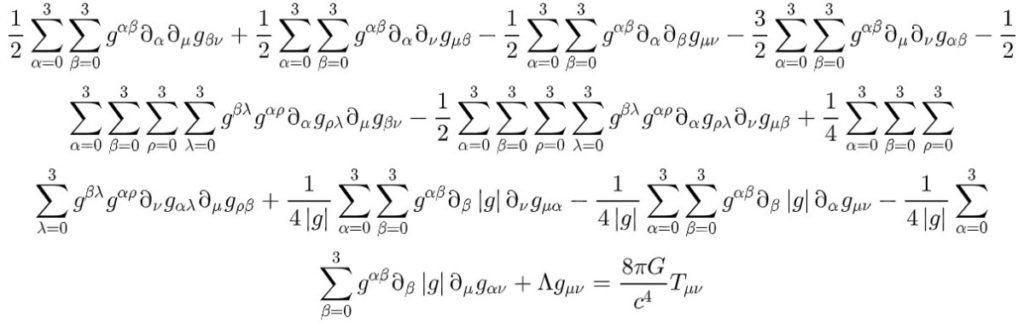
    The sheer degree to which we socialize and specialize in and of itself necessitates an advanced capability like communication through language. The further advancement of this capability into the Information Age has provided us with survival benefits the likes of which our ancestors would never have dreamed of. It’s possible that intelligence, sociality, and advanced communication capabilities are paired at a deep level. Using our own brains as a model, we might reasonably expect that natural selection will disfavor intelligence that does not possess a comprehensive capability to communicate. Similarly we can expect such capabilities to generally trend towards the use of electromagnetic technologies since the speed of light is the fastest possible way to transmit information. While it’s certainly plausible that there may be a species of strong, independent geniuses out there in the cosmos who can comprehend General Relativity by the age of 10, their time spent not doing the basic things required to survive is just as limited as yours or mine. Such capabilities, impressive as they would be, don’t automatically outweigh the benefits of being a social animal. After all, you can’t exactly eat the Einstein Field Equations.

    Part of a Complete Breakfast™

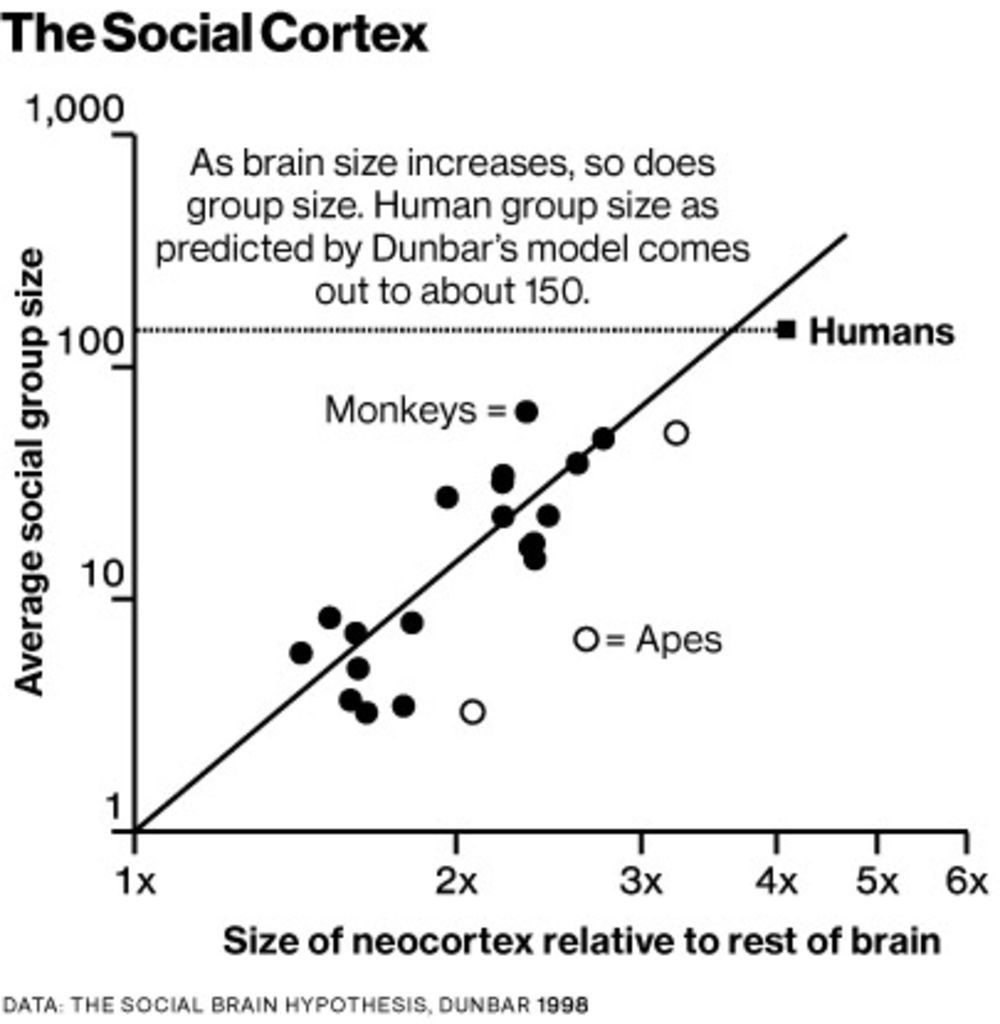
    We generally measure intelligence in humans with the intelligence quotient, but IQ tests are designed for humans and can’t be generalized to other species. In theory, we could instead estimate a species’s intelligence by measuring their degree of sociality, but how exactly would one do that? Dunbar’s Number aims to measure the maximum number of other members of a species with whom its members can maintain meaningful relationships. In his original work, Robin Dunbar compared the relative neocortex sizes of different primates to the average sizes of the social groups they formed and found that the average human social group size is approximately 150. Some real-world examples of Dunbar’s Number include the average size of Hunter-Gatherer societies, average size of Christmas card networks, average number of wedding guests, size of the Roman Maniple, average size of an English Village in the 11th century, and even the number of Super Bowl rings the NFL gives to the winning team each year.

    The link between neocortex complexity, intelligence, and social behaviors means that a species with a larger Dunbar’s Number would generally have higher intelligence, more cooperation, and a higher degree of specialization. These, in turn, contribute to a more rapid pace of technological development. In contrast, a species with an extremely low Dunbar’s Number will have lower intelligence, difficulty cooperating, less specialization, and slower development of technology. As we consider species with lower and lower values, eventually one will be less likely than not to develop electronic communication. Since the values for other primates aren’t all that far behind ours, this lets us set a measurable baseline for what we mean by ‘intelligence’ insofar as the Drake Equation is concerned.

    Of course there are a plethora of conceivable exceptions to this rule, but most fall apart under closer scrutiny. Some insect species live in colonies of more than 100,000, so what about a species of hyper-intelligent alien insectoids like the Formics in Ender’s Game? What about a species of ocean-dwellers with human level intelligence that nonetheless never develops electronic communication due to their aquatic environment? As intriguing as these and other Sci-Fi aliens may be, insects don’t have a neocortex and even the most intelligent sea creatures lag far behind humans. If we wish to extrapolate characteristics of Earth creatures, we should aim to be consistent rather than picking and choosing which features we want them to have.

    On a planet somewhere in the infinite universe… probably…

    Since we expect what we generally define as intelligence to go hand-in-hand with the development of electronic communication, we will set FC ≈ 1.

    As a final note, the Drake Equation was formulated under the assumption that alien intelligence could only be detected via radio signals. With the launch of the James Webb Space Telescope fast approaching, the landscape of possible methods for detecting an extrasolar intelligent civilization are about to shift dramatically. The ability to detect the atmospheric compositions of extrasolar worlds will give us our first chance at detecting alien life forms through the spectroscopic signatures of volatile chemicals they leave in their atmosphere.

    Next time, we’ll be discussing the final factor in the Drake Equation as well as what it and equations like it actually are.