Category: today i learned (til)

health, fitness, medicine, environment, ecology, how to learn tricky topics in science and math, new discoveries, news, current events

  • CHOOSE YOUR POKÉMON!
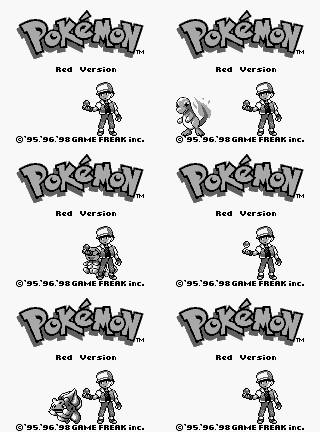
    CHOOSE YOUR POKÉMON!


    CHOOSE YOUR POKÉMON!

    I still remember the first time I booted up my brother’s GameBoy Color and saw that iconic title screen of Pokémon Red where each of the starters would flash by. The hardest choice as a kid (and still a difficult one now) was picking which of the three starters you wanted as your main partner. Would you choose the Fire-type, the Water-type, or the Grass-type? The one thing you knew going into this choice though was that most starter Pokémon were based off real life animals, plants, or objects. For example, in Pokémon Red, the Grass-type starter Bulbasaur is based off a mixture of frogs and onions, while the Fire-type Charmander is based off a salamander, and Water-type Squirtle is based off, well, turtles.  


    So I thought, well why not take up this trend and create my own set of starter Pokémon based on some real world counterparts! I’ll be taking three real plants/animals, designing them as Pokémon and crafting a move set based on some of their coolest ecological adaptations. Then you can choose who you’d like to start your Pokémon journey with! Welcome to the next generation of Pokémon: Generation Earth!

    Generation Earth Starters
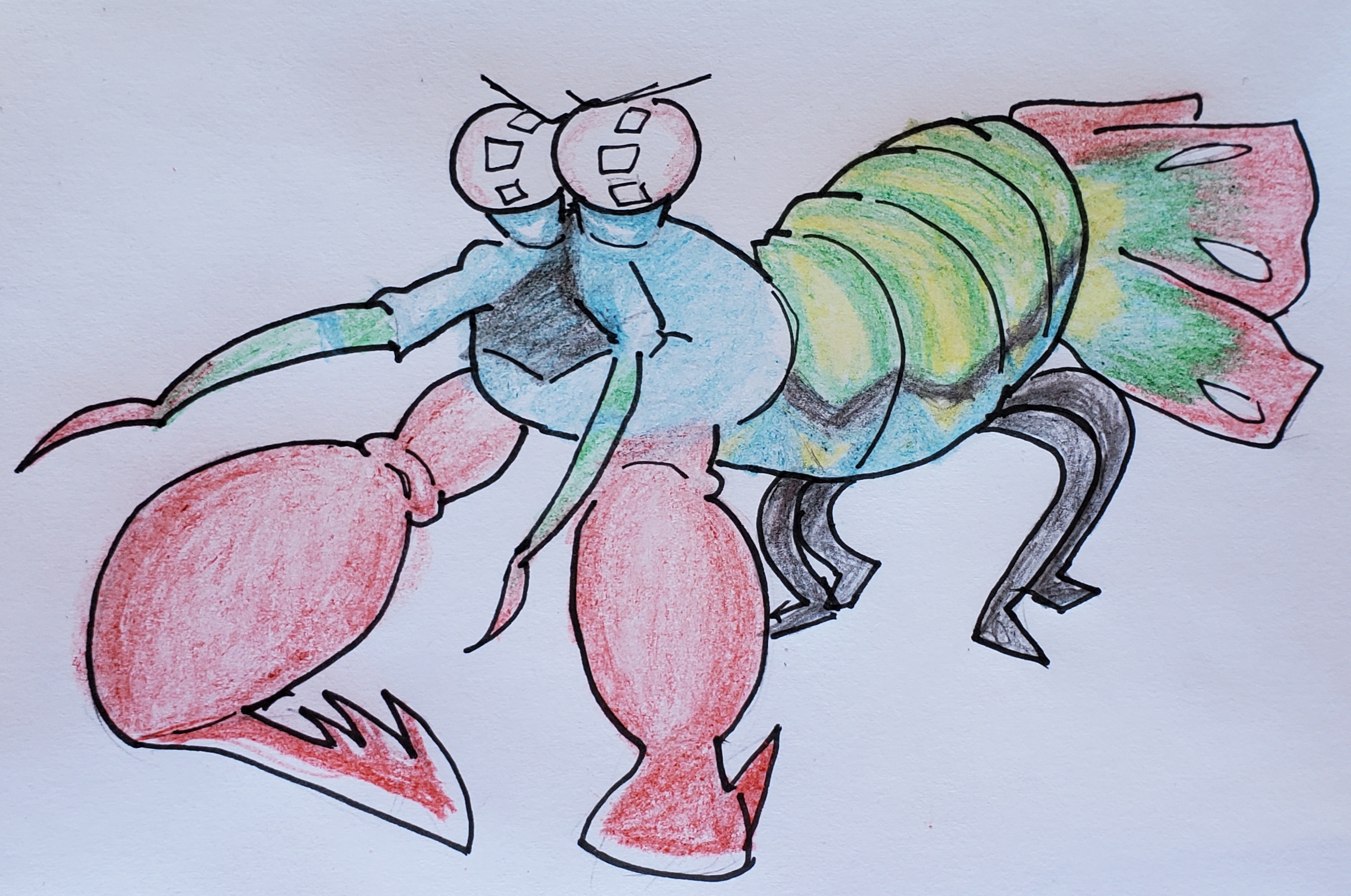
    Water-Type Starter: Stomato (Stomatopods or Mantis Shrimp)

    Dual Type: Water/Steel

    Move set:

    • Mantis Punch – releases an intense punch that stuns the foe for a turn.
      • Power: 120, Accuracy: 70  
    • Bubble Punch – punches the foe with a beam of bubbles.
      • Power: 90, Accuracy: 80
    • Triple Sight – increases accuracy by focusing on three different objects.
      • Power: —, Accuracy: 100
    • Color Burst – increases attack by allowing the user to identify more colors.
      • Power: —, Accuracy: 100

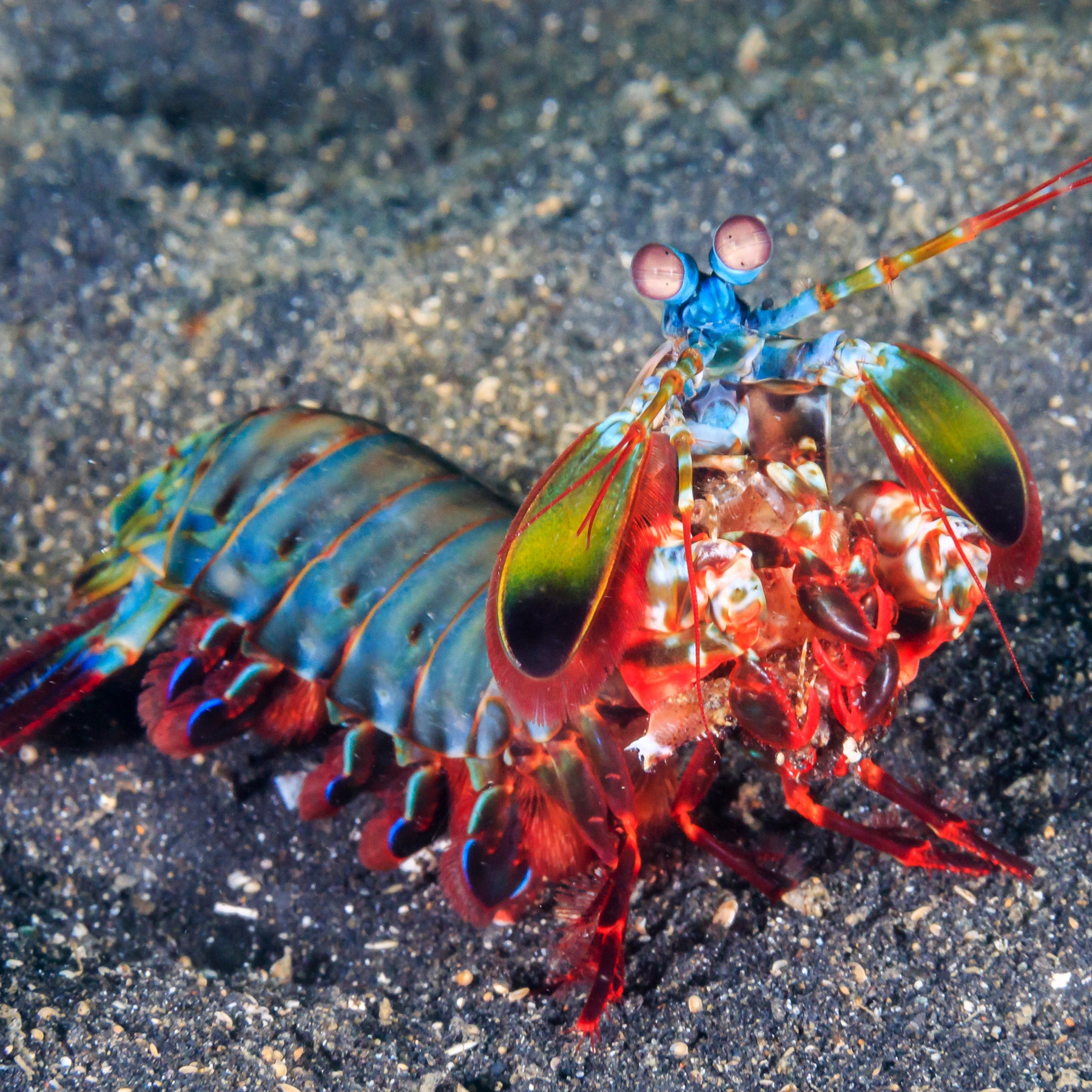
    The fierce Water/Steel hybrid, Stomato, is based on its just as fierce real world counterpart, the stomatopod, or more commonly known as the Mantis Shrimp. These carnivorous crustaceans live in most shallow, tropical regions and can be broken into two main groups based on how they catch prey: spearing and smashing. Stomato is based on the smashing group as you can see from his punching moveset. Let’s breakdown these moves:


    Mantis Punch: The Mantis Shrimp’s main claim to fame is its fantastic punch, which can reach a force over 1,500 newtons and possess an acceleration of 102,000 m/s2, which is basically as if they were shooting a .22 caliber rifle! These punches can tear through crab shells with ease, allowing the Mantis Shrimp a delicious meal. As such, Stomato’s Mantis Punch is his fiercest attack and can absolutely decimate an opponent if he lands a hit.

    Double Bubble Punch: The Mantis Shrimp doesn’t just attack in ones though. Because of how fast their punch is, they create a ‘cavitation’ of bubbles that follows their initial punch and hits their prey a second time. This cavitation of bubbles is also burning hot (almost 4,400C). If their prey isn’t killed by the first attack, they sure are killed with the second round. To only make things fair, I separated this bubble punch into a new move for Stomato, but it still delivers quite the hit! 

    Triple Sight: While the Mantis Shrimp’s eyes might look creepy to us, they have a ton of unique abilities! Mantis Shrimp possess trinocular vision, meaning that they analyze distance and depth by focusing on objects in three separate regions. This helps them get an extremely accurate understanding of the space around them and where their prey is. For Stomato, his trinocular vision allows him to easily lock onto his foe and increase the accuracy of his attacks.

    Color Burst: The Mantis Shrimp’s eyes possess another interesting feature; they contain twelve types of different photoreceptors (the part of the eye that responds to light and helps distinguish colors). That might not seem like a big deal at first but just compare that to humans who only have three types! Because of the large number of photoreceptors, the Mantis Shrimp can see a wider range of colors than a human (and most other animals on the planet). Scientists are still trying to figure out exactly why and how the Mantis Shrimp has so many, but many hypothesize the Mantis Shrimp utilizes each photoreceptor to identify and process the color (while humans need other parts of their brain besides their eyes to process colors) which is extremely helpful in the colorful coral environments the Mantis Shrimp can live in where they need to spot prey quickly. Stomato takes after this with his move, Color Burst, which lets him identify multiple colors at once to better find his target on the battlefield.
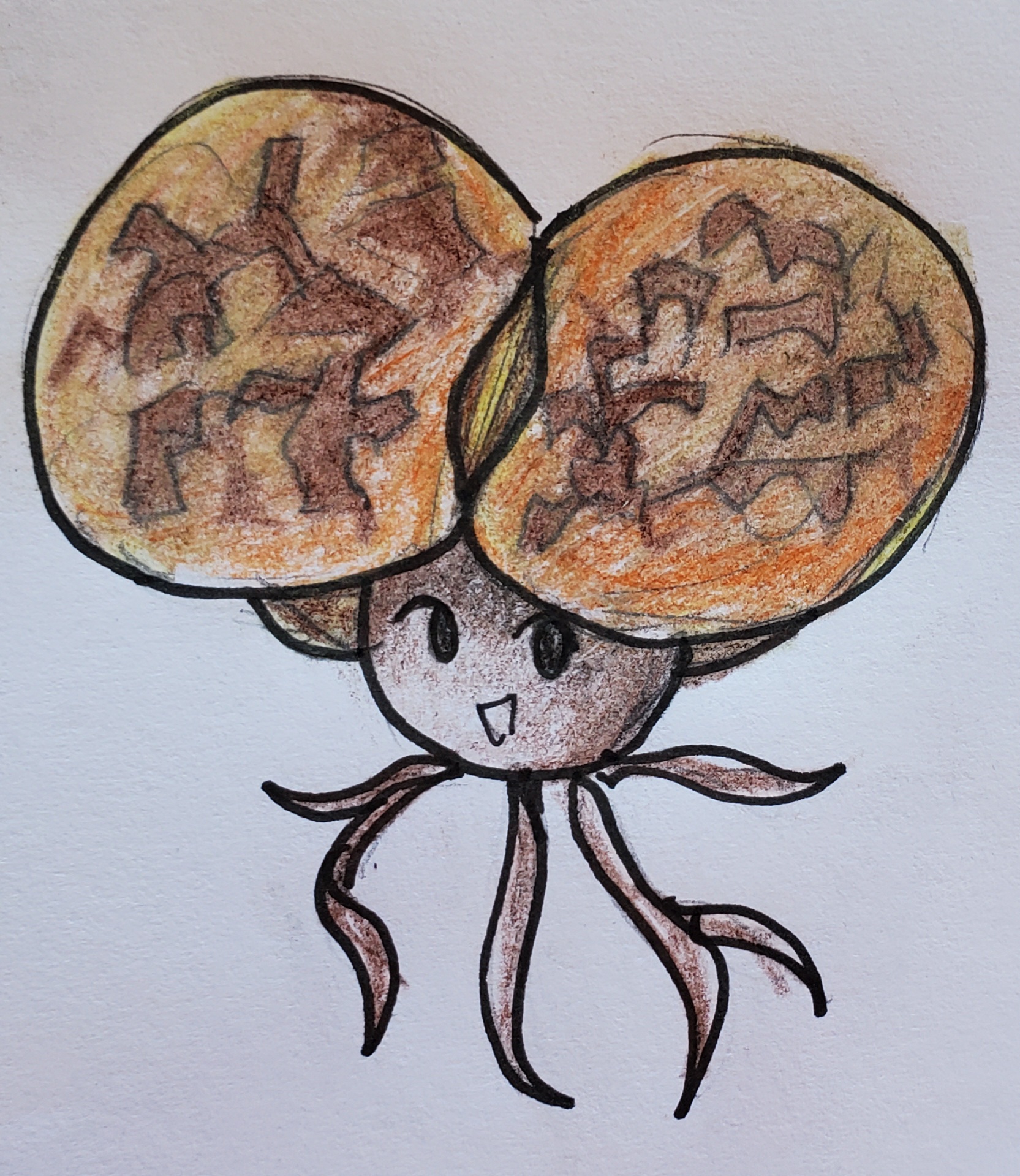
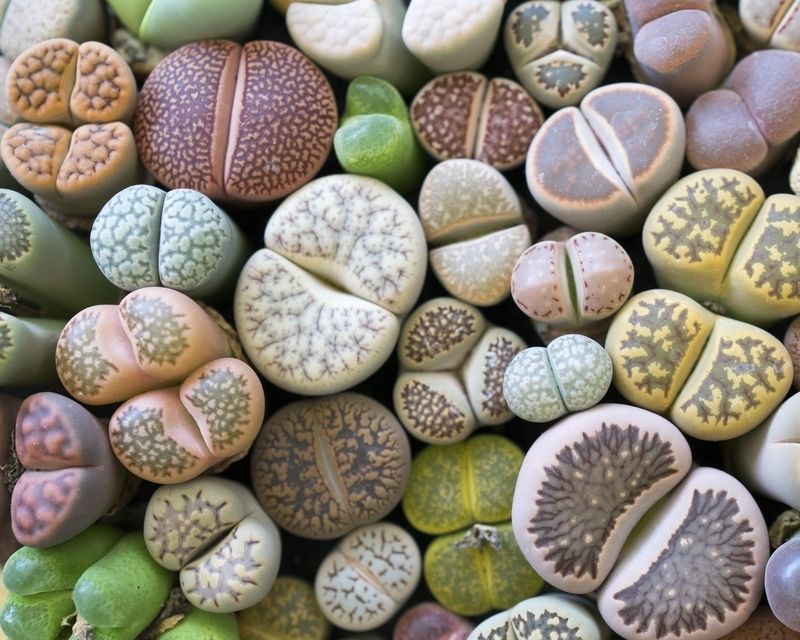
     

    Grass-Type: Lithop (Lithops or living stones)

    Dual Type: Grass/Ground 

    Move set:

    • Camouflage – hide as a rock to lower a foe’s accuracy.
      • Power: —, Accuracy: 100 
    • Aqua Retain – stores water for the next three turns to replenish HP.
      • Power: —, Accuracy: 100
    • Metabolic Cooling – darkens the battlefield and releases chemicals.
      • Power: 90, Accuracy: 100
    • Leaf Shield – tightens its leaf window to raise its special defense.
      • Power: —, Accuracy: 100

    Our lovely little Lithop has its name taken straight from its real world counterpart’s scientific one. Living stones, as they are more commonly known, are plants that typically reside in the drier, warmer areas of southern Africa. They’ve gained this nickname due to their appearance of stones of pebbles. To thrive in such xeric environments, lithops have forged numerous adaptations to help them conserve water and protect themselves from overheating and radiation. Let’s take a look at these adaptations and how they’ve formed Lithop’s moveset:


    Camouflage: The most obvious one; living stones keep their stems underground, only revealing two succulent leaves above the surface. Without close inspection, this pair of leaves adorned with graveled patterns give a rock-like appearance to the lithops. This appearance can fool nearby grazers to move past them. As such, Lithop utilizes its move Camouflage to hide itself from its opponents, making it harder to see within the landscape and harder for the foe to hit!

    Aqua Retrain: The two succulent leaves and below ground stem of the living stone have other benefits too. If you’ve ever seen a succulent leaf, you know it’s much fatter than most traditional green leaves you see on bushes or flowers. This is because these leaves store water in them for the plant to use during periods of drought. Living stones are especially great at this since by design, they have a low surface area to volume ratio, meaning they can store a lot of water while minimizing the amount of exposed plant surface area. Lower exposed plant surface means less water will be lost during the day due to transpiration. Because of their great water retention mechanics, our Pokemon Lithop can also store water for multiple turns and use that water bit by bit to help heal and regrow itself after damage.

    Metabolic Cooling: Lithops, like many plants found in arid environments, have to adjust their process of photosynthesis to not lose too much water. One of the ways they do this is through Crassulacean Acid Metabolism (CAM), where only at night will the plant open its stomata (think of these as plants’ pores) to collect carbon dioxide from the air. Without the sun present, the plant is less likely to lose water vapor when it opens its stomata which helps it conserve its water supply. For our Pokemon Lithop, I did a bit of a flip to make the move an attack, so instead of collecting the chemicals from the night air, it releases them to harm its foe. Sometimes in art you have to make a few adjustments for things to work!

    Leaf Shield: As you know, most of the living stone is hidden within the succulent leaves or beneath ground. To bring sunlight into the plant for photosynthesis, lithops possess a small leaf window. The exact purpose of this window mystified biologists for years (was it to directly channel sunlight into the areas for photosynthesis?) until a few studies revealed its reasoning. Within the harsh sunlight of the desert, it’s very easy for the internal parts of lithops to overheat and be damaged by UV radiation, which can dramatically reduce photosynthesis. This leaf window then shields the internal portions of the plant from sunlight and keeps its internal temperature from rising too much. Because of this, our Pokemon Lithop utilizes its leaf window as a defense mechanism to special attacks that could cause damage or status effects to it.
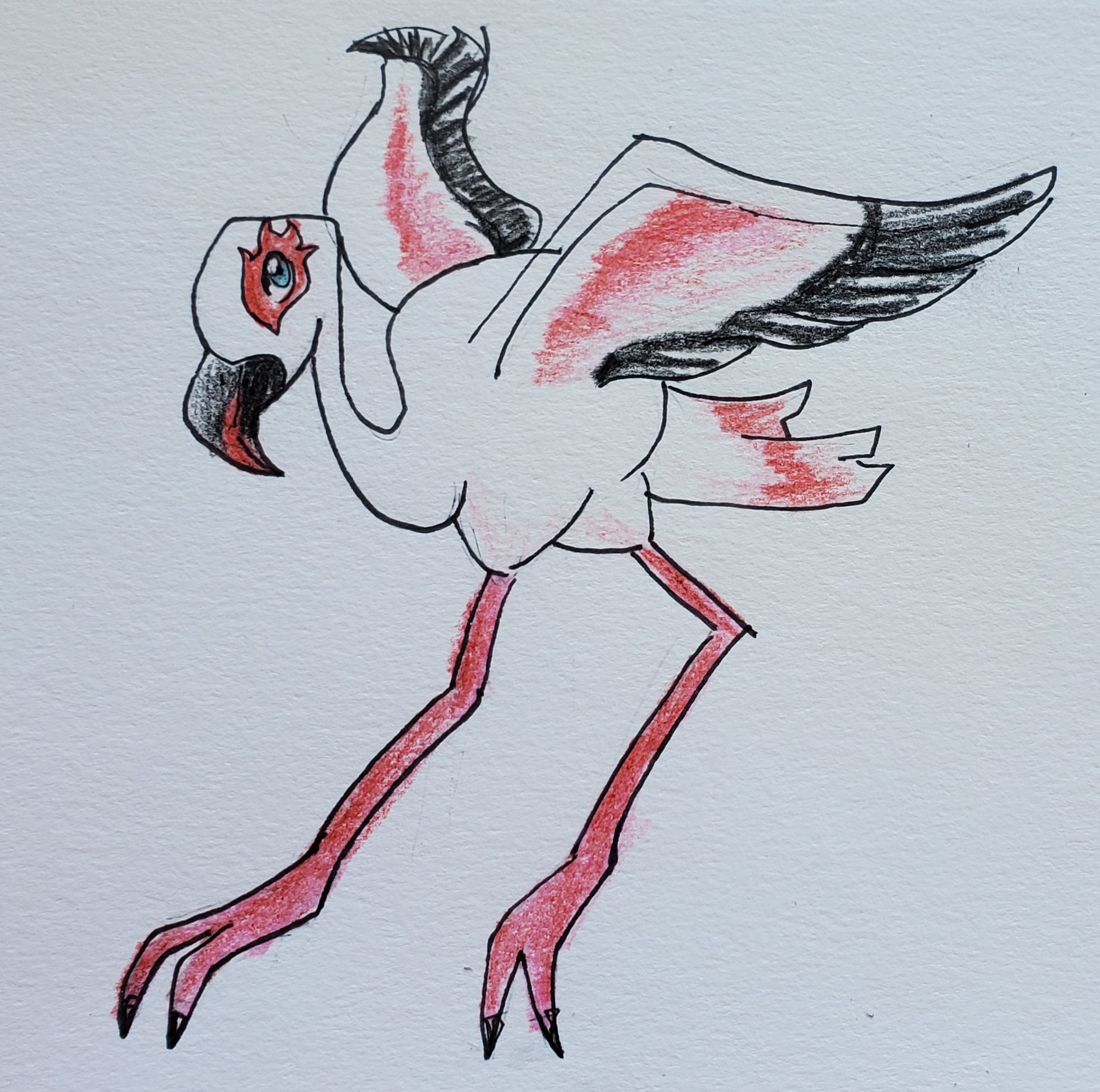

     

    Fire-Type Starter: Flameingo (Lesser flamingos)

    Type: Fire-Flying

    Move set:

    • Boil Spout – Squirts boiling water at foe.
      • Power: 90, Accuracy: 90
    • Purify – removes salt from water to heal the user’s HP. Effect doubled if attacked by a Water-type move the previous turn.
      • Power: —, Accuracy: —
    • Harden – raises defense; no status effect can be imposed on the user.
      • Power: —, Accuracy: 100
    • Volcanic Ash – uses wings and legs to scatter burning ash and mud at foe.
      • Power: 70, Accuracy: 100

    While a bit more of a stretch than the other two, let’s not forget our Dual Fire/Flying type, Flameingo! Flameingo is based on the phoenicoparrus minor, or more commonly known as lesser flamingos, which make their home in the volcanic waters and pockets of places such as the African Rift Valley, the Galápagos Islands, and the high Andean plateaus. These animals are extremely sturdy and have adapted to living in some of the hottest and most dangerous places on Earth, which is why Flameingo takes the spot of our fire starter. Let’s check out her moveset:


    Boil Spout: Since the lesser flamingo utilizes alkaline volcanic lakes for sustenance, they have adapted to be able to drink near boiling water without causing serious burns. Flameingo takes after this trait (with a bit of a stretch to just say boiling) and can attack her enemies through spitting boiling water back at them. Let’s see if her foes can handle the heat!

    Purify: The lesser flamingo often takes up residence in hypersaline lakes or geysers, so they must utilize different glands in their head to remove the salt from the water they drink. Once the salt is removed from the water, it drains out their nasal cavity. Our Pokemon Flameingo has this ability too, allowing her to restore her HP by making freshwater to drink. If attacked by a foe’s water-type move the previous turn, she’ll just have more to heal herself with!

    Harden: To stand in the near boiling volcanic lakes, the lesser flamingo would need to have tough skin and thankfully it does! The lesser flamingo has developed extremely scaly and leathery skin on their legs which allows them to stand in the hot salt water of their homes without getting burned. Flameingo’s move, Harden, comes from this thick skin adaptation. She can increase her defense by hardening the skin on her legs so it’s harder for other Pokemon to attack her, especially with Special Attacks!

    Volcanic Ash: The harsh volcanic environments with their deep saline mud pits keep almost all predators away from lesser flamingos’ and their eggs. While the lesser flamingo might not often get into fights, I’ve honored their habitat and its deadly effect on others in this move. Flameingo can use her leathery legs and powerful wings to kick and spray fiery ash and mud into the faces of her foes.


    Choose Wisely!

    Now that you’ve seen these three Pokemon and their basic moveset, which one will you choose on your Pokemon journey? Which real life counterpart do you think has the coolest ecological adaptations? 

    I hope you enjoyed this crossover of biology and Pokemon! 


    Sources:

    14 incredible mantis shrimp facts. Fact Animal. (2019, January 22). https://factanimal.com/mantis-shrimp/   

    Campbell, V., & Moslemi, J. (2015, June 3). Flamingos of the Altiplano, high in the Bolivian andes. All About Birds. https://www.allaboutbirds.org/news/flamingos-of-the-altiplano-high-in-the-bolivian-andes/ 

    Candeias, M. (2021, February 28). A surprising realization about leaf windows. In Defense of Plants. https://www.indefenseofplants.com/blog/2017/12/21/a-surprisng-realization-about-leaf-windows 

    Egbert, K.J., & Martin, C.E. (2002). The Influence of Leaf Windows on the Utilization and Absorption of Radiant Energy in Seven Desert Succulents. Photosynthetica, 40(1), 35-39. doi: 10.1023/A:1020129820295

    Field, KJ, George, R, Fearn, B et al. (2 more authors) (2013) Best of Both Worlds: Simultaneous High-Light and Shade-Tolerance Adaptations within Individual Leaves of the Living Stone Lithops aucampiae. PLoS ONE, 8 (10). e75671. ISSN 1932-6203

    Martin, Brandmeyer, E. A., & Ross, R. D. (2013). Ecophysiological function of leaf ‘windows’ in Lithops species – ‘Living Stones’ that grow underground. Plant Biology (Stuttgart, Germany), 15(1), 243–247. https://doi.org/10.1111/j.1438-8677.2012.00672.x

    Physical characteristics of Flamingos. SeaWorld Parks & Entertainment. (2022). https://seaworld.org/animals/all-about/flamingos/characteristics/ 

    Rose, P. (2021, November 15). Africa’s most toxic lakes are a paradise for Fearless Flamingos. The Conversation. https://theconversation.com/africas-most-toxic-lakes-are-a-paradise-for-fearless-flamin os-70817 

    Yong, E. (2021, May 3). The mantis shrimp sees like a satellite. National Geographic. https://www.nationalgeographic.com/science/article/the-mantis-shrimp-sees-like-a-satellite 
  • One flesh, two minds

    One flesh, two minds

    A good way to stop seizures is to simply cut the brain in half. Such a procedure isn’t performed after one or two episodes, but rather when a patient’s quality of life is starting to deteriorate considerably due to their epilepsy. After surgery, the two hemispheres of the brain are unconnected and unable to exchange information. In the 1960s, an American neuroscientist named Roger Sperry carried out a series of experiments on split-brain subjects. Trials were carried out by placing the individuals in front of a screen and a table with a variety of objects. The screen could display photographs side by side, one on the left side and another on the right. By flashing pictures at one-tenth of a second or less, the researchers ensured that only one eye would be able to incorporate the information.

    A quick review of how the brain works – the left hemisphere is connected to the right hand and right eye, and contains the language centers. The right hemisphere is connected to the left hand and left eye.

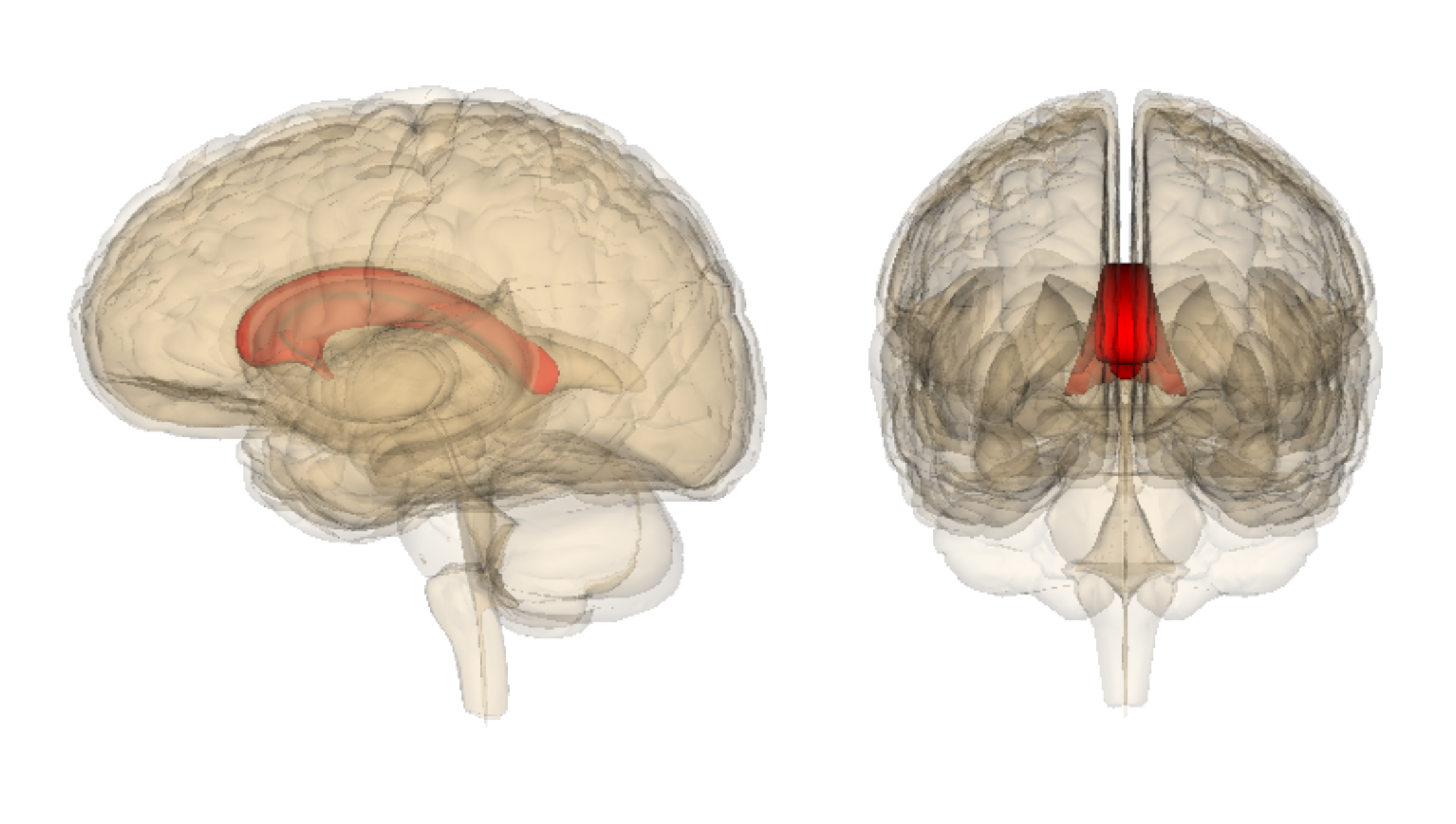
    Because the right hemisphere is unable to communicate verbally, subjects were unable to tell researchers which image had flashed on the left side of the screen. However, if asked to pick out the pictured object from the table, the left hand (controlled by the right hemisphere!) was able to do so with ease. Keep in mind that this is despite patients insisting that they had not seen a picture of the object which their left hands were holding. In some sense, they were correct. The left hemisphere, which controls speech, had not seen the object – only the right hemisphere had, and was unable to communicate this to the left hemisphere due to the severing of the corpus callosum, the body of fibers which joins both sides of the brain.

    When the phrase “key case” was shown to the subjects, “key” on the left side of the screen, “case” on the right, the subject might guess that the experimenters were referring to a case of beer, though the left hands would pick up a key.

    Even though the right side of the brain is unable to vocalize anything, it nevertheless appears to be quite distinctly human. For instance, if prompted to pick up silverware, the left hand might grasp for a fork, whereas the person would say that they are holding a knife, spoon, or fork with equal probability. Furthermore, the right side can reason abstractly. If shown a picture of a wall clock, it can sort through materials and pick out a toy watch!

  • We need to talk about the women founders of modern science: Meet Ada Lovelace

    We need to talk about the women founders of modern science: Meet Ada Lovelace


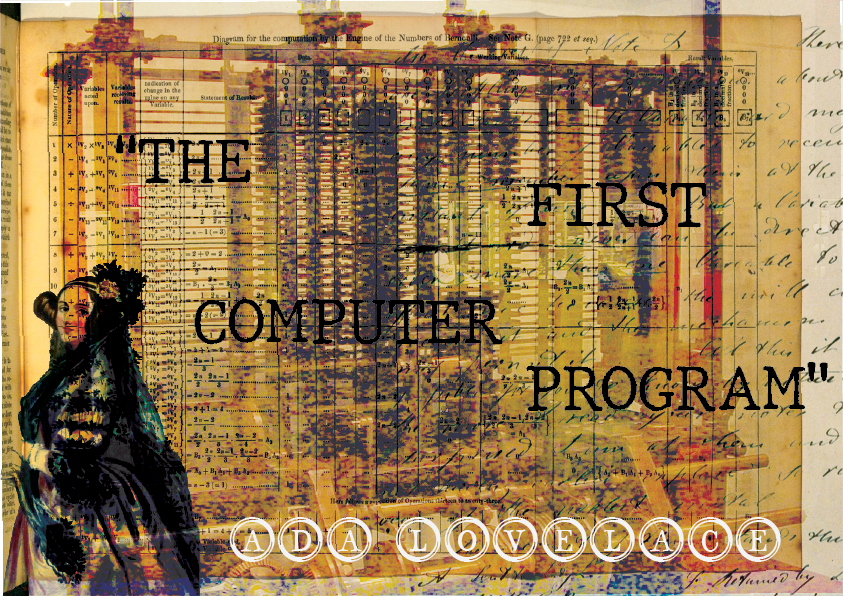
    (collaged images of Ada Lovelace, the “analytical engine”, and a letter between Lovelace
    and life-long friend Charles Babbage”

    As a founding person of modern computer programming, Ada Lovelace worked closely with friends like Charles Babbage, Luigi Manebrea, and so on. If you’re interested in reading more about her scientific contributions, here are some helpful links:

    https://findingada.com/about/who-was-ada/


    https://blogs.bodleian.ox.ac.uk/adalovelace/2018/07/26/ada-lovelace-and-the-analytical-engine/

    https://www.newyorker.com/tech/annals-of-technology/ada-lovelace-the-first-tech-visionary


  • One TA is Not Like the Others

    One TA is Not Like the Others

    If your teacher was AI, would you notice? Would you feel duped that you weren’t being taught by a real human? Or would you be awestruck by advanced technology’s capabilities? Perhaps a mix of both.

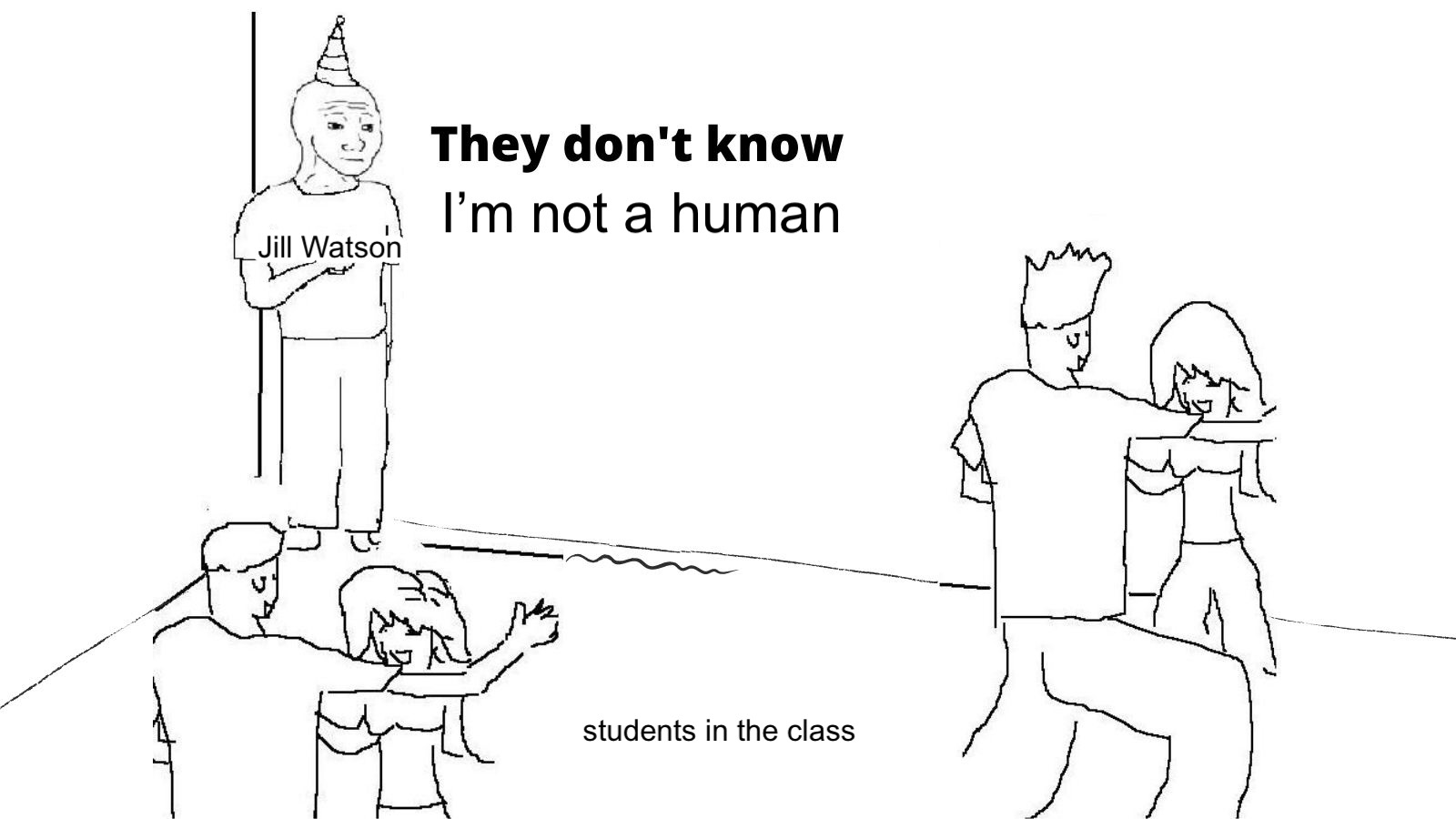
    In spring of 2016, Georgia Tech professor Ashok Goel’s course about Artificial Intelligence had nine teaching assistants. One of them was not like the others; unknown to students, one of them was not human. 

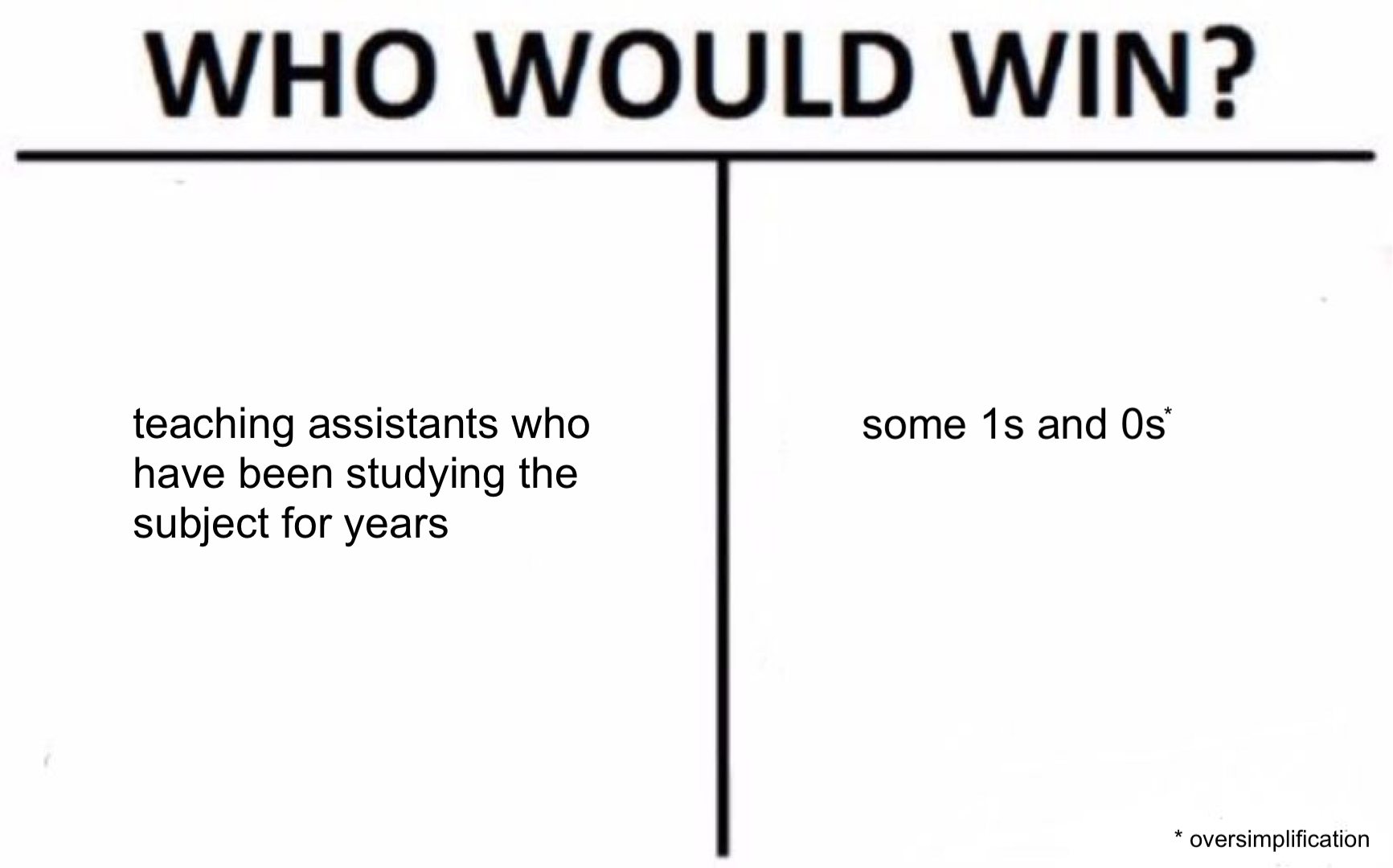
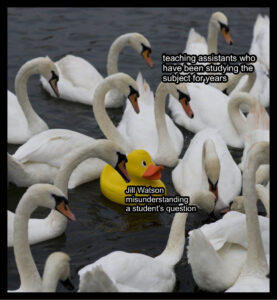
    Jill Watson, an artificial intelligence program implemented on IBM Watson’s platform, was fed 40 thousand forum posts from prior semesters. While students change, the questions they ask often repeat semester after semester, and Jill wouldn’t get tired of answering them as many times as needed. 

    At first, Jill wasn’t very good at her job; she would use the keywords in the question but assumed wrongly what the context of the question was. Her answers weren’t released to the students until she began to answer with 97% accuracy, due to modifications of her algorithm. 

    At the end of the semester, Goel finally spilt the beans, much to the awe of students who had been interacting with an AI TA for most of the semester. Only one student had guessed at the secret. Over following semesters, Goel renamed Jill with many different names and didn’t tell his students who was human and who was AI, revealing the mystery at the end of each semester. 

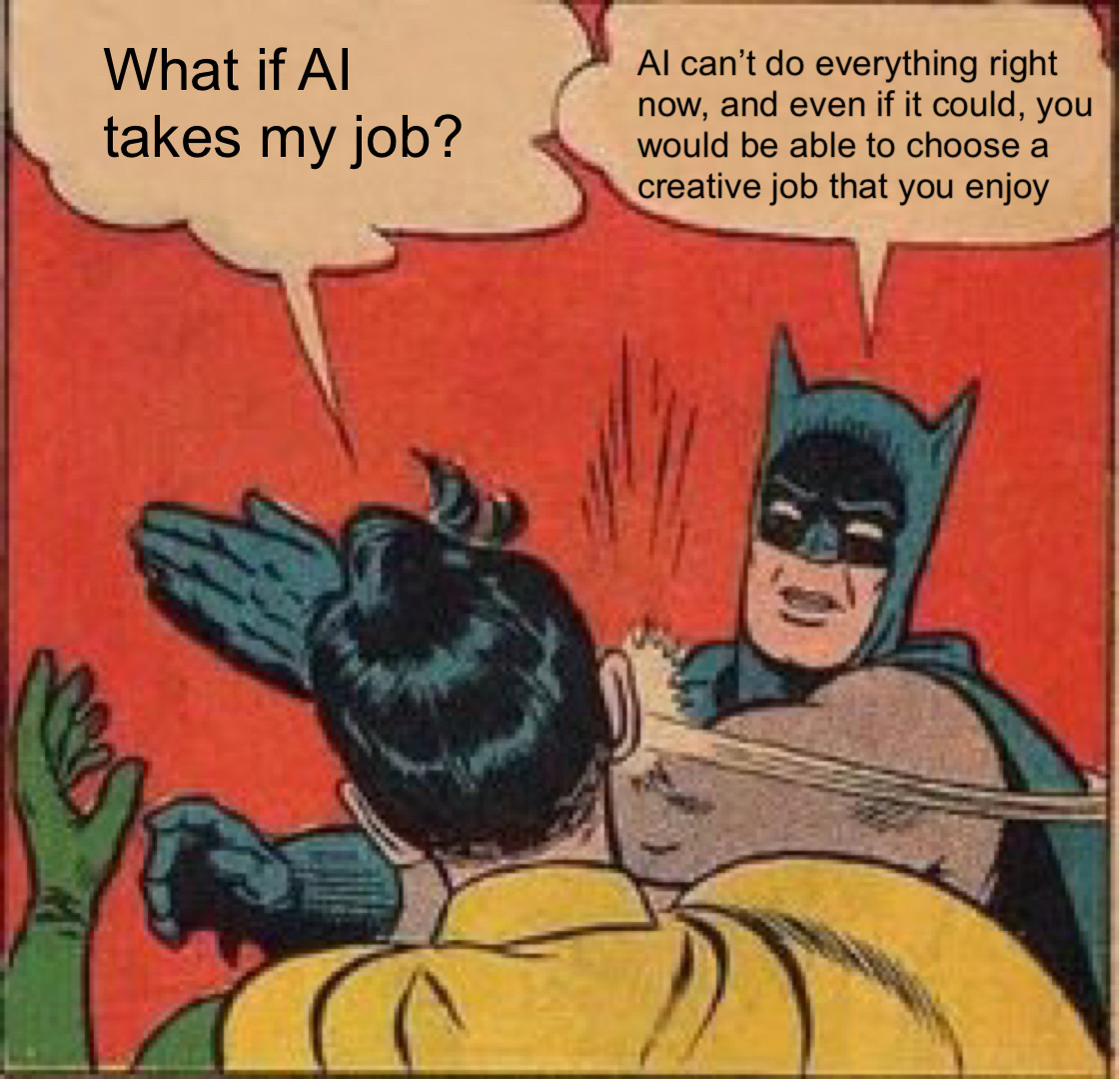
    This experiment raised questions about whether AI will replace labor, reducing job opportunities for humans who need them. Could AI like Jill cause colleges to hire less professors and TAs to save money? In Goel’s case, he still had 8 other TAs who answered questions that Jill couldn’t. Goel hopes that in the future, as AI becomes more prevalent in education and other fields, AI will allow humans to choose creative careers instead of monotonous jobs, and fill in jobs that have a shortage of humans applying for them. 

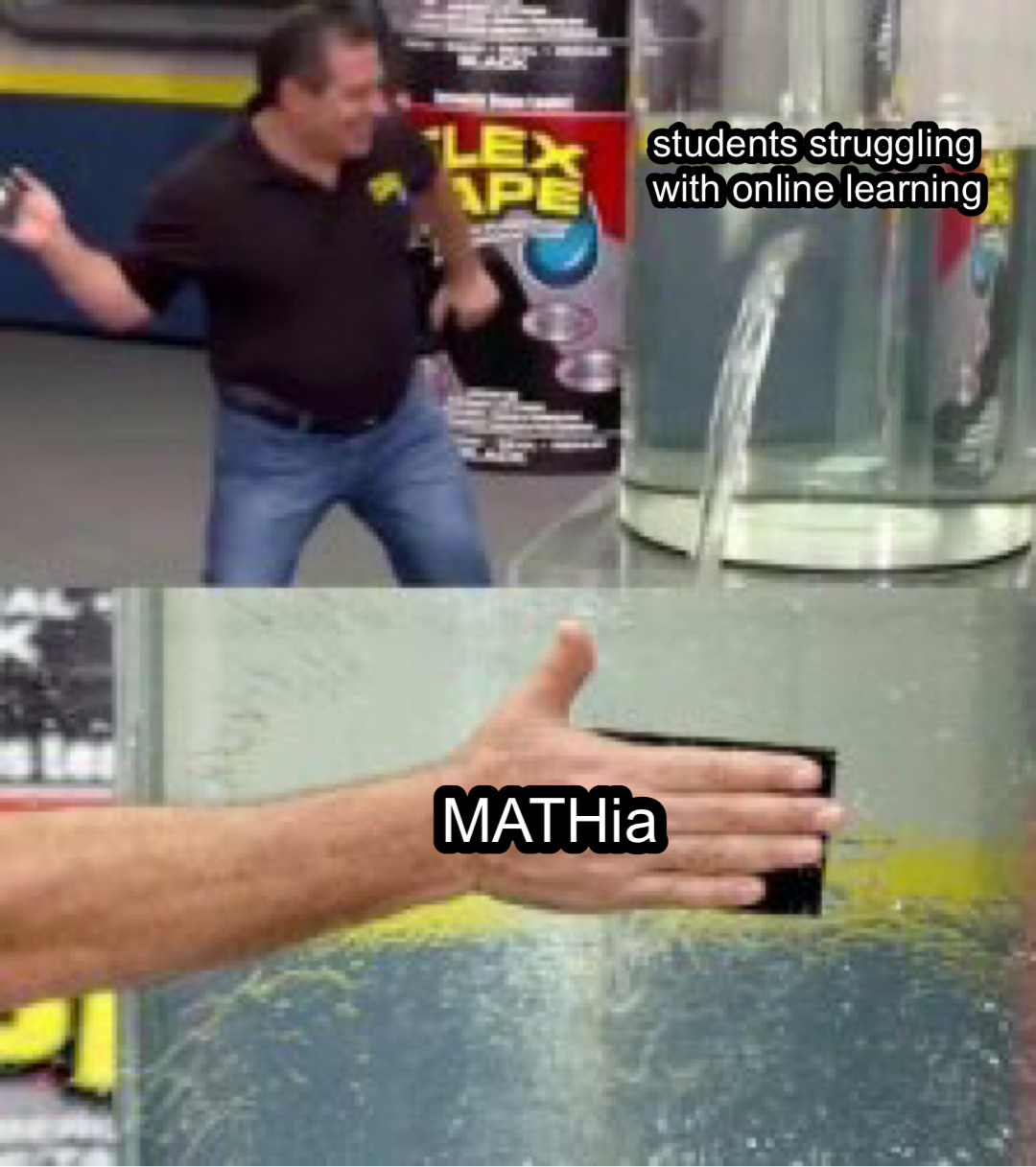
    In 2020, Carnegie Learning, an organization founded by a professor at Carnegie Mellon University, won an award for their program MATHia, an AI that offers personalized algebra tutoring. MATHia can not only guide students on a math problem, it can also predict why a student may not be understanding the concept, and target their specific misunderstanding, as well as adapting to the student’s pace and level. MATHia supported students during the pandemic, when many students were struggling with the switch to online learning. According to a study, students who used MATHia had grade averages of about 8 points greater compared to those who did not. 

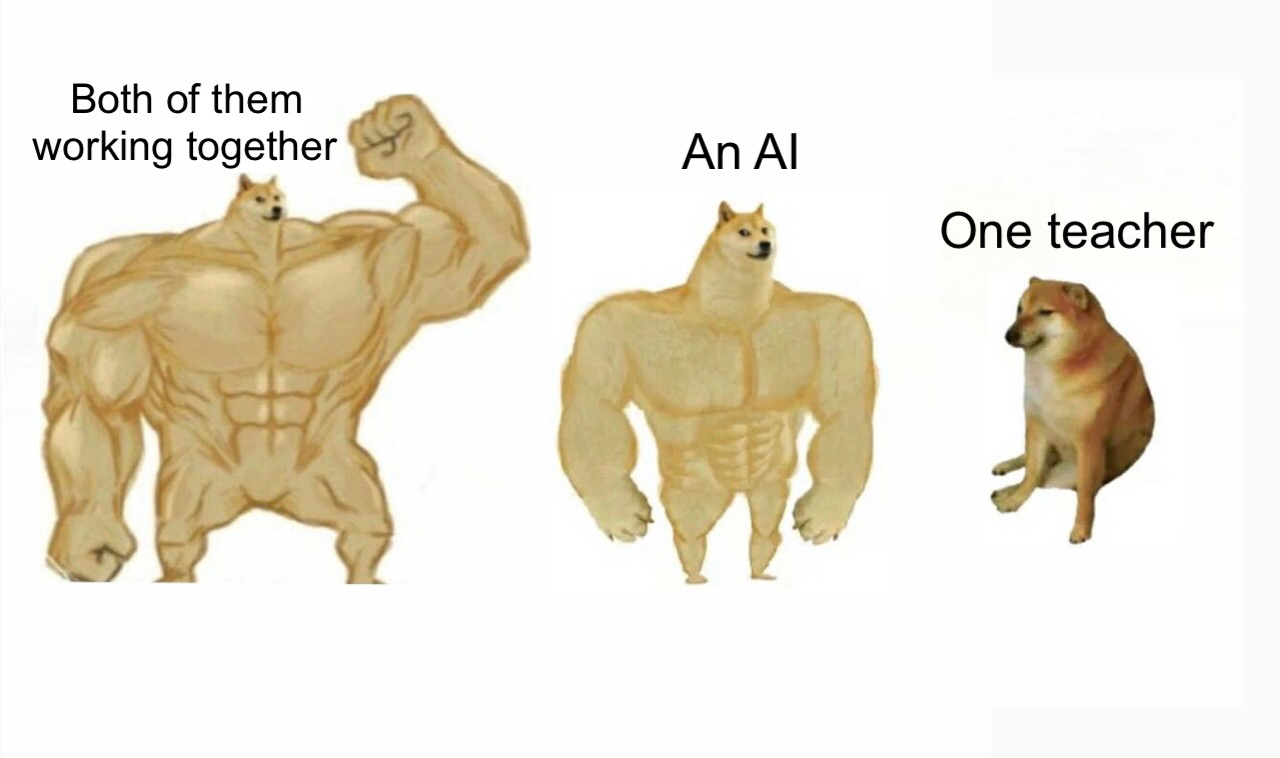
    This shows how AI has the potential to be a valuable addition in the classroom compared to human teachers who may not be able to tailor lessons to each student or spend one-on-one time with students who need extra support. Do you think the future of education is Artificial Intelligence? 

    References

    Boland, A. (2020, May 13). Mathia® by Carnegie Learning Wins “Best Artificial Intelligence Solution” in the edtech awards 2020. Business Wire. Retrieved February 18, 2022, from https://www.businesswire.com/news/home/20200513005646/en/MATHia%C2%AE-by-Carnegie-Learning-Wins-%E2%80%9CBest-Artificial-Intelligence-Solution%E2%80%9D-in-The-EdTech-Awards-2020

    Griswold, A. (2014, March 6). This cognitive tutor software is already having a revolutionary effect. Business Insider. Retrieved February 18, 2022, from https://www.businessinsider.com/cognitive-models-and-computer-tutors-2014-3

    Maderer, J. (2016). TALK OF TECH: MY TA IS AN AI. Georgia Tech Alumni Magazine. Retrieved February 18, 2022, from https://www.gtalumni.org/s/1481/alumni/17/gt-magazine.aspx?sid=1481&gid=21&pgid=6668

    Maderer, J. (2016, May 9). Artificial Intelligence Course creates AI Teaching assistant. Georgia Tech News Center. Retrieved February 18, 2022, from http://news.gatech.edu/news/2016/05/09/artificial-intelligence-course-creates-ai-teaching-assistant

    Stirgus, E. (2017, January 31). She has quite a brain, but this teaching assistant is just not human. ajc. Retrieved February 18, 2022, from https://www.ajc.com/news/local-education/she-has-quite-brain-but-this-teaching-assistant-just-not-human/ZD8NiCkbgWOM4XaXkZ6cBL/

  • Should We Be Ignoring Duolingo’s Threats? A Look at the Sapir-Whorf Hypothesis

    Should We Be Ignoring Duolingo’s Threats? A Look at the Sapir-Whorf Hypothesis

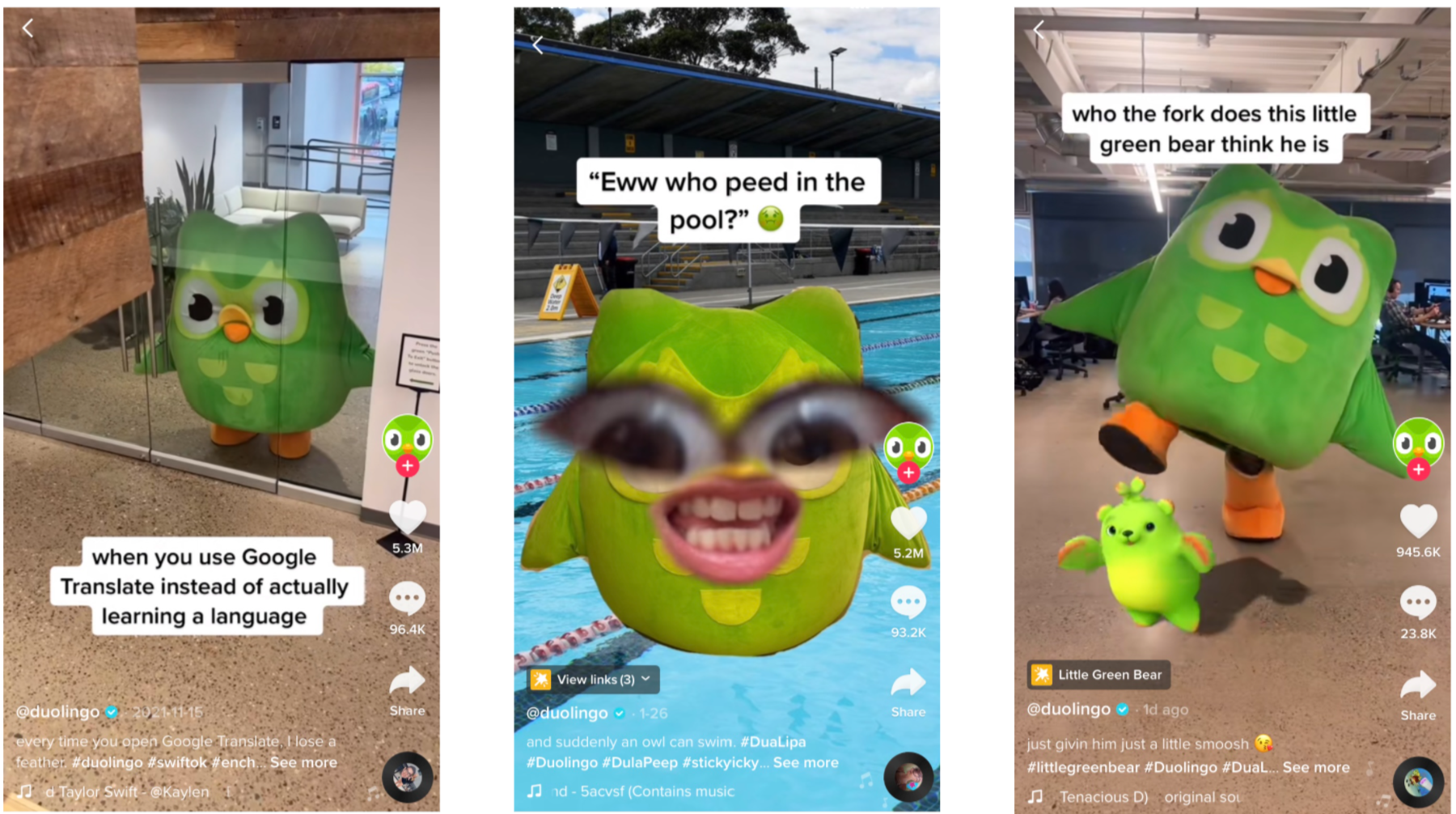
    The recent year has brought to the forefront an unexpected, slightly unhinged new pop-culture icon: Duo, the Duolingo owl. Duolingo is a popular language-learning app that allows users to learn a variety of languages and sends daily notifications to encourage them to keep a language-learning streak. And while the messages coming from the Duo TikTok posts and comments range from threatening to completely out of pocket, the Duo owl seems to recognize the value of learning a second language. And with 3.1 million followers on the brand’s TikTok, this message seems to be reaching the world. Duo definitely has the science to back them up. It’s been thoroughly proven that as you age, multilingualism is a better predictor of cognitive ability than age, education, and gender (Kavé et al., 2008; Mohamed Zied et al., 2004).

    But why does bilingualism have this effect on your brain? Many recent studies have confirmed that you regularly use more regions of your brain if you’re bilingual or multilingual, as compared to someone who is monolingual. What’s known as the Sapir-Whorf hypothesis could help to explain it. 

    Sapir-Whorf hypothesizes that the language you speak influences how you perceive reality. This idea seems to have caught on, as there have been many research studies and fictional pieces that explore it.  

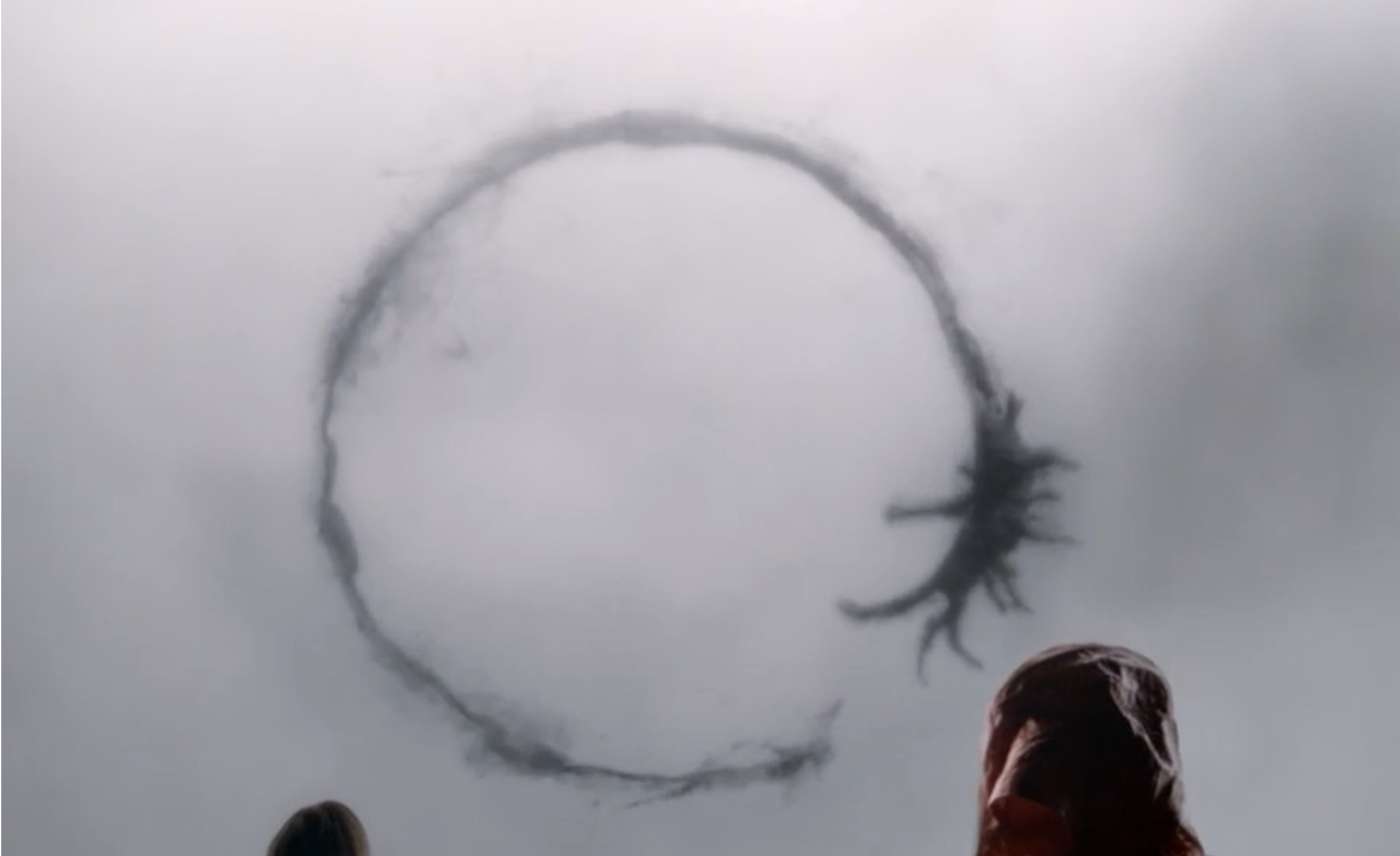
    “Story of Your Life and Others” by Ted Chiang (as well as its 2016 film adaptation, The Arrival) is my favorite example of the hypothesis. Key point: An alien species arrives on Earth. Unlike us humans, who have reflectional symmetry, the aliens had rotational symmetry – think extraterrestrial octopus. In the story, these aliens communicate very differently from humans. While we write in lines and process information sequentially/linearly, the aliens wrote all at once in a nested circular pattern and processed information all at once. 

    The aliens’ writing, as depicted in The Arrival (2016).

    Once basic communication was established, the linguists wanted to set up a frame of communication, so they started with what we assume is constant throughout the universe: physics. The aliens could very easily understand certain physics theories that humans had a difficult time grasping, because the aliens, unlike us, didn’t perceive time sequentially. Because their language communicated information all at once, they thought about information all at once and didn’t have the same sense of past, present, and future that we have.  

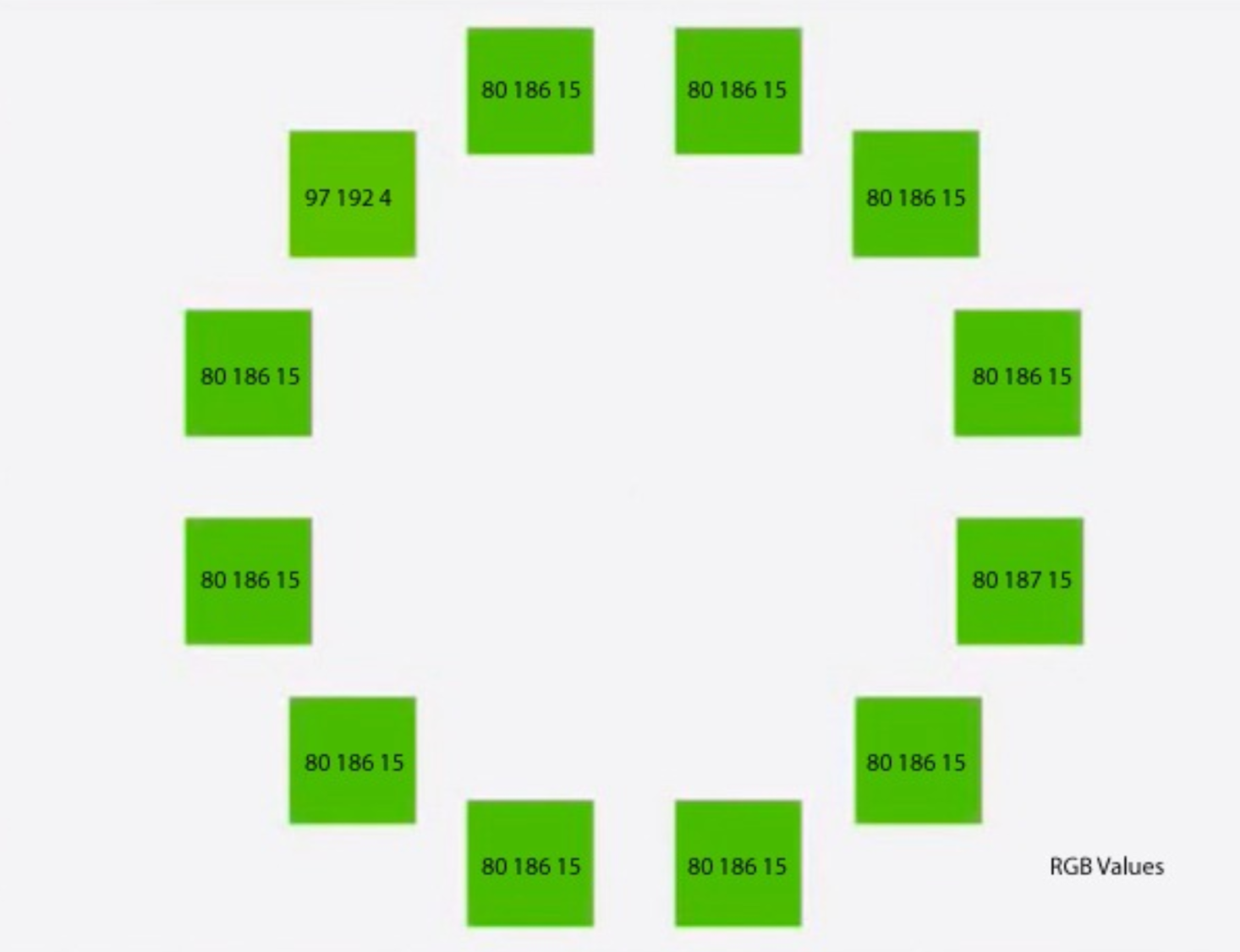
    The effect of language on perceived reality can be seen in the real world as well. The Hopi language, spoken by the Hopi people in northeastern Arizona, doesn’t grammatize time the same way as English and refers to it as a verb instead of a noun. This slightly alters how they perceive time. The Himba tribe in Nambia is able to differentiate between more shades of green than the average English speaker because they have words for more different shades.

    The right side is easily discernible to an English speaker, whereas the left side would be just as easily discernible to a Himba speaker.

    As can be seen by the RBG values in the image, the square in the same position as the blue square is a different shade of green. Most Americans have a very hard time distinguishing it. 

    These differences, on a lesser scale, are present between all languages. As aptly discussed in another very interesting linguistical read, “The Idiot”, by Elif Bautman, the main character explains how she “knew [she] thought differently in Turkish and in English — not because thought and language were the same, but because different languages forced you to think about different things”. 

    Given that one language influences, to some extent, how we perceive the world, it’s not a big leap to see how multilingualism would affect the way we think. While there will be some overlap, especially between similarly structured languages like the Romance Languages, each new language learned expands the areas of your brain that are regularly used and may affect how your brain processes information, even when you’re using your native language. 

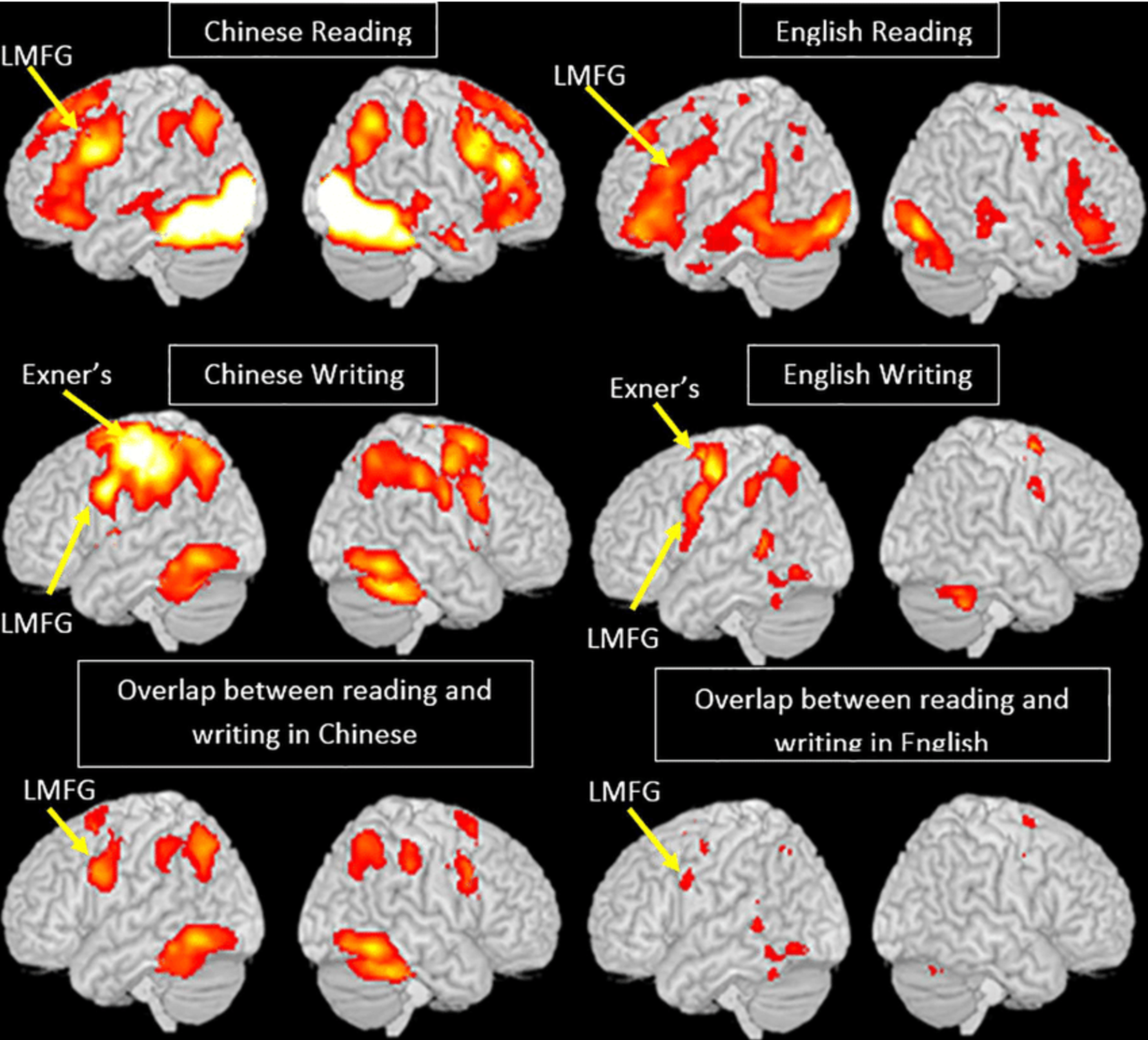
    The difference between brain regions used when reading and writing in Chinese and English (Cao, 2016)

    Different languages use different locations and quantities of the brain. As can be seen from the image above, key examples of this are the LMFG region and Exner’s region. The LMFG region, short for the left middle frontal gyrus, plays a key role in literacy. Exner’s region helps you to process numbers and language. Multilingualism strengthens alternative brain networks within these regions to those that you usually use, allowing your brain to circuit around any deterioration that occurs with aging. This explains the strong correlation between multilingualism and cognitive ability as you age.

    With this in mind, recent studies have been exploring the use of language study for those 65+, and, as expected, it is working to help reduce the deterioration (Antinou, 2013). Moral of the story: if you’re planning on outliving the Duo owl, stepping up your language learning game (or reversing some of the threats Duo regularly levels at its users) is probably your best bet.

    References:

    Antinou, M., Foreign language training as cognitive therapy for age-related cognitive decline: A hypothesis for future research. https://pubmed.ncbi.nlm.nih.gov/24051310/ . 

    Cao, F. (PDF) neural signatures of the reading-writing connection … https://www.researchgate.net/publication/311759524_Neural_Signatures_of_the_Reading-Writing_Connection_Greater_Involvement_of_Writing_in_Chinese_Reading_than_English_Reading . 

    Kavé, G., Eyal, N., Shorek, A., & Cohen-Mansfield, J. (2008). Multilingualism and cognitive state in the oldest old. Psychology and Aging, 23(1), 70–78. https://doi.org/10.1037/0882-7974.23.1.70 

    Lucy, J. A. Sapir–Whorf hypothesis. https://www.sciencedirect.com/science/article/pii/B0080430767030424 . 

    Newton, M. It’s not easy seeing green. https://6thfloor.blogs.nytimes.com/2012/09/04/its-not-easy-seeing-green/ (accessed Mar 2, 2022). 

    Skibba, R. How a Second language can boost the brain. https://knowablemagazine.org/article/mind/2018/how-second-language-can-boost-brain .

  • Psych and Tech: Creating a Social Media Trap

    Psych and Tech: Creating a Social Media Trap

    In the digital age, social media has become a staple in millions, if not billions, of people’s lives. From Tumblr to Twitter, the digital space is full of many different kinds of social media platforms. What we’re looking at today, though, is TikTok, a newer platform that gained immense popularity over the course of the COVID-19 pandemic. Known for its video sharing capabilities, TikTok has been named the most popular website of 2021, according to Cloudflare. You either use it yourself or know someone who does, but regardless, TikTok is immensely popular, especially among millennials and Gen Z. Being such a popular platform, it’s only natural that it comes surrounded in controversy. The list could go on for a while, but dangerous trends, censorship, cultural appropriation, privacy concerns, and cyberbullying are just a handful of issues on the platform. Despite all of these concerns, the platform still has well over a billion users – why is that? The problem lies within the way the app is designed. The two key components TikTok has successfully embedded into their platform are its algorithm and the content available on it. Together, let’s look at these components and how they work together to create such a powerful, addictive social media trap.


    One of TikTok’s most striking features is its algorithm. It curates a near-perfect ‘for you’ page, keeping users scrolling for hours and hours. The craziest part is that no two feeds are the same. How does this algorithm work exactly? Artificial intelligence and data analysis are our main suspects here. While all the details aren’t out there for the whole world to see, we know the system works by recommending videos similar to the ones you like, share and save, along with analyzing the comments you leave and accounts you follow. The algorithm monitors how much time users spend scrolling or watching videos, and it keeps collecting information to accommodate trends and changing styles. That’s the simple explanation of it, but let’s break it down a little farther. The algorithm splits user data into three categories: content, user and scenario data. Content data consists of the traits of the videos posted onto the platform so TikTok can categorize and recommend videos based on the content. User data includes profile data such as age, gender, and interest tags users choose when creating a profile. Lastly, there is scenario data, which is tracking the user’s preferences based on their current scenario. An example of this would be tracking what a user likes to watch when they’re at work/school compared to when they’re traveling or at home. This form of data collection relies on location tracking and/or time of day to monitor user behavior. 


    From those three types of data, the algorithm derives certain features and sends that to the recommendation engine. These are correlation, user-scenario, trend and collaborative features. Correlation features represent the correlation between content and users, user-scenario features include location and time of day, trend features include global trends, themes, and trending topics in general, and collaborative features compare users with similar behaviors to categorize them. Using those features, the algorithm determines whether or not a video is suitable for a user’s ‘for you’ page. This behavior tracing is known as machine learning – the algorithm quite literally learns your habits on the app and uses that information to recommend you videos. This keeps users’ ‘for you’ page up-to-date and accurate, giving them endless content to stay hooked on. If you were constantly fed content relating to things you like, you’d probably find it hard to look away too, right?


    Well, where’s the psychology in all this? A big consequence of the digital age is reduced attention span. You’ve probably heard of the term ‘iPad kid’ used to describe cranky kids with limited awareness of their surroundings, constantly needing a screen in front of their face. That’s the poster example of limited attention spans as a result of devices, and that’s exactly what using social media for a prolonged period of time does to you. If you’re using TikTok, you’re probably also using some other social media like Instagram, Twitter or Facebook, and chances are you’ve been using them for a while too. TikTok is designed to specifically target these people – with endless scrolling and short videos ranging from fifteen seconds to three minutes, it’s the perfect trap for users with short attention spans. You spend a couple seconds watching one video, and then it’s onto the next, and within one minute, you’ve already watched four videos. The design keeps people hooked, and it becomes very easy for people to spend hours scrolling. 


    Apart from catering to limited attention spans, a large part of why so many people stay hooked on TikTok is due to gratification theory. Uses and gratification theory (UGT) explores the relationship between people and media, specifically how people use media to satisfy certain needs. These needs are categorized into one of the following: cognitive, affective, personal integrative, social integrative and tension free. Cognitive needs refer to the academic, intellectual or social knowledge and information that people use media for. For example, people watch the news to learn more about current events or use search engines to learn more about a specific topic. Affective needs, as the name suggests, refers to emotional needs. People will watch thriller or horror movies for a good scare or adrenaline rush, or maybe a sad romcom to get a little emotional after a long day. Personal integrative needs are essentially self-esteem needs; people are active on social media to reassure themselves, establish their online presence, and gain credibility. Often, people see more likes on a picture and a higher follower count as a self-esteem booster. Social media also lets you only post certain aspects of your life, so you’re free to build your own image on there. Next, we have social integrative needs, which refers to the desire to fit into society, whether it be friends or family. People will start a social media profile if all of their friends have one, or might start watching a new show solely because their crush said they liked it. Lastly, there are tension free needs, or one’s escapism from daily life. After a long day of work, you might just want to relax and watch a movie, or scroll through memes on Instagram, but either way, you’re using media as a form of escape to relieve yourself of stress.


    Each user of TikTok has some combination of these needs – maybe they want to fit in since everyone they know is on it, they seek validation from certain videos they see, or just to scroll and laugh at funny videos after a long day. People are motivated by the fact that TikTok allows them to seek fame, expand their social network, and express themselves in many creative ways. Since it requires a shorter attention span than a platform like YouTube, many people have turned to it as their new social addiction. The algorithm works hand-in-hand with UGT to create a social media trap – one that the users keep running. They’ll like and watch videos, and the algorithm will just keep recommending more. This process is endless until the user decides to stop, which is harder than you think.


    Citations

    https://towardsdatascience.com/why-tiktok-made-its-user-so-obsessive-the-ai-algorithm-that-got-you-hooked-7895bb1ab423

    https://www.communicationtheory.org/uses-and-gratification-theory/#:~:text=in%20Mass%20Communication%2C%20Psychology%2C%20Behavioral,when%20their%20needs%20are%20fulfilled. 

    https://www.ncbi.nlm.nih.gov/pmc/articles/PMC8010681/

    https://journals.sagepub.com/doi/full/10.1177/0735633117743917

  • Interstellar’s Movie Depictions: Real or Unreal?

    Interstellar’s Movie Depictions: Real or Unreal?

    Produced in 2014, Interstellar is an all-star classic space movie, a favorite for many space lovers! Director Christopher Nolan’s Interstellar movie is a science-fiction film that occurs in the future where a severe drought has resulted in dust-storms, destroyed most of Earth’s crops and caused humans to die of disease and famine. Cooper (played by Matthew McConaughey) and a team of NASA scientists are tasked with saving humanity by going through a wormhole that bends space and time, in hopes to find a habitable planet. This inter-galactic drama is full of suspense and mind-blowing scientific concepts. But how much of Interstellar depictions about space are true? Let’s play a little game of true or false to find out!

    True or False?

    Time moves more slowly in a black hole than it does for people on Earth.

    ANSWER: TRUE 

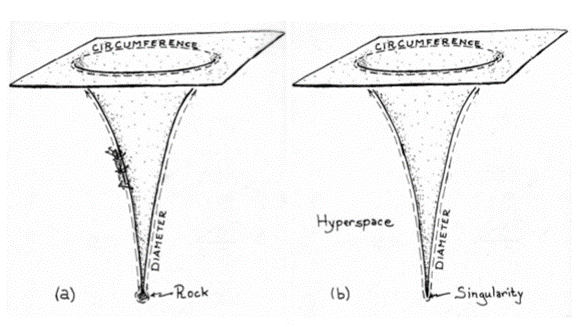
    A blackhole is essentially a place in space with an “infinite gravitational pull” that not even light can escape. The slowing of time is humungous near a black hole’s horizon, where the pull of gravity is humungous. Likewise, because the flow of time ceases at the horizon, the pull of gravity is infinite. Time still flows inside the horizon of a black hole; however, the flow of time is in a spatial direction – toward the singularity at the hole’s center (Thorne, 1986). If you were to reach down near a black hole’s horizon and stay there for a few days before returning home to Earth, you would find that millions of years have elapsed on Earth; while you only aged a few days, your family and friends are long gone (Thorne, 1986).

    a) A trampoline with a rock at its center and an ant exploring its shape. The ant finds that the diameter of the circle is much larger than the circumference of the circle b) Space around a black hole, as viewed from a higher dimensional hyperspace that is not part of our Universe. Source: http://www.its.caltech.edu/~kip/scripts/PubScans/BlackHoles-Thorne-Starmus.pdf

    True or False?

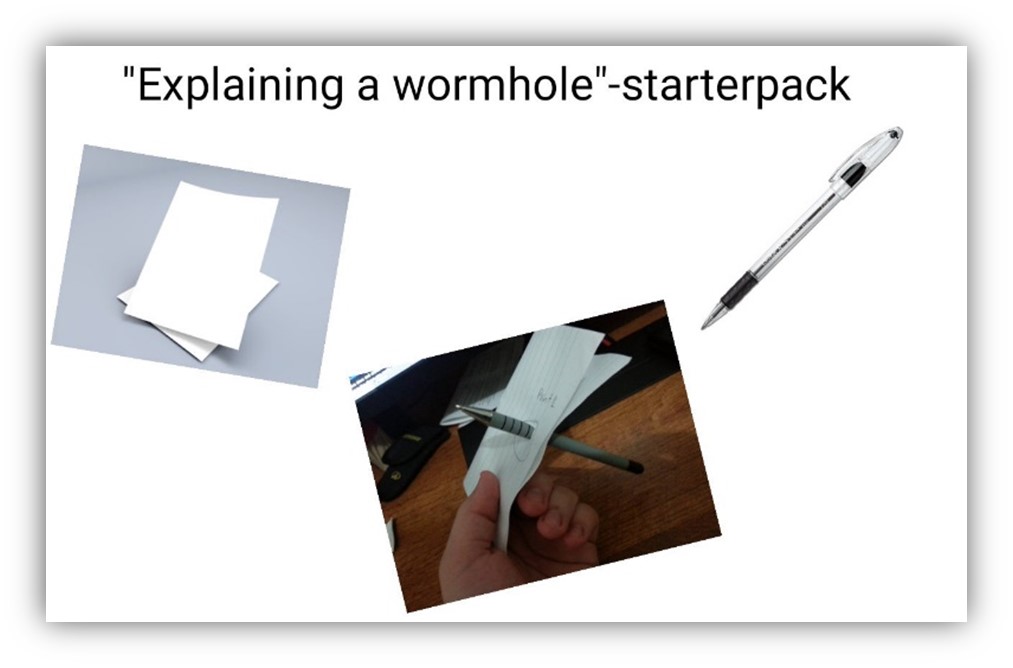
    If a wormhole were to appear in space, it would provide a short cut from one side of the universe to another.

    ANSWER: TRUE (for the most part)

    The theory of general relativity supports the possibility of wormholes and their ability to create space-time shortcuts to other universes (Tillman, 2022). Einstein’s theory of general relativity mathematically predicts the existence of wormholes, where there is a black hole at the mouth of each wormhole (Tillman, 2022). However, a wormhole is not created solely by when a dying star collapses to form a naturally occurring black hole. According to Princeton cosmologist J. Richard Gott, “It takes a massive object to generate a gravity field sufficient to fold space-time in half, and the one in the movie would have to be the equivalent of 100 million of our suns” (Kluger, 2014). In addition, ‘negative energy’ or an energetic state that is less than zero, is required to create the portal of a wormhole and keep it open (Kluger, 2014).

    Wormholes bend space and time, literally “folding” space in half to create a shortcut. Source: https://www.reddit.com/r/starterpacks/comments/95n6x9/scientist_in_a_movie_explaining_how_a_wormhole/

    True or False?

    You could survive the leap into a black hole.

    ANSWER: FALSE

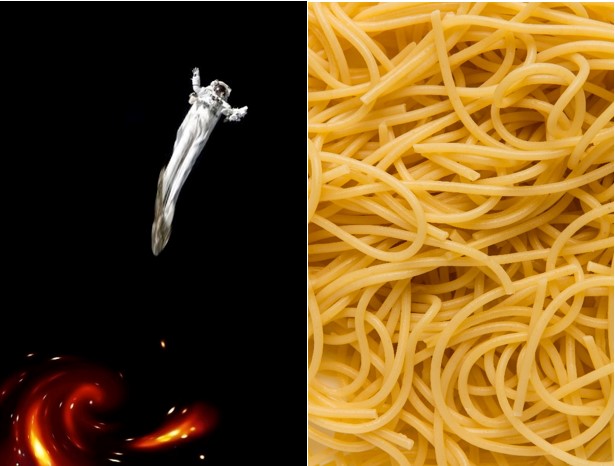
    What happens when you enter a black hole? One word: Spaghettification. A black hole would stretch your body into a thin ribbon (ESO Supernova, 2022). Ultimately, you will get shredded by extreme gravity. In reality, Matthew McConaughey should have been spaghettified. Not in the yummy, savory way, though.

    Oooh, spaghettification!

    True or False?

    Planets surrounding a black hole (like in Interstellar’s “Gargantua”) could be inhabitable.

    ANSWER: FALSE

    Planets that surround a black hole are highly unlikely to be able to harvest life because they are so close to the black hole, making them unstable (Phillips, 2020). An important factor in determining whether a planet is inhabitable or not is how its planetary system associated with it is like. For that to happen, a Sun-like star needs to be there. However, a planet near a black hole most likely had its “Sun” sucked into the black hole, thus the planets would deem uninhabitable.


    References:

    ESO Supernova. (2022). What happens if you fall into a black hole? ESO Supernova Exhibition -. Retrieved February 17, 2022, from https://supernova.eso.org/exhibition/1205/#:~:text=The%20gravitational%20attraction%20of%20a,even%20light%20can%20escape%20it.&text=Spaghettification%3A%20A%20black%20hole%20would,stronger%20than%20on%20their%20head

    Kluger, J. (2014, November 7). What ‘interstellar’ got right and wrong about science. Time. Retrieved February 17, 2022, from https://time.com/3572988/interstellar-science-fact-check/

    Phillips, P. (2020, May 15). Times Interstellar Got Science All Wrong. Looper.com. Retrieved February 17, 2022, from https://www.looper.com/210013/times-interstellar-got-science-all-wrong/

    Thorne, K. (1986). Black Holes. Black Holes The Most Luminous Objects in the Universe, But No Light! Retrieved February 17, 2022, from https://vdocuments.mx/black-holes-thorne.html

    Tillman, N. T., & Harvey, A. (2022, January 13). What is wormhole theory? Space.com. Retrieved February 17, 2022, from https://www.space.com/20881-wormholes.html