CHOOSE YOUR POKÉMON!

I still remember the first time I booted up my brother’s GameBoy Color and saw that iconic title screen of Pokémon Red where each of the starters would flash by. The hardest choice as a kid (and still a difficult one now) was picking which of the three starters you wanted as your main partner. Would you choose the Fire-type, the Water-type, or the Grass-type? The one thing you knew going into this choice though was that most starter Pokémon were based off real life animals, plants, or objects. For example, in Pokémon Red, the Grass-type starter Bulbasaur is based off a mixture of frogs and onions, while the Fire-type Charmander is based off a salamander, and Water-type Squirtle is based off, well, turtles.
So I thought, well why not take up this trend and create my own set of starter Pokémon based on some real world counterparts! I’ll be taking three real plants/animals, designing them as Pokémon and crafting a move set based on some of their coolest ecological adaptations. Then you can choose who you’d like to start your Pokémon journey with! Welcome to the next generation of Pokémon: Generation Earth!
Generation Earth Starters
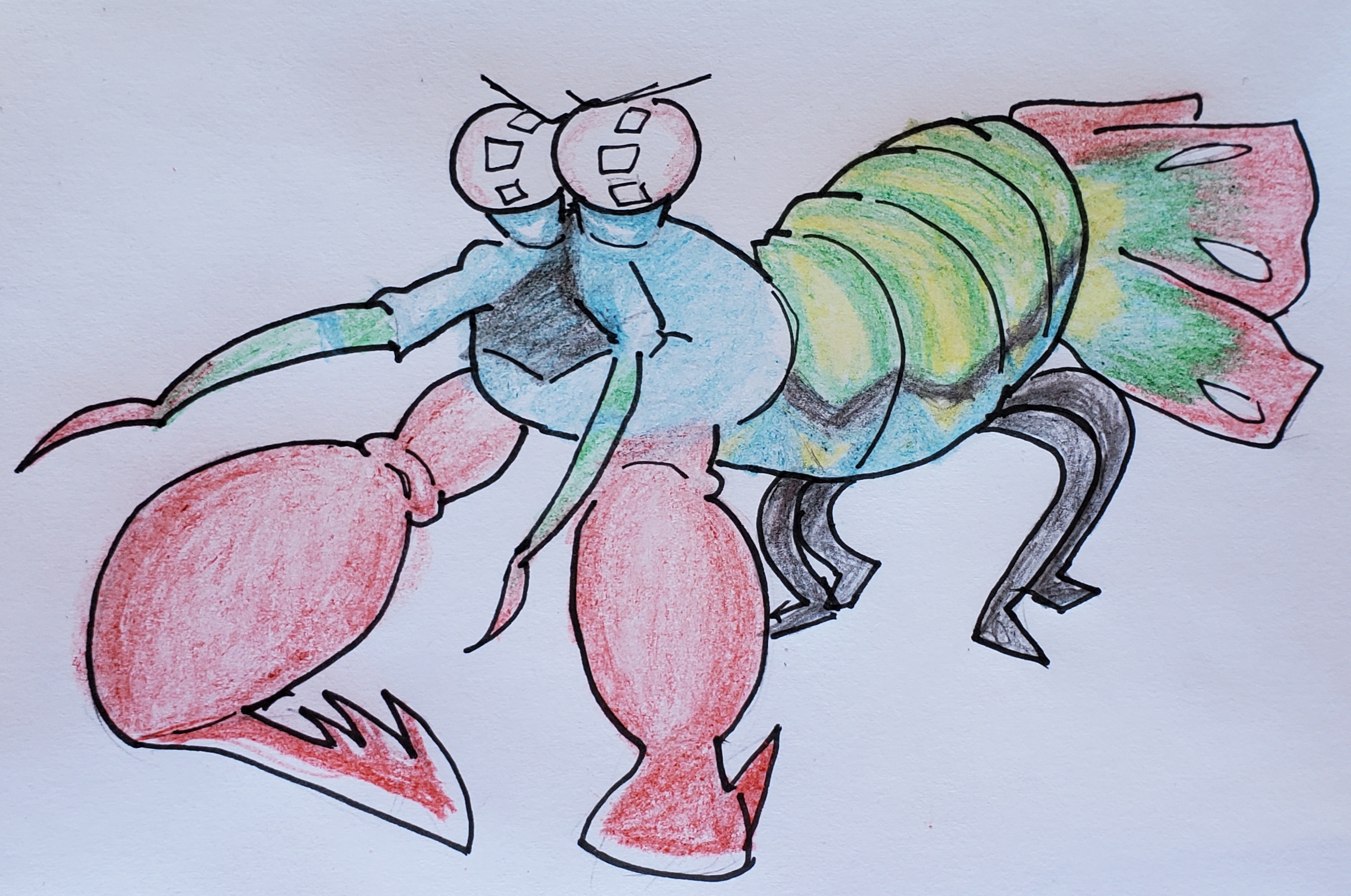
Water-Type Starter: Stomato (Stomatopods or Mantis Shrimp)
Dual Type: Water/Steel
Move set:
- Mantis Punch – releases an intense punch that stuns the foe for a turn.
- Power: 120, Accuracy: 70
- Bubble Punch – punches the foe with a beam of bubbles.
- Power: 90, Accuracy: 80
- Triple Sight – increases accuracy by focusing on three different objects.
- Power: —, Accuracy: 100
- Color Burst – increases attack by allowing the user to identify more colors.
- Power: —, Accuracy: 100
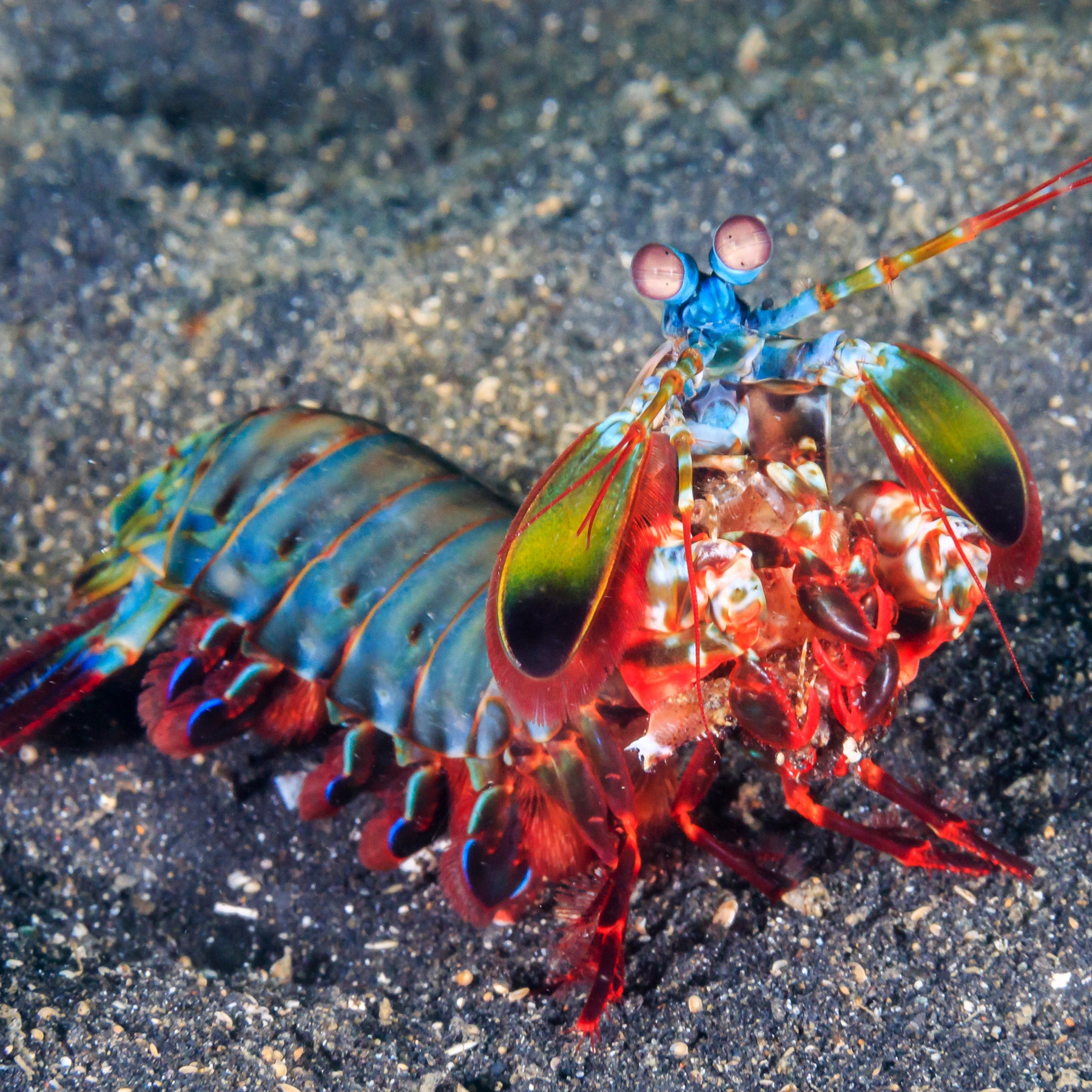
The fierce Water/Steel hybrid, Stomato, is based on its just as fierce real world counterpart, the stomatopod, or more commonly known as the Mantis Shrimp. These carnivorous crustaceans live in most shallow, tropical regions and can be broken into two main groups based on how they catch prey: spearing and smashing. Stomato is based on the smashing group as you can see from his punching moveset. Let’s breakdown these moves:
Mantis Punch: The Mantis Shrimp’s main claim to fame is its fantastic punch, which can reach a force over 1,500 newtons and possess an acceleration of 102,000 m/s2, which is basically as if they were shooting a .22 caliber rifle! These punches can tear through crab shells with ease, allowing the Mantis Shrimp a delicious meal. As such, Stomato’s Mantis Punch is his fiercest attack and can absolutely decimate an opponent if he lands a hit.
Double Bubble Punch: The Mantis Shrimp doesn’t just attack in ones though. Because of how fast their punch is, they create a ‘cavitation’ of bubbles that follows their initial punch and hits their prey a second time. This cavitation of bubbles is also burning hot (almost 4,400C). If their prey isn’t killed by the first attack, they sure are killed with the second round. To only make things fair, I separated this bubble punch into a new move for Stomato, but it still delivers quite the hit!
Triple Sight: While the Mantis Shrimp’s eyes might look creepy to us, they have a ton of unique abilities! Mantis Shrimp possess trinocular vision, meaning that they analyze distance and depth by focusing on objects in three separate regions. This helps them get an extremely accurate understanding of the space around them and where their prey is. For Stomato, his trinocular vision allows him to easily lock onto his foe and increase the accuracy of his attacks.
Color Burst: The Mantis Shrimp’s eyes possess another interesting feature; they contain twelve types of different photoreceptors (the part of the eye that responds to light and helps distinguish colors). That might not seem like a big deal at first but just compare that to humans who only have three types! Because of the large number of photoreceptors, the Mantis Shrimp can see a wider range of colors than a human (and most other animals on the planet). Scientists are still trying to figure out exactly why and how the Mantis Shrimp has so many, but many hypothesize the Mantis Shrimp utilizes each photoreceptor to identify and process the color (while humans need other parts of their brain besides their eyes to process colors) which is extremely helpful in the colorful coral environments the Mantis Shrimp can live in where they need to spot prey quickly. Stomato takes after this with his move, Color Burst, which lets him identify multiple colors at once to better find his target on the battlefield.
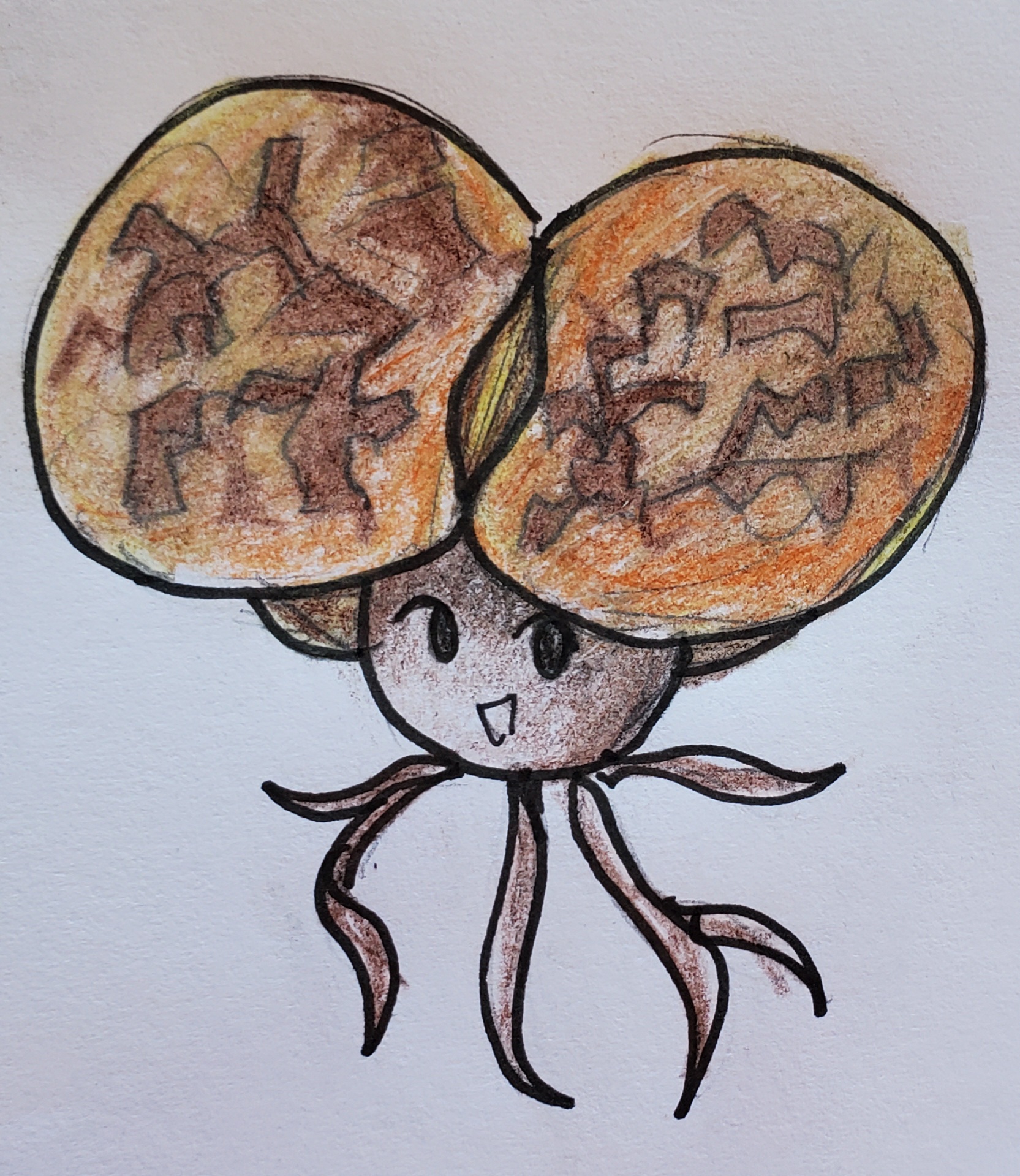
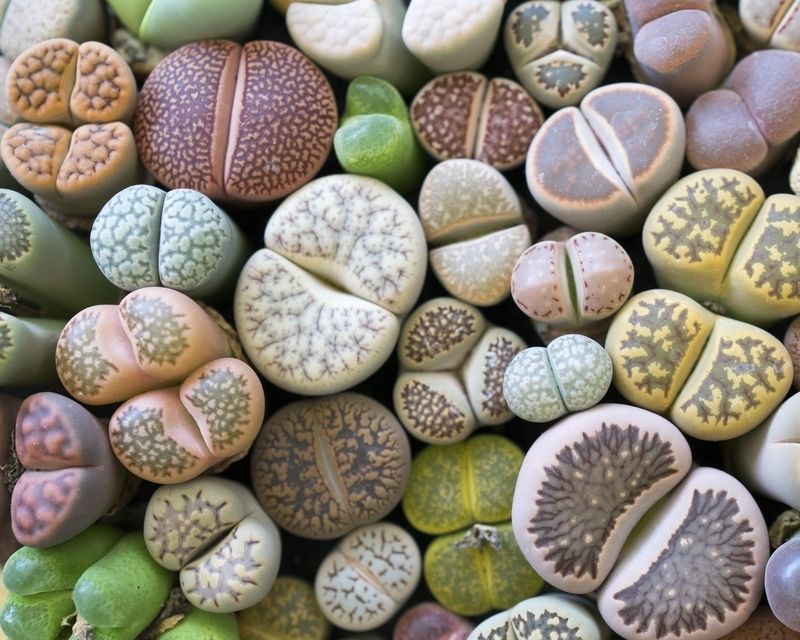
Grass-Type: Lithop (Lithops or living stones)
Dual Type: Grass/Ground
Move set:
- Camouflage – hide as a rock to lower a foe’s accuracy.
- Power: —, Accuracy: 100
- Aqua Retain – stores water for the next three turns to replenish HP.
- Power: —, Accuracy: 100
- Metabolic Cooling – darkens the battlefield and releases chemicals.
- Power: 90, Accuracy: 100
- Leaf Shield – tightens its leaf window to raise its special defense.
- Power: —, Accuracy: 100
Our lovely little Lithop has its name taken straight from its real world counterpart’s scientific one. Living stones, as they are more commonly known, are plants that typically reside in the drier, warmer areas of southern Africa. They’ve gained this nickname due to their appearance of stones of pebbles. To thrive in such xeric environments, lithops have forged numerous adaptations to help them conserve water and protect themselves from overheating and radiation. Let’s take a look at these adaptations and how they’ve formed Lithop’s moveset:
Camouflage: The most obvious one; living stones keep their stems underground, only revealing two succulent leaves above the surface. Without close inspection, this pair of leaves adorned with graveled patterns give a rock-like appearance to the lithops. This appearance can fool nearby grazers to move past them. As such, Lithop utilizes its move Camouflage to hide itself from its opponents, making it harder to see within the landscape and harder for the foe to hit!
Aqua Retrain: The two succulent leaves and below ground stem of the living stone have other benefits too. If you’ve ever seen a succulent leaf, you know it’s much fatter than most traditional green leaves you see on bushes or flowers. This is because these leaves store water in them for the plant to use during periods of drought. Living stones are especially great at this since by design, they have a low surface area to volume ratio, meaning they can store a lot of water while minimizing the amount of exposed plant surface area. Lower exposed plant surface means less water will be lost during the day due to transpiration. Because of their great water retention mechanics, our Pokemon Lithop can also store water for multiple turns and use that water bit by bit to help heal and regrow itself after damage.
Metabolic Cooling: Lithops, like many plants found in arid environments, have to adjust their process of photosynthesis to not lose too much water. One of the ways they do this is through Crassulacean Acid Metabolism (CAM), where only at night will the plant open its stomata (think of these as plants’ pores) to collect carbon dioxide from the air. Without the sun present, the plant is less likely to lose water vapor when it opens its stomata which helps it conserve its water supply. For our Pokemon Lithop, I did a bit of a flip to make the move an attack, so instead of collecting the chemicals from the night air, it releases them to harm its foe. Sometimes in art you have to make a few adjustments for things to work!
Leaf Shield: As you know, most of the living stone is hidden within the succulent leaves or beneath ground. To bring sunlight into the plant for photosynthesis, lithops possess a small leaf window. The exact purpose of this window mystified biologists for years (was it to directly channel sunlight into the areas for photosynthesis?) until a few studies revealed its reasoning. Within the harsh sunlight of the desert, it’s very easy for the internal parts of lithops to overheat and be damaged by UV radiation, which can dramatically reduce photosynthesis. This leaf window then shields the internal portions of the plant from sunlight and keeps its internal temperature from rising too much. Because of this, our Pokemon Lithop utilizes its leaf window as a defense mechanism to special attacks that could cause damage or status effects to it.
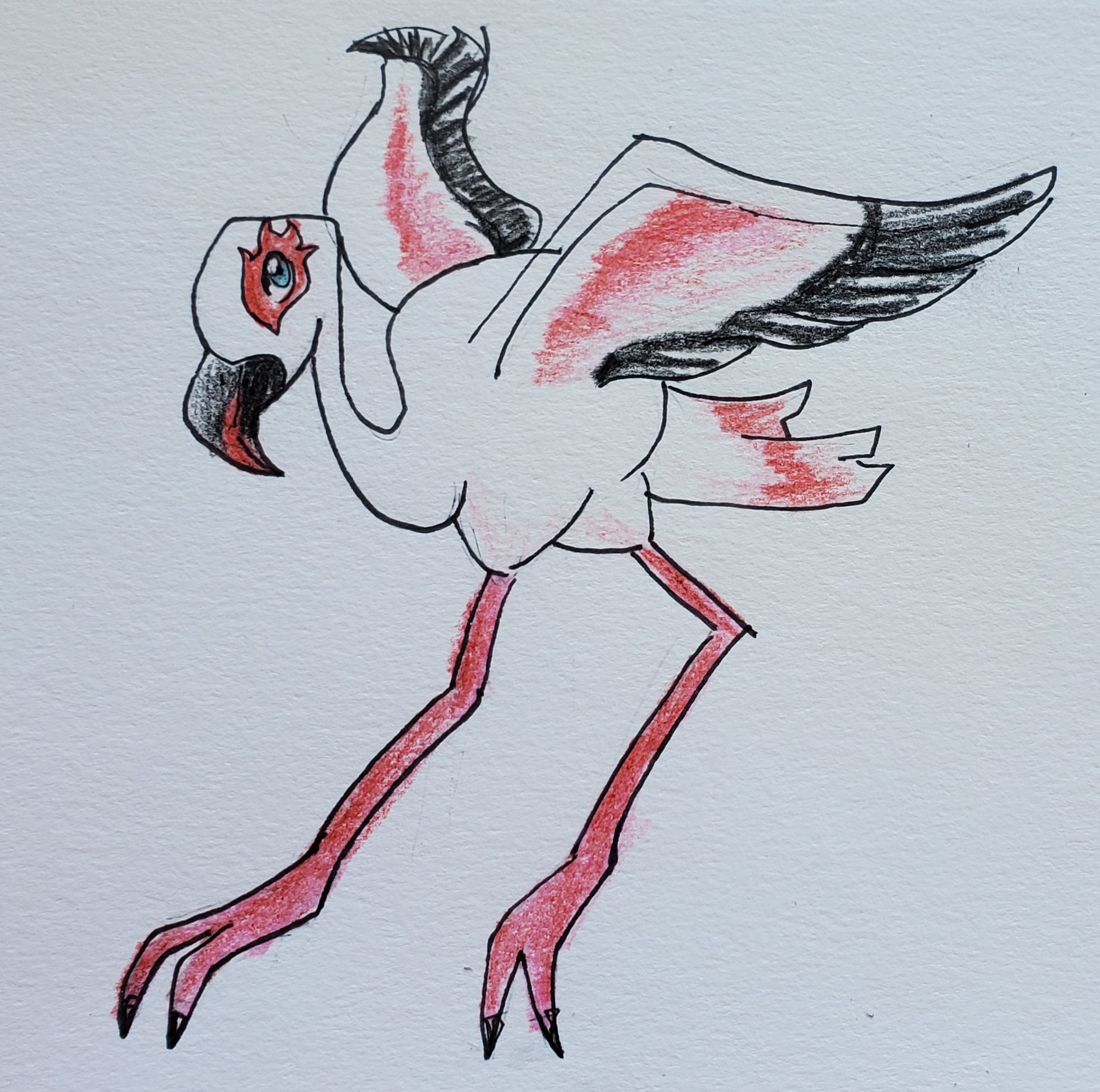
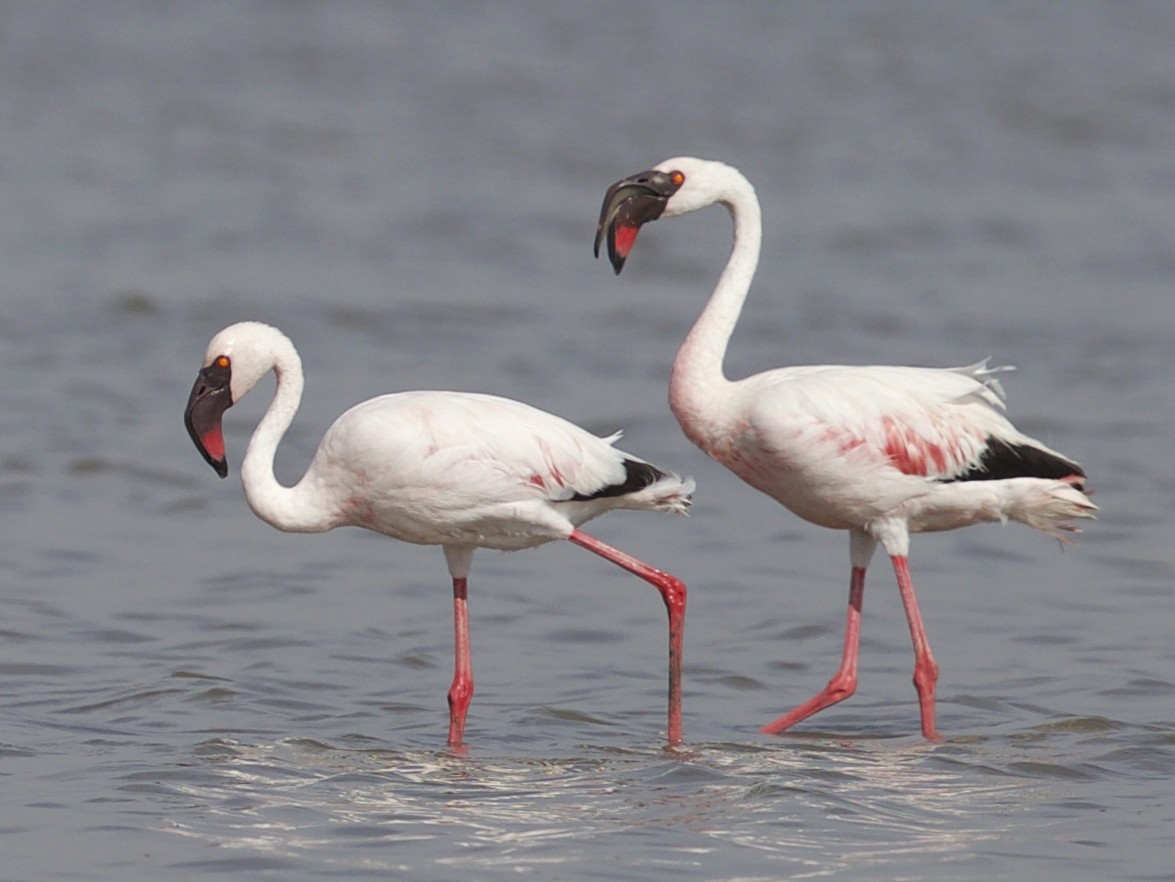
Fire-Type Starter: Flameingo (Lesser flamingos)
Type: Fire-Flying
Move set:
- Boil Spout – Squirts boiling water at foe.
- Power: 90, Accuracy: 90
- Purify – removes salt from water to heal the user’s HP. Effect doubled if attacked by a Water-type move the previous turn.
- Power: —, Accuracy: —
- Harden – raises defense; no status effect can be imposed on the user.
- Power: —, Accuracy: 100
- Volcanic Ash – uses wings and legs to scatter burning ash and mud at foe.
- Power: 70, Accuracy: 100
While a bit more of a stretch than the other two, let’s not forget our Dual Fire/Flying type, Flameingo! Flameingo is based on the phoenicoparrus minor, or more commonly known as lesser flamingos, which make their home in the volcanic waters and pockets of places such as the African Rift Valley, the Galápagos Islands, and the high Andean plateaus. These animals are extremely sturdy and have adapted to living in some of the hottest and most dangerous places on Earth, which is why Flameingo takes the spot of our fire starter. Let’s check out her moveset:
Boil Spout: Since the lesser flamingo utilizes alkaline volcanic lakes for sustenance, they have adapted to be able to drink near boiling water without causing serious burns. Flameingo takes after this trait (with a bit of a stretch to just say boiling) and can attack her enemies through spitting boiling water back at them. Let’s see if her foes can handle the heat!
Purify: The lesser flamingo often takes up residence in hypersaline lakes or geysers, so they must utilize different glands in their head to remove the salt from the water they drink. Once the salt is removed from the water, it drains out their nasal cavity. Our Pokemon Flameingo has this ability too, allowing her to restore her HP by making freshwater to drink. If attacked by a foe’s water-type move the previous turn, she’ll just have more to heal herself with!
Harden: To stand in the near boiling volcanic lakes, the lesser flamingo would need to have tough skin and thankfully it does! The lesser flamingo has developed extremely scaly and leathery skin on their legs which allows them to stand in the hot salt water of their homes without getting burned. Flameingo’s move, Harden, comes from this thick skin adaptation. She can increase her defense by hardening the skin on her legs so it’s harder for other Pokemon to attack her, especially with Special Attacks!
Volcanic Ash: The harsh volcanic environments with their deep saline mud pits keep almost all predators away from lesser flamingos’ and their eggs. While the lesser flamingo might not often get into fights, I’ve honored their habitat and its deadly effect on others in this move. Flameingo can use her leathery legs and powerful wings to kick and spray fiery ash and mud into the faces of her foes.
Choose Wisely!
Now that you’ve seen these three Pokemon and their basic moveset, which one will you choose on your Pokemon journey? Which real life counterpart do you think has the coolest ecological adaptations?
I hope you enjoyed this crossover of biology and Pokemon!
Sources:
14 incredible mantis shrimp facts. Fact Animal. (2019, January 22). https://factanimal.com/mantis-shrimp/
Campbell, V., & Moslemi, J. (2015, June 3). Flamingos of the Altiplano, high in the Bolivian andes. All About Birds. https://www.allaboutbirds.org/news/flamingos-of-the-altiplano-high-in-the-bolivian-andes/
Candeias, M. (2021, February 28). A surprising realization about leaf windows. In Defense of Plants. https://www.indefenseofplants.com/blog/2017/12/21/a-surprisng-realization-about-leaf-windows
Egbert, K.J., & Martin, C.E. (2002). The Influence of Leaf Windows on the Utilization and Absorption of Radiant Energy in Seven Desert Succulents. Photosynthetica, 40(1), 35-39. doi: 10.1023/A:1020129820295
Field, KJ, George, R, Fearn, B et al. (2 more authors) (2013) Best of Both Worlds: Simultaneous High-Light and Shade-Tolerance Adaptations within Individual Leaves of the Living Stone Lithops aucampiae. PLoS ONE, 8 (10). e75671. ISSN 1932-6203
Martin, Brandmeyer, E. A., & Ross, R. D. (2013). Ecophysiological function of leaf ‘windows’ in Lithops species – ‘Living Stones’ that grow underground. Plant Biology (Stuttgart, Germany), 15(1), 243–247. https://doi.org/10.1111/j.1438-8677.2012.00672.x
Physical characteristics of Flamingos. SeaWorld Parks & Entertainment. (2022). https://seaworld.org/animals/all-about/flamingos/characteristics/
Rose, P. (2021, November 15). Africa’s most toxic lakes are a paradise for Fearless Flamingos. The Conversation. https://theconversation.com/africas-most-toxic-lakes-are-a-paradise-for-fearless-flamin os-70817
Yong, E. (2021, May 3). The mantis shrimp sees like a satellite. National Geographic. https://www.nationalgeographic.com/science/article/the-mantis-shrimp-sees-like-a-satellite