Category: Articles

  • The Physics Behind Sonic the Hedgehog

    The Physics Behind Sonic the Hedgehog

    I remember the first time I played a Sonic the Hedgehog game. I was 8 years-old and had just bought Sonic Unleashed with my Toys R Us gift card (what a throwback). Coming home, I slapped on the Wii and was thrusted alongside the blue blur himself. As he dashed through levels, I was amazed at his speed and agility, but what really drew my attention was when he ran through one of his signature loops. By all accounts of my 8 year-old logic, that should not have been possible. Sonic should have plummeted straight to the ground at the top of the loop, yet there he was coasting through it.

    So what gives? We all know of gravity, the force of attraction, and how Earth’s gravitational pull keeps us on the surface and gives us weight. Why does it seem like Sonic is ignoring gravity through his loops? 

    The answer to that lies in another force Sonic experiences as he travels through loops, a force called the centripetal force.


    How Does Sonic Not Fall Out of a Loop?

    Even if you haven’t taken a physics class in a very long time, I’m sure you’ve at least heard of Newton and his iconic three laws of motion, especially the first one about how an object’s direction changes due to forces acting on it. In other words, by Newton’s first law, objects stay moving in one direction until another force acts on them to change their direction, which in technical terms is called inertia. This is what’s happening to Sonic. Sonic enters the loop in a straight path, and as he goes farther into it, his direction begins to change (i.e. he’s moving along the track of the loop now). A force had to have been applied to Sonic to change his direction, this altering force being the normal force. Let’s take a closer look. 

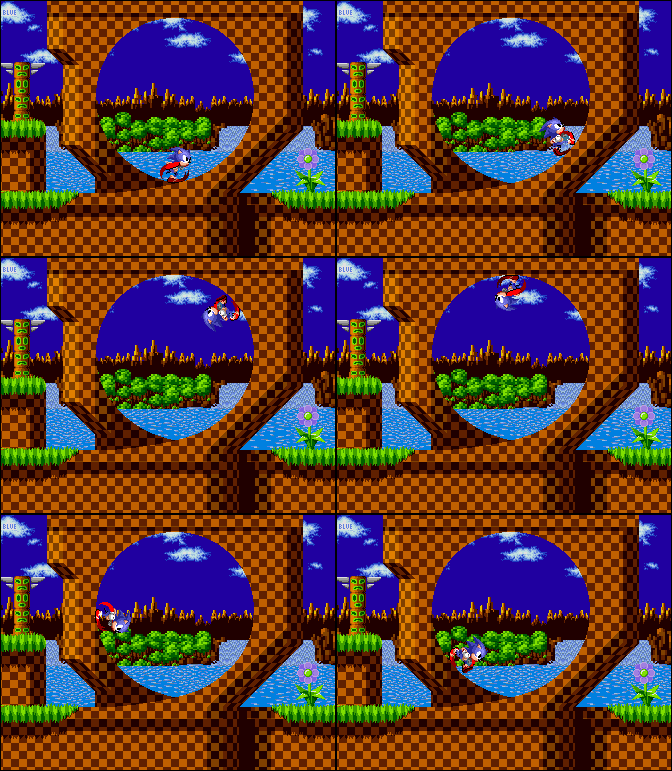
    Before Sonic dashes into the loop he builds up momentum, which is basically the energy that he’s been accumulating that keeps him moving in the same direction. Thus, as Sonic enters the loop, this momentum stays with him and the inertia causes him to continue forward. However, because the loop is curved, Sonic experiences a change in the direction of the normal force being applied to his feet causing him to also change direction. This normal force is the perpendicular component of the contact force that any object experiences when placed against the surface of another object. No matter where Sonic is in the loop, the normal force will face perpendicular from the track and point towards the center of the loop which leads to the circular path that he follows. This force is the centripetal force, and it allows our blue friend to stay on the track because of the enormous momentum that he built up before entering the loop. From Sonic’s frame of reference, he’s being pushed outwards into the track because it is rising in front of him as he is running causing him to experience what is known as the centrifugal force. But since we are not focusing on Sonic’s frame of reference, rather an outside one viewing him running in the circle, we’ll be referring to this net force causing Sonic to stray from his original path to this circular one as just the previously mentioned centripetal force (Fc).
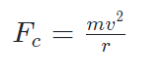
    Centripetal force is generally defined as the force that allows objects to follow curved paths, and it depends on a few things as you can see from the equation above. The mass of the moving object (m), the velocity at which the object moves at the top of the loop (v), and the size of the radius of the circular path that the object is making (r) all play a role in determining how large the centripetal force is. In our case, the moving object of interest is Sonic and the radius of the circular path is the radius of the loop he’s travelling through. Let’s do a simple calculation to see if we can get an idea of the magnitude of centripetal force that might be acting on Sonic during a loop.

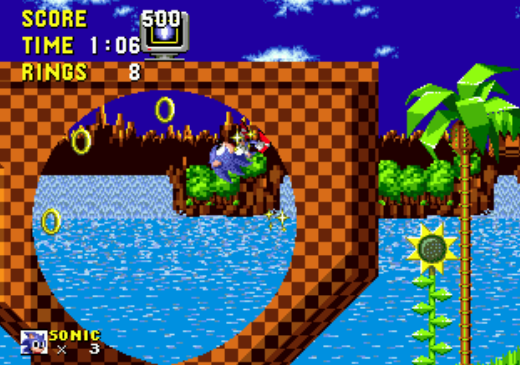
    Let’s start off with defining the various variables we talked about above. Sonic’s trade calling card is his ability to travel the speed of sound and cause sonic booms, so for velocity (v), we’ll assume Sonic is running at the speed of sound or 343 m/s. For mass (m), this information was a little bit more tricky to find, but after scavenging through a few various video game guides, I found Sonic’s mass to be approximately 35 kg (or 77.1618 pounds). Now onto the radius of the circular path (r).  We’ll take a few liberties with deciding the radius of the loops he travels through since they vary heavily from game to game. If we take a look at the original Sonic the Hedgehog game (the image at the very top if you want to follow along!), Sonic’s height is said to be around 100 cm (3’3”ft). If you superpose him multiple times over the loop, the loop appears to be 5 Sonics or 500 cm tall. That means that the radius for this loop would be 250 cm or 2.5 m. If we wanted to get really technical, the radius (r) is from the center of the circular path to the center of mass of the object. Since Sonic isn’t a point mass, we would need to calculate where his center of mass is if we want to be completely accurate. However, since the distance between Sonic’s center of mass and his feet is relatively much smaller than the entire radius of the loop, we will be assuming that Sonic is sufficiently small enough to just be a point mass to make our estimation simpler.

    If we take these numbers and plug them into the equation for centripetal force, we get:
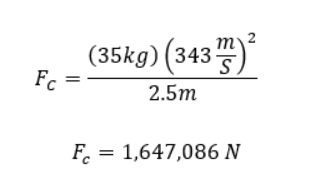
    Woah! Looks like it’ll take a lot of force for the speedy blue hedgehog to clear this small loop at the speed of sound. 


    Now, we did the calculations and found a force, but is there a way for us to find the maximum radius of a loop Sonic can travel even if we don’t know the centripetal force? In fact, there is! We’ll just need a little extra help from another concept from our friend Newton.
    Gotta Go Fast

    We mentioned Newton’s First Law earlier, but now we’re going to need his second one and the very famous equation attached to it: F=ma. This equation simply means that when an object with a mass (m) experiences a net external force acting on it (F), the object will accelerate proportionally to the force applied, where acceleration (a) is just the change in velocity (the direction and speed of the object) over a set time. Let’s look at our case with Sonic. If we say the force applied to him in the loop is the centripetal force, we’ll see a proportional change in Sonic’s acceleration to match. The change in acceleration comes from the change in Sonic’s direction and speed as he’s going around the loop. Therefore, we’ll get this:
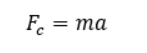
    So now we have two equations that can describe centripetal force: the one we originally mentioned and now this one from Newton’s Second Law. Since they both describe the same force, we can set them equal to one another and simplify:
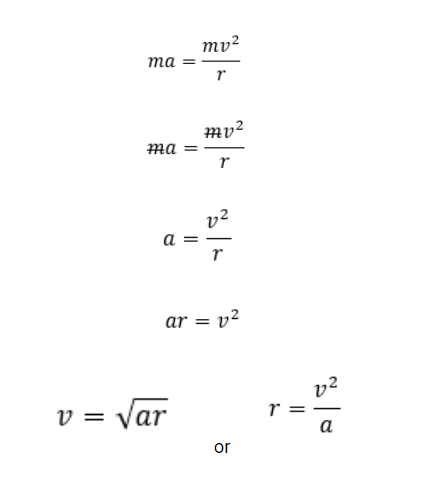
    As you can see the mass of the object does not matter, as it is cancelled out since it’s on both sides of the equation. We can then rearrange to solve for the radius of the loop in terms of the acceleration on the object and the velocity of the object at the top of the loop. Now, let’s find some values!
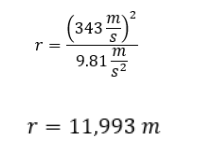
    Since we (and assuming Sonic) are on Earth, acceleration acting on Sonic  is going to be equal to the force of gravity (9.81 m/s2). If we once again say Sonic’s max speed clocks out at the speed of sound (343 m/s), we then have everything we need to solve for the maximum radius of a loop Sonic can travel through! 

    That means that Sonic can clear a loop that has a radius of 11,993 meters aka one that is 23,986 meters (or 78,694 feet) tall! Insane that this tiny blue hedgehog could do that, right? Remember that the next time you see Sonic clearing a loop in one of his games.


    Blue Blur Speeds On

    Sonic has always been one of my favorite video game characters and getting to calculate how parts of his game would work in real life is a great way to honor both him and my love for physics. You can do this with anything topic though! I implore you to pick your favorite video game, comic book, or TV character and see if you can use physics or another scientific discipline to better understand how it might be possible for that character to do what they do. Bridge the gap between your interests, and you’ll see just how fun science can be.  
     

    Citations

    “Sonic the Hedgehog.” Sonic News Network, sonic.fandom.com/wiki/Sonic_the_Hedgehog#Heroes.

    “What Is a Centripetal Force? (Article).” Khan Academy, Khan Academy, 2016, www.khanacademy.org/science/physics/centripetal-force-and-gravitation/centripetal-forces/a/what-is-centripetal-force.

    “What Is Centripetal Acceleration? (Article).” Khan Academy, Khan Academy, 2016, www.khanacademy.org/science/physics/centripetal-force-and-gravitation/centripetal-acceleration-tutoria/a/what-is-centripetal-acceleration. 
  • A Revolution in Heart Transplants

    A Revolution in Heart Transplants

    A ‘Cool’ Way to Transport or Not? 

    Since their successful conception in 1967 by Dr. Christiaan Barnard, heart transplants have been a staple in the transplant world. They have provided many individuals with end stage cardiomyopathy (weakening of the heart muscles), heart valve disease, coronary artery disease, or other cardiovascular diseases a second chance at life. However, even as medical technology rapidly progressed over the years, one part of the heart transplant procedure remained relatively the same: the process of transporting a donor heart.

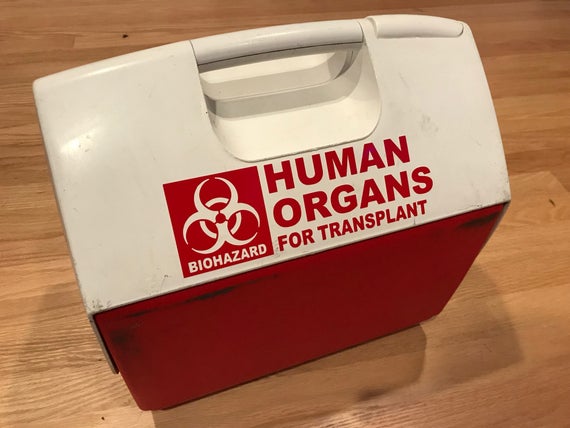
    Traditionally, once a donor heart becomes available, it is removed from the donor’s body, sealed in a plastic bag, and then placed in an ice cooler. The cooler is then transported to the hospital where the heart transplant surgery will occur. While this might be the most common method for transportation, it is definitely not the most effective. On average, 8 out of 10 donor hearts don’t make it to transplant surgery. This can be due to the limited amount of time a heart can remain outside of the body, formally known as ischemic time. A heart can ideally last outside of the body for 4-6 hours. If the time goes longer than that, then the ice surrounding the heart can begin to cause irreversible damage to the heart cells, leaving it unable to be restarted. Because of this short transport time period and possibility of cellular damage, it’s very difficult to transport a heart successfully, even if the donor is a perfect match. In 2017 alone, only 3,244 hearts were transplanted when an estimated 100,000 patients needed a new heart.  

    However, a new solution to this problem is currently in the works thanks to a company called Transmedics.

    Transmedics: Heart in a Box

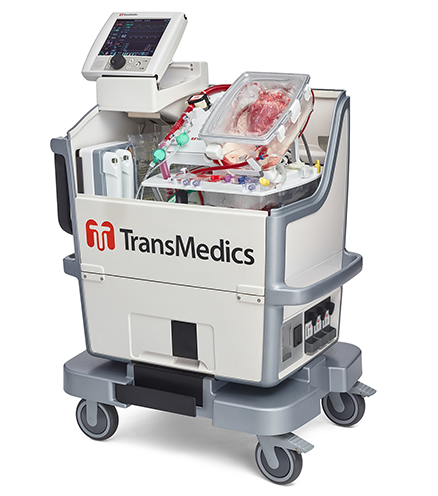
    In the early 2010s, Transmedics brought a new method of donor heart transportation to the table, and it came in the form of a mechanical box. Heart in a Box or the Organ Care System (OSC) Heart served a radical idea: what if we could keep a heart beating during transport? 

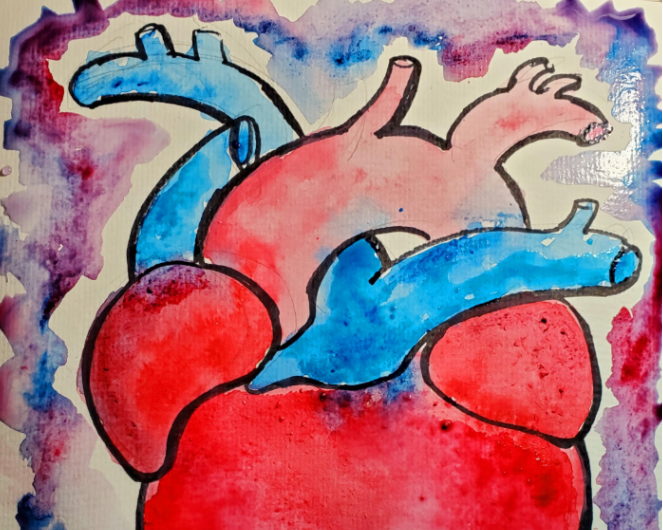
    And they accomplished just that! Once a donor’s heart becomes available for transport, it is placed inside the (OSC) Heart, where doctors will hook tubes into the aorta (the main artery that pumps oxygenated blood to the rest of the body) and the pulmonary vein (which transfers oxygenated blood from the lungs to the heart). These tubes are used to pump oxygenated blood sourced from the donor through the heart by mimicking the changes in pressures inside the left ventricle and left atria. From this process, the heart receives the necessary nutrients and oxygen needed to function properly, meaning that it can basically be kept alive outside of the body thus eliminating ischemic time. The OSC even comes with a portable tablet that monitors the vitals of the heart (such as rhythm and heartbeat) and allows for direct changes to be made to pump flow rate or nutrient levels to keep the heart functioning properly throughout the transport process.

    With the heart kept alive and beating, the time limit for transport is vastly increased. Current trials have shown that with OSC, donor hearts can remain viable for up to 12 hours, double what could be achieved with the cooler! With the heart being constantly monitored to maintain proper function instead of being iced and not beating, it also eases the process of restarting the heart in the recipient’s body. These changes could mean huge advancements in the number of patients that successfully receive a donor heart for transplant. The OSC Heart is still undergoing FDA clinical trials to prove its safety and benefit to heart transplant recipients before it becomes a wide scale method of transport, but so far many transplants that have occurred with the device have been successful. Transmedics is even branching out to using similar OSC for other organ transplants, such as lungs and kidneys. As of now, we’re on track for a brighter future for transportation of donor organs.  

    The Heart Beats On

    The story of Transmedics reminds us of a valuable lesson: just because a medical procedure or device is widespread doesn’t mean that it is most effective. Current methodology needs to be questioned to look for ways of improvement. Nothing is perfect. Sometimes creativity and innovation are needed to cause a paradigm shift that can completely change how the world handles a medical issue. Never stop looking for scientific improvement! You never know if your idea might end up saving someone’s life.


    Citations

    Breining, Greg. “Heart in a Box.” Medical School – University of Minnesota, 28 Mar. 2017, med.umn.edu/news-events/medical-bulletin/heart-box.

    Breining, Greg. “Transplant Transport.” Legacy, 11 Sept. 2018, discoverymag.umn.edu/stories/transplant-transport.

    “Heart Transplant.” Mayo Clinic, Mayo Foundation for Medical Education and Research, 16 Nov. 2019, www.mayoclinic.org/tests-procedures/heart-transplant/about/pac-20384750.

    “OCS Heart for Patients and Families.” Transmedics, www.transmedics.com/ocs-heart/.

  • Is eating late at night really bad for you?!?!

    Is eating late at night really bad for you?!?!

    Food and Sleep a good combination?

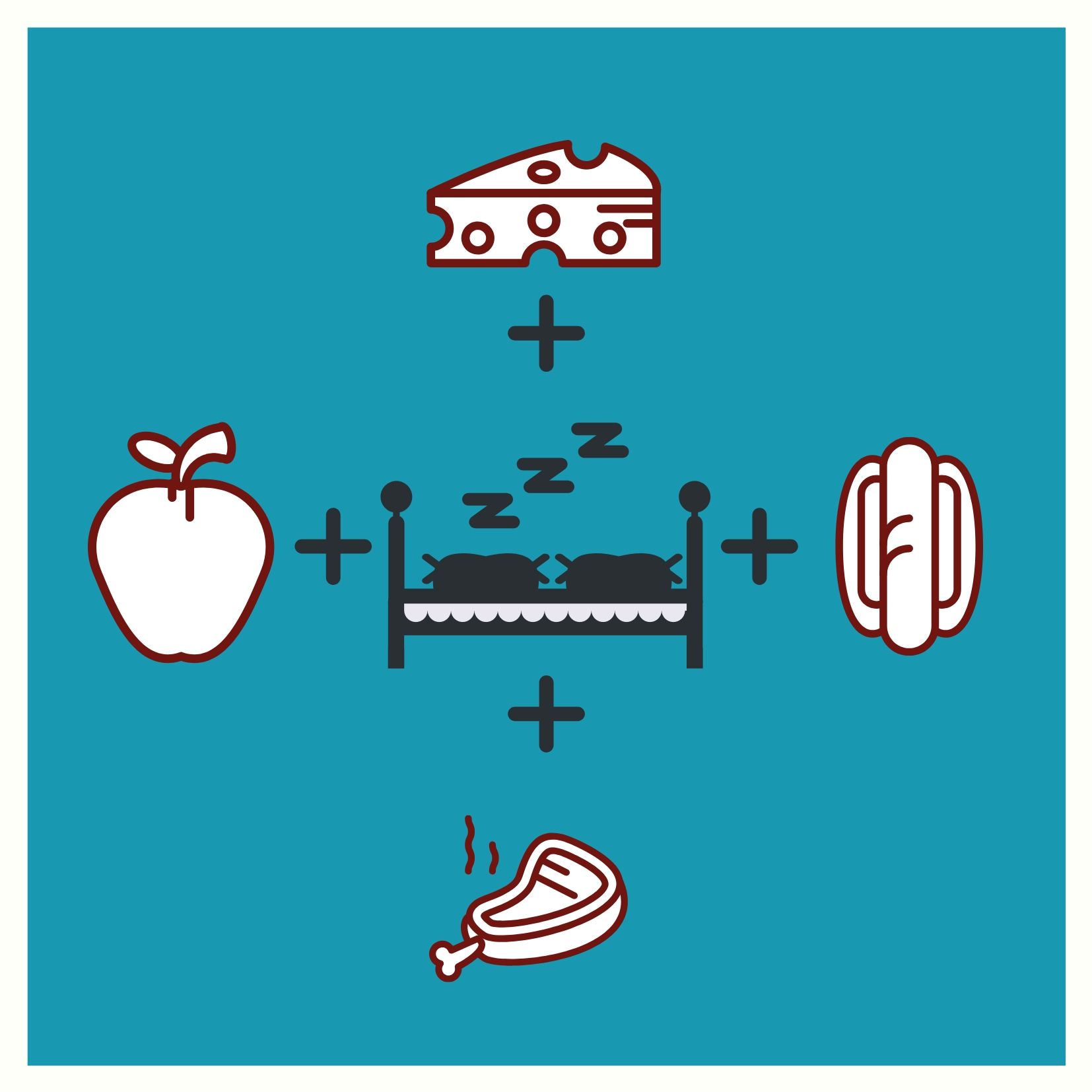
    Imagine this, its been a long day of exams and work and you really want to just hang out with your friends for the night to simply relax. You and your friends are hanging out and time passes fast and next thing you know, it is 2 AM. Out of thin air, one of your friends says “I’m hungry, you guys want to go eat some Waffle House?”. You give in after a few minutes and decide to go get some food. After your Waffle House escapade, you return and are getting tired and go to bed when you enter your apartment door.  After you wake up the next morning, you realize that you shouldn’t have eaten before sleeping and regret your decision. After regretting such decision, you decide to not eat late at night due to the occurrence and instead sleep on an empty stomach. If you have been in a similar situation, it is time to evaluate possible decisions on what to do because certain decisions could lead to potential risks.

    If you decide to sleep on an empty stomach, the decision might not be the best decision to make. Sleeping on empty stomach could lead to certain effects such as weight gain, loss of muscle mass, less energy, changes in mood, low insulin, and lack of sleep (The Sleep Advisor, 2020). However, you probably have been told that eating late at night could lead to weight gains. This idea has been an idea in many peoples’ heads for numerous of times and is a common misconception among many people. This idea of weight gains due to eating at night is based off studies that were conducted on animals rather than humans. This notion is supported by animals, but it doesn’t reflect how humans react to such thing. In fact, in 2016, a study was conducted on children in the UK that checked the association of the time of evening meals as well as the weight status of children. The results of the study indicated that there was no evidence that late eating habits led to excess weight in children (Meixner, 2018). With the study in mind, it is essentially better to watch what you eat before sleeping rather than when you eat. If you decide to eat a huge meal though before sleeping, examine the risks.

    One of the major risks of eating large meals at night is the potential risk of Acid reflux (“This Is what Happens…”, 2018). In general terms, “Acid reflux occurs when contents from your stomach move up into your esophagus” (Healthline Editorial Team & Cruikshank, 2019). Acid reflux can essentially provide discomfort in an individual in their chest area and if commonly occurred, it will lead to other issues. In a study conducted in 2005, different scientists researched the association between gastro-esophageal reflux disease (GERD) and the intervals between bedtime and a huge meal. In this case study, about 147 GERD patients and 294 Non-GERD patients were examined. With different comparisons made, the study concluded that if there is a small-time interval between your last huge meal and bedtime, then there is a significant change you could potentially develop GERD (Fujiwara et al., 2005, p. 2634). This study reflects the idea of eating a huge meal before sleeping. In no way it is saying that you cannot eat at all before sleeping. In fact, eating small healthy snacks before sleeping can be beneficial to one’s sleep as it may help one sleep better, may stabilize blood sugar in the morning, as well as aiding in weight loss (Jones, 2016). Before you sleep, think of the potential things you can do to get a good night’s rest.

    If it is almost bedtime and you are feeling a bit hungry, think about what you can do to make sure you go to bed in a healthy manner. If you are very hungry at night, do not grab your bag of chips and chow down on that, instead eat a healthier snack. If you do not have any healthy snacks, don’t even bother going to your nearest fast food and eating that, instead cook something small and healthy and eat that instead. Again, it isn’t about when you eat, it is about what you eat!

    Citations:

    Fujiwara, Y., Machida, A., Watanabe, Y., Shiba, M., Tominaga, K., Watanabe, T., … Arakawa, T. (2005). Association Between Dinner-to-Bed Time and Gastro-Esophageal Reflux Disease. The American Journal of Gastroenterology, 100(12), 2633–2636. https://doi.org/10.1111/j.1572-0241.2005.00354.x

    Healthline Editorial Team, & Cruikshank, H. (2019, March 22). Everything You Need to Know About Acid Reflux and GERD. Retrieved from https://www.healthline.com/health/gerd

    Jones, R. T. D. (2016, October 28). Is It Bad to Eat Before Bed? Retrieved from https://www.healthline.com/nutrition/eating-before-bed#section4

    Meixner, M. (2018, October 2). Does Eating Late at Night Cause Weight Gain? Retrieved from https://www.healthline.com/nutrition/eating-at-night#circadian-rhythm

    The Sleep Advisor. (2020, January 8). Going To Bed Hungry – Is It A Good Or Bad Thing? | Sleep Advisor. Retrieved from https://www.sleepadvisor.org/going-to-bed-hungry/

    This Is what Happens to Your Body if You Eat Right Before Bed. (2018, December 6). Retrieved from https://www.vice.com/en_us/article/kzvnjz/just-how-bad-is-it-to-eat-before-bed

  • To the Depths (a sci-fi short story)

    To the Depths (a sci-fi short story)

    “What’s the password?” Said the person whose eyes peeked through the crack in the door.


    “Cal.” Mel growled. Mel would have been stunning if xe didn’t currently resemble Odysseus during the worst of his trials. Xe was soaked through to the bone, chiton stuck to xer form like a second skin, and xer hair was only saved from complete disaster by the many, many pins in it that would be a nightmare to get out and that Mel probably wouldn’t completely accomplish for many weeks.


    “You’ve looked better.” Cal said mildly.


    Mel growled again and shoved xer way inside.


    The aforementioned Cal backed up without complaint chuckling lightly as he headed back behind his bar.


    Mel, who was raised with common decency– unlike some people– closed the door behind xem and gracefully avoided the squeaky floorboard as xe followed behind.


    “You promised me Rome, Cal.” Mel said, knocking sharply on the bartop.


    “And Rome you had.” Cal returned, tossing Mel the towel he’d been looking for. Mel took it and began drying xemself. “Or, at least a version of it. Let me get you a new chiton, and you’ll be back out and exploring in no time.” So saying, the bartender ducked down to rummage behind the bar, placing various items on the bartop to be out of the way.


    “Oh!” Cal popped back up, startling Mel. “Don’t you dare sit on my barstools while you’re still wet they’re ori-”


    “Original to the saloon, yes, I know Cal.” Mel rolled xer eyes.


    Cal pouted a bit, but went back to his search.


    Mel turned to lean against the bar and peruse the space while xe waited out the clattering behind xer. Cal’s saloon didn’t look exactly like it had stepped it’s jangling, spurred boots right out of a spaghetti western, but it was an incredibly close call. Rough wood floors, hard leather seats, dim lighting, and the scars of all of the many brawls the place had seen were certainly telling, but Cal’s had its own quirks. The changing stalls that lined the front wall by the door, for one thing. The metal on those stalls was painted with painstaking care to look wooden, but enough bottles and glasses had been thrown at them over the years that the shine of the metal came through the chipped paint. The leather seats were surprisingly well padded, and the alcohol stock came from everywhere and everywhen in this universe, and others besides. Cal himself was his own oddity, no one knew how many Cals were before him, or how many would come after, or if some of them were the same, but Cal was a good sort. Mel wouldn’t work with him if he wasn’t.


    There weren’t too many patrons this go round, only a few regulars who were looking for something, and a relatively new guest, a nervous young lady who had some rather long, webbed fingers, scales, and big, bright eyes. Mel though that she might find what she was looking for in the city outside.


    Mel turned xer contemplation back to the bar, where Cal’s shuffling was now sounding more purposeful, and to the oddities that had been displaced onto the bartop.

    “What even is half of this stuff?” Mel muttered.


    There on the bar seemed to be a host of items with no discernable pattern. There was a bayonet without a gun, a glowing amulet, a few small bottles of what looked to be antivenoms, three plants that were either incredibly alien or incredibly extinct for how odd they were, and what appeared to be an astrolabe made for the use of someone who didn’t have hands or bifocal vision.


    Cal made a triumphant noise as he finally came up from behind the bar, holding a bright green mass of cloth in his hands. He passed it over to Mel, and xe went to the nearest changing booth.


    Xe returned, mostly dry and carrying the sopping wet orange garment xe had been wearing, and passed it over the bar to Cal, who grimaced before chucking it underneath the bar. Mel heard a wet thunk and a louder crash before a light hum let xem know that Cal had put xer old outfit in his dryer.


    “So tell me.” Cal said, automatically going to fix xem a drink. “What has you so upset about this Rome?”


    “When I asked for Rome, I expected a Colosseum, some of those famous Roman Roads.” Mel returned.


    “What do you mean?”


    “There aren’t any.” Mel said.


    “… There aren’t any… roads?” Cal asked, sliding xer drink over to xem.


    “No.” Mel gave a sardonic smile. “This Rome seems to be the love child of Rome and Venice. All of the streets are paved with water.” Xe took a sip of xer drink, making an appreciative sound. “That’s how I got into that state. It was too dark. I fell into a canal.”


    Cal snorted before quickly covering it and making Mel another drink.


    “Well, that certainly is a new one, but not the strangest reality this place has visited.” Cal said.


    It was Mel’s turn to snort. “True enough.”


    Cal finished a drink for both of them this time and they saluted each other with their glasses.


    “Did you spot anyone who might join us? Or anyone that might become a regular?” He asked.


    “Mmmm. There were some.” Mel allowed. “The mermaids all seemed to clock me as someone not from around here, and there were a few young women that seemed to have the air of revolution around them. We might end up losing a regular, rather than gaining one.” Mel turned to look at the fish-girl, and Cal followed xer gaze.


    “Well,” he nodded slowly “if it happens, it happens. Now, what’s this about mermaids?”


    “Not like you’re thinking. Mermaid is a profession here, sort’ve like street sweepers mixed with traffic directors. For a fee, a mermaid will lead your boat through a canal to where it needs to go and protect it from minor damage, or they’ll dive to the bottom of the canal and retrieve items you may have dropped. I also got the impression that they were paid by the city to keep the canal’s clean of trash and debris that was too heavy for the current to sweep away.” Mel said. “And, most of them are young women, interestingly enough.”


    “Hm. This will need some investigating.”


    A headshot of the Lochmaenean woman, Aure.

    The next day, Cal came down late to the bar floor. Mel had been out in Rome for a few hours already and Cal was expecting her to be out a while longer. He left his regulars to Ka’al, the new kid needed to work some time and this trip was shaping up to be a slow one.


    [Excuse me.] Cal startled a bit at the sudden appearance of his newest customer, a young Lochmaen woman, at the bar. He watched her webbed fingers as she continued to sign. [My name is Aure. Is there any way I can get some clothing to go outside?]


    “Aure? Well sure you can, although,” Cal gave Aure a once over, “Although, you probably don’t want to go out until dark, what with the scales and everything. But the dark will make it hard for you to communicate…”


    [I can speak.] Aure signed in return. [I don’t when I’m around humans who can see because it makes them nervous.]


    “Hmmm.” Cal tapped his fingers on the bartop. “May I see? I’ll understand if you don’t want to speak, but honestly?” Here he leaned in, as if inviting Aure into a confidence. “I don’t know if I count as human anymore. I’ve owned this bar for a very, very long time.” He cocked his head to the side, “Or was it no time? Concepts tend to get a bit muddled if you stay here long enough, but I wouldn’t have it any other way.” He grinned at her. Aure smiled back helplessly.


    “If you insist?” Aure said. Her voice was low but light, a tone that could easily carry a fair distance before it needed to be raised, but still incredibly lyrical. What probably made the humans she had met before nervous were her very large, slightly translucent teeth. When she opened her mouth the rows of teeth were reminiscent of a shark or a cartoon piranha. Cal thought that they must retract into her face as when she closed her mouth her face was incredibly human in shape, ignoring the purple scales, the barely visible gills, and the slightly bioluminescent eyes and hair.


    “Let me get you an appropriate outfit.” Cal said, ducking underneath the bar for just the right thing. He emerged with a pale pink bundle of fabric which he handed off to Aure, along with a small paper.


    “What?” Aure wobbled the paper.


    “Instructions on how to put on the chiton. It’s not as intuitive as it looks.” Cal replied.


    Aure thanked him and took the clothes and paper to the furthest changing booth.


    Cal began to idly clean the bar, keeping an eye on the door, when he caught sight of Aure making her way back.


    “I think, miss Aure, that you have the potential for being mistaken for a siren if you go out there.” Cal mused. Aure ducked her head.


    “A siren?” Came a voice from the door.


    Both Cal and Aure looked over to see a young woman who was obviously local standing in the doorway, haloed in the light of the setting sun. The young woman had olive skin, light brown hair, dark eyes, the build of a runner, was noticeably taller than Aure, and had an air about her that said that she was used to commanding respect. She seemed to take in the anachronistic bar in which she found herself— Cal who was wearing a vest and fitted dress shirt, Aure, who was obviously inhuman with her dark purple scales, webbed appendages, and a tail, and the other alien patrons— in stride, closing the door behind her, and making her way to a seat at the bar, somehow avoiding the squeaking floorboard in the process.


    Aure found herself quickly pinned by the gaze of the other woman. She felt those dark eyes roam over her as if she were having her soul measured against the value of one of the Pure Pearls which had brought her planet to the Assembly’s attention.


    “You are the siren?” The woman demanded softly.


    “My name is Aure.” Aure just barely managed to reply. She was nearly blinded by the smile the other woman sent her.


    “I’m Penelope, I think the two of us will get along famously.” So saying, Penelope turned to rummage through the bag on her waist, finally giving up her hold on Aure’s lungs so she could catch her breath.


    Cal was about to say something, when Penelope made a noise of triumph and turned back to the others at the bar.


    “So, I don’t suppose either of you is good at decoding things?” Penelope said, slapping down a piece of parchment on the bartop.


    “Hn. Not my area of expertise.” Cal admitted.


    Aure had already drawn the parchment towards her and clicked to herself as her large eyes roved over the words.


    “I have it.” Aure said.


    “You do?” Cal asked.


    “Already?” Penelope asked.


    “Not, not the message.” Aure said, “But I know what kind of code it is. It’s a shift cipher. I believe the key is the number five so…” Aure looked up.


    Cal caught her drift and produced a pen and paper from behind the bar, quickly passing it to Aure.


    “You see, a shift cipher is a very simple one, really, but effective. See, at the top of the message here is a date?” She pointed, Cal and Penelope both nodded. “Well the V the 5 in the date is darker than the rest of it, which means it’s important. It is also the rightmost 5 in the date, which I believe means that the cipher is shifted to the right by five. A shift cipher is made by writing out all of the letters or symbols of whatever writing system you are using, and then rewriting them underneath with the applied shift so, with a right shift of five:


    A B C D E F G H I J K L M N O P Q R S T U V W X Y Z

    Becomes

    F G H I J K L M N O P Q R S T U V W X Y Z A B C D E


    So for the message you would take the letter from the original alphabet, and replace it with the cipher version. To decode it, simply work in reverse.” Aure showed them.


    “It’s so simple!” Penelope grunted in frustration.


    “Only if you know what to look for.” Aure tried to reassure the other woman.


    “So, what does the message say?” Cal got them back on track.


    “It says: To the General: the tunnels within tunnels were a genius idea, and no one will be the wiser. I’m having my people take over important positions on the route. Soon our communication will be unbreakable and undetectable, then it is on to the next phase. For the Glory of the Atlanteans.” Aure read.


    “Atlanteans?” Cal asked.


    “Atlanteans.” Penelope snorted. “Most of the patrician men are obsessed with the idea that there is some underwater civilization that is incredibly advanced and that, if they find the civilization, they will be welcomed with open arms into paradise.”


    “Well that’s…” Cal trailed off.


    “Really stupid.” Aure finished. She ducked her head at the approving look Penelope sent her way.


    “It really is.” Penelope agreed. “Aure, how would you like to join me, and my Nereides?”


    “What?”


    “The Nereides are a group of young women who don’t believe that Atlantis exists, but believe that it could and want to build it.” Penelope said. “With your help decoding messages and notes, we can take back what the patricians have been keeping from us to build our future.”


    “You, but won’t it be obvious that something is going on? I mean I don’t exactly look…”


    “It doesn’t matter.” Penelope insisted. “The Nereides will adore you, and if anyone takes issue with how you look we have places to hide you, people you can go to for protection. If I say you are an emissary of the Gods, no one would dare call me a liar.”


    “You must have some pull, miss.” Cal said, skeptically.


    “I am a Vestal.” She said proudly, “I can go where I please in the city, I am a woman that most men wouldn’t dare to talk down to.”


    Cal gave a low whistle of appreciation.


    “Please, Aure, at least meet the others. You could do an incredible amount of good.” And with Penelope looking at her, hope and a righteous fervor shining in her eyes, what else could Aure do?


    “Okay.”


    Mel came back to the bar a few minutes before midnight— and a few hours after Aure and their newest guest had departed for the most secret places of Rome— and looked around. “So, what did I miss?”

  • Science, Jazz, and Boba, OH MY!!

    Science, Jazz, and Boba, OH MY!!

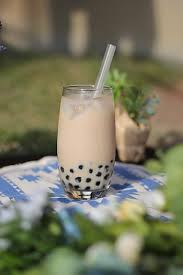
    Last month on March 12th, the STEMComm VIP team had the pleasure of hosting the Sober Science Speakeasy, where we had several booths serve delicious mocktails and a jazz band playing some active music during the night, all while the drink makers each had unique demonstrations to show the science behind the drink. We had a variety of drinks from a drink carbonator, butterfly pea flower tea, a mixed density drink, and many more. It was an amazing experience to be a part of, and it was a great event to hold for the Atlanta Science Festival and for Georgia Tech before we had to transition to online classes. Me and my teammate Nadia (who is a very passionate lover of puns and polymers!) helped to make bubble tea, and I’d like to share that recipe for anyone interested in making their own.

    Note: This recipe makes about 10-14 servings.

    Cinnamon Honey Boba Tea

    10-12 bags of Black Tea (Preferably Twinnings)

    1-3 tablespoons of cinnamon

    ⅓ cup of honey (or more depending on your preferred level of sweetness

    1 package of black tapioca pearls (Brand we used)

    12 cups of water (for tea) & 8 cups of water (for tapioca pearls)


    Here’s the Tea:

    1. Put water over high heat until it reaches a rolling boil.
    2. Place the tea bags in the pot, and follow the instructions given on the packet (normally about 3-5 minutes)
    3. When the tea is finished cooking, turn off the heat and mix in the cinnamon and honey
    4. Set aside to let cool while you cook the tapioca pearls


    Putting the Boba in Boba:

    1. Put the water over high heat until it reaches a rolling boil.
    2. Pour the tapioca pearls into the pot, lightly stirring until they float to the top.
    3. Cover the pot and let the pearls cook for about 10-15 minutes, stirring every 5 minutes.
    4. Turn off the heat and scoop the pearls into the bowl of cold water for about 1 minute.
    5. Drain the water, put the pearls in a container, and pour the cup of water and brown sugar over the tapioca pearls to create a brown sugar syrup.


    Bringing it All together:

    After finishing making the tea and the boba, it’s time to put as much boba as you like into your cup of tea! How you want it after that is all up to you! You can add your favorite type of milk, colorful jellies, puddings, fresh fruit, and even some red beans (it’s sweet and lovely). It’s a very easy recipe to make that gets even better and better as time goes on, so I highly encourage practicing this recipe over and over again, and who knows? You might be the next Sweet Hut or Kung Fu Tea. Good luck!

    To close off for the Spring semester, I’d love to thank everyone involved with the creation of the Sober Science Speakeasy, from our faculty advisors Dr. Leavey, Dr. Evans, Dr. Greco, and Dr. Mendelson, all of our teammates, my boba buddy Nadia, all the clubs, sponsors, and musicians that made this night great! Bye for now, good luck to all the students taking finals, wash your hands, and stay at home!

    Best. Team. Ever!
  • Clarified Purple Cow Punch

    Clarified Purple Cow Punch

    This year, continuing the theme from the Taste of Science, the Georgia Tech STEMcomm team decided to host a Sober Science Speakeasy, a party all about the science of drinks. While looking around for something to prepare, the concept of “clear milk” was brought up, and I was intrigued. Clear milk? That’s practically oxymoronic. And yet, these drinks, called “clarified cocktails” or “milk punches”,  added milk to end up with clear, colorless products. Naturally, we had to investigate and try for ourselves. This is what we learned:

    The Science:

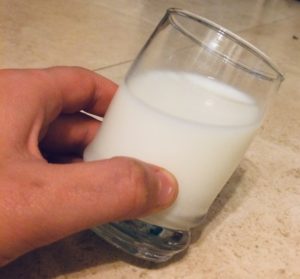
    Milk, looking decidedly not clear, due to the Tyndall effect.

    Milk is a colloid, with fat and proteins suspended in the aqueous solution. Since these are fairly evenly distributed, they usually scatter the light beam around in all directions in the Tyndall effect, making the liquid appear white and opaque.    Proteins in the milk, particularly caseins, repel each other at the normal pH of milk, which is what maintains that even distribution throughout. This is because the isoelectric point of casein, or the point at which it it is electrically neutral (uncharged) is around 4.6, but milk’s normal pH is closer to 6.6. The casein proteins therefore have a negative charge that makes them repel one another and spread out as far apart as possible.

    When pH of milk is lowered however, by adding acid, the casein proteins will lose their negative charge, and stop repelling one another. This, along with the protein degradation, or unfolding of their shape, at the lower pH, causes many of them to clump together in solid blobs we call “curds”. They will separate out to the bottom, and the liquid left behind is called the “whey”. But these proteins don’t just separate from the rest of the drink- they take compounds with them, including much of the color! The proteins bind to molecules from the drink, especially polyphenols, which are associated with bitter/astringent tastes, like tannins in black tea or red wine.

    Therefore, when you strain out the curds, you also remove compounds bound to the caseins. This “clarifies” the drink, stripping away most of its original color, and giving it a less harsh flavor. Some also claim that the addition of the remaining milk whey also gives the drinks a sliker texture, making them even more desirable.

    The Drinks

    This property of milk has been used to make clarified cocktails for many years, with the first written recipe dating all the way back to 1711. Even our favorite kite-flying founding father, Benjamin Franklin, was a fan, recording his own recipe for brandy-filled milk punch in 1763. You can still see the original document online in the Massachusetts Historical Society archives: https://www.masshist.org/database/263.

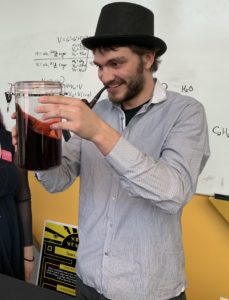
    A resident “mad scientist” with the original base, sans milk.

    In our case, we went for a non-alcoholic version, with a base of black tea, grape juice, lemon juice, and of course, milk.

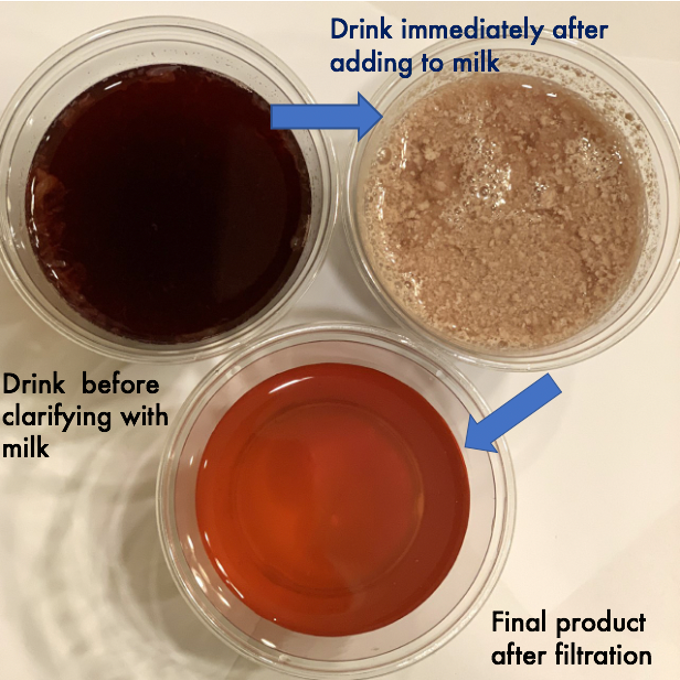
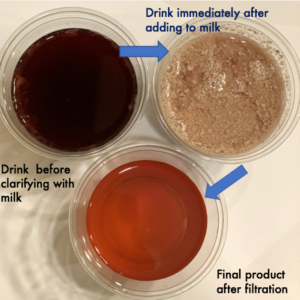
    This concoction, lovely nicknamed “clarified purple cow punch” or CPCP, was initially dark reddish-purple, and while sweet, was also tad bitter from the black tea flavoring. The addition of the juice to milk resulted in a (rather unappetizing) mixture of curdled milk and juice in a clumpy, brown…milkshake? Ick.

    At that stage, I was pretty doubtful that this was going to work. With a bit of patience, however, and several rounds of straining through cheese clothes and coffee filters, we ultimately ended up with a pale pink, ultra-sweet drink that proved pretty popular. There was no hint of milk flavoring or bitter taste, and all together, CPCP was a surprising success.

    If you want to try making clear drinks yourself, all you need is some juice mix, an acid, and milk- and a lot of time to sit and watch the straining process. Make sure to add the acid slowly to the milk, and not the other way around, to ensure the proteins have time to bind to the polyphenols before curdling, and you’ll be all set to impress with your friends with this magically clear milk.

  • Going Crazy in Quarantine? You’re Not Alone!

    Going Crazy in Quarantine? You’re Not Alone!

    Due to the increasing numbers of people being infected with COVID-19 in the United States, many states have ordered a mandatory shelter-in-place. Most of these orders state that people cannot leave their homes except for essential reasons, such as grocery shopping and medical trips. All non-essential businesses, such as restaurants, gyms, and shopping centers, have also been temporarily closed. It is now week 3/4 of quarantine for many people and I have noticed, both in myself and others, that we’re going a little stir-crazy. Due to the common effects I’ve noticed, such as increased anxiety and depression and decreased motivation. I decided to look into the research behind isolation on the human brain.

    In a study done in hospitals, researchers examined the impact of isolation on patient psychological well-being. It was found that isolation caused a negative impact on patient behavior and psychology; after isolation, patients scored higher for depression, anxiety, anger, fear, and loneliness. Specifically, patients scored higher for depression and anxiety on day 7 of isolation, compared to controls. This is in-line with what I’ve seen from family and friends, as the first week of quarantine seemed to have little effect, but afterwards, around week 2, did the negative effects I stated earlier appear. The researchers also found that loneliness, anger, and boredom were the most prominent emotional effects.

    Another study looked at the effects of isolation on prisoners in long-term solitary confinement and found similar results; their findings revealed that those in forced isolation for extended periods of time exhibited appetite and sleep disturbances, anxiety, panic, anger, paranoia, and loss of control. In some cases, the effects of isolation lasted even after the isolation period ended, and resulted in prisoners engaging in more violent and harmful acts.

    These negative consequences seem to make logical sense, as humans are naturally social creatures and our survival depends on social interactions every day. Out of curiosity, I also looked into the effects of isolation on other animals, such as rats, to see if there is a similarity. There indeed was: a study done on isolation of Fawn Hooded and Wistar rats found that Basal loco-motor activity and related anxiety was higher in isolated subjects of both types of rats in low light conditions. However, the study also found that Wistar rats were less anxious under low light conditions, which may imply that certain genetic predispositions may cause an animal to be more or less tolerant of isolation and its negative effects.

    Ultimately, the literature supports the idea that humans and many animals alike are not meant to be kept in isolation for an extended period of time. If you find yourself becoming restless, agitated, and feeling down as this quarantine continues, know that your response is completely normal and valid, given the circumstances. When you are experiencing a bad day, don’t be afraid to reach out to family and friends about how you’re feeling. We can and will get through this together.


    References

    Abad, C., Fearday, A., & Safdar, N. (2010). Adverse effects of isolation in hospitalised patients: a systematic review. Journal of Hospital Infection, 76(2), 97–102. doi: 10.1016/j.jhin.2010.04.027
    Hall, F. S., Huang, S., Fong, G. W., Pert, A., & Linnoila, M. (1998). Effects of isolation-rearing on locomotion, anxiety and responses to ethanol in Fawn Hooded and Wistar rats. Psychopharmacology, 139(3), 203–209. doi: 10.1007/s002130050705
    Haney, C. (2003). Mental Health Issues in Long-Term Solitary and “Supermax” Confinement. Crime & Delinquency, 49(1), 124–156. doi: 10.1177/0011128702239239