Category: Articles

  • Top 5 Tips for Applying to Graduate School

    Top 5 Tips for Applying to Graduate School

    Hi! My name is Elena, and I am a third-year psychology major at Georgia Tech. I graduate this coming Spring (2023) and have hopes to continue my education in grad school. After finally submitting all (14) of my applications, I came up with the following list of tips for future grad school applicants. Hope these help!

    1. The time commitment for applying to grad school is the equivalent of a 3-credit course.
      1. Keep this time commitment in mind when choosing your courses for the semester in which you will be applying to grad school.
    1. Find a current graduate student who can help you revise your CV/resume.
      1. Graduate students have an insider look to the application processes and know what professors are looking for. They are the perfect people to assist you in creating/editing your CV/resume.
    2. Keep a comprehensive document of everything you need for each application.
      1. Have a single document that lists all of the schools you are applying to, the sections you need to complete for each application, the essay prompts (and word limits), etc. This will allow you a single place where you can see what you still need to complete for each application and see where you can double-dip on application sections from one school to another.
    3. Organize! Organize! Organize!
      1. There will be several application components – essays, short answers, CVs, writing samples, etc. – so keeping them organized in your computer is a necessity. Create a “Graduate School” folder on your computer and then create further folders within that one for each school you are applying to.
    4. Look into GRE testing early.
      1. GRE subject tests are only offered 3 times a year, therefore, you need to look into this early so you can have ample time to take it before your applications are due (and potentially retake it if desired). There also may not be testing centers near you, so you may have to plan to stay at a hotel near the testing site.  Additionally, you can only take the general GRE every 21 days. You may want to take it in the summer so that you do not have to worry about studying while taking classes in the Fall.


    Helpful Resources!

    Five Tips to Perfect Your Graduate School Application | Columbia University School of Professional Studies

    How to Prepare a Strong Graduate School Application | The Graduate School (duke.edu)

    Five tips for nailing your US-based graduate-school applications (nature.com)

  • We need to talk about the women founders of modern science: Meet Tu You You

    We need to talk about the women founders of modern science: Meet Tu You You

    Collage by Reggie Slater

    Tu YouYou is a medical scientist and chemist who became the first mainland Chinese to receive a Nobel Peace Prize for her discovery of Malaria cure. Born in 1930, Tu attended the Peking University School of Medicine (now Beijing Medical University) in the Department of Pharmaceutical Sciences, then later completed another 2 years of studies in Chinese traditional medicine. Malaria was and still is a serious health issue in many parts of the world, and in May 1967 Mao ZeDong launched a project (Project 523) to find a cure for chloroquine-resistant malaria. At just 39 years old, Tu was appointed the head of Project 523 in 1969. In 1977, the work that her and her team completed on the treatment of Malaria was anonymously published as a way to give back and look out for the community.


    Read more about her here:

    https://www.nobelprize.org/womenwhochangedscience/stories/tu-youyou

    https://scientificwomen.net/women/youyou-tu-97

    https://www.ncbi.nlm.nih.gov/pmc/articles/PMC4731589/

  • We need to talk about the women founders of modern science:  Meet Ruby Payne-Scott

    We need to talk about the women founders of modern science: Meet Ruby Payne-Scott


    Collage by Reggie Slater

    Ruby Payne-Scott was an Australian Radiophysicist who lived from 1912 to 1981. As Master’s holder in Physics from the University of Sydney, Ruby worked at Australian government’s Commonwealth Scientific and Industrial Research Organization. There she worked on projects that contributed to solar radio astronomy, helped evolve radar technology during WW2, and so on. Her determination and skill allowed her to prosper within a male dominated environment. She fought back against the notion that married women should not remain in the workforce until higher ups within the organization, hiding her marriage status from all expect close co-workers in order to keep working. When the organization finally found out her about her marriage, she lost her position, and soon after resigned.


    To read more about Ruby Payne-Scott:

    https://www.nytimes.com/2018/08/29/obituaries/ruby-payne-scott-overlooked.html

    https://scientificwomen.net/women/payne-scott-ruby-125

    https://adb.anu.edu.au/biography/paynescott-ruby-violet-15036

  • A Pocket Guide to Smokable Herbs

    A Pocket Guide to Smokable Herbs

    Illustrations by Reggie Slater

    Hey!

    Are you looking to smoke, but want to keep a clear mind or refrain from traditionally addictive tobacco cigarettes? Well, there’s actually a whole variety of plants out there that are safe to smoke, some even boasting calming and mood enhancing benefits. Some, like Chrysanthemum flower or Holy Basil, have long been used as tobacco alternatives.

    Here, I’ve provided a small graphic of safe to smoke herbs that can easily be bought dried and ready to roll online. If you want to check out more about the specifics of each herb and their potential affects, I suggest checking out this article by Thrillist.

    Happy smoking!

  • A Letter to Fellow Struggling Students

    A Letter to Fellow Struggling Students

    Hi.

    I’m a 4th year student, and sometimes I almost can’t believe it. For those like me who have also struggled in their studies here at Tech, I’m sure you might be able to understand where I’m coming from. Tech is tough, and for us with mental health issues or any sort of disability, it sometimes feels like it will never end. That’s not to say that there haven’t been many enjoyable and unforgettable moments, since I’ve certainly experienced quite a few of those, but the constant lingering stress of keeping up with classes has never left my side. For me in these last couple semester’s, there’s the added weight of feeling so close to being finished with my degree while also fearing that I’ll fail a class and prolong my time here. It’s quite scary to think about simply because it’s scary to feel uncertain about when I will finally get to graduate. In the time I’ve had to think about this, I’ve formulated some tips and personal realizations for things that have been helpful to me. So to all the students who have also been struggling, and especially for those still early in their time here at Tech, I hope I can provide some help and comfort as an unknown elder.

    1. Please read your emails, especially the ones from your advisor.

    This one sticks out as pretty big to me, since I recently had a registration scare that felt more intense than the ones we all often experience during the dreaded process of registration. If you’re trying to graduate, make sure you look out for emails from your advisor if they’re so kind as to send out information for classes, when to apply to graduate, or even what permits you’d need for specific classes. While I was lucky enough to have realized I missed many of the suggested guidelines for when to apply for these things, going back through the emails I neglected to read was a lifesaver that made the process of making sure I got done what I needed to so much easier.

    2. Go to therapy, or at least try to meet with a psychiatrist if you suspect something

    As someone who grew up with parents who didn’t believe in the importance of mental health, I didn’t get myself the help that I needed until I was deep into depression early in my sophomore year. I struggled my freshman year, but had attributed it to the increased rigor of classes compared to high school and lack of the highly structured environment of my school and home during that time. With depression weighing me down, the other issues that I had once been able to live with started to creep in more and more and was affecting my academics as well. I consider myself lucky to have had friends who were so mental health positive and encouraged me to make an appointment with a psychiatrist and therapist. Although therapy has been something of an on/off situation, I’m glad to know that I can turn back to it if I need.

    3. In a similar vein – go get yourself ODS accommodations if you can!

    Trust me, this has been an extreme help to me. Once I was finally diagnosed with ADHD, I set up a meeting with ODS as soon as I could. And if you’re wondering at all, the process was super easy, and I had accommodations within a few weeks time. Though I’ve been lucky enough to have professors before these accommodations that I already talked to about my mental health and were extremely accommodating in working with me and granting extensions, it is really scary to wonder each time before I first reach out to a professor how they would respond to me. With my accommodations for extra testing time and a suggestion to grant me extra time on assignments, it’s become so much easier to reach out since I knew I wouldn’t ever have to risk coming across to my professors as just a student who was making things up.

    4. Even if it’s not academic, join a club that calls to you

    If you told me before I came to Tech that I’d now be the host of a Folk show (Mountain Breeze, Mondays 5-6PM on 91.1FM!!!), I would have been very surprised. But here I am, having joined college radio my first semester at Tech and still very much loving the time I commit to it. Of course I’m biased and would encourage everyone who loves music to join WREK radio, but the core of what I’m trying to convey is that it’s simply really nice to find a niche to commit to during college. When academics get’s too stressful, I know that there’s another community on campus that I don’t have to worry about my performance in, and that thought can be very comforting.

    5. Reach out to your friends. They love you, and they want to help if you’d let them.

    This is a given, I hope. It’s hard to see the network of people who love and support us during times we feel like we are stuck so deeply in our own problems and minds, but it’s important to remind yourself that there are others around you who are very willing to help and be there for you too. Some things are too big for us to handle on our own, and it’s okay to let people in who care about you.

    College is a stressful time, especially when you’re at an institution as rigorous as Tech. But it’s possible, and you’ll get through it, one day at a time. You might even enjoy your time here, learn more about yourself and your dreams, find what makes you happen, and meet some wonderful wonderful people.

    (Cover illustration by Reggie Slater)

  • Your Water Was Poisoned – The Dupont Chemical Scandal

    Your Water Was Poisoned – The Dupont Chemical Scandal

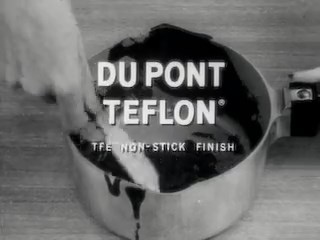
    Have you ever been to your grandparents’ house and looked in their kitchen cabinets? As you dove through the clutter, maybe you found an old pan or pot made by Dupont that totes itself on being non-stick. This seemingly inconspicuous kitchenware harbors a dark secret though.


    See these ‘Teflon’ pans were part of the many products Dupont produced using Perfluorooctanoic acid (PFOA or C8). PFOA makes up only one of around 4,700 similar compounds known as Perfluoroalkyl and Polyfluoroalkyl Substances (PFAS) or forever chemicals. Starting in the 1950s, Dupont began leaking these chemicals into surrounding water basins across their factory locations in West Virginia and Ohio.


    No one knew how serious the damage these chemicals could cause would be until the lawsuits from cattle farmers and local citizens revealed rotten teeth, removed colons, and a high level of cancer diagnosis from those most affected by the PFAS pollution. 


    What about PFAS chemicals’ structure makes them so dangerous though, and was this a case of Dupont not knowing better or was this a sinister cover-up years in the making? 


    Let’s dive in.


    The Structure of Forever

    PFAS chemicals have the special properties of being non-stick, oil-repellent, and water-repellent, which led to their use in a wide array of consumer products such as Teflon non-stick pans, rain jackets, furniture, cleaning liquids, makeup, cars, pesticides, etc.


    These special properties stem from their chemical structure: long chains of carbon-fluorine bonds, one of the strongest chemical bonds in existence. C-F are polar covalent bonds, where due to the high electronegativity of fluorine, electrons are unevenly shared between the carbon and fluorine. This uneven electron sharing creates an electrical dipole moment that increases the force of attraction between the two atoms thereby also increasing the energy needed to break the chemical bond apart. Because of this, only extreme heats are able to remotely possess the chance of tearing apart a PFAS. For example, in their documentation, GHD Group recommended 1100 °C (or 2012°F) for 2 seconds to break down fluorinated organic compounds.


    What happens when you mix a forever chemical with human beings?

    Starting in 2005, the C8 Science Panel began a study of possible health effects Mid-Ohio Valley communities suffered from Dupont C8 pollution into the waters of Parkersburg, West Virginia. The study concluded strong probable links between high C8 exposure:

    • diagnosed high cholesterol
    • ulcerative colitis
    • thyroid disease
    • testicular cancer
    • kidney cancer
    • pregnancy-induced hypertension 


    Many workers from the Dupont factories suffered from multiple of these diseases, with many female workers also giving birth to children with multiple birth defects during their time with the company.


    You don’t have to be directly exposed to these factories though to have PFAS in your system. Because of its incredible resistance to chemical breakdown, PFAS lasts in water for years and there are few treatment plants that can fully filter the chemical from their drinking water. And like many other toxins, PFAS chemicals also bioaccumulate (increase in concentration) in the body as individuals drink more contaminated water and eat more contaminated fish/animals. Once a PFAS is in the water, it stays in the water and bioaccumulates across seas, lakes, and rivers. Levels of PFAS have even been found in the breast milk samples of women from Indonesia, India, and the Philippines, showing just how widespread the issue is and how many people might one day be at a serious risk.   


    Just a Mistake or a Malicious Cover-Up? 

    In the 1960s, Dupont scientists ran multiple tests on the effect of PFOA on the health of mice, dogs, and monkeys and proved that PFOA was an animal carcinogen and a possible human carcinogen. However, these toxicology reports were never shown to the EPA until the class action lawsuits in the 2000s forced these documents out of the shadows. 


    Even more disturbing though is that additional internal reports were later discovered from the 1980s showing that Dupont had by then fully proved that PFOA was a human carcinogen that caused infant birth defects for their female workers and needed up to 1.5 years to clear up only half of the C8 built up in the body. Dupont executives knew without a doubt for over 20 years that they were sabotaging the health of their workers and the surrounding communities, yet it took them their victims fighting tooth and nail just to so much as release this sensitive data to the public.


    Yet at the time of the initial lawsuits, many Dupont workers and nearby communities still supported Dupont and did not believe they could purposely ignore such ominous health warnings as they saw the company as benevolent bringing jobs and prosperity to their towns. Blindness to a company’s intent can hinder reality though. Big companies such as Dupont and 3M are out to make a profit first and can hide data if that might hinder it. Dupont stole the act of choice for the consumer when their scientists and businessmen actively refuse to acknowledge that content with the public.


    Sources:

    https://www.pbs.org/newshour/science/pfas-are-everywhere-what-can-we-do-to-change-that 

    https://www.epa.gov/pfas/pfas-explained 


  • Carcinization: Evolution’s Favorite Shape is Crab

    Carcinization: Evolution’s Favorite Shape is Crab

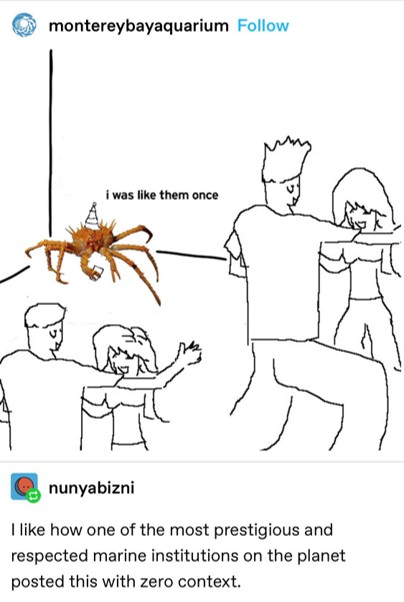
    Evolution is a very complicated field – and one of the bigger long-standing questions is crabs! Specifically, why animals keep evolving into them!

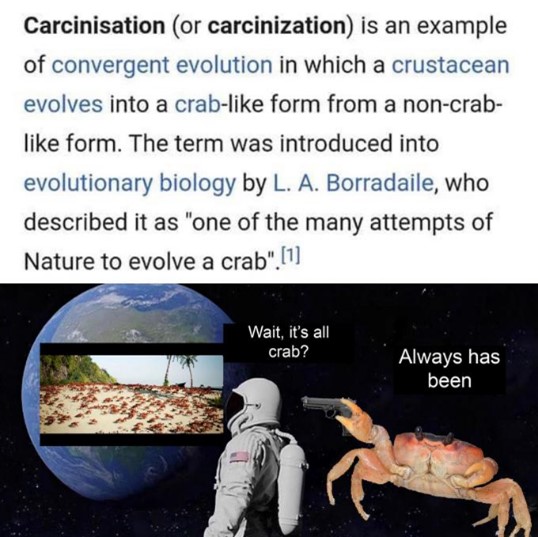
    The phenomenon of animals, or specifically crustaceans, evolving into a crab-like shape has occurred so often it has a name: carcinization. The term was coined way back in 1916, by evolutionary biologist Lancelot Borradaile, and today it has risen back into public vocabulary through the power…of memes.


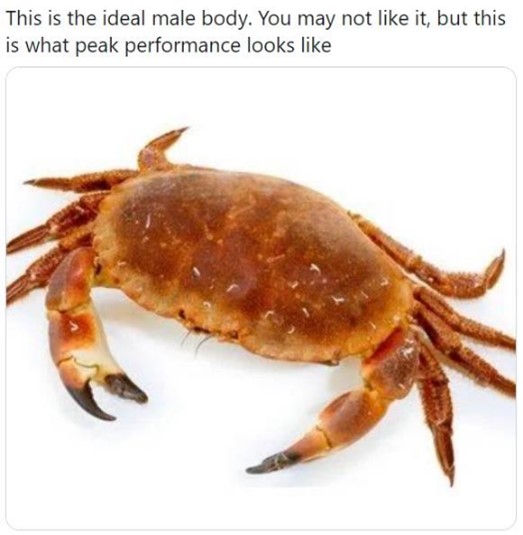
    “Either die a hero, or live long enough to become crab”

    But memes aside, this phenomenon raises several questions:

    Question 1: What is a crab?

    (Wolfe et al., 2021)

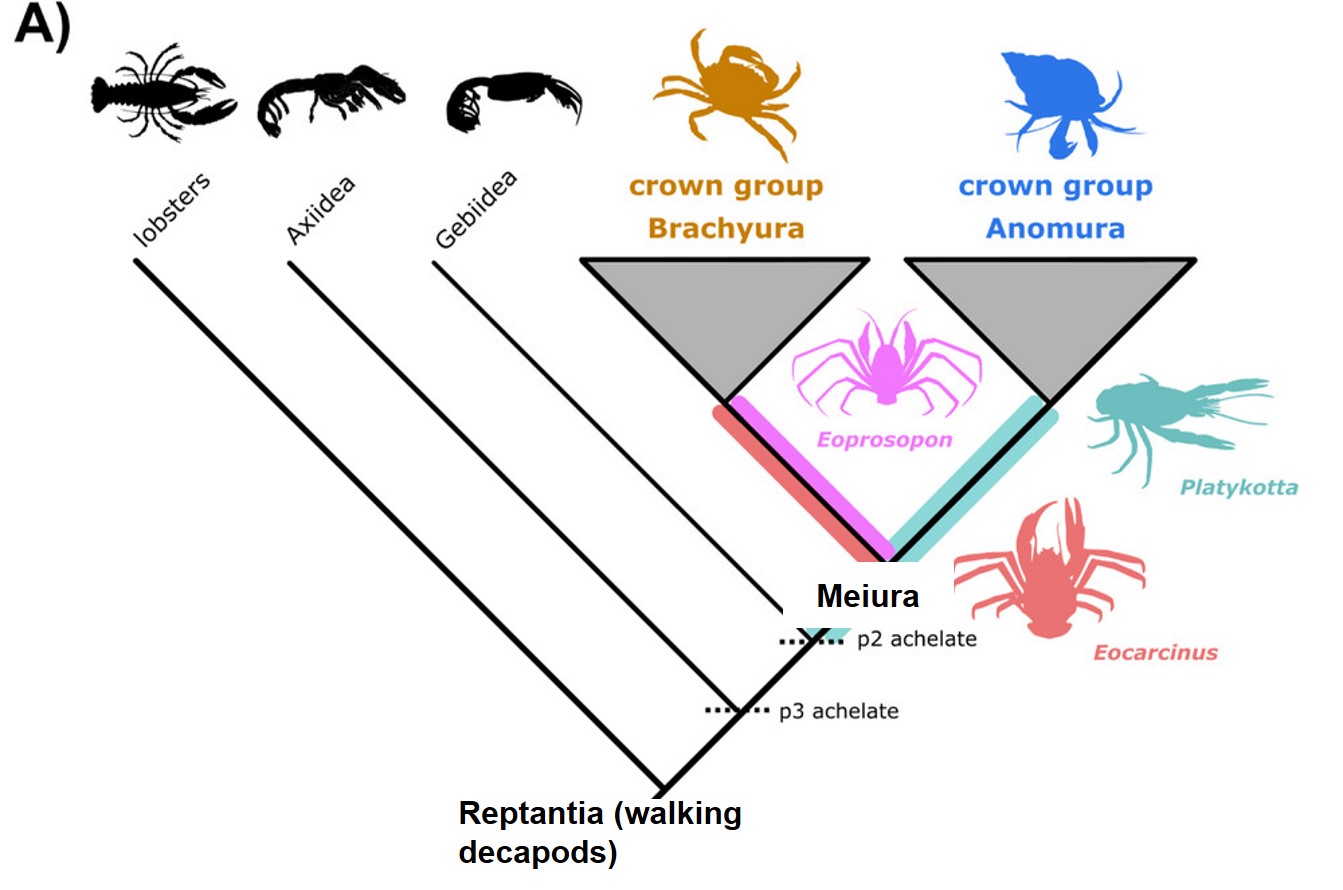
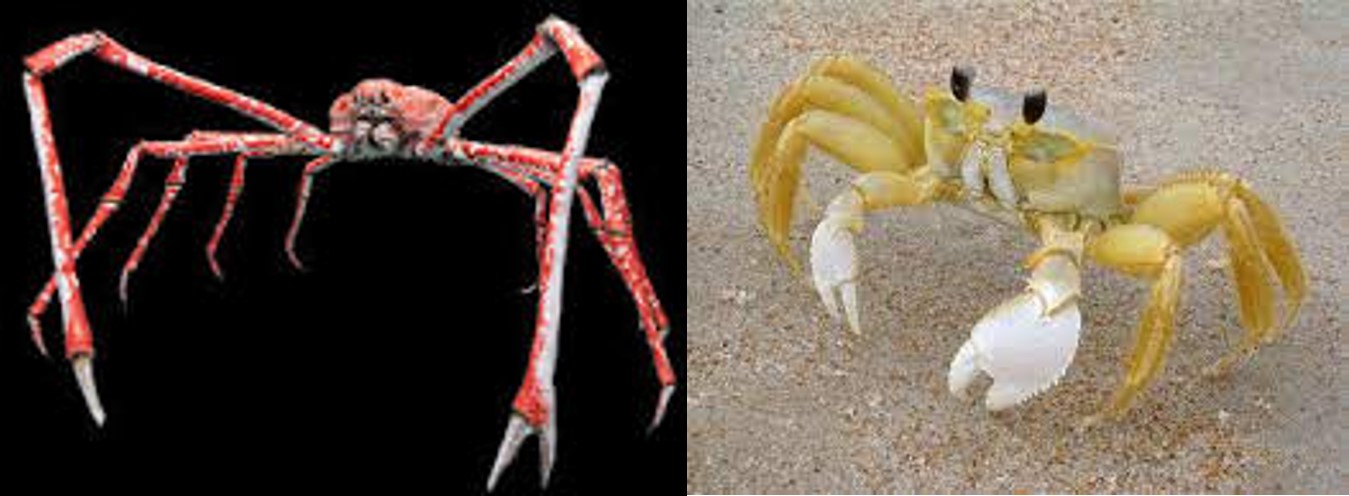
    Crabs – the animals we call crabs at least – are all a part of the evolutionary order Decapoda (meaning literally “ten feet”), under the phylum Arthropoda, subphylum Crustacea, and clade Meiura (Kazlev, 2022). “True crabs” all fall under the infraorder Brachyura. They include species such as the Japanese spider crab, blue land crabs, ghost crabs, snow crabs, etc., and can be most easily differentiated by having 4 pairs of walking legs.

    Question 2: What is not a crab?

    Or at least, who are the fakes?

    “False crabs” are largely on the neighboring Anomura branch – hermit crabs, porcelain crabs, coconut crab, king crabs even, are all false crabs. They tend to have 3 visible pairs of walking legs, with the 4th pair often smaller or hidden under their shell.

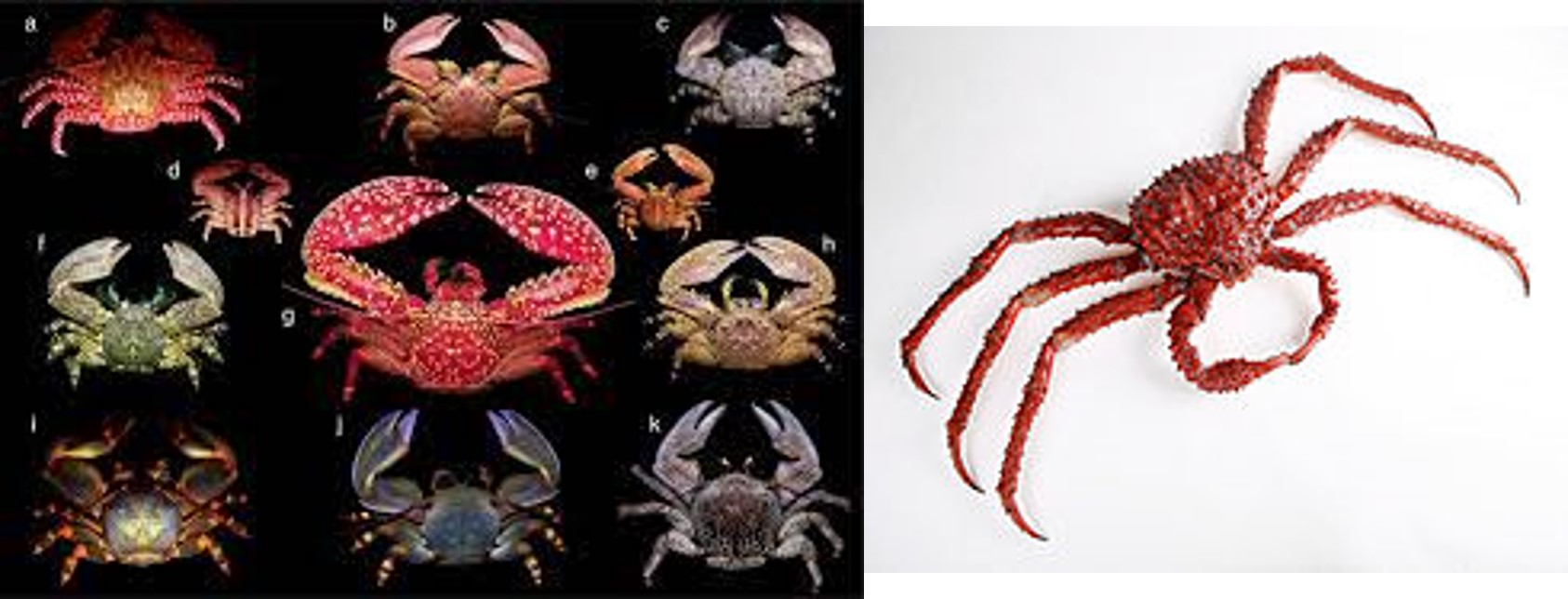
    To put it shortly, these are crabs:

    These are not:

    Get it? Nope

    Question 3: How does one become a crab?

    The process of carcinization is characterized by the crustacean’s carapace becoming flat and wide, while it’s abdomen or “pleon” shorten and curves underneath. The appendages that would normally form the tail of a lobster either shrink or disappear. Additionally, the plates that make of the underside, or ventral, part of the animal’s shell become fused into one. It’s important to note too, that not all these steps have to occur – many undergo “partial” carcinization, such as the hermit crab, who keeps their tail (Wolfe et al., 2021).

    Final question: Why?

    Why become a crab? Potentially, the crab form provides more protection and, surprisingly, flexibility for crustaceans (Green, 2020). With the pleon tucked under the carapace, there’s less surface area for predators to grab; and with a more compact body, crabs can scuttle around pretty quickly. They can get into smaller cracks than their more lobster-like compatriots.

    Why are scientists studying this? Right now, carcinization serves as a frequent and recognizable pattern of evolution – AKA convergent evolution, where animals of a similar niche evolve similar features. For evolutionary biologists, this provides a potential wealth of data for seeing trends in how several species evolved, and predicting how even more may evolve in the future. Additionally, as noted by Wolfe et al., the fact that the widening of the carapace and curling of the abdomen evolves together so frequently implies that the two phenotypes may be linked developmentally, or even genetically!

    Why is this a meme???

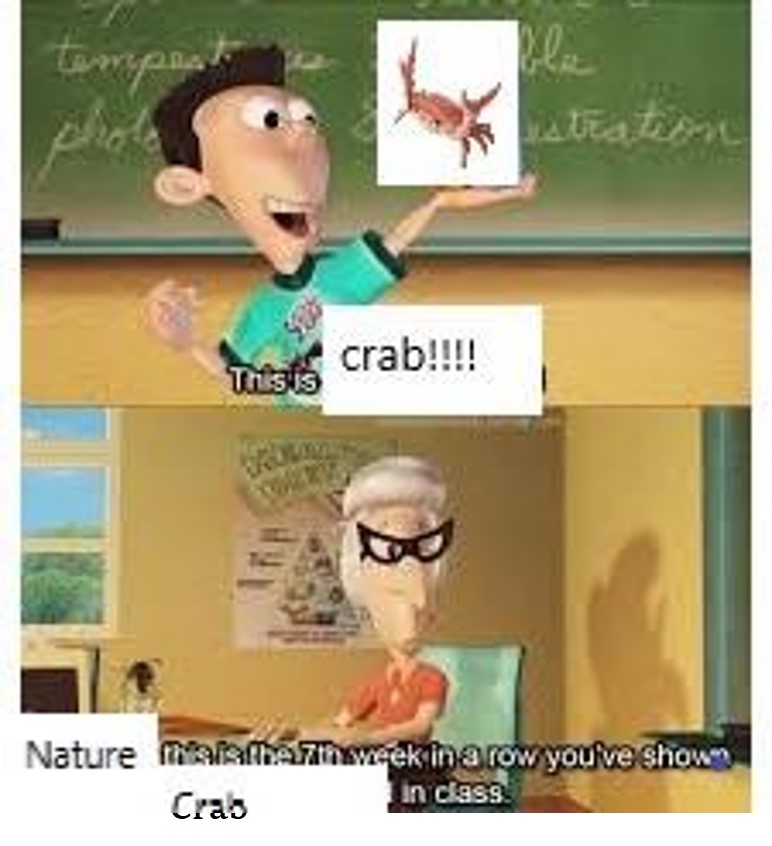
    To be frank, this quirk of evolution is just…funny! Crabs are such a random, funky little animal – they alone are a sort of meme! So when people find out that this strange little creature, for some reason, keeps popping up in nature, it surprises them. Not only does a seemingly random process like evolution apparently have a pattern – the pattern is crabs; and it’s happened so often that there’s a name for it!

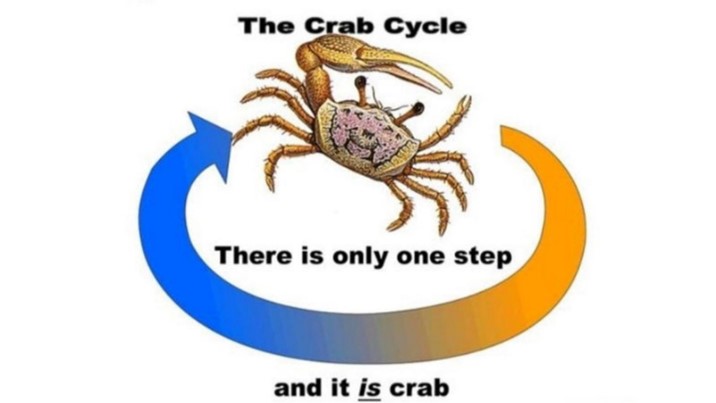
    So in short:

    Sources:

    C_Mill24. (2022, October 20). Carcinization. Know Your Meme.  https://knowyourmeme.com/memes/carcinization

    Green, H. (2020). Why Do Things Keep Evolving Into Crabs? PBS Eons. YouTube. https://www.youtube.com/watch?v=wvfR3XLXPvw.

    Kazlev, M. A. (n.d.). Decapoda: Anomura. Palaeos Arthropods: Crustacea: Decapoda: Meiura. http://palaeos.com/metazoa/arthropoda/decapoda/meiura.html

    Wikimedia Foundation. (2022, November 20). Carcinisation. Wikipedia. https://en.wikipedia.org/wiki/Carcinisation#:~:text=Carcinisation%20(or%20carcinization)%20is%20an,Nature%20to%20evolve%20a%20crab%22.

    Wolfe, J. M., Luque, J., & Bracken‐Grissom, H. D. (2021). How to become a crab: Phenotypic constraints on a recurring body plan. BioEssays, 43(5), 2100020. https://doi.org/10.1002/bies.202100020