Category: Articles

  • Science During the Age of Enlightenment

    Science During the Age of Enlightenment

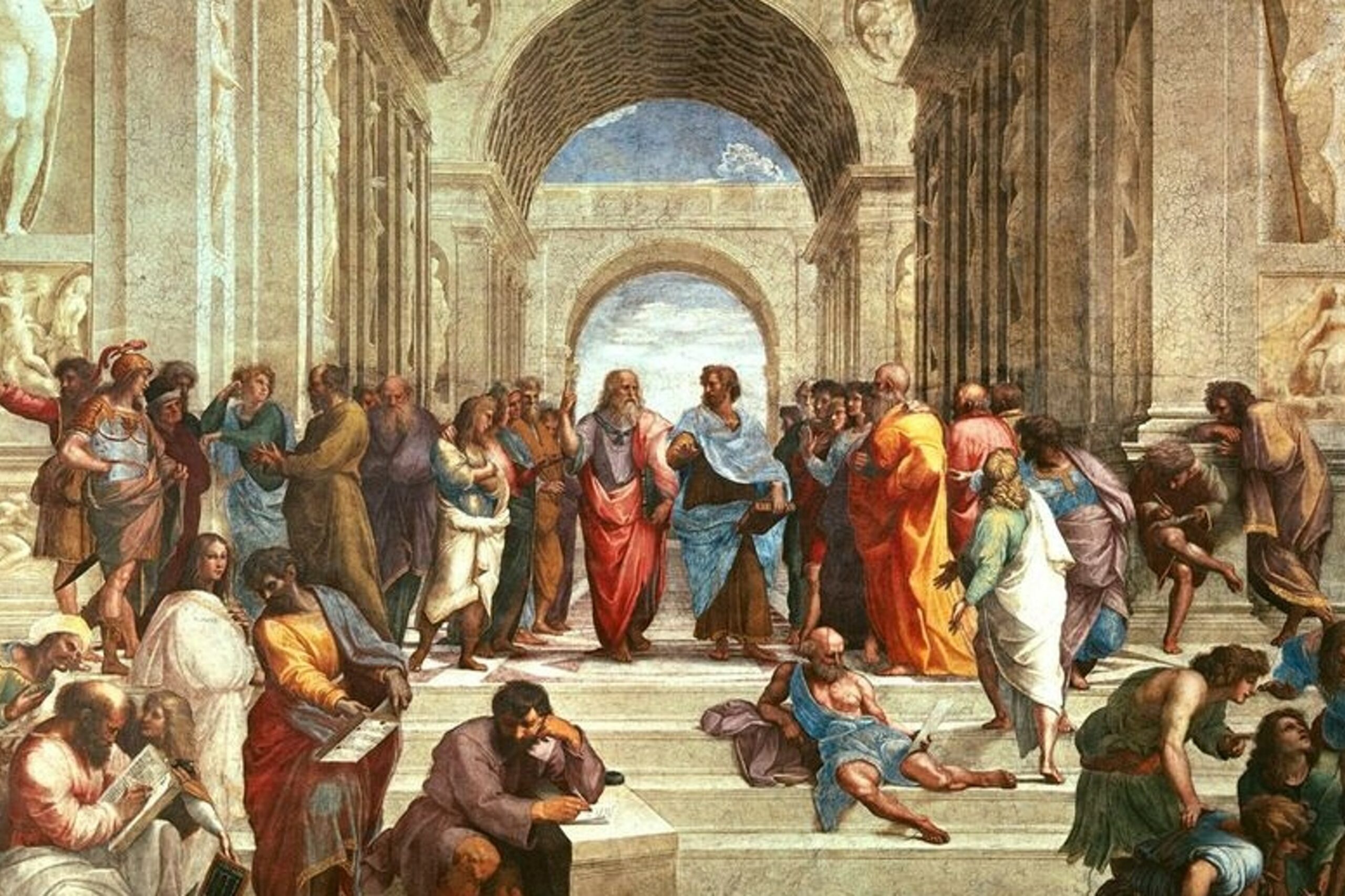
    The 17th and 18th centuries were a time of profound transformation in Europe in regards to thought, reason, skepticism, and empirical observation. This was nowhere more pronounced than during the Age of Enlightenment, its intellectual and philosophical movements leading to modern democracy, with the ideas ushered in during this time forever changing the scope of Western science. 

    The thinkers of the Enlightenment were inspired to question beyond the limits of scientific reasoning at that time and change human understanding. During the early 17th century, European intellectual reasoning consisted of religious dogma and Aristotelian philosophy, with it being unthinkable to challenge the medieval church’s idea of a divine and static universe that centered around Earth. Therefore, the ensuing Scientific Revolution during this time revolutionized the way that Europeans thought about the world and set a new standard for deductive reasoning and scientific observation. 

    Science at this time was conducted predominantly by scientific societies and academies rather than universities, and while some societies had links to universities, most societies operated on their own. These societies grew to have control over their publications, the election of new members, and the administration of the organization, with there being over 70 different scientific societies by 1789. Additionally, science during this time became more popular among the increasingly literate populace and the public was introduced to various scientific ideas. 

    One thinker who was thought to establish the foundations for the movement was Francis Bacon, who is known for establishing empiricism and the scientific method. His book, Novum Organum, discussed a new approach to gathering knowledge from systematic experimentation, inductive reasoning, and empirical observation. He also wrote about the idea of testing hypotheses through experimentation as a way to pursue scientific inquiry. He was the first advocate for the idea of separating religion from science, and his impact on the science world remains today as the scientific method is still seen as the standard way to approach discoveries. 

    The most pivotal scientific thinker of that age whose legacy remains today is Sir Isaac Newton. His Principia Mathematica described classical mechanics and presented the laws of motion and universal gravitation through mathematical observation and analysis. His law of universal gravitation and the laws of objects in motion changed the way that people practiced science and indicated the need for empirical observation and evidence behind scientific ideas rather than religion. Through this, Newton was able to demonstrate how the same physical laws govern both terrestrial and celestial environments, challenging the ideas of the universe at that time. These insights would also eventually lead to advancements in the fields of physics, astronomy, and engineering.

    Another scientist during this time was Carl Linnaeus, a botanist and physician. His book, Systema Naturae, established the binomial nomenclature for species classification where each species is assigned a two part Latin name for its genus and species. Linnaeus ordered animals and plants into defined groups, such as domains and phyla, and used the scientific ideas of observation and rational analysis to study various evolutionary relationships and biodiversity. His work shaped people’s understanding of nature and created a framework for how botany, zoology, and ecology is studied. 

    Overall, the Age of Enlightenment was an integral part of scientific and intellectual history and changed the way that Europe viewed reason, individualism, and progress. While the Enlightenment might not have explored all modern thought, the scholars, scientists, and thinkers of this time sought to break free from the limited knowledge of their world and seek new truth and ideas. Today, we can reflect on the science from the Enlightenment to continue to make bold scientific discoveries and create our impact on the world. 


    Sources:


    Bristow, W. (2010, August 20). Enlightenment (Stanford Encyclopedia of Philosophy). Stanford.edu; Stanford University. https://plato.stanford.edu/entries/enlightenment/

    Duignan, B. (2024, March 28). Enlightenment. Encyclopædia Britannica. https://www.britannica.com/event/Enlightenment-European-history 

    Zucker, S., & Harris, B. (2016, January 7). The Age of Enlightenment, an introduction. Smarthistory. https://smarthistory.org/a-beginners-guide-to-the-age-of-enlightenment/ 

  • The Discoveries of the Human Genome Project

    The Discoveries of the Human Genome Project

    Few scientific quests have sought to unravel the essence of what makes us human as the Human Genome Project. The Human Genome Project (HGP) began with the US Department of Energy launching a study to detect genetic mutations about atomic bomb survivors in Japan. Eventually, the National Institute of Health joined, along with a collection of countries across the globe, into what became a public consortium by the Human Genome Organization. HGP officially began in 1990 with a completion goal of 2005, and thus researchers set up to map the scope of homo sapien DNA, the code that determines our traits. 

    Through HGP, scientists uncovered various discoveries about genetics. One such finding was that human DNA isn’t as unique as we originally thought. The genomes of people who are not closely related to each other like siblings or parents are estimated to be different by about 1 in every 1,200 to 1,500 bases. What this means is that if we consider a stretch of DNA having anywhere between 1,200 to 1,500 bases, we would expect to find one difference between the sequences, and this difference could be as small as a single letter change or single nucleotide polymorphism, or as large as differences in the number of copies of certain sections of DNA, also known as the copy number variations. Additionally,  nearly 50% of our DNA is similar to that of other organisms, with more than 40% of our proteins being similar to those of flies and worms.

    Scientists also found out that genes are not evenly spread out across the 24 human chromosomes, and that some regions have many genes clustered together called rich neighborhoods, while others have few genes, known as desert areas. These desert areas consist of 20% of our genetic code, and the other 80% is made up of clustered neighborhoods. Moreover, the human genome has around 20,000 genes for protein building, which is only 2% of our total DNA. This extremely small percentage was the biggest disappointment for the scientists of the HGP, as they had hoped there would be over 100,000 genes in our genome. This discovery challenged the idea that each gene makes only one protein, and eventually led researchers to understand that the complexity of humans isn’t solely determined by the number of genes, but rather by the different ways in which genes code for proteins.

    Today, we can understand that while the Human Genome Project didn’t address all the expectations and ambitions of earlier scientists, it also forever changed the landscape of the study of genetics. Through the HGP, researchers established large databases of genetic data and published to the world the human genome sequence, ensuring that the genome can be accessible at our fingertips. Moreover, in the late 1980s, computers were relatively simple, but by the time the HGP had finished, we had the internet and powerful computers to handle all this genetic data. This led to a new era of digital biology, where scientists and clinicians could analyze vast amounts of genetic information.

    However, with genetic research also comes various ethical implications. One is about who should own and control genetic data – if researchers and healthcare providers should have access to it for genetic studies and patient care, there is also the issue of how ethical it is for companies to commercialize and profit from this data, especially if they sell the information to third parties. Questions around who can patent genes and genetic technologies arose and the impact this can have on genetic research and healthcare. Moreover, with sequencing the entire human genome, there also needs to be safeguards to protect the privacy and confidentiality of the participants’ genetic information from data misuse or unauthorized access. Lastly, there needs to be equitable access to the benefits of genetics research, ensuring that people of marginalized communities are not only participating in the studies, but also receive the advanced healthcare and medicine that emerges from these discoveries. 

    The lessons we’ve learned from the Human Genome Project can guide us to improve our knowledge of genetics and conduct genomic research responsibly and ethically. Moreover, by understanding how our knowledge of the building blocks of humanity have evolved over time, we can develop a greater appreciation for how far science has progressed. 


    Sources:

    Collins, F. S. (1999). Medical and societal consequences of the Human Genome Project. New England Journal of Medicine, 341(1), 28–37. https://doi.org/10.1056/nejm199907013410106 

    Gibbs, R. A. (2020). The Human Genome Project Changed Everything. Nature Reviews Genetics, 21(10), 575–576. https://doi.org/10.1038/s41576-020-0275-3 

    Moraes, F., & Góes, A. (2016). A Decade of Human Genome Project Conclusion: Scientific Diffusion about our genome knowledge. Biochemistry and Molecular Biology Education, 44(3), 215–223. https://doi.org/10.1002/bmb.20952 

    Watson, J. D. (1990). The Human Genome Project: Past, present, and future. Science, 248(4951), 44–49. https://doi.org/10.1126/science.2181665 

  • Exploring Medieval University Science Education

    Exploring Medieval University Science Education

    Ever wonder what your undergraduate science education would have been like if you attended university during the Middle Ages? 

    We can understand this by exploring the science curriculum of students at Oxford University during the 14th century and how it was shaped by the societal and intellectual context of the time period. For a student studying towards a master of the arts (the equivalent of a science degree), they would need to enter with a strong foundation in the 7 liberal arts, including Boethius’ Arithmetic and Euclid’s geometry, and the 3 natural philosophies such as physics and meteorology. 

    In university, there were two main fields students of science covered: quadrivium and natural philosophy. Quadrivium consisted of the subjects of arithmetic where the students would study number theory and calculations, and geometry for learning shapes, measurements, and Euclidean geometry. They would also learn music, both the mathematical and theoretical aspects, as well as astronomy where they would study celestial objects, the principles behind this motion, and the works of Ptolemy. In natural philosophy, students learned about Aristotle’s works on the natural world, his theories of motion for physics, elements, and celestial bodies, as well as concepts on metaphysics, such as the nature of existence and the structure of reality. 

    These students, as well as others in universities in Paris and other cities, were required to attend lectures on quadrivium and Aristotle, as well as lectures on other scientific topics. Students could sometimes replace the required lectures with these electives – although they wouldn’t receive course credits for them – and there were even university regulations to allow these lectures to continue during holidays in cases of high demand.   

    There were various ways in which the subjects of quadrivium and natural philosophy were at the core of the curriculum for students. In regards to Aristotle’s works, professors would use commentaries from these to explain his complex ideas to students through the lens of their own contributions to the discoveries. Moreover, these commentaries served as both textbooks for students to learn from and research papers for scholarly purposes. Students could study the commentaries to build their understanding on the subject, as well as critique and offer their own ideas to existing ones. 

    Professors also used sophismata, which were logical puzzles or propositions, to allow students to actively engage. Students would participate in disputations, or formal debates and discussions, in order to graduate, where they would defend or refute various propositions. This focus on logical thinking enabled students to form arguments and check for weaknesses or fallacies in their scientific works. 

    Overall, medieval universities had an integrated approach to education where teaching and research were combined. The works that students studied for their science curriculum were also composed of scholarly research content that they could then use to build and refute arguments. While medieval scholars and students were not immune to incorrect scientific theories, they were also limited by the resources and beliefs of that time. By understanding the scientific progress made through the centuries and the way in which education has developed it, we can continue to shape the knowledge of students to come. 


    Sources:

    Scott, John C. “The mission of the university: Medieval to postmodern transformations.” The Journal of Higher Education, vol. 77, no. 1, 2006, pp. 1–39, https://doi.org/10.1353/jhe.2006.0007. 

    Sylla, Edith Dudley. “Science for undergraduates in medieval universities.” Annals of the New York Academy of Sciences, vol. 441, no. 1, Apr. 1985, pp. 171–186, https://doi.org/10.1111/j.1749-6632.1985.tb14581.x. 

  • So You Hate Your Major… Now What?

    Imposter syndrome is a phrase that many people in academia are uniquely familiar with. The feeling that maybe you aren’t smart enough for your major or that you were accepted into your college by mistake is fairly common in these spaces. For me personally, I had always had an interest in engineering and knew that I wanted to pursue it, but I was confronted with a rude awakening during my freshman year as a mechanical engineer. What if engineering just wasn’t for me?

    Rose Clance and Suzanne Imes coined the term imposter phenomenon in their 1978 study regarding how high-achieving women often “maintain a strong belief that they are not intelligent; in fact, they are convinced that they have fooled anyone who thinks otherwise.” They describe reasons why this phenomenon is highly present in women, usually involving societal stereotypes and familial pressure, and in the STEM field, this pressure is often intensified. I know that in my case, it was always apparent that I was one of the few girls interested in engineering, making me question my belonging, and this feeling was not aided once I was accepted to Georgia Tech, where conversations around affirmative action amplified my doubts.

    Besides the societal pressures around being a woman of color in the STEM field, I also found myself doing worse in my math and science classes while succeeding in social sciences and literature. Not only was I not enjoying the coursework that was foundational to my major, but I was bad at it.

    I started to feel out of place around my peers and began to doubt that I was qualified to be an engineer after I graduated. I felt that if I couldn’t “overcome” a physics class or personal doubts, I would be better off switching majors to cater to my academic strengths. This idea is not uncommon, as highlighted by Rosaling Gill and Ngaire Donaghue and defined by them as the “hidden injuries of academia.” The stress was discouraging me, and the only advice I was offered was individualistic self-help.

    However, many of my feelings changed when I took the course on engineering ethics. It was a social science class that combined all of the things I enjoyed and had a passion for. I was able to write, identify problems in the engineering process, and review case studies that involved analyses only an engineering professional could perform. From here, I knew the direction I intended to go with my degree. I was not the hands-on woodworking girl boss that I had convinced myself I needed to be as a woman in engineering. Instead, I was better at design, programming, and risk analysis. This process of discovery was not easy, but it was very worth every minute.

    The psychological and societal aspects associated with imposter syndrome are hard to identify, defy, and sometimes understand. However, one solution on a larger scale may be to retract from individualism. Imposter syndrome is often and most notably associated with isolation, which can fester irrational feelings of self-doubt. Building community and exploring different avenues related to your passions are valuable tools for finding your place and contributing to the constantly adapting world. It is okay to feel like an imposter, and you are not alone, but your individualism is how you present new perspectives to your field, not your isolation from it.

    Sources

  • AI and VR: A New Reality

    Reality is defined by the world we live in and the rules it is bound by. Physics, time, societal norms—these are all things that limit us to what we call our reality. But what if we could generate a new reality to live in? A virtual reality.

    Virtual reality, or VR, is a computer-generated simulation designed to immerse participants in an artificial world that they can interact with and explore through the use of a headset and other accessories. Many people, including myself, have joined the craze with excitement, using the technology for both recreation and education, interacting with other users, experiencing 360 videos, or just playing immersive games. The top tech companies have begun their race to develop their visions for these worlds, with Apple being one of the most recent producers of their own headsets.

    The Apple Vision Pro is “Apple’s first spatial operating system” that allows you to use your hands, eyes, and voice to create intuitive interactions around you. The feature “EyeSight” tells other people what you’re doing while using the headset, and from one review, the experience is similar to viewing your phone directly through your eyes. At the current price point of $3500, it’s not a product that everyone will be quick to get their hands on, but only time will tell how popular it will become as the design becomes sleeker and the interest becomes more mainstream.

    However, as with all new developments, we have to stop and ask ourselves: Is this the right way to go? It seems like there may be a good argument against it.

    My first introduction to the Apple Vision Pro was a video by YouTube creator Eddy Burback. In his video, he discussed the difficulties he had with its setup, grievances with its price point given its limitations, and most interestingly, the implications and ethical concerns for this product and the overall push for more social interaction in the virtual world.

    Hadi Ardiny and Esmaeel Khanmirza vouch for the technology as a concept, noting that the integration of technology like virtual reality into education helps students gain hands on understanding and experience abstract concepts that they otherwise wouldn’t be able to. Other forms of computer generated reality have brought peace to grieving family members through realistic holograms of deceased loved ones, though that topic brings about moral questions of its own (Stein, 508). I have personally used VR as a means to teach about space in STEMcomm’s ASF After Dark event and can see its benefits. However, these benefits have yet to outweigh the negatives for me.

    The idea that we are currently in a “loneliness epidemic” is an interesting perspective to incorporate into this conversation. Dilip V. Jeste, Ellen E. Lee, and Stephanie Cacioppo hypothesize that “there is probably a common underlying thread of social anomie and disconnection resulting from the rapid growth of technology, social media, globalization, and polarization of societies… Information overload, 24-hour connectivity, countless but superficial and sometimes harmful social media relationships, and heightened competition have elevated the level of stress in the modern society.” This sentiment was shared not only by Burback when discussing the peculiar push of an AI chat bot while using the headset but also by Yi Mou and Kun Xu’s research into human-AI social interactions. In their study, they found that users of the application WeChat showed higher levels of neuroticism and were less conscientious when conversing with AI. With this, the question is then posed: will computer manufacturing ever truly substitute in-person social reactions? Or, more importantly, should it?

    I tend to agree with the philosopher Albert Borgmann, who is of the opinion that technology is a tool that, when mishandled or taken for granted, can devalue craftsmanship and the rich community ties that uphold our society. Though I don’t believe that the Apple Vision Pro will cause the downfall of our society, I find that we should be wary of its ability and intention to pull people away from our reality. New technology will always be exciting and often beneficial to the masses, but I think that it is important to be both open-minded and skeptical, inquisitive yet grounded.

    Sources
    Ardiny, H., & Khanmirza, E. (2018). The role of AR and VR Technologies in education developments: Opportunities and challenges. 2018 6th RSI International Conference on Robotics and Mechatronics (IcRoM), 482–487. https://doi.org/10.1109/icrom.2018.8657615

    Burback, E. (2024, March 29). Apple’s $3500 nightmare. YouTube. https://www.youtube.com/watch?v=kLMZPlIufA0

    Fallman, D. (2009). A different way of seeing: Albert Borgmann’s philosophy of technology and human–computer interaction. AI & SOCIETY, 25(1), 53–60. https://doi.org/10.1007/s00146-009-0234-1

    Jeste, D. V., Lee, E. E., & Cacioppo, S. (2020). Battling the modern behavioral epidemic of loneliness. JAMA Psychiatry, 77(6), 553–554. https://doi.org/10.1001/jamapsychiatry.2020.0027

    Mou, Y., & Xu, K. (2017). The media inequality: Comparing the initial human-human and human-ai social interactions. Computers in Human Behavior, 72, 432–440. https://doi.org/10.1016/j.chb.2017.02.067

    Stein, J.-P. (2021). Conjuring up the departed in virtual reality: The good, the bad, and the potentially ugly. Psychology of Popular Media, 10(4), 505–510. https://doi.org/10.1037/ppm0000315

  • “When” to Do Things by Daniel H. Pink

    “When” to Do Things by Daniel H. Pink

    Nowadays, I “read” books mostly by listening to them. When you have to read textbooks and research papers all day, it’s easier on the eyes and the brain to just have someone do all the reading for you. One of the first books I listened to after realizing this is When, the pop science/self-help book by Daniel H. Pink.

    Now, hear me out. I’m usually a hater when it comes to self-help books: I don’t like their overconfident, salesman-like tone, and I don’t like the insinuation that you can change your life with a “few, simple tricks”. I despise buzzwords about “hacking your brain” or “maximizing productivity”. I’m not trying to make my body a more efficient machine–I’m just trying to get by and be happy.

    This book doesn’t overpromise on how it will “change your life”. Its tagline, “the scientific secrets of perfect timing”, is a little clickbait-y, but it really does cite scientific literature. Rather than telling you what you should or shouldn’t be doing, Pink tells different stories: anecdotes of folks who run marathons at the end of a decade (19 years old, 29, 39, 49, and so on), research about night owls versus early birds, scheduling customs around the world, etc. And it definitely makes the message sink in more than if he delivered it like a TED talk.

    This tone really stuck with me as a highlight of this book. For as long as I’ve been aware of time, I’ve been anxious about it. I’ve worried about running out of it, I’m terrified of wasting it, and I am constantly checking to see if I am using it right. I procrastinate and waffle around and scroll Twitter for too long and suddenly it’s bedtime. If I might be allowed to generalize my neuroses to everyone, I would say that humans just can’t really conceptualize time (see my article on Existential Physics if you want more about time). So, it scares us.

    This book sat me down and said, “don’t worry so much”. Like this TikTok comment I saw floating around the internet says, “the time will pass anyways”. Apparently that’s a Earl Nightingale quote?

    The time will pass anyways : r/Wiseposting


    Take the example of the post lunch slump. I have always noticed that I really get things done from 11-12pm, 3-6 pm, or 9pm-12am (I’m currently writing this article at 10pm!). For the longest time, that stressed me out. If I couldn’t get work done during the typical 9-5, how would I ever be able to keep a job? What would I do? From this book, I learned that my biological clock is just tuned a little bit differently. Instead of trying to fight it, I should make the most of it. During the dead zone around 1-2pm, I don’t even try to do computer work. I’ll walk around, chat with a coworker, or deal with a task that makes me move. Then, when my energy hits a peak again, I tackle those mentally draining activities.

    This book didn’t change my life, but funnily enough, it came into my world at just the right time. When you’re a college student juggling work, research, classes, chores, a social life, and your own physical and mental health, it’s really easy to feel overwhelmed. Up to this point, our time has been highly budgeted by parents, teachers, and other authority figures. And then, suddenly you’re just expected to be able to do it all yourself. This book was a small step in learning how to be at peace with time, and be a little more kind to myself in the process. If that sounds like something you’d like, do check out this book. It’s well worth your–nevermind.

  • Janna Levin’s Black Hole Survival Guide

    Janna Levin’s Black Hole Survival Guide

    What would happen if you fell into a black hole? It’s a question that you want answered fast. After reading verbose academic articles all semester, Black Hole Survival Guide feels like a breath of fresh air. At a slim 190 pages (just 3 hours in the audiobook), author Janna Levin answers just that. Nothing else. No frills, no fuss.
    Okay–I lied. There’s a bit at the beginning where the astrophysicist reminisces about how her wonder about black holes led her to pursue her career. And a bit at the end where she details the day the first image of a black hole was taken: the excitement, the awe, the tears. And it’s this personal, lively, and engaging tone that made this book so easy to read. And that’s not something I thought I’d say about a book about black hole theories!
    The title of this guide is slightly misleading: there’s likely no chance you’ll survive a black hole. Probably. Levin discusses the different parts of a black hole, circling it in a dance before she takes you into it. The big black hole theories are discussed, from the boring (you’ll lose consciousness before you see anything), to the deliciously macabre (your legs will fall in at a different speed than your head, pulling your body apart limb from limb), to the weirdly existential (time will slow so much that you will see whole galaxies extinguish in the blink of an eye). Her prose is electric. Listening to her describe what it would be like to look out from the event horizon, I can picture myself there now. Just take a look at this video of her explaining black holes to people of different education levels.
    Black Hole Survival Guide is a bite-sized romp into the world of the black hole. If you listen to the audiobook, it’s like an audio only NOVA documentary with a wry attitude. I don’t even want to spoil any more of the book than I already have. Dr. Levin doesn’t mince words, and neither will I. Just like with a black hole, you’ll really only understand it if you dive in headfirst. Go read it!