Category: Articles

  • Cell Organelle Tier List

    Cell Organelle Tier List

    Cells, Cells, They’re Made of Organelles!
    Remember that song from 7th grade? It’s stuck in my head, and I’m dragging you along for the ride. Today, I’m ranking organelles from most important to least (in my opinion), with tiers ranging from S (top) to D (bottom).


    S TIER

    1. Nucleus
      The nucleus is the cell’s brain—where all the critical decisions happen (well, metaphorically). It houses DNA, which contains the instructions for building and maintaining the organism. Without the nucleus, cells wouldn’t know what to do, and life as we know it would cease to exist.

    Why it’s in this tier: It literally controls everything. Plus, mitosis? All nucleus. You and I would not be here if not for the nucleus.

    Source: National Human Genome Research Institute

    1. Plasma Membrane
      The unsung hero! The plasma membrane acts as the bodyguard of the cell, regulating what gets in and out. Its phospholipid bilayer—with hydrophilic heads and hydrophobic tails—is a masterpiece of natural design. Me personally, I’d love to have a hydrophilic head. Well, I guess I do when it rains. Fun fact: genetics can determine the integrity and capacity to repair the plasma membrane if damaged is inflicted on such as muscle contraction, inflammation, etc(BMC Biology).Why it’s here: The plasma membrane is my intracellular bodyguard, I have no choice but to put it here.

    Source: BMC Biology;Science Direct 


    A TIER

    1. Ribosome

    Calling all Gym Bros, this one’s for you! They take mRNA instructions and churn out amino acids, which then turn into proteins—aka the building blocks of muscle, enzymes, and pretty much everything else. They’re attached to the endoplasmic reticulum, which we will discuss later, and there are many of them. According to Britannica Online, “A single actively replicating eukaryotic cell, for example, may contain as many as 10 million ribosomes”(2024).Why it’s here: No ribosomes = no protein = no gains. Ribosomes are very important, even if you don’t frequent the gym. A (Tier) for effort!

    Source: Britannica

    1. Vacuole
      In plant cells, the vacuole is like a storage locker, holding water, nutrients, and even waste. In animal cells, it’s smaller but still handy. It’s kind of like a trash can with multiple cans: trash, recycle, compost, save for later..? Substances enter the vacuole through endocytosis, and exit through exocytosis. Endo- meaning enter, Exo- meaning exit. In endocytosis, a vesicle(sac filled with water and whatever else is entering the vacuole) fuses to the membrane of the vacuole and then releases its contents inside. Exocytosis: the vesicle forms itself around the substance that needs to be exited and then fuses back to the membrane and releases the substance into the cytoplasm(Stillwell, 2016).

    Why it’s here: It’s like a bubble of life, and trash. It’s cool, but not S Tier cool.

    Source: Science Direct; BYJUs


    B TIER

    1. Golgi Apparatus
      The Golgi is like Amazon for the cell. It packages proteins and lipids from the ER, labels them, and ships them out. No Prime option here, unless you have some sort of genetic mutation. Maybe that’s how Quicksilver got so fast! They’re kind of shaped like stacked membranes, it kind of looks like a maze. Fun fact: The Golgi Apparatus is also known as the Golgi Body.

    Why it’s here: They’re important for logistics so they get some recognition, but they’re not the most astounding organelle. B Tier.

    Source: National Human Genome Research Institute

    1. Endoplasmic Reticulum (ER)

    The ER is split into two teams, the Rough ER and the Smooth ER.Rough ER: ribosomes create proteins here. It’s called the rough ER because the ribosomes are actually attached to it. If you were to run your hand along it, it’d be a little bumpy. If proteins are made improperly, they stay within the ER. Sometimes it can get “constipated” if too many proteins stay within it and functioning is slow.Smooth ER: No bumps here. This is where lipids such as steroids are made. The smooth ER makes phospholipids, ya know, like the ones that make up the plasma membrane? And since the plasma membrane is in the S Tier, the smooth ER must be pretty important.

    Why it’s here: Smooth ER: super cool! Rough ER: has flaws. The compromise: B Tier. Also, the name’s kinda long.

    Source: National Human Genome Research Institute

    1. Cytoskeleton
      Gives the cell structure and helping with transport and movement. The backbone of the cell. It’s “composed of protein filaments and microtubules in the cytoplasm, and has a role in controlling cell shape, maintaining intracellular organization, and in cell movement”(Biology Online). It extends from the nucleus to the plasma membrane.

    Why it’s here: It’s pretty important, but I had a traumatic high school project on it back in the day. B Tier, that’s all I can do.

    Source: Biology Online


    C TIER

    1. Mitochondria

    Okay okay I get it, it’s the powerhouse of the cell. But the mitochondrion(single) is so overused and overhyped. It converts glucose(sugar) to ATP(energy). This is the reason for sugar rushes! The mitochondrion has a lot of moving parts, all of which are too complex in my humble opinion. The process of cellular respiration, the intake of oxygen and the output of carbon dioxide, takes place in the mitochondrion. The Mitochondrion has its own DNA, and its own ribosomes. Drama queen. Prokaryotes, organisms like bacteria, don’t have mitochondria. They don’t even have a nucleus.

    Why it’s here: Overhyped. Sick of hearing it. Pick another organelle! Please.

    Source: Biology Online

    1. Centrioles
      Essential for cell division, they help organize the microtubules that pull chromosomes apart during mitosis and meiosis. They kind of look like churros if you ask me.

    Why it’s here: They’re important, but not exciting.

    Source: British Society for Cell Biology

    1. Lysosome
      The cell’s janitor, breaking down waste and worn-out organelles. They contain digestive enzymes, specifically hydrolase. An enzyme that breaks down bonds using water. Lysosomes aid with phagocytosis, the destruction of pathogens. Vesicles take in the pathogen and then fuse with a lysosome, which then destroys it.

    Why it’s here: Just not as good as the previous ones really.

    Source: LibreTexts Biology

    1. Cell Wall
      This organelle is only in plants. Provides rigidity and protection, but as someone who’s not a plant, I’m indifferent. However, what’s cool is that that the cell wall is the reason veggies are crunchy! You eat cell walls every day and you don’t even know it. The cell wall is made of cellulose(a large chain of polysaccharides) and peptidoglycan(made up of other sugars).

    Why it’s here: Thanks for the oxygen, but I don’t need cellulose.

    Source: LibreTexts Biology


    D TIER

    1. Peroxisome
      The last “-some”. This organelle handles oxidative reactions and detoxification processes(Alberts B, Johnson A, Lewis J, et al., 2002). It’s made up of small vesicles It’s probably working hard, but I barely notice it. I honestly didn’t know what is was until recently.

    Why it’s here: Reminds me of hydrogen peroxide. Wait…

    Source: National Library of Medicine

    1. Cytoplasm
      It’s the goo(semifluid substance) that holds everything in place. External to the nuclear membrane, internal to the cellular membrane. Functional? Yes. Exciting? No. It reminds me of Jell-o. What flavor? Cellular.

    Why it’s here: Not a fan of Jell-o.

    Source: Britannica


    Final Thoughts

    All of these organelles are vital in cellular function, even if they’re not cool like the nucleus. Remember all of these organelles are working simultaneously to keep cells functioning, and to help replicate and divide.

    References:
    1. Alberts B, Johnson A, Lewis J, et al. Molecular Biology of the Cell. 4th edition. New York: Garland Science; 2002. Peroxisomes. Available from: https://www.ncbi.nlm.nih.gov/books/NBK26858/
    2. Ammendolia, D.A., Bement, W.M. & Brumell, J.H. Plasma membrane integrity: implications for health and disease. BMC Biol 19, 71 (2021). https://doi.org/10.1186/s12915-021-00972-y
    3. Biology Online. (2023, May 29). Cytoskeleton. Biology Articles, Tutorials & Dictionary Online. https://www.biologyonline.com/dictionary/cytoskeleton
    4. British Society for Cell Biology. (n.d.). Centriole. British Society for Cell Biology. https://bscb.org/learning-resources/softcell-e-learning/centriole/
    5. BYJU’S. (2020, October 13). What are vacuoles? – definition, structure and functions. BYJU’S. https://byjus.com/biology/vacuoles/
    6. Encyclopædia Britannica, inc. (2024, October 30). Cytoplasm. Encyclopædia Britannica. https://www.britannica.com/science/cytoplasm
    7. Libretexts. (2024, November 23). Lysosomes. Biology LibreTexts. https://bio.libretexts.org/Bookshelves/Microbiology/Microbiology_(Boundless)/04%3A_Cell_Structure_of_Bacteria_Archaea_and_Eukaryotes/4.08%3A_Other_Eukaryotic_Components/4.8B%3A_Lysosomes
    8. National Human Genome Research Institute. (2024). Nucleus. Genome.gov. https://www.genome.gov/genetics-glossary/Nucleus#:~:text=A%20nucleus%2C%20as%20related%20to,and%20out%20of%20the%20nucleus.
    9. Wayne, R. (2019). Plasma membrane. Plasma Membrane – an overview | ScienceDirect Topics. https://www.sciencedirect.com/topics/agricultural-and-biological-sciences/plasma-membrane

  • “Quacking the Code” – Rubber Ducks in IT

    “Quacking the Code” – Rubber Ducks in IT

    When asked to think about a rubber duck, the average person would probably envision a yellow toy that kids play with, usually when taking a bath.

    In the information technology field, however, rubber ducks signify more than just a toy. To those in the software industry, rubber ducks are tools used for debugging and hacking.

    No longer the staples of childhood bathtime, rubber ducks are used by programmers as debugging companions. Often referred to as “rubber duck debugging,” this practice is a simple yet surprisingly effective tactic. When programmers encounter a particularly troublesome bug or a problem in their code, they explain the code and their thought process out loud to the rubber duck, as if the duck were an attentive listener.

    The act of verbalizing the problem forces the programmers to slow down and articulate their thoughts, which can often lead them to identify the issue themselves. A form of cognitive debugging, the act of explaining the code helps the programmer understand it better by breaking complex problems down into smaller, more manageable parts. By walking through the code step by step, they can often pinpoint exactly where any flaws or logical errors occur.

    Apart from this effective debugging tactic, rubber ducks signal another aspect of software – hacking USBs. Theoretically, this tool is utilized for penetration testing. Security experts can use rubber duckies to test the resiliency of their computers systems. However, it can also be used by hackers for keystroke injection attacks. When plugged into a computer’s USB port, they emulate a keyboard and can type out pre-programmed keystrokes at an extremely rapid pace, often faster than a human could type.

    Posing a significant threat to computer security, USB rubber duckies can bypass common security measures to automate attacks, exploit physical access, and evade traditional security measures. Incredibly dangerous tools like the Hak5 USB Rubber Ducky exploit the trust that computers place in activities such as clicking and typing. Because these actions are typically associated with humans, computers are less likely to have security measures built in. USB rubber duckies can be pre-loaded with scripts that automate various malicious actions, such as installing malware, stealing sensitive data, or reconfiguring system settings. Once plugged in, they execute these scripts with lightning speed, making it difficult for users to detect and respond to the attack in real-time. Additionally, unlike remote hacking methods that rely on exploiting vulnerabilities over a network, USB rubber duckies require physical access to the target system. This makes them particularly dangerous in scenarios where an attacker can physically access a computer, such as in an office setting, where unattended workstations are common. USB rubber duckies can also be easily disguised as innocent-looking USB drives, making them effective tools for social engineering attacks. USB rubber duckies can bypass traditional security measures that focus on detecting malicious software or network-based attacks. Since they appear as standard keyboards to the computer’s operating system, they often go unnoticed by antivirus software or intrusion detection systems.

    The Hak5 USB Rubber Ducky.

    Organizations and individuals should be aware of the risks associated with these devices and take steps to mitigate them, such as implementing strict access controls, educating users about the dangers of plugging in unknown USB devices, and deploying endpoint security solutions that can detect and prevent unauthorized keystroke injections.

    While the image of a rubber duck may evoke memories of childhood innocence for many, its significance in the realm of information technology transcends mere nostalgia. From its role as a trusted debugging companion in software development to its potential as a formidable tool for hackers in the form of USB rubber duckies, this seemingly innocuous object embodies both creativity and danger. As technology continues to evolve, understanding both the playful and perilous aspects of innovations like rubber ducks is crucial for safeguarding digital systems and maintaining a secure computing environment.


    Sources:

    Dahmane, A. (2016, March 24). USB Rubber Ducky — Basic Use Case Scenario. Medium. https://medium.com/@dahmane/usb-rubber-ducky-basic-use-case-scenario-51b2fcbe2f5e

    Faife, C. (2022, August 16). The new USB Rubber Ducky is more dangerous than ever. The Verge. https://www.theverge.com/23308394/usb-rubber-ducky-review-hack5-defcon-duckyscript

    Kahmen, J. (2023, May 12). Awareness with a USB Rubber Ducky. Turingpoint. https://turingpoint.de/en/blog/awareness-with-a-usb-rubber-ducky/#:~:text=A%20USB%20Rubber%20Ducky%20is

    Rubber Duck Debugging: History and Benefits. (2023, April 7). Masterycoding.com. https://www.masterycoding.com/blog/rubber-duck-debugging-history-and-benefits#:~:text=Rubber%20duck%20debugging%20is%20a%20simple%20but%20effective%20technique%20used

    Rubber ducky attack definition – Glossary | NordVPN. (2023, August 9). Nordvpn.com. https://nordvpn.com/cybersecurity/glossary/rubber-ducky-attack/#:~:text=A%20rubber%20ducky%20attack%2C%20also

    Subastil, A. C. (2020, August 12). The Psychology Behind Rubber Duck Debugging. Medium. https://medium.com/@arnoldcsubastil/the-psychology-behind-rubber-duck-debugging-f19141c70060

  • Lava Lamps – A Surprising Beacon of Light for Internet Encryption

    Lava Lamps – A Surprising Beacon of Light for Internet Encryption

    In the realm of Internet security, where digital threats loom large and data protection is paramount, innovative solutions often emerge from unexpected sources. One such solution is Cloudflare’s use of lava lamps as an unconventional approach to encryption.

    Cloudflare, an IT service management company, works with clients to improve the speed, security, and reliability of their Internet properties. As a leading Internet security and performance corporation, Cloudflare handles a significant proportion of all Internet traffic, making ultimate security a critical concern for the company and compelling it to find better solutions for secure encryption.

    At the heart of Cloudflare’s San Francisco, California headquarters lies an unusual feature: a wall of about a hundred lava lamps. Apart from adding an aesthetically-pleasing quality to the office, the mesmerizing wall forms a crucial component of the company’s encryption strategy.

    The lava lamp wall in the San Francisco office of Cloudflare.

    Invented in the 1960s, lava lamps consist of a transparent vessel filled with colored wax and liquid. When heated by an incandescent bulb at the base, the wax begins to melt and rise, creating undulating shapes and patterns within the liquid. The movements are chaotic and inherently unpredictable, making lava lamps an ideal source of randomness for cryptographic purposes. Due to their unique fluid dynamics and unpredictable patterns, lava lamps provide a rich source of entropy. Entropy, simply put, refers to the amount of disorder in a system. A camera captures the movement of wax  within each lava lamp, which is then fed into a cryptographic algorithm and used to generate cryptographic keys for encrypting internet traffic.

    The high entropy of lava lamps provide the key and most essential element of the process – randomness. Lying at the core of secure encryption algorithms, randomness can be considered the foundation for generating cryptographic keys that resist brute-force attacks and other such vulnerabilities. Unlike deterministic processes, which follow predictable patterns, randomness introduces unpredictability and complexity, making it exceedingly difficult for adversaries to decipher encrypted data without the corresponding keys.

    In the busy lobby of Cloudflare’s headquarters,  obstructions are commonplace, as people come and go, blocking parts of the wall from the camera’s view for varying periods of time. Surprisingly, these interruptions become part of the randomness that the camera captures, contributing to the entropy leveraged for secure encryption.

    Computers, which operate on logic, are programmed to work based on if-then statements: By design, repeatedly entering the same input should produce the same output each time as a result. Certain computer programs can simulate randomness, but it is just that – a simulation. Eventually, patterns within these simulations can be found and predicted, forming an unstable base for security. As such, the lava lamp wall is a remarkable alternative to create unpredictable randomness and generate stronger keys.

    Understanding the need for backups, Cloudflare has various contingency measures in place. The possibility of the camera being shut off or damaged is a potential concern for the integrity of the encryption process. In the event of camera failure, the company can rely on two other sources for randomization: the Linux operating system running on Cloudflare servers and physical access to the camera, which is situated in a Cloudflare-owned space. This accessibility enables Cloudflare to quickly rectify any issues by turning the camera on again or replacing it as is necessary, ensuring the continuity of the encryption process. Another possible scenario to consider is the secret use of an external camera to film the wall and generate cryptographic keys. However, to combat this case, Cloudflare also utilizes its two other major offices around the world to generate random data from real-world inputs. Filming the movements of a double-pendulum system in its London office and recording the radioactive decay of a uranium pellet via a Geiger counter in its Singapore location, Cloudflare has enabled the encryption process to become even stronger and more chaotic.

    The lava lamp wall at Cloudflare, along with its other endeavors at its global offices, not only exemplifies a practical solution for generating cryptographic keys, but also models creative problem-solving. The success of Cloudflare’s lava lamp wall serves as inspiration for others in the technology industry to rethink traditional paradigms and explore new, unique avenues for enhancing digital security.


    Sources:
    Airhart, Ellen. “How a Bunch of Lava Lamps Protect Us from Hackers.” Wired, 29 July 2018, www.wired.com/story/cloudflare-lava-lamps-protect-from-hackers/.
    Garge, Ishwari. “Cloudflare’s Encryption with Lava Lamps.” CSI Decrypt, 9 July 2021, medium.com/csirait-decrypt/cloudflares-encryption-with-lava-lamps-a144b4ad623f.
    “How Do Lava Lamps Help with Internet Encryption?” Cloudflare.com, Cloudflare, www.cloudflare.com/learning/ssl/lava-lamp-encryption/.
    “The Lava Lamps That Help Encrypt the Internet.” Atlasobscura.com, 29 Apr. 2019, www.atlasobscura.com/videos/these-lava-lamps-help-encrypt-the-internet.

  • The Syrinx: The Musical Instrument For Rose-Ringed Parakeets

    The Syrinx: The Musical Instrument For Rose-Ringed Parakeets

    The rose-ringed parakeet (Psittacula krameri) also known as the ring-necked parakeet, is a medium-sized bird species that is native to the Indian subcontinent as well as some parts of Africa and the Middle East. These parakeets are known for their vibrant plumage and their charming personalities, which attract both humans and other birds to their warm personalities. They are highly social creatures and always playful and curious as they explore their surroundings with keen interest and engage in activities that challenge their minds. They are known for their vibrant green feathers and males have a narrow black or dark blue ring encircling their neck, hence the name “ring-necked” parakeet. Their diet mostly consists of a variety of fruits, nuts, and seeds, and the occasional spray millet, which is considered a treat. 

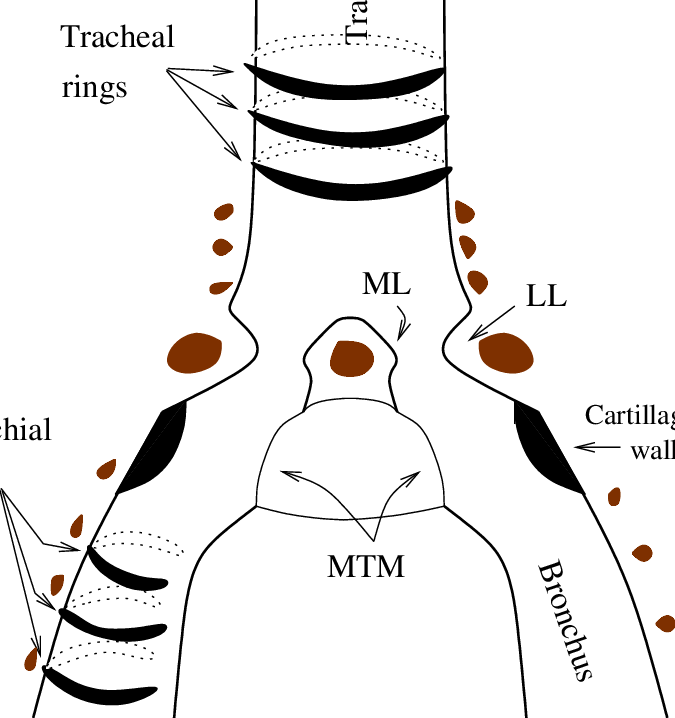
    Aside from all of those characteristics, the rose-ringed parakeets are known for their remarkable ability to mimic human speech and other sounds. They are proficient learners, often picking up on words, phrases, and noises from their surroundings and incorporating them into their vocalizations.  Their ability to vocalize their surrounding sounds comes from the remarkable feature called the syrinx. The syrinx is the avian equivalent of our voice box, situated at the base of the trachea where it splits into the bronchi. Unlike mammals the larynx, which produces sounds using vocal cords, birds have a more complex system involving a series of muscles, membranes, and cartilage within the syrinx. This intricate structure allows for precise control over pitch, volume, and tone, resulting in the diverse vocalizations observed across bird species.

    “The Syrinx Of Birds” Image Credit: Mendez & Goller (2020)

    One of the key features of the syrinx is its bilateral structure, meaning it has two halves, each capable of producing independent sounds. Each half of the syrinx is controlled by a set of muscles that allow for independent control of sound production. This enables birds to produce harmonious duets or even simultaneous but distinct vocalizations. This specialization can result in incredibly intricate vocalizations, with birds using one side for producing low-frequency sounds and the other for high-frequency sounds simultaneously. Additionally, the bilateral structure of the syrinx enables birds to modulate the airflow independently, allowing for the production of complex harmonies and melodies. This ability is particularly crucial during courtship displays, where male and female birds engage in elaborate duets to strengthen pair bonds and establish territory boundaries. Furthermore, the bilateral nature of the syrinx provides redundancy in vocal production, ensuring that birds can continue to communicate effectively even if one side of the syrinx is damaged or impaired.

    What makes the syrinx particularly interesting in rose-ringed parakeets is its ability to produce a wide range of sounds, including human speech. Their syrinx is well-developed, allowing them to accurately replicate words, phrases, and even melodies. Through a combination of muscle control and airflow modulation, these parakeets can produce sounds that closely resemble those of their human companions. Using their syrinx, they then attempt to replicate these sounds with astonishing accuracy. With practice and repetition, some parakeets become proficient at mimicking human speech to the point of holding conversations. This ability to mimic human speech has made rose-ringed parakeets popular as pets and subjects for study in the field of animal communication. Their capacity for vocal imitation demonstrates the remarkable adaptability and complexity of the avian syrinx, showcasing its role not only in natural communication but also in deep interactions between humans and birds.

    Rose-ringed parakeets are not only visually stunning but also possess an extraordinary musical talent thanks to their syrinx. Through their mimicry, they bridge the gap between humans and birds, captivating our hearts with their melodious songs and music. Their syrinx is one-of-a-kind as it enables them to mimic human speech and sounds that they hear from their natural environments. Their key features, like the bilateral structure, allow them to produce sounds in different frequencies and modulate their airflow better. These features also give them the incredible ability to mimic human speech and give them a small ability to hold conversations with us. In summary, the incredible musical talents of rose-ringed parakeets, made possible by their unique syrinx, make them delightful companions and subjects of study and fascinating creatures. 

    References: 

    Pârâu, L. G., Strubbe, D., Mori, E., Menchetti, M., Ancillotto, L., Kleunen, A. V., … & Wink, M. (2016). Rose-ringed parakeet Psittacula krameri populations and numbers in Europe: a complete overview. The Open Ornithology Journal, 9(1).

    Méndez, J. M., & Goller, F. (2020). Multifunctional bilateral muscle control of vocal output in the songbird syrinx. Journal of Neurophysiology, 124(6), 1857-1874.

    Ritchison, G. (2023). Sound and Vocal Production and Function. In a Class of Their Own: A Detailed Examination of Avian Forms and Functions (pp. 1595-1731). Cham: Springer International Publishing.

    Schematic view of Songbird Syrinx. according to classical … (n.d.-d). https://www.researchgate.net/figure/Schematic-view-of-songbird-syrinx-According-to-classical-theory-sound-is-produced-by-the_fig3_228771300

    Vuckovic, A. (2018, October 26). Rose ringed parakeet health, personality, colors and sounds – petguide. Petguide.com. https://www.petguide.com/breeds/bird/rose-ringed-parakeet/

  • Caffeine: A Neuroprotective Agent Against Adenosine Receptors

    Caffeine: A Neuroprotective Agent Against Adenosine Receptors

    Effects of Caffeine

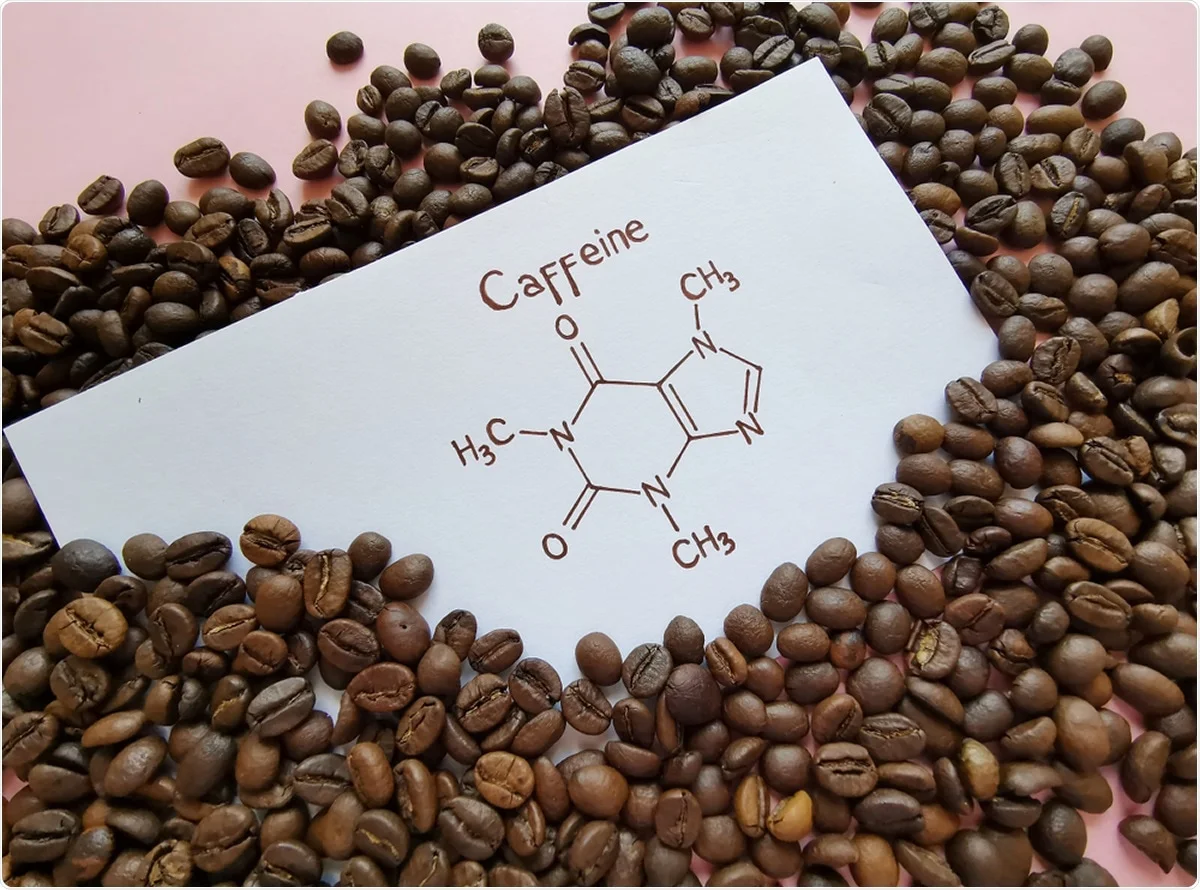
    Caffeine a widely consumed psychoactive stimulant mostly found in drinks such as coffee, tea, matcha, and other popular energy drinks is known to effectively increase brain activity and in the nervous system. Especially, for college students, these are the beverages that we turn to when we are stressed and need to concentrate, when we need to be alert, or to even simply wake up. Excessive consumption of caffeine leads to many different negative effects on physical and mental health. Physically, caffeine can increase your urine output, blood pressure, and heart rate, which leads to a risk of a heart attack. Mentally, caffeine can lead to disruptive sleep patterns, cause insomnia, and increase headaches. Caffeine addiction is also a common problem that is seen among habitual caffeine drinkers, as the withdrawal effects of caffeine have strong symptoms making it hard to ween off. 

    Benefits of Caffeine 

    Even with all these adverse talks about caffeine, there are a lot of hidden benefits that caffeine has on a person’s mental and physical health. There have been numerous studies on how caffeine helps with increasing metabolism and helps with lowering the risk of type 2 diabetes, helps with liver protection reducing the inflammation of the liver. One of the most interesting benefits to me was how effective caffeine works as a neuroprotective agent against many different types of neurological diseases. For example, for Parkinson’s disease, caffeine acts as an antagonist to adenosine reception in the brain. By blocking these receptors, caffeine helps with enhancing dopamine signaling and counteracts the dopamine loss seen in Parking’s diseases. It also helps with Huntington’s disease, a genetic disorder that causes progressive degeneration of the nerve cells in the brain. Caffeine also influences the dopamine pathways and reduces oxidative stress, which helps fight against the breaking down of those cells. Caffeine also helps with migraines constricting the blood vessels and reducing the throbbing pain in your head. Aside, from all those benefits, one of the most amazing benefits of caffeine is how it helps prevent Alzheimer’s. 

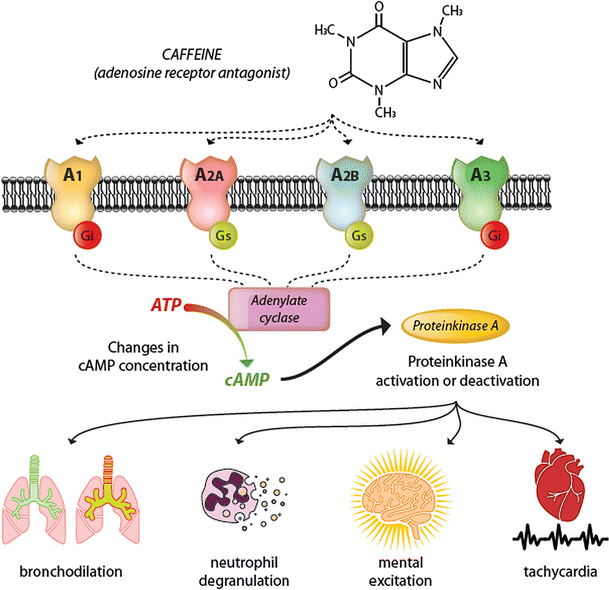
    “Adenosine Receptors Blockage” Image Credit: ResearchGate

    Alzheimer’s and Adenosine Receptors 

    Alzheimer’s disease is a progressive neurodegenerative disorder. It is mostly characterized by memory loss, cognitive decline, and many changes in behaviors. It is one of the most prevalent forms of dementia found commonly in people between the ages of 65-80. There is also no cure for Alzheimer’s, but research says that lifestyle factors play into the risk of developing the disease. Caffeine is effective in reducing the risk of Alzheimer’s by blocking adenosine receptors in the brain. Adenosine is a neurotransmitter that regulates neuronal activity, promoting sleep, and modulating the release of other neurotransmitters.  Adenosine exerts its effects by binding to specific receptors called adenosine receptors. There are several subtypes of adenosine receptors, including A1, A2A, A2B, and A3. In Alzheimer’s disease, A1 receptors are widely distributed in the brain and are involved in various functions, including the modulation of neurotransmitter release and synaptic plasticity. A1 receptors are overstimulated due to elevated adenosine levels, which can impair memory and cognitive function.A2A receptors are predominantly found in regions of the brain associated with cognitive function, such as the hippocampus and cortex. However, overactivation of A2A receptors has been linked to neuroinflammation and neuronal damage observed in Alzheimer’s disease. Caffeine works by competitively blocking adenosine receptors, particularly A1 and A2A receptors. By occupying these receptors, caffeine prevents adenosine from binding to them and exerts its inhibitory effects on neuronal activity. This blockade leads to increased neuronal firing and the release of neurotransmitters associated with alertness and cognitive function. This can help to alleviate some of the symptoms associated with Alzheimer’s disease, such as cognitive decline and memory loss. 

    In conclusion, while excessive consumption of caffeine can lead to negative physical and mental health effects, it also offers significant hidden benefits as a neuroprotective agent against various neurological diseases. One of the most remarkable benefits of caffeine is its potential to reduce the risk of Alzheimer’s disease. By preventing the overstimulation of these A1 and A2A receptors, caffeine helps mitigate cognitive decline and memory loss associated with Alzheimer’s disease. While caffeine shows promise as a neuroprotective agent, further research is needed to fully understand its mechanisms and effectiveness, especially concerning Alzheimer’s disease. However, it’s clear that caffeine, when consumed in moderation, can offer significant benefits for both mental and physical health. 

    References:

    Fiani, Brian, et al. “The neurophysiology of caffeine as a central nervous system stimulant and the resultant effects on cognitive function.” Cureus 13.5 (2021).

    (PDF) Caffeine and Cardiovascular Diseases: Critical Review of Current Research, www.researchgate.net/publication/296627459_Caffeine_and_cardiovascular_diseases_Critical_review_of_current_research. 

    Uddin, Md Sahab, et al. “Neuropsychological effects of caffeine: Is caffeine addictive.” J Psychol Psychother 7.02 (2017): 1-12.

    Zhao, Y., Zhou, Y. G., & Chen, J. F. (2023). Targeting the adenosine A2A receptor for neuroprotection and cognitive improvement in traumatic brain injury and Parkinson’s disease. Chinese Journal of Traumatology.


  • Sharing the Magic of Science Even In the Dark

    Sharing the Magic of Science Even In the Dark

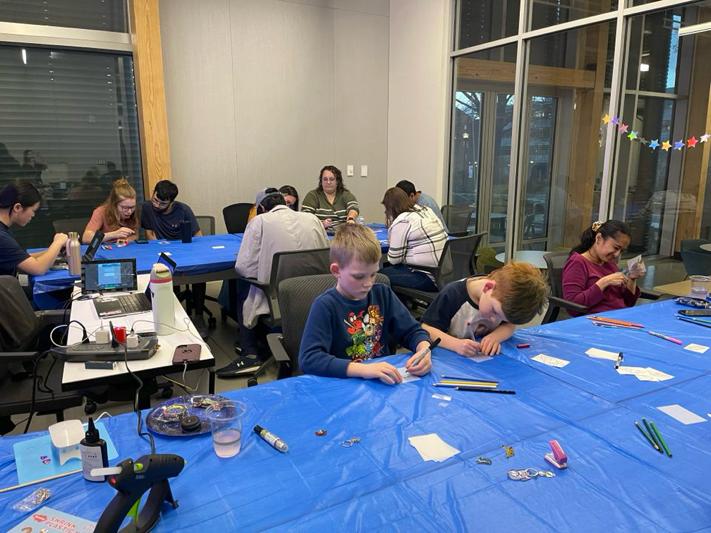
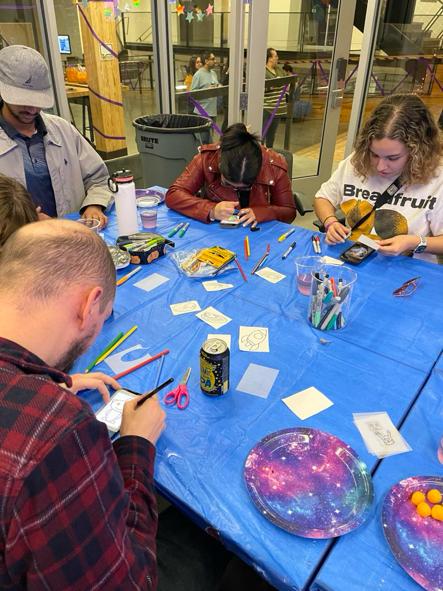
    Pictures From ASF STEM AFTER DARK Event ” Image Credit: StemComm VIP

    Every year in March, Georgia Tech hosts Science and Engineering Day in association with the Atlanta Science Festival on campus to provide hands-on science-related activities for all ages in the metro Atlanta area. The entire day is packed with events placed all around campus, where different campus clubs and organizations provide activities in different clusters of science. This year, our StemCommVIP hosted an event called STEM AFTER DARK, where we had various space-themed activities set in and around the Kendeda building for people to engage in. For the event, my team and I wanted to create an event where we would be able to have an interactive event where everyone could create something. In our pre-planning stages, we wanted to have an activity that was interactive and innovative enough so that participants could get a keepsake from the event. After much discussion and planning out the materials that we needed, my team settled on a shrink-dinks activity station, where participants could sketch and draw onto a thin piece of plastic paper that would later be heated up and shrink down to smaller pieces of thicker plastic. For our event, participants could create planet- and space-themed keychains and pins from either the templates we provided or from their own imagination. 

    Pictures From ASF STEM AFTER DARK Event ” Image Credit: StemComm VIP

    I remember being so fascinated with this activity because it was really cool to see the process of the plastic shrinking in size. The Shrink Dinks are essentially just sheets of polystyrene plastic. Polystyrene plastics are just chains of repeating units of styrene molecules and when the plastic is heated up, the molecules begin to vibrate more vigorously, causing the chains to loosen up and move apart from each other. As the plastic is heated up further, it first shrinks down and then it reaches a temperature when the material becomes soft and pliable so that the plastic can be molded and shaped. To return the plastic back to its same rigid consistency, decrease the temperature, and let the heat die down, the chains settle back into their hard ridged shape as the chains have less energy to release.  This expanding and shrinking process can be seen in thermal expansions. As the plastic heats up the molecules move apart as well, expand slightly, and then shrink again due to the loss of heat. 

    Our activity at the event was a huge success, there were constantly people going in and coming out and being extremely excited to get a key chain. At the events, my team had posters explaining the thermodynamic process that the keychains went through and everyone got to see their keychains shrink when it came to their turn. There were so many people have made so many space-themed keychains, and so many people went beyond that and made them cute and personalized ones as well. It was a great event to be a part of and my team was great in making the event a success.

    References:

    Beese, J., & Helfer, C. (2014). Polymer family night: The science behind the fun. Science Scope, 37(8), 37.

    Space shrinky dinks. The Discovery. (2019, October 2). https://nvdm.org/event/space-shrinky-dinks-2019-10-09/

    University, C. M. (n.d.). Shrinky dinks – gelfand center – carnegie Mellon University. Shrinky Dinks – Gelfand Center – Carnegie Mellon University. https://www.cmu.edu/gelfand/lgc-educational-media/polymers/molecular-rearrangement/shrinky-dinks.html


  • Hues of Education

    Hues of Education

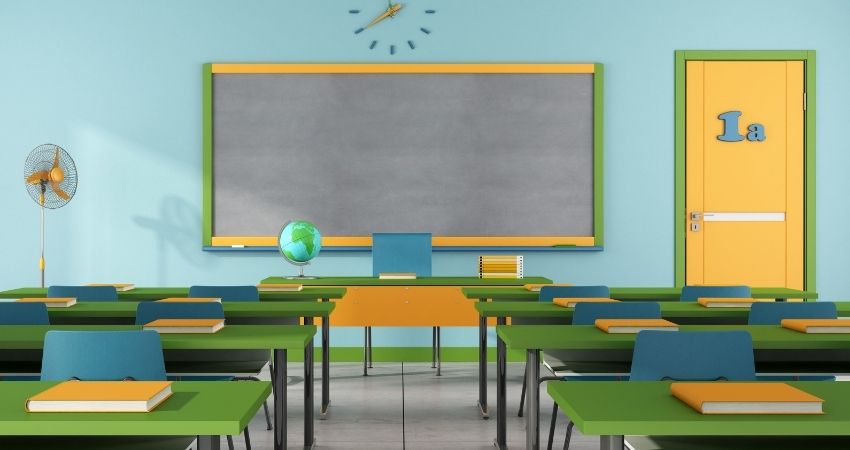
    College classrooms often bear the reputation of being dull and uninspiring. Most of the time, classrooms are just rows and rows of tables, black or gray chairs used for seats, and mono-colored walls. These types of classroom environments contribute to a sense of monotony which doesn’t foster an optimal learning environment. The lack of visual stimulation can lead for students to disengage and reduce attention spans to their professors and further lead to low test averages and low academic performance in class. As classrooms are a vital part of our learning environment and the way that students engage in lectures, the classroom environment that we are in should be more engaging and vibrant and create a more stimulating atmosphere. 

    When it comes to learning, there are various factors that influence how we absorb and retain information. One factor that influences our learning experience and is often overlooked is the impact of colors. Colors impact the way that information is processed in our brain, so when placed in an environment that is not monotonous, the brain reacts to the colors that are in the room. For example, warmer and more vibrant colors, such as red and yellow are known to be stimulating to the brain.  When we see the color red, our bodies react naturally releasing adrenaline in the brain. The adrenaline increases our blood pressure and heart rate as well, this heightened state can lead to enhanced focus and attention. It can increase quick responses to reactions and physical performances in classes. Due to the adrenaline, it creates a more collaborative space as well, as students are able to communicate and discuss more freely about the content at hand. Vibrant classroom colors such as red and yellow are attention grabbers as well, so when placed in an environment that is not so visually stimulating, it is easier for students to understand the material as it is being taught in front of them. 

    The other end of the color spectrum is colors that have cooler tones creating a calming and soothing effect for the mind. These colors reduce stress and anxiety within students creating a safe space for them to learn. Cooler hues such as blue and green are known to be psychologically and physiologically influencing. When seeing shades of blue and green, it creates a sense of tranquility and stability with the mind. This sense of calmness helps students memorize and understand material more than in a white-and-gray classroom environment. Physiologically, cooler colors reduce cortisol levels and increase the production of serotonin which calms the mind down even further and creates a sense of security. Cooler colors should be placed in classrooms where students need to have a lot of focus and concentration. Study halls, testing centers, and tutoring areas are also places where students benefit from having cooler tones of colors in their classroom walls and decorations. 

    Straying away from the monotonous walls and classroom decorations helps students excel better in the natural learning environment. Having different shades of colors for classroom walls unexpectedly serves as an intrinsic motivator to students. Brighter and more visually appealing colors stimulate classroom environments and change students’ attitude and make them more motivated to learn. These colors promote a sense of enthusiasm that further builds collaboration between students. Cooler colors create a sense of stability and calmness in the student’s mind. Blue and green incorporated into the classroom settings, helps students understand course material faster and in a calm and effective manner. 

    By effectively using the power of colors, it can lead to better learning outcomes in the classroom and a better understanding of harder and more challenging materials. Colors and hues play a pivotal role in enhancing cognitive processes in learning environments. They shape students’ educational experiences to be better and provide them with an extra push that enables them to be better in their classes. Whenever there is a classroom that needs renovating or a school being built, educators, teachers, and students alike should pay a little more attention to the colors of their classrooms. The slight change in detail can foster a whole different learning environment that is beneficial to all. 

    References:

    AL‐Ayash, A., Kane, R. T., Smith, D., & Green‐Armytage, P. (2016). The influence of color on student emotion, heart rate, and performance in learning environments. Color Research & Application, 41(2), 196-205.

    Mehta, R., & Zhu, R. (2009). Blue or red? Exploring the effect of color on cognitive task performances. Science, 323(5918), 1226-1229.

    Ray, B. (2022, August 1). Best colors for classroom and the psychology behind it. A Tutor. https://atutor.ca/best-colors-for-classroom/ 

    Yildirim, K., Cagatay, K., & Ayalp, N. (2015). Effect of wall color on the perception of classrooms. Indoor and Built Environment, 24(5), 607-616.