Category: Articles

  • Hydrogel-Semiconductor Hybrids: Blurring the Line Between Biology and Technology

    Hydrogel-Semiconductor Hybrids: Blurring the Line Between Biology and Technology

    Hydrogels are materials that mimic the softness and flexibility of biological tissues, making them invaluable in medicine for tasks like wound healing and drug delivery. Semiconductors, on the other hand, power the electronics that define our modern world, offering functionalities like sensing, amplification, and light-based modulation. Bringing these two materials together could transform the way we design devices for biomedical use, but this combination has been difficult to achieve—until now.

    Researchers have developed a process called solvent affinity–induced assembly that embeds a hydrophobic semiconducting polymer into a hydrogel without compromising its softness or stretchiness. This innovation allows the creation of a hybrid material that behaves like biological tissue while also carrying out advanced electronic functions. The process starts by mixing a semiconducting polymer called p(g2T-T) with a hydrogel-forming monomer, acrylic acid, in a solvent known as dimethyl sulfoxide (DMSO). Ultraviolet (UV) light is used to cross-link the mixture into a stable double-network structure, and the DMSO is then replaced with water. This crucial solvent exchange step transforms the material into a soft, water-filled hydrogel while preserving the semiconductor’s electronic properties.

    The resulting material exhibits a modulus, or stiffness, as low as 81 kilopascals, similar to biological tissues, and can stretch up to 150% without breaking. Despite its softness, it maintains high charge-carrier mobility, a measure of how efficiently it conducts electricity, comparable to that of rigid semiconductors. The hydrogel’s porous structure further enhances its performance by promoting molecular interactions with surrounding fluids, which improves its ability to sense and respond to biochemical signals.

    This breakthrough has significant implications for medicine and technology. Because the hybrid material matches the mechanical properties of living tissues, it reduces the likelihood of immune responses when used in the body. Its combination of biocompatibility and electronic functionality enables a range of possibilities, such as real-time biosensing to detect subtle changes in the body, like shifts in pH or glucose levels. It also has potential for light-based therapies, delivering precise stimulation to tissues or nerves through photomodulation. Furthermore, its softness and stretchability make it ideal for wearable or implantable devices that conform to the surface of organs or skin without causing discomfort or damage.

    By merging the tissue-like properties of hydrogels with the advanced electronic capabilities of semiconductors, this innovation represents a major step forward in bioelectronics. The ability to create soft, biocompatible materials with integrated electronic functionality opens up new possibilities for smarter, more adaptable medical devices. From diagnostic tools to therapeutic implants, this hydrogel-semiconductor hybrid is poised to reshape the landscape of biomedicine.

    As research continues, this hybrid material could become a cornerstone of next-generation bioelectronics, paving the way for seamless integration between biology and technology.

    Reference:
    Dai, Y., Wai, S., Li, P., Shan, N., Cao, Z., Li, Y., Wang, Y., Liu, Y., Liu, W., Tang, K., Liu, Y., Hua, M., Li, S., Li, N., Chatterji, S., Fry, H. C., Lee, S., Zhang, C., Weires, M., Sutyak, S., … Wang, S. (2024). Soft hydrogel semiconductors with augmented biointeractive functions. Science (New York, N.Y.), 386(6720), 431–439. https://doi.org/10.1126/science.adp9314
     

  • Blind Box Culture and Its Appeal

    Blind Box Culture and Its Appeal

    What is it?

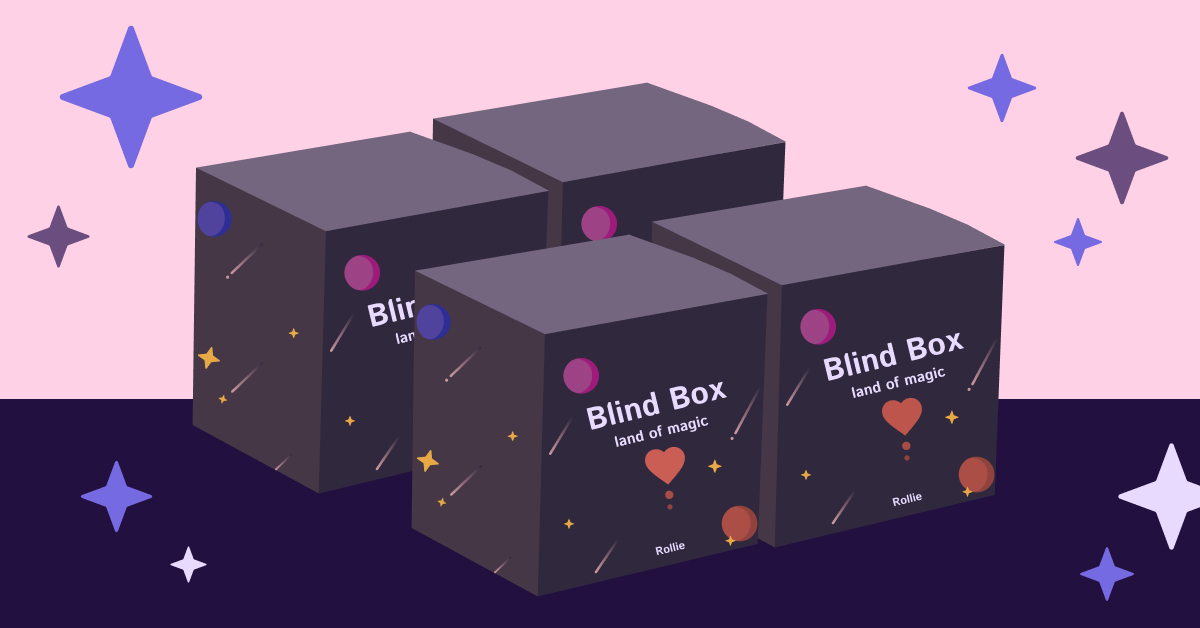
    The first time I heard about what a blind box is, I was skeptical about the appeal. The first blind box I ever got was gifted to me and they came from the Sonny Angel series. I wondered what about these mostly naked babies with their butt cheeks out could be cute and desirable by the masses. Little did I know that this would be the beginning of my blind box figurine collection.

    The idea of blind boxes originated in Japan around the 1980s where the earliest form is called fukubukuro, also known as “lucky bag” (Tse 2023). Blind boxes contain collectable figurines that come packaged in a box where the buyer does not know what character they will receive. The figurine designs are often centered around different themes. Within each theme, there are secret figurines that are rare and there are often less than 1% manufactured out of the entire series (Nguyen 2024). This article explores the psychology behind a consumer’s motive on buying blind boxes and how it makes them feel.  

    Why do people buy blind boxes?

    Places that sell blind boxes often have many options for customers to choose from. Due to the various selections possible, consumers are overwhelmed by curiosity and excitement surrounding which character they could pull. This is one of the biggest incentives for people to want to buy a blind box. When they open the box, they either feel happy for getting what they want or disappointment for getting a duplicate or feeling of wanting to buy another one to test their luck (Nguyen 2024). Consumers often want to obtain secret figurines or complete the series collection, which results in feeling the need to buy more. The act of purchasing a blind box draws upon the concept of sunk cost fallacy, where the amount already spent increases one’s commitment to continue buying until they achieve the desired result (Ronayne 2021). 

    The sunk cost fallacy effect is attributed to high-stakes decisions which can be applied to various scenarios such as the decision on whether to buy a blind box or not. In a research conducted by Harvard on the sunk cost fallacy, participants were tested with eight different scenarios on their decision making. The finding from this was that “those with above average susceptibility scores (10 or higher) were almost three times as likely (36% vs 13%) to fall prey to the effect than those scoring below the average (9 or lower) when money was on the table” (Ronayne 2021). This relates to consumers’ motive for buying blind boxes as the fallacy manifests when they continue buying blind boxes because they’ve already invested money, rather than evaluating each new purchase decision independently. Specific triggers for the sunk cost fallacy in blind box purchases include, trying to complete a collection, attempting to get rare or secret figurines due to its scarcity nature, wanting to “make up for” previous disappointing pulls, and the desire to keep trying after getting duplicates.

    The uncertainty factor in blind boxes is attributed to positive emotion, information gap theory, uncertainty resolution, and innate optimism theory (Zhang 2022). Due to uncertainty in what character the buyer could obtain, it enables a higher arousal state in turn increases physiological arousal. This causes people to experience their emotions more intensely and so positive uncertainty increases consumers’ positive feelings when making purchase decisions (Zhang 2022). In terms of information gap, this theory explores the idea of “an information gap between the known information of a person and the unknown and desired information” (Zhang 2022). As a result, increasing one’s desire to know the information. This ties into the uncertainty resolution theory where “human beings are born with an inherent desire to solve uncertainty” (Zhang 2022). Furthermore, the innate optimism theory enables people to subconsciously perceive themselves as lucky, estimating outcomes optimistically, which drives their motivation to desire or logically believe they need to buy a blind box. These all contribute to consumer’s action and motive behind their purchases as they perceive the product’s value as beneficial. 

    Lastly, blind boxes build anticipation for its consumers. With the combination of uncertainty, dopamine is released when the consumer opens the box. The anticipation and surprise cause the release of dopamine, a neurotransmitter associated with pleasure and reward. Additionally, opening the blind box triggers the brain’s reward circuitry, particularly pathways in the mesolimbic system that generate feelings of reward and enjoyment. (Nguyen 2024). 

    Expansion and Influence

    Not only are consumers driven to buy blind boxes due to the overwhelming nature of displays when shopping in-person, but also the community it builds. Online, social media platforms feature communities dedicated to blind box culture. Collectors share unboxing videos, showcase their finds, and discuss their collections. These platforms allow consumers to connect with others who share their passion. As the popularity of blind boxes continues to rise, companies are finding new ways to innovate within this trend. Some examples are advent calendars or mystery items that come along with purchases, such as cosmetics. It is interesting to see how blind boxes have transformed today, and I’m excited to see how it continues to grow whether that is in popularity, influence, or in design concepts.


    Sources cited

    Nguyen, P. (2024, March 21). What psychological factors influence consumers’ decision about buying blind boxes? Cognitive NeuroEconomics @ UCSD. https://medium.com/cognitive-neuroeconomics/what-psychological-factors-influence-consumers-decision-about-buying-blind-boxes-a3440992273b

    Ronayne, D., Sgroi, D., & Tuckwell, A. (2021, July 15). How susceptible are you to the sunk cost fallacy? Harvard Business Review. https://hbr.org/2021/07/how-susceptible-are-you-to-the-sunk-cost-fallacy

    Tse, A. (2023, March 24). Diving into blind box culture. Generasian. https://generasian.blog/2023/03/24/diving-into-blind-box-culture/

    Zhang, Y., & Zhang, T. (2022). The effect of blind box product uncertainty on consumers’ purchase intention: The mediating role of perceived value and the moderating role of purchase intention. Frontiers in Psychology, 13, 946527. https://doi.org/10.3389/fpsyg.2022.946527


  • Glowing Gels for Clearer Vision: A New Era in Eye Surgery

    Glowing Gels for Clearer Vision: A New Era in Eye Surgery

    In the intricate world of eye surgery, where precision is crucial, researchers are turning to innovative solutions to improve patient safety and outcomes. A recent breakthrough at Johns Hopkins University introduces a “glowing” gel that enhances surgical visibility and reduces the risk of complications. This novel tool, developed at the Wilmer Eye Institute and the Department of Biomedical Engineering, combines fluorescein and hyaluronic acid (a naturally occurring substance in the eye) to create a gel that “lights up” under a specific blue light.

    The glow arises from a reaction between fluorescein, a fluorescent dye widely used in medical diagnostics, and hyaluronic acid. When fluorescein absorbs light from a blue light source, it emits a greenish-yellow glow, a property known as fluorescence. Hyaluronic acid acts as the gel’s base, providing a biocompatible medium that integrates seamlessly into surgical applications. The team at Johns Hopkins optimized the concentration of fluorescein so that the gel would glow brightly without altering its physical properties or interfering with the surgeon’s view of delicate eye structures.

    Eye surgeries, such as cataract removal, often rely on ophthalmic viscosurgical devices (OVDs)—gel-like substances that stabilize the eye during procedures. While OVDs are indispensable, their use comes with challenges. Any gel left behind post-surgery can increase eye pressure, cause irritation, or lead to complications requiring additional intervention. Current techniques to locate and remove residual OVDs depend on the surgeon’s experience and careful observation under white light, which may not always reveal minute amounts of leftover material.

    This new fluorescein-infused gel, dubbed “conjOVD”, addresses this issue by making the gel instantly visible under cobalt blue light (CBL). Surgeons can now detect and remove every trace of the gel before concluding the operation. This innovation could significantly improve surgical outcomes, as even a slight reduction in post-operative complications benefits patients immensely.

    During laboratory tests, the gel demonstrated a unique advantage: it remains clear under normal white light but becomes vividly fluorescent under blue light. This dual property ensures the gel doesn’t obstruct the surgeon’s view during delicate steps of the surgery while enabling precise removal at the end.

    While still in the testing phase, this glowing gel has the potential to become a game-changing addition to surgical toolkits. It reflects a growing trend in combining chemistry, engineering, and medicine to address challenges in modern surgery.

    By improving visibility during operations and reducing risks associated with retained OVD, this tool promises to make eye surgeries quicker, safer, and more effective for patients. As further studies confirm its efficacy, this technology could soon be a standard feature in operating rooms worldwide, bringing in a new era of precision eye care.

    Reference:

    Rocher, Erick E. BS; Eghrari, Allen O. MD, MPH. Fluorescein-conjugated hyaluronic acid enables visualization of retained ophthalmic viscosurgical device in anterior chamber. Journal of Cataract & Refractive Surgery 50(10):p 1058-1064, October 2024. | DOI: 10.1097/j.jcrs.0000000000001503 

  • Why Is Sleep So Important?

    Why Is Sleep So Important?

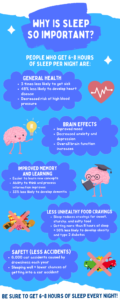
    Many of us are consistently sleep deprived. On average, children need 8-10 hours of sleep per night and adults need 7-9 hours per night (National Heart, Lung, and Blood Institute, 2022). However, many of us get less than the recommended amount of sleep on a consistent basis. Why is sleep so important and what are the benefits of getting enough sleep? This infographic explains the benefits of getting good quality sleep each night.


    Citations:

    1. Aguirre, C. (2015, November 12). What would happen if you didn’t sleep? – Claudia Aguirre. YouTube. https://youtu.be/dqONk48l5vY?si=X8WAdJ3BDkuEeTyx
    2. Finan, P. (2019). The Effects of Sleep Deprivation. Johns Hopkins Medicine Health Library. https://www.hopkinsmedicine.org/health/wellness-and-prevention/the-effects-of-sleep-deprivation
    3. Garbarino, S., Lanteri, P., Bragazzi, N. L., Magnavita, N., & Scoditti, E. (2021). Role of sleep deprivation in immune-related disease risk and outcomes. Communications Biology, 4(1). https://doi.org/10.1038/s42003-021-02825-4
    4. How Much Sleep Kids Need. (2024, June 4). Cleveland Clinic. https://health.clevelandclinic.org/recommended-amount-of-sleep-for-children
    5. Liew, S. C., & Aung, T. (2020). Sleep deprivation and its association with diseases- a review. Sleep Medicine, 77. https://doi.org/10.1016/j.sleep.2020.07.048
    6. National Heart, Lung, and Blood Institute. (2022, March 24). How Sleep Works – How Much Sleep Is Enough? | NHLBI, NIH. Www.nhlbi.nih.gov. https://www.nhlbi.nih.gov/health/sleep/how-much-sleep
    7. Papatriantafyllou, E., Efthymiou, D., Zoumbaneas, E., Popescu, C. A., & Vassilopoulou, E. (2022). Sleep Deprivation: Effects on Weight Loss and Weight Loss Maintenance. Nutrients, 14(8), 1549. https://doi.org/10.3390/nu14081549
    8. Tomaso, C. C., Johnson, A. B., & Nelson, T. D. (2020). The Effect of Sleep Deprivation and Restriction on Mood, Emotion, and Emotion Regulation: Three Meta-Analyses in One. Sleep, 44(6). https://doi.org/10.1093/sleep/zsaa289
    9. You, I. (2013, September 22). What If You Stopped Sleeping? YouTube. https://youtu.be/nNhDkKAvxFk?si=bTGL9bxLfCqiwnnu
  • Computational Neuroscience Infographic

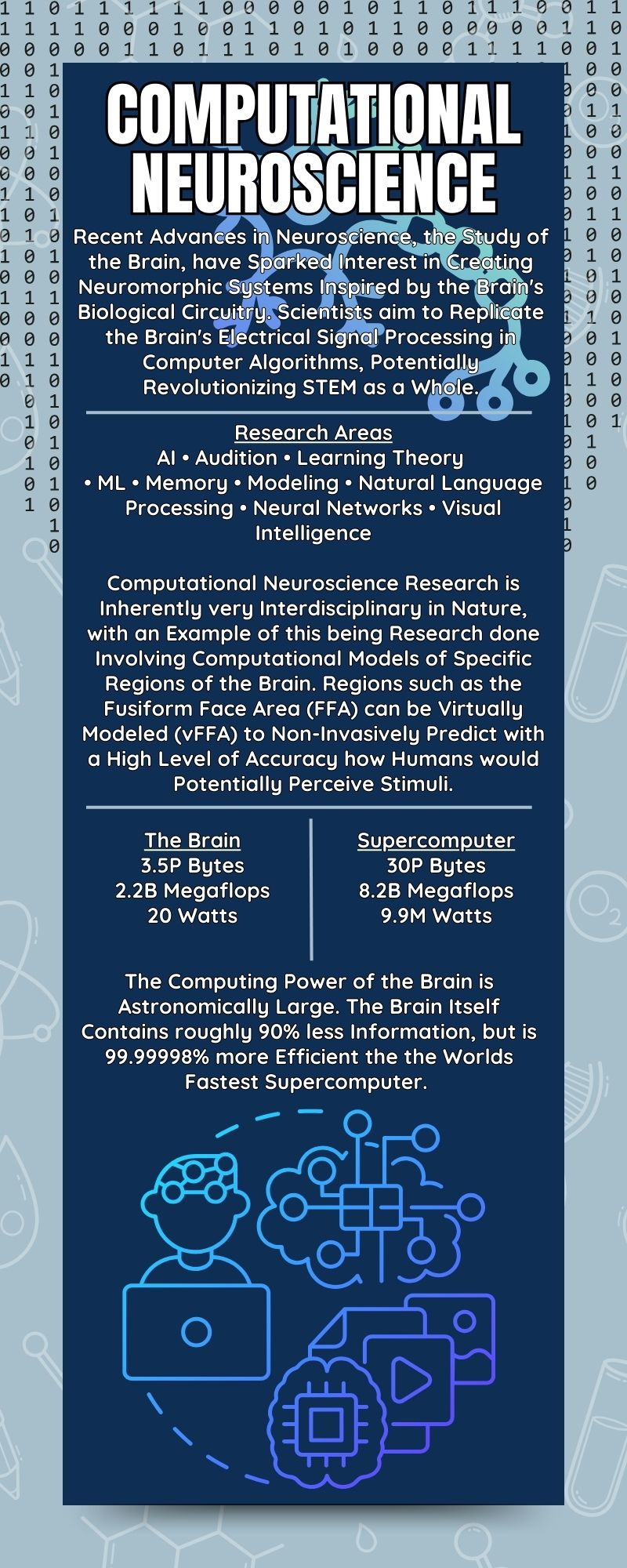
    Computational Neuroscience Infographic


    References

    DiCarlo, J., Fedorenko, E., Fiete, I., Gosh, S., Harnett, M., Jazayeri, M., Kanwisher, N., McDermott, J., Poggio, T., Saxe, R., & Seethapathi, N. (2024, September 12). Computational neuroscience. MIT McGovern Institute. https://mcgovern.mit.edu/research-areas/computational-neuroscience/

    Michael Douglas, A., Vulisa Q, C., Vigneshwaran, J., Dineva, B., Tsai, Y.-L., de Planque, T., Opanga, P., Verena Rentschler, C., & Wang, J. (n.d.). Big Data: Computer vs. human brain: MS&E 238 blog. MSE 238 Blog Big data Computer vs Human Brain Comments. https://mse238blog.stanford.edu/2017/07/teun/big-data-computer-vs-human-brain/

    Murty, A. R. (n.d.). The murty lab: Georgia tech. MurtyLab. https://www.murtylab.com/

    U.S. Department of Health and Human Services. (n.d.). Infographic: Why do we study neuroscience?. Eunice Kennedy Shriver National Institute of Child Health and Human Development. https://www.nichd.nih.gov/newsroom/digital-media/infographics/neuroscience 

  • What Organelle Are You Based on Your Favorite 2000s Movie?

    What Organelle Are You Based on Your Favorite 2000s Movie?

    Have you ever wondered what organelle you’d be in a cell? Just like characters in iconic 2000s movies, organelles have unique roles that contribute to the cell’s life story. Take a look at the movies below and find out which one matches your style. From managing all the work in the cell like “The Devil Wears Prada,” to keeping everyone energized like “The Incredibles,” here’s your ultimate guide!

    1. Mean Girls (2004) – Nucleus

    Quote: “That’s why her hair is so big; it’s full of secrets.”

    If Mean Girls is your jam, you’re definitely the Nucleus. Just like Regina George, you’re the center of attention, calling the shots and directing everyone around you. The nucleus is where all the DNA is stored, holding the key to the cell’s identity and future. Just as Regina’s word determines who’s “in” or “out,” the nucleus controls which genes are expressed, setting the tone for everything the cell does.

    1. The Devil Wears Prada (2006) – Endoplasmic Reticulum (ER)

    Quote: “Details of your incompetence do not interest me.”

    Love The Devil Wears Prada? Then you might be the Endoplasmic Reticulum (ER)! Like Miranda Priestly’s finely tuned office, the ER is responsible for protein and lipid synthesis, making sure everything runs smoothly. The rough ER even has ribosomes attached—just like Miranda has assistants—to help with the workload. Your organizational skills are unmatched, and everyone in the cell (or office) depends on you to get things done.

    1. Finding Nemo (2003) – Mitochondria

    Quote: “Just keep swimming!”

    If Finding Nemo is your favorite 2000s movie, you’re definitely the Mitochondria! Known as the powerhouse of the cell, the mitochondria provide energy, keeping everyone going, just like Dory’s endless optimism. You’re always there to keep things running smoothly, and you don’t give up, even when the current gets strong. Adventure and resilience are your strong suits—just like Dory’s!

    1. The Incredibles (2004) – Golgi Apparatus

    Quote: “We get there when we get there!”

    Fans of The Incredibles are a perfect fit for the Golgi Apparatus. This organelle sorts, packages, and ships proteins to their final destinations, making it just as dependable and versatile as the Parr family. You’re all about teamwork and keeping everything organized, just like how Mr. Incredible and Elastigirl manage their superhero family. Plus, you know how to handle the pressure of saving the day (or cell).

    1. Pirates of the Caribbean: The Curse of the Black Pearl (2003) – Lysosome

    Quote: “You best start believing in ghost stories, Miss Turner… you’re in one!”

    If you’re a Pirates of the Caribbean fan, you’re the Lysosome! The lysosome’s job is to break down waste and unwanted material, a bit like Captain Jack Sparrow sailing through rough seas and obstacles. Just as Jack finds clever ways to solve problems, the lysosome is like the cell’s cleanup crew, digesting whatever needs breaking down. You thrive in chaos and love a good challenge, no matter how messy things get.

    1. Shrek (2001) – Cell Membrane

    Quote: “Ogres are like onions; they have layers.”

    If you’re a Shrek fan, you’re the Cell Membrane. Like Shrek’s swamp, the cell membrane has layers and acts as a boundary, deciding what can come in and out. It keeps the cell safe, much like Shrek’s protective nature, and is essential for maintaining stability. You’re a no-nonsense protector who values boundaries and has no problem saying, “This is my swamp!”

    1. Legally Blonde (2001) – Ribosome

    Quote: “What, like it’s hard?”

    If you love Legally Blonde, you’re definitely the Ribosome. The ribosome is the site of protein synthesis, which means it’s constantly producing new things, just like Elle Woods is always working toward her goals. No challenge is too big for you, and you can handle multitasking like a pro. You’re both hard-working and underestimated, always ready to prove yourself with a “bend and snap!”

    1. High School Musical (2006) – Cytoplasm

    Quote: “We’re all in this together!”

    If High School Musical is your top pick, you’re the Cytoplasm. The cytoplasm is like the cell’s main environment, where everything happens. It supports the organelles, keeps everyone connected, and ensures that the cell is functioning properly. Just like the Wildcats, you’re all about teamwork and unity, providing a safe space for everyone to thrive. Your mantra? We’re all in this together!

    Each organelle has a role to play, just like each character in a classic 2000s movie. So, which organelle are you?

  • Noses Know: The Fragrant Connection to Our Memories

    Noses Know: The Fragrant Connection to Our Memories


    https://unsplash.com/photos/macro-shot-of-yellow-flowers-t0ZfzT8FopE

    Imagine walking into a café and being instantly transported back to your childhood—an aroma of freshly baked cookies, a hint of vanilla, and suddenly you’re twelve years old again, standing in your grandmother’s kitchen. This is the power of our sense of smell, intricately woven into the fabric of our memories.

    When we think of our senses, vision and hearing often take center stage. However, the olfactory system, responsible for our sense of smell, has a unique and profound influence on our memories and emotions. Let’s dive into how this remarkable connection works and why it matters in our daily lives.

    Did you know that the olfactory bulb, which processes smells, is directly linked to the amygdala and hippocampus—two brain areas critical for emotion and memory? This direct pathway is why certain scents can trigger vivid memories, often laden with strong feelings. It’s no wonder that many people report memories associated with particular smells more clearly than those tied to sights or sounds.

    Research shows that our brains are wired to associate smells with experiences and emotions. A study found that when participants were exposed to specific odors, they recalled personal memories more easily than when presented with neutral cues. This phenomenon, often referred to as “Proustian memory,” named after the famous writer Marcel Proust, illustrates how a single scent can unlock a floodgate of memories. You might find that a whiff of a certain perfume brings back a memory of a special person or event.

    The olfactory system doesn’t just process these smells; it helps encode them into our memory. When you inhale an odor, the olfactory receptors send signals to the brain, activating areas responsible for memory and emotion. This process allows us to remember not just the smell itself but the context in which we experienced it. The interplay of memory and emotion creates rich, vivid recollections that can be both comforting and nostalgic.

    Understanding the link between smell and memory has real-world implications, especially in therapeutic settings. For example, reminiscence therapy often employs familiar scents to help evoke memories in individuals with dementia or Alzheimer’s disease. Kodak, for instance, recently released “memory shots” to allow users to create AI images of memories. This triggers memories in people who have neurodegenerative conditions, which can reduce anxiety, stress, and depression. By harnessing the power of smell, caregivers can help patients reconnect with their past and enhance their quality of life. 

    Additionally, olfactory training—exposing individuals to various scents—can aid those with olfactory dysfunction, potentially improving memory recall and overall well-being.

    The olfactory system is a fascinating aspect of human biology that serves as a bridge between our senses and our memories. As college students navigating a whirlwind of experiences, being aware of how smells can evoke memories may help us savor the present while honoring our past. So next time you catch a whiff of something familiar, take a moment to reflect—what memories does it awaken for you?

    References:

    Bohbot, V. D. (2022, May 18). What smells tell us about our memories. Nature. https://www.nature.com/articles/d41586-022-01626-x

    Hummel, T., Whitcroft, K., Fjaeldstad, A. W., et al. (2011). Olfactory dysfunction and its consequences for quality of life. International Journal of Otolaryngology, 2011, 1-9.

    Fischer, K. (2024, October 7). Kodak launches reminiscence therapy tool for people with dementia. McKnight’s Long-Term Care News. https://www.mcknights.com/news/kodak-launches-reminiscence-therapy-tool-for-people-with-dementia/

    Li, W., Zheng, F., & Hu, Y. (2010). Odor-evoked fMRI responses in the human brain: A review. Neuroscience & Biobehavioral Reviews, 34(8), 1204-1216.

    Renaud, M. (2020, February 25). How scent, emotion, and memory are intertwined—and exploited. Harvard Gazette. https://news.harvard.edu/gazette/story/2020/02/how-scent-emotion-and-memory-are-intertwined-and-exploited/

    Wang, Q., Li, Q., & Li, J. (2020). Olfactory and memory: A review of studies from the 20th century to the present. Frontiers in Psychology, 11, 577823.