Category: DIY

science activities you can do at home, science crafts, scientist favorite recipes, science travel, fashion and beauty science, science art, mods

  • The Alien Equation

    The Alien Equation

    Throughout history, humanity’s view of the universe has changed drastically. For a long time, people believed that the Earth was all there was, with a dome high above it that had pinpricks they called stars. Later, they believed the solar system was the extent of the universe. Then that view expanded to the galaxy as we realized the pinpricks were actually other suns. Now, we believe there is a universe beyond even what we can observe, with other galaxies than our own populating space. When our understanding of the universe allowed us to understand that other stars exist, there began to be questions of extraterrestrial life around other stars and whether we on earth could somehow communicate with it. In the 1960’s, a man named Frank Drake wrote a book exploring the chances of life on other planets that was intelligent and capable of communicating with Earth in our galaxy. The book lead to an equation that expresses this chance numerically:

    N = R * f(g) * f(p) * n(e) * f(l) * f(i) * f(c) * L

    This equation has many terms that are not able to be calculated exactly, but they do lay extremely good groundwork for an estimate of intelligent, communicative life. This equation got experts talking about what they thought the odds for life in the universe could be and helped encourage the search for extraterrestrial life. This equation is also really easy to use to develop your own guess on the chances of extraterrestrial life. Breaking down this equation, there are three categories the values can be put into based on what factors they relate to. 


    Astronomically Based Values

    The first three values in the equation are values that are gained from observing the galaxy. They are astrophysical values that, with our current scientific capabilities, are reasonable to calculate somewhat accurately. The first value, R, is the rate of star formation in the galaxy. It can alternatively be the number of stars estimated to be in the galaxy. It is the starting point of the equation, as most of the other terms are fractions that whittle this value smaller and smaller as the criteria gets more specific. The current estimate of stars in the galaxy is between 100 and 400 billion stars. The second value, f(g), is an estimate of how many stars in the galaxy are suitable for hosting planets with life. Stars that can host planets with life must be long living and steady stars and they cannot have large fluctuations in temperatures and intensity. This value is currently estimated to be between 5 and 10 percent, meaning .05 to .1 for use in the equation The third value, f(p), is a measure of how many of those suitable stars actually have planetary systems. For example, stars that are in binary systems are thought to very rarely host planetary systems. This value is often estimated at about .5, as about 50% of star systems are binaries or multistar systems and the other 50% are single stars. 


    Biologically Based Values

    The next three values of the Drake equation are based on biological factors with life. The first one, n(e), is how many planets per star system are suitable for life. This mainly means how many planets are in the habitable zone of a star. The habitable zone is the distance from a star where planets can have water in all three phases, solid, liquid, and gas. The value to plug into the question can be found by taking your estimate of the number of planets in the habitable zone and dividing it by the estimated total number of planets in the system. For a system like our solar system, this would be .125. The next value, f(l), is the fraction of planets in the habitable zone that will actually have life form. This is where the values in the equation begin to vary greatly from person to person. Some people argue that if life can form it will and put this value at 1. Others argue that life is extremely rare to happen, putting the value closer to .001, or even smaller. Since we have so little understanding of how life started on Earth, it is hard to estimate its rarity in other places.  The final value, f(i), is the fraction of cases in which life develops intelligence. Once again, this is a controversial value to choose. Currently, we don’t know if life always evolves to intelligence. It can be argued that we did, so why wouldn’t other planets? However there have also been millions of species on our planet, and only one has evolved to our level of intelligence: humans. With those odds, intelligence seems rare. 


    Sociological Based Values

    The last two values of the Drake equation are sociological factors. The first one, f(c), is the number of intelligent races that have the technological capability and desire to try and communicate with other species. An example of this coming into play may be with an intelligent species that lives underwater. It would be difficult, if not impossible, for them to invent electronic devices like ours, and things like radio telescopes to communicate with might never be designed by them. Experts tend to estimate this as a fairly large value because it is thought by many that upon developing intelligence, a species will continually improve their technology. This is believed to always lead to communication technology in the process. The exception to this are species that face rare environmental factors that dissuade the invention of specific types of technologies, such as the underwater species example. The last value, L, is the lifetime of a civilization. This is as simple as it sounds. This value is necessary because we live so far from other planets that it would take a very long time to communicate with them. The very long time it takes to send a message means there needs to be long standing civilizations to continue any conversations, otherwise they would not be able to truly communicate with us. This value is often estimated to be between 1,000 and 100,000,000 years. 


    Concluding Thoughts

    Current estimates of the value calculated from the Drake equation range from as low as .00000000000091 to 15,600,000 planets that host intelligent, communicative life. The value can be much larger or lower than this as well, but there is no “correct” answer. You can find your own solution by plugging in values that you think are true. All you have to do is start with the number of stars in the galaxy and fill in what fractions you believe fit for the other values, and choose a lifetime to use. If your answer is greater than 1, your chosen parameters suggest that life exists elsewhere in our galaxy. However, if your answer is less than 1, your parameters suggest that we are likely alone in the galaxy. As long as you can give a reason for the values you chose, you have created your own theory for life in the universe.


    Burchell, M. (2006). W(h)ither the Drake equation? International Journal of Astrobiology, 5(3), 243-250. doi:10.1017/S1473550406003107

    Drake, F.; Sobel, D. (1992). Is Anyone Out There? The Scientific Search for Extraterrestrial Intelligence. Delta. pp. 55–62. ISBN 0-385-31122-2.
  • A Cosmological Experiment

    A Cosmological Experiment

    This is an experiment that you can do yourself to learn a bit about how scientists think the universe became as large as it is. All you will need is a balloon and a marker. Alternatively, you can treat it as a thought experiment!

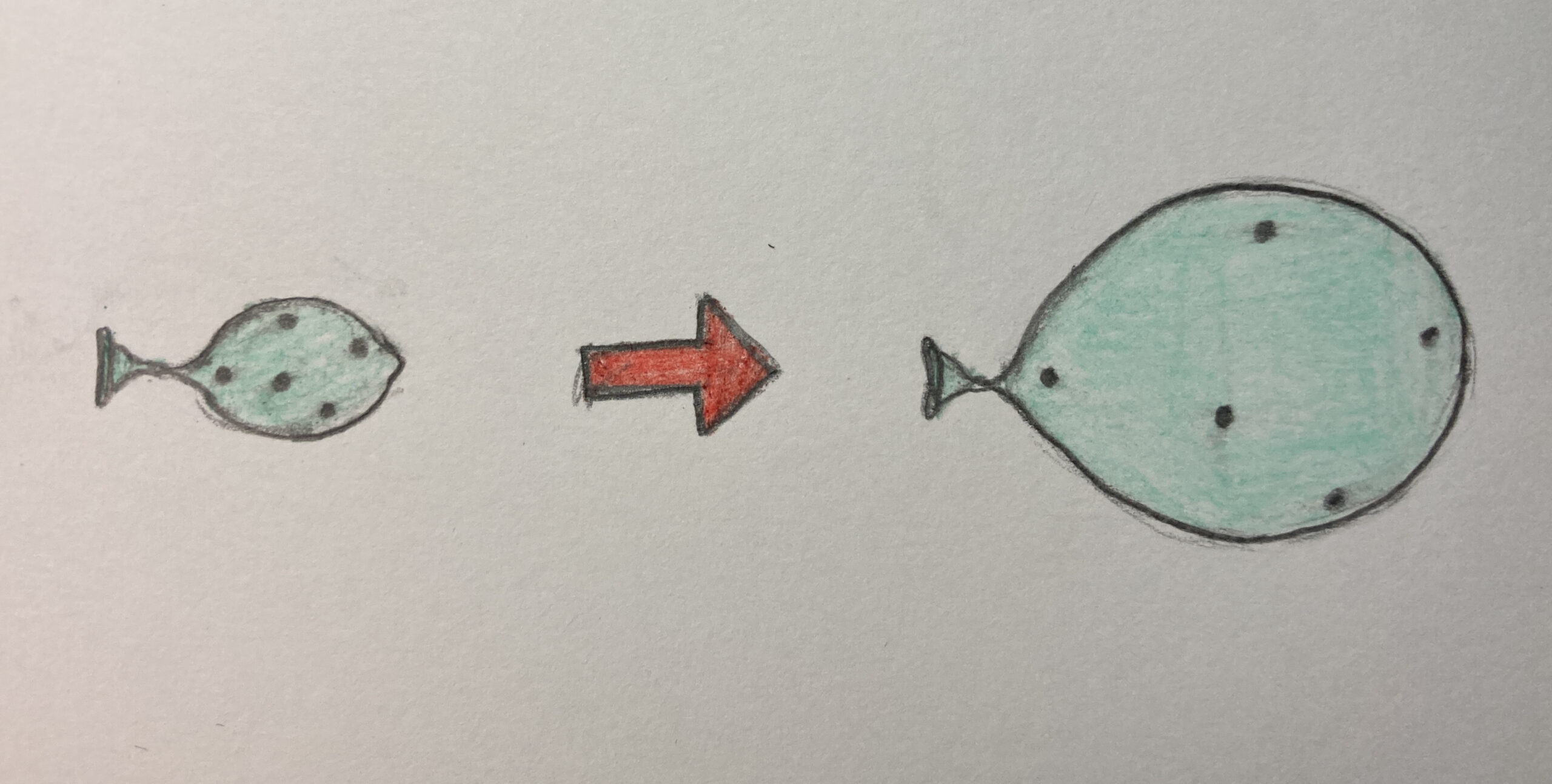
    The first step is to take your balloon and blow it up just so it holds a circular shape and then block the air off. This balloon is going to represent spacetime. Spacetime is what matter resides on. Using a marker, draw some dots on your balloon. This is our matter. 

    All together, this balloon and the dots are going to represent the very early universe. When the universe was very young, it was still condensed very close together. Matter was moving away from each other, but it could not travel faster than the speed of light. What this would imply to our universe today is that the amount of the universe we can see, is all there is to see. But scientists don’t believe that this is true. Instead, they think spacetime shows us a different way of getting a large universe. 

    Partially blown up balloon vs fully blown up balloon.

    Take note of the distance between the dots on your balloon. Maybe pick out two favorites to measure specifically, then blow up your balloon as much as you can. Observe the distances between your dots now. They are much farther away than they were before, right? Take a close look at the dots though, they have not moved from their original position on the balloon. The balloon itself has expanded, but the dots stayed in one place. This shows your matter’s position on spacetime has not moved, but rather spacetime itself has expanded. 

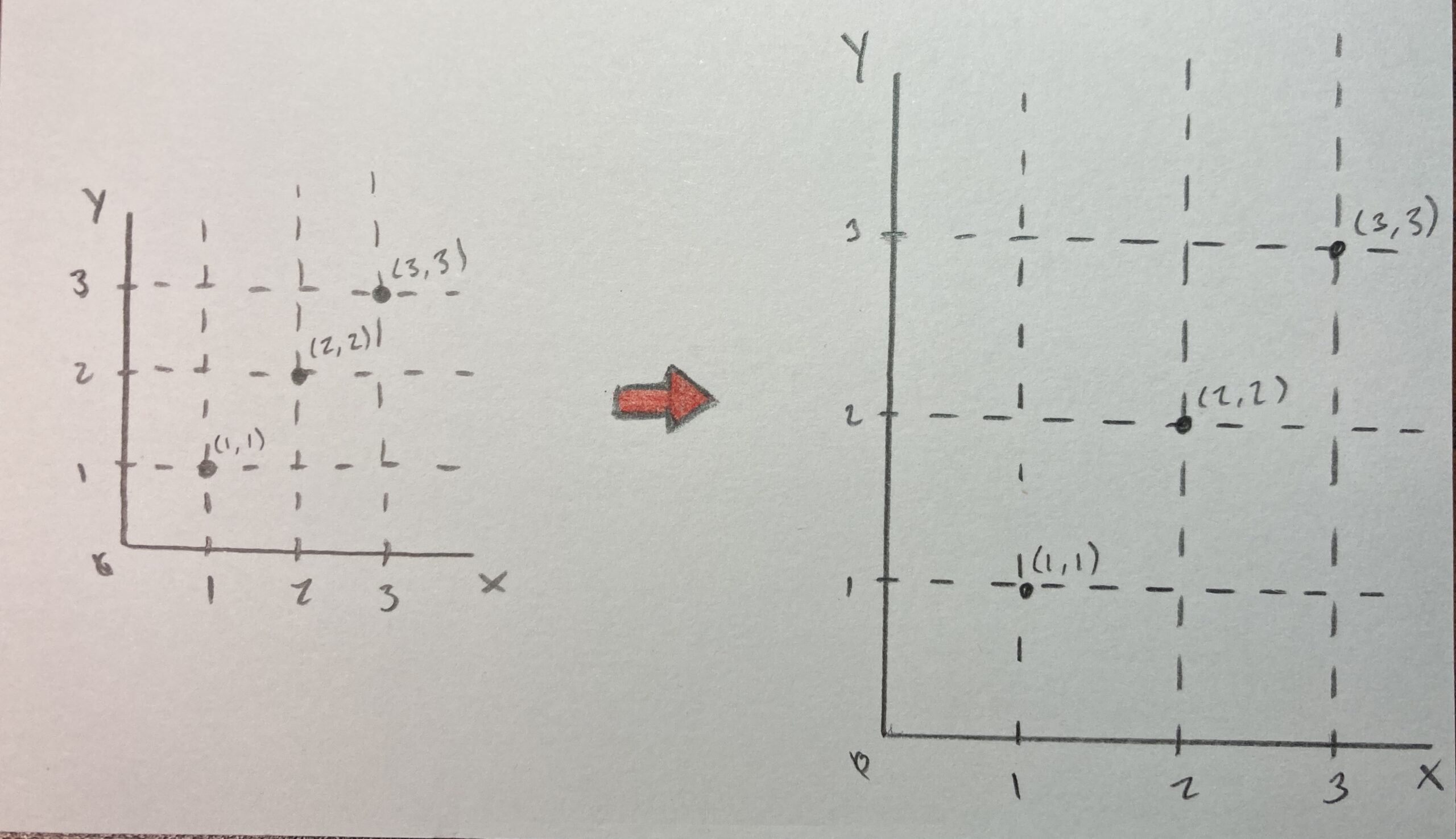
    This stretching of the balloon that leaves the dots in the same position is a simple way to visualize what cosmologists call the “Inflationary Theory”. This is a theory for how the universe was formed. It says that after the initial Big Bang at the beginning of time, there was a very short amount of time in which spacetime inflated to be much much larger than it was to start. Since spacetime is not matter, it can move faster than light without breaking any laws of physics. This made the matter end up far from other matter, but still technically in the same position on spacetime. Think of spacetime as a coordinate grid and matter is on it. This inflation caused the space between the grid lines to get larger, but the matter didn’t move from its position on the grid. 

    The expansion of spacetime modeled as a coordinate grid.

    What this means for us now ultimately is that the universe is much larger than what we can see on Earth. This is why we differentiate between the observable universe and the entire universe. The observable universe has a radius that correlates with the age of the universe. This is because light has been traveling constantly since the beginning of time so the farthest light we can see took the entire universe’s lifetime to reach us. Outside of the observable universe though, there is more of the universe that we can’t see, caused by this early inflation of spacetime when the universe was created. 


    Sowell, James. (2021). Early Universe [Powerpoint Slides]. Retrieved from Georgia Institute of Technology PHYS 2022 Canvas site.

    Tsujikawa, S. (2003). Introductory review of cosmic inflation. arXiv preprint hep-ph/0304257.

  • How much do you know about RSA Cryptography?

    How much do you know about RSA Cryptography?

    Whether you’re browsing TikTok, Instagram, or scrolling through random Wikipedia articles, do you ever wonder if your internet browsing is secure? Probably not – but that’s okay! The world can peacefully rely on the wonders of mathematics to keep their data and internet browsing safe from peeking eyes. In fact, the entire safety of the internet primarily relies on a single mathematical algorithm to secure it all, ranging from state secrets in secret government databases – which are probably all about UFOs – to your grandmother’s email account. This algorithm was first developed in 1977; it’s so powerful that it still remains the primary public cryptographic algorithm today! It’s called the Rivest-Shamir-Adleman (RSA) cryptosystem.

    Background

    Developed in 1977 from a paper released by Ron Rivest, Adi Shamir, and Leonard Adleman, while they were at the Massachusetts Institute of Technology, RSA quickly became adapted to securing digital communication because of its robust mathematical properties that makes it virtually impossible to break.

    Interestingly, the actual mathematics behind the RSA cryptosystem is rather simple. It’s based on the idea of prime factorization – it’s really easy to find the prime factors for a small number but becomes much harder as the numbers grow. For example, if I ask you to give me the two prime factors that multiply together to give the number 15, you would probably answer really quickly with “3 and 5”. Easy, right? Now, without a calculator, what if I asked you to give me the prime factorization for the number 414,863? You would answer with “577 and 719” right away, right? Unless you’re a super math genius or a human calculator, probably not.

    Implementation Idea

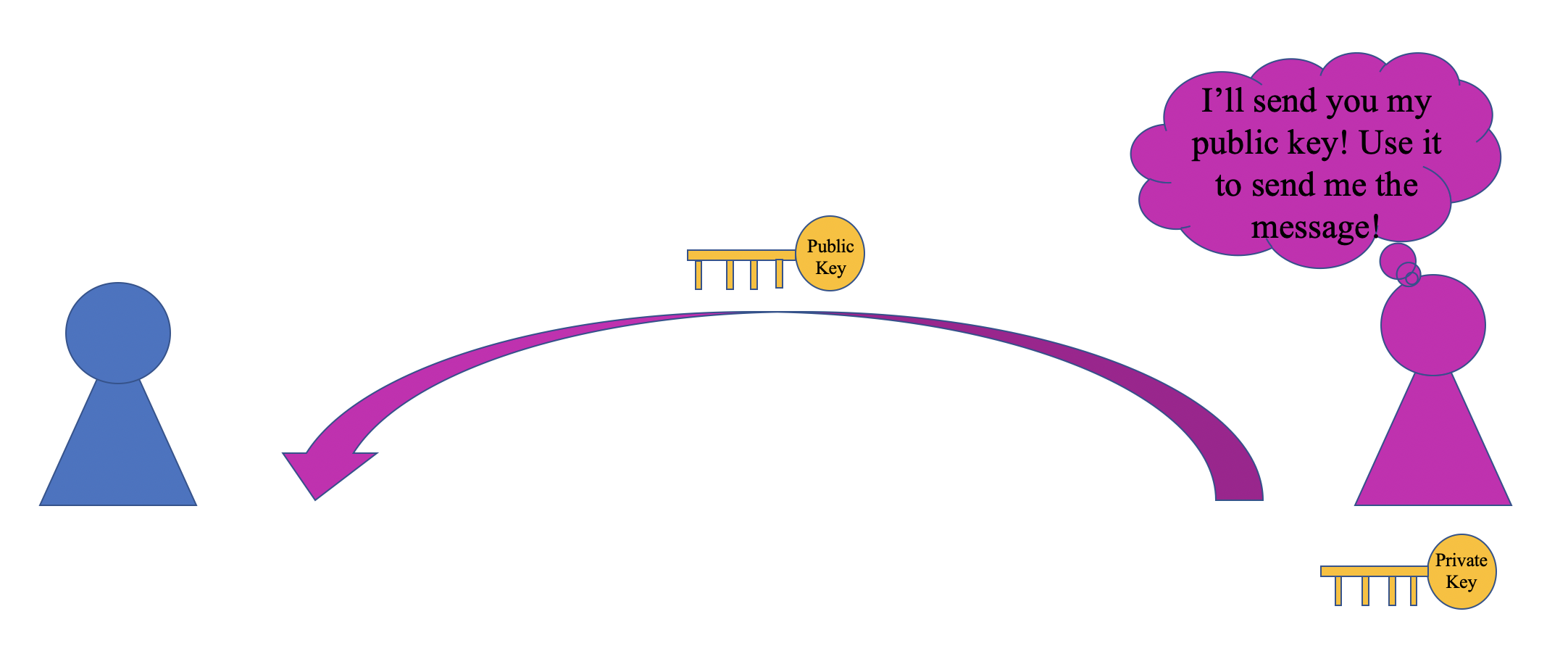
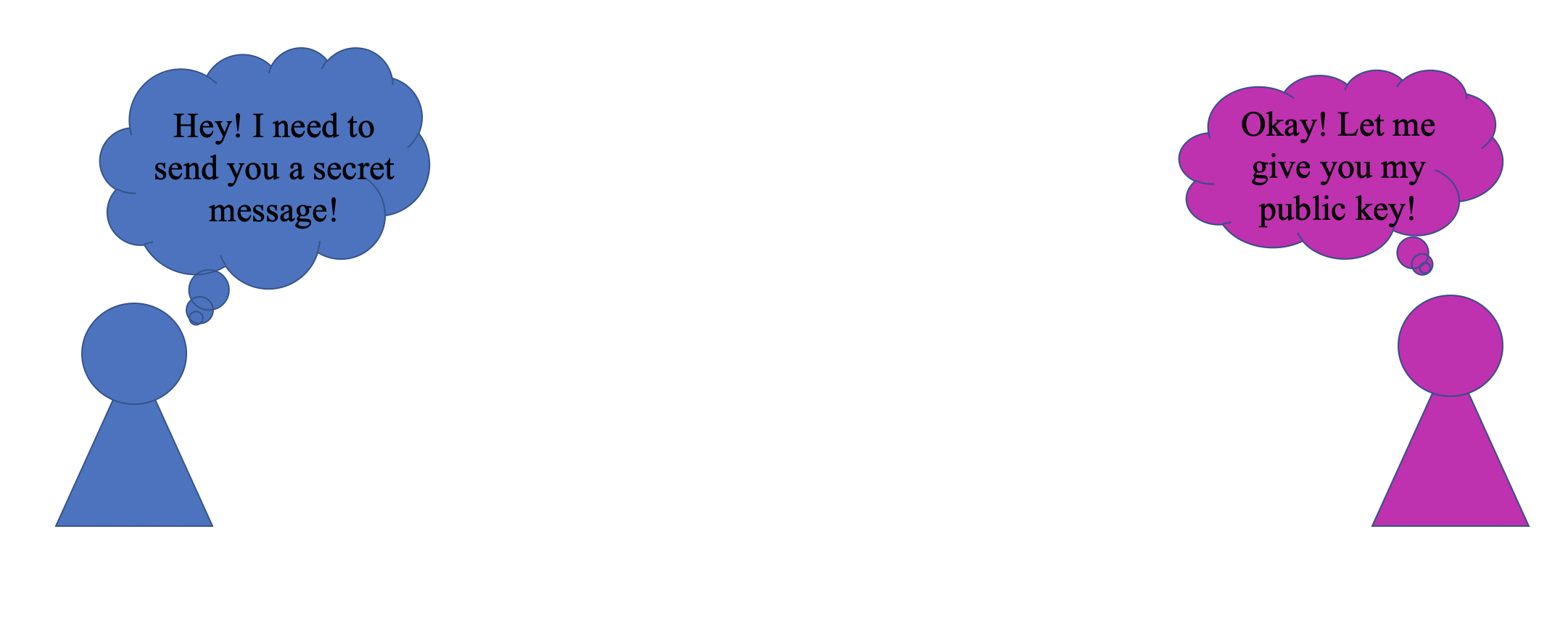
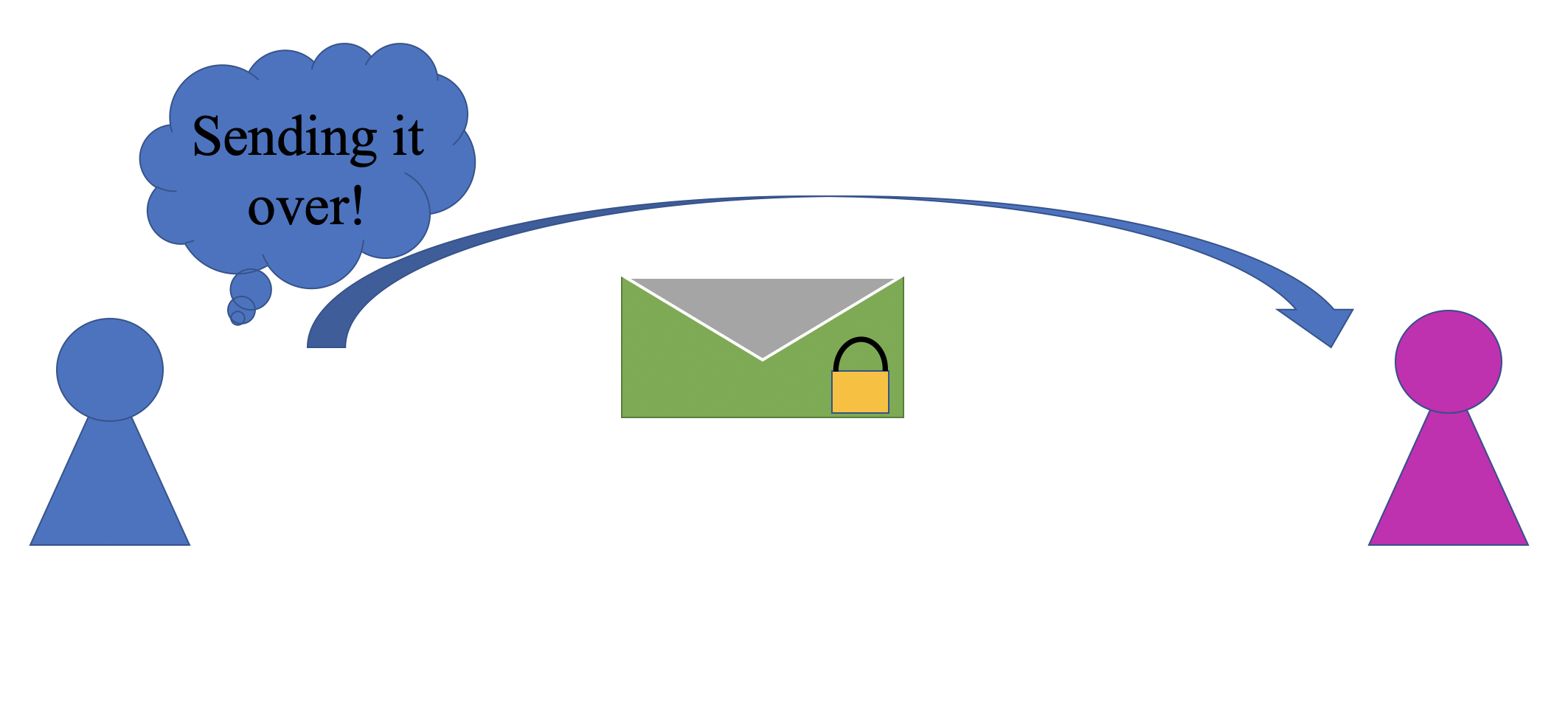
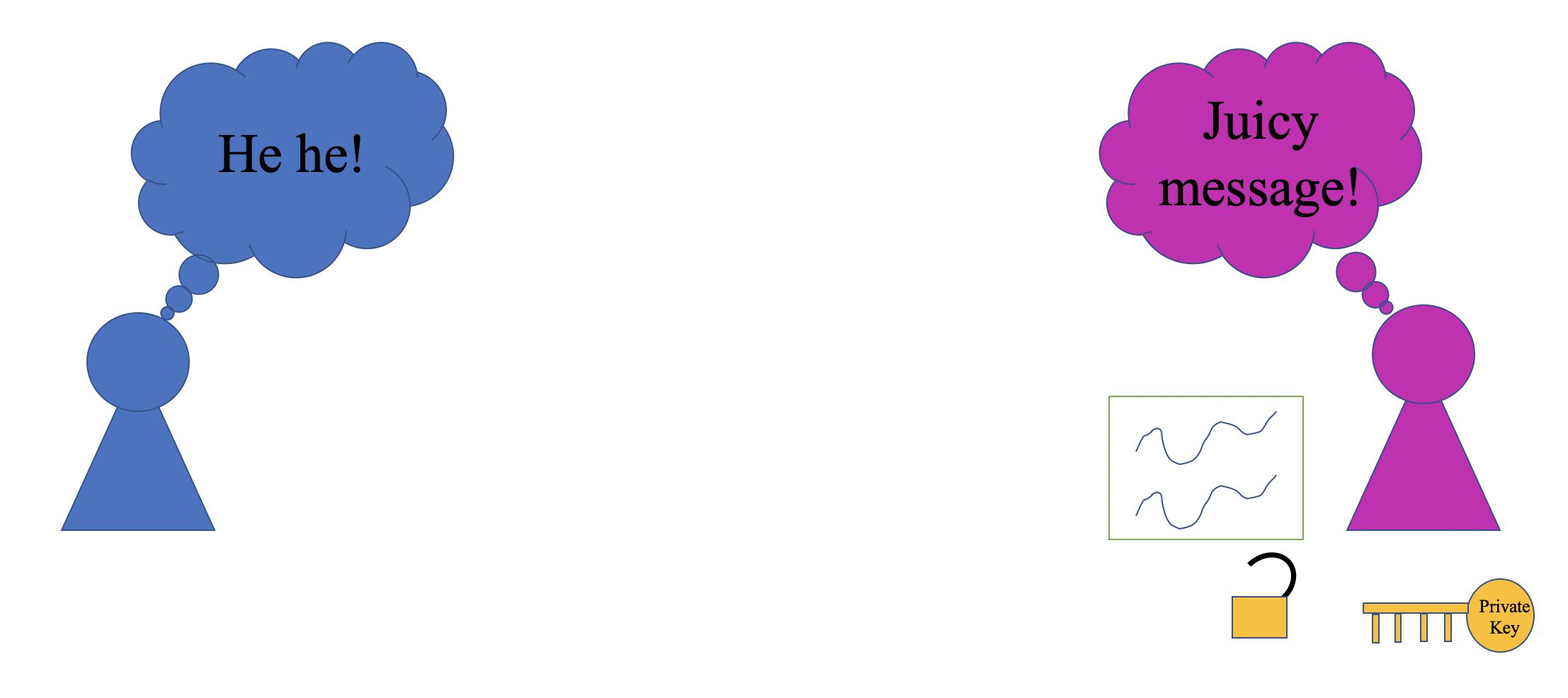
    The actual RSA algorithm is used in public-key cryptography, which is the process that secures data over the internet. It’s a complicated process but the basic idea is this: if Alice wants to send Bob a secret gift, Bob can send her a padlock that only he has the key to. Then, Alice can put her gift in a box and lock it with Bob’s padlock. Then, when Alice sends her package, if anyone tries to steal the gift, they can’t because only Bob has the key. Once Bob receives his gift, all he has to do is unlock the padlock that he gave to Alice. The padlock that Bob gave to Alice is called Bob’s public key, while the key that only Bob has is his private key.

    In the real world, if my friend wants to send me a message, I will give them my public key (which is basically just a really large number). They can then use my public key to encrypt, or hide, the message. Then, in transit, the message is completely safe because I’m the only person that holds the key that decrypts, or unlocks, the message. The only tricky part about the process is making keys that are not able to be broken.

    The Magic Behind It All

    The RSA algorithm is responsible for creating the public and private keys. To create the actual keys, RSA relies on some basic math: modular arithmetic, Euler’s Theorem, and prime numbers.

    To create my public key that I can give to anyone who wants to send me secrets, I do two things:

    • First, I will choose two very large prime numbers, p and q. The multiplication of these two numbers, x = pq, is the first half of the key. The key take-away in this first portion is that the longer that x is, the more secure your key will be. As of 2020 practices, a length of 4096 bits (or characters) is recommended!
    • Then, I calculate another number y by multiplying from the following: y = (p-1)(q-1). From here, I choose a number that is relatively prime to y and call it e. If you don’t recall what it means for two numbers to be relatively prime, it just means that two numbers have a greatest common divisor of 1. In practice, e is typically chosen to be 65,537 – e then becomes the other half of my public key.

    Now, to create my private key that no one else knows about, I use modular arithmetic. If you’re not familiar with modular arithmetic, think of it as the remainder produced after dividing a small number into a big number – for example, 10 modulo 3 = 1 because 3*3 is 9, which leaves us with 1 left over. To create my private key, I calculate the modular inverse of the second half of my public key with the first half of my public key, e modulo x. That’s it! I have my private key! Now I can share my public key with friends, and they can share juicy, secret memes with me without the fear of someone else seeing!

    Convinced?

    What makes RSA so robust and secure is that, even as computers gain more processing power and become faster, all we have to do is increase the length of the key! Think about how fast and powerful our current computers are: our computers are solving problems in astrophysics, mathematics, and are beginning to become ubiquitous in controlling cars. Even with how advanced technology currently is, if someone uses a 4096-bit RSA key, it would take tens of thousands of years for computer to break the code! And even when that’s broken, all we have to do is increase the number of bits in the RSA key and it’s secure for another few thousand years or so!

    If you’re not convinced by how amazing (and even basic) cryptography is, then I don’t think you’re someone who can be easily impressed!

    The Process in Pictures

    If you prefer pictures, here is a simple illustration of the process above:

    Step 1:

    Step 2:

    Step 3:

    Step 4:

    Step 5:

    Step 6:

  • Trees in Computer Science?!?!

    Trees in Computer Science?!?!

    In computer science, there are many ways to organize data to be used effectively. These many ways are called Data Structures. Of the many data structures, there are data structures that are hierarchical in which the data is organized into a tree-like structure. A specific tree data structure that will be taught is a Binary Search Tree.

    In order to learn draw a Binary Search Tree, one must be able to learn the basic things that will help understand.

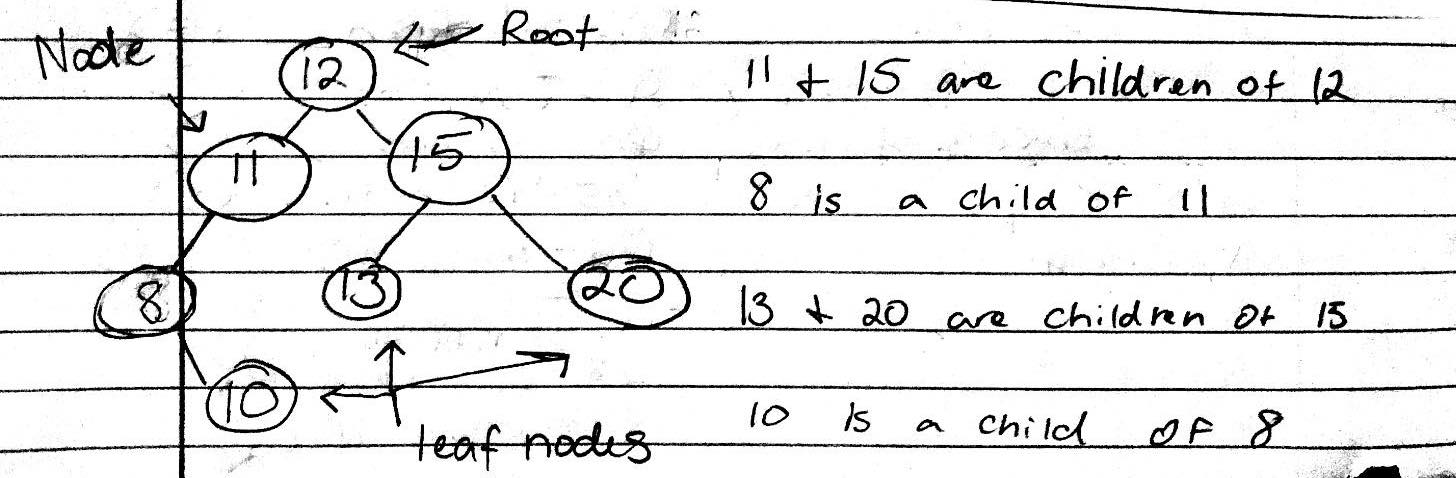
    A binary search tree is similar to a family tree in a way. Before we begin, lets learn about the different terms that will be useful in understanding.

    Node – a single place where data is.

    Children – the data linked and below another piece of data

    Root – the highest point of data

    Leaf – the data at the ends

    The nodes, root, leaf nodes, and children in a BST


    Now that you know the basics, lets learn specific topics that help understand the different forms of a tree.


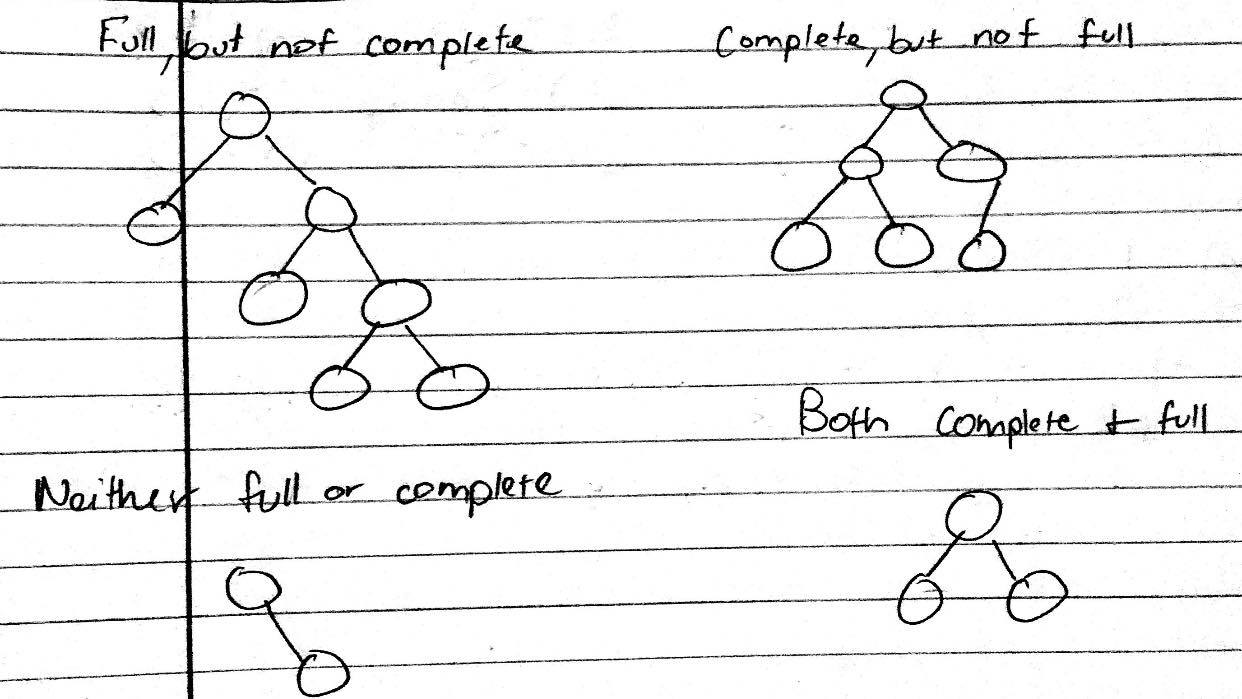
    Full –every node

    other than the leaves has two children

    Complete – every level, except possibly the last, is completely filled, and all nodes are as far left as possible

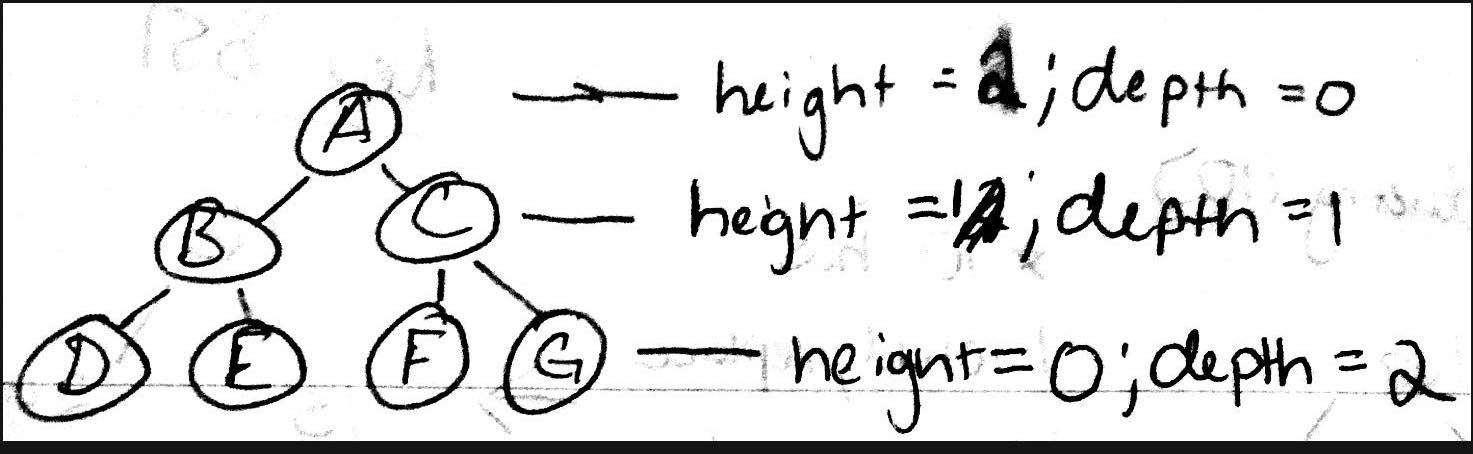
    Height- the longest path from the root node to a leaf node

    Depth – number of edges from the specific node from the root node

    These are different forms of a tree.
    This shows the height and depth of a tree


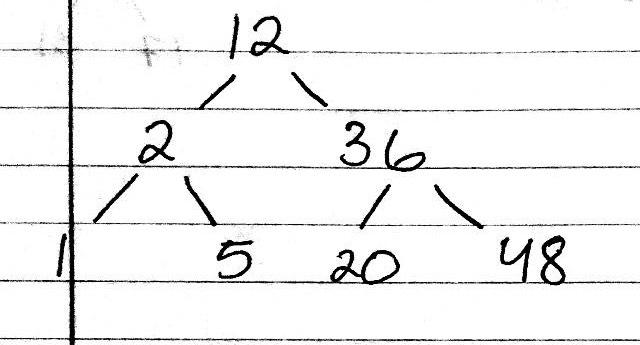
    A binary search tree is a binary tree in which the nodes have a value that is greater than all values in its left subtree and smaller than all values in its right subtree.

    This is how a BST looks like


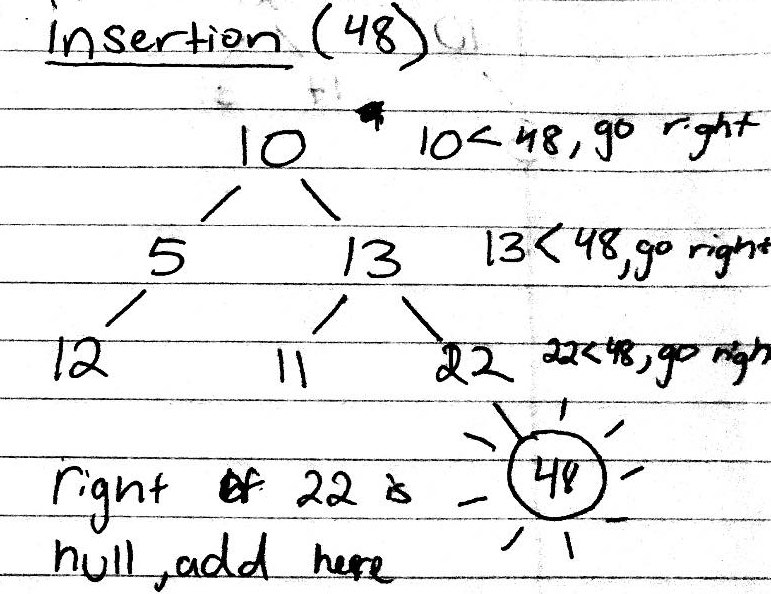
    In order to insert to a BST, you start from the root of the tree and check if the value is greater than or less than that value and if it is greater than the value, then you go to the right and check again if it is greater than or less than the value and so on and so forth until you get to the end where you add that value to the tree.

    This is how to insert data into a BST


    Deleting a node in BST

    When deleting a node within a BST, there are many considerations to check for. The first thing to check is to see if the specific node has any children.

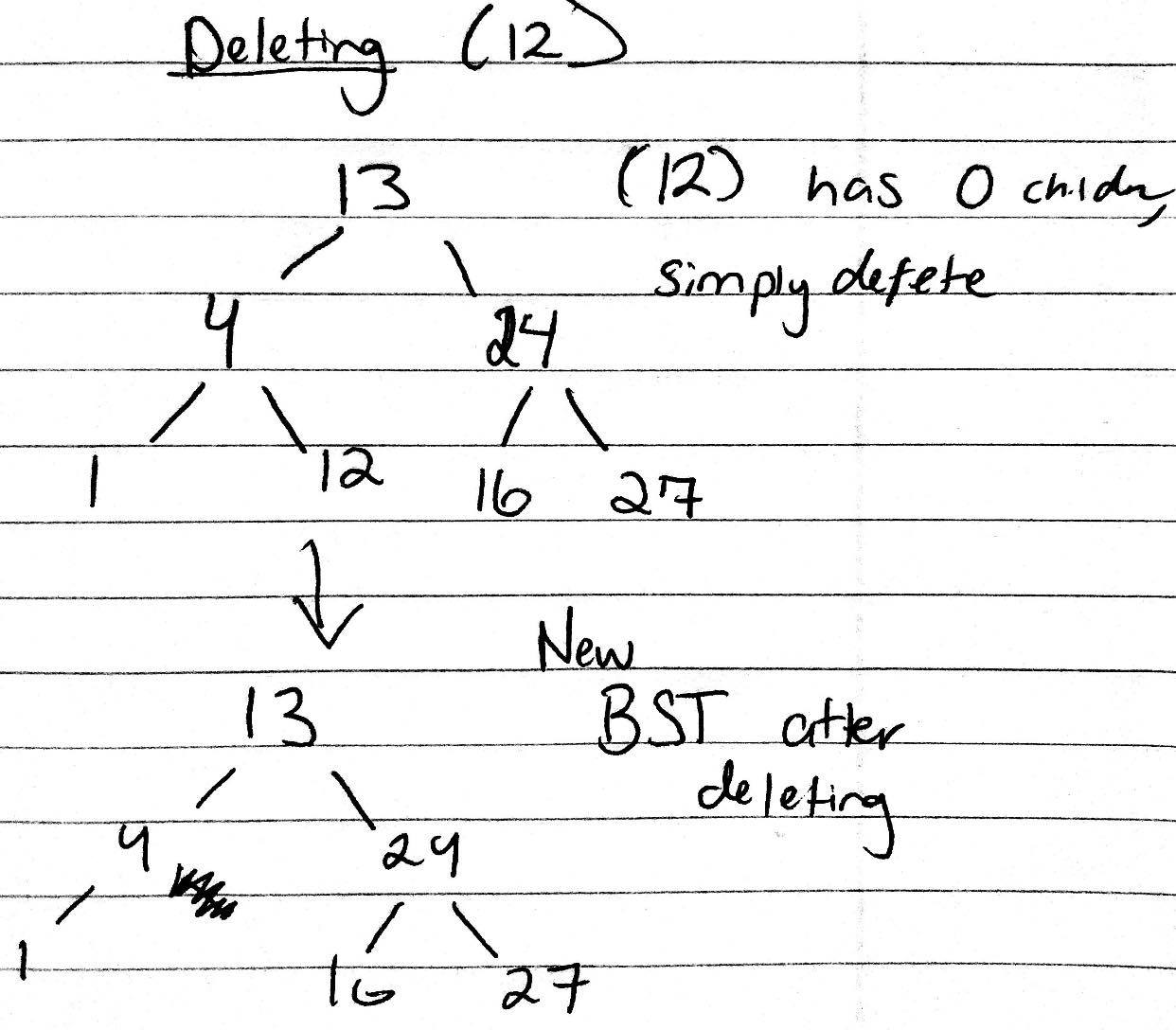
    • If the node has 0 children
      • In this case, you simply delete the node from the BST
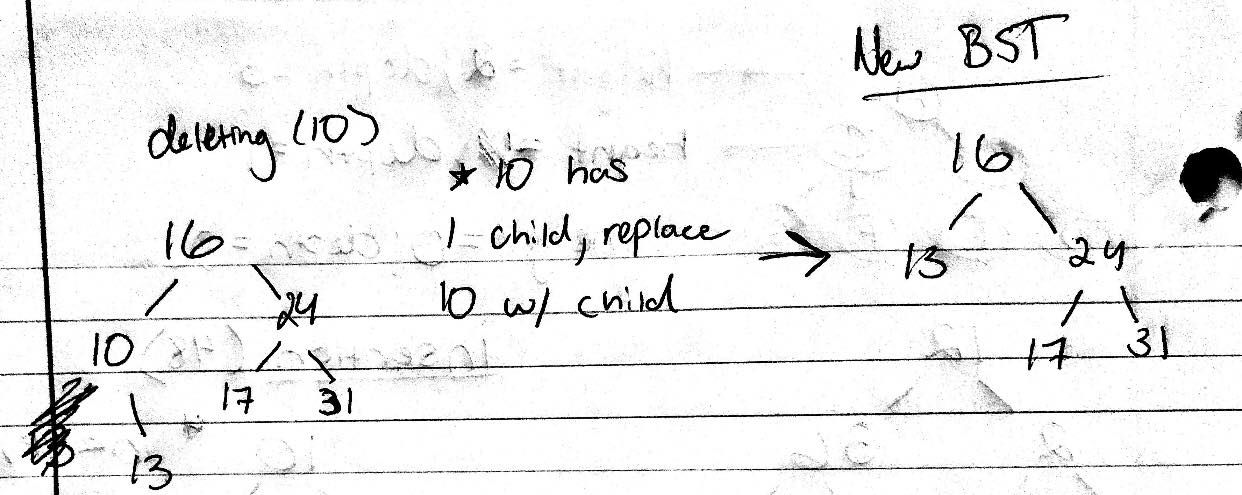
    • If the node has 1 child
      • In this case, you replace the node to delete with the child
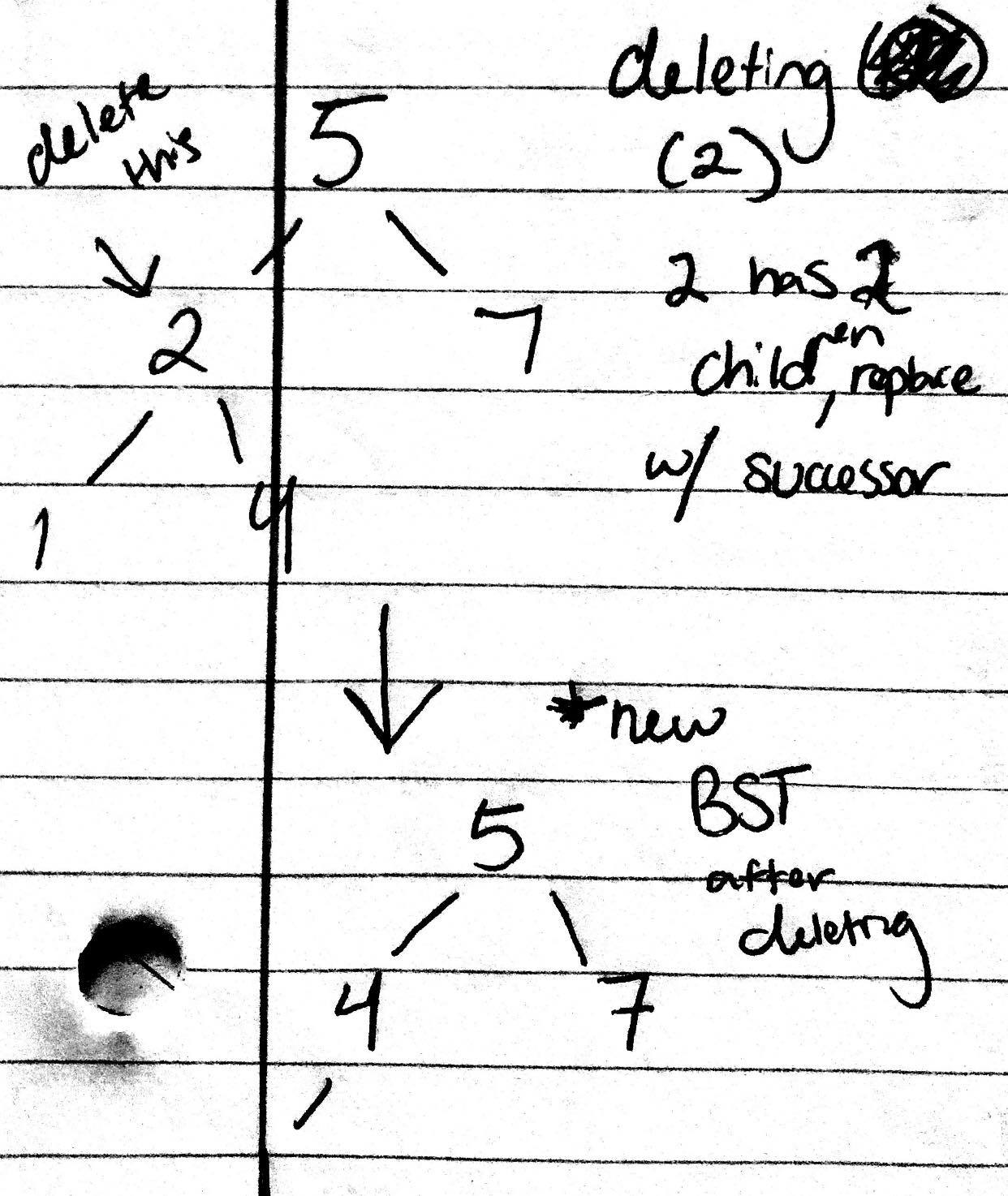
    • If the node has 2 children
      • In this case, you must replace the node with either the predecessor or successor
        • A predecessor is the maximum value in the node’s left subtree
        • A successor is the minimum value in the node’s right subtree
    Deleting from BST, if the node to delete has 0 children.
    Deleting from BST, if the node to delete has 1 child.
    Deleting from BST, if the node to delete has 2 children.


    Good job! You have now mastered one fundamental aspect within Computer Science and are one step closer to being a programming genius!!!


    Citations:

    Binary Trees. (2009). Retrieved from https://www.cs.cmu.edu/~adamchik/15-121/lectures/Trees/trees.html

  • Clarified Purple Cow Punch

    Clarified Purple Cow Punch

    This year, continuing the theme from the Taste of Science, the Georgia Tech STEMcomm team decided to host a Sober Science Speakeasy, a party all about the science of drinks. While looking around for something to prepare, the concept of “clear milk” was brought up, and I was intrigued. Clear milk? That’s practically oxymoronic. And yet, these drinks, called “clarified cocktails” or “milk punches”,  added milk to end up with clear, colorless products. Naturally, we had to investigate and try for ourselves. This is what we learned:

    The Science:

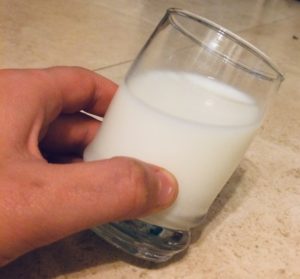
    Milk, looking decidedly not clear, due to the Tyndall effect.

    Milk is a colloid, with fat and proteins suspended in the aqueous solution. Since these are fairly evenly distributed, they usually scatter the light beam around in all directions in the Tyndall effect, making the liquid appear white and opaque.    Proteins in the milk, particularly caseins, repel each other at the normal pH of milk, which is what maintains that even distribution throughout. This is because the isoelectric point of casein, or the point at which it it is electrically neutral (uncharged) is around 4.6, but milk’s normal pH is closer to 6.6. The casein proteins therefore have a negative charge that makes them repel one another and spread out as far apart as possible.

    When pH of milk is lowered however, by adding acid, the casein proteins will lose their negative charge, and stop repelling one another. This, along with the protein degradation, or unfolding of their shape, at the lower pH, causes many of them to clump together in solid blobs we call “curds”. They will separate out to the bottom, and the liquid left behind is called the “whey”. But these proteins don’t just separate from the rest of the drink- they take compounds with them, including much of the color! The proteins bind to molecules from the drink, especially polyphenols, which are associated with bitter/astringent tastes, like tannins in black tea or red wine.

    Therefore, when you strain out the curds, you also remove compounds bound to the caseins. This “clarifies” the drink, stripping away most of its original color, and giving it a less harsh flavor. Some also claim that the addition of the remaining milk whey also gives the drinks a sliker texture, making them even more desirable.

    The Drinks

    This property of milk has been used to make clarified cocktails for many years, with the first written recipe dating all the way back to 1711. Even our favorite kite-flying founding father, Benjamin Franklin, was a fan, recording his own recipe for brandy-filled milk punch in 1763. You can still see the original document online in the Massachusetts Historical Society archives: https://www.masshist.org/database/263.

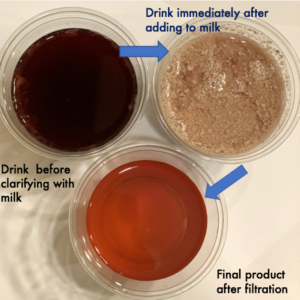
    A resident “mad scientist” with the original base, sans milk.

    In our case, we went for a non-alcoholic version, with a base of black tea, grape juice, lemon juice, and of course, milk.

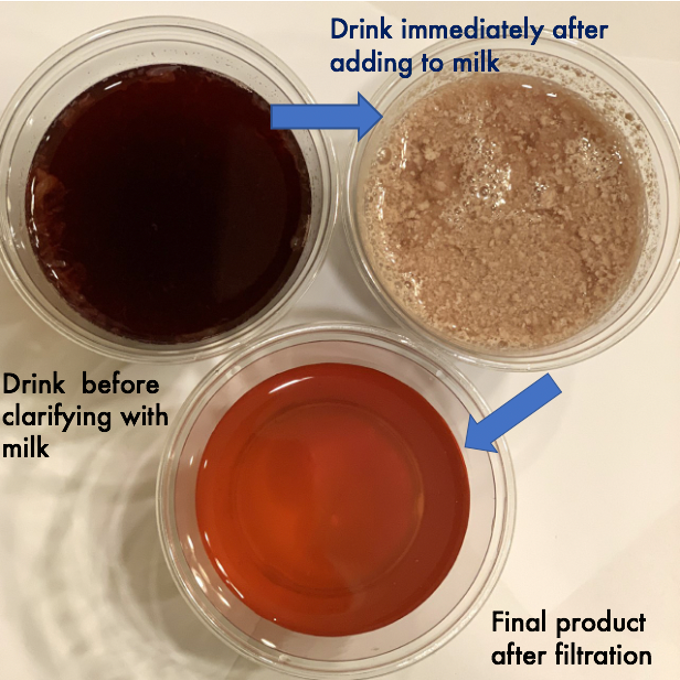
    This concoction, lovely nicknamed “clarified purple cow punch” or CPCP, was initially dark reddish-purple, and while sweet, was also tad bitter from the black tea flavoring. The addition of the juice to milk resulted in a (rather unappetizing) mixture of curdled milk and juice in a clumpy, brown…milkshake? Ick.

    At that stage, I was pretty doubtful that this was going to work. With a bit of patience, however, and several rounds of straining through cheese clothes and coffee filters, we ultimately ended up with a pale pink, ultra-sweet drink that proved pretty popular. There was no hint of milk flavoring or bitter taste, and all together, CPCP was a surprising success.

    If you want to try making clear drinks yourself, all you need is some juice mix, an acid, and milk- and a lot of time to sit and watch the straining process. Make sure to add the acid slowly to the milk, and not the other way around, to ensure the proteins have time to bind to the polyphenols before curdling, and you’ll be all set to impress with your friends with this magically clear milk.

  • Butterfly Pea Flower Tea

    Butterfly Pea Flower Tea

    A cup of tea brings feelings of peace and serenity to mind.  Whether it be a rainy day or cold evening, drinking a warm cup of tea has never failed to help me feel calm and happy.   There’s an amazing selection of tea for all types of different palates to choose from like your classic green, black, and white tea, but my personal, newfound favorite is butterfly pea flower tea!  Befitting its exquisite name, this tea also has an appearance like no other.

    Butterfly pea flower tea may seem like a new and recent addition to tea shelves, but this tea has been consumed in Southeast Asian countries like Thailand and Malaysia for centuries.  It is a caffeine-free beverage made from oftentimes dried lemongrass and blue flowers and leaves of a plant known as Clitoria ternatea (Centeno, 2018).  It is said to have an earthy taste similar to green tea despite its color (Goldberg, 2016).

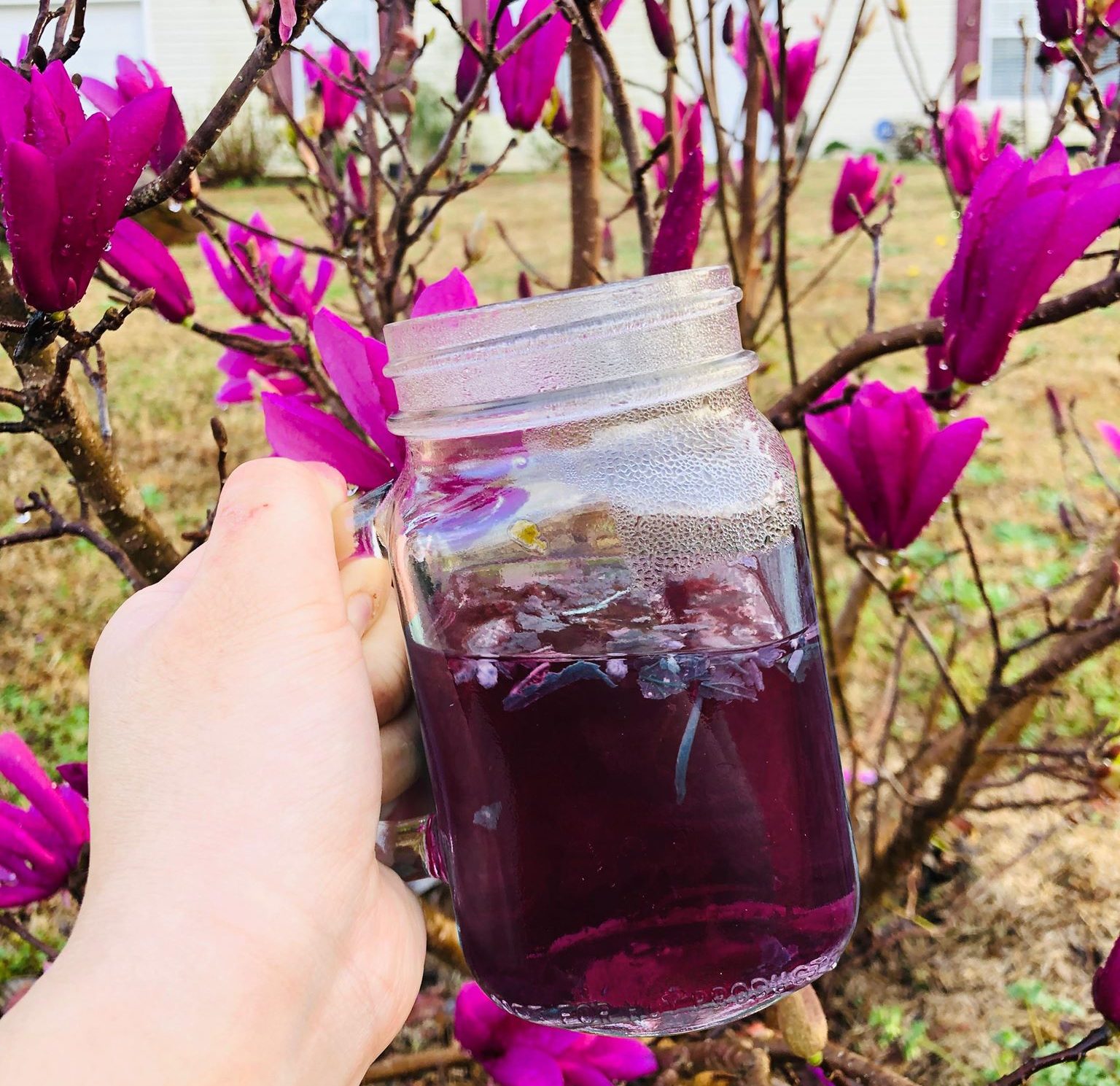
    What makes this tea unique, however, is not just its natural, blue color, but its ability to change color depending on pH.  Adding lemon will allow this beverage to take on a purple color (see below).  Add more and it’ll turn hot pink, adding a perfect and mesmerizing ombre. Like other plants that function as pH indicators, butterfly pea consists of anthocyanins, allowing it to change color.  The plant has been tested as a pH indicator to successfully differentiate pH levels between 2-12 (Amaolo, 2017).

    Anthocyanins also contain high amounts of antioxidants, making blue tea a common use in traditional medicine and a source of many health benefits (Kungsuwan, Singh, Phetkao, & Utama-ang, 2014).  Butterfly pea flower extract has been found to have anti-inflammatory and pain-relieving abilities (Kumar and Ishwar, 2012) as well as the potential to relieve diabetic complications caused by advanced glycation end products (AGEs).  AGEs are compounds that can clog vessels and form more often in diabetics when sugars combine with particular amino acids (Barone, 2017).  Clitoria ternatea extract has also been found to improve memory and acetylcholine levels (Taranalli & Cheeramkuzhy, 2011) and has anti-depressant, anti-stress, anti-convulsant, and anti-microbial properties (Jain et al., 2003).   Its antioxidant activity has also been applied in cosmetics (Kamkaen & Wilkinson, 2009).

    Try making your own tea by seeping 1-2 teaspoons of butterfly pea flower with a cup of water and add honey, lemon, juice, or milk for more flavor.  You can also make ice cubes with the tea to add color to any drink!


    References
    _______________________________________________________________________________________________________________

    Amaolo, A. (2017). The Butterfly Pea Flower as a pH Indicator. Retrieved from http://isjos.org/ISJOSv11p2-ButterflyPeaIndicator.pdf

    Barone, J. (2017, February 28). What Are AGEs (Advanced Glycation End-Products)? Retrieved from http://www.berkeleywellness.com/healthy-eating/food-safety/article/abcs-ages-advanced-glycation-end-products

    Centeno, E. (2018, July 03). What is Butterfly Pea Flower Tea? Retrieved from https://spoonuniversity.com/lifestyle/what-is-butterfly-pea-flower-tea-hint-it-changes-color

    Goldberg, E. (2016, January 31). The Science Behind This Mesmerizing Color-Changing Tea. Retrieved from https://www.bonappetit.com/drinks/non-alcoholic/article/butterfly-pea-flower-color-changing-tea

    Jain, N. N., Ohal, C. C., Shroff, S. K., Bhutada, R. H., Somani, R. S., Kasture, V. S., & Kasture, S. B. (2003, June). Clitoria ternatea and the CNS. Retrieved from https://www.ncbi.nlm.nih.gov/pubmed/12895670

    Kamkaen, N., & Wilkinson, J. M. (2009, November). The antioxidant activity of Clitoria ternatea flower petal extracts and eye gel. Retrieved from https://www.ncbi.nlm.nih.gov/pubmed/19367668

    Kumar, S. & Ishwar, B. (2012, March 19). Anti Inflammatory, Analgesic and Phytochemical Studies of Clitoria Ternatea Linn Flower Extract. Retrieved from https://irjponline.com/admin/php/uploads/935_pdf.pdf

    Kungsuwan, K., Singh, K., Phetkao, S., & Utama-ang, N. (2014). Effects of pH and anthocyanin concentration on color and antioxidant activity of Clitoria ternatea extract. Retrieved from https://www.tci-thaijo.org/index.php/fabjournal/article/view/77397

    Taranalli, A., & Cheeramkuzhy, T. (2011, January 10). Influence of Clitoria Ternatea Extracts on Memory and Central Cholinergic Activity in Rats. Retrieved from https://www.tandfonline.com/doi/abs/10.1076/1388-0209(200001)3811-BFT051

  • Eight Gifts under $40 for STEM Nerds

    Eight Gifts under $40 for STEM Nerds

    As the holidays approach, you’re probably panicking about finding the perfect gift to get your nerdy friends in STEM while sticking to a college budget. Look no further; I have compiled a list of the best science gifts under $35 available on Amazon Prime.

    1. Storm Glass $19.99
      • For who? Atmospheric Scientists and Weather Enthusiasts
      • What is it? This water droplet-shaped storm glass will captivate any weather enthusiast. While it may not be nearly as accurate as a real barometer, this gift will be a perfect addition to any room. As the temperature and pressure changes, the liquid inside the glass will change, sometimes forming intricate crystal shapes.
      • How does it work? Storm glasses typically contain water, ethanol, ammonium chloride, potassium nitrate, and camphor. The formations created inside the storm glass change based mostly on temperature and to some extent, pressure. Vice-Admiral Robert FitzRoy, a 19th century meteorologist, created a chart that predicted the weather based on the state of the liquid inside the glass. Clear liquid meant clear skies, cloudy liquid with small stars meant thunderstorms, and crystals at the bottom of the glass meant frost. This device was and still is not accurate in predicting the weather, but it is an interesting piece of the history of meteorology.
    2. USB Digital Microscope $21.99
      • For who? Biologists and Chemists
      • What is it? This digital microscope can be connected to your computer or Android phone and magnify small objects with incredible detail. It is perfect for any aspiring biologist or chemist who wants to view anything from the structure of salt crystals to ­­­­individual plant fibers for less than $20.
      • How does it work? A digital microscope is essentially an optical microscope with an attached digital camera. These commercially available USB microscopes magnify using a macro lens. Macro photography refers to when the size of the object being photographed is life size (or bigger) on the image sensor of the camera. The image from the camera is transmitted to your computer or phone through a USB cable and is able to be viewed in real time.
    3. Low Temperature Stirling Engine $33.99
      • For who? Engineers
      • What is it? Place this Stirling engine on top of a cup of hot water or even ice and watch the wheel turn. It is a great trinket to keep on your desk for when you make your daily cup of coffee, tea, or hot chocolate.
      • How does it work? Stirling engines are driven by a temperature difference. When placed on top of a very hot or very cold substance, the temperature difference between the substance and the surrounding air allows the engine to run. A Stirling engine has two cylinders that are connected to each other containing gases; one is heated and one is cooled. When heat is added to the cylinder, the pressure of the gas increases and forces the piston to move down; this forces the other piston to move up. Gas from the heated cylinder moves to the cooled cylinder, which cools the gas and decreases its pressure. The pistons alternate moving up and down and the Stirling cycle repeats.
    4. Crystal Growing Experiment $17.98
      • For who? Chemists and Geologists
      • What is it? This kit contains everything you need to grow and display seven beautiful crystals that will reach full size in under two weeks.
      • How does it work? Crystals have structures known as lattices that give them their unique shape. Most crystal growing kits come with a solution that contains seed crystal, which makes it easy for crystal to continue to grow until it reaches full size. Molecules in the solution are able to easily interact with the seed crystal and other molecules and form crystal lattices. This is also known as nucleation.
    5. 5 in 1 Engineer Ballpoint Pen $15.95
      • For who? Engineers
      • What is it? This ballpoint pen includes five functions every engineer needs: a ruler, a level, a flat head screwdriver, a touchscreen stylus, and of course, a pen. This all-in-one gift is a useful tool your friends will use on a daily basis.
      • How does it work? The touchscreen stylus is attached at the top of the pen and can be unscrewed to reveal the flat head screwdriver. The ruler is engraved on the side of the pen, and the level is visible on the side of the pen as well. The ink can easily be replaced, so this gift will be long-lasting.
    6. Analog Weather Station with Galileo Thermometer $39.95
      • For who? Atmospheric Scientists and Weather Enthusiasts
      • What is it? This all-in-one weather station has a Galileo thermometer, an analog clock, a hygrometer, and a storm glass. This is a great gift for those who like to keep up with the weather and maybe even practice their own forecasting.
      • How does it work? The Galileo thermometer is a very interesting way to determine temperature and was named after Galileo because he discovered that the density of a liquid changes proportionally with temperature. It consists of multiple glass orbs with different densities inside a cylinder filled with clear liquid. As the temperature changes, the orbs move to their respective positions based on their density. This specific thermometer is not very accurate, however, as the orbs correspond only to 4 degree increments from 64-80 degrees Fahrenheit.
    7. Floating Globe $25.99
      • For who? Physicists
      • What is it? This seemingly gravity-defying device is perfect for the physicists in your life. A black globe levitates while lit by colorful LEDs and will even rotate with just the push of your finger.
      • How does it work? This globe floats with the help of electromagnetism. The C-shaped device surrounding the globe contains an electromagnet at the top, and the globe contains a magnet inside. The force that the electromagnet exerts on the globe equals the force of gravity when the globe is floating.
    8. Math Cutting Board $26.99
      • For who? Mathematicians
      • What is it? This 9×12 inch bamboo cutting board is the ideal gift for anyone who wants to slice fruits and vegetables with the precision of 1/8 of an inch. The lines are burnished into the wood and include guides for the different types of culinary knife cuts.
      • How does it work? Simply follow the guide lines for your desired cut, use the grid, or follow the angles on the cutting board.

    Sources

    DeRose, James, & Georg. (2015, May 27). What You Always Wanted to Know About Digital Microscopy, but Never Got Around to Asking. Retrieved December 2, 2018, from https://www.leica-microsystems.com/science-lab/what-you-always-wanted-to-know-about-digital-microscopy-but-never-got-around-to-asking/

    Floating Globe. (n.d.). Retrieved December 2, 2018, from https://wonders.physics.wisc.edu/floating-globe/

    Galileo thermometer. (2018, July 05). Retrieved December 2, 2018, from https://en.wikipedia.org/wiki/Galileo_thermometer

    Macro photography. (2018, October 13). Retrieved December 5, 2018, from https://en.wikipedia.org/wiki/Macro_photography

    Nice, K. (2001, May 04). How Stirling Engines Work. Retrieved December 2, 2018, from https://auto.howstuffworks.com/stirling-engine.htm

    Optical microscope. (2018, November 25). Retrieved December 2, 2018, from https://en.wikipedia.org/wiki/Optical_microscope#Digital_microscope

    Seed crystal. (2018, September 06). Retrieved December 2, 2018, from https://en.wikipedia.org/wiki/Seed_crystal

    Storm glass. (2018, June 02). Retrieved December 2, 2018, from https://en.wikipedia.org/wiki/Storm_glass

    What is a Storm Glass?  Do Storm Glasses Really Work to Predict the Weather? . (n.d.). Retrieved December 2, 2018, from https://wxobservation.com/do-storm-glasses-really-work/