Category: vintage science

science history, scientist spotlights, scientist interviews, science jobs

  • Sleep Well: Your Psychological Health Depends On It

    Sleep Well: Your Psychological Health Depends On It


    There is some truth to the phrase “waking up on the wrong side of the bed.” When I don’t sleep very well, I will probably be much more affected by seemingly minor mistakes than other times. For example, I might be particularly self-critical of a research presentation, ruminating on the negative aspects and failing to acknowledge anything positive. The recurrent thought of poorly answering a question might leave me feeling disappointed. In contrast, I will probably fail to retrieve the memories about the questions that were answered well or the clarity of concepts explained. Cognitive neuroscientists have linked poor sleep to poor psychological health at the neural level, particularly involving a brain structure called the amygdala.

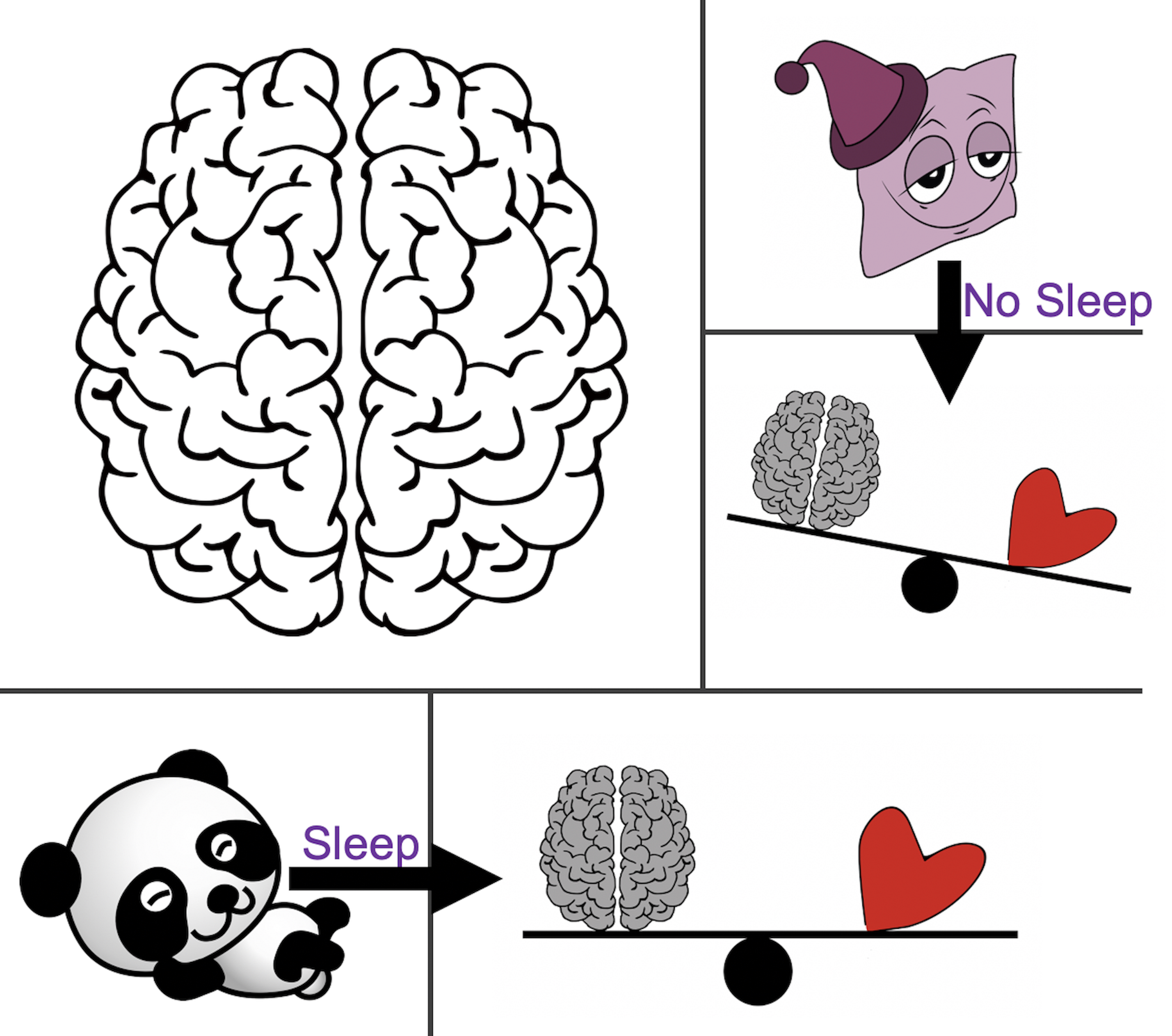
    The amygdala is an almond-shaped brain structure that modulates emotional reactivity. When sleep deprived, amygdala function is perturbed and becomes over-reactive during the waking day (1). In other words, sleep deprivation can lead to a heightened sensitivity of the amygdala. For example, your roommate’s incessant pencil tapping that normally seems bearable when not sleep deprived, may be particularly annoying after a night of little to no sleep.

    Sleep deprivation may reduce attentional focus on positive materials.

    Moreover, sleep deprivation may influence emotional memory. For example, researchers gave participants a series of positive, negative, and neutral words to study. They found that those who were sleep deprived remembered fewer positive words than those who were well-rested (1). This suggests that sleep deprivation may reduce attentional focus on positive materials. Furthermore, it has also been found that connectivity between the amygdala and control center of the brain, the prefrontal cortex, is reduced when sleep deprived (2). Reduced feedback from the prefrontal cortex may lead to amygdala overactivity when sleep deprived.

    Sleeping through the night or over several nights gradually reduces one’s response to feel upset when recalling a negative experience.

    Considering that sleep deprivation impairs the ability to remember positive information, it is closely linked with depression. It is thought that obtaining sufficient sleep causes reductions in the emotional response to negative memories by reducing the response of the amygdala. In other words, sleeping through the night or over several nights gradually reduces one’s response to feel upset when recalling a negative experience. For example, after sleeping, you may be able to remember when your first pet passed away, or when you scored poorly on an exam, without feeling emotionally crippled by the memory. Sleep reduces emotional reactivity to memories.

    Experimental research found that sleep deprivation caused a near 30% increase in anxiety symptoms.

    In addition to an increased susceptibility to negative emotion, sleep deprivation is closely linked with anxiety. Indeed, recent experimental research found that sleep deprivation caused a near 30% increase in anxiety symptoms (3). For example, suddenly hearing a loud noise, such as an alarm, leads to fear as an initial reaction. You may feel your heart pound through your chest; your pupils may dilate; and you might look around to locate the noise. However, once you realize that it is only a test for the warning alarm systems, you will quickly resume to your work. However, if you’re sleep deprived, this process may happen a bit more slowly. It may take longer for your brain to process the fact that it’s only a warning alarm. Your increase in heart rate may persist, and you may feel anxious for longer than someone who is not sleep deprived. Thus, anxious feelings will likely be intensified when you are in a sleep-deprived state.

    Failing to sleep intensifies emotional responses at the neural level. Brain structures involved in emotional processing and cognitive control, particularly the amygdala and prefrontal cortex, are functionally altered by sleep deprivation. Although the life of a student is a demanding one, sleep should be prioritized in order to thrive and function with peak psychological health. So if you’re feeling crappy, try getting a good night’s sleep.

    References

    1.Walker, M. P., & van der Helm, E. (2009). Overnight therapy? The role of sleep in

    emotional brain processing. Psychological Bulletin, 135(5), 731–748.

    https://doi.org/10.1037/a0016570

    2.Yoo, S., Gujar, N., Hu, P., Jolesz, F. A., & Walker, M. P. (2007). The human emotional

    brain without sleep – a prefrontal-amygdala disconnect. Current Biology, 17(20), 1–8.

    https://doi.org/10.1016/j.cub.2007.08.007

    3. Anwar, Yasmin. “Chronically anxious? Deep sleep may take the edge off.” Retrieved from: https://news.berkeley.edu/2018/11/06/chronically-anxious/

  • God does not Play Dice

    God does not Play Dice

    “I am convinced God does not play dice with the universe.” – Albert Einstein

    Quantum Mechanics, despite how fancy and scifi-esque it sounds, is not a new concept. The “revolution” began in the beginning of the 1900s with Maxwell Planck’s theory that energy is quantized into “packets” called quanta, and has remained at the forefront of scientific discovery to the present day. The majority of the scientific community generally believes that Quantum Mechanics accurately describes the universe, but not everyone. In fact, Albert Einstein, himself, was not convinced of the completeness and accuracy of Quantum Theory. In fact, one of Einstein’s most famous quotations: “I am convinced God does not play dice with the universe.” was him expressing wariness of Quantum Theory, despite his work creating it. He was a champion of an idea that has become known as “Hidden Variable Theory”, an idea that persists to this day. But in order to learn what Hidden variable Theory actually is, we have to better understand what quantum mechanics is, and its difference from classical mechanics.

    You, as a person, have lots of experience dealing with Classical mechanics. Classical mechanics are the “laws of physics” that govern the world you are familiar with. Momentum, acceleration, orbits, forces, without meaning to, we come into contact with classical mechanics every day. Everything from the moon in the sky to the friction stopping your car from rear-ending the car in front of you, to a cornerback making the game-saving tackle at the end of the football game are governed by the laws of classical mechanics. And one important quality of classical mechanics is that it is deterministic. This means that that given all the information about a situation, you can predict what is going to happen. For example, we know, at any given moment, where the moon is in the sky. We know where the moon will be in the sky in 100 year from now because we understand the gravitational interaction between the earth and the moon, and based on the mass of both of the bodies, and their distance from each other, and the orbital speed, we know the path the moon will take for centuries to come. And it is incredible accurate too. At midnight (eastern standard time) on April 2, 3019 the moon will be 19.49% full.

    Quantum Mechanics, however, is not deterministic. Using quantum mechanics, we cannot predict the outcome of the situation with 100% accuracy. Instead, Quantum Mechanics is probabilistic. This means that we can determine the outcome that is most likely to occur, but we still do not know exactly what will happen. We just know the odds. (don’t tell Han). Quantum Mechanics govern the world of incredible small things. In systems nearly atomic in size, the laws of classical mechanics begin to break down, and a new, strange, law rules. And this law is very counter-intuitive, and because of this has faced a lot of backlash. Quantum Mechanics being probabilistic is the chief reason Einstein and other physicists have a problem with quantum mechanics, and is the motivation behind the Hidden Variable Theory.

    Imagine you are at a baseball game. Surrounded by fans and the smell of popcorn, you intently watch the pitcher throw pitch after pitch. Now imagine you had no idea what air was. The air is still there, of course, but in your mind, the pitcher’s hand is the only thing that affects the ball. The pitcher will pitch each ball exactly the same, but the ball will not always end up at the same place. Of course, most of the pitches would end up in the strike zone, but some won’t be. Some balls will curve, while others fly straight, some will be faster, slower, some will fly right down the middle and others will fly wayward. We cannot determine exactly where each pitch will end up, but we can say where it will most likely end up. This is probabilistic.

    Now imagine the same situation, but you are now aware of air. You understand how the spin of the ball interacts with the air to curve the ball, and aware how air currents and wind changes the path of the ball. With this new information, this new variable in the equation, we can now determine exactly where each pitch will end up. The discovery of this new variable turns the probabilistic system into a deterministic one. This is the main idea of Hidden Variable Theory, that Quantum Mechanics is incomplete, and some hidden variable, will make the it deterministic.

    Probabilistic systems are so foreign to us. The laws of physics we learned in high school and we have come in contact with are all deterministic, so it is only natural to think that if Quantum Mechanics is not deterministic, then it is only because we do not fully understand it. The search for this hidden variable persists to this day, albeit without success. Quantum Mechanics has proved to be very accurate when applied to a wide array of systems. The allure of this idea in understandable, after all, it makes sense, deterministic systems are familiar to us, and some of the brightest minds in history have dedicated years to finding this hidden variable. We do not know if God truly does play dice with the universe, but maybe the dice in its own way brings an elegance and beauty to the cosmos that would otherwise be so predictable.

    Genovese, M. (2007, January 12). Research on Hidden Variable Theories: A review of recent progresses. Retrieved March, 2019, from https://arxiv.org/abs/quant-ph/0701071

    Look Up the Moon Phase for Any Date. (n.d.). Retrieved March, 2019, from https://www.moonpage.com/index.html?go=T&auto_dst=T&tzone=et&m=4&d=2&y=3019&hour=0&min=0&sec=0Maguire, S. (2012, November 12).

    It’s been a tough week for hidden variable theories. Retrieved March, 2019, from https://quantumfrontiers.com/2012/11/08/its-been-a-tough-week-for-hidden-variable-theories/

    Townsend, J. S. (2012). A modern approach to quantum mechanics. Sausalito, CA: University Science Books.

    Uzer, A. T. (2018). Introduction to Quantum Mechanics. Lecture presented in Georgia Institute of Technology.

  • Elizebeth Smith Friedman: A Forgotten American Hero

    Elizebeth Smith Friedman: A Forgotten American Hero

    An illustrated tribute to the most brilliant code-breaker you’ve never heard of.

    Ever since reading The Woman Who Smashed Codes by Jason Fagone, I have been fascinated by the life of Elizebeth Smith Friedman, a woman who was by all means a pioneer and an American hero. Despite founding one of the first facilities dedicated to the study of cryptography in the U.S. and pioneering many of the foundational principles and techniques still used in code-breaking today, much of her accomplishments were overshadowed by her husband and much of her work was hidden away in government vaults. The more I learned about her and her contributions to US war efforts, espionage, and domestic crime–including cracking difficult Enigma machine and JN25 codes, decoding rum-runner messages during Prohibition, and deciphering encoded letters containing naval movement in preparation for the Pearl Harbor attacks–the angrier I felt. I felt angry for her being forgotten in the annals of history, angry as a woman. It felt reprehensible to me that, due largely in part to sexism, her incredible story had been overlooked for so long. While an illustration drawn by some random college student in Georgia is far from the praise and recognition she deserves, I hope to convey my feelings of gratitude and admiration for her brilliance, no matter how insignificant the gesture.

  • Historical Haikus

    Historical Haikus

    Famous Scientists

    Nicolaus Copernicus (1473-1543)
    He proposed madness
    We revolve around the sun
    Woke before others


    Nikola Tesla (1856-1943)
    Brilliance in design
    The Alternating Current
    Still lives on today


    Stephen Hawking (1942-2018)
    Having ALS
    Did not stop his legacy
    Understanding time


    Nikola Tesla's Alternating Current

  • Mum’s the Word

    Mum’s the Word

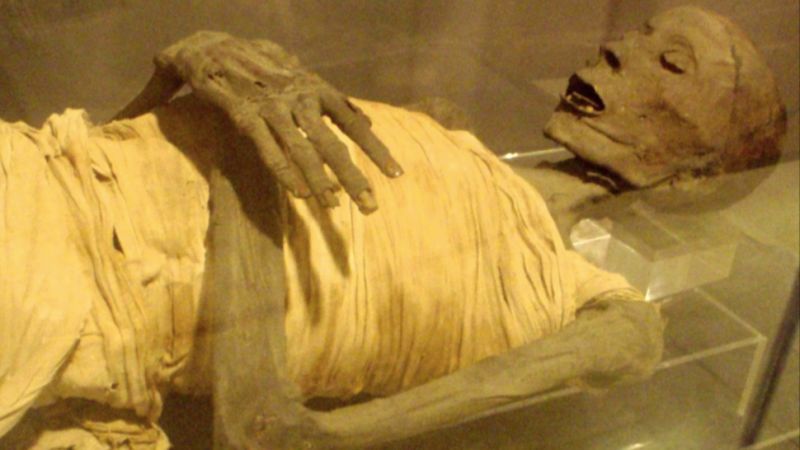
    When most people think of mummies, a strange mixture of ancient curses and toilet paper-wrapped Halloween costumes come to mind. It comes as no surprise that the concept of mummies is linked to the magical and superstitious- after all; it is pretty unbelievable to see intact bodies that are 2,000 years old. How could you not think of zombies or ghosts?

    Like all mysteries, however, mummies actually have a scientific explanation.

    IMG_0779

    Human bodies decay and break down by two major mechanisms: autolysis and putrefaction. Autolysis is essentially a self-destructive process during which enzymes that typically aid in digestion begin to digest the body itself. After this, putrefaction begins when bacteria from the body’s flora or the surrounding environment start to break down the organic matter for their own nutrition, leading to the decomposition of the corpse. The bacteria introduce additional enzymes that continue the liquefaction, and eventually, the body will attract flies and scavengers that can feed on the remains. In order to effectively preserve a body, these processes must be interrupted, or at least slowed significantly. There are several known factors that can do just that:

    • Water content: The bacteria and enzymes need an environment with water; so drying the corpse is essential to its preservation. The drying out of the body is known as desiccation, and can happen naturally in extremely arid environments, like the hot sands of the deserts, or can be chemically induced, like with the Egyptian embalming process, where the bodies were covered natural drying agent named natron.
    • Temperature: In extreme temperatures, especially cold, dry environments, bacteria are unable to survive. In addition, many enzymes denature, or unfold, in extreme environments, and can’t function properly. This slows the decay process down greatly, and can also occur naturally, leading to mummies such as the Iceman found in the Italian Alps. It is actually very similar to the way that your freezer helps you to preserve food!
    • Organ Removal: Removing internal organs that contain a large population of bacteria prevent decay from the inside out. This was an important part of the preparation of Egyptian mummies, where most major organs were removed from the body and placed into sacred canopic jars.
    • Chemical Interactions: Many different chemical interactions can contribute to the preservation of human tissue. Some of the most common include:
      • Exposure to heavy metals ions, including copper and arsenic, can lead to the denaturation of the enzymes involved in autolysis, as the metal ions bind to the polypeptides.
      • Lime, calcium oxide, reacts with water and raises the temperature to form calcium hydroxide. This reaction process dries out the body and raises the pH, which can limit the effectiveness of enzymatic activity.
      • Resins can be also be used in mummification, as an antiseptic and as a barrier against rehydration when spread over the skin.


    I hope you found this interesting, and good luck with those linens!


    References:

    Aufderheide, Arthur C. (university Of Minnesota, Duluth), A. (2011). Scientific Study of Mummies. Cambridge University Press.

    Harris, T. (2018, March 08). How Mummies Work. Retrieved from https://science.howstuffworks.com/mummy.htm

  • What’s The Connection Between Complex Chemistry and Islamic Medieval Architecture?

    What’s The Connection Between Complex Chemistry and Islamic Medieval Architecture?


    karbala, iraw


    The expansive domes and minarets of famous mosques such as the Blue Mosque in Istanbul or Al-Masjid An-Nabbi in Medina exude a quiet, powerful energy. Oftentimes these are characterized by a large, stone courtyard. You walk through the simple, colorless path towards the mosque entrance. You feel cleansed, as if you’re leaving a part of the world outside; it’s almost unsettling. At a first glance, you could describe these mosques as plain. Crossing the threshold, however paints a different picture. Your sight is overloaded with bright jewel-toned colors: azure, emerald, turquoise, fuchsia, red. It’s hard to focus on one detail – will it be the gold leaf, intricate etch work, milky marble, shimmering glasswork? You are humbled standing underneath the enormous ceilings.

    The glittering shrines and mosques that characterized medieval Islamic architecture are more than just a pretty sight, but in fact the product of geometrical planning. Aside from the lavish materials and colors, it is the tiling patterns that make the architecture stand out. These patterns are featured prominently in Islamic arts as a substitute for more figurative images. The reasoning was that images depicting people would lead to idol worship. Inside the mosque, you see these tiles plastered densely together on the ceilings, the columns, the minarets, the free wall space.(*)

    Islamic interlacing patterns can be divided into two categories: the arabesque versus girih. While arabesque designs feature more curved elements in an effort to emulate greenery and nature, the girih is composed of geometric lines mostly of stars and polygons with interlaced lines. Muslim architects designed the girih tiling system with only two simple tools: a compass and ruler. These patterns became complex tessellations made up of up to five different shapes: the bowtie, rhombus, pentagon, elongated hexagon, and decagon. Between the 1200s to 1400s, Islamic art developed the girih exhibiting the same complexity as quasi-crystals, a material that defies normal atom packing. Back at the mosque, you trace your fingers along the figurative tiles that blend seamlessly. A lime green pentagon here, an ivory star there.You see that the tiles are made of contrasting colors with a multitude of small shapes.

    Quasi-crystals are made of patterns that look regular but do not repeat exactly. The patterns in Islamic architecture demonstrate this by including “tessellations” that have five, ten, and twelve-fold symmetry. Technically, they are are not actually patterns, but just appear to be so. Scientists conjecture that Islamic architects wanted the effect of extend a pattern without just repeating images. Looking up at some of the mosques ceilings confirms the success of this design – you feel as if you are swallowed by the dizzying depths of shimmering oceans and bright stars.500 years later mathematical physicist, Roger Penrose at University of Oxford discovered the concept of quasi-aperiodic tiling. Sir Penrose stumbled upon a pair of tiles that cannot form a pattern in a periodic manner. This discovery was just a consequence of his work on the famous tiling pattern in mathematics – “given a collection of polygonal shapes, is it possible to cover the whole plane using just these shapes, with no overlaps?”

    Quasicrystals are found mostly in metallic alloys such as (Al-Li-Cu), and lack translational symmetry. The discovery of the non-symmetrical packing of atoms took a while for the scientific community to accept. Although first discovered in the 1960s, much of the scientific community refused to believe that materials could consist of irregular atomic structure. Next, materials scientist, Dr. Dan Shectman, designed an artificial alloy with quasi-crystal properties. He did not publish his results for years because he feared that others would ridicule his work.  Only after researcheres found a  natural quasi-crystal, icosahedrite in the Koryak Mountains, Russia in 2009 that led people to be convinced. Shectman received the Nobel Prize in Chemistry in 2011 for this work.

    Researchers connected Islamic girih and quasi-crystals recently; Dr. Peter Lu a physicist from Harvard University recognized ten-fold symmetry in architectural motifs while visiting Uzbekistan.  He analyzed 3700 Penrose tiles found in an archive of documented medieval Islamic architecture, and published a paper with Princeton University’s Dr. Paul Steinhardt titled ”Decagonal and Quasi-Crystalline Tilings in Medieval Islamic Architecture”. Dr. Lu uses the Darb-I-Imam Shrine in Iran as the iconic “near perfect” example of Penrose tiling. He conjectures that laborers could easily have created mathematically complex patterns by lining tiles decorated with lines that, once set down next to each other, form a continuous pattern.

    Back at the mosque – you see a worshipper prostrated to the ground, oblivious of the art around them. Their hearts disconnected from the ancient mathematics and chemical mimicry in which they are enclosed in. Science and spirituality; a Nobel prize in chemistry yet also an artform. These two paradigms reside side by side in the glorious, kaleidoscopic patterns of centuries old Islamic architecture. There is an elegance in the scales that aperiodic tiling has reached – from the utterly microscopic crystals to the gigantic mosques that can hold thousands of people.

  • LSD and Scientific Advancement

    LSD and Scientific Advancement

    vip charged 1

    LSD. Acid. Lucy. Whatever you decide to call it, lysergic acid diethylamide has been illegal for years in most countries world-wide despite a lack of science supporting its schedule 1 status. (Schedule 1 drugs are classified by the DEA as drugs with a high potential for abuse and no medicinal uses. LSD was approved as medication to treat a range of mental disorders in both the US and Europe prior to its ban in the 70’s.)

    Despite the illegality, several of the greatest minds known to man have openly attributed LSD with making them who they are today. Here’s a list of 4 great STEM-minded people who fell down the rabbit hole and came out just a little bit bigger:

    1. Kary Mullis. PCR, or the polymerase chain reaction, was invented by Kary Mullis in the 1980s. PCR is one of the most significant contributions to biological science in modern history, and Mullis frequently references LSD as a major contributing factor to his conceptualization of the PCR technique in interviews. It is even discussed in his autobiography.
    2. Francis Crick, you’ve probably heard of Watson and Crick. The dynamic duo that proposed the double helix structure of DNA. What you probably haven’t heard of is that Crick was famous at the time for throwing wild parties featuring LSD.
    3. Steve Jobs. Again, if you live in the 21st century you should know who this man is. And now you know that he has openly admitted to having used LSD repeatedly in the desert with his coworkers just before starting Apple. Whether or not the iPhone would have been invented without these adventures has never been directly confirmed but prior to his death he admitted in interviews that the experience was life changing, eye opening, and an experience he was overall glad he didn’t miss.
    4. Last but certainly not least, Albert Hofmann. The inventor of LSD himself. While working on synthesizing medications to improve heart and lung function, Albert Hofmann accidentally ingested the drug and discovered its psychedelic properties. He discusses his intention and personal uses of the drug in his autobiography and believed strongly in its potential as a psychotherapeutic.

    There are many other notable people throughout history who have attributed some of their greatest successes to a love of LSD both in and out of the STEM field. Recently several researchers in Europe have opened new trials to experiment with the drug in a psychotherapeutic setting with preliminary success. While the future of LSD is unknown, it is safe to say our lives today wouldn’t be quite the same without it.


    Sources:

    https://www.dea.gov/druginfo/drug_data_sheets/LSD.pdf

    https://www.washingtonpost.com/archive/lifestyle/1998/11/03/nobel-chemist-kary-mullis-making-waves-as-a-mind-surfer/31e7e720-44e4-49ff-8458-a9822cdcb47e/?utm_term=.26b79c188753

    http://www.hallucinogens.com/lsd/francis-crick.html

    https://www.scientificamerican.com/article/inventor-of-lsd-embarks-on-final-trip/

    https://journals.lww.com/jonmd/Fulltext/2014/07000/Safety_and_Efficacy_of_Lysergic_Acid.1.aspx