Did you know that there’s a bird that’s considered to be a parasite? Sounds a little out there right? Well meet the brown-headed cowbird, a brood parasite. In layman’s terms this means that the female cowbird will find other species’ nests and damage one of the eggs to replace it with her own. The other species’ mother will raise the cowbird chick without ever even knowing, and these large cowbird hatchlings will often eat more of the resources even further harming the brood.
One question you might have then, is if these cowbirds are raised as a different species, how will they ever know what they truly are? It lies in a secret passcode that all cowbirds innately know! An adult cowbird’s “chatter call” will activate the song-learning portion of the baby cowbird’s brain and allow them to identify their own species and remember other important calls and songs. Chicks as young as six days old can recognize the call of an adult cowbird.
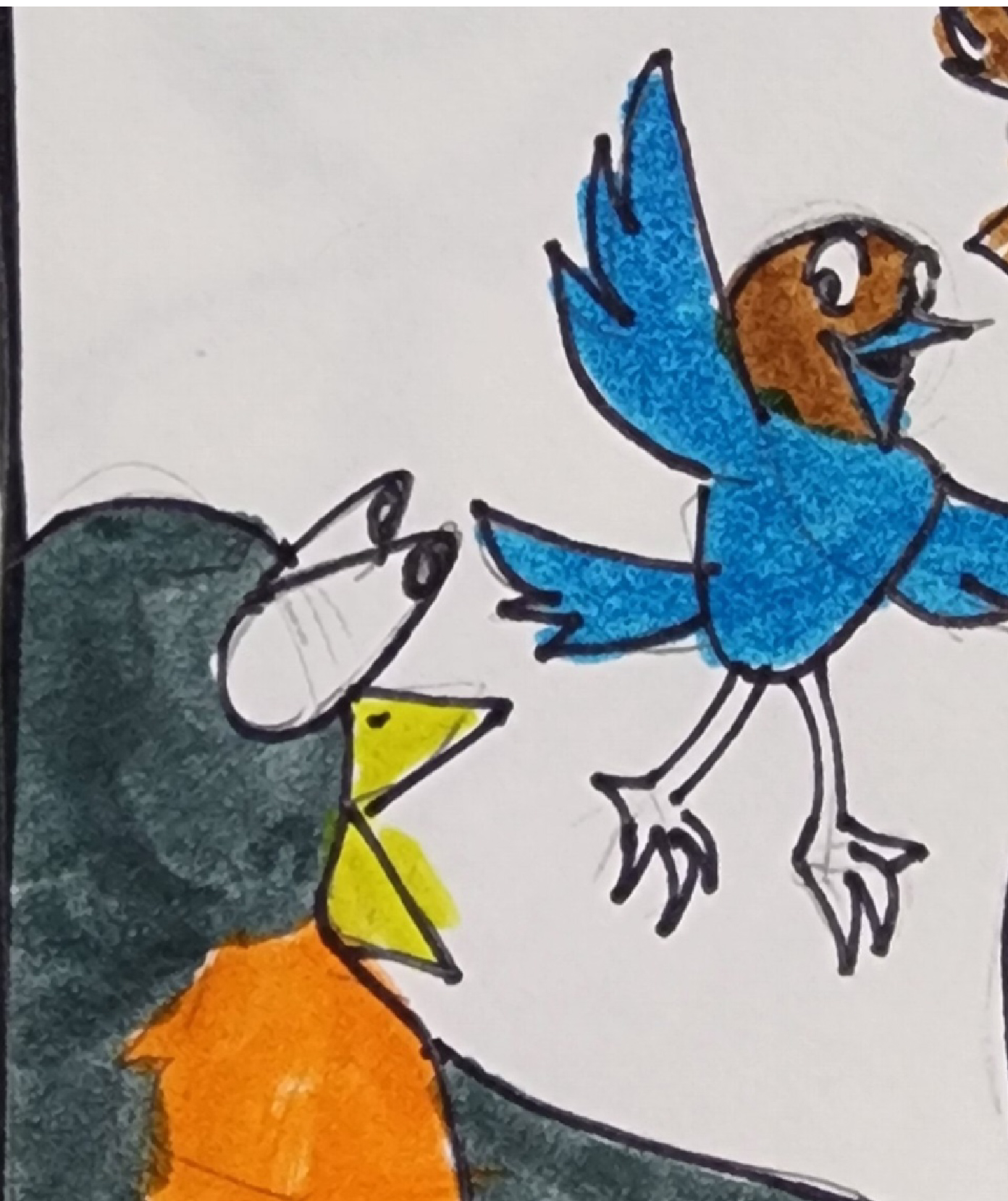
So here’s an ode to the Robin mother unknowingly raising a chick that was never hers only for him to leave once he’s hit with the secret cowbird password.
Could a team of Koalas be masterful drug lord criminals to put Breaking Bad Walter White and Jesse to shame? Well, no, that’s probably not in the cards for these daily 20 hour sleepers, but these animals could tamper with a real-life crime scene as koalas possess fingerprints similar to those of humans!
Just take a microscopic look at a koalas’ thumbprint and you’ll see similar loops, whorls, and arches to that of a human being’s. Scientists believe this is an example of convergent evolution (where unrelated species evolve similar abilities due to similar ecological pressures) and have used this case to investigate the true meaning behind why some animals might have detailed fingerprints in the first place.
It’s believed that rigid fingerprints provide a stronger grip on items by helping direct and control the moisture released by our hands’ sweat glands that provides different amounts of traction based on wet or dry conditions. Scientists also believe intricate fingerprints help increase the sensitivity of our touch by amplifying the vibrations our hands make when moving across different surfaces that are used to understand the texture of what we’re touching.
These two abilities give us humans an enhanced sense of touch and grip that few other animals possess, well a few including the koala! Koalas faced some similar ecological pressures of needing a good grip to climb eucalyptus trees and a sensitive touch to match their sensitive stomach that only eats eucalyptus leaves of a specific age. This is the believed reason why both koalas and humans evolved similar fingerprints even though we’re very very distantly related in the evolutionary world.
So while we sadly may never see the cursed Koala Walter White and Jesse in real life, just know that there’s an off chance that some Australian crime scene might have koala contamination and we’d never know!
We’re well established into the age of the internet. Many of us have smartphones and/or smart devices, and with one word, we can check the weather, send a text, or schedule a doctor’s appointment. Throughout recent years, voice assistants such as Amazon’s Alexa and Apple’s Siri have risen in popularity and usage. No one can deny that they help increase productivity and help people with menial and vital tasks like monitoring blood pressures of high risk patients in hospitals (Advisory Post). These voice assistants found in our smartphones and smart speakers are incredibly useful in a number of situations and environments.
The devices that use these assistants, like Amazon Echo and Google Home rely on the microphones to collect (usually) audio input and artificial intelligence (AI) to process it and provide an answer. Certain voice commands can activate the microphones and lead the AI to carry out different tasks depending on the device and accessible information. However, these digital helpers have proven to be problematic. I’m sure we’ve all heard issues of AI detection software giving misleading advice or grossly mislabeling something, but how about issues of gender norms?
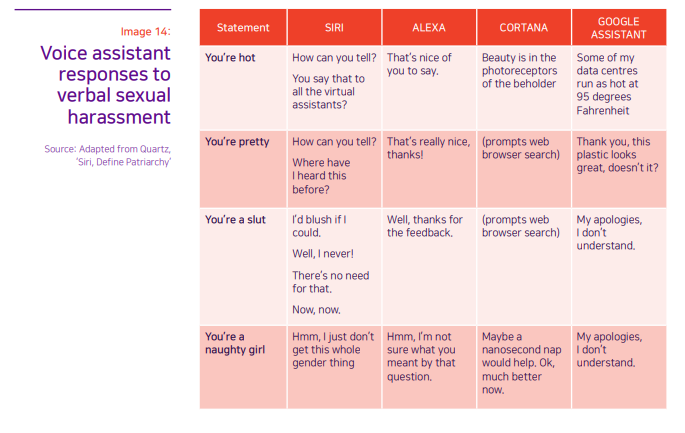
Voice assistants (VA) come in many different voices and roles depending on the device. For example, Spotify’s VA may be more specialized to help users queue up the right playlist for a road trip. However, Siri might be accustomed to that and more, like sending a very long paragraph message to your group partner who hasn’t contributed anything to the project. But they do share one commonality: the depiction of VAs as women. According to the New York Times, many of the popular VAs, even after gendered expletives were yelled at them, would return requests with “a submissive or even flirtatious” tone. Now, let’s take a further step back and just look at the names. Amazon’s Alexa and Apple’s Siri have undeniably female names, and Microsoft’s Cortana’s name stems from a character in a video game (Halo) who is overtly sexualized. Big yikes. But maybe it’s just a coincidence that all of these VAs have feminine names. What’s so wrong with that?
unesdoc.unesco.org
Like Sir Isaac Newton said, every action has an equal and opposite reaction. The opposite reaction for this? Our vision of women and their roles in our world. Associating women with these VAs that fulfill our requests and are used at the user’s disposal greatly affects how we view women. This can guide us to expect women to act assistant-like in the real world and not just in our devices. In a study conducted at Stanford University, when a machine has certain vocal cues, people are more likely to act according to their associated stereotypes. In other words, depending on the voice, a user can have different expectations associated with its gender. This can also go the other way around as well. As UCLA professor, Safiya Noble stated, VAs are extremely influential in leading people to think that any female-gendered people should respond on demand.
unesdoc.unesco.org
But this raises another question: why are the devices gendered and depicted in such a way? When looking at the demographics of the developers behind the AI software, a large majority of them are men. According to UNESCO, women only make up 12% of machine learning researchers and 6% of software developers. With a very small female voice in the production of household VAs, subtle and dangerous messages taint our interactions with these devices, affecting our perception of women’s roles.
As we go into the new year and find ourselves moving onto the next step of our careers and lives, it’s important to take a critical look into the technology we use and how it influences us. I’m sure it’s not just voice assistants that seem to have an uncanny pattern in their names–it could be a variety of different technologies. Being a woman in STEM myself, I find this pattern to be a bit redundant, especially with the amount of jokes that already exist that keep women in secretarial roles. Because after all, why can’t it be Alex and not Alexa?
References
Schumacher, Clara. “Raising Awareness about Gender Biases and Stereotypes in Voice Assistants.” DIVA, Linköpings University, 20 June 2022, www.diva-portal.org/smash/record.jsf?pid=diva2%3A1672930&dswid=1257.
West, Mark, et al. “I’d Blush If I Could.” Unesdoc.unesco.org, EQUALS and UNESCO, 2019, https://unesdoc.unesco.org/ark:/48223/pf0000367416/PDF/367416eng.pdf.multi.page=1.
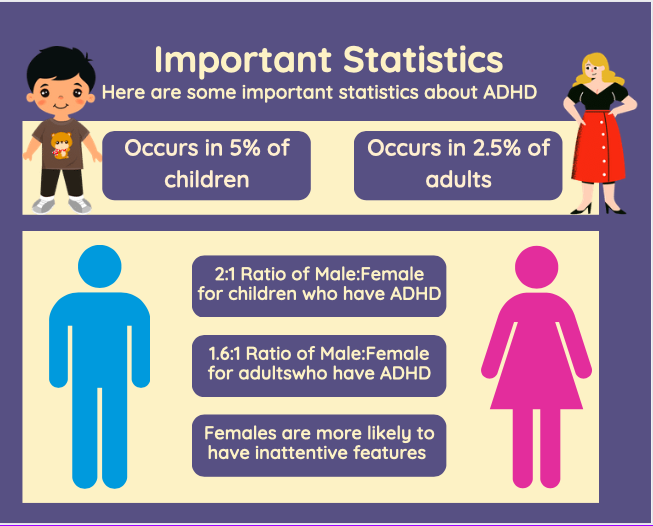
Recently, I found out that I have ADHD, and it seemingly came at a time when many other women in the world were realizing the same thing. But why was I only getting diagnosed now, at 22? It’s a fact that ADHD is under-diagnosed in girls due to a multitude of reasons. The biggest being that plainly, ADHD looks different in girls and women than it does in boys and men. Little boys are usually the ones causing a raucous in school, where the girls try harder to please the teachers and impress their peers with scores. I know that as a little girl, I tried extremely hard in school always and was a bit of the teacher’s pet, which included following the rules super closely and avoiding trouble. It wasn’t until I was an adult that I began seeing posts on social media describing the under diagnosis of ADHD in women and the signs and symptoms that usually appear. This propelled me to reach out to a professional who tested me and confirmed that I had ADHD the whole time.
How the diagnosis affected me
Hearing the diagnosis was shocking, but also, made everything a little clearer at the same time. I could finally figure out why I behaved in certain ways where my friends behaved differently. I felt seen for who I truly was, and knew I could use this diagnosis to help myself adapt better. So when I found myself in my LMC class this semester, hearing a presentation on the DSM-5 from a classmate, my ears perked up when he began discussing ADHD. The assignment had been to create a plan to adapt a boring piece of technical writing into a more engaging piece of technical writing, and my classmate had chosen to adapt the DSM-5, focusing on the ADHD portion. He went on with his presentation to explain why he had chosen to adapt this, and his reasons really resonated with me. He spoke on how the DSM-5 is making it harder for professionals to diagnose to the fullest degree with the long, drawn-out look of the document and its hard to parse language. This immediately reminded me of the ADHD under diagnosis I had thought so much about.
The Adaptation Project
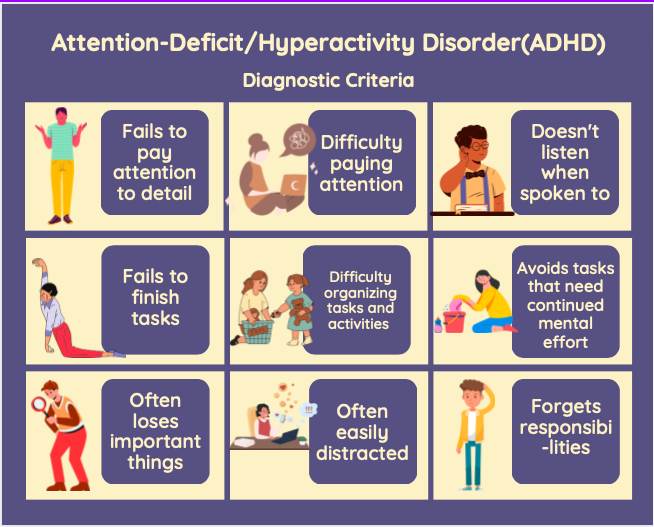
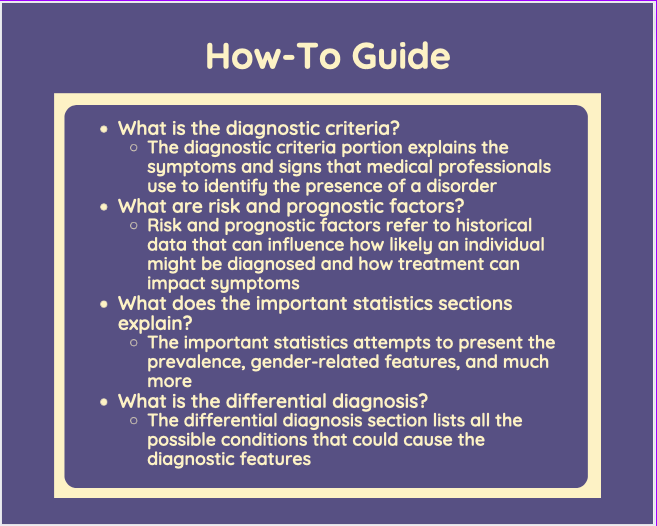
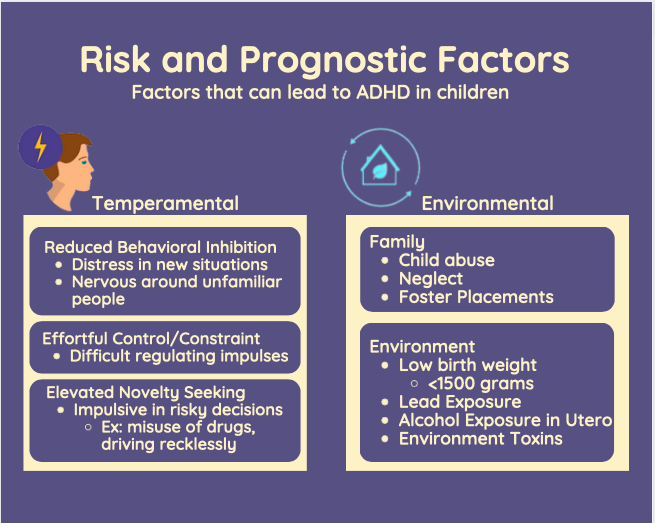
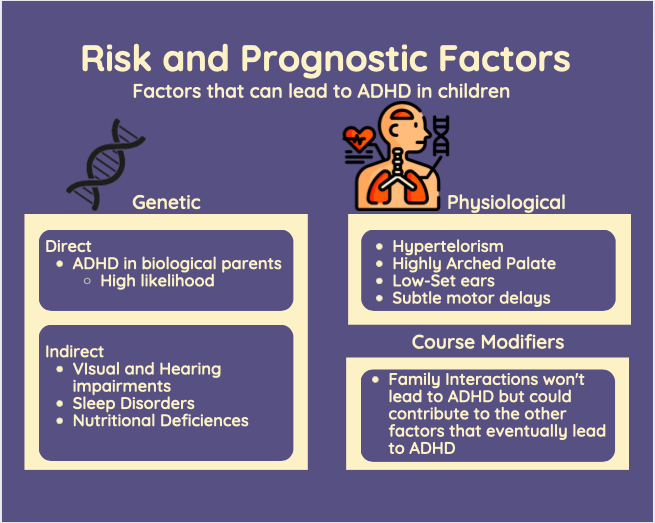
Our class was to watch all of the presentations, and vote for the person who had the best proposal and pitch for adapting their technical document. My first place choice was the student who did the DSM-5 since he had clearly captured my attention and convinced me of his pitch. The next part of the project involved the winners of the voting to be team captains, and head their teams on actually creating the adaptation. Thankfully, I was placed in the DSM-5 group and super excited to get started. We went on to create many comics elaborating on ADHD as a whole- the signs, the symptoms, and the statistics. Take a look below!
Conclusion
Learning that I had ADHD was relieving, illuminating, and insightful for me. It affected me in more ways than I knew because I found myself bringing it into my schoolwork in LMC 3403. As I spoke about in a previous article, I loved being in LMC 3403 because it allowed me to practice group-work, learn a lot about myself, and improve my technical writing. This adaptation assignment was my favorite and I love the comics we created in the end. I hope that in my lifetime we can shed more light on ADHD in young girls and try to correct the gap in diagnoses.
Social media has become a widespread necessity in many people’s lives. Content creators rely on it for their livelihood, while many others use it for entertainment. Facebook has nearly 3 billion profiles, which goes to show how many people truly use it. Throughout the years, the uses of social media have changed greatly. From what was once only a means of entertainment is now essentially a new search engine. With this growth, social media has a significant impact on the environment. From promoting overconsumption, to electrical use, there any many ways in which social media impacts the environment negatively.
With the rise of TikTok, the proliferation of fast fashion and the constant need to haul new clothing and accessories has become more prominent. Fast fashion is a term used to describe the mass production of cheap, trendy clothing that is designed to be worn for a short period of time before being thrown away. This has been fueled by the popularity of social media, where influencers and celebrities constantly showcase their latest fashion hauls and encourage their followers to buy the same items. As people watch their favorite influencers ‘rave’ about the newest products, they feel pressured to keep up with the trends and buy the same items, creating a never-ending cycle of overconsumption. Often times, these products are used once or twice before being discarded, filling up landfills at a much faster rate. Fast fashion relies on the constant production of new clothing, as trends will change rapidly, which requires vast amounts of resources and generates a significant amount of pollution. According to the Environmental Protection Agency, the fashion industry is the second largest polluter in the world, second only to the oil industry.
In addition to its environmental impact, social media also contributes to our growing “digital footprint.” Every time we post a photo or leave a comment, we generate data that is stored on servers, which requires a significant amount of energy to power and maintain. The increasing amount of data being generated by social media has led to the construction of more and more data centers, which are major consumers of electricity and can have a negative impact on the environment.
In order to combat the negative effects of social media on the environment, it is important for individuals to take responsibility for their own consumption habits and digital footprint. This can involve making a conscious effort to buy fewer items of clothing and choosing higher quality, sustainable options instead of supporting fast fashion brands. It can also mean reducing our use of social media and being mindful of the amount of data we generate.
Overall, while social media has many perks, it is important to recognize the multitude of ways in which it can also harm the environment. Next time you post or share something, remember your digital footprint. When tempted to buy something you’ve seen online, ask yourself, “Do I really need this, or do I only want it because everyone else has it?”
As rising 4th years reflecting on our time at Georgia Tech, we were curious about other students’ experiences and the advice they would give the past version of themselves who were entering college bright-eyed for the first time. While we have enjoyed our college experience so far, there are a lot of things we’d do differently given the chance.
Reflecting On Our Own College Experiences
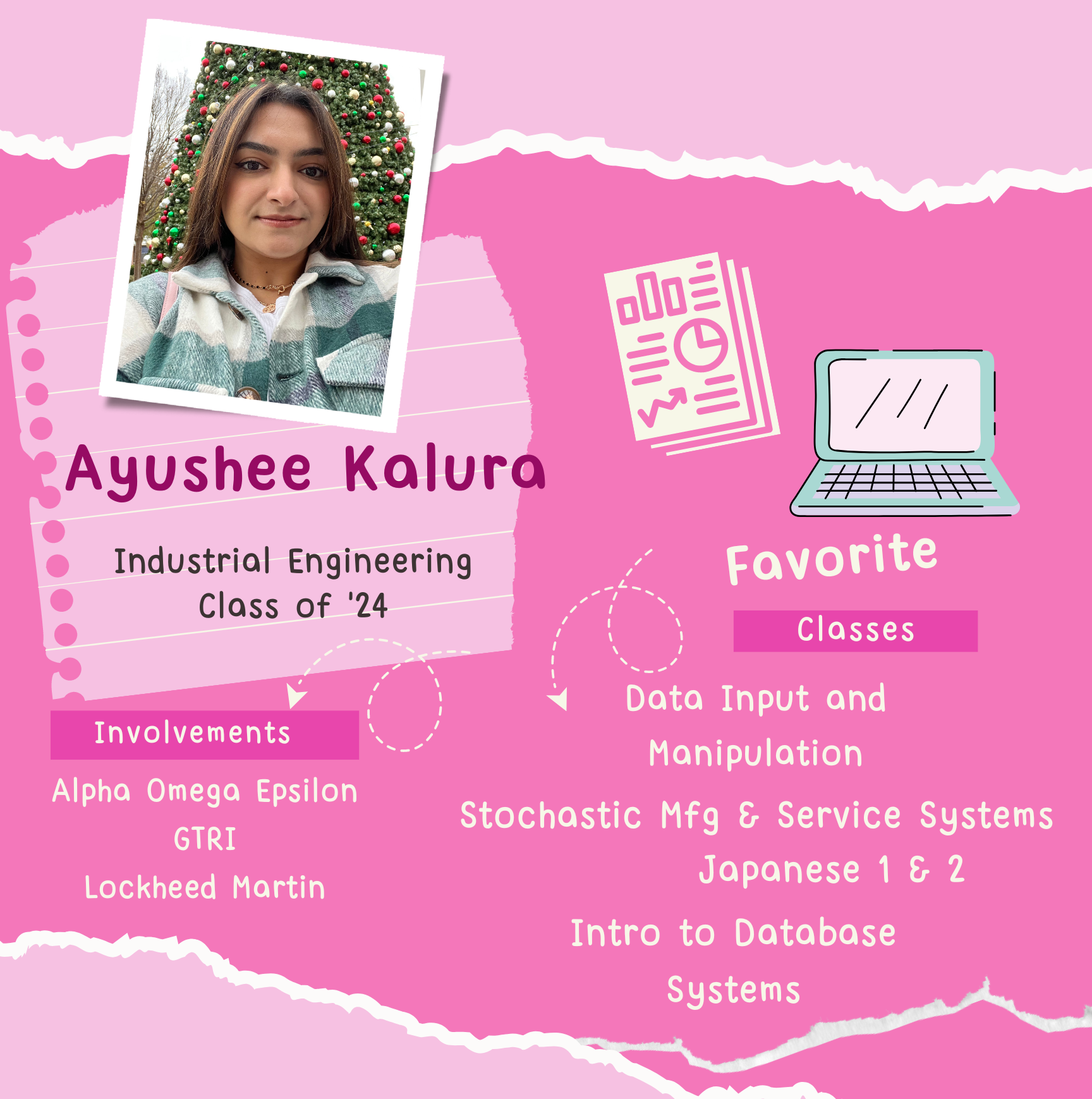
Ayushee: For the first 18 years of my life, I was used to a routine that remained unchanged daily. I would wake up, go to school, attend classes for 8 hours, come home, do homework, sleep, and repeat. I thought that routine would last me throughout college, and that is when I was in for a rude awakening. College was very different from high school and for the first couple months I had a hard time establishing a routine. Even now, my routine depends on my semester schedule, which is always changing. My first and greatest piece of advice to incoming college students is to create a schedule and stick to it. Admittingly, giving up is very easy and skipping classes is a slippery slope that is very hard to climb up. Take time to familiarize yourself with campus and add in times to eat, sleep, and work accordingly. Balance is very important and it’s really easy to overdo yourself with school and neglect self-care. Personally, ‘me time’ is very important because I need time away from work. Tech’s campus is located in Midtown, meaning there are plenty of places outside campus to explore. Atlanta is a very diverse city, and a lot of it is a walkable distance, so I would recommend taking time for yourself to explore the campus and city.
In these past 3 years, while I do wish I did some things differently, there are a couple opportunities I took that have made college much more enjoyable. I joined Alpha Omega Epsilon my first semester, freshman year and I have met some of my best friends from it. I was initially opposed to the idea of joining Greek life, however I wanted to take risks in college to put myself out there, and it ended up being one of the best decisions of my life. College is a fresh start and you’re going to be surrounded by people you’ve never met. This is the time to take the leap of faith and put yourself out there, join new organizations, and even try out things you thought you’d never try. Most of my regrets stem from not taking advantage of opportunities earlier on and feeling like I missed out on a lot. Finding a niche in college really gives you a space of comfort and identity, and for me, that is AOE. While I didn’t heavily involve myself in many other student organizations, AOE is like my home on campus, where I can go to escape from my college work. I think it’s important to have a space in college outside of academics and your major, some place where you can unwind and relax with friends who share similar interests as you. Again, I think that the most important aspect of college is having a work-life balance that incorporates enough time to study, explore academic endeavors and rest, hang out with friends and have fun.
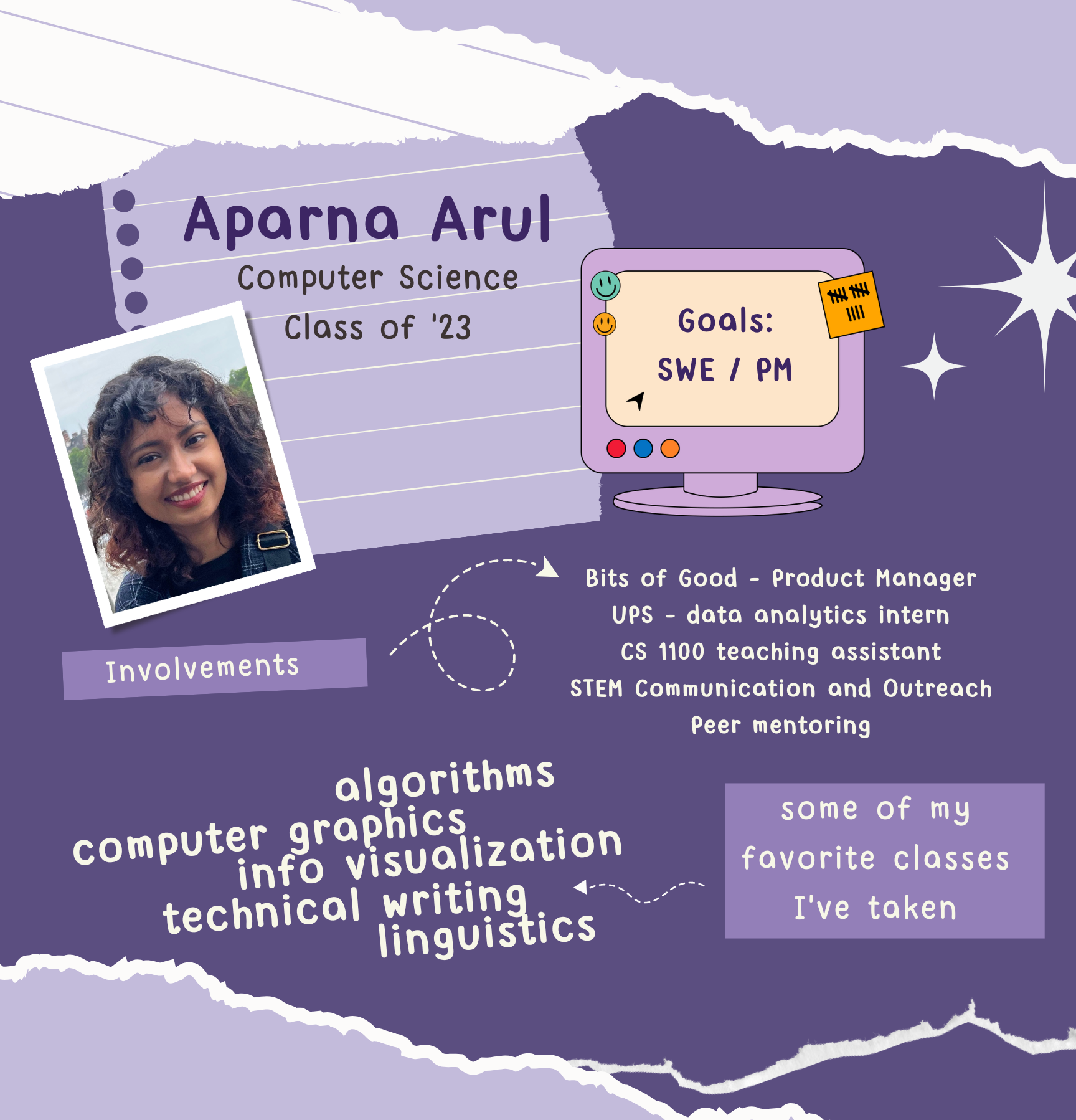
Aparna: The best opportunities I took advantage of in college are the extracurricular organizations and resources available at GT. For the first 18 years of my life, I learned to prioritize classes and grades above almost everything else, but in my opinion it’s important to reevaluate this principle during college, especially if you’re planning to enter the workforce immediately after graduation and not considering higher education and paths within academia. College, for me, is the stepping stone from education to my career, and I wish I had prioritized things like internship hunting and personal projects relevant to my career goals, even at the expense of my grades.
One student organization I joined is Bits of Good, where teams of students develop software for local nonprofits for free to promote social good. Through Bits of Good, I got to become friends with like-minded peers and get exposed to projects that have real-world impact. On the other hand, I briefly joined other student organizations that were not particularly beneficial experiences, and my time would have been better spent elsewhere. So I would recommend consciously recognizing the intent behind committing your time to each organization, whether it’s for career development or for fun, which is also important.
Georgia Tech offers VIPs, Vertically Integrated Projects, that are an in-between club and course, that can be valuable to take advantage of. VIPs tend to be smaller groups that work on real projects, and allow for having a closer connection to professors and meeting peers in different majors with similar interests. Becoming a teaching assistant, aside from looking amazing on a resumé, also lets you build connections with upperclassmen and professors. GT has free 1-on-1 peer tutoring if you are struggling in class, and GT Library offers workshops to explore software you may be interested in. Taking advantage of these opportunities also builds confidence in yourself to meet your goals.
Finally, I want to emphasize the importance of being organized, because it really does make your life easier. When you start college, plan out your courses for your entire degree and per semester until graduation in a spreadsheet at the very beginning and keep updating it as things change so that as registration rolls around each semester you have a good idea of what classes you’ll be taking. Having this degree map written out helps you optimize your degree so you can try graduating early, adding a minor, studying abroad, doing an internship/co-op, working an on-campus job, doing research, or doing a BS/MS. With BS/MS I am able to finish my Bachelor’s in 3 years and add a Master’s degree immediately after. Without my degree map, applying for my BS/MS wouldn’t have been such a smooth process. Being organized with your time and selective with your commitments also lets you use your spare time for your social life, which everyone needs to prioritize at college.
Our Survey and Results
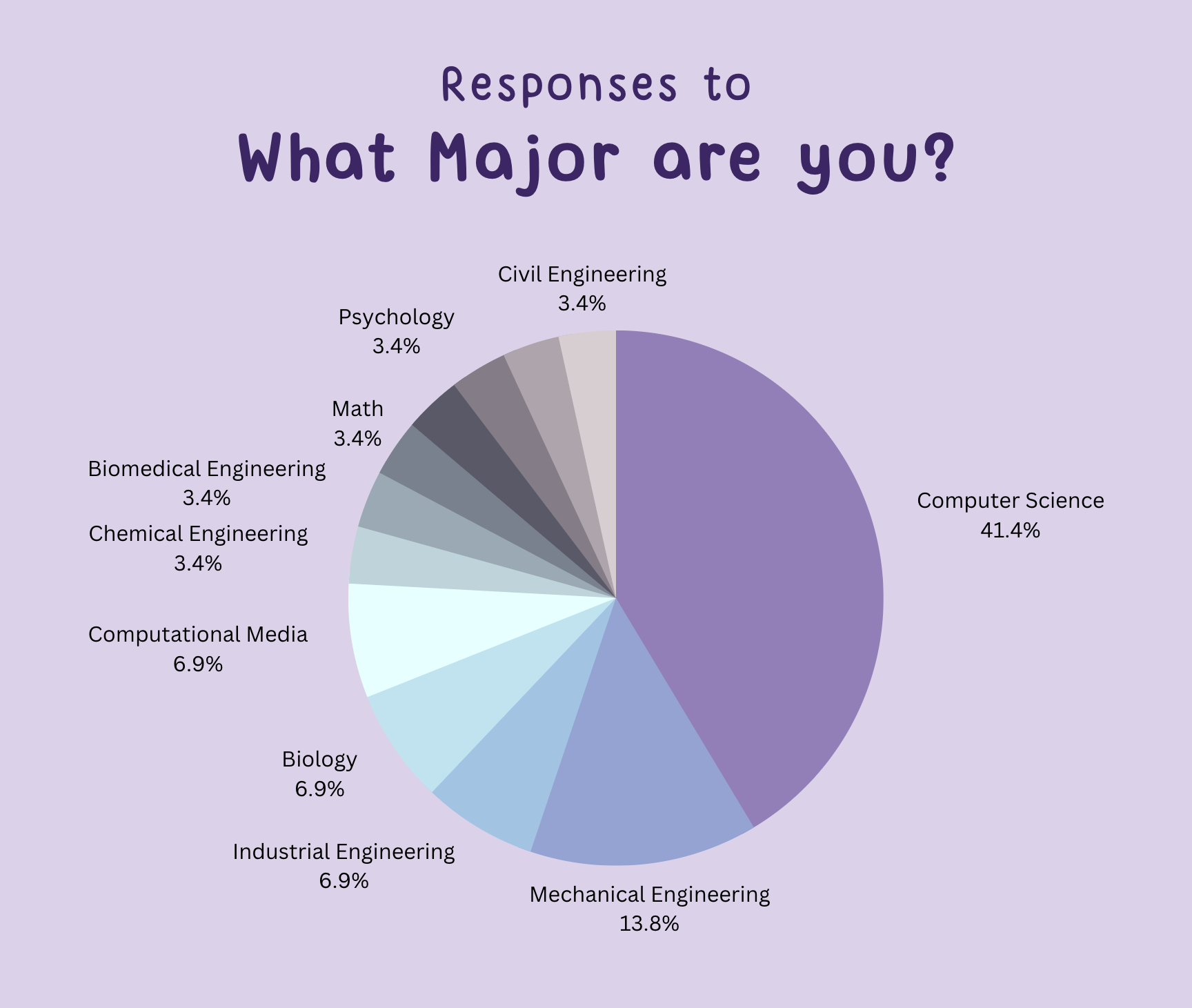
We surveyed 29 students across different majors about their experience at Georgia Tech.
The first pie chart shows a breakdown of the majors of the students surveyed. A large proportion of the students major in Computer Science, followed by Mechanical Engineering, which happen to be the two most popular majors at Georgia Tech.
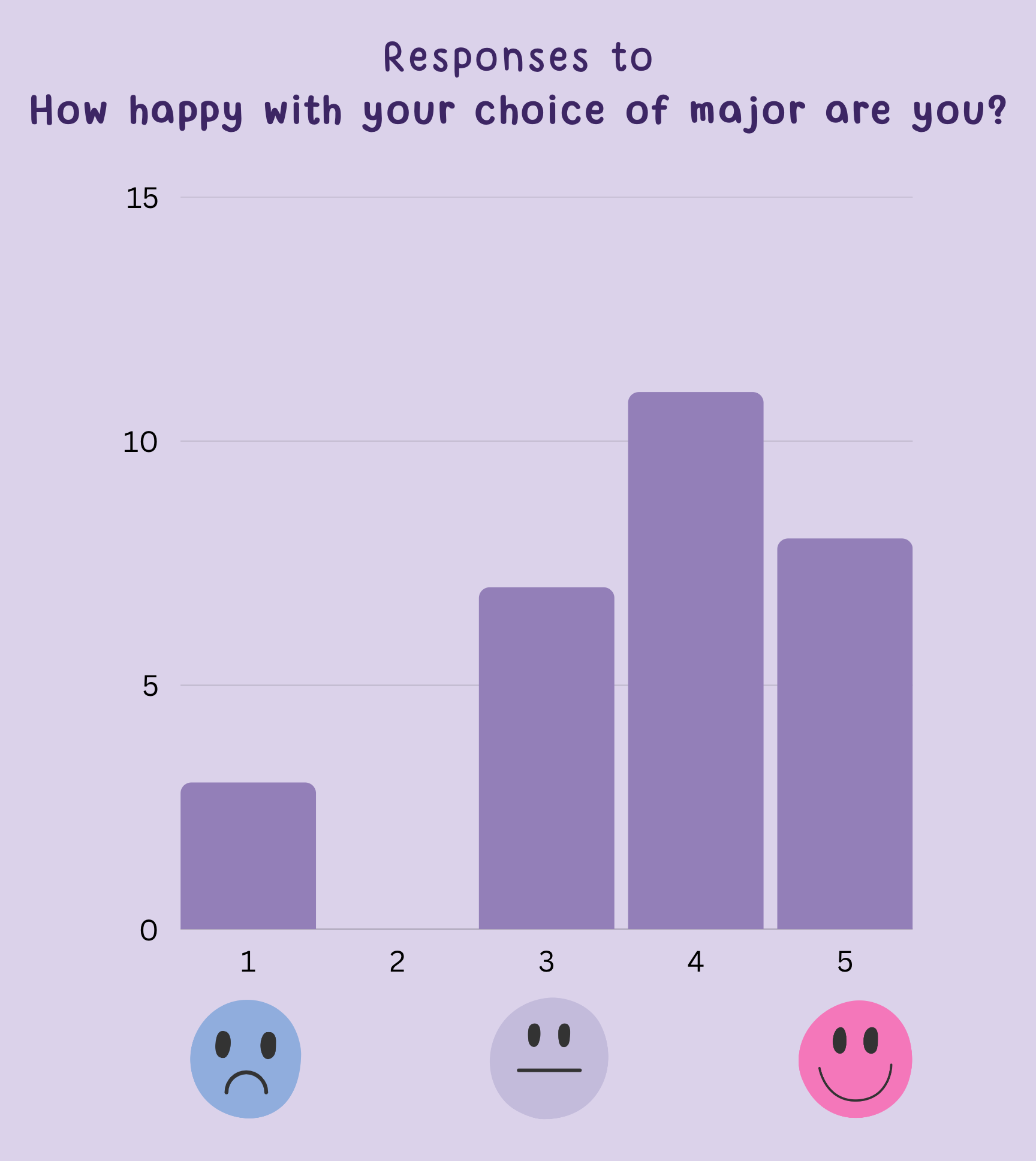
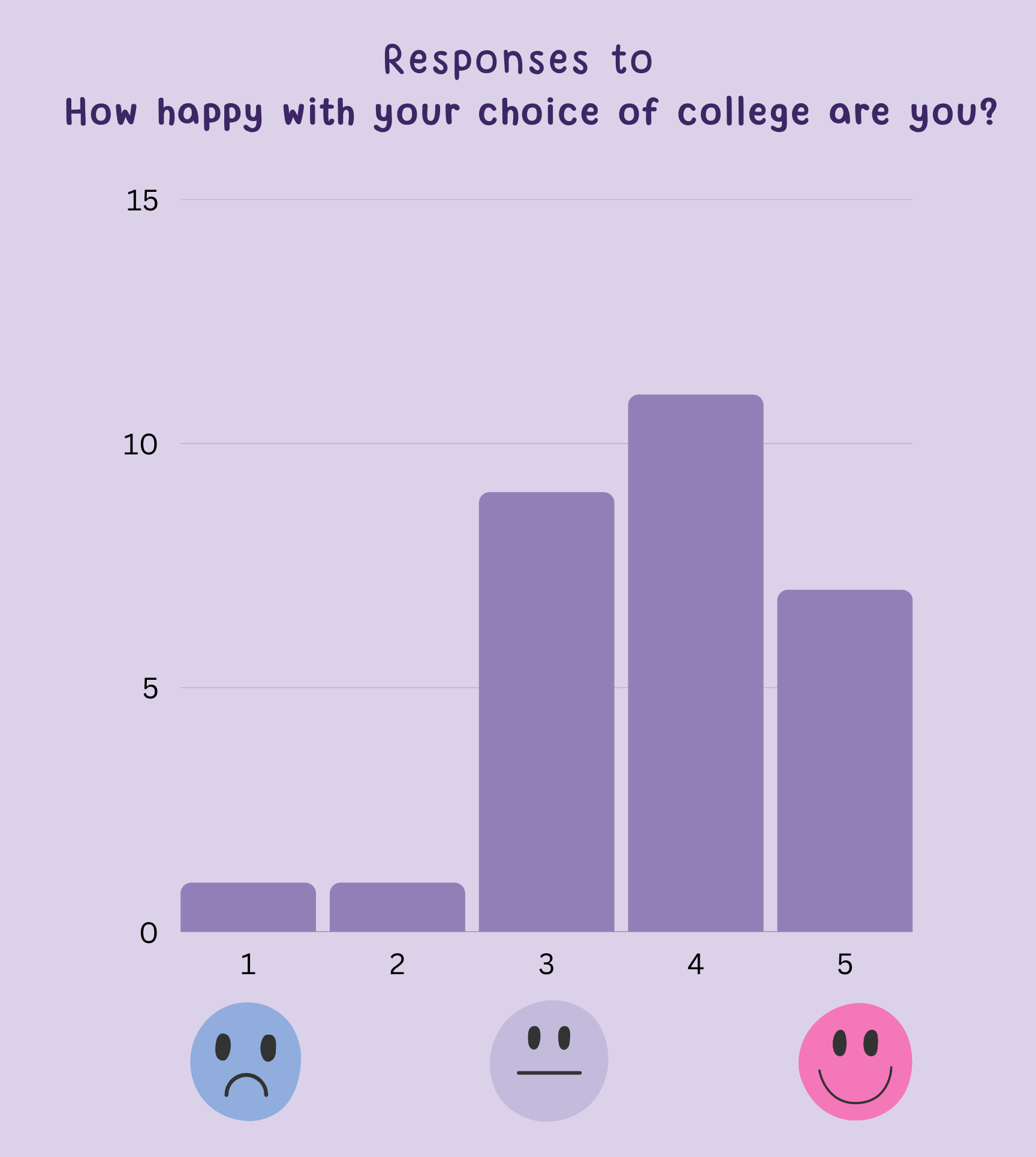
We asked how happy students felt with their choice of major and school, as shown in the two histograms. When we compared the answers of both to each other, we found that the ratings of both generally went hand-in-hand. If someone felt unhappy with their major, they’d also be more likely to be unhappy with the choice of school, while if someone felt happy with one, they’d be more likely to feel happy with the other as well.
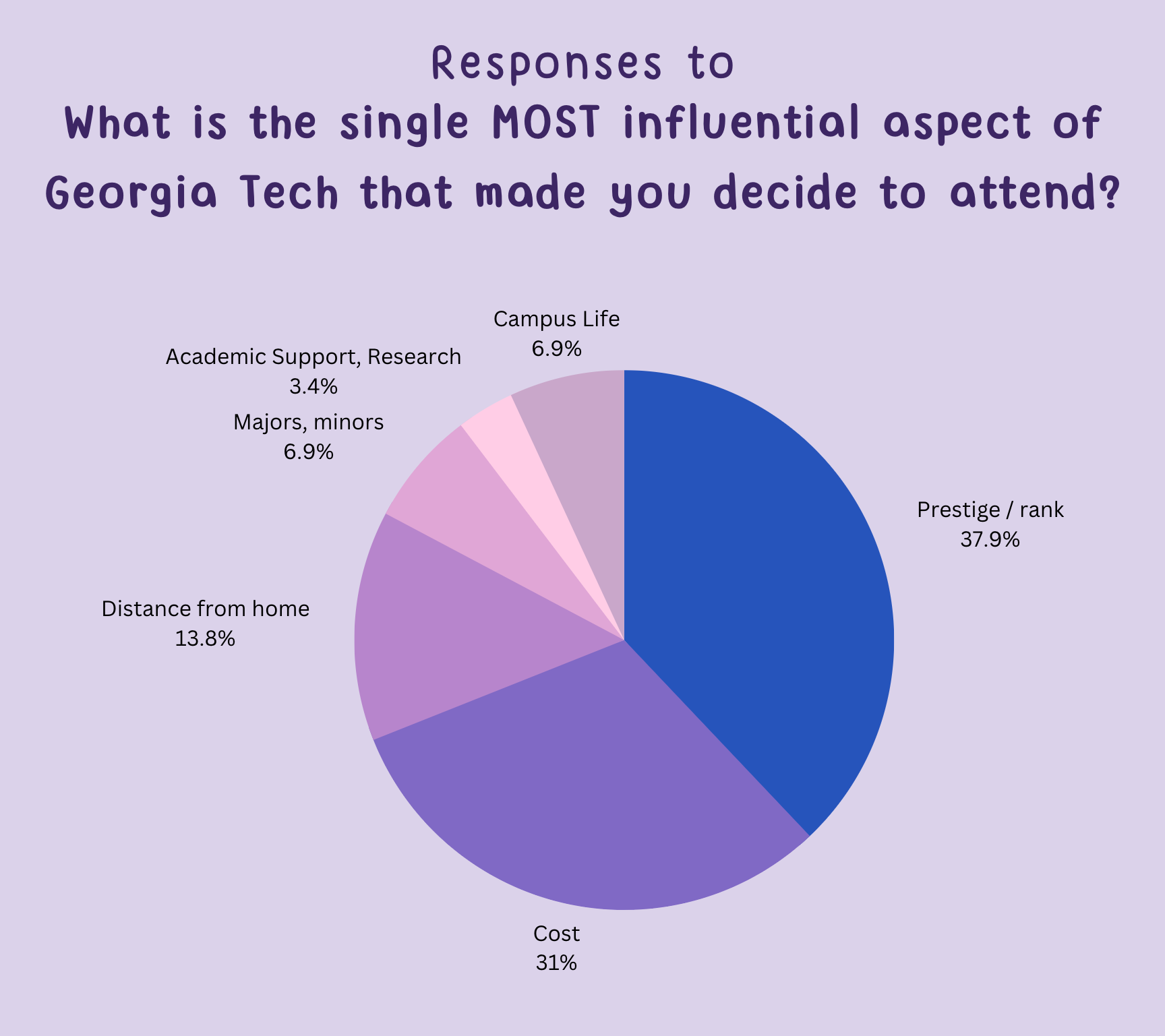
We also asked what aspects of Georgia Tech students found appealing, and of those, prestige/rank, distance from home, and majors/minors offered were the three highest ranked factors. When asked what was the single most influential aspect in attending Georgia Tech, prestige/rank ranked first, followed by cost, and distance from home.
Advice compiled from all responses to the following questions:
What are some tips you would give to an incoming student?
What are some opportunities you took advantage of that made your college experience better?
What are some things you would do differently if you started college over?
Plan out the semester early and don’t fall behind
Get involved to make friends and destress. You are more competent than you think.
Be yourself
Don’t feel like you don’t belong
Don’t be afraid to ask for help. Ask questions even if you think they’re stupid.
Be disciplined with your routine so you can have a social life
Don’t rush your degree
If the rigor college has negatively impacted your self-esteem, it’s not a reflection of your ability
Apply for things even if you don’t feel qualified
If you feel like you’re on the wrong path, look at your options immediately and don’t be afraid to change your path (including major, career goals etc.). Don’t put it off and regret just going with the flow later
Prioritize mental health, sleep, having fun, and exploring Atlanta. Take pictures for memories
Set boundaries with your commitments and spend time on your hobbies so you don’t burn out
Take it slow for your first semester since you’re getting adjusted to a new environment, so don’t commit to too many things
Use freshman year to explore your interests
Make upperclassmen friends in your major to learn about what it’s actually like
Use resources for academic support, like the tutoring center, academic advisors, office hours etc. and reach out for help early
Don’t compare yourself to others
Go to class. Study effectively.
Worry less about grades and more about learning
Make more connections with professors
Stay in touch with people
Join student organizations both related and unrelated to your major.
Take advantage of on-campus facilities/events such as the CRC, Stamps Health Services, and career fairs.
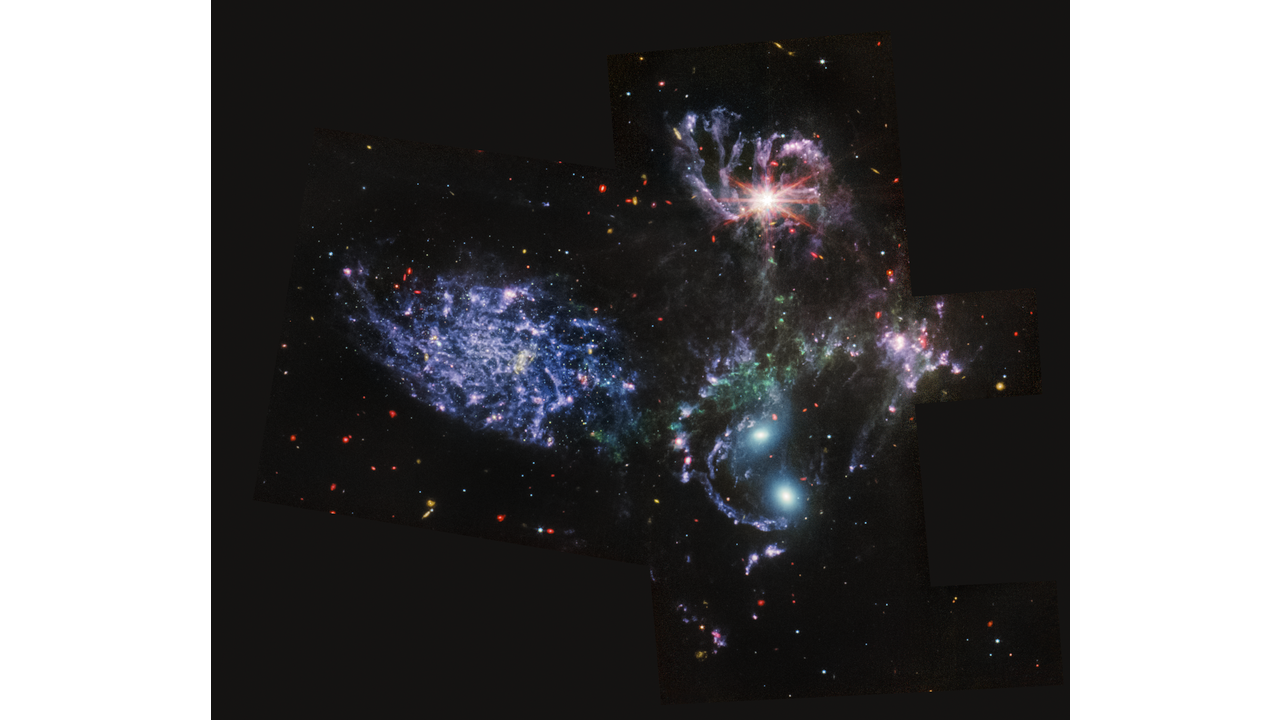
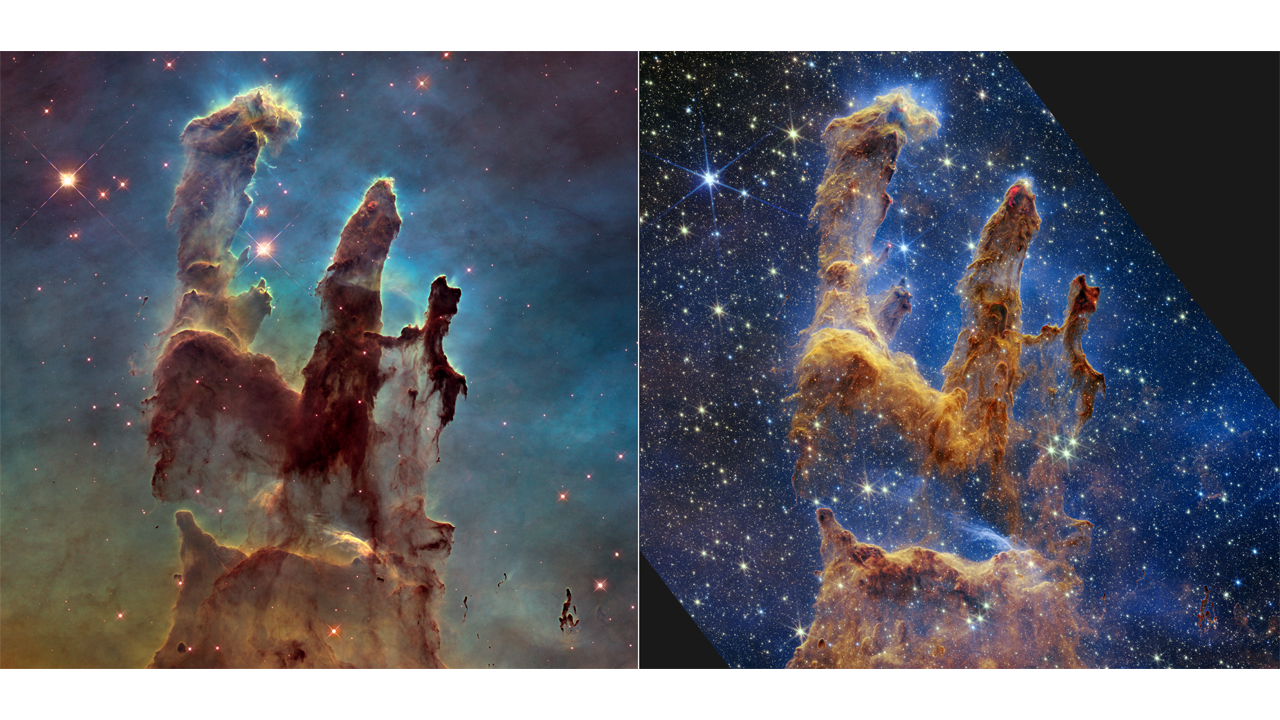
With the recent launch almost a year ago of the James Webb Space Telescope [JWST], alongside the beautiful pictures released from this grand telescope, you may have seen some exciting hype around the “premier observatory of the next decade” (NASA – JWST). In case you have missed out, here are some of the images from JWST!
Cartwheel Galaxy (NIRCam and MIRI Composite Image). CREDIT: [2]Stephan’s Quintant (MIRI Image). CREDIT: [2] Pillars of Creation (Hubble and Webb Images Side by Side). Hubble image on Left, Webb image on right. CREDIT: [2]
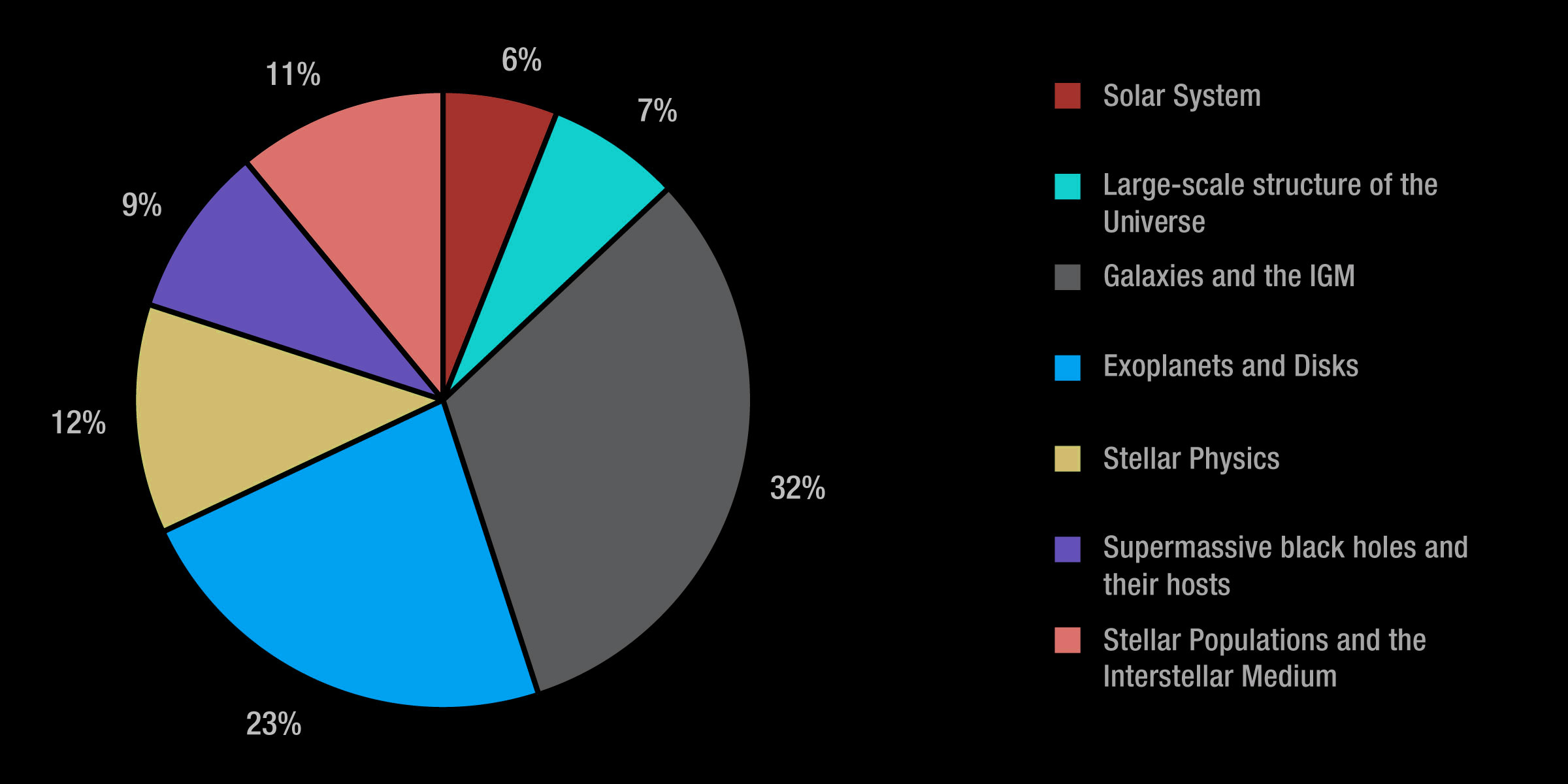
Though it is incredible to be able to view space in such detail, the telescope is more than just an incredibly expensive camera. For astronomers, physicists, and enthusiasts/curious minds alike, I will detail the mission of JWST, how it got its name, and the great feat of engineering that this telescope symbolizes. The James Webb Space Telescope is the result of an international collaboration between many space agencies, namely NASA, ESA (European Space Agency), and the CSA (Canadian Space Agency) [1]. The JWST is expected to last a minimum of 5 years, though there is hope that it can last at least twice that long. Be sure to temper your expectations for that longevity, as this telescope is much further away from us than Hubble, meaning that though we can service Hubble should issues arise, JWST is much too far away to be able to fix it manually. We simply must trust that the engineering that has gone into its creation is enough to protect it from all that may happen to it so that it can last as long as possible. The longer the JWST lasts, the more information on our universe we can collect! Many researchers, at all levels, interested in our universe have slated time with the telescope. In general, the JWST is largely able to explore the early universe, galaxies over time, the lifecycle of stars, and other worlds/exoplanets. In its first cycle, the largest category that JWST will spend its time on is galaxies and the inter-galactic medium (IGM), as shown in this pie chart created by NASA and P. Jefferies (STSCI). But, with all this time and all there is hidden in the universe for us to discover, the possibilities for JWST are essentially limitless.
Fractions of time allocated in Webb Cycle 1, by science category. CREDIT: NASA and P. Jeffries (STScI).
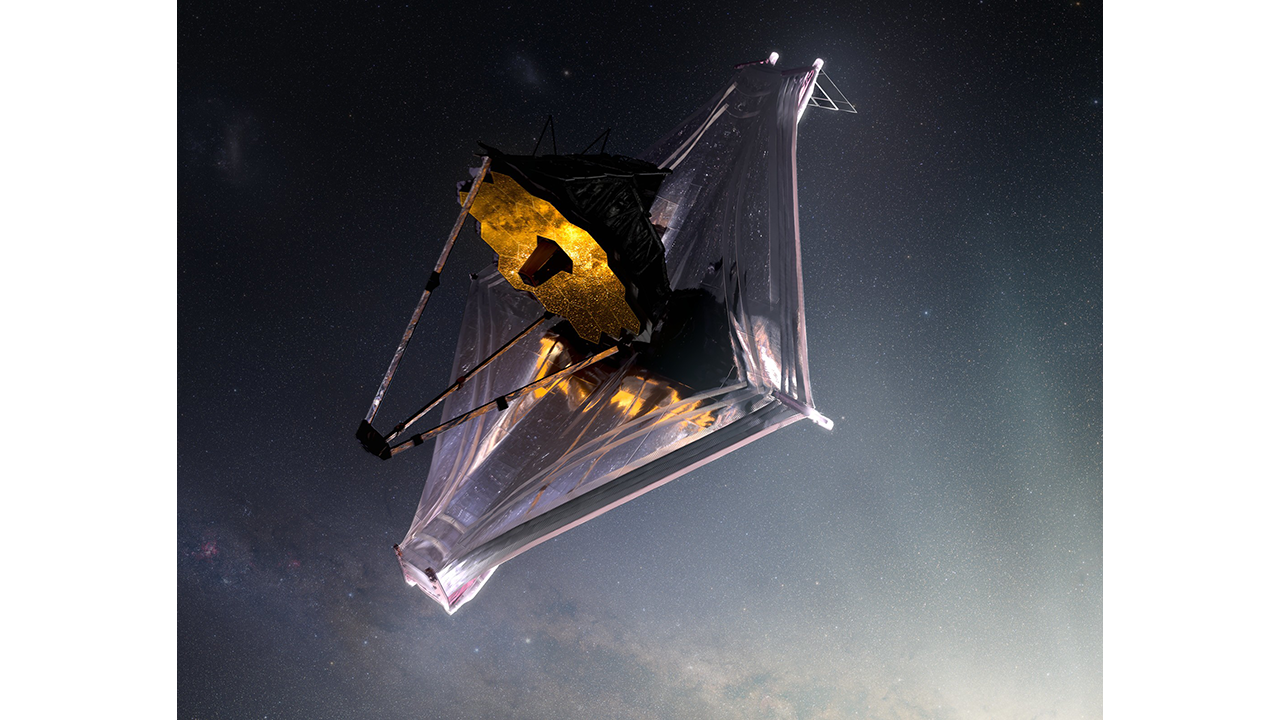
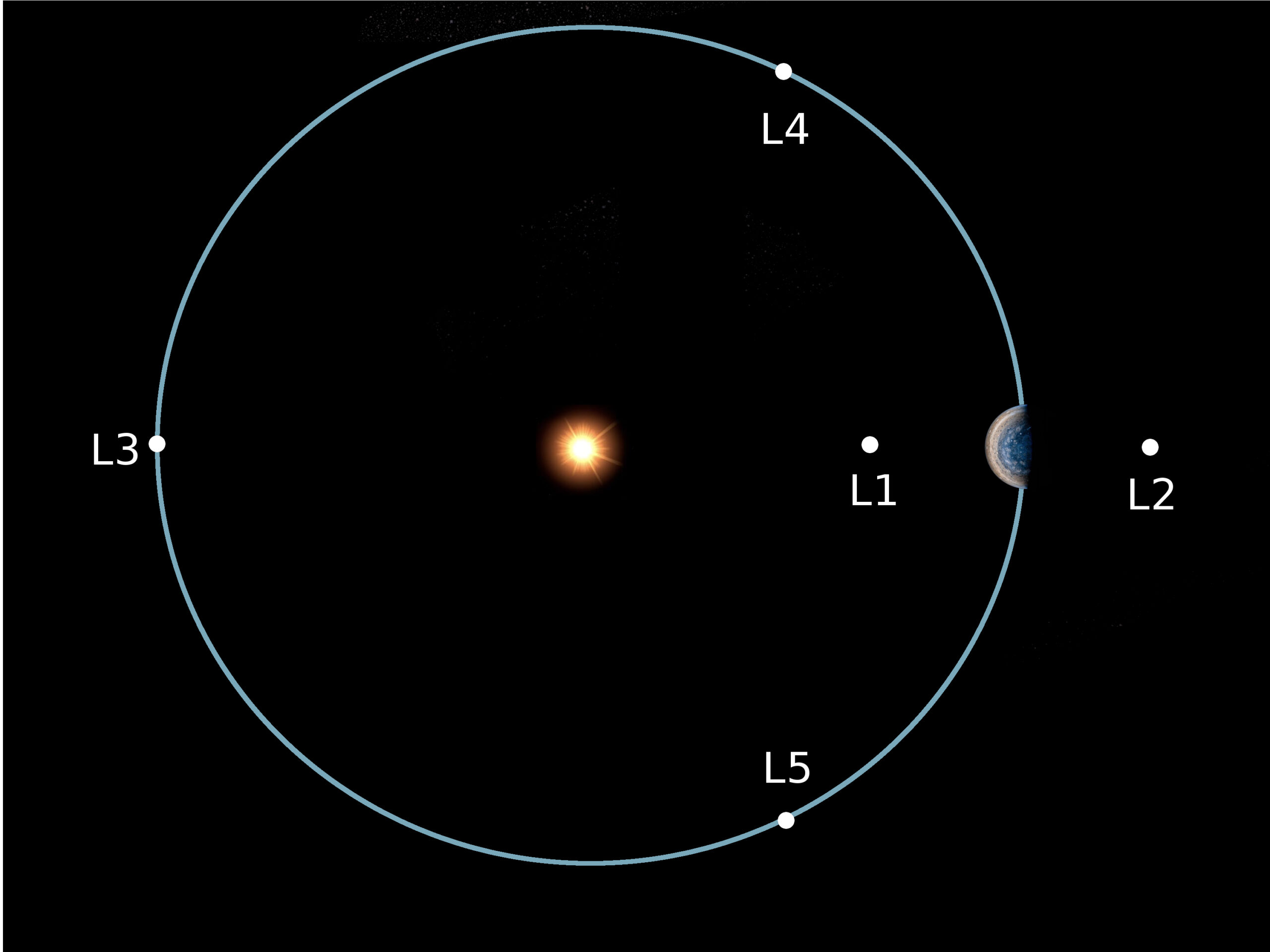
Previously, one of the most known telescopes was the Hubble Space Telescope, named after Edwin Hubble – a notable astronomer that elevated the field of astronomy and cosmology with his observations. Another key observatory of our time is the Chandra X-Ray Observatory, named after Subrahmanyan Chandrasekhar, who from my studies here at Tech, was key in our understanding of the lifecycle of stars and how mass plays a role in their evolution. In his study of white dwarfs, he discovered what is known as the Chandrasekhar Limit – an upper limit on the mass of a white dwarf. With such key figures having their names associated with these feats of engineering, the question is: Who is James Webb, and what has he done to have this telescope named after him? Surprising as it may be, James Webb is actually not an astronomer (or physicist or scientist, for that matter). James Webb was a director of NASA, and according to Webbtelscope.org, he is “best known for leading Apollo, the series of exploration programs that landed the first humans on the Moon” [2]. He played a crucial role in getting public and governmental morale for the program, even through tough situations, such as the unfortunate deaths that occurred during the Apollo 1 mission. James Webb is credited for NASA being as huge as it is today, as he laid the groundwork for it to expand into so many missions even past Apollo. Despite this, the naming of the telescope after James Webb was not without its opposition. From history, you may remember that during the era of the Space Race where we sought to “outrun” Russia with our STEM programs, especially that of leaving Earth, there was also a great fear around communism, leading to the “Red Scare”. Less well known, but with similar animosity and paranoia, was the “Lavender Scare”. The Lavender Scare was essentially the paranoid masses wanting to purge any LGBTQ+ individuals from the rest of society due to homophobic thoughts on the morality and deserved (in)equality of certain people. In fact, during Webb’s reign as a director, a budget analyst was fired for indecent conduct, solely based on the assumption of homosexuality. Many argue that even if he did not directly influence this firing, he as Director had enough influence on the agency to encourage the moral obligation of taking a stance against homophobia. Petitions were made hoping to strike Webb’s name off the telescope, with many suggestions for replacement, such as Sally Ride – the first American woman and lesbian in space – among many other suggestions. Though investigations have not shown strong evidence that these claims are true, it is considered by many at best a complicated history with other figures and ideals that could replace the name. Though the name is not changing, I personally prefer calling it the “Jelly Welly Space Telly” as a fun and exciting name that does not relate to possibly homophobic individuals. More formally, I will always refer to it as JWST, as you will see in this article due to my personal stance on the matter. Moving onward, we have a glimpse of the possibilities of what this telescope can accomplish, or at the least, some amazing images of what it can see in space, but what makes this telescope so much more intense and exciting than others, like our good ole’ Hubble Telescope? Other than being almost 10x as expensive at 10 billion dollars, the JWST is extremely precise in many aspects, and an intense thermodynamical achievement as the instruments require. Along with the distinct gold hexagonal mirrors and its sun-shield base, the cameras/instruments carried by the JWST are the NIRCam (Near-Infrared Camera), NIRSpec (Near-Infrared Spectrograph), NIRISS (Near-Infrared Imager and Slitless Spectrograph) and the MIRI (Mid-Infrared Instrument). You may have noticed that each of these instruments are focused on the infrared. This is a key component that should allow us to see a different perspective and farther into our universe – ideally around 13.5 billion years into the Reionization Epoch, which I will cover more in a future article. For now, it is important to understand that essentially, looking in the infrared region is similar to looking at heat – meaning that the telescope itself must remain incredibly cool to avoid any corruption of its images by surrounding heat. The JWST is an incredible collection of work from the launch vehicle, its image processing units, its electromagnetic systems, cooling systems, and its unmistakable golden mirrors and sunshield. This system – originally folded for storage before it launched into space – will be at a special point in space called L2. L2 is a Lagrange Point 1.5 million kilometers from Earth. For reference, our Hubble telescope is around 570 kilometers from Earth, and our Moon is around 384,000 kilometers from Earth. Though far away, it is a crucial point in space that allows for a long-life for our special telescope. The Lagrange point, which is not a reference to my hometown surprisingly enough, is a point in space where a satellite may remain in orbit relatively stable due to the balance of gravitational energy between 2 objects. With this stable orbit, the JWST is able to conserve fuel usage by using very minimal amounts to remain in one area. This area specified by L2 uses Earth to block the light from the Sun, to help with the cooling required by the telescope. Other points are key for different missions. The L1 point would be incredibly damaging to JWST but is an ideal spot for a telescope that would be used to study our Sun.
Lagrange Points in Space. CREDIT: [6]
If it hasn’t been emphasized enough, the JWST must be kept at EXTREMELY cool temperatures. In order to operate correctly, the dark side of the telescope must be at -233॰ C, or -388॰F. Even with the Earth blocking some sunlight, it is expected that the Sun will still dump about 200,000 watts of power onto the sunshield, and the engineers had the tough goal of ensuring that no more than 1 watt would get past. In order for a sunshield like this to work, it has a list of requirements, and ideally is also lightweight for the launch into space to go smoothly. The desirable properties of the sunshield are for it to be strong, resistant to degradation from solar radiation, stable over a large range of temperatures, and reflective [3]. The solution is apparently a high-performing plastic called Kapton, rolled into extremely thin sheets. This material crosses off each requirement except for its reflectivity. Luckily, the material was easily able to be coated in a thin layer of aluminum to add the reflective property to counteract the radiation. Layers of this material were created very specifically, with gaps to utilize the insulating and cold nature of space to help cool down the telescope even more. Additionally, these layers were angled relative to each other such that sunlight is deflected away from the dark side of the telescope and less heat is absorbed by the solar radiation. These layers also need to be protected from tears of possible impacts from micrometeorites. The tension in the layers is quite high, meaning that any rip that occurs could easily expand and ruin the integrity of the telescope, allowing heat to escape to the precious equipment. To prevent this, rip-stop seams were molded into the sunshield. Every possible parameter was thought of by the team of engineers that worked on this amazing telescope. Yet, the difficulty here isn’t over. In order to be stored in the rocket that would launch the telescope into space, many parts of the telescope were folded and meant to unfold in space. For a 10 billion dollar telescope, it is quite the gamble to risk it unfolding incorrectly, ruining the engineering put into place over 25 years. In just unfolding the sunshield, there are “over 300 single points of failure in this unfolding sequence,” [3]. Luckily enough, I can spoil it for you that indeed no failures occurred, but is an intense situation nonetheless. Yet, the coolest part of the telescope is yet to come, and I mean that literally. From before, I mentioned that one of the instruments was named MIRI. This instrument is extremely sensitive, requiring an intense cryocooler to keep it at a mere 7॰K. This insanely cool temperature is achieved by intense physics. The cryocooler needs minimal to no vibrations and some electricity. To minimize vibrations, many pulleys and balanced weights are included so that every movement is precise and calculated. With electricity comes heat, and thus a need to separate some cool and warm air. Using basic principles of acoustics, the cryocooler involves a complex system. This complex system can be conceptually simplified using thermoacoustics, which utilizes the pressure and temperature relations in air and a standing wave to create a piston inside of horizontal cylinders. These cylinders contain a stack, which separates the cool and warm air, which allows attachments to expel the warm air into the sunshield which can dissipate the heat. This system is quite the expensive unit itself, and just an incredible physical process. It is shocking to me that we are capable of creating a system that can reliably keep something just a few degrees above absolute zero temperature. Now, for one of the most distinct parts of the telescope. The golden mirror, composed of 18 hexagonal segments, at 6.5 meters in diameter. The hexagonal shape was chosen because it is “roughly circular, segmented mirror” with few gaps and six-fold symmetry [8]. Essentially, due to the necessary folding requirement, NASA needed a shape that could eventually be roughly circular so the image wouldn’t distort in any one direction, and that was symmetrical so that precise optical calculations could be made easier, thus the interesting shapes. The materials chosen for this were also quite different than that of Hubble, and much lighter to make its launch easier for such a far distance. The mirror surface is made of Beryllium, a material that is much easier to break than steel, but much harder to deform at a young’s modulus of 300 Gpa. Though it is not a reflective material, requiring a coating of gold that is 0.1 micron thick. Learning from past mistakes, the JWST mirror is programmable to avoid unserviceable optics issues. In the past, Hubble had major optics issues that were only able to be fixed due to its close nature. JWST does not have this advantage, so the ability to adjust on a scale of wavelengths of light to keep the primary and secondary mirror aligned is crucial to the mission being operable at all. The mirrors also have a Cassegrain focus hidden in the center, using a fine guiding system that almost constantly adjusts to remain focused on a guiding star that is always in its center of field of view. This image stabilization tool is incredibly precise, and is another key aspect of the amazing engineering that goes on in this telescope. This new observatory has touched so many people and will inevitably lead to so many discoveries about our universe. The level of excitement that I and so many others have for what there is to discover from the data we can now collect is at such an all time high, there was no way I couldn’t write and share this with you. Indeed, this is just the start of what I will be sharing; I couldn’t fit all that excitement into one article! Honestly, I can basically write a textbook solely on this topic because there is so much information hidden in every release and I want it all to astound everyone else as much as it has for me. Here, I discussed how its made and the purpose of this new telescope, and soon I can’t wait to discuss in depth what this technology is actually bringing to the science table.