Written by Aparna Arul and Ayushee Kalura
As rising 4th years reflecting on our time at Georgia Tech, we were curious about other students’ experiences and the advice they would give the past version of themselves who were entering college bright-eyed for the first time. While we have enjoyed our college experience so far, there are a lot of things we’d do differently given the chance.
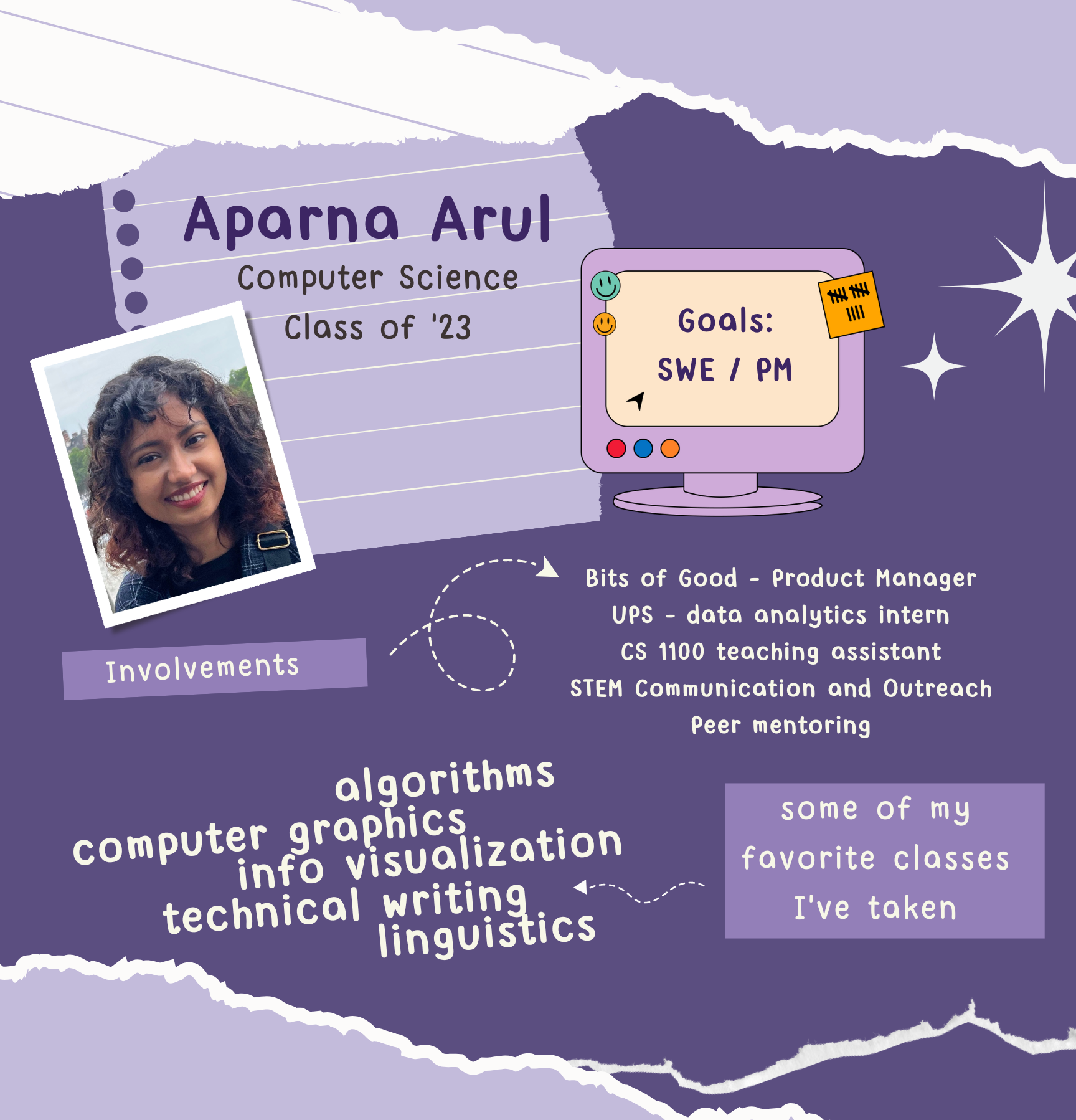
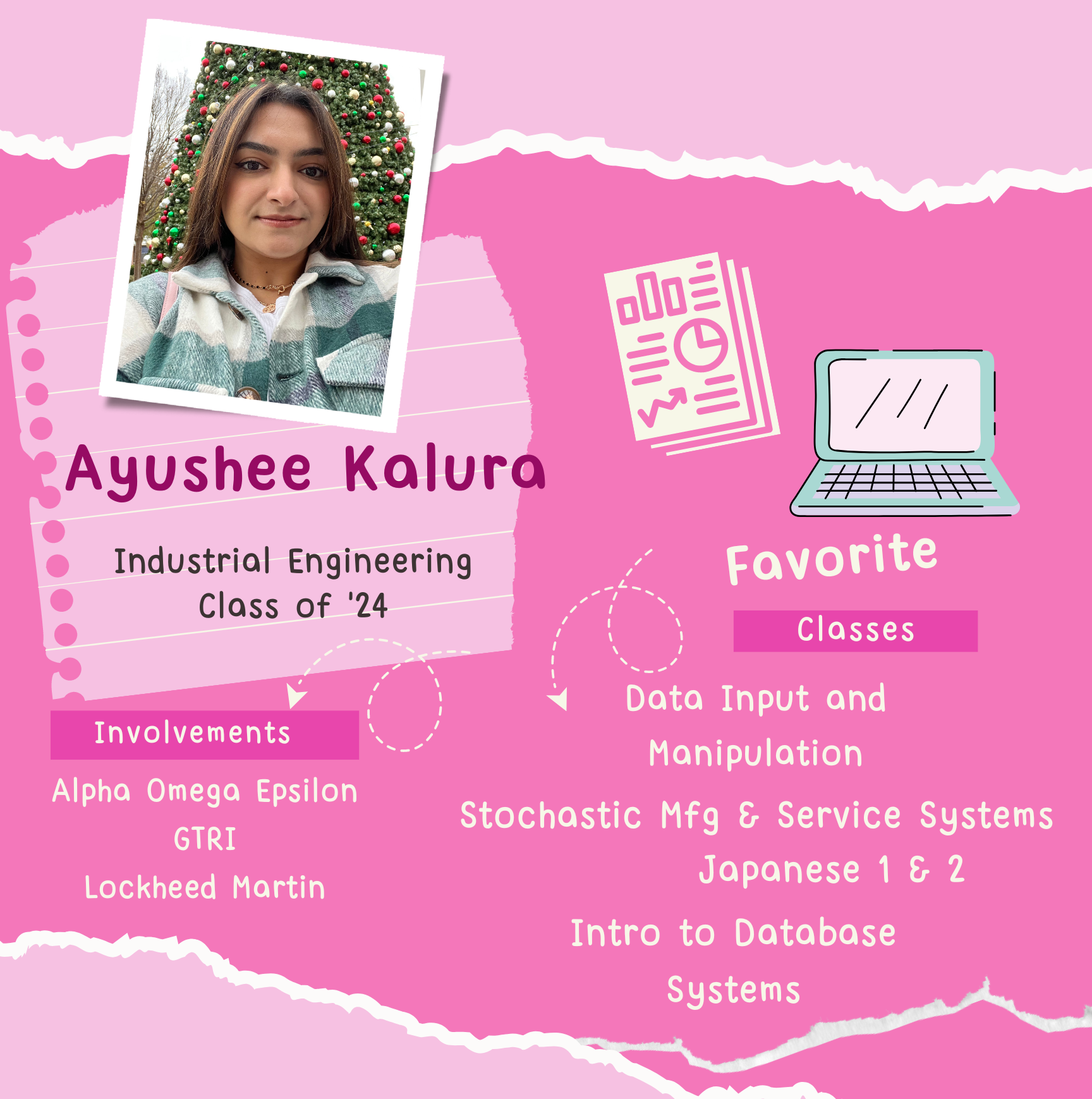
Reflecting On Our Own College Experiences
Ayushee: For the first 18 years of my life, I was used to a routine that remained unchanged daily. I would wake up, go to school, attend classes for 8 hours, come home, do homework, sleep, and repeat. I thought that routine would last me throughout college, and that is when I was in for a rude awakening. College was very different from high school and for the first couple months I had a hard time establishing a routine. Even now, my routine depends on my semester schedule, which is always changing. My first and greatest piece of advice to incoming college students is to create a schedule and stick to it. Admittingly, giving up is very easy and skipping classes is a slippery slope that is very hard to climb up. Take time to familiarize yourself with campus and add in times to eat, sleep, and work accordingly. Balance is very important and it’s really easy to overdo yourself with school and neglect self-care. Personally, ‘me time’ is very important because I need time away from work. Tech’s campus is located in Midtown, meaning there are plenty of places outside campus to explore. Atlanta is a very diverse city, and a lot of it is a walkable distance, so I would recommend taking time for yourself to explore the campus and city.
In these past 3 years, while I do wish I did some things differently, there are a couple opportunities I took that have made college much more enjoyable. I joined Alpha Omega Epsilon my first semester, freshman year and I have met some of my best friends from it. I was initially opposed to the idea of joining Greek life, however I wanted to take risks in college to put myself out there, and it ended up being one of the best decisions of my life. College is a fresh start and you’re going to be surrounded by people you’ve never met. This is the time to take the leap of faith and put yourself out there, join new organizations, and even try out things you thought you’d never try. Most of my regrets stem from not taking advantage of opportunities earlier on and feeling like I missed out on a lot. Finding a niche in college really gives you a space of comfort and identity, and for me, that is AOE. While I didn’t heavily involve myself in many other student organizations, AOE is like my home on campus, where I can go to escape from my college work. I think it’s important to have a space in college outside of academics and your major, some place where you can unwind and relax with friends who share similar interests as you. Again, I think that the most important aspect of college is having a work-life balance that incorporates enough time to study, explore academic endeavors and rest, hang out with friends and have fun.
Aparna: The best opportunities I took advantage of in college are the extracurricular organizations and resources available at GT. For the first 18 years of my life, I learned to prioritize classes and grades above almost everything else, but in my opinion it’s important to reevaluate this principle during college, especially if you’re planning to enter the workforce immediately after graduation and not considering higher education and paths within academia. College, for me, is the stepping stone from education to my career, and I wish I had prioritized things like internship hunting and personal projects relevant to my career goals, even at the expense of my grades.
One student organization I joined is Bits of Good, where teams of students develop software for local nonprofits for free to promote social good. Through Bits of Good, I got to become friends with like-minded peers and get exposed to projects that have real-world impact. On the other hand, I briefly joined other student organizations that were not particularly beneficial experiences, and my time would have been better spent elsewhere. So I would recommend consciously recognizing the intent behind committing your time to each organization, whether it’s for career development or for fun, which is also important.
Georgia Tech offers VIPs, Vertically Integrated Projects, that are an in-between club and course, that can be valuable to take advantage of. VIPs tend to be smaller groups that work on real projects, and allow for having a closer connection to professors and meeting peers in different majors with similar interests. Becoming a teaching assistant, aside from looking amazing on a resumé, also lets you build connections with upperclassmen and professors. GT has free 1-on-1 peer tutoring if you are struggling in class, and GT Library offers workshops to explore software you may be interested in. Taking advantage of these opportunities also builds confidence in yourself to meet your goals.
Finally, I want to emphasize the importance of being organized, because it really does make your life easier. When you start college, plan out your courses for your entire degree and per semester until graduation in a spreadsheet at the very beginning and keep updating it as things change so that as registration rolls around each semester you have a good idea of what classes you’ll be taking. Having this degree map written out helps you optimize your degree so you can try graduating early, adding a minor, studying abroad, doing an internship/co-op, working an on-campus job, doing research, or doing a BS/MS. With BS/MS I am able to finish my Bachelor’s in 3 years and add a Master’s degree immediately after. Without my degree map, applying for my BS/MS wouldn’t have been such a smooth process. Being organized with your time and selective with your commitments also lets you use your spare time for your social life, which everyone needs to prioritize at college.
Our Survey and Results
We surveyed 29 students across different majors about their experience at Georgia Tech.
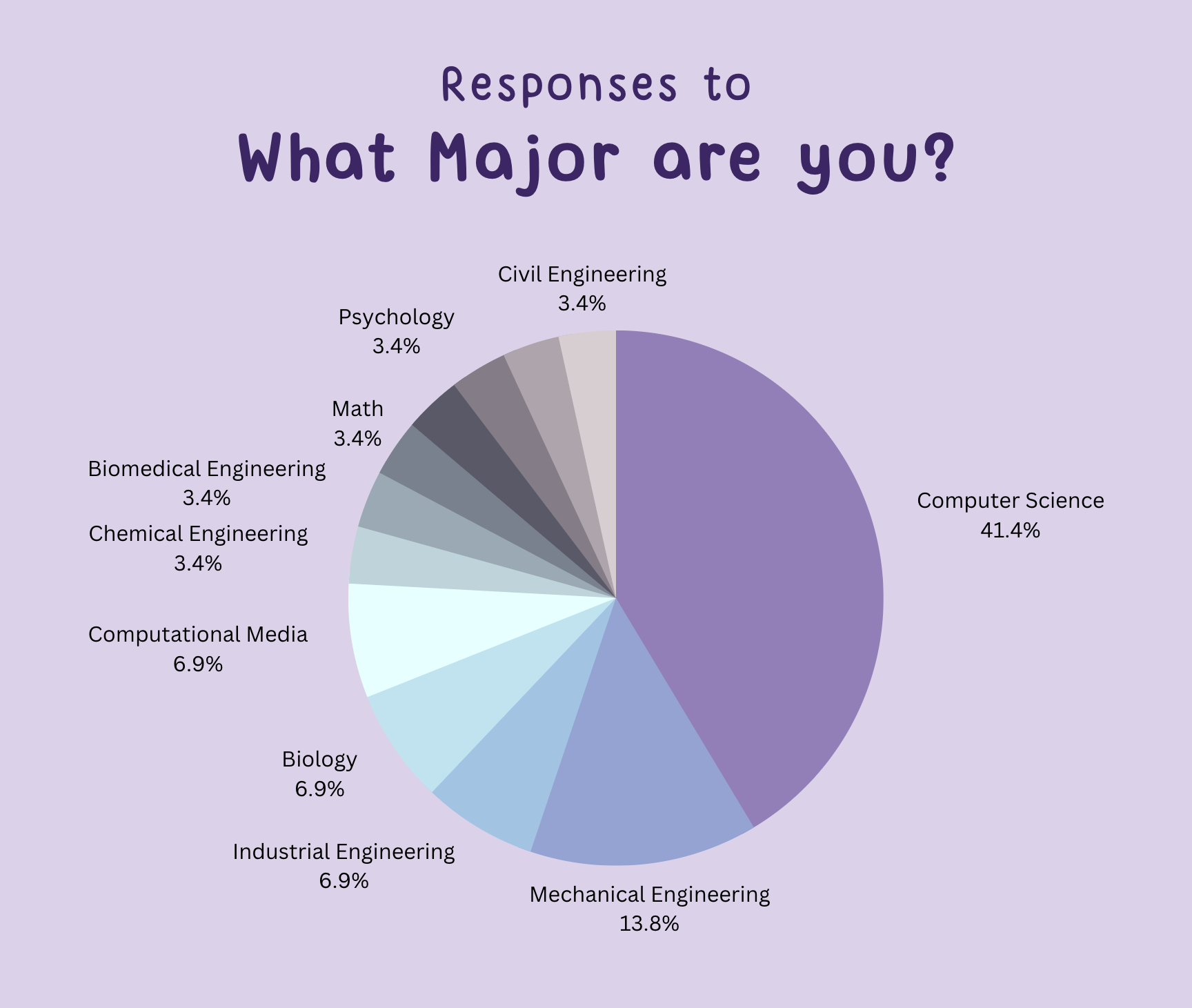
The first pie chart shows a breakdown of the majors of the students surveyed. A large proportion of the students major in Computer Science, followed by Mechanical Engineering, which happen to be the two most popular majors at Georgia Tech.
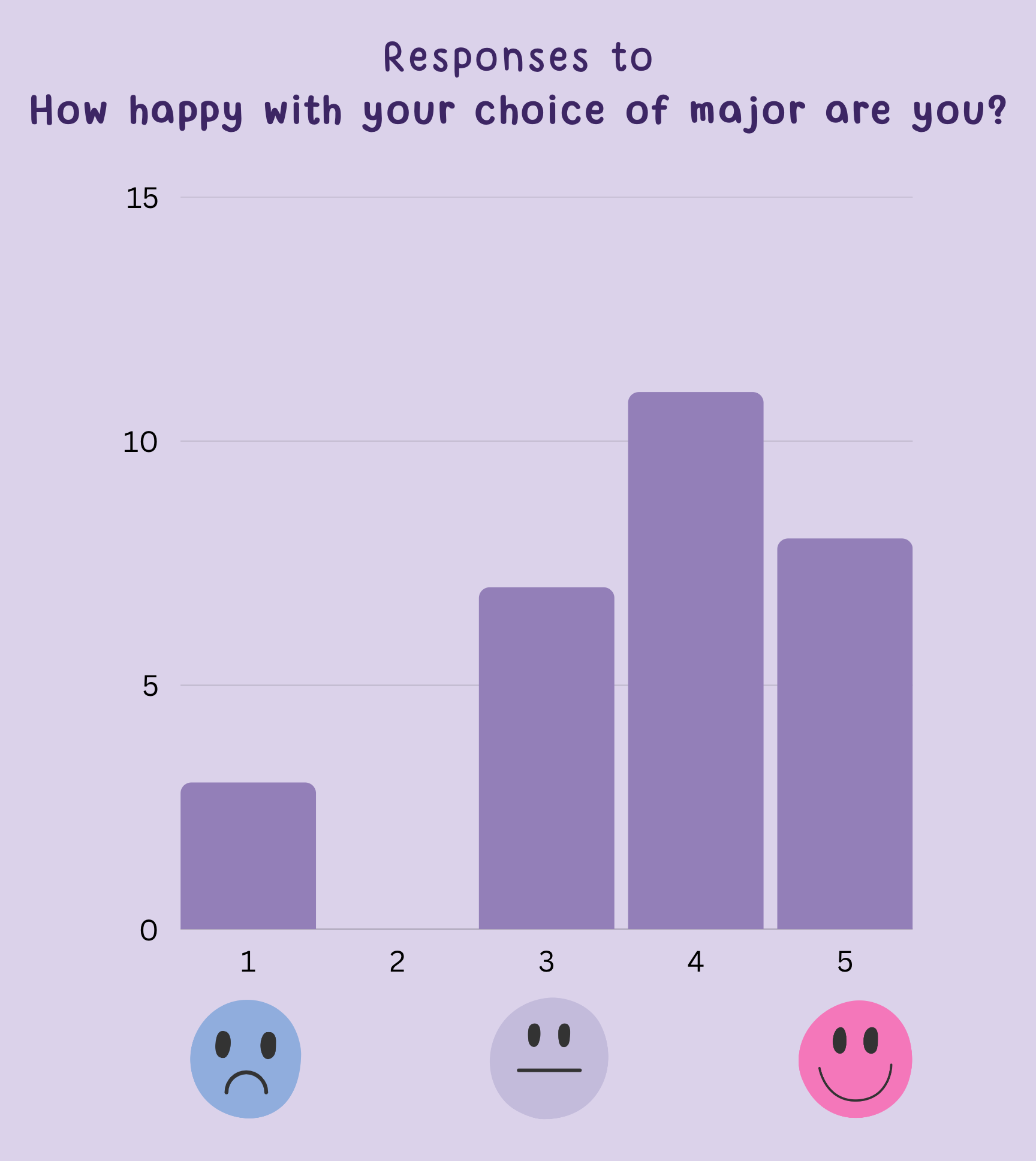
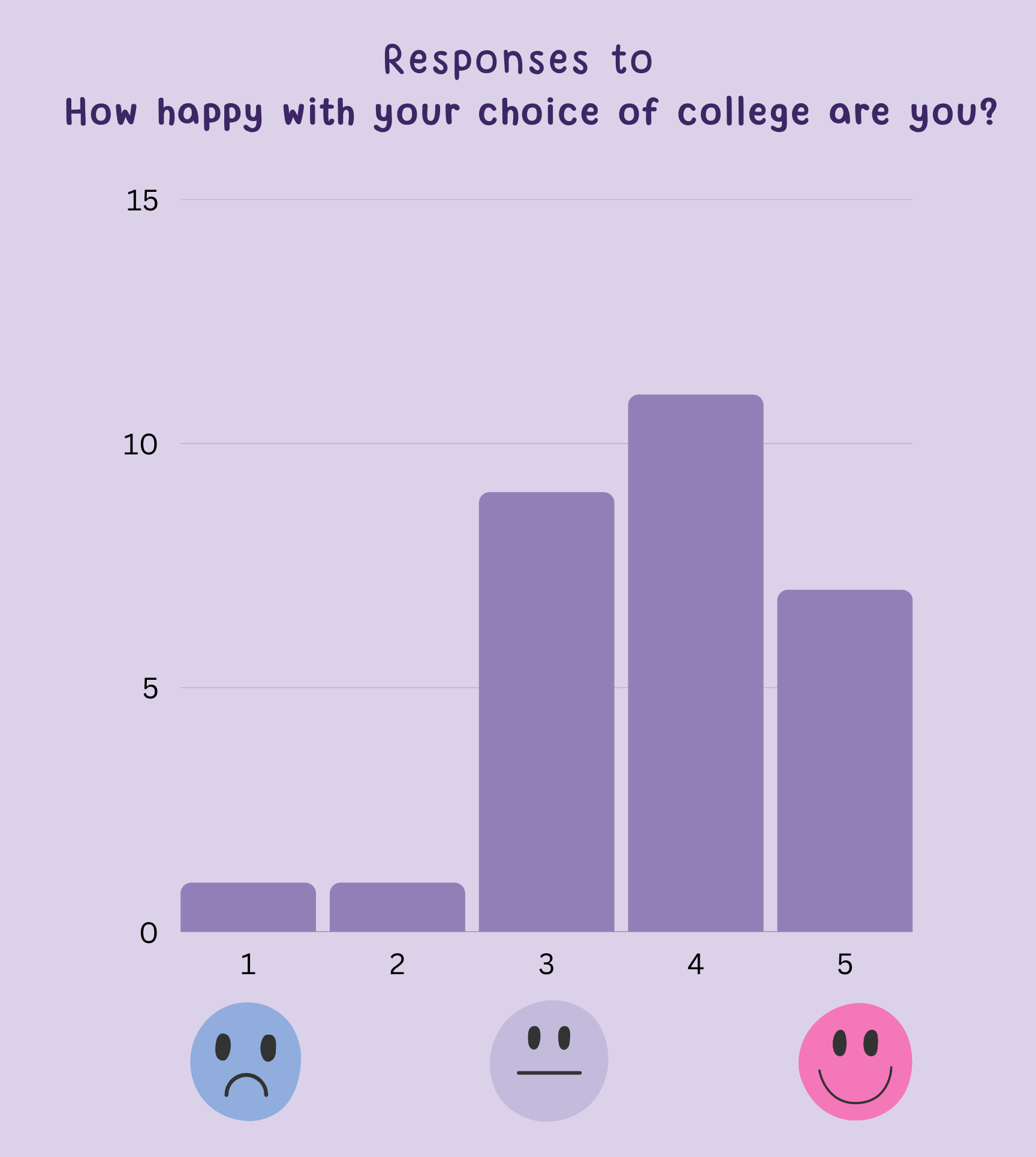
We asked how happy students felt with their choice of major and school, as shown in the two histograms. When we compared the answers of both to each other, we found that the ratings of both generally went hand-in-hand. If someone felt unhappy with their major, they’d also be more likely to be unhappy with the choice of school, while if someone felt happy with one, they’d be more likely to feel happy with the other as well.
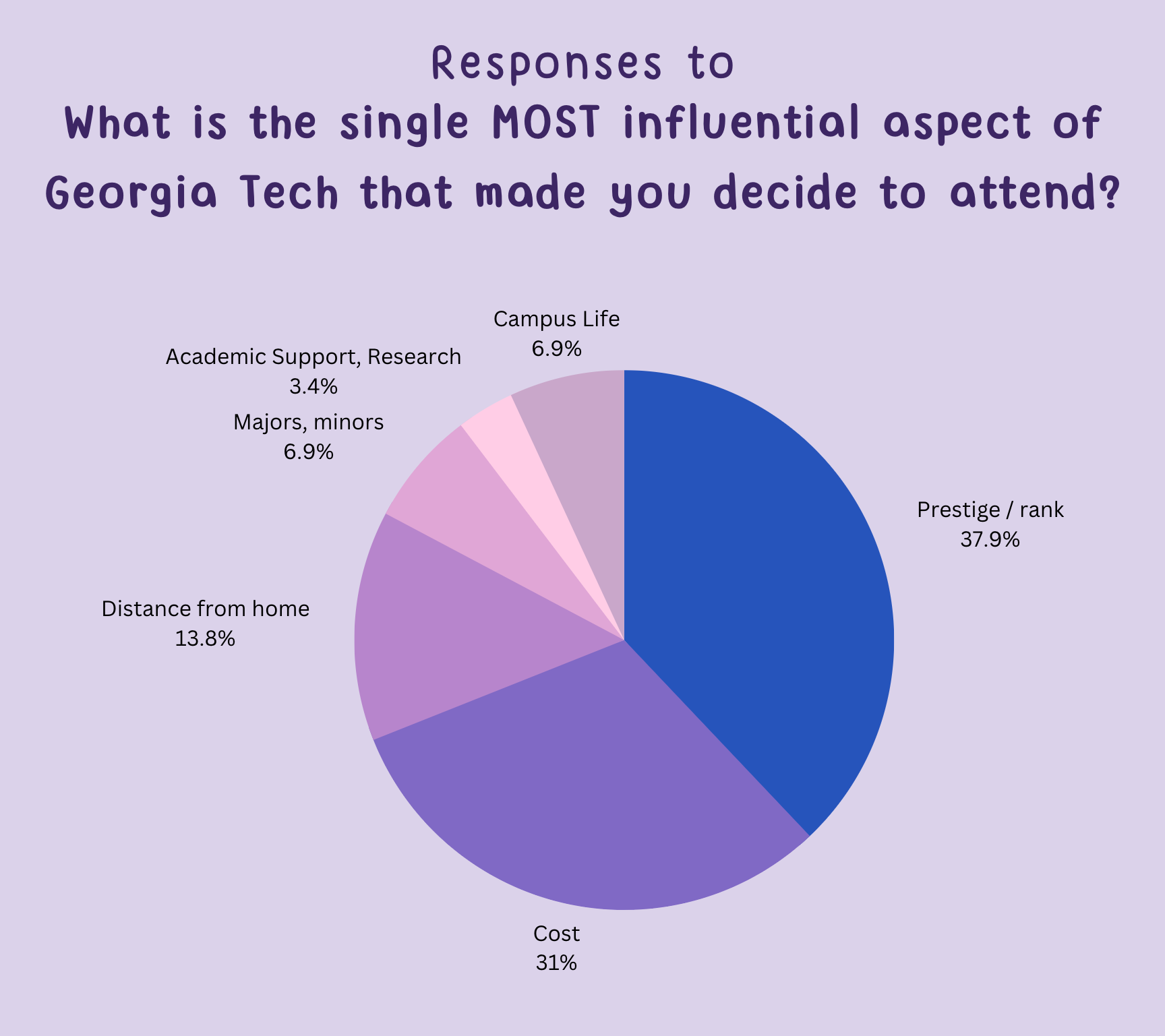
We also asked what aspects of Georgia Tech students found appealing, and of those, prestige/rank, distance from home, and majors/minors offered were the three highest ranked factors. When asked what was the single most influential aspect in attending Georgia Tech, prestige/rank ranked first, followed by cost, and distance from home.
Advice compiled from all responses to the following questions:
- What are some tips you would give to an incoming student?
- What are some opportunities you took advantage of that made your college experience better?
- What are some things you would do differently if you started college over?
- Plan out the semester early and don’t fall behind
- Get involved to make friends and destress. You are more competent than you think.
- Be yourself
- Don’t feel like you don’t belong
- Don’t be afraid to ask for help. Ask questions even if you think they’re stupid.
- Be disciplined with your routine so you can have a social life
- Don’t rush your degree
- If the rigor college has negatively impacted your self-esteem, it’s not a reflection of your ability
- Apply for things even if you don’t feel qualified
- If you feel like you’re on the wrong path, look at your options immediately and don’t be afraid to change your path (including major, career goals etc.). Don’t put it off and regret just going with the flow later
- Prioritize mental health, sleep, having fun, and exploring Atlanta. Take pictures for memories
- Set boundaries with your commitments and spend time on your hobbies so you don’t burn out
- Take it slow for your first semester since you’re getting adjusted to a new environment, so don’t commit to too many things
- Use freshman year to explore your interests
- Make upperclassmen friends in your major to learn about what it’s actually like
- Use resources for academic support, like the tutoring center, academic advisors, office hours etc. and reach out for help early
- Don’t compare yourself to others
- Go to class. Study effectively.
- Worry less about grades and more about learning
- Make more connections with professors
- Stay in touch with people
- Join student organizations both related and unrelated to your major.
- Take advantage of on-campus facilities/events such as the CRC, Stamps Health Services, and career fairs.