Day: April 17, 2026

  • Bouba? Kiki? Baby Chicks Associate Sounds With Shapes

    Bouba? Kiki? Baby Chicks Associate Sounds With Shapes

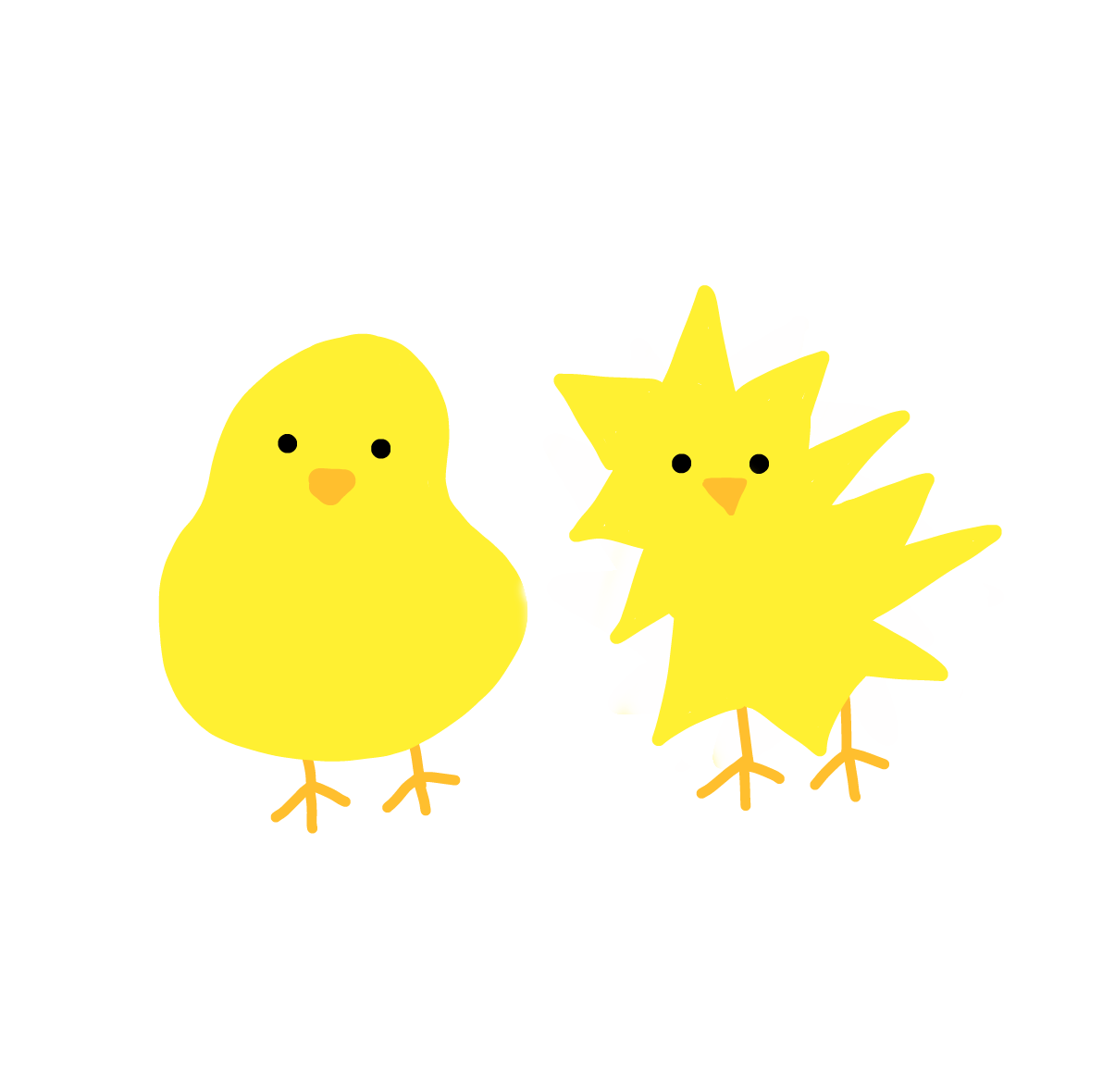
    One of the chicks above is named “Bouba.” The other is named “Kiki.” Going just off of your gut intuition, which one is which?

    If you answered that the left chick is “Bouba” and the right chick is “Kiki”, many people agree with you, including speakers of over 25 languages, belonging to 9 language families and 11 writings systems—a surprisingly high number, given that these are purely nonsense words (Ćwiek et al., 2021). For some reason, “bouba” is obviously round, while “kiki” is obviously spiky.

    Perhaps even more astonishing is that, as discovered in a recent study by Maria Loconsole and colleagues at the University of Padova, baby chickens are among the population that agrees with you.

    What is the bouba-kiki effect?

    Most words have an arbitrary relationship to their meaning. Nothing about “cat” inherently refers to the feline domestic animal, and neither does 猫 (māo), बिल्ली (billi), gato, or قطة (qiṭṭa). But certain sounds seem to inherently have meaning.

    First described in 1947 by Wolfgang Kölher through the nonsense words “Maluma” and “Takete”, the “bouba-kiki” phenomenon in linguistics refers to this effect (Loconsole et al., 2026). “Maluma” and “bouba” feel inherently round, while “takete” and “kiki” feel inherently sharp and spiky. This effect is common across cultures, languages, and age: even infants as young as 4 months possess this sound mapping, where certain sounds seem to inherently correspond to certain shapes (Ozturk et al., 2013). This effect is even found (to a lesser extent) in blind individuals, though a period of sight seems necessary for the effect to occur (Piller et al., 2023).

    The most common explanation for the bouba-kiki effect is the way we say those syllables. When we say “bouba” and similar words, our mouths make a round shape; when we say “kiki” and similar words, our mouths make an angular shape. Our brains thus associate words that are “round” to pronounce with round shapes, and “angular” with angular shapes. Alternatively, the shape of the letters “b” and “o” are round, while the shape of the letters “k” and “i” are angular (Lockwood & Dingemanse, 2015).

    However, this hypothesis is challenged by the generic shape hypothesis, which states that humans form generic associations between certain sounds and meanings. This hypothesis was proposed in a study conducted by Ananya Passi and S. P. Arun in 2019, where the bouba-kiki effect was found with unpronounceable words, and an association was even found between clear tones and shape, where higher tones were associated with angular shapes. This indicates that humans potentially form general associations between sounds and shapes, regardless of the way those sounds can be pronounced. However, the reason why those associations might be formed remains unanswered, and these studies have been restricted to humans.

    Other animals have been shown to also experience some form of association between sound and another sense: for example, chimpanzees, tortoises, and dogs associate lower pitches with larger objects and higher pitches with smaller objects (Kalan et al., 2014; Korzeniowska et al., 2022; Loconsole et al., 2023). However, the bouba-kiki effect specifically has not been found to exist in other animals, even great apes, such as chimpanzees and a bonobo (Margiotoudi et al., 2019; Margiotoudi et al., 2022).

    Baby chicks?

    If the effect isn’t even found in our closest animal relatives, then where else can researchers look? In 2026, Loconsole and her colleagues decided to change tracks and look elsewhere. As surprising as their choice may seem, their pick of animals wasn’t arbitrary: chickens are precocial creatures, which means that they can be tested shortly after hatching, and chicks also share many cognitive mechanisms with human infants (Wood & Wood, 2021).

    In the first part of the study conducted by Loconsole and her colleagues, 3-day-old chicks were trained to go around a panel depicting a shape with both spiky and round edges, with food behind the panel acting as an incentive. During the experiment, the chicks were placed in front of two panels. One of the panels displayed a round shape, and the other one displayed a spiky shape, and neither of the panels concealed food. The researchers played a recording of a human voice saying either “bouba” or “kiki” to the enclosure, and they watched to see which panel the chicks would choose.

    In the second part of the experiment, 1-day-old chicks were introduced to an enclosure with a screen that once again showed a shape with both spiky and round edges, though there was no incentive. After the chicks grew accustomed to the screen, the researchers changed it up: like the first part of the experiment, the screen now showed two shapes side by side, with one jagged shape and one blobby shape. The researchers once again played either “bouba” or “kiki”, and they recorded which shape the chicks approached first, as well as which shape they spent more time exploring.

    The researchers found that the 3-day-old chicks significantly preferred the panel with the round shape when hearing “bouba”, and the panel with the angular shape when hearing “kiki”. They also found the same results with the 1-day-old chicks: when “bouba” was played, the chicks first approached the round shape significantly more and spent more time exploring the round shape. The reverse was true when “kiki” was played.

    What does this mean?

    The study shows that this bouba-kiki effect is not learned, but rather something inherent that’s present even in the earliest stages of life. One implication of this study is that this crossmodal association, or association between different senses, plays a role in how communication develops between animals. Animals such as chickens do not have language, but they still communicate through various calls and vocalizations. Although these vocalizations aren’t necessarily directly symbolic, having these innate associations may help with future development of more complex communication.

    Additionally, the findings of the study indicate that the bouba-kiki effect isn’t specific to humans or even mammals, but rather throughout all vertebrates. But how does this reconcile with past findings wherein the effect was not found in other great apes? After all, it’s rather unlikely that this association evolved separately in birds and in humans, but skipped our closest great ape relatives.

    According to Loconsole and colleagues, this difference may be explained by the difference in methodology between experiments, as well as the past experience and training of the research subjects. Kanzi, the bonobo who was tested for the bouba-kiki effect, was already trained in associating sounds and shapes and was capable of correctly matching English words to pictures, which may have played a role in his choices (Loconsole et al., 2026; Margiotoudi et al., 2022).

    So what do the findings of the study mean for the bouba-kiki effect and the development of human language? Does this mean that chickens are also capable of speech?

    No, not really. The bouba-kiki effect is only one example of the human ability of iconicity, or the capacity to form associations between form and meaning, argue Marcus Perlman and Bodo Winter in their commentary article in response to the 2026 study. In other words, the study reveals that the effect originates further back in the tree of life, but the origins of language lie elsewhere, in a broader framework. The bouba-kiki effect may reflect one way in which human language developed through associations between senses, but humans are able to form much more complex associations in language through a combination of speech, gestures, and visual signs. As such, researchers must look at other, broader areas for more clues in their hunt for the origins of language (Perlman & Winter, 2026).

    So overall, the chicks might agree with your naming of their illustrated compatriots, but unfortunately, they won’t be able to say as much in words.

    Want to learn more about the bouba-kiki effect? Check out our past article on the phenomenon!

    Writing and illustration by Joyce Ma


    References

    Ćwiek, A., Fuchs, S., Draxler, C., Asu, E. L., Dediu, D., Hiovain, K., Kawahara, S., Koutalidis, S., Krifka, M., Lippus, P., Lupyan, G., Oh, G. E., Paul, J., Petrone, C., Ridouane, R., Reiter, S., Schümchen, N., Szalontai, Á., Ünal-Logacev, Ö., Zeller, J., Perlman, M., Winter, B. (2021). The bouba/kiki effect is robust across cultures and writing systems. Philosophical Transactions of the Royal Society B Biological Sciences, 377(1841), 20200390. https://doi.org/10.1098/rstb.2020.0390

    Kalan, A. K., Mundry, R., & Boesch, C. (2015). Wild chimpanzees modify food call structure with respect to tree size for a particular fruit species. Animal Behaviour, 101, 1–9. https://doi.org/10.1016/j.anbehav.2014.12.011

    Korzeniowska, A. T., Simner, J., Root-Gutteridge, H., & Reby, D. (2022). High-pitch sounds small for domestic dogs: Abstract crossmodal correspondences between auditory pitch and visual size. Royal Society Open Science, 9(2), 211647. https://doi.org/10.1098/rsos.211647

    Lockwood, G., & Dingemanse, M. (2015). Iconicity in the lab: A review of behavioral, developmental, and neuroimaging research into sound-symbolism. Frontiers in Psychology, 6, 1246. https://doi.org/10.3389/fpsyg.2015.01246

    Loconsole, M., Benavides-Varela, S., & Regolin, L. (2026). Matching sounds to shapes: Evidence of the bouba-kiki effect in naïve baby chicks. Science, 391(6787), 836–839. https://doi.org/10.1126/science.adq7188

    Loconsole, M., Stancher, G., & Versace, E. (2023). Crossmodal association between visual and acoustic cues in a tortoise (Testudo hermanni). Biology Letters, 19(7), 20230265. https://doi.org/10.1098/rsbl.2023.0265

    Margiotoudi, K., Allritz, M., Bohn, M., & Pulvermüller, F. (2019). Sound symbolic congruency detection in humans but not in great apes. Scientific Reports, 9(1), 12705. https://doi.org/10.1038/s41598-019-49101-4

    Margiotoudi, K., Bohn, M., Schwob, N., Taglialatela, J., Pulvermüller, F., Epping, A., Schweller, K., & Allritz, M. (2022). Bo-NO-bouba-kiki: Picture-word mapping but no spontaneous sound symbolic speech-shape mapping in a language trained bonobo. Proceedings of the Royal Society B Biological Sciences, 289(1968), 20211717. https://doi.org/10.1098/rspb.2021.1717

    Ozturk, O., Krehm, M., & Vouloumanos, A. (2012). Sound symbolism in infancy: Evidence for sound–shape cross-modal correspondences in 4-month-olds. Journal of Experimental Child Psychology, 114(2), 173–186. https://doi.org/10.1016/j.jecp.2012.05.004

    Passi, A., & Arun, S. P. (2022). The Bouba–Kiki effect is predicted by sound properties but not speech properties. Attention Perception & Psychophysics, 86(3), 976–990. https://doi.org/10.3758/s13414-022-02619-8

    Perlman, M., & Winter, B. (2026). In search of meaning. Science, 391(6787), 762–763. https://doi.org/10.1126/science.aee8641

    Piller, S., Senna, I., & Ernst, M. O. (2023). Visual experience shapes the Bouba-Kiki effect and the size-weight illusion upon sight restoration from congenital blindness. Scientific Reports, 13(1), 11435. https://doi.org/10.1038/s41598-023-38486-y

    Wood, S. M. W., & Wood, J. N. (2021). One-shot object parsing in newborn chicks. Journal of Experimental Psychology General, 150(11), 2408–2420. https://doi.org/10.1037/xge0001043
  • Why Is Math So Hated?

    Why Is Math So Hated?

    “What’s your favorite subject?”

    “I’m not sure… just definitely not math. What’s yours?”

    “Oh, funny story…”

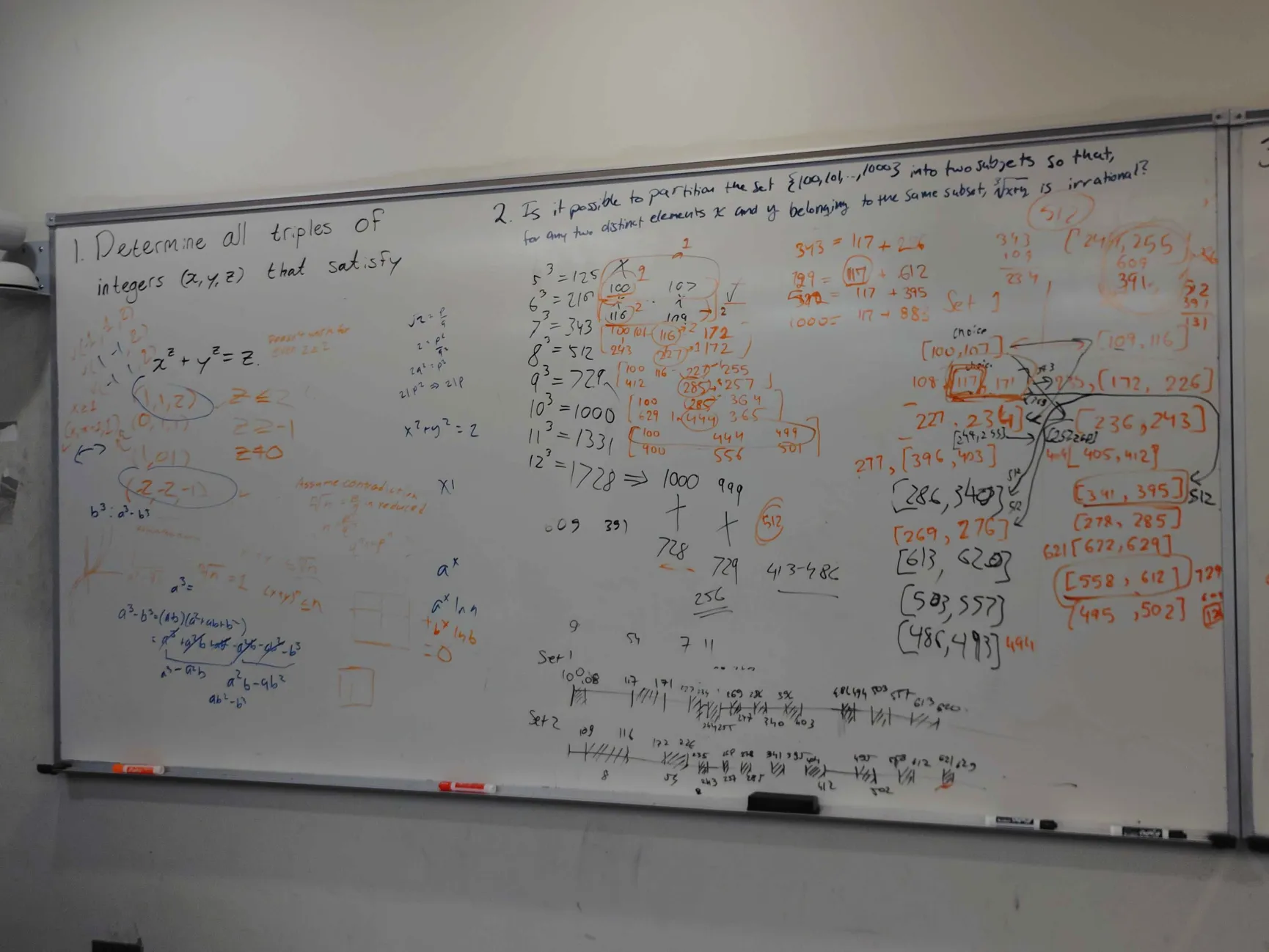
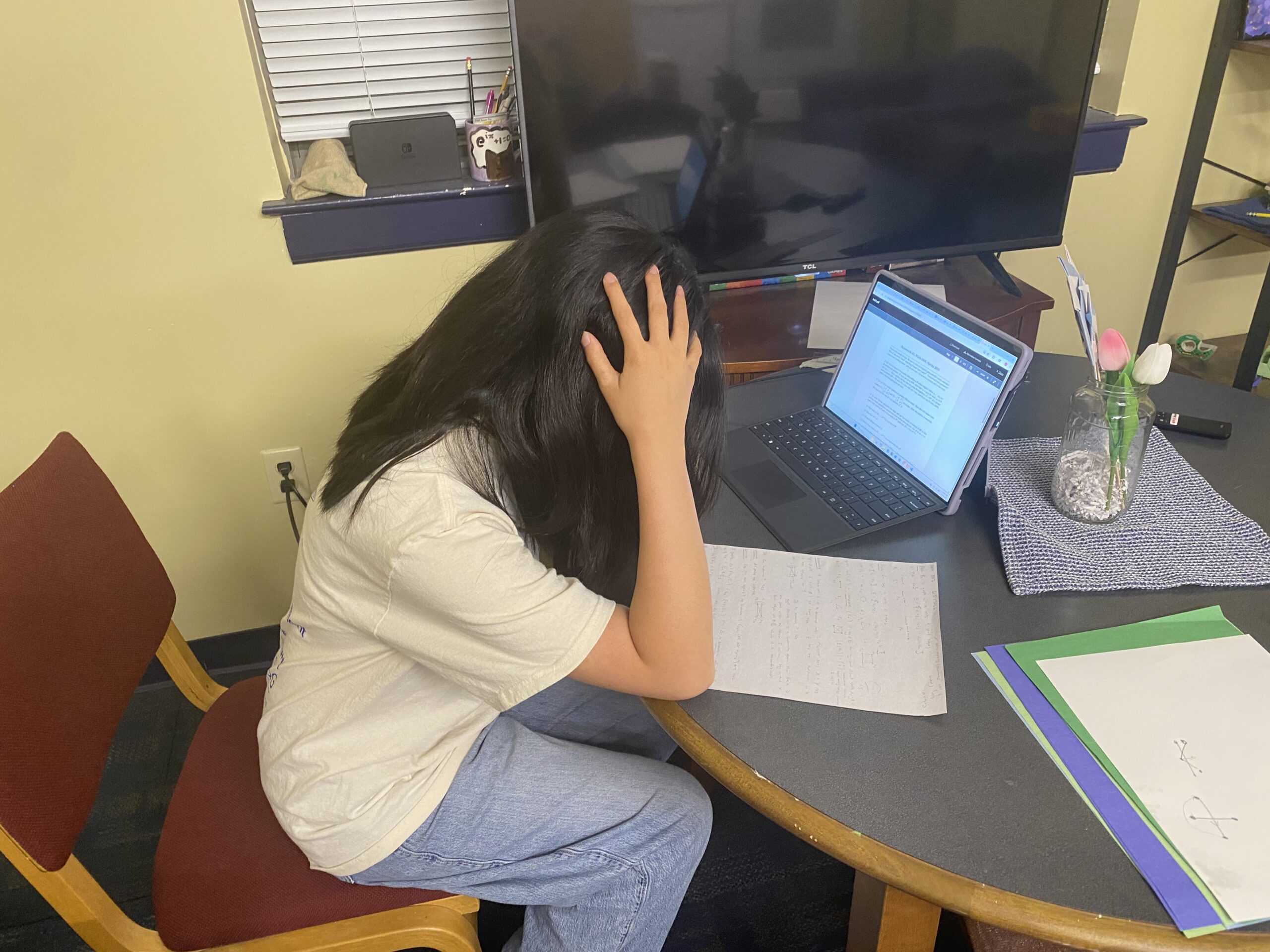
    Ah yes, math, the subject notorious for being one of the hardest subjects in school, with “math anxiety” being the term coined for the fear of math. If you’re reading this, you’ve most likely been through the agony of a difficult math class or teacher that just didn’t understand you. As a math major and someone who loved math as a child (but also had their share of math difficulties), I sought out to understand why math is so hated, and if there is anything we can do to change that. After all, I was able to see firsthand how cool math is and my hope is that more and more people will be able to as well.

    How Math is Taught in School

    Many students point to the difficulty of math when asked why they dislike it, as shown from this table, where math being hard was listed as a reason almost twice as much as it being boring (Stodolsky et al., 1991). Therefore, we should look to how math is taught in school to see why students are struggling so much. In general, many math educators teach in a more computationally-focused way, prioritizing students’ abilities to memorize concepts and algorithms to be able to complete a problem set, rather than letting them discover the math on their own or letting the students know the “why” behind what they are doing (Stodolsky et al., 1991). This was certainly my experience in some of my classes, where when asked why something works the teacher would just say “don’t worry about it.” This can cause students to be confused on how to follow the steps given to them to solve a problem or give them difficulty when trying to memorize them for a test. If students knew all of the derivations to the formulas they were using, I think they would be more likely to remember it and boost their problem-solving skills than if they regurgitate a step-by-step process given to them.

    Gender Stereotypes Regarding Math Ability

    If you’re a girl, you may have heard it at least once in your life: “You’re a girl? You can’t possibly be good at math or science, you belong in humanities (or the kitchen).” Or perhaps, you’ll be the only girl, or one of a few, in some advanced STEM class. One study was held testing children in a few different categories: math performance, math anxiety, and test anxiety, collecting data over different grades for boys versus girls. The study found that higher math anxiety had more of a negative effect on girls than for boys (Erturan & Jansen, 2015). This is likely due to the aforementioned  stereotypes that boys are better than girls at STEM related subjects such as math, putting more pressure on girls when testing. Even if they might know the content, these stereotypes can put doubt into girls’ minds about whether or not they are capable of doing well in math.

    Intergenerational Effects on Math Anxiety

    Math anxiety has existed for a long time, not just in this generation, but in those of our parents and grandparents as well. As a result, it makes sense to consider the possibility that it gets passed down from generation to generation, not necessarily through genetics, but through parents’ attitudes towards math rubbing off on their children. Another study on math anxiety investigated the role that parents played pertaining to their children’s levels of math anxiety, by testing students’ reading and math performance and giving parents questionnaires to determine their levels of math anxiety. The study revealed that there was a negative correlation between a parent’s math anxiety and their child’s performance, but only when the parent was significantly involved with helping the child with their homework (Maloney et al., 2015). It is speculated that the cause of this is the parents letting out their own negativity towards the subject to the child, expressing their frustration which caused their children to also have higher levels of math anxiety and do poorer on their tests.

    What To Do?

    It is clear there are many outside factors that can cause a child to dislike math, so  how do we combat this? Even if we don’t like math that much ourselves, we can try our best not to project that mindset onto young minds and instead, encourage students to develop a growth mindset (Mendoza, 2025). With some work, it would also be beneficial to make a few changes to the way math is taught in school by making learning more interactive and prioritizing understanding over memorization. And hopefully, maybe one day, math will not be considered the “hated” subject but simply just a subject that more people enjoy.


    References

    Erturan, S., & Jansen, B. (2015). An investigation of boys’ and girls’ emotional experience of math, their math performance, and the relation between these variables. European Journal of Psychology of Education, 30(4), 421–435. https://www.jstor.org/stable/24763249

    Maloney, E. A., Ramirez, G., Gunderson, E. A., Levine, S. C., & Beilock, S. L. (2015). Intergenerational Effects of Parents’ Math Anxiety on Children’s Math Achievement and Anxiety. Psychological Science, 26(9), 1480–1488. https://www.jstor.org/stable/24544088

    Mendoza, K. (2025, February 28). 9 Strategies to Help Students Love Math – Oxford Learning. Oxford Learning. https://oxfordlearning.com/9-strategies-to-help-students-love-math/

    Stodolsky, S. S., Salk, S., & Glaessner, B. (1991). Student Views about Learning Math and Social Studies. American Educational Research Journal, 28(1), 89. https://doi.org/10.2307/1162880

  • The Hidden World of the Piano Action

    The Hidden World of the Piano Action

    The cover image was taken by the author.

    In my humble opinion, the best way to unwind after a long, arduous day is to pour out all your stresses onto the beautiful white and black keys of a grand piano.

    (Of course, that’s a little hard to do if you’ve never learned to play… I digress, though.)

    During my time at Georgia Tech, I’d find myself sitting at the piano located in the West Village Dining Hall almost every night – and while I wouldn’t say the piano there is especially well maintained, it still produces a sound that’s pleasant to my ears. In the end, isn’t that all that matters?

    “Enough with the preamble! What’s the point of all these ramblings?” You might be asking. Well, to answer that hypothetical question – I often think about the acoustics of a piano. That, of course, naturally leads to how it works… and believe it or not, there happens to be a surprising amount of physics under the (metaphorical and literal) hood of the instrument!

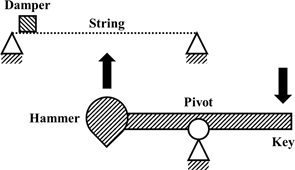
    The story of the piano begins with the clavichord, developed in the 14th century. The clavichord action was as simple as could be – a key lever with a hammer on one end. After the key is depressed, the hammer is immediately lifted until it hits the string, remaining in contact until the key is released (Russo & Robles-Linares, 2020).

    Figure 2 Source: (Russo & Robles-Linares, 2020)

    While this action enables volume dynamics, vibrato, and control over the attack and duration of one’s sounds, there remained one large problem: the string would be damped for as long as the key was held down.

    The harpsichord attempted to address this issue, while sacrificing some of the finer benefits of the clavichord.

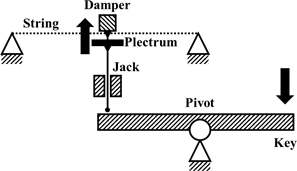
    For its action, when a key is pressed, the jack is lifted along with the plectrum and damper, the latter immediately releasing the string. Right after, the plectrum hits the string, generating sound. At some point, the jack meets a rail up above that stops its motion, allowing the string to resonate for as long as the key is held down. When the key is finally let go, the jack falls such that its plectrum does not hit the string a second time (Russo & Robles-Linares, 2020).

    Figure 3 Source: (Russo & Robles-Linares, 2020)

    Even though this solves the major issue with the clavichord, the harpsichord, in turn, has almost no volume dynamics, nor can vibrato be performed with it!

    That takes us to the mid-17th century, where Bartolomeo Cristofori would invent what was known as the fortepiano – named because of its ability to play forte (loud) and piano (soft).

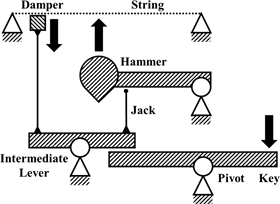
    The action of the fortepiano is far more complex than both the clavichord and the harpsichord. When the key is first pressed, it lifts an intermediate lever; a damper connected to that lever releases the string. After a small period of time, the jack on the intermediate lever pushes the hammer up. The hammer lifts off the jack halfway to the string and uses its existing momentum to hit the string.

    If the key was immediately released, the string is immediately damped, making a staccato (short) sound, as the mechanism returns to its resting position. If the key is held down, the string is undamped and free to resonate; the hammer falls back down onto the jack. After the key is released, the hammer returns to its resting position and the string is damped, muting the sound (Russo & Robles-Linares, 2020).

    Figure 4 Source: (Russo & Robles-Linares, 2020)

    In essence, the fortepiano was the combination of the good of both the clavichord and harpsichord – dynamics and vibrato, along with volume and an ability to sustain sound. In many ways, the fortepiano is similar to the grand pianos of today, but with a few key differences…

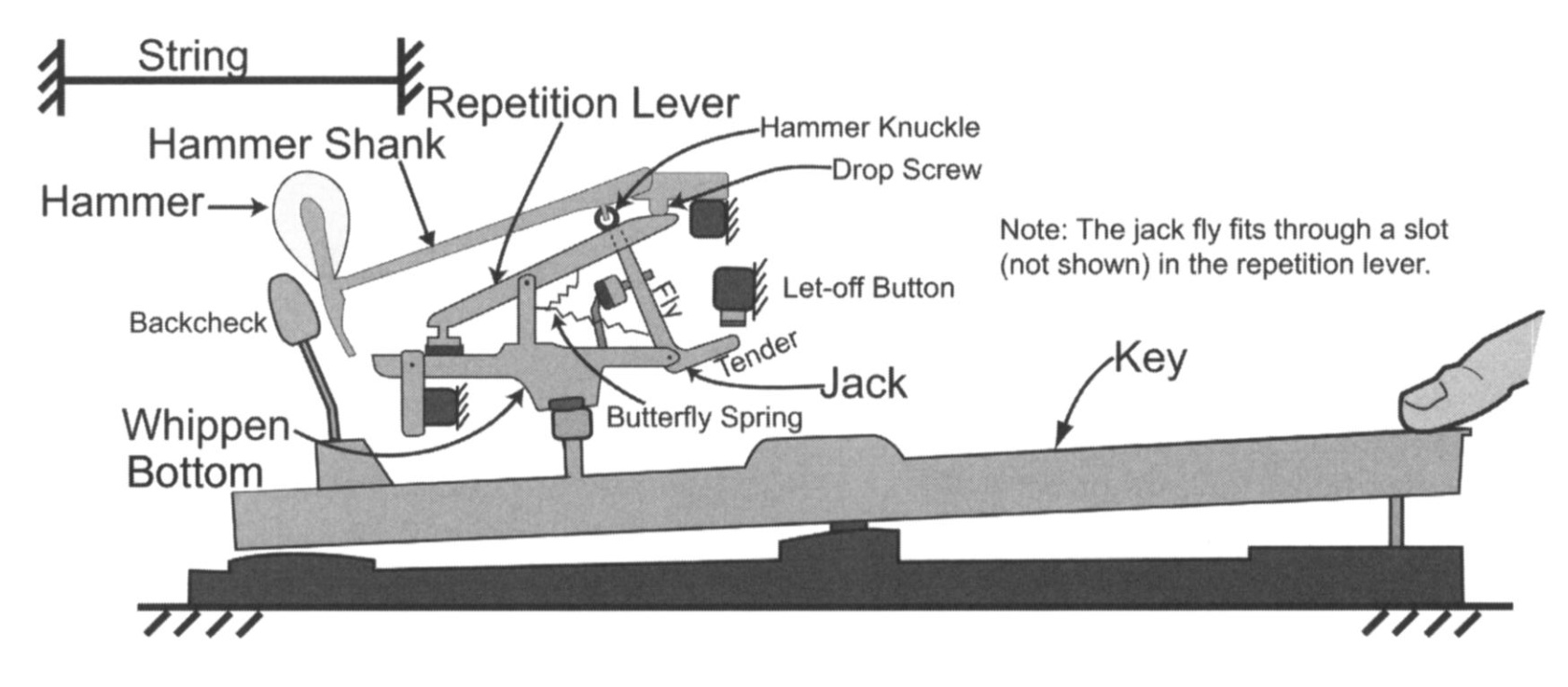
    Figure 5 Source: (Brent et al., 2011)

    …Quite a lot of differences, in fact. From a first glance, this diagram seems far removed from the likes of the fortepiano, but most of the underlying theory remains the same.

    To put it simply, the goal of the grand piano action is to let the hammer hit the string to create vibration – but, most importantly, it should be fast enough that it doesn’t damp the string. Efforts to reduce that time have resulted in the complex system seen in Figure 5… each part of that mechanism plays its own role in giving as much control to the pianist as possible (Brent et al., 2011).

    Control is an important part of playing the piano, in my own experience. The difference between a grand piano and an electronic MIDI keyboard is like night and day. Even the smallest, involuntary actions when playing a grand result in minor yet noticeable changes – and the best of the best (which, unfortunately, doesn’t include me) are able to manipulate each and every facet of control given to them.

    As we close the hood on the fascinating world of the piano action, I hope you’ve gained a proper appreciation for the instrument! The fact that we’ve been able to manufacture such a sleek design, fitting in all the complex mechanisms into such a small area, all while ensuring it works to perfection… it’s an engineering miracle, to be honest.

    When I inevitably return to that piano in West Village, I’ll surely be thinking about the action that I’m invoking with every press.

    Reference List

    Brent, G. R., Yu, B., Grijalva, R., & Awtar, S. (2011). Characterizing the Feel of the Piano Action. Computer Music Journal, 35(1), 43–57. JSTOR. https://www.jstor.org/stable/41241706

    Russo, M., & Robles-Linares, J. A.  (2020). A Brief History of Piano Action Mechanisms. Advances in Historical Studies, 09(05), 312–329. https://doi.org/10.4236/ahs.2020.95024

  • Filling in the Gaps: Biases and Pareidolia

    Filling in the Gaps: Biases and Pareidolia

    Our brains are amazing, allowing us to do so much. Even so, they aren’t perfect. Do you remember during COVID, you would meet people for the first time wearing masks? Then, when you finally saw their whole face, you were surprised. And it’s not like you had purposefully thought about what the bottom half of their face looked like, but it was still somehow different than expected.

    Facial Recognition & Pareidolia

    This may be due in part to the fact that humans are wired to recognize faces. This is such a strong skill that we even recognize “faces” in inanimate objects: the front of cars, electrical outlets, even clouds or rocks. This phenomenon is called pareidolia, a human tendency to recognize meaningful patterns, especially faces. This is thought to evolve from the need to quickly recognize facial expressions for threats or social cues. We even have an entire region of the brain responsible: the face fusiform area (FFA) (Zhou & Meng, 2020). Studies have shown that even infants can recognize face-like patterns as faces (Kato & Megitani, 2015). Infants as young as seven months were able to recognize faces in Arcimboldo’s paintings (Kobayashi et al., 2012). These paintings were of inanimate objects, such as vegetables, arranged to resemble a portrait of a human. They are honestly a bit creepy, but feel free to give it a google!

    Obviously we can all recognize a face, even under a mask, but a study using an artificial face recognition system gave us some evidence for why. A system called deep convolutional neural networks, or DCNN, determined the most important facial feature for facial recognition to be the eyebrows. This was followed by the eyes, mouth, then nose (Zhang et al., 2024). This makes sense with facial recognition under a mask, as the two most important features are still visible. Why the eyebrows are the most important isn’t clear. It could be that eyebrows are important for facial expressions, or that they are important for individual recognition due to their large diversity in color, shape, and placement.

    Cognitive Dissonance & Bias

    I found the science behind facial recognition fascinating, but it still doesn’t quite explain why we subconsciously fill in the bottom half of someone’s face. As it turns out, recognizing parts of a meaningful pattern, such as the face, but missing key parts of it, creates cognitive dissonance. Cognitive dissonance is when there is discrepancy between what your brain expects or believes and the information it is gathering. In the case of a mask, your brain is expecting to see all the important components of a face, so when the mouth and nose are missing, it creates a sort of tension. To relieve this tension, your brain uses what it knows about the face to fill in the gaps. This way, the pattern fits in with the categories we already have.

    Significance

    Pattern recognition, especially facial recognition, is super important, allowing us to recognize slight changes in facial expression or obstructed faces, like under a mask. But this can also lead to something not so great. Amy E. Herman said in her book “Visual Intelligence” that humans see through the brain, not the eyes. All your sensory organs collect signals and send them to the brain for processing. The signals don’t mean anything on their own, whether that is light through the eyes or smell through the nose. It is the processing that allows us to process these signals into something meaningful. This information is then tried to fit in with our prior knowledge, reducing cognitive dissonance. But in the process of fitting in new information, it can get twisted. Filling in what a face looks like under a mask, for example, is the brain twisting information to fit it in with what it already knows. This phenomenon happens all the time and is the science behind confirmation bias.

    Human brains are extremely susceptible to confirmation bias, even going so far as to discard or ignore information that contradicts our beliefs (The science of stereotyping, 2022). The Smithsonian has a super cool interactive article about the science of bias if you are interested in learning more!

    All of this to be said, our brains are amazing things, but they are not perfect. It is important to know that sometimes they take the easy path, twisting information to fit what we already know, from what someone looks like under a mask, to knowing a face-shaped rock is not a person.


    References

    Zhou, L.-F., & Meng, M. (2020). Do you see the “face”? Individual differences in face pareidolia. Journal of Pacific Rim Psychology, 14, e2. https://doi.org/10.1017/prp.2019.27

    Kato, M., & Mugitani, R. (2015). Pareidolia in infants. PLOS ONE, 10(2), e0118539. https://doi.org/10.1371/journal.pone.0118539 

    Kobayashi, M. et al. (2012). Do infants recognize the Arcimboldo images as faces? Behavioral and near-infrared spectroscopic study. Journal of Experimental Child Psychology, 111(1), 22-36. https://doi.org/10.1016/j.jecp.2011.07.008. 

    Zhang, Q. et al. (2024). Understanding of facial features in face perception: insights from deep convolutional neural networks. Frontiers in Computational Neuroscienc, 18 https://doi.org/10.3389/fncom.2024.1209082 

    University of Wisconsin–Madison Department of Psychology. (2022). The science of stereotyping. https://psych.wisc.edu/news/the-science-of-stereotyping/

    Smithsonian Institution. (2021). The science of bias. https://biasinsideus.si.edu/online-exhibition/the-science-of-bias

  • Why You Shouldn’t Go To Bed at 4 AM

    Why You Shouldn’t Go To Bed at 4 AM

    Imagine the following scenario – it’s 2:15 am and you’re furiously typing away a final paper that is due before your 8 AM class tomorrow. With dark circles under your eyes, you take another sip of your iced Americano and promise yourself that you will go to bed soon. You don’t and end up staying up til 4 AM. The next day, you walk around campus with just three hours of sleep – you have bloodshot eyes, are unable to think properly, and just feel like passing out. 

    Under the pressure of school, work, or whatever it may be, we all have been tempted to compromise our sleep. In the face of such situations, sleep seems like something that can wait, or worse, be ignored completely. However, that is a large and even dangerous misconception because sleep is incredibly important for the functioning of our bodies. One of its crucial goals is to be restorative for many physiological, cognitive, and psychological processes. Without the restorative effects of sleep, the body can begin to experience issues in various areas of health. In extreme cases with chronic sleep deprivation, there can be serious consequences, which can include even a shortened lifespan. 

    What is sleep?

    Sleep is described as a state that is easily reversible and also characterized by changes in consciousness and decreased responses to sensory stimuli. In other words, you are able to relatively easily enter a state of sleep and vice versa, come out of that sleep, which is known as wakefulness. In addition, you are not actively tuned into your environment during sleep, which explains why you do not use much of your senses (e.g., vision, hearing, touch, etc.) while you sleep.   

    In addition, sleep is regulated and controlled by our bodies, specifically the brain, by “biological clocks” called circadian rhythms. The specific part of the brain that is responsible is called the suprachiasmatic nucleus (SCN) and helps control sleep as a 24 hour cycle, which includes wakefulness. Moreover, sleep is divided into four primary stages: N1, N2, N3, and REM sleep (Baranwal et al., 2023). Specifically, the N1 stage is responsible for light sleep while the N2 stage is when our heart rate and body temperature decrease (Baranwal et al., 2023). The N3 stage, also known as slow wave sleep, is characterized as deep sleep and is believed to be when body repair/restoration occurs (Baranwal et al., 2023). Lastly, REM sleep or the N4 stage is when dreaming occurs (Baranwal et al., 2023). 

    Impact of Sleep on the Body

    As it was previously emphasized, sleep is restorative in many ways – for instance, physiological processes, such as regulation of homeostasis and secretion of growth hormone, work more efficiently during sleep (Irwin, 2015). Specifically, homeostasis can be described as how the body maintains a balanced internal environment. Disruptions in homeostasis due to sleep deprivation can negatively impact the body, such as causing a weakened immune system (Baranwal et al., 2023). In addition, research has shown secretion of growth hormone increases during slow-wave sleep, or the N3 stage of sleep (Baranwal et al., 2023). As a result, not sleeping well, especially for children and teenagers, can have negative effects on growth. 

    Its importance is not limited to just physiological processes, but also cognitive processes such as learning, memory, executive functioning, and regulation of emotions (Hyndych et al., 2025). It is already well known in the scientific field that sleep is crucial for learning and memory in which sleep deprivation can cause serious disruptions. Hence, it seems ironic – especially from a student’s perspective – because the purpose of pulling all nighters is to cram information and speed up the learning process – however, its effects are actually the very opposite. 

    Research continues to be ongoing and has linked sleep deprivation to many health issues in many areas such as metabolic, cardiovascular, etc. For example, it is associated with impairment in muscle repair (metabolic), hypertension (cardiac), increased stress levels, and reduced production levels of antibodies (immune), etc (Baranwal et al., 2023). As you can see, sleep is vital to our daily functioning and health overall!

    So what?

    So, the next time you feel tempted to stay up to finish work or pull an all-nighter – just don’t. Sleep is not something we “just do” but plays a crucial role in that it restores your body and mind, helping to reset you for the next day. Missing out on hours of sleep can cause dysfunction and leave you feeling worse than better. In the long run, sleep deprivation can cause serious health issues and a few all-nighters are simply not worth that. 

    References

    Baranwal, N., Yu, P. K., & Siegel, N. S. (2023). Sleep physiology, pathophysiology, and sleep hygiene. Progress in Cardiovascular Diseases, 77(1), 59–69. https://doi.org/10.1016/j.pcad.2023.02.005

    Dang-Vu, T. T., Schabus, M., Desseilles, M., Sterpenich, V., Bonjean, M., & Maquet, P. (2010). Functional Neuroimaging Insights into the Physiology of Human Sleep. Sleep, 33(12), 1589–1603. https://doi.org/10.1093/sleep/33.12.1589

    Harvard Medical School. (2021, October 1). Science of Sleep: What is Sleep? Harvard.edu. https://sleep.hms.harvard.edu/education-training/public-education/sleep-and-health-education-program/sleep-health-education-47

    Hyndych, A., El-Abassi, R., & Mader, E. C. (2025). The Role of Sleep and the Effects of Sleep Loss on Cognitive, Affective, and Behavioral Processes. Cureus, 17(5). https://doi.org/10.7759/cureus.84232

    Irwin, M. R. (2015). Why Sleep Is Important for Health: A Psychoneuroimmunology Perspective. Annual Review of Psychology, 66(1), 143–172. https://doi.org/10.1146/annurev-psych-010213-115205

  • Organoids: What are They and Why They’re Amazing

    Organoids: What are They and Why They’re Amazing

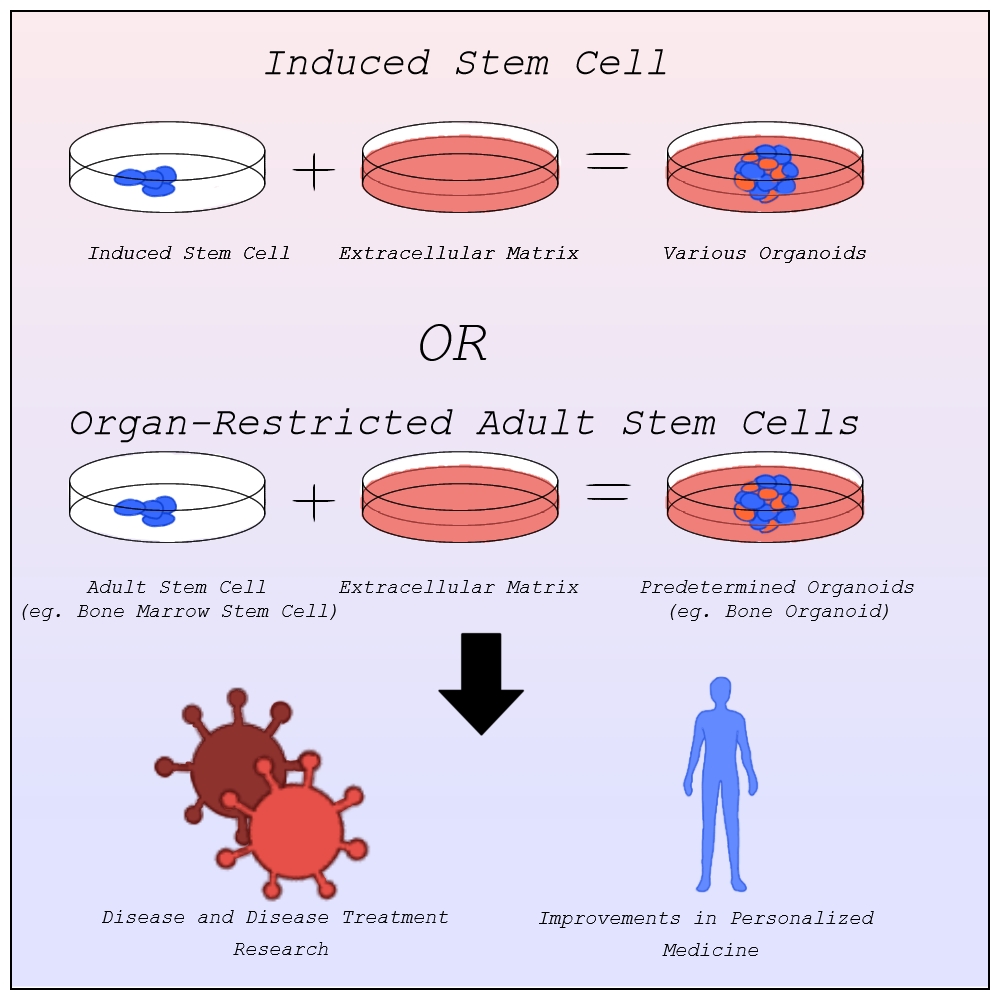
    I’m willing to bet you’ve never heard of Organoids. No worries if so, they’re a pretty niche part of biomedical sciences. This is such a shame however as they’re having a great impact on research and our world. Organoids are often defined as tissue samples embedded into 3D extracellular matrix (ECM) gels or clonal derivatives of cells grown without mesenchyme and derived from stem cells. Don’t worry if your eyes have already glazed over! Mine did too the first time I read that.

    In simpler terms, they are the growing of cells, taken from a patient, in a nutrient rich gel. While the field might seem niche at first, it has a long history and the potential to impact millions.

    Before Organoids, most human physiological research relied on in vitro 2D cell culture and animal models (O’Connell & Winter, 2019). These often fail at clinical trials due to oversimplification of or incompatibility with human systems. At the time, cell cultures were limited to growing single layers of cells in a petri dish with none of the 3D complexities of real biological systems. This all changed with Ross Harrison’s “Hanging drop Cell Cultures” in 1906 (Simian and Bissell, 2016). By creating a 2D cell culture and turning the petri dish upside down, gravity would cause the cells to clump together and form a cohesive 3D spheroid of cells that could intermingle and interact like normal. Think about that! 3D structures could form by simply turning them upside down with no other interference. This was the start of research into organoids which offered a new way to look directly at human biology without risking patient or animal lives.

    One key breakthrough was the discovery of 3D extracellular matrices first used in 1963 (Simian and Bissell, 2016). The gel provided a medium for natural scaffolding of cells rather than relying on gravity. This allowed for more complex 3D shapes and allowed for more types of organoids that more closely resembled complex real life systems. The gel also aided in providing the cells with nutrients required to keep them alive. Hence the “nutrient rich gel” from the definition above.

    Exploration into this new field was rather slow however. The human body is composed of roughly 200 distinct types of cells, each of which specialize in a different function such as blood or nerve cells. Despite this, organoids mainly rely on only two types of cells, pluripotent stem cells and organ-restricted adult stem cells (Bredenoord et al., 2017). Stem cells are unspecified types of cells, yet to differentiate, with the ability to become any type of specified cell. They often serve to repair the human body as they can replace any damaged cells no matter the type. This ability makes them highly valuable to organoids trying to model systems that rely on the cooperation of multiple cell types.

    Before the discovery of induced stem cells in 2006 by Dr. Shinya Yamanaka at Kyoto University, organoids were made from pluripotent stem cells as organ-restricted adult stem cells can be hard to access and are restricted to becoming cell types of their tissue of origin most commonly found in embryos (Agarwal et al., 2024). The line of when a zygote becomes a person, however, is blurry, raising many ethical concerns about the desecration of a person’s body. Induced stem cells allow for the change of specialized cells back into stem cells. Organoids can now be created from any tissue sample, entirely limiting the need for embryonic stem cells outside of studying early organ development (Frans Schutgens & Clevers, 2019).

    With better ways to develop organoids, scientists quickly realized their potential. Organoids offer unparalleled advancement in disease research and treatment, personalized medicine, and so much more that we simply don’t have time for here.

    Image by Alexandra Marshall

    Disease Research and Treatment
    One pivotal area of applications is understanding the development of diseases and disease treatment in humans. The lack of 3D structure in in vitro models lead to limited complexity and physiological relevance when studying diseases. Faulty predictions based on these studies can lead to treatments failing, with approximately 90% of clinical study drug candidates failing clinical trials and drug approval (Sun et al., 2022).

    Organoid models have none of these limitations. In 2013, the first human condition modeled using organoids, cystic fibrosis, was published. The model had “excellent predictive value” and became the first successful personalized treatment method for cystic fibrosis patients (Lancaster and Huch, 2019). The modeling of other diseases using organoids quickly followed from genetic diseases like Polycystic kidney disease and Alagille syndrome, to infectious diseases like Covid-19 and the Zika virus, to neurological diseases like Alzheimer’s and Parkinson’s, to multitudes of cancers, and more (Xu et al., 2018). The ability for organoids to be made of any human system means they can model any disease regardless of which systems they afflict.

    Organoids can be also grown co-culturally with bacteria allowing for bacterial infections and the diseases that arise from them to also be modeled and researched with organoids (Schutgens and Clevers, 2020). This has allowed for better understanding of bacteria like Helicobacter Pylori and Salmonella, aiding in detection and cures. As mentioned above, treatments can then be tested on these organoid systems without risking human lives or animal cruelty.

    Respiratory Syncytial Virus (RSV), a disease that is being modeled in airway organoids, causes around 66,000–199,000 deaths among children annually (Schutgens & Clevers, 2020). This is just one of the many diseases for which scientists are now better equipped to find viable treatments. Organoids have already saved millions of lives and their potential for future disease treatment has the potential to millions more.

    Personalized Medicine
    While these treatments work for many people, genetic and biological differences can impact treatment effectiveness and tolerance with some even leading to negative side effects (Breen, 2021). In such situations, personalized medicine that is specialized to fit these differences might be necessary. Personalized medicine, sometimes called precision medicine, challenges the idea that treatments that pass general trials will work for everyone, instead working to construct a treatment plan with a specific patient in mind best suited to their physiology.

    The idea of personalized medicine has been around for thousands of years, using one’s family’s history of diseases to diagnose the likelihood of that person having said disease. In the late 1900s the idea of evidence based medicine, the implementation of explicit reasoning based on a specific patient’s data, started being common practice when prescribing a patient (Visvikis-Siest et al., 2020). This opened the door for personalized medicine in modern science (Visvikis-Siest et al., 2020). This data was largely based on patients’ reactions to other treatments and family history however limited its effectiveness. The development of molecular biology and human genome mapping allows for a direct look at a patient’s physiology, aiding medical professionals in determining the biological reasons behind potential reactions to treatments before administration limiting adverse reactions.

    Organoids have greatly furthered this field. As mentioned above, organoids are made from a patient’s induced stem cells. This means that the organoid culture into a structure based on the patient’s DNA, containing all the same biomarkers and physiology that the patient would have at that level. Where other treatments could have varying effects from the tested population, organoids allow medical professionals to see the exact effects a treatment plan would have on the patient. The use of stem cells also allows organoids to grow much quicker than other models. This allows for quick and accurate testing of the effects of medication on a patient. One study published in Science involving gastrointestinal cancer therapies found that organoids would correctly detect when drugs would fail 100% of the time, and when the drug would succeed 88% percent of the time (Vlachogiannis et al., 2018). Once again, because of the diversity of systems that organoids can model, organoids can be used to model many different personalized medicine plans allowing for the variety of treatment testing needed to find the most optimal plan.

    Conclusion
    Organoids have had a monumental, yet widely unknown, impact on a wide variety of disease advancement and treatment developments and personalized medicine. These structures can then be used to model human tissues and organs with much higher accuracy and complexity than previously used non-human or in vitro models.

    Scientists use them to model disease development in humans and treatments designed for humans. This allows for a better understanding of the diseases and more effective treatments with fewer errors. They are also used to limit the risk of negative side effects from non-personalized medicine by furthering personalized medicine through the accuracy and speedy testing of many different treatment options.
    With continued and careful development of organoids, disease understanding and treatments, personalized medicine and so much more can continue to be improved, saving millions of lives.

    ————————————————————————————————-

    Work Cited:
    Agarwal, S., Saha, L., Sohani, A., Karri, U., Gor, R., & Ramalingam, S. (2024). The importance of niche in therapeutic strategies targeting normal and cancer stem cells. Cancer Stem Cells and Signaling Pathways, 15–33. https://doi.org/10.1016/b978-0-443-13212-4.00031-3

    Bredenoord, A. L., Clevers, H., & Knoblich, J. A. (2017). Human tissues in a dish: The research and ethical implications of organoid technology. Science, 355(6322). https://doi.org/10.1126/science.aaf9414

    Frans Schutgens, & Clevers, H. (2019). Human Organoids: Tools for Understanding Biology and Treating Diseases. Annual Review of Pathology Mechanisms of Disease, 15(1), 211–234. https://doi.org/10.1146/annurev-pathmechdis-012419-032611

    Generation and Cultivation of 3D Cell Models | ibidi. (2024). Ibidi. https://ibidi.com/content/1037-generation-and-cultivation-of-3d-cell-models

    Lancaster, M. A., & Huch, M. (2019). Disease modelling in human organoids. Disease Models & Mechanisms, 12(7). https://doi.org/10.1242/dmm.039347

    O’Connell, L., & Winter, D. C. (2019). Organoids: Past Learning and Future Directions. Stem Cells and Development, 29(5), 281–289.https://doi.org/10.1089/scd.2019.0227

    Schutgens, F., & Clevers, H. (2020). Human Organoids: Tools for Understanding Biology and Treating Diseases. Annual Review of Pathology: Mechanisms of Disease, 15(1), 211–234. https://doi.org/10.1146/annurev-pathmechdis-012419-032611

    ‌Simian, M., & Bissell, M. J. (2016). Organoids: A historical perspective of thinking in three dimensions. The Journal of Cell Biology, 216(1), 31–40. https://doi.org/10.1083/jcb.201610056

    Sun, D., Gao, W., Hu, H., & Zhou, S. (2022). Why 90% of clinical drug development fails and how to improve it? Acta Pharmaceutica Sinica B, 12(7), 3049–3062. https://doi.org/10.1016/j.apsb.2022.02.002

    Visvikis-Siest, S., Theodoridou, D., Kontoe, M.-S., Kumar, S., & Marschler, M. (2020). Milestones in Personalized Medicine: From the Ancient Time to Nowadays—the Provocation of COVID-19. Frontiers in Genetics, 11. https://doi.org/10.3389/fgene.2020.569175

    Vlachogiannis, G., Hedayat, S., Vatsiou, A., Jamin, Y., Fernández-Mateos, J., Khan, K., Lampis, A., Eason, K., Huntingford, I., Burke, R., Rata, M., Koh, D.-M., Tunariu, N., Collins, D., Hulkki-Wilson, S., Ragulan, C., Spiteri, I., Moorcraft, S. Y., Chau, I., & Rao, S. (2018). Patient-derived organoids model treatment response of metastatic gastrointestinal cancers. Science, 359(6378), 920–926. https://doi.org/10.1126/science.aao2774

    Xu, H., Jiao, Y., Qin, S., Zhao, W., Chu, Q., & Wu, K. (2018). Organoid technology in disease modelling, drug development, personalized treatment and regeneration medicine. Experimental Hematology and Oncology, 7(1). https://doi.org/10.1186/s40164-018-0122-9

  • Simple, Science-backed Ways to Slow Dementia

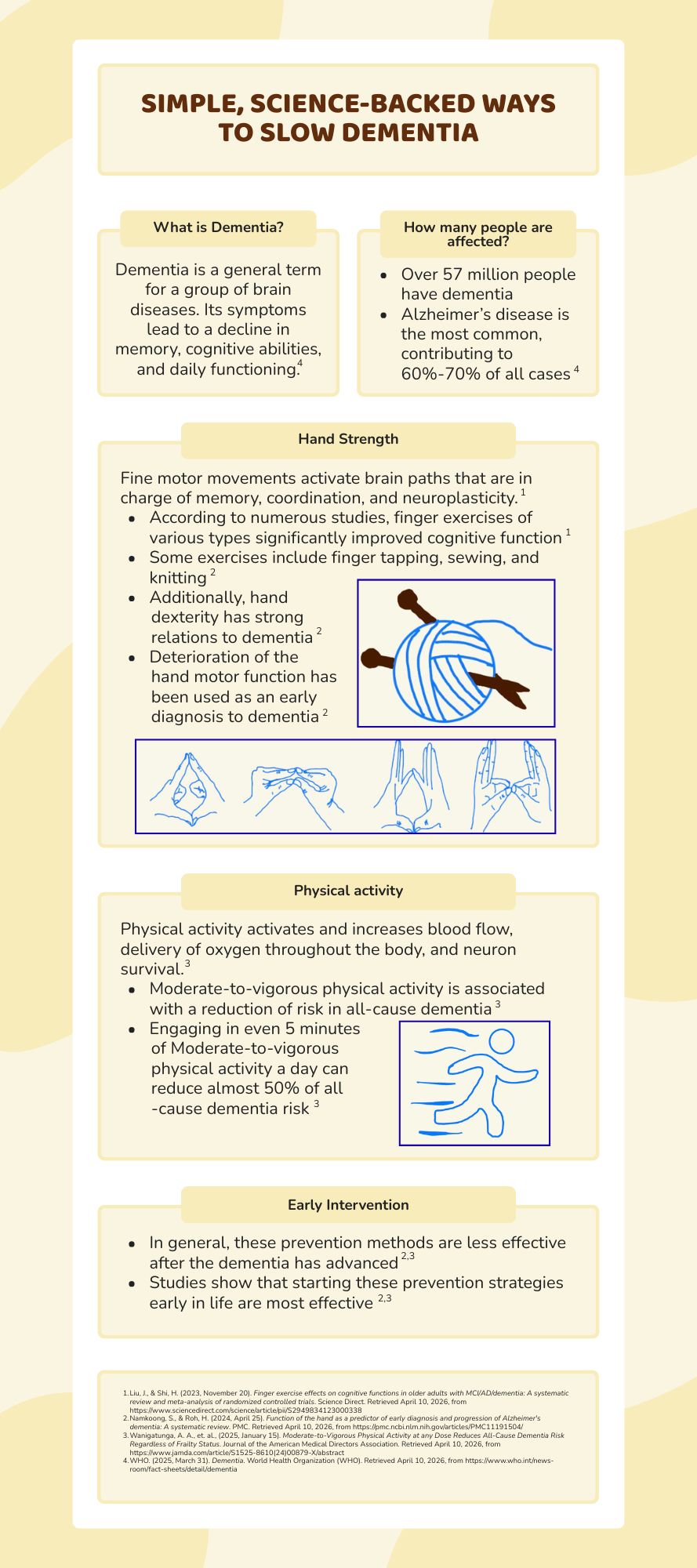
    Simple, Science-backed Ways to Slow Dementia


    What is Dementia?

    Dementia is a general term for a group of brain diseases. Its symptoms lead to a decline in memory, cognitive abilities, and daily functioning.

    How many people are affected?

    • Over 57 million people have dementia.
    • Alzheimer’s disease is the most common, contributing to 60%-70% of all cases.

    Hand Strength

    Fine motor movements activate brain paths that are in charge of memory, coordination, and neuroplasticity.

    • According to numerous studies, finger exercises of various types significantly improved cognitive function.
    • Some exercises include finger tapping, sewing, and knitting.
    • Additionally, hand dexterity has strong relations to dementia.
    • Deterioration of the hand motor function has been used as an early diagnosis to dementia.

    Physical activity

    Physical activity activates and increases blood flow, delivery of oxygen throughout the body, and neuron survival.

    • Moderate-to-vigorous physical activity is associated with a reduction of risk in all-cause dementia.
    • Engaging in even 5 minutes of Moderate-to-vigorous physical activity a day can reduce almost 50% of all-cause dementia risk.

    Early Intervention

    • In general, these prevention methods are less effective after the dementia has advanced.
    • Studies show that starting these prevention strategies early in life are most effective.

    References:

    Liu, J., & Shi, H. (2023, November 20). Finger exercise effects on cognitive functions in older adults with MCI/AD/dementia: A systematic review and meta-analysis of randomized controlled trials. Science Direct. Retrieved April 10, 2026, from https://www.sciencedirect.com/science/article/pii/S2949834123000338

    Namkoong, S., & Roh, H. (2024, April 25). Function of the hand as a predictor of early diagnosis and progression of Alzheimer’s dementia: A systematic review. PMC. Retrieved April 10, 2026, from https://pmc.ncbi.nlm.nih.gov/articles/PMC11191504/

    Wanigatunga, A. A., et. al., (2025, January 15). Moderate-to-Vigorous Physical Activity at any Dose Reduces All-Cause Dementia Risk Regardless of Frailty Status. Journal of the American Medical Directors Association. Retrieved April 10, 2026, from https://www.jamda.com/article/S1525-8610(24)00879-X/abstract

    WHO. (2025, March 31). Dementia. World Health Organization (WHO). Retrieved April 10, 2026, from https://www.who.int/news-room/fact-sheets/detail/dementia