This semester, I had the opportunity to film and edit a video for our event w/ the Atlanta Science Festival! We hosted the Einstein’s Ghost Tour, where attendees walk through a tour and learn about the research and the untimely demise of four scientists throughout time: Archimedes, Carl Wilhelm Scheele, Joseph Crocé-Spinelli & Théodore Sivel, and Marie Curie. I don’t get the chance to do media for an event often, so I’m really glad I got the chance to. Videography is one of my favorite hobbies, and I wanted to challenge myself for this event!
With this video, I learned a lot of new techniques and skills. I’ve been learning to edit with Black Magic’s Davinci Resolve, which is one of the video-editing software that the film industry uses typically for color-grading. I wanted to practice and learn color grading, so I recorded in Log format, a camera setting that captures footage in a flat, desaturated way to preserve maximum dynamic color range and information. There are so many tutorials on color grading on YouTube! Because of that, there are also several ways to color grade, and it got really overwhelming for a newbie like me.
One thing I found to be challenging was working with footage from a low-light setting. I can’t really color-grade too much or really fix the dark video in post-production. I think it’s hard for me to reach my fullest potential with the kind of footage I had to work with. Another challenge I faced was not getting any footage of the guests’ faces, which I think takes away from the recap video, because we couldn’t see their reactions or expressions to our actors’ lines. Hopefully, the final video is still good!
I really enjoyed the trial-and-error of the entire experience: figuring out which colors to bring out, how to bring out certain colors without sacrificing others, which footage to keep and which to scrap, etc. I enjoy the creativity and open-ended aspect of video editing! It’s so much fun putting together various video footage to evoke emotions and tell a story. I hope I achieved that with my video!
Recently, the STEMComm VIP team took part in the Atlanta Science Festival in March 2026. We presented the Ghost Tour, featuring scientists who have died because of their inventions, passion, or major founding respective to their science field. I was part of the Zenith hot air balloon tragedy team as a NPC ghost actor. If you are interested, you can look up the three main characters: engineer Joseph Crocé-Spinelli, navy officer Théodore Sivel, and Gaston Tissandier. Two of them died on their flight into the death zone (high altitude), while Gaston survived to tell the story with the price of being deaf.
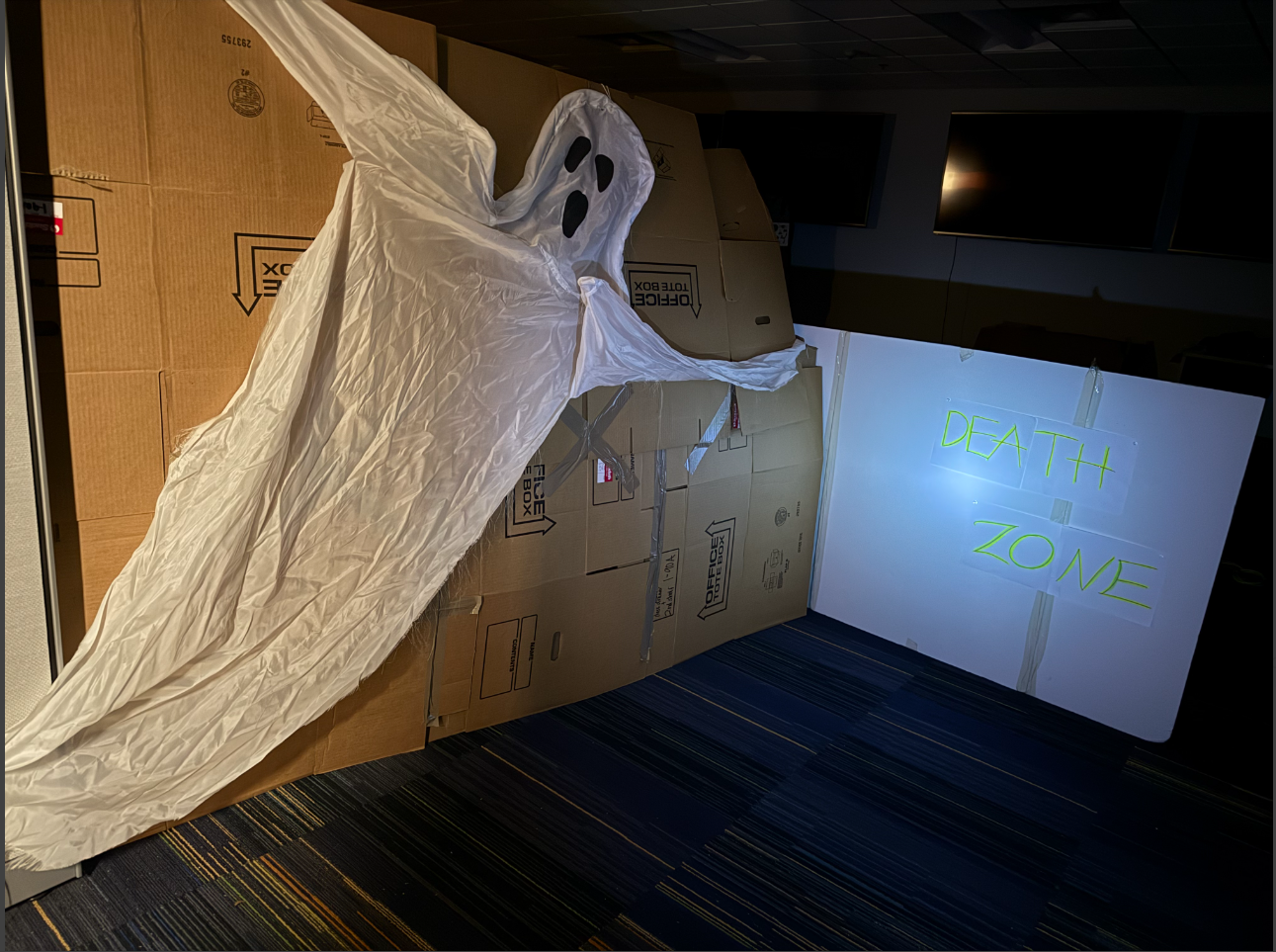
Our team was assigned a big room. As guests come in from the door, they will be blocked by a big board sign of “death zone”, suggesting the death zone is ahead. The guide of the tour – Einstein, will lead them to the sign and leave them there. In the meantime, the NPC ghost will sneak in between the tour group, surprise the guests, and walk them past the sign, closer to the actual scene featuring the actors.
<Picture is taken by the author>
However, a small issue arised.There was a mix of reactions when the NPC ghost took the lead to walk over the Death Zone sign. Most people stayed still behind the sign, some hesitated to walk over, and very few actually followed the ghost.
Mixed Behaviors to Conflicting Information
Apparently, at first, the guide – Einstein, told the guests to not cross over the death zone. Then, the ghost NPC told them “follow me” as the ghost moved past the sign. Even with the actual dead scientists signaling and inviting the guests to come closer, it takes some time for them to actually move.
First information: Do not cross the death zone – Guide Einstein said
Second information: Follow me (crossing death zone) – NPC ghost moved
Third information: Come closer – Dead scientists in the death zone, with obvious hand signals to come closer
There were different tour groups. The reactions are also mixed between these groups. Groups with more children tend to follow the NPC ghost at first, with young children being the first to move. In groups with more adults, the hesitation is very obvious. Even when children start walking over, they are stopped by the guardians. It takes the three actors’ effort to invite them over.
How Children Reaction to Conflicting Sources
Lili Ma and Patricia Ganea (2009) suggest that children often learn about the world through direct observation, but their knowledge can also be acquired through others’ testimony. This is validated as children often trust what they see, but they also recognize adults as trustworthy sources. Furthermore, some experiments suggest that children might accept false testimony that contradict their first-hand observation. This aligns with the classic Asch study where adults’ judgement was influenced by the social pressure and testimony of others, even though their visual perception suggests otherwise (Ma & Ganea, 2009). This explains why young children who were ready to walk over stopped along with their guardians. Parents are the more trustworthy source of information.
In addition, the three studies done by Ma and Ganea (2009) confirms that children can outweigh one source of information more than another. This aligns with another study by Baer and others (2025), suggesting that children endorse confident informants over hesitant ones when faced with conflicting testimony. The intention of one ghost to walk over might not have been as clear compared to a group of familiar adults staying in place. On a side note, in the age of the Internet, even if the confident informants previously gave false testimony, it is unlikely they will lose credibility. This is true for both children and adults as they still follow Einstein the guide after the hot air balloon room (Guerrero et al., 2020).
Interestingly, studies also show that young children can accept both sources, even if there is a contradiction (Ma & Ganea, 2009). Over time, children learn to distinguish reliable sources over misleading testimony. This is crucial to their development of selective trust and skepticism. At one point, children can conclude new understanding of the situations based on contradiction sources. This might happen around the age of 8 (Baer et al., 2025). With the second piece of information contradicting the first (and their trustworthy informants), then the last information supporting the second, the young guests were able to resolve the tricky situation and take the lead to start the scene.
Afterthought
Adults tend to apply the situation in their thought process. Given it was a Ghost Tour, they might assume to not just listen to the wandering ghosts. In addition, did Einstein’s credibility as the guide play in his favor? Einstein was the original source of information for the guests. Guests might assume the ghosts are just acting out the script. What would you do in their shoes?
References:
Baer, C., Engelmann, J. M., & Kidd, C. (2025). Children use the relative confidence of people with conflicting perspectives to form their own beliefs. Developmental Science, 28(4). https://doi.org/10.1111/desc.70027
Guerrero, S., Sebastián-Enesco, C., Morales, I., Varea, E., & Enesco, I. (2020). (in)sensitivity to accuracy? children’s and adults’ decisions about who to trust: The teacher or the internet. Frontiers in Psychology, 11. https://doi.org/10.3389/fpsyg.2020.551131
Ma, L., & Ganea, P. A. (2009). Dealing with conflicting information: Young Children’s reliance on what they see versus what they are told. Developmental Science, 13(1), 151–160. https://doi.org/10.1111/j.1467-7687.2009.00878.x
How did the first person just acknowledge that “Oh it’s 12:00 p.m.”?
Wouldn’t it surprise you to realize that your body already knows time?
The human body has a natural mechanism to tell the precise time without any measuring device.
Even if a person was kept in complete darkness for many days, they won’t forget the time. They will still experience sleepiness and wakefulness but the cycle will gradually change without any synchronization with sunlight.
This question also aroused curiosity in the minds of researchers, but none could have predicted that bread mold would provide the solution.
In 1959, scientists began studying an orange bread mold by the name of Neurospora crassa.
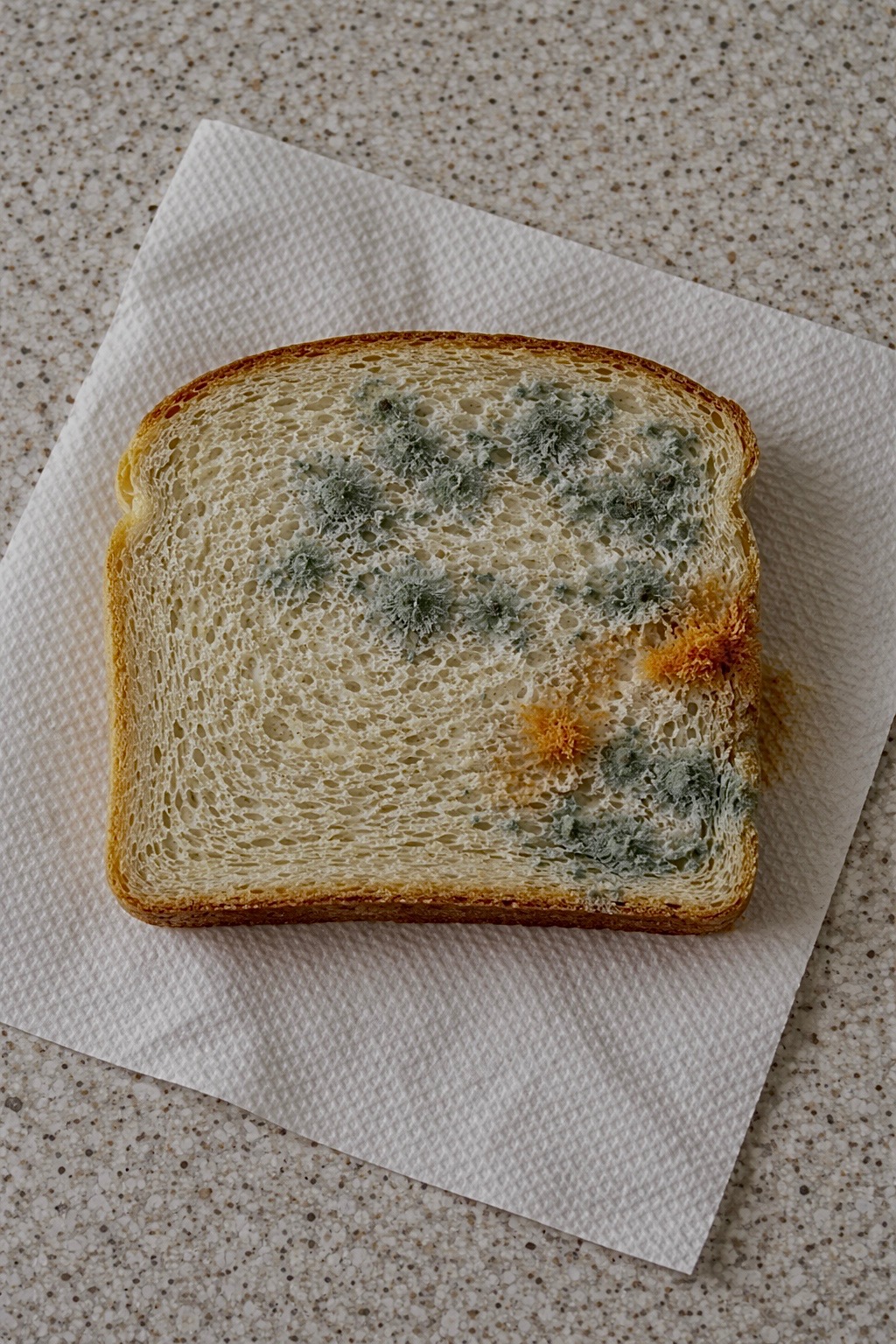
I even did a test like this myself, leaving bread out for several days just to observe what happened to the mold (seen below).
Somehow, this small organism allowed scientists to understand how living things, including humans, keep track of time using a biological clock.
It did not seem too important at first. But as soon as they took it into their laboratory, it did something rather unusual. They placed the fungus in complete darkness, with no sunlight, not even a single outside signal. The fungus could not tell what time it was. Even then, it still grew in certain patterns (Castro-Longoria et al., 2010). It repeated in a consistent cycle, as though the organism already knew what a day looked like.
This insight changed the perspective on time.
Scientists such as Jay C. Dunlap and Jennifer J. Loros concluded that organisms do not just respond to time but keep an internal clock that runs in cycles (Castro-Longoria et al., 2010). Such a system came to be called a circadian rhythm, meaning “biological rhythm occurring every 24 hours.”
Scientists later discovered that this clock runs through interactions among genes and proteins in a cycle. A vital part of this cycle includes a gene whose job is to create a certain type of protein named FRQ (frequency) (Baker et al., 2011).
When the FRQ protein accumulates in the body, it stops being produced. When this protein degrades, production resumes. Through this process, a continuous cycle is formed, allowing time to be regulated. This is known as a negative feedback loop, where a system turns itself on and off (Baker et al., 2011).
This system is not simple. However, there are other genes, which help the organism to sense light. These are collectively referred to as the “white collar” genes (WC-1 and WC-2). They work together in a cycle and are almost always around 24 hours in duration despite any change in the environment.
Humans function with a similar system.
The human brain has an intricate structure called the Suprachiasmatic Nucleus (SCN), which serves as the timekeeper for the organism, regulating physiological processes like sleep, hormone secretion, and body temperature. Just like in fungi, the circadian rhythm is regulated via protein-gene feedback loop mechanism.
Circadian rhythms have been observed across different organisms, suggesting that the biological mechanism for keeping time is ubiquitous and therefore fundamental for any living thing (Aramayo & Selker, 2013).
This was actually quite simple. Our internal clock had always been around.It was only when Neurospora crassa revealed itself that we realized its existence.
Case, M.E., Griffith, J., Dong, W., Tigner, I.L., Gaines, K., Jiang, J.C., Jazwinski, S.M., Arnold, J., (2005). The aging biological clock in Neurospora crassa. https://pmc.ncbi.nlm.nih.gov/articles/PMC4228622/
Castro-Longoria, E., Ferry, M., Bartnicki-Garcia, S., Hasty, J., Brody, S. (2010). Circadian rhythms in Neurospora crassa: Dynamics of the clock component frequency visualized using a fluorescent reporter https://www.sciencedirect.com/science/article/pii/S1087184509002242
The Pokémon “Shellos” and its evolution “Gastrodon” (whose pink West Sea variant is one of my favorite Pokémon) resemble a sea slug. Don’t just take my word for it, though—in their Pokédex entries, Shellos and Gastrodon are referred to as the “Sea Slug Pokémon”. The Pokémon Goomy is referred to as a Mollusk Pokémon in many languages, and although sea slugs are a type of mollusk, the resemblance is less apparent. The team behind the games really didn’t have to change much from their real-life inspiration, though, as sea slugs are some of the most unreal-looking creatures in our oceans. As Helen Sullivan writes about sea slugs, which are also known as nudibranchs, in the Smithsonian Magazine, “It is really, really difficult not to compare them to Pokémon characters” (2024).
Nudibranchs belong to the class Gastropoda, which falls under the phylum Mollusca (mollusks). The term sea slug is used to broadly refer to 11 different subgroups under Gastropoda that do not have hard outer shells. True nudibranchs account for only one of these subgroups, but the others are sometimes also referred to as nudibranchs for convenience (Davey & Willan, 2020).
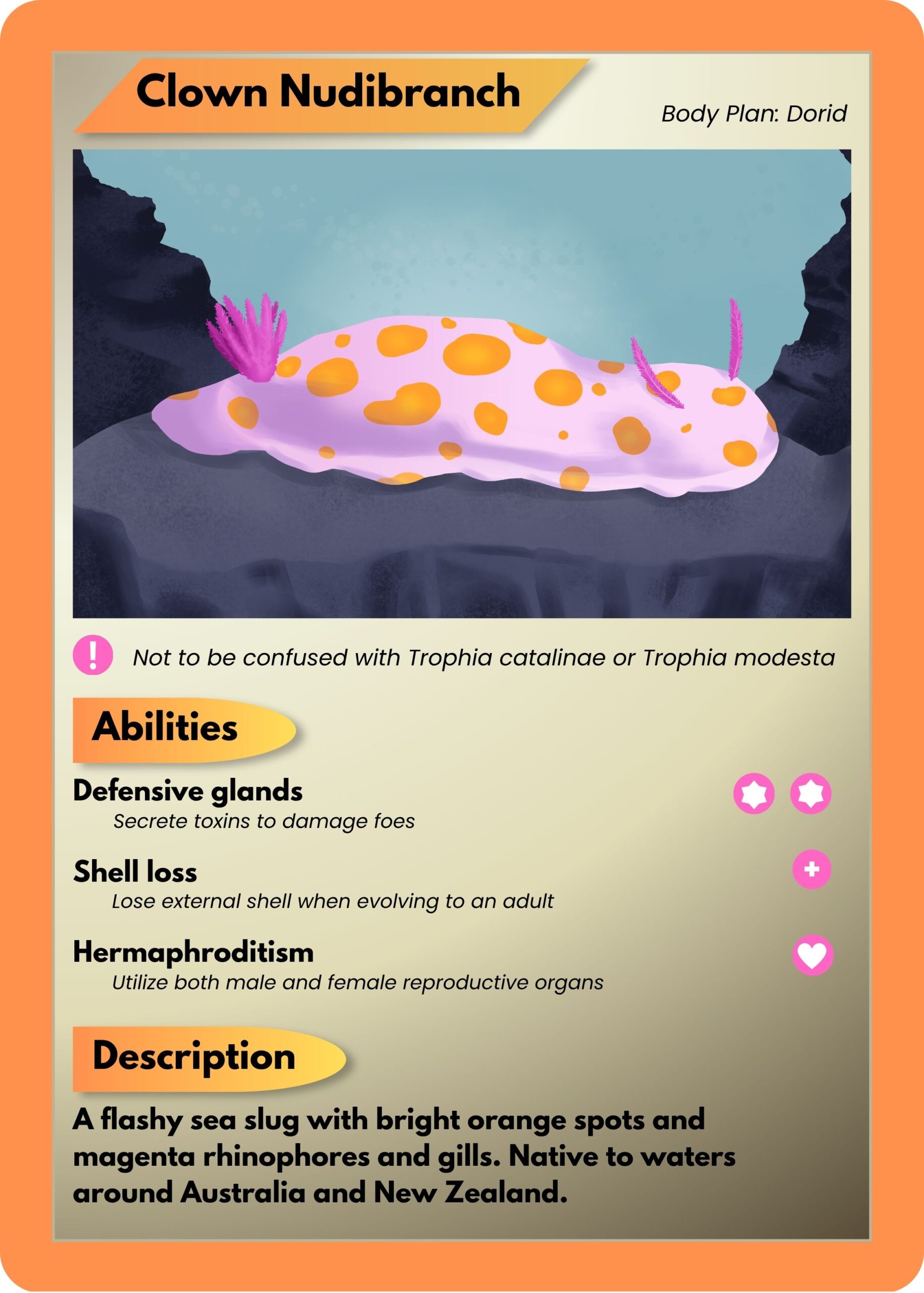
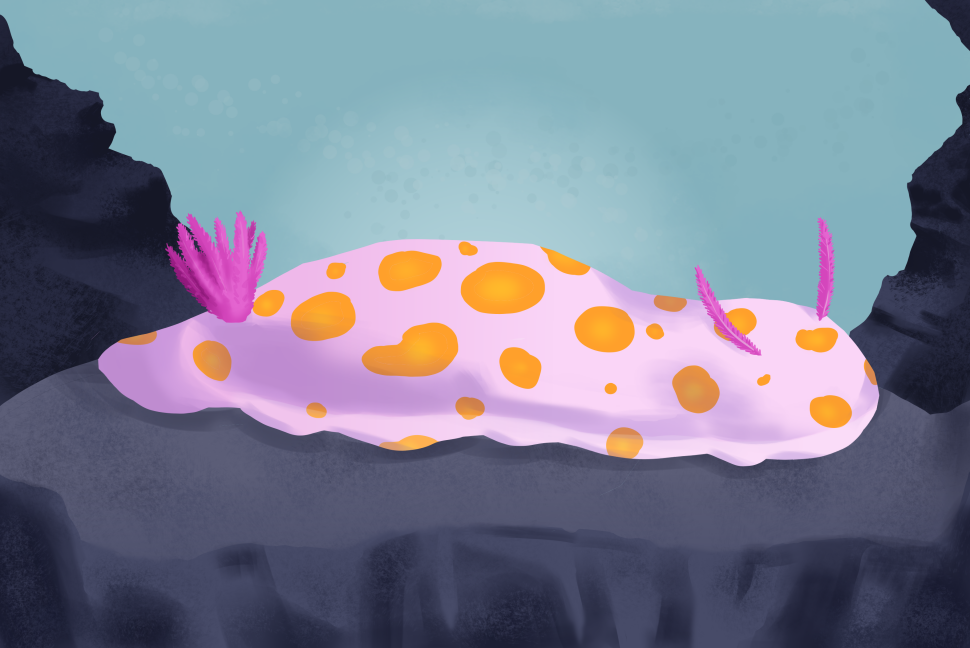
When reading about species of nudibranch, one caught my eye for its name and bright orange coloration: the clown nudibranch. Even the name makes them sound like some sort of Pokémon! They are quite small—around 3 cm on average for adults—but their orange spots would probably make them hard to miss. The name, appearance, and distinctive characteristics of this creature gave me the idea to make a faux Pokémon card for the species, whose scientific name is Ceratosoma amoenum.
Illustration/Graphic Design by Priyanka Singh
Dorid
Nudibranchs can have a few different body plans that differ in shape, gills, and more. C. amoenum has a dorid nudibranch body plan, which means it has two protrusions on its front end and a bundle of protrusions on its back end. The two protrusions that resemble antennae are called rhinophores while the bunch of protrusions on its backside are actually its gills! This distinctive characteristic is where nudibranchs get their name from. Nudibranch means “naked gills” (Sullivan, 2024).
Not to be confused with…
When researching for this article, I found that there are other nudibranch species with a similar appearance and common name as C. amoenum. Trophia catalinae also has a white body with orange spots, although its spots are raised (known as “tubercles”), and its rhinophores and gills are orange rather than magenta. It’s referred to by a similar name: “sea clown trophia” or simply “sea clown”, so you can see where the confusion might arise. Trophia modesta is a species that was recently distinguished from Trophia catalinae in a 2020 study, and it is commonly known as the “modest clown dorid” (Jung et al.). Unsurprisingly, it looks more similar to T. catalinae than it does to C. amoenum, although its body is more translucent than T. catalinae’s. Still, an amateur nudibranch enjoyer may get these species confused at first glance.
Defensive glands
Nudibranchs often contain chemical defenses within their bodies. A protective tissue called the mantle contains glands that secrete the toxins (Davey & Willan, 2020). Like other nudibranchs, our clown friend doesn’t produce these toxins on their own—they obtain them from their diet, which consists primarily of sponges (Winters et al., 2018). This chemical defense is critical for the soft, shell-less nudibranchs.
Shell loss
Speaking of not having a shell, both the English and Japanese name for Shellos mean “lost shell”: Karanakushi in Japanese, with kara meaning “shell” and nakushi being derived from nakushite (without) or nakusu (to lose); and “shell loss” (Shellos) in English (“Shellos”, 2026). The name origin references one of the nudibranch’s most defining characteristics. Gastropods have an external shell in their larval stage, although members of order Nudibranchia lose it before they reach adulthood, with C. amoenum being no exception (Davey & Willan, 2020).
Hermaphroditism
As members of the Gastropoda class, sea slugs are hermaphrodites. Each individual has both male and female reproductive organs. I know what you may be wondering, but no, they can’t impregnate themselves, although they often donate and receive sperm simultaneously with another individual. Some nudibranchs even shed their penises after intercourse and gain a new one soon after (Sekizama et al., 2013). Talk about freaks of nature….
I considered designing a creature based on the clown nudibranch for my fake Pokémon card, but why would I when the real thing looks like that? I’ll leave the creature designs to the Pokémon team for now. I hope you’ve come to see that sometimes reality can be stranger than the fiction it inspires, and that our world is full of amazing yet often overlooked creatures like the nudibranch.
Illustration by Priyanka Singh
References
Davey, N., Willan, R.C. (2020). Super sea slugs: a guide to the sea slugs of New Zealand. (Version 1). National Institute of Water and Atmospheric Research (NIWA).
Gastrodon. (2026). Bulbapedia. Retrieved April 17, 2026, from https://pokemondb.net/pokedex/gastrodon
Jung, D., Gosliner, T.M., Choi, T., Kil, H., Chichvarkhin, A., Goddard, J.H.R., Valdés, A. (2020). The return of the clown: pseudocryptic speciation in the North Pacific clown nudibranch, Triopha catalinae (Cooper, 1863) sensu lato identified by integrative taxonomic approaches. Marine Biodiversity, 50, 84. doi.org/10.1007/s12526-020-01107-2
Sekizama, A., Seki, S., Tokuzato, M., Shiga, S., Nakashima, Y. (2013). Disposable penis and its replenishment in a simultaneous hermaphrodite. Biology Letters, 9(2). doi.org/10.1098/rsbl.2012. 1150
Shellos. (2026). Bulbapedia. Retrieved April 17, 2026, from https://pokemondb.net/pokedex/shellos
Sullivan, H. (2024, May). Dive Into the Exotic World of Nudibranchs, the Spectacular Slugs of the Sea. Smithsonian Magazine. www.smithsonianmag.com/science-nature/dive-exotic- world-nudibranchs-spectacular-slugs-sea-180984013/
Winters, A.E., White, A.M., Dewi, A.S., Mudianta, I.W., Wilson, N.G., Forster, L.C., Garson, M.J., Cheney, K.L. (2018). Distribution of Defensive Metabolites in Nudibranch Molluscs. Journal of Chemical Ecology, 44, 384-396. doi.org/10.1007/s10886-018-0941-5
It’s currently spring at Georgia Tech, which means tons of flowers are in bloom. Around the end of March and beginning of April, students, staff, and visitors can all take a walk around campus to take in the natural beauty of Georgia Tech.
Here are some of the plants that they may run into:
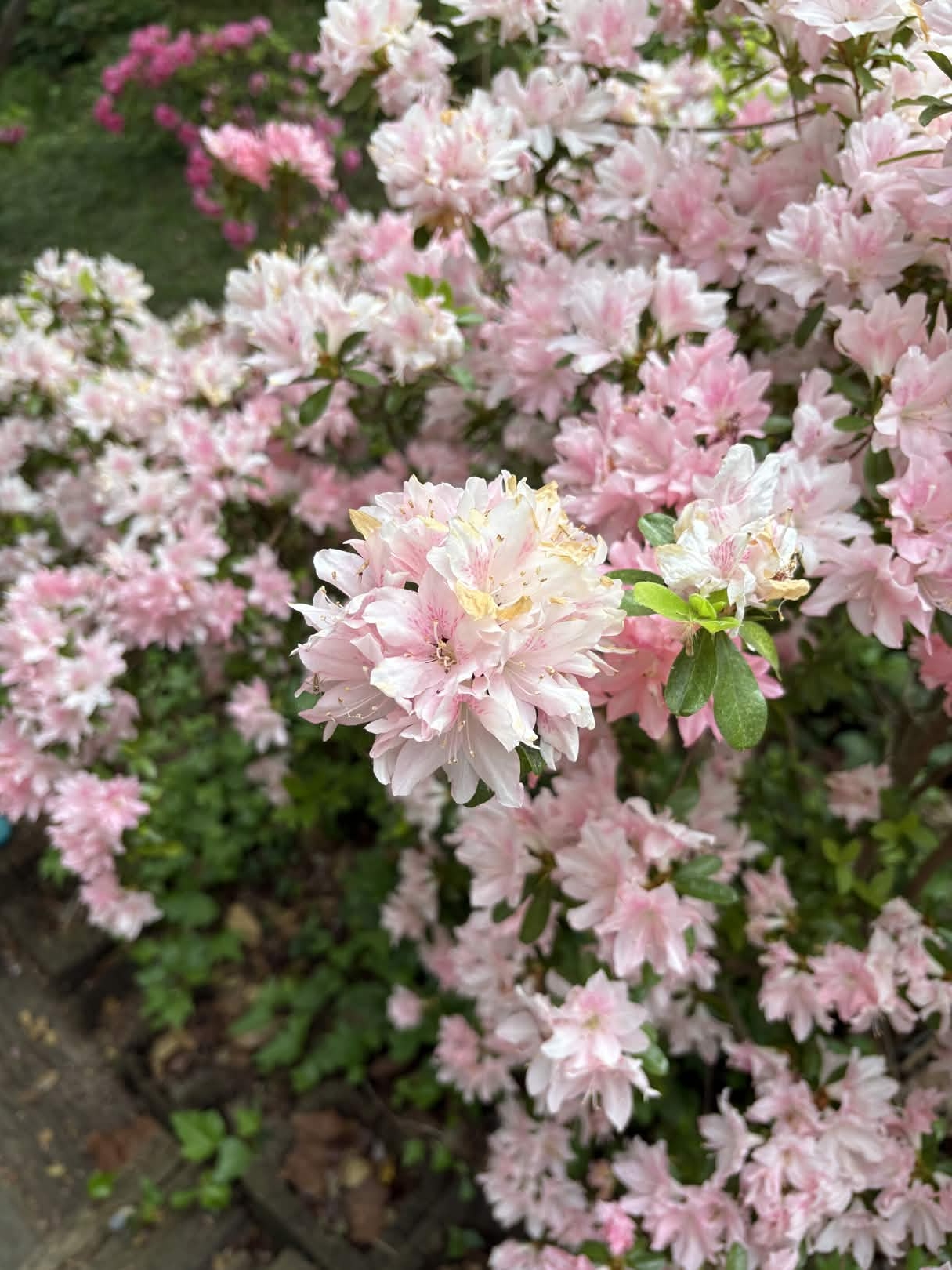
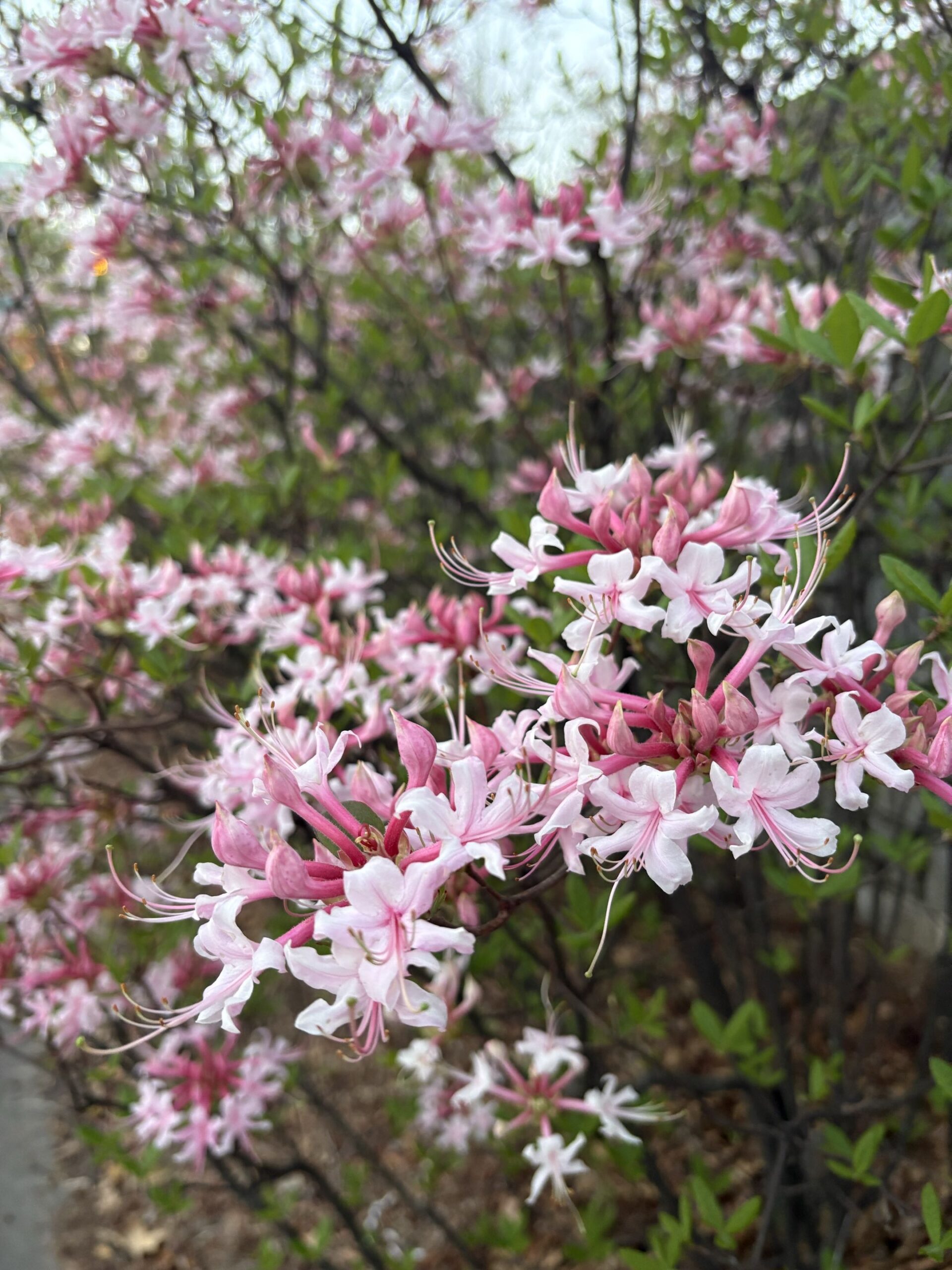
Piedmont Azaleas:
One of the first few flowers that one might notice around Tech are the Piedmont Azaleas, which often grow in bushes on the walkway up to the Howey Physics building.
The Piedmont Azalea, also known as Rhododendron canescens, is a flower native to Georgia. These azaleas bloom early in the spring, from mid-February through March (Wade, Braman, & Woodward, 2022).
They tend to grow in the earlier parts of spring and produce a sweet, musky scent in the air. (Yadav et al., 2019). These flowers often attract a number of pollinators, including butterflies, bees, and hummingbirds.
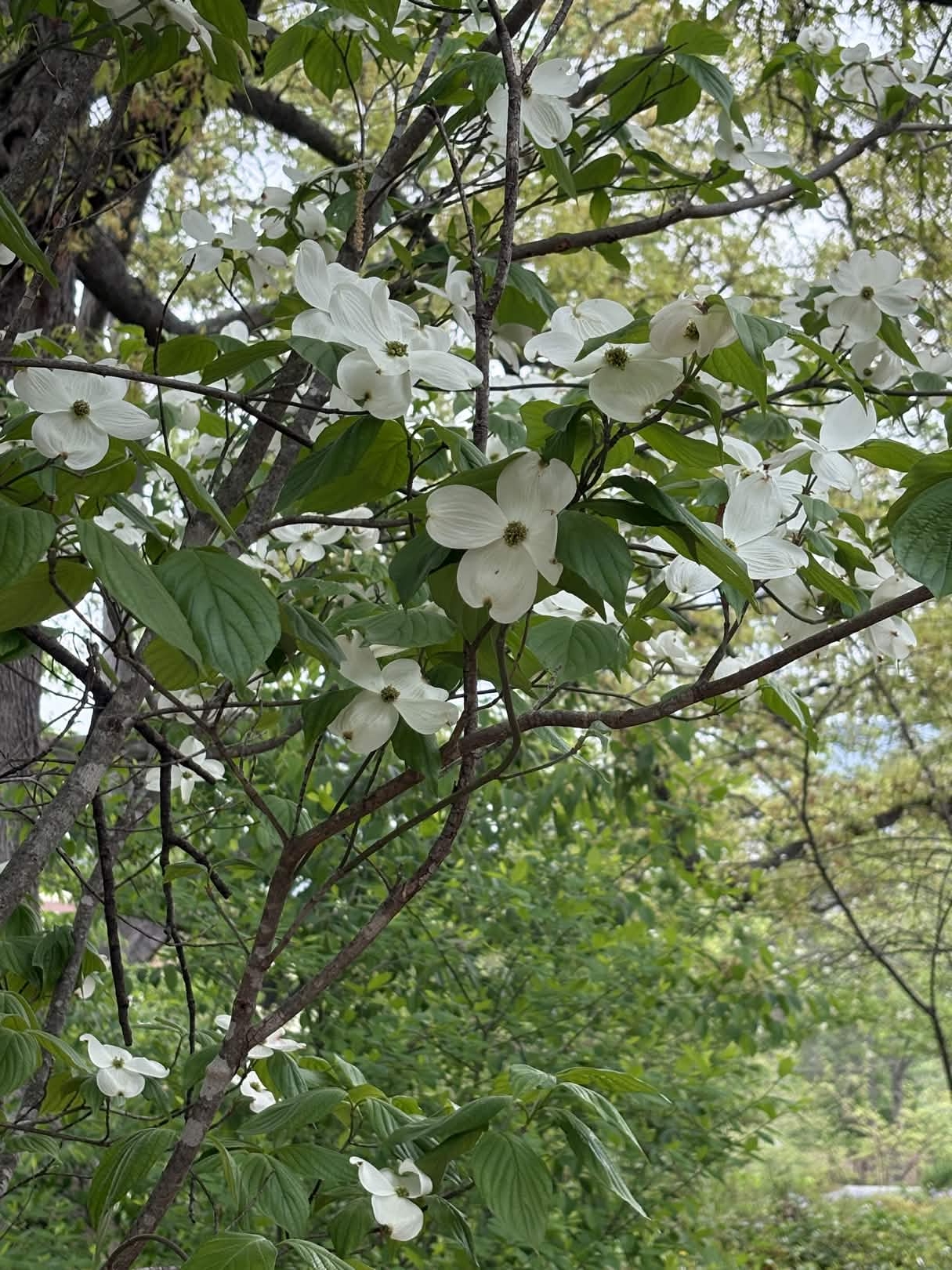
Flowering Dogwood:
Outside the Kendeda building also lies flowering Dogwood trees, which are known as the Cornus florida.
These trees are often planted throughout Georgia as ornamental trees. This means that the trees are mainly planted for display rather than a more practical function.
However, the species can be extremely beneficial to the environment. Dogwood trees produce leaf litter that decomposes rather quickly, which can improve the soil quality (USDA). Additionally, the plant is an extremely important part of calcium cycling. Plants need calcium to survive, as it is extremely important to the structure of cell walls and plasma membranes. Flowering dogwood trees draw calcium from the soil, cycling it into a more usable form for other plants. (Borer, Sapp, & Hutchinson, 2013).
Philadelphia Fleabane:
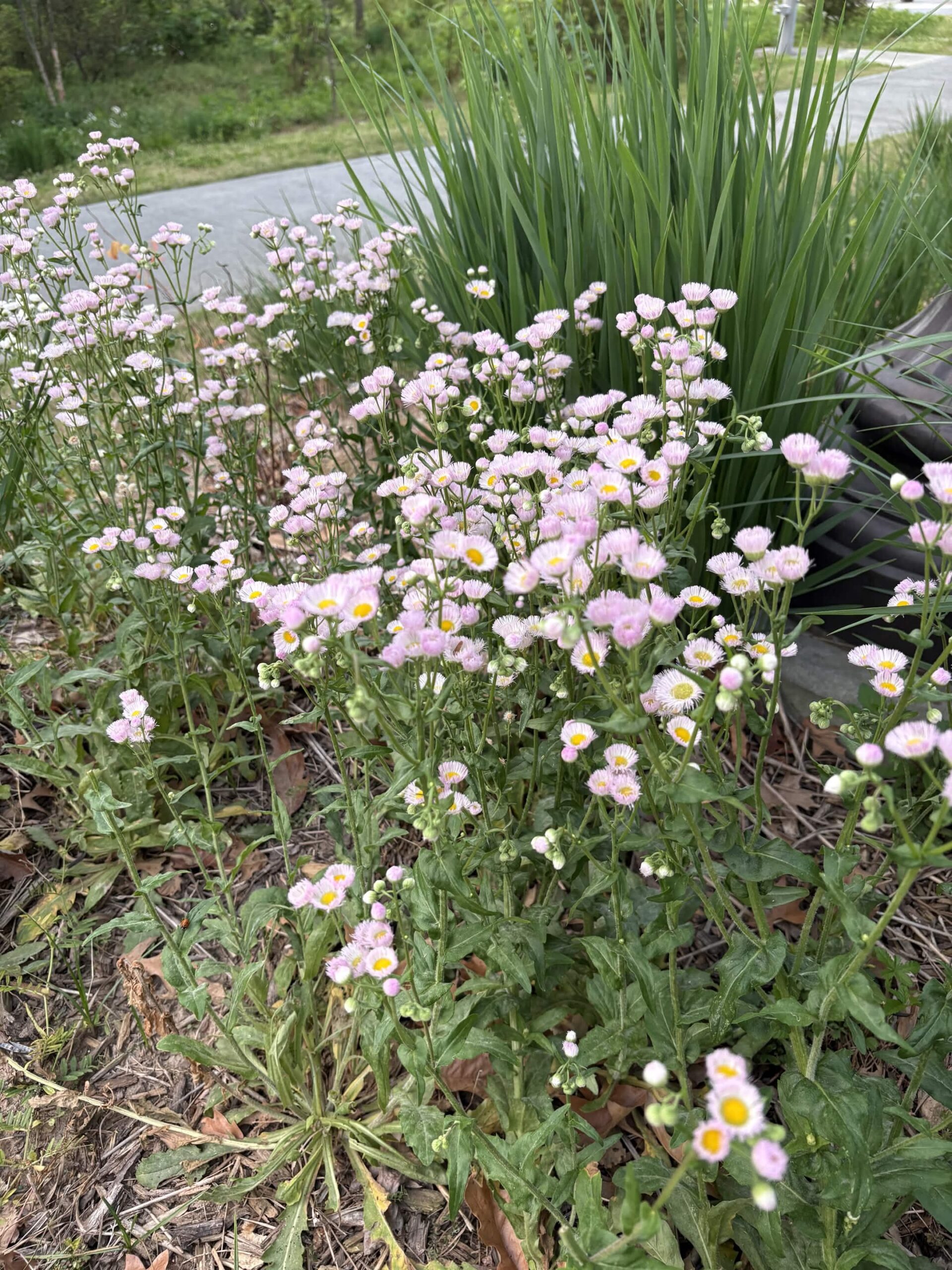
Around the Center Street South apartments are the Philadelphia Fleabane, which are also known as the Erigeron philadelphicus.
These are common wildflowers that grow in moist regions of the United States. They are often considered as weeds if they are not managed properly. This does not mean that they are invasive, but rather that the plant can grow in unwanted spaces if they are not managed properly.
They most commonly bloom during the spring. The flowers will remain open throughout the day time and close back up during the night.
Throughout history, these flowers have had a number of uses, especially in Native American populations. The Philadelphia Fleabane has been made into tea, burned as incense, or simply chewed to treat the common cold in the past (USDA).
Oakleaf Hydrangea:
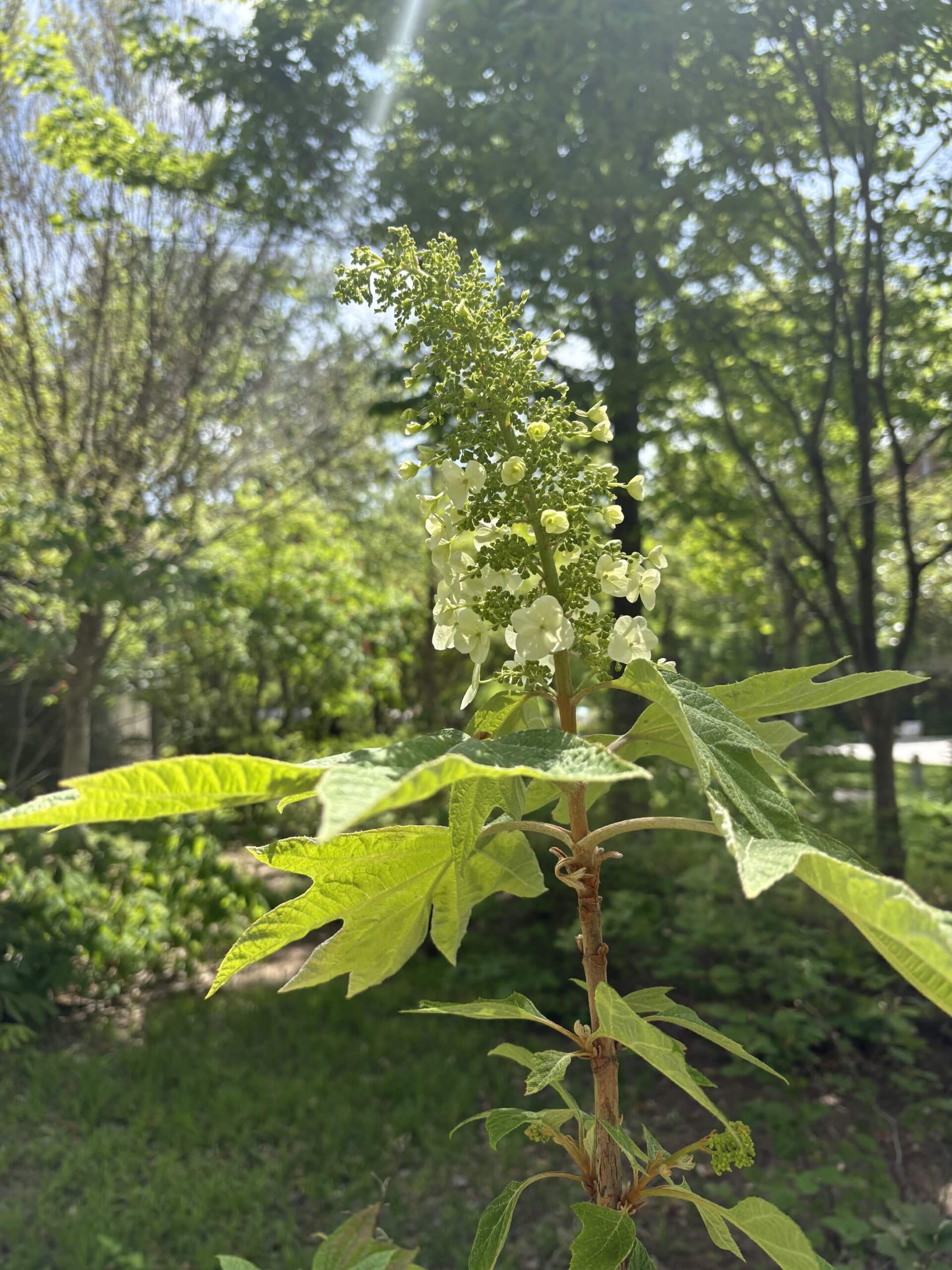
Finally, we have the Oakleaf hydrangeas, which are generally grown in shrubs near the Klaus and Van Leer buildings towards late spring or early summer. These are also known as Hydrangea quercifolia, and they can be found blooming throughout campus. The flowers are native to the southeastern parts of the United States, where they begin to bloom in the early parts of summer.
The plants grow in shrubs, with many cone-like structures that eventually bloom with cream-colored flowers. They are more known to be planted for ornamental purposes.
Although the hydrangea pictured is native to Georgia, there are other species of Oakleaf hydrangeas that were specifically bred for their looks. For example, universities from multiple states in the southeast came together to cultivate the Ruby Slipper Oakleaf. It is a hybrid that starts off white just like the flower pictured and later turns a deep red color as it ages (Reed, 2010).
Works Cited:
Borer, C.H., Sapp, S.G. & Hutchinson, L.H. (2013). Flowering dogwood (Cornus florida L.) as mediator of calcium cycling: new insights are revealed by analysis of foliar partitioning. Trees 27, 841–849 https://doi.org/10.1007/s00468-012-0838-9
Yadav, L. K., McAssey, E. V., & Wilde, H. D. (2019). Genetic Diversity and Population Structure of Rhododendron canescens, a Native Azalea for Urban Landscaping. HortScience, 54(4), 647–651. https://doi.org/10.21273/HORTSCI13840-18
The Mandai Bird Paradise is the biggest bird conservatory in Asia, inaugurated back in May 2023. As one of the six pillars of the Mandai Wildlife Reserve, the incredible sanctuary covers over 42 acres of land on Mandai Island in Singapore. The reserve houses around 3,500 birds encompassing over 400 different species. Mandai Nature is the conservation arm of the Mandai Wildlife Group, which is dedicated to providing a haven for all these species through the Mandai Bird Paradise and to preserving Southeast Asia’s incredible biodiversity through conservation efforts, with a focus on averting species extinction (Temasek Trust, 2024).
Such a variety poses a rather obvious question: How? In order to answer this question, we must chart our way through the science behind conservation, biodiversity and rehabilitation!
Conservation
Conservation, as defined by the Merriam-Webster dictionary, is to carefully preserve and protect something. In a wildlife context, it is orchestrated management of natural resources to prevent exploitation, destruction, or neglect. Conservation efforts to preserve biodiversity are not just about protecting animals in isolation, but in our context, it is about the creation of an entire ecosystem where species can thrive naturally.
At Mandai Bird Paradise, conservation takes an approach similar to this article on biodiversity conservation by diversity (Ramón et al., 2020). In-situ conservation focuses on protecting species in their natural habitats, whereas, ex-situ conservation, which is practiced at Mandai, provides controlled environments where vulnerable or endangered species can be bred, monitored, and protected from immediate threats such as habitat loss or poaching.
The sanctuary also participates in international breeding programs and collaborates with global conservation organizations to ensure genetic diversity is maintained among species. This is critical because reduced genetic diversity due to issues such as environmental changes from global warming can make populations more susceptible to disease. Through these coordinated efforts, Mandai Bird Paradise becomes more than just a sanctuary, but a cornerstone in the Mandai Wildlife Group’s stand as an active contributor to global conservation science.
Biodiversity
Biodiversity refers to the variety of life in a particular habitat or ecosystem, encompassing differences in species, genetics, and ecological roles. The presence of over 400 bird species at Mandai Bird Paradise highlights not only the richness of different avian life present but also the complexity of maintaining such diversity within a single environment. This maintenance is done by separating the 42-acre land into around 10 unique habitats that each suit a certain group.
Each species then gets to play its unique role in its ecosystem, from seed dispersal to pollination and pest control. By housing a wide array of species, the sanctuary effectively simulates interconnected ecological networks, allowing researchers and conservationists to better understand how these systems function.
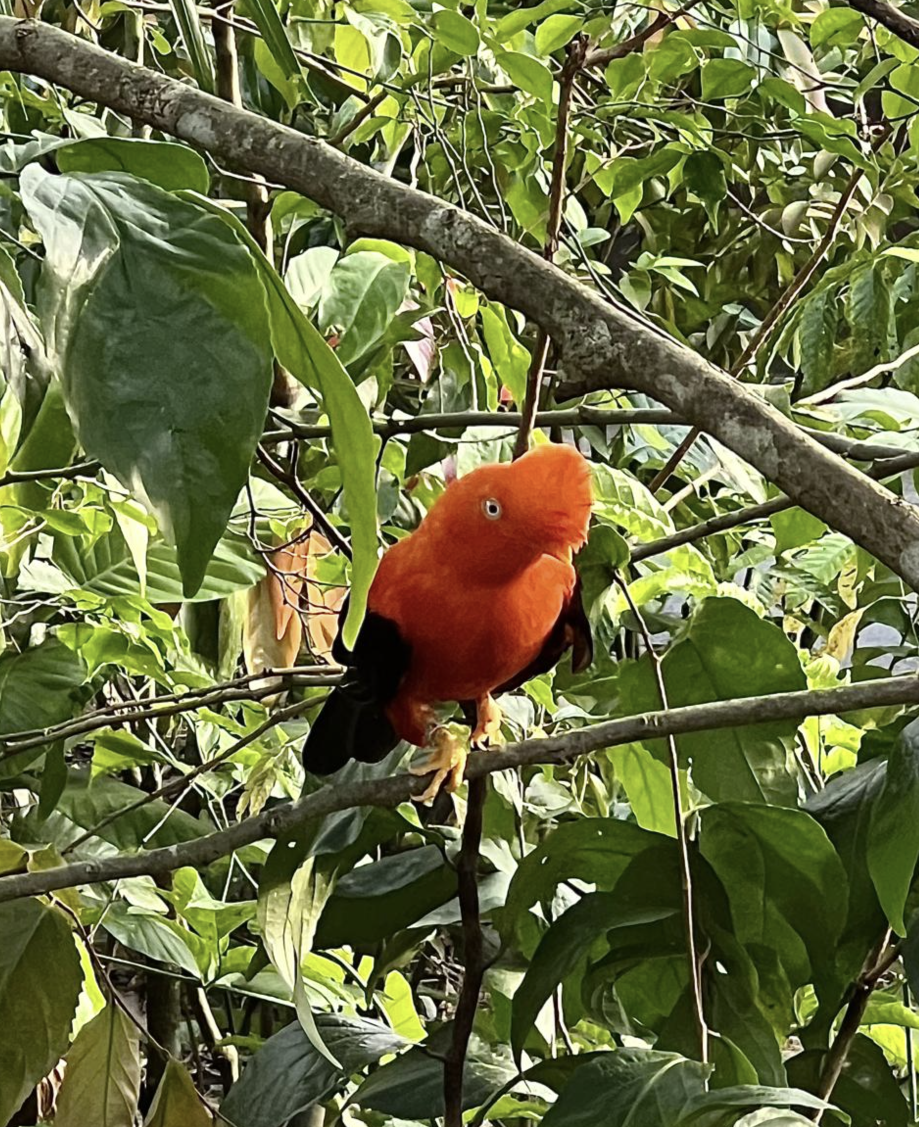
Maintaining biodiversity in a controlled setting requires careful planning. Factors such as diet, climate conditions, nesting environments, and social groupings must all be tailored to meet the needs of different species. For instance, tropical birds such as the Andean cock-of-the-rock (yes, you read that right) require high humidity and dense vegetation, while others may need open spaces or specific nesting structures. This level of detail ensures that the birds are not only surviving but thriving in conditions that closely resemble their natural habitats.
Andean cock-of-the-rock
Rehabilitation
Rehabilitation is another crucial component that involves the care and recovery of injured, displaced, or trafficked birds with the goal of reintroducing them into the wild whenever possible.
Birds that arrive at rehabilitation centers often suffer from injuries caused by habitat destruction, illegal wildlife trade, or human interference. At Mandai, veterinary teams and specialists provide medical treatment, nutritional support, and behavioral conditioning to help these birds regain their strength and natural instincts.
One of the key challenges in rehabilitation is ensuring that birds do not become overly dependent on human care. To address this, caretakers minimize human interaction and design enclosures that encourage natural behaviors such as foraging and flight. Only when a bird demonstrates sufficient recovery and independence is it considered for release. Even when release is not possible, rehabilitation still plays an important role. These birds may become part of educational programs, helping to raise awareness about conservation issues and inspiring visitors to take action in protecting wildlife.
Mandai Bird Paradise is more than the visually stunning attraction you see through my lens, it is a living example of how science, conservation, and education can come together to protect our planet’s biodiversity. By integrating conservation strategies, maintaining diverse ecosystems, and supporting rehabilitation efforts, this sanctuary embodies what modern wildlife preservation should look like. In doing so, Mandai Bird Paradise not only safeguards thousands of birds but also inspires future generations like yours and mine to value and preserve the delicate balance of life on Earth.
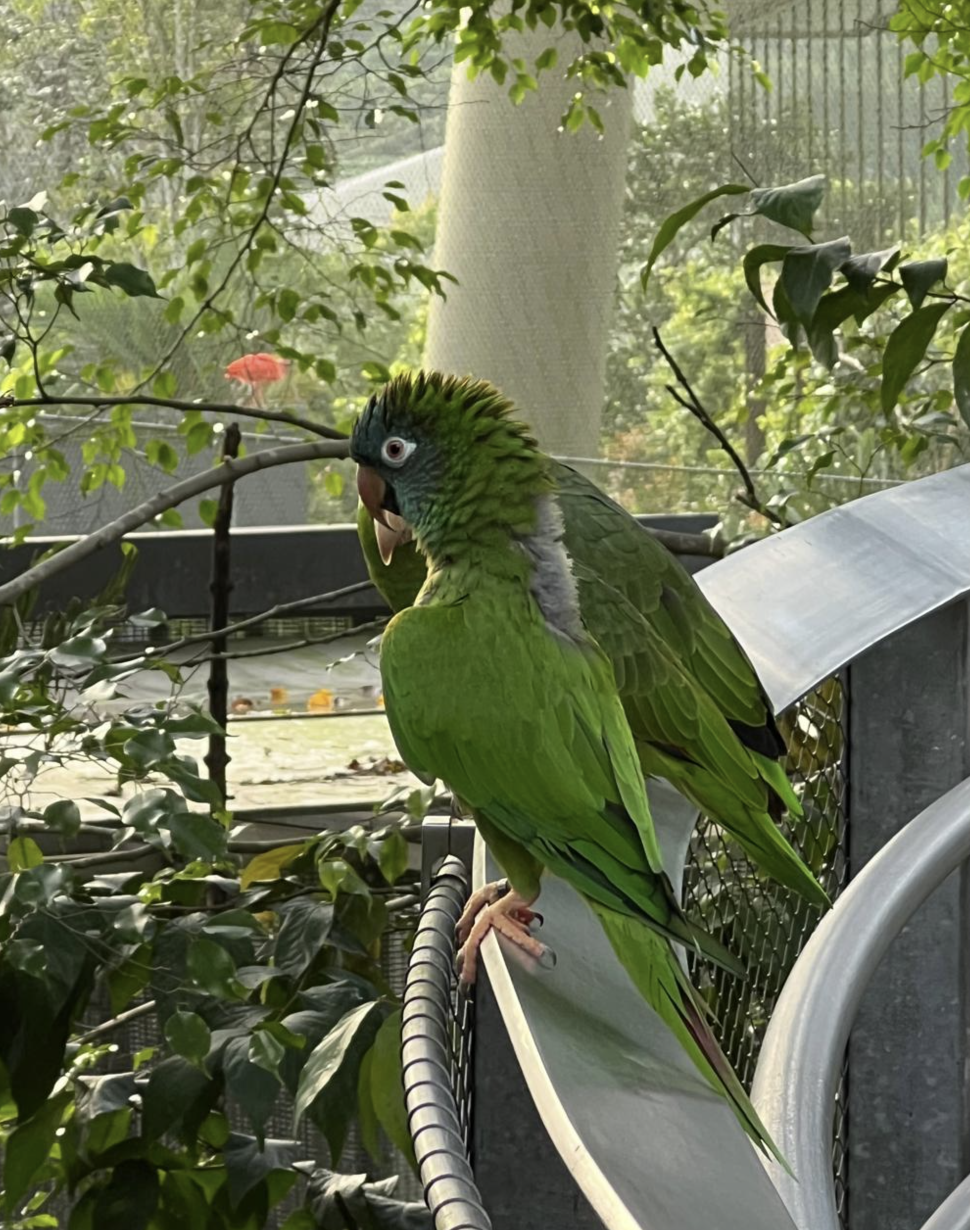
Blue-crowned Parakeet
Bits of My Time
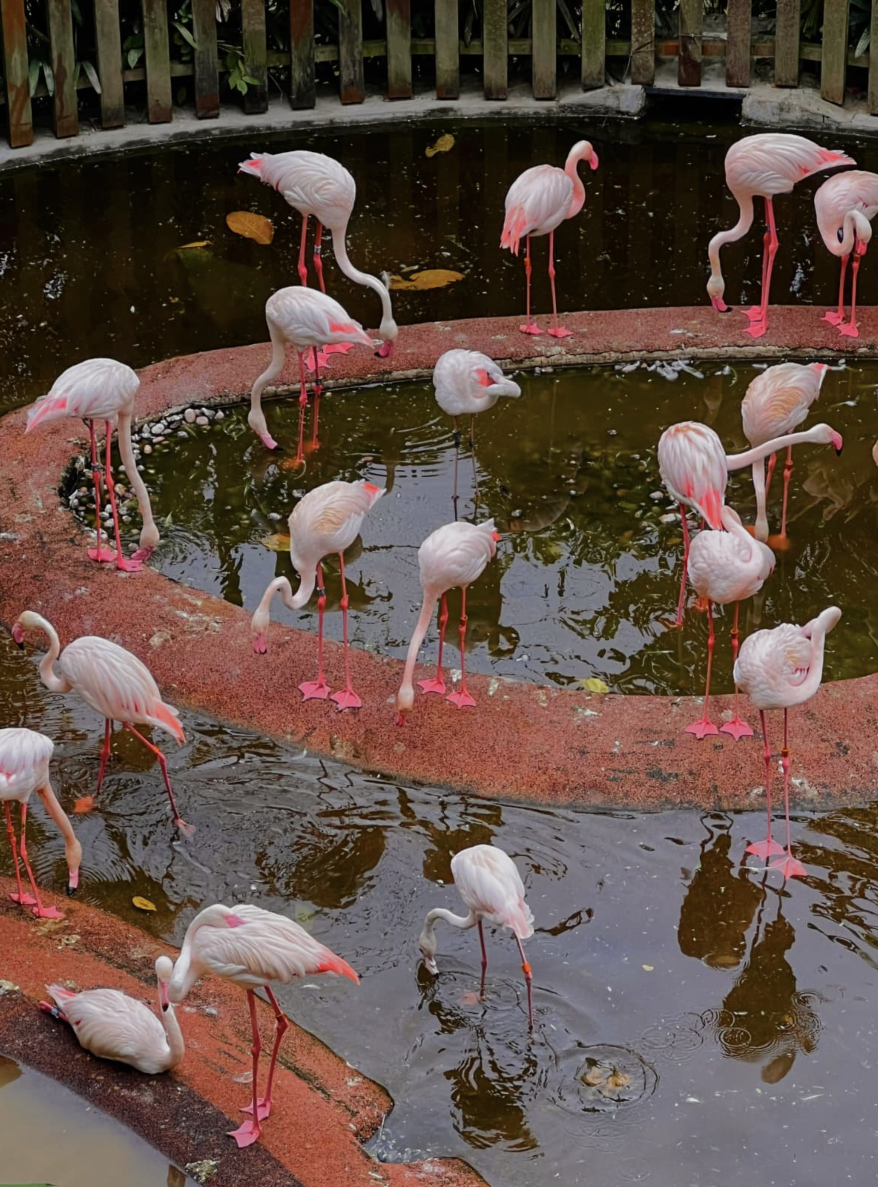
This reserve is one of the most beautiful places on Earth! Walking out into the Crimson Wetlands zone of the park felt like a scene straight out of a movie. There were colorful macaws soaring overhead, bright American flamingos dancing by the pond, Scarlet ibis carefully balancing on the hand rails and so much more. My exploration of the Mandai Reserve taught me so many fun facts about birds and this experience rekindled my love for all things nature. It truly gave me a fond memory to recall for the rest of my lifetime.
References
All Photography/Illustrations by Kristina Sarah Siju
Mestanza-Ramón, C., Henkanaththegedara, S. M., Vásconez Duchicela, P., Vargas Tierras, Y., Sánchez Capa, M., Constante Mejía, D., Jimenez Gutierrez, M., Charco Guamán, M., & Mestanza Ramón, P. (2020). In-Situ and Ex-Situ Biodiversity Conservation in Ecuador: A Review of Policies, Actions and Challenges. Diversity, 12(8), 315. https://doi.org/10.3390/d12080315
Protecting Wildlife, Preserving The Future. (2023). Temasek Trust Revamp. https://www.temasektrust.org.sg/what-we-do/impact-hub/article-details/mandai-nature-impact-report-2023-2024
Speiran S. I. M. (2025). The ‘Sanctuary Gap’: Reviewing the Research on Captive Wildlife Sanctuary Tourism. Animals : an open access journal from MDPI, 15(4), 496. https://doi.org/10.3390/ani15040496