




Tag: science
-
Battle of the Hands: Mittens vs. Gloves
Tis the season for frozen fingers and numb thumbs trying to type on a small phone keyboard. If you’re like me, you like We can wear puffy coats but our hands are unprotected from the wintry winds. So how should we keep our hands warm? Are gloves better at keeping our fingers warm or should we shift our attention to mittens? In order to answer these questions, we need to understand a few things about how the body and the world work.
If you were to lose a part of your body, which part would you want to go first? Probably a toe, a finger… but probably not your head or heart. Our bodies have evolved to preserve the important parts (vital organs), so our appendages get cold first. This is great and all, you know, living, but it does mean we are faced with popsicles for fingers.
And the winner is…
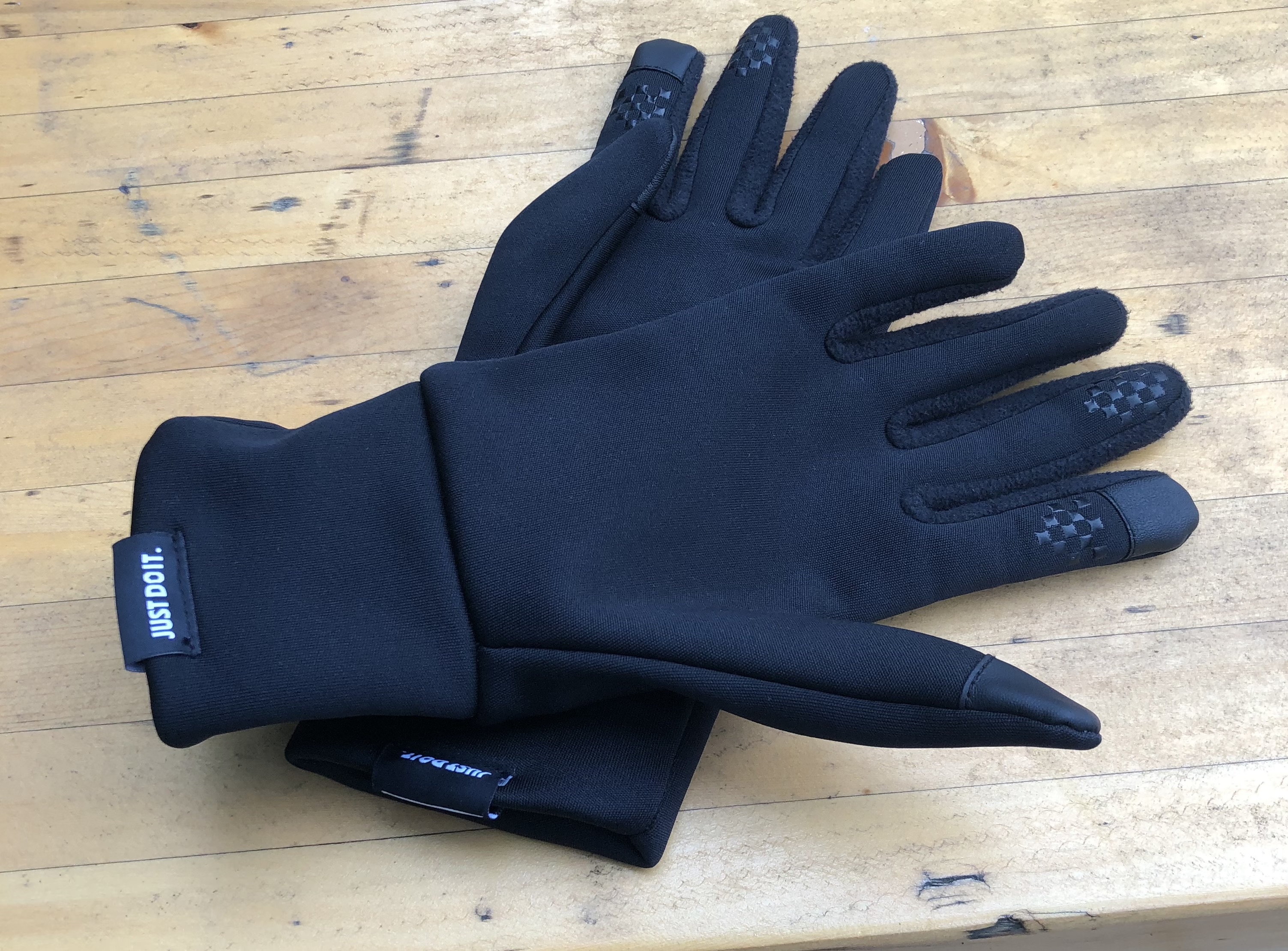
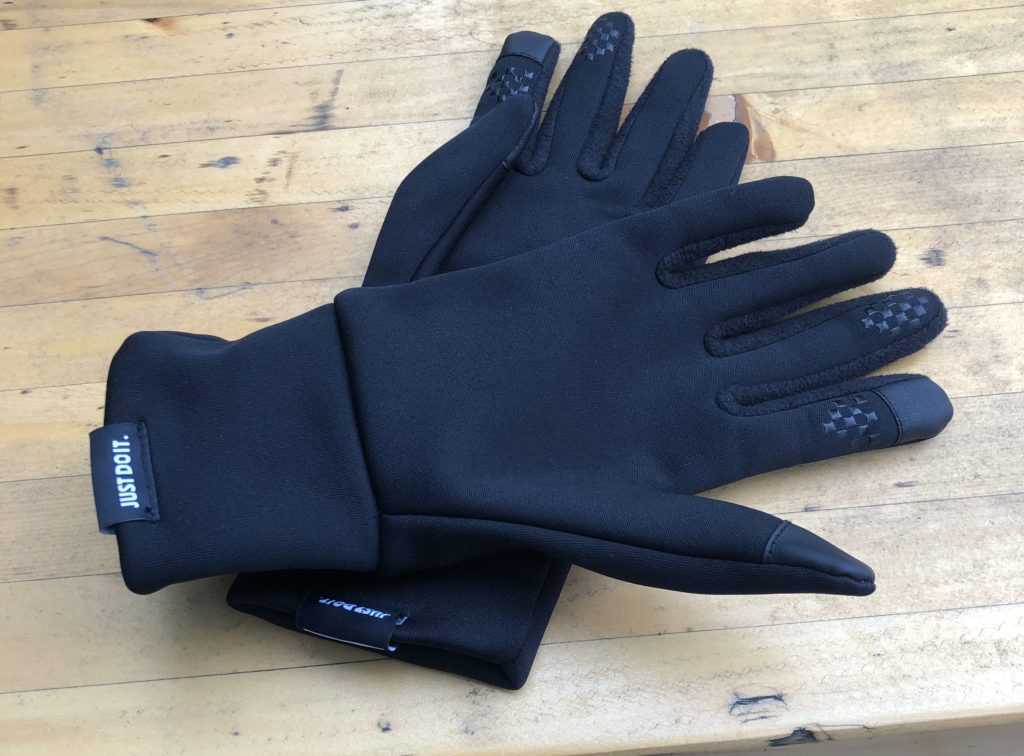
Gloves provide individual protection for each finger, while mittens encase most of your fingers in one compartment. What are the advantages and disadvantages of these differences? Heat is continuously generated in the body through various metabolic processes (a topic for another time) and is exchanged within our body as well with our external surroundings. Generally, heat is transferred in four ways: conduction, convection, evaporation and radiation. In a system, heat cannot be created or destroyed: this is the First Law of Thermodynamics. So if our fingers are individually separated, like in the case of gloves, heat from our fingers is being transferred to the surface of the gloves themselves. Heat is moving to the gloves because heat will move from a hotter object to a cooler one. On the other hand (Ha!), mittens allow the fingers to come into contact with each other. This means that heat that is lost from one finger can be transferred to another finger. It’s a win-win-win-win, thank you physics! This heat can be “trapped” and provides insulation.
So if you find yourself at a store asking yourself “Should I get mittens or gloves?” Here is your answer: Mittens if your goal is warmth, gloves if you want to be able to carry out complex tasks at hand and glittens (fingerless gloves with a mitten flap) if you are fancy! If going to a store is too much trouble, keeping your hands in your coat pocket will do the trick and your thumb can get in on the heat transfer party.
A Look Backstage (Sources)
Fox, R.H., Wyatt, H.T. (1962). Cold-induced vasodilation in various areas of the body surface of man. Journal of Physiology, 162, 289-297.
Holmer, I. (1985).Heat exchange and thermal insulation compared in woolen and nylon garments during wear trials. Textile Research Journal, 55(9), 511-518.
Huizenga, C. (2004). Skin and core temperature response to partial and whole body heating and cooling. Journal of Thermal Biology, 29(7), 549-558.
Iserson, K. (2016). Glove and mitten protection in extreme cold weather: an Antarctic study. International Journal of Circumpolar Health, 75, 33564.
Thermopedia. Body (human) heat transfer. Retrieved from http://www.thermopedia.com/content/ 587/
-
Carbon Negative Concrete???
As Industrial Design major who’s future career will most likely consist of creating a wide variety of products, something that is a big concern for me is creating environmentally friendly products. I don’t want to just create things that will eventually just create more waste and end up in a landfill polluting our Earth. I also don’t want to help perpetuate environmentally harmful manufacturing processes like those used to make cement that release tons of greenhouse gases into the atmosphere. So when I heard about the Calera process I was very interested and wanted to look into it more to see if this was actually an effective and sustainable method for capturing and storing carbon.
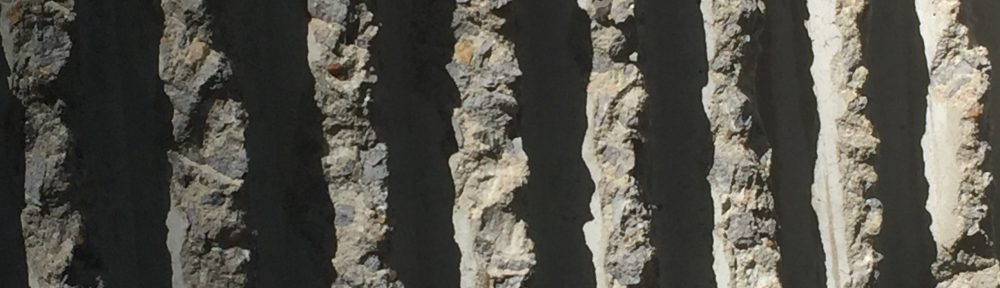
The Calera Corporation developed the Calera process to sequester CO2 from our environment in a way that is actually sustainable and effective over time. They then used this process to create a superior form of concrete that mimics the form of calcium carbonate that marine animals use to create their hard shells. The Calera process results in the production of the vaterite polymorph which is stable when stored in the absence of water. When water and other proprietary additives are added to the vaterite polymorph, a cement reaction occurs in which the vaterite transforms via a dissolution and reprecipitation reaction to form another polymorph of calcium carbonate known as aragonite. This conversion of vaterite to aragonite results in a material with high strength, just as natural systems like mother of pearl are also constructed from the aragonite polymorph of calcium carbonate.
Concrete is the most widely used man-made material in the world. Concrete is made of roughly 80% aggregate (sand and gravel), 10-15% cement, and the remainder air, water, and additives. The Calera process can permanently mineralize carbon into either fine or coarse aggregates or a supplementary cementitious material that can be used to create building materials such as concrete. The standard process for manufacturing Portland cement generates large amounts of CO2 both from the fuel used to heat the raw materials as well as from the conversion of CaCO3 to CaO, which releases CO2. Because of this, concrete made from Portland cement carries a CO2 footprint of approximately 0.8-1.5 ton CO2/ton cement, translating to roughly 537 pounds of CO2/cubic yard of concrete! Calera SCM both captures carbon from one source and avoids carbon emissions from another. Concrete made with 20% cement replacement with Calera SCM, and 20% cement replacement with fly ash would have carbon footprint of negative 1146 pounds of CO2/cubic yard of concrete. This is a carbon savings of 1683 pounds of CO2/cubic yard of concrete compared to standard concrete. “With projected U.S. Portland cement consumption at nearly 200 million metric tons by 2020, a 20% market penetration with a SCM replacement level of 50% would reduce CO2 emissions by 30 million metric tons.” Which is far more than the reduction that would be accomplished by supplementing fly ash as a replacement for some portions of Portland cement used in regular concrete mix.
The carbon capture method employed by Calera, is also unique because it has many possible inputs including: fly ash, brines, waste water, and flue gas. In capturing CO2 and other emissions from flue gas, Calera’s carbonate mineralization technology uses solid and liquid sources of alkalinity, such as fly ash, wastewaters, and brines. The outputs of the process are clean air, fresher water, and solid materials that can be used as an aggregate or supplementary cementitious material. Another concern that often comes up in the conversation of carbon capture is how efficient is it, especially since you are trying to capture and manipulate a gas in this process. In its pilot landing facility, the Calera process regularly observes Carbon capture rates greater than 50% and has even reached rates of over 90%.
-
From Flaky to Fabulous
Alpha hydroxy acids. Beta hydroxy acids. These sound like complicated and possibly dangerous chemical compounds you would learn about in high-level chemistry classes, right? Have no fear; these organic compounds will make you beautiful.
Both alpha hydroxy acids and beta hydroxy acids are used in many skincare products as chemical exfoliants. Alpha hydroxy acids, or AHAs, when used in low concentrations, can be used to treat dry skin and keratosis pilaris. At higher concentrations, AHAs cause epidermolysis, which causes the top layer of skin to peel away, revealing new and healthy skin underneath. This can improve the appearance of photoaged skin by reducing wrinkles and lightening dark spots. Common AHAs include glycolic acid and lactic acid. Beta hydroxy acids, or BHAs, act as a peeling agent and can be used to treat acne, photoaging, and calluses. Common BHAs include salicylic acid, citric acid, and malic acid.
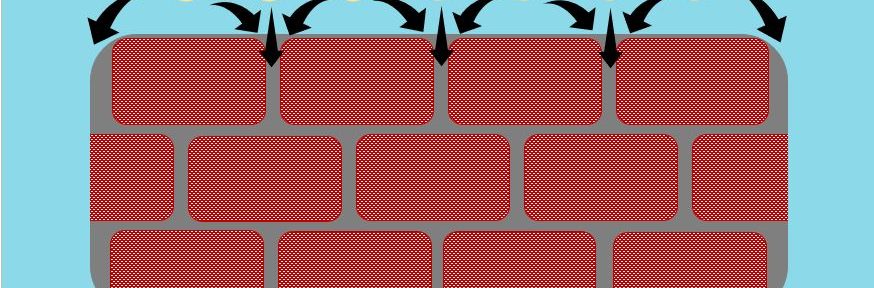
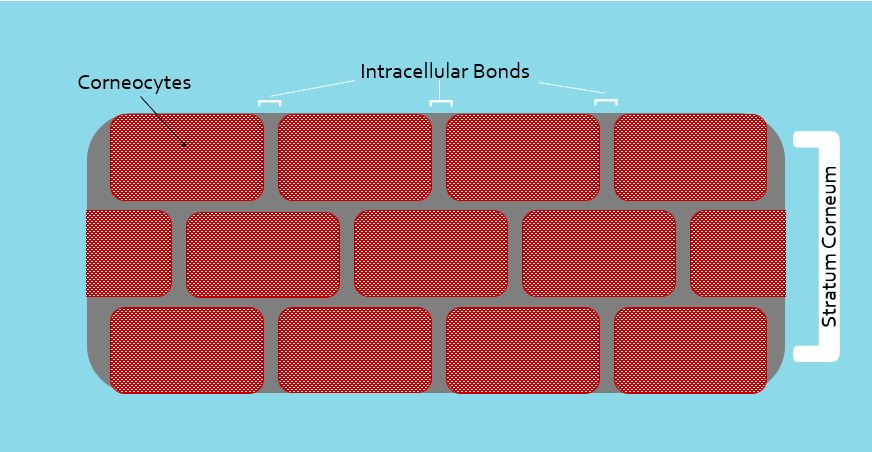
These chemical exfoliants sound great, but how do these acids work? The top layer of your skin is called the epidermis. The very top layer of the epidermis is the stratum corneum. This layer consists of dead skin cells known as corneocytes that are ready to slough off with exfoliation. These corneocytes are held together by intracellular bonds. Chemical exfoliants such as AHAs and BHAs break these bonds and encourage desquamation, otherwise known as skin peeling. If the stratum corneum consisted of bricks stacked on each other and held together by cement, these acids would dissolve that cement and allow bricks to easily be removed.
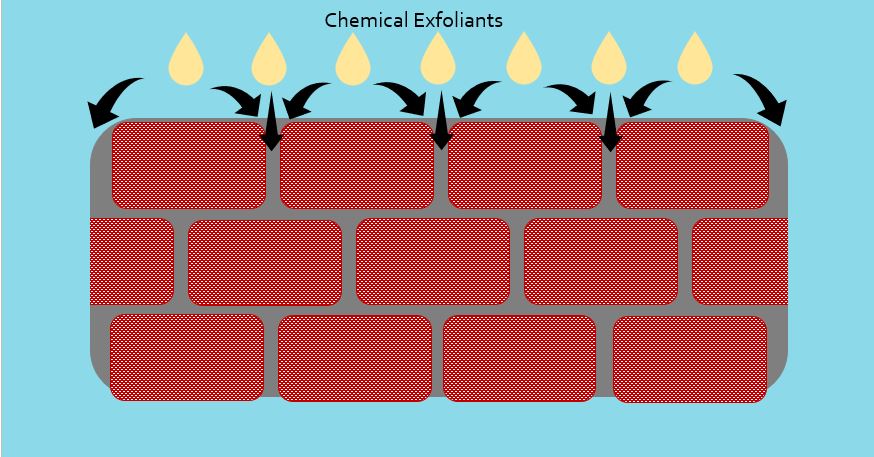
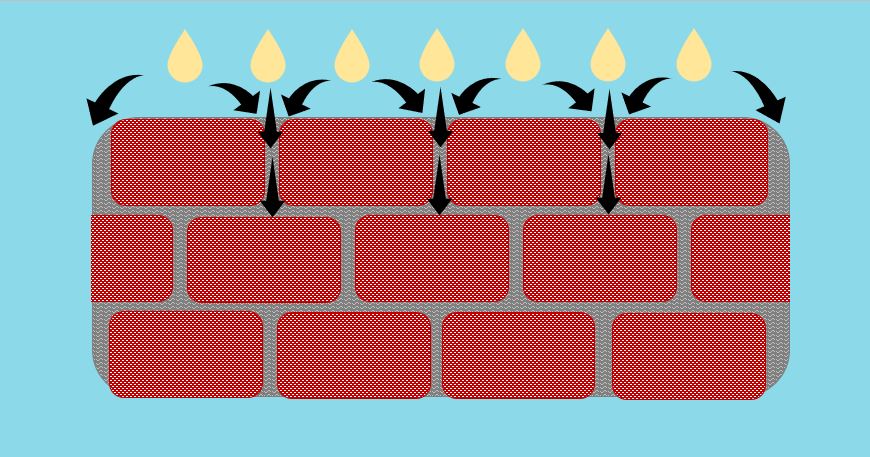
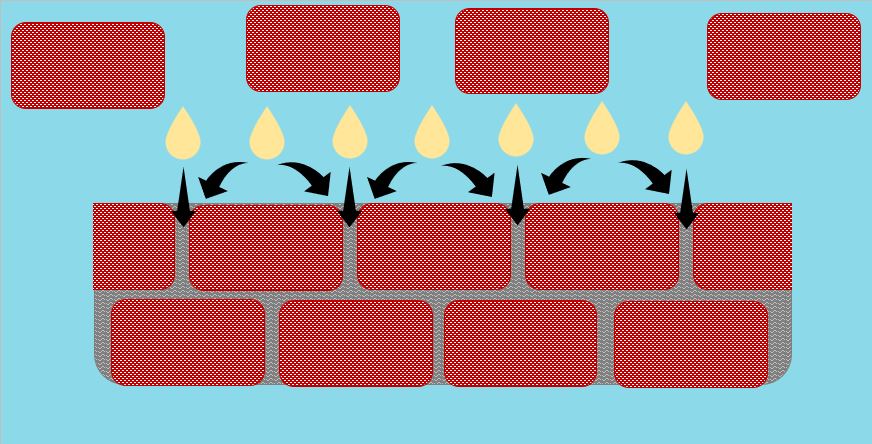
When used correctly, chemical exfoliants such as AHAs and BHAs cause very little irritation and have no lasting negative effects. When used incorrectly, however, chemical exfoliants might leave you worse off than you started. If an acid is too strong for your skin, it might penetrate too deep into lower layers of your skin, breaking too many intracellular bonds and causing healthy, living skin cells to slough off. You could be left with chemical burns and scars once your skin heals. Additionally, AHAs and BHAs can increase photosensitivity, causing sun damage to occur faster than usual. However, this effect can be mitigated by wearing sunscreen daily, and as a bonus, you can prevent the need for chemical exfoliants in the future because photoaging will decrease with the use of sunscreen.
Scary-sounding chemical exfoliants like alpha hydroxy acids and beta hydroxy acids are nothing to be afraid of when you understand how they work and the effects they have. Do your research and you too can be beautiful!
Sources:
Alpha Hydroxy Acids. (n.d.). Retrieved October 2, 2018, from https://cosmeticsinfo.org/alpha-hydroxy-acids
Chemical peel. (2018, May 24). Retrieved October 2, 2018, from https://www.mayoclinic.org/tests-procedures/chemical-peel/about/pac-20393473
EJ, V. S., & RJ, Y. (n.d.). Alpha hydroxy acids: Procedures for use in clinical practice. Retrieved October 2, 2018, from https://europepmc.org/abstract/med/2523288
Heathman, C. (n.d.). Skin Exfoliation. Retrieved October 2, 2018, from https://www.dermascope.com/exfoliation/skin-exfoliation
Kornhauser, A., Coelho, S. G., & Hearing, V. J. (2010, November 24). Applications of hydroxy acids: Classification, mechanisms, and photoactivity. Retrieved October 2, 2018, from https://www.ncbi.nlm.nih.gov/pmc/articles/PMC3047947/
Trench, B. L., & Nesvig, K. (2017, October 23). Your Guide to Alpha Hydroxy Acids (AHAs) and How They Work. Retrieved October 2, 2018, from https://www.allure.com/gallery/what-you-didnt-know-about-lactic-salicylic-citric-glycolic-acid-creams
Van, E. J., & Yu, R. J. (1984, November). Hyperkeratinization, corneocyte cohesion, and alpha hydroxy acids. Retrieved October 2, 2018, from https://www.ncbi.nlm.nih.gov/pubmed/6096420
-
Learn How to Make Water Disappear
Learning intricate card tricks and complex hand movements can be overwhelming and hard to execute in front of an eager audience, so here is a how to perform a magic trick that does not require any skill but, instead, just a little bit of science. Here is the premise of the trick: You tell an unassuming bystander to pour a glass of water into your magician’s hat. You wave your hands over the hat and chant a seemingly realistic spell. When you flip the hat over, no water pours out… not even a drop. So how did this happen?
While the audience believes that the enchanting spell you cast over the hat made the water disappear, the real magic is rooted in the chemistry behind one particular item: the diaper. When we think of diapers, words like “ew” or “baby” or even “ew babies” come to mind. However, after reading this, you might have a new perspective on the amazing properties of diapers.
We’re now going to do something no ordinary person would do: dissect the diaper. The magical substance that you will line your magician’s hat with can be found underneath the lining of a diaper. This substance is a water-absorbing chemical called sodium polyacrylate. Polyacrylate can absorb more than 200 times its own mass (which is extremely fortunate for those potty training and those who have to change the diapers of potty trainers). Although this superabsorbent polymer is now found in a wide variety of products like medical bandages, female hygiene products and diapers, the substance was originally manufactured for the U.S. Department of Agriculture in the 1970s. The original use for polyacrylate gel was to improve the water retention in soils in an effort to improve germination and plant growth (Liu, 2001).
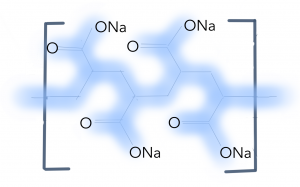
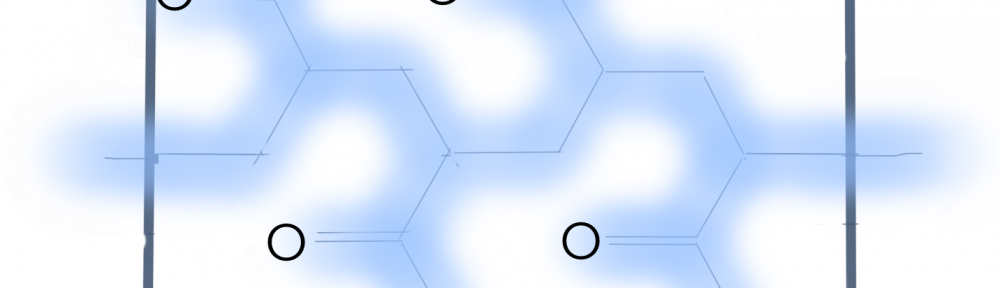
This is the chemical structure of sodium polyacrylate. The molecule is a polymer, so this structure repeats beyond the bars in the diagram. Sodium polyacrylate is a network polymer that contains sodium ions. The key to the absorption process and this magic trick is understanding basic rules of diffusion, osmosis and bonding. Osmosis is the when molecules in a solvent move from a less concentrated solution to a more concentrated solution. In this magic trick, when the water comes into contact with the sodium-containing polymer, the sodium diffuses into the water. This results in the replacement of sodium atoms with water molecules in the complex network (Carnegie Mellon University, n.d.). The polymer is essentially a long chain of negatively charged molecules and bonds to water through hydrogen bonds. The bonds allow the network to swell and hold the water in place, which is why the resulting mixture is crystal-like, fluffy substance that does not spill out of the hat. Now that you know the secret to this trick you will now be able to hone and perfect your water vanishing skills!
Hopefully now when you think of diapers you think “awesome, absorbent polymer.” That said, there are limitations to how amazing this polymer is. Although bunnies are about 70% water, please know a diaper will not make a bunny disappear.
Here’s what you need for the trick:
– Hat
– Source of sodium polyacrylate (>2g)
– Glass of water (8 floz.)
Start with some sodium polyacrylate at the base of the hat. You can tape a diaper to the bottom of the hat to conceal the water-absorbing polymer. Ask someone to pour a regular glass of water in the hat. Swirl the hat around and distract the audience while the water absorbs. The absorption time will depend on how much sodium polyacrylate you use and how much water is added, however, this process should occur within a matter of seconds to minutes. Once you are convinced everything has been absorbed, flip the hat over and watch the audience be amazed!
References:
Carnegie Mellon University (n.d.). Super absorbing polymer powder. Retrieved from https://www.cmu.edu/gelfand/education/k12-teachers/polymers/polymer-and-absorption/super-absorb-powder.html
Foy, J. M., & Schnieden, H. (1960). Estimation of total body water (virtual tritium space) in the rat, cat, rabbit, guinea‐pig and man, and of the biological half‐life of tritium in man. The Journal of physiology, 154(1), 169-176.
Liu, M., & Guo, T. (2001). Preparation and swelling properties of crosslinked sodium polyacrylate. Journal of Applied Polymer Science, 82(6), 1515-1520.
Parks, L. R. (1981). Cross-linked sodium polyacrylate absorbent. U.S. Patent No. 4,295,987. Washington, DC: U.S. Patent and Trademark Office.
-

LSD and Scientific Advancement

LSD. Acid. Lucy. Whatever you decide to call it, lysergic acid diethylamide has been illegal for years in most countries world-wide despite a lack of science supporting its schedule 1 status. (Schedule 1 drugs are classified by the DEA as drugs with a high potential for abuse and no medicinal uses. LSD was approved as medication to treat a range of mental disorders in both the US and Europe prior to its ban in the 70’s.)
Despite the illegality, several of the greatest minds known to man have openly attributed LSD with making them who they are today. Here’s a list of 4 great STEM-minded people who fell down the rabbit hole and came out just a little bit bigger:
- Kary Mullis. PCR, or the polymerase chain reaction, was invented by Kary Mullis in the 1980s. PCR is one of the most significant contributions to biological science in modern history, and Mullis frequently references LSD as a major contributing factor to his conceptualization of the PCR technique in interviews. It is even discussed in his autobiography.
- Francis Crick, you’ve probably heard of Watson and Crick. The dynamic duo that proposed the double helix structure of DNA. What you probably haven’t heard of is that Crick was famous at the time for throwing wild parties featuring LSD.
- Steve Jobs. Again, if you live in the 21st century you should know who this man is. And now you know that he has openly admitted to having used LSD repeatedly in the desert with his coworkers just before starting Apple. Whether or not the iPhone would have been invented without these adventures has never been directly confirmed but prior to his death he admitted in interviews that the experience was life changing, eye opening, and an experience he was overall glad he didn’t miss.
- Last but certainly not least, Albert Hofmann. The inventor of LSD himself. While working on synthesizing medications to improve heart and lung function, Albert Hofmann accidentally ingested the drug and discovered its psychedelic properties. He discusses his intention and personal uses of the drug in his autobiography and believed strongly in its potential as a psychotherapeutic.
There are many other notable people throughout history who have attributed some of their greatest successes to a love of LSD both in and out of the STEM field. Recently several researchers in Europe have opened new trials to experiment with the drug in a psychotherapeutic setting with preliminary success. While the future of LSD is unknown, it is safe to say our lives today wouldn’t be quite the same without it.
Sources:
https://www.dea.gov/druginfo/drug_data_sheets/LSD.pdf
https://www.washingtonpost.com/archive/lifestyle/1998/11/03/nobel-chemist-kary-mullis-making-waves-as-a-mind-surfer/31e7e720-44e4-49ff-8458-a9822cdcb47e/?utm_term=.26b79c188753
http://www.hallucinogens.com/lsd/francis-crick.html
https://www.scientificamerican.com/article/inventor-of-lsd-embarks-on-final-trip/
https://journals.lww.com/jonmd/Fulltext/2014/07000/Safety_and_Efficacy_of_Lysergic_Acid.1.aspx
-
What’s behind your screen?
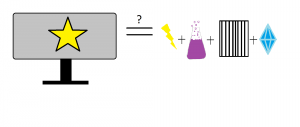
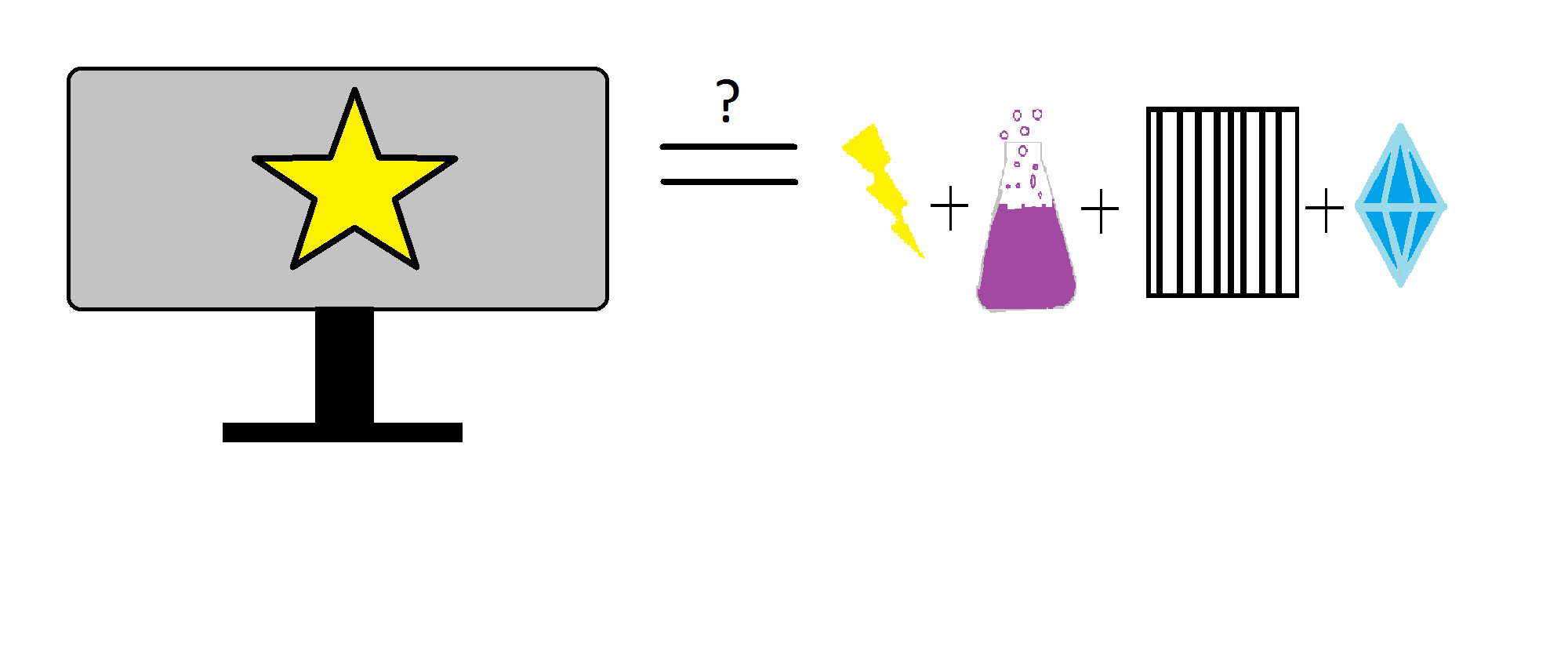
One of the most popular displays today is an LCD display. They come in televisions, computer monitors, phones, and more, but do you know that chemistry and physics are the fundamental to create these screens?
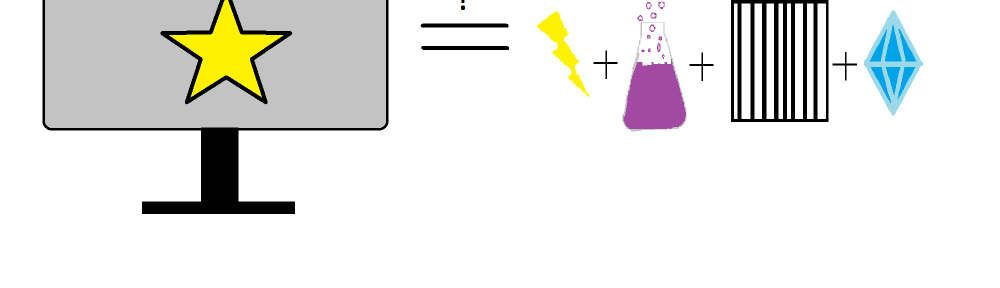
LCD stands for Liquid Crystal display and were used to replace Cathode Ray Tube displays because the CRTs were too bulky making televisions and computer monitors huge. Inside of an LCD display there are multiple layers: a thin filmed transistor, an electrode pattern, a liquid crystal and some level of polarization.
The thin filmed transistor is a very specific form of glass known as Borosilicate glass, made up of around 13% boron trioxide and around 80% silicon dioxide. Its physical properties due to its compound make up allows the glass to be more shock resistant and heat resistant than your average piece of glass. The electrode pattern uses metals like copper and titanium to transfer electrons. The polarizer mainly works with filtering light. Previously, light was just projected onto the television. Now a polarizer filters light waves by direction reducing the amount of power required to use a lit up display. It also allows for smooth picture transition. Finally the liquid crystal is used to produce the crisp look of an LCD screen. This crystal starts out as a liquid and when it comes into contact with the average atmospherics on the surface of the earth, this liquid crystallizes, like a spiders silk. It has the unique ability based on its shape and structure to show or not show various light rays. The polarizer prepares the light for this liquid crystal making its job possible.
So there you have it, now you know whats behind that magic box in your living room!