I had chicken pox when I was 8 years old. This was before there was a vaccine for varicella zoster, the virus that causes chicken pox. When I was growing up everyone got the virus and it made you feel like crap and gave you sores all over (most people wound up with at least a few scars) and then you got better. In fact, when the vaccine was introduced in 1995 many people thought it wasn’t necessary because the disease was relatively mild. The 10,000 people hospitalized each year in the US because of complications and 100 people who died every year probably didn’t agree.
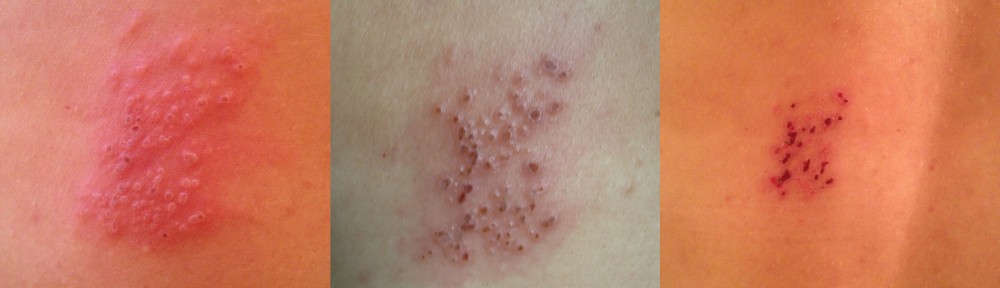
And you know what? I don’t agree either. Varicella or Herpes zoster is a tricky virus that goes latent in nerve cells, much like its cousin Herpes simplex virus. Basically this means that when you recover from your infection, some virus hides out, waiting for your immune system to get weak from stress, old age, other infections, or whatever and then it attacks again! I don’t know what triggered it in my case, but a few days ago I got shingles. Shingles is a yucky, sometimes terribly painful, outbreak of the same virus that causes chicken pox. This time I didn’t get a fever and sores all over, just a cluster of sores along one of the nerves on my back. The scary thing about this, though, is that I am infectious. I could actually give chicken pox to someone who hasn’t had a chance to be vaccinated (a newborn baby for example), a pregnant woman, or anyone who is immunocompromised for some other reason like HIV disease or because they’ve had a transplant.
I could also give chicken pox to people whose parents chose not to vaccinate them. These could be children or adults. Unfortunately, they didn’t get a chance to decide whether they wanted to get a life threatening illness because their parents thought it would be “healthier” than getting a vaccine. They also won’t get to choose when they get shingles, and will put other completely helpless populations at risk when they get infected.
Some anti-vaccine people perpetuate the myth that being infected and recovering from a natural infection provides better immunity than getting a vaccine. This is simply not true. Viruses have evolved sly ways of manipulating our immune system, and often the immunity you develop from natural infections will not protect you very well from being reinfected or from the reactivation of latent viruses.
You know, if I had been born a decade later, I would have been able to get the chicken pox vaccine and I wouldn’t have this icky rash on my back. If I were older, my doctor would have recommended the shingles vaccine for me. Unfortunately I am stuck in the middle and got sick, but you don’t have to. Go get the varicella vaccine, and get your children vaccinated.
Look, we humans are awesome. We own this planet. If we really wanted to, we could spill every barrel of oil we have into the ocean, light it all into one gigantic fiery blaze, get on fire-proof boats in robot suits, somehow put on war paint inside the robot suits, build obnoxiously large metallic middle fingers, and shout to the heavens “TRY TO IGNORE THIS, MOTHER EARTH!!” Then, if we try really really really hard, we could clean it all up again, because some of us are actually sorry and some of us like to keep our marine food webs and all.
Why orchestrate such a display of power? Because we are the all-powerful movers of earth, the masters of fire and brimstone, and the makers of Haribo Gold Bears because holy freaking balls those things are really freaking delicious. We also have days of the year set aside where we butcher and devour different animals in front of children, purely because that’s what we’ve done for centuries. That right there is true power.
Point is, we are masters of everything we see. Remember in the Lion King where Simba is sitting with Darth Vader, who I guess came back to life to inhabit the form of a lion, and Vader is all “everything the light touches is our kingdom”? Yeah, we humans are exactly that. The only difference between humanity and Darth Vader is this: while the lions behave at the whim of the team of animators and writers that brought them to movie stardom, we are being toyed with by a tiny microscopic parasite that enter our guts, hitchhike a one-way ticket to our brains, and deliberately try to kill us by making us do really stupid and risky things.
I bet if you were eating a sandwich right before that last sentence, you probably aren’t anymore. It’s hard to eat something that’s been catapulted by your own shocked reaction, sending sandwich chunks to the opposite wall mid-chew. Even then, the walls may be really dirty, and that’s just not sanitary. I have no idea when I washed my walls last, and I keep my room relatively clean.
Why is this parasite trying to kill us? Simple. They want to get to our cats.
DAMMIT, MR. SCRUFFLES!!!
One of the reasons I wanted to write this article was to make myself look amazing. This isn’t hard, considering my creative wit and depth of scientific knowledge is nearly endless. The main reason I wanted to write this, though, was to talk about some badass ways that parasites can take over the minds of their hosts. It’s actually not uncommon to find mind-controlling parasites in nature. In fact, there is an entire field, called neuroparasitology, focusing on the effects a parasite can exert on host biochemistry, neurophysiology, and ultimately behavior and ecology.
Science jargon aside, there are some pretty badass parasites out there that tend to turn hosts into zombies. For instance, a genus of fungus called Chordyceps invades the mind of its insect host, forces it to climb to a high place, orders its newly-induced slave to latch on with a deathly grip, and busts out of the host all Alien-styled to shower its lethal spores onto unsuspecting insect hosts below.
Huuuugggghshhh, gross. I’m sorry I did that to you. I even feel a little dirty describing that. So, in an effort to make you and me feel less creeped-out and anxious, I’m going to comfort you by giving you increasingly creepy and troubling examples.
So there’s this non-sarcastically beautiful creature called the jewel wasp that wrestles cockroaches into submission and bites them in the neck to inject a mild dose of venom. This venom paralyzes the roach, and after a short time, causes the roach to move with absolutely no will of its own. The wasp then literally starts a one-float cockroach parade, leading the roach to the wasp’s burrow like a Siren leads a ship’s crew to the abyss to be eaten by mermaids or something. Gotta admit, I don’t fully understand the Sirens’ intentions. The wasp seals the roach inside the burrow with a single egg and a comically large timer counting down the exact moment until the egg hatches. When the timer goes off, the cockroach is devoured to death by the larvae and pupae of the wasp, giving rise to another generation of the most beautiful thing in the universe made entirely of cockroaches. Technically, these kinds of parasites are called parasitoids because they live on or within the organism for a long while, but they ultimately lead to the sterilization or death of their hosts.
The jewel wasp: made from 100% real cockroaches!! Holy balls, I just shuddered. Like, that seriously just happened.
Another badass parasitoid wasp, called Glyptapanteles, lays its eggs in a caterpillar to develop and consume the host. This time, however, the host does not die. IT DOES NOT DIE. No, these tenacious caterpillar hosts, half-devoured and all, cling to life like that chip I just dropped into my bowl of homemade salsa.
However, the wasp is not yet finished with its host. The caterpillar, after having live wasp pupae burst from its insides, spins a web of silk over the developing cocoons, stands upright on its back legs, puts on a lucky Japanese headband, and guards the cocoons with its life. Seriously, I wouldn’t dare screw with a half-eaten caterpillar sentinel, not even if I got a tummy full of wasp bodies as a treat afterwards. Eventually, the caterpillar starves to death, and that sucks, but at least– OK seriously curtains, what the hell are you doing?! Get it together!!!
OK, so I just bought one curtain yesterday, and not only is the color subtly different than the other curtains in my room, but they’re about a foot shorter, too. It keeps moving and I keep staring at it thinking “I can’t wait to give you back to the store”. I have never hated a curtain so much in my entire life. Please, curtain, quit moving and let me write.
Anyway, the point is that there are some pretty bitchin’ parasites and parasitoids that turn their hosts into zombies. You’ll notice though that all of the host examples I’ve used so far are from insects. Insects are little and dumb, and their tiny dumb stupid heads are really easy to invade. I mean, we’ve got huge brains! HUUUGGEEE!!! And they’re so complex, too! I mean damn, your visual cortex is so complicated that if you took every grain of sand on a 50-meter stretch of beach beach and lined them end to end, I’d be really disappointed because you decided to do that instead of listen to me talk about the visual cortex.
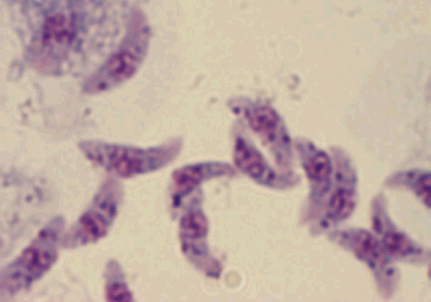
No, we are not immune. You read the first couple of paragraphs, so I assume you knew that already. So let’s just jump right into things and talk about Toxoplasma. This little protozoan is microscopic, but somehow it’s able to hijack the most complex brain on the planet like it ain’t no thang.
Braaaaainnnssss. Rat Amygdalaaaaaaaasssss.
Much like a forgotten old woman with nothing to live for, Toxoplasma loves cats. I’m not sure why Toxo loves cats so much, but in reality this is not very strange. See, parasites often have to infect several hosts in order to reach the one it’s really out to infect, called a primary host. All the hosts it infects in order to reach the primary hosts are called secondary hosts, or intermediate hosts. Secondary hosts often don’t feel the full effects of infection because the parasite isn’t reproducing inside of them, but occasionally a secondary host can have its behavior manipulated in order to reach the primary host. This is what Toxoplasma does. In fact, Toxo does this very very well.
The most clear-cut example of Toxo behavioral hijacking comes from the changes it can make to the brains of rats. Since Toxo is out to infect cats, it often causes the prey of cats to become more apparent in hopes that its current host will end up in the cat’s belly, the perfect place to make little Toxo babies. How does it cause rats to become more apparent? It forms cysts in the rat’s brain. In particular, Toxo cysts form near a region called the amygdala, a tiny region that controls fear and aggression. These inhibit the function of the amygdala, and basically cause rats to get sexually turned on by cat odors and actively seek cats by tracking their urine. Seriously not kidding.
Toxo gets really really interesting when we start talking about humans. The tiny protozoan can cause the formation of brain cysts just as it does in rats, though the damage is very subtle at first. These cysts aren’t as selective in their real estate options, so they just kinda form wherever. They release enzymes that convert a dopamine precursor into dopamine itself, triggering the action of receptors of a group of neurotransmitters called catecholamines (which include dopamine, epinephrine, and norepinephrine). Ultimately, this causes people to do some wonky things.
What kind of wonky things? Well, for one, do you remember the Beatles? Well, John Lennon once saw a newspaper article about a car crash and wrote a song about it, which isn’t really relevant but does serve as a good segue into talking about how Toxo can make you crash your car. Just as in rats, Toxo can induce reckless behavior. So basically…man, I gave it away. Gimme a second to recover.
What else can Toxo do, you ask?? Well, it’ll deform your babies, of course!! Apparently Toxo can cause some pretty terrible damage to babies while they’re in the womb, causing deformities that I cannot describe to you. Let’s just say that I googled “Toxoplamodium babies” and it’s not likely that I’ll sleep tonight because of that decision. You’re going to google it anyway, aren’t you?? You heartless bastard.
See? It’s a real problem because this floating baby head appears on a banner with the name of the disease. That means it’s dangerous.
These things all seem pretty obvious. Sure, Toxo can cause people to be reckless, and babies are easy to injure as it (Anderson and May, 1967) is so the damage from Toxo seems a bit expected. What else can Toxo do that’s more unexpected? To find out, let’s take a quiz.
Question: Which of the following facts about Toxo is true?
A) Toxo can cause adult humans to become incredibly attached to their cats
B) Toxo can spread through dog semen, and can help upregulate testosterone to increase the odds of infecting a female
C) You’ll have no symptoms of Toxo in the later stages of infection
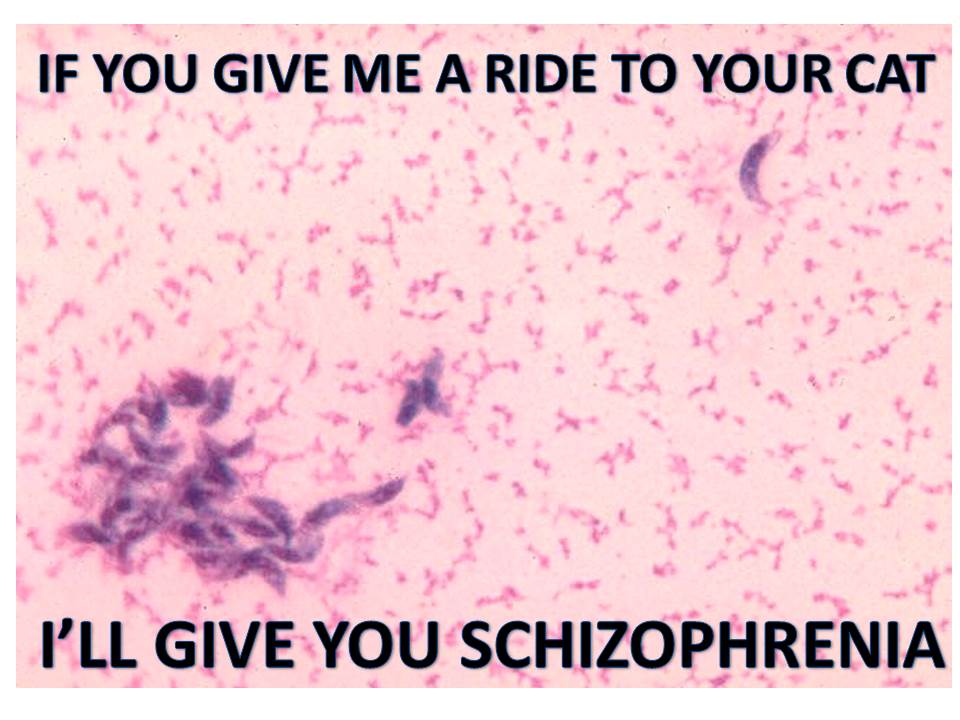
D) Toxo is associated with causing schizophrenia.
Answer: all of the above.
I find it absolutely mind-blowing that a tiny protozoan can increase a human host’s risk of schizophrenia. This isn’t some brain augmentation to an ancient area like the amygdala. Inducing hallucinations is not simple to do. On top of that, Toxo can cause humans to acquire ADD, OCD, and can even increase suicide risk. Just read this link. Your mind will be blown too.
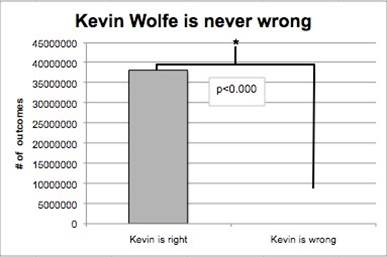
Nature is truly out to kill us. How do I know? I am never wrong.
Dat p-value.
How else do I know? Toxo exists. We think we’re so high and mighty, immune from crazy zombie-inducing parasites.We are clearly not. Here’s where I make a point that we are not so different from components of the greater aggregate of beings we call “nature”, and that we ourselves are indeed a part of that. Then, here’s where I get really preachy, talking about how things we do affect the natural world, and here I mention the circle of life and make a funny quip about the Lion King and the irony therein that my argument of the circle of life has referenced an earlier part of this article.
Want to hear me talk about an animal, plant, bacterium, or whatever the hell else that you think is awesome? Leave me a message in the comments! I’ll probably ignore it, unless it’s actually really good. It’s worth a shot to try though.
Come on. Comment. Go for it.
To view the really interesting article most of this information came from, click this link!
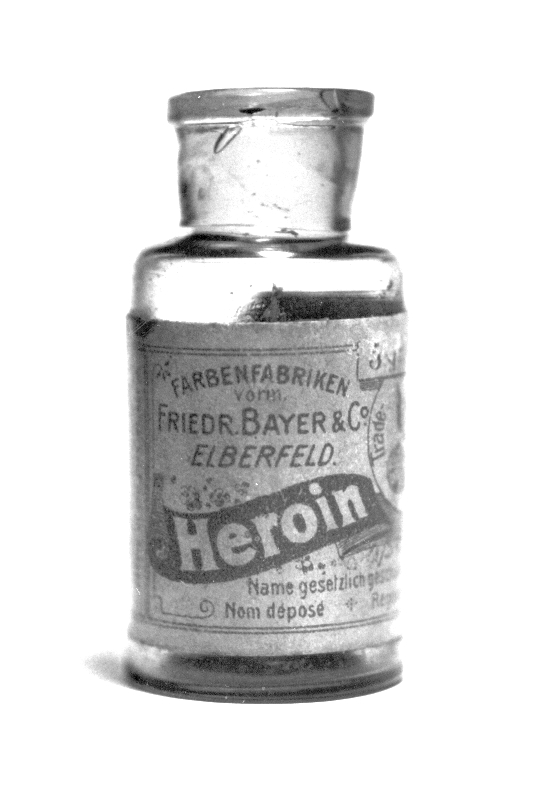
Bayer AG, a multibillion dollar, German pharmaceutical company is regarded as one of the leaders in its sector, producing mild painkillers such as Bayer Aspirin and Aleve, the vitamin C supplements Redoxon and Berocca, and many other well known drugs. This reputation combined with the angelic sounding tagline on their website, “Bayer: Science For A Better Life” makes it hard to believe that in 1895, the company marketed heroin as a cough suppressant.
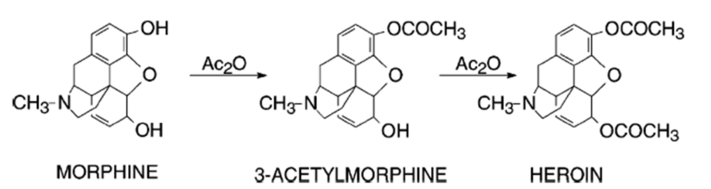
Acetylation of morphine, by way of acetic anhydride (Ac2O), to synthesize heroin.
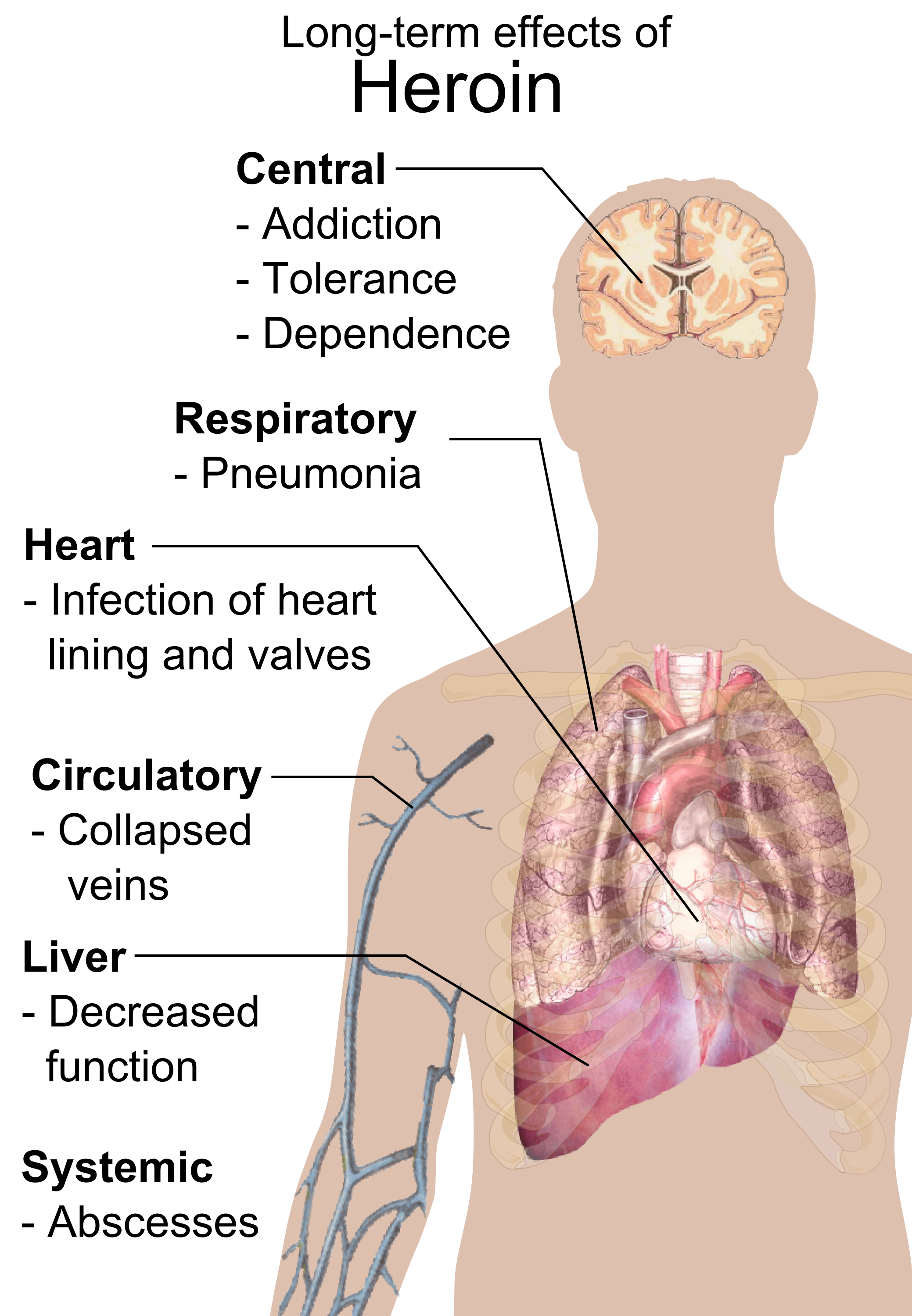
Heroin is an opiate synthesized by adding two acetyl groups to morphine, found in the opium poppy. When Bayer introduced this new drug, it was actually meant to be a non-addictive substitute for morphine, a common cough suppressant back then. Little did they know that their well intentioned discovery would eventually become one of the most abused drugs, known for its destructive effects on the human body. It turns out that heroin crosses through the blood brain barrier 100 times faster than morphine because the acetyl groups makes it highly soluble in lipids; once it crosses the barrier, it actually turns back into morphine. Essentially, heroin is a prodrug, a class of inactive drugs that are converted into active form in the body by normal metabolic processes. To the Bayer scientists, heroin may have looked less potent from morphine on the lab bench, but in the body, it ended up being a faster acting form of morphine, making it extremely dangerous and addictive. Needless to say, even though heroin actually does help stifle coughs, Bayer eventually pulled this product off of their catalog.
Though today, the possession or selling of heroin is illegal in most parts of the world, it can actually be used in the United Kingdom legally, under careful control, as an analgesic and a maintenance drug.
NOTE: This post is not related in any way to the 1956 sci-fi film that depicts an extraterrestrial invasion where the invaders “steal” human bodies. This is NOT a review of the Invasion of the Body Snatchers (though I do highly recommend the film).
Rather, this is brief overview of a period when robbing bodies, often from graves, was used as a means to provide physicians with subjects for dissections.
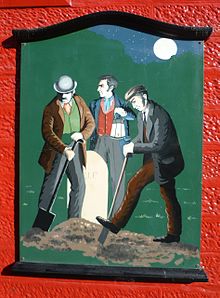
Body snatchers at work. A painting on the wall of a public house in Penicuik, Scotland.
When?
Body snatching was most prevalent during the seventeenth to nineteenth century, though there have been reports of this activity occurring as early as the fourteenth century.
Why body snatching?
– Surgical practice (High Demand): Most fifteenth century physicians scorned and considered it degrading to work with their hands; They often stood by patients they treated and ordered servants to perform what they thought should be done by hand. This disconnect between the physician and surgery created a void in anatomical and surgical knowledge. During the sixteenth century, Andreas Vesalius, a Flemish physician, led a movement to fill that gap. His efforts culminated in the publication of De humani corporis fabrica, one of the greatest anatomical textbooks. During that time, Vesalius traveled around Europe performing dissections himself, generating interest in surgery and leading physicians to embrace the values of a hands-on approach to medicine. This surge in interest in surgical practice created a great demand for bodies to be used for dissection.
– Shortage of bodies (low supply): Two centuries ago most states did not permit the use of unclaimed bodies for dissections and most of the states that did limited them to executed criminals. However, this was not enough as executions were few in the states. For example, Massachusetts executed less than 40 persons from 1800-1830. In addition, as the number of medical schools increased, so did the demand for bodies. This legal blockade created a shortage of bodies available for medical schools forcing them to turn elsewhere.
–Body decay (high turnover): Lack of refrigeration was a common problem back then; not only did it spoil food, but it spoiled bodies. This meant that there was a high turnover rate; physicians had a limited time frame to dissect and study bodies after death. This created a situation where there was a constant demand for bodies.
SOLUTION: Where can you find a large supply of bodies? Graveyards.
Who stole bodies?
-At first, grave robbers were medical professionals, students, and hospital porters who stole bodies for their own purposes. However, as time passed, medical schools advised students, faculty, and personnel to avoid engaging directly in stealing bodies. From there grew a class of individuals known as resurrectionists or body snatchers, men who made a living exhuming corpses and selling them to schools. Eventually, body snatching organizations/gangs started to appear. As laws were put in place, robbing became more profitable; their task became increasingly difficult and dangerous, and the price of their commodity increased.
-Since body snatching was an arduous task, it was often men who participated in this activity, though women were sometimes involved in non-physical tasks or snatching bodies not yet buried (falsely claiming a body to be buried).
Whose body was stolen?
-Race, sex, and social status did not matter. Nobody was safe from disinterment.
Note: Though records show that people of all race, gender, and social status were victims, the golden era of body snatching coincided with the period of racial and social inequality in the states. This meant that immigrants, blacks, and the poor were most often targeted.
The Art of Body Snatching:
Many considered body snatching an art. Some texts describe the act in lengthy detail spanning several pages, detailing tactics on how to procure bodies as efficiently as possible. I will spare you from the lengthy details without skipping over the essential techniques.
Step 1: Secure knowledge of a prospective burial: Information of a burial was usually supplied by mail or messenger. Such a message was often sent in code and not directly to the resurrectionists, but through some intermediary, such as a druggist.
Step 2: Scope the location: The grave should be accurately located during daylight hours so that a search in the dark would be unnecessary. A common method was to reconnoiter as a hunter. A stranger would appear in the neighborhood on the day of burial with a shotgun over his shoulder, apparently hunting small game.
Step 3: Wait until nighttime
Step 4: Begin the disinterment
Plan: At least two men and a watcher/driver were needed in a disinterment. One man remained with the transport; that person would drop off the other three at the location and return at a specified time. The other two removed the body.
Execute: The process of disinterment was fairly straightforward: a hole would be dug directly above the coffin, the coffin would be opened, and finally, the body would be pulled out. Since graves were dug to be about 5 ft deep (from the top of the coffin), extracting a body could be quite laborious. To make the extraction easier, resurrectionists used a modified pole to drag bodies out of graves. This pole was hooked at one end and had grips at the other (similar to the letter ‘J’). The hook would be placed under the chin of the deceased and the men would push or pull the body out using the other end of the pole. As you can imagine, this ‘hooking’ technique often caused damage to the corpse.
Step 5: Clean Up: The grave should look as it did before the disinterment to avoid suspicion and capture.
Ethics
The seventeenth to nineteenth century was a great era for medicine. Discoveries in anatomy led to improved surgical treatments and healthcare. However, people often forget that many of these advancements came at the expense of bodies being robbed. Families would go to cemeteries to pay respects for loved ones only to find the grave(s) in disarray, or would pay respects without knowing the remains of their loved were gone. Until the adoption of more coherent and stricter laws regarding body donation, many physicians considered body snatching a necessary evil.
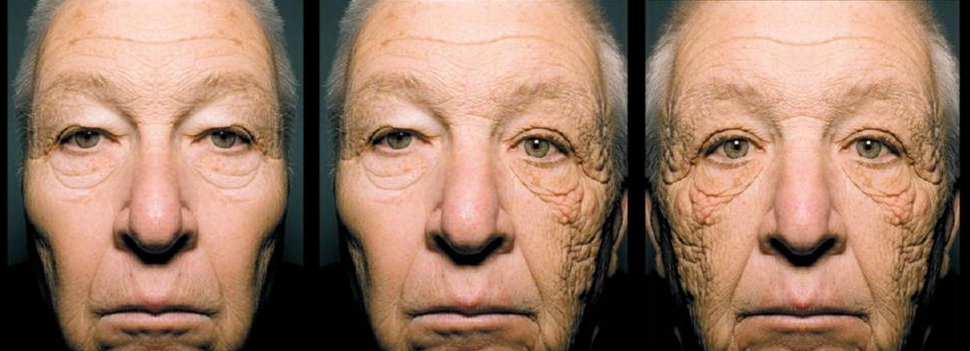
A few weeks ago, a friend of mine showed me an article on MSN about a man whose face was obviously more wrinkled on one side than the other. Mr. McElligott, the gentleman featured in the article, drove a delivery truck for 28 years, exposing the left side of his face to the sun for several hours each day. I have heard several times throughout the years about the importance of sun protection, but hadn’t ever dwelled on the topic for much time. Once I read about Mr. McElligott, though, I was quite intrigued and started thinking about the whys and hows of sun damage, UV radiation, and wrinkles.
In the pictures above, you can see Mr. McElligott’s original picture in the middle with an altered image on either side. I transposed one side of his face to that of the same side in an attempt to make the difference between the two sides of his face more apparent.
Here you can find an “up-close and personal” version of the center picture. (How cool are his eyes?!?)
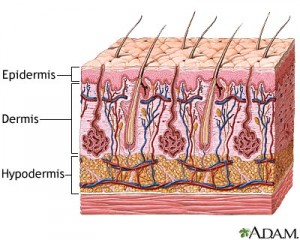
As you may already know, skin is made up of three major layers: the epidermis, dermis, and subcutis (also known as the subcutaneous layer or the hypodermis). As in the diagram below, the epidermis is on top, then the dermis, and lastly the hypodermis. Freckles and moles, as well as sunburns, appear in the epidermis. The dermis houses the structural elements in skin which keep it firm and elastic. This is the section of skin where wrinkles form.
Sunlight is known to negatively affect skin. This is because UV radiation (part of sunlight) can suppress the immune system, damage DNA, and alter skin texture, blood vessels and skin pigment. While conditions like thin skin and easy bruising are usually associated with old age, they are often lasting effects from UV damage as the majority of skin damage comes from the sun and not from Father Time.
The Sun emits three types of ultraviolet radiation: UVA, UVB, and UVC, with wavelengths of ~315 to 400 nm, ~290 to 315 nm, and ~100 to 290 nm, respectively. UVC radiation is absorbed by the ozone layer and doesn’t reach ground level. UVB radiation makes its way through the ozone layer and is the type of UV that hits the epidermal layer of skin and causes sunburns or tans; it is also known to cause skin cancer. Unlike UVA radiation which is relatively constant all year long, UVB radiation is stronger during the summer months. UVA is unique in its ability to pass through glass. Thinking back to Mr. McElligott, UVA radiation’s ability to penetrate glass led him to have a build up of UVA damage of the course of his career. Even on days when he drove with his window up, he would have been protected from UVB rays, perhaps not getting a sunburn or tan, but would have still received the negative effects of UVA. UVA rays cause damage to the dermis, destroying elasticity and potentially causing mutations in DNA. Out of all of the UV radiation that reaches us from the Sun, there is over 20 times more UVA than UVB.
Harm to the skin caused by the Sun’s UV radiation is often referred to as photoaging, or dermatoheliosis.Photoaging is caused when UVA and UVB rays enter the skin, negatively affecting two of skin’s structural proteins, elastin and collagen. Radiation damages elastin and causes a build-up of altered metalloproteinase enzyme. Normally, metalloproteinases (also known as collagenases) help reverse skin damage by creating new collagen. Unfortunately, the metalloproteinase from the damaged elastin does the exact opposite— it breaks down collagen, leaving the skin with a broken collagen structure and wrinkles. (For a study on the effects of metalloproteinase, check out this article.)
Exposure to UV radiation in sunlight, in addition to air pollution and smoking/second-hand smoke, can also subject the skin to free radicals. Free radicals are molecules (or atoms) with a single, unpaired electron. Because a free radical lacks the second electron, it is unstable and thus seeks out another electron. When it reaches another molecule, the free radical takes an electron, completing its electron pair while leaving the second molecule with an unpaired electron (a new radical). This snowball effect continues throughout the skin, activating altered metalloproteinase and causing damage to collagen.
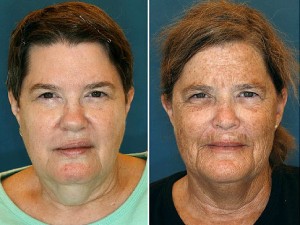
Jeanne (left) and Susan (right), identical twin sisters, serve as a great example of how lifestyle choices can determine a person's skin aging. As children, the two women had an uncanny resemblance, but now it's easy to see that Susan's decision to sunbathe and smoke led her skin to age more rapidly. (Department of Plastic Surgery, University Hospitals Case Medical Center)
Well, I hope you enjoyed learning more about wrinkles and UV radiation! Remember, prevention is key! Make sure to slather up in some good ol’ broad spectrum SPF 70 next time you go shoot some hoops (or do whatever it is that you do) and enjoy this fine video about why we need the Sun (even though it hurts us sometimes):
Sources:
Heather Brannon, MD (About.com)
Jennifer R.S. Gordon, MD and Joaquin C. Brieava, MD (The New England Journal of Medicine)
De Gruijl, Frank R. “Photocarcinogenesis: UVA vs. UVB Radiation.” Skin Pharmacology and Physiology 15.5 (2002): 316-20. <http://www.ncbi.nlm.nih.gov/pubmed/10907526>.