Tag: environment

  • Mandai Bird Paradise: Asia’s Biggest Aviary Sanctuary

    Mandai Bird Paradise: Asia’s Biggest Aviary Sanctuary

    The Mandai Bird Paradise is the biggest bird conservatory in Asia, inaugurated back in May 2023. As one of the six pillars of the Mandai Wildlife Reserve, the incredible sanctuary covers over 42 acres of land on Mandai Island in Singapore. The reserve houses around 3,500 birds encompassing over 400 different species. Mandai Nature is the conservation arm of the Mandai Wildlife Group, which is dedicated to providing a haven for all these species through the Mandai Bird Paradise and to preserving Southeast Asia’s incredible biodiversity through conservation efforts, with a focus on averting species extinction (Temasek Trust, 2024). 

    Such a variety poses a rather obvious question: How? In order to answer this question, we must chart our way through the science behind conservation, biodiversity and rehabilitation!

    Conservation

    Conservation, as defined by the Merriam-Webster dictionary, is to carefully preserve and protect something. In a wildlife context, it is orchestrated management of natural resources to prevent exploitation, destruction, or neglect. Conservation efforts to preserve biodiversity are not just about protecting animals in isolation, but in our context, it is about the creation of an entire ecosystem where species can thrive naturally.

    At Mandai Bird Paradise, conservation takes an approach similar to this article on biodiversity conservation by diversity (Ramón et al., 2020). In-situ conservation focuses on protecting species in their natural habitats, whereas, ex-situ conservation, which is practiced at Mandai, provides controlled environments where vulnerable or endangered species can be bred, monitored, and protected from immediate threats such as habitat loss or poaching.

    The sanctuary also participates in international breeding programs and collaborates with global conservation organizations to ensure genetic diversity is maintained among species. This is critical because reduced genetic diversity due to issues such as environmental changes from global warming can make populations more susceptible to disease. Through these coordinated efforts, Mandai Bird Paradise becomes more than just a sanctuary, but a cornerstone in the Mandai Wildlife Group’s stand as an active contributor to global conservation science.


    Biodiversity

    Biodiversity refers to the variety of life in a particular habitat or ecosystem, encompassing differences in species, genetics, and ecological roles. The presence of over 400 bird species at Mandai Bird Paradise highlights not only the richness of different avian life present but also the complexity of maintaining such diversity within a single environment. This maintenance is done by separating the 42-acre land into around 10 unique habitats that each suit a certain group.

    Each species then gets to play its unique role in its ecosystem, from seed dispersal to pollination and pest control. By housing a wide array of species, the sanctuary effectively simulates interconnected ecological networks, allowing researchers and conservationists to better understand how these systems function.

    Maintaining biodiversity in a controlled setting requires careful planning. Factors such as diet, climate conditions, nesting environments, and social groupings must all be tailored to meet the needs of different species. For instance, tropical birds such as the Andean cock-of-the-rock (yes, you read that right) require high humidity and dense vegetation, while others may need open spaces or specific nesting structures. This level of detail ensures that the birds are not only surviving but thriving in conditions that closely resemble their natural habitats.
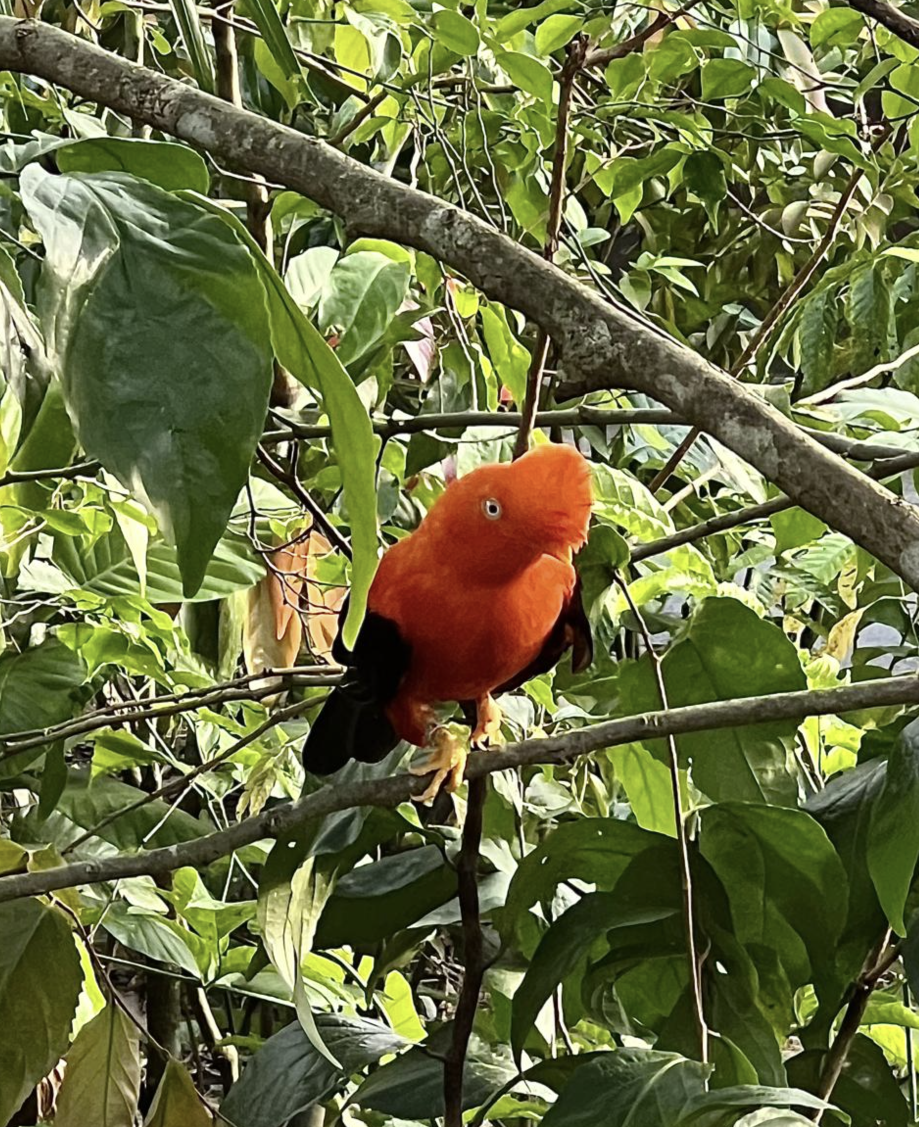
    Andean cock-of-the-rock


    Rehabilitation

    Rehabilitation is another crucial component that involves the care and recovery of injured, displaced, or trafficked birds with the goal of reintroducing them into the wild whenever possible.

    Birds that arrive at rehabilitation centers often suffer from injuries caused by habitat destruction, illegal wildlife trade, or human interference. At Mandai, veterinary teams and specialists provide medical treatment, nutritional support, and behavioral conditioning to help these birds regain their strength and natural instincts.

    One of the key challenges in rehabilitation is ensuring that birds do not become overly dependent on human care. To address this, caretakers minimize human interaction and design enclosures that encourage natural behaviors such as foraging and flight. Only when a bird demonstrates sufficient recovery and independence is it considered for release. Even when release is not possible, rehabilitation still plays an important role. These birds may become part of educational programs, helping to raise awareness about conservation issues and inspiring visitors to take action in protecting wildlife.


    Mandai Bird Paradise – Sanctuary & Conservation Magic

    Mandai Bird Paradise is more than the visually stunning attraction you see through my lens, it is a living example of how science, conservation, and education can come together to protect our planet’s biodiversity. By integrating conservation strategies, maintaining diverse ecosystems, and supporting rehabilitation efforts, this sanctuary embodies what modern wildlife preservation should look like. In doing so, Mandai Bird Paradise not only safeguards thousands of birds but also inspires future generations like yours and mine to value and preserve the delicate balance of life on Earth.
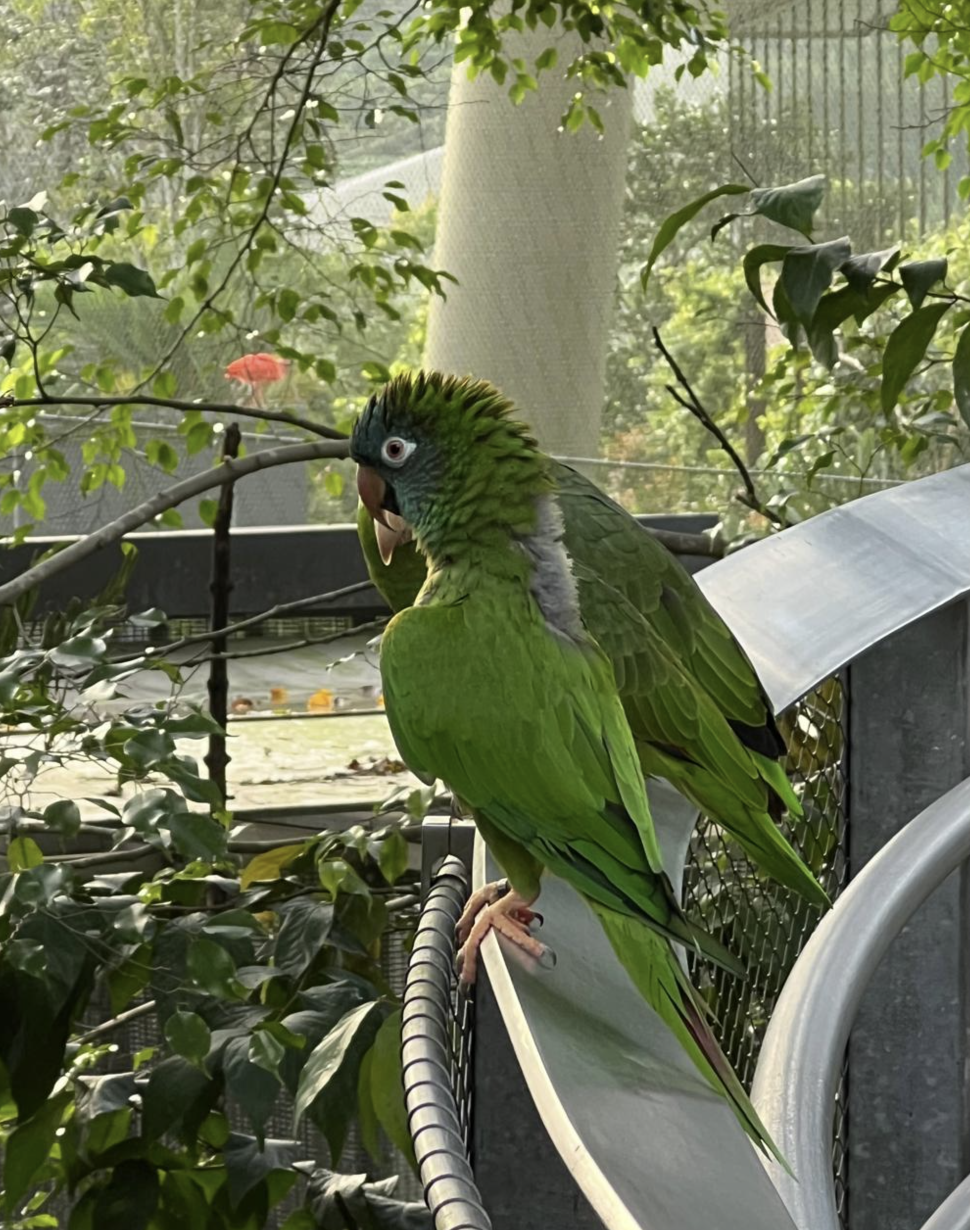
    Blue-crowned Parakeet

    Bits of My Time

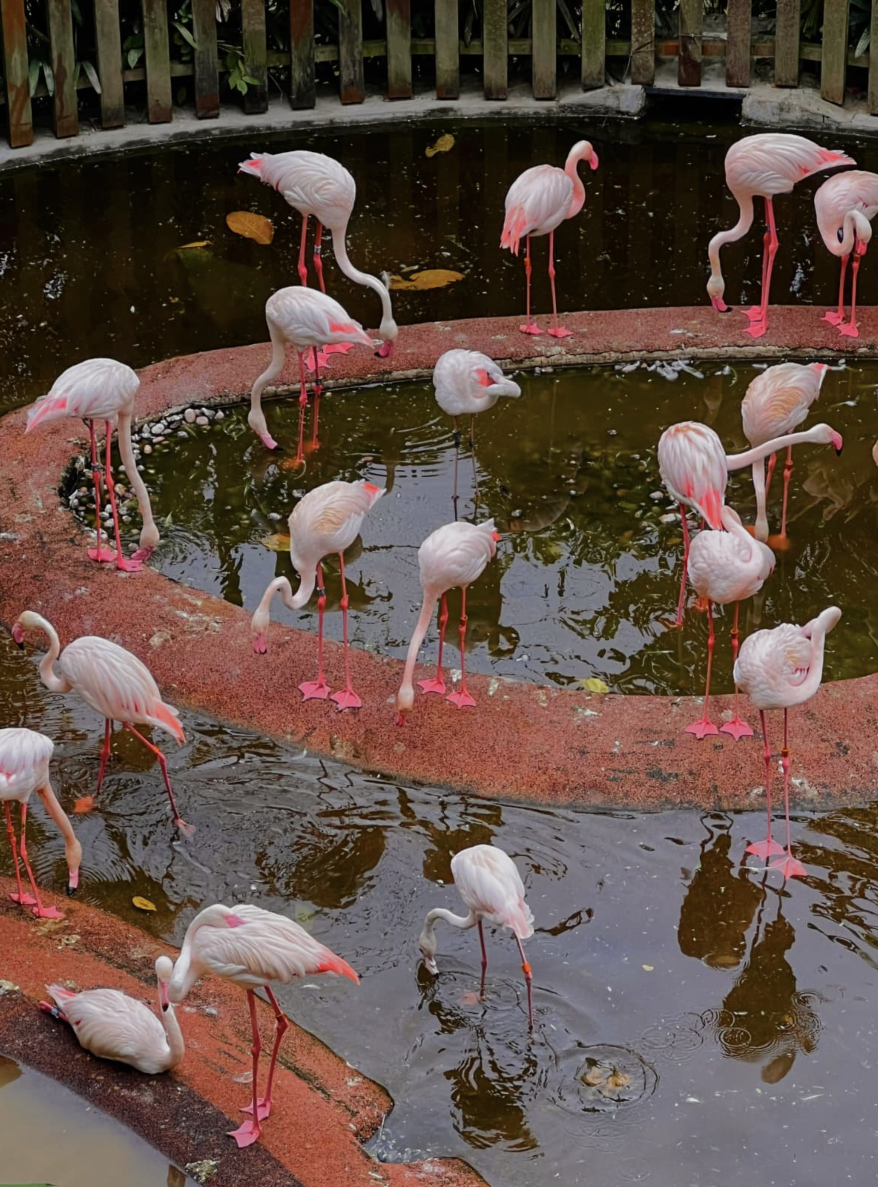
    This reserve is one of the most beautiful places on Earth! Walking out into the Crimson Wetlands zone of the park felt like a scene straight out of a movie. There were colorful macaws soaring overhead, bright American flamingos dancing by the pond, Scarlet ibis carefully balancing on the hand rails and so much more. My exploration of the Mandai Reserve taught me so many fun facts about birds and this experience rekindled my love for all things nature. It truly gave me a fond memory to recall for the rest of my lifetime.

    References

    All Photography/Illustrations by Kristina Sarah Siju

    Mestanza-Ramón, C., Henkanaththegedara, S. M., Vásconez Duchicela, P., Vargas Tierras, Y., Sánchez Capa, M., Constante Mejía, D., Jimenez Gutierrez, M., Charco Guamán, M., & Mestanza Ramón, P. (2020). In-Situ and Ex-Situ Biodiversity Conservation in Ecuador: A Review of Policies, Actions and Challenges. Diversity, 12(8), 315. https://doi.org/10.3390/d12080315 

    Protecting Wildlife, Preserving The Future. (2023). Temasek Trust Revamp. https://www.temasektrust.org.sg/what-we-do/impact-hub/article-details/mandai-nature-impact-report-2023-2024

    Speiran S. I. M. (2025). The ‘Sanctuary Gap’: Reviewing the Research on Captive Wildlife Sanctuary Tourism. Animals : an open access journal from MDPI, 15(4), 496. https://doi.org/10.3390/ani15040496
  • Agriculture Overseas- An Examination of Floating Sea Farms

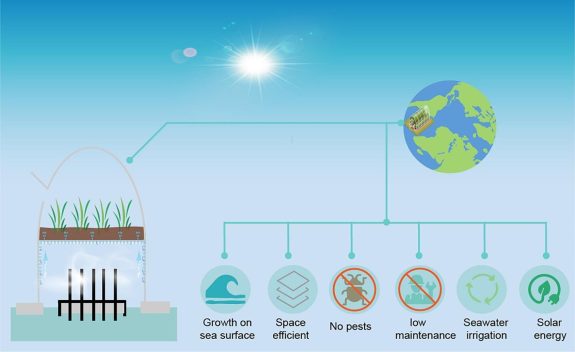
          There is a new technology on the horizon that claims to have the potential to solve two of the biggest global issues: world hunger and freshwater supply. These two problems are, of course, inextricably tied together, as 70% of the world’s freshwater withdrawals are used for agriculture. Professor Haolan Xu and Dr. Gary Owens have developed a design for a “floating sea farm” which would address this problem by producing agriculture without the use of freshwater. In short, the farms sit on top of the ocean, collecting and evaporating seawater that is then used to water crops. The entire system is powered by solar energy, and can potentially be self-sustaining, requiring little to no intervention during crop growth.

         The ability to grow crops over the ocean unlocks a vast potential of usable agricultural space, as oceans make up 70% of the Earth. Moving agriculture overseas could immensely relieve the pressure we are putting our land under and allow us to designate agricultural areas to other purposes. Additionally, these stable systems would reduce farming labor, and drastically reduce global freshwater usage.

         So how exactly do these floating sea farms work? The current model of the double-layered vertical solar sea farm (or DVSSF) is divided into three subsystems: the bottommost solar evaporation chamber, a water condensation and transfer system, and a greenhouse-like plant cultivation chamber on top of the structure. The solar evaporation chamber consists of photothermal evaporators which convert sunlight into heat energy, powering the evaporation of sea water. These devices are partially submerged under the surface of the sea and are supported by floating polystyrene foam. Condensed water vapor is then absorbed by vertically-oriented strips of bamboo paper and transported upwards to the upper soil chamber, where plant irrigation will occur.

         Floating sea farms sound like a utopian dream, but how feasible are all of these promises? Floating sea farms are still in their early stages, and it will likely be years until we see this technology implemented on a large scale. In May 2022, large, open-air experiments were conducted using lettuce, broccoli, and Pak Choi. The growth of all of these plants was successful, demonstrating a real potential of the technology, but also highlighting areas in need of improvement. For instance, these experiments revealed that a surplus of clean water was being produced, and efforts are now being made to design a system that will store this water and use it for other applications. Additionally, the current prototype has only been tested with these three common crops, and much more testing would need to be done to integrate the diversity of agriculture that would be necessary to truly make an impact on global food production. As of right now, the DVSSF has a strong proof of concept, but is still in the experimentation stages. As more work is done improving the prototype and scaling up the project over the next few years, it is certainly possible that this technology could lead to a complete shift in agricultural production as we know it.

    References:

    Floating sea farms: A solution to feed the world and ensure fresh water by 2050. (2023,      September 11). ScienceDaily.                      https://www.sciencedaily.com/releases/2023/09/230911141045.htm

    Pan, W., Wu, X., Yu, H., Zhao, J., Wang, Y., Pi, K., Owens, G., & Xu, H. (2023). An interfacial     solar evaporation enabled autonomous double-layered vertical floating solar sea farm. Chemical Engineering Journal, 473, 145452–145452. https://doi.org/10.1016/j.cej.2023.145452

    The AIM Network. (2023, September 11). Floating sea farms: An ingenious solution to feed the world and ensure freshwater by 2050. https://theaimn.com/floating-sea-farms-an-ingenious-solution-to-feed-the-world-and-ensure-freshwater-by-2050/

  • A day in the life of a field ecologist

    A day in the life of a field ecologist

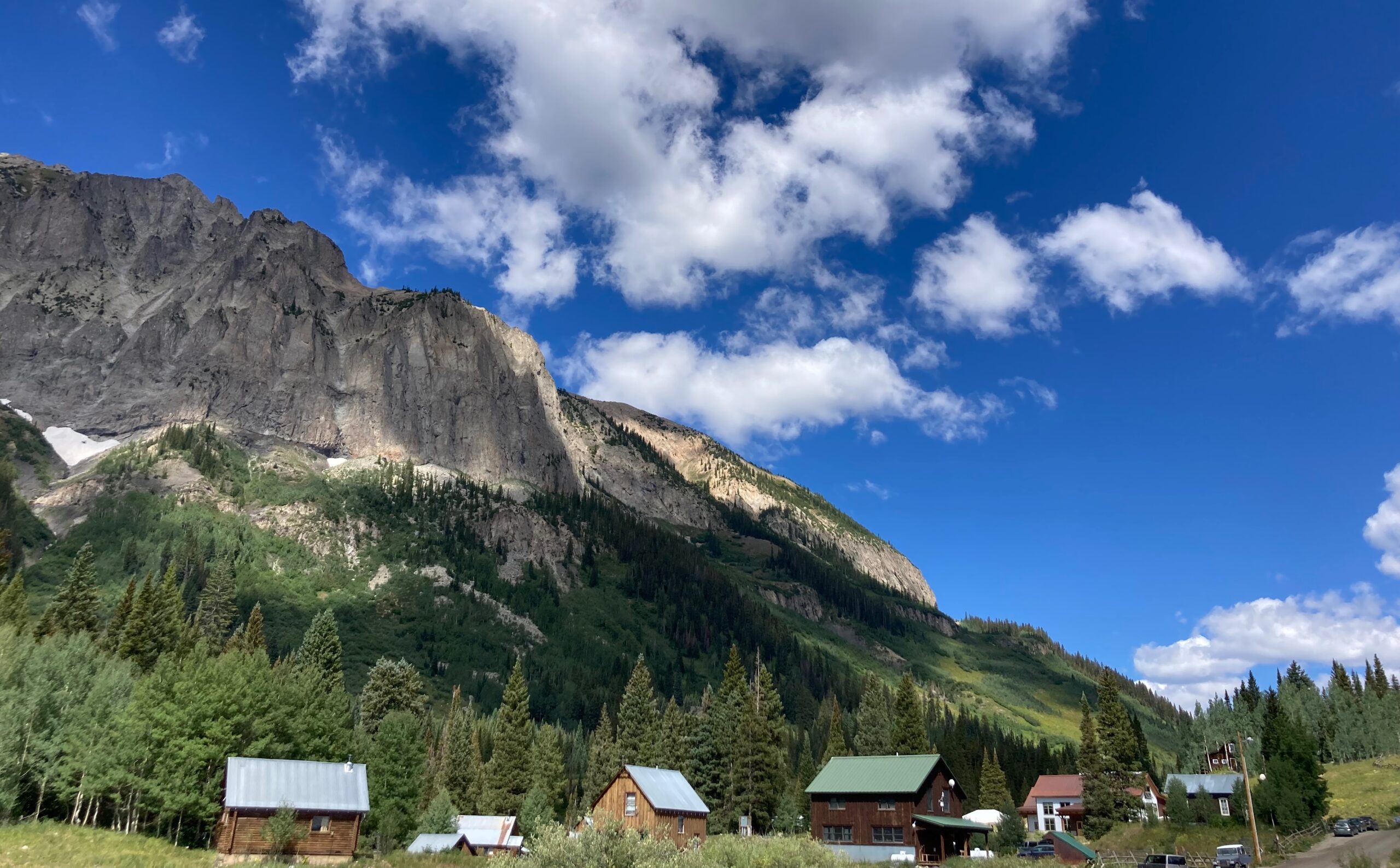
    Details from my summer experience conducting fieldwork in the Colorado Rockies

    Photo caption: View of the Rocky Mountain Biological Laboratory, with Gothic Mountain towering above.

    4:30 AM: Good morning! To arrive at my research sites in time to start my bird species surveys by 6 AM, I often have to wake up long before the sun rises. I get dressed, refill my water bottles, collect the snacks and PB&J sandwiches I prepared the night before, and grab my pack. Inside my pack I have my binoculars, data collection sheets, a handheld GPS unit, and of course a first aid kit and extra warm layers. Field research requires that you always be prepared for the unexpected!

    This summer I am investigating how birds in the southern Rocky Mountains are responding to climate change. To do this, I am conducting a resurvey of bird species along an elevational gradient. I have six research sites ranging from 8,100-11,200ft in elevation, and I will visit each site three times throughout the season to conduct a point count survey of bird species. A point count survey involves standing in one spot for a specific amount of time and recording all bird species I observe by sight or sound. Another student conducted these surveys in 2011, so I am repeating their methods to be able to compare the data from 2011 and 2023 and examine how bird communities have changed over the 12-year period.

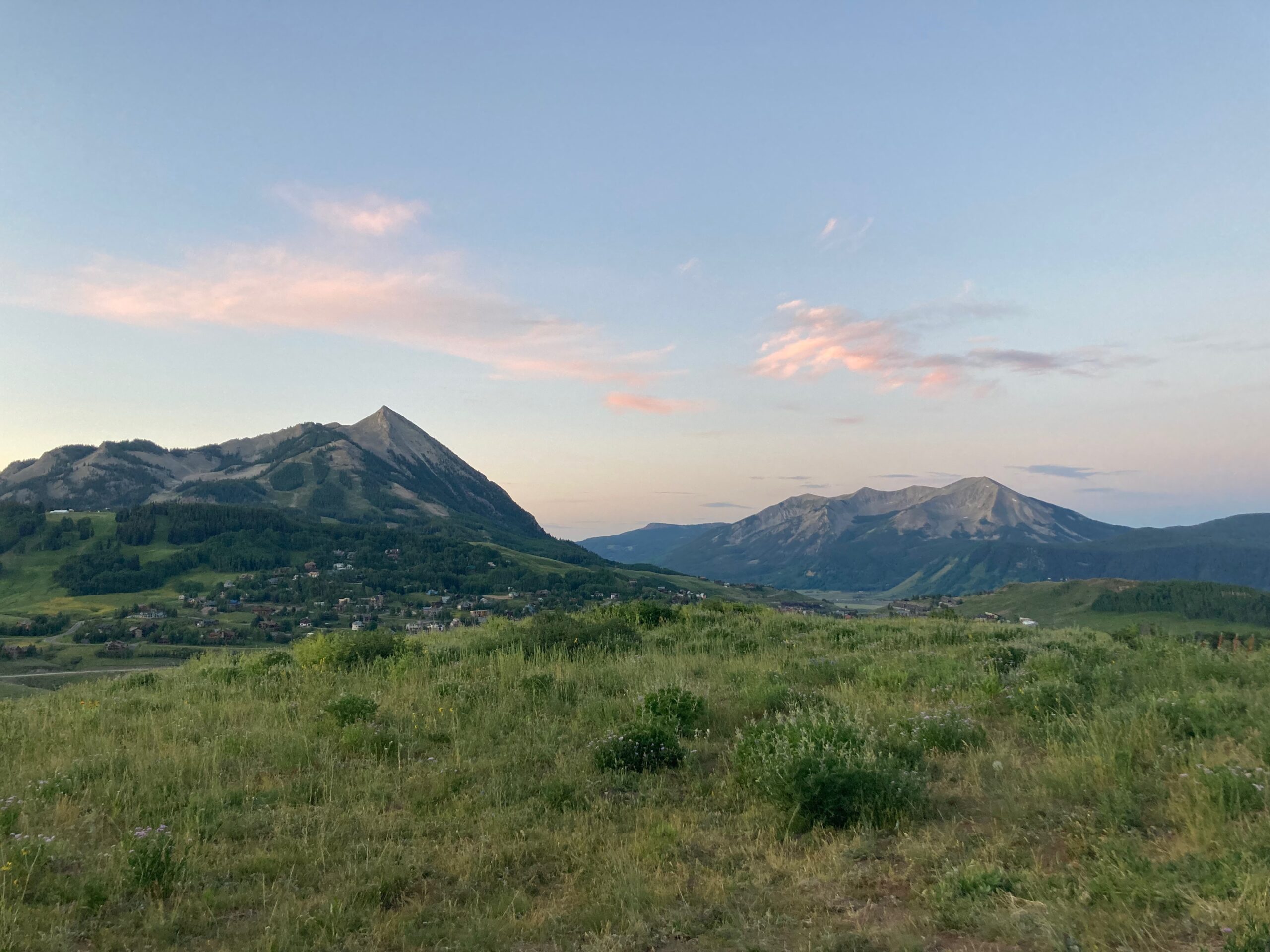
    6:00 AM: After biking 3 miles along a gravel road to the base of Snodgrass Mountain and hiking another 3 miles up the slope (including a break halfway to enjoy my PB&J for breakfast), I am ready to begin the point counts. I use the GPS unit to locate the coordinates of each survey point, and record all of the species that I hear and see during a five-minute period. These surveys require me to be very familiar with the songs and calls of bird species in the region, as the majority of my detections are auditory. I audio record all of my point counts so that I can go back and verify observations later if I am not certain about my real-time identification in the field. 

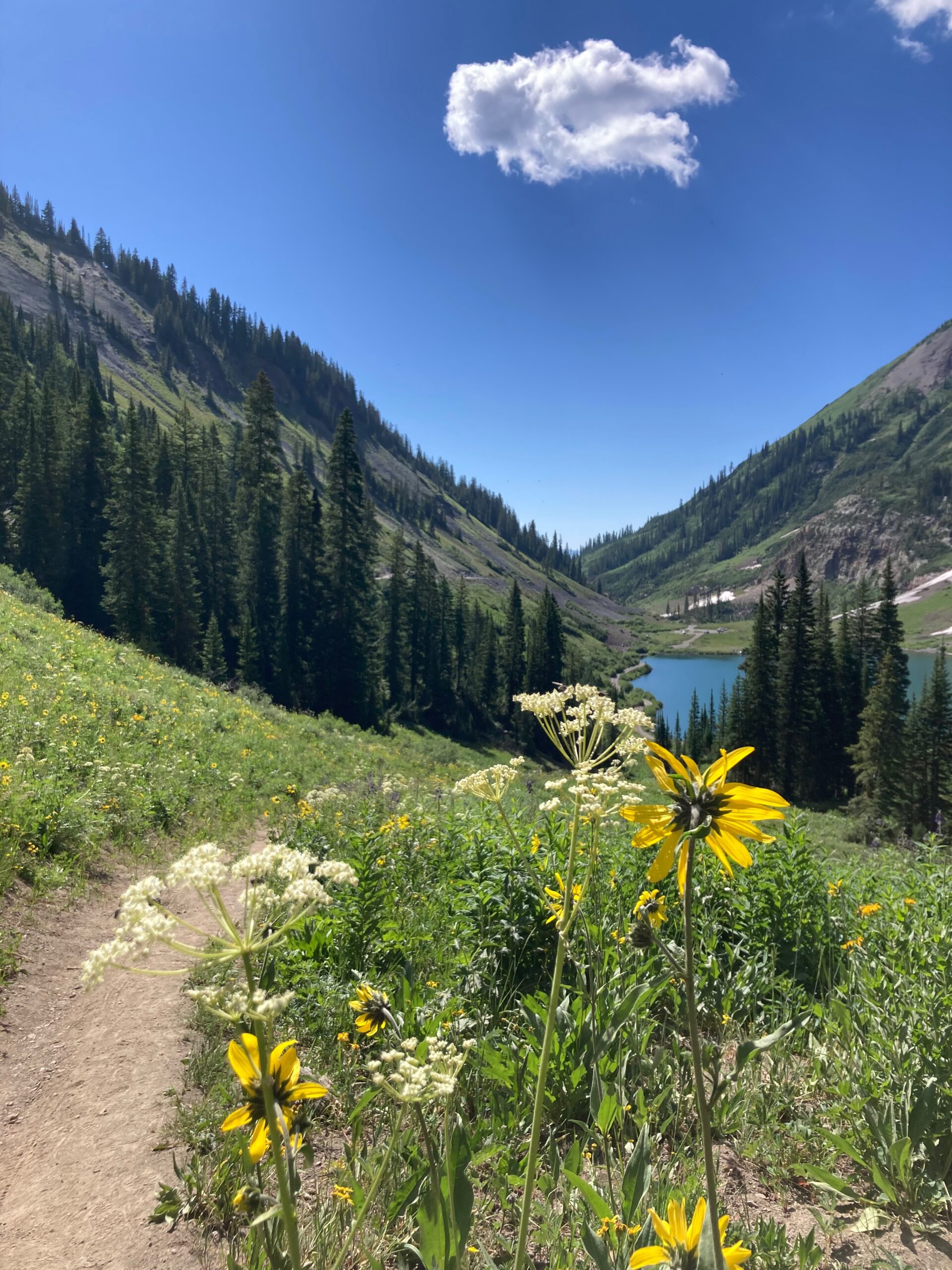
    8:00 AM: After I finish the point counts, I sit down to eat a snack and enjoy the beautiful views around me. I begin my bike ride down the mountain, whizzing through fields full of blooming wildflowers.

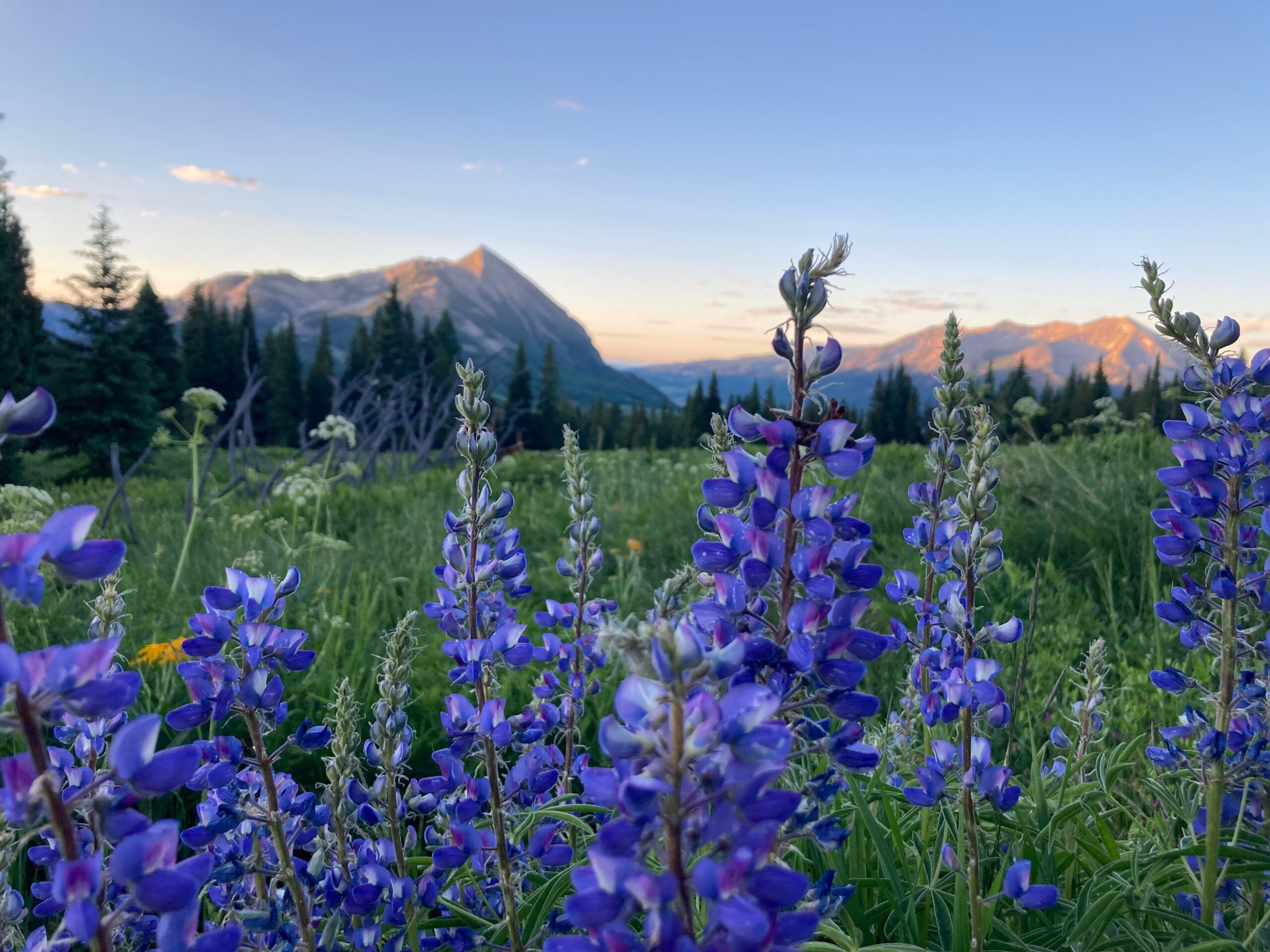
    Photo caption: Views of the sunrise and wildflowers from my trek up Snodgrass Mountain.

    9:30 AM: I make it back to my home for the summer: the Rocky Mountain Biological Laboratory (RMBL), a thriving community of almost 200 field biologists, each studying one component within the greater ecosystem of the southern Rocky Mountains, united with the goal of recording long-term ecosystem responses to climate change. I head to the dining hall to grab more snacks and refill my water—field work can be exhausting and it’s especially important to stay hydrated.

    10:00 AM: I head back to my cabin to enter my point count data from the morning. This involves transcribing my handwritten field notes on paper datasheets into a spreadsheet on my laptop. This is important for multiple reasons: it serves as a backup in case my paper datasheets are lost or damaged, and formatting an electronic file is the first step to performing statistical analyses to uncover trends and relationships in one’s data.

    11:00 AM: Now it’s naptime! With a wake-up call before sunrise, I almost always need a nap to recharge after morning fieldwork. 

    12:00 PM: I nap until lunchtime, and then I head down to the dining hall. RMBL has a great kitchen staff that makes sure the researchers are well fueled for their fieldwork, and the dining hall is a perfect place to meet other scientists and learn about all of the cool research taking place.

    1:00 PM: After lunch, I take some time to look over my research report draft and make some edits to the methods section because a couple of aspects have changed since I began my surveys out in the field. Keeping good records on the methods used for surveys and experiments is very important because it ensures future researchers will be able to reproduce the experiments.

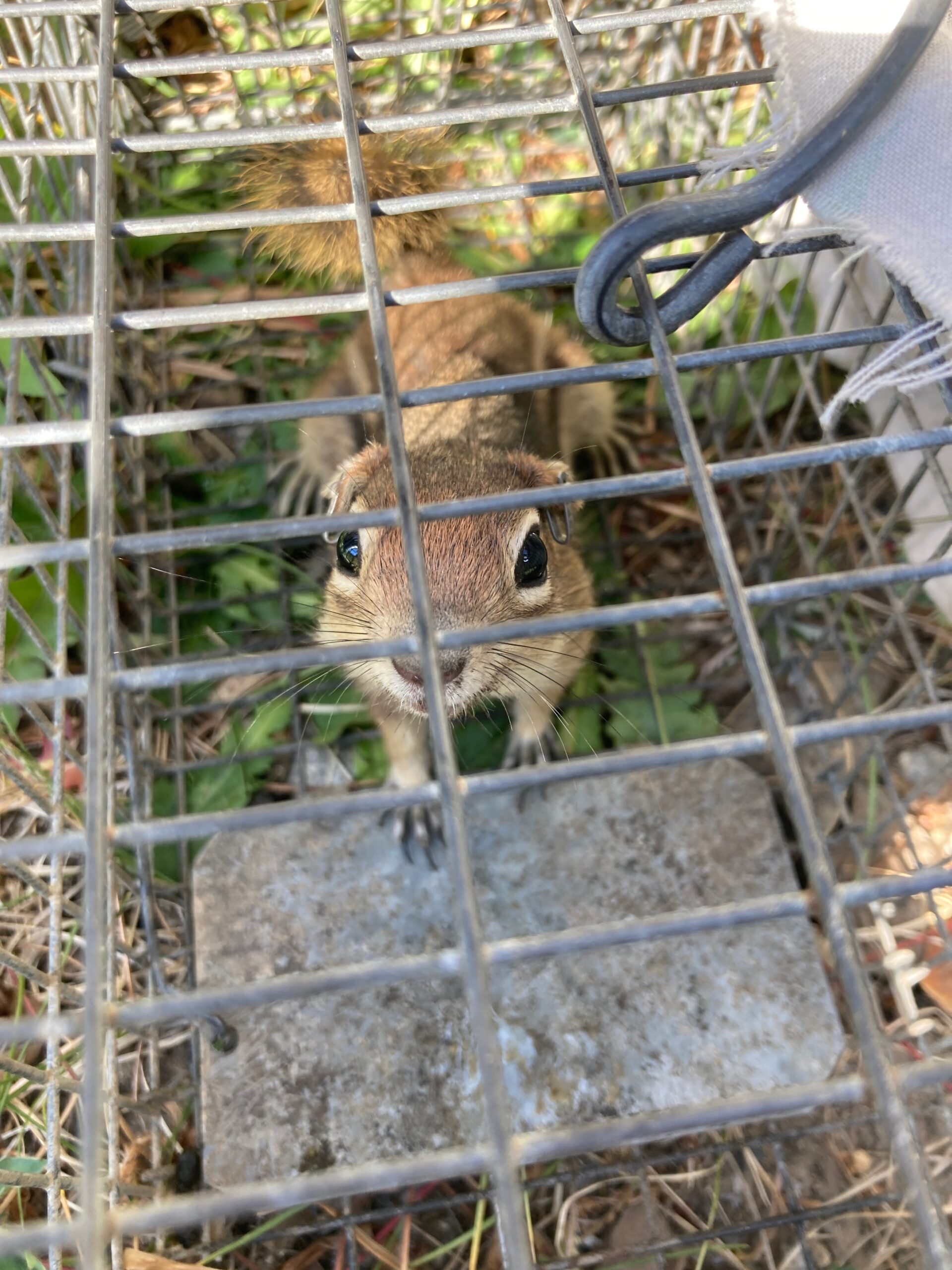
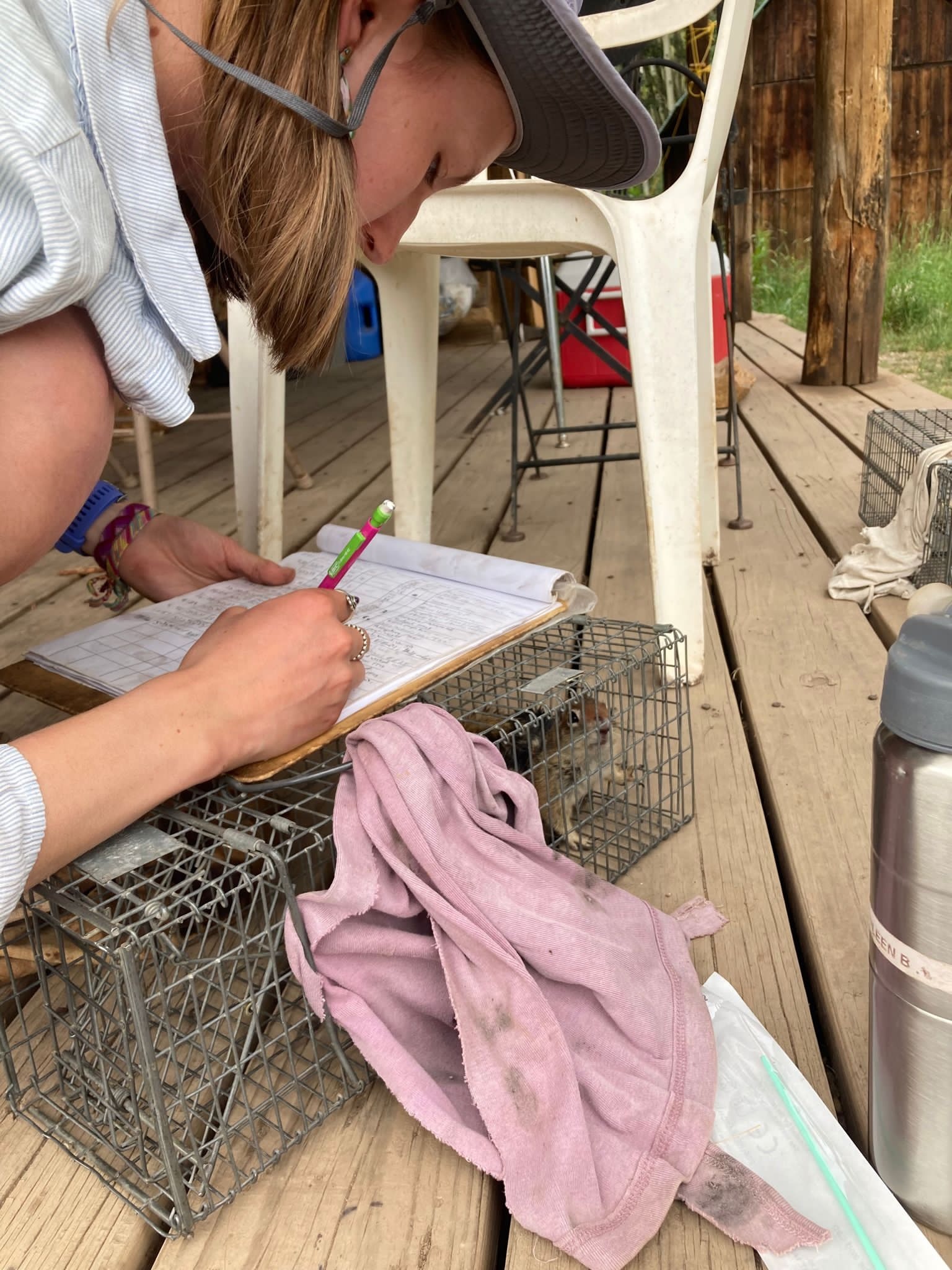
    2:00 PM: Most afternoons, I work as part of the golden-mantled ground squirrel (GMGS) team on a long-term behavioral and spatial ecology project. This involves making rounds around the RMBL townsite looking for squirrels and recording their behavior in 10-minute periods. GMGS resemble chipmunks, but they are larger and can run faster. Another big component of the squirrel project is live trapping, where we bait small wire traps with peanut butter and place them around known squirrel territories. When we capture a squirrel, we put them into a special canvas bag for safe handling and we record morphological measurements such as weight and take hair samples for genetic analysis. The most exciting time is mid-summer when the squirrel pups emerge from their burrows. We try to trap pups every couple of weeks to monitor their growth.

    From left to right: A GMGS inside a trap, data collection during GMGS trapping.

    5:00 PM: After my shift with the squirrel team, I head back to my cabin to rest and relax until dinner. I also must pack up my camping gear, because the site I am surveying tomorrow morning is several miles up the valley from the field station, and it requires an overnight backpacking trip to get there. I pack a sleeping bag, sleeping pad, small 2-person tent, extra layers, water filter, and my survey equipment in a backpacking pack. At the dining hall during dinner, I will grab extra snacks and make a couple of PB&Js to carry with me. 

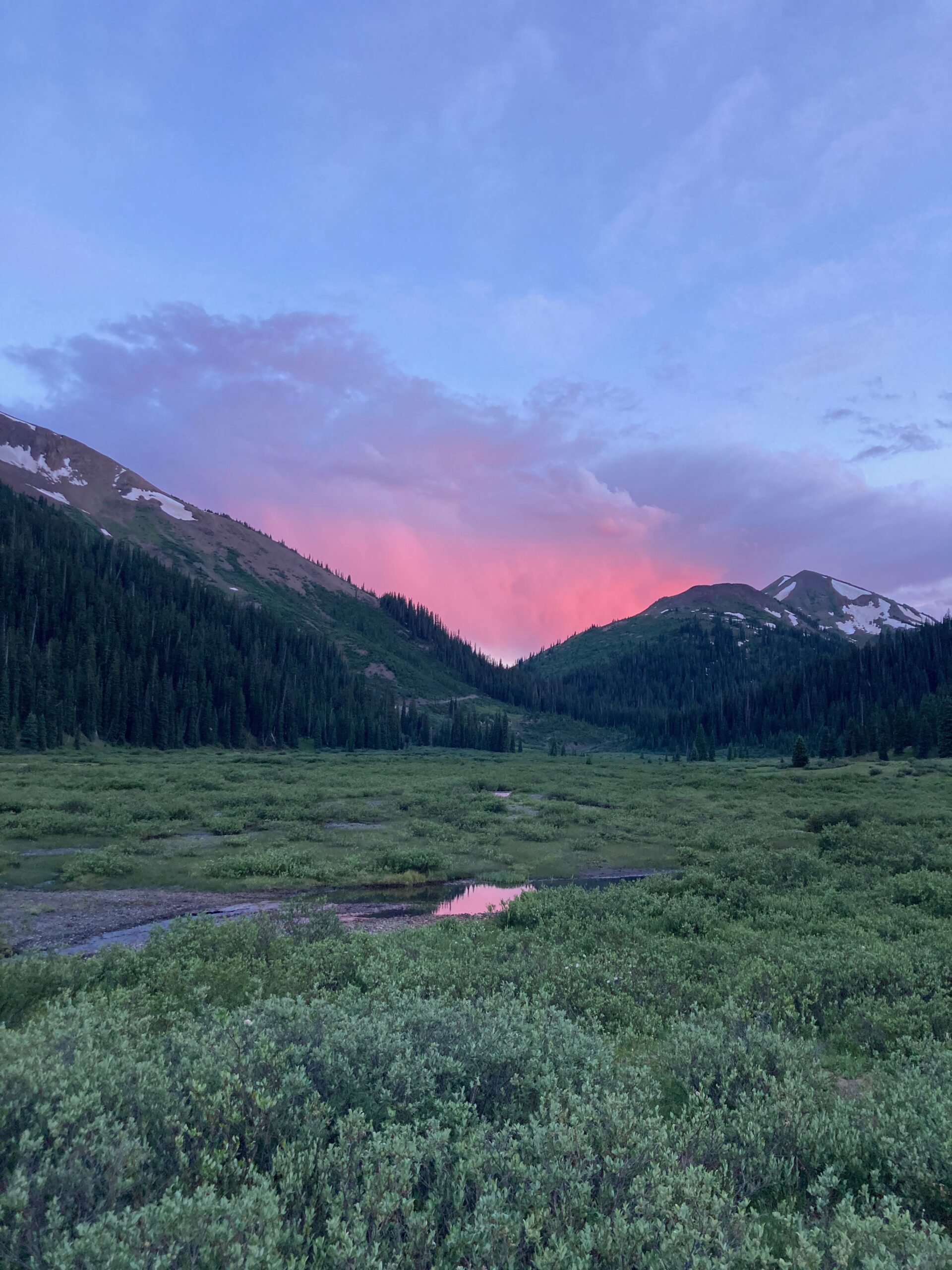
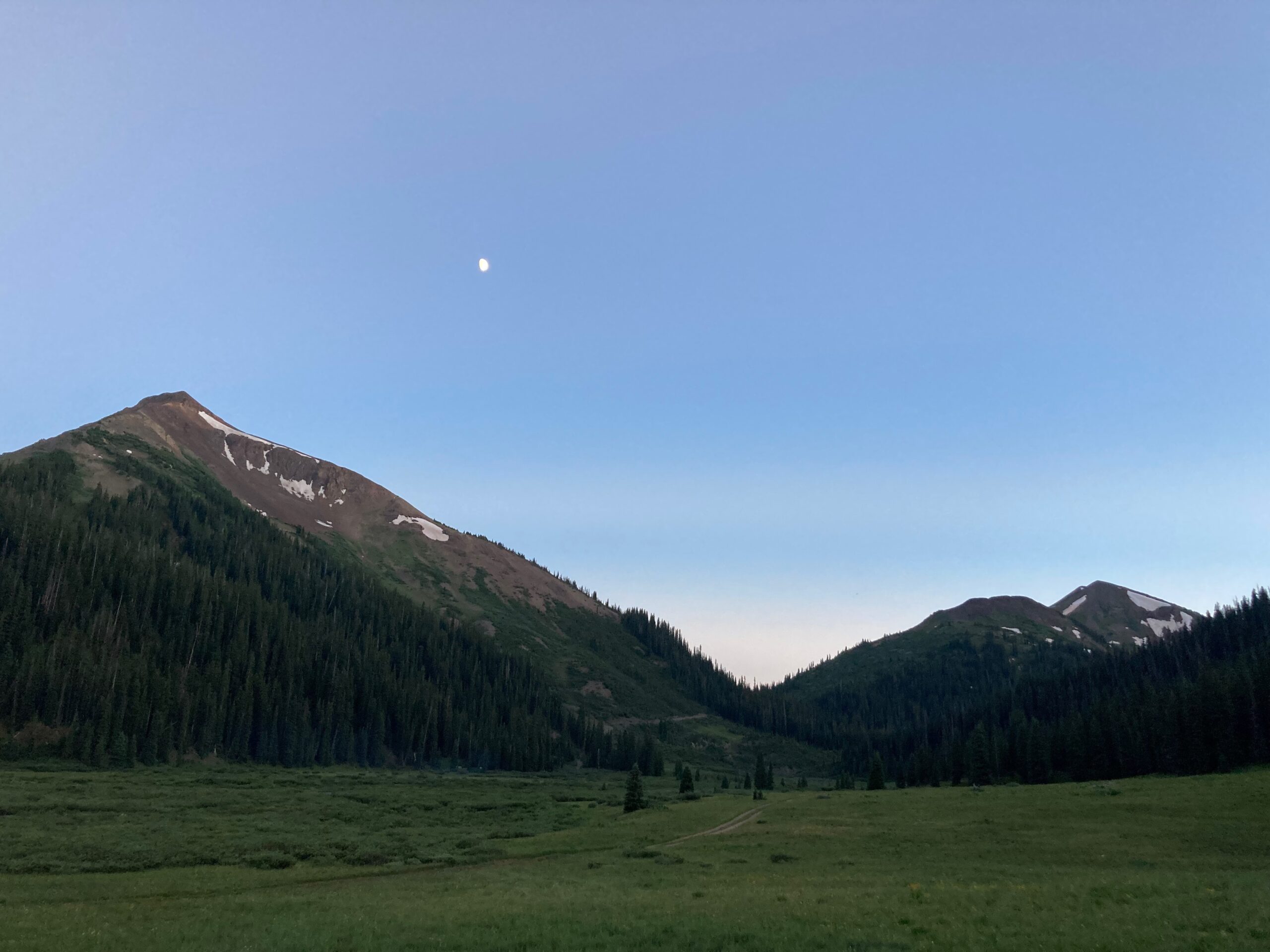
    7:00PM: After dinner, myself and two of my fellow student researchers borrow a vehicle to drive to the beginning of the hiking trail that will take us to the research site. We park next to a beautiful alpine lake and begin the 3-mile hike. We will gain 1500 ft in elevation over the course of the hike, so the majority of the trail is unrelentlessly steep. The gorgeous views of the sunset over the mountains around us serve as a good distraction from the strenuous hike. Two miles into the hike, we reach a river crossing. We take off our hiking boots and socks and roll up our pants to wade through the ice-cold water. Once across the river, we know there’s only a mile left to climb, and the sunlight is fading fast so we push onwards to try and make it to the site before dark.

    Once we get to the site, which consists of a series of ponds located along a rocky mountain slope, we quickly set up our tents and get ready for bed. The stars are incredible here—we can even see the outline of the milky way.

    Left: View of Emerald Lake from trail above. Right: Sunset over the valley after the river crossing.

    Photo caption: View down into the river valley at twilight.

    9:30PM: Time for bed! After the sun sets, it gets very cold at this high elevation, and the most comfortable place to be is inside my warm sleeping bag. I set my alarm for 5:30AM and make sure all of my survey equipment is ready for the morning.

    This summer I learned a lot about how to effectively design and conduct a field ecology research study—especially how to be flexible and creative when problems arise. Field research is challenging but it is so refreshing to work outside in such beautiful places, and it’s especially rewarding to explore the trends in one’s data after a season of hard work. That’s how I’ll be spending the winter months, as do many field ecologists outside of field season—crunching the numbers in order to reveal the mechanisms of change in the ecosystems around us.

  • Tiny Organisms Solve Giant Problems

    The Plastic Problem

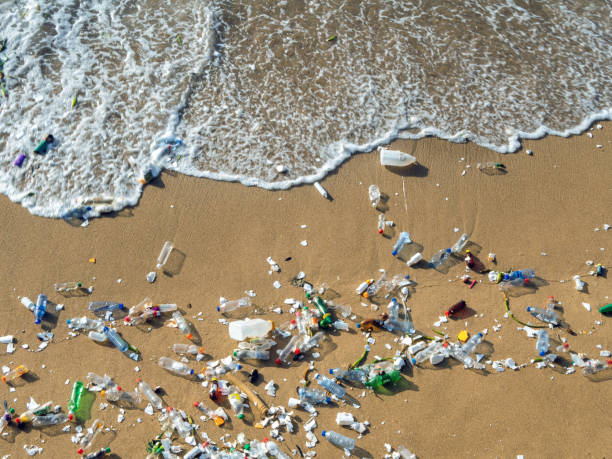
    A pressing issue our world is facing is “The Plastic Problem.” Humans have been creating harmful, non-biodegradable plastics and other materials for hundreds of years and polluting the planet with them. Scientists have been working to come up with reasonable solutions to waste management. While creating environmentally friendly alternatives is instrumental in preserving our planet, something must be done about the waste produced in years past.

    A natural solution?

    Who could have guessed that the Earth has been working to solve this itself? Some microorganisms have evolved and adapted to consume different types of plastic and convert their components into something good for the environment.

    Plastic-Eating Bacteria

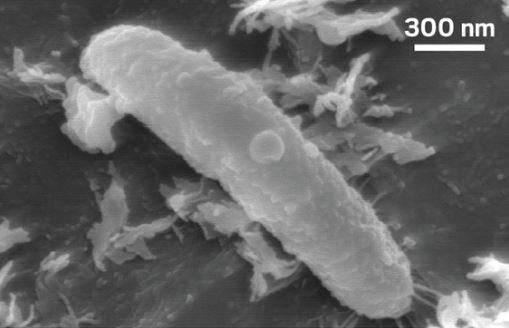
    Ideonella Sakaiensis is a bacteria discovered in Osaka, Japan. It secretes enzymes that break down harmful PET plastics into biodegradable PHB plastics. This bacteria could break down plastics in around 6 weeks when studied in a lab setting.

    Plastic-Eating Fungi

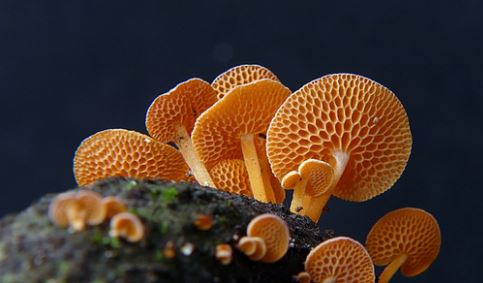
    Aspergillus Tubigensis, a naturally occurring fungus, was discovered by scientists at a waste disposal site in Islamabad, Pakistan. This fungus is also capable of breaking down plastic by secreting special enzymes. These enzymes destroy the bonds between molecules in the plastic.

    Plastic-Eating Larvae

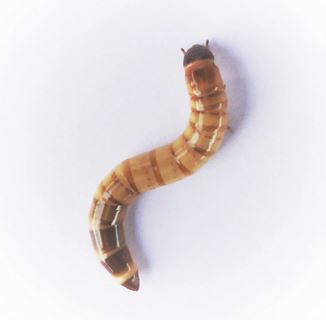
    Zophobas Morio, or “super worms”, are larvae of the darkling beetle. This creature can decompose polystyrene (AKA Styrofoam) through its digestion. The larvae’s gut microbiome is being studied to learn how to replicate the process of breaking down plastics and learn how to produce more efficient larvae.

    Is This Sustainable?

    For something to be sustainable, it must account for three things: ecology, equity, and economy. In other words, something must be good for people, nature, and the economy.

    While these organisms are all naturally-occurring, they are not the most efficient. In order for these organisms to become viable solutions to our plastic problem, they must be bio-engineered to be hundreds of times more efficient. Large-scale commercial use would be very expensive. The “willingness to pay” philosophy addresses how people will only choose sustainable products if they are willing to pay for them. More expensive endeavors are backed less by the average person. These organisms are only sustainable as long as researchers are given proper funding.

    References:

  • Native Plants at the Georgia Tech EcoCommons

    Native Plants at the Georgia Tech EcoCommons

    Introduction

    The effort to bring greenspace and restore natural ecology to the Georgia Tech campus can be seen in the EcoCommons, a park built near the Keneda building and the Center Street Apartments. One of the goals of the EcoCommons is to restore Georgia’s natural plant life to Atlanta. Today, we’re going to look at some of the native plants which have been brought back to the EcoCommons.

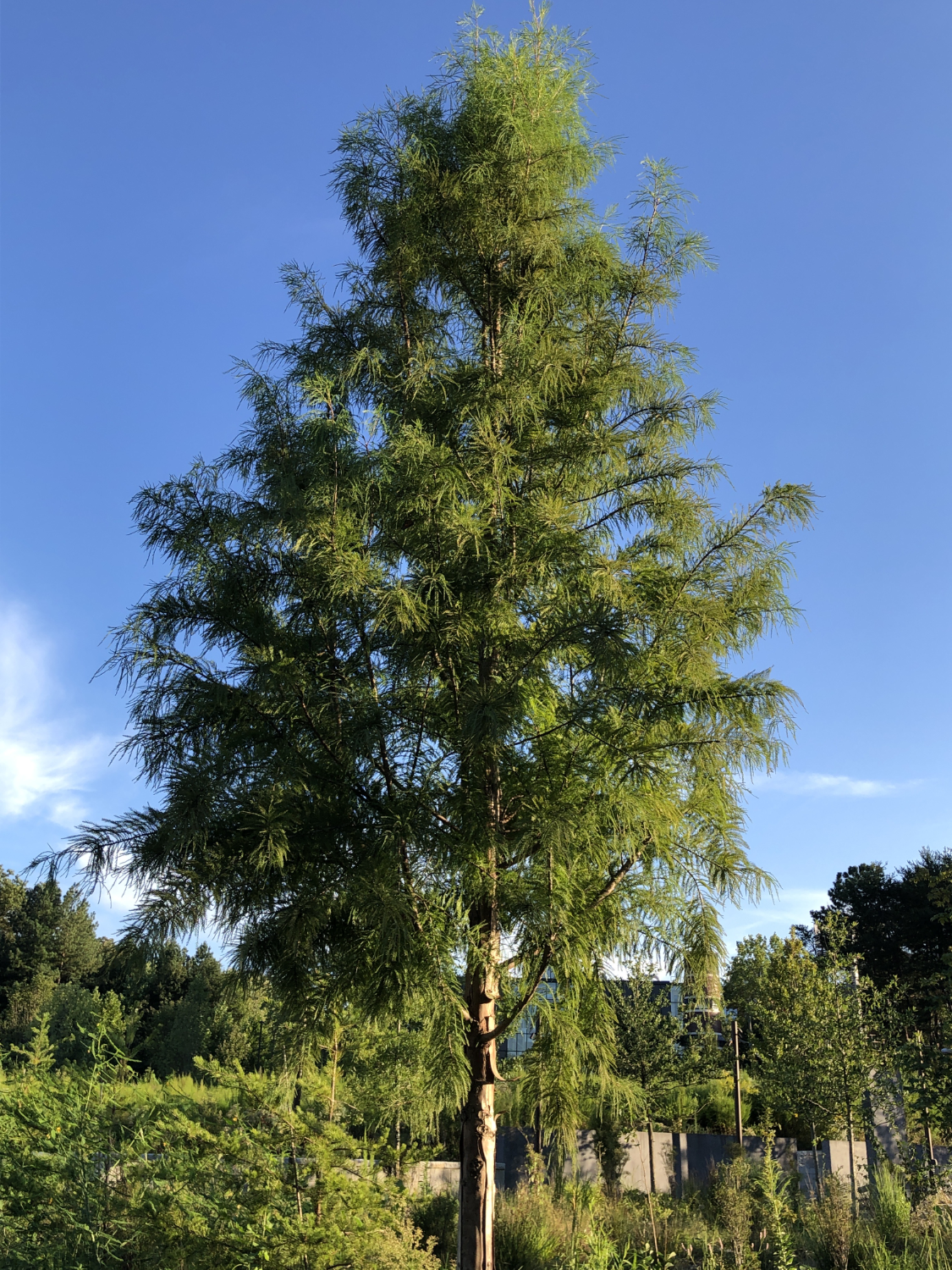
    A smaller variety of the bald cypress tree at the Georgia Tech EcoCommons, known as the pond cypress.Bald Cypress Trees

    Bald cypresses are trees native to much of the southeastern United States. They’re hardy and versatile, and can grow in all kinds of soil environments. This, along with their lovely red and orange needles during the fall, makes them popular plants for decorative purposes. Other common names for the bald cypress include swamp cypress, white cypress, tidewater red cypress, gulf cypress and red cypress.

    In the wild, bald cypresses are typically found in wet, swampy areas. They can be identified by their large, spread out needles.

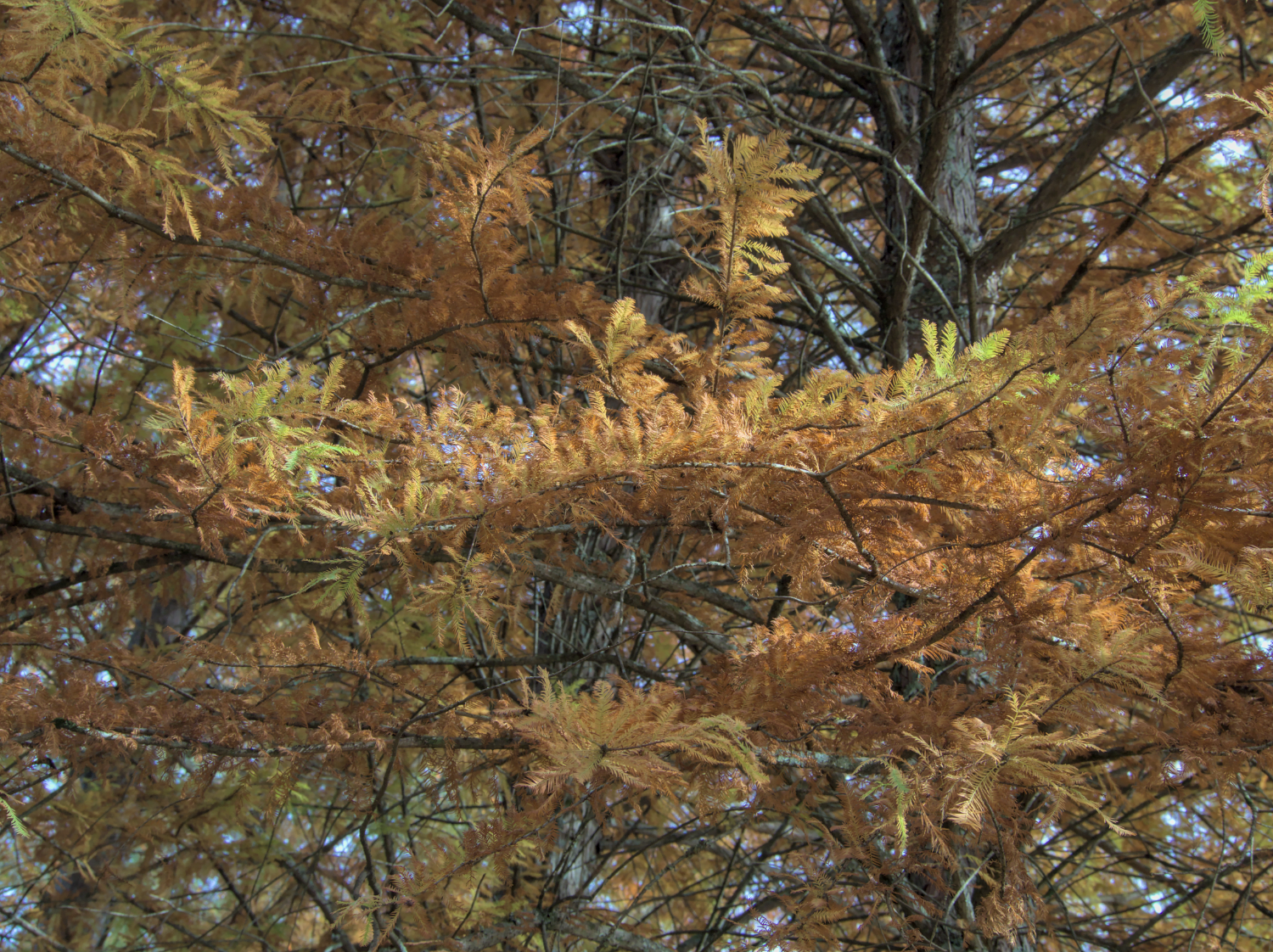
    A close up of baldcypress needles in autumn.FUN FACTS

    • The oldest bald cypress tree (that we know of) has been alive since 605 BCE. That’s a 2627 year old tree!
      • The site of the tree is actually a secret – park rangers don’t want visitors vandalizing it.
    • The bald cypress is the state tree of Louisiana.
    • Bald cypress wood has historically been marketed for its resistance to water, which makes it useful in wet areas.
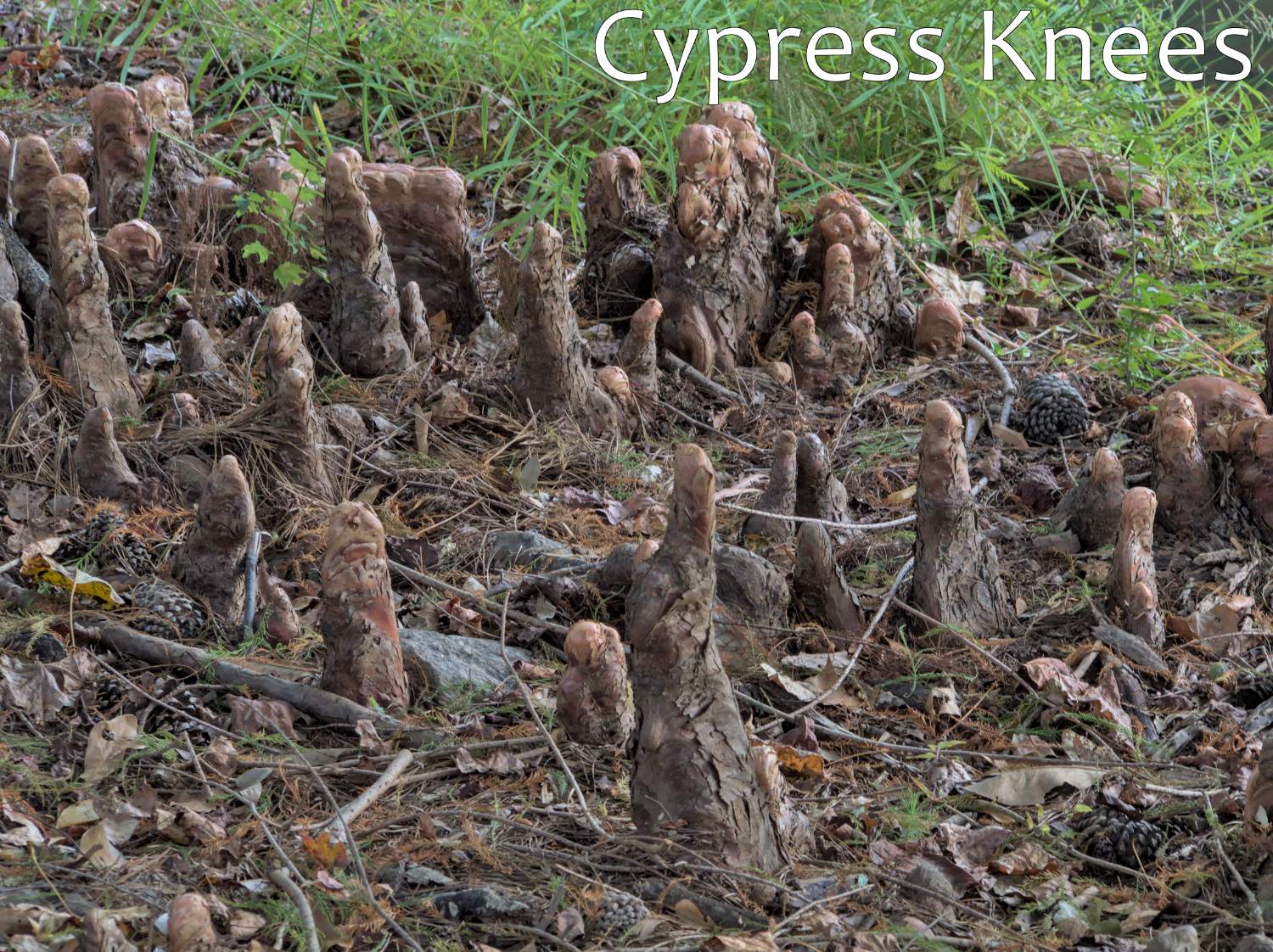
    • Around a bald cypress tree, it’s common to see what are called cypress knees – wooden outgrowths from the ground. They actually extend upward from the main trunk’s root system. They look like small stumps coming out of the ground, although they’re still connected to a “main” tree.

    A zoomed in image of the wooden knobs that extend from the roots of cypress trees, known as cypress knees.Bald cypress trees are famous for their fall colors – here’s a larger bald cypress off of the Georgia Tech campus in November. These native plants are a great choice for people looking for decorative trees that are ecologically beneficial to the local environment.

    A baldcypress tree with its fall russet needles.Cardinal Lobelias

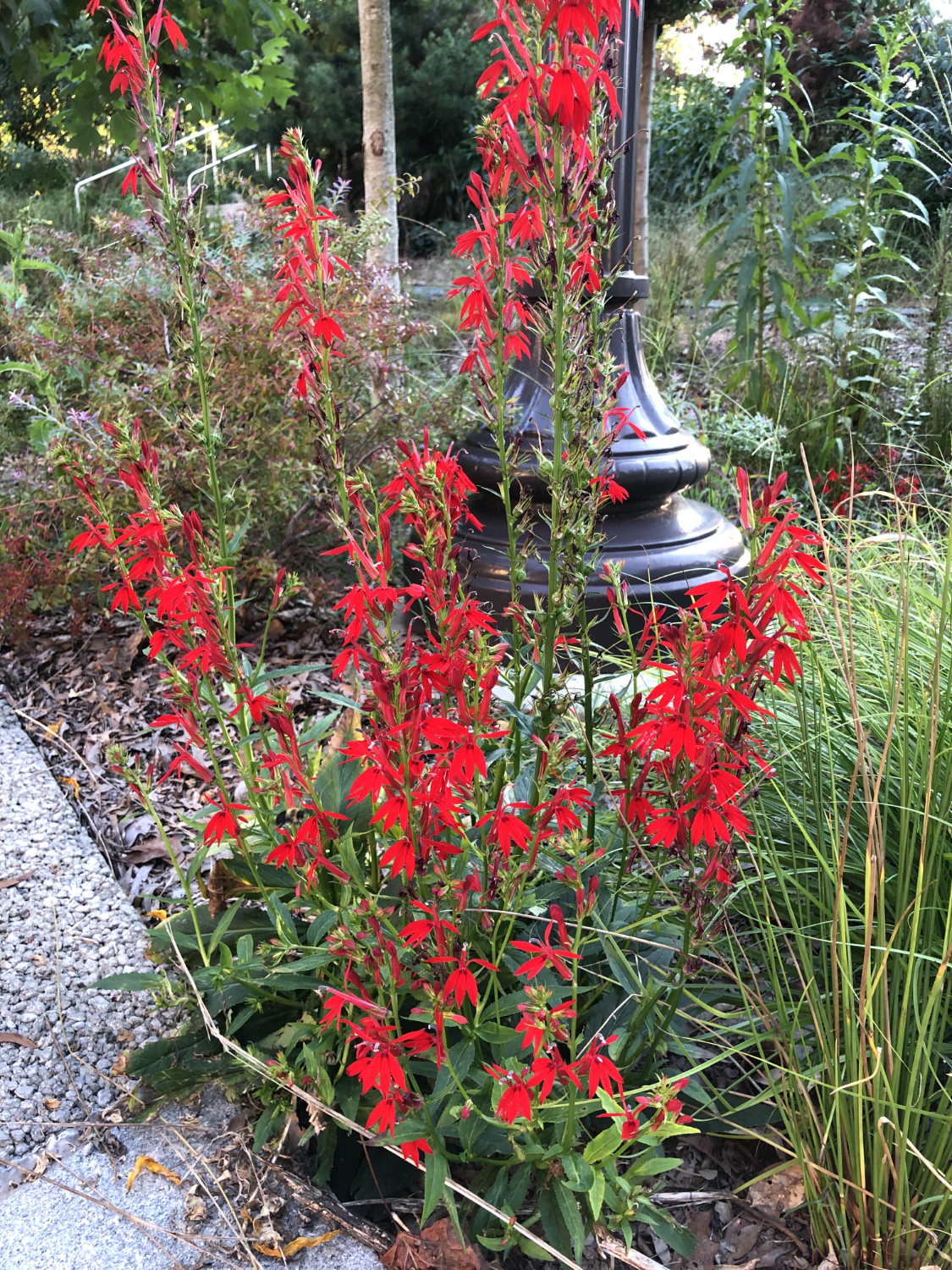
    A shot of cardinal lobelias in bloom.The cardinal flower, lobelia cardinalis, is a red flower, belonging to the bellflower family, that is native to most of the United States (except for far Northwestern states). It primarily lives in moist areas, such as stream banks, ditches, and lake shores.

    FUN FACTS

    • Excellent for hummingbird and butterfly gardens. This plant attracts many native pollinators, so it’s a great addition to your yard or garden if you’d like to see more hummingbirds and butterflies.
    • You can find varieties of the cardinal flower with pink and white flowers, although these are mostly sold in nurseries for decorative plants.
    • Every part of the cardinal flower is poisonous when ingested – don’t eat it!

    New England Aster

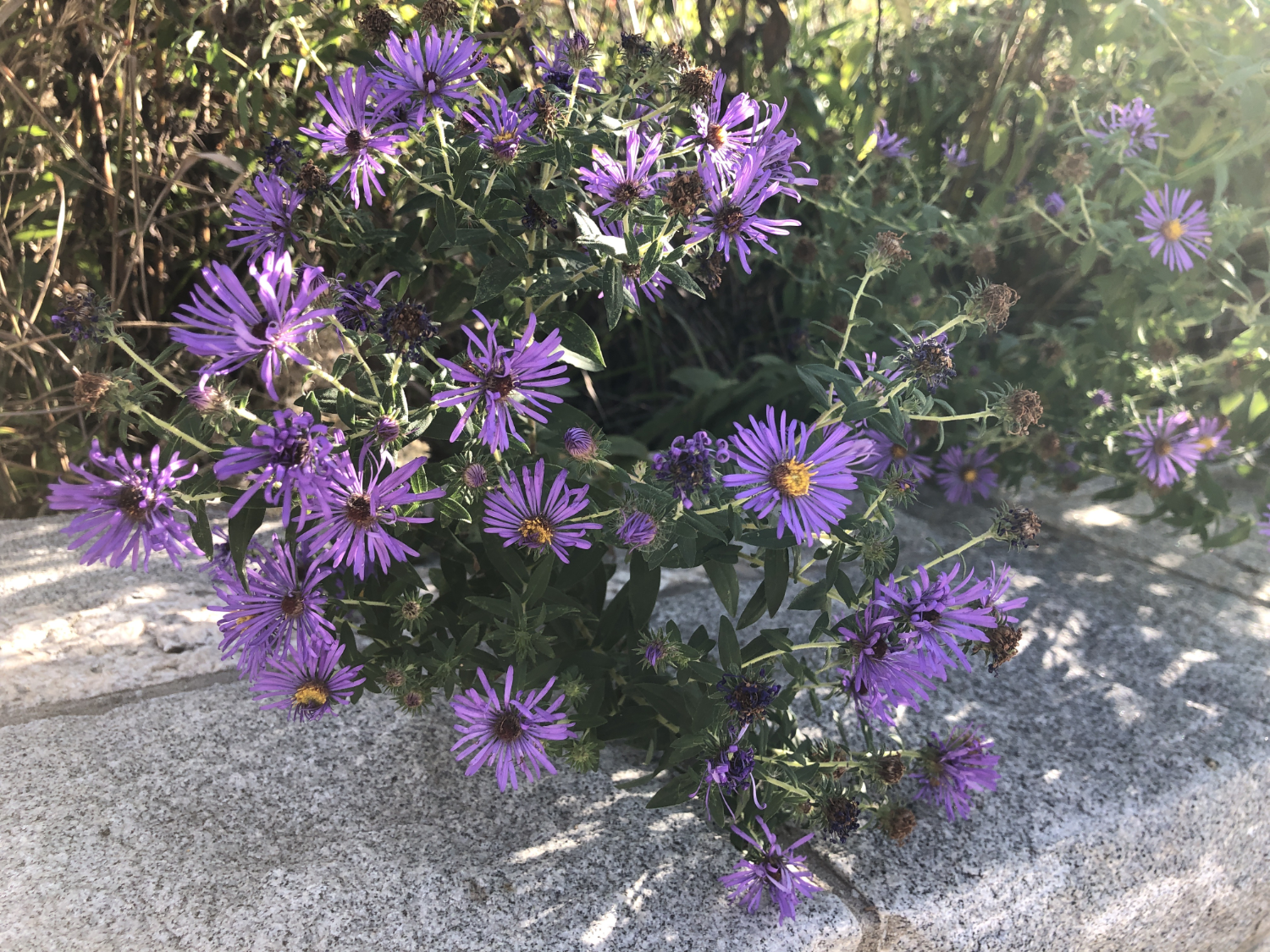
    A New England aster plant with purple flowers.The New England aster, Symphyotrichum novae-angliae, is a perennial flower that is a native plant to much of the northeastern United States. It typically blooms from late summer through fall, with asters blooming in late August to early November depending on the region. New England asters are typically found in moist environments, particularly in wetlands. However, it has been found in dry soils as well.

    FUN FACTS

    • New England asters are a favorite flower of the monarch butterfly! These flowers are known to attract the monarch butterflies during their migration south for the winter.
    • The word “aster” comes from the Greek word ἀστήρ, meaning “star”. Aster shares a language history with astronaut and astronomy.
    • Here in Georgia, New England asters are considered “Critically Imperiled” by NatureServe – this means that their natural range has been reduced significantly by human activity.
    • Domestically, you can find New England asters in all sorts of pinks and purples at nurseries for your garden or yard.

    Blue Mistflower

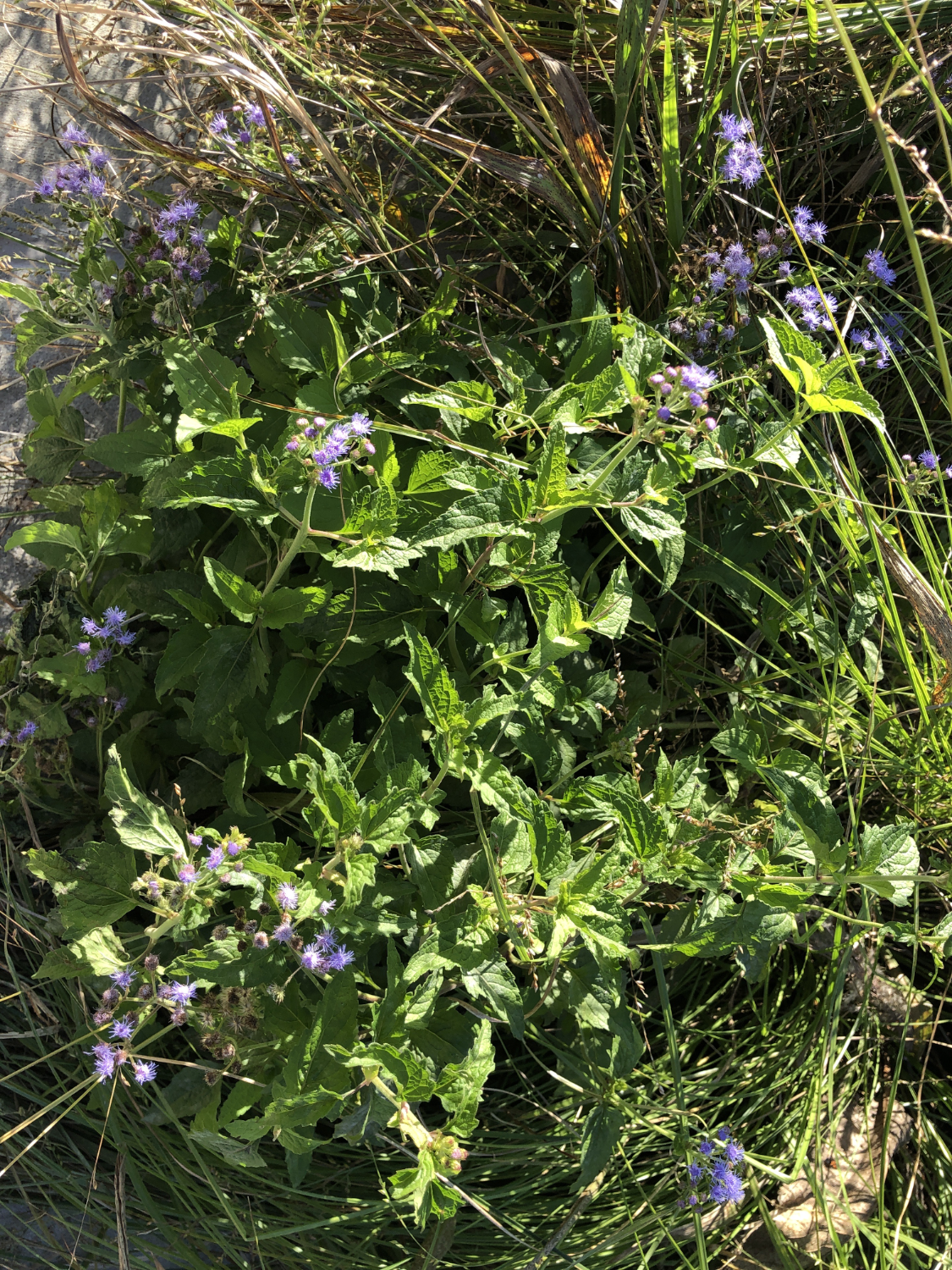
    Blue mistflowers close up.The blue mistflower, conoclinium coelestinum, is a perennial flowering plant in the Asteraceae family. Blue mistflowers are widespread throughout North America, and can be found from Ontario, Canada to Tepoztlan, Mexico. It’s commonly grown in gardens, and flowers from July through November each year.

    FUN FACTS

    • Blue mistflowers are hardy plants that can spread quickly – be warned if you want them in your garden! They’re very capable of choking out their neighbors because their root systems spread out.
    • These flowers are known for their ability to attract pollinators, which makes them great for supporting local ecology.
  • Red-Shouldered Hawks

    Red-Shouldered Hawks

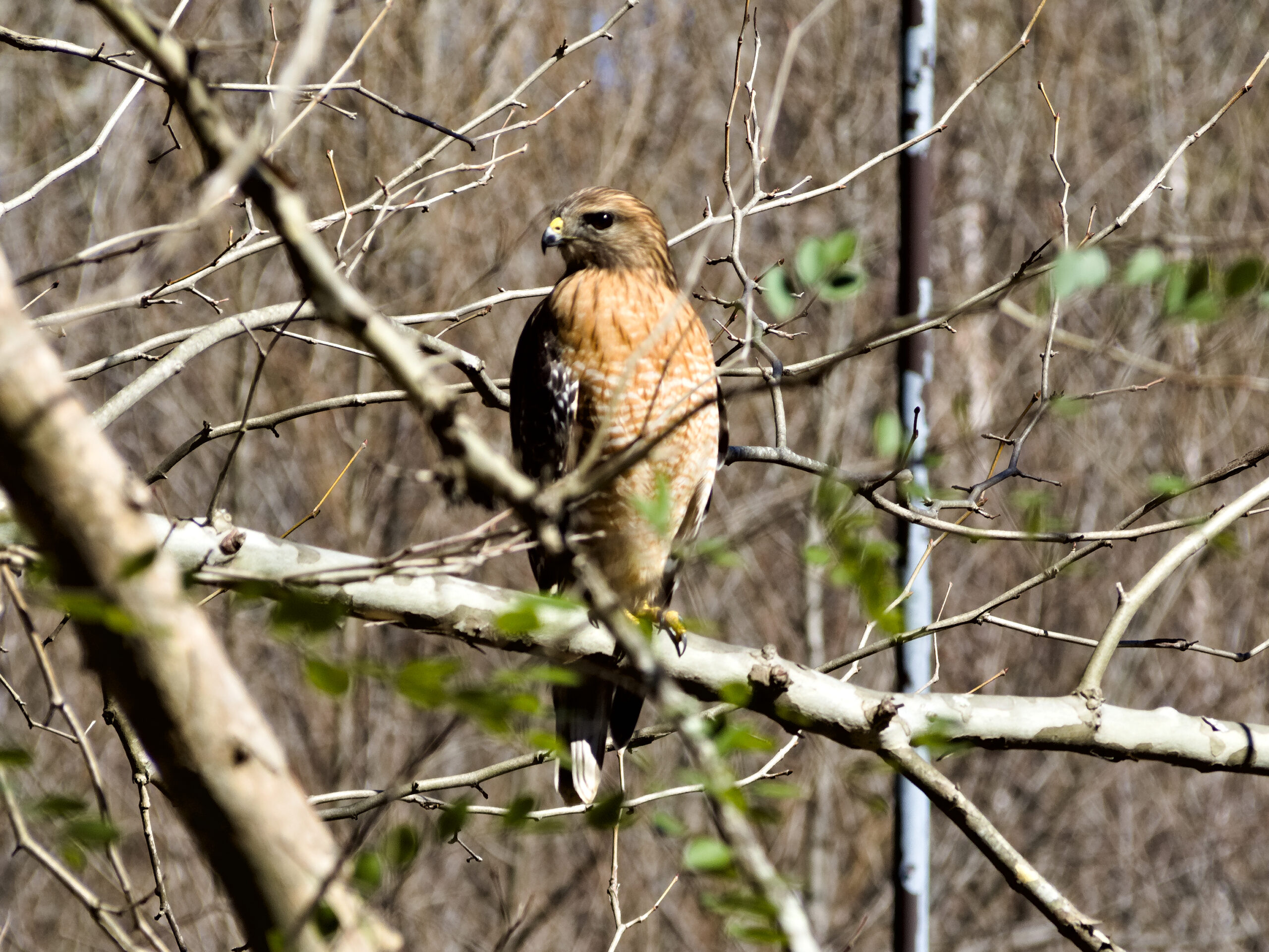
    A red-shouldered hawk, a mid-sized hawk with red-orange feathers on its shoulders and chest.

    Introduction

    The red-shouldered hawk (Buteo lineatus) is a raptor that is found in forests throughout North America. Year round, the red-shouldered hawk is found throughout much of the Eastern and Midwestern United states. During their breeding season, they can be found in both the northeastern and western United States as well as part of Atlantic Canada. They also have a non-breeding range in Mexico, where they are found for some parts of the year. Red-shouldered hawks can be identified by their medium size and reddish-brown feathers on their chests and shoulders. Hawks from the western part of their range tend to be a deeper red than those found in the eastern part. As for their wings, the feathers are banded black and brown from the underside, with black and red being predominant on the outside. Their tails are also banded, which is another identifying trait of the species.

    Sexual Dimorphism in Red-shouldered Hawks

    Red-shouldered hawks do show some sexual dimorphism in their appearance. Sexual dimorphism occurs when males and females of the same species show different traits on average, such as average size and weight. Mass is one of the traits that is sexually dimorphic for red-shouldered hawks. Females are larger than males, with the average male being only 85% of the mass of the average female. Researchers recently have tried to establish other ways of determining the sex of red-shouldered hawks morphologically. Determining sex by morphology is used by biologists to guess at the sex of an animal without needing to check for sure with DNA testing. Sex determination based on morphology is more convenient than determining sex based on molecular testing, and can be done by biologists in the field without access to DNA testing equipment. Other features of red-shouldered hawks that are sexually dimorphic are toepad length, length of secondary feathers, bill length, mass, and wing chord length. However, mass remains the most reliable way to morphologically determine the sex of a red-shouldered hawk.

    Diet and Habitat of the Red-shouldered Hawk

    The diet of the red-shouldered hawk is mostly made up of small mammals, lizards, snakes, and amphibians, and these hawks typically live in riparian forests. Riparian forests are forests that are on or near the bank of a river or stream. There is evidence that the composition of the red-shouldered hawk’s diet varies depending on where in their range they are living. One study split red shouldered-hawks into two groups. The first group was the northern hawks, which live above 38o N latitude. This is the latitude line passing just south of Charlottesville, VA, and through Lexington, KY. Interestingly, northern hawks preferred more mammalian prey and less amphibian prey. The opposite was true for southern hawks. Researchers noticed that diets were more mammalian in drier conditions, whereas hawks that lived in wetter conditions relied more on invertebrate and amphibian prey. It’s possible that hawks that live in drier areas will be less affected by wetland degradation than hawks in wetter areas.

    Nesting Preferences of the Red-shouldered Hawk

    Where red-shouldered hawks choose to nest is another area of interest for researchers. Typically, red-shouldered hawks prefer to nest in large tracts of mature forest, although they can also be found in more fragmented forested areas, such as those found in suburban areas. One study found that nests were more likely to be located near a lake or treeless wetland than not. Nests were also more likely to be near a trail or stream than not for both cases. Researchers believe that open trails might make good hunting grounds for the hawks, without trees and underbrush to hide prey. We can guess similarly about hawks’ proximity to lakes and treeless wetlands. The lack of trees gives hawks easier access to their prey, which they detect primarily via eyesight. Red-shouldered hawks’ positive association with wet areas is a well known feature – amphibians make an important component of the diet of the red-shouldered hawk, especially while nesting.

    References

    Cheryl R. Dykstra, Herman L. Mays Jr, Jeffrey L. Hays, Melinda M. Simon, & Ann R. Wegman. (2012). Sexing Adult and Nestling Red-Shouldered Hawks Using Morphometrics and Molecular Techniques1. Journal of Raptor Research, 46(4), 357–364. https://doi.org/10.3356/JRR-11-84.1

    Brad N. Strobel, & Clint W. Boal. (2010). Regional Variation in Diets of Breeding Red-Shouldered Hawks. The Wilson Journal of Ornithology, 122(1), 68–74. https://doi.org/10.1676/09-071.1

    Landenberger, James F, Roosa, Dean M, Stravers, Jon W, Ehresman, Bruce, & Patterson, Rich. (2013). The Raptors of Iowa. University of Iowa Press.

    James E. Woodford, Carol A. Eloranta, & Anthony Rinaldi. (2008). Nest Density, Productivity, and Habitat Selection of Red-Shouldered Hawks in a Contiguous Forest. Journal of Raptor Research, 42(2), 79–86. https://doi.org/10.3356/JRR-07-44.1

    Red-shouldered Hawk Overview, All About Birds, Cornell Lab of Ornithology. (2019). allaboutbirds.org. https://www.allaboutbirds.org/guide/Red-shouldered_Hawk/

  • Atlanta’s growth is Hurting the Environment

    Atlanta’s growth is Hurting the Environment

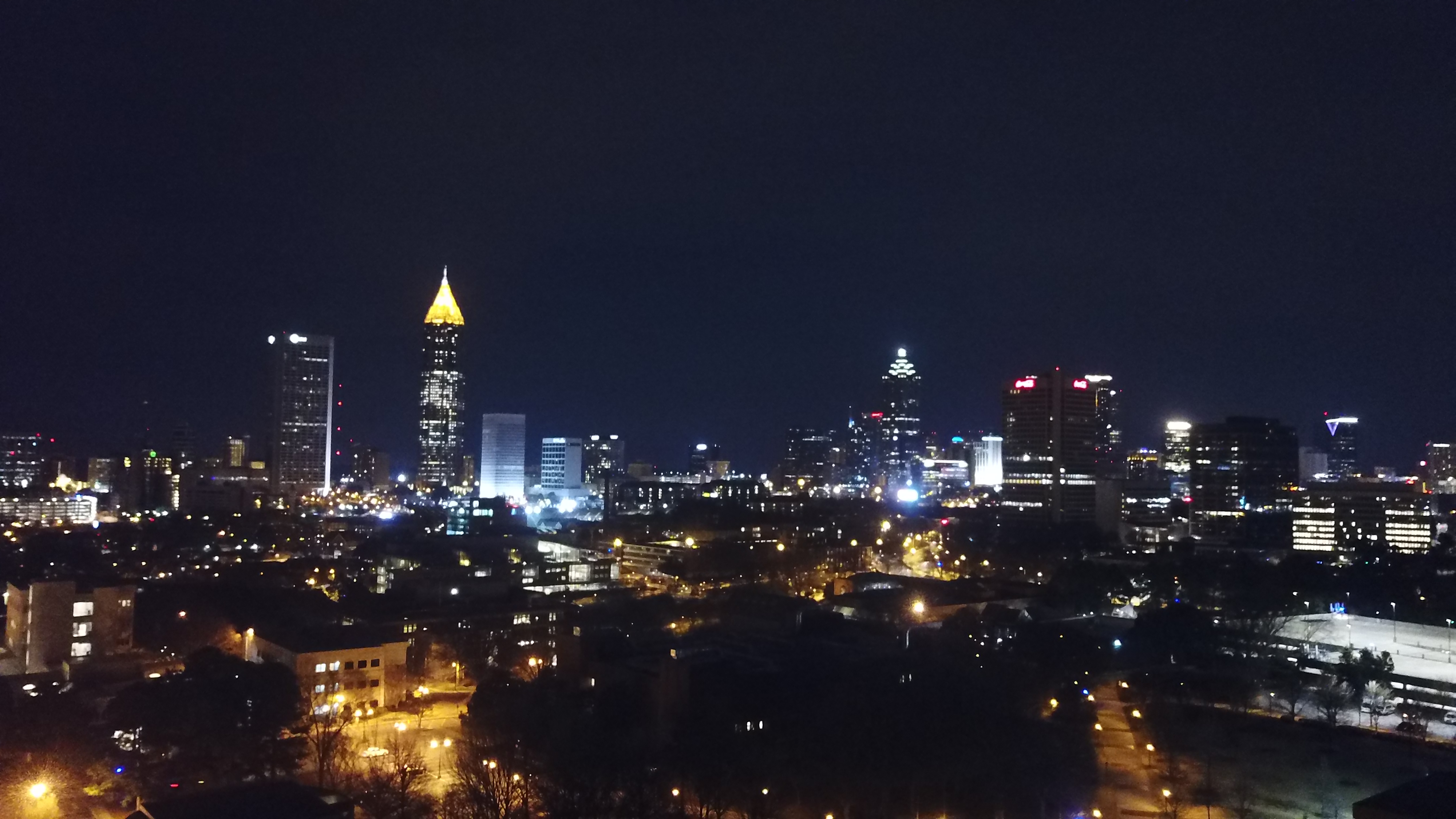
    The city of Atlanta is constantly growing. With new apartment complexes, new buildings and more companies coming to the city, the metropolitan of Atlanta is currently the “fourth fastest growing area in the country” (Carnes, 2019). These changes that are occurring within the city are having dramatic changes to the demographics and economy of the city, but these changes are causing detrimental environmental effects as well. 

                 Atlanta has become one of the fastest growing cities in the Southeast of the United States. The demographic of Atlanta has been evolving over this time of constant growth. With the constant growth, the average age of the population of Atlanta has decreased and is lower than the average age of the population of the state of Georgia. In 2019, the median age of Georgia is 36.2, while in Atlanta, the median age is 33.5 (“Atlanta Georgia Population 2019”). The city has a lower median age compared to the entire state due to reasons that younger individuals are moving to the city. According to the NFIB, young people are moving to the city “because of the low cost of living, the growth of the job market, and diversified economy” (“Atlanta is top 20…”). These age differences can have adverse effects on the population that could be good or bad. Within Atlanta, the lower median age can “impact the economy significantly” with negative repercussions.  (Majaski, 2019).

                 The economy of Atlanta is growing as well with the influx of people. The construction industry has a huge influence in the city. In order to accommodate these needs, various construction projects are constantly being started. As of June 2019, the job growth of construction is greater than any other industry in Atlanta (US Dept. of Labor, 2019). These construction projects include housing as well as corporate buildings as well. According to RealPage, the “demand for apartments outstripped new supply in Atlanta by nearly two-to-one with more than 4,200 units being rented while 2,700 new units delivered into the market” (Shchenke, 2019). This signifies that the general young population of Atlanta, constantly needs housing and in order to accommodate this, many constructions occur to provide housing for such. Although there is a huge number of construction projects occurring and benefits the city and people, these construction projects are having negative environmental effects. 

    Despite the construction and growth of the city being a good thing for the city, it can negative effects on the city as well. The city of Atlanta is a major city that is being affected by urban sprawl. According to Britannica, urban sprawl is the “rapid expansion of the geographic extent of cities and towns” (Rafferty, 2019). With this rapid expansion of Atlanta, it is having adverse effects on the environment and has led to drastic deforestation within the city. In order to clear space for new construction, “sprawl-fueled deforestation occurs at the rate of 50 acres per day” (Bullard). This leads to less tree cover for the area which can lead to effects such as more pollution, flooding and soil erosion (“Urban Sprawl”). Along with the effects of general pollution, flooding and soil erosion, a huge impact of urban sprawl within Atlanta is that the overall quality of air in the city will drop. 

                 Air pollution is one of the biggest problems that is caused by urban sprawl. With urban sprawl, many individuals have an “increased dependence on automobiles and other vehicles, and high energy and water use” (“Urban Sprawl: Your Health…”). In this case, the number of cars on the highways or streets essentially increases because people are spread out and do not have sufficient public transport to get to their destination. According to the Atlanta Regional Commision, “Atlantans drive a total of more than 100 million miles per day” (“Facing the facts…”) This means that people spend a long time in their cars due to traffic and general commutes. Along with the general increase in the number of vehicles on the road, the general idea of deforestation caused by urban sprawl would be a huge effect on air pollution. Trees are a huge factor in helping in releasing water vapor and taking in carbon dioxide and other pollutants(“Urban Spawl”). WIth deforestation, there are less factors in helping in decreasing the pollutants and essentially ruin the general air quality. Over the past 15 years, Atlanta has averaged 40 ‘code orange’ days over the past Summers. These ‘code orange’ days can cause specific lung and heart disease and people are advised to stay inside. Along with the ‘code orange’ days, metro Atlanta area fails to meet national health standards for both soot and smog, and likely won’t meet these standards for at least 10 years (“Facing the facts…”). This level of air quality for Atlanta is very bad for the inhabitants and with such expansion, the city of Atlanta needs to look at the effects and find ways to help fix such environmental issues. 

    With the growth of the city, the city of Atlanta needs to implement solutions that allow the city to accommodate the growth, but also be able to solve specific environmental problems. Being able to connect the overall city through different means of transportation, will be a huge factor in helping the air quality of city and prevent further expansion of the city. 

    (2019, August 5). Retrieved from https://www.bls.gov/regions/southeast/news-release/2019/pdf/areaemployment_atlanta_20190805.pdf

    Atlanta, Georgia Population 2019. (n.d.). Retrieved from http://worldpopulationreview.com/us-cities/atlanta-population/.

    Atlanta Is Top 20 City for Young Professionals. (2016, April 20). Retrieved from https://www.nfib.com/content/news/economy/atlanta-is-top-20-city-for-young-professionals-73695/.

    Bullard, R. (n.d.). Atlanta Megasprawl. Retrieved from http://forum.ra.utk.edu/1999fall/atlanta.htm.

    Carnes, J. (2019, April 24). Why is the city of Atlanta’s population growing? Retrieved from https://www.11alive.com/article/news/local/outreach/why-guy/why-is-the-city-of-atlantas-population-growing/85-389f3547-202b-4ad4-a22f-ccfb1e7f1702.

    Facing the Facts about Atlanta’s Air Quality. (n.d.). Retrieved from https://www.southernenvironment.org/cases-and-projects/fact-sheets/facing-the-facts-about-atlantas-air-quality.

    Majaski, C. (2019, October 26). What Is the Working-Age Population? Retrieved from https://www.investopedia.com/terms/w/working-age-population.asp.

    Schenke, J. (2019, July 16). Atlanta’s Apartment Rent Growth Ranks 3rd In The U.S. Retrieved from https://www.bisnow.com/atlanta/news/multifamily/demographic-tailwinds-help-push-atlanta-apartment-rents-up-to-third-strongest-in-nation-99894.

    Rafferty, J. P. (2019, February 7). Urban sprawl. Retrieved from https://www.britannica.com/topic/urban-sprawl.

    Urban Sprawl. (n.d.). Retrieved from https://www.georgiaencyclopedia.org/articles/arts-culture/urban-sprawl.

    Urban Sprawl: Your Environment, Your Health | National Library of Medicine. (n.d.). Retrieved from https://toxtown.nlm.nih.gov/sources-of-exposure/urban-sprawl.