Category: today i learned (til)

health, fitness, medicine, environment, ecology, how to learn tricky topics in science and math, new discoveries, news, current events

  • Meal Planning

    Meal Planning

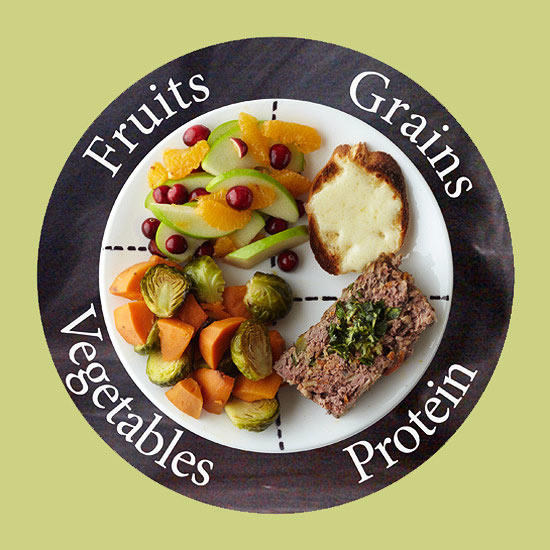
    Like many other college students, eating a healthy meal is difficult to do when we are so consumed with our studies. In fact, results of the 1993 Survey of American Dietary Habits show that 82% of respondents evaluated nutrition as being modestly imperative, and only 27% of respondents considered themselves knowledgeable about dietary rules. To improve dietary consumption, consumers need to be informed on how developing good nutrition habits can be practical and simple. The Plate Model offers a simple approach to meal planning, and using the model decreases cholesterol and protein consumption.
    MyPlate-Opening-Image

    The Plate Model fills is a visual technique for filling a dinner plate. Portions of foods and appropriate food choices can be depicted for meals and snacks in assorted forms. The Plate Model offers a meal planning approach that is straightforward and flexible. The Swedish Diabetic Association has depicted the model as a plate that is isolated into 3 segments with 25% of the plate secured by meat and fruits, and the rest of between grain items (egg, bread, rice, pasta, and potatoes) and vegetables.

    The underlying methodology is to show the divisions of the plate to be secured by specific nourishment. Many consumers need to decrease meat, fish, and poultry segments and increase vegetable intake. Although exact control of portion sizes may not be reflected in the model, improvements in proportions of foods relative to each other on the plate can correct major nutrient imbalances. People who retain the 3 segments of the dinner plate can apply this learning at home or at restaurants. For IMG_3034customers who aren’t knowledgeable about food portioning, visual portrayals compel them to consider portioning without fundamentally knowing about proper measurements.
    The United States is sensitive to a shared objective of building more beneficial American eating methodologies; individuals still need to figure out how to execute proper nutrition. The Plate Model can be used to aid in this improved execution. The model fills in as an as a plan for showing nutrition with straightforward approaches that result in healthy practices for diet. Many individuals believe that great nutrition takes excessive time. Such misguided judgments can keep them from accomplishing better diets. Even college students can improve their nutrition using the plate model in their on-campus cafeterias. Eating suggestions should be sure, handy, and noteworthy, and the plate model can help achieve this goal.


    Morreale, S. J., & Schwartz, N. E. (1995). Helping Americans eat right: developing practical and actionable public nutrition education messages based on the ADA Survey of American Dietary Habits. Journal of the Academy of Nutrition and Dietetics, 95(3), 305-308.

    Camelon, K. M., Hådell, K., T JÄMSÉN, P. Ä. I. V. I., Ketonen, K. J., Kohtamäki, H. M., MÄKIMATILLA, S., … & DAIS PROJECT GROUP. (1998). The Plate Model: a visual method of teaching meal planning. Journal of the American Dietetic Association, 98(10), 1155-1158.
     

  • Legend of Sumeria: A Scientific and Artistic Read

    Legend of Sumeria: A Scientific and Artistic Read

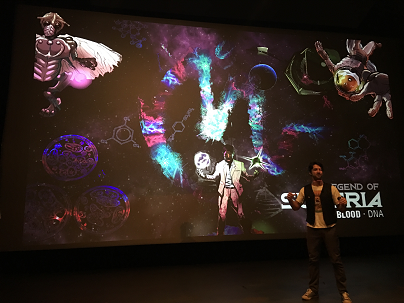
    Are you looking for a book to read that’s fun, and action packed with science? Check out Legend of Sumeria! It’s a new graphic novel by co-creators Biju Parekkadan and Jay Webb, with amazing illustrations from lead illustrator Anthony Lagaipa,

    In comparison to other graphic novels that I have read, this one definitely has a lot more text in it. While it is a lengthy read, the plot continues throughout the novel at an appropriate pace and is very engaging.

    In terms of audience, I would say this is for a more advanced reader. Those starting high school and older are the most appropriate audience for this book.

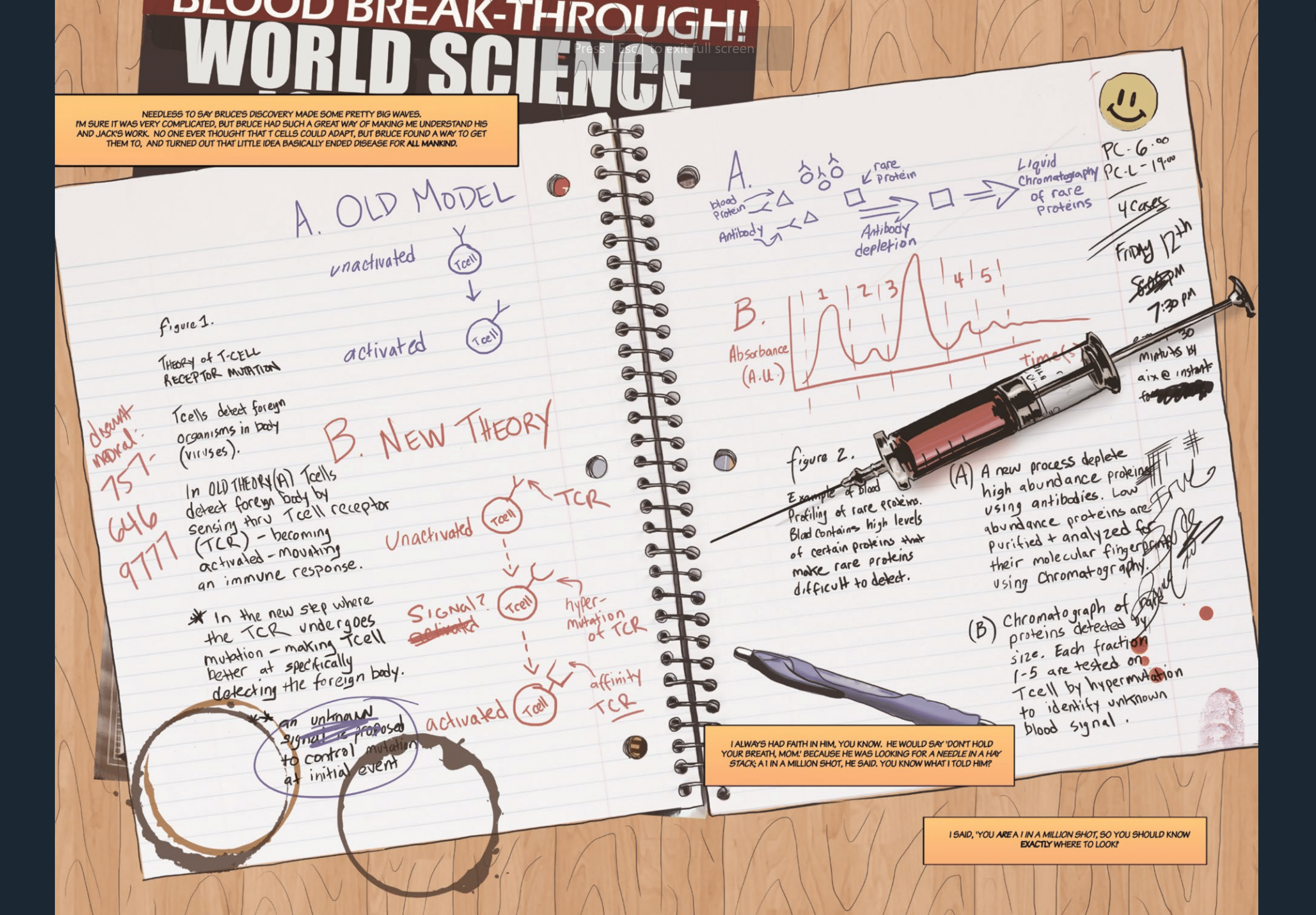
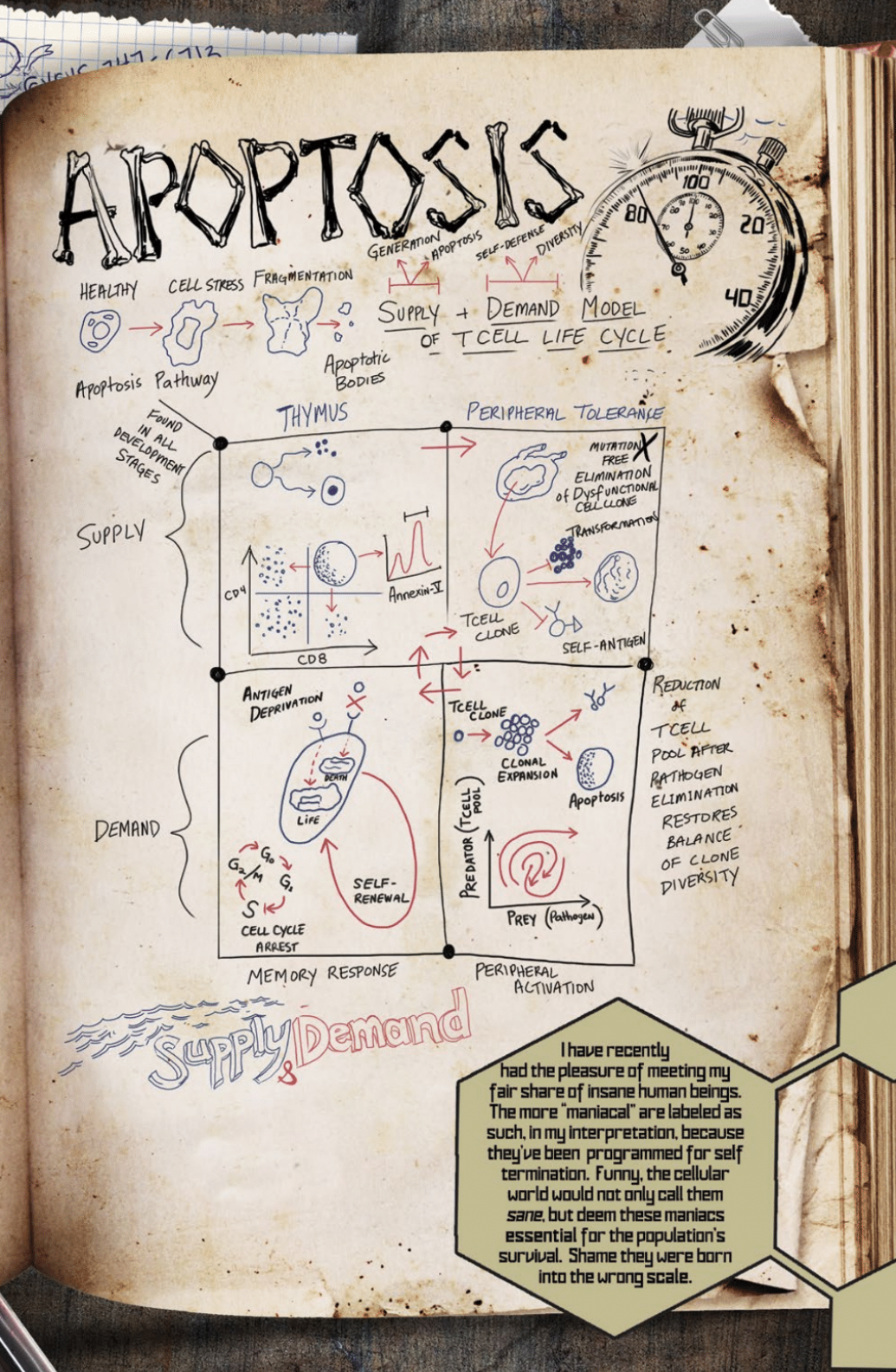
    Regardless that the novel is full of great illustrations, all the facts are indeed scientific. Within the first chapter, I saw diagrams for blood cells, viruses, and chemical reactions. Most of these diagrams are represented through a handwritten diary from the novel’s protagonist, Dr. Bruce Abbot. And don’t worry, no spoilers here! If you want a more thorough background of the main components that the book contains, or how you can get the book, check out the official website here!

    Legend of Sumeria Sample
    Screenshot (41)
    Sample image of some scientific principles in the book!

    If you’re someone interested in STEM with artistic hobbies, this book is definitely one that you might want to read. (Check out Joshua Suber’s Charged post and his interview with one of the co-creators on communicating science through art here!)

    In just the first chapter, the novel has already mixed sci-fi, action, and art all into paper while keeping a real focus on life sciences and biotechnologies!  Legend of Sumeria is definitely a novel I look forward to finishing this summer!

    References:

    Parekkadan, B., Webb, J., Lagaipa, A. (2017). Legend of Sumeria. http://legendofsumeria.com/.

    *Featured Image:

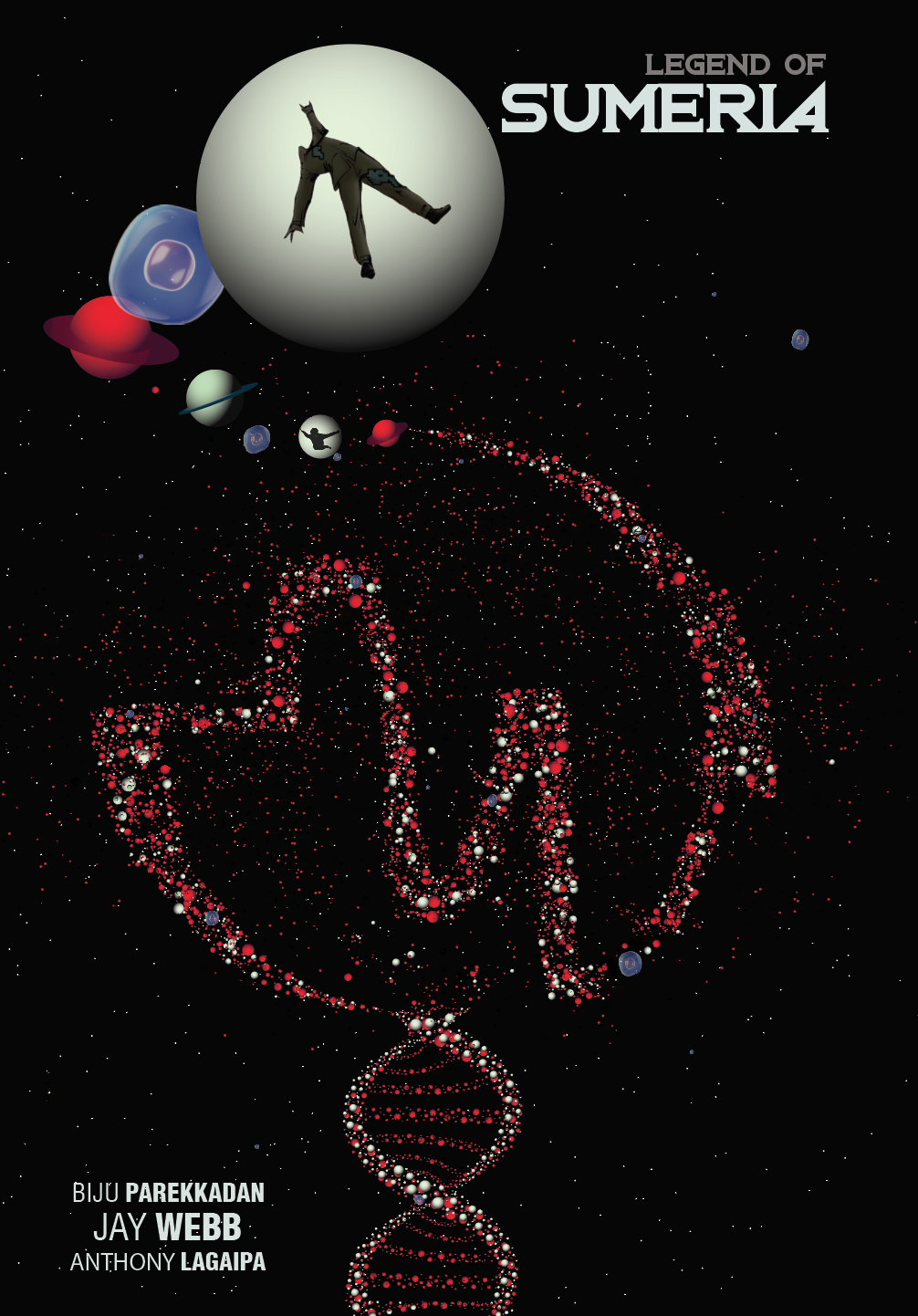
    Parekkadan, B., Webb, J., Lagaipa, A. (2017). Sumeria-book-cover [Digital painting]. http://legendofsumeria.com/.

    *Please note that some of the images above were given special permission to use by the owners of the content for the purposes of this blog.*

  • Sending Out an S.O.S.

    Sending Out an S.O.S.

    For a long time, scientists have known that plants respond to their surroundings. There are flowers that open during the day and close at night and many plants will grow towards a light source whenever possible.

    However, it has also been proven that plants can warn each other when danger is present and even scream when under duress.

    When something happens to an individual plant such as an insect laying its eggs or an herbivore starting to munch away, it releases specific scents and volatile gasses that warn other nearby plants that danger is near. Nearby plants respond by secreting toxic chemicals to coat their surfaces to deter animals such as caterpillars.

    It’s also been found that plants respond to sound and can communicate via sound. Some plants, such as corn seedlings, make high frequency clicking noises with their roots to communicate with their neighbors. When exposed to a noise on the same frequency, the seedlings grew towards the source of the noise.

    In case your mind wasn’t quite blown yet, there’s also evidence to support plants’ ability to recognize other plants from the same parent. When a new plant is introduced to an environment in close contact, such as in a pot, the resident plant will rapidly accelerate its root growth to seize resources like minerals or water. However, when a plant sprouted from the same parent is introduced, the resident plant does not attempt to starve out its new friend.

    There’s a lot we still do not know about plants and how they work but there are many scientists around the world dedicated to figuring out a bit more about the not-so-silent friends we share this world with. And next time your neighbor mows their lawn, take a deep breath and savor the sweet smell of a dying plant’s cry of warning to its doomed friends.

    potted plants

    Resources:

    Christine Hsu. “Discovery Reveals How Plants Cry for Help When an Attack is Imminent” Medical Daily. https://www.medicaldaily.com/discovery-reveals-how-plants-cry-help-when-attack-imminent-242379 (accessed 23, April 2018)

    Dan Charles. “Stressed Plants Cry for Help” New Scientist. https://www.newscientist.com/article/mg15320720-800-stressed-plants-cry-for-help/ (accessed 23, April 2018)

    Taranisen Panda and Rajballa Mohanty. “Are Plants Intelligent?” Science Horizon. http://www.orissabigyanacademy.nic.in/pdf/August_2017_Science_Horizon-1182017.pdf#page=40. Pages 30-41. (accessed 23, April 2018)

    Photos obtained from creative commons then edited.

  • Legend of Sumeria – Exploring science in a new way

    Legend of Sumeria – Exploring science in a new way

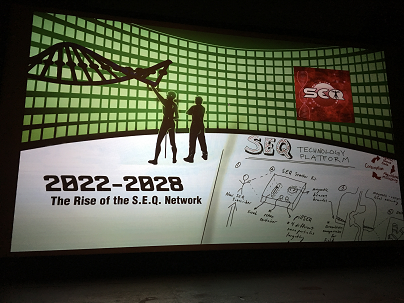
    I had the privilege to interview Biju Parakkeden; one of the co-creators of Legend of Sumeria, a thrilling new sci-fi graphic novel. Biju is a professor of bioengineering, and along with co-creator Jay Webb, and many of their illustrators,  they brought to life their views of modern development in science and how a possible future may play out.

    Add this to your summer reading list!
    Add this to your summer reading list!


    Ok, so a good place to start off would be a summary. For someone unfamiliar with Legend of Sumeria what would you tell them?

    A brief summary: Sumeria asks the question of what happens to society if powerful technology gets into the wrong hands. We use real science to dramatize current events so that readers understand that the innovations of today can potentially be the source of our own demise, without ethical and moral guidance by the public.

    Why did you decide to take on this project? How was the idea created?

    It started as a fun exploration of the question, what would happen to society if there was a cure-all treatment for the one thing that provides evolutionary pressure on the human species: infectious disease. With the help of Jay, who has experience with film production, we broadened the story greatly and made a set of characters with relatable struggles as they navigate through this alternate reality where technologies (especially genetic technologies) have become extremely pervasive. We hope it can spur public discussion about the ethics of these futuristic projects before they really become engrained in society by the might of those who are pushing these limits.

    In that initial phase, did you have a target audience? If so how did that shape your decisions?

    We wanted to target scientists and cerebral readers given the topics. These folks are inherently visual learners and are embracing the story. Moreover, we are finding great enthusiasm from the bioethics and philosophy community and this looks like a great niche for us to be.

    What were some of the challenges in communicating science in this art form?

    We wanted to balance real science with something that was understandable to a non-scientific audience. In many cases there were story arcs that needed a scientific theory to drive it and we couldn’t come up with a viable theory then we moved on. We really wanted to stay true to the science as much as possible and not provide fluff.

    How did your partnership with Jay Webb come about, and how was that collaboration?

    Jay and I are best friends and have always written creatively though independently. This was our first venture together and his contribution really enriched the story and characters with a unique world view and exciting plot twists that I myself did not have experience in. I balanced his artistic vision with instilling modern, current events on the technology side and we had many great discussions to marry the two in a narrative way.


    IMG_4992


    What are your thoughts on educating others in this way? (In regards to communicating science)

    We are highly motivated to work with other professors and scientists to take this concept of making science fiction and embed it within educational programs. I continue to be encouraged by the interest in the bioethics community to use this approach as a tool to introduce a bioethics case for students to then discuss in class. There are clearly a lot of creative scientists out there and we would like to support them with a professional illustration and narration team to have their stories come to life through partnering with Dream Novels LLC, our publishing entity.

    Was there anything you had to exclude, or what was your process in deciding what should/should not be included?

    We excluded areas that were not supported by a viable scientific theory. Furthermore, we tried to not alienate any group and created a diverse set of characters to be inclusive of all. These technologies and diseases in our story are agnostic to race, creed, or religion so we made sure that we showed how many backgrounds reacted to this new society.

    Science fiction of today is like the science of tomorrow? Do you feel like some of the ideas explored in sci-fi and the ideas explored in Legend of Sumeria are possible? And what is the benefit of exploring science fiction in this way?

    Absolutely, many are rooted in real technologies of today. I think the benefit of science fiction is that it enables creativity to really broaden what is possible. In many ways, it is the starting point of many the projects in my lab that start with a “sci-fi” idea and then reduce it to practice through a series of experiments.


    IMG_5001

    In your opinion, what is the future of using art or other creative media as a way to communicate and educate others about science?

    I strongly believe that artists and scientists should come together more to communicate complex ideas. By their nature, artists are story tellers in ways that spark an emotional response in their audience and I feel the science community can benefit from this fact rather than purely a factual presentation that lacks that human touch.

    Do you have any future plans? (Another graphic novel or a follow up to Legend of Sumeria)

    This first book is one of a trilogy. Once we understand our fan base, we are excited to do the next book hopefully with the support of a large publishing group who recognizes the opportunity here.

    What is the main concept you would want your audience to take away from Legend of Sumeria?

    Before asking “can I do this?”, be mindful and first ask “should we do this?”


    Parakkeden advises individuals in science-based fields to find new and inventive ways to communicate information. Zyndo, a product he developed, displays an augmented digital reality of the book. Parakkeden and Webb’s work shows the potential of science being communicated effectively to the mainstream, and hopefully inspiring people to learn more about the subject.


  • Mum’s the Word

    Mum’s the Word

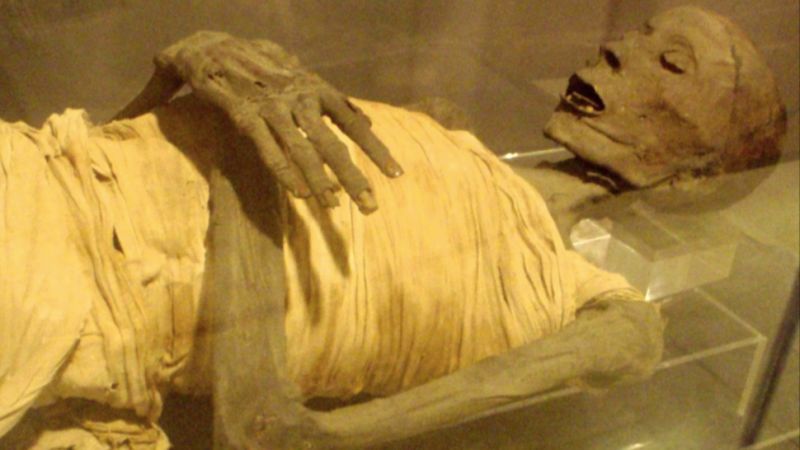
    When most people think of mummies, a strange mixture of ancient curses and toilet paper-wrapped Halloween costumes come to mind. It comes as no surprise that the concept of mummies is linked to the magical and superstitious- after all; it is pretty unbelievable to see intact bodies that are 2,000 years old. How could you not think of zombies or ghosts?

    Like all mysteries, however, mummies actually have a scientific explanation.

    IMG_0779

    Human bodies decay and break down by two major mechanisms: autolysis and putrefaction. Autolysis is essentially a self-destructive process during which enzymes that typically aid in digestion begin to digest the body itself. After this, putrefaction begins when bacteria from the body’s flora or the surrounding environment start to break down the organic matter for their own nutrition, leading to the decomposition of the corpse. The bacteria introduce additional enzymes that continue the liquefaction, and eventually, the body will attract flies and scavengers that can feed on the remains. In order to effectively preserve a body, these processes must be interrupted, or at least slowed significantly. There are several known factors that can do just that:

    • Water content: The bacteria and enzymes need an environment with water; so drying the corpse is essential to its preservation. The drying out of the body is known as desiccation, and can happen naturally in extremely arid environments, like the hot sands of the deserts, or can be chemically induced, like with the Egyptian embalming process, where the bodies were covered natural drying agent named natron.
    • Temperature: In extreme temperatures, especially cold, dry environments, bacteria are unable to survive. In addition, many enzymes denature, or unfold, in extreme environments, and can’t function properly. This slows the decay process down greatly, and can also occur naturally, leading to mummies such as the Iceman found in the Italian Alps. It is actually very similar to the way that your freezer helps you to preserve food!
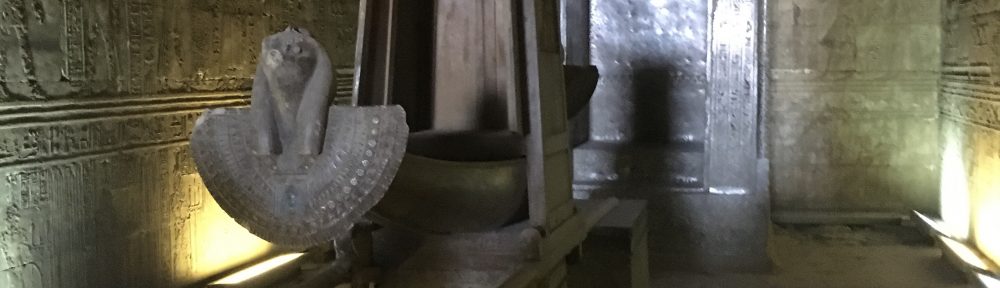
    • Organ Removal: Removing internal organs that contain a large population of bacteria prevent decay from the inside out. This was an important part of the preparation of Egyptian mummies, where most major organs were removed from the body and placed into sacred canopic jars.
    • Chemical Interactions: Many different chemical interactions can contribute to the preservation of human tissue. Some of the most common include:
      • Exposure to heavy metals ions, including copper and arsenic, can lead to the denaturation of the enzymes involved in autolysis, as the metal ions bind to the polypeptides.
      • Lime, calcium oxide, reacts with water and raises the temperature to form calcium hydroxide. This reaction process dries out the body and raises the pH, which can limit the effectiveness of enzymatic activity.
      • Resins can be also be used in mummification, as an antiseptic and as a barrier against rehydration when spread over the skin.


    I hope you found this interesting, and good luck with those linens!


    References:

    Aufderheide, Arthur C. (university Of Minnesota, Duluth), A. (2011). Scientific Study of Mummies. Cambridge University Press.

    Harris, T. (2018, March 08). How Mummies Work. Retrieved from https://science.howstuffworks.com/mummy.htm

  • Fighting Physics

    Fighting Physics

    Though some may view it as violent, martial arts are an integral part of many cultures around the world. While some were created for warfare, such as Indonesia’s Pencak Silat, others, like China’s Kung Fu, were created to be an extension of one’s morals and principles. After centuries of evolution, some aspects of martial arts have been perfected to take full advantage of all the biological levers and pulleys that our bodies are made up of. With physics and data analysis, one can easily find the mechanics of what makes punches and kicks so deadly.

    The Roundhouse Kick

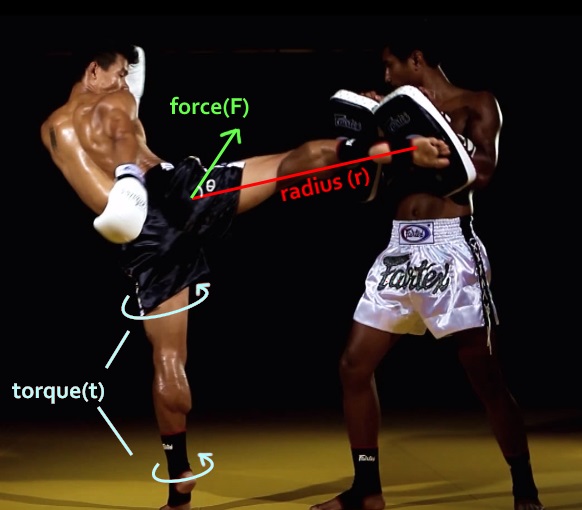
    The roundhouse kick is one of the simplest kicks in martial arts, but it takes full advantage of our built-in body mechanics. The fundamental principles of the roundhouse kick are dependent on the concepts of torque and angular velocity – or rotational force and speed, respectively. Your intuition might tell you that in order to have a stronger kick, you’d either have to put more force into it or make the kick go faster. However, the real question lies in how that’s done.

    The force that is needed to overcome the mass of the leg and cause it to rotate is torque, which is defined as:

                τ = r x F

                            r = length of lever arm

    F = magnitude of force applied


    In the case of a Muay Thai kick (as shown in the video above), the entire leg is swung around in an arc. In a way, the entire leg acts like a baseball bat, rotating around the center of the body. However, torque means nothing in terms of impact strength unless you apply some kind of speed measurement to it. That’s where the equation for power comes in:

                P = τ x ω

                           τ = torque

    ω = angular velocity


    The mechanics involved in a roundhouse kick
    The mechanics involved in a roundhouse kick

    When lifting heavy things, people say that your power comes from your legs. Similarly, when kicking things, your power comes from your hips. Torque is produced by how quickly and how much you rotate your hips and foot, to some extent—you can see this in the feet and hips of the fighter above.

    A study conducted by Colin Gavagan measured the various techniques of experts in Muay Thai, Karate and Taekwondo. He found that the average impact force of a roundhouse kick on a kicking shield from a professional Muay Thai practitioner was 1400 N! The force of this kick is roughly equivalent to a sledgehammer being swung as hard as possible at someone’s body! Through just a simple rotation of the hips and feet, one can deliver kicks strong enough to break bone.


    The Straight Right

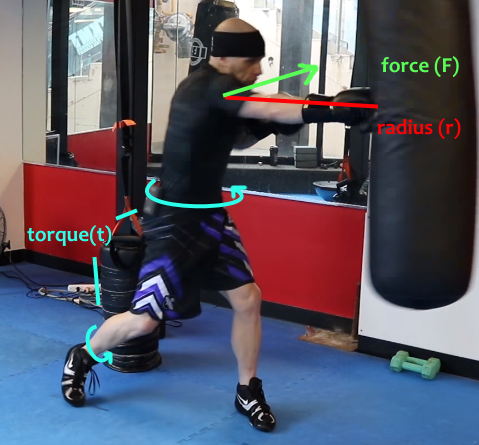
    Similarly to the roundhouse kick, the straight right requires torque in order to generate enough power to do any considerable jab. Something most people may not know, however, is that most of the power from a straight right comes from the legs and hips. Rather than rely solely on the shoulder and arm muscles, a boxer uses his legs and hips to add to the power of his punch.

    The mechanics of a punch are similar to that of a roundhouse kick
    The mechanics of a punch are similar to that of a roundhouse kick

    A punch is at a distinct disadvantage from a roundhouse kick in terms of power, however: a roundhouse kick uses the entire lower leg for contact, while a punch makes contact with only one’s hand. Whereas a leg might weigh 10% of someone’s weight, a fist would reasonably make up only 1%. How does a boxer make up for this difference in weight? The answer lies in the “snap”.

    FΔt = mΔv

    F = magnitude of force applied

    Δt = change in time

    m = mass

    Δv = change in velocity


    Δt stands for the total time it takes for the force to be applied, which in the case of a boxing glove on a punching bag or body, can’t be changed much. However, as the time of impact stays constant, if one increases the speed of their punch one can significantly increase the force of it. By focusing on the extension of the punch in your shoulder and forearm, you can significantly increase the speed your hand. The sheer speed of a punch can make up for it’s lack of mass behind it.

    For such seemingly simple moves, there are so many fundamental processes going on at once that it’s impossible to analyze all the nuances that comprise them! There’s a lot of science that goes into something that, at first glance, seems like a simple punch.


    References:

    Kinoshita, M., Fujii, N. The Analysis of Kinematical Characteristics in Taekwondo Roundhouse Kick. Retrieved from https://ojs.ub.uni-konstanz.de/cpa/article/view/5737

    Estevan, I. Falco, C. 2013 December. Mechanical Analysis of the Roundhouse Kick According to Height and Distance in Taekwondo. Retrieved from https://www.ncbi.nlm.nih.gov/pmc/articles/PMC3944546/

    Gavagan, C., Sayers, M. 2017 August. A biomechanical analysis of the roundhouse kicking technique of expert practitioners: A comparison between the the martial arts disciplines of Muay Thai, Karate, and Taekwondo. Retrieved from http://journals.plos.org/plosone/article?id=10.1371/journal.pone.0182645

  • What’s The Connection Between Complex Chemistry and Islamic Medieval Architecture?

    What’s The Connection Between Complex Chemistry and Islamic Medieval Architecture?


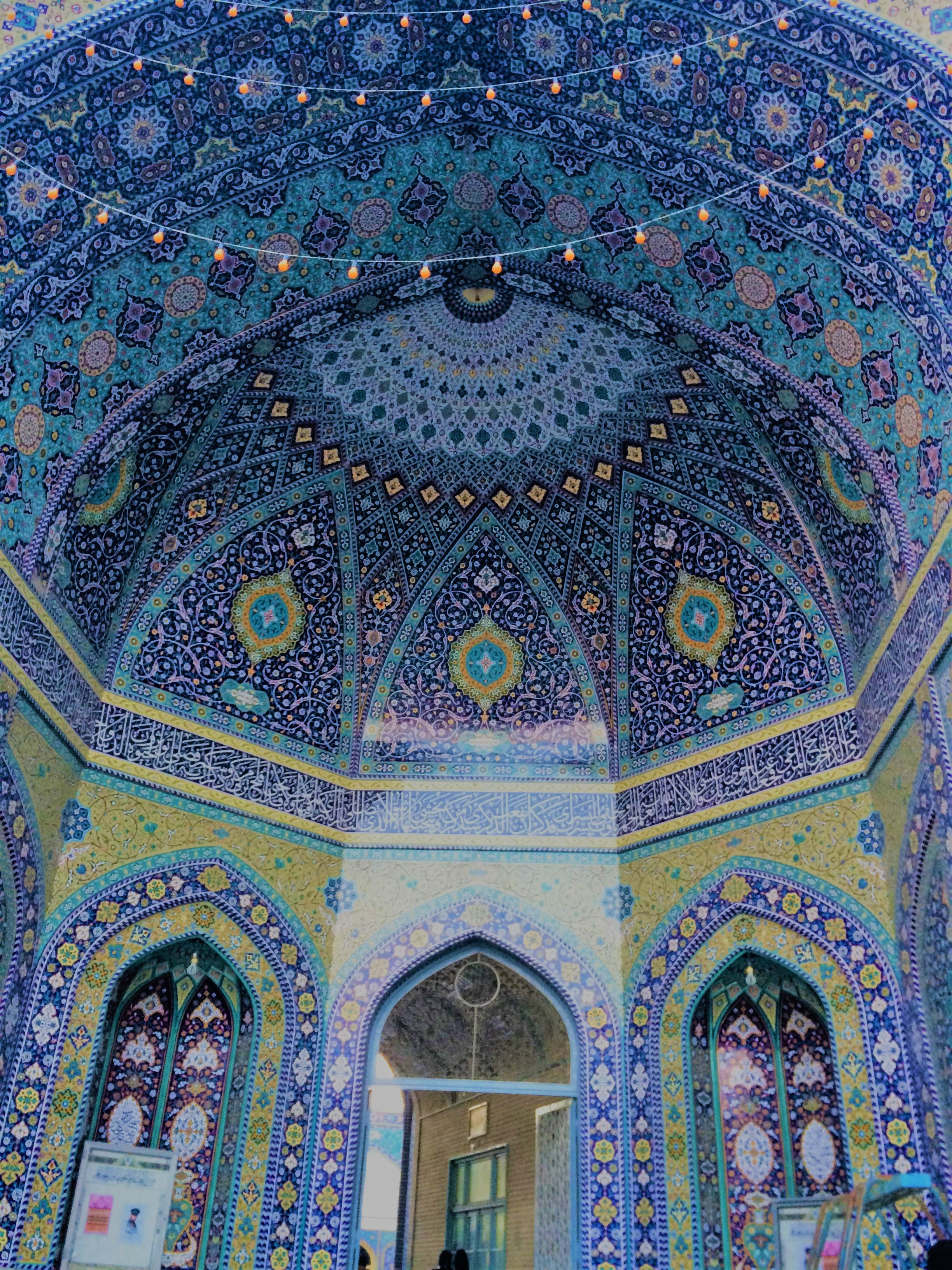
    karbala, iraw


    The expansive domes and minarets of famous mosques such as the Blue Mosque in Istanbul or Al-Masjid An-Nabbi in Medina exude a quiet, powerful energy. Oftentimes these are characterized by a large, stone courtyard. You walk through the simple, colorless path towards the mosque entrance. You feel cleansed, as if you’re leaving a part of the world outside; it’s almost unsettling. At a first glance, you could describe these mosques as plain. Crossing the threshold, however paints a different picture. Your sight is overloaded with bright jewel-toned colors: azure, emerald, turquoise, fuchsia, red. It’s hard to focus on one detail – will it be the gold leaf, intricate etch work, milky marble, shimmering glasswork? You are humbled standing underneath the enormous ceilings.

    The glittering shrines and mosques that characterized medieval Islamic architecture are more than just a pretty sight, but in fact the product of geometrical planning. Aside from the lavish materials and colors, it is the tiling patterns that make the architecture stand out. These patterns are featured prominently in Islamic arts as a substitute for more figurative images. The reasoning was that images depicting people would lead to idol worship. Inside the mosque, you see these tiles plastered densely together on the ceilings, the columns, the minarets, the free wall space.(*)

    Islamic interlacing patterns can be divided into two categories: the arabesque versus girih. While arabesque designs feature more curved elements in an effort to emulate greenery and nature, the girih is composed of geometric lines mostly of stars and polygons with interlaced lines. Muslim architects designed the girih tiling system with only two simple tools: a compass and ruler. These patterns became complex tessellations made up of up to five different shapes: the bowtie, rhombus, pentagon, elongated hexagon, and decagon. Between the 1200s to 1400s, Islamic art developed the girih exhibiting the same complexity as quasi-crystals, a material that defies normal atom packing. Back at the mosque, you trace your fingers along the figurative tiles that blend seamlessly. A lime green pentagon here, an ivory star there.You see that the tiles are made of contrasting colors with a multitude of small shapes.

    Quasi-crystals are made of patterns that look regular but do not repeat exactly. The patterns in Islamic architecture demonstrate this by including “tessellations” that have five, ten, and twelve-fold symmetry. Technically, they are are not actually patterns, but just appear to be so. Scientists conjecture that Islamic architects wanted the effect of extend a pattern without just repeating images. Looking up at some of the mosques ceilings confirms the success of this design – you feel as if you are swallowed by the dizzying depths of shimmering oceans and bright stars.500 years later mathematical physicist, Roger Penrose at University of Oxford discovered the concept of quasi-aperiodic tiling. Sir Penrose stumbled upon a pair of tiles that cannot form a pattern in a periodic manner. This discovery was just a consequence of his work on the famous tiling pattern in mathematics – “given a collection of polygonal shapes, is it possible to cover the whole plane using just these shapes, with no overlaps?”

    Quasicrystals are found mostly in metallic alloys such as (Al-Li-Cu), and lack translational symmetry. The discovery of the non-symmetrical packing of atoms took a while for the scientific community to accept. Although first discovered in the 1960s, much of the scientific community refused to believe that materials could consist of irregular atomic structure. Next, materials scientist, Dr. Dan Shectman, designed an artificial alloy with quasi-crystal properties. He did not publish his results for years because he feared that others would ridicule his work.  Only after researcheres found a  natural quasi-crystal, icosahedrite in the Koryak Mountains, Russia in 2009 that led people to be convinced. Shectman received the Nobel Prize in Chemistry in 2011 for this work.

    Researchers connected Islamic girih and quasi-crystals recently; Dr. Peter Lu a physicist from Harvard University recognized ten-fold symmetry in architectural motifs while visiting Uzbekistan.  He analyzed 3700 Penrose tiles found in an archive of documented medieval Islamic architecture, and published a paper with Princeton University’s Dr. Paul Steinhardt titled ”Decagonal and Quasi-Crystalline Tilings in Medieval Islamic Architecture”. Dr. Lu uses the Darb-I-Imam Shrine in Iran as the iconic “near perfect” example of Penrose tiling. He conjectures that laborers could easily have created mathematically complex patterns by lining tiles decorated with lines that, once set down next to each other, form a continuous pattern.

    Back at the mosque – you see a worshipper prostrated to the ground, oblivious of the art around them. Their hearts disconnected from the ancient mathematics and chemical mimicry in which they are enclosed in. Science and spirituality; a Nobel prize in chemistry yet also an artform. These two paradigms reside side by side in the glorious, kaleidoscopic patterns of centuries old Islamic architecture. There is an elegance in the scales that aperiodic tiling has reached – from the utterly microscopic crystals to the gigantic mosques that can hold thousands of people.