Category: Articles

  • Your All In One Companion

    Your All In One Companion

    Regardless of time or location, entertainment has always thrived because people instinctively seek ways to take care of their mental well-being. Unlike robots, humans need to rest. It’s not just about physical relaxation, but also emotional recovery. Some people empty their minds through sports. Others escape into alternative reality in books, movies, or games. Some enjoy spending their time alone, while others seek kinship and companionship. However, what happens when other people (even family and friends) are the sources of their problems?

    For many, the answer is pets! Pets offer different types of comfort through companionship. But how did this relationship start?


    The First Pets

    According to National Geographic, domestication first started around 10,000-12,000 years ago in the Middle East; humans started to grow wild plants that are useful for food and clothing (‘National Geographic”, n.d). As the idea spread across Europe, Africa, and other continents, useful animals were chosen to be bred and domesticated. Dogs and horses helped in hunting and transportation. Sheep, goats, and cows provide high-valued products. Domestication makes life easier – and not so long later, survival is no longer the only goal.

    As civilization advanced, the relationship between humans and animals shifted. Aside from those still used in wars like horses and elephants, domesticated animals such as dogs moved from hunting tasks to guarding home. Cats, interestingly, might have chosen humans first. Around 7,500 years ago, cats moved into human villages because they liked the good source of rodents. Eventually, humans embraced the idea because they found cats less destructive than previous pest control animals such as weasels or stoats (Holz, 2021). In some cultures such as ancient Egypt, cats (and their relatives) were even associated with divinity, royalty, or nobility. In a way, it feels like cats domesticated humans, not the other way around. 


    Pets in Recent Decades

    With urbanization and advanced technology, humans no longer need animals for survival tasks. We have security technology instead of dogs, traps against rodents work as efficiently as cats, and mail delivery which works with more accuracy than messenger birds. Yet, why would pets still be found around the neighborhood and inside houses? Pets remain for their companionship and emotional support.

    In general, continuity plays a role. If someone’s great-grandparents, grandparents, and parents have been growing up with pets, they likely will too. The descendants of those pets likely become that person’s siblings. In a study done by Leora Lawton, a researcher from University of California, 97% of pet owners in the United States see their pets as family members (2025). Humans have lived with them for way too long to part ways. After thousands of years together, pets are now part of the family.


    Pets in 20th Century and Beyond

    Today, pets can fill in the absence of household members. They can substitute for the lack of a partner, children, siblings, or guardians as social companions and emotional support (Lawton, 2025). This is rather important as different types of households only get more diverse over time. Among pet owners, many of them are families with children where pets can comfort, protect, and teach them just like an older sibling or a guardian. However, when raising children has become an expensive luxury, pets are the affordable substitutions (but not exactly without parenthood duties!). In particular, households without children such as single adults or couples cannot have children treat pets as children or an understanding companion (Lawton, 2025). The boundary between human and pet is now blurry.

    As more humans view pets as family, the concern about their wellness has grown. Surprisingly, this idea has been going around for a while. Just like humans, there are clinics, shelters, and adoption centers for pets. There were an increasing number of spaces designated for pets, such as streets and dog parks (Lawton, 2025). Grocery stores and even restaurants now allow pets to be inside and offer healthy food options. Pet (usually cat) cafes are also gaining popularity. First store opened in Taiwan in 1998, then to Japan, other Asian countries and spread to the rest of the world (Lawton, 2025). They are cafes that provide interactions with pets, and for some, work as an adoption center. Pets’ health is being taken care of by those that love them, and their presence always has a place in society.


    Pets and Their Owners

    Research also suggests that pets improve physical and mental health. Martins and colleagues from Portugal researched how pets improve quality of life. Data from 49 of their studies conclude that pets influence their owners’ physical activity. In particular, owners show a higher frequency of physical activity than non-owners (Martins et al., 2023). Increasing physical activities are strongly linked with improving the owners’ mental wellness.

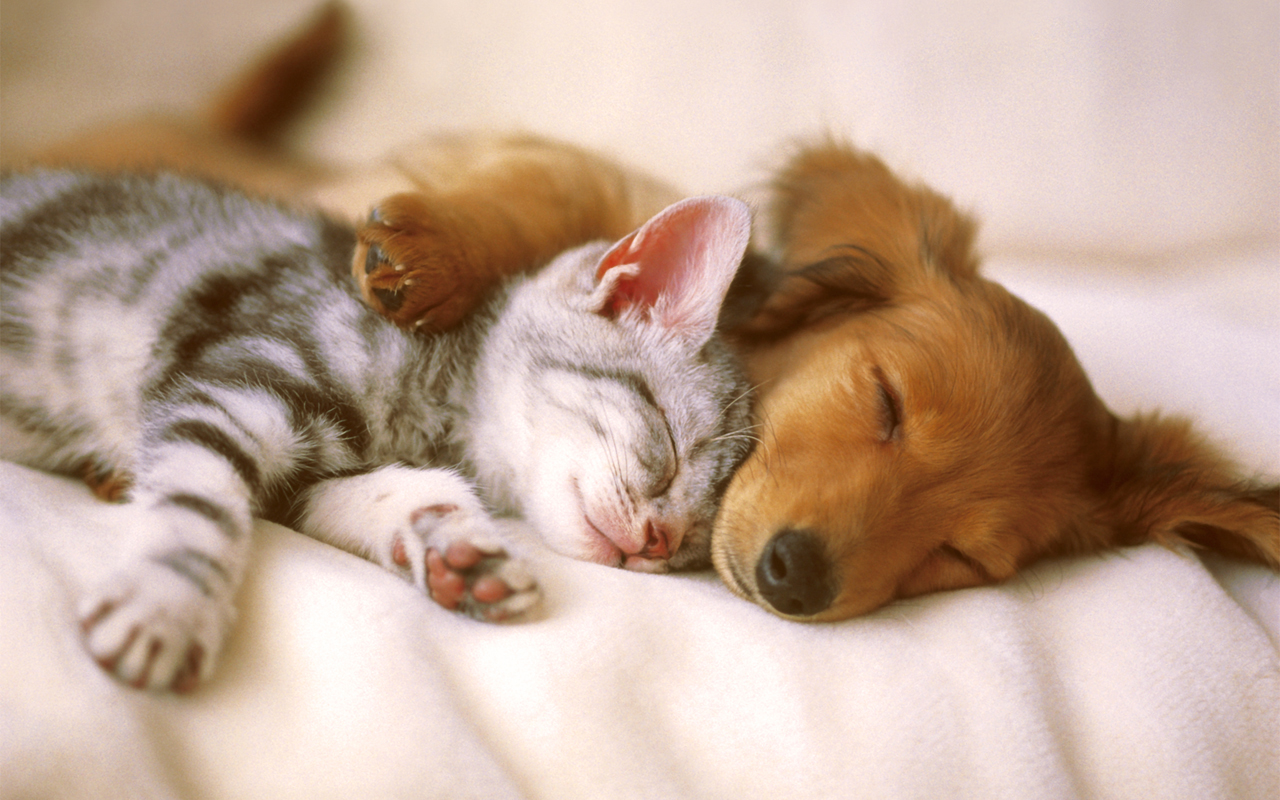
    Different pets have different lifestyles. Dogs are social animals, so they fit well in families with children or individuals who participate in regular activities. Most cats are independent and like to be indoors, leaving owners with flexible career choices (Lawton, 2025). Mixed-pet households (most common is cat and dog), usually happen when two households with pets become one family. These pets and their interaction bring enormous joy to other family members.

    Unfortunately, many people cannot own pets due to career, finance, housing, or not having energy to take care of another living being. Much like children, pets cannot take care of themselves and require a fitting environment. Pets have personalities and preferences too! For these people, they can cope by different means. Alternative choices are pet cafes, caring for stray animals, or even watching animal videos. Some studies suggest that pet videos and images may influence mental health via modulation of emotion processing (Zhu et al., 2026). In fact, there are many young people who were inspired by these contents to adopt pets. Fortunately, educational videos help introduce responsibilities of pet owners, reducing the risk of pet negligence and abandonment.


    Afterthought

    Every semester, Georgia Tech hosts a pet therapy event in collaboration with GT parents and their pups. That was a very considerate gesture to students with stressful academic life who cannot keep pets in dorms. These events highlight how pets are powerful contributors to mental wellness.

    Though dogs and cats are the most common companions, nowadays pets can be any legal animals – birds, reptiles (snake, lizards), fish, horse, or even spiders! The list went on and there’s always at least one that would surprise you. The bonding between the human and that animal can be formed not just based on their species, but rather their connection and understanding of one another. If you ever own a pet, or if a pet chooses you, which one do you imagine it would be?


    References:

    Holz, S. (2021, March 23). Animal House: Pets of the ancient world. Sarah Holz. https://sarahholz.com/2021/03/23/animal-house-pets-of-the-ancient-world/

    Lawton, L. E. (2025). All in the family: Pets and family structure. Populations, 1(2), 8. https://doi.org/10.3390/populations1020008

    Martins, C. F., Soares, J. P., Cortinhas, A., Silva, L., Cardoso, L., Pires, M. A., & Mota, M. P. (2023). Pet’s influence on humans’ daily physical activity and Mental Health: A meta-analysis. Frontiers in Public Health, 11. https://doi.org/10.3389/fpubh.2023.1196199

    National Geographic. (n.d.). Domestication origins. Education. https://education.nationalgeographic.org/resource/domestication-origins/

    YukiKoKo. (2010). Dog and Cat. Wikimedia Commons. Retrieved from https://commons.wikimedia.org/wiki/File:Dog_and_cat_(4985392932).jpg.

    Zhu, X., Shi, X., Liang, J., Sun, B., Lin, W., & Lin, J. (2026). The impact of pet videos on emotional face processing. European Journal of Investigation in Health, Psychology and Education, 16(2), 21. https://doi.org/10.3390/ejihpe16020021
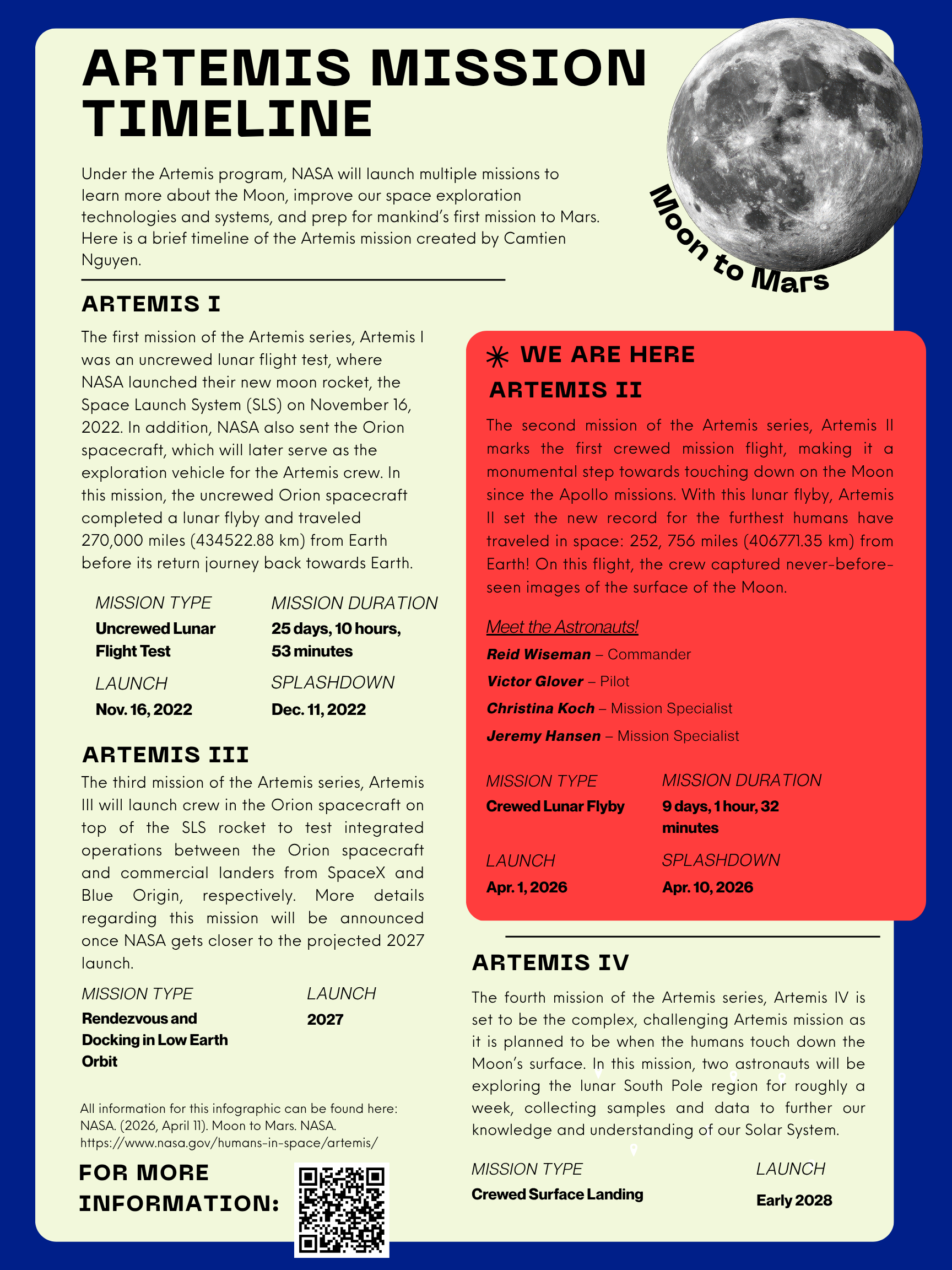
     

  • From The Moon to Mars! (Artemis Mission Timeline)

    From The Moon to Mars! (Artemis Mission Timeline)

    To revive human exploration into deep space, it’s only natural that we learn more about our Moon before we venture further out of our Solar System. It’s been 50 years since we’ve sent astronauts into deep space, so these Moon missions will help scientists and engineers to develop and improve current infrastructures and systems for deep space travel (Creech et al., 2022). By studying geology and collecting samples from the Moon’s surface, we can learn more about “planetary processes, the impact history of our Earth-Moon system, and the history of our Sun” (Creech et al., 2022).

    I attached an infographic that I made for the Artemis mission. All the information on this infographic can be found on NASA’s website!

    References:

    Creech, S., Guidi, J., & Elburn, D. (2022). Artemis: An overview of NASA’s activities to return humans to the Moon. 2022 IEEE Aerospace Conference (AERO), 1–7. https://doi.org/10.1109/aero53065.2022.9843277

    NASA. (2026, April 11). Moon to Mars. NASA. https://www.nasa.gov/humans-in-space/artemis/

  • War of the Apes: Chimpanzee Civil War and the Evolution of Conflict

    War of the Apes: Chimpanzee Civil War and the Evolution of Conflict

    Conflict and civil war have been an ever-constant presence in humanity, but they are not uniquely human phenomena. For the first time, researchers have described in detail the way that a chimpanzee group fissioned—or split—into two groups. Notably, the members of one group then began to violently attack the other group, killing chimpanzees that had been their groupmates only a few years ago.

    Some background: conflict and warfare in animals

    Human warfare is driven by a variety of factors, including our ability to readily develop cultural groups that then form strong ingroup attachments and outgroup hostility (Efferson et al., 2008). In other words, we readily form groups and show favoritism towards people who we consider to be also in the same group, while we are much less favorable towards people who we view as not in the group. Cultural differences can then become a driver of conflict.

    However, culture—language, social norms, ethnicity, religion, ideology, etc.—are distinctively human concepts. Nonhuman animals that also live in social groups, such as lions and wolves, can also have lethal, humanlike “wars” over issues like territory (Mosser & Packer, 2009; Cubaynes et al., 2014). Such animals notably do not have cultural markers in the same way humans do, and their conflicts are definitively driven by other factors, which can provide some insight into how group conflicts have evolved.

    But what about conflict that emerges from within a group? Somehow, ingroup morphs into outgroup. This happens in humans, but social animals can also experience permanent divisions in their groups, where the original group splinters into two distinct groups. Those divisions often occur mainly because of environmental reasons, such as competition over food, and the two groups formed after the split typically do not attack and kill each other (Sandel et al., 2026).

    One notable exception to this is a group of chimpanzees at Gombe, Tanzania, which permanently split into two groups in the 1970s. Males from one group, over the course of four years, killed all six males and one female in the other group. This is exceedingly rare—estimated to only occur roughly once every 500 years—and exactly how and why it happened is unclear: researchers at the time provided food to the chimpanzees, and certain details of the split are unclear due to their limited observations of the primates (Langergraber et al., 2014; Sandel et al., 2026).

    Chimp civil war

    Chimpanzees (Pan troglodytes), along with bonobos (Pan paniscus), are the closest animal relatives we humans have. Chimpanzees live in social groups, with males staying in the same social group for their entire lives, occasionally venturing out to attack other groups and expand their own territory (Mitani et al., 2010). Male chimpanzees mainly attack and kill male chimpanzees in other groups, but lethal violence can also erupt between chimpanzees in the same group, as seen with the Gombe group (Wilson et al., 2014). As such, studying their social behaviors may lend insight into our own.

    In their study published in 2026, Aaron Sandel and colleagues analyzed data from a group of over 200 chimpanzees, known as the Ngogo chimpanzees, in Kibale National Park, Uganda. Starting from 1998, the researchers tracked the movements of the Ngogo chimpanzees by recording the interactions the of the adult male chimpanzees of the group. Initially, from 1998 until 2014, the Ngogo chimpanzees were one cohesive group, with chimpanzees living, patrolling, feeding, and mating together. Subgroups of the main group existed, with a Western cluster and a Central cluster, but on average every year, almost a third of the chimpanzees would switch between the clusters, and almost half the infants conceived were by chimpanzees from different clusters.

    But this began to change in 2015, which would be the first sign of the fission of the Ngogo group. The group suddenly began to polarize. Chimpanzees in the Western cluster interacted more with each other and less with chimpanzees in the Central cluster, and vice versa. The clusters also increasingly stayed in only their region of the territory and began actively avoiding each other. After this year, infants were also only conceived by males and females in the same group.

    In 2016, the two clusters began to patrol their own territories, guarding against the other group, and in 2017, the two groups had increasingly hostile and violent encounters. In 2018, Ngogo chimpanzees permanently split into two groups, the Western group and the Central group.

    After this fission, despite consisting of less individuals, the Western group would regularly perform territorial patrols into the Central group’s territory, killing at least six adult males. In 2021, the Western group also started attacking infants, killing at least 14.

    It’s worth mentioning again that only a few years ago, these chimpanzees were all members of one cohesive group. This is emphasized in this one example highlighted by the researchers. In 2015, a group of Ngogo males, including three future Western males and one future Central male, patrolled together and showed friendly social interactions, such as embracing each other for reassurance. In 2019, a group of Western males, including the same three males, attacked and killed the Central male that they patrolled with less than 4 years prior.

    Why did this happen?

    The researchers proposed a few reasons why this fission happened.

    First, the original Ngogo group consisted of almost 200 individuals, and many males. With this large group, maintaining relationships with all the other chimpanzees in the group is impossible, and the large number of males in the group (30) meant that there was increased competition between the male chimpanzees.

    Additionally, a new alpha male rose to power in the group in 2015, at the same time the group began to polarize. Although both the previous alpha male and the new alpha male were part of the Central group, this change could have increased the instability and tension of the group.

    Lastly, the split may have been caused in part by deaths of certain chimpanzees who acted as important nodes in the network of relationships in the group. The deaths of those chimps may have weakened relationships across the group and facilitated the fission. For example, in 2014, just before the beginning of the polarization, five adult males and one adult female died. In 2017, as the group was already beginning to divide, 25 chimpanzees in the group died in an epidemic, including an adult male that was one of the last individuals that connected the two groups. The deaths of these individuals could have weakened the relationships between the two clusters, effectively helping cleave the original Ngogo group into the Central and Western group.

    What does this mean?

    According to the researchers, this violence is notable because it shows us how aggression and group identity forms in chimpanzees and how group conflicts develop in the absence of cultural factors.

    Typically, as male chimpanzees stay in the same group their entire lives, they behave aggressively towards strangers. However, as the attacks described were towards chimpanzees they already knew, it shows that group identity in chimpanzees can be flexible and is controlled by other factors, beyond just familiarity.

    This study also describes how relationship dynamics can play a major role in group conflicts. Although not to the scale of human wars, this “civil war” between the Ngogo chimpanzees shows how a major group conflict can stem from the dissolution of relationships between individuals. If the right (or rather wrong) relationships are broken, the unity of a group may also soon be in jeopardy, even without cultural factors like ethnicity and religion.

    The fission of the Ngogo chimpanzees can feel like an omen of our future as humans, forever violent and marked by splintering factions. But it’s worth remembering that we humans are capable of violence but also of empathy. Even comparatively violent, conflict-prone chimpanzees show empathetic actions. Chimpanzee bystanders of a fight will go to comfort the losing chimp afterwards, and chimps can also show reconciliatory behaviors after a fight, such as holding hands, embracing, or kissing (De Waal, 2012; De Waal, 2000).

    As James Brooks notes in his 2026 perspective article on the study, we can also turn to look at our other, equally close great ape relative, the bonobo. Once thought to be a subspecies of chimpanzees, bonobos are much more peaceful: even though bonobos live in social groups, the groups do not violently interact. Bonobos not only form cooperative relationships within their own groups but also with individuals from other groups (Samuni & Surbeck, 2023). Lastly, even though bonobo groups can permanently split, it doesn’t result in the violence seen in the Ngogo fission. A group of bonobos in Wamba, Democratic Republic of the Congo permanently split almost 50 years ago, but continue to peacefully coexist (Brooks, 2026; Kuroda, 2023).

    Overall, this study shows that conflict emerges even in the absence of cultural markers—instead, a key factor of group conflict might lie in the way social relationships form, are maintained, and break down. As such, this can also be reversed, as those basic social processes might also be a way to approach conflict resolution. By better understanding the way in which a group splits into warring factions, we can also make headway into understanding how to prevent and resolve such instances from occurring in ourselves.

    Indeed, as the researchers state in the closing of their paper, “it may be in the small, daily acts of reconciliation and reunion between individuals that we find opportunities for peace.”

    Writing by Joyce Ma

    Picture by © Giles Laurent, gileslaurent.com, License CC BY-SA, CC BY-SA 4.0, https://commons.wikimedia.org/w/index.php?curid=134376811


    References

    Brooks, J. (2026). Civil war among wild chimpanzees. Science, 392(6794), 146–147. https://doi.org/10.1126/science.aeg6719

    Cubaynes, S., MacNulty, D. R., Stahler, D. R., Quimby, K. A., Smith, D. W., & Coulson, T. (2014). Density‐dependent intraspecific aggression regulates survival in northern Yellowstone wolves (Canis lupus). Journal of Animal Ecology, 83(6), 1344–1356. https://doi.org/10.1111/1365-2656.12238

    De Waal, F. B. M. (2000). Primates–A natural heritage of conflict resolution. Science, 289(5479), 586–590. https://doi.org/10.1126/science.289.5479.586

    De Waal, F. B. M. (2012). The antiquity of empathy. Science, 336(6083), 874–876. https://doi.org/10.1126/science.1220999

    Efferson, C., Lalive, R., & Fehr, E. (2008). The coevolution of cultural groups and ingroup favoritism. Science, 321(5897), 1844–1849. https://doi.org/10.1126/science.1155805

    Kuroda, S. (2023). From the Early Days of Bonobo Research. In Bonobos and People at Wamba: 50 Years of Research (pp. 25–37). https://doi.org/10.1007/978-981-99-4788-1_2

    Langergraber, K. E., Rowney, C., Schubert, G., Crockford, C., Hobaiter, C., Wittig, R., Wrangham, R. W., Zuberbühler, K., & Vigilant, L. (2014). How old are chimpanzee communities? Time to the most recent common ancestor of the Y-chromosome in highly patrilocal societies. Journal of Human Evolution, 69, 1–7. https://doi.org/10.1016/j.jhevol.2013.12.005

    Mitani, J. C., Watts, D. P., & Amsler, S. J. (2010). Lethal intergroup aggression leads to territorial expansion in wild chimpanzees. Current Biology, 20(12), R507–R508. https://doi.org/10.1016/j.cub.2010.04.021

    Mosser, A., & Packer, C. (2009). Group territoriality and the benefits of sociality in the African lion, Panthera leo. Animal Behaviour, 78(2), 359–370. https://doi.org/10.1016/j.anbehav.2009.04.024

    Samuni, L., & Surbeck, M. (2023). Cooperation across social borders in bonobos. Science, 382(6672), 805–809. https://doi.org/10.1126/science.adg0844

    Sandel, A. A., He, Y., Ren, J., Kei, Y. L., Lee, K. C., Clark, I. R., Reddy, R. B., Negrey, J. D., Birungi, C., Apamaku, B. A., Kanweri, D., Kalunga, D., Aliganyira, C., Ramírez-Amaya, S., Nakayima, P., Katumba, R., Kamugyisha, B., Acosta-Florez, D., Van Boekholt, B., . . . Mitani, J. C. (2026). Lethal conflict after group fission in wild chimpanzees. Science, 392(6794), 216–220. https://doi.org/10.1126/science.adz4944

    Wilson, M. L., Boesch, C., Fruth, B., Furuichi, T., Gilby, I. C., Hashimoto, C., Hobaiter, C. L., Hohmann, G., Itoh, N., Koops, K., Lloyd, J. N., Matsuzawa, T., Mitani, J. C., Mjungu, D. C., Morgan, D., Muller, M. N., Mundry, R., Nakamura, M., Pruetz, J., . . . Wrangham, R. W. (2014). Lethal aggression in Pan is better explained by adaptive strategies than human impacts. Nature, 513(7518), 414–417. https://doi.org/10.1038/nature13727

  • Color, Emotions, and Filmmaking

    Color, Emotions, and Filmmaking

    I’m making a short film! I’m taking Video Production (LMC3406) this semester, and it’s been an absolute blast! To be completely honest, it was the class I looked forward to the most every week. I love how human the filmmaking process is, and I found a lot of fulfillment working with my classmates and bringing our individual visions to life with one short film each lab (class).

    The final project for the class is to write, produce, and direct a short film about whatever we want (minimum 2 mins, maximum 10 mins). Since pre-production, I’ve wanted to write a story that’s relatable, whimsical, and simple/practical to execute, because I wasn’t sure I would be able to recruit enough people and/or schedule/organize filming around several people’s schedules. My short film is based on my own story. It follows two characters, my boyfriend and I, on an aquarium date! Even though I was more interested in cinematography than writing a complex story, I felt my short film could use a bit more substance, so towards the end, the two characters share this conversation about the fear of the future and living life fully. 

    For this film, I wanted it to feel nostalgic, wholesome, heartwarming, and bittersweet. I wanted the viewer to feel comforted and hopeful. While I’m not done editing my short film, I can show a comparison with stills and how color can change the mood of a scene. 

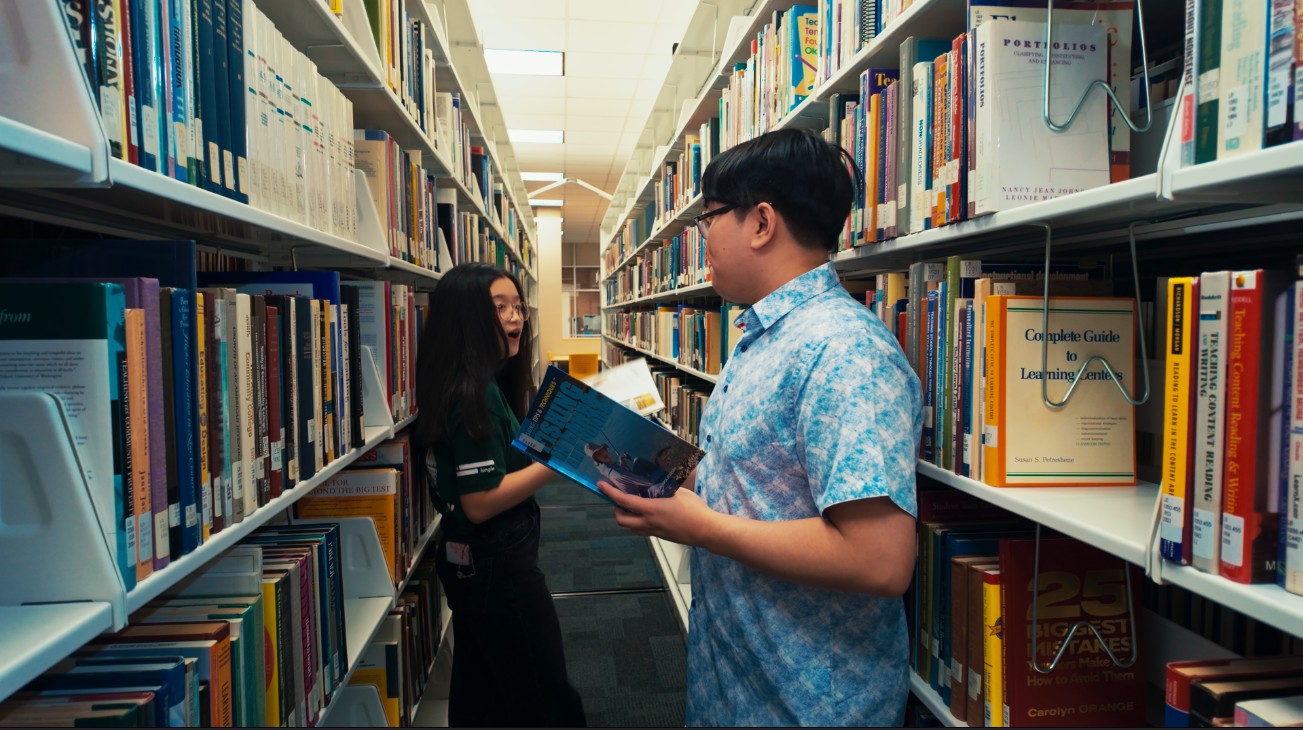
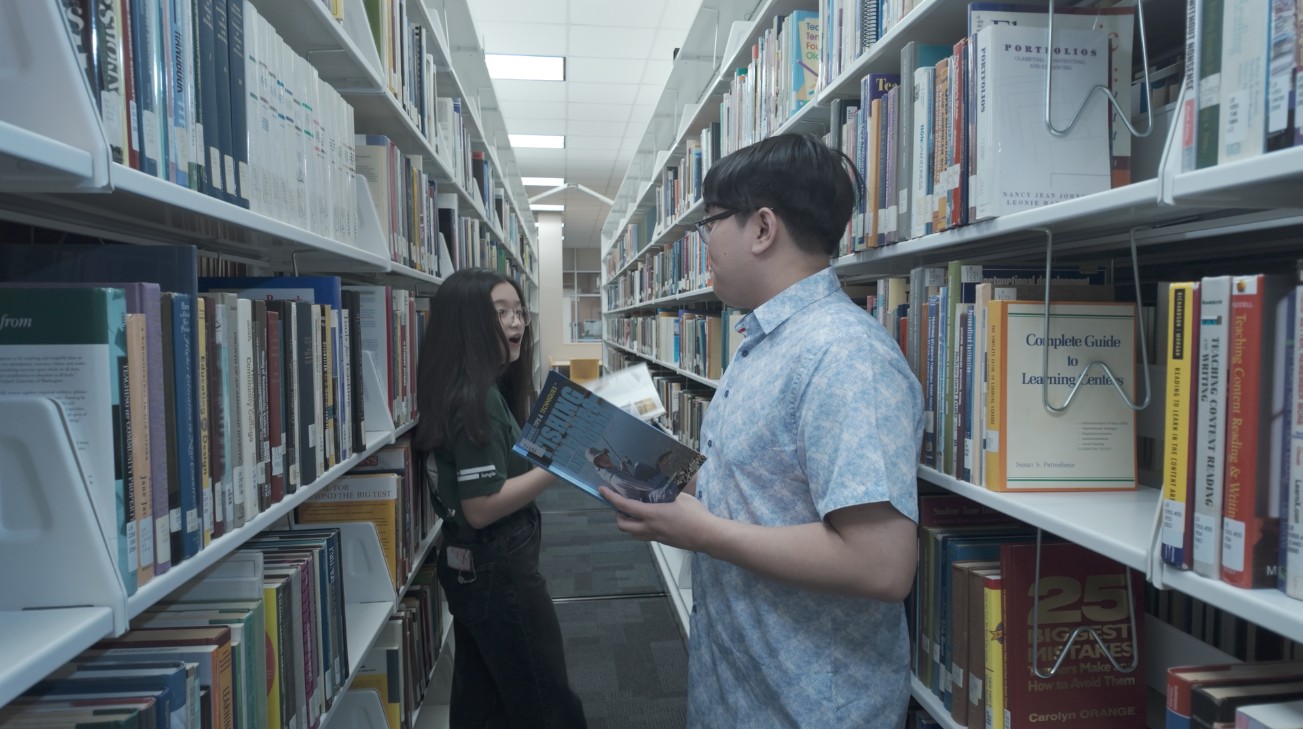
    These are some screenshots from Davinci Resolve, the video-editing software I’m using to film my project, and what you see here is the log footage and two color-graded versions of the log footage. 

    Screenshot of log footage from my short film
    Colograde Ver 1
    Colorgrade Ver 2

    In the first color-graded version, the scene is more warm-toned. The colors are vibrant, the yellows and oranges are strong and visible, whereas with the second color-graded version, the scene is more cool-toned. The colors there lean more blue, the skin appears pale, and the scene is less saturated and devoid of color. 

    Two researchers conducted a comprehensive systematic review of the results from 132 empirical articles on color-emotion connections. For instance, warm colors such as yellow and orange were “linked to positive and high arousal emotions (e.g., happiness, pleasure, fun, excitement, surprise)” (Jonauskaite & Mohr, 2025). In some studies, blue was found to be linked to positive (“comfort, happiness, relaxation”) and negative (“sadness”) emotions (Jonauskaite & Mohr, 2025). According to a different study, brighter and more saturated colors were found to be more pleasant than desaturated colors (Pazda et al., 2024).

    The colors of a scene can greatly affect the mood and evoke certain emotions. The next time you watch a show or movie, pay attention to the choice of colors and the possible intentions behind it!

    References:

    Jonauskaite, D., & Mohr, C. (2025). Do we feel colours? A systematic review of 128 years of psychological research linking colours and emotions. Psychonomic Bulletin & Review, 32(4), 1457–1486. https://doi.org/10.3758/s13423-024-02615-z

    Pazda, A. D., Thorstenson, C. A., & Fetterman, A. K. (2024). Colorfulness influences perceptions of valence and arousal. Journal of Experimental Psychology: General, 153(1), 145–158. https://doi.org/10.1037/xge0001484
  • Turning a Creature into a Cute Character Design

    Turning a Creature into a Cute Character Design

    If your Instagram discover page is full of posts from digital artists like mine is, there’s a decent chance you may have come across posts by an artist named Feefal (@feefal). Feefal is a very popular illustrator on Instagram, with 1.2 million followers and most of their posts gaining tens of thousands of likes and hundreds of thousands of views on Reels. Feefal describes herself as a lover of biology and cute women, which is reflected in the subject matter of the bulk of her illustrations. For example, one of her pinned posts, and the first post of hers I came across in 2023, can be described as “plant, animal, and fungi cells but they’re personified as women.”

    There are many artists who do the same types of illustrations as Feefal where they turn creatures, objects, or even vague ideas into a personified character design. As someone with an interest in both biology and drawing, I wanted to try my own hand at creating an illustration where I turn a creature into a character. 

    In keeping with my theme about sea creatures from my previous post, I chose to base my character design on Pelagia noctiluca, a species of jellyfish that is referred to by many common names, the most popular being “mauve stinger”. A fun nickname I’ve also seen for it is the “purple people eater” (yes, like the song).

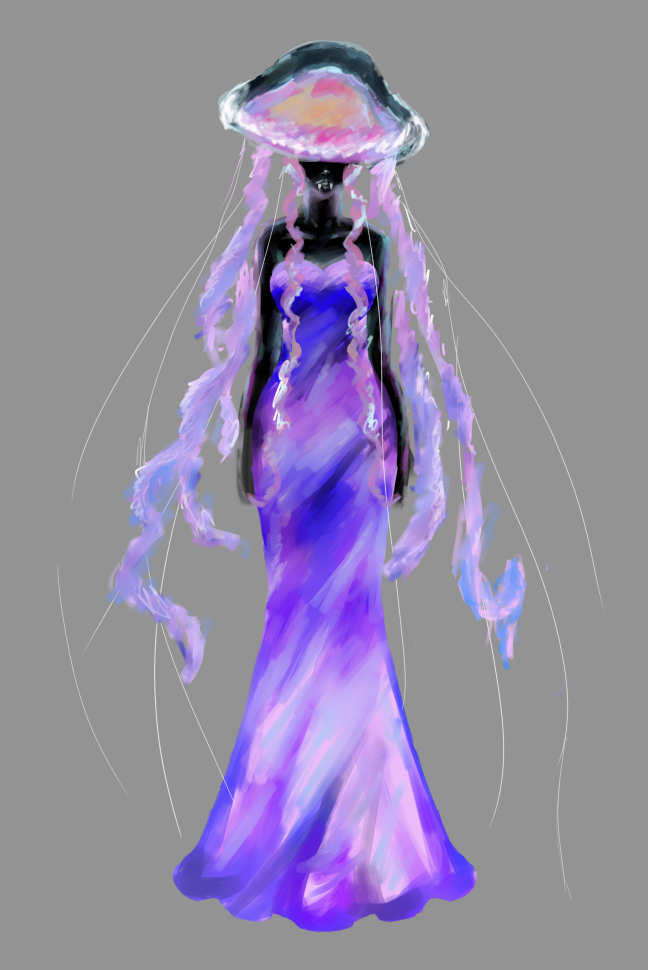
    Taking both morphology and cool facts I read about them into account, this is what I came up (with with the help of my boyfriend, who asked to help and I couldn’t refuse):

    Illustration by Priyanka Singh and Kojo Ching

    This is the part where I explain my design decisions while telling you cool facts about P. noctiluca. 

    • Hat: Obviously, this is meant to represent the bell, or umbrella, of the jellyfish. It is the main body of the jellyfish where the tentacles branch off from. A jellyfish’s mouth lies in the center of the underside of its umbrella, surrounded by oral arms (we’ll get to those in a second) (Macpherson & Gordon, 2023). You’ll notice that jellyfish have no eyes, so I made the bell-hat cover her eyes. I accept criticisms of this choice as lazy, as I basically just draw a jellyfish on this woman’s head. But will you dare tell her it’s not a look?
    • Dress: Along with the hair-tentacles coming out from the “hat”, this is supposed to be somewhat evocative of the tentacles of the jellyfish with its flowy nature. The mermaid dress silhouette is also supposed to evoke a nautical theme. The mauve stinger has two types of tentacles: thin, string-like ones called statocysts and thicker, frilly ribbon-like ones called oral arms. It has 8 statocysts and 4 oral arms. Statocysts are used for sensing movement and orienting the jellyfish. Oral arms extend from the mouth, contain nematocysts, and aid in prey capture (Macpherson & Gordon, 2023). The sting of a mauve stinger is somewhat severe, although there have not been any fatalities due to their stings (Mariottini et al., 2008).
    • Skin: The skin and the dark parts around the cap are supposed to represent the semi-translucent, soft body of the jellyfish, with the darkness being the ocean showing through.
    • Sharp teeth: I took some creative liberties with this part. No, jellyfish don’t have razor-sharp fangs. Instead, this is supposed to represent the purple people-eater’s predatory nature. They’re said to be opportunistic predators that mainly feed on small phytoplankton, although they can eat prey of various sizes. They can even eat over 1.5 times their body weight in a day. (Larson, 1987). Don’t worry, at least they don’t actually eat people!


    References:

    Macpherson, D., Gordon, D. (2023). Jiggling Jellyfish: a guide to the jellyfish of New Zealand. (Version 2). National Institute of Water and Atmospheric Research (NIWA). 

    Mariottini, G.L., Giacco, E., Pane, L. (2008). The Mauve Stinger Pelagia noctiluca (Forsskål, 1775). Distribution, Ecology, Toxicity and Epidemiology of Stings. A Review. Mar. Drugs, 6(3): 496-513. doi: 10.3390/md20080025

    Larson, R.J. (1987). A Note on the Feeding, Growth, and Reproduction of the Epipelagic Scyphomedusa Pelagia noctiluca (Forskal). Biological Oceanography, 4(4). 

  • The Price of Being Too Good Too Soon

    The Price of Being Too Good Too Soon

    As sports have become increasingly globalized, the race to become the best has intensified, with athletes from across the world competing against each other, many training year-round, every day to sharpen their craft and become the next great success story. Personally, I began playing soccer at three. I played in high-level tournaments across the country, traveling to states like Texas and California and playing against the best amateur and youth players the country had to offer. I practiced daily up until high school, and hundreds of thousands of people share similar experiences, dedicating thousands of hours to their favorite sports.

    Youth Sports Environment

    In basketball, AAU circuits now push athletes as young as 10 into professional-like schedules where they train with NBA trainers, do NBA drills, play with multiple teams, and play in tournaments every weekend. In football, kids hit the weight room as early as middle school, training daily to become the strongest and the fastest versions of themselves. Olympic skater Alysa Liu recalls that her childhood training regimen at times prevented her from drinking water and ultimately prompted her to retire from skating at 16, illustrating how early specialization can push athletes beyond healthy limits (Yahoo Sports, 2024).

    Science Behind Excess Training

    You may think this intensive, clear‑cut training style produces the best athletes and leads to the greatest amount of success, as Alysa Liu has two Olympic gold medals, and LaMelo Ball (the figurehead of modern AAU basketball has enjoyed great success in the NBA); however, pediatric biomechanics and physiology research illustrates that early sports specialization increases the risk of overuse injuries chronic fatigue, and psychological burnount. According to studies by Luo et al. (2025) and Post et al. (2021), younger athletes who focus on a single sport before age 14 sustain twice as many joint or tendon injuries as their multisport peers.

    Children have different musculoskeletal systems, so early practices pose a greater risk. Children have open growth plates, more elastic tendons, and incomplete neuromuscular coordination. Repetitive movements, such as pitching, sprinting, jumping, or kicking, cause micro-damage to accumulate faster than it can be repaired (Johns Hopkins Medicine, 2024). In baseball, pitchers are explicitly warned against pitching too often because throwing stresses the rotator cuff of the shoulder and the ulnar ligament attachment, which can lead to Tom John injury (A Tommy John injury is a tear or damage to the ulnar collateral ligament (UCL) in the elbow), which can end a pitcher’s career (Johns Hopkins Medicine, 2024). In gymnastics, I have personally seen stress fractures happen to my sister and her teammates due to the constant impact from flipping and tumbling. 

    Regarding explosiveness, the ability to generate force for rapid acceleration depends on motor unit recruitment and intermuscular coordination (Enoka & Duchateau, 2017). Overuse injuries and fatigue worsen one’s ability to recruit motor units and coordinate activity. Furthermore, early specialization prevents young athletes from exposing their nervous systems to diverse movement patterns, thereby narrowing their motor capabilities.

    Physiological Impacts

    Physiologically, the human body is not meant to handle the year-round training that adolescent athletes face. Early-specialized athletes do not receive enough recovery. Recovery not only allows athletes to perform as well in the next session but also helps muscles, tendons, and the nervous system adapt to stress and facilitate growth. Chronic training can also affect growth, with training stress increasing cortisol, which suppresses immune function, growth hormone, and muscle protein synthesis, leading to poorer tissue repair and greater accumulation of fatigue (Meeusen et al., 2010). In fact, a study found that among highly specialized youth basketball players younger than 14, over half reported feeling physically exhausted and getting less than 8 hours of sleep, which can impair energy replenishment and muscle recovery (Meisel et al., 2022). A case study of the physiological impact of stress comes from soccer, where the greatest teenager to ever touch a soccer ball, Lamine Yamal, has experienced chronic groin injuries and, as of recently, tore his hamstring logging more minutes than any soccer player his age ever. His injury illustrates that even generational talents cannot best unsustainable loads.

    Mental Health in Youth Athletics

    The immense training of young athletes affects them beyond the physiological level, as the constant pressure to perform, the increased competitiveness of youth sports, and the limited autonomy of athletes have created a toxic environment that breeds burnout and emotional exhaustion. According to a study, early-specialized athletes report lower enjoyment and higher dropout rates in their respective sports, suggesting that the mental strain of youth competitive sports diminishes athletes’ intrinsic motivation  (Luo et al., 2025). The pressure placed on these young athletes can rob us of special talents, as in the case of the aforementioned Alysa Liu; her intense training regimen nearly robbed the world of her talents, as she has won two Olympic gold medals. 

    Conclusion

    The increased mental strain and physiological issues that have accompanied the ever-growing competitiveness and intensity of youth sports illustrate that talent cannot overcome biology. Humans have physiological limits, and while early specialization may lead to more refined skills, it causes athletes to reach those limits earlier, worsening muscle wear and motivation. The emotional burnout and fatigue among youth athletes are predictable outcomes of excessive training. To protect the next generation of athletes, society must prioritize rest and recovery to support their mental health and performance. In the end, the cost of being good too soon is rarely worth paying.

    References:

    Enoka, R. M., & Duchateau, J. (2017). Rate coding and the control of muscle force. Journal of Physiology, 595(9), 2853–2864. https://doi.org/10.1113/JP273196 

    Johns Hopkins Medicine. (2024). Ulnar collateral ligament (UCL) injury of the elbow. https://www.hopkinsmedicine.org/health/conditions-and-diseases/ulnar-collateral-ligament-ucl-injury-of-the-elbow 

    Luo, Z., et al. (2025). Early sport specialization in a pediatric population: A rapid review of injury, function, performance, and psychological outcomes. Clinics and Practice, 15(5), 88. https://www.mdpi.com/2039-7283/15/5/88 

    Meeusen, R., et al. (2010). Prevention, diagnosis, and treatment of the overtraining syndrome: Joint consensus statement of the European College of Sport Science and the American College of Sports Medicine. European Journal of Sport Science, 10(1), 1–24. https://doi.org

    Meisel, C., et al. (2022). Age of early specialization, competitive volume, injury, and sleep habits in youth sport: A preliminary study of U.S. youth basketball. Sports Health, 14(1), 1056301SPHXXX10. https://pubmed.ncbi.nlm.nih.gov/3475333

    Post, E. G., et al. (2021). Sport specialization behaviors are associated with a history of reported injury in youth athletes. Journal of Pediatric Orthopaedics, 41(8), 507–513. https://doi.org

    TrueSport. (2019, January 1). How to avoid athlete burnout in youth sports. https://truesport.org/preparation-recovery/avoid-athlete-burnout-youth-sports

    Yahoo Sports. (2024, March 17). Alysa Liu reveals “insane” training rule that once stopped her from drinking water. https://sports.yahoo.com/articles/alysa-liu-reveals-insane-training

  • The Dangers of Dye

    The Dangers of Dye

    Today, one of the most common issues someone will find scrolling through social media is with fashion. One of the problems lies in overconsumption, where people are buying way more clothes than they need, and throw out perfectly good pieces because they no longer like them.

    However, it is also important to consider the processes that it takes to make those clothes and the effect that those processes may have on the environment as well.


    Dyes in Textiles: Why is it an Issue?

    Clothes sold in stores can come in a plethora of colors. However, it is quite obvious that the fabric does not always start off that color. Fabrics must be dyed to be made into clothing, but the dying process can actually be harmful to the planet.

    However, dying fabric requires its own process; color is not simply added to a garment. First, the fabric must be stripped of its impurities and prepared with a chemical solution to ensure that the fabric can maintain an even color (Khattab, Abdelrahman, & Rehan, 2020). Only then can dye be added to the product, where it is later finished to ensure that the clothing maintains its color. 

    How is this possibly an issue? Well, not only is the dye in fabrics harmful to the planet, but it is directly harmful to consumers as well. While some customers have reported irritated skin due to their clothing, others who work as employees in the textile industry have reported developing contact dermatitis and asthma from prolonged exposure to the dye materials (Khattab, Abdelrahman, & Rehan, 2020). Additionally, the amount of water used in the fabric dyeing process has also resulted in a large amount of wastewater, which has found its way into streams. This has caused harmful chemicals to spread to the soil, which in return has caused harm to plants and animals in these areas. (Khattab, Abdelrahman, & Rehan, 2020).


    Dyeing with Algae

    One of the main solutions to this issue involve the use of algae, a group of photosynthetic organisms commonly found in the water. This means that they are capable of making their own food, consuming the carbon dioxide in the environment and releasing oxygen as a byproduct.

    According to one research article, algae reproduces rather quickly, taking mere hours to produce large populations (Ayyanar et al., 2023). Additionally, algae would not compete for the same resources that typical plants would, since it can grow in sea water and waste water. This means that producing algae could possibly take fewer resources than the typical agriculture used for textiles. 

    The article also writes about how algae has a large number of uses, so producing a large amount would not go to waste. Not only can algae be used to screen the waste water that is so harmful to our environment, but it can also be used to make plastics, yarn, fertilizers, and even cosmetics (Ayyanar et al., 2023). Moreover, algae is biodegradable, decomposing at a rate that is even faster than the cotton that is traditionally used to make fabrics (Ayyanar et al., 2023). This means that farming algae could serve as a potential solution to reducing the major environmental effects of the clothing industry in today’s world.

    Although it does not hold the answer to all of the problems with the industry, it can be a great stepping stone towards progress.


    Works Cited

    Khattab, T.A., Abdelrahman, M.S. & Rehan, M. (2020). Textile dyeing industry: environmental impacts and remediation. Environ Sci Pollut Res 27, 3803–3818. https://doi.org/10.1007/s11356-019-07137-z 

    Ayyanar, I., Bharathi, S.J. G., Ravindran, A., Rajendran, R., Arulprakasam, A., Vellaisamy, B. (2023) Chapter 14 – Algae materials for textile industries,In Developments in Applied Microbiology and Biotechnology, Algae Materials, Academic Press, 231-246, ISBN 9780443188169, https://doi.org/10.1016/B978-0-443-18816-9.00018-6.