I admit it. I am SUPER ticklish. The slightest touch from both man and machine alike will have me squirming and giggling like a child. However, I am immune to the touch of one particular entity – myself. See, I’ve never been able to tickle myself. Trust me, I’ve tried (I had way too much free time as a kid.)
Tickling is often described as an uncontrollable reflex response that occurs when a sensitive area of the body is stimulated in a certain way. This response is thought to be related to the fact that tickling is often associated with social interaction, and is therefore more likely to occur when someone else is tickling us.
It is important to distinguish that there are two types of tickling:
Gargalesis, which is tickling that causes laughter when areas of the body are touched, and
Knismesis, which is tickling caused by light motion on the skin, which usually just feels like an itch.
The kind of tickling I’m talking about today is Gargalesis, which is what we usually think of when we think of tickling. Knismesis can actually be self-induced! To experience it, try to touch your skin suuuper lightly. (I also did this as a kid. I had WAYYY too much free time.)
When we try to tickle ourselves, we are essentially anticipating the sensation that we are about to feel. This anticipation of the sensation reduces the tickling response, making it less intense or completely absent. The brain is able to predict the sensation and to some extent, suppresses the ticklish feeling that we would normally experience when someone else tickles us.
Additionally, when we try to tickle ourselves, we are able to predict the timing and location of the tickling stimulus. This makes the sensation less unpredictable, and thus, less ticklish. On the other hand, when someone else tickles us, we are unable to predict the timing or location of the tickling, making it more unpredictable and therefore, more ticklish.
So, in summary, we can’t tickle ourselves as effectively because our brain is able to anticipate the tickling sensation and suppress the tickling response, making it less intense or completely absent.
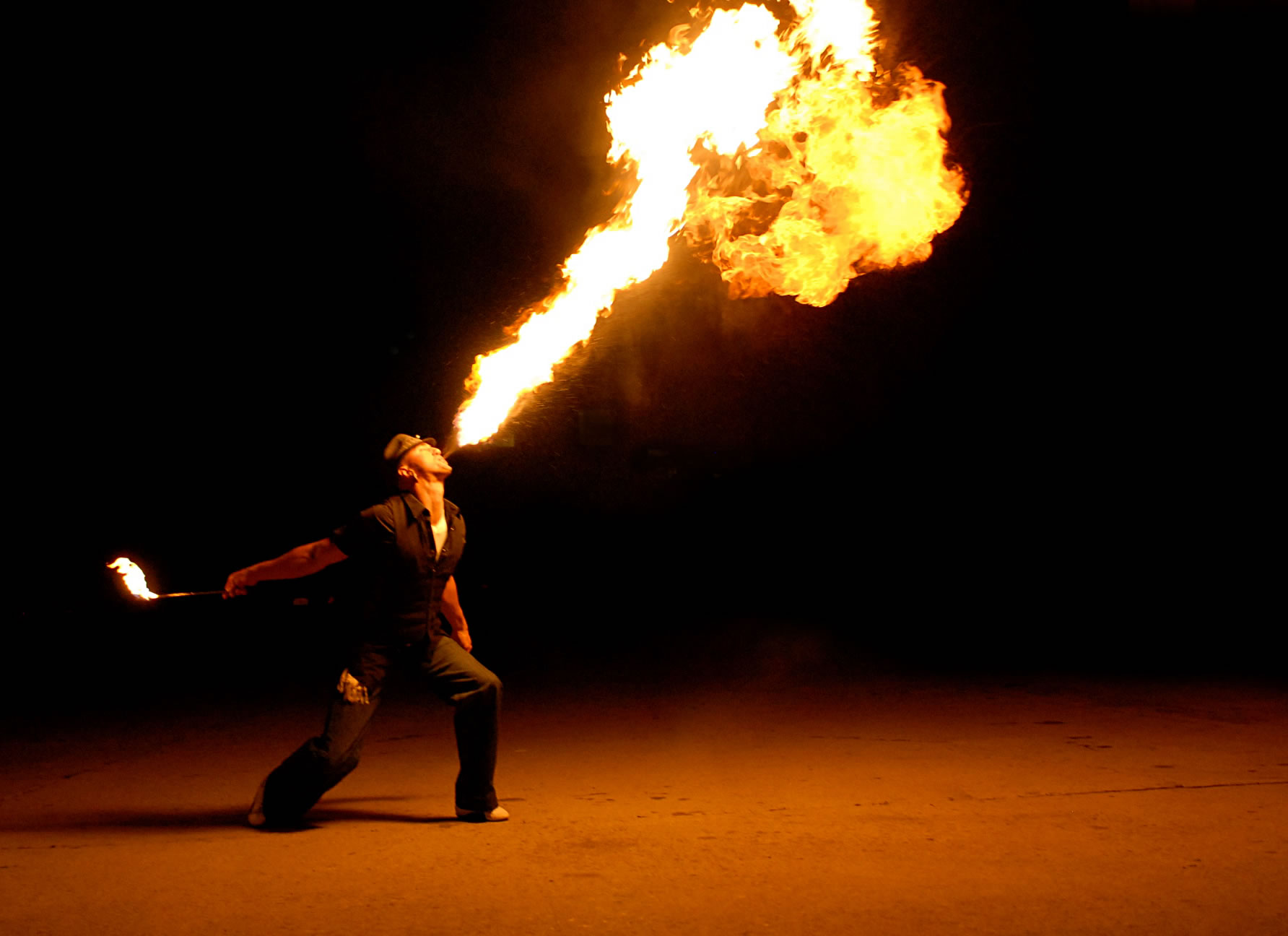
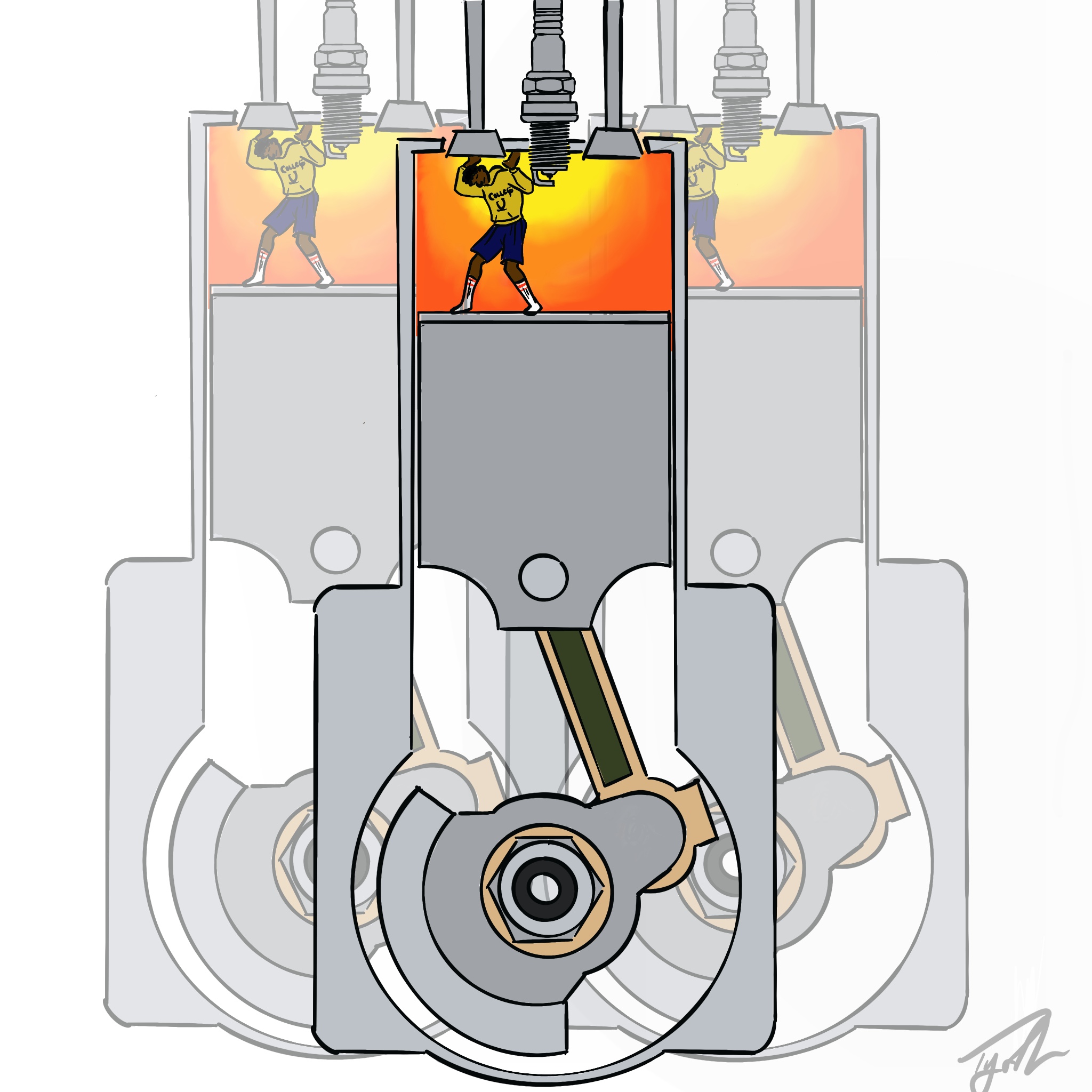
If you clicked on this link, you may be, like me, a bit of a pyromaniac. Unfortunately for us, playing with fire is quite dangerous, so…
Disclaimer: The activity of breathing fire is extremely dangerous and should only be attempted under the strict supervision of a trained professional. The techniques and practices involved can result in serious injury or even death if not performed correctly. The information provided in this article is for educational purposes only and should not be used as a guide for attempting the activity. The author, Charged Magazine, and the Georgia Institute of Technology do not endorse or encourage the practice of breathing fire and assume no liability for any actions taken by readers as a result of this article.
With all that out of the way, let’s talk about fire breathing. As awesome as it looks, fire breathing is undoubtedly dangerous. To lower the risk of injury, professional fire breathers use of fuels with a high flash point of at least 50° Celsius. In scientific terms, flash point is the lowest temperature that a substance will naturally evaporate into a flammable gas. One of the most popular fuels among professionals is paraffin oil, which is a highly purified lamp oil. Paraffin oil is ideal as it has a fairly high flash point of ~90° Celsius.
One should absolutely avoid using any fuel with a lower flash point. Especially dangerous fuels include:
Ethanol – Ethanol can be absorbed into the bloodstream without ingestion, leading to unwanted intoxication (drunk + fire = bad!)
Methanol – Methanol can be absorbed into your body via a variety of methods, and can lead to blindness and neurological disorders. Fun fact, methanol is often a natural byproduct of alcohol distillation, and a lot of care is usually taken to make sure none of it gets into the final product. It’s also why distilling alcohol is so dangerous!
Fuels with very low flash points (e.g. butane, propane, etc.) – These fuels are prone to a build-up of flammable vapors in the oral cavity, which can combust inside your mouth (yikes!)
Common fuels (e.g. gasoline, kerosene, etc.) – Fuels like gasoline and kerosene often contain carcinogens and additives which can lead to health complications, and are much easier to ignite (which is bad.)
Now that I’ve hopefully scared you into not trying this on your own, I’ll tell you about my preferred method of fire breathing. Unlike all of the examples outlined above, my favorite – instead, I like to use cornstarch. As crazy as it sounds, your typical supermarket cornstarch can be used to breathe fire! Although the flame isn’t quite as spectacular as a liquid-fuel flame, cornstarch is a (relatively) safe option as the powder doesn’t ignite unless it is suspended in air, so the flame has a hard time reaching your mouth after igniting.
The process is super simple:
Step 1: Safety. Make sure you are outside and away from anything flammable. Make sure it isn’t windy, as the wind can blow the fire back into your face (I’m speaking from experience here.) A fire extinguisher and a way to call 911 is a must. Water can be nice too (to rinse out your mouth.)
Step 2: Put a spoonful of cornstarch in your mouth.
Step 3: Light a lighter or torch.
Step 4: Blow!
If everything has gone to plan, congratulations! You are still alive, and your friends are probably mildly impressed with the small fireball that’s come out of your mouth.
So there you have it! Have fun not trying this at home!
Evolution is a very complicated field – and one of the bigger long-standing questions is crabs! Specifically, why animals keep evolving into them!
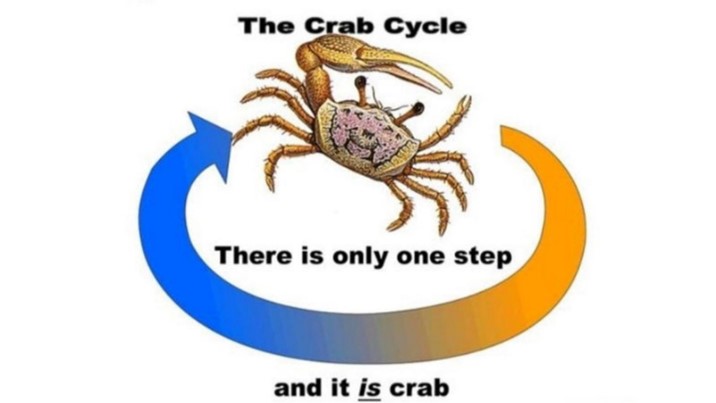
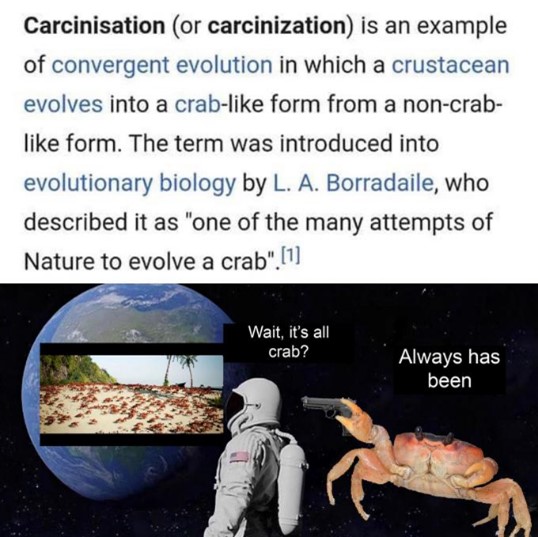
The phenomenon of animals, or specifically crustaceans, evolving into a crab-like shape has occurred so often it has a name: carcinization. The term was coined way back in 1916, by evolutionary biologist Lancelot Borradaile, and today it has risen back into public vocabulary through the power…of memes.
“Either die a hero, or live long enough to become crab”
But memes aside, this phenomenon raises several questions:
Question 1: What is a crab?
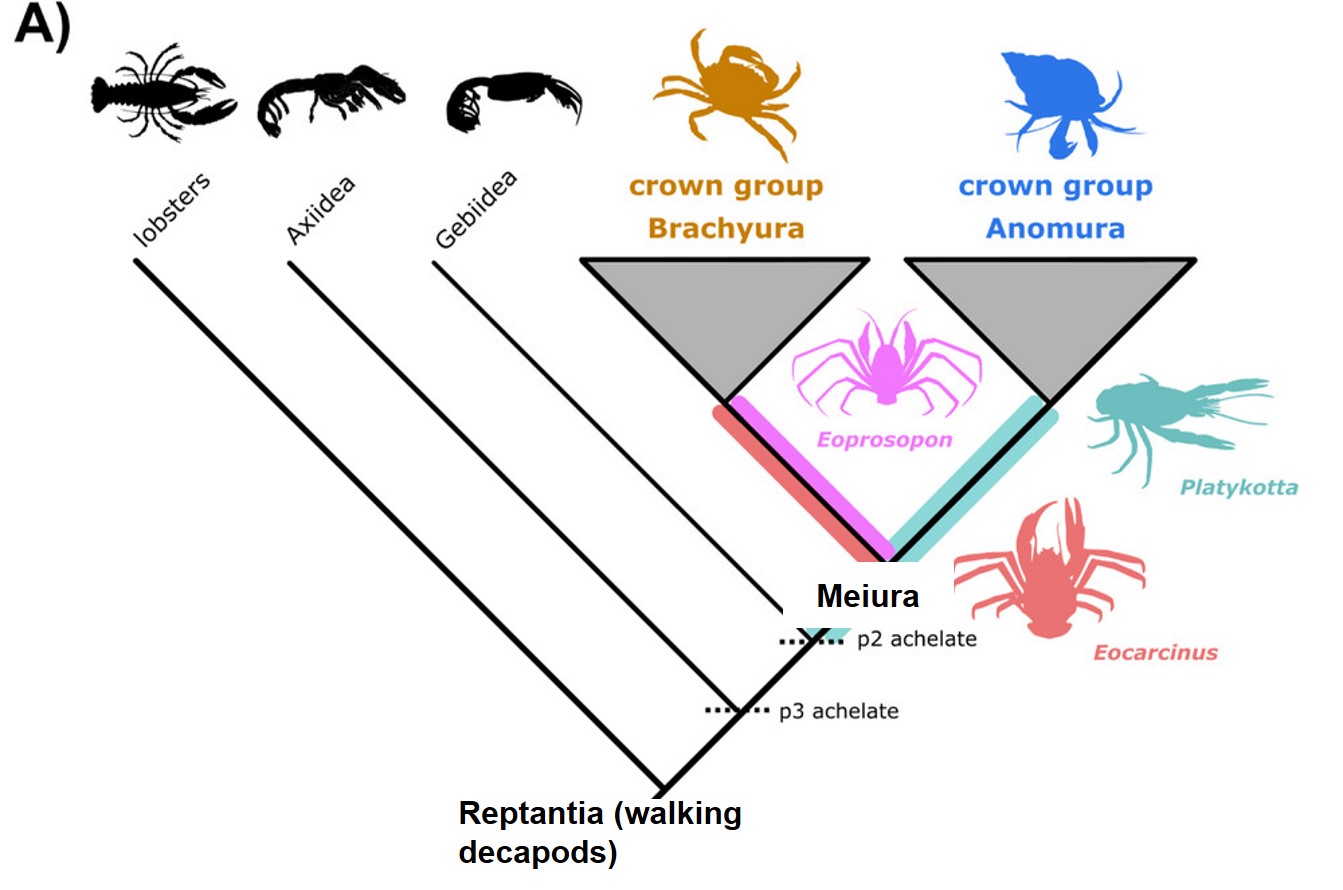
(Wolfe et al., 2021)
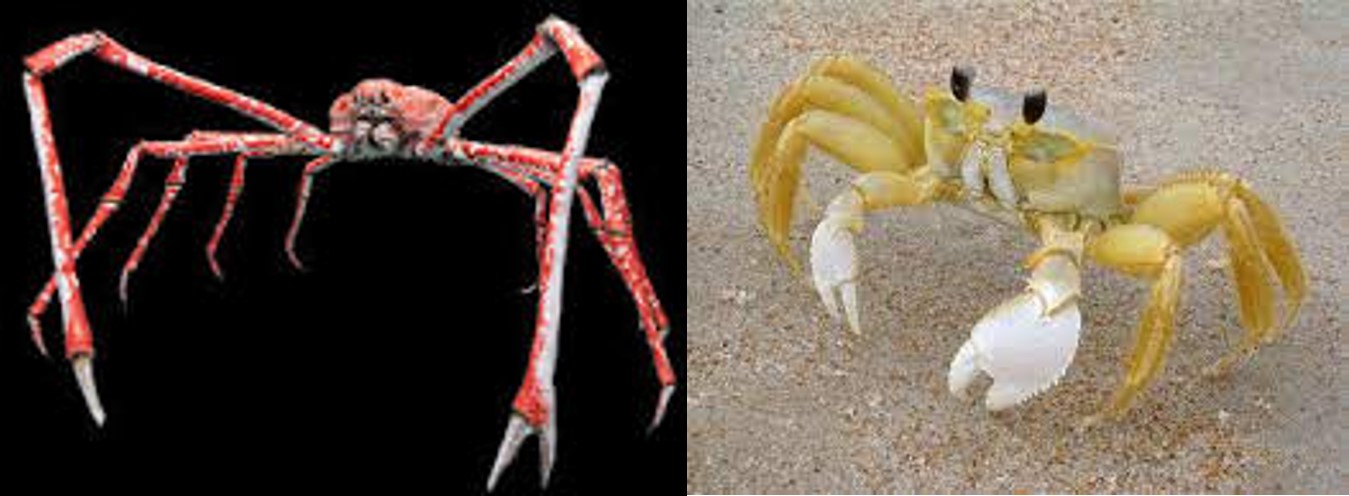
Crabs – the animals we call crabs at least – are all a part of the evolutionary order Decapoda (meaning literally “ten feet”), under the phylum Arthropoda, subphylum Crustacea, and clade Meiura (Kazlev, 2022). “True crabs” all fall under the infraorder Brachyura. They include species such as the Japanese spider crab, blue land crabs, ghost crabs, snow crabs, etc., and can be most easily differentiated by having 4 pairs of walking legs.
Question 2: What is not a crab?
Or at least, who are the fakes?
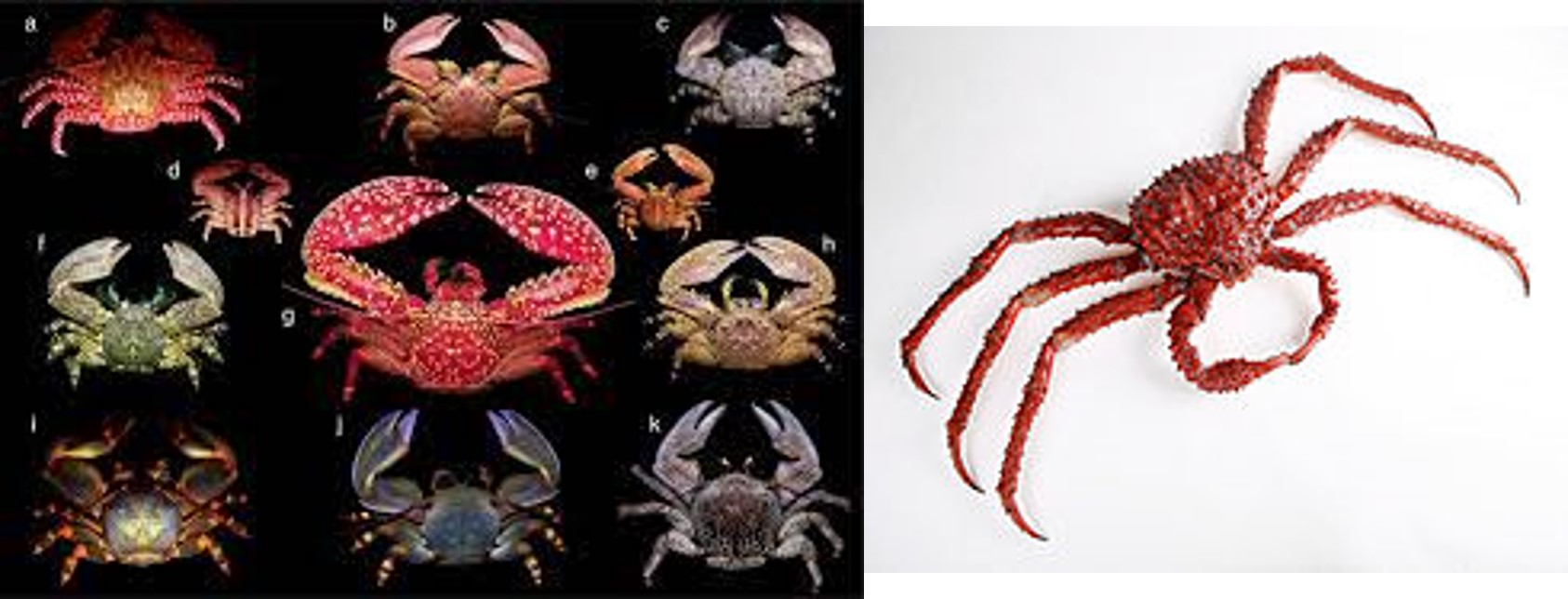
“False crabs” are largely on the neighboring Anomura branch – hermit crabs, porcelain crabs, coconut crab, king crabs even, are all false crabs. They tend to have 3 visible pairs of walking legs, with the 4th pair often smaller or hidden under their shell.
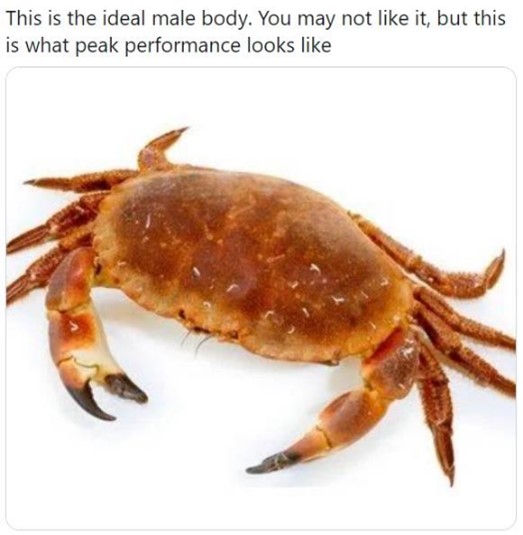
To put it shortly, these are crabs:
These are not:
Get it? Nope
Question 3: How does one become a crab?
The process of carcinization is characterized by the crustacean’s carapace becoming flat and wide, while it’s abdomen or “pleon” shorten and curves underneath. The appendages that would normally form the tail of a lobster either shrink or disappear. Additionally, the plates that make of the underside, or ventral, part of the animal’s shell become fused into one. It’s important to note too, that not all these steps have to occur – many undergo “partial” carcinization, such as the hermit crab, who keeps their tail (Wolfe et al., 2021).
Final question: Why?
Why become a crab? Potentially, the crab form provides more protection and, surprisingly, flexibility for crustaceans (Green, 2020). With the pleon tucked under the carapace, there’s less surface area for predators to grab; and with a more compact body, crabs can scuttle around pretty quickly. They can get into smaller cracks than their more lobster-like compatriots.
Why are scientists studying this? Right now, carcinization serves as a frequent and recognizable pattern of evolution – AKA convergent evolution, where animals of a similar niche evolve similar features. For evolutionary biologists, this provides a potential wealth of data for seeing trends in how several species evolved, and predicting how even more may evolve in the future. Additionally, as noted by Wolfe et al., the fact that the widening of the carapace and curling of the abdomen evolves together so frequently implies that the two phenotypes may be linked developmentally, or even genetically!
Why is this a meme???
To be frank, this quirk of evolution is just…funny! Crabs are such a random, funky little animal – they alone are a sort of meme! So when people find out that this strange little creature, for some reason, keeps popping up in nature, it surprises them. Not only does a seemingly random process like evolution apparently have a pattern – the pattern is crabs; and it’s happened so often that there’s a name for it!
Wolfe, J. M., Luque, J., & Bracken‐Grissom, H. D. (2021). How to become a crab: Phenotypic constraints on a recurring body plan. BioEssays, 43(5), 2100020. https://doi.org/10.1002/bies.202100020
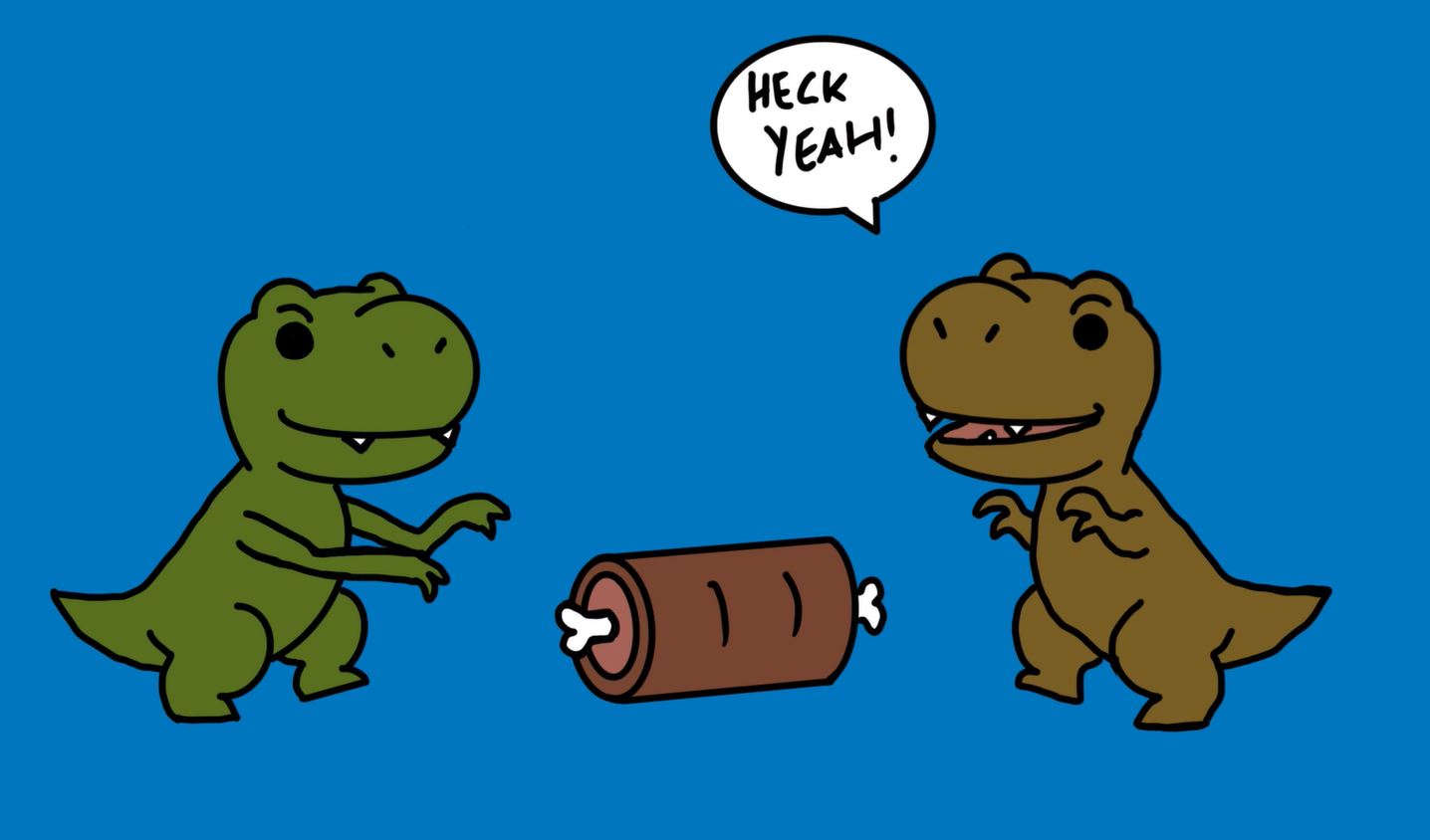
A question bugging palentologists for years: Why did T. Rex evolve to have short arms? Why was it beneficial for them to have shorter arms? Intuitively, one might think that longer forelimbs would be much more advantageous. However, out of all the hypotheses, one by Kevin Padian struck me as quite interesting!
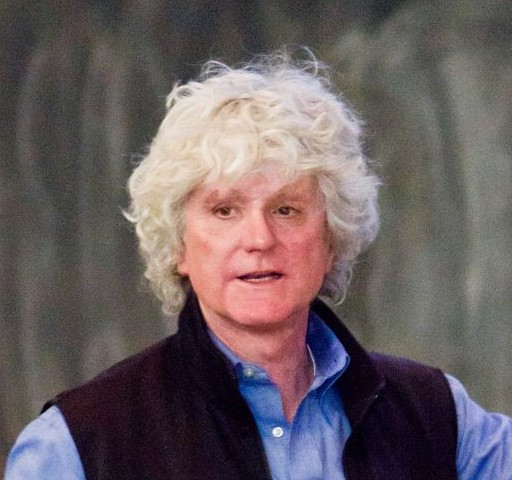
Introducing Kevin Padian:
Kevin Padian is a professor of integrative biology at UC Berkeley. He recently authored an article that gives one of his hypotheses for why Tyrannosaurus Rex evolved to have such short forelimbs.
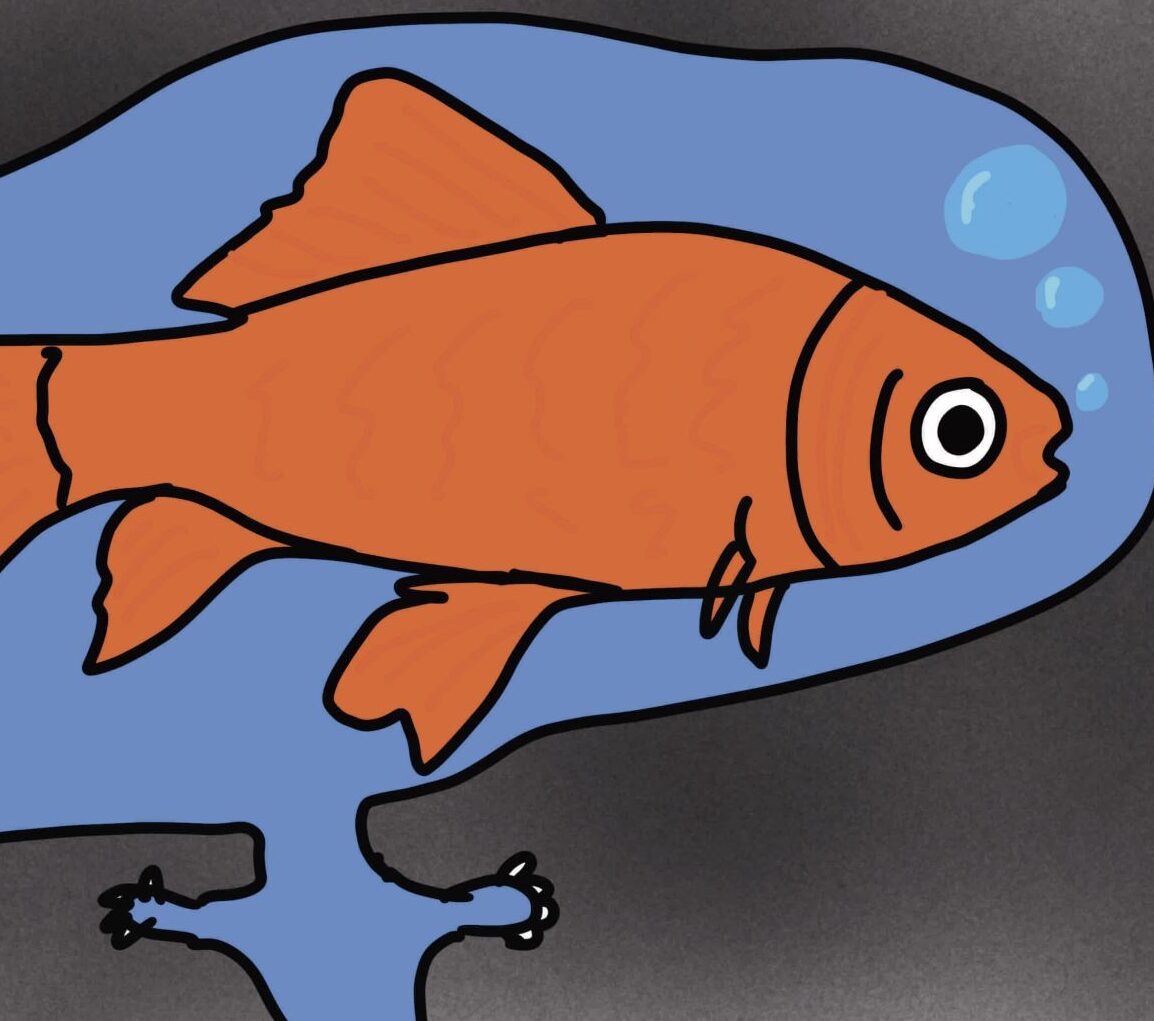
This silly comic is a comedic representation of a young adult brain experiencing daily life with depression. The depiction is based on my own and some of my peers’ personal experiences.
The science behind the Neurotransmitters and brain functionality comes from my own basic neuroscience as well as some of the sources listed below!
“Depression in Young Adults.” Sandstone Care, https://www.sandstonecare.com/resource-library/mental-health/young-adults-and-depression.
Schimelpfening, Nancy. “What Is the Chemistry behind Depression?” Verywell Mind, https://www.verywellmind.com/the-chemistry-of-depression-1065137.
Are you currently laying in bed in the wee-hours of the morning and are wondering… what even is life?? Why on EARTH am I here? If aliens exist, then why haven’t we made contact with them yet?….. Or maybe extraterrestrial life has already attempted to make contact with humans, but our technology is not advanced enough to detect them…
Well, look no further in your search for some interesting and deep, philosophical questions. If you are scrolling through your phone in bed, these questions might help you fall asleep — but not because they are boring, rather, they will have your mind thinking deeply, to the point where your brain will be thinking so deeply that it will get tired, and thus, you might fall asleep from mental and intellectual exhaustion.
These four questions are all about the universe, and will surely make your head spin like a spiral galaxy. Some of the questions have been supported by research, others are too complicated or abstract to conduct studies on. Hopefully some day in the future, scientists will be able to answer some of these questions with complete assurance.
Depending on your belief of how the universe became, there are two most popular beliefs: the Big Bang, or that simply God created all of the universe and life. The Big Bang hypothesis states that about 13.8 billion years ago, all of the current and past matter in the universe came into existence at the same time. But, have you ever thought of what happened before the Big Bang? If nothing existed before the Big Bang, then how can something can just come from nothing? And how did that nothing become something?? According to Stephen Hawking,
“Asking what came before the Big Bang is meaningless, according to the no-boundary proposal, because there is no notion of time available to refer to. It would be like asking what lies south of the South Pole.”
He proposed that there’s no end, or beginning, at all.
Take a second and try to grasp that idea… Can’t grasp it? Me neither.
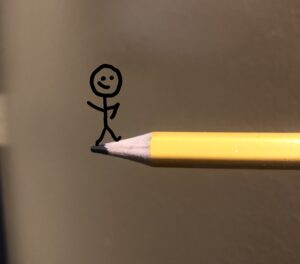
In relation to Hawking’s “no-boundary” principle, it is like looking at the tip of a pencil. Take the example picture of my pencil below:
“No-boundary” principle. Featuring my pencil
Just as the tip of the pencil has a diameter of zero at its top-most point and gradually widens as you move to the right — the universe smoothly expanded from a point of zero size. Very peculiar and mind-blowing, isn’t it?!?
2) ARE WE ALONE IN THE UNIVERSE?
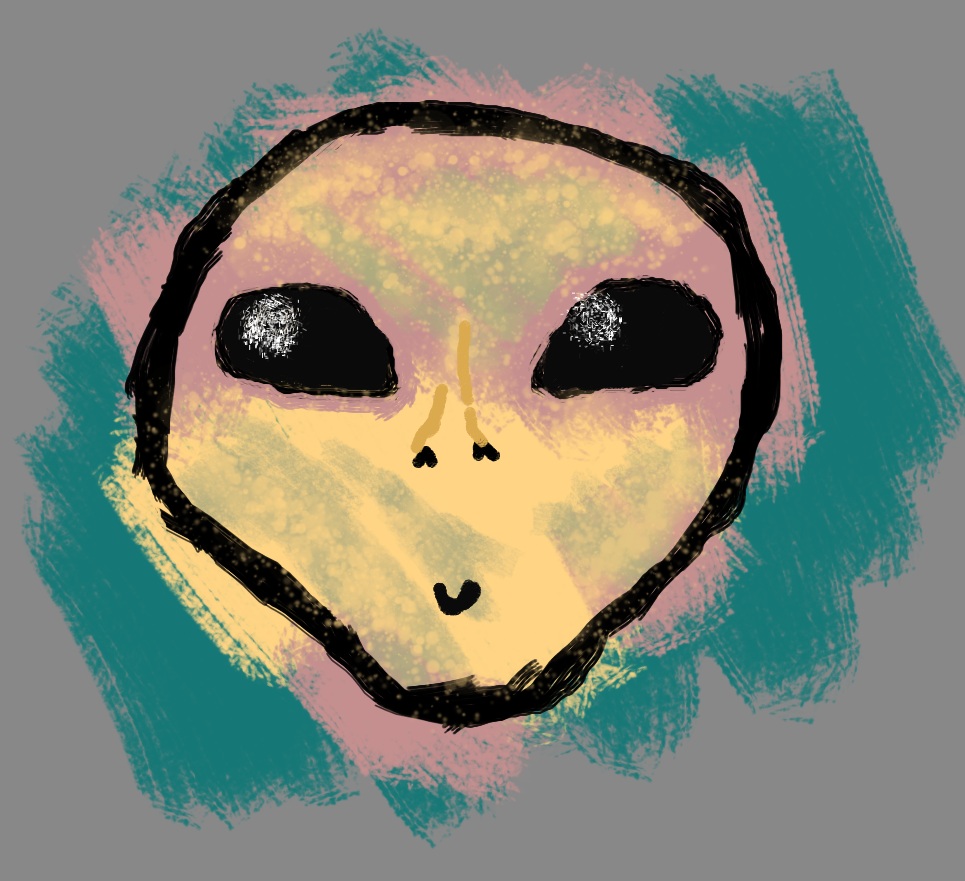
My creepy drawing of an alien.
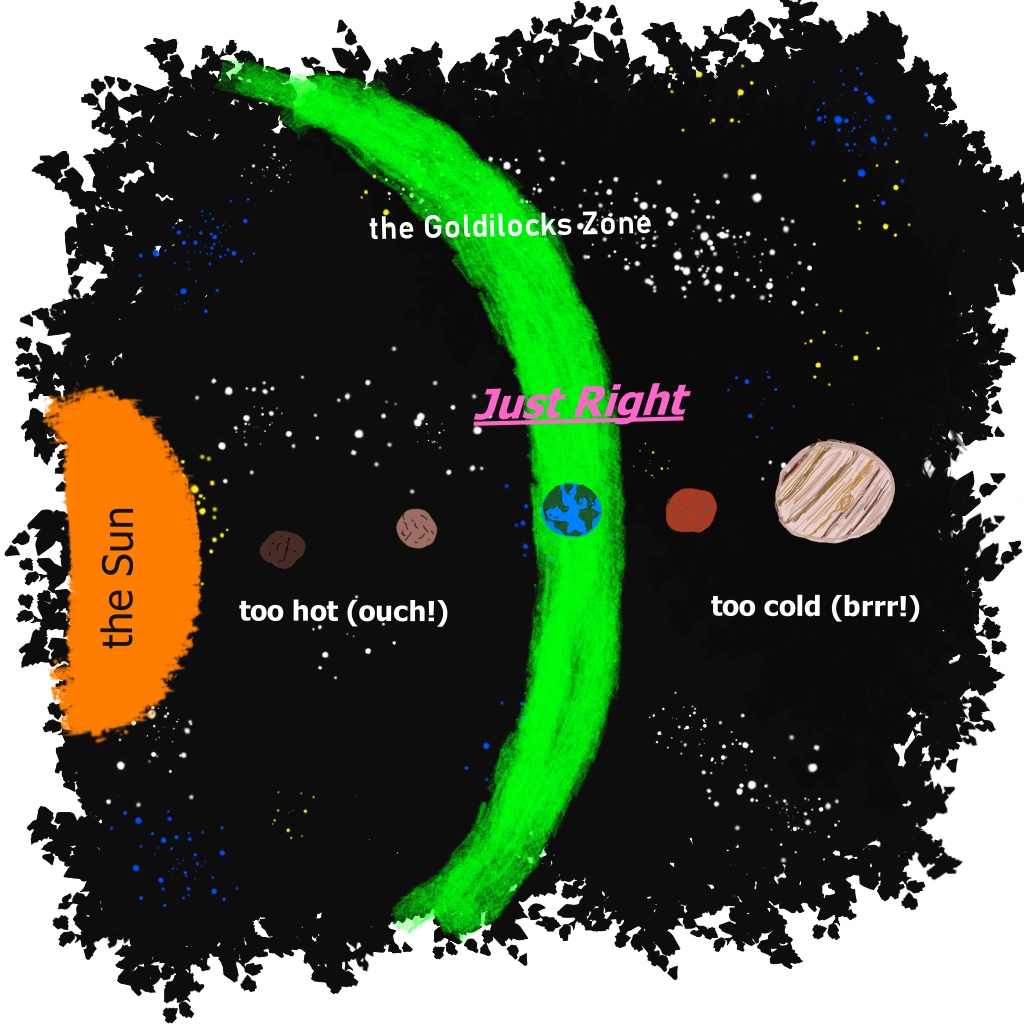
To many people, there is no way that extraterrestrial beings cannot exist, even if they cannot see them. To others, aliens are a fantasy that has never, currently does not, and will never exist (except for E.T.). Dr. Zank and his colleagues from the University of Alabama in Huntsville within the Department of Space Science are among some of the scientists looking for the factors that make conditions optimal for exoplanets to fall into the “Goldilocks Zone”. The Goldilocks zone is where the planets are not too cold, nor too hot — but juuust right to possibly foster life.
My representation of The Goldilocks Zone.
There are lots of stars, called G-type or G-class stars, that are similar to our Sun. They radiate more light toward the infrared spectrum and they look promising for hosting exoplanetary life. Our nearest neighbors, Alpha Centauri A and Alpha Centauri B, look promising.
The Fermi paradox offers an interesting perspective about the absence of evidence for extraterrestrial beings. Italian-American physicist Enrico Fermi created the Fermi paradox, which is the apparent contradiction between high estimates for the probability of extraterrestrial civilizations and the lack of evidence, thereof. However, various solutions to the Fermi paradox belong to different categories, such as the ones included below, regarding aliens:
They Are Here: Aliens visited Earth in the past and they left evidence, via Alien Artifacts/Hieroglyphics, UFO’s, and witnesses.
They Are Us: We– the humans– are the descendents of them ancient alien civilizations and we are the aliens.
They Exist, But Have Not Communicated With Us, Yet: Aliens do indeed exist, but they either have not had enough time to reach us, are signaling but we do not know how to interpret the signaling, they have no desire to communicate with us (because humans are dumb, duh), their technology is too advanced, or they are all dead because of various catastrophes (that humans will eventually face).
They Obviously Do Not Exist:Life is extremely rare, planets with the “perfect” conditions are rare, and humans are the superior race.
Pick and choose your fighter as you will. I am not going to tell you which one to believe, but I will say that they can all be true — because we have not found evidence (or a lack thereof) of each possible solution.
3) IS THERE INHERENT ORDER IN NATURE, OR IS IT ALL JUST RANDOMNESS AND CHANCE?
The recognition of randomness and apparent chance can be outwardly shown through things like galactic evolution (ie: the formation of the Universe), biological evolution (ie: development of early life), and geologic phenomena (ie: volcanos, mountains, rivers, etc). However, these phenomena can also be described via the perspective that there is inherent order in nature. For example, some Darwinistic-like theories suggest that through natural selection, life and everything that exists on the planet now is the result of deterministic principles.
However, both are important to describe nature. Nature is neither chaotic nor orderly; and neither random nor deterministic. In classical physics, things are observed as the same result every time given the same initial conditions. However, also in physics, the Big Bang theory suggests that the universe was created suddenly, by chance of the right conditions.
So what gives? → A paradox.
A paradox such that chaos is deterministic, created by precise rules that do not involve any elements of chance. With this paradox, the future is completely determined by the past, but through time, small uncertainties accumulate upon each other — thus, even if a particular behavior is predictable in the short term, it remains unpredictable in the long run.
My deck of cards with (literal) chaos surrounding it.
“Essentially, there is order in chaos: underlying chaotic behavior there are elegant geometric forms that create randomness in the same way as a card dealer shuffles a deck of cards or a blender mixes cake batter.” — Chaos, Scientific American Journal
Opposites truly do attract, in this case. I would have never thought of how order and chaos could mesh together so … naturally.
4) DO WE LIVE IN A SIMULATION?
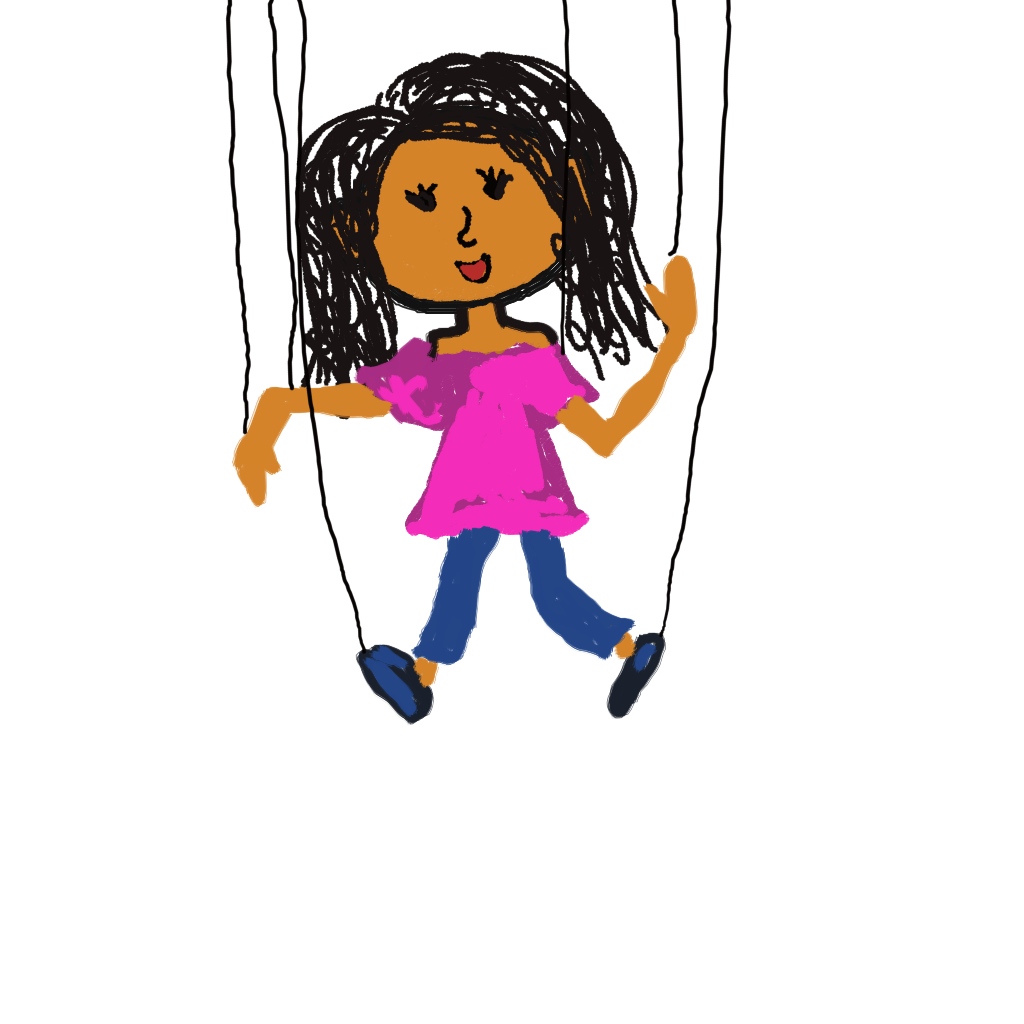
Are we sort of like puppets??
The idea that we could be virtual beings living in a computer simulation means that our simulated environment would create perceptions of reality on demand, rather than simulate all of reality all the time. This is similar to a video game where only parts of a scene are rendered to be visible to a player.
According to Neil deGrasse Tyson, “Maybe that’s why we can’t travel faster than the speed of light, because if we could, we’d be able to get to another galaxy… So the programmer put in that limit”. A new analysis by Nick Bostrom of the University of Oxford shows that ‘the odds that we are living in base reality—meaning an existence that is not simulated—are pretty much even’.
Bostrom’s simulation argument showed that at least one of the following scenarios must be true:
1. Humans almost always go extinct before reaching the simulation-savvy stage.
2. Even if humans make it to that stage, they are unlikely to be interested in simulating their own ancestral past.
3. The probability that we are living in a simulation is close to one.
If you think that perspective is interesting, take a look further. On November 12, 2019, professors at the Georgia Institute of Technology debated on the question: “Do we live in a simulation?”. There were lots of interesting answers, including the one below by professor Hans Klein in the School of Public Policy:
“It’s a simulated world that we live in to the extent that we live in this world that arrives to us through media the nature of the simulation is that institutions have interests and the interests of the media corporations and the interests of the entities that are being reported on by the media corporations. They’re all actively shaping the information flows that come to the public, it’s quite significant […] A lot of effort is made to influence how our knowledge of the world is mediated and it’s done in such a way so that we will so we end up living in if we live on critically we live in a world that’s a bit of a bit of a fantasy world and it’s a fantasy world that reflects off in the interests of media institutions and powerful societal interests.”
In a sense, Klein is saying that we, as humans, are creating our own simulating reality through the media and information we consume and the powerful interests of society that media corporations help perpetuate. With this perspective, maybe we are living in base reality after all…
ALAS,
As mysterious as the universe can be, hopefully one day humans will be able to answer these questions with impeccable certainty. Maybe the universe or some higher power does not want us to know the truth about our universe… Or maybe simply, humans just are not advanced enough yet to grasp the true notions of our reality, origin, or purpose. Hopefully you are asleep by now (if you wanted to be), but if not, may the Universe always be with you!
SOURCES:
Ananthaswamy, Anil. “Do We Live in a Simulation? Chances Are about 50–50 – Scientific American.” Scientific American, Scientific American, 13 Oct. 2020, https://scientificamerican.com/article/do-we-live-in-a-simulation-chances-are-about-50-50/.
Cvitanović, Predrag, et al., editors. Professor Debate on the Topic – Do We Live In a Simulation? Georgia Tech Library, 12 Nov. 2019, https://smartech.gatech.edu/handle/1853/62045. Accessed 3 Feb. 2021.
“If the Universe Is Teeming with Aliens … WHERE IS EVERYBODY?: Fifty … – Stephen Webb – Google Books.” Google Books, https://books.google.com/books?hl=en&lr=&id=Kp6g79LuKWEC&oi=fnd&pg=PA2&dq=do+aliens+exist&ots=aAMZyI0X6s&sig=0DONvBxxF8VTV6N37huhr3X5M5c#v=onepage&q=do aliens exist&f=false. Accessed 6 Mar. 2021.