Author: Cassandra Lund

  • The Yellow-Bellied Sapsucker: A Well Traveled Woodpecker
    The Yellow-Bellied Sapsucker: A Well Traveled Woodpecker

    The Yellow-Bellied Sapsucker: A Well Traveled Woodpecker

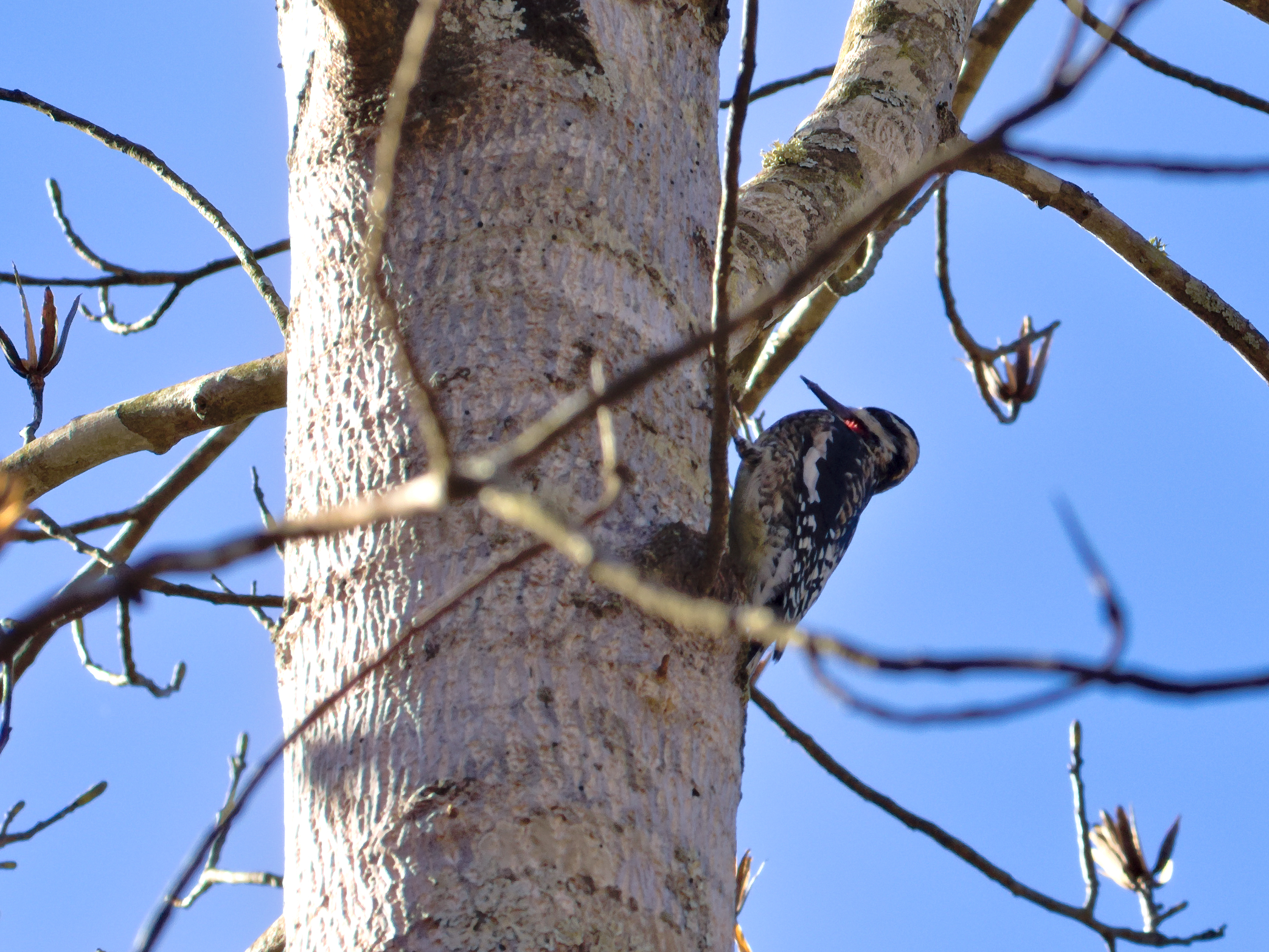
    A yellow-bellied sapsucker.
    A yellow-bellied sapsucker.

    The yellow-bellied sapsucker (Sphyrapicus varius) is a woodpecker that has a wide range across North America. In summer, the sapsucker can be found as far north as Alaska, Minnesota, and Nova Scotia and in winter, the birds can be found as far south as much of Central America and the Caribbean. The yellow-bellied sapsucker is migratory — the birds spend the winters in the south, and their summers in the north. This is unusual for woodpeckers. Out of the twenty two woodpecker species found north of Mexico, fifteen of them don’t migrate at all, with many of these species only flying for short distances during their regular activities. This leaves us with seven woodpecker species that do migrate — and of those, the yellow-bellied sapsucker takes the crown for the largest migration range. Interestingly, the sapsuckers do their migratory flying at night.

    Yellow-Bellied Sapsucker Habitat and Diet

    The yellow-bellied sapsucker is found in forests. Maple forests, aspen forests, and mixed forests are all popular habitats for sapsuckers. Research has shown that maple forests have better outcomes overall for breeding sapsuckers than aspen forests. However, both maple and aspen forests allow sapsuckers to sustain their populations over time. Both of these forests have trees that are good for sap drilling — the yellow-birch in maple forests, and the paper birch in aspen forests. Sap is one of the primary food sources of the yellow-bellied sapsucker (which, given the name, isn’t very surprising). Sapsuckers have a variety of preferences for trees to tap for sap depending on their range. In urban areas of Southern Florida, for example, black olive and tropical almond trees are a preferred source of sap. Yellow-bellied sapsuckers also feed on arthropods (think of spiders, centipedes, insects, and the like), especially while nesting.
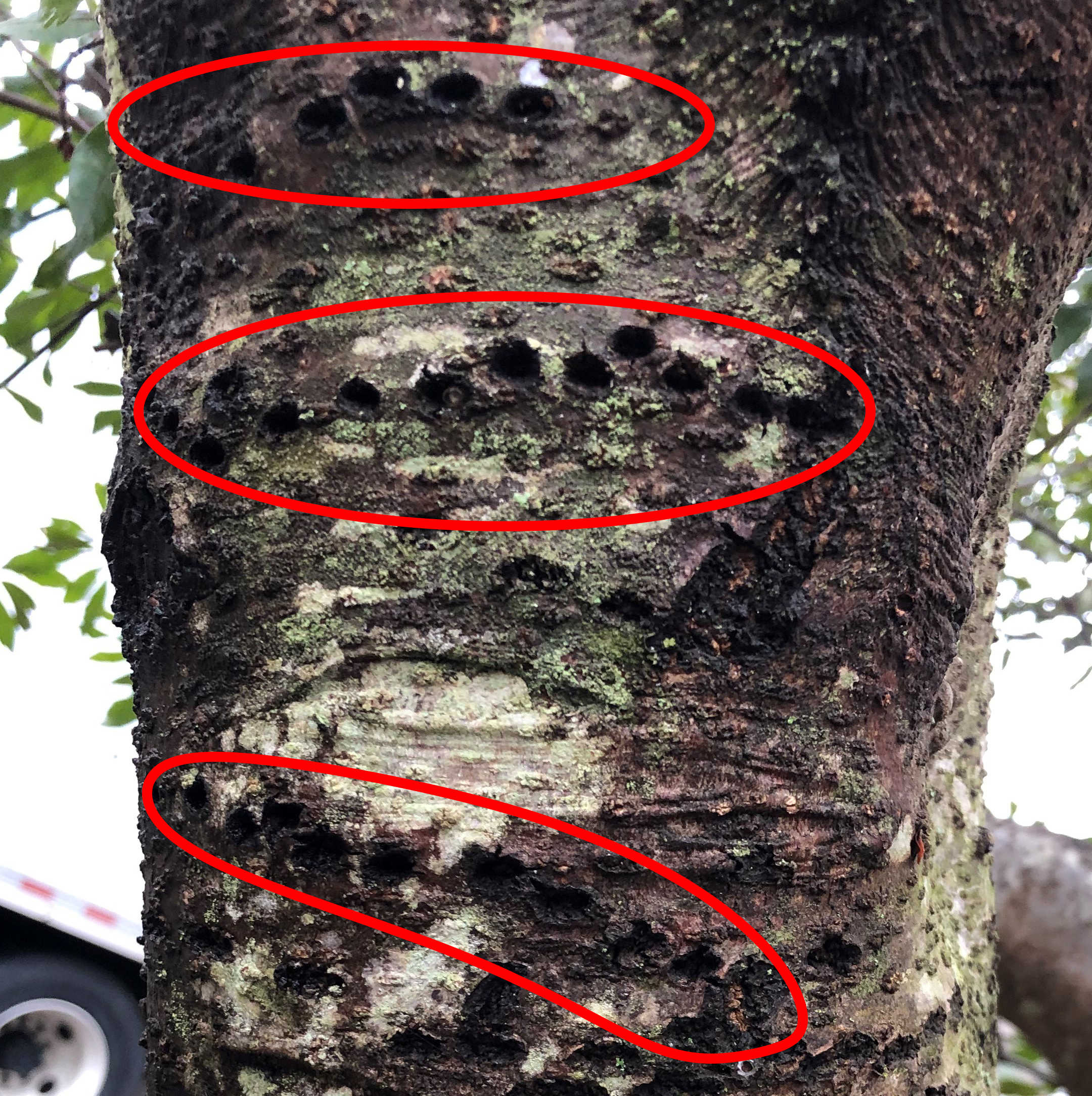
    A tree with lines of sapsucker holes.
    Pictured: Sapsucker holes in a tree. Drilling holes in straight lines is typical for them.
    Why are woodpeckers so concussion proof?

    One of the most interesting behaviors woodpeckers exhibit as a group is the tree drilling that they’re named for. A very common question related to this drilling is how do woodpeckers avoid rampant brain injuries due to ramming their heads against trees repeatedly, at high speeds, for ages. Woodpeckers routinely bash their heads into trees at far more than double the acceleration that would concuss humans. While humans are concussed at 300 g of acceleration, woodpeckers have been known to regularly drill into trees at accelerations on the order of 600–1500 g.

    A variety of mechanisms have been proposed to explain the woodpeckers’ resilience to brain injury. There are three primary reasons woodpeckers aren’t all concussed all of the time. The first being their small size. The acorn woodpecker’s brain, for example, has a mass of 2.5 grams. A human brain has a mass of 1400 grams. The woodpecker brain is so much smaller than a human brain that they generate much less force when they smack into the skull. The second limiting factor that protects woodpeckers is the short duration of impact. One of the documented factors that increases the likelihood someone will be concussed is how long their brain is exposed to high acceleration. A woodpecker only drills against a tree for a millisecond or less each time, so their time of impact is very short.

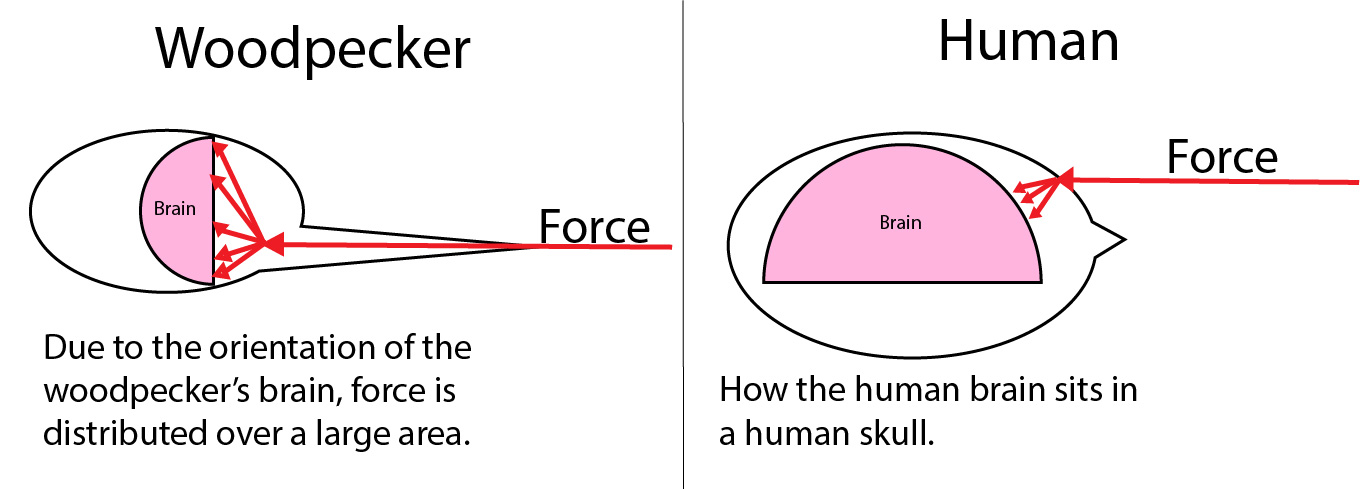
    The last quirk of woodpecker anatomy guarding them from brain injury is how their brain sits in their skull. Both human brains and woodpecker brains are hemispherical (if you cut a globe in half, you will have two hemispheres). If you cut the globe in half at the equator, your top hemisphere is oriented like a human brain is. If it were to go flying forward, only the small portion at the front will hit the skull. This concentrates the impact right around the forehead area. On the other hand, a woodpecker brain is much more like if you had cut your globe from the Arctic to Antarctica, and chose to look at the left section. The large flat side of a woodpecker’s brain rests against the front of their skull. When their brain goes smacking against their skull while they drill, the force is distributed among the largest possible region of their brain. This lessens the impact overall.
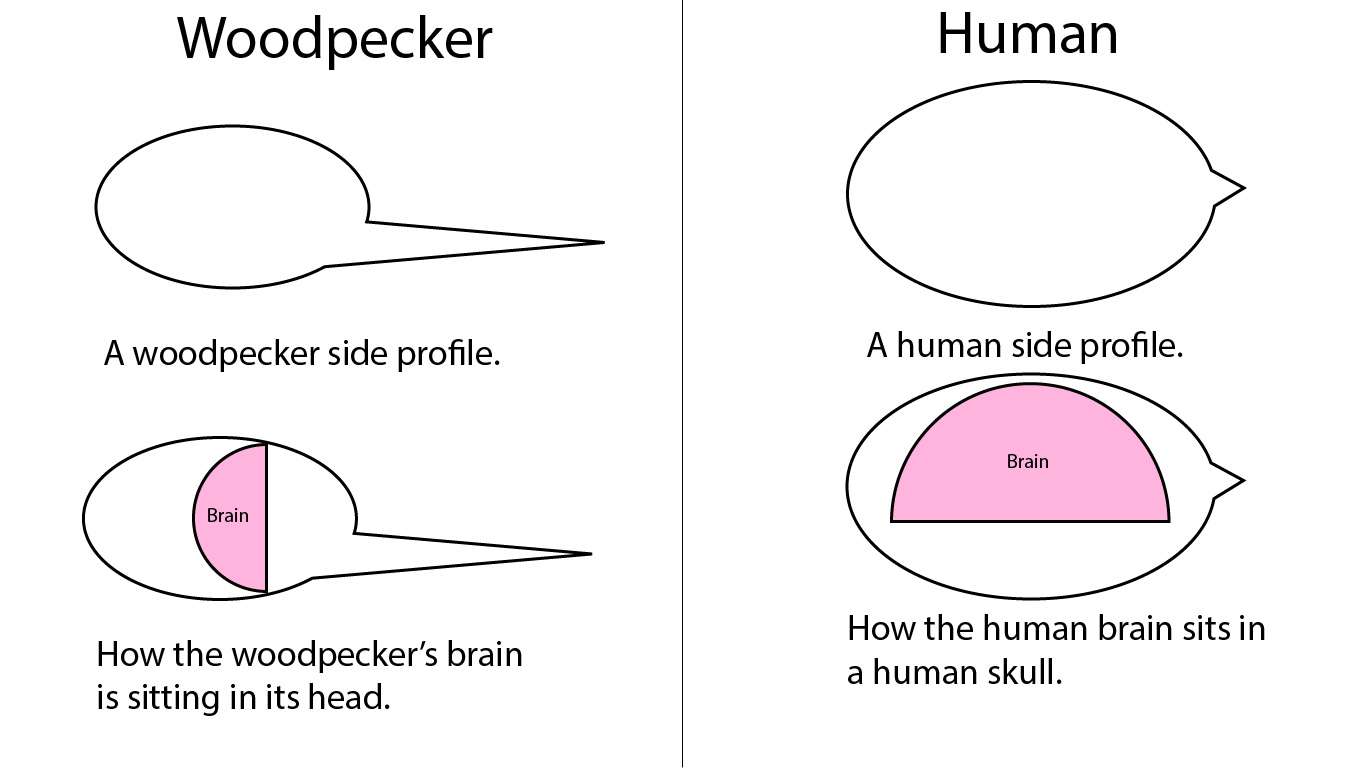
    An image illustrating the difference in orientation of a human brain versus a woodpecker brain, as described in the paragraph above.
    Notice the difference in alignment when comparing a human brain to a woodpecker brain.
    A visualization of how the force is more distributed over the woodpecker's brain compared to a human brain.
    Look at how much more relative space the force has to distribute itself on the woodpecker’s brain versus the human brain.
    Ecological Status of the Yellow-Bellied Sapsucker

    Ecologically speaking, the yellow-bellied sapsucker is in a good place to stick around. The International Union for Conservation of Nature (IUCN) has marked the yellow-bellied sapsucker as a species in the “least concern” of going extinct. Despite this, there are still some concerns for the sapsucker, especially as they’re being seen more and more often in urban and suburban areas. Being in areas with humans presents several new challenges for sapsuckers. Flying into windows is one of these concerns. Some research has been done into this phenomenon, known as “window strikes”. One study suggests that migrating birds are at a higher risk of striking windows than year-round resident birds, which poses a threat for migratory birds like the yellow-bellied sapsucker. Another threat to sapsuckers in areas with high human density are pets, domestic cats in particular. Outdoor cats have long been a threat to bird populations, and sapsuckers living in areas with them are no exception. Like many other species, the yellow-bellied sapsucker’s future will be strongly impacted by human activity.

    References

    Diamond, Joshua M, & Ross, Michael S. (2018). Tree selection and foraging height of wintering Yellow-bellied Sapsuckers (Sphyrapicus varius) in an urban environment. The Wilson Journal of Ornithology, 130(4), 932-939.

    Gibson, L. J. (2006). Woodpecker pecking: How woodpeckers avoid brain injury. Journal of Zoology (1987), 270(3), 462-465.

    Kerlinger, P. (2008, April). Sap hunter: why the Yellow-bellied Sapsucker does what most woodpeckers don’t: migrate. Birder’s World, 22(2), 52. https://link.gale.com/apps/doc/A175629258/ITOF?u=gainstoftech&sid=ITOF&xid=177e1123

    Natola, Libby, & Burg, Theresa M. (2018). Population Genetics and Speciation of Yellow-Bellied, Red-Naped, and Red-Breasted Sapsuckers (Sphyrapicus varius, S. nuchalis, and S. ruber). The Journal of Heredity, 109(6), 663-674.

    Sabo, Ann M, Hagemeyer, Natasha D G, Lahey, Ally S, & Walters, Eric L. (2016). Local avian density influences risk of mortality from window strikes. PeerJ (San Francisco, CA), 4, E2170.

    Tozer, Douglas C, Nol, Erica, & Burke, Dawn M. (2011). Quality of mature aspen and maple forests for breeding Yellow-bellied Sapsuckers (Sphyrapicus varius). Canadian Journal of Zoology, 89(2), 148-160.
     

  • The Undersea Bone Devourer

    The Undersea Bone Devourer

    Osedax, from the Latin os, oris (bone) and edāx, edācis (devourer), is a genus of undersea worms that consumes bone. A genus (which is more Latin, this time for a family group) is a group of species that are similar. More distantly, the genus Osedax belongs to the family Siboglinidae. Siboglinidae is a family (a level above in the biological categorization hierarchy from genus) composed of segmented worms, all of which have chitin bristles. Chitin is a natural substance that is found in all sorts of bugs, and it’s similar to the material that makes up your fingernails. Another prominent species in this family are the undersea tubal worms that live at the hydrothermal vents at the bottom of the ocean. It turns out there is a surprising amount of diversity of species of undersea bone eating worms. The worms range in size and in behavior. You can find members of the Osedax genus in all seven oceans, and in all sorts of depths (21 – 4000 m). Some of them are generalists, whereas others specialize in large bone deposits often found on the ocean floor. Whalefalls (you can read more about them here: https://2026fat.chargedmag.org/2012/06/whale-fall-2/) are one such source of large bone deposits on the ocean floor.

    Osedax worms were first discovered in 1994. Biologists were initially baffled at what exactly they were. The worms evaded classification until molecular DNA analysis showed that they were related to the tube worms that live in hydrothermal vents on the ocean floor. This breakthrough allowed biologists to finally place the Osedax genus into the Siboglinidae family. Later, fossils were discovered of Osedax worms inhabiting a large, dead reptile, dated to the early-Late Cretaceous period, about 100 million years ago. This led to several revelations about the history of Osedax worms. Firstly, there was now a historical precedent for being generalists, rather than whale specialists. Osedax worms were initially discovered and identified on whale falls, and there was some debate in the scientific community about whether or not they occupied other niches. Well, giant dead reptiles certainly weren’t whales, so this find cleared that up nicely. The fossil finding also illustrates something about the history of Osedax worms and the Siboglinidae family. This finding confirmed an earlier theory that the Siboglinidae family originated somewhere in the mid-Cretaceous period. It also means that the weird bone eating worms under the sea outlasted the dinosaurs, which is neat.

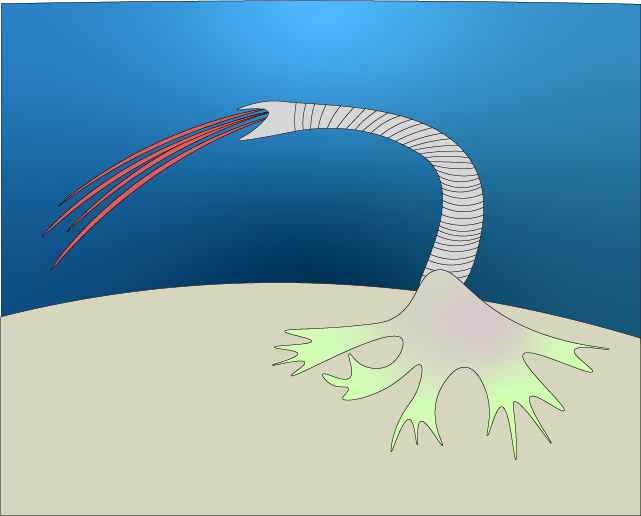
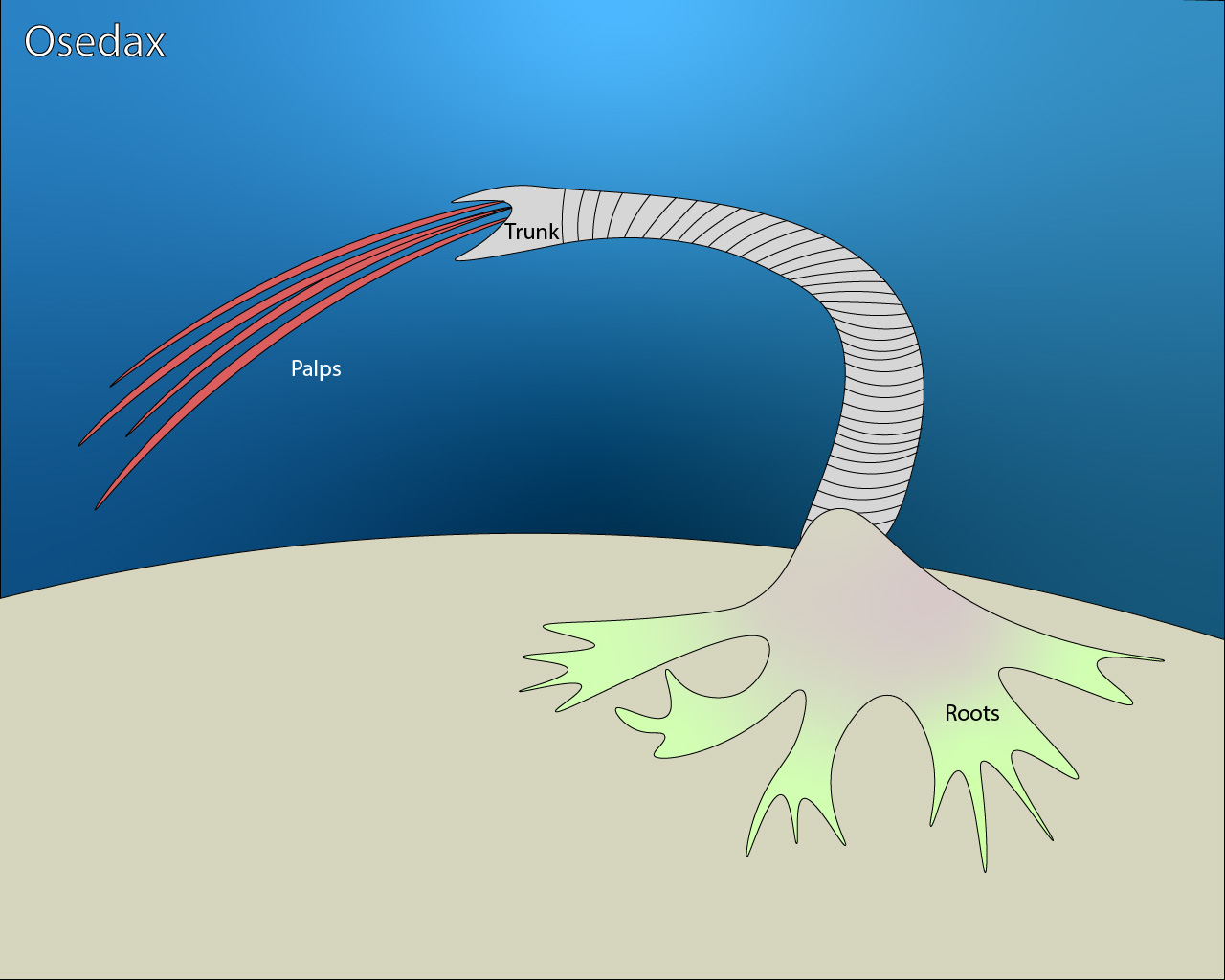
    A labeled illustration of an Osedax worm.
    A labeled illustration of an Osedax worm.

    Physically, Osedax worms are strange looking creatures. Red, string-looking bits float out from one side of the main worm body. On the other side, there are green, root-like structures sticking out back. These roots secrete acids to dissolve the bones where they lodge. Their middle is a white, segmented tube. It doesn’t get any more regular on the inside, either. Osedax worms don’t have a digestive system – they just host a wealth of bacteria inside of them to digest the bones they consume. Another strange thing about the inside of an Osedax worm is that the male worms live inside the females. As in, every picture of an Osedax worm you see will be of a female, as the males are teeny tiny and live inside of the females. Dwarf males, as this phenomenon is called, occurs when the males of a species are much smaller (and usually simpler anatomically) than the females. In species where dwarf males exist, the males typically reside somewhere inside or attached to the female members of the species. Osedax worms are at least as odd as you were expecting worms that ate bones to be, at very least.


    References

    • Smith, Craig R, Glover, Adrian G, Treude, Tina, Higgs, Nicholas D, & Amon, Diva J. (2015). Whale-Fall Ecosystems: Recent Insights into Ecology, Paleoecology, and Evolution. Annual Review of Marine Science, 7(1), 571-596.
    • Rouse, G. W. (2004). Osedax: Bone-Eating Marine Worms with Dwarf Males. Science (American Association for the Advancement of Science), 305(5684), 668-671.
    • Danise, S, & Higgs, N. D. (2015). Bone-eating Osedax worms lived on Mesozoic marine reptile deadfalls. Biology Letters (2005), 11(4), 20150072.
  • The von Neumann Architecture

    The von Neumann Architecture

    The von Neumann Architecture

    Introduction

    Have you ever wondered how your computer works? Who decided that we should use keyboards to tell our devices what to do? And who else later decided that touch screens were cooler much of the time. Much of how we think about computing we currently owe to John von Neumann, who developed the current way of thinking about computers.

    The Von Neumann architecture is a model that was developed in the 1940s by John von Neumann, a physicist and mathematician, who was an early computer researcher. During World War 2, cracking secret codes and the development of nuclear weapons led to an increase in public funding for computer research, as machines could do lots of arithmetic quickly and accurately. Von Neumann would go on to outline a model for building any sort of computer in his The First Draft Report on the EDVAC (the EDVAC being a computer he was working on at the time) that has been the standard for all computing devices since.

    In his model, von Neumann illustrates that a computer should have several main components:

    • Arithmetic Unit
    • Control Unit
    • Memory
    • Input
    • Output

    Flexibility of the Model

    This model is relatively flexible – in his paper, von Neumann mentions that different machines could very well have different capabilities while still being built with all of these components in mind. Computers that use the von Neumann architecture range from very simple (such as the one in your microwave) to the massive supercomputers that have dedicated buildings. The wide scope of computers that fall under the von Neumann model are proof that von Neumann achieved his goal when it came to creating a model that was versatile.

    Components and What They Do

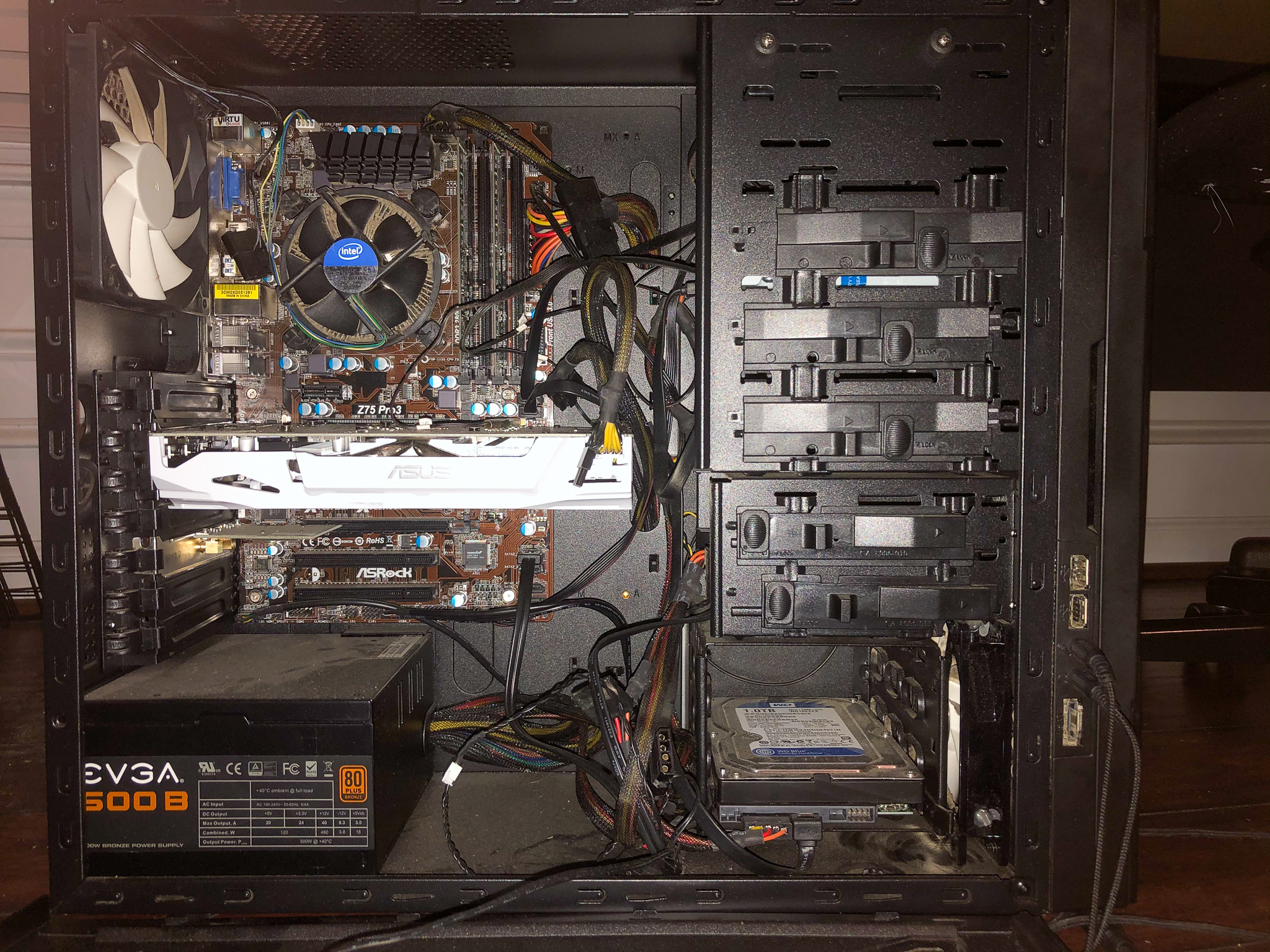
    The control unit, as described by von Neumann, is the part of the computer that keeps track of what is supposed to run when. When you turned on your computer, your PC’s control device (most probably inside of a CPU) queued up the correct start up operations. The purpose of the control unit is to allow a computer to run many different kinds of programs, and switch between them when necessary. While this seems trivial now, the first computers were manually operated. If you wanted a computer to do something different than what it was previously doing, you had to go in and change all of the wires yourself. The conception of a control unit allowed the computer to modify its own hardware and software, allowing a great deal of abstraction for users. Computers being able to modify themselves (and other computers) essentially enables modern computing as we know it, the good (high level programming languages, not swapping about the wires in your desktop) and the bad (it would be impossible to hack a pre-von Neumann computer without performing an elaborate heist operation to change around the wiring yourself).

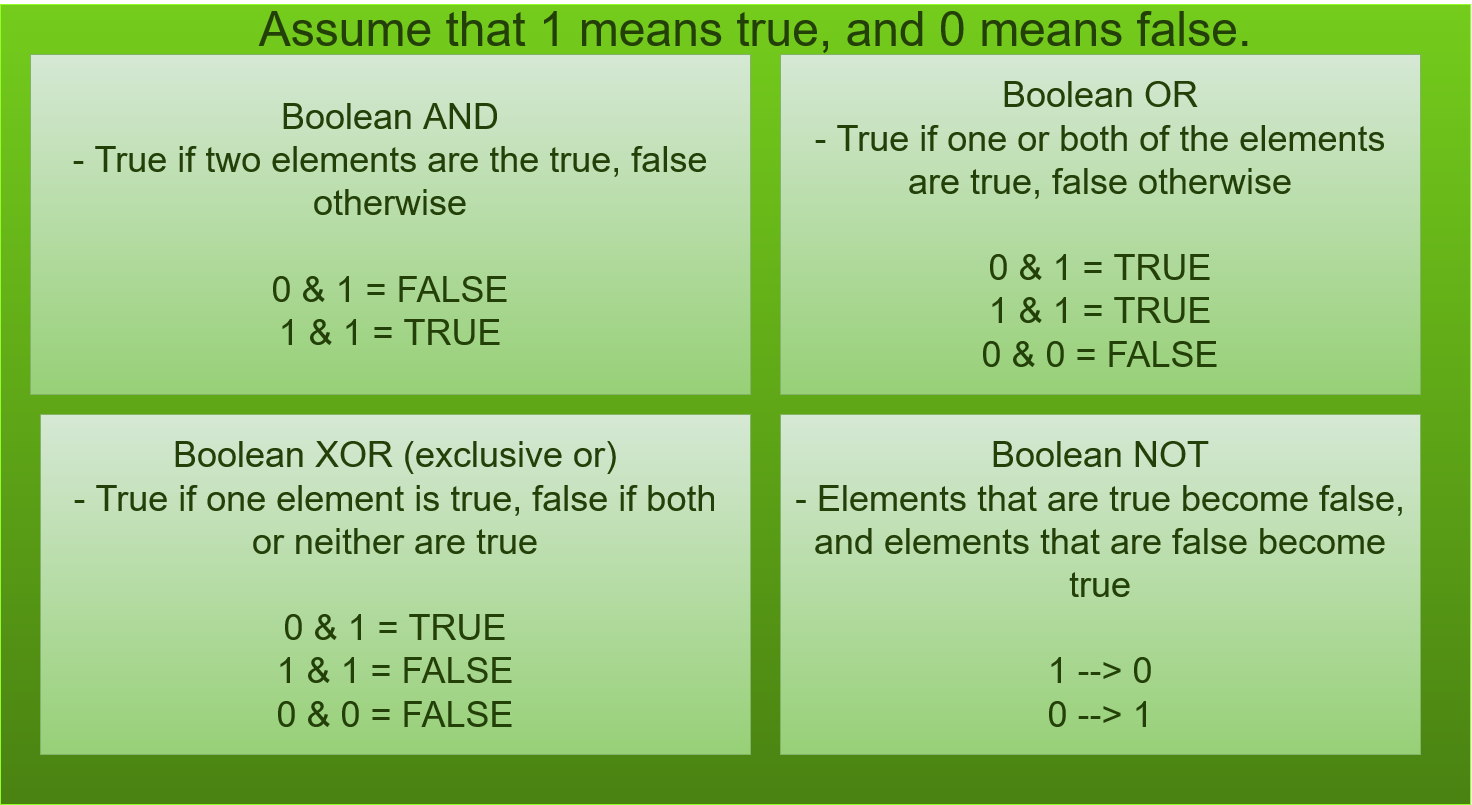
    The arithmetic unit of a computer does the logical processing. Computers were originally designed for doing lots and lots of math, so von Neumann designated an entire component of his model to do that. Despite being called the arithmetic unit, this unit is also responsible for doing logical operations as well. Arithmetic units allow computers to distinguish if two sequences of binary are completely the same (an AND operation), if some of the numbers are the same, or allowing sign flippage.

    The memory component of this model is probably simplest to understand. If we want computers to do work in a useful capacity, they need to be able to remember what we’ve done. Most modern computers have two types of memory. They’ve got long term, slower memory, which is usually kept in the hard drive. Computers also have faster, short term memory. This is typically stored in RAM. Traditionally, RAM memory has been volatile. This means that it is erased when you turn the power off. This is also why you used to lose everything you did on older video games without saving – if you didn’t tell the computer to move your data out of RAM and onto the hard drive, it was just lost.

    The last components of a computer are its input and output components. Input is just how the user puts instructions into a computer. These days, inputs are most often keyboards and/or touch screens, although speakers are becoming more common. Output is how a computer communicates what it’s doing to the user. Most computers have a visual (a screen) and an audio (speakers and/or headphones) component to the output.

    Conclusion

    The von Neumann model for computing has lasted for nearly a century. Pretty much any device that you use will have been built and designed with the von Neumann architecture in mind. That being said, scientists are looking beyond this model for the future. Quantum computing and other innovations may mean we say good bye to the von Neumann architecture.

    References

    Brandl, M. F. (2017). A Quantum von Neumann Architecture for Large-Scale Quantum Computing. (https://arxiv.org/abs/1702.02583)

    Freiberger, P., & Swaine, M. (2016, November 14). Von Neumann machine. Retrieved September 15, 2020, from https://www.britannica.com/technology/von-Neumann-machine

    von Neumann, J. (1945). First draft of a report on the EDVAC. doi:10.5479/sil.538961.39088011475779