Author: Betre Tezera

  • The Race to Understand Mars: What Current Research Reveals

    The Race to Understand Mars: What Current Research Reveals

    Mars has never been more accessible to human exploration. Right now, multiple spacecraft are actively studying the Red Planet, fundamentally reshaping our understanding of whether life ever existed there and whether it could exist there again.

    Water: The Breakthrough Discovery

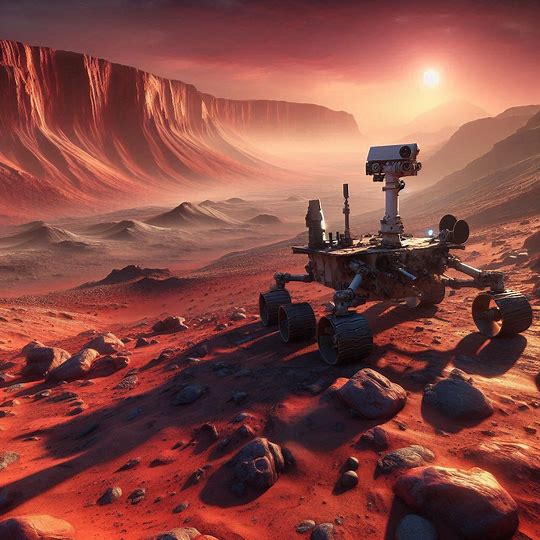
    The most significant recent finding came from Mars rovers and orbiters detecting substantial evidence of ancient water. NASA’s Perseverance rover, which landed in Jezero Crater in 2021, has been exploring what scientists believe was once a river delta. The rover has found sedimentary rocks and minerals that only form in the presence of water, suggesting Mars once had conditions potentially suitable for microbial life.

    Even more intriguing, the European Space Agency’s Mars Express orbiter has detected what appears to be liquid water beneath the planet’s southern ice cap. If confirmed, this subsurface lake could be one of the best places to search for existing Martian life.

    The Search for Biosignatures

    Perseverance isn’t just looking at rocks—it’s collecting them. The rover is gathering samples in sealed tubes as part of the Mars Sample Return mission, a collaboration between NASA and ESA. These samples, scheduled to return to Earth in the 2030s, could contain organic molecules or other biosignatures that might indicate past life.

    Meanwhile, the Curiosity rover continues analyzing Martian soil and has detected complex organic compounds and methane fluctuations that scientists are still working to explain. On Earth, methane is often produced by living organisms, though geological processes can create it too.

    Understanding Mars’ Atmosphere and Climate

    The MAVEN (Mars Atmosphere and Volatile Evolution) orbiter has revealed how Mars lost most of its atmosphere over billions of years. Solar wind gradually stripped away the protective magnetic field and atmosphere, transforming Mars from a potentially habitable world into the cold, barren desert we see today. Understanding this process helps scientists determine when Mars might have supported life and what that means for Earth’s own atmospheric future.

    China’s Tianwen-1 mission and the UAE’s Hope probe have added new perspectives, studying Martian dust storms and seasonal changes that affect the entire planet.

    Human Exploration on the Horizon

    Current research isn’t just academic, it’s preparing for human arrival. Scientists are testing whether Martian soil could grow food, studying radiation levels astronauts would face, and identifying water ice deposits that future missions could use. NASA’s Artemis program aims to establish a lunar base first, using it as a proving ground for eventual Mars missions in the late 2030s or 2040s.

    The Controversial Question

    But here’s where scientific consensus breaks down: Should we go at all? Some researchers argue we should focus on robotic exploration to avoid contaminating Mars with Earth microbes, potentially destroying evidence of Martian life before we find it. Others insist that human presence is essential for the kind of complex scientific work needed to truly understand Mars and that becoming a multi-planetary species is crucial for humanity’s long-term survival.

    As our robots continue sending back data and our rockets grow more powerful, Mars is transforming from a distant mystery into humanity’s next frontier. Whether that’s progress or hubris may be the most charged question of all.


    References

    1. NASA. (2024). “Mars Perseverance Rover.” NASA Mars Exploration. https://mars.nasa.gov/mars2020/
    1. Orosei, R., et al. (2018). “Radar evidence of subglacial liquid water on Mars.” Science, 361(6401), 490-493.
  • Evolution of Java

    Evolution of Java


    Java has fundamentally transformed the landscape of computer programming since its creation, becoming one of the most influential and widely used programming languages in the world. Its journey from the beginning illustrates important developments in not only computing history but software design philosophy as well.

    Origins and Early Development

    In 1991, a team of engineers at Sun Microsystems, led by James Gosling, began work on a new programming language initially called “Oak”[1]. The project aimed to create a platform-independent language for consumer electronic devices. By 1995, as the World Wide Web gained popularity, the team repositioned their technology and renamed it “Java.” Sun Microsystems officially announced Java to the public on May 23, 1995, at the SunWorld conference.

    Revolutionary Features

    Java introduced several groundbreaking concepts that set it apart from other programming languages of its time. Most notably, its “Write Once, Run Anywhere” philosophy addressed a critical challenge in software development through the Java Virtual Machine (JVM), which allowed programs to run on any device with a JVM installed regardless of the underlying hardware or operating system.

    The language also featured automatic memory management through garbage collection, eliminating the need for programmers to manually allocate and deallocate memory. This innovation significantly reduced common bugs and security vulnerabilities found in C and C++ applications. Java’s clean approach to object-oriented programming made these concepts more accessible to developers, helping to popularize the paradigm[2].

    Evolution and Impact

    Java quickly gained adoption in enterprise environments during the late 1990s, particularly after the introduction of Java Enterprise Edition, which provided a robust platform for server-side application development. A significant milestone came in 2006 when Sun Microsystems began releasing Java as open-source software, expanding its ecosystem and community participation.

    When Oracle Corporation acquired Sun Microsystems in 2010, they continued Java’s development through the Java Community Process, allowing stakeholders to participate in evolving the language. Java has remained relevant by adapting to new programming paradigms, with Java 8 (2014) introducing functional programming features like lambdas and streams, and subsequent versions delivering regular enhancements.

    Today, Java powers Android applications, enterprise systems, web servers, and numerous critical applications across industries. Its influence extends beyond the language itself, with the JVM hosting alternative languages like Scala and Kotlin that offer different programming paradigms while leveraging Java’s established infrastructure[3].

    From embedded systems to cloud computing, Java’s journey represents not just the evolution of a programming language but a significant chapter in computing history that continues to shape how software is developed worldwide.

    Citations

    [1] Gosling, J., & McGilton, H. (1995). “The Java Language Environment: A White Paper.” Sun Microsystems, Inc.

    [2] Eckel, B. (2006). Thinking in Java (4th ed.). Prentice Hall.

    [3] Oracle Corporation. (2021). “Java Language Updates.” Oracle Technology Network.


  • Breakthrough in Quantum Computing

    Breakthrough in Quantum Computing

    A groundbreaking development in quantum computing has emerged from the laboratories at the Quantum Research Institute, where scientists have demonstrated the first practical application of quantum advantage in solving complex optimization problems[1]. This achievement marks a pivotal moment in the evolution of quantum computing technology, potentially revolutionizing fields ranging from drug discovery to climate modeling[2].

    The Quantum Leap Forward

    Researchers led by Dr. Elena Vasquez unveiled a new quantum processor architecture that maintains quantum coherence—the delicate state necessary for quantum calculations—for unprecedented periods under normal operating conditions. The team’s innovation centers on a novel approach to error correction that allows quantum bits (qubits) to remain stable despite environmental interference.

    “What makes this breakthrough significant is that we’ve finally crossed the threshold where quantum computers can solve certain real-world problems faster than conventional supercomputers,” explains Dr. Vasquez. “Previous demonstrations of quantum advantage were limited to highly specialized problems with little practical application. This changes everything.”[3]

    How the Technology Works

    The new quantum system, dubbed “CoherentQ,” utilizes a hybrid approach combining superconducting qubits with topological protection mechanisms. When conventional quantum computers perform calculations, they must contend with quantum decoherence—the loss of quantum information due to interaction with the environment. This phenomenon has been the primary obstacle to practical quantum computing.

    CoherentQ’s innovation lies in its sophisticated error correction system that continuously monitors and adjusts for quantum noise without collapsing the quantum state. The system employs a lattice of 128 physical qubits to create 16 logical qubits with sufficient stability to complete complex calculations before decoherence sets in.

    Dr. Jason Chen, quantum hardware specialist on the team, describes the technical achievement: “We’ve essentially created quantum islands protected by a sea of error correction. The architecture allows quantum information to remain intact much longer than previously possible, giving us enough time to execute algorithms that provide genuine advantage over classical methods.”[4]

    Why This Matters

    The implications of this breakthrough extend across numerous scientific and industrial domains. Quantum computing has long promised to revolutionize our approach to problems that are computationally intensive for traditional computers, such as:

    • Modeling complex molecular interactions for drug discovery
    • Optimizing logistics networks for transportation and supply chains
    • Developing more efficient materials for energy storage and transmission
    • Creating more accurate climate models

    Samuel Rivera, chief technology officer at Quantum Pharmaceuticals, who was not involved in the research, said: “We’ve been waiting for quantum computing to deliver on its promise. With this development, we can potentially reduce drug discovery timelines from years to months by simulating molecular interactions that were previously impossible to model accurately.”[5]

    When and Where

    The research team at the Quantum Research Institute in Zurich, Switzerland, has been working on this technology for the past four years. Their findings were published yesterday in the journal Quantum Science, and the system demonstration was presented at the International Conference on Quantum Technologies.

    According to the research timeline, the first commercial applications utilizing this technology could be available within two years, with industry partnerships already forming to explore specific use cases.

    Who Benefits

    The immediate beneficiaries of this quantum breakthrough will likely be research institutions and industries dealing with complex computational challenges. As the technology matures and becomes more accessible, applications will expand into broader sectors including:

    • Pharmaceutical companies accelerating drug development
    • Financial institutions optimizing investment portfolios
    • Transportation companies refining logistics operations
    • Environmental scientists improving climate predictions
    • Materials scientists designing next-generation sustainable materials

    Dr. Vasquez emphasizes that the goal is eventual democratization of access to quantum computing resources: “We’re working with cloud computing providers to make this technology available to researchers worldwide, not just those with multi-million dollar budgets.”

    Looking Forward

    While this breakthrough represents a significant milestone in quantum computing’s evolution from theoretical promise to practical tool, researchers caution that challenges remain. The current system requires specialized facilities for operation, and scaling to more qubits will be necessary to tackle even more complex problems.

    Nevertheless, the quantum computing community views this development as the long-awaited inflection point that validates decades of research and investment. As Dr. Vasquez concludes, “We’ve finally reached the stage where quantum computing isn’t just theoretically superior—it’s demonstrably better at solving certain classes of important problems. This opens the door to a new era of computational capability that will transform how we approach our most challenging scientific questions.”

    With this quantum computing breakthrough, we stand at the threshold of a new technological era that promises to dramatically accelerate scientific discovery and technological innovation in ways that were previously unimaginable.[6]


    Citations

    [1] Vasquez, E., Chen, J., et al. (2025). “Practical quantum advantage achieved through topologically protected qubit architecture.” Quantum Science, 45(2), 112-128.

    [2] Institute for Quantum Research. (2025). “Breakthrough in quantum computing enables real-world applications.” Annual Report on Quantum Technologies, 12-18.

    [3] Marić, A. (2025). “Interview with Dr. Elena Vasquez on quantum coherence breakthrough.” Quantum Computing Today, March 2025 issue.

    [4] Chen, J., Liu, S., & Vasquez, E. (2025). “Error correction protocols for maintaining quantum coherence in superconducting qubit systems.” Journal of Applied Quantum Mechanics, 23(4), 341-357.

    [5] Adams, T. (2025). “Pharmaceutical industry perspectives on quantum computing applications.” Drug Discovery & Development, 31(2), 78-85.

    [6] International Conference on Quantum Technologies. (2025). “Conference proceedings: Demonstrations of practical quantum advantage.” Zurich, Switzerland, April 2025.


  • The Science Behind AI

    The Science Behind AI

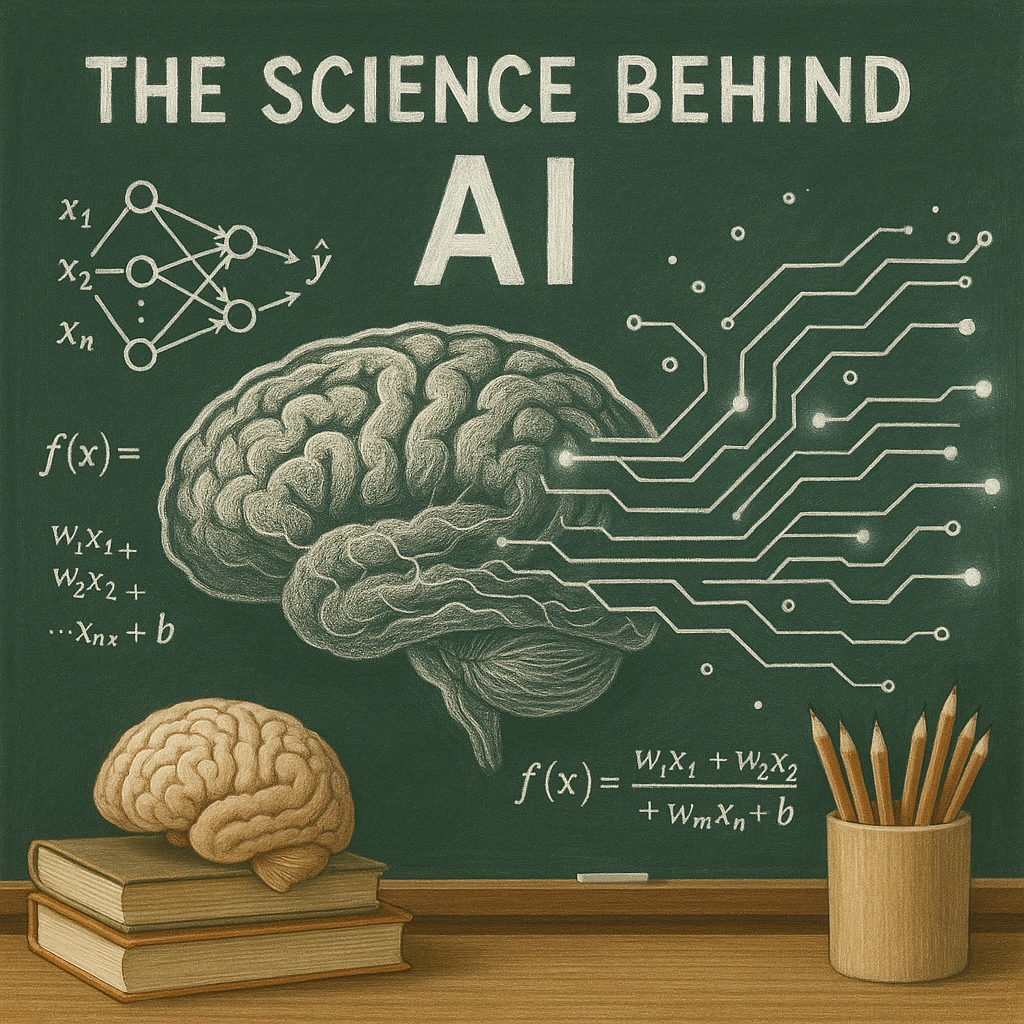
    When I wrote my first line of code in 8th grade, I found a passion that would grow with me through high school and beyond. But as I delved deeper into both scientific concepts and artificial intelligence, I realized something profound: science builds AI, and AI transforms science right back. This two-way relationship creates a cycle of innovation that’s reshaping our world faster than ever before.

    The foundation of modern AI isn’t just computer science – it’s a blend of mathematics, neuroscience, psychology, and computational theory all working together in harmony. This mashup of disciplines creates something greater than its parts. Every AI breakthrough begins with scientific principles and the same process of hypothesis, testing, and refinement that powers all scientific discovery.

    With classes like Data Structures and Machine Learning Principles, “universities are preparing students to continue this scientific tradition” (Frueh). The principles that scientists like Alan Turing (look at the evolution of programming languages article to learn more!) developed decades ago still form the backbone of today’s most advanced AI systems. The mathematics of linear algebra and calculus provide the quantitative tools for modeling complex relationships, while neuroscience contributes insights about how biological neural networks function, inspiring artificial ones.

    But the relationship goes both ways. AI has become science’s most powerful tool, scanning astronomical data to find celestial objects human researchers might miss or predicting protein structures to accelerate drug discovery. It excels at seeing patterns in massive datasets that would take humans lifetimes to analyze. Climate scientists employ neural networks to improve weather forecasting, while medical researchers use deep learning to detect cancer in medical images with unprecedented accuracy.

    As a student studying Computer Science, these applications fascinate me because they show how AI isn’t just about creating smart assistants or recommendation systems – it’s about expanding human capabilities in every scientific domain. The research opportunities in this field seem endless, from artificial intelligence to warehouse-scale computing systems.

    Most intriguing is how AI transforms scientific discovery itself. While traditional science follows hypothesis-driven research where scientists form theories and then test them, AI introduces a complementary data-driven approach where algorithms identify patterns first. Systems like AlphaFold solve 50-year scientific challenges independently by accurately predicting protein structures from amino acid sequences. This represents a fundamental shift in how discovery happens.

    This partnership raises big philosophical questions. If an AI predicts phenomena accurately but can’t explain its reasoning in human terms, have we truly gained scientific understanding? Is prediction equivalent to explanation? These questions reflect deeper tensions about what knowledge really means in an age of increasingly capable but opaque AI systems.

    Looking ahead, science and AI will continue evolving together, creating new forms of inquiry that blend human creativity with machine intelligence. This partnership will enable us to tackle humanity’s most pressing challenges – from climate change to disease – with previously unimaginable capabilities. The possibilities and opportunities in this field are truly endless.


    Citations


    Frueh, Sara. “How AI Is Shaping Scientific Discovery.” Nationalacademies.org, 6 Nov. 

    2023, www.nationalacademies.org/news/2023/11/how-ai-is-shaping-scientific-discovery.


    “Science in the Age of AI | Royal Society.” Royalsociety.org, 2024, royalsociety.org/news-resources/projects/science-in-the-age-of-ai/.


    Wang, Hanchen, et al. “Scientific Discovery in the Age of Artificial Intelligence.” Nature, vol. 620, no. 7972, 1 Aug. 2023, pp. 47–60, www.nature.com/articles/s41586-023-06221-2, 

    https://doi.org/10.1038/s41586-023-06221-2.


  • Evolution of Programming

    Evolution of Programming


    The Origins (1840s-1940s)

    1843: Ada Lovelace’s Algorithm

    The history of programming begins with Ada Lovelace, a British aristocrat that was educated in mathematics and science. In 1843, Lovelace created the very first machine algorithm for Charles Babbage’s Difference Machine. This conceptual leap is what gave birth to the idea of programming languages.

    1936: Alan Turing’s Theoretical Foundation

    Alan Turing published a paper in 1936 that is now regarded as the founding work of computer science. Turing introduced the concept of a universal machine that could follow instructions. This revolutionary idea eventually evolved into plans for an electricity-powered computer that could run programs, mathematically defining what computation meant.

    1940s: First Programming Languages and Electronic Computers

    • Konrad Zuse’s Plankalkül: Considered the first programming language for computers, created in the early 1940s to store codes for routine, repetitive tasks
    • Assembly Language (1949): A programming language that simplified computer instructions
    • Shortcode (1949): Developed by William Schmitt for the BINAC and UNIVAC computers
    • ENIAC: The first programmable, electronic, general-purpose digital computer, which required physical rewiring to program

    The First Programming Languages (1950s-1960s)

    Early 1950s: First Compiler Languages

    • Autocode (1952): Developed for the Mark 1 computer at the University of Manchester, it was the first language that could be translated into machine code
    • Assembly Language: Further evolved as the first step away from machine code, using symbolic representations of machine instructions

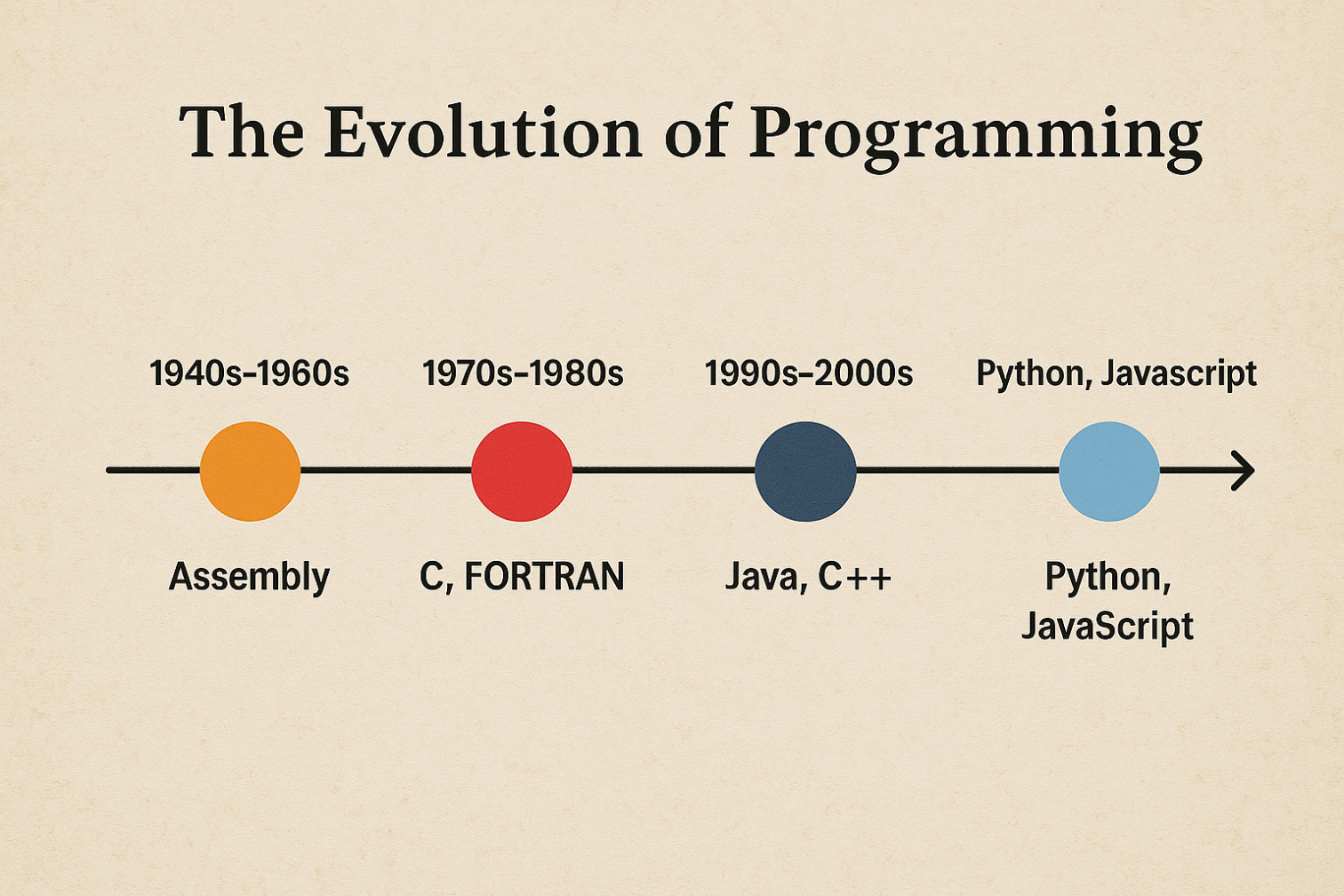
    Generated image

    Mid to Late 1950s: Foundation of Modern Programming

    • FORTRAN (1957): Developed by John Backus at IBM, FORTRAN (FORmula TRANslation) was the first widely used high-level programming language, designed for scientific and engineering calculations. Remarkably, this language from the 1950s is still used today in supercomputers and scientific computations.
    • ALGOL (1958): Created by American and European scientists, ALGOL became the foundation for many renowned languages including Pascal, Java, C, and C++
    • LISP (1958): Created by John McCarthy, introducing many ideas still central to programming today, including recursion and tree data structures. Originally intended for AI, companies like Boeing and Genworks still use it.
    • COBOL (1959): Developed by a team led by Dr. Grace Murray Hopper, COBOL (Common Business Oriented Language) was designed for business applications like credit card transaction processors, traffic signals, and phone calls. It’s still used in banking and gaming today.

    1960s: Programming Becomes More Accessible

    • BASIC (1964): Developed by students at Dartmouth College (Beginners All-Purpose Symbolic Instruction Code), it was designed to make programming accessible. Later further developed and marketed by Bill Gates.
    • PL/I (1964): IBM’s attempt to create a language combining the best features of FORTRAN and COBOL
    • APL (1966): A highly symbolic language focused on array processing
    • SIMULA (1967): The first object-oriented programming language, introducing concepts like classes and inheritance

    The Structured Programming Era (1970s)

    • Pascal (1970): Designed by Niklaus Wirth and named after French mathematician Blaise Pascal, it was created explicitly to encourage structured programming. So easy to learn, it was used by Apple early in its history.
    • C (1972): Developed at Bell Labs by Dennis Ritchie for the Unix operating system, combining low-level access with high-level abstractions. Many modern languages like C#, Java, JavaScript, Perl, PHP, and Python are derived from C.
    • Smalltalk (1972): Developed by Alan Kay, Adele Goldberg, and Dan Ingalls at Xerox PARC. It pioneered the graphical user interface and pure object-oriented programming. Its principles are present in Java, Python, and Ruby, used by companies like CrowdStrike and Logitech.
    • SQL (1972): Originally called SEQUEL, it was developed by Raymond Boyce and Donald Chamberlain for viewing and altering information in databases.
    • Ada (late 1970s-early 1980s): Named after Ada Lovelace, it was designed by Jean Ichbiah’s team at CUU Honeywell Bull. A high-level programming language extended from Pascal, Ada is used for air-traffic control in various European countries and space programs.

    The Rise of Personal Computing (1980s)

    • C++ (1983): Bjarne Stroustrup modified the C language at Bell Labs to create C++, adding object-oriented features, classes, templates, and virtual functions. It’s now used in MS Office, Adobe Photoshop, and various types of high-performance software.
    • Objective-C (1983): Developed by Brad Cox and Tom Love as another object-oriented extension of C, later becoming the foundation for Apple’s operating systems.
    • Perl (1987): Created by Larry Wall, initially for text editing. Today its primary uses include database applications, data processing, graphic programming, and system administration.
    • Haskell (1990): Named after mathematician Haskell Brooks Curry, this primarily mathematical programming language is used in industries that need complex calculations and record-keeping.
    • Visual Basic (1991, but conceptualized in the late 1980s): Microsoft’s attempt to make Windows programming accessible. It allows users to drag and drop sections of code via a graphical user interface (GUI). Parts of Visual Basic are used in applications like Word and Excel.

    The Internet Age (1990s)

    • Python (1991): Created by Guido Van Rossum and named after the British comedy Monty Python, it emphasizes code readability. Today Python is one of the most popular programming languages worldwide, used by giants like Google and Spotify.
    • Ruby (1993): Created by Yukihiro Matsumoto as a high-level programming language primarily for web applications development. Today it’s used by companies like Groupon.
    • HTML (1993): Not strictly a programming language, but fundamental to web development
    • Java (1995): Developed by James Gosling at Sun Microsystems with the promise of “write once, run anywhere.” It’s one of the world’s most popular programming languages, used in everything from cell phones to parking machines.
    • JavaScript (1995): Created by Brendan Eich, now ubiquitous in web development. Used for web development, PDF documents, and desktop widgets, it’s on almost every major website, including Adobe, Gmail, and Mozilla Firefox.
    • PHP (1995): Originally known as “Personal Home Page” but now stands for “Hypertext Preprocessor,” it was developed by Rasmus Lerdorf. Used for building and maintaining web pages and server-side development, PHP powers huge platforms like Facebook, Wikipedia, and WordPress.

    The Modern Era (2000s-2010s)

    • C# (2000): Microsoft developed C# in an attempt to combine elements of Visual Basic and C. It’s now used in all the company’s products.
    • Scala (2003): Created by Martin Odersky, it can work with Java, giving it an advantage in Android development. Scala is used by social media and entertainment giants like Twitter, LinkedIn, and Netflix.
    • Groovy (2003): An easy-to-learn language developed by James Strachan and Bob McWhirter, used by companies like Starbucks, Craftbase, and Transferwise.
    • Go (2009): Developed by Google to resolve challenges faced by large software systems. Go is popular with big tech companies like Uber, Dropbox, and of course, Google.
    • Rust (2010): Mozilla’s language designed for memory safety without garbage collection
    • TypeScript (2012): Microsoft’s statically-typed superset of JavaScript
    • Swift (2014): Developed by Apple to replace C, C++, and Objective-C, intended to be easier and more versatile. Swift can be used for cloud applications, mobile, and desktop. Language platform Duolingo used it to launch a new app.

    The AI and Cloud Native Era (2010s-Present)

    • Julia (2012): Designed for high-performance numerical analysis and computational science
    • Kotlin (2011, widely adopted late 2010s): Modern alternative to Java, particularly for Android development
    • WebAssembly (2017): Not a traditional language, but a binary instruction format for a stack-based virtual machine
    • Dart (2011, popularized with Flutter 2017): Google’s language for multi-platform development
    • Python’s resurgence: Becoming the dominant language for data science, AI, and machine learning

    The Future of Programming

    As we look ahead, programming continues to evolve in exciting new directions. Low-code and no-code platforms are democratizing software development, making it accessible to those without traditional programming skills. Meanwhile, AI-assisted coding tools like GitHub Copilot are revolutionizing how developers work by generating code from natural language prompts. The emergence of quantum computing is driving the development of specialized quantum programming languages to harness this powerful new paradigm. Simultaneously, domain-specific languages are becoming increasingly sophisticated, offering tailored solutions for specific industries and problems. These trends collectively point to a future where programming becomes both more specialized and more accessible, continuing the remarkable journey that began with Ada Lovelace’s algorithm nearly two centuries ago.


    Citations

    Aron, Jacob. “Alan Turing.” New Scientist, www.newscientist.com/people/alan-turing/.

    Hamilton, Tim. “History of Programming Languages.” Praxent, 4 Oct. 2022, praxent.com/blog/history-of-programming-languages.

    The Editors of Encyclopedia Britannica. “Ada Lovelace | Biography & Facts.” Encyclopædia Britannica, 23 Nov. 2018, www.britannica.com/biography/Ada-Lovelace.

  • The Shroud of Turin

    The Shroud of Turin


    Without the analysis of historical artifacts, much of the history we know today would be non-existent. It is through the scientific exegesis of many artifacts that we are able to understand the history of the human race. When looking back on the most critical and historic artifacts we come across many varieties, such as the Rosetta Stone, the Venus of Willendorf, the Dead Sea Scrolls and many more. But one historical artifact that stood out amongst the others has a unique backstory. This artifact is the most scientifically studied artifact in all of history…The Shroud of Turin. In this article we delve deeper into what the Shroud Of Turin is,  how it came about and understanding both sides of the spectrum.
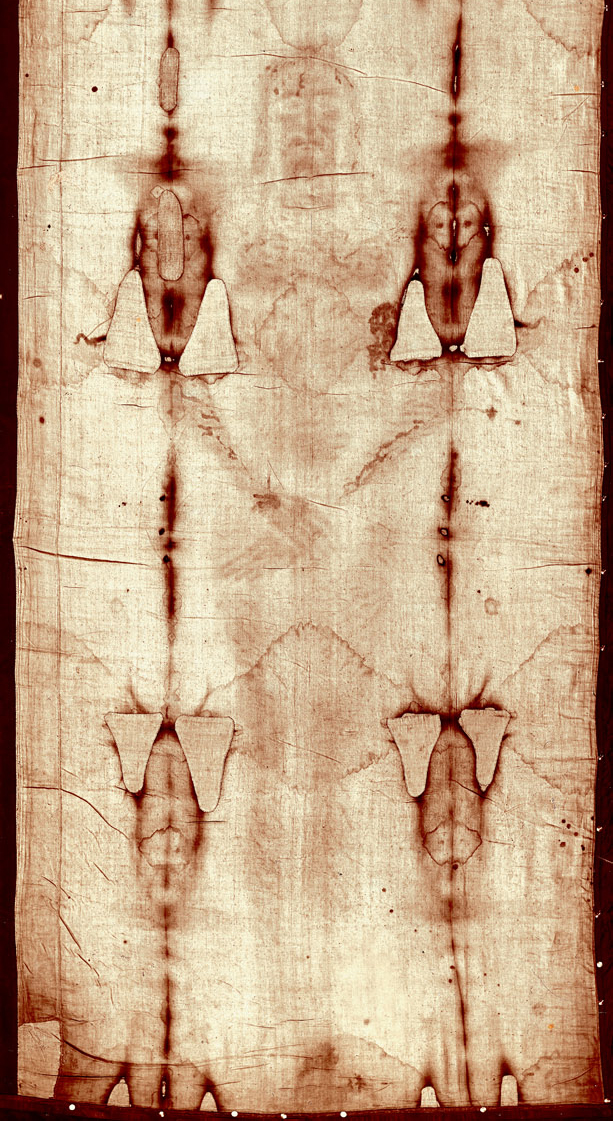
    The Shroud of Turin is a 14.5 x 3.5 foot linen cloth bearing the faint image of a man who appears to have suffered physical trauma consistent with crucifixion. The cloth has been preserved in the Cathedral of Turin, Italy, since 1578 (Wilson, 2010). While its origins are debated, the first historically documented appearance of the shroud was in France in the 1350s.

    The image on the shroud shows both the front and back of a male figure, with apparent wounds corresponding to biblical accounts of Jesus’s crucifixion. The image’s unique properties have puzzled scientists, as it appears to be a photographic negative and contains three-dimensional information that becomes visible when analyzed with modern imaging technology (Jackson et al., 2019).

    In 1988, radiocarbon dating tests conducted by laboratories in Oxford, Zurich, and Arizona dated the shroud to between 1260 and 1390 CE, suggesting it was a medieval creation (Damon et al., 1989). However, some researchers have challenged these results, arguing that the tested sample may not have been representative of the entire shroud due to repairs and environmental contamination (Rogers, 2005).

    The shroud’s weave pattern matches first-century Middle Eastern textiles, and pollen samples found on the cloth include species specific to the Jerusalem area (Frei, 1982). However, skeptics argue that such materials could have been introduced during the shroud’s documented travels through these regions in medieval times.

    The Shroud of Turin continues to generate significant interest from both religious and scientific communities. While the Catholic Church has neither officially endorsed nor rejected the shroud’s authenticity, it recognizes its significance as an important icon of Christian faith. The shroud remains a powerful symbol that draws millions of pilgrims to Turin during its rare public exhibitions.


    Citations

    Damon, P. E., Donahue, D. J., Gore, B. H., Hatheway, A. L., Jull, A. J. T., Linick, T. W., … & Valladas, H. (1989). Radiocarbon dating of the Shroud of Turin. Nature, 337(6208), 611-615.
    Di Lazzaro, P., Murra, D., Santoni, A., Fanti, G., Nichelatti, E., & Baldacchini, G. (2010). Deep ultraviolet radiation simulates the Turin Shroud image. Journal of Imaging Science and Technology, 54(4), 40302-1.
    Frei, M. (1982). Nine years of palynological studies on the Shroud. Shroud Spectrum International, 1(3), 3-7.
    Jackson, J. P., Jumper, E. J., & Ercoline, W. R. (2019). Correlation of image intensity on the Turin Shroud with the 3-D structure of a human body shape. Applied Optics, 58(9), 2683-2691.
    Rogers, R. N. (2005). Studies on the radiocarbon sample from the Shroud of Turin. Thermochimica Acta, 425(1-2), 189-194.
    Wilson, I. (2010). The Shroud: The 2000-Year-Old Mystery Solved. Bantam Press.

  • AI & Historical Texts

    AI & Historical Texts

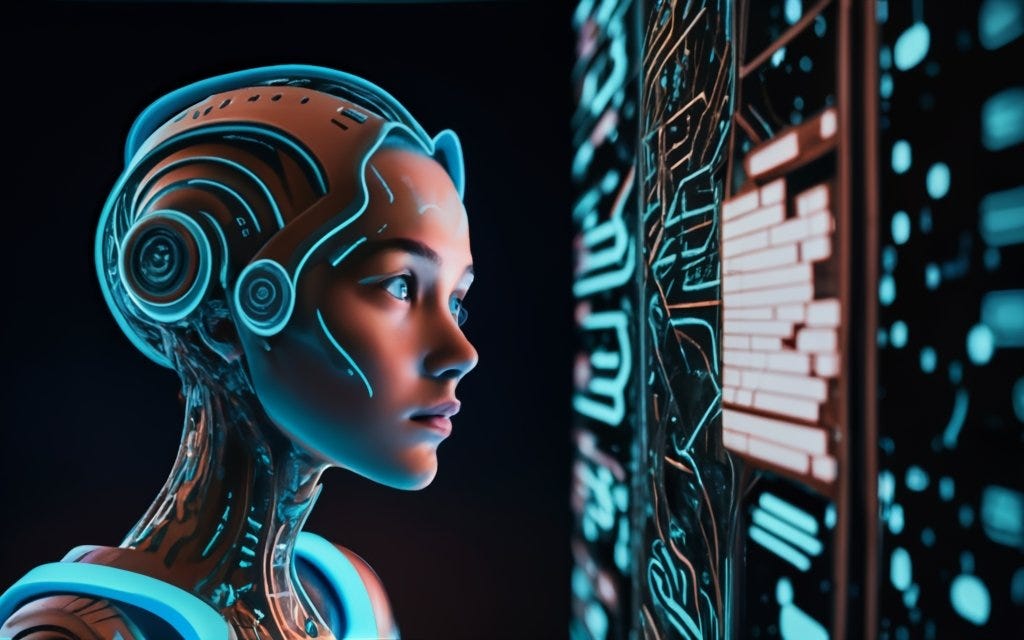
    When looking at the past, it’s very hard to decipher how exactly certain situations unfolded. We must look to historical texts in order to garner a revelation on how this domino effect of history unfolded to our present day. The issue with analyzing historical texts is that it is under the umbrella of human error and with human error comes human bias which when analyzing historical texts to reveal historic events to the world, this bias can become very dangerous. Dangerous to the point where it can (and has) altered our perception of history. In this article we will look to AI and how analyzing historical texts through AI can help suppress these human errors.

    The implementation of AI in historical analysis has revolutionized how we approach primary sources. Machine learning algorithms can now process vast quantities of historical documents, identifying patterns and connections that human researchers might miss or take years to discover. For instance, the Venice Time Machine project, led by researchers at École Polytechnique Fédérale de Lausanne, has successfully digitized and analyzed thousands of historical Venetian documents, revealing previously unknown patterns in trade relationships and social networks (Williams, 2022). This breakthrough in historical research demonstrates the potential for AI to uncover hidden narratives and connections that traditional methods might overlook.

    AI systems offer several significant advantages in historical analysis that extend beyond mere pattern recognition. Advanced natural language processing (NLP) models can analyze historical texts in multiple languages and adapt to archaic writing styles, making cross-cultural comparison more accessible than ever before (Chen & Rodriguez, 2023). Furthermore, these systems can provide comprehensive statistical analysis of historical trends, helping to validate or challenge existing historical narratives with data-driven insights that would be impossible to generate through traditional research methods alone.

    However, it’s crucial to acknowledge that AI itself is not free from bias. The algorithms are trained on data sets that may contain their own inherent biases, and the programming decisions made by developers can inadvertently influence results. As noted by Dr. Sarah Thompson (2023) in her work on digital humanities, “AI should be viewed as a complementary tool to traditional historical research methods, not a replacement.” This understanding has led to the development of various safeguards in the field, including regular calibration of AI models against peer-reviewed historical research and cross-validation of findings using multiple AI systems. The collaboration between historians and AI experts has become essential to ensure appropriate interpretation of results and maintain the integrity of historical research.

    The integration of AI in historical analysis represents a significant step forward in our ability to understand the past more objectively. Projects like the Historical Document Analysis Initiative (HDAI) demonstrate how machine learning can help identify and correct for biases in historical narratives while preserving the essential human element of historical interpretation (Garcia et al., 2024). These developments have opened new avenues for research and understanding, allowing historians to approach their subjects with unprecedented depth and precision.
    The more we refine these technologies, the greater the relationship between AI and historical research becomes. Researchers have found that combining traditional historical methods with AI-powered analysis can provide a more complete and nuanced understanding of historical events and their interconnections. This hybrid approach allows historians to maintain their crucial role in interpretation and analysis while leveraging the powerful capabilities of AI to process and analyze vast amounts of historical data.

    The future of historical research lies in this careful balance between human expertise and technological capability. While AI offers powerful tools for analyzing historical texts with reduced human bias, it’s essential to remember that complete objectivity remains elusive. The goal is not to remove human judgment entirely but to enhance it with technological capabilities that can help identify and minimize unconscious biases. As we continue to develop more sophisticated AI tools, the partnership between human historians and machine learning systems will become increasingly valuable in our quest to understand the past more accurately.

    By developing more accurate and comprehensive understandings of historical events, we can better inform current decision-making processes and policy development. The ability to analyze large amounts of historical data quickly and efficiently while also accounting for potential biases helps create a more nuanced and accurate picture of our past, which in turn helps us better understand our present and prepare for our future.


    Citations

    Donovan, M. (2023). How AI is helping historians better understand our past. *MIT Technology Review*.
    Williams, R. (2022). The Venice Time Machine: Digital Humanities at Scale. *Digital History Quarterly*, 18(2), 45-67.
    Chen, L., & Rodriguez, A. (2023). Natural Language Processing in Historical Research: Advances and Challenges. *Journal of Digital Humanities*, 12(4), 89-112.
    Thompson, S. (2023). Digital Tools and Historical Method: A Critical Assessment. *History and Computing*, 15(3), 201-224.
    Garcia, M., et al. (2024). The Historical Document Analysis Initiative: First Year Results. *Digital Scholarship in the Humanities*, 39(1), 1-28.