Strange Insect Encounter: The Human Instinct

Labor Day Encounter

On Labor Day this year, I visited West Point Dam, Georgia for a small family picnic. It’s supposedly a good spot for fishing, but I didn’t catch any. However, an uninvited guest took a liking to my fishing rod. It was a fellow Yellow Jacket, or so I thought!


Figure 1. Encounter at West Point Dam, Georgia. Video by Diemmy Dang, 2025.

From my survival instinct, half of me wanted to shoo the strange-looking guest away; The other half of me took over and let the guest take the free ride. Perhaps sensing my intense glare, the guest left after approximately fifteen minutes. I guessed it is a bee based on the obvious appearance traits: the black and yellow stripes. The surrounding withered flower fields also contribute to this thought. However, what is it to be exact? Surely, there are so many species of them. 
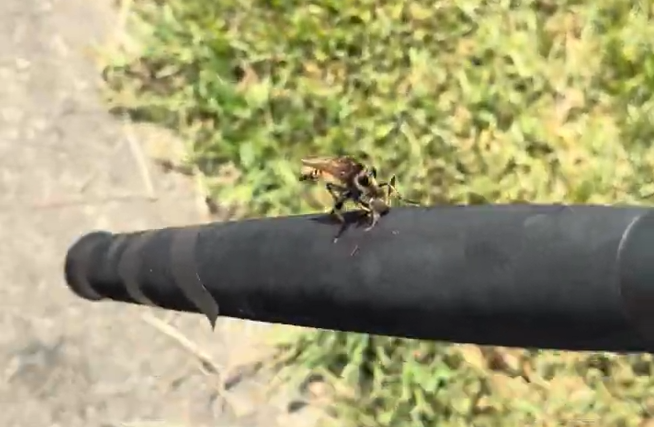
Figure 2. Zoomed in Image of Encounter at West Point Dam, Georgia. Image by Diemmy Dang, 2025.

A Small Investigation

My best friend – Google, helped me get started on the investigation. I used the inefficient and brute-force way to search for “bee” and keep looking at the ones that strike the familiarity. The closest one I have gotten to is Hoverfly (flower fly). Hoverfly is a beneficial insect for ecosystems, pollinating plants and eating pests. As their round shapes suggested, Hoverfly are friendly and harmless to humans, and they are unable to sting. However, the guest never struck me as a friendly type.

As the investigation continued, Kayla – a fellow member of STEMComm VIP team, introduced me to Google Lens. Surprisingly, it gave me a solid answer right away – Robber fly. To be more exact, the guest belongs to the species Promachus rufipes (red-footed cannibalfly).
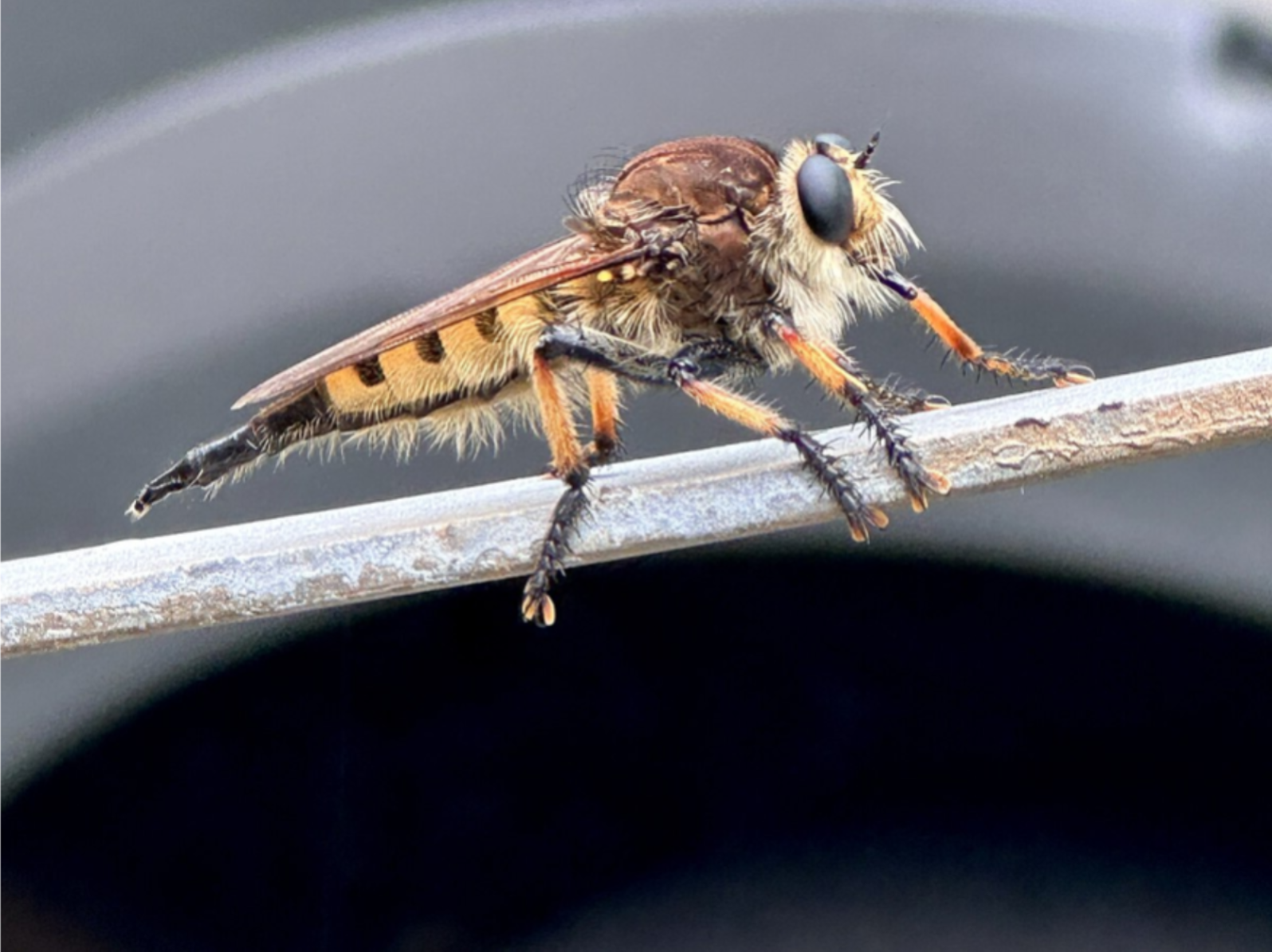
Figure 3. Flipped image horizontally from File:Promachus rufipes 314724260.jpg by Anne, 2023, Wikimedia Commons. CC0 1.0 Universal Public Domain Dedication.

Despite the rhyme names with Hoverfly, Robber fly is an insect hunter. They are beneficial to the ecosystem by controlling pest populations, but they are also aggressive predators. Robber flies can cause painful bites if they feel threatened by humans. 

As the fun investigation came to an end, I was left with curiosity. Why did I have conflicted reactions and emotions that day?

The Negative Human Emotion

A potential cause is that human instincts regarding insects have been passed down from ancestors. Fear of contamination, fear of being bitten, and fear of infestation can manifest into disgust as an emotional adaptation to help humans increase likelihood of survival (Jose, 2019). Small stings and bites can trigger an unknown allergy to a minority of people, threatening a good health body. 

Growing up in the countryside, I was once chased by a group of wasps (?) when I was a child. Though the painful experience doesn’t last long in my memory, I have learned to avoid messing with bee kinds. Lockwood (2013) stated that “people consistently overestimate the likelihood that fear-relevant stimuli (e.g, an image of a spider) will be associated with a painful experience (e.g, an electric shock) compared to neutral stimuli” (p. 23). Humans survive by learning to avoid dangers. Survival of the fittest theory is still holding strongly.

Surprisingly, appearances can also contribute to human’s negative emotions toward insects. In cartoons, dangerous wild animals are commonly represented as cute creatures. Unlike them, small and harmless insects are usually depicted as ugly, visually unappealing, and sometimes villainous (Jose, 2019). According to psychologists, fear can be triggered by visual cues: “the ugliness of antennae … the oddly proportioned eyes and bodies, … discomfort of hairiness and sliminess … the more divergent a creature is from the human form, the greater its capacity to evoke fear” (Lockwood, 2013, p. 23). Jose (2019) suggests this has something to do with rejection response, which is a mechanism to keep human safe. The presence of insects has been associated with the threat of sickness, and disgust seems to be an evolutionary response to disease’s prevention. This idea is tied back to the survival of fitness theory.

The Positive Human Reaction

So, was my decision of letting the guest stay purely due to fear and disgust?

Despite the fear of an unknown insect, my original impression of the guest is a bee – an insect providing well known benefits. An experiment with different age groups, with the youngest in elementary school, and expert beekeepers found that all subgroups perceive bees as useful and worthy of conservation (Schönfelder & Bogner, 2017). Bee products and the importance of pollination for the ecosystem are remarked upon. Perhaps I was just letting a friendly insect take a break on Labor Day.

Final thoughts

Human instincts can be contributed by many factors. Although it’s not fair to fear insects differently from other wild animals, it’s important to keep oneself safe and healthy. Insect allergy can be severe, so if anyone is planning a trip to somewhere with a potential of bee family mass attack, wearing white or light-colored clothing might reduce the risk (Greene & Breisch, 2005).

As I conclude this article, it happens to be Thanksgiving as well. Happy holidays and stay safe out there!


References

Anne. (2023). File:Promachus rufipes 314724260.jpg. [Photograph] Wikimedia Commons. Wikimedia Foundation. Retrieved November 27, 2025, from https://commons.wikimedia.org/wiki/File:Promachus_rufipes_314724260.jpg.

Greene, A., & Breisch, N. L. (2005). Avoidance of bee and wasp stings: An entomological perspective. Current Opinion in Allergy & Clinical Immunology, 5(4), 337–341. https://doi.org/10.1097/01.all.0000173781.58154.53

Jose, V. (2019). Why are humans so afraid of insects. International Journal of Trend in Scientific Research and Development, 3(2), 1027–1029. https://doi.org/10.31142/ijtsrd21564

Lockwood, J. A. (2013). Chapter 2: Evolutionary Psychology: Survival of the Scaredest. In The infested mind: Why humans fear, loathe, and Love insects (pp. 20–34). essay, Oxford University Press.

Schönfelder, M. L., & Bogner, F. X. (2017). Individual perception of bees: Between perceived danger and willingness to protect. PLOS ONE, 12(6). https://doi.org/10.1371/journal.pone.0180168

Your journey starts here! Let’s talk!

ThemeRex © 2026. All rights reserved.
  Timothy Durham was convicted of rape when a test showed his DNA genotype matched the DNA recovered from the crime scene. Eye witnesses testified that Durham was in a different state at the time of the incident, but he wasn’t exonerated from his 3000 year sentence until follow up DNA analysis showed that the preliminary forensic analysis used in the trial was misinterpreted (Thomas et al.). DNA testing serves an invaluable part in our criminal justice system, but it comes with complications and bias that can lead to wrongful convictions and misinformed juries.  

Background:

Forensic genetics aims to identify the origin of a biological sample. It can be traced back to Karl Landsteiner who discovered human ABO blood groups. With blood groups, suspects could be eliminated based on their blood type. For example, if a suspect had type A blood and there was type B blood left at the scene by the perpetrator, the investigators could rule out the suspect. Unfortunately, the reverse didn’t work. If the suspect and perpetrator both had the same blood type, it can’t be concluded that the suspect was guilty. Blood identifiers evolved into 8 distinct categories which improved the ability to eliminate suspects, but could only conclude that (if the system matched) it might be the perpetrator or this person might be related to the perpetrator (Jobling and Gill). The field evolved in the 1980s with the discovery of Minisatellites, lines of repetitive DNA that don’t encode proteins. Minisatellite patterns in DNA create what we know today as the DNA fingerprint, and it has a much higher accuracy rate than previous methods (Augustyn et al.). Around the same time, a breakthrough for victims of sexual assault was discovered. In the case of assault, bodily fluids of both the victim and the assaulter can get mixed. A process called differential lysis was created which could selectively increase the concentration of sperm in a fluid sample thereby allowing for accurate DNA testing (Jobling and Gill). Forensics evolved to use single-locus probe testing after several years because of its ease of interpretation. It looked at specific minisatellites that had high variability between subjects. This was the first DNA-based method to be used in a criminal investigation. Two murder homicides from several years apart were connected using DNA evidence. The evidence was then used to exonerate an innocent man, and the guilty party was found when he tried to evade mandatory DNA testing for all men in the small town. His guilt was then reinforced when the DNA profiles matched, and he gave a confession (Jobling and Gill). Finding DNA at a crime scene doesn’t guarantee that you’ll find a murderer. There are issues with non-pure samples and limited samples that make DNA work difficult, and accreditation of facilities and new techniques and take time (Jobling and Gill).  

Subjectivity of DNA Interpretation:

In a 2009 publication, the National Academy of Science discusses the possibility for subjective influence in lab based forensics. The interpretation bias happens in complex cases where, for example, there could be a mixture of DNA. A study published in 2011 looked specifically at this issue. A gang rape happened in Georgia, and the mixture in DNA from the case was used to prosecute one suspect after another suspect took a plea bargain to testify against him. With DNA mixtures, there are three possible conclusions: suspect excluded, suspect cannot be excluded, and inconclusive. If the suspect is excluded, it means that there’s little to no possibility that his DNA is part of the sample. If the suspect cannot be excluded, it means that there’s a possibility that his DNA is part of the sample. In the trial, the DNA examiners who knew the context of the case concluded that the suspect being prosecuted could not be excluded. The 2011 study gave the DNA evidence from this case and the DNA profiles of the suspects to 17 forensic examiners. These examiners had no context of the case, and they all worked independently. Of the 17, only 1 came to the same conclusion (suspect cannot be excluded) as the examiners who knew the context of the case. Twelve of the 17 concluded that the suspect who was prosecuted and convicted had no relation to the DNA found in the sample. Not only does this show that subjectivity occurs due to the context of the case, but the 17 examiners came up with different findings based on their past experiences meaning that not all DNA analysis is objective. Some organizations like the Scientific Working Group on DNA Analysis Methods say that quantitative statistical evidence should be presented with every categorical conclusion, but the US doesn’t require this (Dror and Hampikian).

False Positives:

There are two categories that cause wrongful identification in a DNA report: coincidental matches and false positives. Coincidental matches are DNA matches between two unrelated people. The probability of these matches is about 1 to 500,000 for white individuals and about 1 to 350,000 for black individuals. This small probability of coincidental matches makes people feel confident in DNA evidence. False positives, on the other hand, are matches between DNA and test DNA that result from issues in the forensics lab. There have been multiple cases of forensics labs accidentally switching victim and suspected rapist DNA which lead to convictions that were later overturned when the lab realized the error. There are also cases of misreading or misunderstanding a sample. In a case from 1993, a man was convicted of rape because someone interpreted a mixed sample of victim and perpetrator DNA as an individual sample. The conviction was again overturned. To prevent false convictions, retesting DNA is allowed, but it’s not an efficient solution. Many people are pushing for statistical information on the probability of false positives, so that the jurors can make accurate judgements based on DNA evidence (Thomas et al.).  

Conclusion:

DNA analysis is a useful tool for the criminal justice system, but subjectivity can be an issue in forensic testing. To combat wrongful convictions, there are organizations like The Innocence Project who use DNA testing to free the innocent, but reformed forensic testing standards should be put in place to prevent subjectivity and to ensure juries are correctly informed during trials. https://www.innocenceproject.org/    

Citation:

Augustyn , Adam, et al. “DNA Finerprinting.” Encyclopedia Britannica , 26 Apr. 2018, www.britannica.com/science/DNA-fingerprinting#ref153186. Dror, Itiel E., and Greg Hampikian. “Subjectivity and Bias in Forensic DNA Mixture Interpretation.” Science & Justice, vol. 51, no. 4, 2011, pp. 204–208., doi:10.1016/j.scijus.2011.08.004. Jobling, Mark A., and Peter Gill. “Encoded Evidence: DNA in Forensic Analysis.” Nature Reviews: Genetics, vol. 5, no. 10, Oct. 2004, pp. 739–751., doi:10.1038/nrg1455. Thompson, William C, et al. “How the Probability of a False Positive Affects the Value of DNA Evidence.” Journal of Forensic Sciences, vol. 48, no. 1, Jan. 2003, pp. 1–8., doi:10.1520/jfs2001171.