The Cilantro Controversy: A Scientific Look

Cilantro: A Very Controversial Herb

Cilantro (also known as coriander) is a plant that has been cultivated for thousands of years. Cilantro, unlike your more run-of-the-mill herbs, has a very polarizing smell and taste. Eventually, research was done into the sharp divide over cilantro, and something fascinating emerged. Scientists found that members of certain ancestries are far more likely to despise cilantro than others. Twin studies were also consulted to see if there could possibly be a heritable element to being a cilantro hater. The link found was stronger for disliking the smell (.52) than the taste (.38). Respondents who didn’t like cilantro often referred to the herb as smelling soapy, which isn’t particularly appetizing.

How Do You Smell Cilantro?

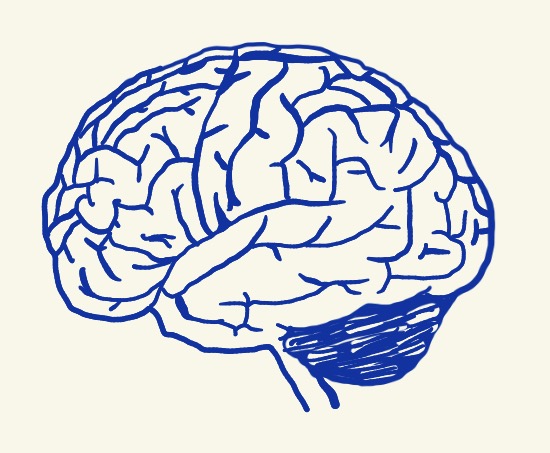
Your brain has a specialized region dedicated to identifying smells, known as the olfactory epithelium. The olfactory epithelium sits right up your nose. The epithelium contains special proteins, which are chemicals in cells that do work, called receptors. These proteins are able to “match” up with one or a select few chemicals found in the air. You can think of them like poor quality locks that fit a few keys, rather than just one. Each receptor’s shape matches up to one or several molecules that you breathe in.
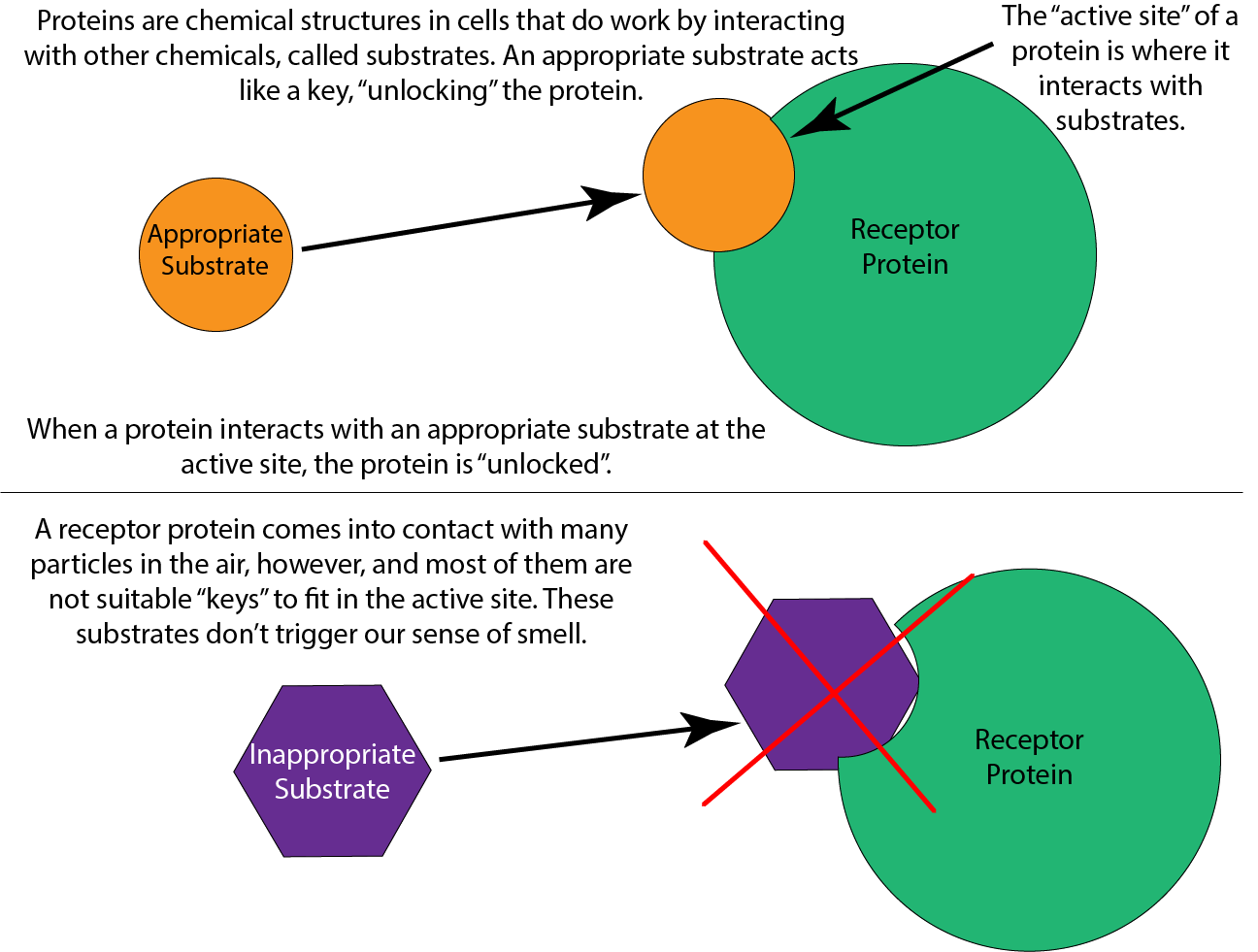
An illustration of the lock and key model, showing how the shape of the protein is what determines whether or not a potential substrate will fit inside.

If a receptor is activated by something in the air, it sends a signal to another part of your brain, the olfactory cortex. The olfactory cortex uses this signal to interpret what you’re smelling. The olfactory cortex also coordinates the smell with the rest of your brain’s activities – if you smell your favorite food, the olfactory cortex lets you know to start feeling hungry.

The chemicals that enter your nose when you take a whiff of cilantro are called aldehydes, in particular the (E)-2-alkenals (mostly (E)-2-decenal and (E)-2-dodecenal).  Aldehydes are a class of organic molecules found all around in nature. They’re grouped together as a result of the chemical structures they have in common. All aldehydes have an oxygen double bonded to a carbon. This carbon is bonded to a hydrogen and atom/group of atoms.
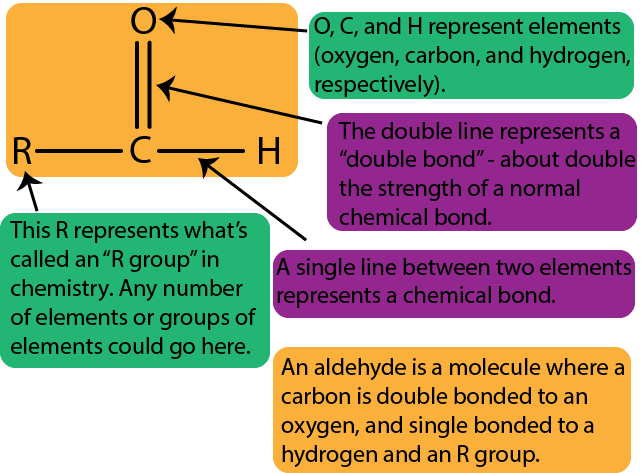
A diagram of the basic model of an aldehyde: a single carbon, which is doubled bonded to an oxygen, and single bonded to both a hydrogen and an R group. R groups are any given arrangement of molecules or single elements.

As cilantro sits out on your counter, some of its aldehydes evaporate in the air. When you smell the cilantro, those aldehydes bind to the aldehyde receptors in your olfactory epithelium. Then, the receptors tell the rest of your brain that you’re smelling cilantro.

A Quick Genetics Lesson

Before we investigate the findings into the cilantro soap gene, let’s take a quick look at some of the genetics involved. Inside each and every one of your cells, there is a copy of your DNA. DNA (deoxyribonucleic acid) is made up of two long strands of repeating units called nucleotides. Each nucleotide has a nitrogenous “base” which the rest of the nucleotide’s structure hangs on to. The four variants of this base are identified by four letters: G, C, A, and T. How the sequences of these letters vary determines the genetic code. A gene is a section of nucleotides that corresponds to a protein. Proteins are molecules that do all sorts of important functions in the body. Remember the olfactory receptors we talked about earlier? Those are proteins. Variations in the olfactory receptor genes, for example, might change the shape of those receptors. Depending on where the shape of the receptor is changed, this could alter the sense of smell of someone with a changed receptor. There are different kinds of ways a gene can be mutated, or changed to be different from the “normal” version of the gene. One of these mutation types is known as an SNP (single nucleotide polymorphism), which means just one letter is different from normal.

Potential Soap Genes

This report conducted a genome-wide association study on 14,604 unrelated participants of primarily European ancestry. Two SNPs were found to be associated with finding cilantro to taste like soap. Let’s take a look at each of them. The first SNP was found on chromosome 11, located near the olfactory receptor genes. Researchers suspect that the SNP alters either the OR6A2 receptor or OR10A2 receptor. In particular, the OR6A2 receptor is known to be directly involved in smelling aldehydes, which is what we primarily smell from cilantro.

The other SNP that was found to be linked to smelling cilantro as soap was inside the gene SNX9. Researchers were baffled by this finding, as this gene encodes the instructions to create a chemical that helps cells communicate within themselves and re-construct their cell membranes when they duplicate. Now, this apparently has absolutely nothing to do with cilantro, and it’s very possible that it could be a false positive. However, the equivalent to this gene in mice was found to be associated with non-syndromic hearing loss in mice, so it’s not impossible to think that it could be related to human senses as well.

Soap Tasting Populations

There were several significant differences between populations when it came to cilantro tasting like soap in this study. Women were significantly more likely to find cilantro soapy than men. Out of ancestries, Europeans were more likely than South Asians, East Asians, Latin Americans, and those of African descent to find cilantro soapy. No difference was found between Northern and Southern Europeans, or between Ashkenazi Jews and other Europeans. Although the South Asian group studied in this report was small, a significant association was found. This suggestion that there is a significant association between the genome and a person’s response to cilantro even outside of the European group. However, the heritability estimate made in this study was very low. This could be evidence that environmental effects and/or epigenetic effects have an impact on how someone tastes cilantro.

References

Browning, Peggy. (2018). Smell. In Gale Encyclopedia of Nursing and Allied Health (pp. 3266–3268).

Eriksson, Nicholas, Wu, Shirley, Do, Chuong B, Kiefer, Amy K, Tung, Joyce Y, Mountain, Joanna L, . . . Francke, Uta. (2012). A genetic variant near olfactory receptor genes influences cilantro preference. Flavour (London), 1(1), 22.

Solomons, G., Fryhle, C. B., & Snyder, S. A. (2014). Organic chemistry (11th ed.). Hoboken, NJ: Wiley.


Your journey starts here! Let’s talk!

ThemeRex © 2026. All rights reserved.
  Timothy Durham was convicted of rape when a test showed his DNA genotype matched the DNA recovered from the crime scene. Eye witnesses testified that Durham was in a different state at the time of the incident, but he wasn’t exonerated from his 3000 year sentence until follow up DNA analysis showed that the preliminary forensic analysis used in the trial was misinterpreted (Thomas et al.). DNA testing serves an invaluable part in our criminal justice system, but it comes with complications and bias that can lead to wrongful convictions and misinformed juries.  

Background:

Forensic genetics aims to identify the origin of a biological sample. It can be traced back to Karl Landsteiner who discovered human ABO blood groups. With blood groups, suspects could be eliminated based on their blood type. For example, if a suspect had type A blood and there was type B blood left at the scene by the perpetrator, the investigators could rule out the suspect. Unfortunately, the reverse didn’t work. If the suspect and perpetrator both had the same blood type, it can’t be concluded that the suspect was guilty. Blood identifiers evolved into 8 distinct categories which improved the ability to eliminate suspects, but could only conclude that (if the system matched) it might be the perpetrator or this person might be related to the perpetrator (Jobling and Gill). The field evolved in the 1980s with the discovery of Minisatellites, lines of repetitive DNA that don’t encode proteins. Minisatellite patterns in DNA create what we know today as the DNA fingerprint, and it has a much higher accuracy rate than previous methods (Augustyn et al.). Around the same time, a breakthrough for victims of sexual assault was discovered. In the case of assault, bodily fluids of both the victim and the assaulter can get mixed. A process called differential lysis was created which could selectively increase the concentration of sperm in a fluid sample thereby allowing for accurate DNA testing (Jobling and Gill). Forensics evolved to use single-locus probe testing after several years because of its ease of interpretation. It looked at specific minisatellites that had high variability between subjects. This was the first DNA-based method to be used in a criminal investigation. Two murder homicides from several years apart were connected using DNA evidence. The evidence was then used to exonerate an innocent man, and the guilty party was found when he tried to evade mandatory DNA testing for all men in the small town. His guilt was then reinforced when the DNA profiles matched, and he gave a confession (Jobling and Gill). Finding DNA at a crime scene doesn’t guarantee that you’ll find a murderer. There are issues with non-pure samples and limited samples that make DNA work difficult, and accreditation of facilities and new techniques and take time (Jobling and Gill).  

Subjectivity of DNA Interpretation:

In a 2009 publication, the National Academy of Science discusses the possibility for subjective influence in lab based forensics. The interpretation bias happens in complex cases where, for example, there could be a mixture of DNA. A study published in 2011 looked specifically at this issue. A gang rape happened in Georgia, and the mixture in DNA from the case was used to prosecute one suspect after another suspect took a plea bargain to testify against him. With DNA mixtures, there are three possible conclusions: suspect excluded, suspect cannot be excluded, and inconclusive. If the suspect is excluded, it means that there’s little to no possibility that his DNA is part of the sample. If the suspect cannot be excluded, it means that there’s a possibility that his DNA is part of the sample. In the trial, the DNA examiners who knew the context of the case concluded that the suspect being prosecuted could not be excluded. The 2011 study gave the DNA evidence from this case and the DNA profiles of the suspects to 17 forensic examiners. These examiners had no context of the case, and they all worked independently. Of the 17, only 1 came to the same conclusion (suspect cannot be excluded) as the examiners who knew the context of the case. Twelve of the 17 concluded that the suspect who was prosecuted and convicted had no relation to the DNA found in the sample. Not only does this show that subjectivity occurs due to the context of the case, but the 17 examiners came up with different findings based on their past experiences meaning that not all DNA analysis is objective. Some organizations like the Scientific Working Group on DNA Analysis Methods say that quantitative statistical evidence should be presented with every categorical conclusion, but the US doesn’t require this (Dror and Hampikian).

False Positives:

There are two categories that cause wrongful identification in a DNA report: coincidental matches and false positives. Coincidental matches are DNA matches between two unrelated people. The probability of these matches is about 1 to 500,000 for white individuals and about 1 to 350,000 for black individuals. This small probability of coincidental matches makes people feel confident in DNA evidence. False positives, on the other hand, are matches between DNA and test DNA that result from issues in the forensics lab. There have been multiple cases of forensics labs accidentally switching victim and suspected rapist DNA which lead to convictions that were later overturned when the lab realized the error. There are also cases of misreading or misunderstanding a sample. In a case from 1993, a man was convicted of rape because someone interpreted a mixed sample of victim and perpetrator DNA as an individual sample. The conviction was again overturned. To prevent false convictions, retesting DNA is allowed, but it’s not an efficient solution. Many people are pushing for statistical information on the probability of false positives, so that the jurors can make accurate judgements based on DNA evidence (Thomas et al.).  

Conclusion:

DNA analysis is a useful tool for the criminal justice system, but subjectivity can be an issue in forensic testing. To combat wrongful convictions, there are organizations like The Innocence Project who use DNA testing to free the innocent, but reformed forensic testing standards should be put in place to prevent subjectivity and to ensure juries are correctly informed during trials. https://www.innocenceproject.org/    

Citation:

Augustyn , Adam, et al. “DNA Finerprinting.” Encyclopedia Britannica , 26 Apr. 2018, www.britannica.com/science/DNA-fingerprinting#ref153186. Dror, Itiel E., and Greg Hampikian. “Subjectivity and Bias in Forensic DNA Mixture Interpretation.” Science & Justice, vol. 51, no. 4, 2011, pp. 204–208., doi:10.1016/j.scijus.2011.08.004. Jobling, Mark A., and Peter Gill. “Encoded Evidence: DNA in Forensic Analysis.” Nature Reviews: Genetics, vol. 5, no. 10, Oct. 2004, pp. 739–751., doi:10.1038/nrg1455. Thompson, William C, et al. “How the Probability of a False Positive Affects the Value of DNA Evidence.” Journal of Forensic Sciences, vol. 48, no. 1, Jan. 2003, pp. 1–8., doi:10.1520/jfs2001171.