Introduction
Everyone has heard of John F. Kennedy before. Whether it be from his presidency, his role in the Cuban Missile Crisis, or his assassination. Many people have even heard about his brother, Robert F. Kennedy and his assassination, or the so-called ‘Kennedy curse.’ However, most people have not heard of the one Kennedy sibling who played a huge role in redefining a medical tragedy. This is because her existence was swept under the rug by her father as a critical failure and embarrassment.
It’s time for a spotlight to be shone on the tale of the secret Kennedy sister, Rosemary, and how lobotomy, a surgery designed to reduce prefrontal cortex functioning, ruined her life. This is the story of a woman like many others of her time who suffered at the hands of faulty medical practices and biases that swept the world in a frenzy.
The Story of Rosemary Kennedy
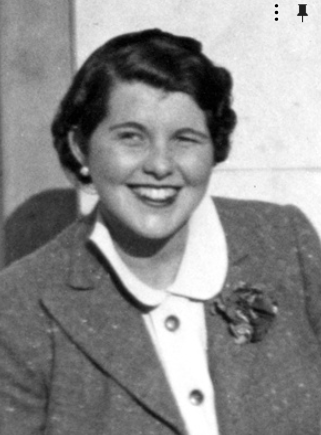
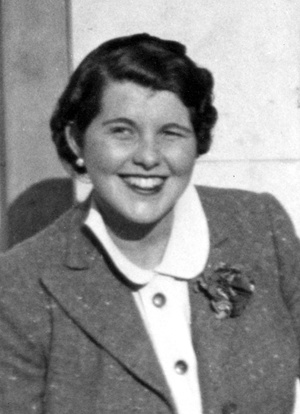
Rosemary Kennedy, April 1940
https://www.jfklibrary.org/sites/default/files/2018-03/kfc%202612p%20crop.jpg
Rosemary Kennedy, born to Joseph and Rose Kennedy in 1918, was not born like her brothers and sisters. Due to a lack of oxygen during her birth, Rosemary ended up with a learning disability that placed her significantly behind her age group in school (Larson, 2015). However, due to the highly influential political career of her father, Joseph P. Kennedy, Rosemary was forced to keep up the public appearance of being “well-adjusted.” Her mother would fabricate a world of appearances and deception to other high-class mothers about her daughter’s intellectual capability, JFK would accompany Rosemary to tea-dances under a watchful eye, and her parents even fabricated Rosemary’s search for a teaching degree (Larson, 2015). To the outside world, Rosemary served as an icon for the perfect daughter of a political figure. However, internally in the Kennedy family was everything but perfect.
At age 22, Rosemary reportedly became more “difficult” with outbursts of aggression that led to her family’s decision to send her to a covenant school in Washington D.C. (“Rosemary Kennedy”). But when rumors spread that Rosemary might be having inappropriate relationships with men at her school, her father’s frustrations exploded. The threat of shame to his career and the budding careers of his children drove Joseph to sign Rosemary up for a prefrontal lobotomy with Dr. Walter Freeman, a popular lobotomist at the time, to reduce her mood swings and cumbersome behavior. After her lobotomy, Rosemary’s mental capacity was reduced to that of a toddler’s and she could no longer care for herself (Larson, 2015). Joseph hid his daughter away from the rest of her family at an institution for the mentally disabled called St. Coletta’s, and until his death, the world never knew the truth to the terrifying reality of what lobotomy did to Rosemary.
How did this happen though? How did a lobotomy lead to such a drastic change in Rosemary’s mental and emotional capacity? To understand this, first the process of a lobotomy and the areas of the brain it targets must be understood.
The Process of a Lobotomy
A lobotomy is a medical procedure developed during the 1940s and 1950s, in which parts of the brain are physically altered as a way to treat mental illness or behavioral problems. The practice of lobotomy began with Portuguese neurologist António Egas Moniz, but was popularized in America thanks to Dr. Walter Freeman (Lewis, 2014). Moniz originally crafted the process of the prefrontal lobotomy, where a doctor would drill a whole into the top of a patient’s head and then either inject ethanol to destroy brain fibers or use a leucotome (a wired loop) to slash away parts of the frontal lobe (Lewis, 2014). Later on, Dr. Freeman popularized the second form of lobotomy, called transorbital, where an ice pick would be placed behind the eye and used to severe the connection between frontal cortex from the thalamus (the motor and sensory control of the brain) (Lewis, 2014). The original appeal of lobotomy at the time stemmed from the lack of other ways to treat mental illness. In the 1940s and early 1950s, there were not yet any antipsychotic drugs, and it was very expensive to keep a family member in a mental institute (Hall, 2015). The lure of making a former difficult family member more docile through a simple surgery and improving family reputation became a common reason why lobotomies were performed (Hall, 2015).
That common reason of improving family reputation was one of the main ones Rosemary’s father had as he signed her up for her lobotomy. And while Rosemary underwent a prefrontal lobotomy, both forms of the procedure targeted similar parts of the brain (the prefrontal cortex) and produced similar effects in patients.
Prefrontal Cortex Damage and Its Effects
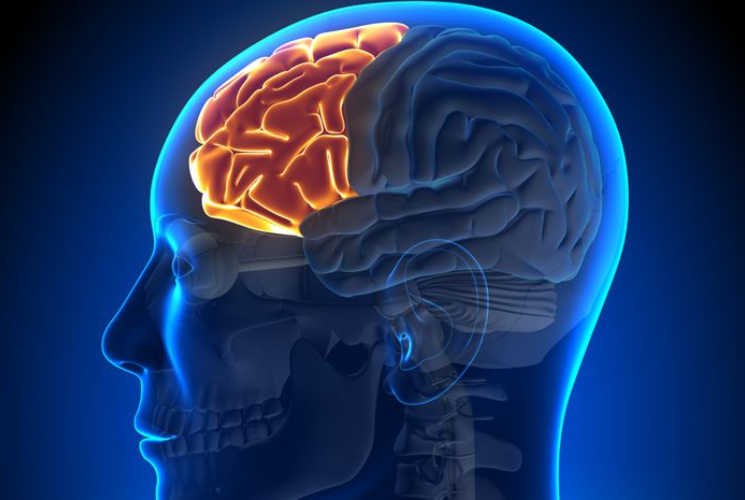
Prefrontal lobe of the brain
https://www.livescience.com/42199-lobotomy-definition.html
The prefrontal cortex of the brain is responsible for social behavior, emotional responses, working memory, long-term decision making, and language/speech (Teffer & Semendeferi, 2012; Pirua & Liu, 2018). Lobotomy endeavors to sever this section from the brain to reduce emotional stress, cure mental illness (such as schizophrenia and depression), and as in Rosemary’s case, reboot “socially dysfunctional” women (Hall, 2015; Koziol & Tone, 2018). While to some extent lobotomy can prohibit emotional and social distress since the process does essentially wipe one part of the brain related to emotional response, it does so at an often catastrophic long-term cost to the patient.
Damage to the prefrontal cortex can result in the reduction of critical analysis in long-term consequences of one’s actions (Bechara, Damasio, Damasio & Anderson, 2002). Patients will only follow impulses, not thinking about how their decisions can impact themselves or others in the future. This is often a common side effect experienced by lobotomized patients such as Mona Gable’s mother, who after her lobotomy suddenly began to run up credit cards, chase her children with baseball bats, and go on late night joy rides without a second thought (Gable, 2016). Part of this change in patients also stems from the loss of empathy and short-term memory that occurs with damage to the prefrontal cortex. Without the part of the brain responsible for social behavior fully functioning, patients begin to lose their connection to others in their social groups. It becomes increasingly difficult for patients to interact with people and express the more complex social behaviors such as empathy, and their short-term memory begins to fade, making it increasingly harder to partake in daily activities without extra assistance.
These alterations are a gateway to some of the worst transformations made by prefrontal cortex damage: overall personality and language production. Without their prefrontal cortex, people lose the part of their brain most responsible who they are as a person and why the act the way they do. Dr. Walter Freeman himself even stated that, “Every patient probably loses something by this operation, some spontaneity, some sparkle, some flavor of the personality” (Hall, 2015). Patients lose their motivation, ability to plan, how they interact with others and much more. They leave the procedure no longer the same person they were before. And from a more technical standpoint, patients can no longer even communicate as they did so before, since damage to the prefrontal cortex also damages speech and language ability. Patients post-lobotomy can have trouble forming meaningful sentences or understanding what others say to them. These transformations are what occurred with Rosemary. All of her personality, her spunk, her ability to speak/communicate with others was wiped as her prefrontal cortex was sliced away. The smiling girl in the photo disappeared and only a hollow shell of her former self remained. She could no longer interact with others at the capacity she could pre-lobotomy and she could no longer care for herself on a daily basis without having someone else help her make decisions and remember how to do various activities.
Legacy of Lobotomy and Rosemary Kennedy
The dark tale of lobotomy and Rosemary Kennedy leaves the science and medical community with a few haunting reminders.
For one, the quick, widespread popularization of lobotomy demonstrates why the scientific community must be more cautious when new therapies, treatments, medications and medical technologies appear with limited effectiveness and safety information. Portuguese neurologist António Egas Moniz published the results of his first lobotomy only around 4 weeks after the surgery had taken place (Hall, 2015). He did not take extra precautions in monitoring longstanding consequences of lobotomy because the initial results seemed very promising at a time when mental illness had few treatment options. The scientific method and the need for quality testing and experimentation is not to be skipped over. Even if the procedure seems like a blessed cure all, there can be unforeseen consequences that would need further careful observations before the product is approved for its to be used. If the initial report regarding lobotomy had been published later, the doctors could have better observed the long-term changes in personality and cognitive function of the original patients, and then maybe the over 50,000 other lobotomy patients would not have had to suffer similar fates to Rosemary Kennedy’s (Lewis, 2014).
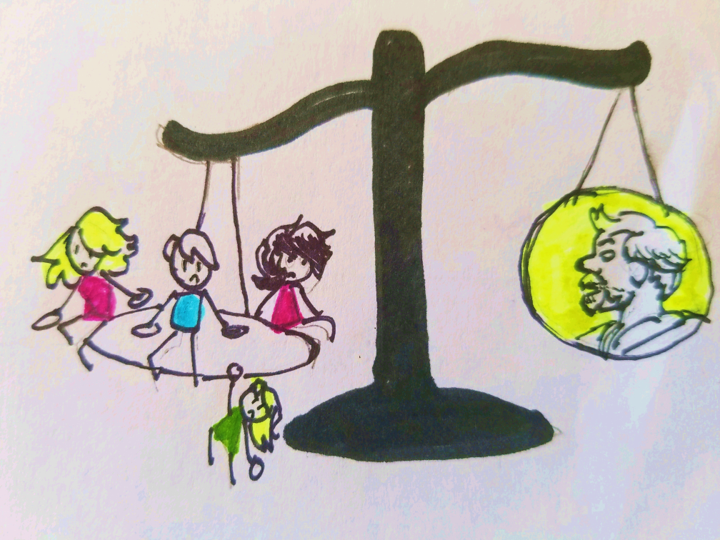
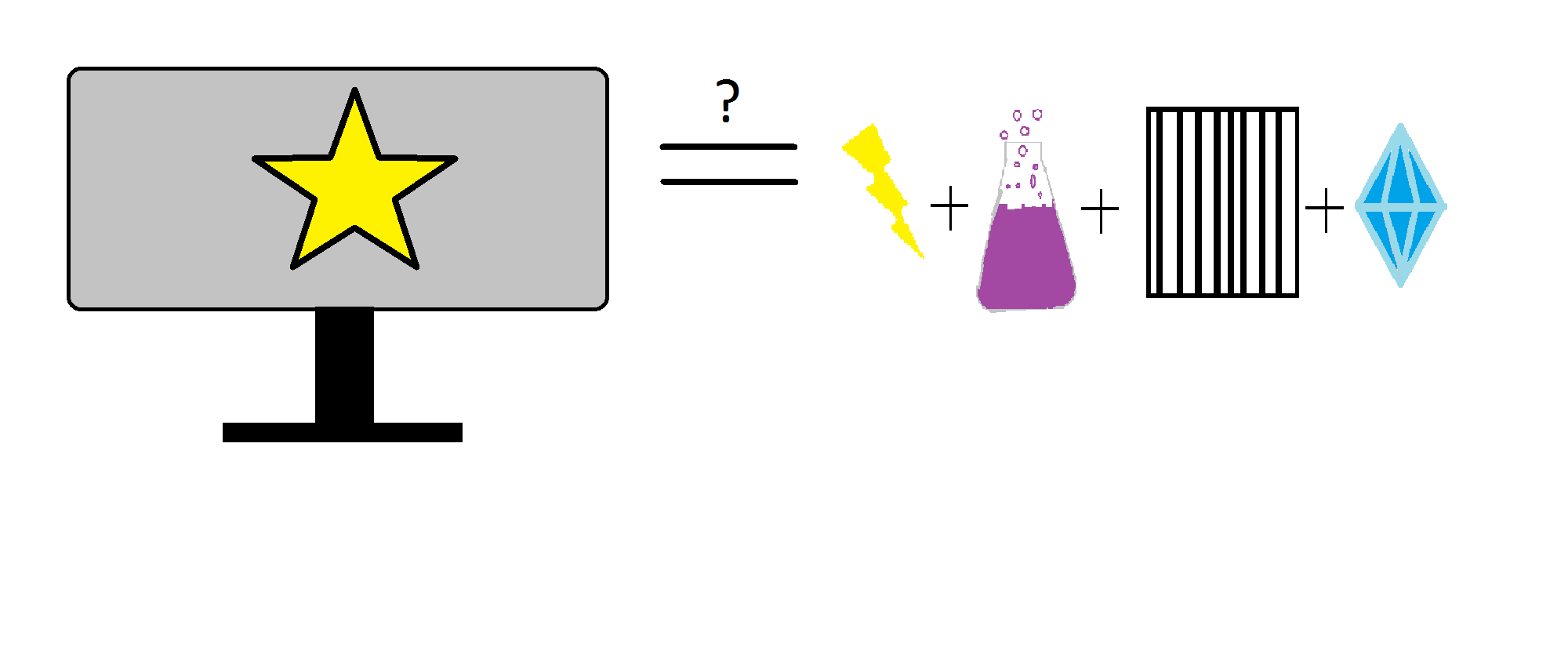
My drawing representing the uneven justification of lobotomized patients’ lives for the Noble Prize and prestige Moniz won for his ‘easy solution’ to mental illness
Additionally, Rosemary’s story itself is rooted in a much larger issue: implicit bias against women in medicine. While lobotomy was originally labeled to treat mental illness in mental institutes, most of the times it was used for treating unruly women no longer following the social norms of the 1940s and 1950s. The statistics themselves of how many more women than men were lobotomized, even though men made up the majority of mental institutes at the time are shocking: For Dr. Walter Freeman’s personal operations, he performed 75% of them on women, and in the Stockton State Hospital, 85% of lobotomies occurred with women (Koziol & Tone, 2018; Hall, 2015). Over time, lobotomy became less about treating mental illness and more about controlling women. In that sense, Rosemary could be considered a poster case of the abusive use of lobotomy in women. Her mood swings and alleged unruly behavior with men drove her father to seek to change her through a medical procedure becoming increasingly aimed towards women. She was a victim of how the medical world viewed how women should be treated. And while the process of lobotomy has thankfully become frowned upon and relatively inactive (partially thanks to the consequences of the Rosemary’s failed lobotomy being made public and partially thanks to the development of antipsychotic drugs), this implicit bias against women still lingers in the medical community today. For example, women are less likely to receive prescribed heart medication for congenital heart disease than men due to the misconception that older men are more at risk than women are (La Trobe University, 2019). Additionally, women with endometriosis usually have a 7.5 year period before they are diagnosed with the condition, only being told the symptoms are “normal” or “in their head” (“NICE call for improved diagnosis and management of endometriosis”, 2017). Both these cases illustrate how women are still disadvantaged by biases against their gender and how that impacts the success of their treatment. Medical treatment goes hand in hand with cultural zeitgeist on a subconscious level. It’s vital for anyone in the medical field to reevaluate personal biases as they treat a patient.
These are dark truths, not easy to grasp, but their importance stands firm. We must learn from our mistakes or we will be doomed to repeat them as the medical community continues to evolve and expand. The Institute for Healthcare Improvement offers many strategies to reduce implicit biases affecting medical treatment, such as increasing recognition of stereotyping, seeing people as individuals and building equal relationships with them, expanding one’s opportunities to interact with groups outside your own context, perspective taking, and more (IHI Multimedia Team, 2017). By using methods such as these to improve the environment of the medical field, we, as the scientific community, can start reworking how standards for treatment as a whole are handled. However, at the end of the day though, it comes down to the individual practitioner performing treatment. So heed cases likes Rosemary Kennedy’s and lobotomy’s, and who knows maybe you can find the next contemporary procedure that turns out to be barbaric in years to come.
My Connection to This Tale of Lobotomy and Rosemary
Personally, this topic hits close to home in terms of my career aspirations. I’m training to be a biomedical engineer, so I will be one of the main people designing healthcare equipment and procedures for the general public. One of my biggest fears is creating a medical device that actually ends up hurting someone or a group of people because I accidentally overlooked a certain aspect of it. And while hypothetically, the other engineers working with me should catch my lapses in logic, as we saw with the case of lobotomy, sometimes that process can be skipped over. With this article, I wanted to share the tale of lobotomy, not only as a reminder to me, but also to anyone reading, that you need to be responsible for critically thinking about the solutions you create to problems in any scientific industry. At the end of the day, you could be the person who saves thousands of patients from unnecessary pain and heartache if you just speak up and go against the popular flow.
Additionally for me, it’s so vital that workers in healthcare be directly connected with the people they are treating. If I can’t, on some level, empathize with the person I’m treating, how will I create an effective procedure for them? People are individuals, not just items to characterize into implicit groups and call it a day. Rosemary Kennedy’s story always breaks my heart, hearing about how this wonderful young lady, full of joy and spunk, cruelly had that all ripped away from her because a bias against women she couldn’t control. I don’t want to be someone who lets situations like that idly happen. As I follow through with my career as a biomedical engineer, I want to be one of the individuals leading the medical industry in fighting implicit biases to create a better tomorrow for patients. How many times in history must the path for medical advancement be paved in blood before we begin changing our approach to it?